The thought of an interview can be nerve-wracking, but the right preparation can make all the difference. Explore this comprehensive guide to Foot and Ankle Trauma interview questions and gain the confidence you need to showcase your abilities and secure the role.
Questions Asked in Foot and Ankle Trauma Interview
Q 1. Describe the common mechanisms of injury for ankle fractures.
Ankle fractures most commonly occur from rotational forces, high-energy trauma, or simple falls. Imagine twisting your ankle awkwardly while playing sports – that’s a classic example of a rotational injury. High-energy trauma, such as a motor vehicle accident, can result in more severe, comminuted (shattered) fractures. Even a seemingly simple fall can fracture the ankle, particularly in older adults with osteoporosis, where the bones are weaker.
- Rotational Injuries: These are very common and often involve the lateral malleolus (outer ankle bone) and often the medial malleolus (inner ankle bone). The foot is often planted while the body twists.
- High-Energy Trauma: These result in more severe injuries, often involving multiple fractures and ligament damage. Think of a car accident or a fall from a significant height.
- Low-Energy Trauma: These often occur in individuals with underlying conditions like osteoporosis, causing fractures with relatively minor forces. A simple stumble could result in a fracture in such cases.
Q 2. Explain the Ottawa Ankle Rules and their clinical significance.
The Ottawa Ankle Rules are a clinical decision rule used to determine if an ankle x-ray is necessary after an ankle injury. They’re crucial because they help avoid unnecessary radiation exposure while ensuring patients with fractures are appropriately identified. The rules significantly reduce the need for unnecessary radiographs, saving both time and resources. The rules are simple and based on clinical examination:
- Bone tenderness at the posterior edge or tip of the lateral malleolus
- Bone tenderness at the posterior edge or tip of the medial malleolus
- Inability to bear weight immediately after the injury and at the time of examination (four steps, or the equivalent)
- Inability to bear weight in the emergency department.
If any of these criteria are positive, an x-ray is indicated. If all are negative, an x-ray is generally not necessary. While highly sensitive, they have a lower specificity meaning that some patients with negative Ottawa Ankle Rules still require imaging based on clinical judgement.
Q 3. What imaging modalities are used to assess foot and ankle trauma?
Several imaging modalities are used to assess foot and ankle trauma, each offering unique advantages:
- Plain radiography (X-rays): This is the initial imaging modality of choice. It’s readily available, relatively inexpensive, and provides excellent visualization of bone. It allows us to identify fractures, dislocations, and assess alignment.
- Computed tomography (CT): CT scans provide high-resolution images of bone and soft tissue, offering detailed visualization of complex fractures, including comminution and subtle avulsion fractures. It’s particularly useful for assessing the talus and calcaneus (heel bone).
- Magnetic resonance imaging (MRI): MRI excels at visualizing soft tissues, such as ligaments, tendons, and cartilage. It’s invaluable in assessing ligament injuries, tendon tears, and identifying subtle fractures not visible on x-rays or CT scans. It’s crucial for evaluating the extent of soft-tissue damage associated with fractures.
Q 4. Differentiate between a Weber A, B, and C ankle fracture.
Weber classifications categorize ankle fractures based on the location of the fibular fracture relative to the syndesmosis (the joint between the tibia and fibula). Think of the syndesmosis as the strong ligament that holds the lower leg bones together. These classifications are critical in determining treatment strategies:
- Weber A: The fibular fracture is below the syndesmosis. It’s often considered a less severe fracture.
- Weber B: The fibular fracture is at the level of the syndesmosis. These fractures often have associated deltoid ligament injury. The syndesmosis can be disrupted or intact. This is an intermediate-severity injury.
- Weber C: The fibular fracture is above the syndesmosis. These are often more severe and frequently involve significant syndesmotic disruption. More commonly need surgical intervention
Understanding the Weber classification is crucial in surgical planning, as it dictates whether syndesmotic repair (fixing the joint between the tibia and fibula) is necessary.
Q 5. How do you manage a Lisfranc injury?
A Lisfranc injury is a complex midfoot fracture-dislocation involving the tarsometatarsal joints. Imagine the bones in the midfoot dislocating from each other—that’s a Lisfranc injury. These injuries require careful evaluation and management because of the potential for long-term disability. Early diagnosis and appropriate treatment are paramount.
Management typically involves:
- Closed Reduction: In some less severe cases, a closed reduction (manipulation of the bones into their correct position without surgery) may be attempted under anesthesia. This is usually followed by prolonged immobilization with a cast or splint.
- Open Reduction and Internal Fixation (ORIF): Most Lisfranc injuries require ORIF, where the bones are surgically repositioned and fixed with screws and plates. This ensures proper alignment and healing.
- Post-Operative Care: After surgery or closed reduction, the patient undergoes a period of protected weight-bearing with progressive weight-bearing as tolerated and Physical Therapy is crucial for long-term recovery.
Improper management can lead to chronic pain, arthritis, and significant functional limitations.
Q 6. Describe the surgical approach for an open reduction and internal fixation (ORIF) of a talus fracture.
Surgical approach for ORIF of a talar neck fracture is complex and depends on the fracture pattern. The goal is to restore anatomical reduction, providing stable fixation to allow for healing. Several approaches exist, and the choice depends on the specific fracture.
- Anterior Approach: This approach provides excellent visualization of the talar neck and head. It involves an incision along the anterior aspect of the ankle. This approach is suitable for many talar neck fractures.
- Medial Approach: This approach is used for fractures involving the medial aspect of the talus, or when an anterior approach is not feasible due to soft tissue damage.
- Lateral Approach: This approach can be used for some lateral column fractures of the talus but is less common than the anterior or medial approach.
Following the chosen approach, the fracture fragments are meticulously reduced (put back into their proper position), and then internally fixed (using screws, plates or other hardware). Post-operative care includes immobilization, gradual weight-bearing, and physical therapy.
Q 7. What are the potential complications of ankle fracture surgery?
Ankle fracture surgery, while often successful, carries potential complications:
- Infection: A significant risk, especially with open fractures. Prophylactic antibiotics are routinely used, and meticulous surgical technique is essential to minimize this risk.
- Nonunion (failure of the fracture to heal): Can occur due to inadequate blood supply, poor fracture reduction, or infection. This may require further surgery.
- Malunion (healing of the fracture in a misaligned position): Leads to pain, deformity, and decreased function. Careful surgical planning and execution are crucial.
- Avascular Necrosis (death of bone tissue due to lack of blood supply): Can occur, especially in talar neck fractures. This complication can be devastating.
- Compartment syndrome (increased pressure within the muscle compartments): A surgical emergency requiring immediate fasciotomy (incision of the muscle fascia to release pressure).
- Arthritis: Development of osteoarthritis in the ankle joint over time is a possible long-term complication.
- Hardware failure: Loosening, breakage, or migration of implants.
- Nerve damage: Injury to nearby nerves can result in sensory or motor deficits.
Careful surgical planning, meticulous technique, and appropriate post-operative care are critical in minimizing these risks.
Q 8. Explain the principles of fracture healing.
Fracture healing is a complex process involving several stages. Think of it like building a house: you need a strong foundation, skilled labor, and time for completion. The initial stage is the inflammatory phase, where blood clots form and inflammation sets in. This is crucial for cleaning the injury site and starting the healing process. Next comes the reparative phase, where a soft callus of fibrous tissue forms, bridging the fracture gap. This is followed by the remodeling phase, where the soft callus is gradually replaced by hard bone, leading to the strong, remodeled bone we see in full healing. Factors affecting healing include the type and severity of the fracture, the patient’s overall health (e.g., diabetes can significantly slow healing), and the effectiveness of the treatment (e.g., proper immobilization or surgical fixation).
For example, a simple, non-displaced fracture of a metatarsal bone might heal within 6-8 weeks with simple casting, while a complex, comminuted (shattered) fracture of the tibia could require surgery and several months of rehabilitation.
Q 9. Discuss the management of compartment syndrome in the lower extremity.
Compartment syndrome is a serious condition where increased pressure within a muscle compartment compromises blood supply to the tissues. In the lower extremity, this is a life-threatening emergency that requires immediate action. The classic symptoms are the ‘five Ps’: pain (out of proportion to the injury), pallor (pale skin), paresthesia (numbness or tingling), pulselessness (absent or weak pulse), and paralysis (loss of muscle function). It’s crucial to recognize these signs early.
Management involves immediate fasciotomy – a surgical procedure where the compartment’s fascia (the tough membrane surrounding the muscles) is incised to relieve pressure. Delaying fasciotomy can lead to permanent muscle damage, nerve damage, or even limb loss. Prior to surgery, we often monitor compartment pressures using a pressure-measuring device. Post-operatively, careful wound care and monitoring of the patient are crucial.
Q 10. How do you assess for nerve injury following foot and ankle trauma?
Assessing nerve injury involves a thorough neurological examination. This includes checking for sensation (light touch, pinprick) in the areas innervated by the nerves potentially affected by the trauma, assessing muscle strength by asking the patient to perform specific movements (e.g., dorsiflexion of the foot to test the deep peroneal nerve), and evaluating reflexes (e.g., the ankle reflex). We also look for any signs of nerve compression, like swelling or bruising near the nerve’s pathway. Electromyography (EMG) and nerve conduction studies (NCS) are sometimes used to confirm the diagnosis and assess the severity of nerve damage. Early detection and appropriate management (e.g., surgical decompression) can improve outcomes.
For instance, after a severe ankle fracture, we’d meticulously assess the function of the sural nerve (sensation on the outer aspect of the foot) and the posterior tibial nerve (plantarflexion strength).
Q 11. Describe the different types of ankle ligament injuries.
Ankle ligament injuries are classified primarily by the affected ligament and the severity of the injury. The three main ligaments are the anterior talofibular ligament (ATFL), the calcaneofibular ligament (CFL), and the posterior talofibular ligament (PTFL). Ankle sprains are usually caused by inversion injuries (rolling the ankle inward). The ATFL is most commonly injured, often in mild sprains. More severe injuries can involve the CFL and even the PTFL. These are usually seen in moderate to severe sprains. Additionally, high ankle sprains involve the syndesmotic ligaments (connecting the tibia and fibula), which are less common but often require more extensive treatment.
Imagine your ankle as a hinge. The ligaments act as the supporting ropes. A mild sprain is like one rope stretching; a moderate sprain is like two ropes stretching or tearing; a severe sprain involves multiple damaged ropes, potentially requiring repair.
Q 12. What are the non-operative treatment options for ankle sprains?
Non-operative management of ankle sprains focuses on the acronym RICE: Rest, Ice, Compression, and Elevation. Rest means avoiding activities that aggravate the pain. Ice reduces swelling and pain. Compression, using an elastic bandage, limits swelling and provides support. Elevation helps reduce swelling by promoting fluid drainage. In addition to RICE, we might use crutches to limit weight-bearing and pain medication for pain control. Physical therapy plays a crucial role in restoring range of motion, strength, and proprioception (awareness of joint position).
For example, a patient with a mild ATFL sprain might be treated with RICE, crutches for a few days, and a gradual return to activity over several weeks guided by physical therapy.
Q 13. Explain the role of physiotherapy in foot and ankle rehabilitation.
Physiotherapy is essential in foot and ankle rehabilitation after trauma. It plays a vital role in restoring function, reducing pain, and preventing long-term complications. The specific program is tailored to the individual’s needs and injury but typically involves several components. Range of motion exercises help regain flexibility, while strengthening exercises improve muscle strength and stability. Proprioceptive training focuses on improving balance and coordination. Manual therapy, including techniques like joint mobilization, can address stiffness and pain. Finally, functional exercises prepare the patient for a return to normal activities.
Imagine a car that has been in an accident. Physiotherapy is like taking the car to a specialized mechanic to get all its parts working properly again and ensure that it is safe and stable for driving.
Q 14. What are the indications for arthroscopy of the ankle?
Ankle arthroscopy is a minimally invasive surgical procedure that allows visualization of the ankle joint using a small camera. Indications for ankle arthroscopy include the diagnosis and treatment of a variety of conditions. Osteochondral lesions (cartilage damage), loose bodies (fragments of bone or cartilage floating in the joint), synovitis (inflammation of the joint lining), and ligament repair (in certain situations) are some common indications. Arthroscopy allows for precise removal of loose bodies, debridement of damaged cartilage, and repair of certain ligament tears, all with smaller incisions compared to open surgery, leading to faster recovery times.
For example, a patient with recurrent ankle pain and suspected osteochondral lesions might benefit from an ankle arthroscopy to assess the damage and perform targeted treatment.
Q 15. Describe the surgical techniques for hallux valgus correction.
Hallux valgus, or bunion, correction surgery aims to realign the big toe and reduce the prominence of the bunion. Several surgical techniques exist, chosen based on the severity of the deformity and the patient’s individual needs.
Osteotomy: This involves cutting the bone of the first metatarsal (the bone leading to the big toe) to correct its alignment. Different types of osteotomies exist, such as a scarf osteotomy or a base wedge osteotomy, each addressing the deformity in a slightly different way. For example, a scarf osteotomy is often used for more severe deformities needing more correction.
Arthrodesis (fusion): In cases of severe arthritis or failed previous surgeries, the joint between the first metatarsal and the proximal phalanx (big toe bone) may be fused. This eliminates movement but provides stability and pain relief. It’s a less common approach due to significant limitations in movement.
Soft tissue procedures: These often accompany bone procedures and involve releasing tight tendons and ligaments around the big toe joint, improving mobility and preventing recurrence. These procedures can include a capsulectomy (removal of part of the joint capsule) or a tendon transfer.
Proximal Chevron Osteotomy: This is a common procedure that involves a V-shaped cut near the base of the metatarsal. This removes a wedge of bone, correcting the angle of the joint and shifting the big toe back toward a more natural alignment.
Post-operative care is crucial, involving immobilization, physical therapy, and gradual weight-bearing to ensure proper healing and prevent complications like infection or nonunion (failure of the bone to heal). The choice of surgical technique is highly individualized and is discussed extensively with the patient to ensure they understand the procedure’s benefits and limitations. For instance, a patient with severe arthritis might prioritize pain relief over retaining full range of motion, making arthrodesis a viable option.
Career Expert Tips:
- Ace those interviews! Prepare effectively by reviewing the Top 50 Most Common Interview Questions on ResumeGemini.
- Navigate your job search with confidence! Explore a wide range of Career Tips on ResumeGemini. Learn about common challenges and recommendations to overcome them.
- Craft the perfect resume! Master the Art of Resume Writing with ResumeGemini’s guide. Showcase your unique qualifications and achievements effectively.
- Don’t miss out on holiday savings! Build your dream resume with ResumeGemini’s ATS optimized templates.
Q 16. How do you manage a plantar fasciitis?
Plantar fasciitis is an inflammation of the plantar fascia, a thick band of tissue on the bottom of the foot. Management focuses on reducing pain and inflammation, and restoring normal foot mechanics.
Conservative treatment is the first line of defense, and typically includes rest, ice, compression, and elevation (RICE). Over-the-counter pain relievers like ibuprofen or naproxen can help reduce inflammation. Stretching exercises, specifically those targeting the plantar fascia and calf muscles, are crucial for improving flexibility and reducing strain on the fascia.
Orthotics, custom-made or over-the-counter, can provide arch support and help alleviate pressure on the plantar fascia. Night splints can help to gently stretch the plantar fascia overnight.
Physical therapy plays a vital role. Therapists guide patients through targeted stretching, strengthening exercises, and gait retraining to improve foot mechanics and reduce stress on the plantar fascia. They may also use modalities such as ultrasound or iontophoresis to reduce pain and inflammation.
Corticosteroid injections might be considered if conservative measures fail. These provide temporary pain relief but are not a long-term solution and may weaken the plantar fascia over time. If pain persists after months of conservative management, then surgical options are sometimes discussed.
A patient I recently treated had chronic plantar fasciitis that significantly limited their ability to walk. After 6 months of conservative management including orthotics, stretching exercises, and physical therapy, their pain significantly improved to the point they could return to their daily activities.
Q 17. Explain the diagnosis and treatment of Achilles tendon rupture.
An Achilles tendon rupture is a tear in the Achilles tendon, the strong cord that connects the calf muscles to the heel bone. Diagnosis typically involves a thorough physical exam, where the doctor may note a palpable gap in the tendon, swelling, bruising, and an inability to plantarflex (point the toes).
Imaging, such as an ultrasound or MRI, is often used to confirm the diagnosis and assess the extent of the tear. An MRI provides more detail and can identify associated injuries.
Treatment depends on the severity of the rupture and the patient’s activity level.
Non-surgical treatment (conservative management) is often appropriate for partial ruptures or for patients with low activity levels. It typically involves immobilization with a cast or brace for 6-8 weeks to allow for healing. Physical therapy is crucial post-immobilization to restore strength and mobility.
Surgical treatment (surgical repair) is usually recommended for complete ruptures in active individuals or cases where non-surgical management fails. This involves surgically repairing the torn tendon. Recovery from surgery is generally longer and more involved, with physical therapy lasting several months.
Early diagnosis and appropriate treatment are vital to ensure optimal outcomes. Delayed diagnosis or inadequate treatment can lead to prolonged disability and chronic problems like tendon shortening and weakness.
Q 18. Discuss the management of stress fractures in the foot and ankle.
Stress fractures in the foot and ankle are tiny cracks in the bone caused by repetitive stress. Diagnosis typically involves a thorough history, physical exam, and imaging studies.
X-rays may not always show stress fractures early on, as the fracture lines might be subtle.
Bone scans or MRI are often more sensitive for detecting stress fractures in the early stages.
Management focuses on reducing stress on the affected bone, promoting healing, and preventing recurrence.
Immobilization with a cast or boot is frequently used, preventing weight-bearing on the injured area. This immobilization period varies depending on location and severity of the fracture but usually lasts several weeks.
Pain management with over-the-counter or prescription medication can help manage pain and inflammation.
Physical therapy, once healing allows, is essential for restoring strength, flexibility, and proper biomechanics to prevent recurrence. This often involves gait retraining and exercises to strengthen the supporting musculature.
Surgical intervention is rare, but may be necessary in some cases, such as delayed healing or nonunion of the bone.
A key aspect of management is identifying and addressing the underlying cause of the stress fracture, which could include improper footwear, excessive training, or biomechanical abnormalities. For example, a runner might need to modify their training schedule, change their running shoes, or address overpronation to prevent further fractures.
Q 19. What are the common causes of chronic ankle instability?
Chronic ankle instability refers to persistent recurrent giving way or instability of the ankle joint, often following a previous injury. Several factors contribute to its development.
Ligamentous injury: A previous ankle sprain, particularly an inversion sprain that damages the anterior talofibular ligament (ATFL), is the most common cause. Untreated or incompletely healed ligament injuries can lead to persistent instability.
Muscle weakness: Weakness in the muscles surrounding the ankle joint, particularly the peroneal muscles responsible for ankle stabilization, increases the risk of instability.
Proprioceptive deficits: Proprioception is the awareness of the position and movement of the body. Impaired proprioception, which can occur following an ankle injury, affects the ability to maintain balance and control ankle movement.
Ankle malalignment: Certain anatomical variations or structural issues in the ankle joint can predispose individuals to chronic instability.
Previous surgery: Prior ankle surgeries, even successful ones, may sometimes result in residual instability.
Understanding the specific contributing factors helps guide treatment, which may involve physical therapy focusing on strengthening exercises, proprioceptive training, and bracing. Surgical intervention is considered in cases of persistent instability despite conservative management.
Q 20. Describe the surgical treatment for a calcaneal fracture.
Calcaneal fractures, fractures of the heel bone, are treated differently depending on the fracture pattern and displacement.
Non-displaced fractures, where the bone fragments remain aligned, are often treated non-surgically with immobilization in a cast or boot for several weeks. Weight-bearing restrictions are usually necessary for a period of time to allow for healing. Physical therapy follows immobilization to regain mobility and strength.
Displaced fractures, where the bone fragments are misaligned, often require surgical intervention to restore proper alignment and stability. Surgical techniques may include open reduction and internal fixation (ORIF), where the surgeon makes an incision, realigns the bone fragments, and secures them in place with screws, plates, or pins. Alternatively, external fixation, using pins inserted through the skin and connected to an external frame, might be used for certain types of fractures.
Post-operative management includes pain management, immobilization, and gradual weight-bearing as the bone heals. Physical therapy is crucial for restoring function and preventing complications such as stiffness or limited mobility. The specific treatment plan depends on many factors including patient age, activity level, fracture pattern, and the surgeon’s preferences.
Q 21. How do you assess for Charcot neuroarthropathy?
Charcot neuroarthropathy is a destructive joint disease affecting the bones, joints, and soft tissues of the foot and ankle, usually due to loss of sensation from peripheral neuropathy, frequently associated with diabetes. Assessment involves careful examination of several aspects:
Clinical evaluation: The patient’s medical history, including the presence of diabetes, neuropathy, or other neurological disorders, is crucial. The physical exam focuses on identifying joint swelling, redness, warmth, deformity, and altered sensation (decreased or absent). The presence of these classic signs—often referred to as the six ‘D’s of Charcot arthropathy (destruction, density, debris, dislocation, distension, and disorganization)—is suggestive of the diagnosis.
Imaging: X-rays are frequently used to visualize bone changes, such as fractures, joint destruction, and bone fragmentation. Later-stage Charcot can show dramatic bone changes.
Other tests: Blood tests may be done to assess blood glucose levels and rule out other conditions. MRI can also be employed to assess soft tissue involvement, especially in the earlier stages when X-ray changes may be subtle.
Early diagnosis is crucial in preventing further joint destruction. Treatment typically includes offloading of the affected foot (using braces, casts, or specialized footwear) to reduce weight-bearing forces on the joint. Careful management of the underlying condition like diabetes is essential for slowing disease progression. In more advanced cases, surgical intervention may be needed for stabilization or reconstruction.
Q 22. What are the different types of diabetic foot ulcers?
Diabetic foot ulcers are a serious complication of diabetes, arising from impaired blood flow and nerve function in the feet. They are broadly classified based on location and underlying cause.
- Neuropathic ulcers: These are the most common type, resulting from loss of sensation (neuropathy). The patient may not feel injuries, leading to unnoticed wounds that become infected. These are often found on pressure points like the plantar surface (sole) of the foot.
- Ischemic ulcers: Caused by poor blood circulation, these ulcers typically appear on the toes and heels. They often heal poorly due to lack of oxygen and nutrients.
- Neuroischemic ulcers: A combination of both neuropathy and ischemia, these ulcers are the most challenging to treat, often exhibiting features of both neuropathic and ischemic ulcers.
- Infected ulcers: Any of the above ulcer types can become infected, leading to serious complications like cellulitis, osteomyelitis (bone infection), or even amputation. Infection is characterized by increased pain, swelling, redness, warmth, and purulent discharge.
It’s crucial to remember that early and accurate classification is vital for guiding treatment.
Q 23. Describe the management of a foot infection.
Managing a foot infection requires a multi-pronged approach, prioritizing prompt diagnosis and aggressive treatment to prevent serious complications.
- Assessment: A thorough clinical examination, including assessing the extent of infection, presence of systemic symptoms (fever, chills), and evaluating the vascular status of the limb is essential. Imaging studies (X-rays, MRI) may be necessary to rule out osteomyelitis.
- Debridement: Removal of infected or necrotic tissue is crucial. This can range from sharp debridement by a healthcare professional to autolytic debridement (using the body’s natural processes).
- Antibiotics: Broad-spectrum intravenous antibiotics are usually initiated empirically based on suspected organisms. Once cultures are available, antibiotic therapy is tailored to specific sensitivities. Oral antibiotics may be used once infection is controlled.
- Wound care: Regular wound cleaning, appropriate dressings, and offloading of pressure are paramount. The choice of dressing depends on the characteristics of the wound, including its size, depth, and exudate (fluid) levels.
- Monitoring: Close monitoring of the patient’s response to treatment, including wound healing progress, signs of systemic infection, and vascular status, is crucial. Repeat cultures and imaging studies may be needed.
For instance, a patient with a deep infected ulcer and osteomyelitis would require surgical debridement and prolonged intravenous antibiotics. A patient with a superficial infected ulcer might respond well to topical antibiotics and wound care alone.
Q 24. Explain the principles of wound care in foot and ankle trauma.
Wound care in foot and ankle trauma centers around the principles of preventing infection, promoting healing, and restoring function. Think of it like creating the ideal environment for the wound to repair itself.
- Wound cleansing: Gentle cleansing with sterile saline is essential to remove debris and bacteria. Avoid harsh chemicals or scrubbing, which can damage delicate tissues.
- Debridement: Removing non-viable tissue is crucial to allow healthy tissue to regenerate. Methods include sharp debridement (surgical removal), enzymatic debridement (using enzymes to break down dead tissue), and autolytic debridement (using the body’s own enzymes).
- Wound dressings: The choice of dressing depends on the wound type and exudate level. Options include foams, alginates, hydrocolloids, and hydrogels, each having specific properties to manage the wound environment.
- Offloading: Reducing pressure on the wound is critical to promote healing. This might involve specialized shoes, crutches, or even casts or splints.
- Infection control: Regular monitoring for signs of infection is essential. This includes assessing for redness, swelling, warmth, pain, and purulent discharge. Prompt treatment with antibiotics is crucial if infection develops.
For example, a patient with a deep, pressure-relieved wound may benefit from a combination of alginate dressings for absorption and a total contact cast to keep pressure off the wound.
Q 25. How do you assess and manage post-traumatic arthritis of the ankle?
Post-traumatic arthritis of the ankle is a debilitating condition characterized by pain, stiffness, and reduced range of motion. It usually develops following significant ankle trauma, such as fractures or ligamentous injuries.
- Assessment: A comprehensive evaluation includes a detailed history, physical examination (assessing range of motion, stability, and pain), and imaging studies (X-rays, MRI, CT scans) to assess the extent of articular cartilage damage and joint space narrowing.
- Conservative management: Initial treatment focuses on non-surgical methods. This includes physical therapy (to improve range of motion and strength), bracing (to provide support and stability), and medications (analgesics, NSAIDs). Corticosteroid injections may provide temporary pain relief.
- Surgical management: If conservative measures fail, surgical intervention may be necessary. Options include arthroscopy (to remove loose bodies and debride damaged cartilage), osteotomy (to realign the bones), or arthrodesis (fusion) in severe cases. Joint replacement (ankle arthroplasty) may also be considered in appropriate patients.
For example, a patient with mild post-traumatic arthritis might respond well to physical therapy and bracing. A patient with severe arthritis and significant joint destruction may require ankle fusion or replacement.
Q 26. What are the common complications of foot and ankle surgery?
Foot and ankle surgery, while often successful, carries potential complications. These can be broadly categorized into:
- Infection: A significant risk, particularly in patients with diabetes or compromised immunity. Signs include increased pain, swelling, redness, and purulent discharge.
- Nonunion or malunion: Failure of a fractured bone to heal properly (nonunion) or healing in a malaligned position (malunion).
- Nerve or tendon injury: Accidental damage to nerves or tendons during surgery can result in numbness, weakness, or loss of function.
- Compartment syndrome: Increased pressure within a muscle compartment, which can compromise blood supply and lead to muscle damage. This is a surgical emergency.
- Deep vein thrombosis (DVT) or pulmonary embolism (PE): Blood clots in the leg veins (DVT) can travel to the lungs (PE), a life-threatening condition.
- Chronic pain: Persistent pain is a common complication, even after successful surgery.
It’s important to remember that the risk of complications varies depending on the type of surgery, the patient’s overall health, and the surgeon’s experience. Post-operative monitoring and appropriate preventative measures are crucial in minimizing these risks.
Q 27. Describe your experience with the latest advancements in foot and ankle trauma care.
The field of foot and ankle trauma care is constantly evolving. I’ve been fortunate to witness and participate in several advancements. This includes a greater emphasis on minimally invasive techniques, such as arthroscopy, which reduces trauma and leads to faster recovery. Advances in biomaterials, including improved implants and bone grafts, have also significantly improved outcomes. The use of computer-assisted surgery (CAS) and 3D-printing technology are revolutionizing surgical planning and execution, offering more precise and personalized care. Furthermore, there’s a growing focus on evidence-based practice, with a stronger emphasis on using randomized controlled trials to guide clinical decision-making.
For example, I’ve personally utilized 3D-printed models to plan complex ankle reconstructions, resulting in better surgical accuracy and improved patient outcomes. I’ve also seen increased utilization of minimally invasive techniques in the management of ankle fractures.
Q 28. How do you stay up-to-date with the latest research in foot and ankle trauma?
Staying current in foot and ankle trauma requires a commitment to lifelong learning. I regularly attend national and international conferences, participate in continuing medical education courses, and actively engage with professional organizations like the American Academy of Orthopaedic Surgeons (AAOS) and the American College of Foot and Ankle Surgeons (ACFAS). I closely follow peer-reviewed journals like the Journal of Bone and Joint Surgery, Foot & Ankle International, and The Journal of Foot and Ankle Surgery. Furthermore, I actively participate in research, contributing to the advancement of knowledge in this field. This multi-faceted approach ensures I remain at the forefront of advancements in foot and ankle trauma care.
Key Topics to Learn for Foot and Ankle Trauma Interview
- Fracture Management: Understanding different fracture patterns (e.g., Lisfranc, ankle pilon, talar neck), appropriate imaging interpretation (X-ray, CT), and non-operative and operative treatment strategies.
- Ligamentous Injuries: Diagnosis and management of ankle sprains (grades I-III), high ankle sprains, and other ligamentous injuries of the foot and ankle, including surgical considerations and rehabilitation protocols.
- Open Fractures: Principles of wound management, infection prevention, and appropriate surgical techniques for open fractures involving the foot and ankle.
- Soft Tissue Injuries: Assessment and management of tendon injuries (Achilles tendon rupture, peroneal tendon injuries), nerve injuries, and compartment syndromes.
- Post-operative Care: Understanding post-operative complications, pain management strategies, and rehabilitation protocols for optimal patient outcomes.
- Imaging Interpretation: Proficiently interpreting X-rays, CT scans, and MRIs to accurately diagnose foot and ankle trauma.
- Surgical Techniques: Familiarity with common surgical approaches and techniques used in the management of foot and ankle trauma.
- Biomechanics: Understanding the biomechanics of the foot and ankle and how injuries affect gait and function.
- Problem Solving: Applying your knowledge to diagnose and manage complex cases, considering patient-specific factors and potential complications.
Next Steps
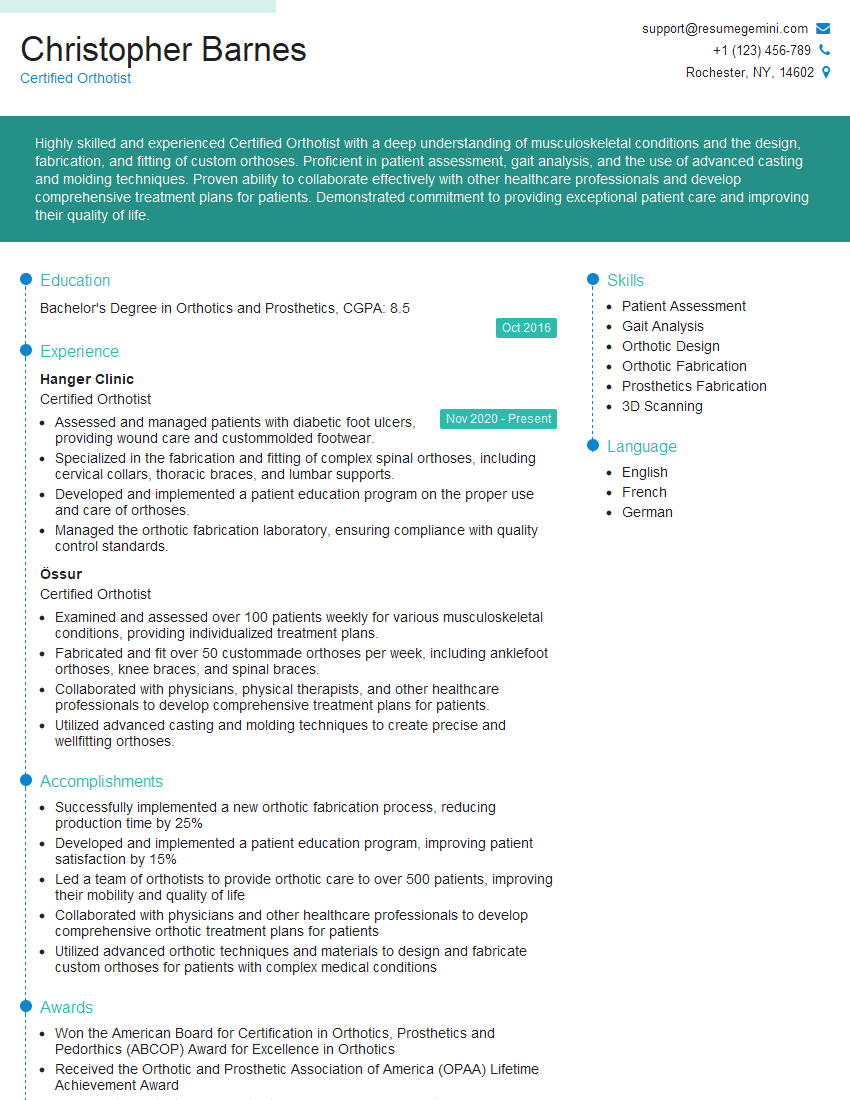
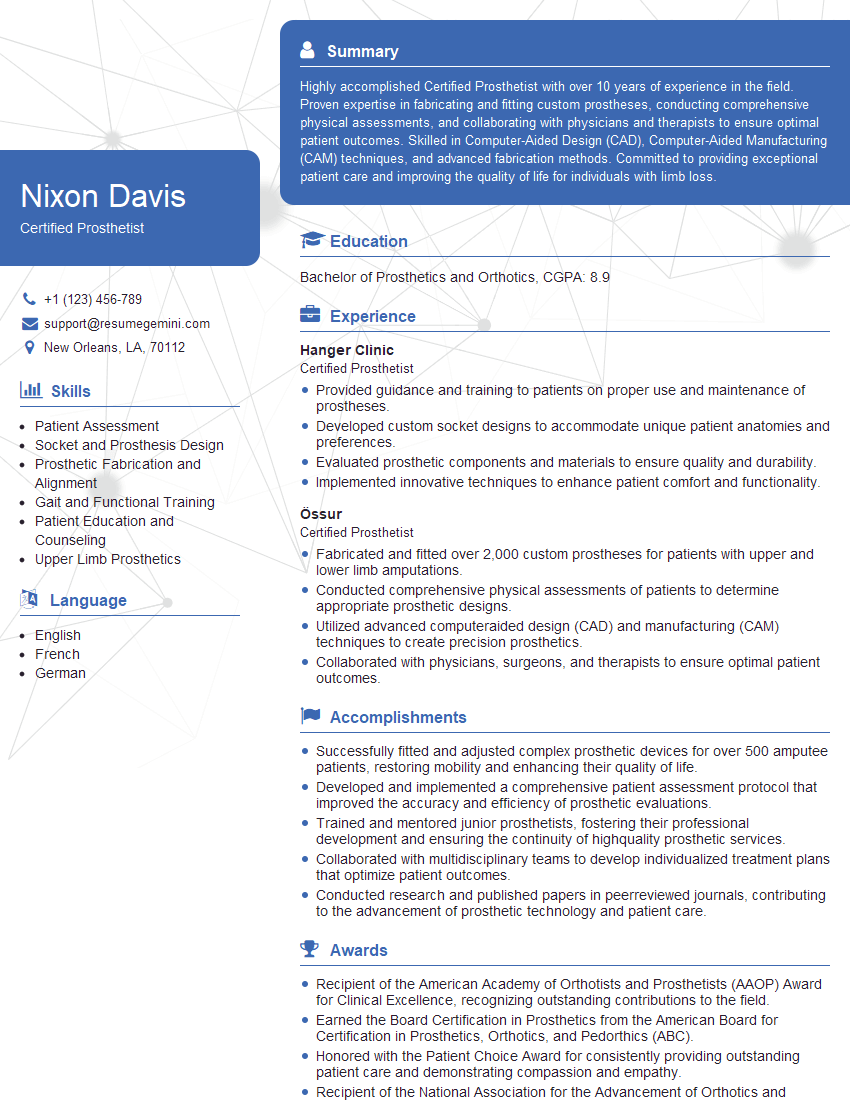
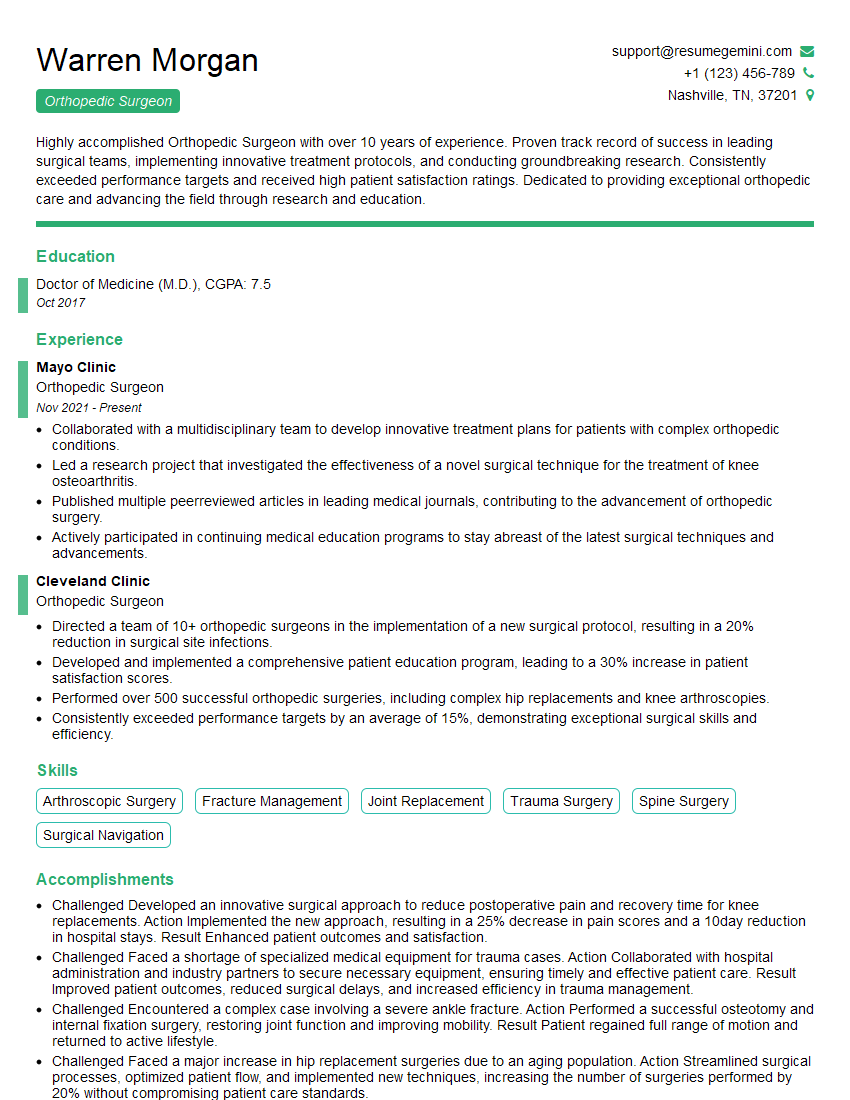
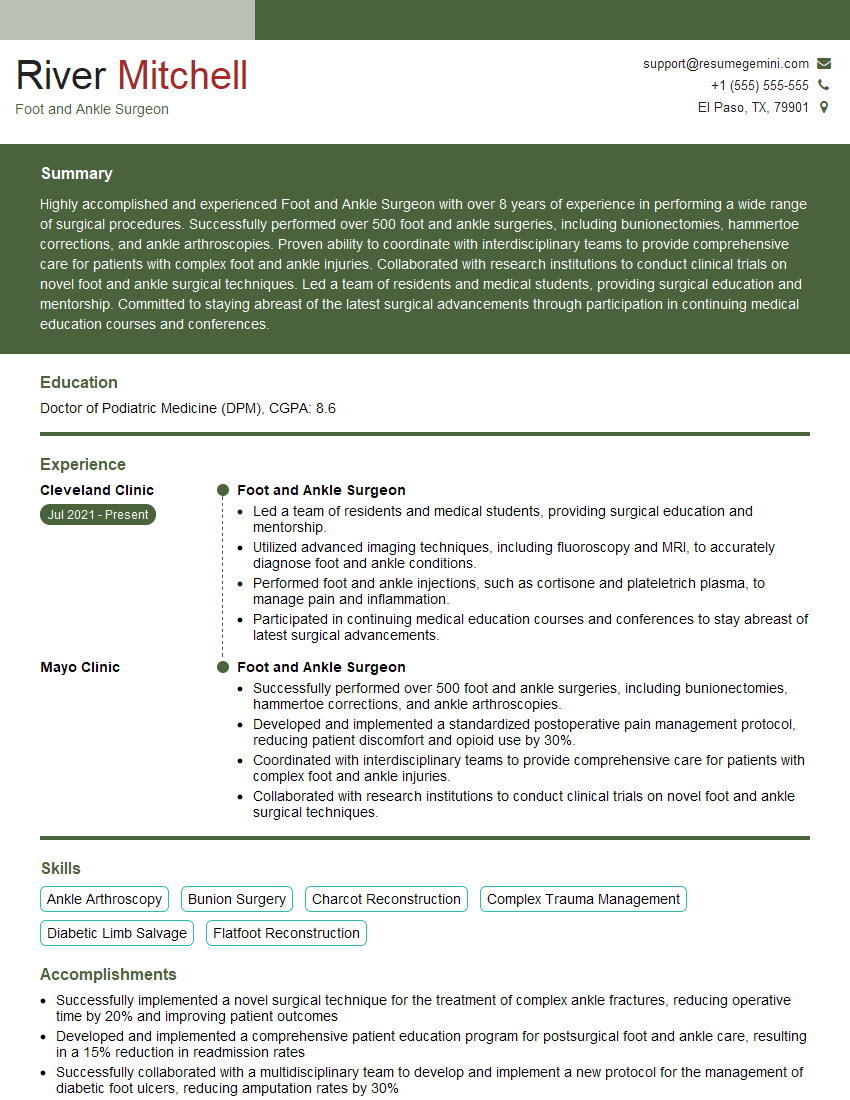
Mastering Foot and Ankle Trauma is crucial for career advancement in orthopedics and podiatry. A strong understanding of these complex injuries demonstrates expertise and increases your value to any healthcare team. To maximize your job prospects, creating an ATS-friendly resume is essential. ResumeGemini can help you build a professional and impactful resume tailored to the specific demands of Foot and Ankle Trauma positions. ResumeGemini provides examples of resumes specifically designed for this field, giving you a head start in crafting a compelling application.
Explore more articles
Users Rating of Our Blogs
Share Your Experience
We value your feedback! Please rate our content and share your thoughts (optional).
What Readers Say About Our Blog
To the interviewgemini.com Webmaster.
Very helpful and content specific questions to help prepare me for my interview!
Thank you
To the interviewgemini.com Webmaster.
This was kind of a unique content I found around the specialized skills. Very helpful questions and good detailed answers.
Very Helpful blog, thank you Interviewgemini team.