Preparation is the key to success in any interview. In this post, we’ll explore crucial Forest Ecosystem Analysis interview questions and equip you with strategies to craft impactful answers. Whether you’re a beginner or a pro, these tips will elevate your preparation.
Questions Asked in Forest Ecosystem Analysis Interview
Q 1. Describe the different levels of organization within a forest ecosystem.
A forest ecosystem, like any complex system, is organized hierarchically. We can understand it through several nested levels:
- Individual Organisms: This is the foundation, encompassing all the living beings – trees, shrubs, herbs, animals, fungi, bacteria, and so on. Each organism has its specific role and interacts with others.
- Population: A group of individuals of the same species inhabiting a specific area. For instance, a population of red oak trees or a population of white-tailed deer.
- Community: All the populations of different species interacting within a specific area. This encompasses the complex web of interactions between plants and animals.
- Ecosystem: This encompasses the community of living organisms (biotic factors) in conjunction with their non-living environment (abiotic factors) like soil, water, and climate. The interactions between these biotic and abiotic components are crucial.
- Landscape: This level involves a mosaic of different ecosystems interacting with each other, creating a larger scale spatial pattern. For example, a landscape might include a forest ecosystem, a grassland ecosystem, and a riparian ecosystem all influencing one another.
- Biosphere: This is the highest level, representing the sum of all ecosystems on Earth. It’s a global perspective focusing on the interconnectedness of all living things.
Understanding these levels is crucial for effective forest management and conservation. For example, knowing the population dynamics of a keystone species (like a specific bird or insect) can help predict the health of the entire forest community.
Q 2. Explain the concept of forest succession and its various stages.
Forest succession is the gradual process of change in species composition, community structure, and ecosystem function over time in a forest. It’s like watching a forest grow up! There are two main types:
- Primary succession: This begins on bare rock or other substrates with no pre-existing soil, such as after a volcanic eruption. Pioneer species, like lichens and mosses, slowly break down the rock, creating soil for more complex plants to establish. This takes a very long time.
- Secondary succession: This starts in an area where soil already exists, but the vegetation has been disturbed, such as after a forest fire or logging. The process is generally faster than primary succession because soil and some seeds or roots remain.
Stages of succession often include:
- Pioneer Stage: Fast-growing, light-demanding species dominate. Think of early successional species like fireweed or aspen.
- Intermediate Stage: More shade-tolerant species begin to establish. This might include various shrubs and smaller trees.
- Climax Stage: A relatively stable community develops, often characterized by long-lived, shade-tolerant trees. This stage varies based on climate and other factors; it’s not always one single, uniform type of forest.
Understanding succession is critical for guiding forest restoration and management practices. For instance, knowing the successional trajectory of a particular area allows us to predict future forest composition and guide interventions to accelerate recovery from disturbances.
Q 3. How do you assess forest health using various indicators?
Assessing forest health involves a multifaceted approach, using a range of indicators reflecting various aspects of the ecosystem. We look at:
- Tree health indicators: This includes measures of tree growth (diameter increment, height growth), crown condition (density, dieback), and presence of diseases or pests. We might use visual assessments, tree coring, or remote sensing data.
- Soil health indicators: Soil quality, organic matter content, nutrient levels, and erosion rates are critical. Soil samples and analyses are needed.
- Water quality indicators: Water clarity, nutrient levels (nitrogen, phosphorus), and pH can indicate ecosystem stress. Water samples and analysis are vital.
- Biodiversity indicators: Species richness and abundance of plants, animals, fungi, and microorganisms are crucial. Surveys, camera traps, and DNA metabarcoding can be used.
- Stand structure indicators: This includes measures of tree density, size distribution, species composition, and spatial arrangement. Forest inventories provide this data.
The combination of multiple indicators provides a more comprehensive picture than any single indicator in isolation. For example, observing high levels of insect infestation coupled with poor tree growth and soil erosion would strongly indicate poor forest health.
Q 4. What are the key components of a forest inventory?
A forest inventory is a systematic process of collecting data on forest resources. Key components include:
- Species composition: Identifying the different tree species present and their relative abundance.
- Tree size and structure: Measuring tree diameter at breast height (DBH), height, and crown dimensions to assess tree growth and structure. This helps us understand the stand’s age and stage of development.
- Density: Determining the number of trees per unit area (e.g., trees per hectare).
- Volume: Estimating the amount of wood present in the stand.
- Biomass: Assessing the total mass of living organic matter (trees, understory vegetation).
- Carbon stocks: Determining the amount of carbon stored in trees, soil, and understory vegetation.
- Geographic location: Precisely locating the inventory plots using GPS or GIS technologies.
- Forest health indicators: Measuring indicators like tree mortality, disease incidence, and pest damage.
These data are crucial for forest management decisions, such as planning timber harvests, assessing carbon sequestration potential, or developing conservation strategies. For example, a forest inventory could reveal areas with high densities of mature trees ready for harvesting or areas suffering from insect infestation requiring immediate action.
Q 5. Explain the role of GIS and remote sensing in forest ecosystem analysis.
GIS (Geographic Information Systems) and remote sensing play transformative roles in forest ecosystem analysis, offering powerful tools for data acquisition, analysis, and visualization. Remote sensing, using satellites or aerial platforms, provides large-scale data on forest cover, structure, and condition. This includes:
- Satellite imagery: Provides information on forest extent, species composition, biomass, and forest change over time (deforestation, reforestation).
- LiDAR (Light Detection and Ranging): A laser-based technology that creates highly accurate 3D models of forest structure, providing detailed information on tree height, density, and canopy cover.
GIS then acts as the platform to integrate and analyze this remotely sensed data with other data sources, such as forest inventory plots, soil maps, and climate data. GIS allows us to:
- Map forest characteristics: Create thematic maps illustrating forest cover types, biomass distribution, or areas at risk of wildfire.
- Model forest processes: Simulate the impacts of climate change, harvesting, or pests on forest ecosystems.
- Monitor forest change: Track deforestation rates, forest regrowth, and changes in forest structure over time.
For example, we could use remote sensing to identify areas experiencing significant tree mortality due to drought and then use GIS to overlay this information with soil moisture data to understand the factors driving the mortality.
Q 6. How do you interpret forest stand structure data?
Interpreting forest stand structure data involves understanding the spatial arrangement and size distribution of trees within a stand. Key aspects include:
- Density: The number of trees per unit area. High density can lead to competition for resources, while low density might indicate past disturbances.
- Size distribution: The distribution of trees across different diameter classes. An uneven-aged stand has a wide range of sizes, whereas an even-aged stand has trees of similar size, indicating a common origin (e.g., after a fire or clear-cut).
- Species composition: The relative proportions of different tree species. This reflects the environmental conditions and past disturbances.
- Spatial pattern: The arrangement of trees in space. This can range from random to clustered (e.g., due to seed dispersal patterns) to regular (e.g., due to competition).
- Vertical structure: The layering of the vegetation, from the forest floor to the canopy. This influences light availability and habitat complexity.
These data are analyzed using various statistical methods and visualized through graphs and maps. For instance, a diameter distribution graph can reveal whether a forest is even-aged or uneven-aged. A spatial point pattern analysis can indicate whether trees are randomly distributed or clustered.
Q 7. Describe common forest ecosystem services and their economic valuation.
Forest ecosystems provide a wide range of invaluable services, often termed ecosystem services. These can be broadly categorized and valued:
- Provisioning services: These are the tangible goods obtained from forests, such as timber, fuelwood, non-timber forest products (NTFPs like mushrooms, medicinal plants), and water. Valuation is typically based on market prices or estimated values for non-market goods.
- Regulating services: These are the benefits obtained from the regulation of ecosystem processes, including carbon sequestration (reducing climate change), water purification, soil erosion control, and climate regulation. Valuation often involves cost-benefit analysis, comparing the costs of restoring these services with their benefits.
- Supporting services: These are fundamental processes that support other ecosystem services, such as nutrient cycling, primary productivity (plant growth), and soil formation. Valuation is challenging and often relies on indirect methods.
- Cultural services: These are the non-material benefits that people obtain from forests, including recreation, tourism, spiritual enrichment, and aesthetic value. Valuation often involves contingent valuation methods, surveys that estimate people’s willingness to pay.
Economic valuation is crucial for demonstrating the economic importance of forests and justifying their conservation and sustainable management. For example, the value of carbon sequestration in a forest can be estimated by calculating the avoided costs of climate change impacts. Similarly, the value of water purification provided by a forest can be assessed by comparing the costs of treating polluted water with the costs of managing the forest to ensure clean water.
Q 8. What are the major threats to forest biodiversity?
Forest biodiversity, the variety of life within forest ecosystems, faces numerous threats. Think of it like a complex web – if you remove one strand, the whole thing can unravel. Major threats include:
- Habitat Loss and Fragmentation: Deforestation for agriculture, logging, and urbanization breaks up continuous forests, isolating populations and reducing genetic diversity. Imagine a large, thriving community suddenly split into tiny, isolated groups – their survival chances drastically decrease.
- Climate Change: Shifting temperatures, altered precipitation patterns, and increased frequency of extreme weather events disrupt forest ecosystems, leading to species migration, range shifts, and increased susceptibility to pests and diseases. It’s like changing the environment’s temperature too rapidly for the organisms to adapt.
- Invasive Species: Non-native species can outcompete native flora and fauna, disrupting established ecological interactions and causing biodiversity loss. This is similar to introducing a new, stronger predator into a previously balanced food web.
- Pollution: Air, water, and soil pollution can negatively impact forest health and biodiversity. Pollutants can weaken trees, making them more vulnerable to diseases and pests. It’s like poisoning the soil and water that sustains the forest.
- Overexploitation: Unsustainable harvesting of timber, wildlife, and non-timber forest products can deplete resources and disrupt ecological balance. Think of overfishing – removing too many individuals from a population can lead to its collapse.
Addressing these threats requires integrated approaches, including conservation efforts, sustainable forest management, and climate change mitigation strategies.
Q 9. Explain the impact of climate change on forest ecosystems.
Climate change significantly impacts forest ecosystems. It’s not just about temperature; it’s a complex interplay of factors. Increased temperatures lead to:
- Altered Species Distributions: Species may shift their ranges towards higher altitudes or latitudes to track suitable climatic conditions, leading to potential range overlaps and competition.
- Changes in Phenology: The timing of seasonal events, such as flowering and leafing, may shift, disrupting interactions between species (e.g., pollinators and plants). Imagine bees emerging too late for the flowers they depend on.
- Increased Pest and Disease Outbreaks: Warmer temperatures and altered precipitation patterns can favor the spread of pests and diseases, harming tree health and forest productivity.
- Increased Frequency and Intensity of Extreme Weather Events: More frequent wildfires, droughts, storms, and floods can severely damage forests, leading to mortality and habitat loss.
- Changes in Forest Composition: Some tree species may decline while others become more dominant, leading to shifts in forest structure and function.
These impacts vary greatly depending on the specific forest type, location, and climate change projections. Understanding these impacts is crucial for developing effective forest adaptation and conservation strategies.
Q 10. How do you assess the carbon sequestration potential of a forest?
Assessing the carbon sequestration potential of a forest involves estimating the amount of carbon dioxide a forest can absorb and store. This is a multi-step process involving:
- Forest Inventory: Determining the forest’s area, tree species composition, density, and biomass using field surveys and remote sensing techniques like LiDAR. Think of it like taking a census of the trees.
- Allometric Equations: Using mathematical models to estimate aboveground biomass (AGB) from easily measurable tree parameters like diameter at breast height (DBH) and height. These equations are specific to tree species and region.
- Belowground Biomass Estimation: Estimating the carbon stored in roots and soil organic matter. This is more challenging than estimating AGB and often relies on root sampling and soil analysis.
- Carbon Density Calculation: Calculating the amount of carbon stored per unit area (e.g., tons of carbon per hectare) by multiplying the biomass by the carbon fraction (typically around 50% for dry biomass).
- Accounting for Carbon Fluxes: Considering carbon gains through photosynthesis and losses through respiration, decomposition, and disturbances (e.g., wildfires).
Sophisticated models that integrate these aspects, incorporating climate projections, can predict future carbon sequestration potential under various scenarios. This information is critical for climate change mitigation strategies and carbon market mechanisms.
Q 11. Describe various forest management practices and their ecological impacts.
Forest management practices aim to balance human needs with ecological integrity. Different practices have varying ecological impacts:
- Clear-cutting: Removing all trees in a given area. This practice can lead to soil erosion, habitat loss, and altered water cycles, but it can also promote regeneration of certain species.
- Shelterwood Cutting: Gradually removing trees over several harvests, leaving some trees to provide shelter and seed sources. This is more ecologically friendly than clear-cutting, promoting more gradual regeneration.
- Selection Cutting: Removing individual trees or small groups of trees, leaving the majority of the forest intact. This is the least disruptive method, maintaining forest structure and biodiversity.
- Prescribed Burning: Controlled fires to reduce fuel loads, promote regeneration, and improve habitat for certain species. If properly managed, prescribed burns can improve forest health and reduce risks of larger, more destructive wildfires.
- Reforestation and Afforestation: Planting trees in deforested areas or establishing forests in previously treeless lands. This is crucial for restoring habitat and enhancing carbon sequestration.
Sustainable forest management practices integrate ecological principles to minimize negative impacts and enhance the long-term productivity and biodiversity of forests.
Q 12. How do you analyze forest soil properties and their relationship to vegetation?
Analyzing forest soil properties and their relationship to vegetation is crucial for understanding forest ecosystem functioning. The process involves:
- Soil Sampling: Collecting soil samples at different depths and locations within the forest to capture spatial variability. The sampling strategy depends on the research question and the scale of the study.
- Laboratory Analysis: Measuring various soil properties, including texture, organic matter content, nutrient levels (e.g., nitrogen, phosphorus, potassium), pH, and water holding capacity. These analyses provide insights into soil fertility and water availability.
- Vegetation Surveys: Assessing vegetation composition, density, and growth using field surveys, remote sensing data, or existing vegetation maps. This provides information about the species present and their relative abundance.
- Statistical Analysis: Using statistical methods to analyze the relationships between soil properties and vegetation characteristics. Correlations or regressions can identify which soil properties are most strongly related to vegetation growth and diversity.
Understanding these relationships helps in predicting vegetation responses to changes in soil conditions, developing site-specific forest management strategies, and assessing the impacts of environmental change on forest ecosystems.
Q 13. What are the key factors influencing forest productivity?
Forest productivity, the rate at which a forest produces biomass, is influenced by a complex interplay of factors. Think of it as a recipe – you need all the ingredients in the right amounts for a successful outcome.
- Climate: Temperature, precipitation, and sunlight availability are crucial determinants of photosynthesis and tree growth. Optimal temperature and rainfall ranges vary depending on the tree species.
- Soil Conditions: Soil texture, nutrient availability, water holding capacity, and pH influence root growth and nutrient uptake. Poor soil conditions can limit growth, even if other factors are favorable.
- Tree Species Composition: Different tree species have different growth rates and resource requirements. Selecting appropriate tree species for a given site is crucial for maximizing productivity.
- Competition: Competition for resources (light, water, nutrients) among trees can affect growth rates. Proper spacing and thinning can reduce competition and enhance productivity.
- Disturbances: Events like wildfires, insect outbreaks, and diseases can significantly reduce forest productivity. Managing these disturbances is critical for maintaining forest health and productivity.
Understanding these factors is essential for sustainable forest management, aiming to optimize productivity while maintaining forest health and ecological integrity.
Q 14. Explain the concept of forest fragmentation and its ecological consequences.
Forest fragmentation is the breaking up of large, continuous forest areas into smaller, isolated patches. Imagine a beautiful tapestry being cut into many smaller pieces. This has significant ecological consequences:
- Habitat Loss: Fragmentation directly reduces the total area of habitat available for species. Smaller patches may not support viable populations of some species.
- Edge Effects: The edges of forest fragments experience different environmental conditions than the interior, leading to increased exposure to sunlight, wind, and invasive species. This can negatively affect sensitive species.
- Reduced Genetic Diversity: Isolated populations in fragments have reduced gene flow, increasing the risk of inbreeding and reduced adaptive capacity. This limits their ability to evolve and adapt to environmental changes.
- Increased Isolation: Fragmentation can limit movement and dispersal of species, restricting access to resources and mates. It’s like isolating individuals, reducing their options and chances for reproduction.
- Altered Species Composition: Fragmentation can lead to the loss of specialist species (those with narrow habitat requirements) and the dominance of generalist species (those adaptable to a wider range of conditions).
Understanding the ecological consequences of forest fragmentation is vital for developing effective conservation strategies, such as habitat restoration, wildlife corridors, and protected area management.
Q 15. How do you use statistical methods in forest ecosystem analysis?
Statistical methods are crucial for analyzing the complex data generated in forest ecosystem studies. They allow us to move beyond simple observation to quantify patterns, test hypotheses, and make predictions about forest dynamics.
For instance, we use regression analysis to model the relationship between tree growth and environmental factors like rainfall and temperature. Imagine trying to understand how climate change impacts forest productivity – regression analysis helps us quantify that impact.
Spatial statistics, such as geostatistics, are vital when dealing with geographically referenced data. We might use kriging to interpolate tree density across a landscape based on sample measurements, creating a continuous surface map of forest density. This allows us to visualize and analyze spatial patterns that simple point data can’t capture.
ANOVA (Analysis of Variance) helps compare the mean differences in various aspects of forest ecosystems, such as species richness or biomass between different management regimes. For example, we could compare the species diversity in a sustainably managed forest compared to one that’s heavily logged.
Multivariate analysis, including Principal Component Analysis (PCA) and cluster analysis, helps to reduce the dimensionality of large datasets and identify underlying patterns in complex data. This is particularly useful when dealing with numerous environmental and biological variables.
Finally, time series analysis allows us to study the changes in forest ecosystems over time. For example, we can use this to monitor the impact of a disturbance, such as a wildfire, on forest regeneration over several years.
Career Expert Tips:
- Ace those interviews! Prepare effectively by reviewing the Top 50 Most Common Interview Questions on ResumeGemini.
- Navigate your job search with confidence! Explore a wide range of Career Tips on ResumeGemini. Learn about common challenges and recommendations to overcome them.
- Craft the perfect resume! Master the Art of Resume Writing with ResumeGemini’s guide. Showcase your unique qualifications and achievements effectively.
- Don’t miss out on holiday savings! Build your dream resume with ResumeGemini’s ATS optimized templates.
Q 16. Describe different forest types and their characteristic features.
Forest types are broadly categorized based on climate, dominant tree species, and overall structure. Think of them like distinct personalities within the larger forest world!
- Tropical Rainforests: Characterized by high rainfall, warm temperatures, high biodiversity, and a dense canopy. Think of the Amazon – a true marvel of biodiversity.
- Temperate Deciduous Forests: Found in regions with moderate rainfall and distinct seasons, these forests feature trees that shed their leaves annually. Think of the forests of Eastern North America, with their beautiful autumn colours.
- Boreal Forests (Taiga): These vast coniferous forests dominate high-latitude regions with long, cold winters and short, cool summers. Imagine the sprawling evergreen forests of Canada and Russia.
- Mediterranean Forests: These forests are adapted to hot, dry summers and mild, wet winters. They often feature drought-resistant trees and shrubs. Think of the characteristic landscapes of the Mediterranean region.
- Savannas: These are transitional ecosystems between forests and grasslands, with scattered trees and a grassy understory. The African savanna, with its iconic acacia trees, is a prime example.
Each type exhibits unique ecological processes, species composition, and resilience to disturbances. The characteristics are interlinked, and understanding these interactions is key to effective forest management.
Q 17. What are the challenges in monitoring forest health over large areas?
Monitoring forest health over large areas presents significant challenges. It’s like trying to take the temperature of a giant, constantly shifting organism!
- Scale and Accessibility: Remote sensing technologies, like satellite imagery, are crucial but can be expensive and require specialized skills to interpret. Access to remote locations can also be difficult and dangerous.
- Data Heterogeneity: Data from various sources (ground measurements, aerial surveys, satellite data) might have varying resolutions, accuracy, and consistency, making integration and analysis challenging.
- Cost and Logistics: Maintaining a long-term monitoring program across a vast area is incredibly expensive, requiring substantial funding and logistical planning.
- Technological Limitations: Current technologies may not capture all aspects of forest health. For example, detecting subtle changes in soil health or early signs of insect infestation can be difficult.
- Data Analysis and Interpretation: Processing and interpreting large datasets requires specialized software and expertise, and there is always a level of uncertainty inherent in ecological modeling.
Addressing these challenges often requires integrated approaches combining different technologies and data sources, utilizing advanced analytical techniques, and collaborative efforts across institutions and stakeholders.
Q 18. Explain the principles of sustainable forest management.
Sustainable forest management aims to balance the ecological, economic, and social values of forests for present and future generations. It’s about finding the sweet spot between utilization and conservation.
Key principles include:
- Maintaining Biodiversity: Protecting the full spectrum of species and genetic diversity within the forest. This ensures ecosystem resilience.
- Protecting Ecosystem Services: Acknowledging and safeguarding the crucial roles forests play in water regulation, carbon sequestration, climate regulation, and soil protection.
- Economic Viability: Ensuring that forest management practices generate economic benefits for local communities and industries, promoting sustainable livelihoods.
- Social Equity: Ensuring that forest management decisions are fair and transparent, respecting the rights and interests of all stakeholders, including indigenous communities.
- Adaptive Management: Continuously monitoring and evaluating forest conditions and adjusting management practices based on new information and changing circumstances. It’s about learning and adapting along the way.
- Long-Term Perspective: Planning and managing forests for the long term, considering the potential impacts of future changes in climate, land use, and other factors.
In practice, this could involve techniques like selective logging, reforestation efforts, and community-based forest management initiatives.
Q 19. How do you assess the impact of forest disturbances (e.g., fire, pests) on ecosystem function?
Assessing the impact of disturbances like fire and pests involves a multifaceted approach, combining field observations with remote sensing and modeling. Imagine it as a detailed forensic investigation of the ecosystem’s wounds.
Remote Sensing: Satellite imagery and aerial photography can map the extent and severity of the disturbance, allowing us to monitor the changes in vegetation cover over time.
Field Surveys: On-the-ground assessments are crucial to measure changes in tree mortality, regeneration rates, species composition, and soil properties. This involves sampling various plots across the affected area.
Ecosystem Modeling: Simulations help predict the long-term consequences of the disturbance on forest structure, function, and biodiversity. Models can incorporate factors such as fire intensity, pest population dynamics, and climate conditions.
Indicators of Ecosystem Function: We monitor specific indicators like nutrient cycling, water infiltration, and carbon storage to assess the overall health and resilience of the ecosystem post-disturbance.
For example, after a wildfire, we would monitor the rate of tree regeneration, changes in soil erosion, and the recovery of biodiversity. We would compare these with pre-fire data to quantify the impact of the disturbance and to guide recovery efforts.
Q 20. Describe the role of keystone species in forest ecosystems.
Keystone species are those whose presence or absence disproportionately affects the structure and function of the entire ecosystem. They are like the central pillars holding up a magnificent structure. Their removal can trigger cascading effects throughout the community.
Examples include:
- Beavers: Their dam-building activities modify stream flow, create habitat for other species, and alter forest structure.
- Large predators (e.g., wolves): They regulate prey populations, preventing overgrazing and maintaining biodiversity.
- Certain tree species: They might provide crucial nesting sites for birds or food for insects, supporting a diverse array of life.
Understanding keystone species and their roles is vital for conservation. Loss of a keystone species can lead to significant shifts in ecosystem dynamics, sometimes resulting in biodiversity loss and ecosystem degradation.
Q 21. How do you design a forest monitoring program?
Designing a forest monitoring program requires careful planning and consideration of several factors. It’s like creating a detailed blueprint for a long-term study.
1. Defining Objectives: Clearly state the goals of the monitoring program. What specific aspects of the forest ecosystem do you want to track? (e.g., tree growth, biodiversity, water quality)
2. Selecting Indicators: Identify key indicators that reflect the overall health and function of the ecosystem. These should be measurable, relevant, and responsive to changes.
3. Spatial and Temporal Scales: Determine the geographic area to be monitored and the frequency of data collection. This will depend on the objectives and available resources.
4. Data Collection Methods: Choose appropriate methods for data collection, considering cost, accuracy, and feasibility. This could involve ground surveys, remote sensing, or a combination of both.
5. Data Analysis and Reporting: Develop a plan for data analysis and reporting, including the use of statistical methods and visualization tools. This ensures that the data is effectively used.
6. Stakeholder Engagement: Engage stakeholders (scientists, land managers, local communities) throughout the process. Their input ensures the program is relevant and addresses their concerns.
7. Resource Allocation: Secure adequate funding and human resources to ensure the long-term sustainability of the program.
A well-designed monitoring program allows for the continuous assessment of forest ecosystem health and enables adaptive management strategies based on scientific evidence.
Q 22. What are the limitations of different forest inventory methods?
Forest inventory methods, crucial for understanding forest resources, each have inherent limitations. The choice of method depends on factors like budget, required accuracy, and the specific objectives of the study.
Complete enumeration: While offering the highest accuracy, it’s incredibly time-consuming and expensive, impractical for large forests. Think of trying to count every single tree in the Amazon rainforest – impossible!
Sampling methods (e.g., plot sampling): These are more cost-effective but introduce sampling error. The size and number of plots, as well as their spatial distribution, significantly impact accuracy. A poorly designed sampling strategy can lead to biased estimates of forest characteristics like biomass or tree density. For instance, if all plots are located in easily accessible areas, they might not represent the whole forest’s diversity.
Remote sensing (e.g., satellite imagery, LiDAR): Remote sensing provides broad-scale information quickly, but accuracy can be affected by cloud cover, atmospheric conditions, and the resolution of the sensor. Identifying individual tree species from satellite imagery can be challenging, particularly in dense forests. We might get a good estimate of forest cover, but detailed species composition might be less precise.
Inventory using aerial photographs: This method relies on the interpretation of aerial images and can be time consuming and prone to errors caused by shadowing or low resolution images.
Ultimately, understanding the limitations of each method is essential for selecting the most appropriate technique and interpreting results with caution, always considering the potential sources of error and uncertainty.
Q 23. Explain the importance of biodiversity in maintaining ecosystem resilience.
Biodiversity, the variety of life at all levels, from genes to ecosystems, is fundamental to ecosystem resilience. A resilient ecosystem can withstand and recover from disturbances like droughts, wildfires, or pest outbreaks. Imagine a forest with only one type of tree: a single disease could wipe it out completely.
High biodiversity increases the likelihood that some species will possess traits that allow them to survive and thrive under changing conditions. This functional diversity ensures the ecosystem continues to function even if some species are lost. For example, different tree species might have different drought tolerance levels; in a drought, some will survive, maintaining forest structure and preventing soil erosion. A diverse understory with a variety of shrubs and herbs contributes to soil nutrient cycling and provides habitat for a broader range of animals. A diverse mycorrhizal network supports tree health and resilience.
Furthermore, biodiversity promotes ecosystem stability by buffering against the effects of environmental changes. Increased species richness often leads to increased ecosystem productivity and resource use efficiency. A diverse forest is simply more robust and better equipped to handle challenges.
Q 24. How do you interpret data from forest ecosystem models?
Interpreting data from forest ecosystem models requires a combination of scientific understanding, statistical skills, and careful consideration of model limitations. These models simulate complex interactions within forests, providing insights into future scenarios or understanding past events.
Interpretation begins with understanding the model’s structure, assumptions, and limitations. For instance, some models might oversimplify certain processes, leading to uncertainties in predictions. We need to consider the range of possible outputs, not just the single best prediction.
Visualization techniques like graphs and maps are crucial for understanding the model outputs. Comparing model outputs with real-world data, using statistical metrics like R-squared to evaluate model performance, is also vital. Identifying potential biases and uncertainties is key. For example, a model might accurately predict overall biomass but fail to accurately predict the distribution of specific tree species. Always consider the context and the limitations of the model when making interpretations, and clearly communicate those uncertainties.
Sensitivity analyses are often performed to determine which input variables have the greatest impact on the model’s output. This helps identify knowledge gaps and areas needing further research.
Q 25. Describe the role of forest ecosystems in regulating water cycles.
Forest ecosystems play a vital role in regulating water cycles, acting as crucial components of the hydrological cycle. They impact water quantity and quality in numerous ways.
Interception: Tree canopies intercept rainfall, reducing the amount of water that reaches the ground directly. This interception slows down surface runoff, allowing more water to infiltrate the soil. Think of a forest canopy as a giant sponge, absorbing rain and releasing it slowly.
Evapotranspiration: Forests release water vapor into the atmosphere through transpiration (from plants) and evaporation (from the soil). This process helps regulate local and regional climates, affecting rainfall patterns.
Infiltration and Groundwater Recharge: The dense root systems of forests enhance soil infiltration, allowing water to percolate deeper into the ground, recharging groundwater supplies. The organic matter in forest soils improves water retention, reducing runoff and erosion.
Reduced Runoff and Erosion: The dense vegetation cover in forests reduces surface runoff, which minimizes soil erosion and protects water quality by preventing sediment and pollutants from entering streams and rivers. Think of the forest floor as a natural filter.
Deforestation significantly alters these processes, leading to increased runoff, soil erosion, decreased groundwater recharge, and changes in regional rainfall patterns. Understanding these interactions is crucial for sustainable water resource management.
Q 26. What are the ethical considerations in forest management?
Ethical considerations in forest management are paramount and center around balancing human needs with the long-term health of forest ecosystems. These considerations extend beyond simple economic profitability and incorporate ecological, social, and cultural values.
Intergenerational Equity: We have a responsibility to manage forests sustainably, ensuring future generations have access to their resources and benefits. This means avoiding practices that deplete forest resources for short-term gains.
Rights of Indigenous Peoples and Local Communities: Forest management must respect the rights and traditional knowledge of indigenous peoples and local communities who often depend on forests for their livelihoods and have deep cultural connections to them. Free, prior, and informed consent (FPIC) is a key principle here.
Biodiversity Conservation: Maintaining biodiversity is crucial for ecosystem health and resilience. Forest management practices should aim to protect endangered species and maintain habitat diversity.
Transparency and Accountability: Decisions about forest management should be transparent and accountable, involving stakeholders in the decision-making process. This ensures fairness and equity.
Climate Change Mitigation: Forests play a vital role in climate change mitigation through carbon sequestration. Sustainable forest management practices can help protect and enhance this crucial function.
Ethical forest management requires a holistic approach that considers the interconnectedness of ecological, social, and economic factors.
Q 27. How can you incorporate community involvement in forest conservation efforts?
Incorporating community involvement in forest conservation is essential for successful long-term outcomes. Local communities often possess valuable traditional ecological knowledge and have a vested interest in the health of their forests.
Participatory approaches are key. This involves actively engaging communities in all stages of the conservation process, from planning and implementation to monitoring and evaluation. This can take many forms:
Collaborative planning workshops: These workshops provide platforms for communities to share their knowledge, concerns, and priorities.
Community-based monitoring programs: Empowering communities to monitor forest health and biodiversity helps build local capacity and ownership.
Co-management agreements: These agreements formally share responsibility for forest management between government agencies and local communities. This ensures that decisions reflect local needs and knowledge.
Supporting local initiatives: This could involve providing funding or training for community-led reforestation projects, sustainable harvesting practices, or ecotourism ventures.
Education and awareness programs: Raising awareness about the importance of forests and the threats they face can foster a sense of stewardship and responsibility among communities.
By involving communities, conservation efforts become more effective, sustainable, and socially just. It’s about creating a shared vision and ensuring the benefits of forest conservation are shared equitably.
Key Topics to Learn for Forest Ecosystem Analysis Interview
- Forest Inventory and Measurement Techniques: Understanding various methods for assessing forest structure, composition, and growth, including remote sensing and field sampling techniques. Practical application: Designing a sampling strategy for a specific forest type to estimate biomass.
- Ecosystem Dynamics and Modeling: Grasping the principles of forest succession, disturbance regimes (e.g., fire, wind), and the application of ecological models to predict forest responses to environmental change. Practical application: Using a forest growth model to assess the impact of climate change on timber yield.
- Forest Health and Disease: Knowledge of common forest diseases, pests, and their impact on ecosystem function. Practical application: Developing strategies for monitoring and managing forest health risks.
- Data Analysis and Interpretation: Proficiency in statistical analysis and data visualization techniques to interpret forest inventory data, ecological models, and remotely sensed imagery. Practical application: Analyzing forest inventory data to identify spatial patterns of tree species distribution.
- Conservation and Management Strategies: Understanding principles of sustainable forest management, biodiversity conservation, and carbon sequestration. Practical application: Developing a management plan for a forest reserve to achieve specific conservation goals.
- Spatial Analysis and GIS: Familiarity with Geographic Information Systems (GIS) and their application in forest ecosystem analysis, including spatial modeling and mapping. Practical application: Creating maps of forest cover change over time.
Next Steps
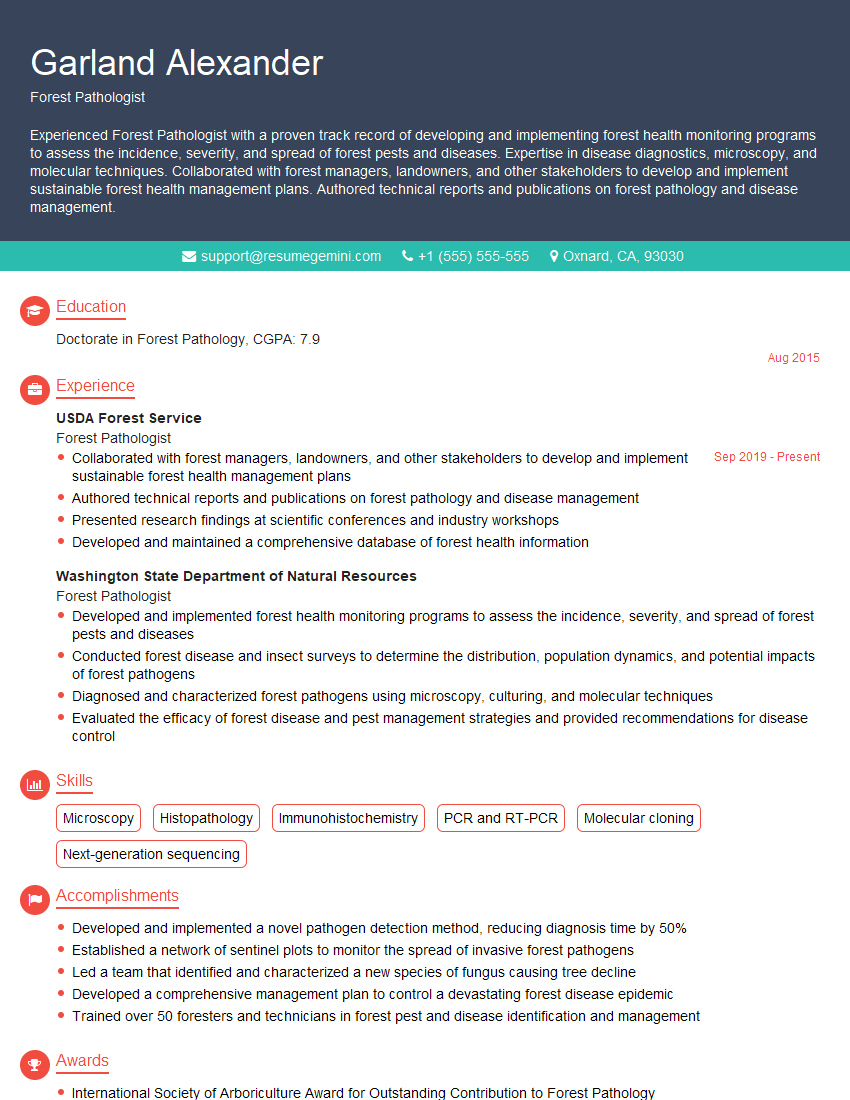
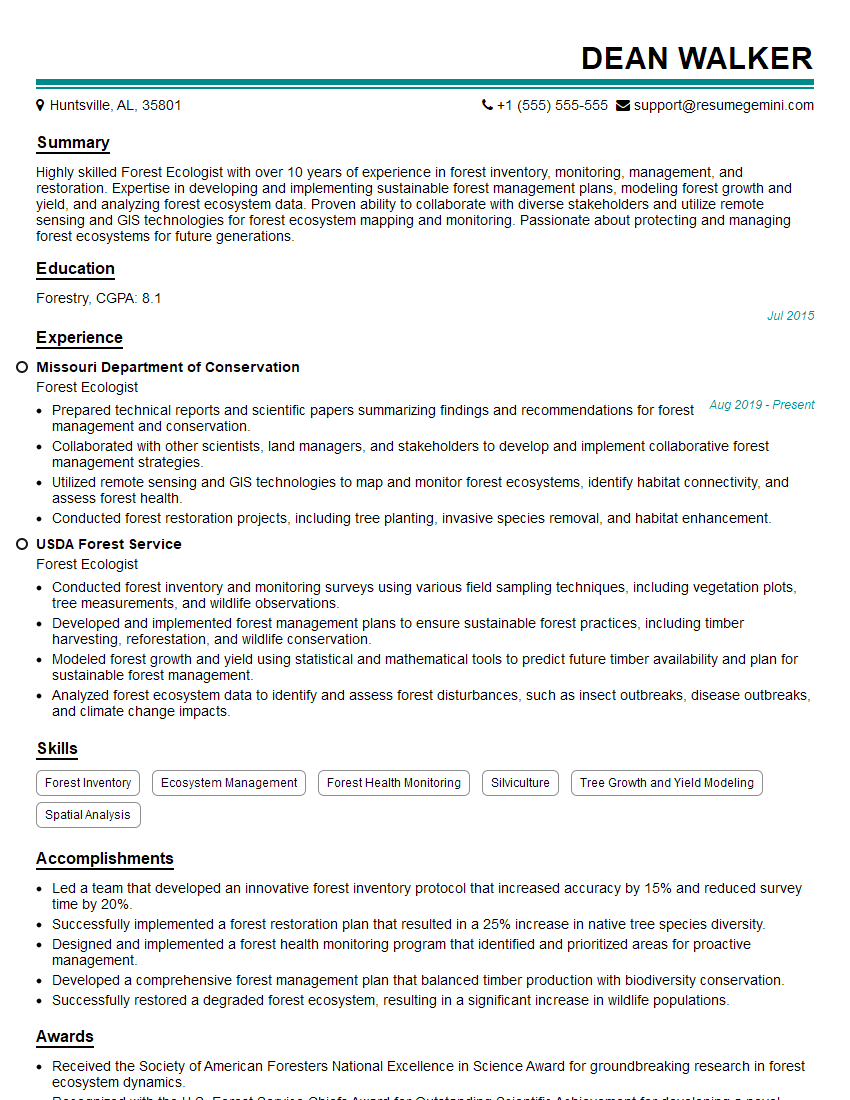
Mastering Forest Ecosystem Analysis opens doors to exciting career opportunities in forestry, environmental consulting, research, and conservation. A strong understanding of these principles is crucial for success in this field. To significantly boost your job prospects, create an ATS-friendly resume that highlights your skills and experience effectively. We strongly recommend using ResumeGemini to build a professional and impactful resume. ResumeGemini offers a streamlined process and provides examples of resumes tailored to Forest Ecosystem Analysis, helping you present your qualifications in the best possible light.

Explore more articles
Users Rating of Our Blogs
Share Your Experience
We value your feedback! Please rate our content and share your thoughts (optional).
What Readers Say About Our Blog
To the interviewgemini.com Webmaster.
Very helpful and content specific questions to help prepare me for my interview!
Thank you
To the interviewgemini.com Webmaster.
This was kind of a unique content I found around the specialized skills. Very helpful questions and good detailed answers.
Very Helpful blog, thank you Interviewgemini team.