Interviews are more than just a Q&A session—they’re a chance to prove your worth. This blog dives into essential Forest Hydrology and Watershed Management interview questions and expert tips to help you align your answers with what hiring managers are looking for. Start preparing to shine!
Questions Asked in Forest Hydrology and Watershed Management Interview
Q 1. Explain the hydrological cycle in a forested watershed.
The hydrological cycle in a forested watershed describes the continuous movement of water within the ecosystem. It begins with precipitation (rain, snow, etc.), which can be intercepted by the canopy, stored on leaves and branches (interception), or fall directly to the forest floor. A portion of the precipitation infiltrates into the soil (infiltration), replenishing soil moisture and groundwater (recharge). Some water flows over the surface (surface runoff), eventually reaching streams and rivers. The rest is taken up by plants through their roots (root uptake) and released into the atmosphere through transpiration. The combined process of evaporation from the soil and transpiration from plants is called evapotranspiration. This water vapor then condenses to form clouds and eventually precipitates again, completing the cycle.
Imagine it like a giant sponge: the forest floor absorbs a significant amount of water, releasing it slowly over time. This contrasts with a deforested area, where most water would run off quickly, leading to increased flooding and reduced groundwater recharge.
Q 2. Describe different methods for measuring streamflow.
Several methods exist for measuring streamflow, each with its own advantages and disadvantages. The most common is the weir method, where a structure is built across the stream to create a controlled flow. The height of the water above the weir is measured, and this is related to the discharge using a rating curve (a relationship between water height and flow rate, specific to the weir’s design and stream geometry).
Another widely used method employs current meters. These instruments measure the velocity of water at various depths and points across the stream cross-section. By multiplying the velocity by the area of each section, total discharge can be calculated.
Acoustic Doppler current profilers (ADCPs) offer a non-intrusive way to measure stream velocity and discharge, using sound waves. This is especially useful in larger, faster-flowing rivers where deploying current meters is dangerous or impractical.
Finally, indirect methods, such as analyzing stream chemistry or using hydrological models to estimate discharge, are employed where direct measurements are difficult or impossible.
Q 3. What are the key factors influencing evapotranspiration in forests?
Evapotranspiration in forests is influenced by a complex interplay of factors. Climate plays a major role, with temperature, humidity, solar radiation, and wind speed all affecting the rate of evaporation and transpiration.
Forest characteristics are equally important: canopy density, leaf area index (LAI – the total area of leaves per unit ground area), and species composition all influence the amount of water transpired.
Soil moisture is another critical factor. When soil moisture is high, transpiration rates are generally higher, but this can be limited by other factors.
Finally, the availability of water in the soil and the physiological condition of the plants (e.g., their stress levels) also influence evapotranspiration.
For instance, a dense forest with high LAI will have higher evapotranspiration than a sparse one, assuming other conditions are similar. Similarly, a hot, dry climate will lead to higher evapotranspiration than a cool, humid one.
Q 4. How do forest characteristics affect infiltration rates?
Forest characteristics significantly impact infiltration rates. Forest litter (accumulated organic matter on the forest floor) acts as a sponge, reducing the impact of rainfall on the soil and increasing infiltration. The soil structure, including its porosity and permeability, determines how easily water can penetrate. Well-structured soils with ample pore space allow for greater infiltration.
Root systems play a crucial role in creating macropores (larger pores) in the soil, enhancing infiltration. Roots also help bind the soil particles together, improving soil stability and reducing surface runoff.
Canopy cover reduces the impact energy of raindrops, decreasing soil compaction and further increasing infiltration. The type and density of vegetation significantly influence the rate of infiltration and runoff. For example, a forest with a dense understory would have a higher infiltration rate compared to a forest with sparse vegetation.
Q 5. Explain the concept of baseflow and its importance in watershed management.
Baseflow is the portion of streamflow that comes from groundwater discharge. It represents the sustained flow of water in a stream, even during dry periods. It’s essentially the groundwater slowly seeping into the stream channel.
Baseflow is crucial in watershed management for several reasons: it sustains aquatic life, providing a stable water source for ecosystems during droughts. It also plays a vital role in maintaining water quality, diluting pollutants and preventing the concentration of contaminants.
Understanding baseflow helps in managing water resources sustainably. It allows for the prediction of streamflow during droughts, enabling informed decision-making regarding water allocation and drought mitigation strategies.
For example, knowing the baseflow contribution allows water managers to predict the minimum streamflow during dry periods, helping them make informed decisions about water withdrawals for irrigation or other uses, minimizing the risk of impacting aquatic ecosystems.
Q 6. Describe various methods for assessing groundwater recharge in forested areas.
Assessing groundwater recharge in forested areas involves various methods. Hydrometric methods rely on measuring changes in groundwater levels in wells. Changes in water table levels after rainfall events can indicate the amount of water infiltrating and recharging the aquifer.
Tracer studies use naturally occurring or artificial tracers (e.g., isotopes, dyes) to follow the movement of water from the surface to the groundwater.
Water balance methods involve estimating the input (precipitation) and output (evapotranspiration, runoff) components of the water balance equation to calculate the remaining water that must have infiltrated into the groundwater.
Numerical modeling using hydrological models that incorporate groundwater flow components allows a more integrated assessment. Such models can estimate groundwater recharge based on various input data, including climate data, soil characteristics, and land use patterns.
Q 7. What are the common types of hydrological models used in watershed analysis?
Many hydrological models are used in watershed analysis, each with strengths and limitations. Conceptual models, like the Soil Conservation Service Curve Number (SCS-CN) method, are relatively simple and require fewer input data but make simplifying assumptions. These are useful for quick assessments but lack the detail of more complex models.
Physically based models, such as the Hydrological Simulation Program – Fortran (HSPF) and SWAT (Soil and Water Assessment Tool), are more complex and computationally intensive. They consider the physical processes governing water flow in detail (e.g., infiltration, runoff, evapotranspiration). They provide higher accuracy but require extensive input data and expertise.
The choice of model depends on the specific objectives of the analysis, data availability, and computational resources. Simple models are suitable for preliminary assessments, whereas more complex models are needed when a high degree of accuracy is required.
For instance, a quick assessment of the impact of land-use change on runoff might use the SCS-CN method, while a detailed study of the hydrological cycle in a large watershed would necessitate a physically-based model like SWAT or HSPF.
Q 8. How do you interpret hydrographs and what information can be derived from them?
Hydrographs are graphical representations of streamflow over time. They’re essentially plots showing the discharge (volume of water passing a point per unit time) of a river or stream against time. Interpreting them is crucial for understanding watershed behavior.
Key information derived from hydrographs includes:
- Peak flow: The highest discharge point, indicating the magnitude of a flood event.
- Time to peak: How long it takes for the streamflow to reach its maximum after a rainfall event. This reveals information about the watershed’s response time and drainage characteristics.
- Recession curve: The falling limb of the hydrograph, reflecting the rate at which the streamflow declines after the peak. This shows the baseflow contribution and the rate of groundwater recharge.
- Baseflow: The portion of streamflow sustained by groundwater discharge, even during dry periods. It’s an indicator of groundwater resources.
- Stormflow: The increase in streamflow directly resulting from a rainfall event. Analysis reveals infiltration rates, runoff patterns and the effectiveness of surface storage within a watershed.
For instance, a hydrograph with a rapid rise and fall indicates a steep, poorly vegetated watershed with high runoff, whereas a hydrograph with a slower rise and fall suggests a more gently sloping watershed with good infiltration and higher water storage capacity. Comparing hydrographs from different years or after management interventions helps assess changes in watershed response.
Q 9. Explain the impact of deforestation on watershed hydrology.
Deforestation significantly alters watershed hydrology. Trees and other vegetation play a crucial role in regulating the water cycle. Their removal has far-reaching consequences:
- Increased runoff: Without tree cover, rainfall directly impacts the soil surface, leading to increased surface runoff and reduced infiltration. This results in higher peak flows during storms and increased flood risk.
- Reduced infiltration and groundwater recharge: Tree roots create pathways for water infiltration into the soil, replenishing groundwater supplies. Deforestation reduces this infiltration, lowering groundwater tables and impacting baseflow in streams.
- Increased soil erosion: Vegetation protects the soil from erosion. Deforestation exposes soil to the erosive forces of rain and wind, leading to sediment transport into streams, affecting water quality and aquatic ecosystems.
- Altered evapotranspiration: Trees intercept and transpire significant amounts of water, returning it to the atmosphere. Deforestation decreases evapotranspiration, leading to less moisture in the atmosphere and potentially impacting local rainfall patterns.
- Increased water temperature: Shade from trees helps regulate stream temperatures. Deforestation results in increased solar radiation reaching the water, raising temperatures, impacting aquatic life and reducing dissolved oxygen.
Imagine a forested watershed acting like a giant sponge, absorbing rainfall and slowly releasing it. Deforestation transforms it into a relatively impermeable surface, accelerating water movement and increasing flood risks. This has cascading effects on downstream communities and ecosystems.
Q 10. Discuss the effects of climate change on forest hydrology.
Climate change is profoundly impacting forest hydrology through shifts in precipitation patterns, temperature, and snowmelt dynamics:
- Changes in precipitation: Increased frequency and intensity of extreme rainfall events lead to more frequent and severe flooding. Conversely, prolonged droughts can cause severe water stress in forests, increasing the risk of wildfires and tree mortality.
- Increased temperatures: Higher temperatures accelerate snowmelt in mountainous regions, leading to altered streamflow patterns with earlier peaks and potentially reduced summer streamflow. Increased evaporation also impacts soil moisture and streamflow.
- Changes in evapotranspiration: Altered temperatures and precipitation patterns directly influence evapotranspiration rates, impacting the water balance of forests.
- Increased frequency of droughts and wildfires: Climate change increases the likelihood and severity of both droughts and wildfires, resulting in substantial damage to forests and significant alteration of hydrological processes, leading to increased runoff and erosion in the post-fire environment.
- Sea level rise: In coastal regions, rising sea levels increase saltwater intrusion into freshwater sources, impacting the quality and availability of water for both forests and human communities.
These combined effects lead to more variable streamflow, increased risk of both floods and droughts, and altered water quality, posing challenges for forest management and water resource planning. The increased frequency and severity of extreme events necessitate proactive adaptation strategies.
Q 11. Describe different techniques for watershed erosion control.
Watershed erosion control techniques focus on minimizing soil loss and sediment transport. Effective strategies combine various approaches:
- Vegetative measures: Planting trees, shrubs, and grasses to stabilize the soil, intercept rainfall, and slow down runoff. Contour farming and agroforestry practices are highly effective in this regard.
- Structural measures: Implementing physical structures like terraces, check dams, and gully plugs to control the flow of water and reduce erosion. These structures create barriers that trap sediment and slow water velocity.
- Engineering practices: Improving drainage systems, constructing sediment basins, and implementing best management practices (BMPs) during construction and forestry activities to minimize soil disturbance.
- Conservation tillage: Minimizing soil disturbance during agricultural operations to maintain soil structure and reduce erosion. No-till farming is a prominent example.
- Riparian buffer strips: Establishing vegetated zones along stream banks to filter pollutants, stabilize banks, and reduce erosion.
For example, in steep slopes, terracing can create level platforms for cultivation, reducing the steepness and thus reducing erosion. In gullies, check dams can slow down water flow, allowing sediment to settle and vegetation to establish.
Q 12. Explain the principles of water quality management in forested watersheds.
Water quality management in forested watersheds aims to maintain the health of aquatic ecosystems and protect human water supplies. Key principles include:
- Protecting riparian areas: Maintaining and restoring riparian buffers is crucial to filter pollutants and stabilize stream banks. These areas act as natural filters, removing sediments, nutrients, and other contaminants.
- Minimizing soil disturbance: Avoiding excessive soil disturbance during logging, road construction, and other activities prevents erosion and reduces the transport of pollutants into streams.
- Managing stormwater runoff: Implementing BMPs to reduce stormwater runoff volume and treat pollutants before they enter waterways. This can involve using vegetated swales, retention ponds, and permeable pavements.
- Monitoring water quality: Regularly monitoring key water quality parameters (e.g., dissolved oxygen, nutrients, pH, turbidity) helps assess the effectiveness of management practices and identify potential problems.
- Integrated watershed management: Adopting a holistic approach that considers the interconnectedness of various components within the watershed (forests, soils, streams, human activities) ensures a sustainable approach to water quality protection.
For instance, sustainable forestry practices, such as selective logging and careful road placement, minimize soil disturbance and protect water quality. Similarly, managing stormwater runoff in urban areas adjacent to forested watersheds reduces pollution loading into streams.
Q 13. What are the common sources of non-point source pollution in forested areas?
Non-point source pollution in forested areas comes from diffuse sources, making identification and control challenging. Common sources include:
- Atmospheric deposition: Airborne pollutants like acid rain and heavy metals can deposit on forest canopies and soils, eventually entering streams.
- Agricultural runoff: Fertilizers, pesticides, and animal waste from adjacent agricultural lands can runoff into forested areas and contaminate streams.
- Forest management activities: Road construction, logging operations, and other forestry activities can lead to soil erosion and the release of pollutants into waterways.
- Wildfires: Burned areas contribute to increased sediment and nutrient loading into streams, affecting water quality.
- Natural processes: Leaching of nutrients from forest soils, natural erosion, and organic matter decomposition can also contribute to non-point source pollution, although generally at lower levels than anthropogenic sources.
For example, acid rain can acidify forest soils, leading to the leaching of aluminum and other metals into streams. Similarly, improper forestry practices can result in increased sediment loads in streams and negatively impact aquatic life.
Q 14. Describe methods for assessing water quality in streams and rivers.
Assessing water quality in streams and rivers involves collecting samples and analyzing various parameters. Methods include:
- Field measurements: Measuring parameters like temperature, pH, dissolved oxygen, turbidity, and conductivity directly in the stream using portable instruments. This provides immediate information on water quality conditions.
- Water sample collection and laboratory analysis: Collecting water samples for detailed laboratory analysis of nutrients (nitrates, phosphates), heavy metals, pesticides, bacteria, and other pollutants. This offers a more comprehensive assessment of water quality.
- Biological assessment: Examining the presence and abundance of aquatic organisms (macroinvertebrates, fish) to assess the health of the stream ecosystem. Certain species are sensitive to pollution, and their presence or absence indicates water quality.
- Sediment analysis: Analyzing sediment samples to determine sediment yield, particle size distribution, and the concentration of pollutants bound to sediments.
- Remote sensing techniques: Utilizing satellite imagery and aerial photography to monitor changes in vegetation, water turbidity, and other indicators of water quality over large areas.
A combination of these methods provides a holistic assessment of water quality. For example, measuring dissolved oxygen in the field gives an immediate indication of potential pollution, while laboratory analysis of nutrients provides a more detailed understanding of pollution sources and levels.
Q 15. How do you design a monitoring program for a forested watershed?
Designing a monitoring program for a forested watershed requires a multi-faceted approach, focusing on key hydrological processes and potential impacts. It begins with clearly defining the objectives – are we assessing the impacts of logging, studying the effects of climate change, or managing water quality for downstream users? Once the objectives are clear, we select the appropriate parameters to monitor.
- Hydrological parameters: This includes precipitation (rain gauges, weather stations), streamflow (stream gauges, weirs), evapotranspiration (eddy covariance, lysimeters), groundwater levels (piezometers), and soil moisture (soil moisture sensors).
- Water quality parameters: This involves monitoring parameters like pH, temperature, dissolved oxygen, nutrients (nitrogen, phosphorus), and sediment load. The specific parameters depend on the watershed’s potential pollution sources (e.g., agricultural runoff, urban development).
- Geomorphic parameters: Monitoring erosion rates, channel morphology changes, and sediment transport can help assess the stability of the watershed.
The spatial arrangement of monitoring sites is crucial. We need a representative network covering different elevation gradients, vegetation types, and potential impact areas. The frequency of data collection also depends on the objectives and the dynamics of the watershed. Daily measurements might be needed for streamflow during storm events, while monthly measurements might suffice for soil moisture in less dynamic areas. Finally, data analysis and interpretation are critical. Statistical analysis, hydrological modeling, and GIS mapping are essential tools to understand the data and draw meaningful conclusions.
For instance, in a watershed affected by forest harvesting, we might focus on monitoring streamflow response to rainfall events before, during, and after logging to quantify changes in peak flows and water yield. A control watershed without logging provides crucial comparison data.
Career Expert Tips:
- Ace those interviews! Prepare effectively by reviewing the Top 50 Most Common Interview Questions on ResumeGemini.
- Navigate your job search with confidence! Explore a wide range of Career Tips on ResumeGemini. Learn about common challenges and recommendations to overcome them.
- Craft the perfect resume! Master the Art of Resume Writing with ResumeGemini’s guide. Showcase your unique qualifications and achievements effectively.
- Don’t miss out on holiday savings! Build your dream resume with ResumeGemini’s ATS optimized templates.
Q 16. Explain the importance of riparian buffers in watershed protection.
Riparian buffers, the vegetated areas alongside streams and rivers, are incredibly important for watershed protection. They act as a natural filter and buffer zone, mitigating the negative impacts of land use activities on water quality and stream health.
- Improved Water Quality: Riparian vegetation intercepts runoff, slowing it down and allowing sediments, nutrients, and pollutants to settle out before reaching the stream. Plant roots also absorb excess nutrients, preventing eutrophication (excessive nutrient enrichment) and harmful algal blooms.
- Streambank Stabilization: The roots of riparian plants bind the soil, preventing erosion and stabilizing stream banks. This reduces sediment loads in the stream and protects aquatic habitats.
- Habitat Provision: Riparian zones provide critical habitat for a variety of wildlife, including fish, amphibians, birds, and mammals. They offer shade, food, and cover, supporting biodiversity.
- Flood Control: Riparian vegetation can help reduce flood risks by slowing down the flow of water and increasing infiltration into the ground.
Imagine a situation without riparian buffers. Heavy rainfall could lead to significant soil erosion, delivering large quantities of sediment into the stream, harming fish and impacting water quality downstream. Riparian buffers act as a natural solution, minimizing these impacts and promoting healthier watersheds.
Q 17. Discuss the role of GIS in watershed management.
GIS (Geographic Information System) plays a vital role in watershed management by providing a powerful platform for integrating, analyzing, and visualizing spatial data. It’s like a digital map that allows us to understand and manage the watershed comprehensively.
- Data Integration: GIS allows us to integrate diverse data layers, such as elevation models, soil maps, land cover information, stream networks, and rainfall data, into a single platform.
- Spatial Analysis: GIS provides tools for performing spatial analysis, such as watershed delineation, slope analysis, and proximity analysis. This helps identify critical areas for conservation, restoration, or management interventions.
- Modeling and Simulation: GIS is often integrated with hydrological models to simulate the flow of water, sediment, and pollutants through the watershed. This allows us to assess the impacts of different management scenarios.
- Visualization and Communication: GIS allows the creation of maps and other visualizations that effectively communicate complex information to stakeholders, policymakers, and the public. This helps in building consensus and ensuring the success of watershed management projects.
For example, using GIS, we can delineate the watershed boundary, identify areas prone to erosion, locate sensitive habitats, and then model the impact of a proposed dam or logging operation on downstream water resources. The results can be presented visually on maps, making complex information accessible to a wide audience.
Q 18. Describe different methods for restoring degraded watersheds.
Restoring degraded watersheds requires a tailored approach, depending on the specific causes of degradation. The methods are often a combination of strategies.
- Reforestation and Afforestation: Planting trees in deforested areas can restore vegetative cover, improving water infiltration, reducing erosion, and enhancing water quality.
- Riparian Buffer Restoration: Establishing or restoring riparian buffers along streams and rivers is essential for mitigating the negative impacts of land use on water resources.
- Erosion Control: Techniques like contour plowing, terracing, and check dams can help reduce soil erosion and sediment transport in degraded areas.
- Water Quality Improvement: Implementing best management practices in agriculture, such as reduced tillage and buffer strips, can help minimize nutrient and sediment runoff into streams.
- Channel Restoration: Restoring degraded stream channels can improve habitat quality, reduce erosion, and enhance the overall ecological functioning of the stream.
For instance, in a watershed degraded by agricultural runoff, restoration might involve establishing buffer strips along streams, implementing conservation tillage practices, and restoring wetlands to filter pollutants. In a watershed impacted by historical logging, reforestation and riparian buffer planting would be central to the restoration process.
Q 19. How do you assess the impact of forest management practices on watershed hydrology?
Assessing the impact of forest management practices on watershed hydrology involves a combination of pre- and post-management monitoring, comparative analysis, and hydrological modeling.
- Monitoring: Establishing monitoring sites before and after forest management activities is crucial. This involves measuring parameters such as streamflow, water quality, soil moisture, and erosion rates.
- Comparative Analysis: Comparing pre- and post-management data helps determine the changes in hydrological processes resulting from forest management. Control watersheds, unaffected by management activities, serve as valuable points of comparison.
- Hydrological Modeling: Hydrological models can be used to simulate the effects of various forest management scenarios on watershed hydrology. This allows us to predict potential impacts and guide management decisions.
For example, comparing streamflow data from a watershed subjected to clear-cut logging with a control watershed allows us to assess the increase in peak flows and changes in water yield resulting from the removal of forest cover. Hydrological modeling can then help refine our understanding by simulating different logging scenarios and their potential consequences.
Q 20. What are the challenges in managing water resources in forested areas?
Managing water resources in forested areas presents several challenges.
- Balancing competing demands: Water resources in forested areas are often used for multiple purposes, including drinking water supply, hydropower generation, recreation, and ecological needs. Balancing these competing demands requires careful planning and management.
- Climate change impacts: Changes in precipitation patterns, increased frequency of extreme weather events, and rising temperatures can significantly impact water availability and water quality in forested areas.
- Forest management impacts: Forest harvesting, road construction, and other forest management activities can influence watershed hydrology, affecting water yield, peak flows, and water quality.
- Data scarcity: In many forested areas, data on water resources is limited, making it difficult to assess the status and trends of water resources and develop effective management strategies.
- Remote and challenging terrain: Accessing and monitoring water resources in remote forested areas can be challenging due to difficult terrain and limited infrastructure.
For example, in a watershed supplying drinking water to a downstream city, managing water resources requires balancing the needs of the city with maintaining the ecological integrity of the forest ecosystem. This requires careful planning, collaboration, and effective communication among stakeholders.
Q 21. Explain the concept of sustainable forest management in relation to water resources.
Sustainable forest management (SFM) is crucial for ensuring the long-term availability and quality of water resources. It’s about managing forests in a way that meets the needs of the present without compromising the ability of future generations to meet their own needs, particularly regarding water.
- Protecting water quality: SFM practices such as maintaining riparian buffers, avoiding excessive road construction, and minimizing soil disturbance help protect water quality by reducing erosion and pollutant runoff.
- Maintaining hydrological processes: SFM practices aim to maintain the natural hydrological processes of the watershed, including infiltration, evapotranspiration, and streamflow, ensuring a balanced water cycle.
- Conserving biodiversity: SFM recognizes the importance of biodiversity for the health of the watershed. Maintaining diverse forest ecosystems helps ensure the resilience of the watershed to various disturbances.
- Community engagement: SFM involves the participation of local communities in decision-making processes, ensuring that management decisions reflect local needs and priorities.
Consider a watershed where the local community relies on both timber and clean water from a forested area. Sustainable forest management might involve selectively harvesting timber while maintaining sufficient forest cover to protect water quality and regulate streamflow. This approach considers both economic and ecological aspects, aiming for long-term sustainability.
Q 22. Describe the use of remote sensing techniques in forest hydrology.
Remote sensing is invaluable in forest hydrology because it allows us to observe and collect data over large areas inaccessible by traditional methods. Techniques like satellite imagery and aerial photography provide crucial information about forest cover, topography, and water bodies. This data is then used to analyze various hydrological parameters.
- Estimating Evapotranspiration: Satellite imagery, particularly with Normalized Difference Vegetation Index (NDVI), helps determine the health and biomass of vegetation, which directly impacts evapotranspiration (the process of water movement from the Earth’s surface to the atmosphere).
- Mapping Watershed Boundaries: High-resolution imagery and LiDAR (Light Detection and Ranging) data allow us to precisely map watershed boundaries, crucial for hydrological modeling and water resource management.
- Monitoring Soil Moisture: Advanced sensors on satellites can measure microwave radiation, enabling estimation of soil moisture content. This is critical for drought monitoring and flood prediction.
- Assessing Snow Cover: Satellite imagery can track the extent and depth of snowpack, a vital water resource in many regions. This informs us about potential runoff during snowmelt periods.
For instance, during a recent project, we used Landsat imagery to monitor deforestation in a watershed, which significantly impacted the hydrological regime. The decreased evapotranspiration due to the loss of trees led to increased runoff and sediment yield downstream, demonstrating the interconnectedness of forest cover and hydrological processes.
Q 23. How do you analyze hydrological data using statistical methods?
Analyzing hydrological data using statistical methods is fundamental to understanding patterns, trends, and relationships within hydrological systems. This involves a range of techniques, from simple descriptive statistics to sophisticated time series analysis.
- Descriptive Statistics: We begin by calculating basic statistics like mean, median, standard deviation, and range to summarize the data. This gives a general overview of the data’s central tendency and variability.
- Frequency Analysis: This helps determine the probability of extreme events like floods or droughts. We use probability distributions (e.g., Gumbel, Log-Pearson Type III) to model the frequency of these events and estimate their return periods.
- Time Series Analysis: Many hydrological processes are time-dependent. We use techniques like autocorrelation, cross-correlation, and spectral analysis to identify patterns and trends in time series data (e.g., rainfall, streamflow). Models like ARIMA (Autoregressive Integrated Moving Average) are often employed for forecasting.
- Regression Analysis: This helps establish relationships between variables. For example, we might use regression to model the relationship between rainfall and runoff, or between land use and water quality.
For example, in a recent flood risk assessment, we used frequency analysis to determine the probability of a 100-year flood event and incorporated this information into the development of flood mitigation strategies. This involved fitting a suitable probability distribution to historical streamflow data and calculating the corresponding discharge for a 100-year return period.
Q 24. Explain the concept of water balance in a watershed.
The water balance of a watershed describes the relationship between the inputs, outputs, and storage of water within the system. It’s essentially a bookkeeping exercise for water, representing the law of conservation of mass. Think of it like balancing your checkbook: inputs must equal outputs plus changes in storage.
The basic water balance equation is:
P = ET + Q + ΔSwhere:
P= Precipitation (input)ET= Evapotranspiration (output)Q= Streamflow (output)ΔS= Change in storage (in soil, groundwater, etc.)
Understanding the water balance is crucial for managing water resources. If we know the inputs (precipitation) and can estimate the outputs (ET and Q), we can determine the change in storage, which gives insights into groundwater recharge, soil moisture levels, and the availability of water for various uses.
For example, during a drought, careful monitoring of the water balance can inform water allocation decisions. By understanding the depletion of storage (ΔS), water managers can implement restrictions and conservation measures to ensure sufficient water supplies.
Q 25. What are the different types of dams and their impact on downstream hydrology?
Dams are structures built to control and store water, but different types have varying impacts on downstream hydrology. The choice of dam type depends on factors like the site’s geology, hydrology, and intended purpose.
- Earthfill Dams: Constructed using compacted earth and rock, these are relatively inexpensive but can be prone to seepage and erosion.
- Rockfill Dams: Built using rock materials, they are more stable and durable than earthfill dams.
- Concrete Gravity Dams: Massive concrete structures that rely on their own weight for stability. They are very strong but expensive to build.
- Arch Dams: Curved concrete structures that transfer water pressure to the abutments (surrounding rock formations). They are highly efficient but require suitable geological conditions.
Downstream Impacts:
- Altered Streamflow Regimes: Dams regulate streamflow, reducing peak flows during floods and potentially increasing low flows during dry periods. This can significantly alter the downstream ecosystem, affecting aquatic life and riparian vegetation.
- Sediment Trapping: Dams trap sediment, reducing the sediment load downstream. This can lead to channel incision (deepening of the riverbed) and increased bank erosion.
- Water Temperature Changes: Dams can alter water temperature downstream, affecting aquatic organisms sensitive to temperature changes.
- Changes in Water Quality: Water released from dams can have different chemical and biological characteristics compared to natural river flows.
For example, the construction of large dams on major rivers can have profound effects on downstream ecosystems and agricultural practices. Careful planning and mitigation measures are crucial to minimize negative impacts.
Q 26. How do you conduct a watershed-scale water quality assessment?
Watershed-scale water quality assessments involve a comprehensive evaluation of the chemical, physical, and biological characteristics of water within a watershed. It’s a multi-step process requiring careful planning and execution.
- Data Collection: This involves collecting water samples from various locations within the watershed, including streams, rivers, lakes, and groundwater. We also gather data on land use, soil type, and precipitation.
- Water Quality Parameter Analysis: Laboratory analysis of water samples determines the concentrations of various pollutants, such as nutrients (nitrogen and phosphorus), heavy metals, pesticides, and bacteria.
- Statistical Analysis: We employ statistical methods to analyze the data, identifying trends, spatial patterns, and correlations between water quality parameters and other factors.
- Source Identification: By combining water quality data with information on land use and other factors, we attempt to identify the sources of pollution within the watershed.
- Modeling: Hydrological and water quality models can simulate water flow and pollutant transport within the watershed, helping to predict future water quality conditions and evaluate the effectiveness of different management strategies.
For example, a recent assessment we conducted identified agricultural runoff as the primary source of nutrient pollution in a watershed. This informed the development of best management practices for farmers to reduce fertilizer use and improve water quality.
Q 27. Describe your experience with hydrological modeling software (e.g., HEC-HMS, SWAT).
I have extensive experience using hydrological modeling software, primarily HEC-HMS and SWAT. Both are powerful tools for simulating hydrological processes at various scales.
- HEC-HMS (Hydrologic Engineering Center’s Hydrologic Modeling System): I’ve used HEC-HMS extensively for rainfall-runoff modeling, flood forecasting, and water resource management. The software’s strength lies in its user-friendly interface and ability to handle complex hydrological processes. I’ve used it to simulate the effects of urbanization and climate change on flood frequency in various watersheds. For example, in one project, we utilized HEC-HMS to evaluate the impact of proposed dam projects on downstream flood risk.
- SWAT (Soil and Water Assessment Tool): SWAT is a powerful tool for simulating long-term hydrological and water quality processes. I’ve utilized SWAT to assess the impact of land use change and climate change on water yield, sediment yield, and nutrient transport in agricultural watersheds. For instance, we used SWAT to evaluate the effects of different conservation practices on water quality in an agricultural region, providing valuable insights for policy-makers.
My experience encompasses model calibration and validation, sensitivity analysis, and scenario planning, allowing me to effectively use these tools to address various hydrological challenges and support informed decision-making.
Key Topics to Learn for Forest Hydrology and Watershed Management Interview
- Hydrological Processes in Forests: Understanding interception, infiltration, evapotranspiration, and subsurface flow; their influence on water yield and streamflow generation.
- Watershed Characterization: Analyzing topographic features, soil types, vegetation cover, and land use to assess watershed response to precipitation and other hydrological events. Practical application includes using GIS software for spatial analysis.
- Water Quality in Forests: Exploring the impact of forest management practices on water quality parameters (e.g., nutrients, sediment, pollutants). Practical application involves designing and interpreting water quality monitoring programs.
- Forest Management and Hydrology: Examining the effects of various forestry practices (e.g., clear-cutting, selective logging, reforestation) on hydrological processes and water resources. Problem-solving includes evaluating the trade-offs between timber production and watershed health.
- Modeling and Simulation: Familiarity with hydrological models (e.g., SWAT, HEC-HMS) for predicting water flow and water quality under various scenarios. Practical application includes model calibration and validation using field data.
- Sustainable Watershed Management: Understanding the principles of sustainable forest management in the context of water resource management. This includes incorporating climate change considerations into watershed management strategies.
- Data Analysis and Interpretation: Proficiency in statistical analysis of hydrological data and the ability to present findings clearly and effectively. This includes understanding and interpreting hydrological time series.
Next Steps
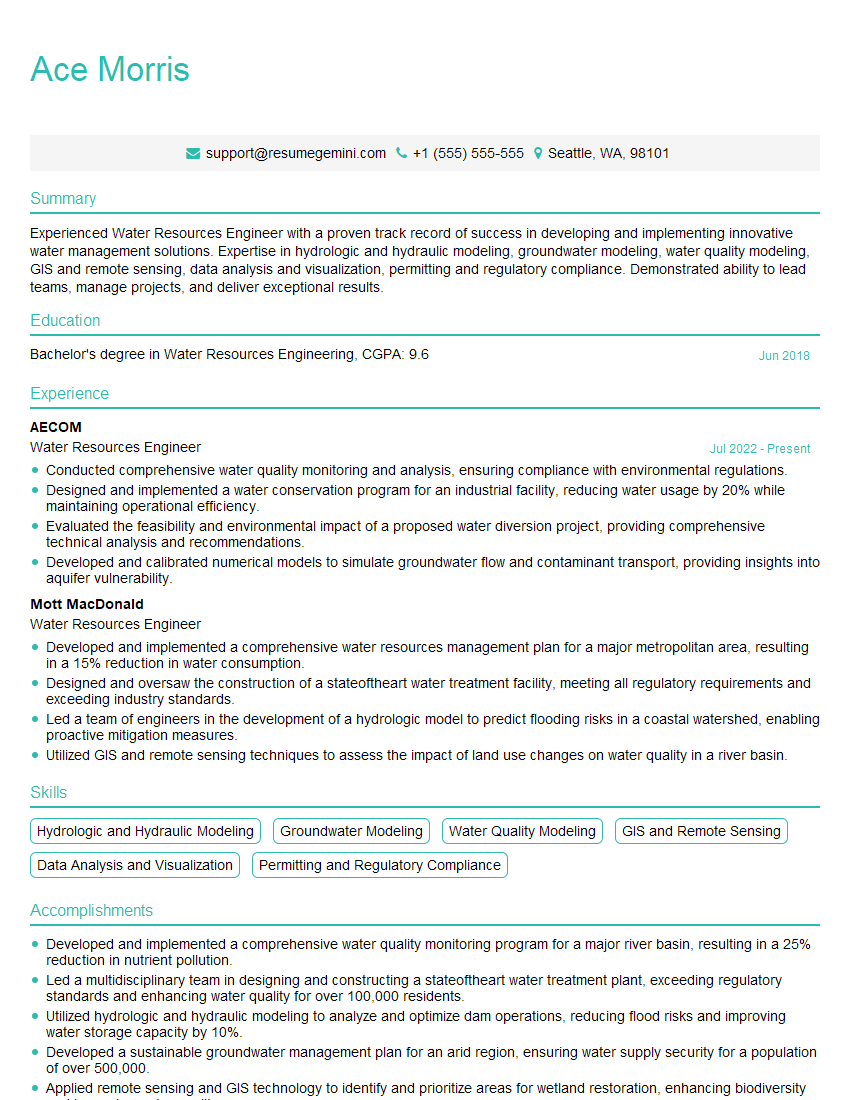
Mastering Forest Hydrology and Watershed Management opens doors to a rewarding career with significant impact on environmental conservation and resource management. A strong understanding of these principles is crucial for roles in environmental consulting, government agencies, and research institutions. To maximize your job prospects, creating a compelling and ATS-friendly resume is essential. ResumeGemini is a trusted resource to help you build a professional resume that showcases your skills and experience effectively. We provide examples of resumes tailored to Forest Hydrology and Watershed Management to guide you in creating a winning application. Invest time in crafting a powerful resume – it’s your first impression!





Explore more articles
Users Rating of Our Blogs
Share Your Experience
We value your feedback! Please rate our content and share your thoughts (optional).
What Readers Say About Our Blog
To the interviewgemini.com Webmaster.
Very helpful and content specific questions to help prepare me for my interview!
Thank you
To the interviewgemini.com Webmaster.
This was kind of a unique content I found around the specialized skills. Very helpful questions and good detailed answers.
Very Helpful blog, thank you Interviewgemini team.