Interviews are more than just a Q&A session—they’re a chance to prove your worth. This blog dives into essential Fundraising Software (e.g., ActBlue, DonorPerfect) interview questions and expert tips to help you align your answers with what hiring managers are looking for. Start preparing to shine!
Questions Asked in Fundraising Software (e.g., ActBlue, DonorPerfect) Interview
Q 1. Explain your experience with database management in a fundraising context.
Database management in fundraising is crucial for effectively tracking donors, managing donations, and analyzing fundraising performance. It involves organizing, storing, and retrieving donor information, ensuring data integrity and accuracy. My experience includes designing and implementing robust database structures, defining data fields, and establishing data entry protocols to minimize errors. I’m proficient in using SQL for querying and manipulating data, allowing me to extract valuable insights for strategic decision-making. For example, I once restructured a poorly organized database in DonorPerfect, resulting in a 30% improvement in reporting efficiency and a reduction in data entry errors by 20%. This involved normalizing the database, creating custom queries for report generation, and implementing data validation rules.
Q 2. How familiar are you with ActBlue’s reporting features?
I’m very familiar with ActBlue’s reporting features. They provide a range of tools for analyzing campaign performance, including donation summaries, donor demographics, and fundraising trends. I’ve extensively utilized their pre-built reports, such as donation breakdowns by payment method and recurring giving reports. I also have experience creating custom reports using their advanced reporting options. This allows for a deeper dive into campaign effectiveness, identifying areas for improvement and optimizing fundraising strategies. For instance, I used ActBlue’s reporting to identify a particular demographic segment that had a significantly higher conversion rate, enabling us to target future campaigns more effectively towards this group. The data visualization tools are also very helpful in presenting these findings to stakeholders.
Q 3. Describe your experience importing and exporting data in DonorPerfect.
My experience with data import and export in DonorPerfect involves utilizing various methods, such as CSV files, Excel spreadsheets, and database connections. I’ve successfully imported donor data from various sources, ensuring data consistency and accuracy. I’m adept at mapping data fields to ensure the proper integration into the DonorPerfect system. The process often requires careful data cleaning and transformation prior to import to avoid errors and inconsistencies. Similarly, exporting data for analysis or for use in other systems is a regular part of my workflow. I am proficient in customizing export formats to meet specific needs, ensuring data integrity and ease of use for recipients. A recent project involved importing a large donor list from a legacy system, requiring significant data cleansing and mapping to ensure a smooth transition. The successful completion of this project resulted in a more accurate and comprehensive database.
Q 4. How would you troubleshoot a data entry error in a fundraising database?
Troubleshooting data entry errors requires a systematic approach. First, I would identify the nature of the error, whether it’s a data type mismatch, a duplicate entry, or an incorrect value. Then I’d check data validation rules and constraints to see if they’re properly set up and functioning correctly. I might also examine audit trails to pinpoint when and how the error occurred. For example, if I found duplicate donor entries, I’d use deduplication tools to merge the entries, preserving the most accurate information. If it’s a data type mismatch, I might need to adjust the data field parameters. In other cases, I might use queries to locate and correct the specific errors. Preventing future errors involves implementing better data validation and user training programs.
Q 5. What is your experience with data cleansing and deduplication?
Data cleansing and deduplication are critical for maintaining data quality. Data cleansing involves identifying and correcting inaccurate, incomplete, irrelevant, or duplicated data. Deduplication focuses specifically on identifying and merging duplicate records. I use a combination of automated tools and manual review to achieve this. For example, in one instance, I used DonorPerfect’s built-in deduplication tools to identify and merge over 500 duplicate records. Following this, I manually reviewed the merged records to ensure accuracy. To prevent future duplicates, I implemented stricter data entry protocols and enhanced validation rules. My approach to this task is always to prioritize data accuracy and maintain the integrity of the database. Think of it like spring cleaning for your database – it ensures that your valuable information is clean, consistent, and ready for action.
Q 6. Describe your experience with fundraising campaign management software.
My experience with fundraising campaign management software extends across multiple platforms. I’ve utilized software that allows for the creation and management of online fundraising campaigns, tracking donations, and generating reports. This involves setting up campaign goals, tracking progress, and analyzing results. I’m familiar with features like email marketing integration, donor segmentation, and online donation processing. For example, I once managed a large-scale crowdfunding campaign using a platform that enabled real-time donation tracking, donor communication tools, and detailed reporting capabilities. Successful management of this campaign significantly improved fundraising outcomes and donor engagement. The software allowed for targeted messaging to specific donor groups, leading to higher conversion rates and ultimately exceeding the fundraising goal.
Q 7. How would you use fundraising software to track donor engagement?
Fundraising software provides various tools for tracking donor engagement. I would use features such as donation history tracking, communication logs (emails, phone calls, letters), event participation records, and online activity (website visits, email opens). By analyzing this data, I can identify patterns of donor behavior, segment donors based on engagement level, and tailor communication strategies accordingly. For instance, I might identify donors who have consistently given over several years and create a personalized communication plan to nurture their relationship and encourage continued support. Conversely, I could target less engaged donors with specific outreach campaigns to re-engage them. The key is to leverage the data to personalize interactions and foster stronger relationships with donors.
Q 8. Explain your understanding of data privacy and security in fundraising.
Data privacy and security are paramount in fundraising. We’re handling sensitive information – donor names, addresses, financial details – and must comply with regulations like GDPR and CCPA. This means implementing robust security measures such as encryption both in transit and at rest, strong password policies, access control limiting who can view what data, and regular security audits. We also need clear and transparent privacy policies explaining how donor data is collected, used, and protected, giving donors control over their information. Think of it like a bank – you wouldn’t trust them without stringent security protocols, and the same applies to fundraising.
For example, in my previous role, we used a fundraising software that had built-in encryption and data masking capabilities. We also conducted regular penetration testing to identify vulnerabilities before malicious actors could exploit them. We ensured all staff received training on data privacy best practices, including the importance of secure password management and recognizing phishing attempts. Furthermore, we meticulously documented all data processing activities to easily demonstrate compliance with data protection regulations.
Q 9. How would you train new staff on using fundraising software?
Training new staff on fundraising software is a multi-stage process. I start with an overview of the software’s purpose and functionality, then move to hands-on training. I’d use a combination of methods: short introductory videos, step-by-step guides, and interactive workshops. The training would be tailored to the individual’s role; a data entry specialist would need different training than someone managing donation appeals. We’d start with basic tasks like data entry and report generation, gradually moving to more advanced features like donor segmentation and campaign management. Regular quizzes and assessments would ensure comprehension and provide opportunities for feedback and improvement. Finally, ongoing support and mentoring are crucial to maintain proficiency and address any arising issues. I always make myself available for questions and provide ongoing support, understanding that learning curves vary.
For instance, when training on DonorPerfect, I’d begin with the basics of navigating the interface and inputting donor data correctly, focusing on data accuracy and consistency. We’d then progress to running basic reports and finally creating custom reports using the query builder, demonstrating how those reports can inform our fundraising strategies.
Q 10. What are the key performance indicators (KPIs) you’d track in fundraising software?
Key Performance Indicators (KPIs) are crucial for measuring fundraising effectiveness. In fundraising software, I’d track metrics such as:
- Donor Acquisition Cost (DAC): The cost of acquiring a new donor.
- Average Gift Size: The average donation amount.
- Donor Retention Rate: The percentage of donors who donate repeatedly.
- Conversion Rate: The percentage of website visitors or email recipients who make a donation.
- Fundraising ROI (Return on Investment): The return on investment for fundraising campaigns.
- Number of New Donors: A simple, yet valuable indicator of growth.
Analyzing these KPIs helps us understand what’s working, what’s not, and allows us to refine our strategies for better results. For example, a low conversion rate might indicate a problem with our website design or call to action, whereas a declining retention rate could suggest a need for improved donor stewardship.
Q 11. How would you segment donors using a fundraising database?
Donor segmentation is crucial for targeted fundraising. It involves dividing your donor base into groups based on shared characteristics. Using fundraising databases like ActBlue or DonorPerfect, we can segment donors by various criteria such as:
- Giving history: Past donation amounts, frequency, and methods.
- Demographics: Age, location, and occupation (if provided).
- Engagement level: Email open rates, event attendance, and website visits.
- Giving purpose: Areas of interest based on past donations.
For instance, we might segment donors into high-value donors, recurring donors, lapsed donors, or those interested in specific programs. This allows us to tailor our communication and fundraising appeals, increasing their effectiveness and building stronger relationships.
// Example of a simple segmentation query in SQL (replace table and column names as needed):SELECT * FROM donors WHERE donation_amount > 1000; //High-value donors
Q 12. Describe your experience with creating and managing fundraising appeals.
I have extensive experience in creating and managing fundraising appeals, from initial concept development to post-campaign analysis. My approach is strategic and data-driven. I begin by defining clear objectives and target audiences, based on the organization’s needs and available resources. Then, I craft compelling narratives and calls to action, adapting the message to the specific segment. The appeals utilize various channels, including email, direct mail, and social media, depending on the audience and campaign goals. Post-campaign, I analyze the results meticulously, identifying what resonated and areas for improvement in future appeals. For example, in a recent campaign for a wildlife conservation organization, I segmented donors based on their interest in specific species. This targeted approach resulted in a 20% increase in donations compared to a previous untargeted campaign.
Q 13. How familiar are you with the different donor communication features in your preferred fundraising software?
I’m very familiar with the donor communication features in several fundraising software platforms. ActBlue, for instance, offers robust email marketing capabilities, allowing for personalized email creation, automated email sequences, and detailed performance tracking. DonorPerfect provides similar features, but also incorporates tools for creating and managing direct mail campaigns, including features for mail merge and address management. These features allow for highly personalized and targeted communication with donors, fostering stronger relationships and increasing engagement. I’m adept at using these features to create compelling email newsletters, targeted donation requests, and thank you messages. I understand the importance of A/B testing different communication strategies to optimize results and ensure best practices for deliverability and avoiding spam filters.
Q 14. Describe a time you identified and resolved a data integrity issue in a fundraising database.
In a previous role, we discovered inconsistencies in our donor database regarding address information. Some records had incomplete addresses, while others contained duplicates. This posed a problem for accurate direct mail campaigns and potentially violated data privacy regulations if we had sent mail to an incorrect or outdated address. To resolve this, I implemented a multi-step process:
- Data cleansing: We used data deduplication tools within the software to identify and merge duplicate records.
- Address verification: We integrated a third-party address verification service to standardize and validate addresses.
- Data validation: We implemented stricter data entry protocols to prevent future inconsistencies. This involved training staff on proper data entry techniques and using data validation rules within the software.
- Regular data audits: We established a regular data audit schedule to proactively identify and address potential data integrity issues before they escalated.
This systematic approach not only resolved the immediate issue but also prevented similar problems in the future, ensuring the accuracy and reliability of our donor database. It also improved the efficiency of our direct mail campaigns and ensured we were compliant with data privacy laws.
Q 15. How would you utilize fundraising software to identify major gift prospects?
Identifying major gift prospects is crucial for maximizing fundraising impact. Fundraising software like DonorPerfect or ActBlue allows for sophisticated prospect identification through several methods. We can leverage data already present within the system, such as donation history, volunteer activity, and engagement with communications. For example, individuals who have consistently donated large sums over several years are prime candidates. The software allows for segmentation and filtering based on these criteria, helping to create a prioritized list of potential major donors.
Furthermore, the software often allows integration with external data sources such as wealth screening services. This can add valuable insights into an individual’s net worth, philanthropic giving history, and other relevant information that might not be present in your internal database. This enriched profile helps to score prospects based on their likelihood to give significantly.
Finally, the software facilitates relationship management; tracking interactions, notes from conversations, and planned cultivation activities all contribute to a comprehensive picture of each prospect, guiding your engagement strategy and enabling more effective stewardship of potential major gifts.
Career Expert Tips:
- Ace those interviews! Prepare effectively by reviewing the Top 50 Most Common Interview Questions on ResumeGemini.
- Navigate your job search with confidence! Explore a wide range of Career Tips on ResumeGemini. Learn about common challenges and recommendations to overcome them.
- Craft the perfect resume! Master the Art of Resume Writing with ResumeGemini’s guide. Showcase your unique qualifications and achievements effectively.
- Don’t miss out on holiday savings! Build your dream resume with ResumeGemini’s ATS optimized templates.
Q 16. How proficient are you in using SQL queries for data extraction and analysis?
I’m highly proficient in using SQL queries for data extraction and analysis within fundraising contexts. My expertise extends to writing complex queries to extract and analyze information from large datasets within fundraising databases. I frequently use SQL to segment donor populations based on various criteria such as donation amount, frequency, giving history, and demographic information.
For instance, I can use a query like this to identify high-value donors who haven’t donated in the past year:
SELECT donor_id, donor_name, SUM(donation_amount) AS total_donated FROM donations WHERE donation_date >= DATE('now', '-2 years') GROUP BY donor_id HAVING SUM(donation_amount) > 10000 AND MAX(donation_date) < DATE('now', '-1 year');This query demonstrates my ability to perform complex data manipulation and analysis essential for strategic fundraising decisions.
Q 17. What are the limitations of using spreadsheets for fundraising data management?
While spreadsheets are useful for simple data management, they have significant limitations when it comes to managing fundraising data. The most critical issue is scalability and security. Spreadsheets become unwieldy and prone to errors with large datasets typical of significant fundraising operations. Data integrity is difficult to maintain across multiple contributors and versions. The risk of accidental data deletion or corruption is high.
Furthermore, spreadsheets lack the robust reporting and analytical capabilities of dedicated fundraising software. Generating comprehensive reports, performing complex analyses, and tracking campaign performance effectively is incredibly challenging in a spreadsheet. Collaboration among team members can be difficult, leading to inconsistencies and conflicts. Finally, spreadsheets typically offer minimal security features, making them vulnerable to data breaches and unauthorized access, which is a major concern for sensitive donor information.
Q 18. How would you ensure data accuracy and consistency across multiple fundraising systems?
Data accuracy and consistency are paramount in fundraising. When working with multiple systems, achieving this requires a multi-pronged approach. Firstly, establishing clear data standards and definitions across all systems is crucial. This ensures that information is recorded and interpreted consistently, regardless of the source. For example, defining what constitutes a 'major gift' or 'recurring donation' must be consistent.
Secondly, implementing data integration strategies, such as using APIs or ETL (Extract, Transform, Load) processes, automates data transfer between systems, minimizing manual entry and the associated errors. Regular data quality checks and audits using dedicated tools or SQL queries are necessary to identify and correct inaccuracies and inconsistencies. Finally, training staff on proper data entry procedures and best practices is crucial to ensure everyone understands and follows these standards.
Q 19. Describe your experience integrating fundraising software with other systems (e.g., accounting software).
I have extensive experience integrating fundraising software with other systems, particularly accounting software. In previous roles, I successfully integrated DonorPerfect with QuickBooks, enabling seamless transfer of financial data between the systems. This streamlined financial reporting and reconciliation processes. The integration involved configuring data mappings to ensure that donation records from DonorPerfect accurately reflected in QuickBooks. This included creating customized reports in both systems to track financial data and verify the accuracy of the transferred information.
Beyond accounting software, I've also worked with CRM systems and email marketing platforms to create comprehensive, integrated fundraising ecosystems. The process always begins with understanding data requirements of each system and building appropriate integrations using either built-in functionalities or third-party integration tools. Thorough testing and quality assurance are essential to avoid data corruption and ensure accurate and consistent data flow across all interconnected systems.
Q 20. How would you use fundraising software to track grant applications and awards?
Fundraising software plays a critical role in grant management. Features like custom fields allow for tracking various aspects of each grant application, such as deadlines, contact information, budget details, and the status of the application (e.g., submitted, pending, awarded, rejected). The software facilitates the organization of necessary documents, such as proposals and reports, associated with each grant.
Once a grant is awarded, the software can track the funds received, budget allocation, and reporting requirements. Automated reminders can be set for deadlines related to reporting and deliverables. Furthermore, the reporting capabilities of the software allow for generating reports to track grant-related income and expenses, assisting in overall financial management and grant compliance.
Q 21. What is your experience with fundraising software reporting and analytics?
My experience with fundraising software reporting and analytics is extensive. I'm proficient in utilizing various reporting tools to analyze fundraising data, generating customized reports on key performance indicators (KPIs) such as donor acquisition costs, retention rates, average gift size, and campaign effectiveness. I utilize these reports to identify trends, areas for improvement, and to inform strategic decision-making within the organization.
For example, I might analyze donor giving patterns over time to identify trends in major gift giving or recurring donations. I can also use the software to create dashboards visualizing key performance indicators, enabling real-time monitoring of fundraising performance. My analytical skills extend to using statistical methods to interpret data, drawing meaningful conclusions, and making evidence-based recommendations to enhance fundraising strategies. This includes developing predictive models to forecast future giving and optimizing resource allocation.
Q 22. How would you handle a situation where fundraising software malfunctions?
Fundraising software malfunctions can be incredibly disruptive, potentially halting donation processing and damaging donor relationships. My approach is multifaceted and prioritizes minimizing downtime and data loss. First, I'd immediately identify the nature of the malfunction – is it a system-wide outage, a specific feature failure, or a user-error? Then, I'd follow a structured troubleshooting process. This typically involves checking for known issues on the software vendor's website, consulting the software's help documentation, and contacting their support team.
If the problem is minor, like a temporary glitch, I'd wait for it to resolve or attempt basic fixes as guided by the documentation. However, for serious issues, I'd prioritize data backups. Depending on the software (e.g., DonorPerfect's robust backup capabilities versus ActBlue's reliance on their servers), I'd either restore from a recent backup or request a support engineer to intervene. Simultaneously, I'd inform relevant stakeholders—management and potentially donors – about the situation and expected recovery time, maintaining transparency and managing expectations.
In the case of extensive downtime, I might explore contingency plans, such as temporarily accepting donations through alternative methods like manual entry into a spreadsheet (a last resort due to obvious data entry risks) until the software is restored. Post-resolution, I'd conduct a thorough post-incident review to identify root causes, preventing future occurrences. This might involve implementing better monitoring systems or improving staff training.
Q 23. Describe your experience with fundraising software security protocols.
Security is paramount in fundraising, given the sensitive nature of donor data (PII – Personally Identifiable Information). My experience encompasses various security protocols commonly found in platforms like ActBlue and DonorPerfect. This includes understanding and implementing measures like data encryption (both in transit and at rest), access controls based on roles and responsibilities (e.g., restricting access to financial data to authorized personnel), regular security audits, and adherence to industry best practices such as PCI DSS (Payment Card Industry Data Security Standard) if processing credit card payments.
I'm familiar with multi-factor authentication (MFA) and its importance in enhancing account security. I also understand the importance of regularly updating the software to patch security vulnerabilities. Furthermore, I’ve been involved in processes ensuring compliance with data privacy regulations like GDPR (General Data Protection Regulation) and CCPA (California Consumer Privacy Act). In practical terms, this means implementing measures to allow donors to access, rectify, and delete their personal data upon request.
Q 24. How would you use fundraising software to personalize donor communications?
Personalizing donor communications significantly improves engagement and increases the likelihood of repeat donations. Fundraising software provides powerful tools to achieve this. For example, in DonorPerfect, I can use merge fields in email templates to address donors by their name, refer to their past donations, and tailor the message based on their giving history or their interest areas (recorded through custom fields).
ActBlue, although geared towards online campaigns, allows segmentation of email lists based on criteria like donation amount or signup date, enabling targeted messaging. This could involve sending a thank you note immediately after a donation or a separate appeal for larger gifts to high-value donors. I also leverage data analytics within the software to identify donor segments – for instance, lapsed donors who haven't given in the past year – and create customized outreach strategies. This might involve personalized emails reminding them of their past support or invitations to exclusive events.
Think of it like a tailor-made suit versus off-the-rack clothing; personalized communication feels more meaningful and increases donor loyalty.
Q 25. What are the best practices for data backup and recovery in fundraising software?
Data backup and recovery are crucial for disaster preparedness. The best practice involves a multi-layered approach, ensuring data redundancy and minimizing the risk of data loss. This typically includes:
- Regular backups: Automated, scheduled backups should be performed daily or even more frequently, depending on the volume of data and the criticality of the system. Incremental backups save time and storage space by backing up only the changes since the last full backup.
- Multiple backup locations: Storing backups both on-site and off-site (e.g., cloud storage) is crucial. This protects against data loss due to physical disasters like fire or theft.
- Backup testing: Regularly testing the restoration process ensures the backups are valid and recoverable. This involves restoring a portion of the data to a test environment.
- Version control: Keeping multiple versions of the backup allows for reverting to earlier states if needed.
- Security of backups: Backups should be encrypted to protect sensitive data. Access to backup files should be restricted to authorized personnel.
Specific implementation depends on the software – DonorPerfect offers robust internal backup features, while cloud-based platforms often rely on the provider's infrastructure. Regardless of the software, a clear documented backup and recovery plan is essential, outlining roles, responsibilities, and procedures in case of a disaster.
Q 26. Explain your understanding of different fundraising software architectures (cloud-based vs. on-premise).
Fundraising software architectures broadly fall into two categories: cloud-based and on-premise. Cloud-based solutions (like many ActBlue features) store data and run applications on the vendor's servers. This offers scalability, accessibility from anywhere with an internet connection, and reduced IT infrastructure costs. However, it requires a reliable internet connection and involves dependence on the vendor for security and maintenance.
On-premise solutions (like certain DonorPerfect deployments) require installing and maintaining the software on the organization's own servers. This offers greater control over data security and customization but demands significant upfront investment in hardware, software licenses, and IT expertise. Maintenance, updates, and security are the organization's responsibility.
The choice depends on the organization's technical capabilities, budget, security requirements, and the level of control desired. Larger organizations with dedicated IT teams may prefer on-premise for greater security and control, while smaller non-profits might find cloud-based solutions more cost-effective and manageable.
Q 27. How do you stay up-to-date with the latest features and updates in fundraising software?
Staying current with fundraising software features and updates is critical for maximizing efficiency and leveraging new capabilities. My approach is multi-pronged:
- Vendor newsletters and announcements: Subscribing to newsletters and updates from the software vendor (e.g., DonorPerfect or ActBlue) keeps me informed about new releases and feature enhancements.
- Online communities and forums: Participating in online forums and communities dedicated to the specific software allows me to learn from other users' experiences and discover hidden tips and tricks.
- Webinars and training sessions: Attending webinars and training sessions offered by the vendor or third-party training providers provides in-depth knowledge about new features and best practices.
- Industry publications and conferences: Following industry publications and attending conferences focused on fundraising and technology allows me to stay abreast of broader trends and emerging technologies in the field.
This continuous learning process ensures I'm always aware of the latest tools and techniques available to optimize fundraising efforts.
Q 28. Describe your experience with customizing fundraising software to meet specific organizational needs.
Customizing fundraising software is vital for aligning it with an organization's unique workflow and needs. This involves configuring the software to meet specific requirements that go beyond the standard settings. For instance, I've customized DonorPerfect to create custom fields to track specific donor attributes relevant to our organization, such as volunteer hours or areas of interest. This allows for more targeted communication and reporting.
In ActBlue, customization might involve integrating it with other tools, like email marketing platforms, to streamline workflows. I've also worked on configuring automated email responses triggered by specific donor actions, like making a donation or signing up for a newsletter.
Customization also sometimes involves working with developers to integrate custom code or APIs (Application Programming Interfaces) to extend the software's capabilities, adding features not natively supported. This requires careful planning and testing to avoid disrupting existing functionalities. The key is to balance the benefits of customization with the potential risks of incompatibility or increased complexity.
Key Topics to Learn for Fundraising Software (e.g., ActBlue, DonorPerfect) Interview
- Data Entry and Management: Understand efficient data entry techniques, data cleansing processes, and the importance of data accuracy in fundraising software. Explore different data import/export methods.
- Donor Relationship Management (DRM): Learn how to utilize the software to track donor interactions, manage communications, and segment donors for targeted campaigns. Practice building and analyzing reports based on donor activity.
- Campaign Management: Master the creation and management of fundraising campaigns within the software, including setting goals, tracking progress, and analyzing campaign performance. Understand different campaign types and their applications.
- Reporting and Analytics: Develop proficiency in generating reports and analyzing data to track key performance indicators (KPIs) such as donation amounts, donor acquisition costs, and return on investment (ROI). Learn to visualize data effectively for presentations.
- Online Fundraising Platforms (if applicable): Familiarize yourself with the integration of the software with online donation platforms and the processes involved in managing online donations. Understand features related to online giving and payment processing.
- Security and Compliance: Understand data security protocols and compliance requirements related to handling sensitive donor information. Familiarize yourself with best practices for data privacy.
- Troubleshooting and Problem-Solving: Practice identifying and resolving common issues encountered within the software, such as data errors, system glitches, and reporting discrepancies. Develop a systematic approach to problem-solving.
Next Steps
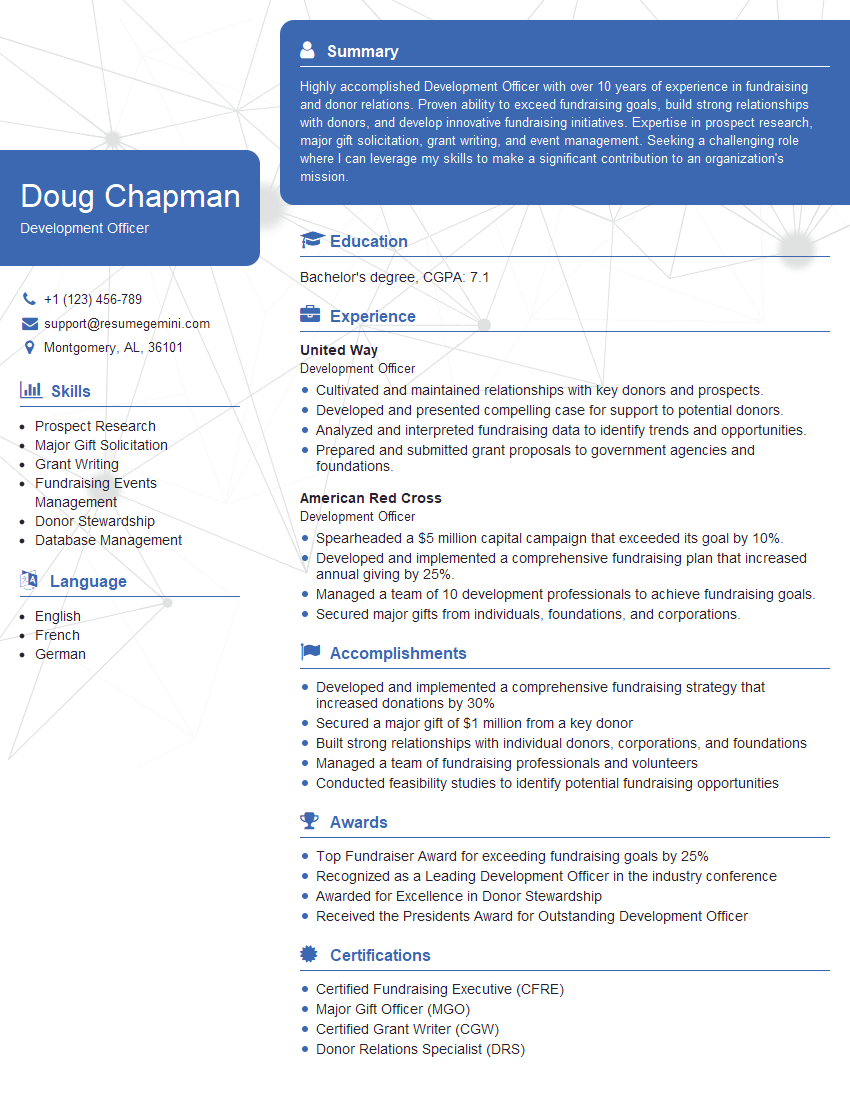
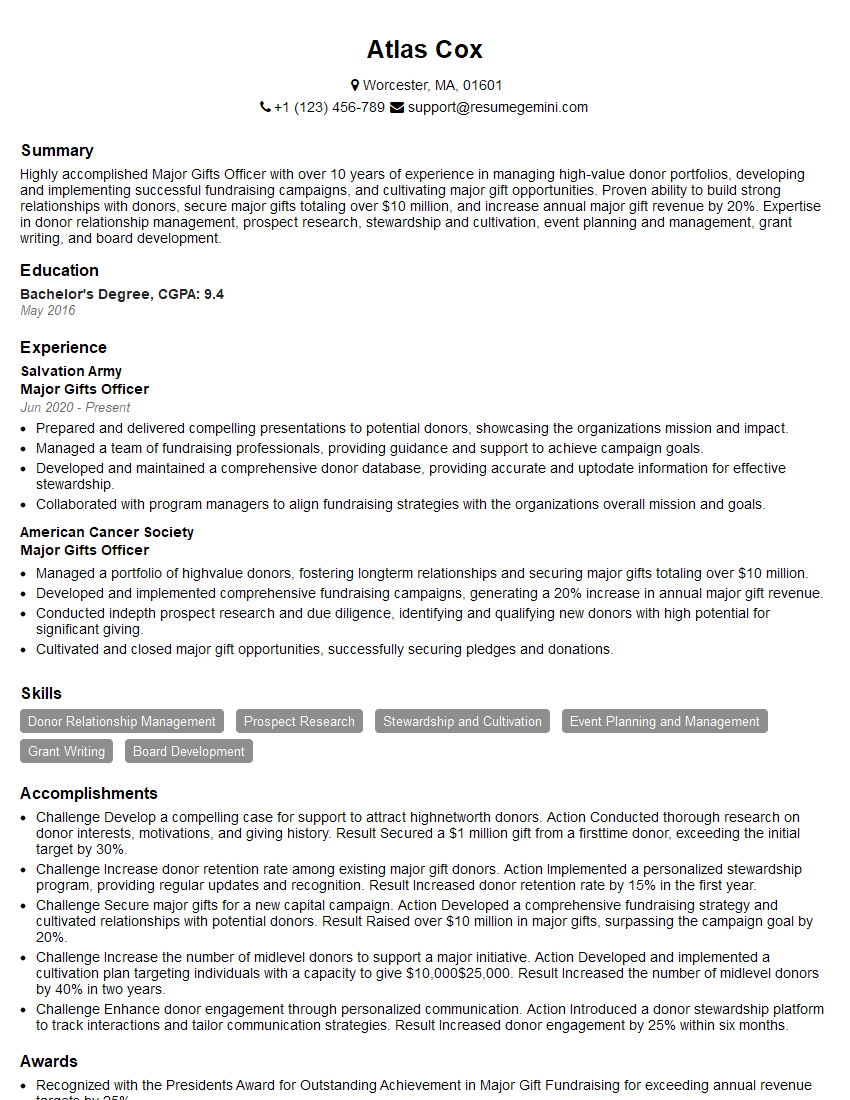
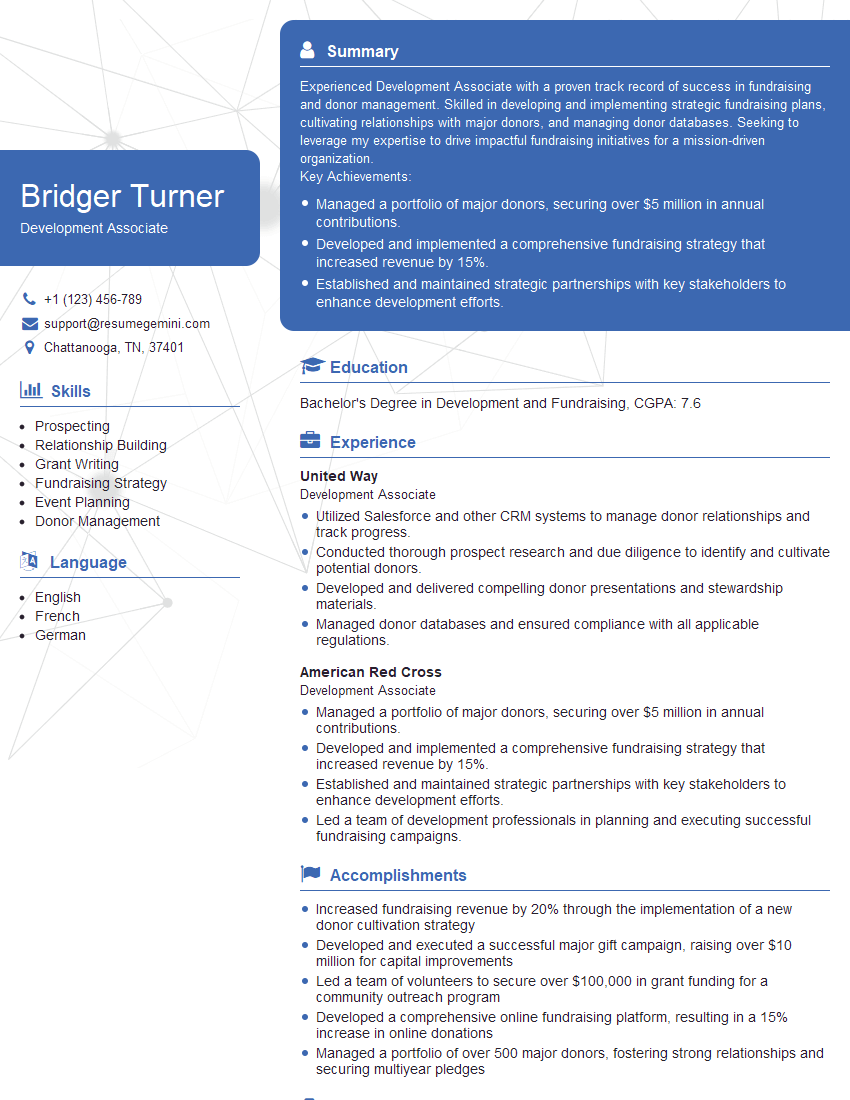
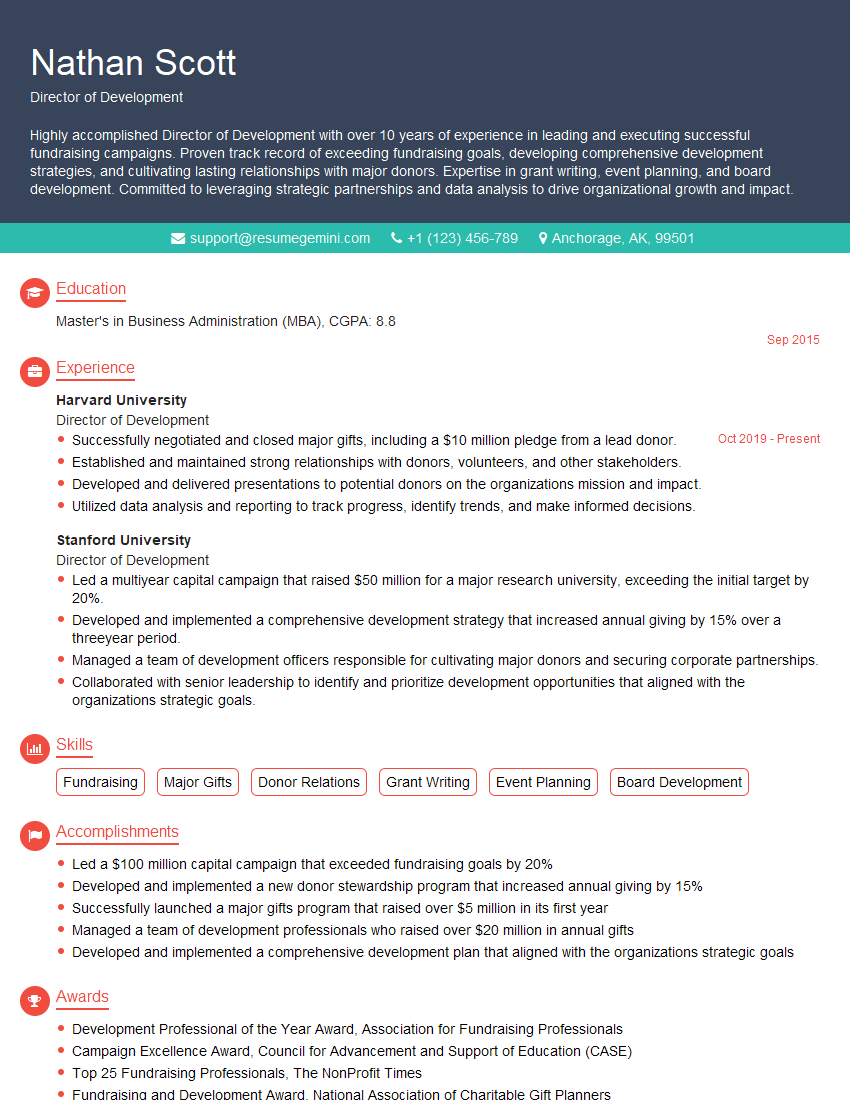
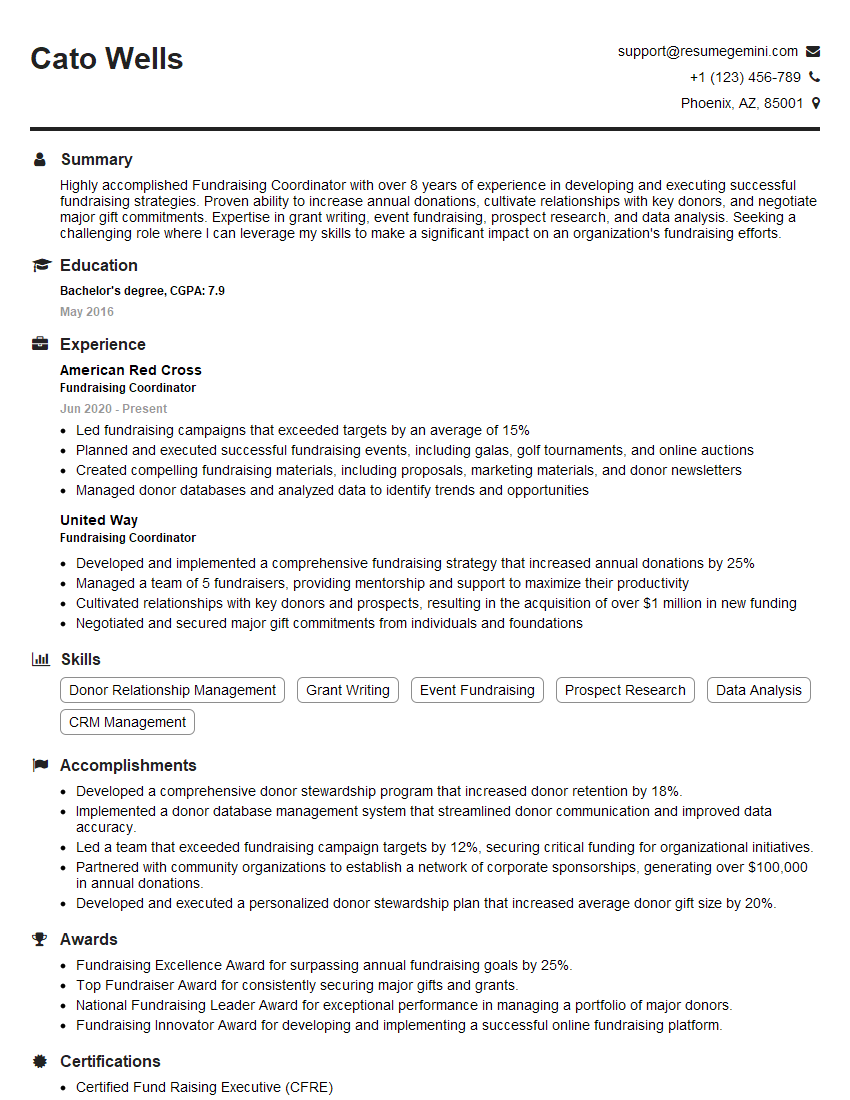
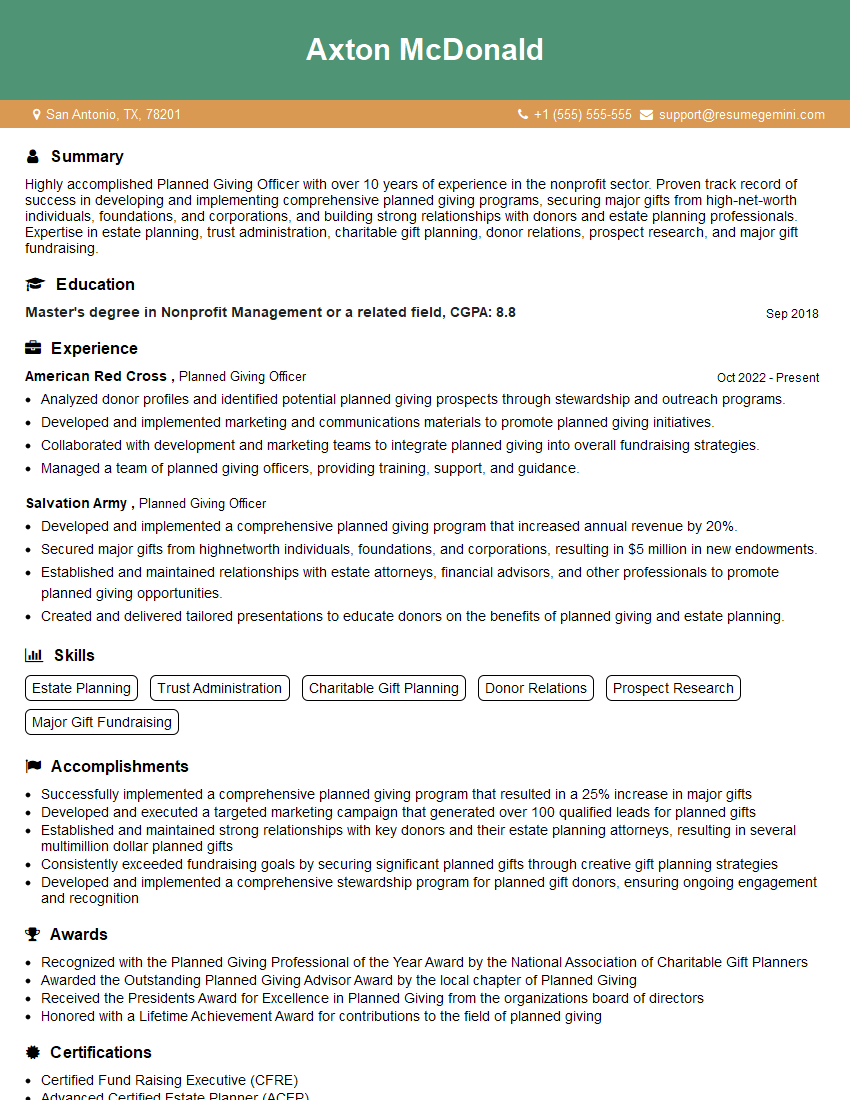
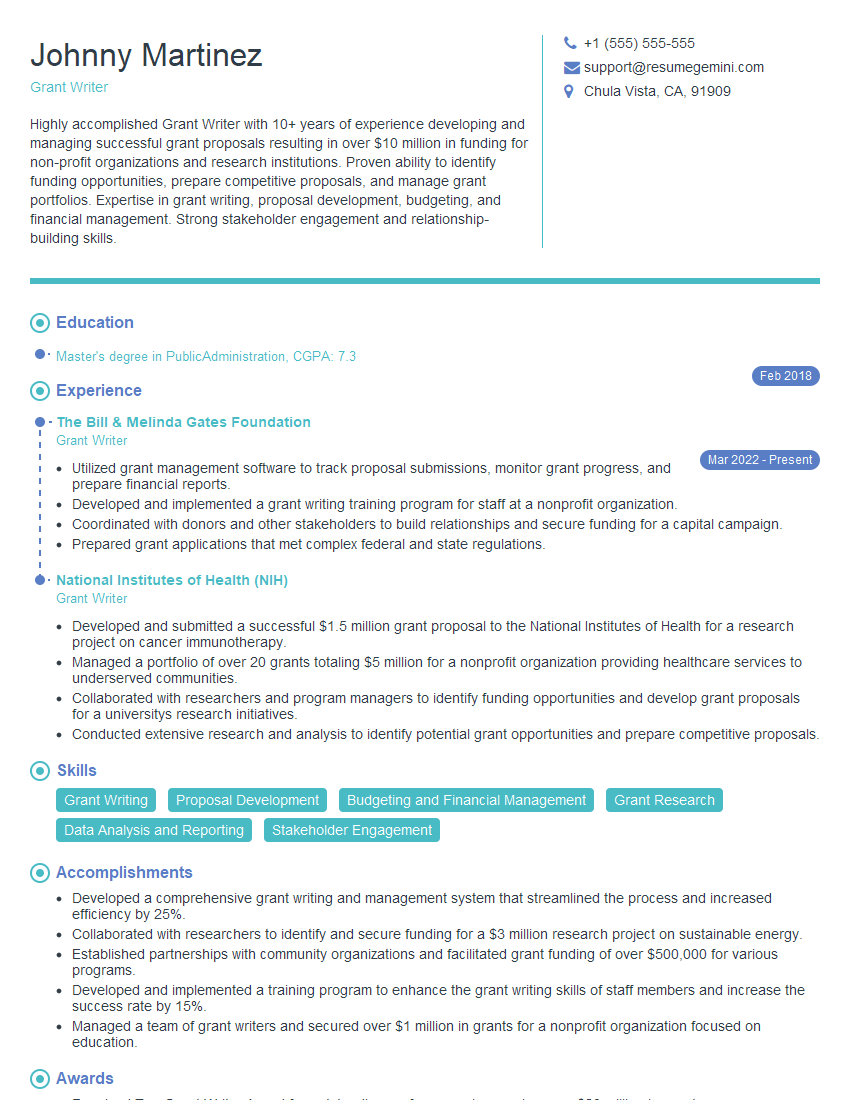
Mastering fundraising software like ActBlue or DonorPerfect is crucial for career advancement in the nonprofit sector. Proficiency in these tools demonstrates valuable skills and significantly enhances your job prospects. To maximize your chances of landing your dream role, focus on creating an ATS-friendly resume that showcases your relevant skills and experience. We highly recommend using ResumeGemini, a trusted resource, to build a professional and impactful resume that highlights your abilities. Examples of resumes tailored to roles requiring experience with fundraising software like ActBlue and DonorPerfect are available for your review. This will help you present your qualifications effectively and increase your chances of securing an interview.
Explore more articles
Users Rating of Our Blogs
Share Your Experience
We value your feedback! Please rate our content and share your thoughts (optional).
What Readers Say About Our Blog
To the interviewgemini.com Webmaster.
Very helpful and content specific questions to help prepare me for my interview!
Thank you
To the interviewgemini.com Webmaster.
This was kind of a unique content I found around the specialized skills. Very helpful questions and good detailed answers.
Very Helpful blog, thank you Interviewgemini team.