Cracking a skill-specific interview, like one for Grassroots and Community Outreach, requires understanding the nuances of the role. In this blog, we present the questions you’re most likely to encounter, along with insights into how to answer them effectively. Let’s ensure you’re ready to make a strong impression.
Questions Asked in Grassroots and Community Outreach Interview
Q 1. Describe your experience building and maintaining relationships with community stakeholders.
Building and maintaining relationships with community stakeholders is the cornerstone of successful grassroots outreach. It’s about fostering trust, understanding, and mutual respect. This involves consistent, proactive engagement, not just during campaign periods.
My approach involves:
- Regular Communication: I prioritize consistent communication through newsletters, town hall meetings, informal chats, and social media, ensuring transparency and responsiveness.
- Active Listening: I make a conscious effort to truly listen to community concerns and perspectives. It’s not about imposing solutions, but about understanding their needs and priorities.
- Collaboration and Partnerships: I believe in the power of collaboration. I actively seek opportunities to partner with community organizations, businesses, and leaders to amplify our reach and impact.
- Relationship Building: It’s not just about transactions; it’s about building genuine connections based on trust and mutual respect. This requires investing time to get to know individuals and their unique needs.
For example, during a community garden project, I maintained regular communication with residents through neighborhood meetings and a dedicated email list, ensuring they were involved in every step of the process, from planting to harvest.
Q 2. Explain your strategy for identifying and engaging key community leaders.
Identifying and engaging key community leaders requires a multi-faceted strategy combining research, observation, and direct interaction. It’s crucial to move beyond simply identifying positions of formal authority.
My strategy includes:
- Community Mapping: I start by thoroughly researching the community—its demographics, existing organizations, and influential individuals. This may involve reviewing local news, attending community events, and connecting with local libraries.
- Identifying Informal Leaders: Beyond formal leaders, I identify informal leaders—individuals who hold significant influence within their networks (e.g., religious leaders, school principals, respected elders).
- Direct Engagement: I reach out directly to potential key leaders, introducing myself, explaining my goals, and inviting their input. This often involves informal meetings over coffee or lunch.
- Building Consensus: I strive to build consensus by understanding different perspectives and finding common ground. This is critical for ensuring broad-based community support.
In a recent campaign promoting youth literacy, I identified key leaders through attending local school board meetings and partnering with local librarians who served as trusted figures in the community.
Q 3. How do you measure the success of a community outreach campaign?
Measuring the success of a community outreach campaign requires a multi-pronged approach that goes beyond simply counting numbers. It’s about assessing both quantitative and qualitative results.
My measurement strategies include:
- Quantitative Metrics: These involve measuring tangible outcomes. Examples include: number of participants in events, website traffic, social media engagement, number of volunteers recruited, donations received.
- Qualitative Metrics: These focus on understanding the impact on attitudes, behaviors, and community perceptions. This often involves surveys, focus groups, and interviews to gauge satisfaction levels, changes in awareness, and shifts in community behaviors.
- Long-term Monitoring: I believe in long-term monitoring to track sustained impact. Simply measuring immediate results can be misleading.
- Baseline Data: Collecting baseline data before the campaign allows for accurate comparison and assessment of progress.
For instance, in a campaign to reduce littering, we measured changes in the amount of litter through pre- and post-campaign audits, as well as gauging the public’s perception of the campaign through surveys.
Q 4. What methods do you use to effectively communicate with diverse community groups?
Effective communication with diverse community groups necessitates tailoring messages and methods to resonate with specific audiences. A one-size-fits-all approach simply won’t work.
My methods include:
- Language Accessibility: Providing materials in multiple languages and using plain, easily understandable language.
- Cultural Sensitivity: Being mindful of cultural nuances, norms, and sensitivities when designing communications and events.
- Multiple Channels: Using a variety of communication channels, including social media, print materials, community radio, and in-person events.
- Community Representatives: Working with community representatives to ensure messages are culturally appropriate and accurately reflect community values.
- Feedback Mechanisms: Establishing feedback mechanisms to collect community input and address concerns.
For example, in a health campaign targeting immigrant populations, we collaborated with community leaders to translate materials into multiple languages and to use culturally appropriate visuals and messaging.
Q 5. Describe a time you had to overcome resistance from a community group.
I once faced significant resistance from a community group during a proposed urban renewal project. Some residents feared displacement and the loss of their neighborhood’s unique character.
My approach to overcoming this resistance involved:
- Open Dialogue: I organized numerous community forums to listen to concerns and address misunderstandings. This involved actively listening to their fears and validating their feelings.
- Transparency and Inclusivity: I ensured complete transparency about the project’s plans, emphasizing that community input would shape the project’s development. I actively sought ways to include them in the decision-making process.
- Collaboration and Compromise: I worked with the resistant group to find common ground, incorporating their suggestions and addressing their concerns into the final project design.
- Building Trust: This was a long-term process that required consistent communication, showing that their voices were heard, and demonstrating our commitment to their well-being.
By proactively engaging with them and incorporating their feedback, we transformed initial opposition into active support for the project.
Q 6. How do you adapt your communication style to different audiences?
Adapting communication style is essential for effective outreach. It’s about understanding your audience’s background, knowledge level, and preferred communication style.
My approach involves:
- Audience Analysis: I thoroughly analyze my target audience before crafting any communication, considering their age, education, cultural background, and technological literacy.
- Language and Tone: I adjust my language and tone to suit the audience. For instance, I use simpler language for audiences with lower literacy levels and a more formal tone for professional audiences.
- Communication Channels: I choose the most appropriate communication channels, considering the audience’s preferences and technological access.
- Visual Aids: I strategically use visual aids, such as images, videos, and infographics, to make information more accessible and engaging.
For example, when presenting to a group of senior citizens, I use larger fonts, simple language, and avoid complex jargon. When communicating with younger audiences, I utilize more visual mediums and interactive elements.
Q 7. What strategies do you employ to build trust within a community?
Building trust within a community is a gradual process that requires consistency, transparency, and genuine engagement. It’s about demonstrating that you’re committed to their well-being and are not just seeking to extract resources.
My strategies include:
- Honesty and Transparency: I am always upfront and honest about my intentions and actions. I clearly articulate my goals and actively solicit feedback.
- Follow Through: I consistently follow through on my promises and commitments. This is critical for building credibility and demonstrating reliability.
- Accountability: I take responsibility for my actions and address mistakes openly and transparently. This demonstrates integrity and strengthens trust.
- Community Investment: I demonstrate my commitment to the community through concrete actions. This could involve volunteering time, donating resources, or supporting local initiatives.
- Long-Term Engagement: Building trust takes time. My commitment extends beyond short-term projects; I nurture relationships for the long haul.
For instance, during a neighborhood cleanup initiative, I consistently kept residents updated on the progress, responded promptly to their inquiries, and even volunteered alongside them, demonstrating a genuine commitment to their shared goals.
Q 8. How do you handle conflicting priorities within a community outreach project?
Conflicting priorities are inevitable in community outreach. Think of it like juggling – you have multiple balls in the air (project goals, community needs, resource limitations). My approach involves a three-step process: Prioritization, Communication, and Adaptation.
Prioritization: I use a matrix to rank priorities based on urgency and importance. This could be a simple chart assigning high, medium, and low to both urgency and importance. Projects scoring high on both get immediate attention. For example, if a critical community need (e.g., immediate access to emergency shelter) conflicts with a less urgent long-term goal (e.g., developing a community garden), the shelter needs are prioritized.
Communication: Transparent communication with all stakeholders (community members, volunteers, funders) is crucial. I explain the prioritization rationale clearly, explaining why certain aspects of the project might be delayed or adjusted. This prevents misunderstandings and maintains trust.
Adaptation: Sometimes, despite careful planning, unforeseen circumstances necessitate changes. I am flexible and adapt plans accordingly, always seeking community input. For example, if a key volunteer unexpectedly leaves, we might need to adjust the timeline or delegate tasks differently. The community’s understanding and collaboration are vital in such situations.
Q 9. Describe your experience with volunteer management and recruitment.
Volunteer management is the backbone of successful grassroots projects. My experience involves a multi-faceted approach encompassing recruitment, training, and retention.
Recruitment: I utilize diverse channels – online platforms (social media, volunteer websites), community events, partnerships with local organizations, and word-of-mouth referrals. Tailoring recruitment messages to specific volunteer interests and skills significantly improves response rates. For example, a community garden project might attract volunteers with horticultural experience, while a literacy program needs volunteers with patience and tutoring skills.
Training: A well-structured training program is vital. This involves both initial training, outlining roles, responsibilities, and project goals, and ongoing training to enhance skills and knowledge. Providing opportunities for feedback and skill development significantly boosts volunteer morale and engagement.
Retention: Recognizing and appreciating volunteers’ contributions through regular communication, feedback sessions, social events, and acknowledging their achievements is essential to retaining them. Creating a supportive and inclusive environment where volunteers feel valued is crucial for long-term success.
Q 10. How do you ensure community involvement in decision-making processes?
Community involvement in decision-making is paramount for the project’s success and sustainability. This goes beyond mere consultation; it’s about genuine partnership and shared ownership.
I employ several strategies:
- Participatory Workshops: Organizing structured workshops where community members actively participate in brainstorming, idea generation, and prioritization of project elements.
- Community Forums: Creating open forums (online or in-person) where community members can voice their opinions, concerns, and suggestions.
- Surveys and Feedback Mechanisms: Utilizing surveys, feedback forms, and online polls to gather diverse perspectives and measure community satisfaction.
- Representative Committees: Establishing committees with community representatives to actively participate in decision-making processes.
By ensuring that community voices are heard and valued, the project becomes genuinely representative of the community’s needs and aspirations. This fosters a sense of ownership and commitment, ensuring long-term success.
Q 11. What experience do you have with developing and implementing community engagement plans?
Developing and implementing community engagement plans requires a structured approach that balances community needs with project goals. I approach this using a five-step process: Needs Assessment, Goal Setting, Strategy Development, Implementation, and Evaluation.
Needs Assessment: Thoroughly understanding the community’s needs and challenges is the first step. This involves conducting surveys, interviews, focus groups, and reviewing existing data. For example, a needs assessment might reveal a lack of accessible healthcare services in a specific area.
Goal Setting: Based on the needs assessment, specific, measurable, achievable, relevant, and time-bound (SMART) goals are established. These goals should directly address identified community needs. For instance, the goal could be to increase access to healthcare services by 25% within one year.
Strategy Development: A detailed strategy is developed outlining the actions needed to achieve the goals. This includes identifying target audiences, communication methods, partnerships, and resources.
Implementation: The plan is put into action, with regular monitoring and adjustments based on feedback and progress.
Evaluation: The effectiveness of the plan is assessed through data collection and analysis, allowing for improvements in future projects. For example, we might evaluate the impact of a new health clinic by tracking patient numbers and satisfaction levels.
Q 12. Explain your understanding of grassroots mobilization strategies.
Grassroots mobilization leverages the power of individuals and local networks to achieve a common goal. It’s about building momentum from the ground up, empowering communities to drive change.
Key strategies include:
- Community Organizing: Building relationships and trust within the community to identify leaders and advocates.
- Advocacy Campaigns: Raising awareness and mobilizing support for specific issues through petitions, public demonstrations, and media engagement.
- Networking: Building partnerships with other organizations and stakeholders to amplify the reach and impact of the initiative.
- Social Media Engagement: Leveraging social media to connect with community members, share information, and mobilize support.
- Volunteer Recruitment and Training: Recruiting and training volunteers to support project activities.
Effective grassroots mobilization requires patience, persistence, and a deep understanding of the community’s context and dynamics. It’s about empowering individuals to become agents of change within their own communities.
Q 13. How do you leverage social media for community outreach?
Social media is a powerful tool for community outreach. It allows for cost-effective, widespread communication and engagement. My approach focuses on three key areas: Building a Community, Sharing Information, and Fostering Interaction.
Building a Community: Creating engaging profiles on relevant platforms (Facebook, Instagram, Twitter, etc.) to connect with the community, sharing updates, photos, and stories. This builds a sense of community around the project and creates a space for people to connect and share.
Sharing Information: Using social media to disseminate important information about project activities, upcoming events, and relevant news. Utilizing visually appealing content like videos and images significantly improves engagement.
Fostering Interaction: Encouraging two-way communication through polls, Q&A sessions, and responding promptly to comments and messages. This ensures a sense of dialogue and collaboration with the community.
It’s crucial to use analytics to track the effectiveness of social media campaigns and adjust strategies based on engagement levels. This data-driven approach allows for optimizing outreach efforts and reaching a wider audience.
Q 14. Describe your experience in managing community events or initiatives.
Managing community events and initiatives requires meticulous planning, strong communication, and a keen understanding of community dynamics.
My experience involves:
- Event Planning: Developing detailed event plans, including budgeting, logistics, marketing, and volunteer coordination. This includes securing permits, arranging venues, managing catering, and ensuring accessibility.
- Community Collaboration: Building partnerships with local organizations and community leaders to promote events and ensure broad participation.
- Resource Management: Efficiently managing budgets, securing funding, and utilizing available resources.
- Post-Event Evaluation: Conducting post-event evaluations to measure success and identify areas for improvement in future events.
For example, I organized a community fair that brought together local businesses, artists, and community groups. Successful organization involved securing sponsorships, managing volunteer teams, promoting the event through social media, and ensuring a safe and enjoyable experience for all attendees.
Q 15. What metrics do you use to track the impact of your community outreach efforts?
Measuring the success of community outreach requires a multifaceted approach. We can’t rely on a single metric, but rather a combination that reflects various aspects of our impact. I typically use a mix of quantitative and qualitative data.
Quantitative Metrics: These offer concrete numbers to track progress. Examples include:
Number of people reached:This could be through events, workshops, online engagement, or surveys.Event attendance:Tracking the number of attendees at community gatherings, meetings, or workshops.Survey responses and feedback:Analyzing responses to pre- and post-event surveys to gauge satisfaction and impact.Social media engagement:Measuring likes, shares, comments, and reach on social media platforms.Website traffic and downloads:Monitoring website visits and downloads of relevant resources.
Qualitative Metrics: These provide insights into the community’s perceptions and experiences. Examples include:
Focus groups and interviews:Conducting in-depth conversations to understand community perspectives.Case studies:Documenting success stories and testimonials to illustrate the impact of our efforts.Community feedback forms:Gathering feedback through informal channels like suggestion boxes or online platforms.Observation of community changes:Assessing changes in behavior, attitudes, or participation based on observations.
For example, in a recent project focusing on youth literacy, we tracked the number of children attending our workshops, the improvement in their reading scores (quantitative), and their expressed confidence and enthusiasm for reading (qualitative). This balanced approach gave us a complete picture of our impact.
Career Expert Tips:
- Ace those interviews! Prepare effectively by reviewing the Top 50 Most Common Interview Questions on ResumeGemini.
- Navigate your job search with confidence! Explore a wide range of Career Tips on ResumeGemini. Learn about common challenges and recommendations to overcome them.
- Craft the perfect resume! Master the Art of Resume Writing with ResumeGemini’s guide. Showcase your unique qualifications and achievements effectively.
- Don’t miss out on holiday savings! Build your dream resume with ResumeGemini’s ATS optimized templates.
Q 16. How do you identify and address community needs and concerns?
Identifying community needs and concerns requires active listening and engagement. It’s not about imposing solutions, but rather understanding the community’s perspective and collaborating with them to address their issues.
Community Needs Assessments: I use a variety of methods, including:
Surveys:Distributing surveys to gather data on a broad range of topics.Focus groups:Facilitating discussions with smaller groups to gain in-depth insights.Interviews:Conducting one-on-one interviews with key community members and leaders.Public forums and town hall meetings:Holding open meetings for community members to share their concerns.Data analysis:Reviewing existing data sources such as census data, crime statistics, and health reports to identify trends and patterns.
Community Observation: Direct observation can provide valuable context. Walking through the neighborhood, attending local events, and speaking with residents informally helps you understand the lived experiences.
Collaboration and Partnership: Working with local organizations, community leaders, and other stakeholders is crucial. They often have insights and established channels for communicating with community members.
For instance, in a project addressing food insecurity, we conducted surveys, held community forums, and partnered with local food banks to understand the extent of the problem and identify potential solutions.
Q 17. Describe your experience working with diverse populations and cultures.
My experience working with diverse populations and cultures is extensive. I recognize that successful community engagement requires sensitivity, cultural humility, and a genuine commitment to inclusivity. I’ve found that adapting my communication styles and approaches is paramount.
Language Access: Ensuring access to information in multiple languages, including providing translation and interpretation services.
Cultural Awareness: Understanding and respecting diverse cultural norms, values, and communication styles. For example, understanding the importance of community elders in some cultures when making decisions.
Inclusive Events and Materials: Designing and delivering programs and materials that are accessible and relevant to all community members, regardless of their background.
Building Trust: Establishing trust is vital. This requires active listening, demonstrating empathy, and building relationships based on mutual respect.
In one project working with a refugee population, we ensured translators were present at all meetings, used culturally relevant examples in our educational materials, and involved community leaders in program design. This approach ensured the program’s success and created a sense of ownership among participants.
Q 18. How do you build consensus among diverse stakeholders?
Building consensus among diverse stakeholders requires effective communication, negotiation, and compromise. It’s about finding common ground, acknowledging different perspectives, and working collaboratively to achieve shared goals.
Facilitated Dialogue: Creating structured opportunities for open communication and discussion. This could involve facilitated meetings, workshops, or online forums.
Active Listening: Paying close attention to all stakeholders’ viewpoints, understanding their concerns, and addressing their needs.
Compromise and Negotiation: Being prepared to negotiate and compromise to find mutually acceptable solutions. This may involve identifying areas of agreement and prioritizing shared objectives.
Transparency and Accountability: Maintaining open and transparent communication throughout the process. Clearly outlining decision-making processes and being accountable for actions taken.
In one project involving a revitalization plan for a local park, we facilitated workshops with residents, business owners, and city officials. Through open discussion and compromise, we were able to develop a plan that addressed everyone’s concerns and created a space that served the entire community.
Q 19. How do you handle negative feedback or criticism from the community?
Negative feedback is an opportunity for growth and improvement. Addressing criticism constructively is essential for maintaining community trust and improving future efforts.
Active Listening and Acknowledgement: Listen carefully to the feedback, acknowledging the person’s feelings and concerns.
Empathetic Response: Respond with empathy and understanding, even if you don’t agree with the criticism.
Investigate and Address: Investigate the concerns raised to determine their validity. If the feedback is justified, take appropriate action to address the issue.
Transparent Communication: Communicate your response to the feedback transparently and honestly to the community.
Learn and Adapt: Use the feedback to learn from mistakes and improve future community outreach efforts.
For example, after receiving negative feedback regarding the accessibility of a community event, we made adjustments for future events, including providing accessible transportation and ensuring the event venue was wheelchair-friendly. We then communicated these changes to the community.
Q 20. What experience do you have with grant writing or fundraising for community projects?
I possess considerable experience in grant writing and fundraising for community projects. I understand the process of identifying funding opportunities, crafting compelling proposals, and managing grant funds responsibly.
Grant Research: I am proficient in researching and identifying potential funding sources, understanding their priorities, and aligning them with community needs.
Proposal Writing: I have extensive experience writing competitive grant proposals, including developing budgets, outlining project timelines, and demonstrating measurable outcomes.
Budget Management: I am skilled in managing grant funds, ensuring transparency and accountability in all financial transactions.
Reporting and Evaluation: I can effectively track project progress, prepare comprehensive reports, and evaluate the impact of projects funded by grants.
In a recent project, I successfully secured a grant to support a youth mentorship program. My proposal highlighted the program’s potential impact, provided a detailed budget, and demonstrated our team’s capacity to deliver the project effectively. We secured the grant and the program is now successfully running.
Q 21. Describe your experience with developing and maintaining community partnerships.
Developing and maintaining strong community partnerships is vital for effective grassroots work. These partnerships provide access to resources, expertise, and a wider reach within the community.
Identifying Potential Partners: Identifying organizations and individuals who share similar goals and can contribute to the success of community projects.
Building Relationships: Cultivating strong relationships based on mutual trust and respect through consistent communication and collaboration.
Defining Roles and Responsibilities: Clearly outlining the roles and responsibilities of each partner to ensure clarity and accountability.
Open Communication: Maintaining open and regular communication to share information, address challenges, and celebrate successes.
Conflict Resolution: Developing strategies for addressing conflict and disagreements among partners.
In a project addressing homelessness, we partnered with local shelters, healthcare providers, and government agencies. By coordinating our efforts and sharing resources, we were able to provide a more comprehensive and effective response to the needs of the homeless population.
Q 22. How do you ensure the sustainability of community outreach programs?
Ensuring the sustainability of community outreach programs requires a multi-faceted approach that focuses on building strong relationships, securing diverse funding streams, and fostering community ownership. It’s not just about completing a project; it’s about creating lasting impact.
- Building strong partnerships: Collaborating with local organizations, businesses, and government agencies creates a network of support that extends beyond the initial funding cycle. For example, partnering with a local food bank to distribute resources could leverage their existing infrastructure and volunteer base.
- Diversifying funding sources: Relying solely on grants can be precarious. Exploring options like corporate sponsorships, crowdfunding, and community fundraising ensures financial stability. Imagine a program seeking funding from both a foundation and local businesses interested in community engagement.
- Community ownership and capacity building: Training community members to lead and manage aspects of the program fosters long-term sustainability. This could involve workshops on project management, fundraising, or community engagement strategies, empowering residents to continue the work independently. Think of a neighborhood watch program where residents are trained to organize and maintain it themselves.
- Data-driven evaluation and adaptation: Regularly assessing the program’s impact and adapting strategies based on data ensures that the program remains relevant and effective. This iterative process is crucial for long-term success. Analyzing participation rates and community feedback helps adjust programming and maximize its impact.
Q 23. What experience do you have with conflict resolution within community settings?
Conflict resolution in community settings requires empathy, active listening, and a neutral approach. It’s about facilitating dialogue, not imposing solutions. My experience involves mediating disputes among community members, often involving differing opinions on development projects or resource allocation.
- Active Listening: I start by creating a safe space for all parties to express their concerns without interruption. Understanding the root causes of the conflict is crucial.
- Neutral Facilitation: I guide the conversation towards finding common ground, focusing on shared goals and interests. I avoid taking sides or imposing my own opinions.
- Collaborative Problem-Solving: Once the issues are clearly defined, I facilitate brainstorming sessions to explore various solutions. The goal is to arrive at a solution agreeable to all involved parties.
- Follow-up and Support: After an agreement is reached, I often follow up to ensure the solution is working and address any emerging issues. This proactive approach builds trust and reinforces the collaborative spirit.
For example, during a neighborhood dispute over noise levels from a community event, I facilitated a meeting where residents and event organizers could express their concerns and collaboratively establish noise limits that were acceptable to all.
Q 24. How do you track and report on the progress of community outreach activities?
Tracking and reporting on community outreach progress relies on a structured system for data collection and analysis. This ensures accountability and demonstrates the program’s impact.
- Defining Key Performance Indicators (KPIs): Before starting, we identify key metrics to track, such as participation rates, community feedback, and resource utilization. For example, in a health awareness campaign, KPIs might include the number of people attending workshops or changes in reported health behaviors.
- Data Collection Methods: We utilize diverse methods like surveys, attendance records, focus groups, and observations to gather relevant data. This ensures a comprehensive understanding of the program’s impact.
- Data Analysis and Reporting: We use software like spreadsheets or specialized data analysis tools to summarize and interpret data, creating reports that showcase progress, challenges, and areas for improvement. These reports help secure funding, inform future strategies, and demonstrate the program’s value.
- Visualizations: Charts, graphs, and maps are effective tools for communicating program progress to stakeholders and the community. These make complex data easily understandable.
Q 25. Describe your experience using data to inform community outreach strategies.
Data informs strategic decision-making in community outreach. It moves us from guesswork to evidence-based planning. I have experience using demographic data, needs assessments, and program evaluation data to shape outreach strategies.
- Needs Assessments: Surveys and interviews provide insights into community needs, helping prioritize initiatives and target resources effectively. For instance, data might reveal a high need for job training programs in a specific community.
- Demographic Data: Understanding the demographics of a community – age, ethnicity, income levels – helps tailor communication and program design to better reach and resonate with the target audience. This ensures greater relevance and inclusivity.
- Program Evaluation: Data collected through program evaluation helps identify what’s working, what needs improvement, and whether we are reaching our goals. This iterative process helps to refine strategies and maximize impact.
For example, analyzing census data revealed a high concentration of elderly residents in a particular area. This informed a decision to create a senior center focused on social interaction and health support, rather than youth-oriented programs.
Q 26. How do you prioritize different community needs and concerns?
Prioritizing community needs requires a systematic approach that balances urgency, impact, and feasibility. It’s about making informed choices in resource allocation.
- Needs Assessment: Conducting thorough needs assessments – surveys, focus groups, interviews – allows for identifying the most pressing concerns. This generates a ranked list of needs.
- Community Input: Involving community members in the prioritization process ensures that the chosen initiatives truly reflect their priorities and preferences.
- Resource Availability: Prioritization must consider available resources – funding, personnel, infrastructure – to ensure that chosen initiatives are feasible and sustainable.
- Impact Assessment: Assessing the potential impact of each initiative – the number of people benefited, the long-term effects – helps in making informed decisions about allocation of resources.
Imagine a community facing issues such as poverty, lack of healthcare access, and inadequate housing. A needs assessment might reveal that improving healthcare access would have the most significant impact on overall well-being, even if housing is also a pressing concern. The prioritization would consider resource capacity to address the most impactful issue first.
Q 27. What is your understanding of ethical considerations in community outreach?
Ethical considerations in community outreach are paramount. It’s about upholding principles of fairness, respect, and transparency in all interactions and activities.
- Informed Consent: Ensuring community members understand the purpose of outreach initiatives and voluntarily participate. This involves clear communication and respect for individual autonomy.
- Confidentiality: Protecting the privacy and confidentiality of individuals who share sensitive information. This requires clear communication about data handling and security measures.
- Cultural Sensitivity: Respecting diverse cultural backgrounds and avoiding approaches that could be culturally insensitive or inappropriate. Understanding the community’s customs and beliefs is crucial.
- Power Dynamics: Being aware of power imbalances and avoiding imposing solutions on the community. Instead, fostering collaborative decision-making and community ownership is vital.
- Conflict of Interest: Maintaining objectivity and avoiding any conflicts of interest that could compromise impartiality. Transparency and disclosure are key.
For example, before conducting a health survey, we would obtain informed consent, clearly explaining the purpose of the study and how the data will be used, while assuring confidentiality.
Q 28. Describe a time you had to adapt your approach to community outreach due to unexpected circumstances.
During a community gardening project, unforeseen flooding damaged a significant portion of the planted area. This required an immediate adaptation of our approach.
Initially, our focus was on teaching sustainable gardening practices and fostering community cohesion through shared planting and harvesting. The flooding presented a setback, but it also opened new opportunities.
- Immediate Response: First, we assessed the damage and mobilized volunteers to help salvage what could be saved. This demonstrated our commitment to the community.
- Re-evaluation and Adaptation: We re-evaluated our plan and consulted with local agricultural experts to determine the best course of action. This included selecting flood-resistant plants for replanting and exploring alternative gardening techniques.
- Community Engagement: We kept the community informed throughout the process, explaining the challenges and involving them in the decision-making process for the recovery plan. This reinforced trust and community ownership of the project.
- Long-Term Solutions: We investigated long-term solutions such as raised garden beds to mitigate future flood risks, which required seeking additional funding and collaborating with local council.
This experience highlighted the importance of adaptability and community engagement in the face of unexpected challenges. Our response transformed a setback into an opportunity to strengthen our relationship with the community and implement more resilient gardening practices.
Key Topics to Learn for Grassroots and Community Outreach Interview
- Understanding Community Needs: Analyzing community demographics, identifying key issues, and prioritizing needs through effective research methods (surveys, focus groups, etc.).
- Developing Outreach Strategies: Creating targeted campaigns that effectively reach diverse populations; leveraging various communication channels (social media, local events, print materials) to maximize impact.
- Building Relationships and Partnerships: Cultivating strong relationships with community leaders, stakeholders, and volunteers; collaborating effectively to achieve shared goals.
- Event Planning and Management: Organizing and executing successful community events, from small-scale gatherings to large-scale campaigns, including logistics, budgeting, and volunteer coordination.
- Resource Mobilization and Fundraising: Identifying and securing funding sources (grants, donations, sponsorships); managing budgets effectively and ensuring accountability.
- Volunteer Recruitment and Management: Attracting, training, and motivating volunteers; assigning roles effectively and fostering a positive volunteer experience.
- Data Collection and Evaluation: Tracking progress, measuring outcomes, and using data to inform future strategies; demonstrating the impact of outreach efforts.
- Conflict Resolution and Negotiation: Addressing disagreements and resolving conflicts effectively within the community; navigating complex relationships and finding common ground.
- Ethical Considerations and Best Practices: Understanding and adhering to ethical guidelines in community engagement; ensuring inclusivity and cultural sensitivity in all outreach efforts.
Next Steps
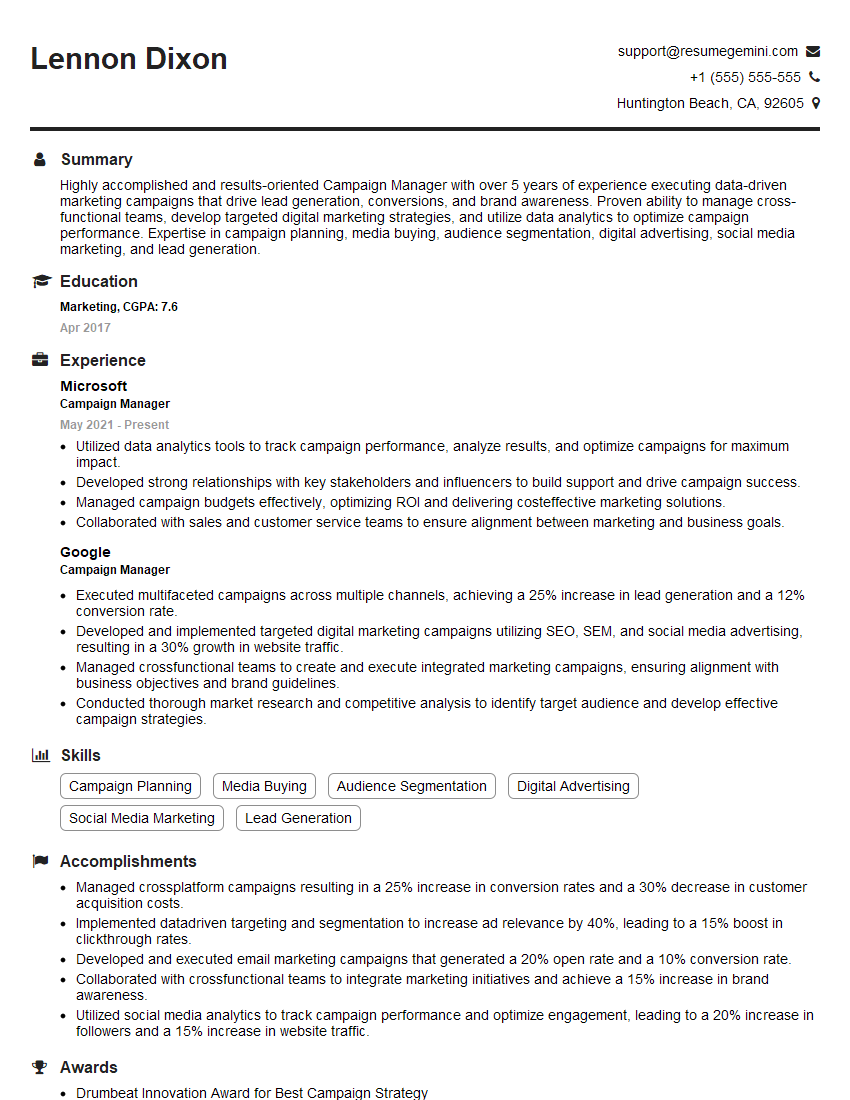
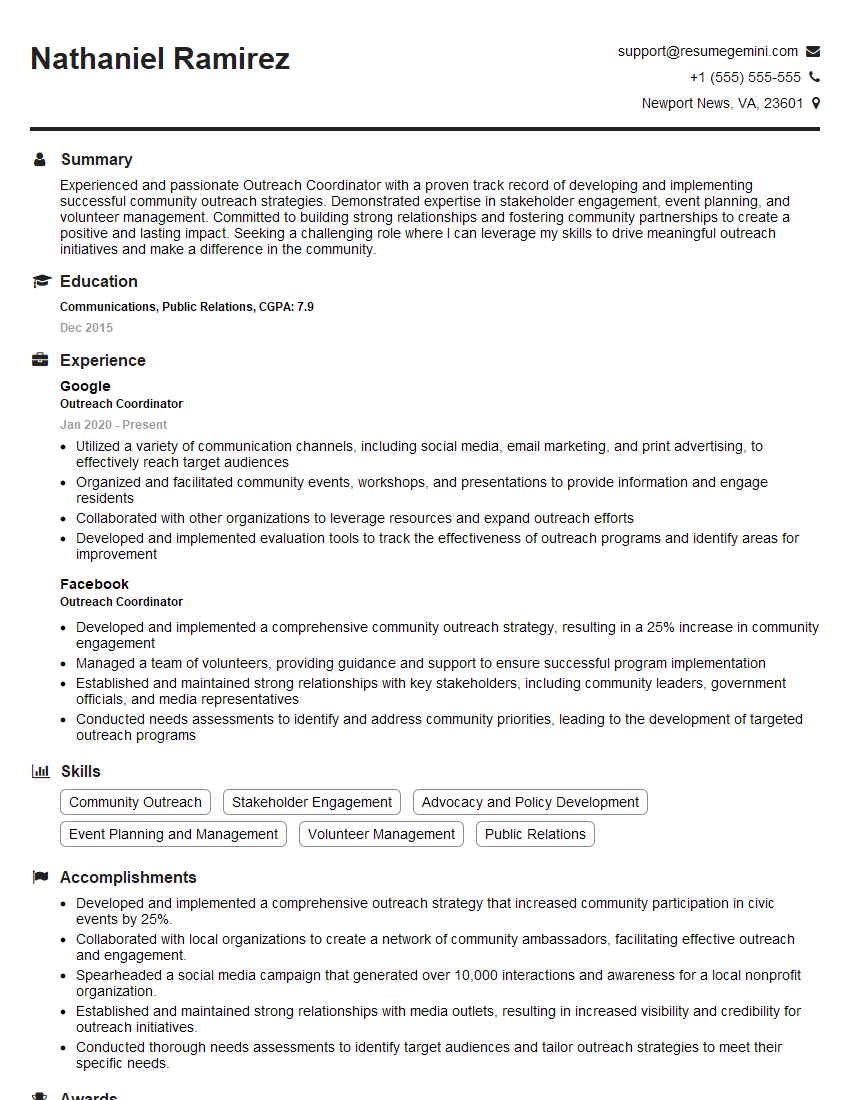
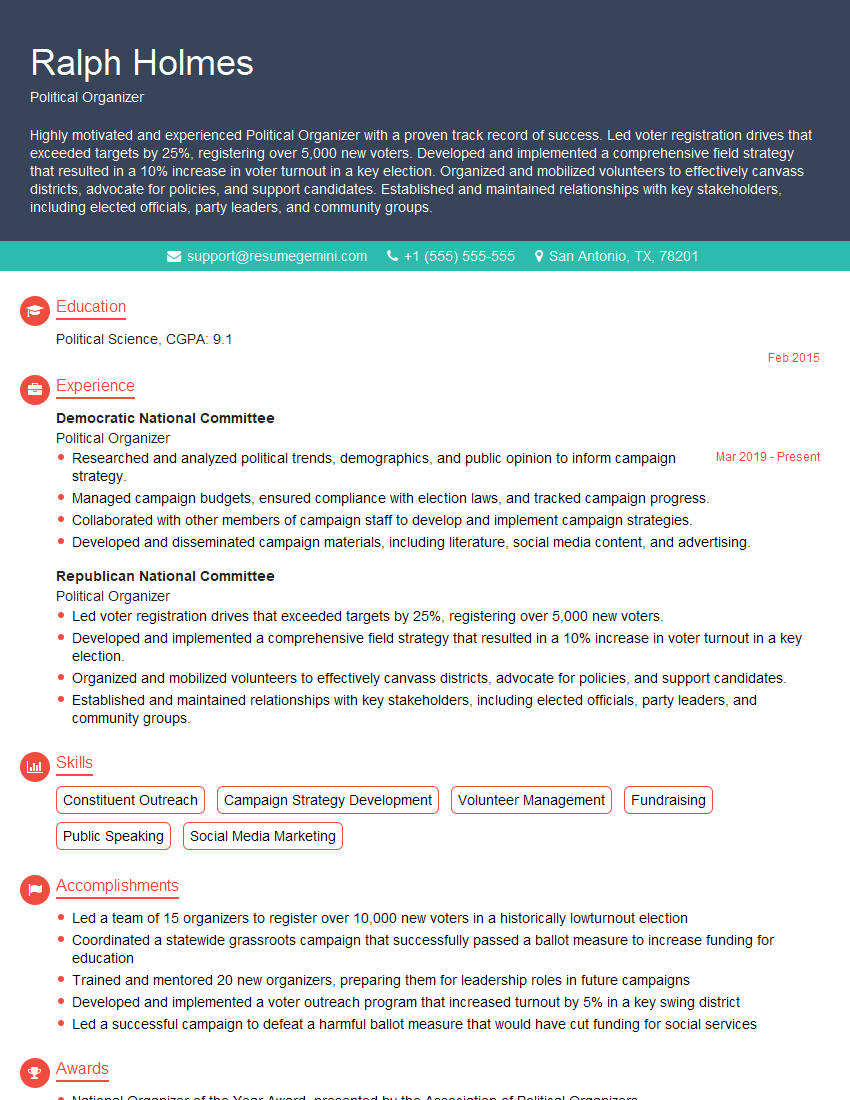
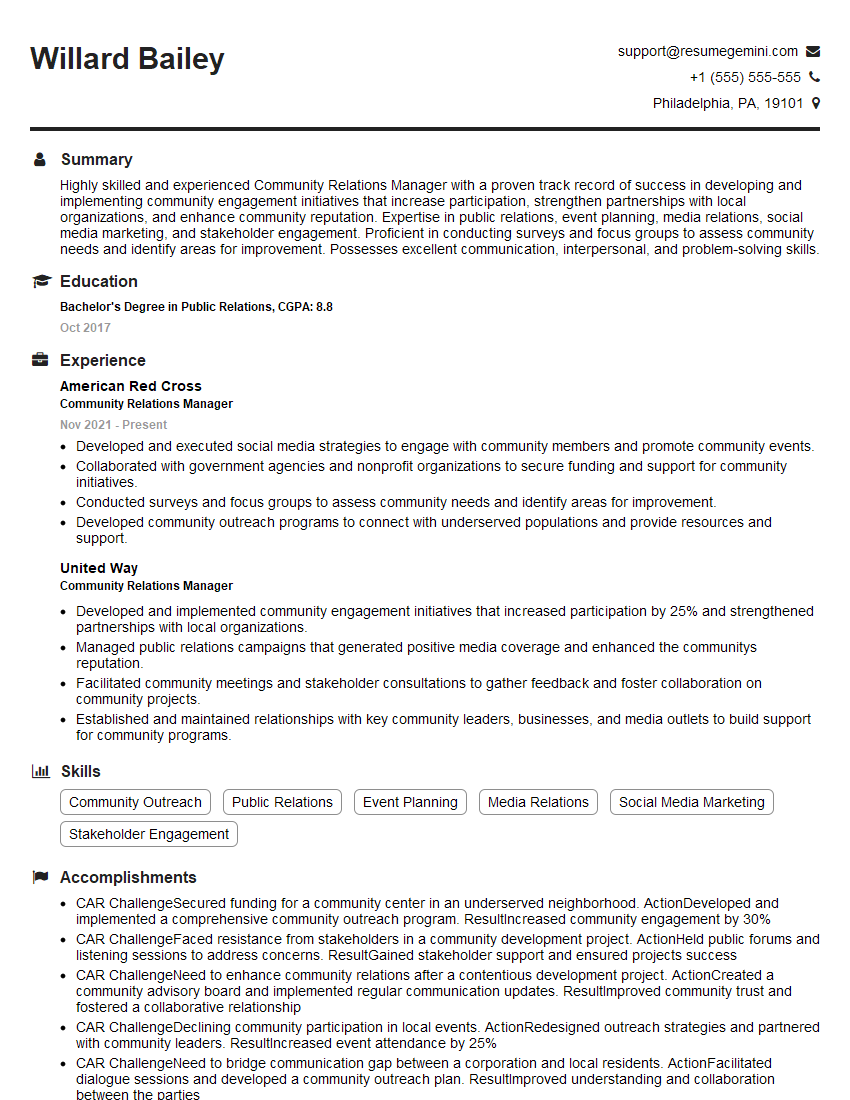
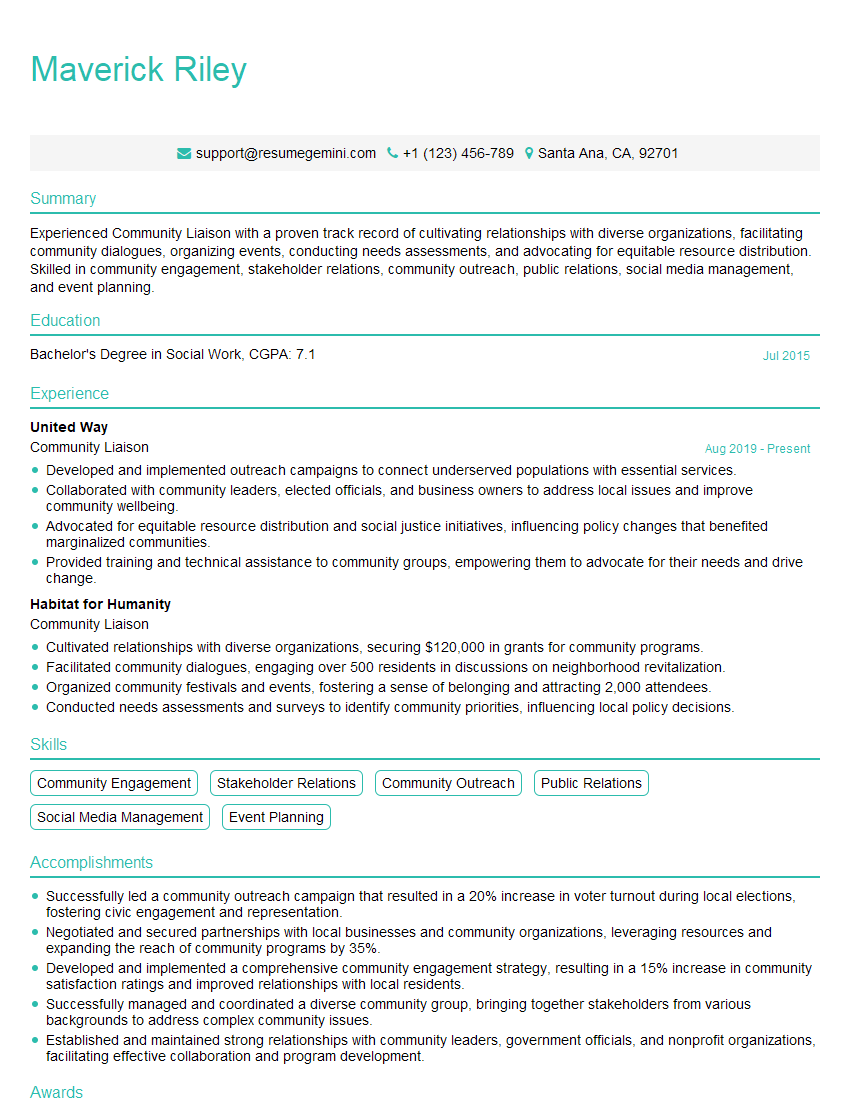
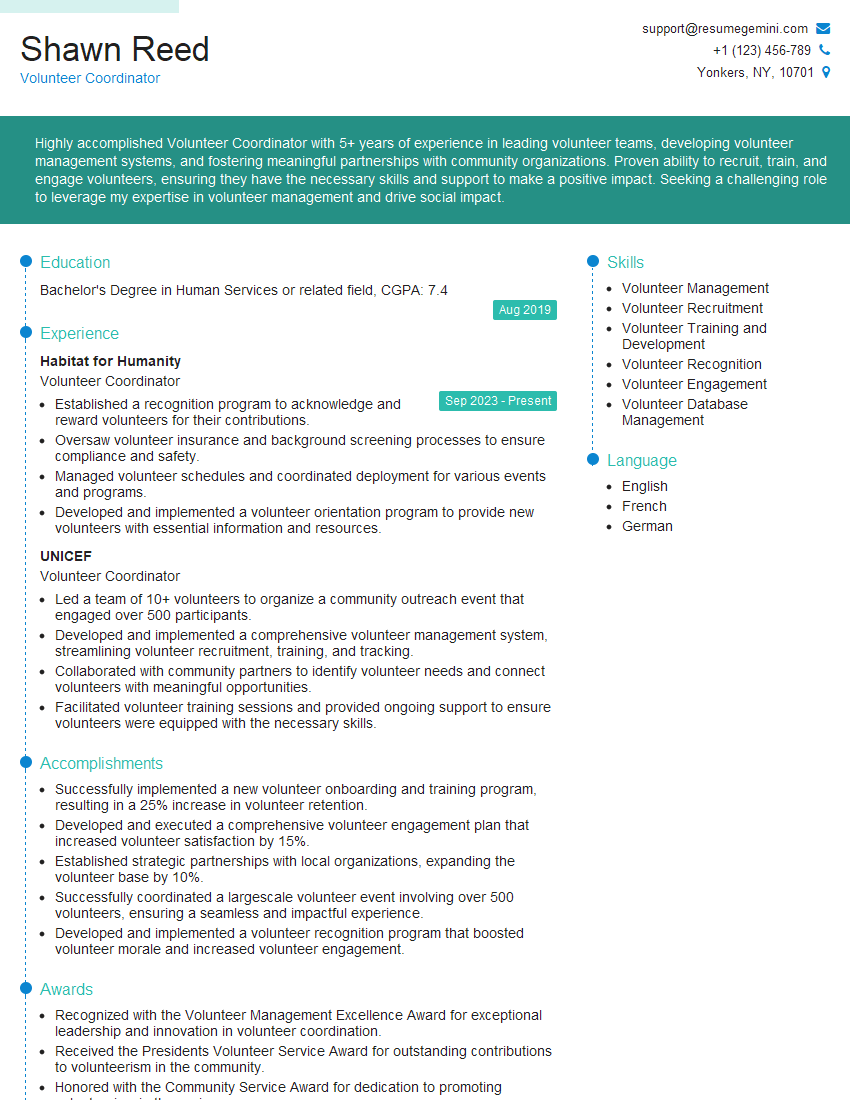
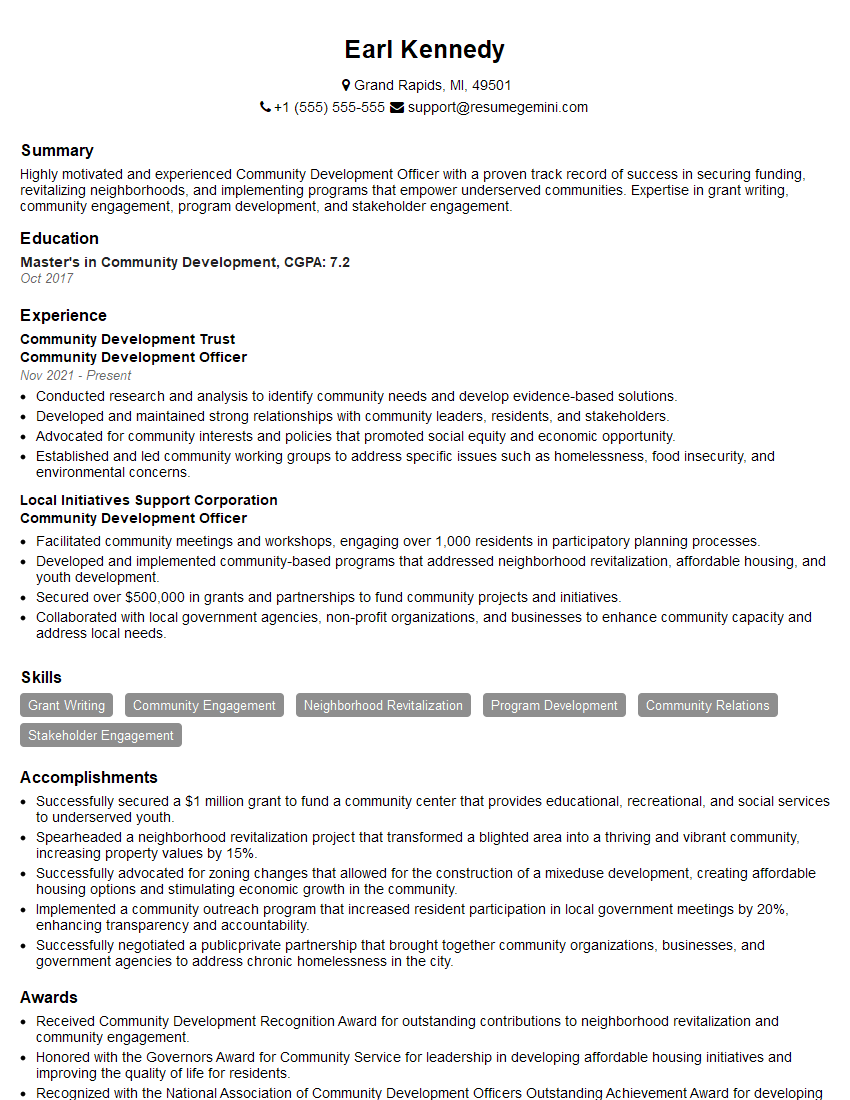
Mastering Grassroots and Community Outreach is crucial for a rewarding career. It demonstrates your ability to make a tangible difference in people’s lives and build a strong reputation for social responsibility. To stand out in your job search, a well-crafted, ATS-friendly resume is essential. ResumeGemini can help you create a powerful resume that showcases your skills and experience effectively. ResumeGemini provides examples of resumes tailored to Grassroots and Community Outreach roles, giving you a head start in crafting a compelling application.
Explore more articles
Users Rating of Our Blogs
Share Your Experience
We value your feedback! Please rate our content and share your thoughts (optional).
What Readers Say About Our Blog
To the interviewgemini.com Webmaster.
Very helpful and content specific questions to help prepare me for my interview!
Thank you
To the interviewgemini.com Webmaster.
This was kind of a unique content I found around the specialized skills. Very helpful questions and good detailed answers.
Very Helpful blog, thank you Interviewgemini team.