The thought of an interview can be nerve-wracking, but the right preparation can make all the difference. Explore this comprehensive guide to Grid System Interconnection (as needed) interview questions and gain the confidence you need to showcase your abilities and secure the role.
Questions Asked in Grid System Interconnection (as needed) Interview
Q 1. Explain the process of connecting a renewable energy source to the grid.
Connecting a renewable energy source, like a solar farm or wind turbine, to the grid is a multi-stage process requiring careful planning and adherence to strict regulations. It begins with a feasibility study assessing the resource’s capacity and suitability for grid integration. This is followed by obtaining necessary permits and approvals from relevant authorities. Then, the interconnection itself involves engineering design, equipment procurement (inverters, transformers, etc.), construction, and finally, testing and commissioning to ensure the system operates safely and reliably before synchronizing with the grid.
Think of it like adding a new appliance to your home’s electrical system. Before you plug in a powerful appliance, you need to ensure your wiring can handle the load. Similarly, connecting a renewable energy source requires careful assessment of the grid’s capacity and reinforcement if needed.
- Feasibility Study: This determines if the project is technically and economically viable.
- Permitting and Approvals: This involves navigating local, state, and potentially federal regulations.
- Engineering Design: This involves designing the interconnection infrastructure to meet grid standards.
- Construction: This is the physical installation of equipment and infrastructure.
- Testing and Commissioning: This verifies the system’s performance and safety before connection to the main grid.
Q 2. Describe different interconnection studies and their purpose.
Interconnection studies are crucial for evaluating the technical feasibility and impact of a new generation source on the existing power system. Several types of studies are usually conducted:
- Power Flow Studies: These analyze the steady-state operating conditions of the system, considering the impact of the new generation on voltage levels, power flows, and system stability.
- Short-Circuit Studies: These evaluate the fault currents that could occur during various fault conditions. This is crucial for selecting appropriate protective devices and ensuring the safety of the system.
- Transient Stability Studies: These assess the system’s response to large disturbances, such as faults or loss of generation. This ensures that the system can maintain stability during such events.
- Protection Coordination Studies: These ensure that protective devices (relays, circuit breakers) operate correctly and prevent cascading outages during fault conditions.
- Harmonic Studies: These analyze the harmonic distortion introduced by power electronic devices (like inverters in renewable energy sources) and assess its impact on the grid.
The purpose of these studies is to identify potential problems and propose solutions before construction begins, saving time and money, and ultimately ensuring a safe and reliable integration.
Q 3. What are the key challenges in integrating large-scale renewable energy resources?
Integrating large-scale renewable energy resources presents several key challenges:
- Intermittency: Solar and wind power are inherently intermittent, meaning their output fluctuates based on weather conditions. This variability makes it challenging to maintain grid stability and reliability.
- Ramp Rate Limits: The rate at which renewable generation can increase or decrease its output is limited. This can strain the grid’s ability to respond to sudden changes in demand.
- Grid Infrastructure Limitations: Existing transmission and distribution infrastructure may not be adequately designed to handle the influx of large amounts of renewable energy, requiring upgrades and expansions.
- Geographic Dispersion: Renewable resources are often located remotely, necessitating long transmission lines that can experience significant losses and introduce instability.
- Predictability Challenges: Accurately forecasting renewable energy production is difficult, complicating grid operations and planning.
For example, a sudden drop in solar power due to cloud cover can lead to frequency deviations, impacting the entire grid unless appropriate measures are in place.
Q 4. How do you ensure grid stability during the integration of intermittent renewable sources?
Ensuring grid stability with intermittent renewables requires a multi-faceted approach:
- Demand-Side Management (DSM): Implementing programs to shift electricity demand to times when renewable energy is abundant.
- Energy Storage: Deploying batteries or pumped hydro storage to store excess renewable energy for later use during periods of low generation.
- Advanced Forecasting: Utilizing sophisticated weather forecasting and machine learning techniques to better predict renewable energy output.
- Grid Modernization: Upgrading transmission and distribution infrastructure to improve capacity, flexibility, and resilience.
- Control Systems: Implementing advanced control systems that automatically adjust generation and load to maintain frequency and voltage stability.
- Reserve Capacity: Maintaining sufficient reserve capacity from conventional power plants to quickly compensate for fluctuations in renewable energy output. This could involve fast-responding gas-fired plants or other flexible resources.
Imagine a seesaw. Intermittent renewables are like fluctuating weights on one side. To keep the seesaw balanced (grid stability), we need mechanisms to adjust the other side (conventional generation or demand) in real-time.
Q 5. Explain the role of Protection and Control systems in grid interconnection.
Protection and Control systems are critical for ensuring the safe and reliable operation of the grid during both normal and fault conditions. In the context of grid interconnection, they play a vital role in:
- Fault Detection and Isolation: Quickly detecting and isolating faults to prevent cascading outages and damage to equipment. This involves relays and circuit breakers that operate within milliseconds to isolate the faulty section of the grid.
- Voltage and Frequency Regulation: Maintaining stable voltage and frequency levels within acceptable limits. This involves sophisticated control systems that monitor and adjust generation and load to ensure grid stability.
- Islanding Prevention: Preventing isolated portions of the grid from continuing to operate after a fault, which could pose a safety hazard to maintenance personnel.
- Power Quality Management: Monitoring and mitigating power quality issues such as harmonics, voltage sags, and surges introduced by renewable energy sources.
- Synchronization: Ensuring that the renewable energy source is synchronized with the grid before interconnection to avoid damaging surges.
These systems use sensors, communication networks, and sophisticated algorithms to monitor the grid’s state and take corrective actions automatically. They are the nervous system of the grid, ensuring its health and stability.
Q 6. What are the different types of grid interconnection agreements?
Grid interconnection agreements vary depending on the size and type of the renewable energy project and the utility involved. However, common types include:
- Standard Interconnection Agreements: These are typically used for smaller projects and define the technical requirements, costs, and responsibilities of both parties.
- Large Generator Interconnection Agreements: These are for larger projects that may require significant grid upgrades. They often include more detailed technical specifications and financial arrangements.
- Point of Interconnection (POI) Agreements: These specify the exact location where the renewable energy facility will connect to the grid.
- Transmission Service Agreements: These define the terms and conditions for using transmission lines to transport the generated power.
The agreement outlines the responsibilities of each party, including the developer’s obligation to meet technical requirements and the utility’s obligation to provide grid access and manage the interconnection process. It’s a legally binding document that protects both parties’ interests.
Q 7. Describe the process of obtaining interconnection approval from a utility.
Obtaining interconnection approval from a utility is a rigorous process that typically involves the following steps:
- Initial Application: Submitting a preliminary application outlining the project details and requesting interconnection studies.
- Interconnection Studies: Conducting the necessary studies to assess the technical feasibility and impact of the project on the grid (as discussed earlier).
- Negotiation of Interconnection Agreement: Negotiating the terms and conditions of the interconnection agreement with the utility.
- Engineering Design and Permitting: Completing the detailed engineering design and obtaining all necessary permits and approvals.
- Construction and Testing: Constructing the interconnection facilities and conducting thorough testing to ensure compliance with the agreement.
- Commissioning and Synchronization: Commissioning the system and synchronizing it with the grid.
This process can take several months or even years, depending on the project’s size and complexity. Clear communication, proactive collaboration with the utility, and careful adherence to the interconnection requirements are crucial for a successful outcome.
Q 8. Explain the concept of short-circuit calculations and their significance in grid interconnection.
Short-circuit calculations are crucial in grid interconnection because they determine the maximum fault currents that can occur at various points in the system. These calculations are essential for selecting appropriate protective devices, ensuring system stability, and preventing catastrophic failures.
Imagine a scenario where a short circuit occurs – a sudden, unintended connection between two points of differing voltage. This results in a massive surge of current. If the system isn’t designed to handle this surge, it could lead to overheating, equipment damage, and even fires. Short-circuit calculations help us anticipate these events and design the system accordingly.
The calculations involve applying Ohm’s law and Kirchhoff’s laws to a simplified model of the power system. Sophisticated software tools are employed to analyze the network and determine the fault current magnitude and its impact on different components. These calculations are part of a broader process known as fault analysis, which includes both symmetrical and asymmetrical faults.
For example, a large industrial plant connecting to the grid needs to undergo rigorous short-circuit calculations to ensure its connection doesn’t overload the existing grid infrastructure or damage its own equipment during a fault. The results dictate the ratings of circuit breakers, transformers, and other protective devices required to safeguard the system.
Q 9. How do you model different components of a power system for interconnection studies?
Modeling power system components for interconnection studies requires a balance between accuracy and computational efficiency. Different components are represented using various mathematical models, chosen based on the study’s objectives and the level of detail required.
- Generators: Modeled using either a simplified constant voltage behind transient reactance model or more complex models incorporating voltage regulators and governors, depending on the level of detail needed for the study.
- Transformers: Represented by their per-unit impedance, considering winding resistances and reactances. Tap changers are also incorporated if their impact on voltage regulation is significant.
- Transmission Lines: Modeled using Pi-equivalent circuits or more sophisticated models that account for frequency-dependent effects, skin effect, and ground return. The choice depends on line length and the frequency range of interest.
- Loads: Represented as either constant impedance, constant current, or constant power, depending on the nature of the load and the study’s purpose. For example, constant power models are appropriate for motor loads.
- FACTS Devices: These are modeled using detailed control schemes and their influence on the system’s voltage and power flow, often requiring specialized software modules.
The models are then integrated into a larger power system network model, typically using specialized power system simulation software. This software allows engineers to perform various studies, such as power flow, short-circuit, and stability analysis, to assess the impact of the new interconnection on the existing system.
Q 10. What are the different types of FACTS devices and their applications in grid interconnection?
FACTS (Flexible AC Transmission Systems) devices are power electronic-based systems that enhance the controllability and stability of AC transmission systems. They play a vital role in grid interconnection by improving power transfer capability, enhancing voltage stability, and mitigating oscillations.
- Thyristor-Controlled Series Compensators (TCSCs): These devices inject series reactive power to control the impedance of transmission lines, thereby increasing power transfer capability and improving transient stability.
- Static Synchronous Compensators (STATCOMs): These devices provide fast-acting voltage support by injecting or absorbing reactive power. They are particularly useful for voltage regulation and dynamic stability improvement.
- Static Synchronous Series Compensators (SSSCs): Similar to TCSCs but offer finer control over power flow and voltage profiles. They can provide both reactive and active power compensation.
- Unified Power Flow Controllers (UPFCs): These are the most versatile FACTS devices, capable of controlling both active and reactive power flow independently. They are used for enhancing power transfer capability, voltage regulation, and improving system stability.
For instance, a long transmission line connecting a remote wind farm to the main grid may benefit from the installation of a TCSC or SSSC to improve power transfer capability and reduce voltage instability issues. Similarly, STATCOMs are often used in areas with weak grids to enhance voltage stability and improve power quality.
Q 11. Explain the impact of harmonic distortion on grid interconnection.
Harmonic distortion refers to the presence of non-sinusoidal waveforms in the grid voltage and current. This distortion, often caused by nonlinear loads such as power electronics devices (e.g., rectifiers, inverters, and variable-speed drives), negatively impacts the grid interconnection in several ways.
- Overheating of equipment: Harmonic currents can lead to excessive heating in transformers, cables, and other equipment, potentially shortening their lifespan and causing failures.
- Increased losses: Harmonics cause increased resistive and core losses in transformers and transmission lines.
- Malfunction of protection devices: Harmonics can interfere with the operation of protective relays and other equipment, leading to false tripping or delayed fault clearing.
- Voltage distortion: Harmonic currents distort the grid voltage waveform, affecting the operation of sensitive electronic equipment.
- Resonance issues: Harmonics can interact with the system’s natural resonant frequencies, causing voltage amplification and potential instability.
To mitigate these issues, grid interconnection standards typically specify limits on harmonic distortion levels. Mitigation techniques include using harmonic filters, installing active power filters, and designing power electronic equipment with low harmonic generation characteristics.
For example, a large industrial plant incorporating many variable speed drives needs to implement adequate harmonic filtering to meet grid connection requirements and prevent causing voltage fluctuations or damaging the grid infrastructure.
Q 12. Describe the role of power flow studies in grid interconnection planning.
Power flow studies are a fundamental aspect of grid interconnection planning. They determine the steady-state operating conditions of the power system under various loading conditions. These studies are crucial for assessing the impact of new generation resources on the existing grid, ensuring system stability, and identifying potential voltage violations or overloading.
Imagine planning a new wind farm connection. A power flow study would model the existing grid and the proposed wind farm, simulating various operating scenarios, including peak and off-peak demand. The study would then analyze the impact on voltage levels, power flows, and transformer loadings throughout the system. This helps to identify any potential bottlenecks or areas requiring upgrades before the wind farm is connected.
These studies use iterative algorithms to solve the power flow equations, providing detailed information on voltage magnitudes, voltage angles, real and reactive power flows, and losses throughout the system. They are vital for identifying potential problems before they occur, ensuring reliable and efficient operation of the interconnected system.
Results from power flow studies guide decisions related to equipment sizing, transmission line upgrades, reactive power compensation, and overall system reinforcement.
Q 13. What are the different types of relays used in substation protection for grid interconnection?
Substation protection plays a critical role in ensuring the safety and reliability of grid interconnection. Different types of relays are employed to detect and respond to various faults.
- Differential Relays: These relays compare the currents entering and leaving a protected zone (e.g., a transformer or busbar). A significant difference indicates an internal fault, triggering the relay to operate.
- Overcurrent Relays: These relays detect faults by measuring the current flowing through a line or busbar. If the current exceeds a predefined threshold, the relay operates.
- Distance Relays: These relays measure the impedance between the relay location and the fault point. If the impedance falls within the relay’s zone of protection, it operates. Distance relays are effective in protecting long transmission lines.
- Busbar Protection Relays: These relays provide comprehensive protection for busbars, detecting various types of faults, including phase-to-phase, phase-to-ground, and busbar faults.
- Transformer Protection Relays: Specialized relays designed to protect transformers from various internal and external faults, including winding faults, overcurrent, and overtemperature.
The choice of relay type and its settings depend on the specific application and the characteristics of the protected equipment. Coordination between relays is essential to ensure that the correct relay operates during a fault and that the fault is cleared without cascading failures.
For example, a large substation connecting multiple generation sources would employ a diverse array of protection relays carefully coordinated to ensure selective tripping and rapid fault clearing.
Q 14. How do you assess the impact of a new generation resource on the existing grid infrastructure?
Assessing the impact of a new generation resource on existing grid infrastructure involves a comprehensive analysis of various aspects, ranging from power flow studies to stability analyses and protection coordination.
Firstly, power flow studies, as previously discussed, determine the steady-state impact on voltage profiles and power flows. Secondly, short-circuit studies calculate the fault currents to ensure existing protective devices have sufficient capacity. Thirdly, stability studies assess the dynamic behavior of the grid under various disturbances, ensuring the connection doesn’t compromise the overall system stability.
Additional considerations include the harmonic content of the new generation source (especially important for renewable energy sources using power electronics). Furthermore, protection coordination studies ensure that the new generation source integrates seamlessly with the existing protection scheme, preventing unwanted tripping and ensuring appropriate fault clearance.
For example, connecting a large solar farm might necessitate upgrades to substations and transmission lines to handle increased power flows. It might also require installing new protective relays and coordinating them with existing ones. A thorough assessment, involving simulations and detailed analyses, is essential to ensure the safe and efficient integration of new resources into the existing grid infrastructure. The assessment should also consider the impact on power quality and the potential need for voltage regulation and reactive power compensation.
Q 15. What are the key considerations for ensuring the safety of grid workers during interconnection activities?
Ensuring grid worker safety during interconnection is paramount. It requires a multi-layered approach encompassing rigorous safety protocols, comprehensive training, and advanced safety technologies. Think of it like a carefully orchestrated dance where each step is precisely defined to avoid any accidents.
- Lockout/Tagout Procedures: Before any work begins on energized equipment, strict lockout/tagout procedures are followed to prevent accidental energization. This is fundamental – imagine it as securing a weapon before handling it.
- Personal Protective Equipment (PPE): Workers must wear appropriate PPE, including insulated gloves, arc flash suits, and safety helmets, tailored to the specific hazards. This is akin to a knight’s armor, providing vital protection.
- Permit-to-Work Systems: A formal permit-to-work system ensures that all necessary risk assessments are conducted and safety precautions are in place before any task commences. This acts as a checklist to ensure everything’s ready before starting work.
- Specialized Training: Grid workers receive extensive training on safety procedures, hazard recognition, and emergency response. This is like military-grade training, preparing workers for any situation.
- Grounding and Bonding: Proper grounding and bonding techniques are crucial to eliminate the risk of electrical shock. Think of it as creating a safe path for electricity to flow, instead of through a worker.
- Safety Audits and Inspections: Regular safety audits and inspections help identify potential hazards and ensure compliance with safety regulations. This is like a quality control check, ensuring that standards are being met.
Failure to adhere to these procedures can lead to severe injuries or fatalities. A robust safety culture, where safety is prioritized above all else, is critical to maintaining a safe working environment.
Career Expert Tips:
- Ace those interviews! Prepare effectively by reviewing the Top 50 Most Common Interview Questions on ResumeGemini.
- Navigate your job search with confidence! Explore a wide range of Career Tips on ResumeGemini. Learn about common challenges and recommendations to overcome them.
- Craft the perfect resume! Master the Art of Resume Writing with ResumeGemini’s guide. Showcase your unique qualifications and achievements effectively.
- Don’t miss out on holiday savings! Build your dream resume with ResumeGemini’s ATS optimized templates.
Q 16. Explain the concept of voltage stability and its relevance to grid interconnection.
Voltage stability refers to the ability of a power system to maintain acceptable voltage levels following a disturbance. Imagine a highway – voltage stability is like ensuring the smooth flow of traffic (power) even when there’s an accident (disturbance).
In grid interconnection, maintaining voltage stability is crucial. Connecting a new generation source or load to the grid can significantly alter the voltage profile. If not managed properly, this can lead to voltage collapse, causing widespread blackouts. This is especially important during high load periods or after faults.
Several factors influence voltage stability, including:
- Reactive power balance: Insufficient reactive power can lead to voltage drops.
- Transmission line impedance: High impedance lines limit the ability of the system to support voltage.
- Load characteristics: Loads with high voltage sensitivity can exacerbate voltage instability.
Ensuring voltage stability requires careful planning and coordination. This involves using voltage control devices such as:
- Voltage regulators: These devices maintain voltage at a setpoint.
- Reactive power compensation devices: Such as capacitor banks and synchronous condensers, help to maintain the reactive power balance.
Voltage stability studies are conducted during the interconnection process to assess the impact of the new connection and to identify any necessary upgrades to the transmission system.
Q 17. Describe the different types of power system stabilizers and their role in enhancing grid stability.
Power system stabilizers (PSS) are control systems used to enhance the stability of synchronous generators. They’re like the shock absorbers of a power system, preventing oscillations and maintaining balance.
There are several types of PSS, each with its own characteristics:
- Lead-lag PSS: The simplest type, it uses a lead-lag compensator to provide supplementary excitation control.
- Power system stabilizer with extended range: This compensates for a wider range of operating conditions.
- Adaptive PSS: This adjusts its parameters based on the operating conditions of the system, providing optimized performance.
- Robust PSS: Designed to maintain stability even under uncertain conditions or system parameter variations.
PSSs enhance grid stability by:
- Damping low-frequency oscillations: These oscillations can lead to system instability and cascading failures.
- Improving transient stability: They help the system recover quickly from disturbances.
- Enhancing the dynamic performance of generators: They improve the overall responsiveness of the generators to changes in system conditions.
The choice of PSS depends on various factors, including generator characteristics, system dynamics, and control objectives. Proper tuning of the PSS is critical to ensure effective performance. Improper tuning can worsen instability.
Q 18. How do you handle faults and disturbances during the interconnection process?
Handling faults and disturbances during interconnection requires a rapid and coordinated response. It’s like having a well-trained fire brigade ready to tackle any emergency.
The steps involved are:
- Fault detection and isolation: Protection relays detect faults and isolate the faulty equipment from the rest of the system quickly. This is like cutting off the affected area to prevent the fire from spreading.
- Automatic generation control (AGC): AGC systems automatically adjust the output of generators to maintain system frequency and voltage. This is like adjusting the water flow in a system to keep the pressure balanced.
- Load shedding: In severe cases, load shedding might be necessary to prevent system collapse. This is like strategically reducing the demand to manage the situation.
- Emergency response: A well-defined emergency response plan ensures a coordinated response from grid operators and maintenance crews. This is like having a detailed plan of action in place to handle the emergency.
Effective fault handling relies on:
- Reliable protection systems: These systems must be regularly tested and maintained.
- Well-coordinated control systems: AGC and other control systems must work together seamlessly.
- Robust communication infrastructure: Reliable communication is essential for coordinated responses.
Post-fault analysis is crucial to identify the root cause of the disturbance and implement corrective actions to prevent recurrence. Think of it as conducting a thorough investigation after the fire to prevent future incidents.
Q 19. Explain the significance of power system simulation tools in grid interconnection planning.
Power system simulation tools are indispensable in grid interconnection planning. They’re like a virtual laboratory, allowing engineers to test different scenarios and optimize the system before physical implementation.
These tools simulate the behavior of the power system under various conditions, including normal operation, faults, and disturbances. This enables engineers to assess the impact of a new interconnection on the existing grid. Some key benefits include:
- Predictive analysis: Simulation tools allow engineers to predict how the system will behave under different scenarios, minimizing risks.
- Optimized design: They help optimize the design of the interconnection, ensuring stability and efficiency.
- Reduced costs: By identifying potential problems early on, simulations can help reduce the cost and time required for commissioning and troubleshooting.
- Enhanced safety: Simulations enable testing of safety systems and protection schemes, enhancing grid reliability and safety.
Popular simulation tools include PSS/E, PowerWorld Simulator, and DIgSILENT PowerFactory. These tools allow for detailed modeling of the power system components and their interactions, leading to a more accurate representation of the real-world system.
Q 20. What are the different methods used for transient stability analysis in grid interconnection studies?
Transient stability analysis is crucial in grid interconnection studies to assess the system’s ability to maintain synchronism after large disturbances, such as faults or sudden load changes. It’s like testing the resilience of the system after a major earthquake.
Common methods include:
- Time-domain simulation: This method numerically integrates the differential equations that govern the dynamics of the power system. It provides detailed information about the system’s behavior following a disturbance but can be computationally intensive for large systems. Think of it as a step-by-step simulation, providing a very accurate but slow response.
- Energy-function methods: These methods use energy functions to determine the stability boundaries of the system. They are less computationally intensive than time-domain simulations but may not provide as much detail about the system’s dynamics. This method is faster and provides a broader overview of stability.
- Lyapunov-based methods: These methods use Lyapunov functions to analyze the stability of the system. They can provide estimates of the stability regions but may not be as accurate as time-domain simulations. This approach uses a mathematical formula to determine stability quickly but might be less precise than a direct simulation.
The choice of method depends on the complexity of the system, the desired level of detail, and the available computational resources. Often, a combination of methods is used to provide a comprehensive assessment of transient stability.
Q 21. Describe the role of SCADA in monitoring and controlling grid interconnection.
Supervisory Control and Data Acquisition (SCADA) systems play a vital role in monitoring and controlling grid interconnection. They’re the nervous system of the grid, providing real-time visibility and control capabilities.
SCADA systems:
- Monitor system parameters: They continuously monitor key parameters such as voltage, current, frequency, and power flow throughout the grid.
- Detect anomalies: They alert operators to any deviations from normal operating conditions.
- Control equipment: They allow operators to remotely control various equipment, such as generators, transformers, and circuit breakers.
- Facilitate remote operations: SCADA systems enable grid operators to manage the grid from a central control center, improving operational efficiency and response time to disturbances.
- Data logging and analysis: They collect and store data, which can be used for analysis and performance improvement. This data provides insights into the grid’s performance and can assist in identifying potential issues and areas for improvement.
A robust SCADA system with advanced communication protocols (e.g., IEC 61850) is essential for reliable and secure grid operation, particularly during interconnection activities. It allows for efficient and effective monitoring and control of the grid, significantly enhancing stability and safety.
Q 22. How do you ensure compliance with relevant grid codes and standards during interconnection?
Ensuring compliance with grid codes and standards during interconnection is paramount for safe and reliable grid operation. It’s a multi-stage process involving meticulous planning, rigorous testing, and ongoing monitoring. We begin by thoroughly reviewing the relevant grid codes—these are specific regulations set by the transmission system operator (TSO) defining technical requirements for connecting to the grid. This includes aspects like voltage and frequency tolerances, protection schemes, and fault ride-through capabilities. We then design the interconnection facilities, ensuring all equipment meets these standards. This often involves detailed simulations and studies to model the system’s behavior under various operating conditions.
Next, we conduct extensive testing, often including factory acceptance testing (FAT) and site acceptance testing (SAT). These tests verify the performance of the equipment and the overall system’s compliance with the grid code requirements. Finally, we implement a robust monitoring system to track the interconnection’s performance post-commissioning. This data is used to ensure continuous compliance and identify any potential issues early. For example, a solar farm interconnection might need to demonstrate its ability to maintain grid stability during a sudden cloud cover event, as defined in the specific grid code. Failure to comply can result in significant delays, penalties, and even project rejection.
Q 23. What are the economic aspects of grid interconnection, including cost-benefit analysis?
The economic aspects of grid interconnection are multifaceted and require a thorough cost-benefit analysis. Costs include interconnection studies, equipment procurement and installation, upgrades to the existing grid infrastructure (potentially), and ongoing maintenance. Benefits, on the other hand, encompass increased grid capacity, access to new renewable energy sources (often leading to lower generation costs and reduced carbon emissions), improved grid reliability, and potential revenue streams from electricity sales. The cost-benefit analysis compares these costs and benefits using various financial metrics such as net present value (NPV), internal rate of return (IRR), and payback period.
For instance, connecting a large wind farm might require substantial upgrades to the substation, leading to high initial investment costs. However, the long-term benefits of reduced reliance on fossil fuels, potentially lower electricity prices for consumers, and government incentives can make the project economically viable. A comprehensive cost-benefit analysis helps stakeholders make informed decisions, balancing short-term expenses against long-term returns and considering various risk factors.
Q 24. Explain the concept of reactive power compensation and its role in grid interconnection.
Reactive power compensation is crucial for maintaining voltage stability and power quality within the grid. Reactive power, unlike active power (which does actual work), is essential for maintaining voltage levels. Without sufficient reactive power, voltage sags and swells can occur, negatively impacting equipment performance and potentially causing instability. Reactive power compensation involves using devices like capacitor banks, synchronous condensers, or static VAR compensators (SVCs) to supply or absorb reactive power as needed.
Imagine the grid as a water distribution system. Active power is the water flow, providing energy. Reactive power is like the water pressure; it’s needed to maintain the system’s stability and ensure the water (energy) flows smoothly. If the pressure drops (low reactive power), the flow weakens (voltage sags). By strategically placing reactive power compensation devices, we can regulate voltage levels, improve power factor, and reduce transmission losses, thus enhancing grid stability and efficiency during interconnection of new generation or load.
Q 25. Describe different methods for mitigating the impact of power quality issues on grid interconnection.
Mitigating power quality issues during grid interconnection is essential to prevent disruptions and ensure seamless operation. Common issues include voltage fluctuations, harmonics, and transient disturbances. Several mitigation techniques exist, tailored to the specific issue.
- Voltage regulation: Using voltage regulators or tap changers on transformers to maintain consistent voltage levels.
- Harmonic filtering: Employing passive or active filters to reduce harmonic distortion caused by non-linear loads like rectifiers.
- Transient suppression: Installing surge arresters and other protective devices to absorb transient overvoltages from lightning strikes or switching operations.
- Power factor correction: Using capacitor banks to improve the power factor and reduce reactive power demand.
- Dynamic voltage restorers (DVRs): Advanced devices that can quickly compensate for voltage dips and sags.
For example, a large industrial plant connecting to the grid might generate significant harmonic distortion. Installing harmonic filters would be crucial to prevent these harmonics from propagating through the grid and impacting other connected loads. The choice of mitigation strategy depends on the specific power quality issue, its severity, and the cost-effectiveness of different solutions.
Q 26. What are the environmental considerations associated with grid interconnection projects?
Environmental considerations are increasingly important in grid interconnection projects. These projects can have both positive and negative impacts on the environment. Positive impacts often include a reduction in greenhouse gas emissions through the integration of renewable energy sources. However, negative impacts can arise from land use changes (e.g., construction of new transmission lines), habitat disruption, visual impacts, and noise pollution.
A thorough environmental impact assessment (EIA) is crucial. This assessment identifies potential environmental effects, proposes mitigation measures, and evaluates alternative project designs to minimize negative impacts. For instance, when planning a new transmission line, the EIA might consider routing options to minimize deforestation and habitat fragmentation. Careful consideration of these environmental aspects is essential for ensuring sustainable and environmentally responsible grid development.
Q 27. How do you address potential cybersecurity threats associated with grid interconnection?
Cybersecurity threats are a significant concern for grid interconnection, particularly with the increasing reliance on digital technologies. Potential threats include denial-of-service attacks, data breaches, and malicious code injections, which can compromise grid stability and reliability. Addressing these threats requires a multi-layered approach.
- Network segmentation: Isolating critical grid infrastructure from less secure networks to limit the impact of a breach.
- Intrusion detection and prevention systems (IDPS): Monitoring network traffic for suspicious activity and automatically blocking or alerting on potential threats.
- Regular security audits and penetration testing: Identifying vulnerabilities and assessing the effectiveness of security measures.
- Secure coding practices: Ensuring that all software used in grid operations is developed with security in mind.
- Employee training: Educating employees about cybersecurity best practices to prevent human error.
A robust cybersecurity strategy is not merely a technical issue; it’s a holistic approach encompassing technology, processes, and human factors. Regularly updating security protocols and adapting to evolving threats is vital for protecting grid infrastructure from increasingly sophisticated cyberattacks.
Q 28. Discuss the future trends in grid interconnection and their implications.
The future of grid interconnection is evolving rapidly, driven by the increasing penetration of renewable energy sources, the rise of distributed generation, and the advancements in smart grid technologies.
- Increased use of renewable energy: Interconnecting large-scale renewable energy projects will require significant grid upgrades and innovative solutions for managing intermittent energy sources.
- Smart grid technologies: The deployment of smart meters, advanced sensors, and data analytics will enhance grid monitoring, control, and optimization, making interconnection more efficient and reliable.
- Microgrids and distributed generation: Integration of microgrids will increase grid resilience and provide backup power during outages.
- High-voltage direct current (HVDC) transmission: HVDC lines are increasingly used for long-distance transmission of renewable energy, as they are more efficient for transmitting large amounts of power over long distances.
- Artificial Intelligence (AI) and Machine Learning (ML): These will play a crucial role in predicting grid behavior, optimizing operations, and improving the reliability of interconnected systems.
These trends will reshape the grid, demanding more sophisticated interconnection strategies and requiring collaboration among stakeholders to ensure a secure, reliable, and sustainable electricity supply. The challenges will be significant, but the rewards—a cleaner, more resilient, and efficient power system—make it a worthwhile endeavor.
Key Topics to Learn for Grid System Interconnection (as needed) Interview
Landing your dream Grid System Interconnection role requires a solid understanding of both theory and practical application. This section highlights key areas to focus your preparation.
- Power System Stability and Control: Understand the dynamics of interconnected grids, including frequency regulation, voltage control, and power flow management. Explore different control strategies and their impact on system stability.
- Protection and Relaying: Familiarize yourself with protective relaying principles and their application in grid protection schemes. Understand fault detection, isolation, and coordination within a complex grid system.
- Renewable Energy Integration: Grasp the challenges and opportunities presented by integrating renewable energy sources (solar, wind) into the grid. Explore topics like power intermittency, forecasting, and grid modernization strategies to accommodate these sources.
- Grid Modeling and Simulation: Learn about power system modeling techniques and software tools used for analyzing grid behavior and planning future expansions. Understand the limitations and assumptions involved in simulations.
- Smart Grid Technologies: Explore the role of advanced metering infrastructure (AMI), communication networks, and data analytics in improving grid efficiency, reliability, and resilience. Consider the security aspects of these technologies.
- Grid Code Compliance and Standards: Understand the relevant grid codes and standards applicable to your region and the interconnection process. This includes interconnection requirements, technical specifications, and compliance procedures.
- Problem-Solving and Analytical Skills: Practice analyzing system scenarios, identifying potential issues, and proposing effective solutions. Develop your ability to troubleshoot problems using a systematic and logical approach.
Next Steps
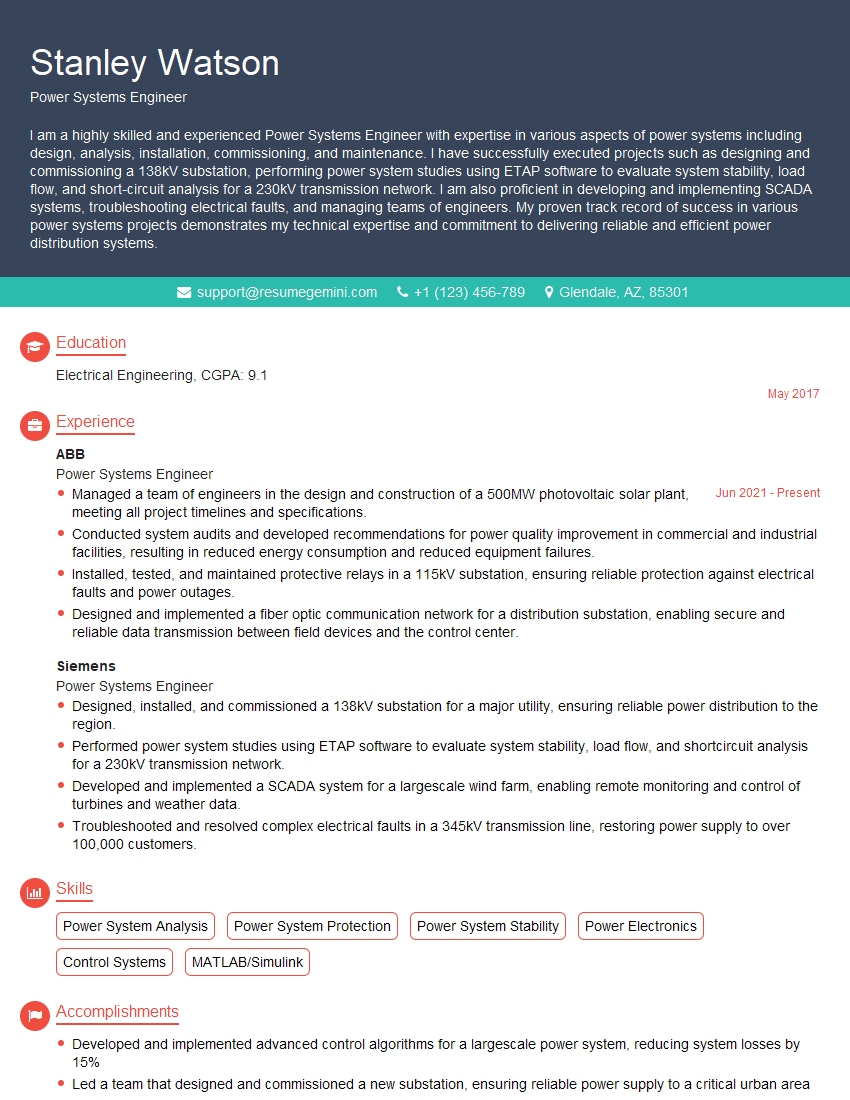
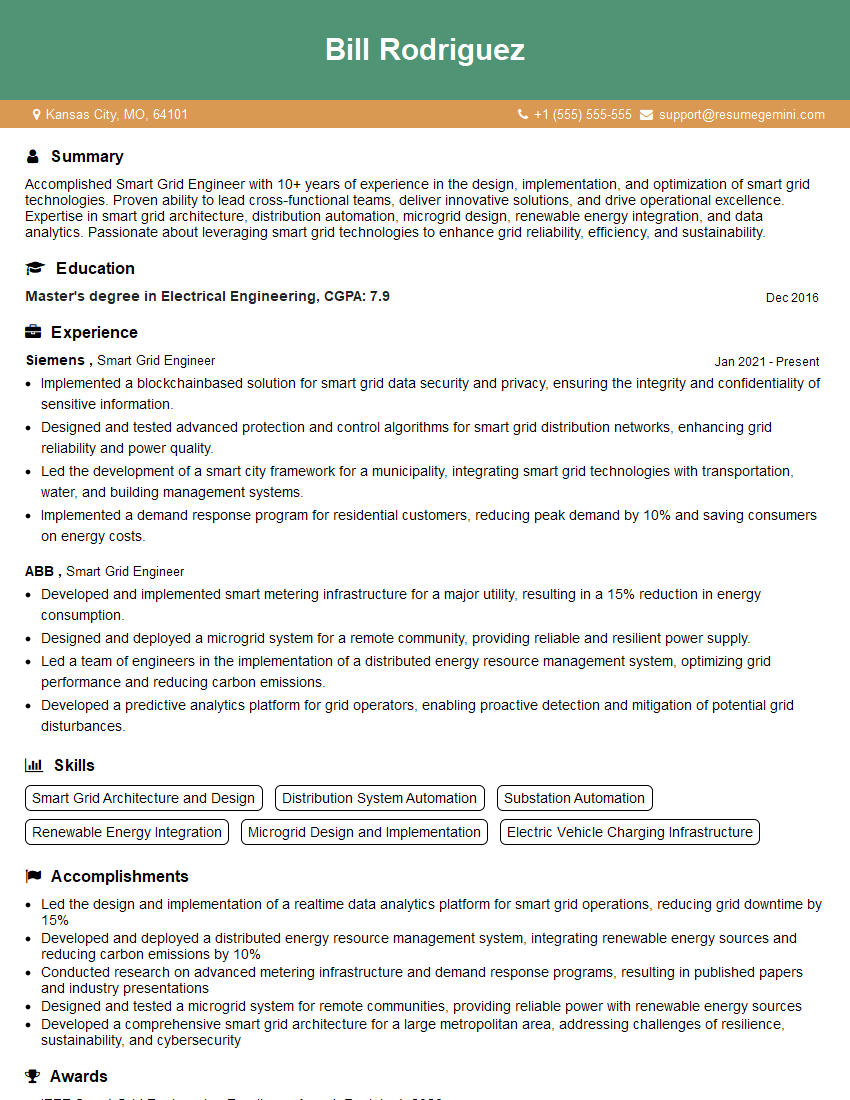
Mastering Grid System Interconnection concepts significantly enhances your career prospects in the power industry, opening doors to exciting and impactful roles. To maximize your chances of landing your ideal position, a well-crafted resume is essential. An ATS-friendly resume ensures your application gets noticed by recruiters and hiring managers. We strongly encourage you to leverage ResumeGemini, a trusted resource for building professional and impactful resumes. ResumeGemini offers valuable tools and resources to help you create a resume that effectively showcases your skills and experience. Examples of resumes tailored to Grid System Interconnection roles are available to help you get started.
Explore more articles
Users Rating of Our Blogs
Share Your Experience
We value your feedback! Please rate our content and share your thoughts (optional).
What Readers Say About Our Blog
To the interviewgemini.com Webmaster.
Very helpful and content specific questions to help prepare me for my interview!
Thank you
To the interviewgemini.com Webmaster.
This was kind of a unique content I found around the specialized skills. Very helpful questions and good detailed answers.
Very Helpful blog, thank you Interviewgemini team.