Unlock your full potential by mastering the most common Ground Truthing interview questions. This blog offers a deep dive into the critical topics, ensuring you’re not only prepared to answer but to excel. With these insights, you’ll approach your interview with clarity and confidence.
Questions Asked in Ground Truthing Interview
Q 1. Explain the process of ground truthing remotely sensed data.
Ground truthing remotely sensed data is the process of verifying the accuracy of data obtained from remote sensing technologies, such as satellite imagery or aerial photography, by making direct observations on the ground. It’s like checking your map against the actual landscape to ensure it’s accurate. This involves collecting data at specific locations corresponding to pixels or areas within the remotely sensed image. The collected ground data is then compared to the remotely sensed data to assess its accuracy and identify any discrepancies.
The process typically involves several steps: planning the ground truthing campaign, including defining the study area, selecting sample points, and determining the data collection methods; conducting fieldwork to collect ground truth data; analyzing and comparing the ground truth data with the remotely sensed data; and finally, assessing the accuracy and reliability of the remotely sensed data.
Q 2. What are the different methods used for ground truthing?
Ground truthing employs various methods depending on the type of data being verified and the research objectives. These methods can range from simple visual observations to sophisticated measurements using specialized equipment.
- Visual Observation: This involves directly observing and recording features on the ground. For example, identifying the type of land cover (forest, urban, agriculture) at a specific location.
- GPS Measurements: Using GPS receivers to accurately locate ground truth points and record their coordinates. This is crucial for aligning ground observations with remotely sensed data.
- Field Spectroscopy: Measuring the spectral reflectance of surfaces using handheld spectrometers, providing detailed information about the chemical composition and physical properties of materials.
- Sampling: Collecting physical samples, such as soil or vegetation, for laboratory analysis. This can help determine soil type, vegetation density, or other relevant parameters.
- Sensor-based Measurements: Employing specialized sensors for quantifiable data, such as temperature, humidity, or vegetation indices.
Q 3. Describe your experience with GPS equipment and data collection in the field.
I have extensive experience using various GPS devices, from handheld units to more sophisticated real-time kinematic (RTK) GPS systems. My fieldwork has involved using GPS to accurately locate sampling points, often in challenging terrains. For instance, during a project mapping deforestation in a mountainous region, I utilized RTK GPS to achieve centimeter-level accuracy in pinpointing locations for ground truth measurements of tree cover density. I am proficient in using GPS data processing software to manage and analyze the collected coordinate data, ensuring the correct georeferencing of our ground observations. Data is usually exported in formats like shapefiles or kml/kmz for further spatial analysis and integration with GIS software.
Q 4. How do you ensure the accuracy and reliability of ground truth data?
Ensuring accuracy and reliability of ground truth data is paramount. We employ several strategies:
- Careful Planning and Sampling Design: Using appropriate sampling techniques (random, stratified, systematic) to ensure representative data across the study area.
- Multiple Measurements and Replication: Taking multiple measurements at each point to reduce the impact of random errors. For example, measuring tree height at multiple points per plot.
- Quality Control Procedures: Implementing rigorous quality control checks at each stage of the process, from equipment calibration to data entry and analysis.
- Experienced Personnel: Employing trained personnel familiar with data collection procedures and identification of features relevant to the study objectives.
- Data Validation and Consistency Checks: Careful review of the collected data to identify and correct any errors or inconsistencies.
Q 5. What are the common challenges encountered during ground truthing?
Ground truthing is not without its challenges. Some common difficulties include:
- Accessibility: Reaching remote or difficult-to-access areas can be challenging and time-consuming.
- Time Constraints: Limited time for fieldwork can affect data quality and sampling intensity.
- Weather Conditions: Adverse weather conditions can impede fieldwork and compromise data quality.
- Cost: Ground truthing can be expensive, especially if specialized equipment or laboratory analysis is required.
- Subjectivity: Some aspects of ground truthing, like visual interpretation, can be subjective and prone to errors.
- Temporal Differences: Remote sensing data capture occurs at a specific time; ground truthing should ideally happen around the same time, accounting for seasonal and diurnal changes.
Q 6. How do you handle discrepancies between remotely sensed data and ground truth data?
Discrepancies between remotely sensed data and ground truth data require careful investigation. Several factors could contribute to these differences:
- Errors in Remote Sensing Data: Atmospheric effects, sensor calibration issues, or limitations in spatial resolution can lead to inaccuracies.
- Errors in Ground Truth Data: Inaccurate GPS measurements, observer bias, or inadequate sampling design can also contribute.
- Temporal Differences: Changes in land cover between the time of image acquisition and ground truthing.
To handle these discrepancies, a thorough analysis is crucial. We need to re-examine the data collection methods, evaluate the potential sources of error in both datasets, and potentially refine the methods to improve the overall accuracy. Sometimes, recalibration or additional ground truthing may be necessary.
Q 7. Explain your understanding of sampling techniques in ground truthing.
Sampling techniques are crucial in ground truthing to ensure that the collected data is representative of the entire study area. The choice of sampling technique depends on factors such as the heterogeneity of the area, the research objectives, and available resources. Common sampling techniques include:
- Random Sampling: Every location has an equal chance of being selected. This is useful for homogeneous areas.
- Stratified Random Sampling: The study area is divided into strata based on characteristics like land cover type, and then random sampling is applied within each stratum. This improves representation in heterogeneous areas.
- Systematic Sampling: Samples are selected at regular intervals. This is efficient and easy to implement but can be affected by spatial patterns in the data.
- Cluster Sampling: Samples are collected in clusters or groups. This can be efficient but may not represent the entire area equally.
The selection of a suitable sampling technique is critical for reducing sampling bias and ensuring the reliability of ground truth data. For instance, stratified sampling would be preferred when mapping land cover in an area with a mix of forest and agricultural lands.
Q 8. How do you determine the appropriate sample size for ground truthing?
Determining the appropriate sample size for ground truthing is crucial for ensuring the accuracy and reliability of your results without unnecessary expense or effort. It’s not a one-size-fits-all answer; it depends on several factors.
- Desired Accuracy: Higher accuracy demands a larger sample size. Think of it like a poll – the more people you survey, the more confident you are in the results.
- Variability of the Data: If the phenomenon you’re studying is highly variable (e.g., land cover in a highly fragmented landscape), you’ll need a larger sample size to capture that variability adequately.
- Budget and Time Constraints: Resources often dictate the feasible sample size. A larger sample is ideal, but it requires more time and personnel.
- Confidence Level and Margin of Error: Statistical methods, like power analysis, can help determine the sample size needed to achieve a specified confidence level (e.g., 95%) and margin of error (e.g., ±5%).
For instance, when ground truthing vegetation types in a relatively homogenous forest, a smaller sample size might suffice. However, in a heterogeneous area with diverse land cover, a significantly larger and stratified sample across various cover types would be necessary. I often use power analysis software to calculate optimal sample sizes based on these factors, ensuring the ground truth data is representative and reliable.
Q 9. What software or tools are you proficient in using for ground truthing and data analysis?
My proficiency in software for ground truthing and data analysis is extensive. I’m highly skilled in using Geographic Information Systems (GIS) software such as ArcGIS and QGIS for data visualization, spatial analysis, and map creation. I routinely use these to overlay remotely sensed data with ground truth points, calculate accuracy assessments, and create detailed maps.
For data analysis, I’m proficient in statistical software packages like R and Python (with libraries like Pandas, NumPy, and Scikit-learn). These tools are invaluable for statistical analysis, accuracy assessment calculations (e.g., producer’s and user’s accuracy, Kappa coefficient), and generating reports. For example, I use R to perform a detailed error matrix analysis and interpret the results to improve the quality of the classification.
Furthermore, I’m comfortable using various image processing software to pre-process imagery before integrating it with ground truth data. This often includes tools like ENVI or Erdas Imagine for tasks like atmospheric correction and geometric rectification.
Q 10. Describe your experience with quality control procedures in ground truthing.
Quality control (QC) is paramount in ground truthing. My experience incorporates rigorous QC procedures at every stage, starting from field data collection to final data analysis.
- Field Data Collection: This includes employing standardized data collection protocols, using GPS devices with high accuracy, employing multiple observers for critical points, and maintaining detailed field logs.
- Data Entry and Processing: I implement double data entry to minimize errors during the transcription of field data. All data is then checked for inconsistencies and outliers.
- Data Analysis: I always perform thorough error matrix analysis and assess overall accuracy metrics. Any significant discrepancies are investigated to identify and rectify potential sources of error.
- Regular Audits: Periodic audits of both fieldwork and data analysis are conducted to maintain high standards and identify areas for improvement. We frequently review our methodologies to adapt to the specific circumstances of our work.
For instance, in a project involving the mapping of agricultural fields, a QC step might involve comparing the field-collected data with high-resolution satellite imagery to detect any discrepancies and resolve conflicts. This iterative QC process ensures the integrity and reliability of the ground truth data.
Q 11. How do you manage and organize large datasets collected during ground truthing?
Managing large datasets collected during ground truthing requires a structured approach. I typically use a combination of techniques.
- Database Management Systems (DBMS): Relational databases like PostgreSQL or MySQL are ideal for storing and managing structured ground truth data, allowing for efficient querying and retrieval.
- GIS Software: GIS software provides spatial organization and allows for easy integration with other geospatial data. Geodatabases within ArcGIS, for instance, are excellent for managing large spatial datasets.
- Cloud-Based Storage: Cloud platforms like Amazon S3 or Google Cloud Storage provide scalable and cost-effective storage solutions for very large datasets.
- Metadata Management: Meticulous metadata management is essential. This includes documenting data collection methods, spatial references, and any other relevant information, ensuring data discoverability and reproducibility.
To illustrate, in a project involving millions of points, I would use a database to organize the attributes (e.g., vegetation type, location coordinates, date of observation), and a GIS to visualize and analyze the spatial distribution of these points in conjunction with remote sensing data.
Q 12. How do you ensure the consistency and reproducibility of ground truth data?
Ensuring consistency and reproducibility in ground truth data is vital for the validity of any analysis. This is achieved through several measures.
- Standardized Protocols: Developing and strictly adhering to standardized data collection protocols, including detailed field forms and clearly defined classification schemes, is fundamental.
- Training and Certification: Training field crews on the standard operating procedures ensures consistency in data collection techniques.
- Quality Control Checks: As mentioned earlier, rigorous QC checks at multiple stages help detect and correct inconsistencies.
- Version Control: Utilizing version control systems (like Git) for data and code helps track changes and enables reproducibility of analysis.
- Data Documentation: Comprehensive documentation of all aspects of the ground truthing process, including methodologies, data sources, and analysis techniques, is crucial for transparency and reproducibility.
For example, using a predefined color chart for vegetation classification ensures all team members use the same criteria, minimizing inconsistencies. Detailed documentation and version control allow any independent researcher to replicate the analysis steps and obtain similar results.
Q 13. Describe your experience in working with different types of maps and imagery.
My experience spans a wide range of map types and imagery, including:
- Topographic Maps: Used for understanding elevation, terrain, and infrastructure.
- Satellite Imagery (various resolutions): From high-resolution imagery (e.g., WorldView, GeoEye) useful for detailed land cover classification, to lower-resolution imagery (e.g., Landsat, Sentinel) suitable for broad-scale mapping.
- Aerial Photography: Providing high-resolution visual data for various applications.
- LiDAR Data: For detailed 3D surface modelling, useful for applications like forest inventory and flood risk assessment.
I’m adept at integrating various data sources to create accurate and comprehensive maps. For instance, I’ve combined high-resolution satellite imagery with topographic maps and LiDAR data to generate accurate digital elevation models (DEMs) and create detailed land cover maps for environmental impact assessments. My ability to integrate diverse data types allows for a robust and multifaceted understanding of the study area.
Q 14. How do you communicate technical information effectively to non-technical audiences?
Communicating technical information effectively to non-technical audiences is a crucial skill. I use several strategies:
- Simple Language and Visual Aids: Avoiding jargon and using clear, concise language, supplemented by visual aids like maps, charts, and diagrams, enhances understanding.
- Analogies and Real-World Examples: Relating complex concepts to relatable examples and using analogies makes technical information more accessible.
- Interactive Presentations: Engaging presentations with opportunities for questions and discussions foster better comprehension.
- Storytelling: Framing technical information within a narrative or story can make it more memorable and impactful.
For example, when explaining the concept of accuracy assessment to stakeholders, I might use an analogy of a target and arrows, illustrating the relationship between ground truth data and remotely sensed data. Visual aids such as maps showing the location of ground truth points and accuracy assessment results further enhance their comprehension and help establish confidence in the findings.
Q 15. What is your experience with different types of sensors and their applications in ground truthing?
My experience with sensors in ground truthing spans a wide range, from simple handheld GPS units for precise location recording to sophisticated hyperspectral cameras capturing detailed spectral signatures of land cover. I’ve worked extensively with:
- GPS and GNSS receivers: Essential for georeferencing ground truth data, ensuring accurate spatial location. I’ve used differential GPS (DGPS) techniques to achieve centimeter-level accuracy in challenging terrain.
- Spectrometers: These instruments measure the spectral reflectance of materials, allowing us to identify different land cover types based on their unique spectral signatures. For instance, distinguishing between healthy and stressed vegetation using near-infrared (NIR) reflectance.
- Multispectral and hyperspectral cameras: These provide remotely sensed data at multiple wavelengths, offering valuable insights into vegetation health, soil composition, and water quality. I’ve used data from these sensors to validate and refine remotely sensed products from satellites or airborne platforms.
- LiDAR (Light Detection and Ranging): For projects involving detailed elevation models and 3D point cloud data, LiDAR has been invaluable. This is particularly useful for analyzing forest structure, urban landscapes, or coastal environments.
The choice of sensor depends heavily on the specific ground truthing objectives and the resources available. For example, while a simple GPS is sufficient for point-based measurements, a hyperspectral camera is necessary for detailed spectral analysis.
Career Expert Tips:
- Ace those interviews! Prepare effectively by reviewing the Top 50 Most Common Interview Questions on ResumeGemini.
- Navigate your job search with confidence! Explore a wide range of Career Tips on ResumeGemini. Learn about common challenges and recommendations to overcome them.
- Craft the perfect resume! Master the Art of Resume Writing with ResumeGemini’s guide. Showcase your unique qualifications and achievements effectively.
- Don’t miss out on holiday savings! Build your dream resume with ResumeGemini’s ATS optimized templates.
Q 16. Describe your experience with error analysis and uncertainty estimation in ground truthing.
Error analysis and uncertainty estimation are crucial in ground truthing. It’s impossible to obtain perfectly accurate data, so understanding and quantifying uncertainties is paramount. My approach involves:
- Identifying sources of error: This includes instrument errors (sensor calibration, GPS precision), sampling errors (bias in sample selection), and human errors (misidentification of land cover types).
- Quantifying uncertainty: Using statistical methods to estimate the uncertainty associated with each measurement. This might involve calculating standard deviations, confidence intervals, or using error propagation techniques to determine the overall uncertainty of derived parameters.
- Propagation of uncertainty: When combining data from different sources, the uncertainty from each source needs to be considered and propagated through the calculations to estimate the final uncertainty of the results.
- Spatial autocorrelation: Acknowledging spatial patterns in the errors and correcting for them using spatial statistical models. This is important because errors are often not randomly distributed but clustered geographically.
For instance, in a project assessing forest biomass using LiDAR, I would quantify the uncertainty in LiDAR point cloud density, GPS location, and the biomass estimation model itself. By combining these uncertainties, I can provide a realistic range of biomass estimates, rather than a single point value.
Q 17. How do you assess the accuracy of different ground truthing methods?
Assessing the accuracy of ground truthing methods depends on comparing the ground truth data with a reference dataset of known high accuracy. This reference might be another independent ground truthing effort, highly detailed maps, or laboratory analysis. Methods include:
- Accuracy Assessment: Using metrics like producer’s accuracy, user’s accuracy, overall accuracy, and kappa coefficient to quantify the agreement between ground truth data and the reference data. These metrics help us understand the proportion of correctly classified areas and the overall reliability of the ground truthing method.
- Error matrices: These matrices visually represent the errors in classification, showing the confusion between different classes. For example, how often was a grassland area mistakenly classified as a forest?
- Root Mean Square Error (RMSE): A commonly used metric to quantify the difference between ground truth values and the values obtained from another source. Lower RMSE indicates better agreement.
For example, if assessing the accuracy of a land cover classification based on satellite imagery, I’d compare the classification results to a detailed field survey (reference dataset) using these metrics. A high overall accuracy and kappa coefficient would indicate a reliable ground truthing method.
Q 18. What is your understanding of spatial statistics and its application in ground truthing?
Spatial statistics are fundamental to ground truthing. They account for the spatial dependency and autocorrelation inherent in geographical data. My understanding incorporates:
- Geostatistics: Techniques like kriging are used to interpolate values at unsampled locations, providing a continuous surface of ground truth information from point measurements. This is particularly useful when ground truth data is sparse.
- Spatial autocorrelation analysis: This helps identify spatial patterns in the data and understand how measurements at different locations are related. Ignoring spatial autocorrelation can lead to biased estimates and incorrect conclusions.
- Spatial regression models: These models account for spatial dependence when modeling relationships between ground truth data and other variables, such as environmental factors or remotely sensed data.
For example, in assessing soil properties, I would use geostatistical techniques to interpolate soil nutrient concentrations from a limited number of soil samples, creating a spatial map of nutrient distribution. Spatial autocorrelation analysis would help determine the optimal sampling strategy for future surveys.
Q 19. How do you integrate ground truth data with remotely sensed data for improved accuracy?
Integrating ground truth data with remotely sensed data is essential for improving the accuracy of remotely sensed products. My approach involves:
- Training and Validation Datasets: Ground truth data are used to train and validate machine learning models or algorithms used for classifying or analyzing remotely sensed images. This helps improve the accuracy of remotely sensed maps and interpretations.
- Accuracy Assessment and Refinement: Ground truth data are used to assess the accuracy of existing remotely sensed products and identify areas where improvements are needed. This iterative process refines the remote sensing analysis.
- Calibration and Correction: Ground truth data can help calibrate sensors and correct for systematic errors in remotely sensed data. For example, atmospheric correction using ground-based measurements.
For instance, in a project mapping deforestation using satellite imagery, I would use ground truth data (field surveys or high-resolution imagery) to train a classification algorithm that distinguishes between forested and deforested areas. This would lead to a more accurate deforestation map than relying solely on the satellite imagery.
Q 20. Describe a time you had to overcome a technical challenge during a ground truthing project.
During a project mapping wetland vegetation using hyperspectral imagery, we faced a significant challenge with atmospheric correction. The hyperspectral data was significantly affected by atmospheric scattering and absorption, leading to inaccurate spectral signatures. The standard atmospheric correction models weren’t performing well in the specific conditions of our study area (a coastal wetland with high humidity and variable cloud cover).
To overcome this, we implemented a multi-step approach:
- Acquisition of ground-based atmospheric measurements: We deployed a spectrometer at the field sites to simultaneously measure the atmospheric conditions during the hyperspectral imagery acquisition.
- Development of a site-specific atmospheric correction model: We used the ground-based measurements to develop a more accurate atmospheric correction model tailored to the unique atmospheric conditions of the study area.
- Model validation and refinement: We rigorously validated the improved correction model by comparing corrected spectral signatures with ground truth measurements of vegetation types.
This iterative process led to a significant improvement in the accuracy of the hyperspectral data and allowed us to successfully map wetland vegetation. The key to success was adapting standard procedures and developing a solution tailored to the specific environmental challenges.
Q 21. Explain your experience with data validation and error correction.
Data validation and error correction are critical steps in ground truthing. My experience includes:
- Data cleaning: Identifying and removing outliers or erroneous data points. This might involve using statistical methods or visual inspection of the data.
- Error identification and analysis: Determining the sources of errors and their potential impact on the results. Understanding the spatial and temporal distribution of errors helps in developing appropriate correction methods.
- Data consistency checks: Comparing data from different sources or different methods to ensure consistency. Discrepancies may highlight errors that need further investigation.
- Error correction techniques: This can range from simple data replacement (e.g., replacing outliers with more reliable values) to more complex methods, like using spatial interpolation to fill in missing data.
For example, if GPS data showed unexpectedly large jumps in location during a field survey, I would investigate possible causes (e.g., GPS signal loss) and either correct the errors or remove the affected data points. This ensures the integrity and reliability of the final dataset.
Q 22. How do you ensure the ethical considerations in data collection and usage during ground truthing?
Ethical considerations are paramount in ground truthing, where we verify data collected remotely, often from sensitive sources. We must prioritize informed consent, data anonymization, and responsible data handling throughout the entire process.
- Informed Consent: Before collecting any data involving individuals, we obtain their explicit consent, ensuring they understand the purpose of data collection, how it will be used, and their rights regarding access and control. This is especially critical when dealing with personally identifiable information (PII).
- Data Anonymization: We employ techniques to remove or disguise identifying information, such as names, addresses, and unique identifiers. This protects individual privacy while allowing us to analyze the data effectively. Methods include data masking, generalization, and aggregation.
- Data Security: Robust security measures are implemented to prevent unauthorized access, use, disclosure, disruption, modification, or destruction of data. This includes secure data storage, access control protocols, and encryption techniques. For example, all data is encrypted both in transit and at rest.
- Compliance: We adhere strictly to all relevant data protection regulations and ethical guidelines, such as GDPR, HIPAA, and local legislation. We maintain detailed records of our ethical considerations and any exceptions made.
For instance, in a project involving ground truthing agricultural land use from satellite imagery, we would ensure farmers understand the study’s purpose and how their land data would be anonymized and used, before photographing their fields or using their data.
Q 23. How do you prioritize tasks and manage your time effectively in field operations?
Efficient time management in field operations is crucial. We employ a systematic approach that balances planning and flexibility.
- Prioritization: We use task prioritization matrices (e.g., Eisenhower Matrix) to categorize tasks based on urgency and importance. Critical tasks, such as verifying critical data points or addressing unexpected issues, take precedence.
- Route Optimization: Using GIS software and GPS technology, we plan efficient routes minimizing travel time between ground truth points. This maximizes our time in the field and reduces fuel consumption.
- Teamwork: Effective delegation and teamwork are essential. We assign tasks based on individual expertise and availability, ensuring smooth workflow and covering a larger area efficiently. Regular check-ins keep the team coordinated and address any emerging challenges promptly.
- Contingency Planning: We anticipate potential delays or unforeseen challenges (e.g., weather conditions, access restrictions). We build buffer time into our schedules and have backup plans to mitigate disruptions.
- Regular Evaluation: At the end of each day or week, we assess our progress against the project timeline. This helps us identify areas requiring adjustments and prevents falling behind schedule.
For example, during a ground truthing project involving forest inventory, we might prioritize sites with difficult access or high conservation value early in the week to avoid weekend constraints. We use GPS-enabled devices to create an efficient route, reducing unnecessary travel time.
Q 24. Describe your experience with working independently and as part of a team.
I’m comfortable working both independently and collaboratively. My experience encompasses both types of settings.
- Independent Work: I thrive in independent work settings, demonstrating strong self-discipline and initiative. I’m proficient at managing my time, prioritizing tasks, and resolving problems independently. For example, while conducting a field survey requiring data collection at multiple isolated locations, I was able to plan my schedule, maintain detailed records, and manage any equipment issues independently.
- Teamwork: I’m a highly effective team player, contributing actively to team dynamics. My collaboration skills involve actively participating in discussions, sharing knowledge, and providing support to teammates. In a recent project, collaborating with remote sensing experts, I effectively integrated ground truth data with satellite imagery analysis and helped to resolve discrepancies between the two data sets, enhancing the accuracy of the final results.
In summary, I am adaptable to various work environments and can seamlessly integrate into teams or work effectively on my own.
Q 25. How do you adapt to changing project requirements and deadlines?
Adaptability is essential in ground truthing due to the often dynamic nature of projects. My approach involves proactive communication, flexible planning, and problem-solving.
- Communication: Open and clear communication with project managers and stakeholders is critical. We actively seek clarification on changes and discuss the implications on timelines and resources.
- Flexible Planning: We use agile methodologies to adapt to evolving requirements. This involves breaking down projects into smaller, manageable tasks, allowing for quick adjustments when needed. We prioritize flexibility in our field operations to accommodate unforeseen changes.
- Problem-Solving: We identify and address potential roadblocks proactively. This might involve finding alternative data collection methods, adjusting sampling strategies, or re-allocating resources.
- Continuous Learning: We embrace new technologies and methodologies to improve efficiency and adapt to changing project needs. This keeps us at the forefront of our field.
For example, if a project deadline is unexpectedly shortened, we might re-prioritize tasks, potentially using faster data collection methods, and concentrate on the most critical data points to meet the revised schedule.
Q 26. What are the key metrics used to evaluate the quality of ground truth data?
The quality of ground truth data is evaluated using several key metrics, focusing on accuracy, completeness, and consistency.
- Accuracy: This measures how closely the ground truth data reflects the reality. We calculate accuracy using metrics like overall accuracy, producer’s accuracy, and user’s accuracy, which are commonly used in remote sensing and GIS. These metrics compare the ground truth data with reference data. A high accuracy indicates that the ground truth data is reliable.
- Completeness: This assesses the extent to which all intended data points were collected. A high completeness rate indicates few missing data points. This is crucial for statistical analysis and represents the thoroughness of the field operations.
- Consistency: This evaluates the internal consistency of the data. Are there any discrepancies or contradictions within the dataset? This is particularly important when multiple individuals collect data, ensuring consistent methodologies and data recording.
- Precision and Recall: In classification tasks, these metrics provide a detailed assessment of how well the ground truth data aligns with the classification results. Precision focuses on the accuracy of positive classifications, while recall measures the ability to find all relevant instances.
- Uncertainty Assessment: Quantifying the uncertainty associated with the ground truth data provides a more complete picture of its reliability. This might involve estimating error margins or using probabilistic models.
For instance, in a land cover classification project, we would compare the ground truth data with the classification results from satellite imagery, calculating metrics like overall accuracy to assess the quality of the classification.
Q 27. How do you maintain data integrity and security?
Maintaining data integrity and security is a top priority. We implement a multi-layered approach:
- Data Validation: We implement rigorous data validation procedures to detect and correct errors during data collection and entry. This involves data checks, cross-referencing, and consistency checks.
- Data Backup and Redundancy: We maintain multiple backups of the data, stored in different locations, to prevent data loss due to hardware failure or other unforeseen events. Cloud storage with version control is frequently utilized.
- Access Control: We implement strict access control measures to limit access to authorized personnel only. This involves secure passwords, role-based access control, and regular audits of access logs.
- Data Encryption: We encrypt data both in transit and at rest, protecting it from unauthorized access, even if the storage media is compromised. We use industry-standard encryption algorithms.
- Chain of Custody: A detailed chain of custody is maintained documenting all individuals who have accessed or handled the data, ensuring accountability and transparency.
For example, all field data is immediately backed up to a secure cloud server, and access is restricted using unique passwords and role-based permissions.
Q 28. Describe your experience with documentation and reporting in ground truthing projects.
Documentation and reporting are critical for transparency, reproducibility, and knowledge sharing. Our documentation process is comprehensive.
- Detailed Field Notes: We maintain meticulous field notes, recording all observations, measurements, and any challenges encountered during data collection. This includes GPS coordinates, timestamps, photographs, and sketches.
- Data Dictionaries and Metadata: We create detailed data dictionaries that define all variables, data types, units, and codes used. We also create comprehensive metadata, describing the data collection methods, quality control procedures, and any limitations of the data.
- Standard Reporting Formats: We use standard reporting formats (e.g., GIS shapefiles, CSV files, databases) to ensure data compatibility and accessibility. Clear and concise reports are created summarizing the findings, analysis results, and conclusions.
- Data Visualization: We employ data visualization techniques, such as maps and charts, to effectively communicate findings to both technical and non-technical audiences. This facilitates a deeper understanding of the results.
- Archiving: Data and reports are archived in a structured and accessible manner, ensuring long-term preservation and future use.
For example, in a ground truthing project for habitat mapping, we would include detailed maps showing the locations of the ground truth points, tables with species observations, and a comprehensive report summarizing the findings and their implications for conservation management.
Key Topics to Learn for Ground Truthing Interview
- Data Collection Methods: Understanding various techniques for gathering ground truth data, including manual data collection, sensor deployment, and crowdsourcing. Consider the advantages and disadvantages of each.
- Data Quality Assessment: Learn to evaluate the accuracy, completeness, and reliability of ground truth data. Discuss techniques for identifying and handling inconsistencies or errors.
- Data Validation and Verification: Explore methods for confirming the accuracy of ground truth data against other sources or through independent verification processes. This includes understanding different validation metrics.
- Statistical Analysis of Ground Truth Data: Familiarize yourself with statistical methods for analyzing ground truth data, including descriptive statistics, hypothesis testing, and regression analysis. Be prepared to discuss how these analyses inform decision-making.
- Error Analysis and Mitigation: Learn to identify potential sources of error in ground truth data collection and analysis and develop strategies to minimize their impact on results. This includes considering human error, instrument limitations, and sampling bias.
- Application of Ground Truthing in Specific Fields: Research how ground truthing is applied in relevant industries (e.g., remote sensing, machine learning, environmental monitoring). Be ready to discuss case studies and practical examples.
- Ethical Considerations: Understand the ethical implications of ground truthing, including data privacy, informed consent, and responsible data handling.
Next Steps
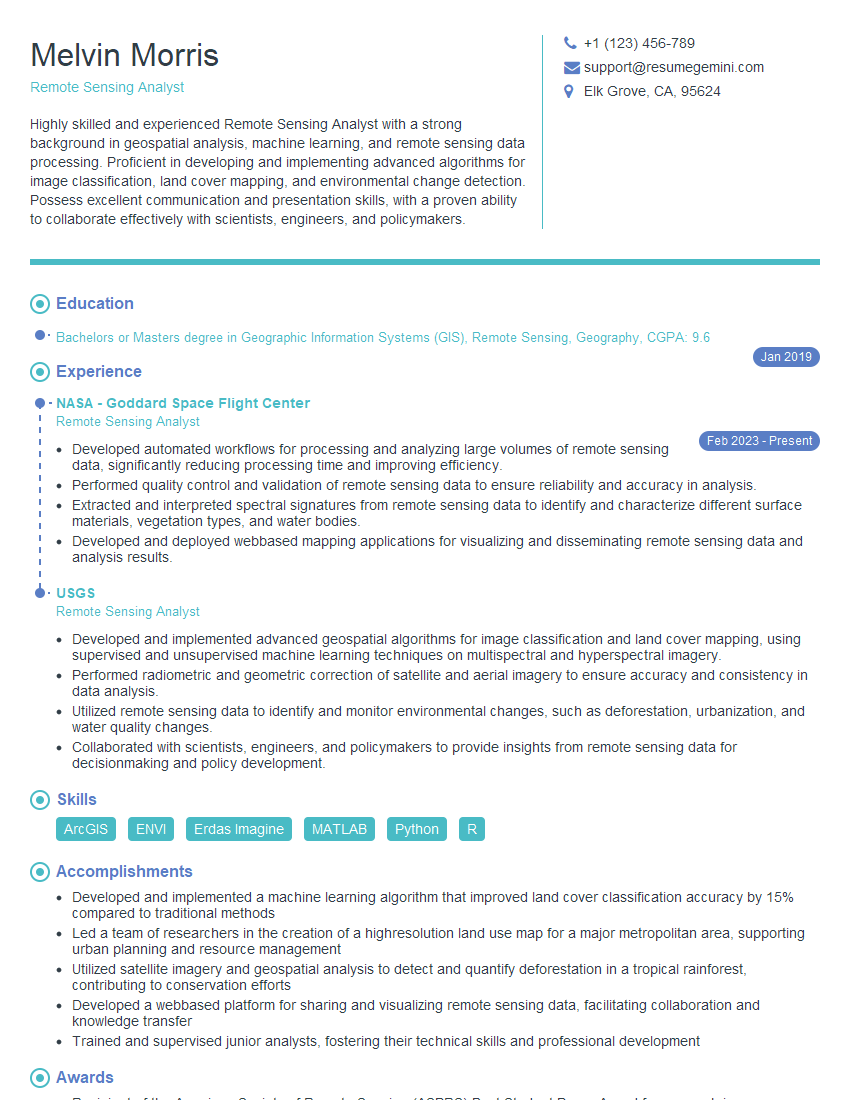
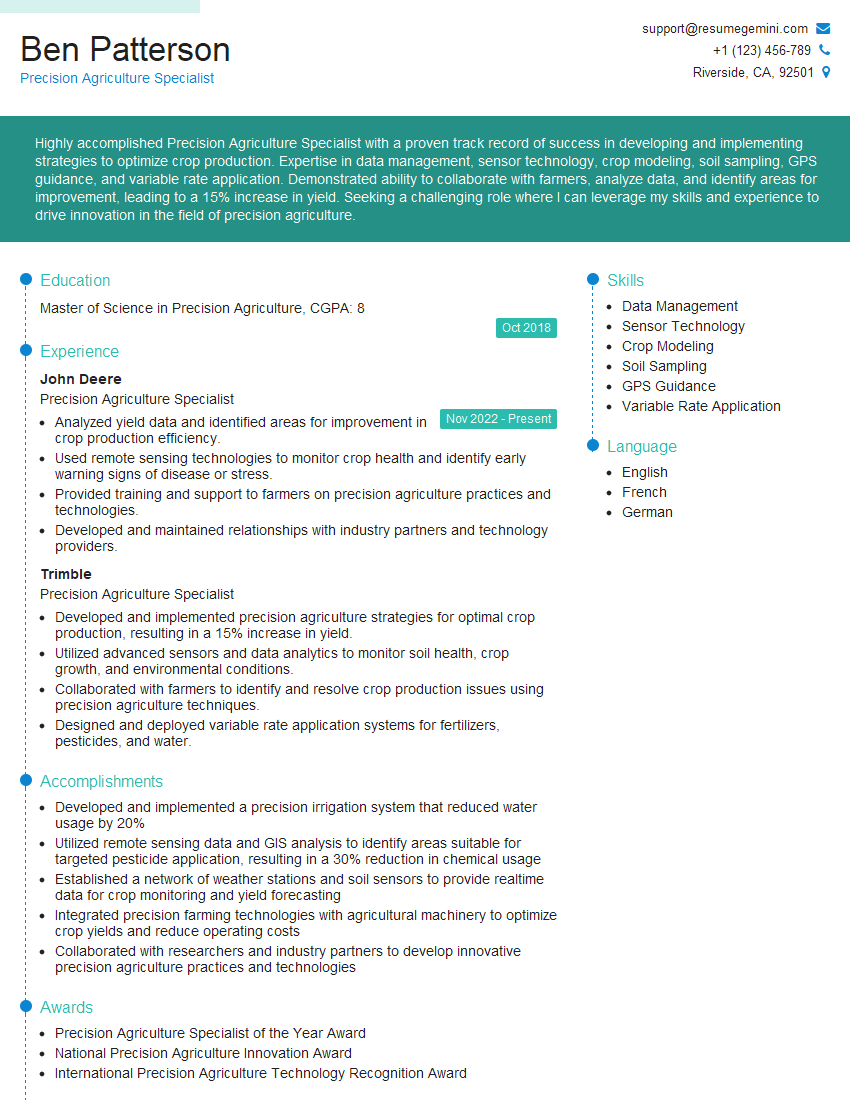
Mastering ground truthing is crucial for advancing your career in data-driven fields. A strong understanding of data quality and validation techniques is highly sought after by employers. To maximize your job prospects, creating an ATS-friendly resume is essential. ResumeGemini is a trusted resource that can help you build a professional and impactful resume, ensuring your skills and experience shine through. Examples of resumes tailored to Ground Truthing roles are available to further guide your preparation.
Explore more articles
Users Rating of Our Blogs
Share Your Experience
We value your feedback! Please rate our content and share your thoughts (optional).
What Readers Say About Our Blog
To the interviewgemini.com Webmaster.
Very helpful and content specific questions to help prepare me for my interview!
Thank you
To the interviewgemini.com Webmaster.
This was kind of a unique content I found around the specialized skills. Very helpful questions and good detailed answers.
Very Helpful blog, thank you Interviewgemini team.