Unlock your full potential by mastering the most common Hunting Ethics and Sportsmanship interview questions. This blog offers a deep dive into the critical topics, ensuring you’re not only prepared to answer but to excel. With these insights, you’ll approach your interview with clarity and confidence.
Questions Asked in Hunting Ethics and Sportsmanship Interview
Q 1. Explain the concept of Fair Chase.
Fair chase is a core tenet of ethical hunting, emphasizing a sporting and challenging pursuit of game animals. It rejects any practices that provide an unfair advantage to the hunter, ensuring the animal has a reasonable opportunity to escape. Think of it like a sporting contest – both participants should have a fair chance.
Key elements of fair chase include:
- Legal and ethical methods: Using only legal weapons and techniques, respecting bag limits and seasons.
- Challenging pursuit: The hunt should involve skill, stalking, tracking, and strategic decision-making, not simply an easy kill.
- Respect for the animal: Recognizing the animal’s inherent right to life and avoiding practices that inflict unnecessary suffering.
- No use of artificial aids that significantly increase the hunter’s odds of success: This includes things like baiting (except where legally permitted and regulated), spotlighting, or using vehicles to drive animals into a corner.
For example, a hunter using a high-powered rifle from a blind to shoot a deer at a long distance from a field where bait has been placed, is not considered fair chase. A hunter tracking a deer through challenging terrain, employing skill and patience, is an example of fair chase.
Q 2. Describe the role of hunting regulations in wildlife conservation.
Hunting regulations are crucial for wildlife conservation. They act as a balancing mechanism, ensuring sustainable populations of game animals while preventing overexploitation. Think of them as traffic laws for the wild.
Their role includes:
- Setting bag limits: Limiting the number of animals a hunter can harvest in a given season to prevent overhunting.
- Establishing hunting seasons: Determining specific times of the year when hunting is permitted, often coinciding with breeding cycles or times when animals are more abundant.
- Defining legal hunting methods: Specifying acceptable weapons, techniques, and equipment to ensure fair chase and animal welfare.
- Protecting endangered species: Implementing complete hunting prohibitions on threatened or endangered species to aid recovery efforts.
- Regulating habitat management: Regulations can indirectly influence habitat quality by limiting access in sensitive areas or promoting sustainable land management practices.
For instance, regulations may limit the number of deer a hunter can harvest to maintain a healthy population size. Without these regulations, uncontrolled hunting could lead to population crashes, endangering the species and disrupting the ecosystem.
Q 3. What are the ethical considerations regarding the use of hunting technology?
Ethical considerations surrounding hunting technology are complex. While advancements in technology can enhance hunter safety and increase efficiency, they must be used responsibly to maintain the integrity of fair chase and the principles of ethical hunting.
Key ethical considerations include:
- Thermal imaging and night vision: These technologies can significantly increase hunting success, particularly for nocturnal animals. Ethical concerns arise when they eliminate the challenge of the hunt, transforming it into a more efficient killing process.
- GPS tracking and mapping technology: While useful for navigation and safety, this technology may be used to locate animals easily, compromising the elements of skill and fair chase.
- Remote-controlled hunting devices: Such technologies raise significant ethical questions about the level of human involvement and the risk of causing unnecessary suffering to the animal.
The ethical use of technology should always prioritize fair chase, minimizing harm to the animal, and ensuring a challenging and respectful hunting experience. Simply because a technology exists doesn’t mean it should be used. Responsible hunters evaluate the implications of using any technology on both the hunt and the animal.
Q 4. How do you ensure responsible disposal of harvested game?
Responsible disposal of harvested game is vital for both ethical and public health reasons. Proper handling ensures the meat is safe for consumption and minimizes environmental impact. It also demonstrates respect for the animal that has been harvested.
Key steps include:
- Field dressing: Properly cleaning and gutting the animal immediately after harvest to prevent spoilage and bacterial contamination.
- Cooling and storage: Rapidly cooling the meat to inhibit bacterial growth. This can involve ice, coolers, or refrigeration.
- Safe transportation: Transporting the meat in a clean, cool container to prevent contamination.
- Processing and consumption: Processing the meat hygienically and consuming it within a safe timeframe or properly preserving it for later use (freezing, canning, curing).
- Proper disposal of unusable parts: Discarding offal and other unusable parts responsibly, avoiding dumping or leaving them in inappropriate locations. This often involves burying or following local regulations for waste disposal.
Failing to properly handle and dispose of harvested game can lead to foodborne illnesses, attract scavengers, and contribute to environmental pollution. Ethical hunters always prioritize responsible game handling and disposal.
Q 5. What is the difference between ethical hunting and poaching?
The core difference between ethical hunting and poaching lies in legality and respect for wildlife conservation. Ethical hunting operates within established legal frameworks, respecting wildlife regulations, and prioritizing conservation efforts. Poaching, on the other hand, is illegal hunting, often driven by profit or disregard for wildlife conservation.
Ethical hunting:
- Adheres to all applicable laws and regulations.
- Prioritizes fair chase and animal welfare.
- Contributes to conservation efforts through license fees and support of wildlife management.
- Respects private property rights.
Poaching:
- Violates hunting laws and regulations.
- Often involves illegal methods, such as using snares, poisons, or night vision to gain an unfair advantage.
- Can lead to unsustainable depletion of wildlife populations and ecosystem imbalance.
- Disregards private property rights.
In short, ethical hunting is a sustainable and responsible practice, while poaching is an illegal and destructive activity that undermines conservation efforts.
Q 6. Explain the importance of respecting private property rights while hunting.
Respecting private property rights while hunting is paramount for ethical and legal reasons. Trespassing on private land without permission is both disrespectful and illegal, potentially leading to conflict and legal consequences.
Ethical hunters always obtain permission from landowners before hunting on their property. This involves:
- Identifying property boundaries: Knowing exactly where the property lines are to avoid accidental trespassing.
- Contacting the landowner: Directly contacting the landowner or land manager to request permission to hunt, clearly outlining the proposed hunting activities, dates, and locations.
- Respecting any conditions: Adhering to any conditions or restrictions set by the landowner, including limitations on hunting areas, methods, or game species.
- Leaving the property clean: Cleaning up any litter or debris left behind and ensuring the area is left in the same or better condition than it was found.
Respecting private property rights fosters positive relationships between hunters and landowners, contributing to the long-term sustainability of hunting opportunities. Failure to do so can result in legal prosecution and damage the reputation of the hunting community.
Q 7. Describe your understanding of wildlife management principles.
Wildlife management principles aim to maintain healthy and sustainable populations of wildlife while ensuring biodiversity and ecosystem health. This is achieved through a variety of techniques, often employing scientific data and collaboration among stakeholders.
Key principles include:
- Population monitoring: Tracking population sizes and trends of wildlife species through various methods such as surveys, censuses, and mark-recapture studies.
- Habitat management: Improving and maintaining habitats that are suitable for wildlife. This might involve reforestation, controlled burns, or managing water sources.
- Harvest management: Regulating hunting and trapping to ensure sustainable harvest levels. This relies on careful population data analysis.
- Predator-prey relationships: Understanding the complex interactions between predators and prey, and managing these relationships to maintain balance within ecosystems.
- Disease management: Preventing and controlling diseases that can negatively impact wildlife populations.
- Human-wildlife conflict management: Addressing conflicts between humans and wildlife to minimize negative impacts on both.
Wildlife management involves a dynamic, data-driven approach, integrating biological, ecological, and social factors to make informed decisions about how best to sustainably manage wildlife populations and their habitats.
Q 8. How would you handle a situation where you witness unethical hunting practices?
Witnessing unethical hunting practices is serious. My first priority is ensuring the safety of myself and others. I would then try to document the violation discreetly – perhaps with photos or video, noting the time, location, and specifics of the infraction, including the individuals involved if possible. Direct confrontation is usually not advisable unless it’s a clear and present danger to wildlife or other people. Instead, I would report the violation to the relevant wildlife agency or game warden immediately. This might involve providing my documented evidence and offering a detailed account of what I witnessed. This approach allows authorities to take appropriate action while minimizing personal risk. For example, if I saw someone shooting from a public road, poaching an endangered species, or shooting after legal hunting hours, I would report it without hesitation. Ethical hunting is about respecting the law and the animals, and reporting violations contributes to maintaining fair and responsible hunting practices for everyone.
Q 9. What are the key elements of firearm safety during a hunt?
Firearm safety is paramount during any hunt. It’s the foundation of responsible hunting and prevents accidents. The core principles are:
- Treat every firearm as if it were loaded: This is the single most crucial rule. Never assume a firearm is unloaded.
- Always keep the muzzle pointed in a safe direction: Never point your firearm at anything you don’t intend to shoot, including yourself or others. This includes when the firearm is unloaded, as habits are hard to break.
- Keep your finger off the trigger until ready to shoot: Your finger should rest along the frame of the gun until you are on target, and you have made the conscious decision to fire.
- Be sure of your target and what is beyond it: Always identify your target clearly before you shoot. Make absolutely sure there are no people, pets or other unintended targets in your line of fire or downrange. This includes knowing your bullet trajectory.
- Store firearms safely: When not hunting, firearms should be stored unloaded, in a locked location, separate from ammunition. This prevents accidental discharge and keeps firearms out of unauthorized hands.
These rules should be ingrained in every hunter’s mind. They are simple but essential for preventing tragedy.
Q 10. How do you identify a trophy animal ethically?
Ethically identifying a trophy animal goes beyond simply finding the largest specimen. It’s about balancing the pursuit of a quality animal with the principles of fair chase and conservation. Several factors should be considered:
- Fair Chase: The animal should be obtained using legal hunting methods and without undue advantage. This rules out the use of baiting or electronic calling devices where prohibited.
- Legal Compliance: The animal must meet the legal size and sex restrictions set by the regulating agency for the specific hunting area and season.
- Trophy Quality: This is subjective and based on the species and the hunter’s personal preferences. However, it shouldn’t override responsible hunting practices.
- Age and Health: It’s generally more ethical to harvest older, mature animals which are less likely to reproduce. Harvesting young or unhealthy animals can negatively impact the population.
- Conservation Considerations: Understanding the population dynamics of the species in the hunting area is crucial. Taking a trophy animal should not threaten the overall health and sustainability of the herd.
For instance, targeting a mature buck with large antlers in a healthy deer population is considered ethical by most standards, whereas shooting a doe when there is a low population would not be considered responsible.
Q 11. What are the responsibilities of a hunter regarding land stewardship?
Land stewardship is a critical responsibility for hunters. It’s about treating the land with respect and ensuring its long-term health and productivity. This encompasses several actions:
- Leave No Trace: Pack out everything you pack in. This includes trash, spent shells, and even toilet paper. Minimize your impact on the environment.
- Respect Property Boundaries: Always obtain permission from landowners before hunting on private land. Respect posted signs and fences.
- Minimize Habitat Disturbance: Avoid unnecessary damage to vegetation or the natural landscape. Use established trails whenever possible.
- Support Conservation Efforts: Contribute to organizations that protect wildlife and their habitats. Support initiatives that promote sustainable hunting practices.
- Report Poaching or Illegal Activities: Protect the land and its resources by reporting any illegal activities you witness.
By acting responsibly, hunters can be active participants in preserving our natural resources for future generations.
Q 12. Discuss the importance of accurate shot placement and humane harvesting.
Accurate shot placement is paramount for humane harvesting. A well-placed shot quickly and efficiently ends the animal’s life, minimizing its suffering. Poor shot placement can result in a wounded animal fleeing, causing prolonged pain and suffering, or even leading to the animal escaping and dying a slow, agonizing death. Therefore, hunters need to be proficient in firearm handling, shot placement, and target identification. They should be able to assess the range and angle, understand the anatomy of the target animal, and utilize proper shooting techniques. A humane harvest also implies a quick and clean kill, minimizing the animal’s suffering. This necessitates proper shot placement with the appropriate ammunition and weapon for the game hunted. For example, a poorly aimed shot at a deer could wound it, causing it to run away and suffer for hours or days. However, a precise shot to the heart or lungs results in an immediate and humane kill.
Q 13. How do you prepare for a hunting trip to ensure safety and success?
Preparation for a hunting trip is crucial for safety and success. It involves several key steps:
- Physical Fitness: Hunting can be physically demanding. Ensure you’re in good physical condition to handle the rigors of the hunt.
- Weapon Proficiency: Practice regularly with your firearm to maintain accuracy and safe handling. Become familiar with different hunting situations that may affect your shot placement.
- Gear Check: Ensure all your gear – clothing, boots, backpack, first-aid kit, etc. – is in good condition and appropriate for the environment and weather conditions.
- Navigation Skills: Know how to use a map and compass or GPS, especially if hunting in unfamiliar territory.
- Weather Conditions: Check the weather forecast before you go. Be aware that weather can change quickly in wilderness areas. Dress accordingly.
- Safety Briefing: If hunting with others, conduct a safety briefing to ensure everyone understands the hunting plan, safety procedures, and communication protocols.
- Legal Requirements: Make sure you have all the necessary licenses, tags, and permits. Understand and adhere to all hunting regulations for the area.
Thorough preparation dramatically increases the chances of a safe and successful hunt while minimizing potential risks.
Q 14. Explain your understanding of different hunting methods and their ethical implications.
Various hunting methods exist, each with ethical implications. Ethical considerations often revolve around fair chase, minimizing animal suffering, and legal compliance:
- Still Hunting: This involves slowly and quietly moving through the woods, relying on stealth and observation. It’s generally considered an ethical method.
- Stand Hunting: Hunting from a concealed position, often using a tree stand or ground blind. This is also a widely accepted ethical method.
- Stalking: Approaching game animals undetected. Ethical concerns arise if the hunter uses technology or tactics that give an unfair advantage.
- Driving/Spotting: Using other hunters to push game animals towards a waiting hunter. Ethical concerns might arise if the driving techniques cause undue stress or harm to the animals.
- Baiting: Luring animals using food or scents. Legal restrictions vary; where it is illegal, it’s considered unethical.
- Electronic Calls: Using electronic devices to mimic animal sounds. Similar to baiting, legality varies, and is sometimes considered unethical because it artificially influences animal behavior.
The ethical implications of each method depend heavily on the context, the specific regulations in place, and the hunter’s intent. Responsible hunters choose methods that align with fair chase principles and minimize animal suffering.
Q 15. Describe your experience with tracking and trailing game.
Tracking and trailing game is a crucial skill for ethical and successful hunting. It involves following the signs an animal leaves behind to locate it. This goes beyond simply spotting an animal; it requires keen observation, understanding of animal behavior, and patience.
- Sign Recognition: This includes identifying tracks, scat (animal droppings), rubs (marks made by antlers on trees), scrapes (areas where animals have pawed the ground), and bedding areas (where animals rest).
- Following the Trail: Once a trail is found, following it requires careful observation of the direction and spacing of the signs. Understanding the animal’s gait and the terrain helps determine its speed and direction.
- Using Tools: Tools like binoculars, rangefinders, and GPS can enhance tracking capabilities. For example, binoculars aid in spotting distant tracks or signs, while a GPS can mark locations and aid in navigation.
For instance, I once tracked a whitetail deer for hours through thick brush, using the subtle indicators like broken twigs and the imprint of its hooves in soft soil. It required methodical observation, careful foot placement to avoid detection and an understanding of how the deer was likely to move through that environment.
Career Expert Tips:
- Ace those interviews! Prepare effectively by reviewing the Top 50 Most Common Interview Questions on ResumeGemini.
- Navigate your job search with confidence! Explore a wide range of Career Tips on ResumeGemini. Learn about common challenges and recommendations to overcome them.
- Craft the perfect resume! Master the Art of Resume Writing with ResumeGemini’s guide. Showcase your unique qualifications and achievements effectively.
- Don’t miss out on holiday savings! Build your dream resume with ResumeGemini’s ATS optimized templates.
Q 16. How do you determine if a harvested animal is legal to keep?
Determining if a harvested animal is legal involves several steps, all crucial for ethical hunting and compliance with regulations. This begins long before the hunt.
- Species Identification: Knowing the exact species is paramount. Mistaking one species for another is illegal and unethical. This requires a thorough understanding of the wildlife in the hunting area.
- Legal Hunting Season: Hunting is only legal during designated seasons for each species. This information is usually available in a hunting license or state wildlife agency publications. Hunting outside of these seasons is illegal.
- Gender and Age Restrictions: Many jurisdictions have restrictions on the gender or age of animals that can be harvested. For example, some areas only allow the hunting of male deer (bucks) or only allow the harvest of animals above a certain age.
- Bag Limits: Bag limits determine the maximum number of a given species that a hunter can legally harvest during a season or even a day. Exceeding this limit is a serious violation.
- Legal Hunting Methods: Regulations specify legal hunting methods (e.g., archery, firearm type, etc.). Using prohibited methods is illegal.
For example, hunting a protected species like an endangered wolf would be both illegal and deeply unethical, regardless of the circumstances. To know if a harvest is legal, checking the relevant wildlife agency’s regulations for the specific location and species before, during, and after the hunt is crucial.
Q 17. What steps do you take to minimize your impact on the environment while hunting?
Minimizing environmental impact during hunting is essential for responsible wildlife management. This involves careful consideration of several factors.
- Leave No Trace Principles: This involves packing out all trash, waste, and spent ammunition. This prevents pollution and protects the habitat’s pristine condition.
- Respecting Wildlife Habitats: Avoiding unnecessary disturbance of vegetation and sensitive areas. Sticking to designated trails and avoiding unnecessary off-trail travel minimizes damage to plant life and animal habitats.
- Proper Game Handling and Processing: This involves efficient and sanitary field dressing and processing to minimize waste. Proper waste disposal keeps animals’ remains from becoming a pollutant.
- Fire Safety: Using campfires responsibly, ensuring they are completely extinguished before leaving. Uncontrolled fires can devastate large tracts of habitat and endanger wildlife.
- Ethical Hunting Practices: Choosing shots that will ensure a clean kill reduces the suffering of the animal and limits the potential for loss of the animal, which requires tracking and recovery, potentially causing additional environmental impact.
For instance, I always pack out all my trash, carefully bury any inedible remains appropriately to avoid attracting scavengers, and use designated fire pits or avoid using them entirely if the area is prone to fire danger.
Q 18. What is your understanding of different conservation efforts related to hunting?
Hunting plays a vital role in various conservation efforts. It’s not just about taking animals but about ensuring healthy populations for the future.
- Wildlife Management: Hunting helps control populations of certain species, preventing overgrazing and reducing competition for resources. This ensures healthier ecosystems and prevents negative impacts on native flora and fauna.
- Habitat Conservation: License fees from hunting contribute significantly to wildlife management and conservation efforts. This revenue often supports habitat protection, restoration, and research.
- Funding Conservation Programs: Hunting license sales and excise taxes on hunting equipment generate substantial funding for state and federal wildlife agencies. This money is used to maintain wildlife refuges, conduct research, and support law enforcement efforts related to wildlife.
- Disease Control: In some cases, regulated hunting can assist in controlling the spread of disease within wildlife populations. Careful management through hunting allows for healthier animals and prevents diseases from impacting animals and humans.
For example, regulated hunting of deer helps control populations, reducing the spread of Chronic Wasting Disease (CWD), and preventing overgrazing of vegetation, which would harm other species and the overall ecosystem’s health.
Q 19. Discuss your knowledge of various hunting licenses and permits.
Hunting licenses and permits are essential for legal hunting. These documents demonstrate compliance with regulations and help wildlife agencies track hunting activity.
- Resident vs. Non-Resident Licenses: Resident licenses are for individuals residing within a state, while non-resident licenses are for those from outside the state. These usually have different fees.
- Species-Specific Permits: Some species require additional permits beyond a basic hunting license. This often applies to big game animals or animals with restricted hunting seasons.
- Tag Requirements: Many licenses come with tags that must be properly attached to harvested animals. This assists in tracking the harvest and ensuring compliance with bag limits.
- Landowner Permits: In some cases, a landowner may issue permits that allow hunters access to their property, often for a fee.
- Weapon-Specific Permits: Some jurisdictions might require separate permits for certain types of weapons, like certain types of firearms or crossbows.
Understanding these requirements and obtaining the necessary permits is crucial for legal hunting. Failing to do so can lead to significant fines and legal ramifications.
Q 20. How do you maintain the ethical standards of your hunting activities?
Maintaining ethical standards in hunting is a cornerstone of responsible hunting practices. It involves respect for wildlife, adherence to the law, and a commitment to conservation.
- Fair Chase: This means pursuing game animals under fair and challenging conditions. This does not involve practices that significantly increase the odds of success like using bait or hunting from a vehicle unless permitted by regulations.
- Respect for Wildlife: This involves treating animals with respect, both alive and after harvest. This includes humane handling and minimizing suffering.
- Adherence to Regulations: This involves understanding and strictly following all hunting laws and regulations, including bag limits, season dates, and legal hunting methods.
- Conservation Ethic: Understanding the role hunting plays in wildlife management and actively supporting conservation efforts. This could include participation in wildlife habitat improvement projects.
- Respect for other Hunters and Landowners: Showing courtesy and consideration to fellow hunters and landowners enhances the overall hunting experience.
For example, I always strive for a clean, ethical kill to avoid unnecessary suffering. I’m a strong supporter of organizations that work to conserve wildlife and their habitats.
Q 21. How would you address conflicts with other hunters in the field?
Conflicts with other hunters can arise. Addressing them respectfully and responsibly is vital.
- Communication: The first step is to calmly and respectfully address the issue with the other hunter. This often involves explaining your perspective and listening to theirs.
- Respectful Distance: Maintaining a safe and respectful distance from other hunters is crucial to avoid accidental encounters or conflicts.
- Prioritization of Safety: Safety should always be the paramount concern. If a situation feels unsafe or escalates, the best course of action is to disengage and report the incident to relevant authorities.
- Awareness of Surroundings: Being aware of other hunters’ positions and movements, particularly in areas with limited visibility, is essential for preventing conflicts.
- Knowledge of Hunting Etiquette: Understanding and adhering to basic hunting etiquette (e.g., obtaining permission before hunting on private land, identifying yourself as a hunter) helps reduce the likelihood of conflicts.
For instance, if another hunter is hunting too close to my stand, I would approach them calmly and explain the safety concerns. If the situation does not improve, I would notify the landowner or game warden.
Q 22. What are your strategies for ensuring the safety of others during a hunt?
Ensuring the safety of others during a hunt is paramount. It’s not just about following regulations; it’s about cultivating a culture of responsibility and awareness. My strategies are built on three pillars: communication, control, and consideration.
Communication: Before any hunt, I brief my hunting partners on the planned route, designated hunting areas, and communication protocols. We establish clear signals for both visual and auditory communication, especially in areas with limited visibility. This includes using designated hand signals and pre-agreed upon calls or whistle signals to avoid accidental shootings.
Control: I meticulously manage my firearm, ensuring it’s always pointed in a safe direction, even when unloaded. I utilize proper gun handling techniques, keeping my finger off the trigger until I have a clear shot. I am vigilant about my surroundings, constantly scanning for other hunters, hikers, or any potential hazards. I also choose appropriate ammunition for the target and hunting environment.
Consideration: I carefully select my hunting location, taking into account potential crossfire zones and proximity to trails or other areas frequented by non-hunters. I always identify my target before shooting, positively identifying the animal and ensuring there are no obstructions or accidental targets beyond. I also take extra care during periods of low visibility such as dawn or dusk. For example, I may choose not to hunt in these conditions or adjust my hunting strategy to minimise risk.
For example, on one occasion, while hunting deer with a group, we had a pre-determined meeting point to regroup after several hours. This ensured that everyone knew where to expect others to be and prevented accidental encounters.
Q 23. Describe your experience with first aid and emergency procedures in the outdoors.
My experience with first aid and emergency procedures in the outdoors is extensive. I am a certified Wilderness First Responder (WFR) and have completed several advanced outdoor emergency care courses. This training equips me with the skills to handle various injuries and emergencies, from minor cuts and scrapes to severe trauma such as broken bones or hypothermia.
My kit includes a comprehensive first-aid supply, including items specifically relevant to wilderness settings, such as a tourniquet, emergency blanket, and water purification tablets. I’m proficient in various techniques including splinting fractures, treating hypothermia and heat stroke, and performing basic life support (BLS).
Beyond technical skills, I understand the critical importance of effective communication in emergency situations. This includes knowing how to contact emergency services, even in areas with limited cell phone reception and providing clear and concise information to emergency responders.
During a recent hunting trip, a fellow hunter suffered a severe ankle sprain. Using my WFR skills, I quickly immobilized the injury, provided pain relief, and helped him get to a point where he could be safely evacuated.
Q 24. How do you contribute to wildlife conservation through hunting?
Hunting, when practiced ethically and responsibly, can significantly contribute to wildlife conservation. Hunters directly support conservation efforts through license fees, excise taxes on firearms and ammunition (the Pittman-Robertson Act in the US is a prime example), and donations to conservation organizations. These funds are crucial for habitat preservation, wildlife research, and the management of wildlife populations.
Furthermore, regulated hunting helps control populations of certain species, preventing overgrazing and damage to ecosystems. This is especially important for managing species that lack natural predators or whose populations are expanding beyond the carrying capacity of their habitat. For example, in areas with overpopulated deer herds, controlled hunting can prevent habitat degradation and improve the overall health of the ecosystem.
Beyond financial contributions, hunters act as stewards of the land, often actively participating in habitat restoration projects and promoting responsible land management practices.
Q 25. Explain the role of hunters in population management.
Hunters play a vital role in wildlife population management. This is particularly crucial for species with no natural predators or where natural population regulation is ineffective. By harvesting animals, hunters can help maintain a healthy balance between wildlife populations and the available resources within their habitat. This prevents overgrazing, reduces the spread of disease, and improves the overall health and genetic diversity of the population.
Population management isn’t about eliminating animals; it’s about sustainable harvesting to prevent ecological damage. Wildlife agencies use data such as population counts, habitat assessment, and hunter harvest data to set hunting regulations that ensure the long-term health of the wildlife population. Hunters, by adhering to these regulations, contribute to the success of these management strategies. For example, controlled hunts are frequently used to manage overpopulations of white-tailed deer in suburban areas, preventing damage to agricultural crops and property.
Q 26. How do you ensure compliance with all relevant hunting regulations?
Compliance with hunting regulations is non-negotiable. Before each hunt, I thoroughly review the regulations specific to the area and species I intend to hunt. This includes checking license requirements, bag limits, hunting seasons, and any special restrictions. I obtain all necessary licenses and tags well in advance. I also ensure that my firearm is appropriately registered and that I am familiar with any specific regulations for the firearm I intend to use.
During the hunt, I maintain accurate records of my harvest, including the date, time, location, and species. I understand that providing false information or failing to comply with reporting requirements is a serious offense and will not hesitate to self-report any irregularities or unexpected situations. For example, if I accidentally shoot an animal outside of the permitted season, I will immediately report it to the relevant wildlife agency.
Q 27. Describe your understanding of the impact of hunting on the ecosystem.
Hunting’s impact on the ecosystem is complex and multifaceted. While hunting can lead to the removal of animals from a population, its impact on the overall ecosystem depends heavily on factors such as hunting regulations, population dynamics, and the species being hunted. Sustainable hunting practices, guided by scientific data, can contribute to a healthy ecosystem.
For example, the removal of certain herbivores, if done responsibly, can prevent overgrazing and habitat degradation, allowing for the regeneration of plants and providing benefits for other species dependent on that vegetation. Conversely, uncontrolled hunting can lead to population decline and disrupt trophic cascades, impacting the entire ecosystem.
Understanding this complexity necessitates a cautious and scientific approach. This includes employing adaptive management strategies, where hunting regulations are adjusted based on monitoring data and evaluating the impact of hunting on the ecosystem. It is a delicate balance, requiring careful consideration of both ecological principles and the long-term conservation of both hunted and non-hunted species.
Key Topics to Learn for Hunting Ethics and Sportsmanship Interview
- Fair Chase Principles: Understanding and applying the concept of fair chase, including considerations of animal welfare, hunting methods, and ethical limitations.
- Wildlife Conservation: Discussing the role of hunting in wildlife management, population control, and habitat conservation. Be prepared to articulate the importance of sustainable hunting practices.
- Respect for Landowners and Public Lands: Demonstrating knowledge of responsible access to hunting areas, adhering to regulations, and respecting private property rights.
- Hunter Safety and Responsibility: Showcasing an understanding of safe firearm handling, responsible shot placement, and the importance of minimizing risk to oneself and others.
- Game Handling and Processing: Explaining ethical and efficient methods for field dressing, transporting, and processing harvested game, emphasizing respect for the animal.
- Legal and Regulatory Compliance: Demonstrating knowledge of hunting regulations, licensing requirements, and the consequences of violating these laws.
- Sportsmanship and Ethical Conduct: Articulating the importance of honesty, integrity, and respect for fellow hunters and wildlife in all aspects of the hunting experience.
- Problem-Solving in Ethical Dilemmas: Preparing examples showcasing your ability to navigate challenging situations related to hunting ethics, such as encountering injured animals or dealing with other hunters’ unethical behavior.
- The Role of Technology in Ethical Hunting: Discussing the ethical implications of using technology like trail cameras, GPS devices, and thermal imaging in hunting.
Next Steps
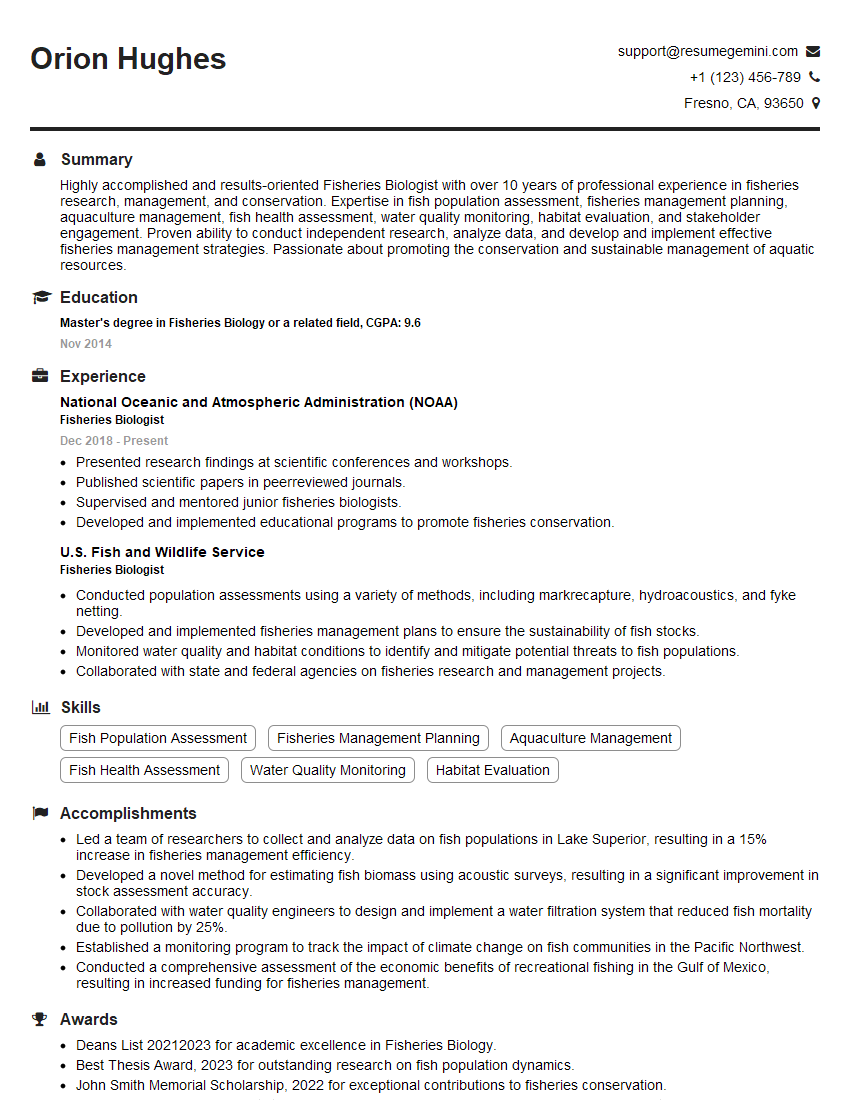
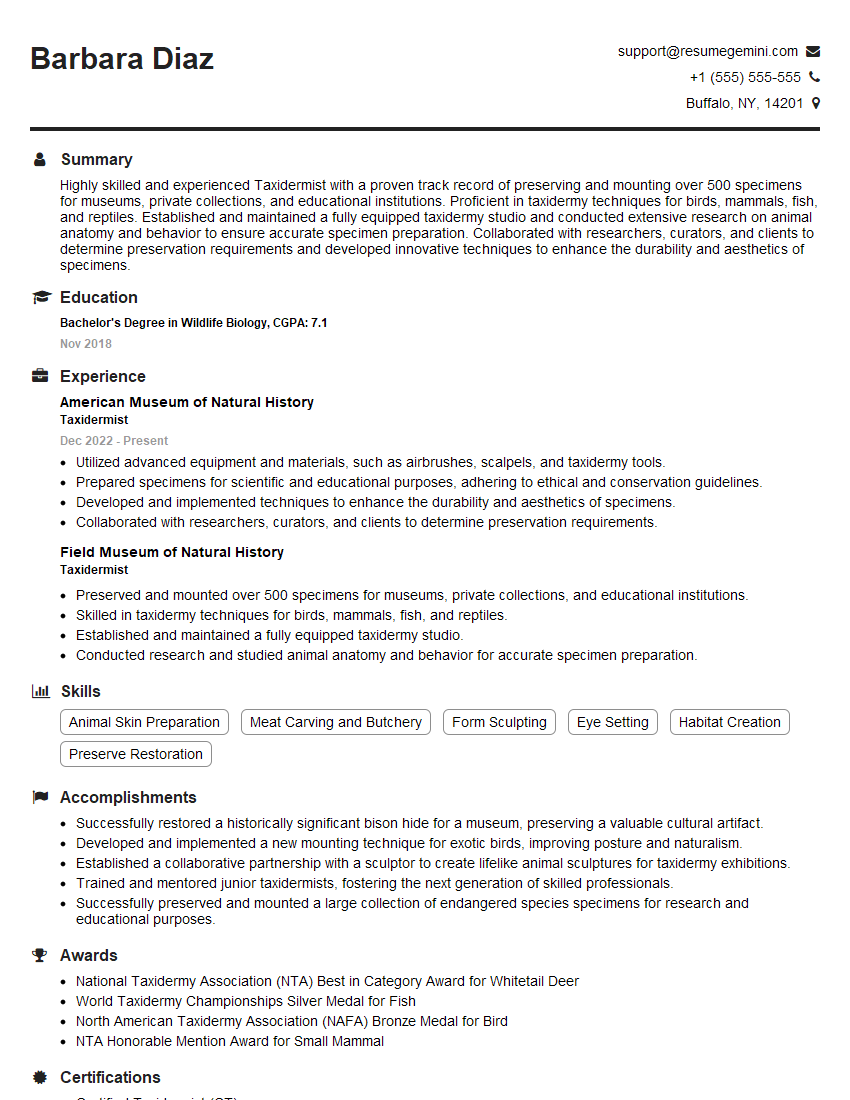
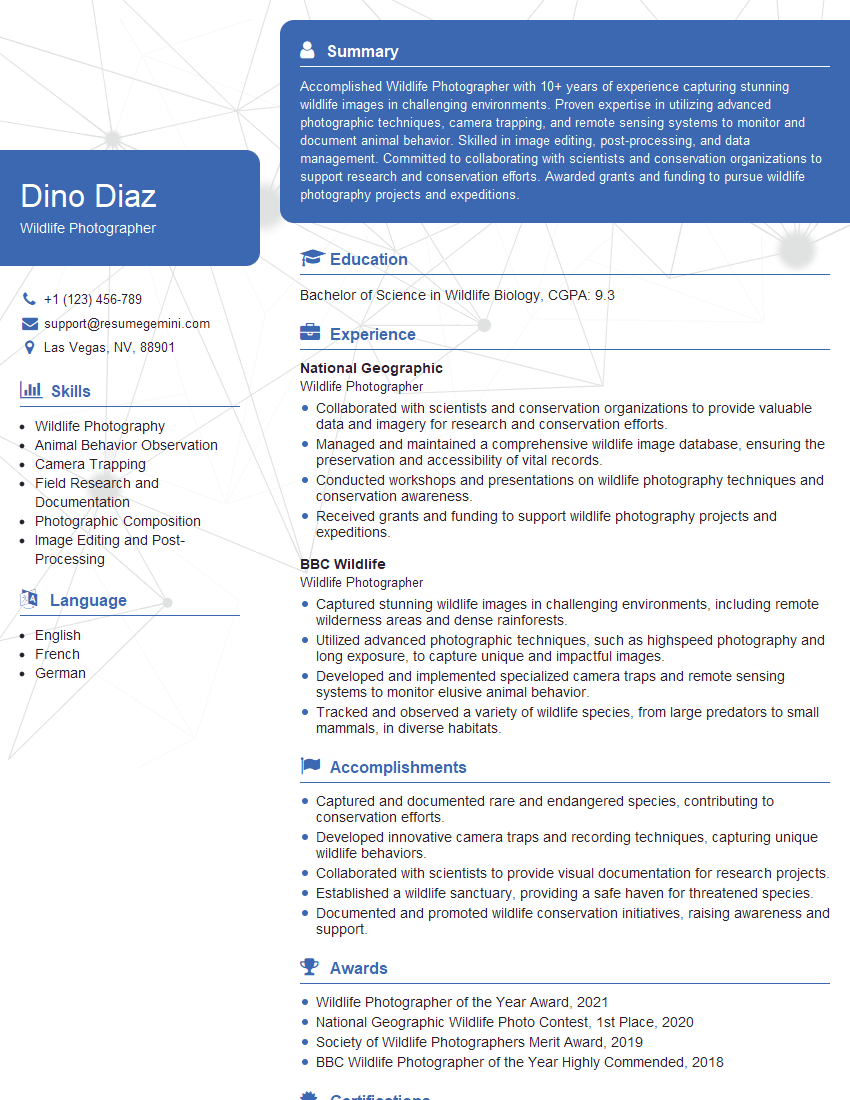
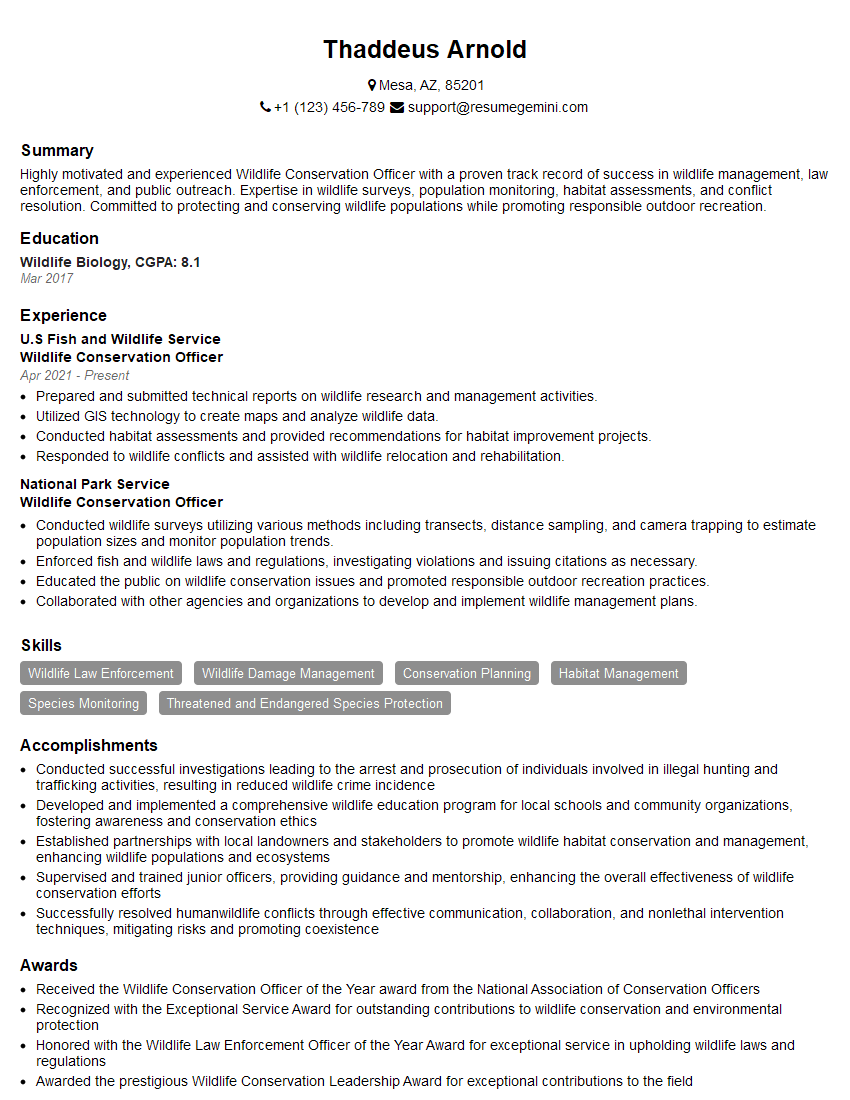
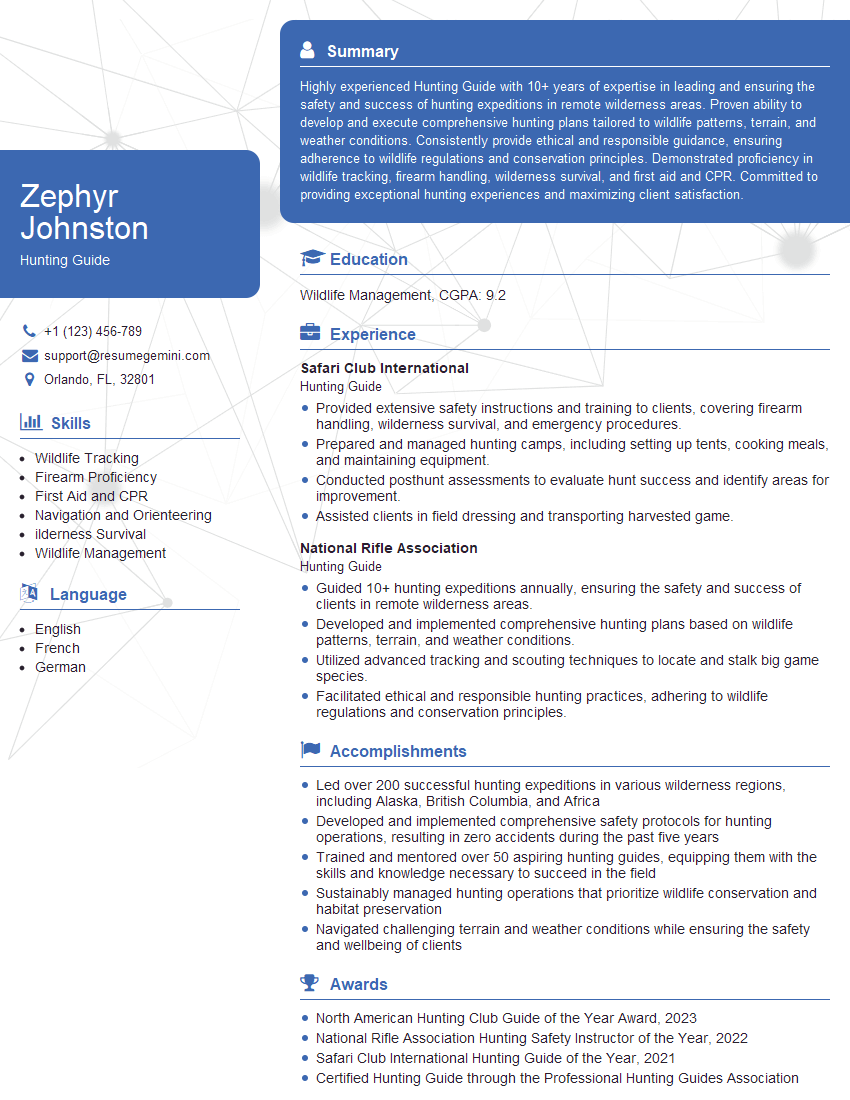
Mastering Hunting Ethics and Sportsmanship demonstrates a commitment to responsible resource management and showcases your character. This knowledge is highly valued by employers in related fields, significantly enhancing your career prospects. To maximize your chances of landing your dream job, crafting an ATS-friendly resume is crucial. ResumeGemini is a trusted resource that can help you build a professional, impactful resume tailored to highlight your unique skills and experience. Examples of resumes specifically designed for Hunting Ethics and Sportsmanship positions are available to help guide you through the process. Invest in your future—create a winning resume today!


Explore more articles
Users Rating of Our Blogs
Share Your Experience
We value your feedback! Please rate our content and share your thoughts (optional).
What Readers Say About Our Blog
To the interviewgemini.com Webmaster.
Very helpful and content specific questions to help prepare me for my interview!
Thank you
To the interviewgemini.com Webmaster.
This was kind of a unique content I found around the specialized skills. Very helpful questions and good detailed answers.
Very Helpful blog, thank you Interviewgemini team.