Interviews are more than just a Q&A session—they’re a chance to prove your worth. This blog dives into essential Ice climbing and mountaineering interview questions and expert tips to help you align your answers with what hiring managers are looking for. Start preparing to shine!
Questions Asked in Ice climbing and mountaineering Interview
Q 1. Describe your experience with different ice climbing techniques (e.g., waterfall ice, mixed climbing).
My experience encompasses a wide range of ice climbing techniques. Waterfall ice climbing, often the first introduction for many, involves ascending frozen waterfalls. This requires understanding ice formations, assessing ice quality (which can vary wildly even within a single climb), and selecting appropriate tool placements. I’ve climbed everything from thin, delicate ice requiring precise placement to thick, robust ice allowing for more powerful swings. Mixed climbing, a particularly challenging discipline, blends ice climbing techniques with rock climbing, demanding proficiency in both. This involves identifying suitable protection points – sometimes ice screws, sometimes rock protection – and adapting technique based on the nature of the mixed section. For instance, I remember a climb in the Canadian Rockies where a challenging ice pitch transitioned into a steep, overhanging rock face, demanding precise ice axe placements and the swift transition to rock climbing techniques. This constantly shifting environment necessitates adaptability and quick thinking.
Beyond these two main styles, I’m also experienced in dry tooling, which is essentially practicing mixed climbing techniques on rock. This allows for year-round training and development of the specific skills needed for efficient mixed climbs. It’s like practicing your golf swing indoors during winter to prepare for the outdoor season.
Q 2. Explain your ice axe arrest technique and its application in various scenarios.
An ice axe arrest is a crucial self-arrest technique used to stop a fall on a steep slope. The technique involves using the ice axe to create friction against the snow or ice, thereby slowing or stopping a slide. The process begins with quickly planting the axe’s pick firmly into the snow or ice, then using your body weight and momentum to transfer the force of the fall into the axe. This should be a fluid motion where your body becomes essentially an extension of the axe itself, transferring that kinetic energy into the ground. Simultaneously, I use my legs to help stabilize and distribute the force.
The application varies based on the scenario. On a steep snow slope, a self-arrest is a life-saving maneuver to halt a rapid descent. On an ice slope, getting a secure pick placement is paramount due to the harder surface. On mixed terrain, adapting the ice axe arrest to accommodate both snow and ice is critical. The precise execution depends on the slope angle, snow or ice conditions, and the climber’s own physical orientation; sometimes you might be using a front-point arrest, sometimes a back-point arrest. It’s essential to practice this technique repeatedly on slopes with controlled risk to build muscle memory and refine the process. Regular practice builds confidence in this crucial survival skill.
Q 3. How do you assess avalanche risk and what mitigation strategies do you employ?
Avalanche risk assessment involves a multi-faceted approach combining observation, understanding of weather patterns, and utilizing assessment tools. I start with analyzing the terrain, noting slope angle (slopes steeper than 30 degrees are high-risk), snowpack stability, and the presence of avalanche features such as cornices, wind-loaded snow, or recent avalanche tracks. Next, I carefully observe weather patterns; a recent heavy snowfall or rapid temperature changes significantly increase the risk. I also utilize the widely accepted avalanche forecast information provided by local agencies or reputable sources. This forecast often provides a quantitative and qualitative assessment of the risk. Finally, I use a combination of tests, such as the compression test and the shovel test, to assess the snowpack’s stability, although these should always be used with caution and awareness of potential triggers.
Mitigation strategies include avoiding high-risk slopes, choosing safe travel routes, and using avalanche safety equipment. This includes a transceiver, probe, and shovel, which are critical for locating and rescuing a buried companion. We also employ techniques such as traveling one at a time, using appropriate spacing between climbers, and utilizing rope teams to limit the possible consequences of an avalanche. Knowing your limits is just as crucial, and sometimes turning back is the safest option.
Q 4. Detail your experience with rope management techniques in mountaineering.
Rope management is fundamental in mountaineering, ensuring safety and efficiency. It involves a range of techniques, from setting up anchor points to managing rope slack and executing ascents and descents. Efficient rope management minimizes the chances of tangles, which can be hazardous, especially in challenging terrain. I’m proficient in various techniques like using different types of knots (e.g., figure-eight, bowline), creating secure anchor points using natural features or ice screws, and managing slack effectively during ascents and rappels.
For instance, during a recent climb on Mount Rainier, we utilized a system of interconnected anchors to create a secure belay system for traversing a section of exposed glacier. This involved careful rope management to ensure no climber inadvertently crossed the rope of another climber. Similarly, I use different rope management strategies for different types of descents, adjusting my technique based on the length of the rope, the terrain, and the number of climbers involved. Effective rope management directly translates to safer and more efficient climbing operations.
Q 5. Explain your understanding of crevasse rescue techniques.
Crevasse rescue is a critical skill involving techniques to extract a climber who has fallen into a crevasse. This process involves assessing the situation, securing the victim, and then employing various rescue techniques depending on the circumstances. I am trained in various self-rescue techniques that a climber can perform alone to minimize the chances of them falling further into the crevasse. In situations requiring team rescue, we utilize a system of anchors and ropes to create a stable hauling system, enabling us to lift the victim out. This includes using specialized equipment such as pulleys, carabiners, and ascenders to safely and efficiently manage the load.
The primary focus is always on safety. Before any attempt, we always create a secure system that minimizes risk to both the rescuer and the victim. Various rescue techniques like the Z-pulley system and the 3:1 mechanical advantage system are employed depending on the specific situation and available resources. Regular practice scenarios are essential to hone rescue proficiency.
Q 6. Describe your experience with different belaying and rappelling techniques.
Belaying and rappelling are fundamental mountaineering techniques ensuring safe ascents and descents. Belaying involves managing the rope to control a climber’s fall, while rappelling involves controlled descent using a rope. I’m proficient in various belaying techniques, including the use of different devices and anchor systems. The specific technique employed depends upon the situation, the climbing environment, and the individual climber’s skills. For instance, the choice between a traditional belay device and a guided-brake device would depend on how many climbers are on the rope.
Rappelling involves controlled descent using a rope and a rappelling device. I’m experienced in various rappelling techniques, including using different rappelling devices and anchor systems. Each technique requires precision and attention to detail to ensure safe and efficient descent. I always double-check the safety of my anchor points and rappelling system before initiating a rappel. The choice of rappelling technique is also influenced by terrain and rope length, and experience plays a crucial role in decision-making during a descent.
Q 7. How do you choose appropriate climbing gear for different ice conditions?
Gear selection for ice climbing is crucial for safety and efficiency, and depends heavily on the specific ice conditions. For example, the tools used for climbing thin, brittle ice will differ significantly from those used for thick, solid ice. For thin ice, I would opt for lighter ice axes with sharp, well-maintained picks, allowing for precise placement and minimizing the risk of shattering the already fragile ice. For thick ice, more robust axes would be appropriate to enable more aggressive swinging.
Ice screws, which anchor the rope to the ice, also vary in length and design based on the ice thickness and formation. Similarly, crampons must provide optimal traction and foot security according to the type of ice; different crampon designs are suited to different ice conditions and climbing styles. Clothing should be layered to adapt to temperature changes, and it’s always critical to bring extra layers to prepare for unforeseen weather fluctuations. A helmet is essential to protect the climber’s head from falling ice or potential rockfall, while other protective gear like a harness and appropriate rope are non-negotiable. Ultimately, gear selection involves a risk assessment of specific conditions before undertaking the climb, allowing me to select the appropriate and safest gear for the expedition.
Q 8. What are the signs of altitude sickness and how do you manage them?
Altitude sickness, or acute mountain sickness (AMS), is a condition caused by the body’s insufficient adaptation to lower oxygen levels at high altitudes. Symptoms can range from mild to severe and often appear gradually.
- Mild AMS: Headache, nausea, fatigue, dizziness, loss of appetite, difficulty sleeping.
- Moderate AMS (High Altitude Cerebral Edema – HACE): Severe headache, vomiting, ataxia (loss of coordination), confusion, lethargy, seizures.
- Severe AMS (High Altitude Pulmonary Edema – HAPE): Shortness of breath at rest, cough, wheezing, chest tightness, pink frothy sputum (indicating fluid in the lungs).
Management: The first and most important step is descent. Immediate descent is crucial for severe cases (HACE, HAPE). For mild AMS, rest, hydration (plenty of water, avoid alcohol and caffeine), and taking acetazolamide (Diamox, a medication prescribed by doctors) can help. Supplemental oxygen is beneficial if available. Close monitoring for worsening symptoms is essential. Never ignore symptoms; early descent is key to preventing life-threatening complications.
Example: On a recent climb in the Andes, one of my climbing partners started experiencing a severe headache and nausea at 16,000 feet. We immediately began a slow descent, and his symptoms improved significantly within a few hours. We continued to monitor him closely and provided him with water and rest.
Q 9. How do you plan a mountaineering expedition, including route selection and safety protocols?
Planning a mountaineering expedition requires meticulous attention to detail and risk assessment. It starts months in advance.
- Route Selection: This involves studying topographic maps, satellite imagery, and guidebooks to identify suitable routes, considering factors such as difficulty, exposure, snow and ice conditions, and avalanche risk. Acclimatization plans are crucial, incorporating rest days at increasing altitudes.
- Logistics: Permits, transportation to the base camp, food and water provisions, camping equipment, communication systems (satellite phone), and first-aid supplies are meticulously planned and checked multiple times.
- Safety Protocols: This includes developing a detailed itinerary with daily objectives and checkpoints, establishing a robust communication plan, defining emergency procedures (including evacuation plans), and briefing the team on the route, potential hazards, and safety protocols. Rope work skills and glacier travel techniques must be carefully rehearsed before committing to the mountain. Weather forecasts are regularly monitored, and the team must be trained to react appropriately to changing conditions.
- Team Composition: The team should have complementary skills and experience, with individuals possessing specific expertise in areas like navigation, first aid, and ice climbing.
Example: Before attempting Everest, we spent several weeks planning, including detailed route analysis, weather forecasting (using multiple sources and models), and establishing communication protocols with base camp and a dedicated emergency response team.
Q 10. Describe your experience with navigation techniques in mountainous terrain (map, compass, GPS).
Navigation in mountainous terrain demands proficiency in using multiple tools. Each has its strengths and weaknesses.
- Maps: Topographic maps are fundamental, providing information on elevation, terrain features, and potential hazards. Understanding map symbols and scale is essential.
- Compass: A compass allows for accurate bearing determination, crucial for navigating in low visibility or whiteout conditions. Orienteering skills, including taking bearings and back bearings, are vital.
- GPS: GPS devices provide precise location data, but are susceptible to errors (satellite blockage, battery failure). They are best used as a supplement to map and compass navigation, not a replacement.
Example: During a climb in the Alaskan Range, we encountered a blizzard that severely reduced visibility. Our map and compass skills were essential for safely reaching our planned camp. GPS was intermittently helpful but wasn’t fully reliable in the harsh weather conditions. Our combined use of these tools ensured we kept our bearings and got to safety.
Q 11. Explain your understanding of weather forecasting and its importance in mountaineering.
Weather forecasting plays a critical role in mountaineering, as rapidly changing conditions can dramatically impact safety. Reliable forecasts are paramount.
- Sources: Mountaineers use various sources, including specialized meteorological services, weather apps, and satellite imagery. Many rely on multiple sources to corroborate forecasts.
- Interpretation: Understanding weather patterns specific to mountainous regions is crucial. Factors like wind speed and direction, temperature, precipitation, avalanche potential (as reflected by snowpack stability), and visibility must all be considered.
- Decision-Making: Weather forecasts directly influence climbing decisions. They may lead to route changes, summit attempts being postponed or cancelled, or emergency procedures being initiated.
Example: On a recent ice climb, a sudden change in weather was forecast. We opted to descend rather than continue the ascent, avoiding potentially hazardous conditions.
Q 12. How do you assess the stability of snow and ice formations?
Assessing snow and ice stability is a crucial skill, often involving a combination of observation and experience.
- Visual Inspection: Looking for signs of instability, like recent avalanches, cracks in the snowpack, overhanging ice formations, or signs of water penetration. The angle of the slope, wind loading, temperature, and recent weather patterns are also considered.
- Snowpack Testing: Techniques like the compression test and the shovel test provide insights into snowpack strength. These tests are crucial for identifying weak layers.
- Ice Assessment: Ice condition varies widely; observing ice for clarity, thickness, and the presence of cracks is critical. The type of ice (e.g., clear, blue ice versus sugary ice) greatly affects its stability.
Example: Before setting up a camp on a glacier, we meticulously tested the snowpack using compression tests to ensure it could support our weight and tents. We also assessed ice conditions for potential crevasse formation before proceeding.
Q 13. What are your strategies for managing risk in challenging ice climbing situations?
Risk management in challenging ice climbing involves a multi-faceted approach.
- Route Selection: Choosing routes appropriate to the team’s abilities and experience level, considering both objective and subjective hazards.
- Gear Selection and Use: Selecting and maintaining reliable equipment (ice axes, crampons, ropes, harnesses) is crucial. Proper rope techniques, anchor building, and ice screw placement are practiced extensively.
- Partner Communication: Clear communication between climbing partners is critical for assessing risks, making decisions, and reacting to changing conditions. Regular safety checks and rope management are essential.
- Self-Arrest Techniques: The ability to self-arrest in case of a fall is crucial and must be practiced extensively.
- Contingency Planning: Having backup plans and escape routes in case the primary route becomes too dangerous or impassable is paramount.
Example: On a particularly challenging ice climb, we encountered unexpected ice formations that made the original route unsafe. After careful assessment, we decided to abandon the ascent and return using an alternate, safer route.
Q 14. Describe your experience with first aid and emergency procedures in remote areas.
First aid and emergency procedures in remote areas require extensive preparation and specialized skills.
- First Aid Training: Comprehensive wilderness first aid and emergency medical response training is essential. This includes managing common injuries (fractures, hypothermia, frostbite, altitude sickness) and providing stabilization until evacuation can be achieved.
- Emergency Communication: Reliable communication systems (satellite phones) are crucial for contacting emergency services. Pre-planned evacuation routes and procedures should be established.
- Emergency Kit: A well-stocked medical kit containing appropriate medications, bandages, splinting material, and emergency blankets is mandatory.
- Evacuation Planning: Knowing the nearest evacuation points and the means to access them (helicopter, rescue team) is important.
Example: During a mountaineering expedition, one of our climbers suffered a severe ankle fracture. We used our wilderness first aid skills to stabilize the injury, contacted emergency services via satellite phone, and coordinated a helicopter evacuation. The pre-planned communication and evacuation strategy was critical to managing the situation effectively.
Q 15. How do you communicate effectively with clients or team members in high-stress situations?
Effective communication in high-stress mountain environments is paramount. It hinges on clear, concise language, active listening, and a pre-established communication plan. Think of it like a finely tuned orchestra; each member needs to know their part and how it fits into the whole.
Before any climb, my team and I establish clear communication protocols, including hand signals for situations where verbal communication is difficult (like strong winds or extreme cold). We practice these beforehand. During a climb, I focus on using simple, direct language, avoiding jargon. For example, instead of saying “assess the ice for potential instability,” I might say “Check the ice—is it solid?” I also actively solicit feedback and make sure everyone understands the plan and their role. In emergencies, I prioritize calm and clear instructions, assigning tasks specifically to mitigate panic. One memorable instance involved a sudden icefall; by maintaining calm and directing our team efficiently, we managed to secure ourselves without incident.
Career Expert Tips:
- Ace those interviews! Prepare effectively by reviewing the Top 50 Most Common Interview Questions on ResumeGemini.
- Navigate your job search with confidence! Explore a wide range of Career Tips on ResumeGemini. Learn about common challenges and recommendations to overcome them.
- Craft the perfect resume! Master the Art of Resume Writing with ResumeGemini’s guide. Showcase your unique qualifications and achievements effectively.
- Don’t miss out on holiday savings! Build your dream resume with ResumeGemini’s ATS optimized templates.
Q 16. Explain your experience with glacier travel techniques.
Glacier travel demands meticulous planning and execution. It’s not just about walking on ice; it’s about navigating a dynamic and potentially hazardous landscape. My experience encompasses various techniques, including roped travel, crevasse rescue, and safe glacier crossing. We always use ropes for safety in crevasse-prone areas. We utilize proper spacing and rope management techniques to mitigate risk.
Understanding glacier morphology is key; I can identify blue ice (dense, strong ice) from white ice (fragile, dangerous), assess the likelihood of crevasses based on surface features like seracs and crevasse patterns, and plan routes accordingly. We always check weather and avalanche reports before venturing onto a glacier. I’ve extensively used ice axes and crampons for self-arrest practice; the drills prepare us to react effectively to a fall into a crevasse. Choosing a safe route and sticking to it, while constantly scanning the terrain ahead, are paramount.
Q 17. How do you manage fatigue and maintain safety during long climbs?
Fatigue is a significant safety concern in mountaineering. Managing it requires a proactive approach, including meticulous trip planning, proper nutrition and hydration, and strategic rest periods. Think of energy management like pacing yourself in a marathon; you can’t sprint the whole distance.
Before a long climb, I ensure my clients are physically and mentally prepared. We acclimatize properly, allowing the body to adjust to the altitude. We plan regular rest stops to replenish energy and address any minor problems early on. I emphasize the importance of consuming high-calorie, easily digestible foods and staying well hydrated. Regular hydration and proper nutrition is critical during the climb. We might use supplemental oxygen at high altitudes. Early recognition of fatigue signs, such as decreased coordination or impaired decision-making, is crucial, and warrants immediate rest or descent. We always have a backup plan in place to manage unexpected fatigue issues.
Q 18. Describe your experience with different types of ice screws and their applications.
Ice screws are the backbone of ice climbing protection. Their selection and placement are critical for safety. Different types offer varying levels of strength and suitability for diverse ice conditions.
I have extensive experience with various types, including:
- Standard ice screws: These are versatile and suitable for most ice conditions.
- Angled ice screws: Useful for steeper ice, allowing for better placement angles.
- V-threads: Excellent for brittle or rotten ice where traditional screws may fail.
Q 19. Explain the principles of self-arrest.
Self-arrest is a crucial self-rescue technique for arresting a fall on a snow or ice slope. It’s about using your ice axe and body position to stop your slide.
The principles involve:
- Ice axe position: The ice axe should be planted firmly across the slope, slightly angled downward.
- Body position: Assume an athletic stance, with your legs spread and knees slightly bent. Your body should be parallel to the slope.
- Self-arrest technique: Use your arms and legs in a coordinated manner, digging the ice axe pick into the snow or ice and using your legs for additional stability, preventing a further slide.
Q 20. How do you assess the suitability of a climbing partner?
Choosing the right climbing partner is as crucial as choosing the right gear. I assess potential partners based on several factors:
- Experience and skill level: Their climbing experience, technical skills, and familiarity with the type of climb are paramount.
- Physical fitness: They should be physically capable of handling the demands of the climb.
- Communication skills: Effective communication is essential for safety and teamwork.
- Risk assessment and decision-making: They should possess a good sense of risk assessment and make sound decisions under pressure.
- Gear and equipment: They need to have appropriate gear and equipment in good working condition.
Q 21. What is your approach to problem-solving during unexpected situations in the mountains?
Problem-solving in unexpected mountain situations demands a calm, methodical approach. It’s about assessing the situation, developing options, choosing the best course of action, and executing it effectively.
My approach follows a structured process:
- Assessment: First, I calmly assess the situation. What happened? What are the immediate dangers? What resources are available?
- Options: I brainstorm potential solutions, weighing their risks and benefits.
- Decision: I select the best option based on the assessment and available resources, considering the safety of everyone involved.
- Execution: I clearly communicate the plan to my team, assigning specific tasks to ensure efficiency.
- Review: After the situation is resolved, I review what happened, identifying areas for improvement in our future planning and execution.
Q 22. Describe your experience with winter camping techniques.
Winter camping is a fundamentally different beast than summer camping, demanding a higher level of preparedness and skill. It’s all about minimizing heat loss and maximizing shelter effectiveness. My experience involves extensive use of four-season tents, employing techniques like proper snow anchoring to withstand high winds and heavy snowfall. I always prioritize layering my clothing – base layers wicking moisture, insulating mid-layers, and a windproof and waterproof outer shell. Sleeping bag selection is crucial; I select bags rated well below the expected temperature, often incorporating a sleeping pad with a high R-value for insulation from the frozen ground. I also practice meticulous snow melting techniques for water, prioritizing fuel efficiency and safety, and ensuring my stove is well-maintained and sheltered from wind.
For example, during a recent ascent of Mount Rainier, we faced unexpectedly high winds and heavy snowfall. Our pre-planned snow anchoring techniques – using snow stakes and creating a snow wall around our tent – proved crucial in preventing collapse. Proper layering of clothing, combined with a well-insulated sleeping bag and pad, kept us comfortable even in sub-zero temperatures.
Q 23. Explain the importance of Leave No Trace principles in mountaineering.
Leave No Trace (LNT) principles are paramount in mountaineering. They’re not just about aesthetics; they’re about preserving the fragile alpine environment for future generations and ensuring the safety of all climbers. The seven principles guide my actions on every climb: Plan ahead and prepare, travel and camp on durable surfaces, dispose of waste properly (pack it in, pack it out), leave what you find, minimize campfire impacts, respect wildlife, and be considerate of other visitors.
For instance, I always pack out all trash, even biodegradable materials like orange peels, because decomposition is slow at high altitudes. I meticulously avoid damaging vegetation, opting for established trails. Before selecting a campsite, I carefully evaluate the impact on the environment, choosing established areas or locations with minimal vegetation disturbance. Following these principles isn’t just morally right; it’s also crucial for maintaining the integrity of these incredible places for years to come.
Q 24. How do you adapt your climbing style to different weather conditions?
Adaptability is key in mountaineering. Weather can change rapidly in the mountains, demanding immediate adjustments to climbing style and tactics. In harsh winds, I might choose a more sheltered route or opt for a slower, more deliberate ascent. Heavy snowfall necessitates careful route finding, emphasizing awareness of avalanche risks. Icy conditions require specialized ice axes and crampons and a more cautious approach to traversing. Conversely, warmer temperatures can lead to increased risks of rockfall and ice melt, which I address by modifying my climbing time to avoid the hottest parts of the day and using appropriate safety measures.
For example, during a climb in the Canadian Rockies, an unexpected blizzard forced us to immediately descend. We swapped our lighter crampons for more aggressive ones and adopted a much more conservative and methodical approach, prioritizing safety above speed. The experience highlighted the importance of continuous monitoring of weather changes and flexible planning.
Q 25. Describe your experience with various ice climbing protection systems.
My experience encompasses various ice climbing protection systems, including ice screws, ice axes, and occasionally, snow anchors. Ice screws are the primary protection method, varying in length and design depending on the ice quality. I carefully select screws appropriate for the ice condition, ensuring proper placement to minimize the risk of pulling out. Ice axes can be used for protection in certain situations, but their use is situational and requires experience. Snow anchors, while useful in areas with sufficient snow, are far less reliable than ice screws. I always favor redundancy, placing multiple ice screws for each critical section of the climb and regularly checking their integrity.
Proper placement techniques are critical. I ensure that I am placing ice screws in solid ice, avoiding obvious cracks or weak spots. I also employ the proper technique to set the screws, ensuring a secure and reliable placement. Inspecting the ice for soundness before placement and using a hammer to ensure a secure seat is standard practice.
Q 26. What are the key factors you consider when selecting a climbing route?
Route selection involves a complex interplay of factors. First, I assess the technical difficulty, matching it to my own skill level and experience. The length of the route and the expected time commitment are also critical considerations. I thoroughly research the route’s history and potential hazards, including avalanche risks, rockfall zones, and ice conditions. Weather forecasts play a significant role; I avoid routes with a high exposure to severe weather. Finally, logistical aspects, such as access and retreat options, are carefully considered.
For instance, while planning an ascent of a specific peak, I carefully examined several routes, comparing their technical ratings, avalanche reports, and the current weather forecast. I ultimately opted for a slightly less challenging, but safer route, considering the prevailing weather conditions and the experience level of my climbing partners. This risk assessment process is crucial for ensuring a safe and successful climb.
Q 27. How do you maintain your climbing equipment and ensure its safety?
Equipment maintenance is non-negotiable. Regular inspection and cleaning are crucial for safety and longevity. I meticulously inspect all my climbing gear after every climb, checking for any wear and tear, damage, or corrosion. Ice axes are sharpened regularly, and their picks are inspected for cracks or damage. I thoroughly clean and dry all my equipment, storing it properly to avoid moisture damage. Crampons are inspected for any broken points or worn-out straps. Ropes are checked for fraying and damage, and all carabiners are examined for deformation or gate malfunction. I keep a detailed log of all gear inspections and replacements.
I believe in the ‘if in doubt, throw it out’ principle. If there’s any uncertainty about the condition of any equipment, I replace it immediately. Safety is paramount, and the cost of replacement is negligible compared to the potential consequences of gear failure.
Q 28. Explain your knowledge of mountain rescue procedures and communication protocols.
Mountain rescue procedures and communication protocols are vital aspects of mountaineering safety. I’m familiar with various rescue techniques, including self-rescue and assisting others in distress. This includes knowledge of basic first aid and wilderness survival skills. Effective communication is critical, employing satellite phones or personal locator beacons (PLBs) when cell service is unavailable. I always file detailed trip plans with responsible parties, including planned routes and expected return times, and frequently check in with them as my climb progresses. Understanding the terrain, weather, and potential hazards is also a crucial part of anticipating and preventing rescue situations.
Clear and concise communication during a rescue is paramount. Using pre-established protocols for transmitting location and situation details ensures efficient response from rescue teams. Maintaining calm and providing accurate information are key to successful rescue operations. Knowing how to use emergency equipment effectively, such as a PLB, is just as critical as understanding basic rescue techniques.
Key Topics to Learn for Ice Climbing and Mountaineering Interviews
- Ice Climbing Techniques: Understanding various ice climbing techniques (e.g., ice axe placements, footwork, self-arrest) and their application in different ice conditions.
- Mountaineering Skills: Mastering essential mountaineering skills including route planning, navigation (map & compass, GPS), crevasse rescue, glacier travel, and snow safety.
- Risk Management & Safety Procedures: Demonstrating a thorough understanding of risk assessment, hazard mitigation, and emergency procedures in both ice climbing and mountaineering environments. This includes weather forecasting and its impact on climbing decisions.
- Gear & Equipment: Familiarizing yourself with the functionality and proper use of various ice climbing and mountaineering equipment (ice axes, crampons, ropes, harnesses, avalanche safety gear).
- Environmental Awareness & Leave No Trace Principles: Understanding the importance of minimizing environmental impact and adhering to Leave No Trace principles while climbing.
- Physical Fitness & Conditioning: Explaining the importance of physical fitness and endurance for successful ice climbing and mountaineering, and how you maintain your fitness level.
- Teamwork & Communication: Highlighting the importance of effective communication and teamwork in a climbing partnership, including decision-making processes in challenging situations.
- Knot Tying & Rope Management: Demonstrating proficiency in essential knot tying techniques for both ice climbing and mountaineering, and showcasing your understanding of rope management and safety procedures.
- Problem-Solving & Adaptability: Illustrating your ability to adapt to unexpected challenges and solve problems effectively in dynamic and potentially dangerous environments.
Next Steps
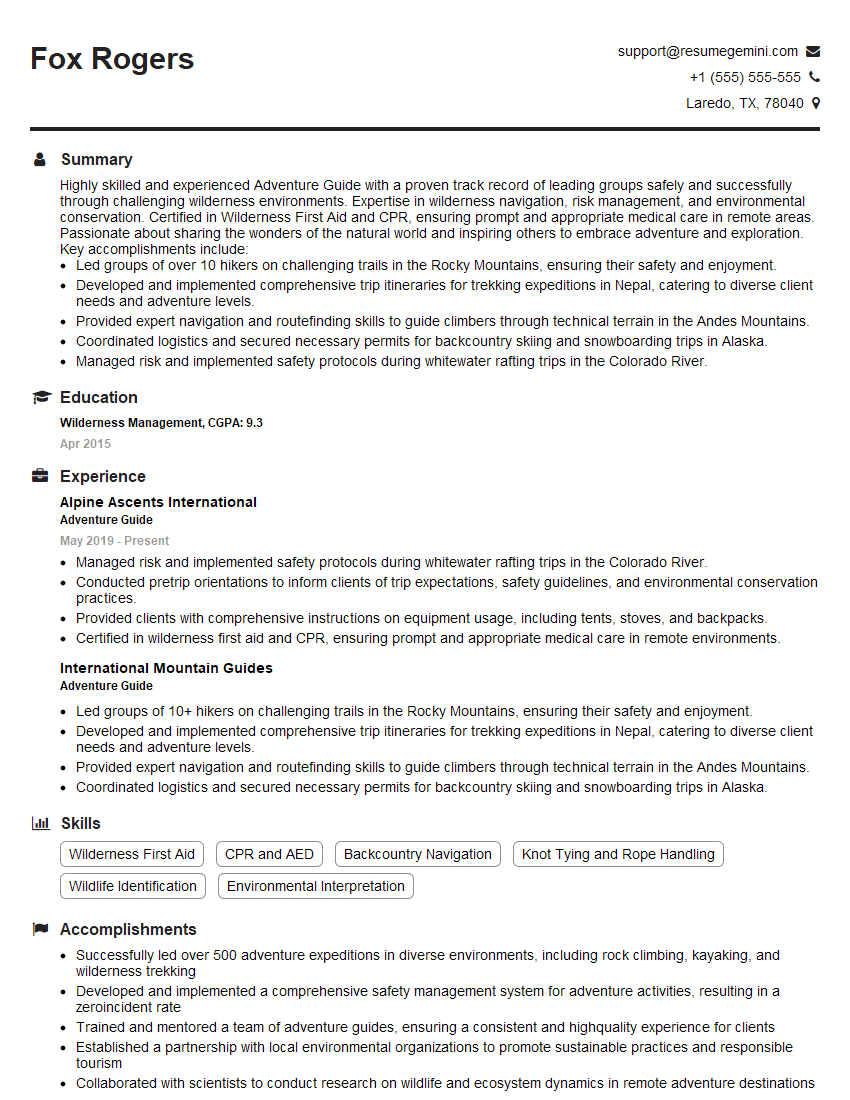
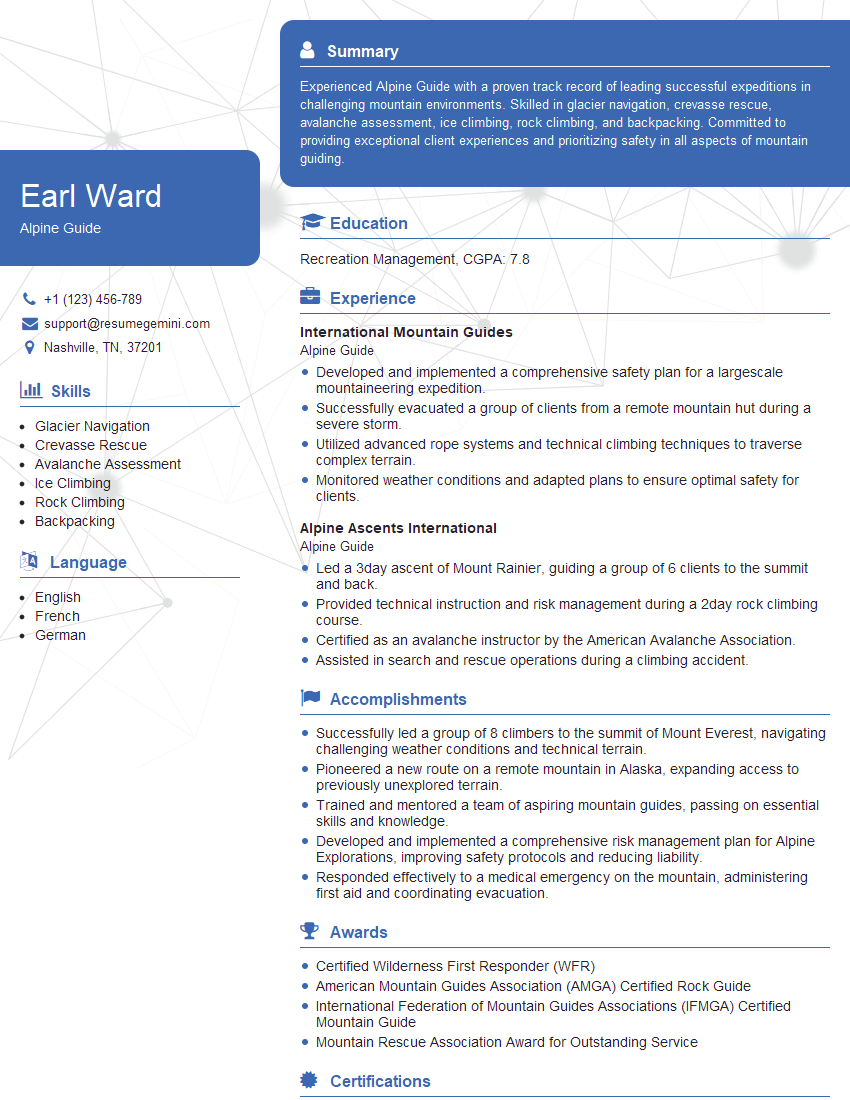
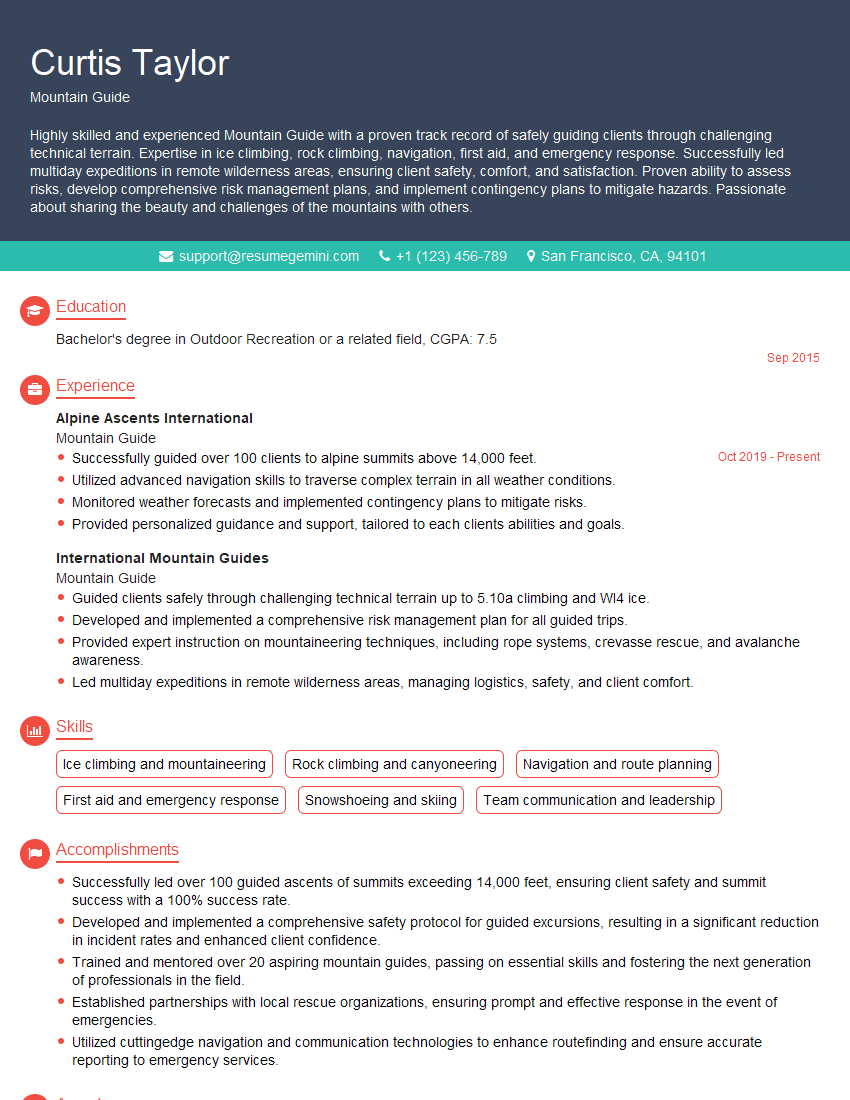
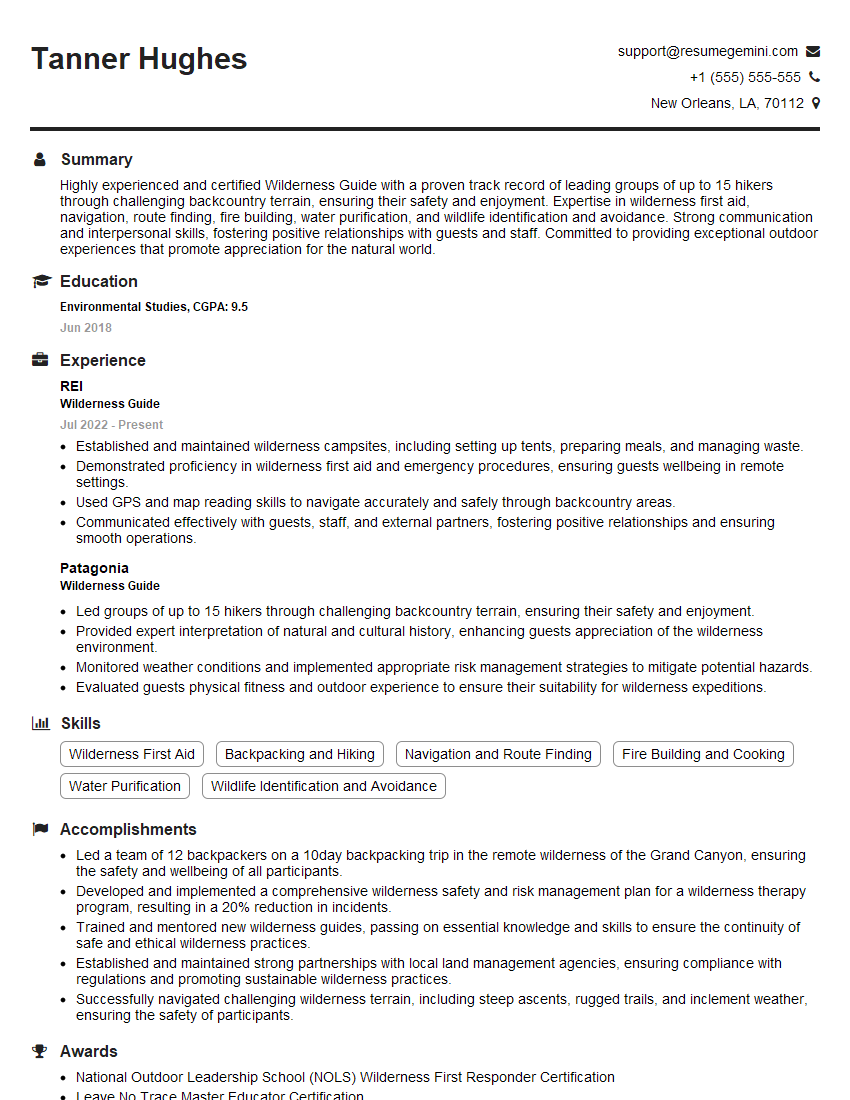
Mastering ice climbing and mountaineering skills significantly enhances your career prospects in adventure tourism, guiding, research, and related fields. A strong resume is crucial for showcasing your expertise to potential employers. To maximize your chances, create an ATS-friendly resume that highlights your key skills and accomplishments. ResumeGemini is a trusted resource that can help you build a professional and impactful resume. Examples of resumes tailored to ice climbing and mountaineering are available to further guide your preparation. Take the next step towards your dream career today!
Explore more articles
Users Rating of Our Blogs
Share Your Experience
We value your feedback! Please rate our content and share your thoughts (optional).
What Readers Say About Our Blog
To the interviewgemini.com Webmaster.
Very helpful and content specific questions to help prepare me for my interview!
Thank you
To the interviewgemini.com Webmaster.
This was kind of a unique content I found around the specialized skills. Very helpful questions and good detailed answers.
Very Helpful blog, thank you Interviewgemini team.