Interviews are opportunities to demonstrate your expertise, and this guide is here to help you shine. Explore the essential ilderness Survival interview questions that employers frequently ask, paired with strategies for crafting responses that set you apart from the competition.
Questions Asked in ilderness Survival Interview
Q 1. Describe your experience with shelter construction in various climates.
Shelter construction is paramount in wilderness survival, varying drastically based on climate and available resources. Think of it like building a customized house – the materials and design change depending on the location and weather.
- Temperate Climates: A lean-to is a quick and effective option. This involves leaning branches against a fallen log or sturdy tree, creating a sloping roof. Covering this framework with leaves, pine boughs, or even a tarp significantly increases insulation and protection from the elements. In warmer, temperate regions, a simple debris hut may suffice.
- Cold Climates: In frigid environments, insulation is key. A quinzee, constructed by piling snow into a mound and hollowing out the center, provides excellent thermal protection. Alternatively, a snow cave, dug directly into a snowdrift, offers similar benefits. For colder, wetter conditions, consider incorporating windbreaks and multiple layers of insulation.
- Hot Climates: Shelter in hot climates focuses on shade and ventilation. A shade structure using branches and leaves can be enough. The key is to maximize air circulation and minimize direct sunlight exposure. A simple lean-to facing away from the sun with strategically placed ventilation points is ideal.
- Desert Climates: In deserts, finding shade is crucial. Natural rock formations or existing vegetation provide excellent shelter. If those aren’t available, focus on creating a windbreak to reduce heat loss at night.
Remember, the most important aspect of shelter construction is protection from the elements, whether that’s wind, rain, snow, or sun. Adaptability and resourcefulness are key.
Q 2. Explain different methods for purifying water in a wilderness setting.
Water purification is crucial for survival; contaminated water can lead to serious illness. Several methods exist, each with its pros and cons.
- Boiling: The most reliable method. Boiling water for at least one minute at a rolling boil kills most harmful bacteria and viruses. At high altitudes, you might need to boil for longer.
- Water Purification Tablets: These chemically treat water, killing pathogens. Follow the manufacturer’s instructions carefully; some tablets require a specific contact time.
- Water Filter: Mechanical filters remove sediment, parasites, and some bacteria, but they often don’t eliminate viruses. Choose a filter with a pore size small enough to remove harmful contaminants.
- Solar Disinfection (SODIS): Fill a clear plastic bottle with water and leave it in direct sunlight for at least six hours. UV radiation from the sun kills many microorganisms. This is effective only in sunny conditions.
I’ve used all these methods in various scenarios; boiling remains my preferred choice if fuel is available due to its reliability. Remember to always prioritize water purification, even if the water appears clean.
Q 3. What are the common signs and symptoms of hypothermia and how would you treat it?
Hypothermia, a dangerously low body temperature, can be fatal if not addressed promptly. Recognizing the signs is critical.
- Mild Hypothermia: Shivering, clumsiness, confusion, slurred speech, and fatigue.
- Moderate Hypothermia: Severe shivering, difficulty speaking, loss of coordination, drowsiness, and memory loss.
- Severe Hypothermia: Absence of shivering, slow, weak pulse, low breathing rate, loss of consciousness, and unresponsiveness.
Treatment: Immediate action is vital. Get the victim out of the cold, remove wet clothing, wrap them in warm blankets or layers of dry clothing. Provide warm, sweet drinks (avoid alcohol and caffeine). Skin-to-skin contact can be incredibly effective. If the victim is unconscious, administer CPR if trained and seek emergency medical help as quickly as possible. In remote areas, building a fire or finding a sheltered area is crucial.
I once had to treat a fellow hiker suffering from mild hypothermia after a sudden change in weather. Quick action with warm clothing and fluids allowed him to recover swiftly.
Q 4. How do you navigate using a map and compass?
Map and compass navigation is fundamental for wilderness travel, providing a reliable way to find your location and plan a route.
- Orientation: First, orient your map. Match the map features (roads, streams, etc.) to what you see in the terrain. Then, hold the map so north on the map points north in reality.
- Taking a Bearing: To determine the direction to a specific point, align the compass bezel with the line on the map representing your desired route. Read the bearing (degrees) shown on the compass.
- Walking a Bearing: Walk in the direction indicated by the compass needle. Regularly check your position on the map, noting landmarks to ensure you’re staying on course.
- Triangulation: If you’re unsure of your position, take bearings to at least two distinct landmarks. The intersection of these bearings on your map pinpoints your location.
Practice is crucial for mastering map and compass skills. Regularly practice in familiar terrain to build confidence and proficiency. Understanding map symbols and scales is also critical.
Q 5. Describe your experience with fire starting techniques, including various conditions.
Fire starting is a vital survival skill; it provides warmth, cooks food, purifies water, and improves morale. Methods depend heavily on the environment and conditions.
- Friction Methods (Bow Drill, Hand Drill): These require skill and practice but offer a flame without matches or a lighter. They’re most effective in dry conditions with suitable wood.
- Flint and Steel: A spark is created by striking flint against steel, igniting tinder (birch bark, dry grass, cotton balls). This is reliable but requires practice for effective spark generation.
- Matches/Lighter: The most common methods, always keep several waterproofed matches or a lighter on hand. Practice lighting a fire in various conditions (wind, rain).
- Magnifying Glass: Sunlight focused through a magnifying glass can ignite tinder. Effective only on sunny days.
I’ve successfully started fires in various challenging conditions, from torrential rain using a waterproof lighter and carefully prepared tinder to nearly windless days using the bow drill. The key is to have multiple methods and practice until you’re proficient.
Q 6. What are your strategies for finding food in a wilderness survival situation?
Finding food in the wilderness requires knowledge, caution, and respect for the environment. Never consume anything you can’t positively identify.
- Plant Identification: Learn to identify edible plants in your region. Start by learning a few easily identifiable, safe options. Beginners should avoid foraging without expert guidance.
- Trapping and Snares: Small game can be caught using simple snares or traps. Knowledge of animal behavior and appropriate techniques is essential.
- Fishing: If near a water source, fishing can provide a reliable food supply. Improvised fishing tools can be created from readily available materials.
- Insect Consumption: Insects are a surprisingly good source of protein. Focus on those known to be safe to eat in your area.
Remember, foraging should only supplement other food sources if available. Over-reliance on wild food can be risky and should be approached with caution and knowledge.
Q 7. Explain how to assess and treat various types of wilderness injuries.
Assessing and treating wilderness injuries requires a systematic approach. Prioritize life-threatening injuries first.
- Check for Consciousness and Breathing: If the victim is unconscious or not breathing, administer CPR if trained.
- Control Bleeding: Apply direct pressure to the wound using a clean cloth. Elevate the injured limb if possible.
- Immobilize Fractures: Use splints made from readily available materials (sticks, branches) to stabilize broken bones. Padding is crucial to minimize pain and further injury.
- Treat Burns: Cool the burn under cold running water for at least 10 minutes. Do not apply butter or other home remedies.
- Prevent Hypothermia and Shock: Keep the victim warm and elevate their legs if possible.
Wilderness first aid differs from standard first aid in the availability of resources. Improvisation and resourcefulness are crucial. Always prioritize evacuation and professional medical attention when possible. Proper training is vital for handling various injury types effectively.
Q 8. How do you prioritize survival needs (shelter, water, fire, food)?
Prioritizing survival needs follows the Rule of Threes: you can survive three minutes without air, three hours without shelter in extreme conditions, three days without water, and three weeks without food. Therefore, we prioritize as follows:
- Air: This is always the immediate priority. If you’re trapped in a collapsed structure or underwater, addressing this is paramount before anything else.
- Shelter: Next comes shelter, especially in harsh weather. This protects you from the elements and conserves your energy. A makeshift shelter could be as simple as a lean-to or a debris hut, depending on available materials.
- Water: Dehydration sets in rapidly. Locating a clean water source and purifying it is crucial. This might involve collecting rainwater, finding a spring, or using water purification tablets.
- Fire: Fire provides warmth, water purification (boiling), cooking, signaling, and psychological comfort. While important, it’s lower priority than shelter and water, as obtaining it might take considerable time and effort.
- Food: Food sustains long-term survival, but obtaining it shouldn’t compromise the first four priorities. Prioritize finding readily available, safe food sources.
This is a guideline, and the order can shift based on specific circumstances. For example, if you’re severely injured, immediate first aid might take precedence over shelter.
Q 9. What are the key principles of Leave No Trace ethics?
Leave No Trace (LNT) ethics are crucial for minimizing environmental impact during wilderness travel. The core principles are:
- Plan ahead and prepare: Know your route, the weather conditions, and pack appropriately to avoid leaving any trash or causing unnecessary damage.
- Travel and camp on durable surfaces: Stick to trails and established campsites to minimize soil erosion and vegetation damage. Avoid sensitive areas.
- Dispose of waste properly: Pack out everything you pack in. Properly bury human waste at least 6 inches deep and away from water sources.
- Leave what you find: Do not disturb natural objects or artifacts. Resist the temptation to collect rocks, plants, or fossils.
- Minimize campfire impacts: Use existing fire rings or stoves if possible. If you must build a fire, make it small, keep it contained, and completely extinguish it before leaving.
- Respect wildlife: Observe wildlife from a distance. Do not feed animals or approach nests. Store food properly to avoid attracting wildlife.
- Be considerate of other visitors: Keep noise levels down, yield to others on the trail, and respect their experience.
LNT is not just about environmental protection; it’s about ensuring the wilderness remains enjoyable for future generations. Following these guidelines ensures that we can all appreciate nature’s beauty responsibly.
Q 10. Explain your experience with signaling for rescue in different terrains.
Signaling for rescue involves using visual and audible signals. The effectiveness depends heavily on the terrain.
- Open Terrain: In open areas, large ground-to-air signals are most effective. This includes creating large ‘X’ or ‘SOS’ signals using rocks, branches, or brightly colored materials. Three fires built in a triangle also work well. A mirror can be used to reflect sunlight towards aircraft. Using a whistle repeatedly is crucial for audible signaling.
- Wooded Terrain: Visibility is limited. Creating smoke signals is vital (using green materials for more visible smoke). Three fires in a triangle are also effective. Clear a space for better visibility. Whistles are still important, but the sound can be dampened.
- Mountainous Terrain: High vantage points are important. Use mirrors to signal aircraft. Fire signals are crucial, particularly smoke. Whistles are less effective in mountainous areas due to the echo effect.
In all terrains, remember the three Cs of rescue: Conspicuous (easily seen), Consistent (regular signaling), and Correct (following standardized signals like SOS).
Q 11. How do you identify edible plants and avoid poisonous ones?
Identifying edible plants requires extreme caution. Never consume a plant unless you are 100% certain of its identity. Misidentification can be fatal.
- Learn from experts: Take a course on edible plant identification from a qualified instructor. Field guides and online resources can supplement this but should never be the sole source of information.
- Start with easily identifiable plants: Begin by learning a few readily identifiable and common edible plants in your region. Focus on plants with clear, distinct characteristics.
- Use multiple identification sources: Don’t rely on a single source. Cross-reference your findings in multiple field guides and consult with experienced foragers.
- Observe the plant carefully: Note its leaves, stem, flowers, roots, and overall growth habit. Look for any distinctive features that differentiate it from poisonous look-alikes.
- The universal edibility test: This is a test for a small sample ONLY, and should not be considered a foolproof guarantee of edibility. A small portion of the plant is applied to your skin for 15 minutes, then a small portion is ingested and you wait 8 hours for an adverse reaction. However, this test is far from perfect and doesn’t guarantee safety.
- When in doubt, throw it out: If you’re unsure about a plant’s identity, do not consume it. Many poisonous plants resemble edible ones.
Avoid any plant that makes you feel uncertain. It’s always better to err on the side of caution.
Q 12. Describe your knowledge of different knot-tying techniques for survival purposes.
Knot tying is fundamental for building shelters, securing gear, and creating improvised tools.
- Bowline: Forms a strong loop that won’t slip. Excellent for attaching a rope to a ring or post.
- Clove Hitch: Simple knot for attaching a rope to a post or ring. Can be quickly adjusted.
- Square Knot: Used for joining two ropes of similar diameter. Check carefully to ensure it’s tied correctly.
- Figure Eight Knot: A stopper knot to prevent rope from slipping through a pulley or hole.
- Prusik Knot: A friction knot used for climbing or creating a self-arresting system. Requires practice to master.
Practicing these and other essential knots before venturing into the wilderness is vital. A well-tied knot can save your life.
Q 13. How do you prepare for and respond to unexpected weather changes?
Preparing for and responding to unexpected weather changes involves careful planning and adaptability.
- Check the forecast: Before you go, always check the weather forecast and be prepared for unexpected changes. Layered clothing allows for adjustment to temperature fluctuations.
- Pack appropriate gear: Carry waterproof gear, extra layers of clothing, a first aid kit, and a high-energy food supply.
- Monitor conditions: Pay attention to the sky and signs of changing weather (e.g., dark clouds, wind shifts). If a storm is approaching, seek shelter immediately. Avoid exposed ridges or summits.
- Build an adequate shelter: If caught in bad weather, build a sturdy shelter that will protect you from rain, wind, and snow. This might involve finding natural cover or creating a temporary structure.
- Stay warm and dry: Hypothermia is a significant risk in cold weather. Stay dry by using waterproof gear. Maintain body heat through layers and physical activity.
- Conserve energy: Avoid unnecessary exertion to conserve energy and prevent hypothermia or heat stroke.
Remember, your ability to adapt and respond to unexpected weather changes directly impacts your survival.
Q 14. What are the common risks associated with wilderness travel and how do you mitigate them?
Wilderness travel presents numerous risks, some include:
- Getting lost: Proper map and compass navigation skills are essential. Always let someone know your itinerary and expected return time.
- Exposure to the elements: Weather changes rapidly in the wilderness. Always pack appropriate clothing and shelter.
- Wildlife encounters: Learn about local wildlife and how to avoid dangerous situations. Carry bear spray if necessary.
- Injuries and illnesses: A comprehensive first-aid kit and knowledge of basic first aid are vital. Pack a personal locator beacon (PLB) or satellite messenger in remote areas.
- Dehydration and hypothermia/hyperthermia: Carry plenty of water and consume it regularly. Dress appropriately for the weather conditions.
- Falling hazards: Pay attention to your footing and use appropriate gear when necessary.
Mitigation Strategies:
- Thorough planning: Research your route, terrain, weather conditions, and local wildlife before departure.
- Skill development: Master navigation, first aid, and wilderness survival skills.
- Appropriate gear: Pack high-quality, reliable gear suitable for the environment and conditions.
- Buddy system: Travel with a partner whenever possible.
- Communication: Carry communication devices and regularly update someone about your progress.
Risk mitigation isn’t about eliminating all risks—it’s about reducing their likelihood and severity, and knowing how to respond effectively if they occur.
Q 15. Explain your experience in risk assessment and decision-making in challenging situations.
Risk assessment in wilderness survival isn’t about eliminating risk – it’s about managing it. It’s a continuous process of identifying potential hazards, analyzing their likelihood and severity, and developing strategies to mitigate them. I use a structured approach, often employing a matrix that considers factors like terrain, weather, wildlife, and group capabilities. For example, planning a trek across a river involves assessing water depth and current speed, the presence of obstacles, and the fitness levels of my team. This informs decisions on whether to cross, find an alternative route, or wait for better conditions. Decision-making follows a similar systematic approach. I weigh the pros and cons of different options, factoring in the available resources, time constraints, and potential consequences. A crucial element is embracing uncertainty and adapting plans as new information emerges. During a recent expedition, unexpected heavy snowfall forced a change in route. Instead of stubbornly sticking to the original plan, we reassessed, opting for a lower-altitude path, thereby avoiding potentially dangerous avalanche conditions.
Career Expert Tips:
- Ace those interviews! Prepare effectively by reviewing the Top 50 Most Common Interview Questions on ResumeGemini.
- Navigate your job search with confidence! Explore a wide range of Career Tips on ResumeGemini. Learn about common challenges and recommendations to overcome them.
- Craft the perfect resume! Master the Art of Resume Writing with ResumeGemini’s guide. Showcase your unique qualifications and achievements effectively.
- Don’t miss out on holiday savings! Build your dream resume with ResumeGemini’s ATS optimized templates.
Q 16. Describe your knowledge of wildlife identification and safety protocols.
Wildlife identification is paramount for safety. My knowledge spans various species, encompassing their behavior, habitats, and potential threats. I’m proficient in using field guides, tracking signs (scat, tracks, etc.), and interpreting animal behavior to assess risk levels. Safety protocols include maintaining a safe distance from wildlife, never approaching or feeding animals, carrying bear spray (where appropriate), and knowing how to react in encounters with aggressive species. For instance, encountering a bear requires understanding the difference between defensive and offensive behaviors, using appropriate deterrents (noise, bear spray), and knowing the proper escape strategies depending on the bear’s actions. Understanding animal behavior, such as the signs of an animal feeling threatened, is often more valuable than simply knowing their names. Knowing how to interpret these signs is paramount to avoiding potentially dangerous situations.
Q 17. How do you manage stress and maintain composure in emergency situations?
Stress management in emergencies hinges on preparation and mental resilience. I employ techniques like deep breathing, mindfulness, and positive self-talk to regulate my physiological response. Maintaining a calm demeanor is essential for clear thinking and effective decision-making. I also emphasize realistic expectations and focus on what’s controllable. For example, during a search and rescue operation in a blizzard, the stress of a potentially life-threatening situation was high. However, focusing on tasks such as checking equipment, communicating effectively within the team, and executing the rescue plan helped maintain focus and reduced stress levels significantly. It’s important to remember that even experienced survivalists feel stress; the key is to manage it effectively.
Q 18. What is your experience with using GPS and other navigational tools?
I’m highly proficient in using GPS devices, maps, compasses, and altimeters. My experience includes navigating diverse terrain, using waypoints, creating routes, and interpreting topographic maps. I understand the limitations of GPS (e.g., signal loss, battery life) and know how to use alternative navigational techniques. For instance, I’ve relied on celestial navigation and dead reckoning during periods of GPS malfunction in remote areas. Understanding the interconnectivity of these various tools and techniques is essential in ensuring successful and safe navigation. A clear example is using a compass to triangulate location when GPS signal is lost, cross referencing with a physical map and planned route to re-establish bearings.
Q 19. Explain your first-aid and medical knowledge specific to wilderness environments.
My first-aid and wilderness medical knowledge extends beyond basic first aid. I’m trained in advanced wilderness first aid, covering wound care, fracture management, hypothermia and hyperthermia treatment, altitude sickness management, and dealing with venomous bites and stings. Understanding how these conditions manifest differently in remote environments is critical. For example, treating a fracture in a wilderness setting necessitates improvisation using readily available materials, unlike in a hospital. I’m also trained in water purification techniques and in preventing and treating illnesses such as dehydration and diarrhea, which are common hazards in wilderness environments. Regular practice and refresher courses are essential to maintain proficiency in this domain.
Q 20. How would you react to encountering an aggressive animal?
Encountering an aggressive animal requires a calm but decisive response. The specific actions depend on the animal, but general principles include making yourself appear larger (raising your arms), speaking firmly, slowly backing away, and avoiding sudden movements. Never run, as this might trigger a chase response. Using bear spray (if carrying it and appropriate for the situation) might be necessary. If attacked, fighting back may be necessary; however, this is a last resort and requires a knowledge of effective defense strategies. Each animal poses a unique challenge, requiring an informed, measured response. For example, a charging bear is managed differently than a cornered mountain lion. Prior knowledge of animal behavior greatly informs a successful response in these tense situations.
Q 21. How do you manage team dynamics and communication in a wilderness survival setting?
Effective team dynamics are essential for wilderness survival. I emphasize clear communication, shared decision-making, and mutual respect. Before embarking on any expedition, I establish clear roles and responsibilities, communication protocols (e.g., radio use), and emergency procedures. I foster a culture of open communication where everyone feels comfortable voicing concerns and sharing ideas. Regular team meetings help address potential issues and reinforce collaborative decision-making. During a recent expedition where a team member suffered a minor injury, clear and timely communication ensured the timely administration of first-aid, preventing escalation and ensuring the continued safety of the group. Maintaining strong team cohesion is an important element of survival, as it helps ensure each member feels supported.
Q 22. Describe your experience with various types of survival gear and equipment.
My experience with survival gear spans decades, encompassing everything from basic necessities to specialized equipment. I’m proficient with knives (fixed blade and folding, knowing their strengths and weaknesses for various tasks), axes (choosing the right weight and head for felling trees versus splitting wood), saws (folding saws for portability, bow saws for efficiency), shelters (tents, tarps, improvised lean-tos), fire starting tools (ferro rods, lighters, matches – understanding their reliability in different conditions), water purification systems (filters, purifiers, boiling), navigation tools (maps, compasses, GPS – and how to use them without technology), and first-aid kits (knowing how to treat various injuries and illnesses in a remote environment).
For example, I’ve extensively tested different types of fire starters, discovering that a ferro rod is the most reliable in wet conditions, whereas waterproof matches are better suited for quick starts in drier environments. My understanding extends beyond just the tools themselves to encompass their maintenance, repair, and limitations – understanding when a tool is failing is just as important as knowing how to use it.
- Knives: I prefer a full tang fixed blade for its durability but carry a lightweight folding knife for everyday tasks.
- Shelters: Lightweight tarps offer versatility, allowing for adaptations to various weather conditions and terrain.
- Water Purification: I always carry a combination of water filter and purification tablets for redundancy.
Q 23. How do you maintain your own physical and mental fitness for wilderness work?
Maintaining physical and mental fitness is paramount for wilderness survival. My routine focuses on building endurance, strength, and resilience, both physically and mentally. Physically, this involves regular cardiovascular exercise such as running and hiking, strength training with bodyweight exercises and weights, and practicing survival skills like wood chopping and shelter building to build stamina and practical skills. I prioritize activities that mimic the demands of wilderness situations, building my ability to endure physical hardship.
Mentally, mindfulness practices, stress management techniques, and regular exposure to challenging situations are crucial. This includes simulated survival scenarios and rigorous training exercises that push me beyond my comfort zone. Building mental resilience is about learning to control fear and panic in stressful situations. Regular sleep, proper nutrition, and maintaining a positive outlook are also key components of my mental fitness regimen. This isn’t just about physical fitness; it’s about developing mental fortitude.
Q 24. Explain your understanding of weather patterns and their impact on survival.
Understanding weather patterns is crucial for survival. I rely on a combination of weather forecasting (when available), observation of natural signs (cloud formations, wind direction, animal behavior), and my own experience to anticipate changes in weather conditions. Rapidly changing weather, especially in mountainous regions, can quickly turn a pleasant day into a life-threatening situation. The impact can range from hypothermia in unexpected cold snaps to flash floods from sudden downpours.
For instance, a high-pressure system might bring clear skies and warm temperatures but could be quickly followed by a low-pressure system bringing thunderstorms and a significant drop in temperature. Learning to interpret these subtle changes and adjust my plans accordingly is essential. I always carry appropriate clothing and gear to account for potential weather shifts and prepare for the worst-case scenario, always thinking one step ahead of the weather.
Q 25. Describe a challenging wilderness survival situation you faced and how you overcame it.
During a solo expedition in the Canadian Rockies, I encountered an unexpected blizzard. Visibility dropped to near zero, and temperatures plummeted. I had established a camp but was caught unprepared for the severity and duration of the storm. The initial panic was significant; however, I quickly focused on my training. My first priority was finding shelter; I improved my snow cave using my ice axe and snow shovel. I rationed my limited food and water, and prioritized staying warm and dry.
The challenge wasn’t just the physical conditions; it was the mental battle against fear and despair. I used controlled breathing techniques and focused on small, achievable tasks to maintain a positive outlook. After three days, the storm cleared, and I was able to signal for rescue. The experience reinforced the importance of thorough planning, adaptability, and mental resilience in facing unexpected adversity.
Q 26. What are your preferred methods for building and maintaining a fire?
Fire is essential for warmth, cooking, water purification, and signaling. My preferred methods are highly dependent on the environment and available resources. My go-to methods include the bow drill (for friction fire), ferro rod (for sparks with tinder), and a lighter (for backup and quick starts). The bow drill requires skill and practice, but is reliable and doesn’t rely on commercial products. The ferro rod is a robust and water-resistant option. A lighter provides a fast and easy way to start a fire when conditions allow.
The key to building a successful fire is proper tinder preparation, kindling selection (gradually increasing size), and building a stable structure that allows for good airflow. I always carry multiple fire starting methods to ensure redundancy. Understanding how to create and maintain a fire even in challenging conditions is an indispensable survival skill.
Q 27. How do you choose the appropriate clothing and gear for different environments?
Clothing and gear selection depends entirely on the environment – temperature, weather conditions, terrain, and the duration of the trip. In hot climates, I focus on lightweight, breathable fabrics that wick away sweat. In cold climates, layering is key, using a base layer to wick moisture, an insulating mid-layer (fleece or down), and a waterproof outer shell.
For example, in a desert environment, I would prioritize light-colored, loose-fitting clothing to reflect sunlight and protect against sunburn. In a snowy environment, I would use several layers of warm clothing including thermal underwear, fleece, and a waterproof and windproof outer shell. Choosing appropriate footwear is also critical, considering factors such as terrain, weather, and planned activities. Durable hiking boots for rugged terrain are crucial, while lightweight trail shoes are suitable for easier paths. It’s about selecting the right tools for the job.
Q 28. Explain your understanding of the psychological aspects of survival.
The psychological aspects of survival are as crucial as the physical ones. Fear, panic, and despair can severely impair judgment and decision-making. Maintaining a positive mental attitude, problem-solving skills, and a sense of hope are vital for survival. This involves self-awareness, stress management, and the ability to focus on immediate tasks, rather than dwelling on the larger challenge.
A strong sense of purpose and maintaining hope is essential. I use techniques like positive self-talk, mindfulness, and breaking down large problems into smaller, manageable steps to stay focused and motivated. Preparing mentally for potential challenges before entering the wilderness is just as important as physical preparation. It’s about developing the mental strength to persevere through adversity, to stay calm under pressure, and to maintain hope when things seem bleak.
Key Topics to Learn for Wilderness Survival Interview
- Shelter Construction: Understanding principles of shelter building using natural materials, adapting to various climates and terrains. Practical application: Describe your experience building different types of shelters and the challenges you overcame.
- Water Procurement & Purification: Identifying safe water sources, employing various purification methods, and understanding waterborne illnesses. Practical application: Explain your knowledge of different water purification techniques and their effectiveness in various scenarios.
- Fire Starting: Mastering different fire-starting techniques (friction, flint & steel, etc.) in various conditions. Practical application: Detail your experience with different fire starting methods and the challenges associated with each.
- Navigation & Orientation: Utilizing map and compass, celestial navigation, and natural cues for orientation. Practical application: Describe a situation where you successfully navigated using non-electronic means.
- First Aid & Wilderness Medicine: Basic first aid, treatment of common wilderness injuries, and understanding the limitations of wilderness medical care. Practical application: Explain your understanding of treating hypothermia or other wilderness-specific injuries.
- Food Procurement & Preparation: Identifying edible plants, trapping small animals, and safe food preparation techniques. Practical application: Discuss your knowledge of foraging for food and the precautions necessary.
- Risk Assessment & Mitigation: Identifying and assessing potential hazards, developing strategies for risk mitigation, and understanding Leave No Trace principles. Practical application: Detail a situation where you assessed and mitigated a potential risk in a wilderness setting.
- Teamwork & Communication: Effective communication and collaboration within a team in challenging wilderness environments. Practical application: Describe your experience working effectively as part of a team in a demanding situation.
- Emergency Signaling & Rescue: Utilizing various signaling methods (mirrors, whistles, etc.) and understanding search and rescue protocols. Practical application: Explain the different signaling techniques and their effectiveness in various situations.
Next Steps
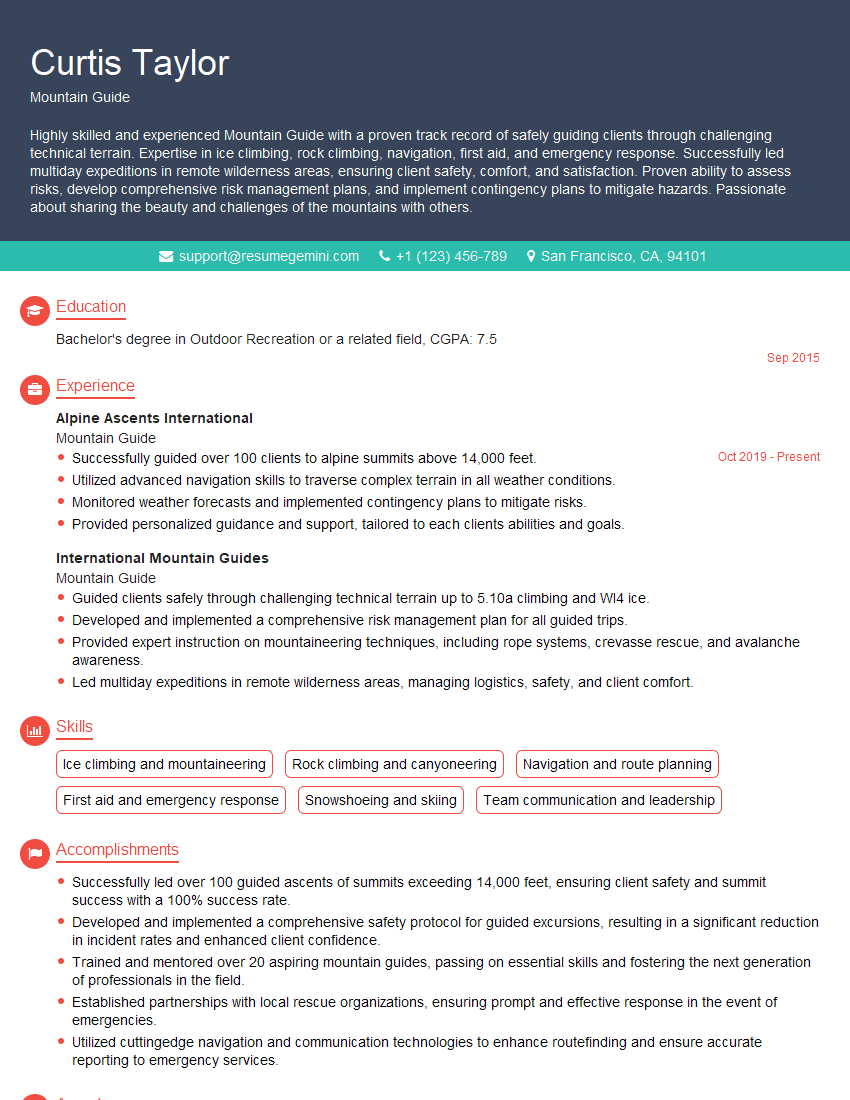
Mastering wilderness survival skills demonstrates crucial attributes highly valued by employers: resilience, problem-solving abilities, adaptability, and teamwork. This expertise translates to success in various demanding roles. To significantly increase your chances of landing your dream job, focus on crafting an ATS-friendly resume that highlights your key qualifications. ResumeGemini is a trusted resource to help you build a professional and impactful resume that showcases your wilderness survival skills effectively. Examples of resumes tailored to wilderness survival roles are available to guide you.

Explore more articles
Users Rating of Our Blogs
Share Your Experience
We value your feedback! Please rate our content and share your thoughts (optional).
What Readers Say About Our Blog
To the interviewgemini.com Webmaster.
Very helpful and content specific questions to help prepare me for my interview!
Thank you
To the interviewgemini.com Webmaster.
This was kind of a unique content I found around the specialized skills. Very helpful questions and good detailed answers.
Very Helpful blog, thank you Interviewgemini team.