Are you ready to stand out in your next interview? Understanding and preparing for Independent Fieldwork interview questions is a game-changer. In this blog, we’ve compiled key questions and expert advice to help you showcase your skills with confidence and precision. Let’s get started on your journey to acing the interview.
Questions Asked in Independent Fieldwork Interview
Q 1. Describe your experience conducting independent fieldwork projects.
My experience in independent fieldwork spans over eight years, encompassing diverse projects across various geographical locations and research domains. I’ve led and executed projects ranging from ecological surveys in remote wilderness areas to socio-economic studies in urban settings. For instance, one project involved assessing the impact of a new dam on local biodiversity, requiring meticulous data collection and analysis over a year. Another project focused on community perceptions of urban green spaces, necessitating extensive interviews and participatory mapping techniques. These experiences have honed my skills in independent planning, execution, and reporting of fieldwork projects, while also fostering adaptability and problem-solving capabilities in challenging environments.
Q 2. What data collection methods are you proficient in?
My proficiency in data collection methods is quite extensive. I’m adept at using both qualitative and quantitative techniques. Qualitative methods include:
- Semi-structured interviews: I use these to gather in-depth information on individual experiences and perspectives.
- Focus groups: These allow for rich interaction and group dynamics, generating valuable data on shared perceptions.
- Participant observation: I use immersion in the study area to understand behaviours and contexts more deeply.
Quantitative methods I use include:
- Surveys (both paper-based and online): I design and administer surveys to gather structured data from large samples.
- GPS data collection: I use GPS devices and GIS software to record geographical locations and map data.
- Remote sensing data analysis: I am proficient in using remotely sensed data like satellite imagery for environmental monitoring and analysis.
The choice of method depends heavily on the research question and the resources available. Often, I use a mixed-methods approach, combining qualitative and quantitative data for a more comprehensive understanding.
Q 3. Explain your process for ensuring data accuracy and reliability in the field.
Data accuracy and reliability are paramount in fieldwork. My process begins with rigorous planning, including meticulous instrument calibration (for example, ensuring accurate GPS readings), detailed data collection protocols, and thorough pilot testing. During data collection, I employ multiple strategies to minimize errors. This includes double-checking entries, using multiple data collectors when feasible, and employing cross-referencing techniques. Data validation involves checking for outliers and inconsistencies, often using statistical software. For example, in an ecological survey, if plant species counts seem unusually high in a particular area, I would revisit the site to verify my initial findings. Data cleaning and quality control are implemented using spreadsheets and databases, allowing for detailed documentation of any adjustments made. Finally, transparent documentation of the entire process, including potential limitations and challenges, enhances the reliability and credibility of the final data.
Q 4. How do you handle unexpected challenges or obstacles during fieldwork?
Unexpected challenges are inevitable in fieldwork. My approach centers around preparedness and adaptability. Before commencing fieldwork, I conduct a thorough risk assessment, anticipating potential problems and developing contingency plans. For example, during a remote ecological study, we prepared for potential equipment malfunctions by carrying backup equipment and communicating contingency plans with support teams. When faced with unforeseen issues, I prioritize safety and problem-solving. This might involve seeking help from local communities, adapting my methods, or adjusting the research timeline as necessary. Detailed record-keeping of these challenges and the solutions implemented are critical for future projects and for transparently reporting the fieldwork process.
Q 5. Describe your experience with GPS or GIS technology in fieldwork.
I have extensive experience integrating GPS and GIS technology into my fieldwork. I’m proficient in using handheld GPS receivers to collect spatial data, accurately recording locations and creating point data for analysis. I utilize GIS software (ArcGIS, QGIS) to map, analyze, and visualize this data. For instance, during a project examining the spread of invasive plant species, I used GPS to record the location of each plant and then used GIS to create maps illustrating the species distribution and its encroachment on native habitats. This approach allows for spatial analysis, revealing patterns and relationships that might not be apparent otherwise. Furthermore, I utilize satellite imagery within GIS to complement my ground-based data collection and analysis.
Q 6. How do you maintain safety protocols while conducting fieldwork?
Safety is always my top priority. My safety protocols begin with thorough risk assessments before fieldwork, identifying potential hazards (e.g., wildlife encounters, extreme weather, difficult terrain) and developing mitigation strategies. These protocols include informing relevant parties (e.g., supervisors, family, local authorities) about my fieldwork plans, carrying appropriate safety equipment (first-aid kit, communication devices, emergency supplies), working with a team when possible, and adhering to established safety guidelines. I also familiarize myself with the local laws, cultural norms and environmental conditions. Regular safety checks during fieldwork are vital, ensuring equipment is functioning correctly and adjusting plans as needed to address evolving risks. Detailed records of safety measures and any incidents are maintained for continuous improvement.
Q 7. How do you manage your time effectively during independent fieldwork projects?
Effective time management is crucial for successful independent fieldwork. I begin by creating a detailed fieldwork schedule, breaking down the project into manageable tasks with realistic timelines. This schedule accounts for potential delays and includes buffer time for unexpected challenges. I use project management tools (e.g., spreadsheets, task management software) to track progress and ensure I stay on schedule. Prioritizing tasks based on urgency and importance is essential, focusing on the most critical activities first. Regular review and adjustment of the schedule, as needed, maintain efficiency and prevent significant delays. Maintaining open communication with supervisors or collaborators ensures timely feedback and assistance when required. Finally, I regularly reflect on my workflow to identify areas for improvement and enhance my time management skills further.
Q 8. How do you prioritize tasks and manage multiple projects simultaneously?
Prioritizing tasks and managing multiple projects in independent fieldwork requires a structured approach. I utilize a combination of techniques, starting with a clear project overview. This involves breaking down each project into smaller, manageable tasks, assigning deadlines, and identifying dependencies between tasks. I then employ tools like project management software (e.g., Trello, Asana) to visualize the workflow and track progress. A key strategy is prioritizing tasks based on urgency and importance using methods like the Eisenhower Matrix (urgent/important). For example, if I have data collection deadlines for two projects, I prioritize the one with the nearest deadline first, ensuring timely completion. This process also includes regular reviews and adjustments to accommodate unforeseen challenges or changes in priorities. This iterative approach allows me to remain flexible and efficient, even when dealing with multiple projects simultaneously.
Q 9. Describe your experience with different sampling techniques.
My experience encompasses a range of sampling techniques, chosen based on the research question and the characteristics of the population being studied. For instance, in a study assessing community attitudes towards a new policy, I might use stratified random sampling to ensure representation from different demographic groups. This involves dividing the population into strata (e.g., age, income level) and then randomly selecting participants from each stratum. In contrast, if I’m studying a rare phenomenon, purposive sampling would be more suitable, allowing me to select participants who possess specific characteristics relevant to the research. Another common technique is convenience sampling, useful for pilot studies or when access to the population is limited, though acknowledging its limitations in terms of generalizability. Finally, snowball sampling proves invaluable when studying hidden or hard-to-reach populations, as participants refer other suitable individuals. The selection of the most appropriate technique depends critically on the research design and the available resources.
Q 10. How do you ensure the ethical conduct of your fieldwork?
Ethical conduct is paramount in fieldwork. I adhere strictly to established ethical guidelines, including obtaining informed consent from all participants before data collection. This involves clearly explaining the study’s purpose, procedures, potential risks and benefits, and participants’ rights to withdraw at any time. I also prioritize confidentiality, ensuring that participant data is anonymized and stored securely. This might involve using pseudonyms or removing identifying information. Anonymity, where even researchers don’t know the participants’ identities, is sometimes achievable but not always practical. I am mindful of potential power imbalances and strive to create a respectful and equitable research environment. Maintaining transparency and honesty throughout the research process is crucial, ensuring that participants understand their role and the implications of their involvement. Reporting procedures always adhere to best practices and relevant guidelines, avoiding any misrepresentation or manipulation of findings.
Q 11. How do you document and organize your fieldwork data?
Data organization is crucial for efficient analysis and interpretation. My approach involves a structured system of documentation. I use a combination of methods including detailed field notes, recorded interviews (with consent), and structured data entry forms. For example, when conducting interviews, I immediately transcribe them and store them securely. All data is stored consistently, often utilizing a cloud-based system for easy access and backup. I maintain a comprehensive coding system to categorize and organize the data, typically using a codebook to define and track variables. This helps to ensure data consistency and facilitates later analysis. Regular data backups are implemented to prevent data loss. A clear and detailed filing system is used to maintain the organization of both raw data and associated documentation, including project plans, ethical approvals, and consent forms. This meticulous approach guarantees easy retrieval and analysis of data, promoting a reliable and transparent research process.
Q 12. Describe your experience with data analysis techniques relevant to fieldwork.
My data analysis techniques vary depending on the nature of the data collected and the research questions. For qualitative data, such as interview transcripts, I employ thematic analysis, identifying recurring patterns and themes to develop meaningful interpretations. This might involve coding the data, identifying key themes, and exploring relationships between them. For quantitative data, I utilize statistical software such as SPSS or R to perform descriptive statistics (means, standard deviations), inferential statistics (t-tests, ANOVA), and regression analysis to examine relationships between variables. For mixed-methods studies, I combine qualitative and quantitative data to enhance the richness and depth of findings. For instance, I might use quantitative data to identify patterns and then use qualitative data to explore the underlying reasons for those patterns. The choice of technique is always guided by the research design and the type of data collected, aiming for the most appropriate and rigorous approach.
Q 13. How do you communicate your findings effectively to stakeholders?
Effective communication of findings is vital. I tailor my communication style to the audience, using clear and concise language. For stakeholders with limited research experience, I use visual aids such as charts and graphs to simplify complex information. For academic audiences, I use more formal language and present the findings in a detailed manner. My reports follow a consistent structure, including a clear introduction, methodology, results, discussion, and conclusions. I also incorporate relevant visuals and tables to enhance understanding. I use presentations and reports for formal settings, but informal methods like meetings and discussions are also valuable to ensure accessibility and foster discussion. This multifaceted approach ensures that stakeholders, whether academic colleagues, community representatives, or funding bodies, fully comprehend the research’s implications and value.
Q 14. What software or tools are you familiar with for data collection and analysis?
I’m proficient in a variety of software and tools for data collection and analysis. For data collection, I utilize survey platforms like Qualtrics or SurveyMonkey for online questionnaires, and audio recording software for interviews. For data analysis, I’m highly experienced with statistical packages like SPSS and R, which allow for advanced statistical analysis. I also use qualitative data analysis software such as NVivo for managing and analyzing qualitative data, such as interview transcripts. In addition to these specialized tools, I leverage spreadsheet software like Microsoft Excel and Google Sheets for data management and organization. My skills extend to geographic information systems (GIS) software for spatial data analysis when appropriate to the project. The choice of tools is always determined by the project’s needs and data type, ensuring efficient and rigorous analysis.
Q 15. Explain your experience working independently and managing your own workload.
Independent fieldwork demands exceptional self-management. My experience spans numerous projects where I’ve been solely responsible for planning, execution, and reporting. This involves meticulous project planning, creating detailed timelines, setting realistic goals, and consistently monitoring progress against those goals. I use project management tools like Trello or Asana to track tasks, deadlines, and resources. For example, during a recent ethnographic study on rural community resilience, I created a detailed schedule that included travel arrangements, participant recruitment, interview scheduling, data transcription, and analysis timelines. Regularly reviewing this schedule allowed me to identify potential bottlenecks and adjust my workload accordingly, ensuring timely completion.
I also prioritize effective time management techniques like the Pomodoro Technique to maintain focus and avoid burnout. This involves working in focused bursts with short breaks, which has proven highly effective in maintaining productivity throughout long fieldwork periods. Finally, proactive communication with supervisors or clients ensures alignment on expectations and allows for timely adjustments when necessary.
Career Expert Tips:
- Ace those interviews! Prepare effectively by reviewing the Top 50 Most Common Interview Questions on ResumeGemini.
- Navigate your job search with confidence! Explore a wide range of Career Tips on ResumeGemini. Learn about common challenges and recommendations to overcome them.
- Craft the perfect resume! Master the Art of Resume Writing with ResumeGemini’s guide. Showcase your unique qualifications and achievements effectively.
- Don’t miss out on holiday savings! Build your dream resume with ResumeGemini’s ATS optimized templates.
Q 16. How do you adapt your fieldwork strategies to different environments or contexts?
Adaptability is paramount in fieldwork. Different environments demand different approaches. For instance, conducting research in a bustling urban setting requires different strategies compared to a remote rural community. In urban areas, I might rely more on targeted sampling and scheduled interviews, while in rural areas, I might utilize snowball sampling and build trust through extended observation and participation within the community.
Language barriers also pose significant challenges. In such cases, I would employ translators, learn basic phrases in the local language, or use visual aids to facilitate communication and build rapport. Understanding cultural nuances is critical. I always research the local customs and etiquette to ensure my approach is respectful and appropriate. My fieldwork in Nepal, for example, required a significant adjustment to the pace of life and communication styles, leading to more extended periods of observation and informal conversations to gather reliable data. Finally, I always adapt my data collection methods – whether it’s using surveys, interviews, or participatory methods – to the specific context to ensure relevance and validity.
Q 17. Describe a time you had to overcome a significant challenge in the field.
During a study on the impact of climate change on fishing communities, I faced a significant challenge when a major storm unexpectedly disrupted my fieldwork schedule. It damaged the local infrastructure, making travel and communication difficult, and even displaced some of my research participants.
My response involved several steps: First, I ensured the safety of myself and the participants. Then, I re-evaluated my research plan, adapting my data collection methods to account for the disruptions. This included switching from in-person interviews to phone interviews where possible and utilizing satellite imagery to assess the extent of the damage to the fishing grounds. I also reached out to local authorities and community leaders to understand the evolving situation and adapt my research accordingly. While initially setback, this challenge taught me the importance of flexibility, resilience, and strong community relations in managing unforeseen circumstances during fieldwork.
Q 18. How do you handle conflicts or disagreements with participants or stakeholders?
Conflict resolution is a key skill for independent fieldworkers. My approach is based on active listening, empathy, and clear communication. I always strive to understand the perspectives of all involved parties before attempting to mediate.
For example, if a disagreement arises between community members during a participatory data collection activity, I facilitate a dialogue where everyone feels heard. I encourage open communication, reiterate the importance of respect, and use neutral language to de-escalate tension. If the conflict is beyond my capacity to resolve, I consult with supervisors or community leaders for guidance. Ultimately, maintaining neutrality and focusing on finding mutually agreeable solutions are crucial in preserving trust and maintaining productive relationships within the community.
Q 19. How do you ensure the confidentiality and privacy of data collected during fieldwork?
Confidentiality and data privacy are paramount. I adhere to strict ethical guidelines and relevant data protection regulations. This starts with obtaining informed consent from all participants, clearly outlining the purpose of the research, how data will be used, and the steps taken to ensure confidentiality.
I anonymize data whenever possible, using pseudonyms and removing any identifying information. Data is securely stored, either encrypted on a password-protected device or on a secure server. Access to data is restricted to authorized personnel only. All research materials, including field notes and interview transcripts, are stored securely and disposed of appropriately once the project is complete. Transparency with participants about data handling processes builds trust and strengthens the ethical integrity of the research.
Q 20. What are your strengths and weaknesses as an independent fieldworker?
My strengths lie in my adaptability, strong communication skills, resilience, and ability to build rapport with diverse populations. I’m highly organized and adept at managing my time effectively. My experience with qualitative research methods, including ethnographic observation, interviews, and focus groups, is a considerable asset.
However, like any independent fieldworker, I occasionally struggle with isolation and the challenge of seeking timely feedback. I’m actively addressing this weakness by scheduling regular check-ins with mentors and colleagues, and leveraging online platforms for peer support and discussion. This proactive approach helps mitigate the challenges inherent in independent work.
Q 21. How do you stay motivated and productive while working independently?
Maintaining motivation and productivity while working independently requires conscious effort. I find that setting clear goals, breaking down larger tasks into smaller manageable steps, and celebrating small victories along the way are crucial.
I also prioritize self-care. This includes regular breaks, maintaining a healthy work-life balance, and engaging in activities outside of work to prevent burnout. Regular communication with supervisors and collaborators helps to maintain a sense of connection and accountability. Finally, I regularly reflect on the impact of my work and the positive contributions it makes – this helps me to stay focused and engaged in the long term.
Q 22. What are your salary expectations for this role?
My salary expectations are in line with the industry standard for experienced Independent Fieldworkers with my skill set and years of experience. Considering the responsibilities of this role and my proven track record of success, I am targeting a salary range of [Insert Salary Range Here]. I am, however, open to discussing this further based on a comprehensive review of the complete compensation and benefits package.
Q 23. What are your long-term career goals in fieldwork?
My long-term career goals involve becoming a recognized expert and leader in my field. I envision myself taking on increasingly challenging projects, mentoring junior fieldworkers, and potentially leading my own research teams. I’m particularly interested in specializing in [Mention Specific Area of Fieldwork, e.g., environmental impact assessments or archaeological fieldwork], leveraging my expertise to contribute meaningfully to impactful projects. Ultimately, I want to make significant contributions to the field and advance knowledge in my chosen area of specialization.
Q 24. Why are you interested in this specific fieldwork opportunity?
This specific fieldwork opportunity excites me for several reasons. Firstly, the project’s focus on [Mention Project Focus] aligns perfectly with my skills and passions. Secondly, the opportunity to work with [Mention Team/Organization/Technology] is incredibly appealing. I’ve followed [Mention Team/Organization’s] work for some time and admire their commitment to [Mention Specific Value, e.g., rigorous data collection, environmental sustainability, innovative methodologies]. Finally, the project’s scope and challenge offer a significant professional development opportunity, allowing me to expand my skill set and contribute to a high-impact initiative.
Q 25. Describe your experience with report writing and presentation skills.
I have extensive experience in report writing and presentations. My reports are always clear, concise, and well-organized, presenting findings in a way that is easily understood by both technical and non-technical audiences. I utilize various data visualization techniques, including charts, graphs, and maps, to effectively communicate complex information. For example, in a recent project involving [Mention a Project], I created a comprehensive report that not only detailed the research findings but also provided actionable recommendations. My presentation skills are equally strong; I am adept at delivering engaging and informative presentations to diverse audiences, adapting my style and content to meet their specific needs. I frequently employ visual aids and interactive elements to maintain audience engagement.
Q 26. How familiar are you with relevant regulations and guidelines for fieldwork?
I am thoroughly familiar with the relevant regulations and guidelines for fieldwork, including [Mention Specific Regulations e.g., safety protocols, ethical considerations, environmental protection laws]. My understanding encompasses aspects such as obtaining necessary permits and licenses, adhering to ethical research practices, ensuring data privacy and confidentiality, and complying with all relevant health and safety regulations. For example, during a recent project in [Mention Location], I meticulously ensured compliance with all local environmental regulations before commencing fieldwork. This involved obtaining the necessary permits and engaging with local authorities to ensure the project’s environmental impact was minimized.
Q 27. How do you ensure the quality and integrity of your fieldwork data?
Ensuring the quality and integrity of fieldwork data is paramount. My approach involves a multi-layered strategy. This starts with meticulous planning, including defining clear research objectives, developing standardized data collection protocols, and selecting appropriate instruments and techniques. During data collection, I maintain rigorous documentation, regularly cross-checking data for accuracy and consistency. I also employ quality control checks at various stages, including data cleaning, validation, and auditing. Any anomalies or inconsistencies are thoroughly investigated and addressed. For instance, in a previous project, I identified an outlier in the data. By investigating the potential sources of error, I discovered a calibration issue with the measuring equipment, corrected the problem, and re-collected the affected data points.
Q 28. What steps do you take to ensure the validity and reliability of your research findings?
To ensure the validity and reliability of research findings, I utilize various methods. This includes employing rigorous sampling techniques to ensure representativeness, utilizing validated research instruments, and adhering to established research methodologies. Data analysis is conducted using appropriate statistical methods, and I document the entire process meticulously, allowing for transparency and replicability. Furthermore, I actively seek feedback on my findings from peers and experts to identify potential biases or limitations. In one project involving [Mention Project], I used triangulation – employing multiple data collection methods – to validate the findings, ensuring a robust and reliable conclusion.
Key Topics to Learn for Independent Fieldwork Interview
- Data Collection Methods: Understanding various techniques like surveys, interviews, observations, and document analysis; their strengths, weaknesses, and appropriate applications in different research contexts.
- Sampling Strategies: Choosing the right sampling method (probability vs. non-probability) to ensure representative data and minimize bias; justifying your sampling decisions.
- Ethical Considerations: Addressing informed consent, participant confidentiality, data security, and potential conflicts of interest; demonstrating a commitment to ethical research practices.
- Data Analysis & Interpretation: Proficiency in qualitative and/or quantitative data analysis techniques relevant to your field; effectively communicating findings and insights from your data.
- Project Management & Time Management: Demonstrating the ability to plan, organize, and execute independent fieldwork projects within given timelines and budgets; addressing potential challenges and setbacks proactively.
- Report Writing & Communication: Clearly and concisely communicating research findings through written reports and presentations; tailoring communication to different audiences.
- Problem-Solving & Adaptability: Describing your approach to unforeseen challenges in fieldwork; showcasing resourcefulness and adaptability in dynamic situations.
- Technological Proficiency: Demonstrating familiarity with relevant software and technologies for data collection, management, and analysis (e.g., survey platforms, data analysis software).
Next Steps
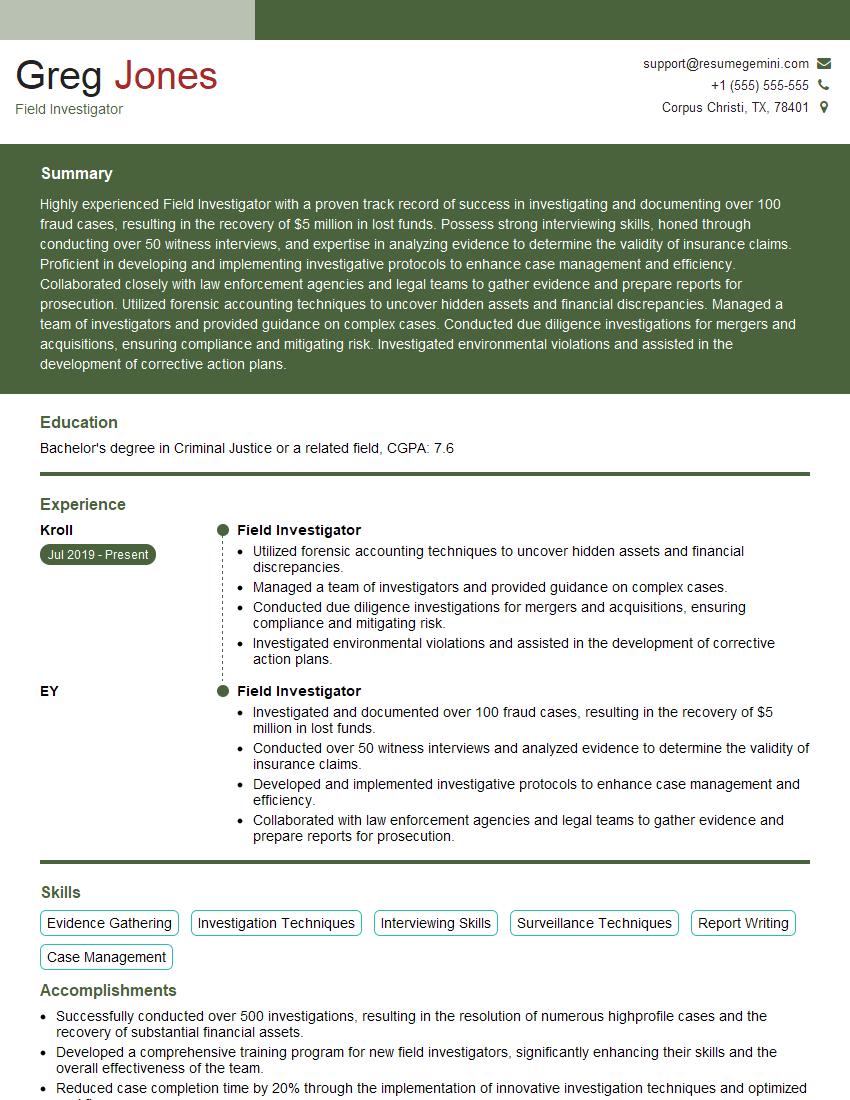
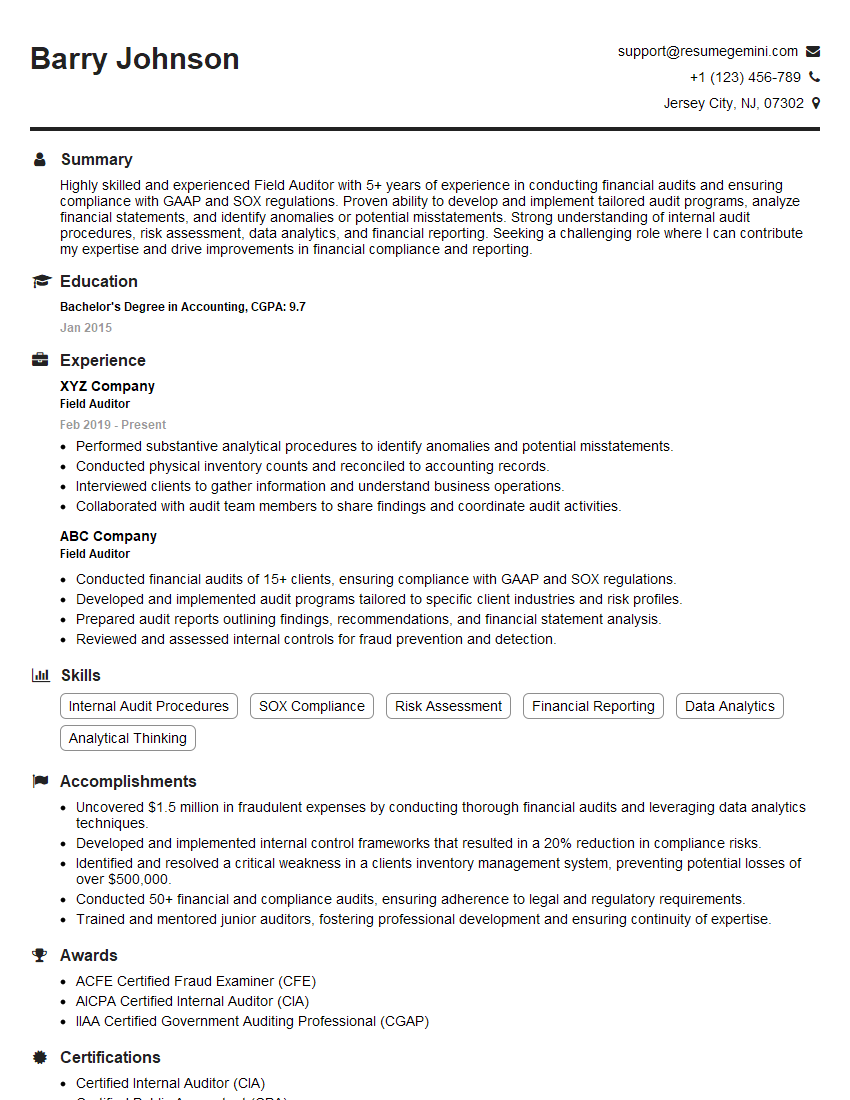
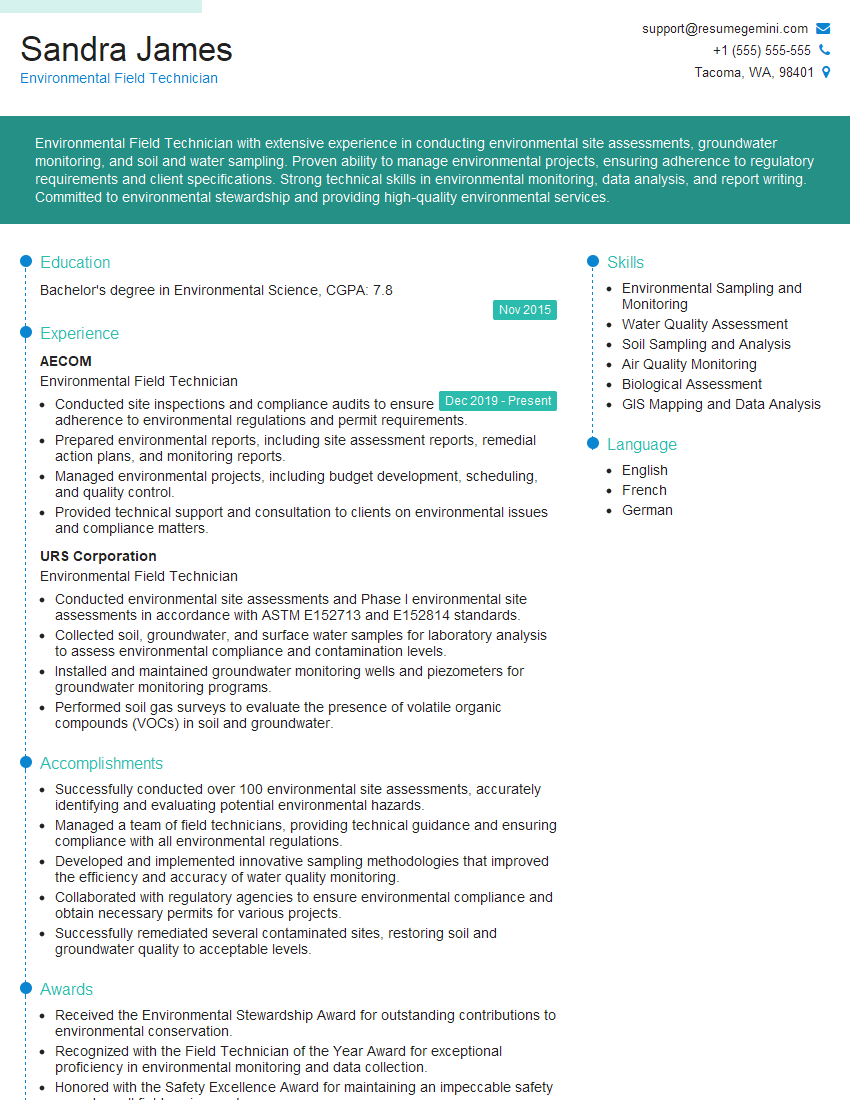
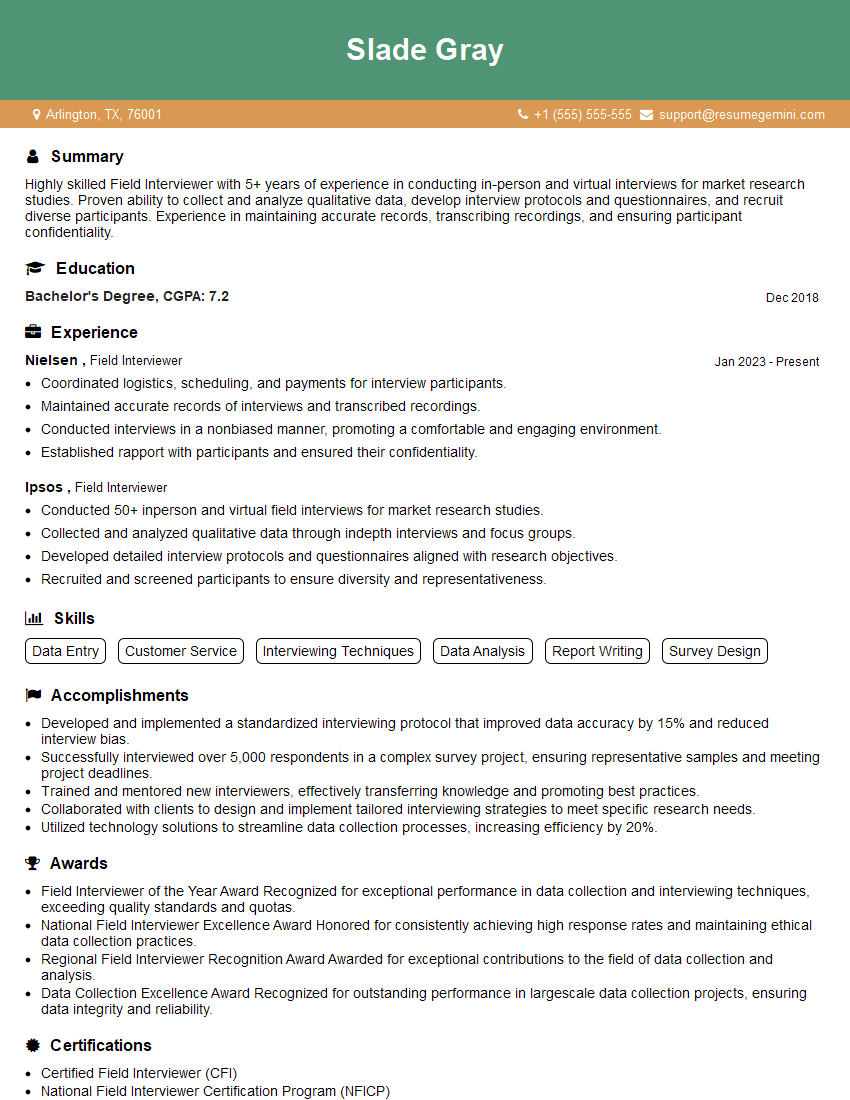
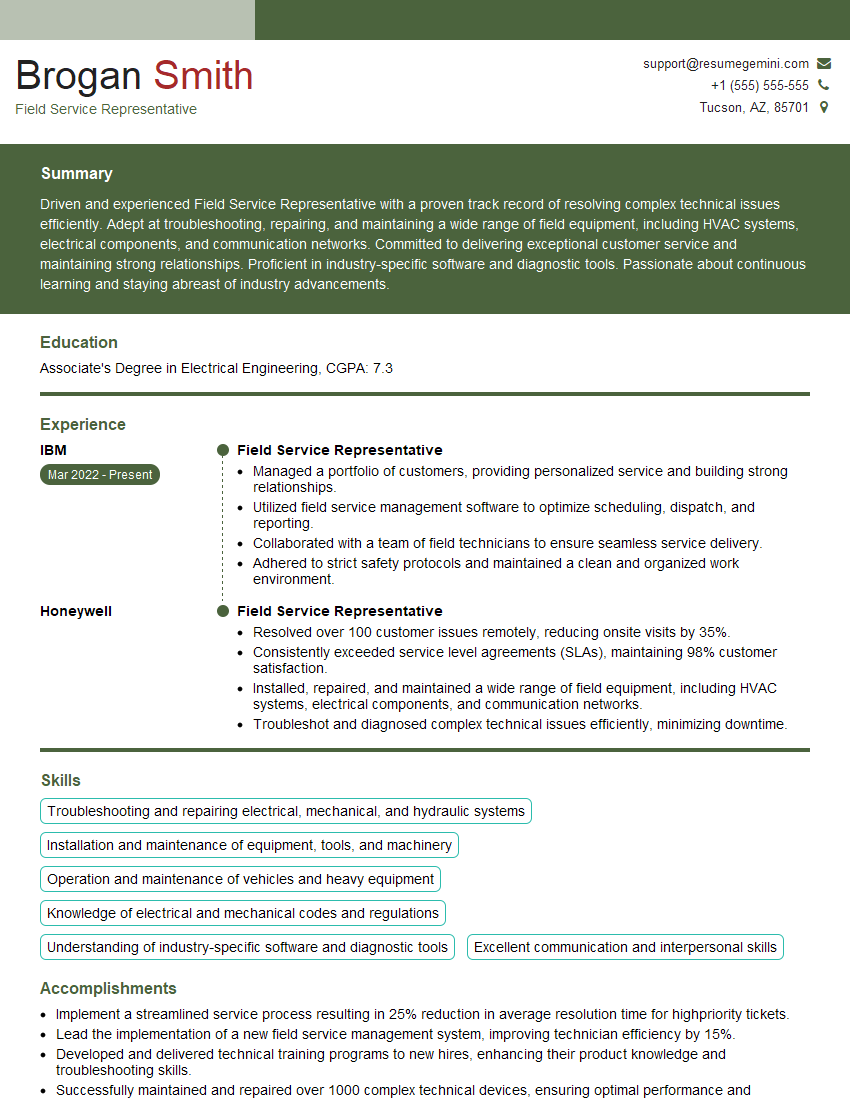
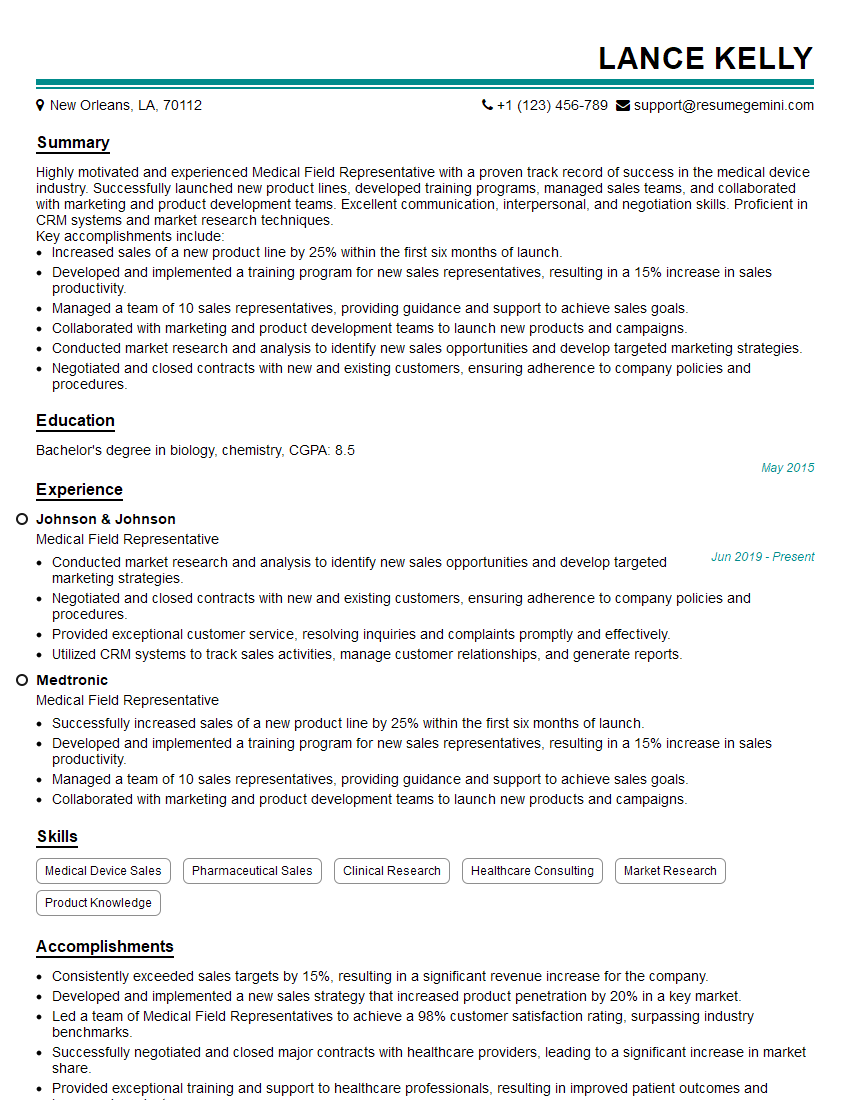
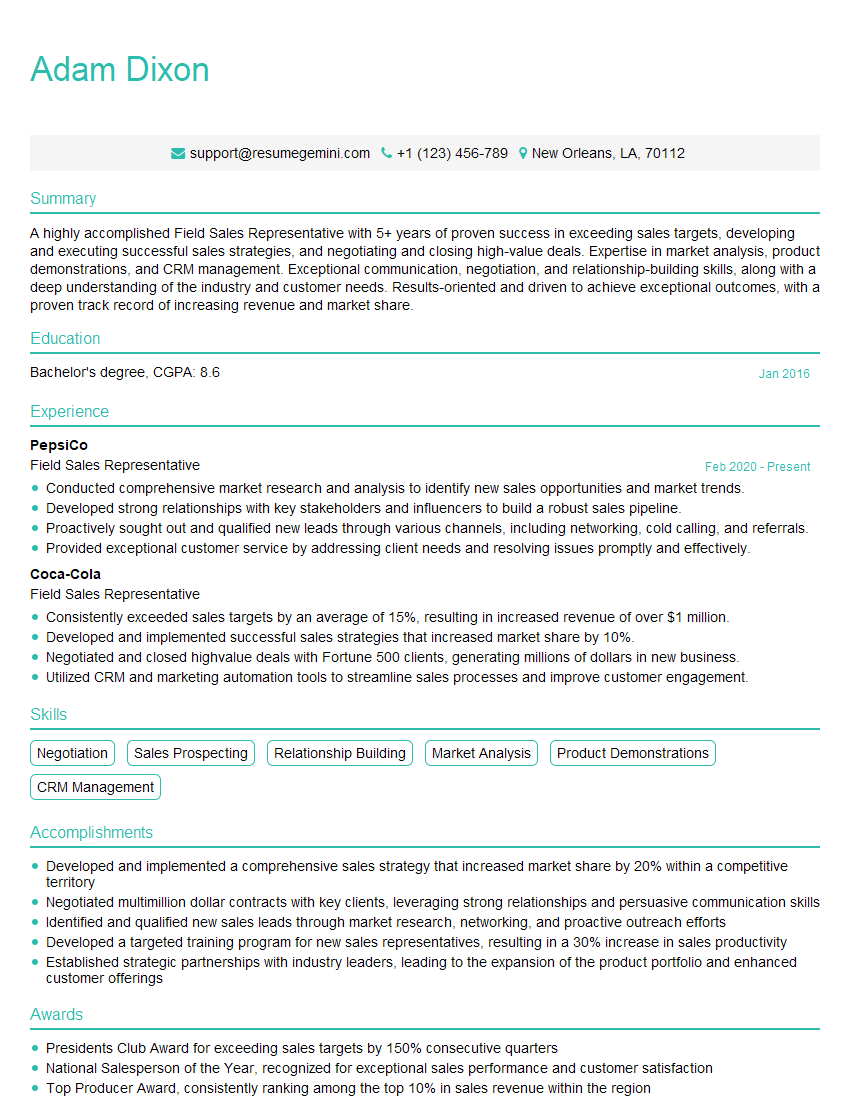
Mastering independent fieldwork significantly enhances your career prospects, opening doors to diverse and challenging roles requiring strong analytical, problem-solving, and communication skills. To maximize your job search success, it’s crucial to create a compelling and ATS-friendly resume that highlights your relevant skills and experiences. ResumeGemini is a trusted resource to help you build a professional resume that showcases your capabilities effectively. Examples of resumes tailored to Independent Fieldwork are available to guide you through this process.
Explore more articles
Users Rating of Our Blogs
Share Your Experience
We value your feedback! Please rate our content and share your thoughts (optional).
What Readers Say About Our Blog
To the interviewgemini.com Webmaster.
Very helpful and content specific questions to help prepare me for my interview!
Thank you
To the interviewgemini.com Webmaster.
This was kind of a unique content I found around the specialized skills. Very helpful questions and good detailed answers.
Very Helpful blog, thank you Interviewgemini team.