Are you ready to stand out in your next interview? Understanding and preparing for Industrial Controls interview questions is a game-changer. In this blog, we’ve compiled key questions and expert advice to help you showcase your skills with confidence and precision. Let’s get started on your journey to acing the interview.
Questions Asked in Industrial Controls Interview
Q 1. Explain the difference between a PLC and a PAC.
Both PLCs (Programmable Logic Controllers) and PACs (Programmable Automation Controllers) are industrial computers used to automate processes, but they differ significantly in their capabilities and applications. Think of a PLC as a specialized tool for controlling discrete processes – like turning a motor on or off based on sensor input – whereas a PAC is a more versatile, integrated solution capable of handling both discrete and continuous processes, including complex data analysis and sophisticated control algorithms.
A PLC excels at high-speed, real-time control of simple on/off operations, ideal for factory automation and robotic systems. They are designed for reliability and robust operation in harsh industrial environments. They often lack advanced features like extensive data logging or complex mathematical capabilities.
A PAC, on the other hand, integrates multiple functionalities like motion control, process control, and data acquisition into a single unit. It often includes powerful processing capabilities and extensive connectivity options, suitable for complex manufacturing lines or process control systems requiring sophisticated data analysis and decision-making. For instance, a PAC might be used to monitor and control an entire chemical process, including temperature, pressure, and flow rate, while simultaneously collecting and analyzing data for optimization. This makes them better suited for complex tasks and applications that might require integration with enterprise systems.
Q 2. Describe your experience with different PLC programming languages (e.g., Ladder Logic, Structured Text).
I’m proficient in several PLC programming languages, with Ladder Logic being my primary language due to its intuitive visual representation. Ladder Logic uses diagrams resembling electrical ladder diagrams, making it easy to understand and debug even for those without extensive programming experience. I’ve used it extensively in projects ranging from conveyor belt systems to robotic cell control, and it’s particularly useful for simple logic and sequential control tasks.
Beyond Ladder Logic, I’m also experienced in Structured Text (ST), which is a text-based language similar to Pascal or C. ST offers more flexibility and power, making it ideal for complex calculations, data manipulation, and intricate control algorithms. I often use ST when dealing with more sophisticated control strategies or when integrating with other systems that require structured data communication. For example, I used ST to implement a PID control algorithm in a process control application, where the precision offered by ST was essential for optimal performance. My experience also includes some exposure to Function Block Diagram (FBD) and Sequential Function Chart (SFC) languages, though my proficiency in these is less extensive than in Ladder Logic and Structured Text.
Q 3. What are the common communication protocols used in industrial control systems (e.g., Ethernet/IP, Modbus, Profibus)?
Industrial control systems employ a variety of communication protocols, each with its own strengths and weaknesses. The choice of protocol often depends on factors such as distance, speed requirements, and the complexity of the system.
- Ethernet/IP: A popular industrial Ethernet protocol, offering high speed and flexibility. It’s often used for complex systems involving multiple devices and extensive data exchange. It’s particularly prevalent in manufacturing environments using Allen-Bradley PLCs.
- Modbus: A widely adopted, open protocol known for its simplicity and robustness. It’s used in a wide range of applications, particularly in smaller systems or where interoperability between different vendor equipment is crucial. Its simplicity makes it easy to learn and troubleshoot.
- Profibus: A fieldbus protocol designed for high-speed data communication in demanding industrial environments. It’s often used in process automation and manufacturing lines requiring real-time control and synchronization.
- Profinet: Another Ethernet based protocol commonly used with Siemens PLCs. It supports both real-time and standard Ethernet communication.
- CANopen: A protocol often found in automotive and motion control applications, known for its reliability and deterministic communication.
Selecting the appropriate protocol is critical for efficient and reliable system operation. Factors like network topology, bandwidth requirements, and device compatibility are crucial in this decision.
Q 4. How do you troubleshoot a malfunctioning PLC program?
Troubleshooting a malfunctioning PLC program requires a systematic approach. My process typically involves these steps:
- Identify the Problem: Clearly define the symptoms. What exactly is malfunctioning? Is it a specific output not working? Is the process behaving unexpectedly? Detailed observations are crucial.
- Review the Program Logic: Step through the program code (Ladder Logic, ST, etc.) to identify potential issues. Look for logic errors, incorrect addressing, or timing problems. Simulation tools can be invaluable here.
- Check Inputs and Outputs: Verify that all inputs (sensors) are providing correct readings and outputs (actuators) are responding as expected. Use testing equipment like multimeters to check signal levels.
- Examine the Hardware: If software issues are ruled out, investigate the hardware. This might include inspecting wiring, checking for loose connections, or verifying the functionality of I/O modules.
- Utilize PLC Diagnostics: Modern PLCs include built-in diagnostic tools that provide information on errors, warnings, and status of different components. Review these logs carefully.
- Employ Monitoring and Logging Tools: Use monitoring tools to observe the variables and internal status of the PLC in real time. This can provide invaluable clues to locate intermittent faults.
- Consult Documentation: Refer to the PLC’s manual, program documentation, and wiring diagrams to verify the proper configuration and operation of the system.
A methodical, step-by-step approach, combined with the use of diagnostic tools and documentation, will effectively pinpoint and resolve most PLC program malfunctions.
Q 5. Explain your experience with SCADA systems and their applications.
SCADA (Supervisory Control and Data Acquisition) systems provide a centralized interface for monitoring and controlling large-scale industrial processes. I’ve worked extensively with SCADA systems in various applications, ranging from water treatment plants to manufacturing facilities.
In one project, I helped implement a SCADA system for a large water treatment plant. This involved integrating various sensors (flow meters, pH sensors, chlorine analyzers), PLCs, and communication networks. The SCADA system provided real-time monitoring of the entire plant, allowing operators to detect and respond to problems promptly. The system also facilitated remote access for supervisory control and reporting.
My experience encompasses working with various SCADA platforms, configuring data acquisition, developing alarm management systems, and creating customized reports. I’m familiar with aspects like data historian configuration and integration with enterprise resource planning (ERP) systems. SCADA systems are crucial for improving efficiency, optimizing production, and ensuring safe operation in complex industrial processes. Understanding the specific industry needs and regulatory compliance requirements is paramount when designing and implementing these systems.
Q 6. Describe your experience with HMI design and development.
HMI (Human-Machine Interface) design and development are essential for creating user-friendly and efficient interfaces for industrial control systems. A well-designed HMI enhances operator productivity, reduces errors, and improves overall system safety.
My experience includes designing and developing HMIs using various software packages. I focus on creating intuitive layouts, clear visualizations, and easily accessible controls, tailoring the interface to meet the specific needs and skill levels of the operators. I often employ alarm management strategies to alert operators to critical situations promptly and effectively. The design process includes careful consideration of ergonomics and human factors principles to minimize operator fatigue and enhance safety. For example, I designed an HMI for a food processing plant, carefully choosing colors and icons that were easily distinguishable, even under challenging lighting conditions. This improved efficiency by reducing operator error and improving situational awareness.
I also incorporate effective use of visualization techniques like trend charts, gauges, and alarm indicators to provide operators with a comprehensive view of the process parameters. I consider accessibility needs, ensuring that the HMI design complies with relevant industrial standards and guidelines.
Q 7. What are your experiences with different types of sensors and actuators used in industrial control systems?
My experience encompasses a wide range of sensors and actuators used in industrial control systems. The selection of sensors and actuators depends heavily on the specific application and the variables being measured or controlled.
Sensors: I’ve worked with various types, including:
- Temperature Sensors: Thermocouples, RTDs (Resistance Temperature Detectors), and thermistors for precise temperature measurement in various industrial processes.
- Pressure Sensors: Strain gauge, piezoelectric, and capacitive pressure sensors for monitoring pressure in pipelines, vessels, and other equipment.
- Flow Sensors: Magnetic flow meters, ultrasonic flow meters, and turbine flow meters for measuring fluid flow rates.
- Level Sensors: Ultrasonic, capacitive, and float-type level sensors for monitoring liquid levels in tanks and containers.
- Proximity Sensors: Inductive, capacitive, and photoelectric proximity sensors for detecting the presence of objects without physical contact.
Actuators: My experience includes:
- Electric Motors: AC and DC motors for controlling various mechanical systems, including pumps, conveyors, and robotic arms.
- Pneumatic Actuators: Cylinders and valves controlled by compressed air for actuating valves, clamps, and other mechanical systems.
- Hydraulic Actuators: Cylinders and valves controlled by hydraulic fluid for applications requiring high force and precision.
- Solenoid Valves: Used for controlling fluid flow in pneumatic and hydraulic systems.
Understanding the characteristics, limitations, and compatibility of different sensors and actuators is critical for designing reliable and efficient industrial control systems. Proper sensor selection ensures accurate data acquisition, while appropriate actuator choice guarantees effective control of the process.
Q 8. How do you ensure the safety and security of an industrial control system?
Ensuring the safety and security of an industrial control system (ICS) is paramount. It’s a multi-layered approach encompassing physical, network, and application-level security. Think of it like protecting a castle – you need strong walls (physical security), guarded gates (network security), and vigilant guards inside (application security).
- Physical Security: This involves securing the physical plant itself. Access control, like keycard systems and surveillance cameras, prevents unauthorized personnel from tampering with equipment. Regular inspections for damage or tampering are crucial. For instance, I worked on a project where we implemented biometric access control for a chemical plant’s control room, significantly enhancing security.
- Network Security: ICS networks need robust firewalls, intrusion detection/prevention systems (IDS/IPS), and regular vulnerability scanning. Segmenting the network – separating the operational technology (OT) network from the information technology (IT) network – is vital to contain breaches. We used a DMZ (demilitarized zone) in a recent project to isolate the supervisory control and data acquisition (SCADA) system from the corporate network.
- Application Security: This includes secure programming practices, regular software updates and patching to mitigate known vulnerabilities, and strong password policies. Implementing multi-factor authentication (MFA) adds an extra layer of protection. In one case, we prevented a significant outage by proactively updating firmware on programmable logic controllers (PLCs) to address a recently discovered vulnerability.
- Redundancy and Fail-safe Mechanisms: Designing systems with redundancy is crucial. Having backup systems and fail-safe mechanisms ensures continued operation even in case of failures or attacks. Think of it as having a backup generator for your house during a power outage.
Regular security audits and penetration testing are also essential for identifying and addressing weaknesses before they can be exploited. A proactive approach, combining strong physical, network, and application security measures, is vital to maintain the safety and reliability of an ICS.
Q 9. Explain your understanding of PID controllers and their tuning methods.
A Proportional-Integral-Derivative (PID) controller is a fundamental feedback control loop mechanism widely used in industrial automation to maintain a desired process variable at a setpoint. Think of it as a thermostat regulating the temperature of your house. It compares the current value to the desired value and adjusts the control output accordingly.
The three components – Proportional, Integral, and Derivative – each address different aspects of the control process:
- Proportional (P): Responds to the current error (difference between setpoint and current value). A larger error leads to a larger corrective action. It’s like adjusting the thermostat quickly based on how far off the temperature is.
- Integral (I): Addresses persistent errors (offset). It accumulates the error over time, ensuring that any steady-state error is eliminated. It’s like slowly making smaller adjustments until the temperature stabilizes at the setpoint.
- Derivative (D): Anticipates future errors by considering the rate of change of the error. It helps to dampen oscillations and prevent overshoot. It’s like slowing down the adjustment rate to prevent the temperature from overshooting.
Tuning Methods: Proper PID tuning is crucial for optimal performance. Several methods exist, including:
- Ziegler-Nichols Method: A simple method based on the system’s ultimate gain and ultimate period. It’s quick but may not always provide optimal results.
- Cohen-Coon Method: Another empirical method that considers the system’s response characteristics.
- Auto-tuning: Modern controllers often feature auto-tuning capabilities, where the controller automatically determines the optimal PID gains.
The choice of tuning method depends on the specific application and the system’s characteristics. Experience and understanding of the process are crucial for successful PID tuning. I’ve used all these methods throughout my career, often combining empirical methods with auto-tuning for best results. For example, in a chemical process control project, I used auto-tuning to achieve a stable and efficient temperature control loop, optimizing yield and reducing waste.
Q 10. Describe your experience with industrial networking and network security.
Industrial networking is the backbone of modern ICS. It involves connecting various devices like PLCs, sensors, actuators, and HMI (Human-Machine Interface) systems. Common industrial network protocols include Ethernet/IP, PROFINET, Modbus TCP/IP, and Profibus. However, the use of standard Ethernet networks introduces significant cybersecurity challenges.
Network Security: Securing these networks is paramount. My experience includes implementing various security measures like:
- Network Segmentation: Isolating different parts of the network to limit the impact of a potential breach.
- Firewalls: Controlling network traffic and blocking unauthorized access.
- Virtual Private Networks (VPNs): Creating secure connections for remote access to the ICS.
- Intrusion Detection/Prevention Systems (IDS/IPS): Monitoring network traffic for malicious activity.
- Network Access Control (NAC): Controlling which devices can connect to the network.
I’ve worked on projects where we implemented redundant network infrastructure to ensure high availability and resilience against failures. For example, we used a dual-ring network topology for a large manufacturing facility to provide redundancy and minimize downtime. Understanding different network protocols and security practices is crucial in ensuring the reliability and security of industrial networks. Furthermore, experience with network monitoring tools is important for effective troubleshooting and proactive maintenance.
Q 11. What is your experience with industrial control system cybersecurity best practices?
Industrial control system cybersecurity best practices are crucial to protect against cyber threats, which range from data theft to system disruption and even physical damage. These practices build upon the foundation of general cybersecurity principles but are adapted to the unique characteristics of ICS environments.
- Regular Security Assessments: Vulnerability scanning and penetration testing to identify and address security weaknesses.
- Access Control: Restricting access to only authorized personnel and devices using strong authentication and authorization mechanisms.
- Patch Management: Implementing a robust patch management system to quickly address security vulnerabilities in hardware and software.
- Network Segmentation: Separating different parts of the ICS network to limit the impact of a security breach.
- Data Protection: Implementing measures to protect sensitive data, including encryption and access control.
- Incident Response Plan: Having a detailed plan in place to respond to security incidents effectively.
- Security Awareness Training: Educating personnel about cybersecurity risks and best practices.
My experience includes implementing and managing these best practices in various industrial settings. For instance, I developed and implemented a comprehensive cybersecurity policy for a water treatment plant, incorporating all the above practices, resulting in a substantial improvement in their overall security posture. Adherence to standards like NIST Cybersecurity Framework is critical. Regular training and updating these practices are essential given the constantly evolving threat landscape.
Q 12. Explain your experience with data acquisition and analysis in industrial control systems.
Data acquisition and analysis in industrial control systems involves collecting data from various sources within the system, processing it, and extracting meaningful insights for improved operations and decision-making. This process typically involves using sensors, PLCs, and historian systems.
My experience includes:
- Data Acquisition: Utilizing various hardware and software tools to collect data from sensors, PLCs, and other devices. This often involves configuring communication protocols and handling data from diverse sources. For example, I’ve worked with systems using Modbus, OPC UA, and other protocols.
- Data Preprocessing: Cleaning, filtering, and transforming raw data to improve data quality and prepare it for analysis. This might involve handling missing values, outliers, and noise.
- Data Analysis: Employing statistical methods, machine learning techniques, and data visualization tools to extract insights. This might include trend analysis, anomaly detection, predictive maintenance, and performance optimization.
- Data Visualization: Creating dashboards and reports to present key findings in a user-friendly manner. This is essential for effectively communicating insights to stakeholders.
In a recent project involving a manufacturing plant, I implemented a data acquisition and analysis system that identified inefficiencies in the production process, leading to a 15% improvement in overall efficiency. The ability to effectively collect, analyze, and visualize data is critical for optimizing industrial processes and achieving business goals.
Q 13. Describe your experience with different types of industrial drives (e.g., VFDs, servo drives).
Industrial drives are the electromechanical devices that control the speed and torque of motors. Different types of drives cater to different applications.
- Variable Frequency Drives (VFDs): These are used to control AC motors by varying the frequency of the power supply. They are widely used in applications requiring precise speed control, such as pumps, fans, and conveyors. I have extensive experience in configuring and troubleshooting VFDs from various manufacturers, including Allen-Bradley and Siemens.
- Servo Drives: These are used to control servo motors, offering high precision and responsiveness. They are commonly found in applications requiring precise positioning and speed control, such as robotics and CNC machines. I have experience with integrating servo drives into automation systems, ensuring precise and efficient motion control.
- Stepper Motors and Drives: Stepper motors provide precise rotational steps, making them suitable for applications requiring precise positioning, but with lower speeds compared to servo motors. I’ve used stepper drives in various applications, from simple indexing mechanisms to complex pick-and-place robots.
Selecting the appropriate drive type depends on the application’s specific requirements regarding speed, torque, precision, and cost. I consider factors such as load inertia, required precision, speed range, and environmental conditions when selecting a drive. For example, in a high-precision robotic assembly line, servo drives are preferred due to their precise speed and positioning capabilities, while in less demanding applications like a simple conveyor system, a VFD might be sufficient and more cost-effective.
Q 14. How do you handle project deadlines and manage multiple tasks simultaneously in an industrial control setting?
Managing project deadlines and multiple tasks simultaneously in an industrial control setting requires strong organizational skills and effective time management strategies. It’s like conducting an orchestra – every instrument (task) needs to play in harmony to achieve the symphony (project completion) on time.
My approach involves:
- Detailed Project Planning: Breaking down large projects into smaller, manageable tasks with clearly defined timelines and responsibilities. This allows for better tracking of progress and identification of potential bottlenecks.
- Prioritization: Identifying critical tasks and focusing on those first. This often involves using tools like Gantt charts or project management software.
- Effective Communication: Regular communication with team members, clients, and stakeholders to keep everyone informed of progress and address any issues promptly. This is crucial for successful project delivery.
- Risk Management: Identifying and mitigating potential risks that could impact the project timeline. This often involves developing contingency plans.
- Flexibility and Adaptability: Being able to adapt to unexpected changes or challenges that may arise during the project lifecycle. This requires a flexible approach and willingness to adjust plans as needed.
In one project involving a plant upgrade, we faced unexpected delays due to equipment delivery issues. By adapting our schedule and effectively communicating with the client, we managed to complete the project within a reasonable timeframe. The ability to handle pressure, prioritize tasks, and adapt to change is crucial in successfully delivering projects in a fast-paced industrial environment.
Q 15. Describe your experience with industrial control system documentation and standards.
Industrial control system (ICS) documentation is crucial for safety, maintainability, and regulatory compliance. My experience encompasses creating and interpreting documentation adhering to various standards like ISA-88 (Batch Control), IEC 61131-3 (PLC programming), and ANSI/ISA-95 (Enterprise-Control System Integration). This includes developing functional specifications, P&IDs (Piping and Instrumentation Diagrams), control narratives, wiring diagrams, and operator manuals. I’ve worked on projects where meticulous documentation was paramount, like a large-scale automated packaging line where clear, concise documentation prevented costly downtime during maintenance and upgrades. For example, I once worked on a project where a poorly documented legacy system caused significant delays during troubleshooting. After implementing a standardized documentation system, we saw a 50% reduction in troubleshooting time.
A key aspect is ensuring the documentation is easily accessible and understandable to both technical and non-technical personnel. I have experience using various documentation tools such as Visio, AutoCAD, and dedicated PLC programming software to create and manage documentation effectively.
Career Expert Tips:
- Ace those interviews! Prepare effectively by reviewing the Top 50 Most Common Interview Questions on ResumeGemini.
- Navigate your job search with confidence! Explore a wide range of Career Tips on ResumeGemini. Learn about common challenges and recommendations to overcome them.
- Craft the perfect resume! Master the Art of Resume Writing with ResumeGemini’s guide. Showcase your unique qualifications and achievements effectively.
- Don’t miss out on holiday savings! Build your dream resume with ResumeGemini’s ATS optimized templates.
Q 16. What is your experience with industrial robotics and robotic control systems?
My experience with industrial robotics spans various applications, from simple pick-and-place operations to complex assembly tasks using robots like Fanuc, ABB, and Kuka. I’m proficient in programming robot controllers using languages like RAPID (ABB), KRL (Kuka), and Karel (Fanuc). Beyond basic programming, I have extensive experience with robot vision systems (using Cognex and Keyence), integrating robots into existing production lines, and designing end-of-arm tooling (EOAT). For instance, I once designed and implemented a robotic palletizing system that increased throughput by 30% while reducing labor costs. This involved careful consideration of robot kinematics, cycle time optimization, and safety protocols. I also have expertise in troubleshooting robotic systems, identifying and resolving issues related to mechanical components, software glitches, and sensor malfunctions.
A significant challenge I tackled was integrating a new robotic arm into an existing production line with minimal downtime. This required careful planning, precise calibration, and thorough testing to ensure seamless integration without disrupting operations.
Q 17. Explain your experience with motion control systems and programming.
Motion control systems are my specialty. My experience covers various technologies including servo drives, stepper motors, and programmable logic controllers (PLCs). I’m proficient in programming motion control using various languages like ladder logic, structured text, and function block diagrams (FBD). I understand motion control algorithms like PID control and trajectory planning. I’ve worked with applications ranging from simple point-to-point movements to complex multi-axis coordinated motion, for example, in CNC machines and automated guided vehicles (AGVs).
Consider a project where I designed a high-precision assembly system. I needed to ensure the robotic arm achieved precise positioning and timing in a complex multi-axis system. This involved creating motion profiles using advanced control techniques, including feedforward and feedback control, to guarantee accuracy and repeatability. I used PID = Kp * error + Ki * integral(error) + Kd * derivative(error) to fine-tune the control loop for optimal performance.
Q 18. How do you approach the design and implementation of a new industrial control system?
Designing and implementing a new industrial control system is a systematic process. It starts with a thorough understanding of the client’s requirements and specifications. I usually follow these steps:
- Requirements Gathering: Define the process to be automated, desired functionality, and performance metrics.
- System Design: Select appropriate hardware (PLCs, sensors, actuators, HMI) and software based on requirements. Create detailed P&IDs, control narratives, and network diagrams.
- Programming and Testing: Develop and test the control software, verifying functionality against specifications. This includes unit testing, integration testing, and factory acceptance testing (FAT).
- Commissioning and Startup: Install and configure the system on-site, performing site acceptance testing (SAT) to ensure proper operation.
- Documentation and Training: Create comprehensive documentation, including operator manuals and maintenance procedures, and provide training to the client’s personnel.
A critical aspect is adhering to safety standards and regulatory requirements. I ensure all designs comply with relevant industry standards, minimizing risks and ensuring safe operation.
Q 19. What are your experiences with different types of control strategies (e.g., open-loop, closed-loop)?
Open-loop control systems rely solely on the input command to control the output. For instance, a simple motor running at a fixed speed without feedback would be an open-loop system. It’s simpler but less accurate. Closed-loop control systems, also called feedback control, use sensors to measure the actual output and compare it to the desired output. Any discrepancy is used to adjust the control signal. This is far more accurate and reliable. Examples include temperature control systems and robotic arm positioning systems. PID control is a classic closed-loop algorithm I frequently use. I’ve also worked with more advanced control strategies like model predictive control (MPC) in complex processes requiring optimization and prediction, such as in chemical processing plants.
Choosing the right control strategy depends heavily on the application’s needs and tolerances for error. A high-precision application like a wafer stepper would demand a closed-loop system with tight control, whereas a less critical application like a simple conveyor belt might be suitable for an open-loop system.
Q 20. Explain your experience with fault detection and diagnosis in industrial control systems.
Fault detection and diagnosis are critical for ensuring the reliability and safety of ICS. My experience involves implementing various strategies including:
- Hardware Monitoring: Using sensors to monitor key parameters such as temperature, pressure, and vibration to detect anomalies.
- Software Monitoring: Implementing watchdog timers, plausibility checks, and limit checks within the control software to detect errors or unusual behavior.
- Data Analysis: Using historical data analysis and statistical process control (SPC) to identify trends and predict potential failures.
For example, I once worked on a project where a sudden pressure surge damaged a critical component. By analyzing sensor data and PLC logs, I quickly pinpointed the cause—a faulty valve—and implemented corrective measures. Implementing effective fault detection and diagnosis minimizes downtime, prevents major failures, and improves overall system reliability. I frequently use data logging and visualization tools to aid in fault diagnosis.
Q 21. Describe your experience with industrial control system validation and verification.
Validation and verification are essential for ensuring that an ICS meets its requirements and operates safely. Verification confirms that the system is built correctly (does it meet the design specifications?), while validation confirms that the system does what it is supposed to do (does it meet the user needs?). My approach involves:
- Requirements Traceability: Ensuring that every design element is traceable to a requirement.
- Testing: Conducting thorough testing at various stages, including unit testing, integration testing, system testing, and user acceptance testing (UAT).
- Documentation: Maintaining detailed documentation of the validation and verification process.
- Compliance: Adhering to relevant safety standards and regulatory requirements.
For example, in a recent project involving a safety-critical system, we rigorously tested every aspect of the system to ensure it met strict safety standards and the user requirements. The thoroughness of our validation and verification process led to a successful project launch without any safety incidents.
Q 22. How do you ensure the maintainability of an industrial control system?
Maintaining an industrial control system (ICS) requires a proactive and multi-faceted approach. It’s not just about fixing things when they break; it’s about preventing failures and ensuring longevity. Think of it like maintaining a finely tuned machine – regular servicing keeps it running smoothly.
Modular Design: Implementing modular designs allows for easier component replacement and upgrades. If a part fails, you can swap it out without disrupting the entire system, much like changing a tire on a car.
Comprehensive Documentation: Thorough documentation, including schematics, wiring diagrams, and software code, is crucial. This enables efficient troubleshooting and future modifications. Imagine trying to fix a complex device without any instructions – it’s impossible!
Preventive Maintenance Schedules: Regular inspections, cleaning, and calibration of components are essential. This is akin to getting your car serviced at regular intervals to prevent major problems.
Redundancy and Fail-safes: Implementing redundant systems and fail-safe mechanisms minimizes downtime. If one system fails, a backup takes over, ensuring continuous operation, like having a spare tire in your car.
Proper Training: Well-trained personnel are vital for effective maintenance and troubleshooting. Knowing your system is like knowing how your car works – you can troubleshoot basic issues yourself.
Remote Monitoring and Diagnostics: Modern ICS utilize remote monitoring and diagnostic tools, allowing for early detection of potential issues. This proactive approach is like having a dashboard in your car showing you potential problems before they escalate.
Q 23. Describe your experience with industrial control system upgrades and retrofits.
I’ve been involved in numerous ICS upgrades and retrofits across various industries, from manufacturing plants to water treatment facilities. A successful upgrade isn’t just about installing new hardware; it’s about a strategic plan that minimizes disruption and maximizes efficiency.
One project involved upgrading a legacy PLC-based control system in a food processing plant. The old system was outdated, unreliable, and lacked the necessary functionalities for improved production monitoring and reporting. Our approach involved:
Thorough Assessment: We started by performing a comprehensive assessment of the existing system, identifying its limitations and documenting the current processes.
Phased Implementation: To minimize downtime, we implemented the upgrade in phases, upgrading sections of the system sequentially while maintaining operational continuity. This was like renovating a house room by room instead of all at once.
Migration of Data: We carefully migrated existing data and configurations to the new system, ensuring no data loss. This was a crucial step to ensure a smooth transition.
Rigorous Testing: Extensive testing was conducted at each stage to validate functionality and ensure compatibility. This eliminated potential problems after launch.
Training: We provided comprehensive training to plant personnel on the operation and maintenance of the new system.
The result was a significantly improved system with enhanced reliability, increased efficiency, and improved data visibility. The plant experienced minimal downtime during the upgrade process.
Q 24. What are your experiences with different types of programmable logic controllers (PLCs)?
My experience spans various PLC brands, including Allen-Bradley (Rockwell Automation), Siemens, Schneider Electric, and Omron. Each brand has its strengths and weaknesses, and the best choice depends on the specific application and project requirements.
For example, Allen-Bradley PLCs are known for their robust hardware and extensive library of pre-built functions, making them suitable for complex automation tasks. Siemens PLCs, on the other hand, are popular in larger industrial settings due to their scalability and advanced features. My experience includes programming in various PLC languages like Ladder Logic, Structured Text, and Function Block Diagram, allowing me to adapt to different PLC platforms seamlessly.
Choosing the right PLC is a crucial decision – like choosing the right tool for the job. Understanding the specific needs of the project and the strengths of each brand is essential.
Q 25. Explain your understanding of industrial communication networks.
Industrial communication networks are the backbone of any modern ICS, enabling seamless data exchange between various devices. Understanding these networks is essential for designing reliable and efficient systems. Think of it as the nervous system of a factory, connecting all the different components.
Fieldbuses: These are low-level networks connecting sensors and actuators directly to the PLC, such as Profibus, Profinet, EtherCAT, and Modbus. These are the capillaries carrying data throughout the system.
Ethernet Industrial Networks: These networks are used for high-bandwidth communication, connecting PLCs, HMIs (Human-Machine Interfaces), and other high-level devices. These act as the arteries of the system.
Wireless Networks: Wireless technologies like Wi-Fi and Bluetooth are increasingly used for certain applications, providing flexibility and mobility. These act like additional communication channels, providing wireless connectivity to relevant parts.
Each network protocol has its advantages and disadvantages, and selecting the appropriate one is essential. Factors like speed, reliability, cost, and distance are all considerations.
I have experience working with various industrial communication networks, including troubleshooting and optimizing their performance. For instance, I once optimized a factory’s network by implementing a ring topology, improving redundancy and reducing downtime.
Q 26. Describe your experience with industrial safety standards and regulations.
Safety is paramount in industrial control systems. My experience encompasses a thorough understanding and adherence to various safety standards and regulations, including IEC 61508, IEC 61511, and the relevant OSHA regulations. These standards provide frameworks to ensure the safety of personnel and equipment.
These standards cover various aspects of safety, including hazard analysis, risk assessment, safety instrumented systems (SIS), and functional safety. I’ve been involved in designing and implementing SIS for various processes, ensuring that safety critical functions operate reliably and prevent hazardous events.
For instance, in a chemical processing plant, I designed a SIS to prevent overpressure in a reactor vessel. This involved selecting appropriate safety instrumented functions, conducting detailed calculations to verify performance, and ensuring the proper integration of safety-related systems.
Compliance with these regulations isn’t just about checking boxes; it’s about fostering a safety-conscious culture within the organization. This includes regular training and drills that prepare personnel to handle potential emergencies.
Q 27. How do you stay current with the latest advancements in industrial control technology?
Staying current in the rapidly evolving field of industrial control technology is crucial. I employ a multifaceted approach:
Professional Organizations: Active participation in professional organizations like ISA (International Society of Automation) provides access to the latest industry trends, standards, and research.
Conferences and Trade Shows: Attending industry conferences and trade shows exposes me to cutting-edge technologies and networking opportunities with peers.
Publications and Journals: I regularly review industry publications and journals to stay abreast of the latest advancements.
Online Resources and Webinars: Online resources and webinars offer valuable insights into new technologies and techniques.
Continuing Education: I actively pursue continuous professional development through courses, workshops, and certifications to upgrade my skills and knowledge.
This continuous learning process ensures I remain at the forefront of this dynamic field, equipped to tackle the challenges of future projects.
Key Topics to Learn for Industrial Controls Interview
- PLC Programming (Programmable Logic Controllers): Understanding PLC architectures, programming languages (Ladder Logic, Function Block Diagram, Structured Text), troubleshooting techniques, and safety considerations.
- SCADA Systems (Supervisory Control and Data Acquisition): Familiarize yourself with SCADA architecture, HMI (Human-Machine Interface) design, data acquisition and communication protocols (e.g., Modbus, Profibus), and system integration.
- Industrial Networking: Learn about various industrial communication protocols (Ethernet/IP, PROFINET, etc.), network topologies, and cybersecurity best practices for industrial control systems.
- Instrumentation and Sensors: Gain knowledge of different types of industrial sensors (temperature, pressure, flow, level), their applications, signal conditioning, and calibration methods.
- Process Control: Understand feedback control loops, PID controllers, process optimization techniques, and troubleshooting control system issues.
- Motor Control: Become familiar with different types of motors (AC, DC, servo), motor drives, and motor control techniques.
- Safety and Reliability: Explore safety standards (e.g., IEC 61508, ANSI/ISA), fault tolerance, redundancy, and safety instrumented systems (SIS).
- Troubleshooting and Problem-Solving: Develop your ability to systematically diagnose and resolve issues in industrial control systems using logical reasoning and diagnostic tools.
- Industrial Automation Systems: Gain a broad understanding of various industrial automation systems and their applications across different industries.
Next Steps
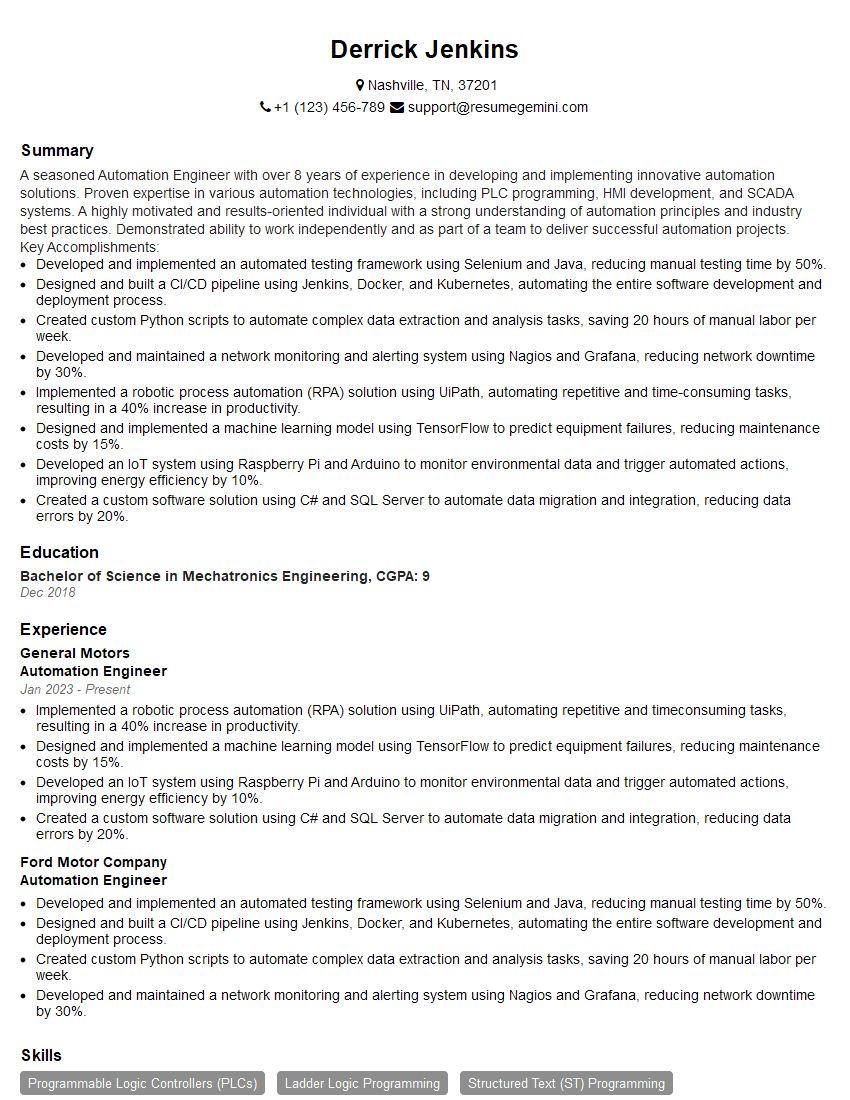
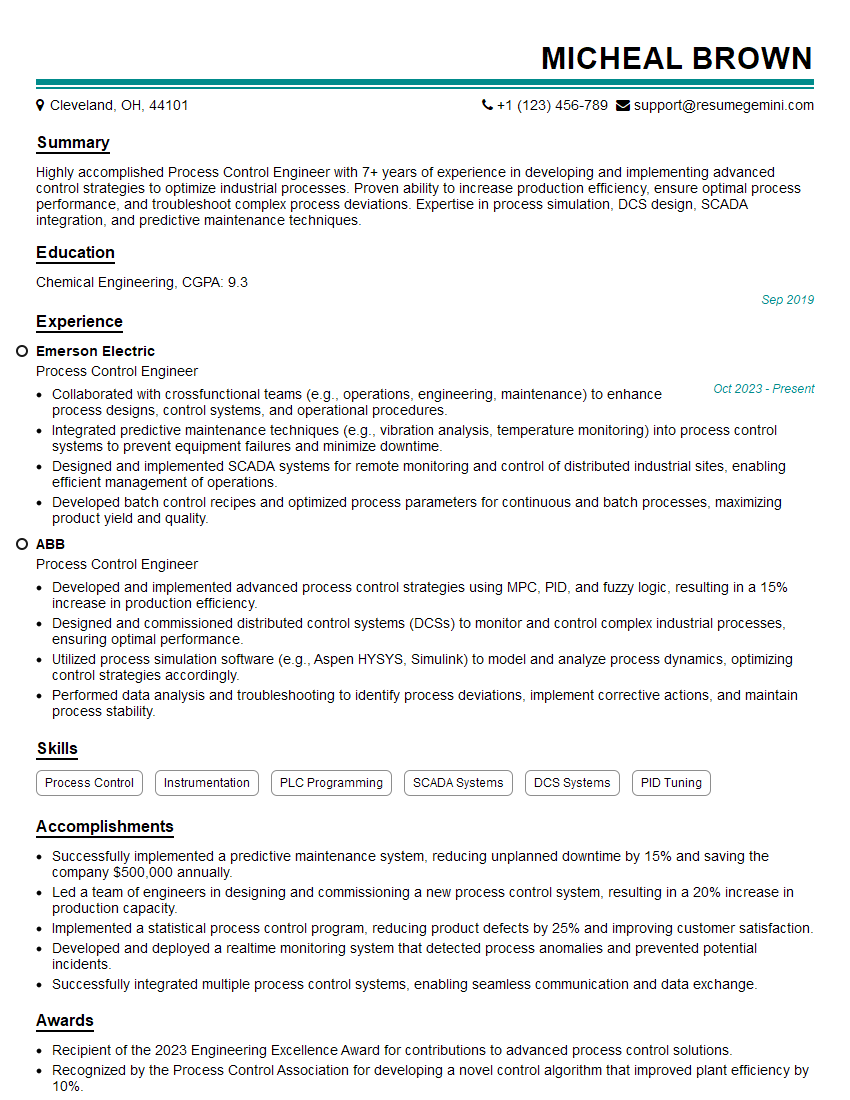
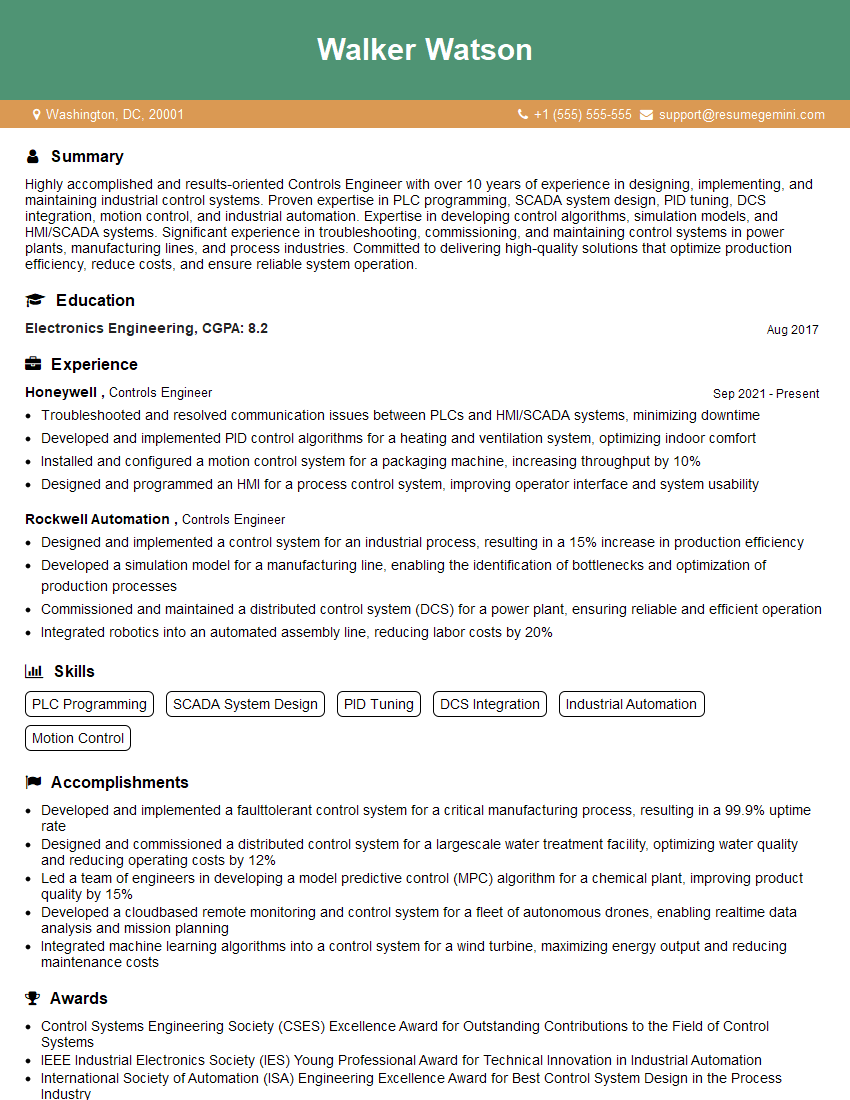
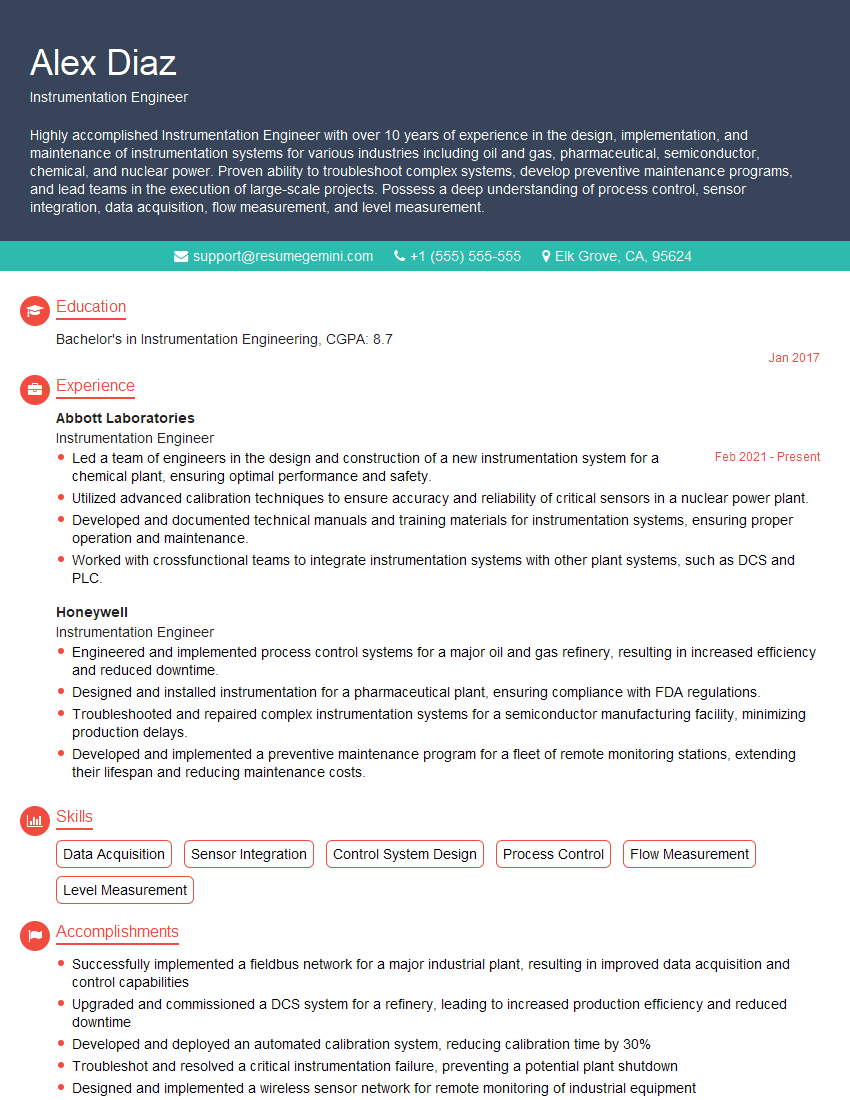
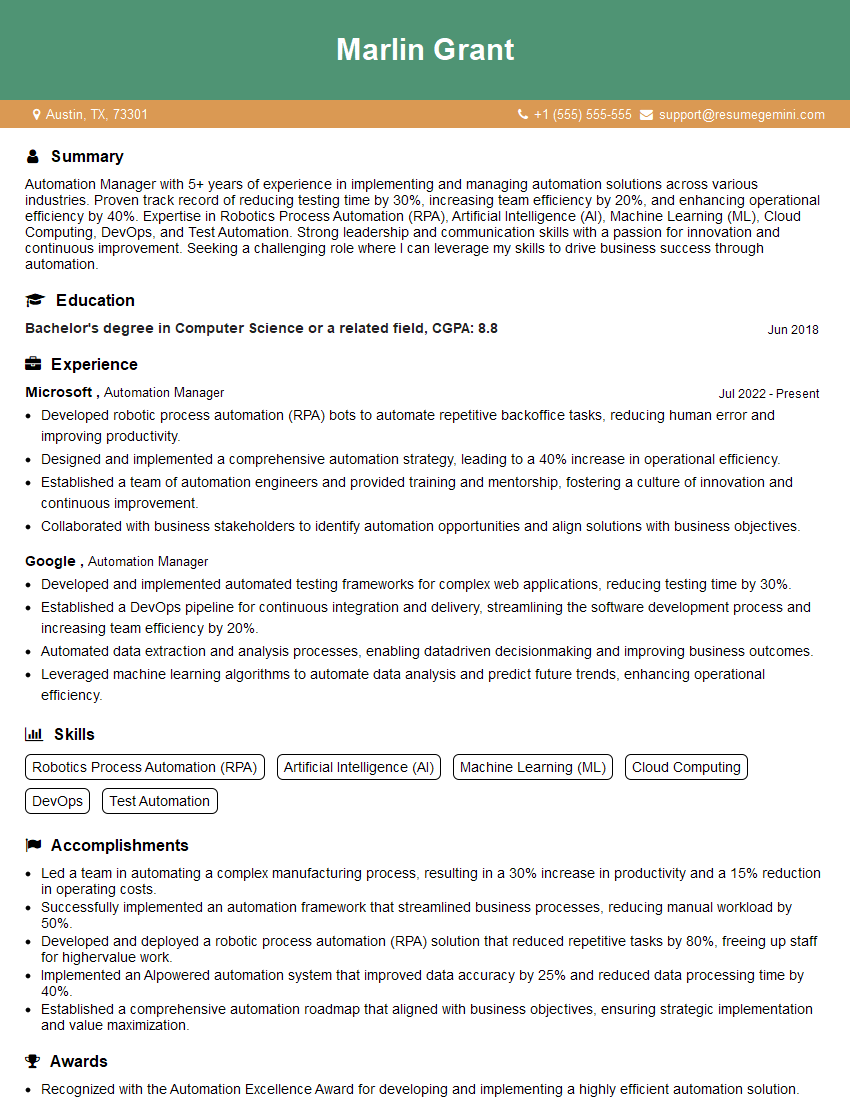
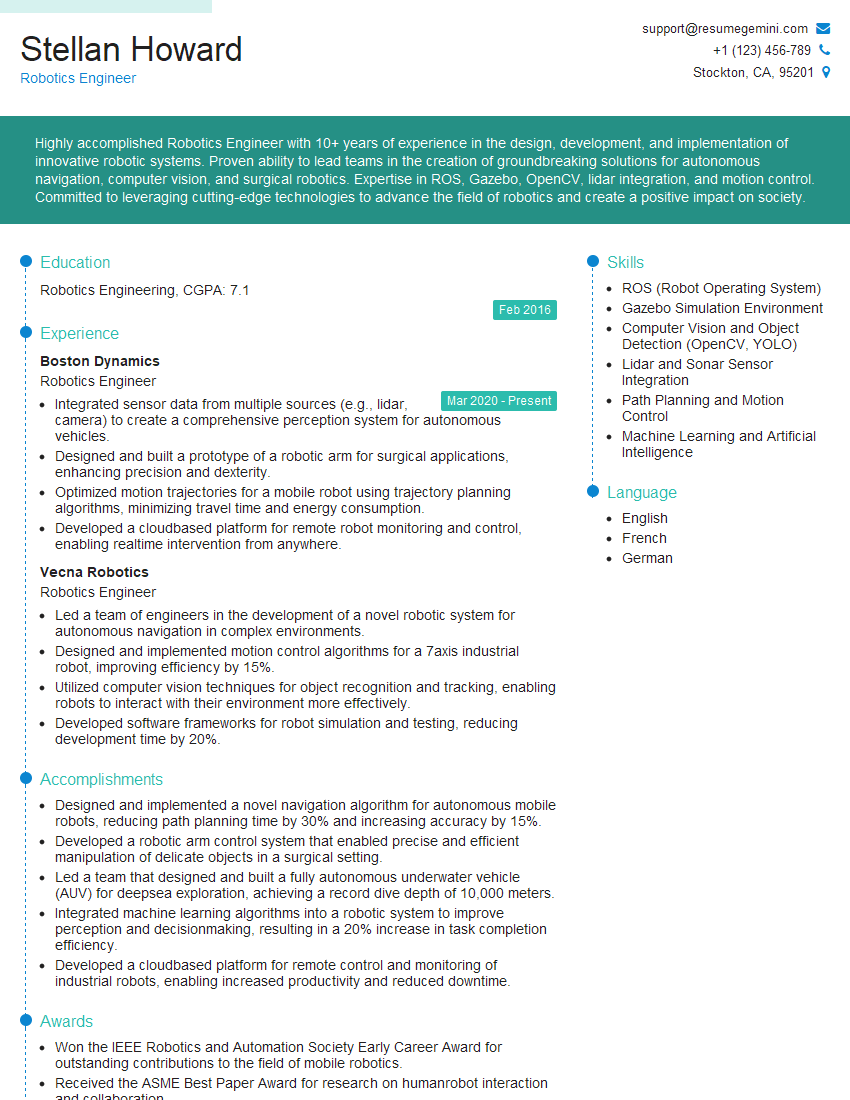
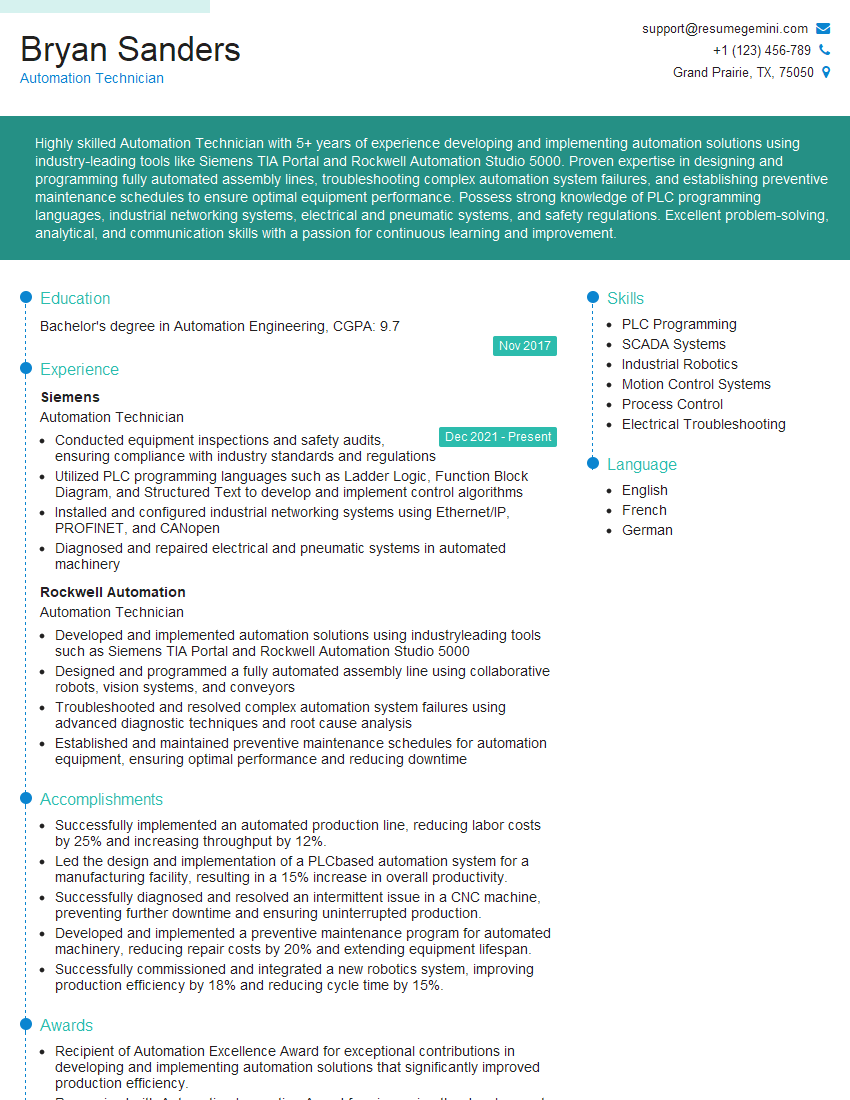
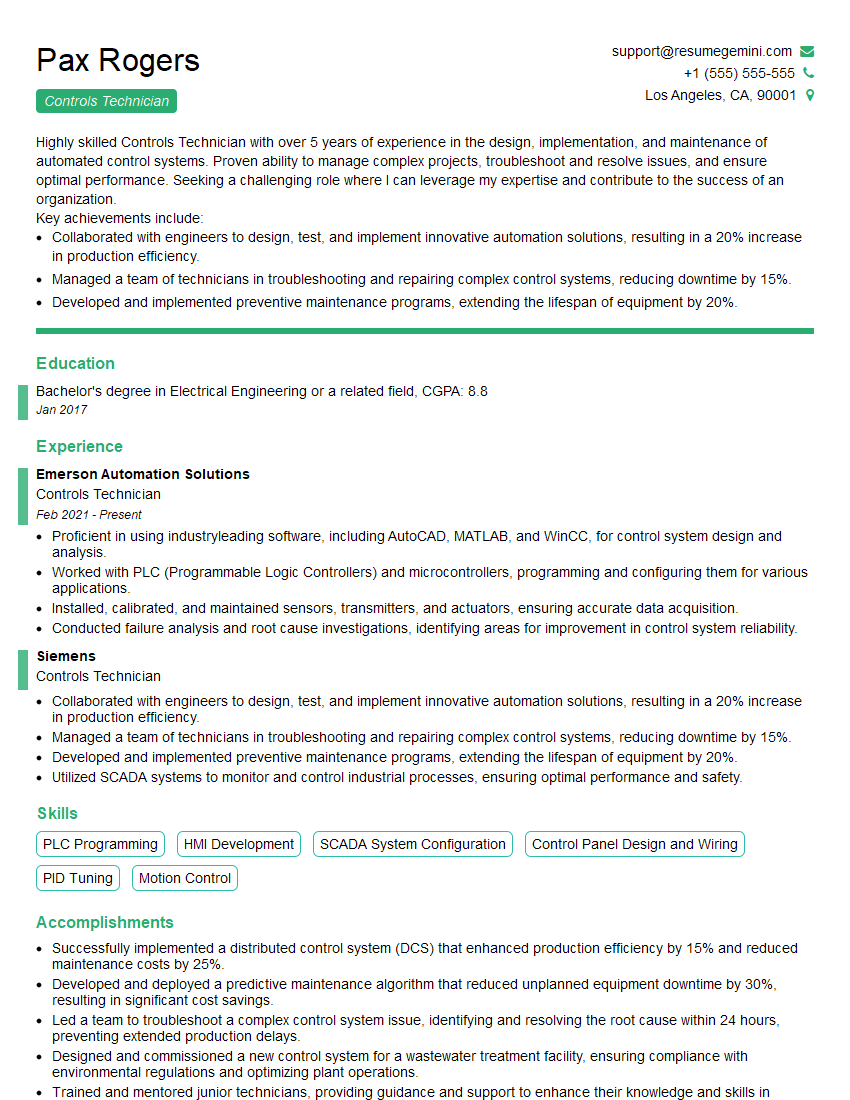
Mastering Industrial Controls opens doors to exciting and rewarding careers in a rapidly growing field. A strong understanding of these systems is crucial for securing your dream role. To significantly boost your job prospects, crafting an ATS-friendly resume is essential. This ensures your application gets noticed by recruiters and hiring managers. We highly recommend using ResumeGemini to create a professional and impactful resume that highlights your skills and experience effectively. ResumeGemini provides examples of resumes tailored specifically to Industrial Controls roles, helping you present yourself in the best possible light. Invest time in building a strong resume – it’s your first impression, and it matters!
Explore more articles
Users Rating of Our Blogs
Share Your Experience
We value your feedback! Please rate our content and share your thoughts (optional).
What Readers Say About Our Blog
To the interviewgemini.com Webmaster.
Very helpful and content specific questions to help prepare me for my interview!
Thank you
To the interviewgemini.com Webmaster.
This was kind of a unique content I found around the specialized skills. Very helpful questions and good detailed answers.
Very Helpful blog, thank you Interviewgemini team.