Every successful interview starts with knowing what to expect. In this blog, we’ll take you through the top Industrial Ecology Modeling interview questions, breaking them down with expert tips to help you deliver impactful answers. Step into your next interview fully prepared and ready to succeed.
Questions Asked in Industrial Ecology Modeling Interview
Q 1. Explain the principles of Industrial Ecology.
Industrial Ecology (IE) views industrial systems as analogous to natural ecosystems. Instead of treating waste as a problem to be disposed of, IE seeks to design industrial processes that mimic nature’s cyclical resource flows, minimizing waste and maximizing resource utilization. It’s based on the principles of closed-loop systems, material cycles, and eco-efficiency.
- Closed-loop systems aim to minimize waste by reusing or recycling materials within the system, reducing the need for virgin resources and waste disposal.
- Material cycles focus on understanding the flow of materials throughout the entire life cycle of a product, from extraction to disposal, to identify opportunities for improvement.
- Eco-efficiency strives to deliver more goods and services while using fewer resources and generating less waste and pollution.
Think of it like a forest: trees decompose, providing nutrients for new growth. IE strives to create similar cyclical processes in industrial systems, reducing environmental impact and enhancing resource productivity.
Q 2. Describe the differences between Life Cycle Assessment (LCA) and Material Flow Analysis (MFA).
Both Life Cycle Assessment (LCA) and Material Flow Analysis (MFA) are crucial tools in Industrial Ecology, but they differ in their scope and focus. LCA assesses the environmental impacts associated with a product or process throughout its entire life cycle, from cradle to grave. It considers various impacts, including greenhouse gas emissions, water consumption, and resource depletion. MFA, on the other hand, focuses on the physical flow of materials within a defined system boundary, tracking the inputs, outputs, and transformations of materials over time. It’s less focused on specific environmental impacts and more on the overall material balance.
Analogy: Imagine baking a cake. LCA would analyze the environmental impact of each ingredient, the energy used in baking, and the disposal of packaging. MFA would track the quantity of flour, sugar, eggs, etc., used, as well as the amount of waste produced.
In essence, LCA provides a detailed assessment of environmental impacts while MFA provides a holistic view of material flows.
Q 3. What are the key indicators used in LCA studies?
Key indicators used in LCA studies vary depending on the study’s goals and scope, but some commonly used indicators include:
- Greenhouse gas emissions (GHGs): Measured in CO2 equivalents (CO2e), reflecting the global warming potential of different gases.
- Energy consumption: Expressed in kilowatt-hours (kWh) or megajoules (MJ), indicating the energy required for different stages of the life cycle.
- Water consumption: Measured in liters or cubic meters, reflecting the water used for various processes.
- Resource depletion: Quantifies the consumption of non-renewable resources like fossil fuels and minerals.
- Eutrophication potential: Indicates the potential for excess nutrients to contaminate water bodies.
- Acidification potential: Measures the potential for acid rain.
- Toxicity: Assesses the potential for hazardous substances to harm human health or the environment.
These indicators are often combined to provide a comprehensive picture of the environmental performance of a product or process.
Q 4. Explain the concept of industrial symbiosis and provide a real-world example.
Industrial symbiosis (IS) is a type of industrial ecology strategy where the waste or by-product of one industrial process becomes the raw material for another. This creates a closed-loop system, reducing waste and resource consumption. It fosters collaboration and resource sharing between industries, creating a synergistic and environmentally beneficial relationship.
Real-world example: The Kalundborg Symbiosis in Denmark. This industrial ecosystem involves several companies, including a power plant, oil refinery, gypsum factory, and pharmaceutical plant. The power plant provides steam and electricity to other companies, while its waste heat is used by other facilities. The refinery provides sulfur to the gypsum factory, and the pharmaceutical plant uses water purified by the power plant. This collaboration significantly reduces waste and resource consumption, demonstrating the potential of IS.
Q 5. How do you handle data uncertainty and variability in Industrial Ecology modeling?
Data uncertainty and variability are inherent in Industrial Ecology modeling due to the complexity of industrial systems and the limitations of available data. To address this, several techniques are employed:
- Sensitivity analysis: This identifies the parameters most significantly influencing the model’s results. This allows focusing efforts on improving data quality for critical parameters.
- Uncertainty analysis: This uses statistical methods (e.g., Monte Carlo simulations) to quantify the uncertainty in model outputs due to uncertainty in input parameters. This provides a range of possible outcomes, rather than a single point estimate.
- Data quality assessment: This involves critically evaluating the quality of data sources and methods used to collect data. Data gaps are identified and addressed through literature review, expert judgment, or additional data collection.
- Scenario analysis: This evaluates the model’s outputs under various scenarios to assess the robustness of the findings. It helps understand how model results may vary under different assumptions.
By employing these methods, we can gain a better understanding of the uncertainties associated with model results and make more informed decisions.
Q 6. What software packages are you familiar with for conducting LCA and MFA studies?
I am familiar with several software packages used for LCA and MFA studies, including:
- SimaPro: A widely used commercial software for LCA that provides a comprehensive suite of tools for data management, impact assessment, and report generation.
- GaBi: Another popular commercial LCA software known for its extensive database and powerful analysis capabilities.
- OpenLCA: An open-source LCA software that offers a flexible and customizable platform for conducting LCA studies.
- Brightway2: A Python-based open-source framework for LCA which offers great flexibility and control over the entire LCA process.
- Material Flow Analysis software packages: While there isn’t one single dominant software, many researchers and practitioners use specialized programming languages (like Python) and GIS software coupled with custom-built tools for MFA.
The choice of software depends on the specific requirements of the study, such as the complexity of the system, the availability of data, and budget constraints.
Q 7. Describe different LCA methodologies (e.g., consequential, attributional).
Different LCA methodologies offer varying perspectives on how to account for system boundaries and impacts. Two prominent methodologies are:
- Attributional LCA: This assesses the environmental impacts associated with a specific product or process based on its past performance. It’s like looking at a product’s ‘footprint’ based on what happened in the past. It answers the question: ‘What were the environmental impacts of this specific product?’
- Consequential LCA: This assesses the potential environmental impacts of a future change in a system. It considers the cascading effects of a decision, such as switching to a new material or technology. It answers the question: ‘What will be the environmental impacts if we make this change?’
The choice between attributional and consequential LCA depends on the objectives of the study. Attributional LCA is useful for comparing the relative impacts of different products or processes. Consequential LCA is more suitable for evaluating the environmental consequences of policy decisions or technological innovations. Often, a combination of both approaches can provide a more complete picture.
Q 8. What are the limitations of LCA?
Life Cycle Assessment (LCA) is a powerful tool for evaluating the environmental impacts of products and processes, but it has limitations. One key limitation is the inherent complexity of data collection. Accurately capturing all the relevant data across a product’s entire life cycle, from raw material extraction to disposal, is incredibly challenging. Data gaps are frequent, forcing analysts to rely on assumptions and estimations that can introduce uncertainty into the results.
Another significant limitation is the potential for biases. The choices made in defining the system boundary, selecting impact categories, and choosing characterization factors can significantly influence the final results. Different LCA studies on the same product might produce differing outcomes due to these variations in methodology. This necessitates careful consideration and transparency in the approach.
Furthermore, LCA often struggles to fully incorporate social and economic factors. While some frameworks are emerging to integrate these aspects, traditionally LCA focuses primarily on environmental impacts. This limited scope might not give a complete picture of the true sustainability of a product or process. Finally, the allocation problem presents a challenge when dealing with co-products. Determining how to fairly allocate the environmental burden among multiple products arising from a single process can be complex and contentious.
Q 9. How can Industrial Ecology principles contribute to circular economy initiatives?
Industrial Ecology (IE) principles are deeply aligned with the goals of a circular economy. IE emphasizes industrial systems as interconnected metabolic networks, mirroring natural ecosystems. This perspective directly supports circular economy initiatives by promoting resource efficiency and waste minimization. Instead of viewing waste as a disposal problem, IE sees it as a resource for another process, a key tenet of the circular economy.
For example, IE principles can guide the design of industrial symbiosis networks. These networks involve collaboration between different industries, where the waste of one industry becomes the raw material for another. This reduces overall resource consumption and minimizes waste sent to landfills. Think of a power plant using industrial waste heat to warm nearby greenhouses, a classic example of symbiotic resource use. Similarly, IE’s focus on material flows and life cycle thinking helps optimize product design for recyclability, durability, and repairability, thus extending product lifespans and reducing the demand for virgin materials.
Q 10. Explain the concept of material flow accounting and its applications.
Material Flow Accounting (MFA) is a quantitative technique that tracks the flow of materials through a system, from extraction to disposal. It provides a comprehensive picture of material use, transformations, and waste generation. It’s like an accounting system for materials, helping us understand where resources go and how much waste is generated.
Applications of MFA are diverse. At the national level, it can be used to assess resource consumption and waste management policies. By tracking the flow of specific materials, governments can identify areas needing improvement in resource efficiency and develop effective waste reduction strategies. At the industry level, MFA can help companies optimize their production processes, identifying opportunities to reduce material use and waste. For example, a manufacturing company might use MFA to pinpoint bottlenecks in its production line and explore ways to recycle or reuse byproducts.
MFA is also useful in assessing the environmental impacts of specific products or technologies. By tracking the material flows associated with a product’s life cycle, we can quantify the resources used and the waste generated, providing valuable data for LCA studies.
Q 11. How do you assess the environmental impacts of different product designs?
Assessing the environmental impacts of different product designs involves a systematic approach using LCA. We begin by defining the system boundary, specifying the scope of the study. Next, we conduct an inventory analysis, quantifying all inputs and outputs associated with each design option. This includes material use, energy consumption, emissions to air and water, and waste generation.
Then, we use impact assessment methods to translate the inventory data into meaningful environmental impacts, such as global warming potential, ozone depletion, and acidification. Different impact categories are considered, reflecting the holistic nature of environmental assessment. Finally, we interpret and compare the results across the various design options to identify the one that minimizes environmental impacts. Tools and software, like SimaPro or Gabi, are commonly used to streamline the data processing and impact calculations.
For instance, comparing the environmental performance of a plastic bottle versus a glass bottle would involve quantifying the energy required for manufacturing, the transportation impacts, and the waste generated at the end of life. This helps to make informed decisions about environmentally friendly product designs.
Q 12. What are the key environmental impacts considered in LCA studies?
LCA studies typically consider a wide range of environmental impacts. Key impacts often included are:
- Climate Change (Global Warming Potential): The contribution of greenhouse gas emissions to global warming.
- Ozone Depletion: The impact on the stratospheric ozone layer.
- Acidification: The contribution to acid rain.
- Eutrophication: Nutrient enrichment of water bodies leading to algal blooms.
- Smog Formation (Photochemical Ozone Formation): Contribution to ground-level ozone pollution.
- Human Toxicity: Potential health impacts from exposure to hazardous substances.
- Ecotoxicity: Potential impacts on aquatic and terrestrial ecosystems.
- Resource Depletion: The consumption of non-renewable resources.
- Land Use: Impacts related to land occupation and changes.
The specific impacts considered can vary depending on the product or process being assessed and the objectives of the study. It’s crucial to select impact categories relevant to the context of the analysis.
Q 13. Describe your experience with data collection and analysis for Industrial Ecology projects.
My experience with data collection and analysis for Industrial Ecology projects spans numerous projects, encompassing diverse industrial sectors. I’ve employed various data gathering techniques, from reviewing existing databases (like material flow databases) and company reports to conducting on-site measurements and surveys. For instance, in a study assessing the material flows within a manufacturing facility, I collected data on material inputs, outputs, and waste generation through direct observation, process flow diagrams, and interviews with plant personnel. This meticulous data collection is essential for accuracy in subsequent analyses.
Data analysis typically involves using statistical software like R or specialized LCA software packages. Data cleaning, transformation, and verification are crucial steps to ensure data quality and reliability. For example, in analyzing energy consumption data, I’ve often had to account for inconsistencies and missing data points, using appropriate statistical methods to estimate missing values. Furthermore, I use data visualization techniques to present the findings in a clear and accessible manner, aiding in effective communication.
Q 14. How do you interpret and communicate the results of an LCA study to stakeholders?
Interpreting and communicating LCA results to stakeholders requires clear and concise language, avoiding technical jargon whenever possible. I tailor my communication approach to the audience. For example, a presentation to a technical audience might include detailed discussion of methodology and results, while a presentation to a board of directors would focus on high-level findings and key implications.
Visual aids like charts and graphs are invaluable tools for conveying complex information effectively. I often use dashboards to present key findings in a visually appealing and accessible format. A well-structured report, including a clear executive summary, helps ensure that the main findings are easily understood. Moreover, engaging with stakeholders in a dialogue, allowing for questions and discussions, is crucial for fostering understanding and building consensus. This process is particularly important when presenting potentially controversial findings.
For instance, when presenting the results of an LCA comparing two product designs, I would focus on the key differences in environmental performance and highlight the trade-offs between different impact categories. Openly discussing the uncertainties associated with the results and the limitations of the study enhances transparency and builds credibility.
Q 15. What are some strategies for reducing environmental impacts within industrial systems?
Reducing environmental impacts in industrial systems requires a multifaceted approach focusing on resource efficiency, pollution prevention, and waste minimization. Think of it like cleaning your room – instead of just sweeping the mess under the rug, we aim to reduce the mess in the first place.
- Material Substitution: Replacing hazardous materials with less harmful alternatives. For example, using bio-based plastics instead of petroleum-based ones.
- Process Optimization: Improving manufacturing processes to reduce energy consumption, water usage, and waste generation. Imagine streamlining a factory assembly line to minimize wasted movements and materials.
- Waste Management Hierarchy: Prioritizing waste reduction, reuse, recycling, and recovery over disposal. This is like properly sorting your recycling instead of throwing everything in the trash.
- Closed-loop Systems: Designing systems where waste from one process becomes the input for another, creating a circular economy. Think of using the leftover wood chips from furniture making as fuel for the factory’s boiler.
- Green Supply Chain Management: Collaborating with suppliers to adopt environmentally friendly practices throughout the supply chain. This involves selecting suppliers committed to sustainability and monitoring their environmental performance.
Career Expert Tips:
- Ace those interviews! Prepare effectively by reviewing the Top 50 Most Common Interview Questions on ResumeGemini.
- Navigate your job search with confidence! Explore a wide range of Career Tips on ResumeGemini. Learn about common challenges and recommendations to overcome them.
- Craft the perfect resume! Master the Art of Resume Writing with ResumeGemini’s guide. Showcase your unique qualifications and achievements effectively.
- Don’t miss out on holiday savings! Build your dream resume with ResumeGemini’s ATS optimized templates.
Q 16. Explain the concept of eco-efficiency and its role in sustainable development.
Eco-efficiency is about doing more with less – maximizing the value created while minimizing the environmental impact. It’s the intersection of economic performance and environmental protection. Imagine a farmer who uses less water and fertilizer but still produces the same amount of crops – that’s eco-efficiency in action.
Its role in sustainable development is crucial. By decoupling economic growth from environmental degradation, eco-efficiency allows us to pursue economic prosperity without exceeding the planet’s carrying capacity. This means we can improve our standard of living without sacrificing the environment for future generations.
Key aspects include: reducing material and energy intensity, minimizing waste and emissions, and increasing the lifespan of products and materials.
Q 17. How do you evaluate the sustainability performance of different supply chains?
Evaluating supply chain sustainability involves a holistic approach considering environmental, social, and economic dimensions. We use a combination of methods:
- Life Cycle Assessment (LCA): Quantifies the environmental impacts of a product or service across its entire life cycle, from raw material extraction to end-of-life disposal. This provides a comprehensive picture of environmental hotspots.
- Material Flow Analysis (MFA): Tracks the flow of materials within a supply chain to identify material inefficiencies and opportunities for improvement. This allows us to visualize material loops and identify bottlenecks.
- Supply Chain Mapping: Visually representing the entire supply chain, identifying key stakeholders and potential environmental or social risks. This aids in identifying areas that need improvement.
- Sustainability Indicators and Metrics: Using key performance indicators (KPIs) such as carbon footprint, water usage, waste generation, and social impacts to benchmark performance and track progress. Think of this as a report card for the supply chain’s sustainability.
- Stakeholder Engagement: Consulting with suppliers, customers, and other stakeholders to gather information and build consensus on sustainability goals.
By combining these methods, we gain a comprehensive understanding of a supply chain’s sustainability performance and identify areas for improvement.
Q 18. Discuss the role of life cycle thinking in product design and development.
Life cycle thinking (LCT) is a holistic approach that considers the environmental, social, and economic impacts of a product throughout its entire life cycle, from cradle to grave (and ideally, beyond to cradle-to-cradle). Instead of just focusing on the manufacturing stage, we look at the whole picture.
In product design and development, LCT guides decisions by promoting:
- Sustainable Material Selection: Choosing materials with lower environmental impacts, considering their renewability, recyclability, and toxicity.
- Design for Disassembly and Recycling: Designing products that can be easily taken apart and recycled at the end of their life, maximizing resource recovery.
- Eco-design: Integrating environmental considerations throughout the entire design process, minimizing environmental impact at each stage.
- Extended Producer Responsibility (EPR): Holding producers accountable for the end-of-life management of their products, encouraging them to design for sustainability.
By incorporating LCT, companies can design more sustainable products, reduce their environmental footprint, and improve their brand image.
Q 19. How can you integrate economic and environmental aspects in Industrial Ecology modeling?
Integrating economic and environmental aspects in Industrial Ecology (IE) modeling is essential because sustainable development requires balancing economic prosperity with environmental protection. We can’t simply ignore costs when we prioritize environmental concerns.
Methods include:
- Input-Output Analysis: Modeling the interdependencies between different industries and their environmental impacts, allowing us to assess the economic consequences of environmental policies.
- Life Cycle Costing (LCC): Analyzing the total cost of a product or service throughout its life cycle, incorporating both manufacturing costs and environmental externalities (like pollution cleanup costs). This helps to identify cost-effective solutions.
- Material Flow Cost Accounting (MFCA): Integrating material flow analysis with cost accounting to identify cost-saving opportunities through material efficiency improvements.
- Environmental Economic Modeling: Using mathematical models to simulate the interactions between economic activities and the environment, helping us understand the trade-offs and synergies between environmental protection and economic growth.
By integrating these economic considerations, IE models provide a more realistic and actionable framework for sustainable development.
Q 20. Describe different approaches to modeling industrial systems.
Modeling industrial systems involves various approaches depending on the research question and data availability:
- Material Flow Analysis (MFA): Quantifies the flows of materials within a system, helping to identify material inefficiencies and opportunities for recycling and reuse.
- Input-Output Analysis (IOA): Models the interdependencies between different industries and their environmental impacts, useful for assessing the economic consequences of environmental policies.
- Life Cycle Assessment (LCA): Assesses the environmental impacts of a product or service throughout its life cycle, helping to identify hotspots for improvement.
- Agent-Based Modeling (ABM): Simulates the behavior of individual actors within a system (e.g., firms, consumers), helping to understand emergent system-level behaviors. Useful for understanding complex systems.
- System Dynamics Modeling: Analyzes feedback loops and causal relationships within a system, identifying drivers of change and potential interventions. Particularly useful for long-term forecasting and strategy planning.
The choice of modeling approach depends on the specific research question and the level of detail required.
Q 21. What are the challenges and opportunities associated with implementing circular economy models?
Implementing circular economy models presents both challenges and opportunities. Think of it as shifting from a linear ‘take-make-dispose’ system to a cyclical one where waste is minimized and resources are kept in use for as long as possible.
Challenges:
- Technological Barriers: Lack of technologies for recycling and reusing certain materials.
- Economic Barriers: The upfront cost of implementing circular economy solutions can be high.
- Policy Barriers: Lack of supportive policies and regulations that incentivize circularity.
- Infrastructure Barriers: Inadequate infrastructure for collecting, sorting, and processing waste materials.
- Consumer Behavior: Consumers may not be willing to adopt new consumption patterns that support circularity (e.g., repairing instead of replacing).
Opportunities:
- Resource Efficiency: Reduced reliance on virgin materials, leading to lower environmental impacts and resource security.
- Economic Growth: Creation of new business opportunities and jobs in recycling, remanufacturing, and waste management.
- Innovation: Development of new technologies and business models for a more sustainable economy.
- Improved Brand Image: Companies that adopt circular economy models can improve their brand image and gain a competitive advantage.
- Enhanced Resilience: Circular economies are often more resilient to supply chain disruptions and resource scarcity.
Overcoming these challenges requires collaborative efforts from governments, businesses, and consumers.
Q 22. How do you evaluate the feasibility of implementing an industrial symbiosis project?
Evaluating the feasibility of an industrial symbiosis (IS) project requires a multi-faceted approach. It’s not just about identifying potential exchange streams; it’s about assessing the economic, logistical, and environmental viability of the entire system. Think of it like a complex puzzle where all the pieces need to fit together perfectly.
Economic Analysis: This involves comparing the costs and benefits for each participating industry. Will the cost savings from acquiring a byproduct (e.g., waste heat) outweigh the costs of transportation and processing? We use techniques like cost-benefit analysis and discounted cash flow analysis.
Logistical Assessment: This examines the practical aspects of material and energy flows. How far apart are the industries? What infrastructure is required (pipelines, transportation)? Are there regulatory hurdles? For example, if we’re considering using wastewater from one plant as feedstock for another, transportation cost and treatment requirement analysis is crucial.
Environmental Impact Assessment: A Life Cycle Assessment (LCA) is crucial to measure the environmental benefits. Reduced waste generation, lower energy consumption, and decreased greenhouse gas emissions are key factors. Quantifying these reductions is essential to prove the environmental viability.
Stakeholder Engagement: Successful IS projects require buy-in from all stakeholders—companies, regulatory bodies, and the local community. We need to consider issues such as legal agreements, intellectual property rights, and public perception.
In one project, we assessed the feasibility of using waste heat from a power plant to heat greenhouses. We found that while the environmental benefits were significant, the high transportation costs made it economically unfeasible until government incentives were introduced.
Q 23. Explain the significance of using system boundaries in LCA studies.
System boundaries in Life Cycle Assessment (LCA) studies define the scope of the analysis. They determine which processes and materials are included and excluded from the assessment. Imagine a circle: everything inside is considered, and everything outside is not. Defining these boundaries accurately is crucial for generating reliable and relevant results, otherwise you run the risk of inaccurate or incomplete results.
A poorly defined system boundary can lead to significant errors. For instance, if we assess the environmental impact of a product without including the transportation phase, the overall result will be incomplete and potentially misleading. Therefore, setting accurate system boundaries is crucial for accurate LCA results. Different LCAs can have different boundaries, leading to varied results for the same product.
Choosing the right boundary depends on the study’s goal. A cradle-to-gate LCA focuses on the impacts from raw material extraction to the factory gate, while a cradle-to-grave LCA considers the entire lifecycle up to waste disposal. The choice should be transparently documented and justified.
For example, in assessing the environmental impact of a solar panel, we might define the system boundary to include raw material extraction, manufacturing, transportation, use phase (including cleaning and maintenance), and end-of-life disposal or recycling. We might exclude the impacts of electricity generation from the grid, if we are only concerned with the direct impacts of the solar panel itself.
Q 24. How do you address potential biases in LCA data?
Addressing potential biases in LCA data is a critical aspect of ensuring the reliability and credibility of the study. Data biases can stem from several sources, from data availability to the methods used for data collection.
Data Quality Assessment: We need to carefully evaluate the quality of the data used. This includes checking the reliability of the source, the accuracy of the data, and the consistency of measurement methods. Using multiple data sources can help mitigate bias.
Uncertainty Analysis: LCA data often involves uncertainties. We need to conduct a sensitivity analysis to assess how variations in data input impact the overall results. This allows us to identify critical parameters and prioritize further data collection efforts.
Transparency and Reporting: We must fully document the data sources, methodologies, and assumptions made throughout the study. This increases transparency and allows others to scrutinize the results and assess potential biases.
Peer Review: Subjecting the LCA to peer review helps identify potential biases and improve the overall quality of the study. This critical review process enhances credibility.
Data Normalization: When using datasets from multiple sources, normalization techniques are vital to ensure consistent units and formats, reducing the risk of biased comparisons.
For example, if relying solely on company-provided data for energy consumption, we must be aware of potential reporting biases. We would seek independent verification or cross-reference with industry averages or other publicly available data to counteract any bias.
Q 25. What are the ethical considerations associated with Industrial Ecology research?
Ethical considerations in Industrial Ecology research are paramount. Our work has significant societal implications, and we must be mindful of the potential impacts of our research and its applications.
Environmental Justice: We must consider the distribution of environmental burdens and benefits. Are certain communities disproportionately affected by pollution or resource depletion due to industrial activities? Our research should contribute to more equitable outcomes.
Social Equity: Technological advancements driven by IE research can lead to job displacement or economic disruption. We must evaluate the social consequences and advocate for policies that support a just transition.
Transparency and Data Integrity: Accurate and unbiased data is fundamental. We must maintain the highest standards of integrity in data collection, analysis, and reporting. This includes acknowledging limitations and uncertainties in our findings.
Conflict of Interest: Researchers need to be aware of and avoid conflicts of interest that could compromise the objectivity of their work. Funding sources and collaborations must be transparently disclosed.
Public Engagement: Communicating our findings effectively to a wider audience is crucial. This involves using clear and accessible language to promote public understanding of the environmental challenges and opportunities associated with industrial systems.
For example, in a project involving waste management, we need to consider the potential environmental justice implications if a new waste processing facility is located in a low-income community. Careful consideration and mitigation strategies are necessary.
Q 26. How can Industrial Ecology principles contribute to climate change mitigation?
Industrial Ecology principles are fundamentally important for climate change mitigation. The linear “take-make-dispose” model is unsustainable and contributes significantly to greenhouse gas emissions. IE offers a framework to transition towards a circular economy that reduces emissions significantly.
Resource Efficiency: IE promotes the efficient use of resources, reducing the need for extraction and processing, both of which are energy-intensive processes and major sources of greenhouse gas emissions.
Waste Reduction and Recycling: By designing industrial systems to minimize waste and maximize recycling, we can drastically reduce the environmental footprint associated with waste disposal and landfill emissions.
Industrial Symbiosis: IS creates opportunities to reuse waste streams as valuable resources for other industries, reducing waste generation and energy consumption, directly lowering emissions.
Renewable Energy Integration: IE supports the integration of renewable energy sources into industrial processes, lowering dependence on fossil fuels and decreasing emissions.
Carbon Capture and Utilization: IE principles can guide the development and implementation of carbon capture and utilization technologies, transforming CO2 emissions into valuable products or sequestering them safely.
For instance, a steel mill using waste gases from a nearby chemical plant as fuel reduces its reliance on coal, substantially decreasing CO2 emissions. This illustrates the powerful synergy between industrial symbiosis and climate change mitigation.
Q 27. Describe a situation where you had to overcome a technical challenge in an Industrial Ecology project.
In a recent project involving the assessment of a closed-loop water system for a textile factory, we encountered a significant technical challenge: accurately modeling the complex interactions between different water treatment processes and the quality of recycled water. The system involved multiple steps—pre-treatment, reverse osmosis, UV disinfection—each impacting the overall water quality and the effectiveness of downstream processes.
Our initial attempts using simplified models proved inaccurate. The challenge stemmed from the lack of readily available data on the specific interactions between different treatment processes and the variability of the wastewater composition. To overcome this, we employed a combined approach:
Detailed Process Modeling: We developed a more sophisticated model using specialized software that could simulate the individual treatment processes with greater accuracy. This allowed us to account for the complex interactions between different treatment steps.
Experimental Data Collection: We collaborated with the factory to collect detailed data on wastewater composition, treatment process parameters, and recycled water quality. This empirical data was crucial for calibrating and validating our model.
Sensitivity Analysis: We performed a comprehensive sensitivity analysis to assess the impact of uncertainties in the input data and model parameters on the predicted water quality. This helped us identify the critical factors affecting the system performance and prioritize data collection efforts.
This combined approach resulted in a more accurate and reliable model, allowing us to provide a realistic assessment of the environmental and economic benefits of the closed-loop water system. The project demonstrated the value of combining modeling with experimental data and rigorous uncertainty analysis in tackling complex challenges in Industrial Ecology.
Key Topics to Learn for Your Industrial Ecology Modeling Interview
- Material Flow Analysis (MFA): Understanding principles, methodologies, and applications of MFA in assessing material flows within industrial systems. Consider practicing with different types of MFA, such as process-based and input-output MFA.
- Life Cycle Assessment (LCA): Mastering the stages of LCA (goal and scope definition, inventory analysis, impact assessment, and interpretation) and its application in evaluating the environmental performance of products and processes. Be prepared to discuss different LCA methodologies and software.
- Industrial Symbiosis (IS): Exploring the concepts of IS, its implementation strategies, and case studies demonstrating its effectiveness in reducing waste and resource consumption within industrial ecosystems. Practice analyzing potential symbiotic relationships.
- Environmental Modeling Techniques: Familiarize yourself with various modeling approaches used in industrial ecology, including input-output analysis, system dynamics, and agent-based modeling. Be ready to discuss their strengths and weaknesses.
- Sustainable Supply Chain Management: Understanding the integration of industrial ecology principles into supply chain design and management to minimize environmental impacts throughout the product lifecycle. Discuss metrics and indicators used for assessment.
- Policy and Regulation: Explore the role of environmental regulations and policies in driving sustainable industrial practices. Be prepared to discuss examples of effective policy instruments and their impact on industrial systems.
- Data Analysis and Interpretation: Sharpen your skills in analyzing complex datasets, interpreting results, and effectively communicating findings related to industrial ecology models. This includes proficiency in relevant software and statistical methods.
- Critical Thinking and Problem-Solving: Practice applying your knowledge to real-world scenarios. Be ready to discuss challenges encountered in implementing industrial ecology solutions and how you approached solving them.
Next Steps
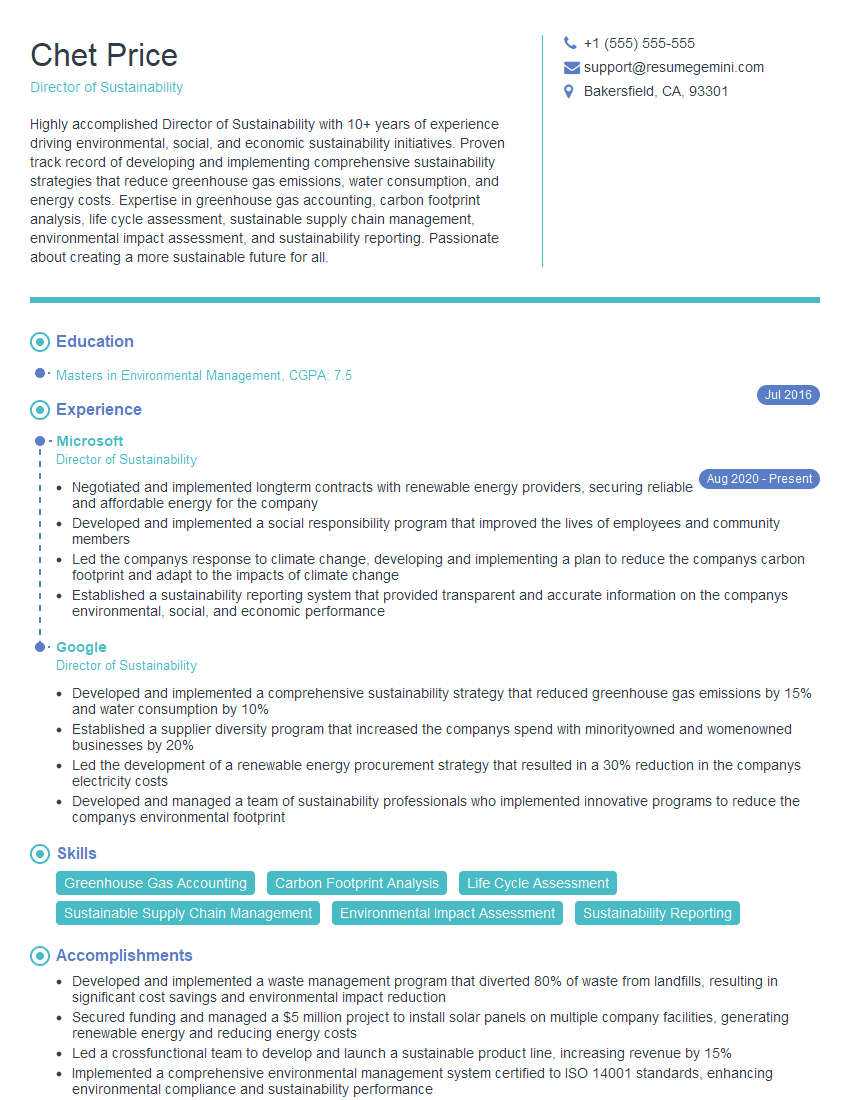
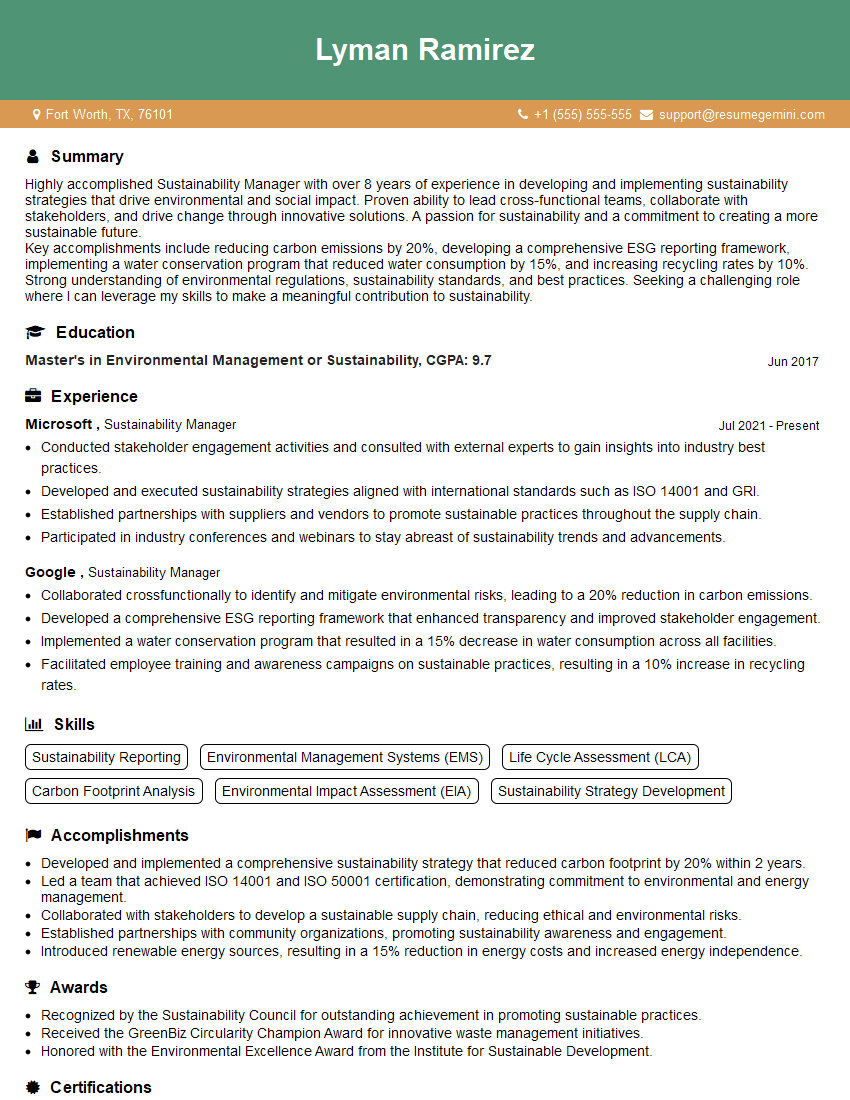
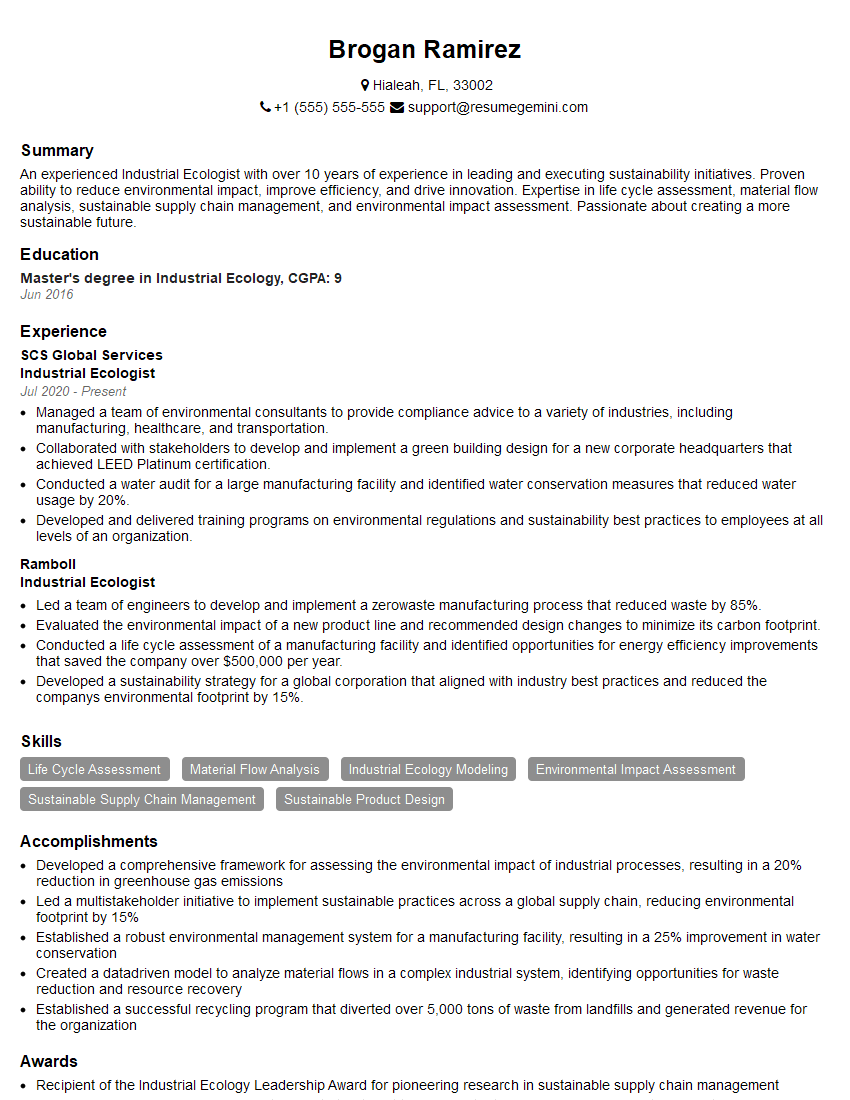
Mastering Industrial Ecology Modeling opens doors to exciting and impactful careers, allowing you to contribute to a more sustainable future. A strong resume is crucial in showcasing your skills and experience to potential employers. Creating an ATS-friendly resume is essential to ensure your application gets noticed. To help you build a compelling and effective resume, we recommend using ResumeGemini, a trusted resource for crafting professional resumes. ResumeGemini provides examples of resumes tailored to Industrial Ecology Modeling positions, helping you present yourself in the best possible light to prospective employers.

Explore more articles
Users Rating of Our Blogs
Share Your Experience
We value your feedback! Please rate our content and share your thoughts (optional).
What Readers Say About Our Blog
To the interviewgemini.com Webmaster.
Very helpful and content specific questions to help prepare me for my interview!
Thank you
To the interviewgemini.com Webmaster.
This was kind of a unique content I found around the specialized skills. Very helpful questions and good detailed answers.
Very Helpful blog, thank you Interviewgemini team.