The thought of an interview can be nerve-wracking, but the right preparation can make all the difference. Explore this comprehensive guide to Installing and repairing water lines interview questions and gain the confidence you need to showcase your abilities and secure the role.
Questions Asked in Installing and repairing water lines Interview
Q 1. Explain the different types of water pipe materials and their applications.
Choosing the right water pipe material is crucial for longevity and performance. Different materials have varying strengths and weaknesses, impacting their suitability for specific applications. Here’s a breakdown:
- Copper: Known for its durability and resistance to corrosion, copper pipes are a popular choice for both hot and cold water lines. They’re relatively expensive but offer a long lifespan, often exceeding 50 years. However, they can be susceptible to damage from freezing.
- PEX (Cross-linked Polyethylene): This flexible plastic piping is increasingly popular due to its ease of installation, resistance to freezing, and relatively low cost. PEX is resistant to corrosion and is often used in renovations where minimizing disruption is key. However, it’s not as durable as copper in high-pressure applications.
- CPVC (Chlorinated Polyvinyl Chloride): CPVC is a type of plastic piping that can handle higher temperatures than standard PVC, making it suitable for hot water lines. It’s durable and corrosion-resistant, though not as flexible as PEX.
- PVC (Polyvinyl Chloride): A less expensive option, PVC is commonly used for cold water lines and drainage systems. It’s durable but susceptible to damage from freezing and high temperatures. Its rigidity can make installation more challenging.
- Galvanized Steel: While once very common, galvanized steel pipes are less frequently used now due to their susceptibility to rust and corrosion. They’re heavy and can be difficult to work with.
Application Examples: In a new construction project, copper might be used for the main water lines, while PEX could be used for the branches inside the walls. For a renovation, PEX’s flexibility is often preferred to minimize disruption. PVC is often a cost-effective choice for drainage lines.
Q 2. Describe the process of trenchless water line repair.
Trenchless water line repair, also known as trenchless pipe replacement or rehabilitation, offers a less disruptive alternative to traditional excavation. It involves accessing and repairing the damaged section of pipe without extensive digging. Several methods exist:
- Pipe Bursting: A new pipe is pulled through the existing damaged pipe, breaking it apart as it goes. This is suitable for replacing entire sections of pipe.
- Pipe Lining: A flexible liner is inserted into the existing pipe and inflated to create a new, smooth interior pipe. This is ideal for repairing cracks or corrosion without replacing the entire pipe.
- Pipe Relining with UV Curing: Similar to pipe lining, but uses UV light to cure and harden the resin liner quickly and effectively.
The process typically involves using specialized equipment like a directional drilling machine or a pulling head. The choice of method depends on the type and extent of damage, pipe material, and the surrounding environment. For example, in a densely populated urban area, trenchless methods minimize disruption to traffic and landscaping.
Q 3. How do you locate underground water lines before excavation?
Locating underground water lines before excavation is paramount to prevent damage and injury. Several methods are used:
- Call Before You Dig (811): This is the most critical step. Contacting your local one-call center ensures that utility companies mark the locations of their underground lines with paint or flags.
- Ground Penetrating Radar (GPR): GPR uses radar pulses to create images of underground utilities. It’s very accurate but requires specialized equipment and expertise.
- Electromagnetic Locators: These devices detect the metallic signals emitted by metal pipes. They are effective but can be affected by other metallic objects nearby.
- Manual Tracing: This involves physically tracing the water line using available access points, such as shut-off valves or exposed sections. This is labor-intensive but sometimes necessary.
Combining these methods provides the best accuracy. For example, I always start by calling 811, then using an electromagnetic locator to pinpoint the approximate location, and potentially employing GPR for more challenging situations.
Q 4. What are the common causes of water line leaks?
Water line leaks can stem from various causes, often related to age, wear, and environmental factors:
- Corrosion: Over time, pipes, especially metal ones, corrode, leading to pinhole leaks or larger breaches.
- Root Intrusion: Tree roots can penetrate pipes, causing cracks and leaks, particularly with older, less robust materials.
- Ground Movement: Shifting soil due to freeze-thaw cycles or seismic activity can stress pipes, causing them to crack.
- High Water Pressure: Excessive water pressure weakens pipes over time, making them more prone to leaks.
- Improper Installation: Faulty installation, such as incorrect joining of pipes or inadequate support, can lead to future problems.
- Manufacturing Defects: Occasionally, pipes can have manufacturing defects that weaken them and lead to failure.
Identifying the root cause is essential for effective repair. A thorough inspection, often involving camera inspection of the pipe, is often necessary for pinpointing the exact location and cause.
Q 5. Explain the steps involved in repairing a burst water pipe.
Repairing a burst pipe requires immediate action to minimize water damage. The process involves:
- Turn Off the Water: Locate the main water shut-off valve and turn it off to stop the flow of water.
- Assess the Damage: Determine the extent of the damage and the location of the burst.
- Contain the Water: Use towels, buckets, or other materials to absorb any remaining water and prevent further damage.
- Cut Out the Damaged Section: Carefully remove the damaged portion of the pipe, using appropriate cutting tools.
- Install a New Section: Replace the damaged section with a new piece of pipe, ensuring a secure and watertight connection. This might involve using couplings or fittings appropriate to the pipe material.
- Test for Leaks: After reconnecting the pipe, test for leaks by turning the water back on and carefully inspecting all joints and connections.
- Restore the Area: Repair any damage to the surrounding area, such as walls or floors, caused by the burst pipe.
It’s crucial to ensure proper support for the new pipe section to prevent future problems. If the damage is extensive or involves the main water line, it’s always best to call a qualified plumber.
Q 6. How do you test for water pressure and what are the acceptable ranges?
Water pressure testing is crucial for ensuring the system’s integrity. A pressure gauge is connected to the water line, and the pressure is measured. The acceptable pressure range varies depending on the local water utility and the pipe system, but typically falls between 40 and 60 PSI (pounds per square inch). Pressures outside this range can indicate leaks or problems within the system.
Testing Procedure:
- Isolate the Section: Isolate the section of the pipe to be tested by turning off valves.
- Attach the Gauge: Connect a pressure gauge to a valve on the isolated section.
- Pressurize the System: Slowly increase the water pressure to the desired test level.
- Monitor the Pressure: Observe the pressure gauge over a set period (usually 30-60 minutes) to check for pressure drops, which might indicate leaks.
- Inspect for Leaks: After the test, carefully inspect the pipe and fittings for any signs of leaks.
If the pressure drops significantly, or leaks are observed, further investigation is needed to locate and repair the problem. A pressure test is usually a part of any significant water line repair or installation.
Q 7. What safety precautions are essential when working with water lines?
Safety is paramount when working with water lines. The following precautions are essential:
- Call Before You Dig (811): Always call 811 to have underground utilities marked before any excavation.
- Personal Protective Equipment (PPE): Wear appropriate PPE, including safety glasses, gloves, and protective clothing.
- Proper Tools: Use appropriate tools for the task and ensure they are in good working order.
- Water Shut-off: Always shut off the water supply before working on any water line.
- Ventilation: Ensure adequate ventilation when working in confined spaces, especially when using chemicals or solvents.
- Emergency Preparedness: Have a plan in place for emergency situations, such as a sudden burst pipe.
- Awareness of Surroundings: Be aware of your surroundings and potential hazards, such as traffic or electrical lines.
Working safely is not just about preventing injuries but also about ensuring a successful and efficient job. A lack of attention to safety can lead to costly mistakes and potentially dangerous situations.
Q 8. Describe your experience with different pipe joining methods (e.g., soldering, threading, fusion).
Pipe joining methods are crucial for creating a leak-free and durable water line. My experience encompasses several techniques, each suited to different pipe materials and pressures.
Soldering: This is commonly used with copper pipes. It involves melting solder, a metal alloy, to create a strong, watertight seal between the pipes. Precision and the right temperature are key to avoid damage. I’ve used this extensively in residential plumbing, especially for smaller diameter pipes.
Threading: This method uses threaded fittings to join pipes, usually galvanized steel or black iron. It’s robust and suitable for high-pressure applications. Proper threading is critical to avoid leaks; I always double-check my work with thread sealant.
Fusion: This is used with plastic pipes like PVC or CPVC. The pipe ends are heated until they soften and are then fused together. A clean, consistent heat source is crucial for a strong, leak-proof joint. I find this method efficient for larger diameter pipes and requires specialized equipment, but the joints are incredibly strong and reliable.
The choice of method depends on factors like pipe material, pressure requirements, and the specific job site conditions. For example, I wouldn’t use soldering on a high-pressure main line, and threaded fittings aren’t ideal for underground applications where corrosion could be a problem.
Q 9. How do you handle different soil conditions during water line installation?
Soil conditions significantly impact water line installation. Different soils present unique challenges.
Rocky Soil: Requires specialized excavation equipment like rock saws and jackhammers. Careful planning and potentially adjusting the pipe route are necessary to avoid damage to the pipe and equipment. I’ve had to resort to using smaller diameter pipes or directional drilling in extremely rocky areas.
Clay Soil: Can be difficult to excavate and requires careful compaction around the pipe to prevent settling and pipe movement. I typically use bedding sand to create a stable base for the pipe in clay soils.
Sandy Soil: Relatively easy to excavate, but requires proper compaction to prevent settling. Sandy soils can also be prone to erosion, requiring extra care during backfilling. Using geotextile fabric can help contain the sand and prevent it from encroaching on the pipe.
Before any excavation, I always conduct a thorough site assessment to determine the soil type and plan accordingly. Utilizing appropriate excavation techniques and backfilling procedures is crucial for long-term pipeline stability and integrity. I always keep safety as the utmost priority.
Q 10. Explain the importance of water line backflow prevention.
Water line backflow prevention is critically important to protect the public water supply from contamination. Backflow occurs when water flows backward into the main water line. This can happen due to various reasons, such as a broken or malfunctioning water heater, or even low water pressure creating a siphon effect. The consequences can range from unpleasant tastes to serious health hazards.
Prevention is achieved through the installation of backflow prevention devices, which are usually one-way valves or more complex assemblies. The type of device depends on the risk level; different codes mandate appropriate device selection. Regular inspection and testing of these devices are essential to ensure continued protection.
For instance, I recently encountered a situation where a customer’s irrigation system had a faulty backflow preventer. I replaced it immediately, preventing a potential contamination event.
Q 11. How do you identify and repair a water meter malfunction?
Identifying and repairing a water meter malfunction involves a systematic approach.
Visual Inspection: I start by visually inspecting the meter for any obvious damage, leaks, or unusual sounds. I also check the connections to ensure they’re secure.
Check for Obstructions: Sometimes debris can obstruct the meter’s workings. I carefully check for any obstructions that might be interfering.
Testing the Meter: I use specialized tools to test the meter’s accuracy and functioning, often comparing its reading with the main water line pressure.
Replace if Necessary: If the meter is faulty beyond repair, I’ll replace it with a new, properly calibrated unit. It’s vital to ensure the replacement is compatible with the system and properly installed.
It’s crucial to work carefully and methodically, ensuring water supply disruption is kept to a minimum during repairs. Following established safety procedures is paramount.
Q 12. What are the common tools and equipment used in water line installation and repair?
Water line installation and repair require a range of specialized tools and equipment. This list isn’t exhaustive, but it covers the essentials:
Excavating equipment:Shovels, backhoes, trenchersPipe cutters and reamers:For cutting and preparing pipesPipe threading tools:Dies, taps, and wrenchesSoldering equipment:Torch, solder, fluxFusion equipment:Heaters, clampsMeasuring tools:Tape measure, levelsSafety equipment:Hard hats, safety glasses, glovesTesting equipment:Pressure gauges, leak detectors
The specific tools required will depend on the nature of the job. For example, working on a large-diameter main line will require different tools and machinery compared to a simple residential repair.
Q 13. Describe your experience with water line inspection and testing.
Water line inspection and testing are crucial for ensuring the system’s integrity and safety. My experience includes various methods:
Visual Inspection: After installation, I perform a thorough visual inspection of the entire line, checking for any visible damage, leaks, or misalignments.
Pressure Testing: I use a pressure gauge to test the line’s ability to withstand pressure. This identifies weak points or leaks that might not be visible. I usually pressurize the line to well above the expected operating pressure.
Leak Detection: If a leak is suspected, I use specialized leak detection equipment to pinpoint its location. This can include electronic leak detectors or even dye testing in some situations.
Thorough inspection and testing are not just best practices, they’re vital for compliance with building codes and ensuring the long-term reliability of the water line. A properly tested water line protects against costly repairs and damage due to leaks.
Q 14. How do you determine the appropriate pipe size for a given application?
Determining the appropriate pipe size depends on several factors, primarily the flow rate and pressure required. It’s a critical decision to avoid issues like reduced water pressure or excessive water hammer.
I use industry standards and calculation methods, often referring to tables and charts provided by pipe manufacturers. Factors considered include:
Flow Rate (GPM): The volume of water needed per minute. Higher flow rates require larger pipes.
Pressure Drop: The pressure loss due to friction as water travels through the pipe. Larger diameter pipes minimize pressure drop.
Pipe Material: Different pipe materials have different flow characteristics.
Length of the Line: Longer lines experience more pressure drop.
For instance, a house with multiple bathrooms and high water usage will require larger pipes compared to a smaller house. Accurate calculations ensure adequate water supply and prevent future problems. Oversizing is generally preferable to undersizing to ensure that the water line can adequately handle peak demands.
Q 15. Explain the process of installing a water service line from the main to a house.
Installing a water service line involves connecting a new home’s plumbing to the main water supply line. It’s a crucial step, and precision is key to avoid future leaks or problems. The process generally follows these steps:
- Locating the Main Line: This often involves using a water line locator, either a simple electromagnetic device or a more sophisticated one like a ground-penetrating radar system. Knowing the exact location of the main is critical for safe and efficient digging. We always call 811 before digging to mark underground utilities.
- Excavation: Once the main is located, careful excavation is necessary. We use trenching tools to create a trench deep and wide enough to accommodate the new pipe and allow for proper backfilling. The trench’s depth and width are influenced by local codes and the pipe’s diameter.
- Pipe Selection and Installation: The pipe material choice depends on factors such as soil conditions, water pressure, and local regulations. Common materials include copper, PVC, or polyethylene. The pipe is laid with a consistent downward slope (typically 1/4 inch per foot) to ensure proper drainage, a crucial step we meticulously check with a level.
- Connections: The new pipe is connected to the main water line using appropriate fittings. This often requires specialized tools and techniques to ensure a watertight seal. We meticulously inspect and test each connection to prevent leaks.
- Pressure Testing: Before backfilling, the new line undergoes a thorough pressure test. This involves increasing the water pressure within the line and observing for any leaks. This test is crucial for ensuring system integrity.
- Backfilling and Restoration: Once the pressure test is successful, the trench is backfilled with compacted soil. The ground surface is then restored to its original condition, often involving reseeding or sodding. We aim to leave the area as undisturbed as possible.
For example, on one job, we encountered a particularly rocky section of soil. We needed to use specialized tools to carefully excavate around the rocks without damaging the pipe. This careful approach prevented delays and ensured a high-quality installation.
Career Expert Tips:
- Ace those interviews! Prepare effectively by reviewing the Top 50 Most Common Interview Questions on ResumeGemini.
- Navigate your job search with confidence! Explore a wide range of Career Tips on ResumeGemini. Learn about common challenges and recommendations to overcome them.
- Craft the perfect resume! Master the Art of Resume Writing with ResumeGemini’s guide. Showcase your unique qualifications and achievements effectively.
- Don’t miss out on holiday savings! Build your dream resume with ResumeGemini’s ATS optimized templates.
Q 16. How do you deal with unexpected issues during a water line repair job?
Unexpected issues are part of the job, and experience allows for efficient problem solving. For example, I once encountered a severely corroded section of pipe during a repair. My initial assessment was to replace a small section, but upon further investigation, I discovered more extensive damage. Quickly, I adjusted my plan to replace a longer section of the pipe to prevent future issues. This proactive approach saved time and money in the long run, compared to a smaller repair that would have failed soon after.
Other unexpected issues could involve encountering unexpected utilities, encountering difficult soil conditions (like bedrock), or discovering structural damage to the existing pipe. My approach always involves:
- Thorough assessment: Carefully evaluating the problem’s scope before making any decisions.
- Adaptability: Adjusting the repair plan as needed based on the findings.
- Communication: Keeping the client informed every step of the way.
- Safety first: Always prioritizing safety over speed.
Having a well-stocked truck equipped to deal with different situations is also key. A successful repair often comes down to preparedness and experience in handling the unexpected.
Q 17. What is your experience with using different types of water line locators?
I’m proficient in using various water line locators, ranging from simple electromagnetic locators to advanced ground-penetrating radar (GPR) systems. Electromagnetic locators are effective for locating metallic pipes, but they can struggle in areas with significant ground interference. GPR, on the other hand, can pinpoint the location of both metallic and non-metallic pipes with greater accuracy, even under challenging conditions. I’ve used both extensively.
Choosing the right tool depends on the situation. For example, on a recent job where we suspected a PVC line, the GPR was essential because electromagnetic locators would have been ineffective. GPR provided a clear image of the pipe’s depth and location, allowing for precise excavation and minimal disruption.
Understanding the limitations of each tool and using them strategically is crucial for efficient and accurate work.
Q 18. Describe your experience with repairing water lines in confined spaces.
Repairing water lines in confined spaces requires specialized techniques and equipment. Safety is paramount in such situations. This often involves using smaller, more maneuverable tools and cameras to assess the damage. Working in cramped spaces can make accessing and repairing the problem challenging, and it’s crucial to have the proper safety gear and training.
For example, I’ve worked in crawl spaces and basements where access was limited. In these situations, I used small cameras to inspect the pipe, determine the extent of the damage, and plan the repair strategy without extensive demolition. Using smaller diameter pipes and fittings in these confined areas can make repair possible where larger diameter ones would be impossible.
Proper ventilation is essential in confined spaces to prevent exposure to harmful gases. The proper use of personal protective equipment (PPE) like gloves, safety glasses, and respirators is non-negotiable in such situations. Safety precautions, combined with knowledge of specialized tools and techniques, are crucial when working in tight quarters.
Q 19. How do you ensure the proper slope for water line installation?
Ensuring the proper slope is crucial for efficient water drainage and to prevent water from pooling within the line. The standard slope is typically 1/4 inch per foot of pipe, but local codes may dictate variations. I use a combination of tools and techniques to maintain this slope:
- Laser levels: These provide precise measurements for ensuring consistent grade along the entire length of the pipe.
- Transit levels: These offer a more traditional method for grading, useful in areas where laser levels might be less effective.
- Manual levels: A simpler, often used method for verifying the slope along shorter sections of the line.
- String lines: Used to guide the placement of the pipe, ensuring consistent slope along the trench.
Before backfilling, I always recheck the slope multiple times using a level to ensure accuracy. Inconsistent slope can cause blockages and slow flow rates in the future. A few extra minutes spent on this step helps prevent much more costly repairs later.
Q 20. What are your strategies for minimizing disruption during water line repairs?
Minimizing disruption during water line repairs requires careful planning and execution. My strategies include:
- Efficient Excavation: Using trenchless techniques whenever feasible reduces the amount of ground disruption.
- Targeted Repairs: Identifying and repairing only the affected section of the line, avoiding unnecessary excavation.
- Strategic Scheduling: Working within hours that minimize interference with daily routines. This is often early morning or late evening hours, where possible.
- Quick and Clean Workmanship: Working methodically and efficiently to complete the job as quickly as possible. We work carefully to ensure clean and efficient repair.
- Restoration: Careful backfilling and restoration of the grounds to its original condition, minimizing any long-term effects.
For instance, on a recent repair job in a busy commercial area, I used a minimally invasive technique to avoid disrupting pedestrian traffic and business operations. Planning ahead and utilizing efficient methods are key to minimizing impact on those around the repair site.
Q 21. Describe your experience with working with different types of valves.
I have extensive experience working with various types of valves, including gate valves, globe valves, ball valves, and check valves. Each valve type has its strengths and weaknesses, and the selection depends on the specific application.
- Gate Valves: Excellent for on/off control but not ideal for throttling or regulating flow.
- Globe Valves: Good for regulating flow but less efficient than gate valves for on/off applications.
- Ball Valves: Efficient for quick on/off control and relatively inexpensive. Suitable for many residential applications.
- Check Valves: Prevent backflow, essential for maintaining proper water pressure.
Understanding the function of each valve type is vital for proper installation and repair. Improper valve selection or installation can lead to issues such as leaks, reduced water pressure, or even system failure. During my work, I carefully evaluate the requirements of each application before selecting and installing a suitable valve. For instance, I recently had to replace a corroded globe valve, which required careful attention to the valve’s internal components to ensure it was installed correctly.
Q 22. How do you troubleshoot low water pressure issues?
Troubleshooting low water pressure involves a systematic approach. Think of your water system as a highway; if there’s a bottleneck anywhere, the flow is reduced. We need to find that bottleneck.
Check the Main Water Supply: First, ensure the main water shutoff valve isn’t partially closed. This is a common oversight. Then, check with your neighbors—is the low pressure localized to your property, or is it a neighborhood-wide issue? If it’s neighborhood-wide, the problem likely lies with the municipal water supply.
Inspect Faucets and Fixtures: Low pressure in only one fixture usually points to a problem within that fixture, like a clogged aerator or a partially closed valve. Remove and clean or replace aerators. Check for mineral buildup restricting water flow.
Examine Pipes for Leaks: Even small leaks can drastically reduce pressure. Listen for unusual hissing or dripping sounds, and inspect pipes for visible leaks or damp areas. A pressure test might be necessary to pinpoint hidden leaks.
Check the Water Meter: A spinning water meter, even when no water is being used, indicates a leak somewhere in the system. This could be a significant leak in the main line or a leak within the house.
Investigate the Pressure Regulator: If you have a pressure regulator, it might be malfunctioning or improperly adjusted. A professional can assess and adjust it or replace it if needed.
Consider Clogged Pipes: Over time, sediment or mineral buildup can restrict water flow. This is especially common in older homes. A thorough pipe cleaning or replacement might be necessary.
By following this methodical approach, we can quickly isolate the root cause of low water pressure and implement the appropriate solution.
Q 23. Explain your understanding of relevant plumbing codes and regulations.
Understanding and adhering to plumbing codes and regulations is paramount for ensuring safe and efficient water systems. These codes vary by location (city, county, state) and are designed to protect public health and safety. For example, the International Plumbing Code (IPC) provides a comprehensive set of standards widely adopted across many jurisdictions. Key aspects include:
Pipe Material and Sizing: Specific types of pipe (copper, PEX, PVC) are approved for different applications and pressures. The appropriate pipe diameter must meet flow requirements to prevent pressure loss.
Water Pressure: Codes specify acceptable water pressure ranges. Exceeding these limits can lead to pipe damage or leaks; falling short can compromise fixture performance.
Backflow Prevention: Codes require backflow preventers in certain situations (e.g., irrigation systems) to prevent contaminated water from entering the potable water supply. This protects public health.
Fixture Requirements: Codes dictate minimum flow rates for fixtures like faucets and showers, ensuring adequate functionality. They also specify water conservation measures.
Cross-Connection Control: This prevents the contamination of drinking water from non-potable sources.
Proper Installation Techniques: Detailed specifications exist for joining pipes, installing valves, and anchoring water lines to prevent leaks and structural damage. This includes proper use of fittings and techniques.
Staying updated on local and national plumbing codes is crucial. I regularly attend workshops and conferences, and frequently consult code books to ensure all work adheres to the latest standards. I also ensure to obtain the necessary permits before commencing any project.
Q 24. How do you prepare a detailed work plan for a water line installation project?
Developing a detailed work plan for water line installation is crucial for success. It ensures the project is completed on time, within budget, and to the highest safety standards. My approach involves:
Site Assessment: Thoroughly examine the project site to determine the existing infrastructure, the best route for new lines, and any potential obstacles (trees, rocks, existing utilities). I might use site plans and underground utility locates.
Material Selection: Choose appropriate pipe materials based on factors like pressure, soil conditions, and longevity. I might opt for materials with corrosion resistance and freeze protection.
Design & Layout: Create a detailed plan showing the location of all pipes, valves, fittings, and connections. This might involve using CAD software for larger projects.
Permitting & Approvals: Secure the necessary permits from local authorities. This often requires submitting the detailed work plan for review and approval.
Excavation Plan: Specify the location and extent of excavation, including measures to protect nearby utilities and structures. I always emphasize safety here.
Installation Steps: Outline the steps involved in installing the water lines, including pipe laying, jointing, testing, and backfilling. I might break it down into daily/weekly tasks.
Quality Control: Establish measures to check for leaks and ensure the water line is installed according to specifications. This includes pressure testing.
Timeline & Budget: Create a realistic schedule and budget, accounting for potential delays or unexpected challenges. I always have contingency plans.
A well-defined work plan minimizes risks, streamlines the installation process, and ensures a successful outcome. For example, on a recent project, a detailed plan prevented a costly delay by anticipating and addressing potential conflicts with underground electrical cables.
Q 25. Describe your experience with working on large-scale water line projects.
I’ve been involved in several large-scale water line projects, including the replacement of a significant portion of the water main in a growing suburban community. These projects demanded meticulous planning, coordination, and collaboration. Key aspects of my involvement include:
Coordination with Utilities: Working closely with utility companies to ensure safe excavation and avoid damage to existing infrastructure. This often involves locating and marking underground utilities.
Project Management: Overseeing multiple crews, managing materials, and ensuring the project adhered to the schedule and budget. This frequently required problem-solving and adapting to changing conditions.
Quality Control: Implementing rigorous quality control measures to ensure the water line met the required specifications and was installed correctly. This involved regular inspections and pressure testing.
Safety Procedures: Enforcing strict safety procedures to protect workers and the public. This is of utmost importance on large-scale projects involving heavy machinery and excavation.
Communication: Maintaining clear and consistent communication with project stakeholders, including contractors, engineers, and the community. This includes providing regular updates and addressing any concerns.
Large-scale projects require experience in managing complex logistics and diverse teams. My experience in this area has equipped me with the skills to handle the challenges associated with these endeavors.
Q 26. How do you manage your time effectively during a water line repair emergency?
Time management during a water line repair emergency is critical. Lives and property can be affected. My approach prioritizes speed and efficiency without compromising safety:
Rapid Assessment: Quickly assess the situation to understand the extent of the damage and the potential risks. This might involve identifying the source and severity of the leak.
Prioritization: Prioritize tasks based on urgency and impact. For example, addressing a burst main line takes precedence over a minor leak. This ensures damage control.
Teamwork: Coordinate effectively with other team members to leverage everyone’s skills and expertise. Clear communication is essential here.
Resource Allocation: Efficiently utilize available resources, such as equipment and materials, to minimize downtime. Having a pre-stocked emergency kit is vital.
Communication with Stakeholders: Keep affected parties informed about the progress of the repair. This might involve communication with residents, businesses, and emergency services.
Post-Repair Inspection: Conduct a thorough inspection once the repair is complete to ensure there are no further issues. This prevents future complications.
For instance, I once responded to a burst main in a residential area. By quickly assessing the situation, assembling a team, and prioritizing the immediate needs, we managed to minimize water damage and restore service within a few hours, preventing significant disruption.
Q 27. Explain your experience with documenting work performed and maintaining accurate records.
Accurate documentation is essential for accountability, legal compliance, and future reference. My approach to documenting work includes:
Pre-Work Documentation: Before beginning a project, I record details such as site conditions, materials used, and the planned procedure. This might involve taking photos or creating sketches.
Progress Reports: During the project, I regularly update records reflecting the progress, challenges encountered, and solutions implemented. I might use digital logs or written reports.
Post-Work Documentation: Upon completion, I create a final report summarizing the work performed, materials used, and any observations or recommendations. This typically includes before and after photos.
As-Built Drawings: For larger projects, I might prepare as-built drawings showing the final installation details, deviating from the original plans if necessary.
Digital Records: I utilize digital tools to store and manage records, ensuring they are easily accessible and backed up securely.
Client Communication: All documentation is readily available to the client upon request.
Maintaining thorough and accurate records ensures transparency and facilitates future maintenance or repairs. For example, detailed documentation helped us efficiently address a recurring leak in a commercial building; the records allowed us to quickly identify the root cause, which wasn’t evident initially.
Q 28. Describe your experience with working as part of a team on water line projects.
Teamwork is crucial in water line projects, especially large-scale ones. My experience highlights the importance of collaboration, communication, and mutual respect:
Effective Communication: I foster open and clear communication, ensuring everyone understands their roles and responsibilities. Regular meetings and updates are key.
Delegation: I delegate tasks effectively based on individuals’ expertise and capabilities, maximizing team efficiency.
Conflict Resolution: I address conflicts promptly and fairly, finding solutions that benefit the project and maintain team cohesion.
Mutual Support: I create an environment where team members support each other, share knowledge, and learn from each other’s experiences.
Safety Focus: Safety is paramount. I ensure everyone adheres to safety protocols and works collaboratively to prevent accidents.
For example, during a recent main line repair, collaborative problem-solving enabled us to overcome an unexpected obstacle that could have significantly delayed the project. Our teamwork led to a successful and timely completion.
Key Topics to Learn for Installing and Repairing Water Lines Interview
- Water Line Materials: Understanding the properties and applications of various pipe materials (copper, PVC, PEX, etc.) including their strengths, weaknesses, and appropriate uses in different scenarios. Practical application: Knowing when to choose PEX for its flexibility versus copper for its durability.
- Pipe Fitting and Joining Techniques: Mastering various methods for connecting pipes, such as soldering, using compression fittings, and employing various joining methods for different pipe materials. Practical application: Demonstrating knowledge of appropriate techniques for specific pipe materials and pressure ratings.
- Leak Detection and Repair: Developing skills in identifying leaks using various methods (pressure testing, listening for sounds) and employing effective repair strategies, including temporary fixes and permanent solutions. Practical application: Explaining the process of locating a leak in a buried water line and outlining the repair procedure.
- Water Meter Installation and Maintenance: Understanding the function of water meters, their installation procedures, and common maintenance tasks. Practical application: Describing the steps involved in installing a new water meter and troubleshooting common meter malfunctions.
- Backflow Prevention: Knowing the importance of backflow preventers, their different types, and installation requirements to protect the water supply from contamination. Practical application: Explaining the function of a double check valve and its role in preventing backflow.
- Safety Procedures and Regulations: Demonstrating knowledge of relevant safety protocols, including proper use of personal protective equipment (PPE) and adherence to local plumbing codes. Practical application: Describing safety measures to take when working with pressurized water lines.
- Troubleshooting and Problem-Solving: Developing the ability to diagnose and resolve common water line issues, such as low water pressure, leaks, and clogged lines. Practical application: Explaining your approach to systematically troubleshoot a problem with low water pressure in a building.
Next Steps
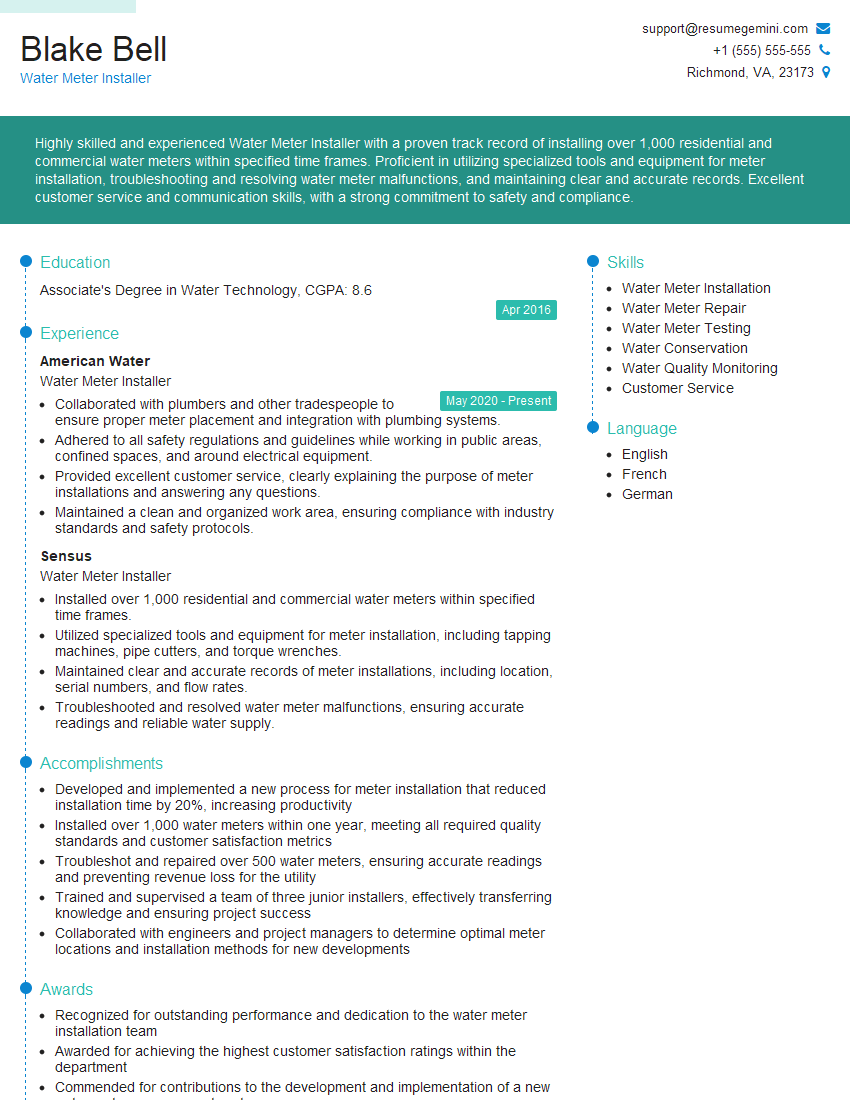
Mastering the installation and repair of water lines opens doors to a rewarding and stable career with excellent growth potential. Your expertise in this crucial area makes you a valuable asset to any team. To maximize your job prospects, creating a strong, ATS-friendly resume is essential. ResumeGemini is a trusted resource that can help you build a professional resume that highlights your skills and experience effectively. Examples of resumes tailored to Installing and repairing water lines are available to help you get started.
Explore more articles
Users Rating of Our Blogs
Share Your Experience
We value your feedback! Please rate our content and share your thoughts (optional).
What Readers Say About Our Blog
To the interviewgemini.com Webmaster.
Very helpful and content specific questions to help prepare me for my interview!
Thank you
To the interviewgemini.com Webmaster.
This was kind of a unique content I found around the specialized skills. Very helpful questions and good detailed answers.
Very Helpful blog, thank you Interviewgemini team.