The thought of an interview can be nerve-wracking, but the right preparation can make all the difference. Explore this comprehensive guide to Interior Glazing interview questions and gain the confidence you need to showcase your abilities and secure the role.
Questions Asked in Interior Glazing Interview
Q 1. Explain the different types of interior glazing systems.
Interior glazing systems offer a multitude of design and functional options. They are broadly categorized based on their framing and operational characteristics.
- Frameless Systems: These systems use minimal or no visible framing, creating a sleek, modern aesthetic. Think of a large, seemingly floating glass partition between rooms. Installation requires precision and robust support structures.
- Framed Systems: These utilize metal or wood frames to hold the glass panels. Framed systems offer greater design flexibility and can accommodate various glass types and thicknesses. They range from simple, minimalist frames to ornate, decorative ones.
- Sliding Systems: These allow for the movement of glass panels, often used in room dividers or to separate areas while maintaining flexibility. The mechanism can be simple or complex, depending on the size and weight of the glass.
- Folding Systems: Similar to sliding systems, but the panels fold concertina-style, maximizing open space. These are ideal for larger areas where full openness is desired, like separating a living area from a patio.
- Fixed Systems: These are static glass panels, typically used for feature walls or partitions where movement isn’t required. They are straightforward to install but offer less flexibility.
The choice of system depends on the project’s specific needs, including aesthetic preferences, budget, and the desired level of sound and thermal insulation.
Q 2. Describe your experience with various glass types (e.g., laminated, tempered, insulated).
My experience encompasses a wide range of glass types, each suited to different applications and performance requirements.
- Laminated Glass: This consists of two or more layers of glass bonded together with a PVB (polyvinyl butyral) interlayer. It’s exceptionally strong, offering excellent resistance to impact and shattering. I’ve used it extensively in areas requiring safety and security, such as stairwells and partitions near walkways.
- Tempered Glass (Toughened Glass): This is heat-treated glass, significantly stronger than annealed glass. It’s crucial in applications where safety is paramount, like shower enclosures or large glass panels. If broken, it shatters into small, relatively harmless pieces, unlike annealed glass, which breaks into sharp shards. I’ve incorporated tempered glass in numerous projects where structural integrity and safety are essential.
- Insulated Glass Units (IGUs): These consist of two or more glass panes separated by a hermetically sealed air or gas-filled spacer. They provide excellent thermal insulation and noise reduction. I frequently specify IGUs for energy efficiency in commercial and residential projects, notably in exterior walls but also internally where noise reduction is critical, such as between a home theatre and living area.
Selecting the appropriate glass type is crucial for meeting the project’s performance and safety needs. The choice considers factors such as load-bearing requirements, acoustic performance, thermal insulation, and the overall aesthetic vision.
Q 3. How do you ensure the proper sealing and weatherproofing of interior glazing?
Proper sealing and weatherproofing are critical for preventing water ingress, drafts, and energy loss, even in interior applications. It’s not just about aesthetics; it’s about longevity and functionality.
My approach involves several key steps:
- Careful Surface Preparation: Ensuring clean, dry surfaces is paramount before applying any sealant. Any dust, debris, or moisture can compromise the seal’s effectiveness.
- High-Quality Sealants: I use only high-performance sealants specifically designed for glass and the chosen framing material. These sealants must be compatible with the materials used and capable of withstanding stress and movement over time.
- Correct Application Technique: Sealants must be applied evenly and precisely, avoiding gaps or overlaps. Tools like sealant guns and smoothing tools are essential for creating a consistent, durable seal.
- Multiple Sealant Layers: In high-risk areas or where extra protection is needed, applying multiple layers of sealant significantly improves the seal’s integrity and durability.
Regular inspection after installation is also key to early detection and remediation of any issues. A well-sealed interior glazing system provides a significant contribution to comfort and building efficiency.
Q 4. What safety measures do you follow when installing interior glazing?
Safety is paramount in interior glazing installation. My approach is proactive and follows stringent safety protocols:
- Personal Protective Equipment (PPE): I always use appropriate PPE, including safety glasses, gloves, and closed-toe shoes. This protects against cuts, scratches, and other potential injuries.
- Proper Lifting Techniques: Glass panels can be heavy; using proper lifting techniques and equipment, such as suction cups and glass handling tools, is crucial to prevent accidents.
- Secure Work Area: The work area is meticulously prepared to prevent slips and falls. This includes clearing any obstacles and ensuring adequate lighting.
- Fall Protection: When working at heights, appropriate fall protection measures are in place. This includes safety harnesses, scaffolding, and other safety equipment.
- Careful Handling of Glass: Glass panels are handled with extreme care to prevent breakage. They are supported at all times and protected from impact.
A safe work environment leads to a higher-quality installation and ensures the well-being of the installation team. Regular safety briefings and adherence to company safety regulations are fundamental.
Q 5. Explain your experience with different glazing installation methods.
My experience spans various glazing installation methods, each with its unique considerations.
- Butt-Glazing: This method involves butting glass panels directly together, creating a seamless look. It requires precise cuts and robust sealing to prevent water ingress. I have used this method extensively in frameless shower enclosures.
- Channel Glazing: Glass is inserted into channels or grooves within the frame, offering a clean, modern look. This method is common in both framed and frameless systems and requires precise alignment and sealing.
- Silicone Glazing: Glass is directly adhered to the frame using structural silicone. This technique is popular for its versatility and adaptability to various materials and design requirements. I utilize this in many contemporary designs.
- Mechanical Glazing: This employs clips or other mechanical fasteners to secure glass panels to the frame. It’s known for its strength and ease of maintenance, ideal for larger panels in high-traffic areas.
The choice of installation method depends on factors like the type of frame, glass thickness, design aesthetics, and the desired level of thermal and acoustic performance. Careful consideration ensures a strong, secure, and aesthetically pleasing result.
Q 6. How do you handle damaged or defective glass during installation?
Handling damaged or defective glass is critical for maintaining safety and project timelines. My procedure involves:
- Immediate Identification: Defective glass is identified as soon as possible to avoid accidental use and potential injuries.
- Safe Removal: Damaged glass is carefully removed using appropriate safety precautions, ensuring no one is injured during the process.
- Proper Disposal: Broken glass is disposed of responsibly, often using specialized containers to prevent accidental cuts and maintain environmental standards.
- Replacement Process: Replacement glass is ordered promptly, following the original specifications. This avoids delays in the project schedule.
- Quality Check: Once the replacement glass is installed, a thorough quality check is conducted to ensure that the new installation is free of defects.
By following a systematic approach, we ensure project integrity and worker safety. Preventing further damage during the removal process is just as vital as efficient replacement.
Q 7. Describe your experience with measuring and cutting glass.
Accurate measuring and cutting of glass is fundamental for a successful installation. It requires precision and a good understanding of the materials and tools.
- Precise Measurement: Accurate measurements are taken using calibrated measuring tools, accounting for any tolerances required. This ensures that the glass fits perfectly within the frame or system.
- Appropriate Cutting Tools: Specialized glass cutting tools, such as glass cutters and scoring wheels, are used to create clean, accurate cuts. The right tool for the glass type is essential for avoiding chipping or cracking.
- Safe Cutting Techniques: Safe cutting practices are followed, ensuring that the cut line is consistent and straight. This prevents chipping and reduces the risk of injuries. I’ve seen many accidents avoided by employing proper techniques and wearing safety glasses.
- Snapping the Glass: Once the glass is scored, it’s carefully snapped along the scored line using a breaking tool, ensuring a clean break. This step requires patience and a steady hand.
- Edge Finishing: After cutting, the edges are carefully finished using grinding and polishing tools to remove any sharp edges and ensure safety. Smooth edges are also crucial for a professional finish.
Years of experience have honed my precision and efficiency, resulting in consistently accurate cuts and superior quality installations. Precision here minimizes rework and waste.
Q 8. What tools and equipment are essential for interior glazing installation?
Interior glazing installation demands precision and the right tools. Think of it like a delicate surgery – you need the right instruments to avoid damage. Essential tools include:
- Measuring tools: Accurate tape measures, laser levels, and squares are crucial for precise measurements and ensuring everything is perfectly aligned.
- Cutting tools: Glass cutters (oil-fed for cleaner cuts), a snap cutter for breaking the glass along the score line, and a grinder (for fine adjustments or removing imperfections).
- Installation tools: Glazing wedges (to adjust glass position and ensure a tight fit), suction cups (for handling large glass sheets safely), and spacers (to maintain consistent gaps between glass and frame).
- Safety equipment: Safety glasses (absolutely essential to prevent eye injuries from flying glass fragments), gloves (to protect hands from cuts), and dust masks (to avoid inhaling glass dust).
- Other tools: Putty knives (for applying sealant), caulking guns (for applying sealant neatly), and a clean, dry rag for wiping up spills.
Beyond these basic tools, specific situations might require specialized equipment like a glass lifter for oversized panes or a specialized sealant applicator for certain frame types.
Q 9. How do you calculate the quantity of materials needed for a glazing project?
Accurately calculating material quantities is vital to avoid costly mistakes and delays. It’s like baking a cake – you need the right proportions of ingredients. The process involves:
- Detailed Measurements: Begin by meticulously measuring all openings where glass will be installed. Record the height, width, and thickness of each opening, accounting for any irregularities.
- Glass Calculations: Calculate the area of each glass pane. Remember to add extra for cutting allowances (typically 5-10mm per side). This compensates for potential errors during cutting.
- Frame Calculations: If using custom-made frames, calculate the required amount of wood, metal, or composite material based on the opening dimensions and frame design.
- Sealant and Other Materials: Estimate sealant quantity based on the perimeter of each glass pane. Factor in additional sealant for potential mistakes or adjustments.
- Software Assistance: For complex projects, use specialized software to generate accurate material lists based on your measurements and design.
Always add a small percentage (around 5-10%) to your calculated quantities to account for waste or unforeseen circumstances. Better to have a little extra than to run short in the middle of a project!
Q 10. Explain your process for preparing the surface before glass installation.
Surface preparation is paramount; it’s like building a strong foundation for a house. A poorly prepared surface can lead to poor adhesion of sealant and premature failure of the glazing. My process includes:
- Cleaning: Thoroughly clean the surface to remove any dust, dirt, debris, grease, or other contaminants. I typically use a suitable solvent or detergent and a clean cloth or sponge. I ensure the surface is completely dry before proceeding.
- Repairing Imperfections: Fill any cracks, holes, or other imperfections in the frame using a suitable filler. Allow the filler to dry completely and sand it smooth for an even surface.
- Priming: Apply a primer appropriate for the frame material. This enhances adhesion and protects the frame from moisture. The choice of primer depends on the frame material (e.g., wood primer for wooden frames, metal primer for metal frames).
- Inspection: Before installing the glass, I perform a final inspection to ensure the surface is clean, smooth, and free from any imperfections that could compromise the installation.
Careful surface preparation ensures a long-lasting, secure, and aesthetically pleasing glazing installation.
Q 11. How do you address variations in wall thicknesses or framing during installation?
Variations in wall thickness or framing are common challenges. Think of it as tailoring a suit – you need to adjust for individual differences. I address these variations by:
- Precise Measurements: Again, accurate initial measurements are critical. This allows me to identify variations early in the process.
- Shims and Spacers: I use shims or spacers of appropriate thickness to create a consistent gap between the glass and the frame. This ensures the glass is correctly positioned and prevents stress on the glass.
- Custom Fabrication: For significant variations, I might need to custom fabricate parts of the frame to ensure a proper fit. This ensures structural integrity.
- Flexible Sealants: I utilize flexible sealants that can accommodate slight variations in the frame or wall without compromising the seal.
Careful planning and the right materials can easily overcome the challenges posed by uneven surfaces. It’s all about adaptability and using the appropriate materials to compensate.
Q 12. Describe your experience with working with different types of frames (e.g., wood, metal, composite).
Experience with various frame types is essential. Each material has unique properties requiring different techniques. For example, working with wood is different from working with aluminium.
- Wood Frames: Require careful handling to avoid damage. Precise measurements are essential, and suitable wood primers and sealants must be used to prevent moisture damage.
- Metal Frames: Can be more robust but require different tools and techniques for cutting and installation. Corrosion prevention is also crucial.
- Composite Frames: Offer a blend of properties but may require specific adhesives and sealants for optimal bonding. Following the manufacturer’s guidelines is key.
I’ve worked on projects involving all three types, and each requires a nuanced approach. My experience ensures I choose the right tools, materials, and techniques for optimal results and longevity.
Q 13. How do you ensure the alignment and level of installed glass units?
Ensuring perfect alignment and level is crucial for both aesthetics and structural integrity. It’s like building a perfect wall – every brick needs to be placed precisely. My method involves:
- Laser Leveling: I use laser levels to ensure the frame is perfectly level and plumb before glass installation. This provides a solid foundation.
- Glazing Wedges: Once the glass is in place, glazing wedges are used to fine-tune its position. These wedges allow for minute adjustments to ensure perfect alignment.
- Regular Checks: I continuously check the alignment and level using a level and square during and after installation. It’s better to catch minor discrepancies early.
- Measuring & Adjustment: I make use of measuring tools to ensure the glass is perfectly centered within the frame. Any issues with the glass not being perfectly centered should be addressed immediately.
This meticulous approach ensures a professional finish and avoids any issues with water ingress or structural instability.
Q 14. What are the common causes of glass breakage during installation, and how do you prevent them?
Glass breakage during installation is a serious concern. It’s like handling a delicate piece of art – you must approach it with care. Common causes include:
- Improper Handling: Dropping or mishandling glass sheets is the most frequent cause of breakage. Always use appropriate lifting equipment and wear safety gear.
- Excessive Force: Applying too much pressure during installation can cause cracking. Use the correct tools and techniques to avoid unnecessary force.
- Sharp Objects: Scratches or chips on the glass surface can propagate during installation, leading to breakage. Handle the glass carefully and avoid contact with sharp objects.
- Temperature Fluctuations: Sudden temperature changes can cause stress cracks, especially in larger glass units. Consider the environment and avoid installation during extreme temperatures.
Prevention involves careful handling, proper tools, precise measurements, and attention to environmental conditions. Safety should always be the top priority.
Q 15. Describe your troubleshooting experience with glazing installation problems.
Troubleshooting glazing installation problems requires a systematic approach. I start by carefully examining the issue, identifying the root cause before attempting any repairs. This often involves checking for inconsistencies with the original plans, assessing the quality of materials used, and verifying the installation process.
For example, if a pane is leaking, I’d check the sealant application for gaps or incomplete coverage. If the problem is a cracked pane, I would investigate for signs of improper handling during installation, or potential impacts after installation. I might also consider issues with the frame itself, checking for warping, damage, or incorrect fitting. My approach involves using various tools such as a moisture meter to test for hidden water damage, a level to check for frame alignment, and specialized sealant testing equipment to assess adhesion. Each issue necessitates a different solution, and I always document my findings and solutions thoroughly.
In one project, a series of panes were rattling due to improper fitting of glazing beads. By carefully analyzing the gap size and performing minor adjustments to the bead placement and frame alignment, we were able to eliminate the noise without needing to replace the entire unit. This highlighted the importance of precise installation and attention to detail.
Career Expert Tips:
- Ace those interviews! Prepare effectively by reviewing the Top 50 Most Common Interview Questions on ResumeGemini.
- Navigate your job search with confidence! Explore a wide range of Career Tips on ResumeGemini. Learn about common challenges and recommendations to overcome them.
- Craft the perfect resume! Master the Art of Resume Writing with ResumeGemini’s guide. Showcase your unique qualifications and achievements effectively.
- Don’t miss out on holiday savings! Build your dream resume with ResumeGemini’s ATS optimized templates.
Q 16. How do you maintain quality control throughout the interior glazing process?
Maintaining quality control in interior glazing is paramount. It begins even before installation, with a meticulous review of the architectural drawings and specifications. I ensure the correct type and quantity of glazing, frames, and accessories are ordered, carefully checking for any damage during delivery. Throughout the installation, regular quality checks are performed. This involves continuous visual inspection to ensure proper alignment and adherence to the design. We use precision measuring tools to verify dimensions and tolerances. We also use specialized equipment to test the strength and integrity of the final installation.
A crucial aspect is proper documentation. We maintain a detailed log of every step of the process, including material tracking, installation methods, and any adjustments made. This record acts as a quality control audit trail, helping us identify potential issues early on and improve our future processes. Regular training for our team on best practices, safety procedures, and the use of specialized tools also significantly contributes to consistent high quality.
Q 17. How do you interpret and follow architectural drawings and specifications for glazing?
Interpreting architectural drawings and specifications for glazing requires a keen eye for detail and a thorough understanding of construction documentation. I begin by meticulously reviewing all relevant drawings, including floor plans, elevations, sections, and detailed glazing schedules. This involves identifying the types of glazing specified (e.g., laminated, tempered, insulated units), the dimensions of each pane, the frame materials, and the required hardware. Specific details like sealant type, tolerances, and finishing requirements are crucial.
I cross-reference information from multiple drawings to ensure consistency and address any discrepancies. For instance, a discrepancy between the glazing schedule and the elevation view might indicate an error requiring clarification with the architect. Once I have a complete understanding of the requirements, I create a detailed installation plan that incorporates these specifications, ensuring a seamless and accurate execution of the project. This ensures the project meets the architect’s vision and building codes.
Q 18. What are your experience with different types of glazing beads and how to apply them correctly?
My experience encompasses various glazing bead types, including traditional wood beads, modern plastic beads, and specialized metallic beads. The choice of bead depends on factors like aesthetic preferences, the frame material, and the desired level of thermal insulation. For example, wood beads offer a classic look but require careful maintenance to prevent rot or warping, while plastic beads are more resistant to moisture and require less maintenance. Metallic beads might be preferred for their modern aesthetic and durability.
Correct application involves ensuring a snug fit without excessive pressure, which could damage the glass or frame. I use specialized tools such as bead presses and bead removers to ensure proper installation and avoid potential issues. Improper bead application can lead to leaks, rattling, or an unappealing aesthetic finish. We always ensure proper sealant application between the bead and the glass or frame to maintain weather tightness and prevent air leakage.
Q 19. How do you manage a glazing project timeline and budget?
Managing a glazing project timeline and budget effectively requires careful planning and proactive monitoring. I start by developing a detailed project schedule using project management software, breaking down the project into smaller, manageable tasks with assigned deadlines. This involves considering factors like material procurement, installation time, and potential unforeseen delays. A realistic budget is created next, taking into account material costs, labor, equipment rental, and contingency funds for unexpected issues.
Throughout the project, I regularly monitor progress against the schedule and budget, identifying and addressing any deviations promptly. This might involve adjusting the schedule, negotiating with suppliers, or finding cost-effective alternatives without compromising quality. Regular communication with clients, keeping them updated on progress and any potential changes to the timeline or budget, builds trust and avoids misunderstandings. Using project management techniques like the critical path method (CPM) allows for efficient resource allocation and facilitates better overall management.
Q 20. Describe your experience with working within a team.
Teamwork is essential in interior glazing. I thrive in collaborative environments and believe effective communication is key. I value open dialogue, ensuring all team members, from installers to project managers, understand their roles and responsibilities. I actively contribute to team discussions, offering my expertise and insights while also being receptive to the ideas of others. I am comfortable delegating tasks based on individual skills and experience, and I actively provide support and guidance to team members.
On a recent project involving a complex curved glass installation, effective teamwork was crucial. By collaborating with the structural engineer and the glass fabricator, we ensured the glass panels were properly supported and installed without any issues. Our open communication and willingness to work together ensured a successful and efficient completion of the project.
Q 21. What are the current trends and innovations in interior glazing?
Current trends in interior glazing are focused on enhancing aesthetics, energy efficiency, and sustainability. Smart glass technology, allowing for adjustable light transmission and privacy, is gaining popularity. Frameless designs and large-format panels create a sleek, minimalist look. The use of sustainable materials, such as recycled glass and sustainably sourced wood, is also becoming increasingly important.
Innovations include self-cleaning glass coatings, reducing maintenance requirements, and advanced insulated glazing units (IGUs) with improved thermal performance. Acoustic glazing is becoming more prevalent in noise-sensitive environments. The integration of technology, such as embedded sensors and smart controls, further enhances functionality and user experience. These advances are creating more versatile and visually appealing spaces while minimizing environmental impact.
Q 22. How do you stay up-to-date with the latest glazing techniques and technologies?
Staying current in the dynamic field of interior glazing requires a multi-pronged approach. I regularly attend industry conferences and workshops, such as those hosted by the Glass Association of North America (GANA) or similar organizations. These events offer invaluable insights into the latest materials, techniques, and innovations. Furthermore, I subscribe to leading industry publications and journals, keeping me abreast of technological advancements and best practices. Online resources, such as reputable manufacturers’ websites and technical databases, also play a crucial role in my continuous learning. Finally, I actively engage in professional networking, connecting with fellow specialists to share knowledge and stay informed about emerging trends. For example, recently I learned about a new type of self-cleaning glass at a conference, and I’m now exploring its potential applications in high-traffic areas.
Q 23. Explain your understanding of building codes and regulations related to glazing.
Understanding and adhering to building codes and regulations concerning glazing is paramount. These regulations vary by location and often dictate aspects such as the type of glass permitted, its safety standards (e.g., impact resistance, shatter resistance), and its fire rating. For example, in high-rise buildings, fire-rated glazing is mandatory to prevent the spread of flames. I meticulously review all relevant local, state, and national codes before starting any project. This includes referencing documents like the International Building Code (IBC) and any local amendments. My understanding extends to accessibility requirements for glazing, ensuring compliance with ADA standards for things like appropriate glazing heights and the use of safety glass to prevent injuries. I collaborate closely with architects and engineers to ensure all glazing specifications meet these critical safety and regulatory requirements.
Q 24. How do you handle customer complaints or issues related to glazing installation?
Handling customer complaints is a crucial aspect of this profession. My approach involves active listening, empathetic communication, and a problem-solving mindset. First, I thoroughly investigate the complaint, documenting all details and visually inspecting the affected area. This helps determine the root cause – whether it’s a manufacturing defect, installation error, or something else entirely. I then clearly explain my findings to the customer, offering transparent and realistic solutions. This might involve repairs, replacements, or adjustments, always prioritizing the customer’s satisfaction. For instance, I once addressed a complaint about a slight haze on a glass partition. After investigation, it turned out to be a residue from the cleaning process, which was easily rectified. Transparency and a commitment to finding a fair resolution are key to maintaining positive client relationships.
Q 25. Describe your experience with different types of glass coatings and their applications.
My experience encompasses a wide range of glass coatings, each designed for specific purposes. Low-E coatings, for instance, reduce energy loss by reflecting infrared radiation, making them ideal for energy-efficient buildings. I’ve extensively used these in both residential and commercial projects, significantly impacting the overall energy performance. Self-cleaning coatings, like those containing titanium dioxide, minimize the need for frequent cleaning by breaking down dirt and grime using UV light. Anti-reflective coatings enhance visual clarity, crucial for applications such as display cases or museum installations. Finally, decorative coatings offer aesthetic versatility, ranging from frosted finishes to custom designs. I recently worked on a project using etched glass with a custom sandblasted design, significantly enhancing the ambiance of the office.
Q 26. What are the considerations for the acoustic performance of interior glazing?
Acoustic performance is a key consideration, particularly in areas requiring noise reduction. The thickness of the glass, the type of glass (laminated glass offers better sound insulation than single-pane glass), and the incorporation of an air gap between panes (in double or triple glazing) all significantly influence sound transmission. Using laminated glass with a special interlayer designed for sound dampening greatly improves performance. The air gap within double or triple glazing systems acts as an acoustic buffer, minimizing sound penetration. In a recent project for a recording studio, we implemented a multi-layered glazing system, significantly reducing external noise pollution. Calculating sound transmission class (STC) ratings helps specify the optimal glazing system for different noise levels.
Q 27. How do you ensure the energy efficiency of the glazing system?
Ensuring the energy efficiency of interior glazing involves carefully selecting appropriate glass types and incorporating strategies for heat control. Low-E coatings, as mentioned earlier, are crucial for reducing energy loss. The use of insulating glass units (IGUs), consisting of multiple panes with an air or gas-filled space between them, significantly improves thermal insulation. The selection of gas fill (argon, krypton, or xenon) within the IGU further enhances energy performance. Proper sealing of the glazing system is also essential to prevent air leakage. In my work, I always analyze the building’s climate and orientation to determine the optimal glazing specifications, maximizing natural light while minimizing heat gain or loss. For example, in a south-facing office, we might choose a low-E coating with a higher solar heat gain coefficient (SHGC) to maximize solar heat gain in winter while minimizing it in summer.
Q 28. Explain your experience with the installation of specialty glass (e.g., etched glass, stained glass)
I have considerable experience with specialty glass installation, including etched glass, stained glass, and other decorative options. Etched glass requires careful handling to avoid damaging the delicate surface during installation. Precise measurements and meticulous installation techniques are crucial for achieving a seamless and professional finish. Stained glass, with its intricate details and delicate nature, demands specialized handling and expertise. Secure mounting and proper grouting are critical to ensure the longevity and aesthetic integrity of the installation. I have a strong understanding of the specific requirements and challenges associated with each material type. For example, while installing a large stained-glass window in a church, we used a custom-designed framework to ensure structural stability and prevent damage to the delicate artwork during the process.
Key Topics to Learn for Your Interior Glazing Interview
- Types of Interior Glazing Systems: Understand the differences between various systems like frameless glass, framed glass, and partition walls. Consider their applications in different settings (residential, commercial, etc.).
- Material Properties and Selection: Learn about the properties of different glass types (laminated, tempered, insulated) and their suitability for various projects. Discuss factors affecting material choice like sound insulation, thermal performance, and aesthetics.
- Installation and Construction Techniques: Familiarize yourself with common installation methods, including framing systems, sealant application, and techniques for ensuring structural integrity and water tightness. Be prepared to discuss challenges and solutions.
- Health and Safety Regulations: Demonstrate awareness of relevant safety standards and regulations pertaining to glass handling, installation, and workplace safety. This showcases responsibility and professionalism.
- Maintenance and Repair: Understand common maintenance issues, such as sealant failure or glass damage, and the appropriate repair techniques. This displays practical experience and problem-solving skills.
- Design Considerations and Aesthetics: Discuss how interior glazing impacts the overall design of a space. Be prepared to discuss aspects like light transmission, privacy, and spatial division.
- Budgeting and Cost Estimation: Understand the factors that influence project costs and how to provide accurate estimates for materials and labor.
- Problem-Solving and Troubleshooting: Be ready to discuss common challenges encountered during installation or maintenance and how you’d approach finding solutions. Think of real-world examples.
Next Steps: Unlock Your Interior Glazing Career
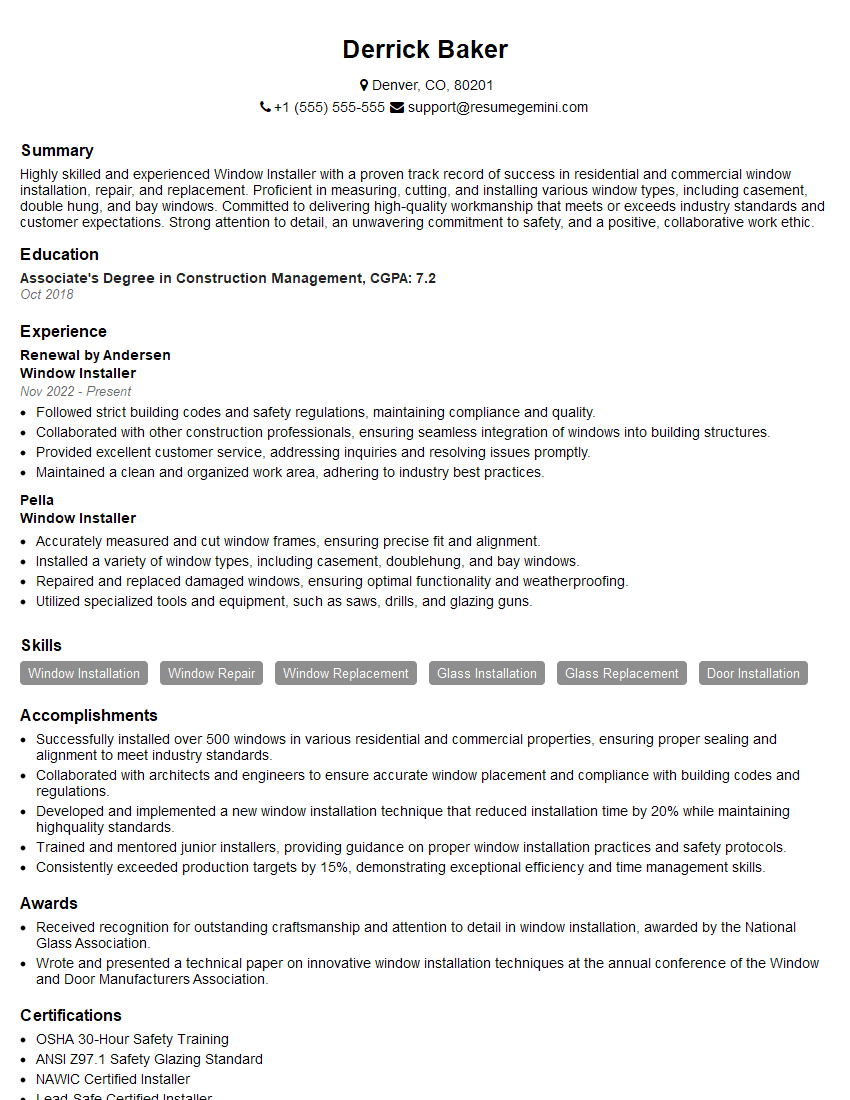
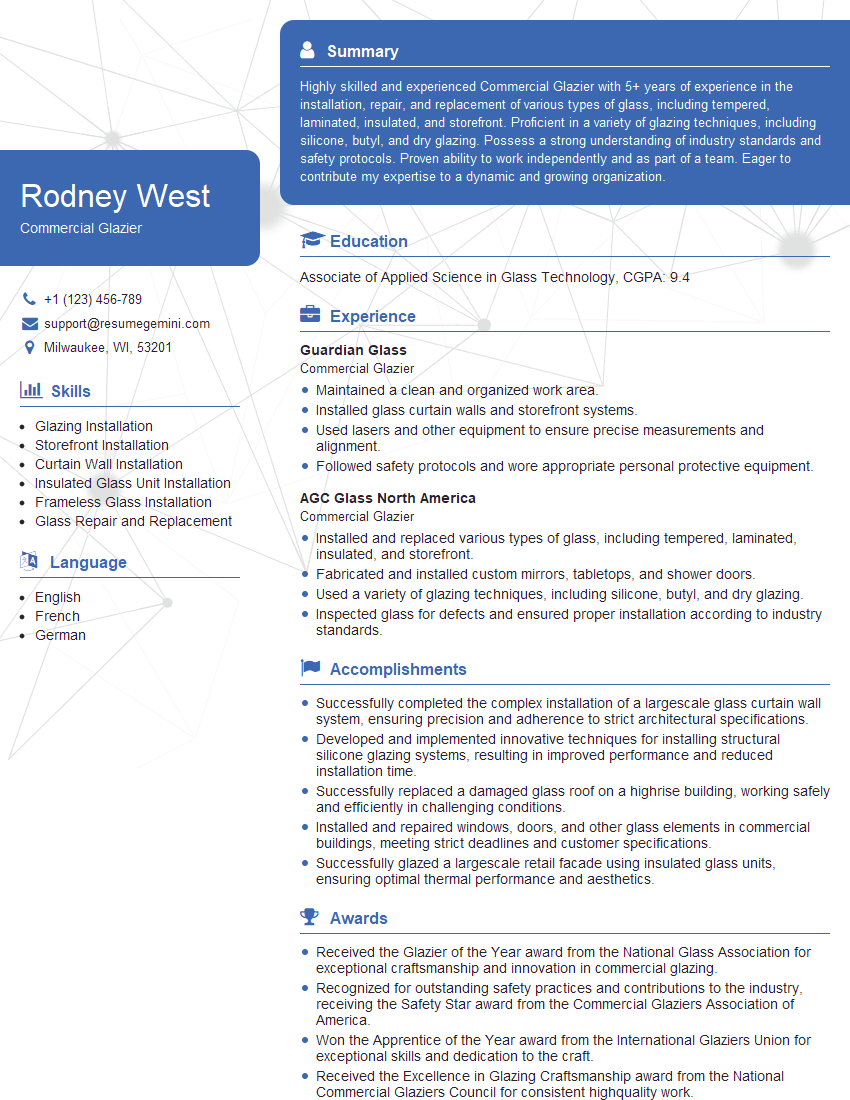
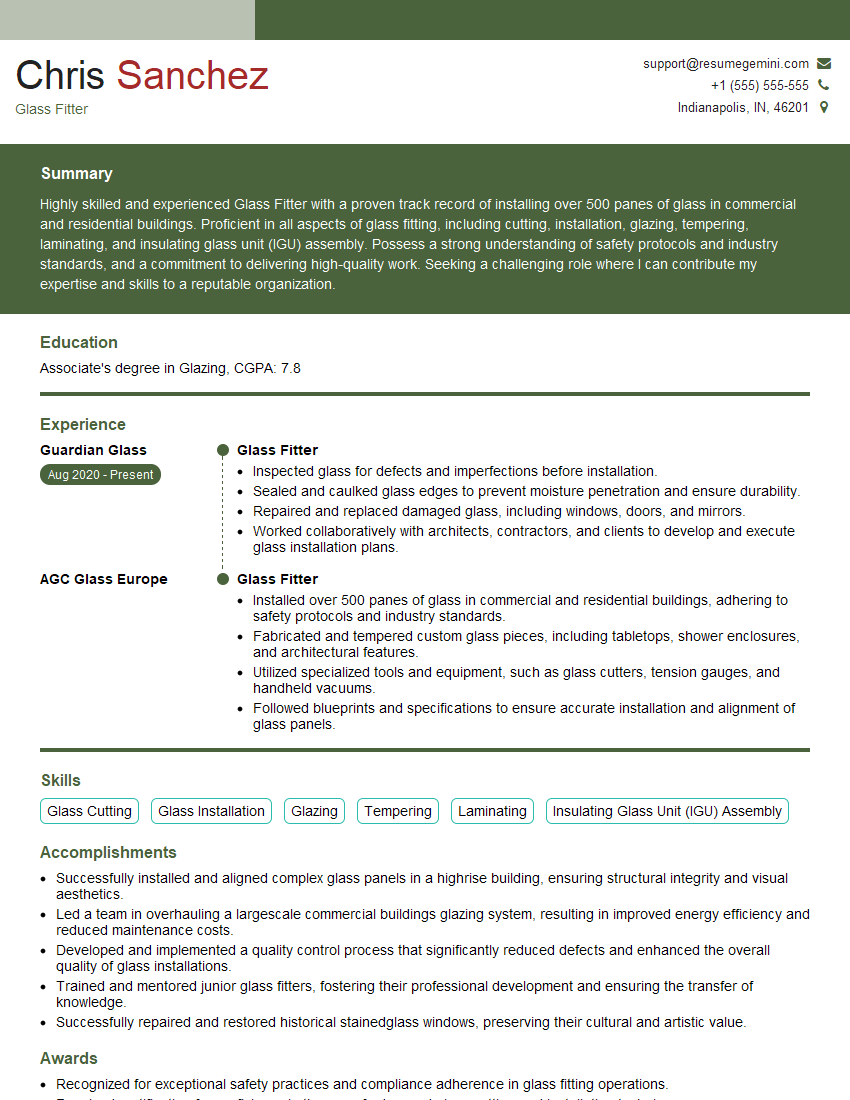
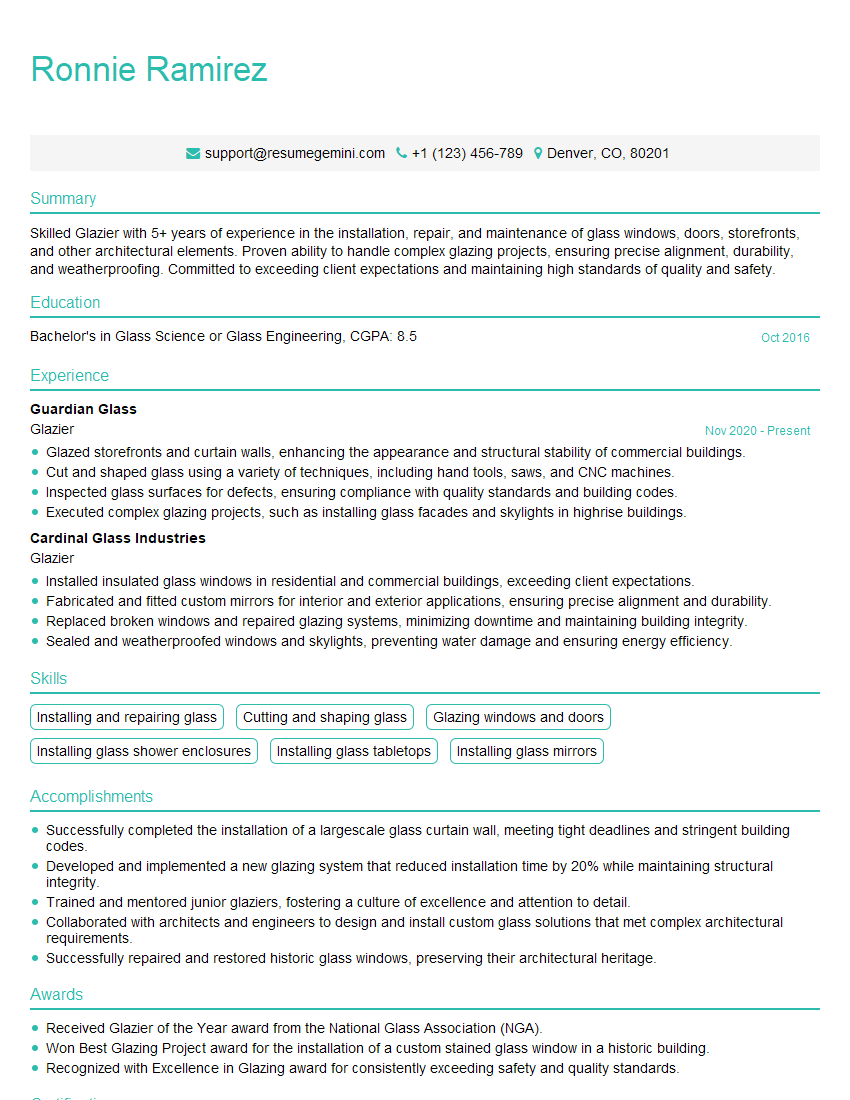
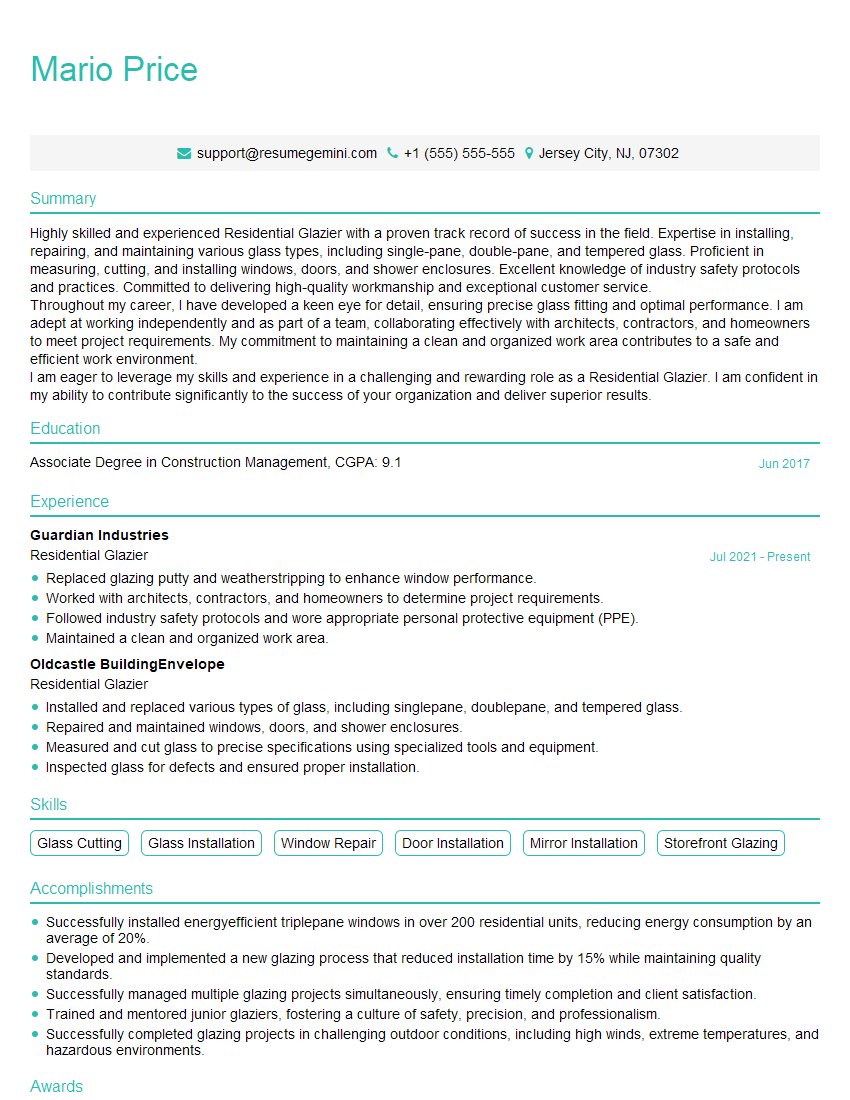
Mastering interior glazing opens doors to exciting opportunities in a dynamic and growing field. To maximize your chances of landing your dream role, focus on building a strong, ATS-friendly resume that highlights your skills and experience. ResumeGemini is a trusted resource to help you craft a professional and impactful resume that catches the eye of recruiters. We provide examples of resumes tailored to the Interior Glazing industry, empowering you to present yourself effectively. Invest time in building a compelling resume; it’s your first impression and a crucial step in advancing your career.
Explore more articles
Users Rating of Our Blogs
Share Your Experience
We value your feedback! Please rate our content and share your thoughts (optional).
What Readers Say About Our Blog
To the interviewgemini.com Webmaster.
Very helpful and content specific questions to help prepare me for my interview!
Thank you
To the interviewgemini.com Webmaster.
This was kind of a unique content I found around the specialized skills. Very helpful questions and good detailed answers.
Very Helpful blog, thank you Interviewgemini team.