Are you ready to stand out in your next interview? Understanding and preparing for Interpreter Support interview questions is a game-changer. In this blog, we’ve compiled key questions and expert advice to help you showcase your skills with confidence and precision. Let’s get started on your journey to acing the interview.
Questions Asked in Interpreter Support Interview
Q 1. Explain the difference between consecutive and simultaneous interpretation.
Consecutive and simultaneous interpretation are two primary modes of interpreting, differing significantly in their approach and application. Consecutive interpretation involves the interpreter waiting for the speaker to complete a segment of speech (a sentence, paragraph, or even a longer discourse) before rendering it into the target language. This allows for more accurate rendering as the interpreter can take notes and process the information before delivering it. Think of it like a ‘pause and replay’ system. Simultaneous interpretation, on the other hand, is a real-time process. The interpreter renders the speech into the target language simultaneously as the speaker is delivering it. This requires exceptional linguistic skills, concentration, and rapid cognitive processing – it’s like translating on the fly.
For instance, in a formal business meeting, consecutive interpretation might be preferred for complex negotiations or presentations requiring meticulous accuracy. Simultaneous interpretation is commonly used in conferences and international events, where time is of the essence and a continuous flow of information is crucial.
Q 2. Describe your experience with different modes of interpretation (e.g., phone, video, in-person).
My experience spans various interpretation modes. I’ve handled numerous in-person assignments, including high-stakes legal proceedings, medical consultations, and corporate negotiations. The direct interaction allows for nuanced understanding of body language and subtle cues enhancing accuracy. I’m also proficient in phone interpreting, which demands excellent listening skills and clear articulation in a less visually rich environment. My experience with video remote interpreting (VRI) is extensive, encompassing virtual medical appointments, international business meetings, and educational settings. VRI requires adeptness with technology and adaptability to various virtual environments. I find that the technology bridges geographical barriers but requires close attention to audio-visual quality to mitigate potential issues.
Q 3. How do you handle situations where you encounter unfamiliar terminology?
Encountering unfamiliar terminology is a common challenge in interpretation. My approach is multi-faceted. First, I attempt to infer meaning from context and surrounding vocabulary. If that proves insufficient, I discreetly ask for clarification from the speaker, using techniques that don’t disrupt the flow of conversation (e.g., a polite query or a brief, clarifying question to the speaker). Thirdly, and depending on the context, I might utilize reputable online resources or specialized dictionaries to quickly research the term discreetly. Finally, I always document newly learned terms, adding to my professional glossary for future reference.
For example, during a medical interpretation, I encountered an unfamiliar term related to a specific cardiac condition. I politely asked the physician for a brief explanation, which allowed me to convey the information accurately to the patient.
Q 4. What strategies do you use to maintain accuracy and fluency during interpretation?
Maintaining accuracy and fluency demands continuous attention to detail and employing several strategies. Thorough preparation is crucial; reviewing relevant materials beforehand is a must. I actively employ note-taking techniques tailored to the interpretation mode (linear notes, symbol-based shorthand). Active listening is key – I don’t just hear words; I grasp the underlying meaning and intent. Furthermore, I prioritize natural language in my delivery, avoiding literal translations that sound awkward in the target language. And finally, I regularly self-evaluate my performance, seeking feedback where possible to refine my approach.
Q 5. Describe your experience using interpretation technology (e.g., headsets, software).
My experience with interpretation technology includes various headsets, sound systems, and software platforms. I’m adept at using headsets with noise-cancellation features to ensure clear audio in noisy environments. I’m also proficient in using video conferencing software for remote interpreting, managing technical issues with grace. I understand the importance of clear audio and video, which is why I always run technical checks before interpreting sessions and familiarize myself with the platform before commencing work. This ensures that any technical hiccups do not negatively impact the interpretation’s quality or clarity.
Q 6. How do you ensure confidentiality in your interpretation work?
Confidentiality is paramount in my work, and I adhere strictly to ethical guidelines. This includes signing confidentiality agreements whenever required. I never discuss the content of my interpretations outside of the professional context. Even casual conversations about the subject matter are avoided, safeguarding sensitive information. I also treat all personal information encountered in my work with utmost discretion, understanding the potential legal and ethical ramifications of a breach of confidentiality. My professional conduct reflects my commitment to protecting client information.
Q 7. How do you adapt your interpretation style to different audiences and contexts?
Adapting to different audiences and contexts is crucial. My approach is to carefully consider the audience’s cultural background, level of knowledge on the topic, and overall expectations. For example, interpreting a scientific presentation requires a different style than interpreting a casual conversation between friends. In formal settings, I maintain a professional and neutral tone, whereas in more informal contexts, I strive to reflect the natural flow and register of the original speech. This flexibility allows me to convey the message effectively while remaining respectful of audience sensitivities and cultural norms.
Q 8. Explain your understanding of ethical considerations in interpretation.
Ethical considerations in interpretation are paramount. They center around ensuring accuracy, confidentiality, impartiality, and professional conduct. Accuracy means conveying the speaker’s message faithfully, without adding or omitting information. Confidentiality requires maintaining the privacy of the information shared during the session; this is especially critical in medical or legal settings. Impartiality involves remaining neutral and avoiding any bias in interpretation, ensuring that the message is conveyed without personal opinions or judgments. Professional conduct encompasses adhering to a code of ethics, like those set by professional interpreter organizations, which may cover issues like conflict of interest, appropriate attire, and professional boundaries. For example, if during a medical interpretation I overheard a patient revealing sensitive personal information unrelated to their treatment, I have a professional obligation to maintain confidentiality. Breaching these ethical standards can have serious consequences, from damaging client trust to legal repercussions.
Q 9. How do you manage interruptions or challenging speakers during an interpretation session?
Managing interruptions or challenging speakers requires a combination of tact, professionalism, and quick thinking. If a speaker is being interrupted, I might politely signal for the interruption to cease. If the interruption is pertinent, I will briefly relay the interruption, noting it was an aside. If the speaker themselves is challenging – for example, speaking very quickly, using highly technical jargon, or being unclear – I’ll employ different strategies. For rapid speech, I might politely ask them to slow down. With excessive jargon, I’ll try to clarify meanings with the speaker as discretely as possible, sometimes by paraphrasing or seeking clarification, while remaining faithful to the original message. If the speaker is unclear, I might ask for clarification respectfully, again keeping the interaction as seamless as possible. In all cases, my goal is to maintain control and ensure the communication flow is as smooth as possible, informing the relevant parties (if possible and appropriate) if I encounter significant difficulties.
Q 10. How do you handle cultural nuances and differences in communication styles?
Cultural nuances and communication styles are crucial aspects of interpretation. Different cultures have different communication styles; some are direct, others indirect. Some cultures value high-context communication (meaning much is implied), while others prefer low-context communication (where everything is explicitly stated). For instance, in some cultures, interrupting is acceptable, while in others it’s highly disrespectful. Understanding these differences is key to effective interpretation. I handle them by conducting thorough research before an assignment. This helps me anticipate potential cultural differences in communication styles and language use. During the session, I remain attentive to nonverbal cues – body language, tone of voice – which often convey as much meaning as words themselves. Furthermore, I prioritize building rapport with both speakers, creating a safe and comfortable space where they feel understood and heard. For example, I might adapt my interpreting style based on the speaker’s cultural background to ensure the message is accurately and respectfully conveyed. If a particular phrase or expression has strong cultural connotations, I strive to find the most appropriate equivalent in the target language.
Q 11. Describe your experience with quality assurance procedures in interpretation.
Quality assurance procedures are vital to delivering accurate and reliable interpretations. My experience involves several key aspects. Firstly, I’m always prepared; this includes researching terminology specific to the event or topic. Secondly, I participate in regular professional development to update my skills and knowledge. Many organizations I’ve worked with utilize a post-interpretation feedback process, where the clients or other interpreters review the accuracy, fluency, and overall quality of the interpretation. In some cases, recordings are reviewed to provide a detailed evaluation. I also regularly engage in self-reflection and continuously seek opportunities for improvement. For example, if a client expresses dissatisfaction with any aspect of my work, I take that feedback seriously, reflecting on what went wrong and what steps I can take to avoid similar issues in future. I strongly believe continuous improvement is essential to maintain a high level of quality in my interpretation services.
Q 12. How do you prepare for an interpretation assignment?
Preparation is the cornerstone of successful interpretation. Before any assignment, I gather as much information as possible about the topic, the speakers, and the audience. This might involve reviewing documents, researching terminology, and familiarizing myself with any cultural considerations. I always try to get a sense of the context: what are the key objectives of the meeting or event? What is the overall tone and expected atmosphere? The type of preparation will naturally vary depending on the assignment. A medical interpretation might require understanding specific medical terms, while a legal interpretation might need familiarity with legal procedures and terminology. My preparation typically involves researching and creating a glossary of essential terms and phrases. The more prepared I am, the better I can handle unexpected situations and provide a high-quality interpretation service.
Q 13. What are your strengths and weaknesses as an interpreter?
My strengths as an interpreter include excellent listening skills, strong linguistic abilities in both my source and target languages, and a high level of cultural sensitivity. I’m also adaptable and quick-thinking, able to manage unexpected situations effectively. I pride myself on my professionalism, accuracy, and ability to maintain a neutral and impartial stance. My main area for development is perhaps expanding my expertise in highly specialized fields. While I am competent in many areas, continuously expanding my knowledge base in areas like medical or legal terminology would enhance my service further. I actively address this by dedicating time to professional development courses and reading relevant materials related to areas I want to strengthen.
Q 14. How do you handle difficult or stressful situations during interpretation?
Handling difficult or stressful situations requires a calm and professional demeanor. I use several strategies to manage stress: deep breathing techniques, mental imagery (visualizing a successful interpretation), and maintaining focus on the task at hand. If I’m facing significant challenges, like a speaker using extremely technical jargon or dealing with a highly emotional situation, I’ll prioritize clarity and accuracy. I will try to clarify ambiguous points politely, ensuring the core message is understood. In particularly challenging scenarios, if it’s appropriate and possible, I may seek clarification or support from colleagues or supervisors. The key is to remain composed, prioritize accuracy, and maintain professional ethics throughout. After a particularly stressful assignment, I debrief myself, reflecting on what I did well, what could have been improved, and what strategies I can implement for similar situations in the future. This constant reflection helps maintain my resilience and refine my skills to ensure the next assignment goes even more smoothly.
Q 15. What resources do you utilize to improve your interpretation skills?
Improving my interpretation skills is an ongoing process that requires a multifaceted approach. I utilize several key resources to ensure continuous professional development.
Professional Development Courses and Workshops: I regularly participate in advanced interpreting workshops and online courses focusing on specific modalities like consecutive and simultaneous interpretation, as well as specialized areas such as medical or legal interpreting. These courses hone my skills and expose me to new techniques.
Mentorship and Peer Review: Engaging with experienced interpreters through mentorship programs offers invaluable insight and feedback. Peer review sessions, where colleagues critique recordings of my interpretations, help identify areas for improvement in accuracy, fluency, and register.
Professional Organizations and Conferences: Active membership in professional interpreting organizations provides access to ongoing training, networking opportunities, and exposure to the latest research and best practices in the field. Attending conferences allows me to learn from leading experts and network with peers.
Self-Study and Language Immersion: Continuous self-study is crucial. I actively engage with authentic materials in my working languages, including news broadcasts, literature, and professional journals. Immersion through travel or interaction with native speakers further refines my linguistic proficiency.
Technology and Tools: I utilize various software and tools designed to enhance interpreting skills, such as transcription software for reviewing my work and specialized language learning apps to improve vocabulary and fluency.
Career Expert Tips:
- Ace those interviews! Prepare effectively by reviewing the Top 50 Most Common Interview Questions on ResumeGemini.
- Navigate your job search with confidence! Explore a wide range of Career Tips on ResumeGemini. Learn about common challenges and recommendations to overcome them.
- Craft the perfect resume! Master the Art of Resume Writing with ResumeGemini’s guide. Showcase your unique qualifications and achievements effectively.
- Don’t miss out on holiday savings! Build your dream resume with ResumeGemini’s ATS optimized templates.
Q 16. Describe a time you had to overcome a challenge during an interpretation assignment.
During a simultaneous interpretation assignment at a major international conference, the speaker unexpectedly deviated significantly from the prepared speech, introducing complex technical jargon related to a newly developed technology. This created a significant challenge because I needed to accurately and swiftly convey the information without sacrificing clarity or fluency.
To overcome this, I employed several strategies:
Quick Information Gathering: I quickly sought to grasp the essence of the speaker’s new concepts, focusing on key terms and overall message. This was critical in delivering an accurate summary for the audience.
Paraphrasing and Simplification: Instead of attempting a literal translation, I focused on paraphrasing the speaker’s points in simpler terms, using language readily understood by the target audience.
Strategic Pauses and Clarifications: I utilized short strategic pauses to process the information and ensure accurate conveyance. In some cases, I briefly clarified complex terminology, ensuring comprehension without disrupting the flow of the interpretation.
Seeking Clarification (where appropriate): While simultaneous interpretation ideally requires immediate delivery, there were instances where a polite, brief interruption to seek clarification from the speaker proved necessary to prevent misinterpretations.
Ultimately, by adapting my approach and utilizing these strategies, I successfully navigated the unexpected challenge, ensuring the audience received an accurate and comprehensive interpretation of the speaker’s message.
Q 17. How do you deal with technical difficulties during remote interpretation?
Remote interpretation relies heavily on technology, so addressing technical difficulties effectively is paramount. My approach involves proactive preparation and a methodical troubleshooting process.
Proactive Measures: Before any assignment, I conduct a thorough system check, ensuring reliable internet connectivity, functional audio-visual equipment (microphone, headphones, webcam), and familiarity with the chosen platform (Zoom, Skype, etc.). I also have backup equipment readily available.
Immediate Troubleshooting: In case of issues, my first step is to identify the problem (internet outage, microphone malfunction, software glitches). I then attempt straightforward solutions, such as restarting devices, checking connections, and verifying software updates.
Communication with Participants: Open and timely communication with clients and participants is vital. If a problem cannot be quickly resolved, I immediately inform them of the situation, proposing alternative solutions or rescheduling if necessary. Transparency is key.
Contingency Plans: Having backup plans is crucial. This could involve using a different device or internet connection, employing a simplified communication method (phone call if video is unavailable), or having a colleague on standby for support.
Effective handling of technical difficulties ensures minimal disruption to the interpretation process and maintains professional credibility.
Q 18. What is your experience with different language pairs?
My primary language pairs are English to Spanish and Spanish to English. I possess a high level of proficiency in both languages, including nuanced understanding of regional dialects and cultural contexts. This allows me to adapt my style and terminology to effectively convey meaning across diverse populations within each linguistic community.
Beyond these, I also have experience with English to French and French to English, though my expertise in these pairs is developing. I am always eager to expand my language skills and continue building proficiency in additional language pairs. The demand for specific language combinations varies, and keeping up with emerging needs in the field is important for adaptability and career growth.
Q 19. How do you stay up-to-date with changes in language and terminology?
Staying abreast of evolving language and terminology is vital for accurate and effective interpretation. I employ several strategies to maintain currency in my chosen fields.
Continuous Reading and Listening: I regularly consume news articles, academic papers, and professional publications in my target languages. I also actively listen to podcasts, watch TV shows, and engage with social media in those languages to understand current colloquialisms and slang.
Specialized Dictionaries and Glossaries: I regularly consult specialized dictionaries and glossaries related to specific fields (medical, legal, financial, etc.) to ensure accurate translation of technical terms and industry-specific jargon. Online resources and specialized terminology databases are invaluable tools here.
Networking with Professionals: Maintaining contact with professionals from various fields allows me to learn specialized terminology firsthand. Discussions and informal exchanges with experts provide essential insights into the nuances of their respective domains.
Professional Development Resources: Attending workshops, conferences, and webinars focused on specific domains keeps me up-to-date with evolving terminology and new technologies within those fields.
Adapting to linguistic changes is an ongoing process requiring active engagement and a commitment to lifelong learning.
Q 20. Explain your experience with different types of interpreting assignments (e.g., medical, legal, business).
My experience spans various types of interpreting assignments, each demanding a different skill set and approach.
Medical Interpreting: I have extensive experience interpreting in medical settings, including doctor-patient consultations, hospital procedures, and medical conferences. This requires a deep understanding of medical terminology, strict adherence to confidentiality, and the ability to convey sensitive information with empathy and clarity.
Legal Interpreting: My work in legal settings has involved courtroom proceedings, depositions, and legal consultations. Precision and accuracy are paramount in legal interpretation, and I am trained to handle complex legal terminology and procedures while maintaining neutrality.
Business Interpreting: I have interpreted in numerous business contexts, including meetings, negotiations, and presentations. This often involves interpreting specialized business jargon and adapting my style to the formal or informal nature of the setting. Cultural awareness is also crucial in business interpretation.
Adaptability is a crucial attribute, as each interpreting setting requires a careful consideration of its unique nuances and contexts to ensure accurate and effective communication.
Q 21. How do you ensure clear and effective communication between parties?
Ensuring clear and effective communication between parties involves a combination of technical skills and interpersonal finesse. It’s about more than just translating words; it’s about facilitating genuine understanding.
Accurate and Fluent Interpretation: This is the foundation. My goal is to accurately convey the speaker’s message while maintaining natural fluency and a style appropriate for the context. This includes paying attention to intonation, pauses, and emphasis to maintain the original meaning and intent.
Cultural Sensitivity: I recognize that language is intertwined with culture. I adapt my interpretation style to suit the cultural backgrounds of both parties, paying attention to non-verbal cues and cultural nuances to bridge any potential communication gaps.
Active Listening and Comprehension: Effective interpretation starts with active listening. I thoroughly understand the speaker’s message before attempting to convey it in the target language. This includes identifying the main points, nuances, and implied meaning.
Confirmation and Clarification: When necessary, I seek clarification from the speaker to ensure accuracy. I also may confirm my understanding of complex or sensitive information to avoid misinterpretations. This ensures that both sides are on the same page.
Professional Demeanor and Ethics: Maintaining a professional demeanor is paramount. Confidentiality, impartiality, and respect for all parties are critical. I adhere to strict ethical guidelines throughout the interpretation process.
Clear and effective communication isn’t merely a technical skill; it’s a commitment to building bridges between individuals and fostering mutual understanding.
Q 22. Describe your understanding of interpreter roles within a team.
Interpreter roles within a team are multifaceted and depend heavily on the setting (courtroom, medical, business, etc.). However, some common threads exist. The core role is to facilitate clear and accurate communication between parties who don’t share a common language. This goes beyond simply translating words; it involves conveying meaning, nuance, and cultural context. In a team, interpreters might specialize in different modes (simultaneous vs. consecutive), languages, or subject matter expertise. For example, a medical interpreter will require a strong understanding of medical terminology, while a legal interpreter needs to be deeply familiar with legal procedures and terminology. They might also work collaboratively, such as in a conference setting where one interpreter handles simultaneous interpretation while another provides consecutive interpretation for smaller breakout sessions or more complex discussions. Finally, an interpreter is a vital part of ensuring equal access and understanding, therefore, strong ethical considerations, such as confidentiality and impartiality, are paramount.
Example: In a medical setting, a team might include a primary interpreter handling the main doctor-patient conversation, with a second interpreter specializing in sign language for a deaf patient.
Q 23. How do you manage your time effectively during multiple interpretation assignments?
Managing time effectively during multiple interpretation assignments requires meticulous planning and strong organizational skills. I use a combination of techniques, including:
- Prioritization: I carefully review each assignment, noting the length, complexity, and required language pairs. I prioritize assignments based on urgency and importance, tackling the most time-sensitive ones first.
- Time Blocking: I allocate specific time blocks for each assignment, factoring in travel time and potential delays. This prevents over-scheduling and allows for buffer time between assignments.
- Preparation: Before each assignment, I research relevant terminology and context. This pre-work significantly reduces interpretation time and improves accuracy.
- Technology: I utilize calendar apps and reminder systems to keep track of appointments and deadlines. I also use note-taking software to record key information during assignments for future reference.
- Communication: Open communication with clients is key. If unexpected delays or scheduling conflicts arise, I immediately inform the relevant parties to manage expectations proactively.
Example: If I have a morning court interpretation followed by an afternoon medical appointment, I’ll block out ample time in the morning for the court assignment, factoring in potential delays, and ensure I have travel time between the two locations. I’ll then prepare for the medical appointment during any break times.
Q 24. What are your salary expectations?
My salary expectations are commensurate with my experience, qualifications, and the specific demands of the role. I am open to discussing a competitive salary range based on industry standards and the benefits package offered.
Q 25. What are your long-term career goals related to interpretation?
My long-term career goals involve becoming a highly sought-after and specialized interpreter. This includes expanding my language proficiency and subject matter expertise, potentially specializing in a niche area like medical or legal interpretation. I aim to leverage my experience to mentor and train aspiring interpreters, contributing to the profession’s growth and ethical standards. I’m also interested in pursuing advanced certifications and potentially contributing to research related to cross-cultural communication and interpretation best practices.
Q 26. Are you familiar with any interpreter certification or licensing requirements?
Yes, I am familiar with interpreter certification and licensing requirements. These vary significantly depending on the geographic location and the specific field of interpretation (medical, legal, etc.). I’m aware of the importance of maintaining current certifications and adhering to all relevant professional standards and ethical codes. These certifications often demonstrate proficiency in language pairs, interpretation methodologies, and ethical conduct, which builds client trust and professional credibility.
Q 27. Describe your experience working with diverse populations.
I have extensive experience working with diverse populations, encompassing a broad spectrum of cultural backgrounds, ages, and socioeconomic statuses. This experience has honed my cultural sensitivity and ability to adapt my communication style to effectively meet the needs of individuals from diverse backgrounds. I believe that understanding different cultural norms and communication styles is vital in accurate and effective interpretation. I’ve worked with refugees, immigrant families, and individuals with varying levels of literacy, ensuring communication is clear and accessible to all.
Example: In interpreting for a refugee family, I’ve found it crucial to understand their trauma and cultural context to accurately convey their emotional state and needs.
Q 28. How do you prioritize accuracy over speed in interpretation?
Prioritizing accuracy over speed in interpretation is a cornerstone of ethical and professional practice. While speed is important for efficiency, accuracy is paramount, as misinterpretations can have serious consequences. I employ several strategies to achieve this balance:
- Thorough Preparation: Researching the topic beforehand allows me to anticipate potential terminology challenges and reduces the need for rushed interpretations.
- Consecutive Interpretation Techniques: When appropriate, using consecutive interpretation allows me to take notes and process information before rendering the interpretation, significantly increasing accuracy.
- Verification and Clarification: I don’t hesitate to ask clarifying questions if I’m unsure about the speaker’s meaning. This ensures that I accurately convey the message.
- Self-Monitoring: I constantly monitor my own performance, paying attention to potential areas for improvement and seeking feedback when available.
Example: In a legal setting, even a slight misinterpretation can drastically alter the course of events. Therefore, I’d prioritize accuracy, even if it means a slightly slower pace, to ensure the legal process is conducted fairly and accurately.
Key Topics to Learn for Interpreter Support Interview
- Understanding Interpreter Roles and Responsibilities: Comprehending the diverse roles interpreters play in different settings (medical, legal, business, etc.) and the specific support needs they have.
- Technical Proficiency: Demonstrating familiarity with relevant technologies used in interpretation, such as video conferencing platforms, transcription software, and specialized translation tools. Practical application: Discuss your experience or knowledge of troubleshooting technical issues during interpretation sessions.
- Communication and Coordination: Mastering effective communication strategies for coordinating with interpreters, clients, and other stakeholders. This includes proactive scheduling, clear instructions, and efficient problem-solving.
- Ethical Considerations: Understanding and applying ethical guidelines related to confidentiality, impartiality, and professional conduct in interpretation support. Practical application: Discuss scenarios where you’ve had to navigate ethical dilemmas.
- Cultural Sensitivity and Awareness: Demonstrating an understanding of cultural nuances and their impact on interpretation, and the importance of creating a culturally inclusive environment.
- Troubleshooting and Problem-Solving: Develop strategies for addressing technical difficulties, scheduling conflicts, or interpreter-related issues. Be prepared to discuss your approach to problem-solving using real-world examples.
- Quality Assurance and Feedback: Understanding the importance of monitoring interpretation quality and providing constructive feedback to interpreters, and methods for gathering feedback from clients.
Next Steps
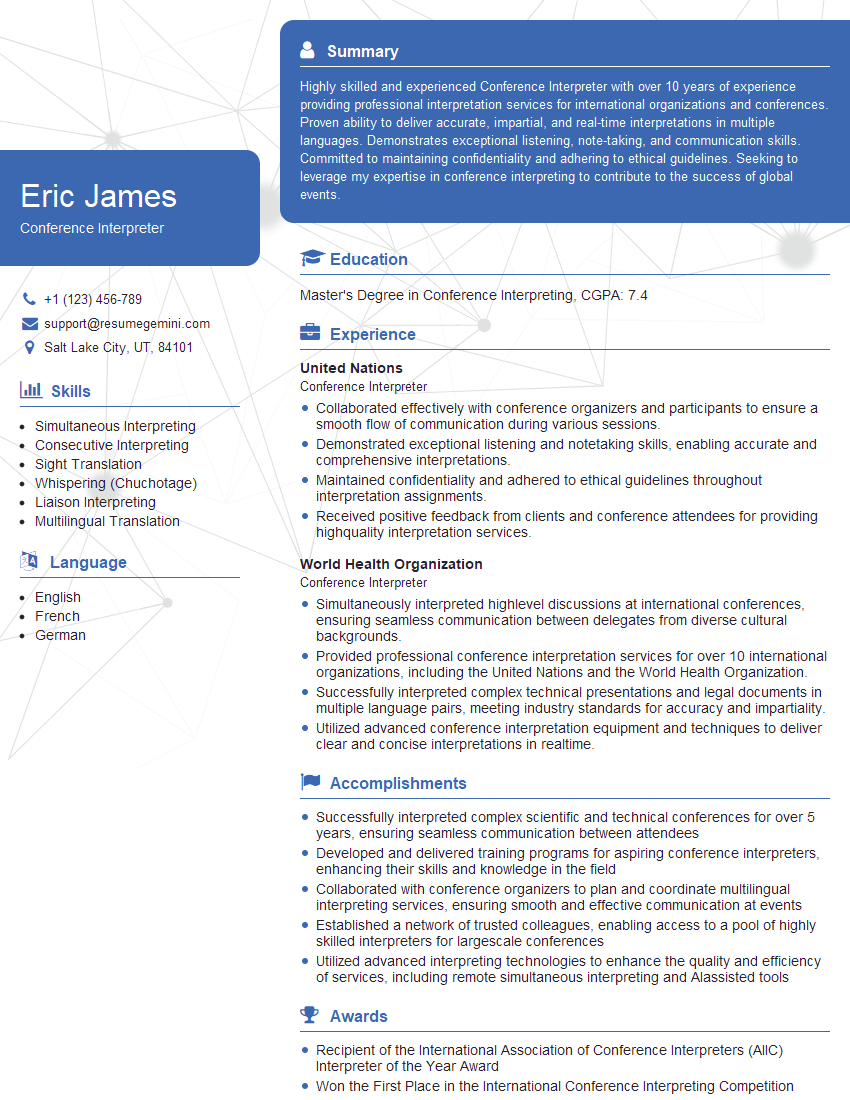
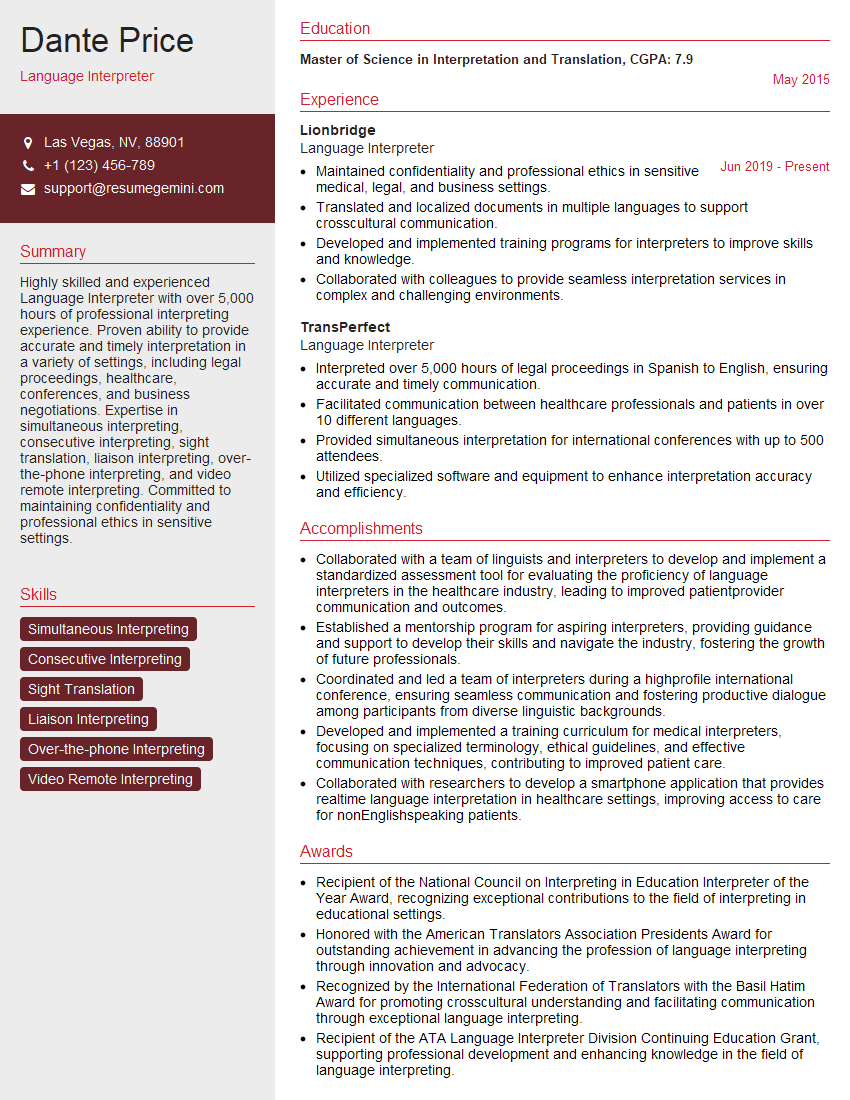
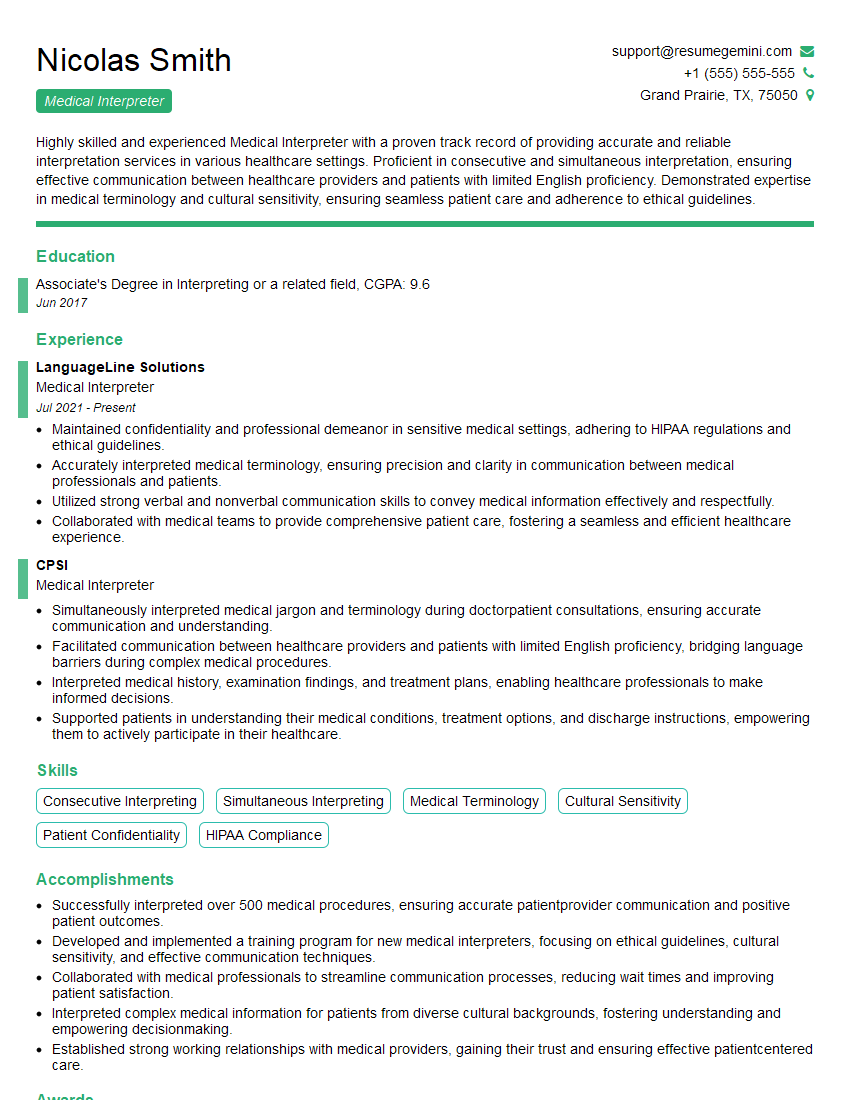
Mastering Interpreter Support skills significantly enhances your career prospects in a rapidly globalizing world. Proficiency in this field opens doors to diverse and rewarding opportunities within various sectors. To maximize your chances of landing your dream role, building an ATS-friendly resume is crucial. ResumeGemini is a trusted resource to help you craft a professional and impactful resume that highlights your skills and experience effectively. Examples of resumes tailored to Interpreter Support are available to guide you through the process. Invest the time to create a compelling resume – it’s your first impression and a critical step towards securing your next interview.
Explore more articles
Users Rating of Our Blogs
Share Your Experience
We value your feedback! Please rate our content and share your thoughts (optional).
What Readers Say About Our Blog
To the interviewgemini.com Webmaster.
Very helpful and content specific questions to help prepare me for my interview!
Thank you
To the interviewgemini.com Webmaster.
This was kind of a unique content I found around the specialized skills. Very helpful questions and good detailed answers.
Very Helpful blog, thank you Interviewgemini team.