Interviews are more than just a Q&A session—they’re a chance to prove your worth. This blog dives into essential Interpreting Natural and Cultural History interview questions and expert tips to help you align your answers with what hiring managers are looking for. Start preparing to shine!
Questions Asked in Interpreting Natural and Cultural History Interview
Q 1. Explain the difference between natural and cultural history interpretation.
Natural history interpretation focuses on the non-human world, explaining the processes and patterns of the natural environment, such as geology, ecology, and evolution. It seeks to reveal the interconnectedness of living things and their physical surroundings. Think of a museum exhibit detailing the formation of a particular rock type, the life cycle of a butterfly, or the impact of a specific climate change event. In contrast, cultural history interpretation centers on the human experience and its interaction with the environment. It delves into human societies, their beliefs, practices, technologies, and how they shaped and were shaped by their surroundings. An example of this would be an exhibit explaining the history of a local Indigenous community, their traditional practices of land management, or the social impact of a particular historical event.
The key difference lies in the subject matter: natural history deals with nature itself, while cultural history deals with humanity’s interaction with and influence on nature, including its own societal development.
Q 2. Describe a successful interpretation program you’ve designed or implemented.
One successful interpretation program I designed was for a historic mill complex. The challenge was to engage visitors—ranging from families with young children to seasoned history buffs—with the complex machinery and processes of early industrialization. We created a multi-faceted approach:
- Interactive Exhibits: Hands-on exhibits allowed children to experience the gears and pulleys, building an intuitive understanding of how the mill functioned.
- Audio Tours: We developed separate audio tours tailored to different age groups, using engaging narratives and sound effects to bring the mill to life. The adult tour focused on the economic and social history, while the children’s tour focused on the wonder of the mechanics.
- Living History Demonstrations: We employed costumed interpreters who demonstrated traditional milling techniques, answering visitor questions and engaging them in a lively, participatory experience. This helped make the technology relatable and less intimidating.
- Digital Integration: A dedicated website and augmented reality app provided additional information, historical images, and 360° virtual tours, extending the learning experience beyond the physical site.
The program’s success was measured by increased visitor numbers, positive feedback surveys, and a significant boost in community engagement surrounding the mill’s history.
Q 3. How do you adapt your interpretation style to different audiences (e.g., children, adults, diverse cultural backgrounds)?
Adapting interpretation style to different audiences requires a nuanced understanding of their background, interests, and learning styles. For children, I utilize storytelling, games, and hands-on activities to foster engagement and understanding. For adults, I may incorporate more in-depth historical analyses and complex concepts. For diverse cultural backgrounds, I ensure the interpretation is culturally sensitive, avoiding generalizations and actively incorporating diverse perspectives and voices. This might involve collaborating with community members from the relevant cultural groups to ensure accuracy and avoid misrepresentation.
For example, when interpreting a site with Indigenous significance, I would consult with Indigenous Knowledge keepers to ensure that the story is told respectfully and accurately, incorporating their perspectives and interpretations. Similarly, an exhibit on industrialization could include different perspectives on the social and economic changes it brought about, recognizing the experiences of laborers, owners, and the surrounding community.
Q 4. What are the key principles of effective interpretation?
Effective interpretation hinges on several key principles:
- Relevance: Connecting the interpreted material to the visitor’s lives and experiences, making it meaningful and relatable.
- Accuracy: Ensuring the information is factual and based on reliable sources.
- Clarity: Presenting information in a clear, concise, and engaging manner, avoiding jargon.
- Objectivity: Presenting information fairly, acknowledging different perspectives, and avoiding bias.
- Engagement: Using various techniques—storytelling, demonstrations, interactive elements—to stimulate visitor interest and participation.
- Theme: Organizing information around a central theme or narrative to create a cohesive and memorable experience.
These principles ensure visitors not only gain knowledge but also connect emotionally with the interpreted material, fostering a deeper understanding and appreciation.
Q 5. How do you incorporate diverse perspectives and inclusive practices in your interpretation?
Incorporating diverse perspectives is crucial for ethical and inclusive interpretation. This involves actively seeking out and amplifying marginalized voices and narratives. It’s not enough to simply mention diverse viewpoints; they need to be central to the narrative. This requires researching and understanding the historical context fully, acknowledging gaps in historical records and challenging dominant narratives.
For instance, when interpreting a historical site associated with slavery, it’s imperative to include the perspectives of enslaved people, not just the narratives of their enslavers. This may involve utilizing oral histories, letters, and other primary sources to give voice to those often left out of traditional historical accounts. Further, the design and language of exhibits should be accessible and inclusive, considering the needs of visitors with disabilities, different literacy levels, and diverse linguistic backgrounds.
Q 6. Explain your understanding of the ethical considerations related to interpreting cultural heritage sites.
Ethical considerations in interpreting cultural heritage sites are paramount. We must be mindful of the potential for misrepresentation, cultural appropriation, and the commodification of cultural heritage. Respect for the site’s significance to different communities is essential.
This means prioritizing consultation and collaboration with Indigenous communities and other relevant stakeholders. We must avoid perpetuating harmful stereotypes or presenting incomplete or inaccurate narratives. The preservation and protection of the site’s physical and intangible heritage should be paramount, ensuring that interpretation practices don’t contribute to its degradation or damage. Moreover, the economic benefits of interpretation should be fairly distributed among affected communities.
Q 7. Describe your experience using different interpretation methods (e.g., guided tours, exhibits, digital media).
My experience encompasses a broad range of interpretation methods. Guided tours provide a dynamic and interactive experience, allowing for immediate feedback and adaptation to audience engagement. Exhibits offer a structured and visually rich way to convey information, using artifacts, images, and text panels to tell a compelling story. Digital media, including websites, apps, and virtual reality experiences, expand the reach of interpretation, making it accessible to a wider audience, regardless of geographic location.
For example, I’ve designed self-guided audio tours using smartphones which allow visitors to explore at their own pace and delve deeper into specific aspects of interest. I’ve also developed interactive kiosks for museum exhibits, employing touchscreens and multimedia displays to engage visitors with complex information in an accessible format. Furthermore, I’ve created virtual tours of sites that are difficult to access physically, using 360° photography and video to bring the experience to a global audience. Choosing the right method depends on the specific site, audience, and the interpretive goals.
Q 8. How do you assess the effectiveness of an interpretation program?
Assessing the effectiveness of an interpretation program requires a multi-faceted approach, going beyond simply counting visitor numbers. We need to measure how well the program achieves its stated goals, which might include increasing understanding, fostering appreciation, inspiring action, or changing attitudes.
- Pre- and Post-visit Surveys: These questionnaires gauge changes in knowledge, attitudes, and behaviors before and after visitors experience the program. For example, we might ask about their understanding of a specific historical event before and after a guided tour.
- Informal Feedback Mechanisms: This includes visitor comment books, suggestion boxes, and informal conversations with visitors. This allows for immediate feedback and addressing concerns.
- Quantitative Data Analysis: Tracking metrics like attendance, program participation rates, and website traffic provides a quantitative view of the program’s reach and engagement. A marked increase in attendance at a specific exhibit after the introduction of an interactive element would indicate success.
- Qualitative Data Analysis: Analyzing visitor comments, observations, and focus group discussions provides valuable insights into the effectiveness of the message and visitor experience. A recurring theme of confusion regarding a certain exhibit’s narrative points to the need for improvement.
Ultimately, a successful interpretation program demonstrably enhances the visitor experience, leading to increased understanding, appreciation, and connection with the natural and cultural heritage presented.
Q 9. How do you handle challenging questions or situations from visitors?
Handling challenging questions or situations requires a combination of preparation, empathy, and skillful communication. The key is to remain calm, listen attentively, and acknowledge the visitor’s perspective.
- Acknowledge and Validate: Begin by acknowledging the visitor’s question or concern. Even if you don’t immediately know the answer, showing that you understand their perspective is crucial. For example, saying ‘That’s a great question, I’m glad you asked’ shows respect.
- Research and Respond: If unsure, honestly admit it, but commit to finding the answer and following up. This demonstrates integrity and builds trust. You can offer to consult relevant resources or experts.
- Neutral and Factual Responses: Avoid offering biased or speculative responses, especially when dealing with controversial topics. Focus on presenting accurate information based on reliable sources.
- Referrals and Resources: If the question falls outside your expertise, connect the visitor with appropriate resources or experts. This indicates that you value their inquiry and care about providing comprehensive answers.
Successfully handling challenging situations transforms potential conflicts into opportunities to build rapport and deepen visitor engagement. It’s an essential skill for any interpreter.
Q 10. Describe your experience working with diverse teams and stakeholders.
My experience working with diverse teams and stakeholders has been invaluable in developing and implementing successful interpretation programs. Collaboration is key; it allows for bringing varied perspectives and expertise to the table. This ensures inclusivity and a more rounded approach.
- Diverse Skill Sets: I’ve worked with historians, scientists, educators, designers, and community members. Each brings unique insights, from historical accuracy to accessibility considerations, fostering creativity and innovation.
- Stakeholder Engagement: Successfully integrating the perspectives of community members, local authorities, and government agencies ensures the program resonates with diverse audiences and reflects local values. This is especially important when working with indigenous communities.
- Conflict Resolution: Managing differing opinions requires active listening, open communication, and a willingness to compromise. This has honed my abilities in facilitating consensus and finding mutually beneficial solutions.
- Inclusive Language and Representation: Ensuring that our interpretation materials and programs are inclusive and represent the diversity of our history and natural world is paramount. We need to avoid perpetuating harmful stereotypes.
Building trust and effective communication with diverse stakeholders is critical to developing and implementing relevant and impactful interpretation programs.
Q 11. How do you stay up-to-date with current research and best practices in natural and cultural history?
Staying current with research and best practices is a continuous process. It’s vital for maintaining credibility and developing innovative and engaging interpretation programs.
- Professional Development: Attending conferences, workshops, and seminars is essential for learning about new research, methodologies, and technological advancements in the field.
- Peer-Reviewed Journals and Publications: Regularly reading scholarly journals and publications keeps me updated on cutting-edge research and new discoveries in natural and cultural history.
- Online Resources and Networks: Engaging with online communities and forums dedicated to interpretation and related fields provides access to a wealth of information and allows for the exchange of ideas.
- Mentorship and Collaboration: Learning from experienced interpreters and collaborating with colleagues expands perspectives and provides invaluable feedback.
Continuous learning ensures that our interpretation remains accurate, relevant, and engaging, reflecting the evolving understanding of the past and present.
Q 12. How would you interpret a complex scientific concept to a layperson?
Interpreting complex scientific concepts for a layperson requires simplifying the information without sacrificing accuracy. It’s about translating jargon into relatable language and using effective communication strategies.
For example, explaining the concept of plate tectonics: instead of delving into detailed geological processes, I would use an analogy of puzzle pieces. I would describe the Earth’s crust as giant puzzle pieces (tectonic plates) constantly moving, colliding, and separating. This movement can cause earthquakes and volcanic eruptions. Using visuals such as a diagram would further aid understanding.
- Analogies and Metaphors: Employing relatable analogies and metaphors helps bridge the gap between scientific concepts and everyday experiences.
- Storytelling: Narratives are powerful tools for engaging audiences and making information memorable.
- Visual Aids: Using images, diagrams, and interactive displays significantly enhances comprehension.
- Interactive Elements: Engaging visitors through hands-on activities, such as interactive exhibits or demonstrations, makes learning more active and enjoyable.
By using clear, concise language, relatable examples, and visual aids, complex scientific concepts can be made accessible and engaging to a broad audience.
Q 13. Explain your experience with visitor engagement strategies.
Visitor engagement is paramount in effective interpretation. It’s about creating a meaningful and memorable experience that fosters connection and understanding.
- Interactive Exhibits: Hands-on exhibits that allow visitors to actively participate enhance engagement and make learning more enjoyable. Examples include touch-screen kiosks, interactive maps, and sensory experiences.
- Guided Tours and Programs: Engaging storytelling and well-structured programs offer a more intimate and personalized experience, enhancing visitor learning.
- Social Media and Digital Platforms: Using social media to share stories, photos, and videos related to the site’s history expands reach and keeps visitors engaged after their visit.
- Community Partnerships: Collaborating with local artists, musicians, and community groups can add a unique and authentic dimension to the visitor experience.
- Feedback Mechanisms: Regularly soliciting feedback allows for adjustments to programs and ensures visitor needs are met.
Successful visitor engagement strategies create a sense of belonging, fostering a deeper connection with the natural and cultural heritage being interpreted.
Q 14. How do you manage conflicts between preservation and access at heritage sites?
Managing conflicts between preservation and access at heritage sites requires a careful balancing act. The goal is to ensure that the site is protected for future generations while still providing meaningful access for visitors.
- Preservation Planning: Developing comprehensive preservation plans that address potential threats and outline strategies for mitigation is essential. This includes environmental protection, structural maintenance, and artifact preservation.
- Visitor Management Strategies: Implementing strategies like regulated visitor numbers, designated pathways, and guided tours can minimize the impact of visitor traffic on the site’s integrity.
- Educational Programs: Educating visitors on the importance of preservation and responsible behavior through interpretive signage, talks, and demonstrations fosters a sense of stewardship.
- Technological Solutions: Utilizing virtual reality, augmented reality, and digital archives offers alternative ways to access and experience the site without physically impacting fragile areas.
- Adaptive Reuse: Finding ways to repurpose existing structures while preserving their historical integrity can enhance both access and preservation. For example, converting a historic building into a visitor centre.
Finding the right balance between preservation and access requires careful planning, innovative solutions, and a strong commitment to ensuring that the heritage site is protected for the enjoyment and education of both current and future generations.
Q 15. Describe your experience with developing educational materials.
Developing engaging educational materials is crucial for effective interpretation. My approach centers on understanding the target audience, crafting compelling narratives, and utilizing diverse media. I’ve created numerous materials, ranging from interactive museum exhibits and guided tours, to self-guided audio trails and online educational resources. For example, I developed an interactive exhibit about local flora and fauna, incorporating touchscreen technology, physical specimens, and engaging visuals to cater to varying learning styles. For a historical site, I crafted a series of short videos that highlighted key historical figures through dramatic reenactments and interviews with historians, maximizing engagement and knowledge retention. I always strive to align the materials with established learning theories, ensuring accessibility and inclusivity.
- Audience Analysis: Thorough research to understand the age, background, and interests of the intended audience is paramount.
- Narrative Development: Crafting compelling stories that connect with the audience on an emotional level, using relatable examples and clear language.
- Multi-Media Approach: Utilizing a mix of text, images, audio, and video to cater to diverse learning preferences.
- Accessibility Considerations: Incorporating features like large print, audio descriptions, and sign language interpretation to make the materials accessible to all.
Career Expert Tips:
- Ace those interviews! Prepare effectively by reviewing the Top 50 Most Common Interview Questions on ResumeGemini.
- Navigate your job search with confidence! Explore a wide range of Career Tips on ResumeGemini. Learn about common challenges and recommendations to overcome them.
- Craft the perfect resume! Master the Art of Resume Writing with ResumeGemini’s guide. Showcase your unique qualifications and achievements effectively.
- Don’t miss out on holiday savings! Build your dream resume with ResumeGemini’s ATS optimized templates.
Q 16. How would you handle a situation where a visitor displays disrespectful behavior?
Handling disrespectful behavior requires a calm and professional approach, prioritizing de-escalation and education. My strategy involves first observing the situation and determining the severity of the behavior. For minor infractions, a gentle reminder of the site’s rules and expectations is often sufficient. For example, if a visitor is talking loudly during a presentation, I would politely ask them to lower their voices to respect other visitors. In cases of more serious misconduct, such as vandalism or harassment, I would intervene directly, offering a clear and concise explanation of the inappropriateness of the action. If the behavior continues, I would contact security personnel or law enforcement, depending on the situation. The goal is not to punish, but to educate and ensure a safe and respectful environment for all.
Documentation of incidents is crucial for future reference and to inform improvements in visitor management strategies. I believe strongly in restorative justice approaches where appropriate, aiming to repair any harm caused and promote future positive behavior.
Q 17. How familiar are you with accessibility guidelines for interpretation programs?
I am very familiar with accessibility guidelines, particularly those outlined by the Americans with Disabilities Act (ADA) and relevant international standards. This includes ensuring physical accessibility of sites, such as ramps and accessible restrooms, but also extends to program design. I incorporate elements like: large-print materials, audio descriptions for visual exhibits, tactile elements for visually impaired visitors, sign language interpretation, and captioning for multimedia presentations. For example, in designing a walking tour, I ensure the route is accessible for wheelchairs and other mobility devices, providing alternative routes if needed. For online content, I ensure compliance with WCAG (Web Content Accessibility Guidelines) to make it accessible to users with disabilities. Regular review and updates of materials are critical to ensure continued compliance with evolving standards.
Q 18. What strategies do you use to encourage active participation from visitors?
Encouraging active participation is key to effective interpretation. I use a variety of strategies, including interactive activities, thought-provoking questions, and opportunities for personal reflection and discussion. For instance, during a guided tour, I incorporate ‘think-pair-share’ activities where visitors discuss their initial thoughts on a topic before sharing with the group. I might ask open-ended questions, such as ‘What do you think the significance of this object is?’ In museum exhibits, I might include interactive displays that allow visitors to manipulate objects or data, enhancing engagement and learning through direct experience. I also integrate hands-on activities, such as creating historical crafts or identifying local plants and animals. The key is to create an environment where visitors feel comfortable sharing their perspectives and actively participating in the learning process. Post-visit surveys also help gauge engagement and inform future programming.
Q 19. How do you address misinformation or inaccuracies related to a historical event or natural phenomenon?
Addressing misinformation requires a delicate balance of correction and respect for visitors’ existing understanding. My approach is to present accurate information in a clear, accessible manner, without dismissing or belittling the visitor’s initial beliefs. Instead of directly confronting misinformation, I incorporate accurate information subtly, using evidence-based explanations and reputable sources. For example, if a visitor holds an inaccurate belief about a historical event, I might subtly introduce the corrected information within the context of a broader discussion, using primary source documents or expert opinions to support my point. I focus on fostering a critical thinking environment where visitors can evaluate different perspectives and arrive at their own conclusions based on evidence. It’s important to be patient and allow visitors to process new information at their own pace.
Q 20. Describe your experience with grant writing or fundraising for heritage projects.
I have extensive experience in grant writing and fundraising for heritage projects. I have successfully secured funding from various sources, including government agencies, private foundations, and corporate sponsors. My approach emphasizes a strong narrative, clearly articulating the project’s goals, impact, and budget. I carefully research potential funding sources, aligning project proposals with their priorities and guidelines. I consistently demonstrate a clear understanding of the project’s financial needs and its potential return on investment for funders. For example, in a recent successful grant application, I used compelling storytelling, strong visuals, and data to highlight the project’s community impact, resulting in securing over $50,000 in funding. This included detailed budgets, timelines, and evaluation metrics that demonstrated responsible financial management. Strong communication with funders throughout the process is essential.
Q 21. How would you prioritize competing conservation needs?
Prioritizing competing conservation needs often involves a multi-faceted approach involving stakeholder collaboration and evidence-based decision-making. A structured framework incorporating several key elements is vital. First, a thorough assessment of all the competing needs is essential. This should consider ecological, social, and economic factors and be informed by robust scientific data. Next, each conservation need is evaluated based on factors like urgency, feasibility, cost-effectiveness, and long-term impact. This often involves scoring systems or matrix analysis. Third, collaboration with stakeholders, including local communities, scientists, and policymakers, is crucial to ensure the chosen priorities reflect the values and needs of all concerned. For example, in a situation where limited resources exist, a cost-benefit analysis may determine that preserving a critically endangered species should be prioritized over restoring a habitat area that can be regenerated later. Finally, regular monitoring and review are vital to ensure conservation efforts remain aligned with the needs and changing conditions.
Q 22. Explain your experience with managing collections or artifacts.
My experience in managing collections and artifacts spans over fifteen years, encompassing diverse roles from cataloging and conservation to curatorial duties and exhibit design. I’ve worked with everything from delicate 18th-century textiles to robust geological specimens, each requiring unique handling and storage protocols. For instance, during my time at the State Museum, I spearheaded the digitization project for our anthropological collection – a massive undertaking requiring meticulous documentation, preservation techniques, and database management. This involved not only the physical handling and imaging of the artifacts but also researching their provenance and contextual information, creating metadata for easier access and research. Another project involved the development and implementation of an environmental monitoring system to mitigate the risk of damage from fluctuating temperature and humidity levels. This illustrates my commitment to proactive collection care and preservation best practices.
- Cataloging and Documentation: Implementing standardized cataloging systems to ensure accurate tracking and accessibility of artifacts.
- Conservation and Preservation: Developing and implementing preservation plans to protect artifacts from deterioration.
- Database Management: Utilizing database software to manage extensive collection data, including metadata and provenance information.
Q 23. How would you create an engaging and informative exhibit on a specific historical or natural topic?
Creating an engaging and informative exhibit requires a multi-faceted approach. Let’s take the example of an exhibit on the impact of the Industrial Revolution on local communities. The first step would be rigorous research to understand the social, economic, and environmental changes. This research would inform the narrative arc of the exhibit. Next, I would focus on selecting artifacts and visuals that resonate emotionally. Instead of just displaying factory tools, I would include personal items like letters, photographs, and even oral histories from individuals who lived through that era. Interactive elements, like touchscreen displays providing detailed information or even a simulated factory environment, add another layer of engagement. The exhibition design itself would be carefully considered, using compelling visuals, accessible language, and clear signage. Finally, educational programs and community events tied to the exhibition would extend its reach and foster deeper understanding. For example, we might host workshops on 19th-century crafts or invite local historians to give talks. The key is to tell a compelling story using a variety of media and create opportunities for visitors to actively participate in learning.
Q 24. What are the limitations of relying solely on written materials for interpretation?
Relying solely on written materials for interpretation presents significant limitations. Written records, while invaluable, often reflect the biases and perspectives of their creators. They might overlook or misrepresent the experiences of marginalized groups. For example, historical accounts of a specific event might primarily feature the perspective of the wealthy elite, neglecting the experiences of the working class. Further, written records can be incomplete or fragmented, leaving gaps in our understanding. Non-written sources, like material culture (tools, clothing, etc.), oral histories, and even landscape features provide crucial context and perspectives that written accounts often lack. They offer a more holistic and nuanced understanding of the past, counteracting the biases of written materials. For instance, studying the tools used by a specific artisan provides insight into their skill level and economic status, information not always found in written documentation.
Q 25. Describe your experience with conducting research for interpretation projects.
My research for interpretation projects is always interdisciplinary. It’s rarely just about reading books; it’s about combining different research methods. For a project on the impact of climate change on a particular ecosystem, for instance, I would consult scientific literature on climate trends and ecological changes. I’d also look at historical records, like land use maps and agricultural diaries, to understand long-term patterns. Moreover, fieldwork is often crucial. This might involve conducting interviews with community members who have lived in the area for generations to gather their perspectives and local knowledge, which is indispensable. Data analysis is also an integral part; this might involve creating maps, charting trends, and statistically analyzing ecological data. The goal is to assemble a well-rounded picture that avoids relying on a single, potentially biased, source of information.
Q 26. How would you develop a program that connects with diverse communities?
Developing a program that connects with diverse communities requires understanding and addressing the unique needs and interests of each group. This begins with community outreach – engaging local leaders, community organizations, and residents to identify topics and formats that are relevant and accessible. For example, a program on local history might offer bilingual materials and storytelling sessions in different languages to cater to linguistic diversity. Offering programs at varied times and locations ensures accessibility for those with work commitments or transportation limitations. Involving community members in the design and implementation process—as co-creators rather than passive recipients—ensures relevance and strengthens community ownership. This could take the form of participatory workshops or the inclusion of local artists and storytellers in exhibit development. Ultimately, effective engagement means creating inclusive spaces where everyone feels welcome and able to participate.
Q 27. Explain your understanding of the relationship between natural and cultural history.
Natural and cultural history are deeply intertwined, not separate entities. Human societies are inherently shaped by the natural environment—our resource availability, climate, and geography have profoundly influenced our development. For example, the agricultural practices of a given culture are directly related to the local climate and soil conditions. Conversely, human activities have always had an impact on the natural world. Deforestation, agriculture, and urbanization have altered landscapes and ecosystems significantly. The study of both natural and cultural history together provides a richer and more complete understanding of the past and present. A historical analysis of a particular region might consider its geological formation, its biodiversity, the way that indigenous populations adapted to and shaped this environment, and the subsequent impact of colonialism and industrialization. This integrated approach helps us understand both the environmental constraints and the creative adaptations that have shaped human societies throughout time.
Key Topics to Learn for Interpreting Natural and Cultural History Interview
- Interpretive Planning & Design: Understanding the principles of creating engaging and accessible interpretive experiences, including exhibit design, wayfinding, and visitor programs.
- Audience Analysis & Engagement: Identifying target audiences, tailoring interpretive messages to diverse learning styles and backgrounds, and evaluating program effectiveness.
- Communication & Storytelling: Mastering techniques for effective communication of complex historical and scientific information through various media (e.g., written text, oral presentations, multimedia). This includes understanding narrative structure and persuasive communication.
- Cultural Sensitivity & Inclusivity: Recognizing and addressing potential biases in historical narratives and ensuring respectful representation of all cultural perspectives. This includes understanding ethical considerations in interpretation.
- Natural & Cultural Resource Management: Understanding the context of the resources being interpreted, including conservation, preservation, and sustainability practices.
- Research & Content Development: Gathering and synthesizing information from diverse sources (e.g., historical documents, archaeological findings, scientific literature) to develop accurate and engaging interpretive content.
- Technology & Multimedia in Interpretation: Utilizing digital tools and technologies to enhance interpretive experiences and reach wider audiences (e.g., interactive exhibits, virtual tours, mobile apps).
- Evaluation & Assessment: Employing methods to evaluate the effectiveness of interpretive programs and exhibits, using data to inform future development and improvements.
- Accessibility & Universal Design: Designing inclusive interpretive experiences that cater to diverse needs and abilities, following universal design principles.
Next Steps
Mastering the art of interpreting natural and cultural history opens doors to diverse and rewarding careers in museums, parks, historical societies, and educational institutions. To significantly boost your job prospects, crafting a strong, ATS-friendly resume is crucial. ResumeGemini is a trusted resource that can help you build a professional resume tailored to highlight your skills and experience effectively. ResumeGemini provides examples of resumes specifically designed for candidates in Interpreting Natural and Cultural History, allowing you to create a compelling application that showcases your expertise and sets you apart from other applicants.
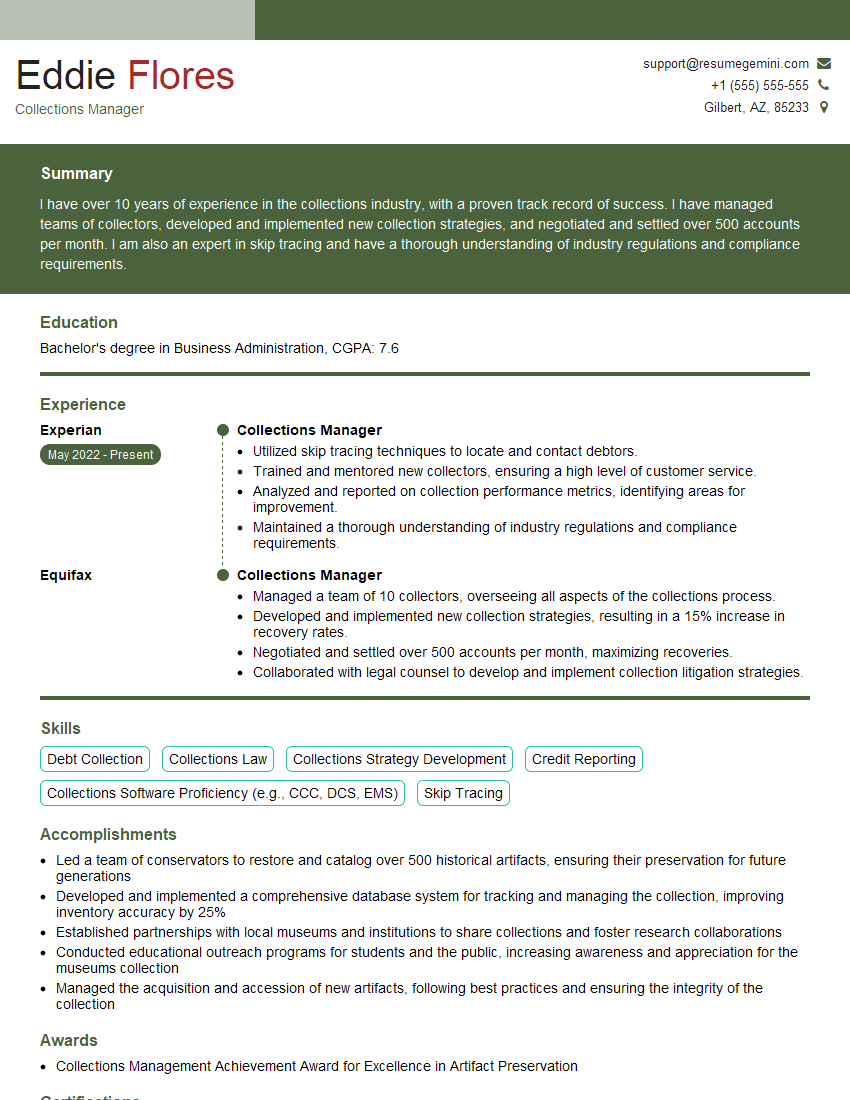
Collections Manager Resume Sample
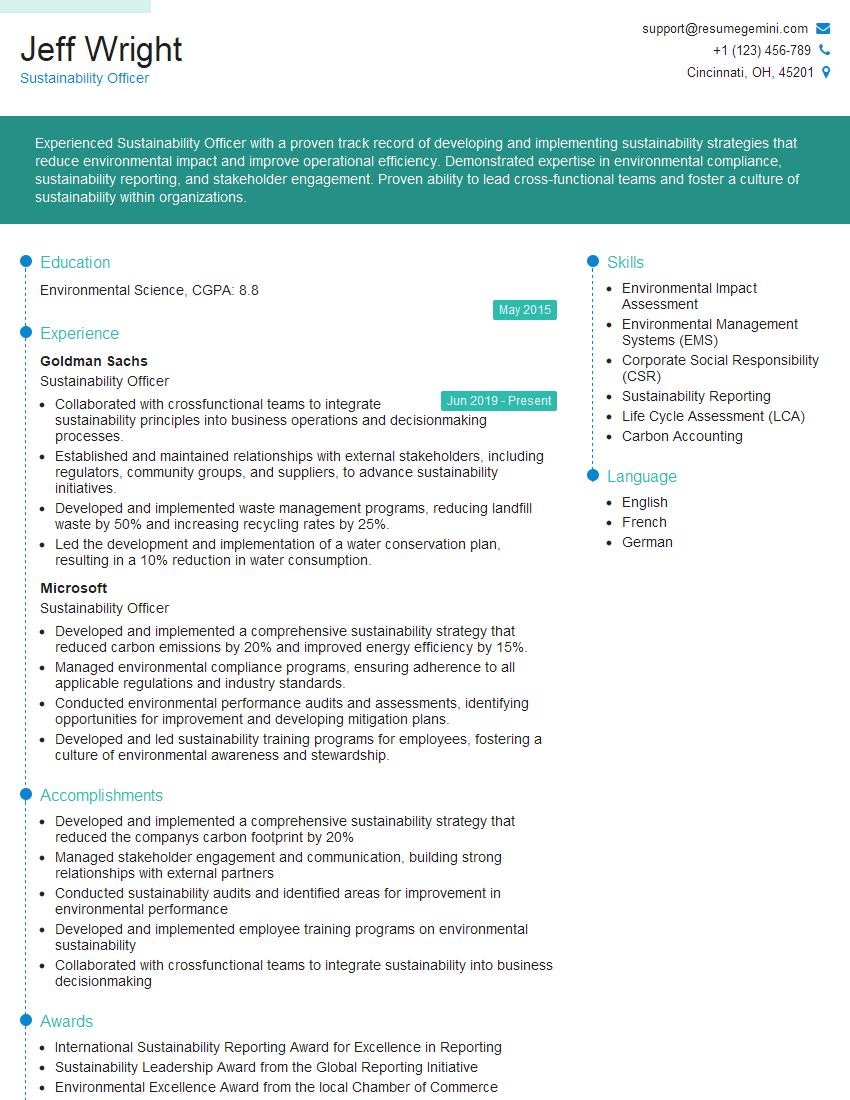
Sustainability Officer Resume Sample
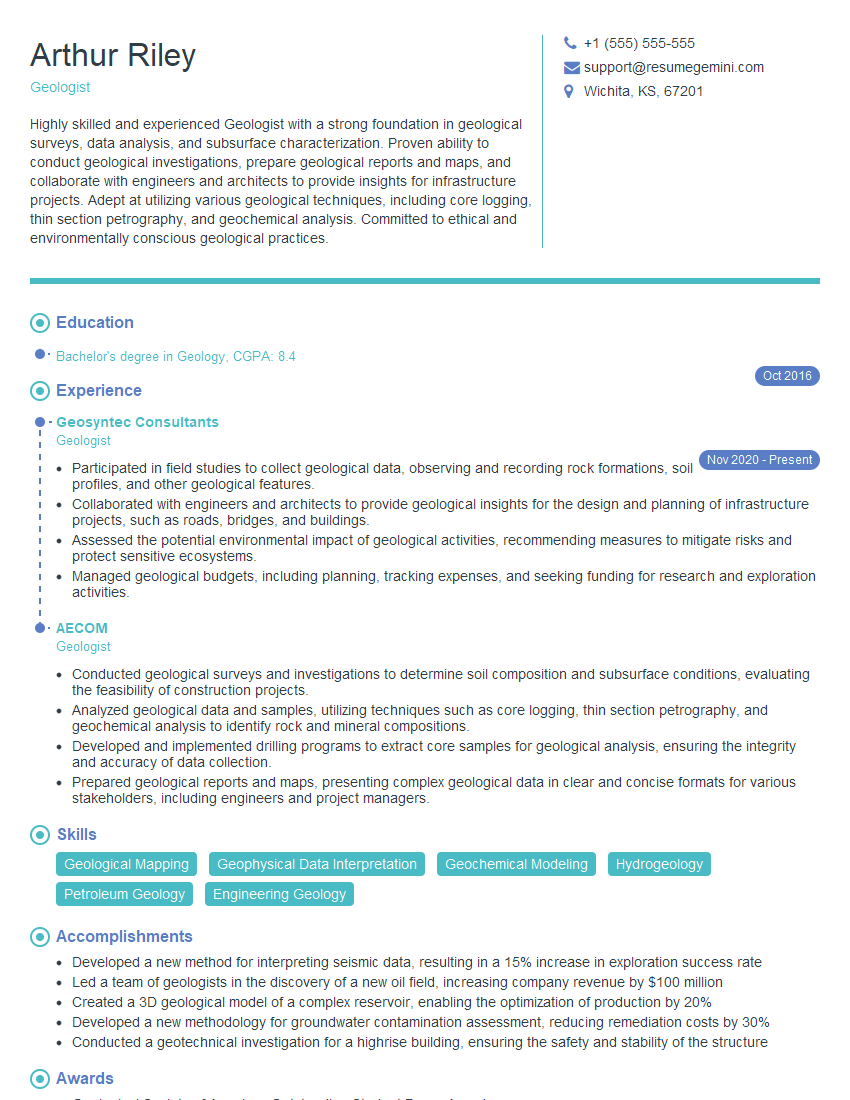
Geologist Resume Sample
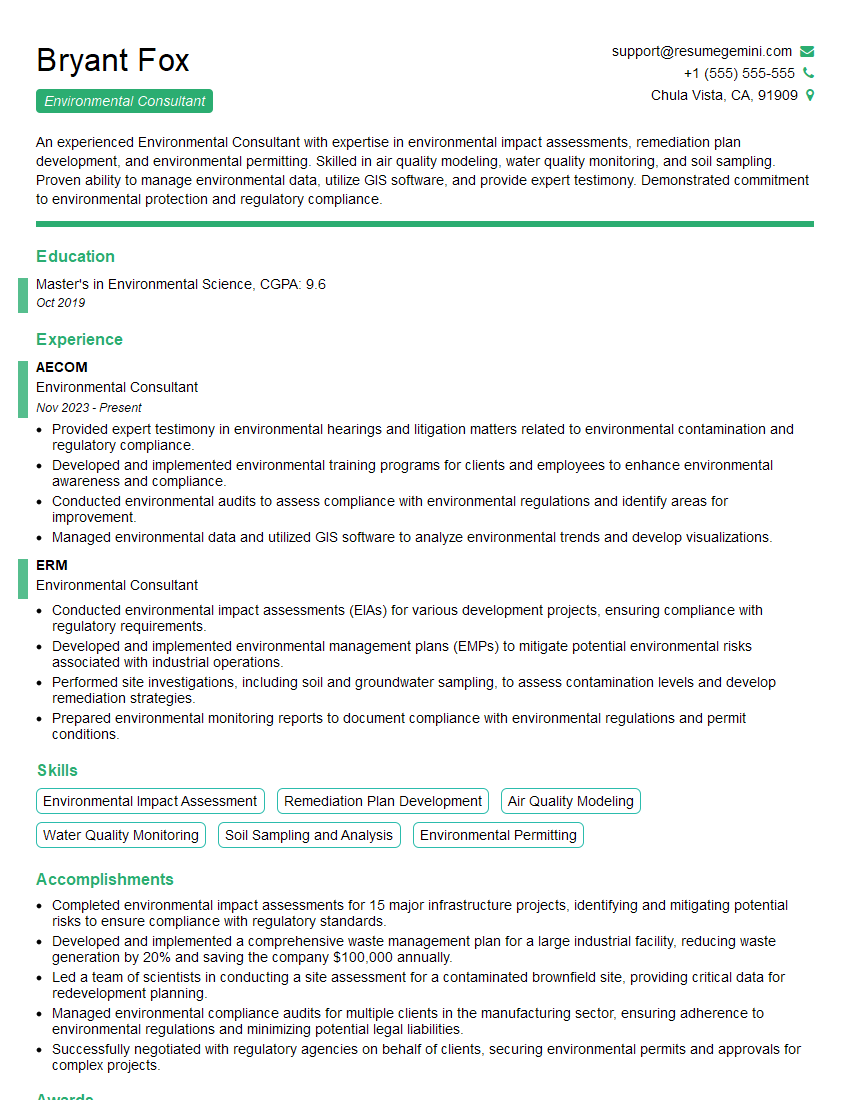
Environmental Consultant Resume Sample

Naturalist Resume Sample
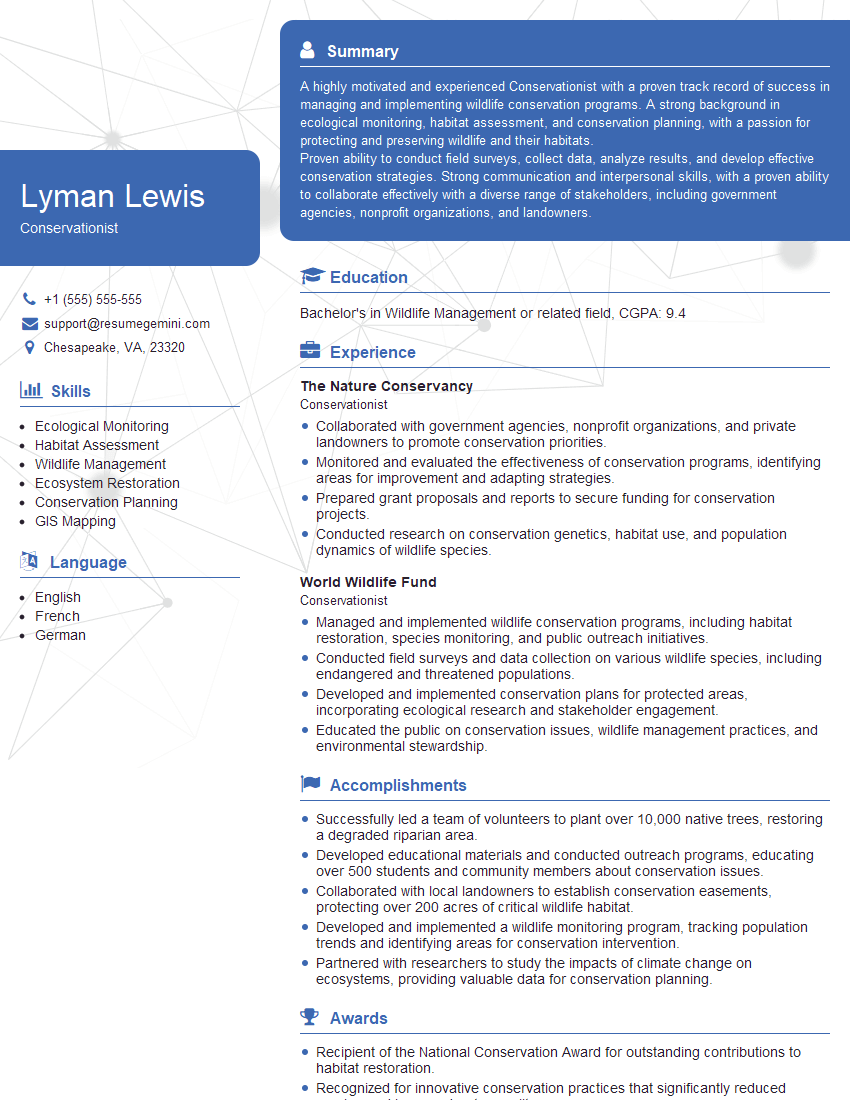
Conservationist Resume Sample

Environmental Educator Resume Sample
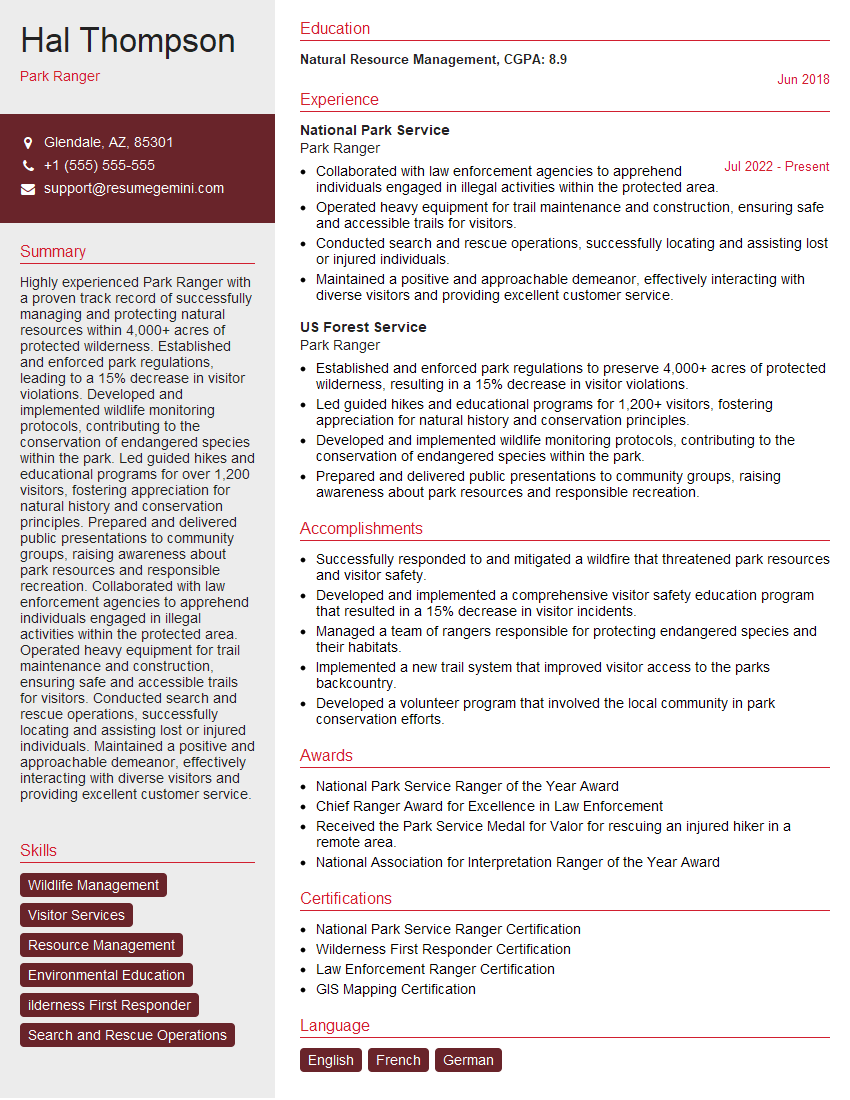
Park Ranger Resume Sample
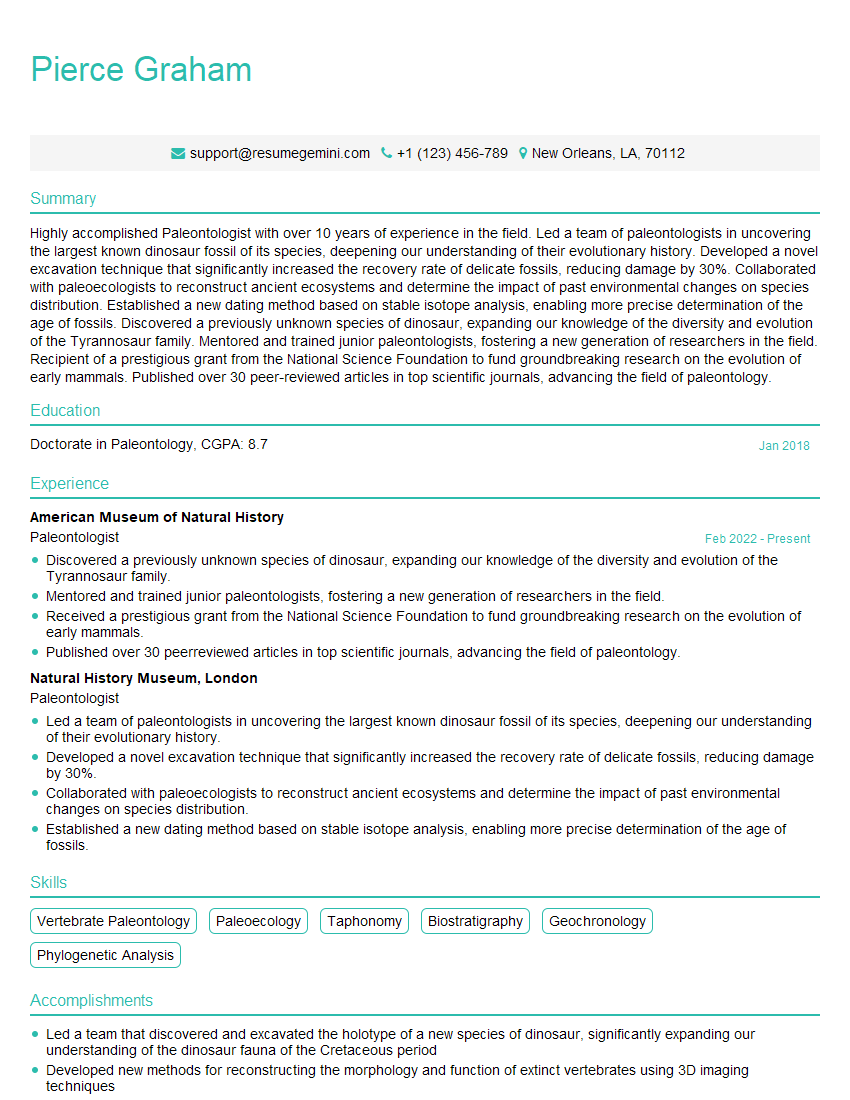
Paleontologist Resume Sample
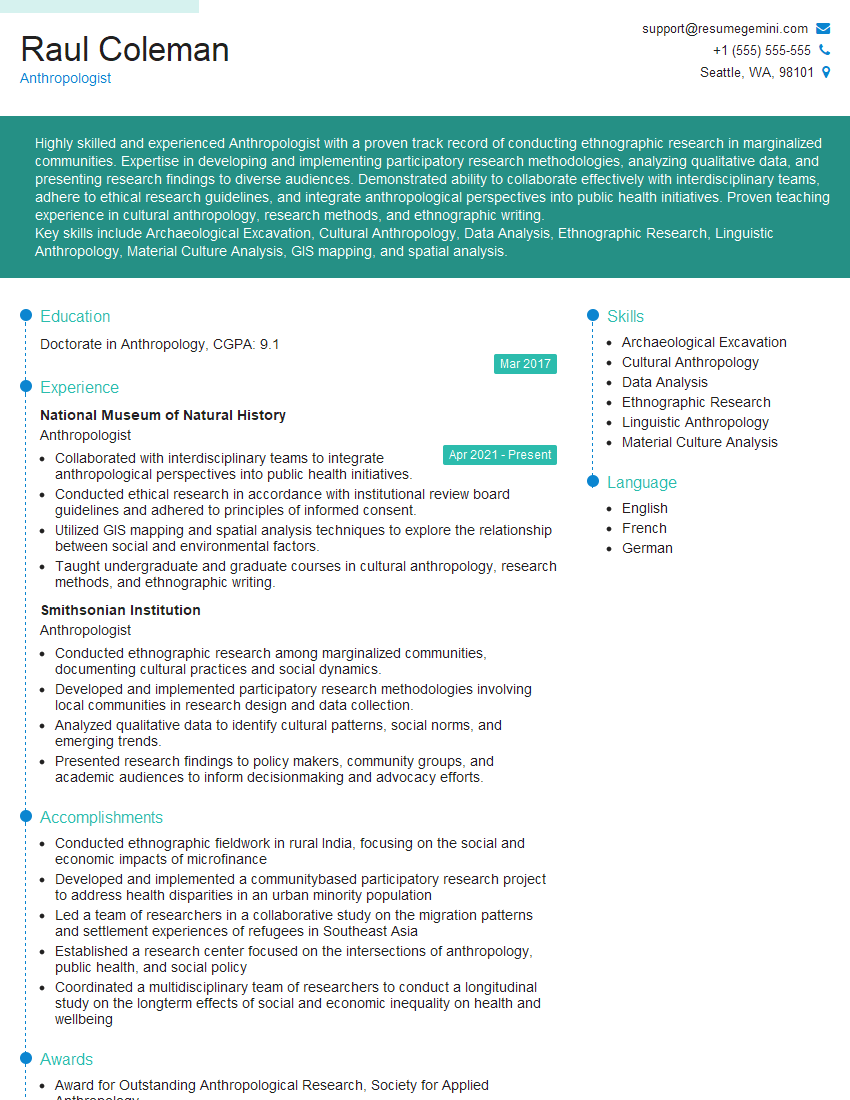
Anthropologist Resume Sample
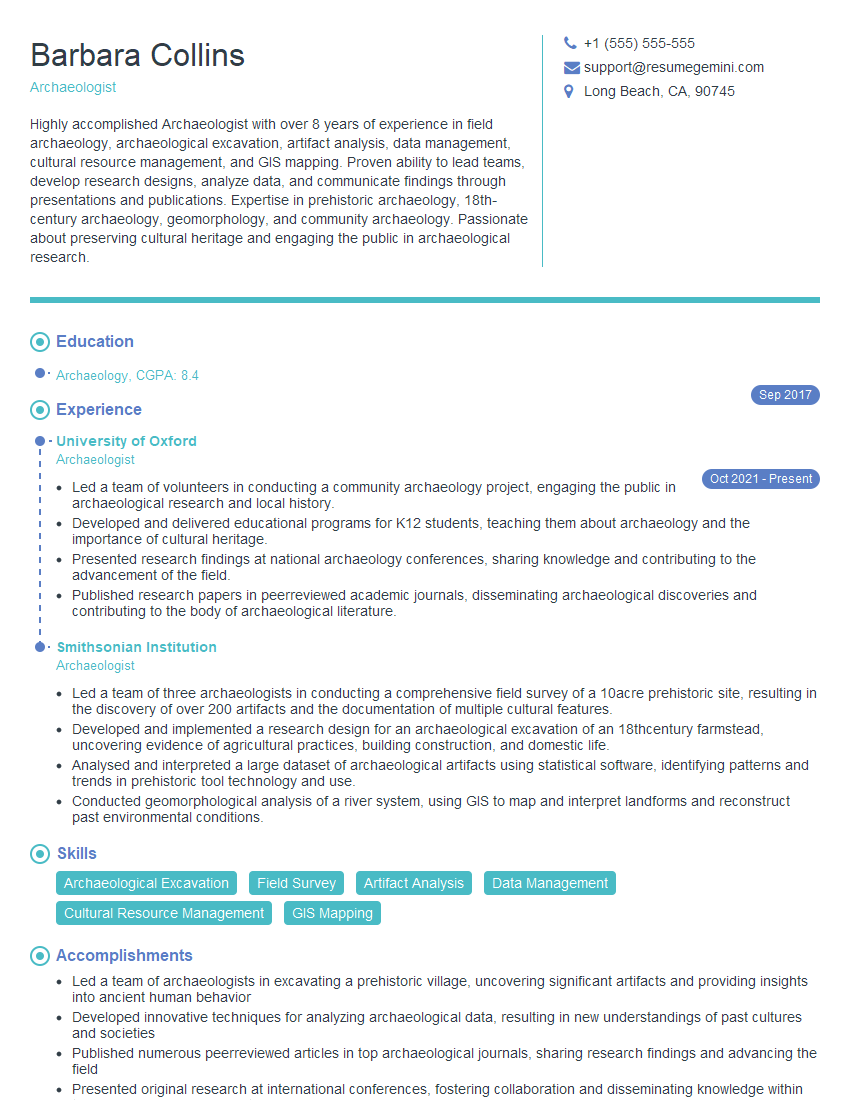
Archaeologist Resume Sample
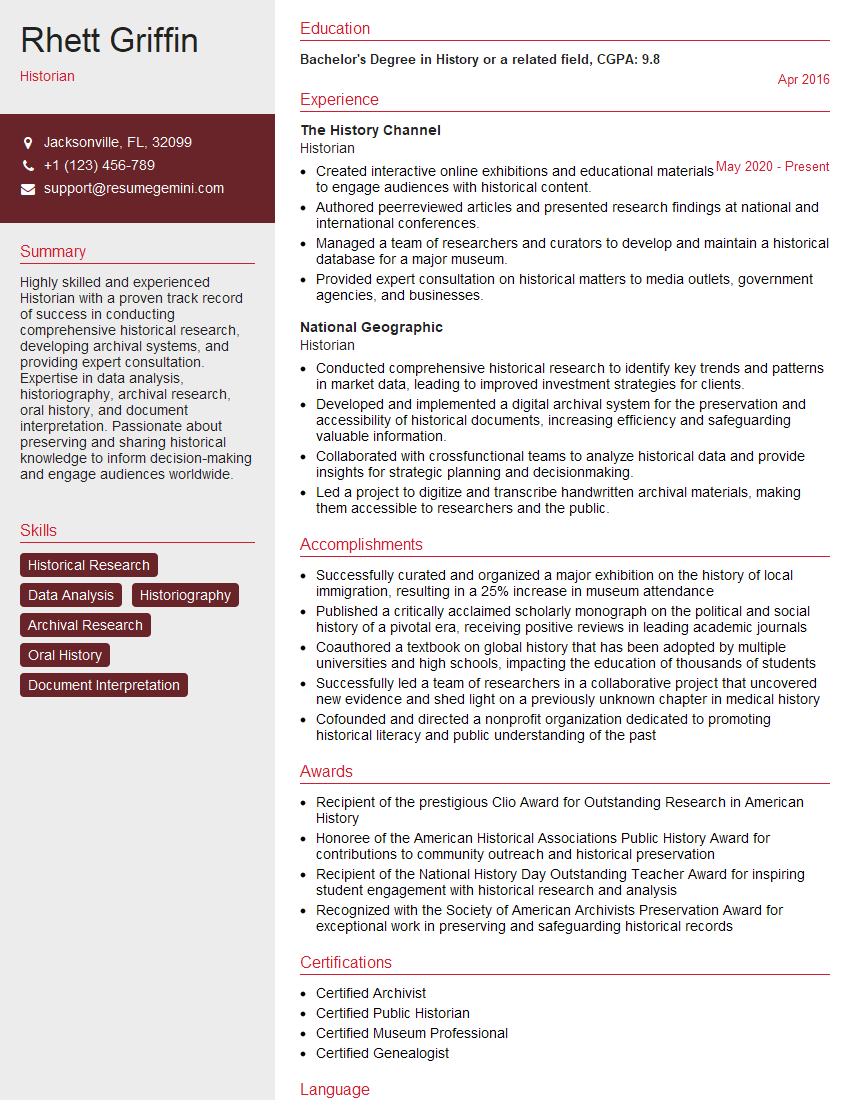
Historian Resume Sample
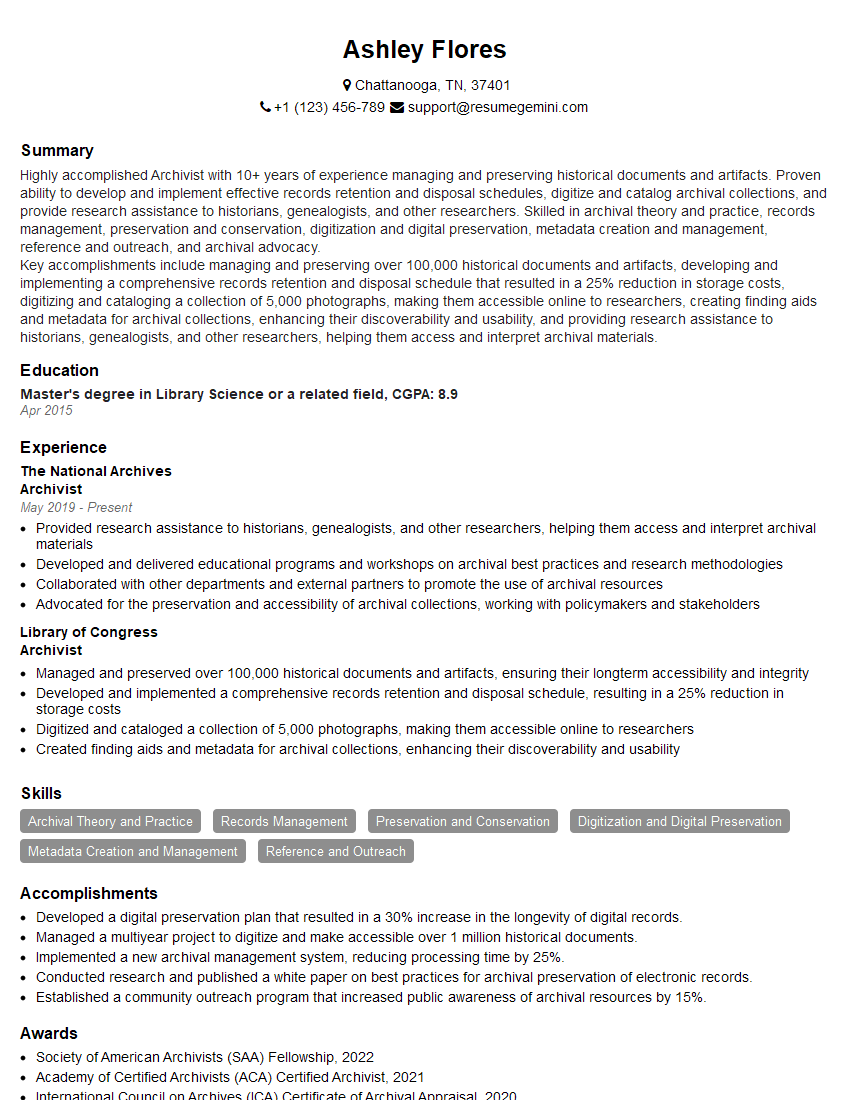
Archivist Resume Sample
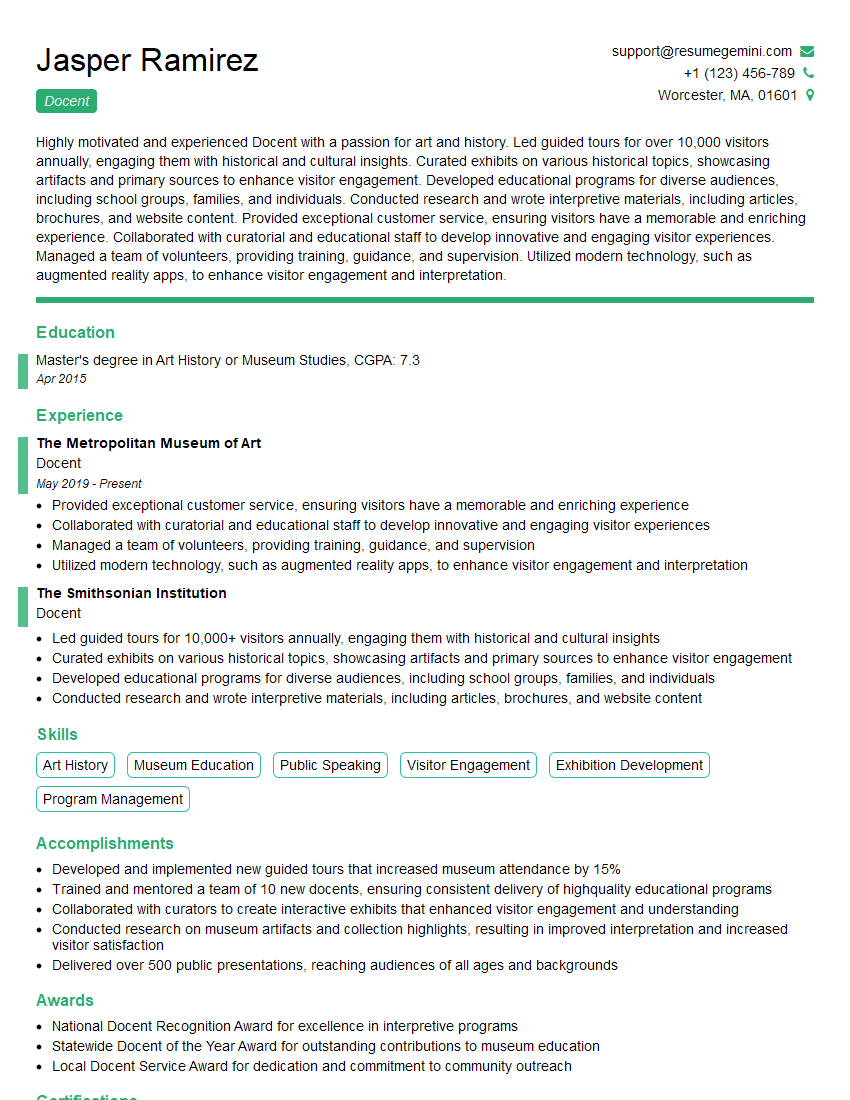
Docent Resume Sample
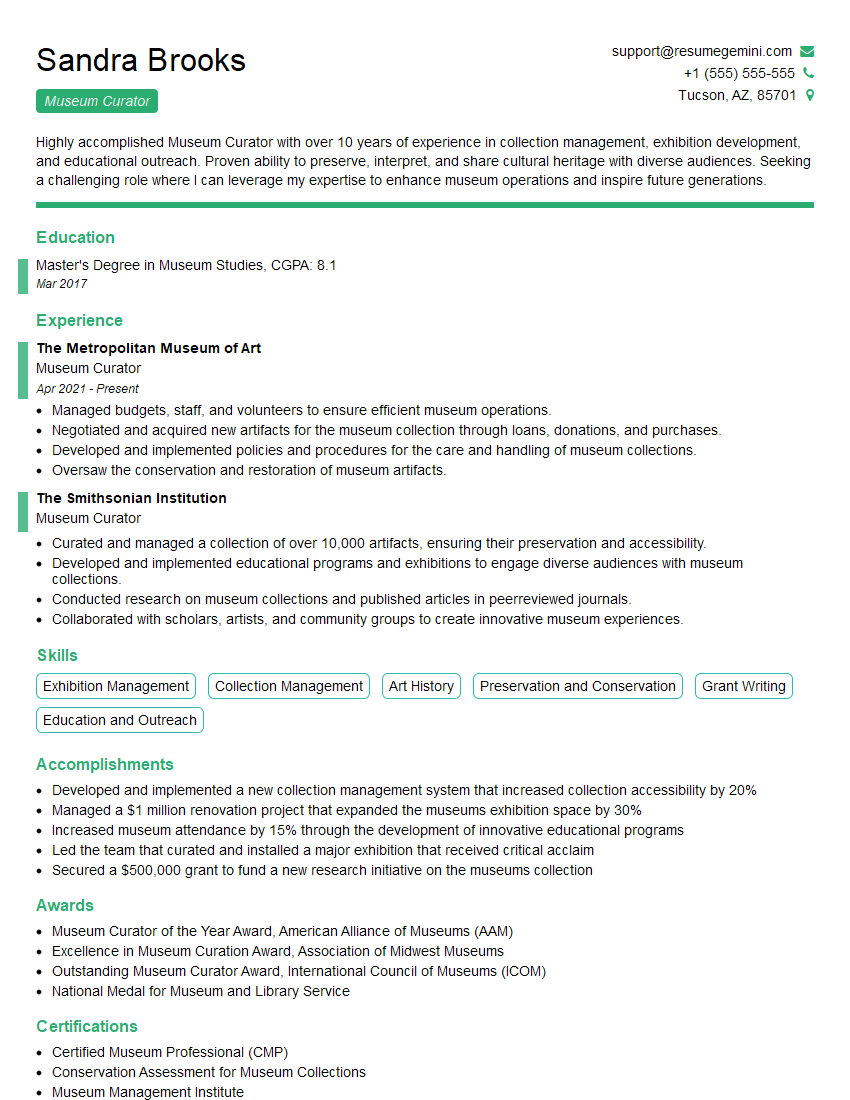
Museum Curator Resume Sample
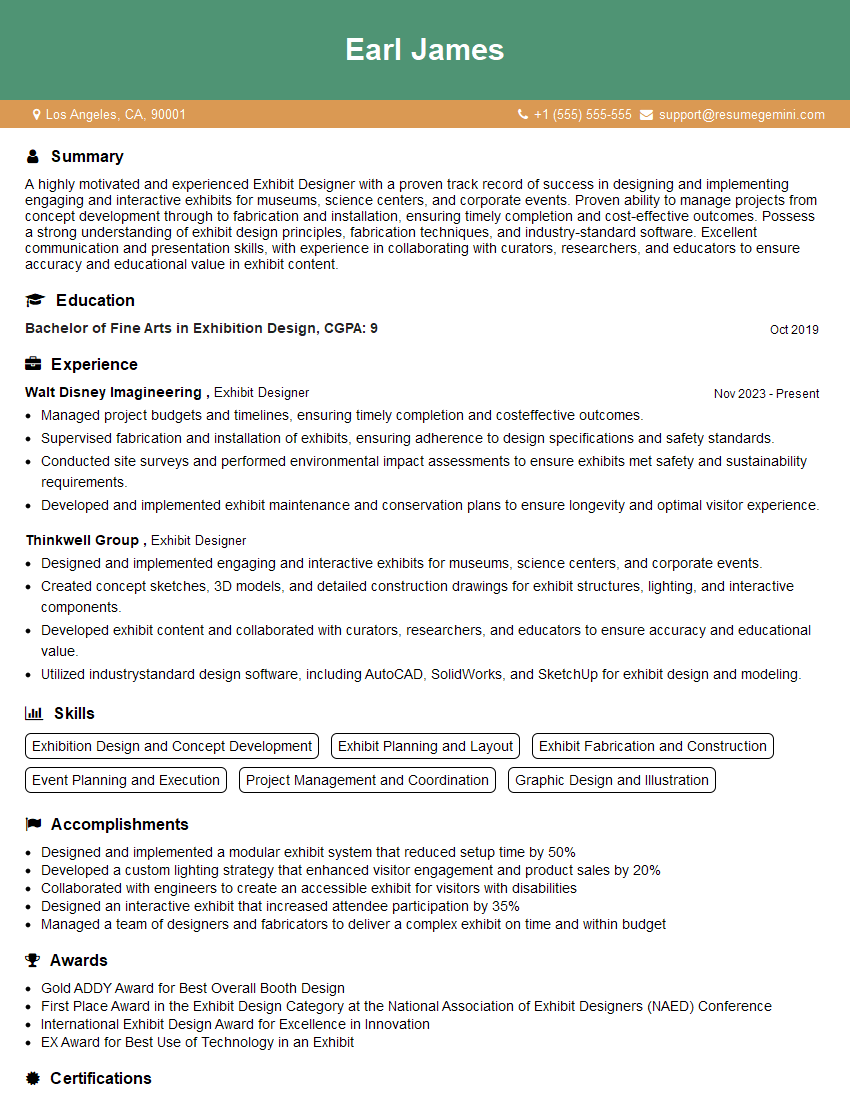
Exhibit Designer Resume Sample
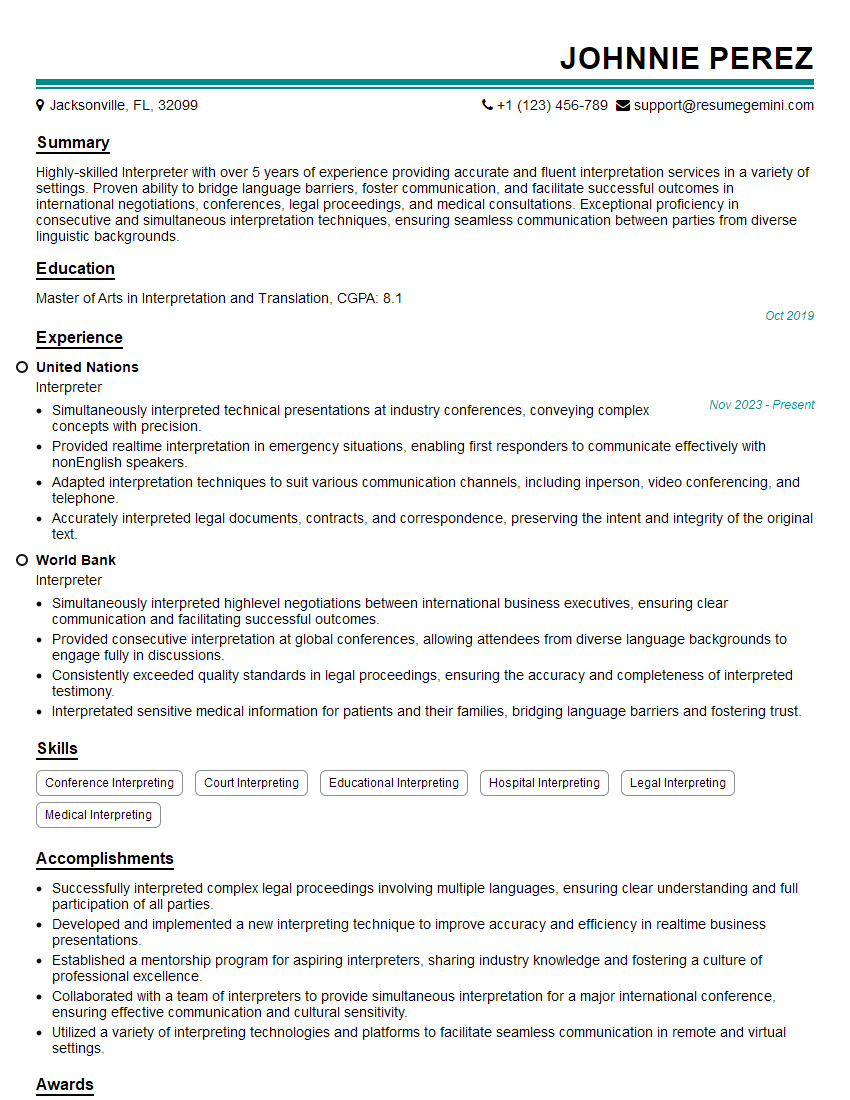
Interpreter Resume Sample
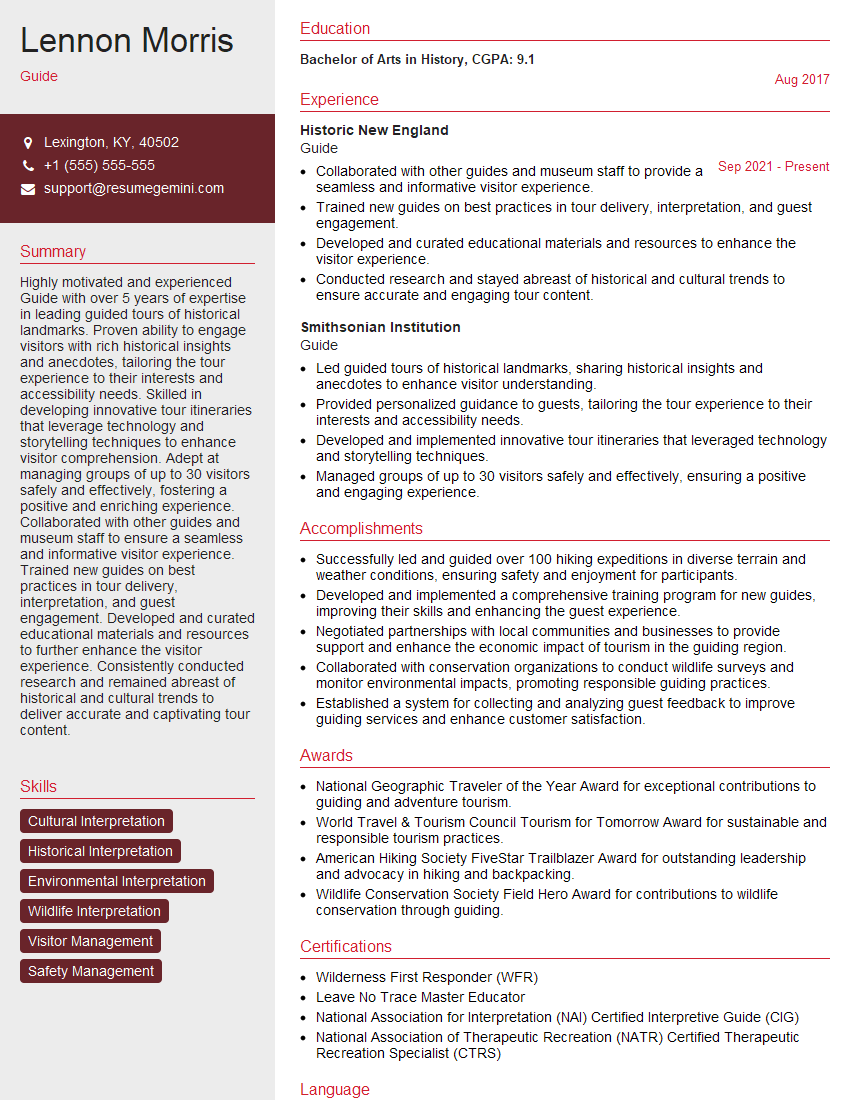
Guide Resume Sample
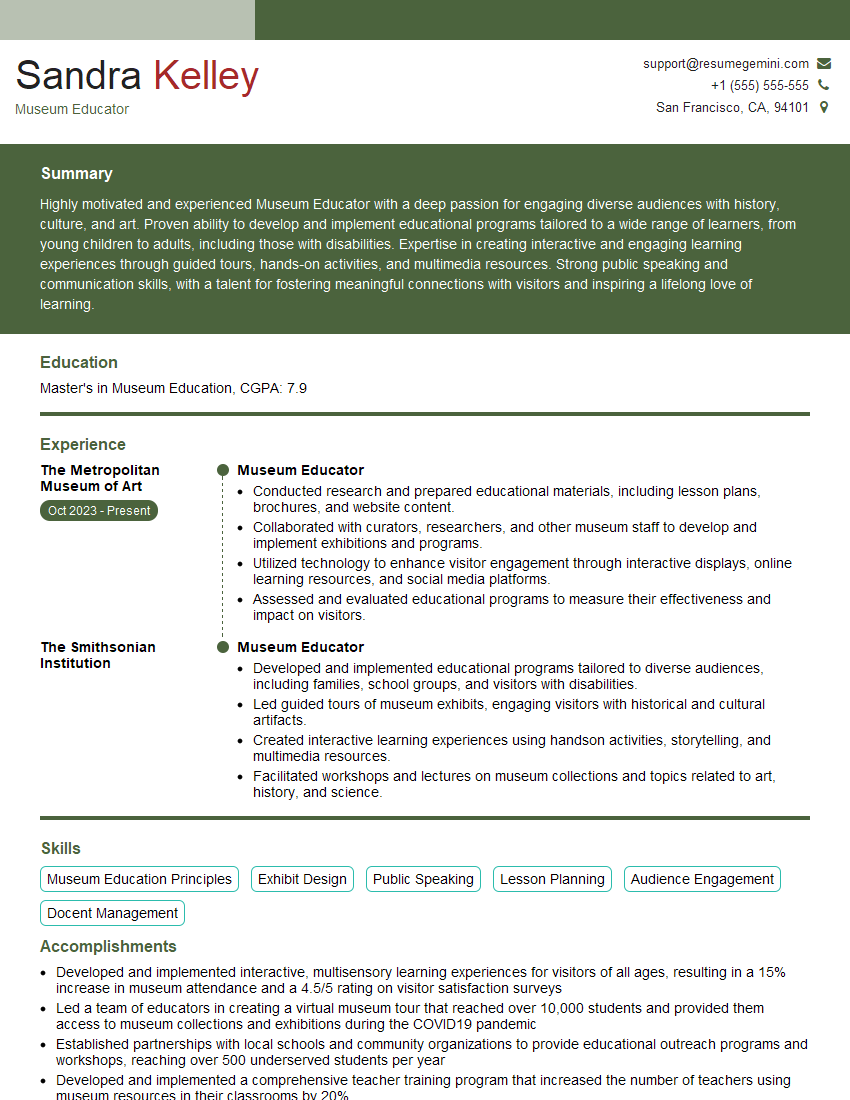
Museum Educator Resume Sample
Explore more articles
Users Rating of Our Blogs
Share Your Experience
We value your feedback! Please rate our content and share your thoughts (optional).
What Readers Say About Our Blog
To the interviewgemini.com Webmaster.
Very helpful and content specific questions to help prepare me for my interview!
Thank you
To the interviewgemini.com Webmaster.
This was kind of a unique content I found around the specialized skills. Very helpful questions and good detailed answers.
Very Helpful blog, thank you Interviewgemini team.