Are you ready to stand out in your next interview? Understanding and preparing for Knowledge of Art Materials and Techniques interview questions is a game-changer. In this blog, we’ve compiled key questions and expert advice to help you showcase your skills with confidence and precision. Let’s get started on your journey to acing the interview.
Questions Asked in Knowledge of Art Materials and Techniques Interview
Q 1. Describe the properties of linseed oil and its use in painting.
Linseed oil, derived from flax seeds, is a crucial ingredient in oil painting due to its unique properties. It’s a drying oil, meaning it polymerizes (hardens) when exposed to air, forming a durable film. This process is crucial for the longevity and integrity of oil paintings.
Properties: Linseed oil is viscous and yellowish in color. Its drying time can vary depending on the refinement process and the presence of driers (metal catalysts). It’s also known for its ability to enhance the flow and consistency of oil paints, making them easier to blend and apply. Raw linseed oil dries more slowly than refined or stand oil (linseed oil that has been heat-treated).
Uses in Painting:
- Medium: Mixed with paint to adjust consistency, allowing for thinner washes or thicker impasto applications. The ratio of oil to pigment significantly impacts the drying time and final texture.
- Primer: Applied to the canvas to prepare it for painting, promoting adhesion and providing a smooth surface. A lean (low oil) primer is usually preferred to prevent cracking.
- Cleaning: Used as a solvent for cleaning brushes and palettes, although mineral spirits or turpentine are typically preferred for initial cleaning.
Example: A painter might add a small amount of stand oil to their paint to create a more fluid consistency for glazing (applying thin, transparent layers of paint).
Q 2. Explain the differences between acrylic and oil paints.
Acrylic and oil paints, while both used for fine art, differ significantly in their composition, properties, and handling:
| Feature | Acrylic | Oil |
|---|---|---|
| Binder | Acrylic polymer emulsion | Drying oil (linseed, poppy, etc.) |
| Solvent | Water | Mineral spirits, turpentine |
| Drying Time | Fast (minutes to hours) | Slow (days to weeks) |
| Clean-up | Water | Mineral spirits, turpentine |
| Texture | Can be matte or glossy, depending on medium | Typically glossy, can be adjusted with mediums |
| Flexibility | Less flexible than oil | More flexible |
| Longevity | Generally durable but susceptible to UV damage | Very durable with proper care, relatively resistant to UV damage |
In essence: Acrylics are water-based, fast-drying, and easy to clean, making them ideal for quick studies and works that require immediate results. Oils, on the other hand, offer a slower, more deliberate process, greater blending opportunities, and potentially longer-lasting results, albeit with a more involved cleaning process.
Example: A plein air painter might prefer acrylics for their quick drying time, while a studio artist working on a large, detailed piece might opt for oils to allow for more blending and layering.
Q 3. What are the advantages and disadvantages of using watercolor paints?
Watercolor, using pigments suspended in a water-soluble gum arabic binder, offers unique advantages and disadvantages:
Advantages:
- Transparency and Luminosity: Layers of watercolor can create beautiful luminous effects, impossible to achieve with opaque media.
- Portability and Convenience: The simple palette and water-based nature makes watercolor highly portable and easy to use.
- Spontaneity and Fluidity: The quick drying time and unpredictable nature of watercolor encourage a spontaneous painting style.
- Versatile Effects: Techniques like washes, dry brushing, and lifting create diverse textural effects.
Disadvantages:
- Difficult Control: Watercolor’s fluidity can be challenging for beginners to control, requiring careful planning and technique.
- Limited Corrections: Mistakes are harder to correct due to the quick drying time and transparent nature of the paint.
- Sensitivity to Water: Excessive water can cause unwanted bleeding and color loss.
- Archival Concerns: Watercolor paintings require careful handling and framing to prevent damage from water and light.
Example: Watercolor’s transparency is excellent for capturing atmospheric perspective in landscape paintings, but its lack of opacity makes it less suitable for creating bold, opaque forms.
Q 4. How do you select the appropriate varnish for a particular painting?
Choosing the right varnish is crucial for protecting a painting and enhancing its appearance. The selection depends on several factors:
- Type of Paint: Oil paintings typically require a varnish compatible with oil-based paints. Acrylics may need a varnish specifically formulated for acrylics to prevent yellowing. Watercolors might benefit from a spray varnish for protection, but it shouldn’t be applied too heavily.
- Desired Finish: Varnishes can offer various finishes—matte, satin, gloss—each affecting the appearance of the artwork differently. A matte varnish reduces glare, while a gloss varnish enhances the vibrancy of colors. Satin provides a middle ground.
- Longevity and UV Protection: Choose a varnish that offers UV protection to prevent fading, especially important for paintings exposed to light. The varnish should also be archival-quality, ensuring it doesn’t degrade or damage the artwork over time.
Process: Research varnishes specifically designed for the type of paint used. Read reviews and check for archival qualities. Test the varnish on a small, inconspicuous area of the artwork before applying it to the entire surface. Apply thin, even coats, allowing ample drying time between each coat to prevent runs or unevenness.
Example: An oil painting displayed in direct sunlight might benefit from a UV-resistant satin varnish to protect it from fading while maintaining a subtle sheen.
Q 5. Describe the process of preparing a canvas for oil painting.
Preparing a canvas for oil painting ensures proper adhesion of the paint and prevents issues such as cracking or flaking. The process usually involves several steps:
- Sizing: Applying a sizing layer seals the canvas weave and prevents the oil paint from being absorbed too quickly, potentially leading to uneven paint application. Rabbit skin glue or acrylic gesso are commonly used for sizing.
- Priming: Applying a layer of primer, which provides a smooth, even surface for painting. Traditional oil priming involves applying several thin layers of lead white, or more modern alternatives like titanium white in a mixture of oil and solvent. Acrylic gesso is also a popular and readily available choice.
- Drying: Allow the primer to dry completely before beginning the painting process. This could take several days, depending on the thickness of the primer and environmental conditions.
- Optional: Some artists prefer to lightly sand the primed canvas after it dries to create a super smooth surface, which can impact the paint’s texture.
Example: A painter might choose to prime their canvas with multiple thin layers of acrylic gesso, sanding lightly between each coat to create a smooth and even surface for detail work.
Q 6. What are the different types of wood used in sculpture, and their properties?
Various woods are used in sculpture, each possessing unique properties affecting the sculptor’s choices:
- Basswood (Tilia): A soft, lightweight wood with a fine, even grain. Easy to carve, ideal for beginners and detailed work, but less durable than hardwoods.
- Mahogany (Swietenia): A reddish-brown hardwood with a beautiful grain, strong and durable, but more challenging to carve than basswood.
- Oak (Quercus): A strong, dense hardwood with a prominent grain. Difficult to carve but highly durable, suitable for large sculptures that need to withstand wear and tear.
- Walnut (Juglans): A medium-hardwood with a rich brown color and attractive grain. Relatively easy to carve while offering good durability.
- Limewood (Tilia): Similar to Basswood, this wood is easy to carve and has a relatively fine and even grain.
Choosing the Wood: The choice depends on the desired characteristics of the sculpture—its size, detail level, and intended durability. Softwoods are easier to carve but less durable, while hardwoods are more challenging to work with but create stronger, longer-lasting sculptures.
Example: A delicate, detailed carving might utilize basswood for its ease of carving, whereas a large outdoor sculpture might require the strength and durability of oak.
Q 7. Explain the process of gilding.
Gilding is the art of applying a thin layer of gold leaf (thin sheets of gold) or other precious metals to a surface. It’s a time-consuming process requiring precision and skill. The process generally involves these steps:
- Preparation: The surface to be gilded needs to be smooth, clean, and properly sized. Any imperfections will show through the gold leaf.
- Application of Size (adhesive): A layer of adhesive, such as bole (a clay-based preparation) or acrylic gesso, is applied to the surface. This acts as the glue for the gold leaf.
- Application of Gold Leaf: Once the size is tacky (partially dry), the extremely thin sheets of gold leaf are carefully applied using specialized brushes or knives. This requires delicate handling to avoid tearing the gold leaf.
- Burnishing (optional): To achieve a more polished, even finish, the gold leaf can be burnished using an agate burnisher, which compresses the gold and creates a higher shine.
- Sealing (optional): A protective layer of varnish or lacquer is often applied to preserve the gilding and protect it from wear and tear.
Types of Gilding: Oil gilding uses oil-based size, while water gilding uses a water-based size. Each has its own characteristics and requires specific techniques. Modern gilding often utilizes acrylic mediums as well.
Example: Gilding is frequently used on picture frames, decorative elements, and in certain forms of religious iconography to add a touch of opulence and visual impact.
Q 8. What are the common methods used for cleaning a painting?
Cleaning a painting is a delicate process requiring careful consideration of the artwork’s materials and condition. The goal is to remove dirt and grime without damaging the paint layer or underlying support. Methods vary depending on the painting’s age, type of paint, and the nature of the soiling.
Dry Cleaning: This is often the first step, involving the gentle removal of loose dust and debris using soft brushes (e.g., sable hair brushes) or compressed air. Think of it like gently dusting a delicate antique.
Vacuum Cleaning: Specialized low-suction vacuums with soft attachments can be used to remove surface dirt. It’s crucial to maintain a safe distance to avoid damage.
Wet Cleaning: This involves using solvents or water (depending on the paint type) applied with cotton swabs or soft cloths. This requires expertise as the wrong solvent can dissolve the paint itself. For example, oil paintings might require the use of a specialized solvent like mineral spirits, while water-based paints can sometimes be cleaned with deionized water. This should only be undertaken by trained conservators.
Remember, always test any cleaning method in an inconspicuous area first to assess its effect. The principle is always ‘minimal intervention’ – do only what is absolutely necessary to preserve the artwork.
Q 9. Describe the different types of adhesives used in art conservation.
Adhesives in art conservation are carefully chosen based on their reversibility, strength, and compatibility with the artwork’s materials. The ideal adhesive is one that will allow for future removal without leaving residue or damaging the artwork.
Animal Glue: A traditional adhesive derived from animal hides, it’s reversible with water but can be susceptible to mold and insect damage. It’s frequently used for adhering detached canvas layers to their stretcher bars.
Wheat Starch Paste: A water-soluble adhesive, it’s suitable for attaching paper to paper or paper to canvas. Its reversible nature makes it a preferred choice for many conservation applications.
Synthetic Adhesives: These encompass a wide range of products, including acrylic adhesives and polyvinyl acetate (PVAc). They offer varying degrees of reversibility and strength and are chosen based on the specific conservation need. For example, some acrylic adhesives are used for mending tears in canvas while others may be used for consolidating flaking paint.
Methylcellulose: A water-soluble polymer frequently used as a consolidant. While not strictly an adhesive, it helps strengthen weak or fragile areas on the artwork’s surface.
Choosing the right adhesive requires in-depth knowledge of materials science and conservation ethics. It’s crucial to consult with a qualified conservator before using any adhesive on a valuable artwork.
Q 10. How do you identify and address paint flaking?
Paint flaking is a common problem in older paintings, where the paint layer loses adhesion to the support (canvas, wood panel, etc.). Identification involves careful visual inspection, sometimes aided by magnification. Addressing flaking requires a multi-step approach.
Assessment: Determine the extent of the flaking. Is it localized or widespread? What is the cause (e.g., age, poor initial application, environmental factors)?
Stabilization: If the flakes are loose, they need to be carefully consolidated using an appropriate adhesive. This may involve injecting a consolidant (like methylcellulose) under the flakes to re-adhere them. Think of it like applying a gentle ‘glue’ to reattach them.
Support: The underlying support might need to be strengthened to prevent further flaking. This may involve lining the canvas or consolidating the panel.
Inpainting (if necessary): After the flaking has been addressed, any resulting losses may be carefully filled and painted with pigments that match the original.
It’s crucial to remember that the goal is always to preserve the original artwork as much as possible. Aggressive interventions are to be avoided. Always consult with a professional conservator.
Q 11. Explain the concept of ‘craquelure’ and how it’s addressed.
Craquelure refers to the network of fine cracks that appears on the surface of a painting, typically due to the aging and drying of the paint layer or changes in the support. It’s a natural process, like wrinkles on the skin, but its extent can vary greatly.
Addressing craquelure depends on its severity and the painting’s condition. In some cases, it may simply be documented and left as part of the artwork’s history. In others, the cracks might be stabilized to prevent further propagation using consolidants like Paraloid B-72 (a synthetic resin).
It is extremely important to avoid filling or otherwise obscuring the craquelure. If the painting requires further treatment, it must be handled by a qualified conservator.
Q 12. What are the risks associated with using solvents in art conservation?
Solvents, while useful in cleaning and restoration, pose significant risks in art conservation. They can:
Damage the paint layer: Dissolving or softening the paint, leading to irreversible damage. The wrong solvent, or an excessive amount of the correct solvent, can lead to paint lifting, and this damage is very difficult to undo.
Affect the varnish: Dissolving or removing the varnish layer, leaving the underlying paint vulnerable. Varnish provides some protection to the painting.
Be harmful to the conservator: Many solvents are toxic and require careful handling in a well-ventilated area with appropriate safety equipment. Proper handling is essential for the health and safety of the conservator.
Cause discoloration: Some solvents can react with the paint pigments causing discoloration or other unwanted chemical changes.
The selection and application of solvents require specialized knowledge and experience. It’s crucial to use the minimum amount of solvent possible and to thoroughly test its effects on an inconspicuous area beforehand. This decision can make or break a conservation attempt.
Q 13. Describe the process of inpainting.
Inpainting is the process of filling losses in a painting’s paint layer with pigments that match the surrounding areas. It’s a highly specialized skill that requires a keen eye for color and texture, as well as an understanding of the painting’s historical context.
The process involves several stages:
Preparation: The damaged area is carefully cleaned and prepared.
Matching: The conservator carefully selects pigments to create a match for the surrounding paint.
Application: The inpainting is applied in thin layers, building up the color and texture gradually. The texture is particularly important. It is also important not to paint over any original paint layer.
Blending: The edges of the inpainting are carefully blended with the surrounding paint to minimize its visual impact. This step is very tricky, and it takes a great deal of skill to achieve a good result.
The goal is not to deceive the viewer, but rather to fill the losses in a way that is aesthetically compatible and unobtrusive. It should look as though the loss never existed, but not like it is a total forgery. This is a delicate balance, and the line between conservation and forgery can be very thin.
Q 14. What are the different types of paper used in printmaking, and their suitability for different inks?
Different types of paper are used in printmaking, each with its own characteristics that influence the printing process and the final result.
Cotton Rag Paper: This is a high-quality paper made from cotton fibers, known for its durability, longevity, and ability to accept a wide range of inks. It’s a classic choice for fine art prints, particularly those intended to last for centuries. Suitable for both water-based and oil-based inks.
Wood Pulp Paper: Made from wood fibers, it’s less expensive than cotton rag paper but generally less durable. It’s suitable for less demanding printmaking techniques and inks, where longevity isn’t the primary concern. It’s better suited to water-based inks.
Handmade Paper: Made using traditional methods, handmade papers can have unique textures and qualities. The fiber content can vary, influencing their suitability for different inks. It’s often preferred for its unique character and tactile qualities.
Synthetic Papers: Papers made from synthetic fibers offer durability and resistance to water and various chemicals, making them suitable for archival purposes, and for some less traditional inks. Some are made from plastic. These are often better for some printing techniques than handmade paper.
The choice of paper depends heavily on the printmaking technique (e.g., etching, lithography, woodcut), the type of ink used, and the desired aesthetic and archival quality of the print. Water-based inks work better on certain types of paper than others, due to the absorbency of the paper.
Q 15. How do you assess the condition of a artwork before starting a treatment?
Assessing the condition of an artwork before treatment is crucial and involves a meticulous, multi-stage process. It’s like giving a patient a thorough physical before surgery. We begin with a visual inspection, noting any visible damage such as cracks, tears, discoloration, or loss of paint. Then, we use magnification tools like microscopes to examine the surface texture, identify the underlying materials, and detect subtle flaws invisible to the naked eye.
Next, we employ non-invasive techniques to understand the artwork’s internal structure and composition. This might include X-radiography to reveal hidden layers or infrared reflectography to see underdrawings. We also test the artwork’s stability by gently flexing flexible areas (if appropriate for the piece) to assess its fragility. Finally, we document everything thoroughly using high-resolution photography and detailed written reports, creating a baseline for tracking changes during treatment. For example, a seemingly minor crack in a painting might actually indicate underlying structural weakness, requiring a more complex intervention than simply mending the surface crack.
Career Expert Tips:
- Ace those interviews! Prepare effectively by reviewing the Top 50 Most Common Interview Questions on ResumeGemini.
- Navigate your job search with confidence! Explore a wide range of Career Tips on ResumeGemini. Learn about common challenges and recommendations to overcome them.
- Craft the perfect resume! Master the Art of Resume Writing with ResumeGemini’s guide. Showcase your unique qualifications and achievements effectively.
- Don’t miss out on holiday savings! Build your dream resume with ResumeGemini’s ATS optimized templates.
Q 16. Explain the importance of proper storage and handling of artwork.
Proper storage and handling of artwork are paramount to preserving its longevity. Think of it like caring for a valuable antique – neglect will lead to rapid deterioration. Optimal storage conditions include a stable temperature and humidity level to prevent warping, cracking, and fading. Fluctuations are the enemy; consistent climate control is essential. Artwork should be kept away from direct sunlight, which can cause UV damage and fading, particularly to pigments and dyes.
Handling requires equal care. Always wear clean cotton gloves to prevent the transfer of oils and acids from your skin. Support the artwork’s weight evenly when moving it, avoiding any undue stress or pressure on fragile areas. For example, when handling a large canvas, use a stretcher bar system or appropriate carrying straps to prevent bending or tearing. Proper packaging is also key for transportation and storage; acid-free materials such as archival boxes and tissue paper are crucial to avoid chemical interactions that could damage the artwork.
Q 17. What are the ethical considerations involved in art conservation?
Ethical considerations in art conservation are fundamental. Our primary responsibility is to preserve the artwork for future generations, while respecting its historical and artistic integrity. This involves transparency and full documentation of all treatments, allowing future conservators to understand our decisions and potentially reverse them if necessary.
We must avoid any treatment that might irrevocably alter the artwork’s original character. For instance, heavy cleaning might remove valuable original paint layers, obscuring the artist’s intentions. Ethical conservation prioritizes the least invasive approach; we always aim to use reversible techniques that can be removed or modified if needed. Furthermore, questions of ownership and authenticity need careful consideration. If an artwork’s provenance is unclear or its ownership is contested, we must work in close collaboration with legal and ethical authorities to ensure responsible conservation.
Q 18. Describe the use of different types of brushes and their suitability for various media.
The selection of brushes is crucial for achieving the desired effect in various media. Just as a chef chooses specific knives for different tasks, we use different brushes for different applications. Sable brushes, known for their fine points and exceptional softness, are ideal for delicate detail work in watercolor and gouache. Their resilience allows for fine control and smooth blending.
Hog bristle brushes, on the other hand, are stiffer and more robust, better suited for oil painting and applying thick impasto layers. Their strength allows them to hold and release significant amounts of paint. Synthetic brushes offer a versatile alternative; they’re often more affordable and less prone to shedding than natural hair brushes. They are suitable for various media, including acrylics, watercolors, and inks, and come in a wide range of shapes and sizes. The choice always depends on the specific medium, technique, and desired outcome.
Q 19. What are the different types of pigments and their properties?
Pigments are the colored materials that form the basis of paints. They differ significantly in their chemical composition, properties, and lightfastness (resistance to fading). Inorganic pigments, derived from minerals, are generally more durable and lightfast. For example, azurite provides a beautiful deep blue, while ultramarine, traditionally made from lapis lazuli, is renowned for its vibrant color and stability.
Organic pigments, often derived from plants or synthetic sources, tend to be less lightfast and more susceptible to fading over time. Alizarin crimson, a traditional red pigment, is an example of an organic pigment that requires careful handling and protection from light. Understanding the properties of different pigments is essential for predicting the long-term stability and appearance of artwork. For example, lead-based pigments are highly toxic and should be handled with extreme caution.
Q 20. How do you determine the age and authenticity of artwork?
Determining the age and authenticity of artwork is a complex undertaking, often requiring a multidisciplinary approach. We combine art historical research with scientific analysis. Art historical research focuses on style, iconography, and provenance—tracing the artwork’s ownership and location throughout its history. Scientific analysis involves a range of techniques, including pigment analysis to identify the materials used (certain pigments were only available at specific times), and radiocarbon dating to determine the age of organic materials in the artwork.
For example, identifying the type of canvas used and its manufacturing methods can help narrow down the possible date of creation. We also examine the artist’s signature, comparing it with known examples of their work. This analysis requires careful consideration of potential forgeries and restorations. A discrepancy between the style of a signature and the artistic techniques employed might indicate a later addition, suggesting a forgery. Ultimately, determining authenticity often relies on piecing together various lines of evidence.
Q 21. Describe your experience with various framing techniques and materials.
My experience with framing techniques and materials is extensive. The choice of framing method is crucial for both protecting the artwork and enhancing its presentation. Traditional methods involve using wooden frames, often made of hardwoods like oak or maple, known for their strength and durability. The quality of the wood, the joinery, and the finishing all impact the frame’s longevity. Museum-quality frames are designed to minimize damage, often employing archival-quality materials to prevent chemical interactions that could harm the artwork.
Modern framing techniques incorporate alternative materials, such as aluminum or composite materials, providing lighter and more cost-effective options. Regardless of material choice, the frame should be constructed to support the artwork securely, minimizing vibrations and providing a protective barrier against environmental damage. Acid-free mats, spacers, and glazing are crucial components; the choice of glazing (glass or acrylic) also affects the overall protection and UV resistance of the framed work. Selecting the correct frame and materials involves considering the artwork’s size, weight, fragility, and the desired aesthetic outcome.
Q 22. Explain the process of creating a mold for sculpture.
Creating a mold for sculpture is a crucial step in the process of producing multiple copies or casting a piece in a different material. The process involves several key steps, and the choice of method depends largely on the material of the original sculpture and the desired end product.
Lost-wax casting, for example, begins with creating a wax model of the sculpture. This model is then invested – covered in a ceramic slurry that forms a mold around the wax. The mold is then heated, melting out the wax and leaving a cavity. Molten metal (bronze is common) is then poured into this cavity, allowed to cool and solidify, and finally the ceramic mold is broken away, revealing the finished metal sculpture.
Mold-making with flexible materials like silicone is another popular method. Here, a flexible mold is created directly from the original sculpture. This involves carefully applying layers of silicone rubber to the sculpture, ensuring there are no air bubbles trapped within the mold. Once cured, the mold is carefully peeled away, and various materials (plaster, resin, concrete etc.) can be poured or pressed into it to create a cast.
Two-part molds are commonly used for more complex sculptures. They are created by applying a release agent to the sculpture, then carefully layering a mold material (like plaster or clay) in sections that can be easily separated and reassembled. This allows for the creation of intricate undercuts that wouldn’t be possible with a single-piece mold.
The choice of mold material will depend on factors like the size and complexity of the sculpture, the number of casts required, and the material being cast. Each method presents its unique challenges and requires careful attention to detail to ensure a successful mold and cast.
Q 23. What are the different types of printing techniques and the materials used in each?
Printing techniques are diverse and fascinating, each with unique aesthetic qualities and practical applications. They can be broadly categorized based on the method of transferring ink or pigment to the surface.
- Relief Printing (e.g., Woodcut, Linocut, Wood Engraving): In relief printing, the image is raised from the surface of a block (wood, linoleum). Ink is applied to the raised areas and transferred to paper by pressure. Woodcuts are created by carving away areas of a wood block to leave the image in relief. Linocuts use a softer linoleum block for easier carving, while wood engraving uses fine tools to create more detailed lines in a harder wood block.
- Intaglio Printing (e.g., Engraving, Etching, Drypoint): Intaglio techniques involve incising lines into a metal plate (usually copper or zinc). Ink is forced into the grooves, and the surface is wiped clean. When paper is pressed against the plate, the ink from the incised lines transfers, creating the image. Engraving involves incising lines directly into the plate using a burin, while etching uses acid to bite the lines into the plate, and drypoint uses a needle to scratch the surface directly.
- Planographic Printing (e.g., Lithography): Lithography relies on the principle of oil and water repelling each other. The image is drawn onto a flat stone or metal plate using a greasy substance. The plate is then treated so that only the greasy areas accept ink, creating the image when pressed onto paper.
- Screen Printing (Serigraphy): A stencil is created on a fine mesh screen, usually silk or synthetic material. Ink is pushed through the open areas of the stencil onto the paper or fabric. This method allows for bright, bold colors and is often used for posters, t-shirts, and fine art prints.
The materials used vary greatly depending on the technique. Wood, linoleum, metal plates, stones, inks (oil-based, water-based, acrylic), solvents, screens, and paper all play a vital role.
Q 24. Explain the importance of understanding the historical context of an artwork in its conservation.
Understanding the historical context of an artwork is absolutely paramount in its conservation. It informs every decision made during the process, from materials selection to treatment strategy. Ignoring the historical context can lead to irreversible damage and misrepresentation of the artwork.
For example, consider a painting from the 17th century. Knowing the pigments and binding media used during that period helps conservators choose appropriate cleaning methods and materials that won’t react negatively with the original materials. Using modern solvents on a centuries-old painting could dissolve the original binding medium, causing the paint layers to flake and crumble.
Further, the historical context can reveal past repairs or alterations. Understanding the intention and technique of previous restorations allows conservators to treat them sensitively, preserving the history of the artwork rather than obliterating it. For example, discovering an earlier layer of paint underneath might reveal the artist’s creative process or reveal changes made over time. This knowledge shapes the conservation strategy, aiming to preserve the evidence of the artwork’s lifespan.
Ultimately, a thorough understanding of an artwork’s history allows for ethical and informed conservation practices, ensuring the preservation of its artistic and historical value for future generations.
Q 25. Describe your experience with digital imaging techniques used in art conservation and documentation.
Digital imaging techniques are indispensable in art conservation and documentation. I have extensive experience utilizing various techniques, including high-resolution photography, multispectral imaging, and 3D scanning.
High-resolution photography allows for detailed documentation of the artwork’s condition, capturing subtle cracks, discoloration, or areas of damage. This is crucial for tracking changes over time and assessing the effectiveness of treatments.
Multispectral imaging uses different wavelengths of light (beyond the visible spectrum) to reveal information not visible to the naked eye. This can help identify underlying pigments, previous restorations, or areas of deterioration hidden beneath the surface. For example, infrared reflectography can reveal underdrawings and pentimenti (artist’s changes during the creative process) in paintings.
3D scanning creates a virtual model of the artwork, allowing for detailed analysis of its form and any three-dimensional distortions. This is particularly useful for sculptures, where accurate measurements and documentation are essential for conservation and restoration.
The digital images and scans are stored in a digital archive, providing a permanent record of the artwork’s condition and allowing for future analysis and comparison.
Moreover, the digital images can be used for creating virtual restorations, allowing conservators to simulate the effects of different treatment options before implementing them on the actual artwork.
Q 26. What safety precautions do you take when working with art materials?
Safety is paramount when working with art materials. Many materials are hazardous, and proper handling is crucial to protect both myself and the artwork.
- Personal Protective Equipment (PPE): I always use appropriate PPE, including gloves (nitrile gloves for most tasks, specialized gloves for specific chemicals), respirators (for working with solvents or dust), eye protection, and protective clothing.
- Ventilation: When working with solvents or materials that release fumes, adequate ventilation is essential. This often involves using respirators and working in well-ventilated areas or using fume hoods.
- Material Handling: I am careful in handling materials, particularly fragile artworks, to avoid accidental damage. This includes using appropriate supports and employing gentle handling techniques.
- Waste Disposal: Proper disposal of hazardous waste materials is crucial. This includes carefully labeling containers and following all relevant environmental regulations.
- Chemical Safety: I have a thorough understanding of the chemical properties of the materials I use and follow safety data sheets (SDS) carefully. This includes understanding the risks associated with each material and taking appropriate precautions.
Regular training and refresher courses on safety protocols keep my skills sharp and ensure I always adhere to the highest safety standards.
Q 27. How do you stay up-to-date on advancements in art materials and conservation techniques?
Staying up-to-date in the dynamic fields of art materials and conservation techniques requires a multifaceted approach.
- Professional Organizations: I am an active member of professional organizations such as the American Institute for Conservation (AIC) and attend their conferences and workshops regularly. These events provide access to the latest research, best practices, and networking opportunities.
- Publications and Journals: I regularly read peer-reviewed journals and publications focusing on art conservation and materials science, staying abreast of new discoveries and techniques.
- Workshops and Courses: I participate in continuing education workshops and courses to learn new techniques and refine existing skills. These often cover specialized areas like the conservation of specific materials or the application of new technologies.
- Online Resources: I leverage online resources such as databases, digital archives, and online courses to access information and stay informed on current research and advancements.
- Networking: Networking with other conservators and professionals in related fields fosters knowledge exchange and helps me stay aware of emerging trends and challenges.
Continuous learning is crucial in this field, enabling me to provide the highest quality of care and preservation for artworks.
Q 28. Describe a time you encountered a challenging conservation problem and how you solved it.
One of the most challenging conservation problems I encountered involved a 19th-century watercolor painting that had suffered significant water damage and mold growth. The painting was on a fragile, aged paper, and the mold had penetrated deep into the layers, causing significant discoloration and weakening of the fibers.
The initial challenge was stabilizing the painting without further damaging the delicate paper. I carefully removed the mold using enzymatic cleaning methods to avoid harsh chemicals that could harm the pigments or paper fibers. This was a painstaking process, requiring meticulous attention to detail under magnification.
After mold removal, the painting’s support was weakened and prone to further deterioration. I decided to employ a technique called Japanese tissue repair, where small pieces of Japanese tissue paper were carefully applied to the damaged areas using wheat starch paste, supporting the weak areas without obscuring the artwork.
Finally, to address the discoloration, I used very gentle aqueous cleaning, followed by careful surface cleaning, addressing mold stains selectively without harming the watercolor medium itself. I documented every step of the process, including detailed photography and notes on materials used and observations made.
The successful conservation of this painting required careful assessment, a strategic approach combining different techniques, and meticulous execution. The final result was a stable and aesthetically improved artwork, preserving it for future appreciation.
Key Topics to Learn for Knowledge of Art Materials and Techniques Interview
- Pigments and Color Theory: Understanding pigment properties (opacity, transparency, lightfastness), color mixing principles (additive vs. subtractive), and the impact of different binding mediums on color.
- Drawing Media: Exploring various drawing materials (graphite, charcoal, pastels, colored pencils, ink) and their unique characteristics, applications, and techniques (e.g., layering, blending, hatching).
- Painting Media: Familiarizing yourself with different painting techniques (oil, acrylic, watercolor, gouache) and their respective properties, including drying times, application methods, and surface preparation.
- Printmaking Techniques: Gaining knowledge of various printmaking methods (relief, intaglio, lithography, screen printing) including their processes, materials, and artistic effects.
- Sculpture and 3D Media: Understanding the properties and applications of various sculptural materials (clay, wood, stone, metal, resin) and techniques (modeling, carving, casting).
- Conservation and Preservation: Learning about the proper handling, storage, and conservation techniques for different art materials to ensure their longevity.
- Art History and Context: Developing an understanding of how different art materials and techniques have evolved throughout history and their influence on artistic styles and movements.
- Practical Application & Problem-Solving: Focusing on how to adapt your knowledge of art materials and techniques to solve creative challenges and achieve specific artistic effects. Consider scenarios where material limitations require creative solutions.
Next Steps
Mastering knowledge of art materials and techniques is crucial for career advancement in the art world, opening doors to diverse roles and projects. A strong understanding of these principles demonstrates your artistic expertise and problem-solving skills, making you a highly desirable candidate. To significantly boost your job prospects, create a resume that’s optimized for Applicant Tracking Systems (ATS). ResumeGemini is a trusted resource that can help you build a professional and effective resume. They offer examples of resumes tailored to showcasing expertise in Knowledge of Art Materials and Techniques, giving you a head start in crafting a winning application.
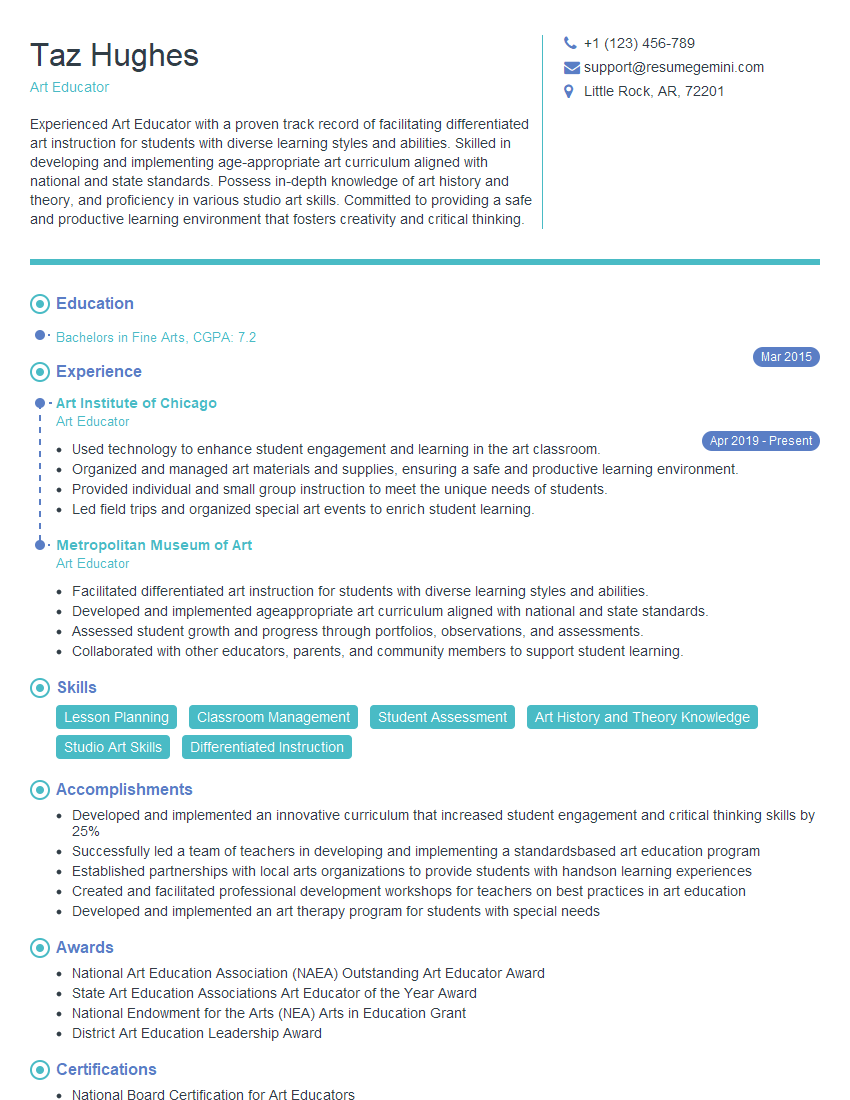
Art Educator Resume Sample
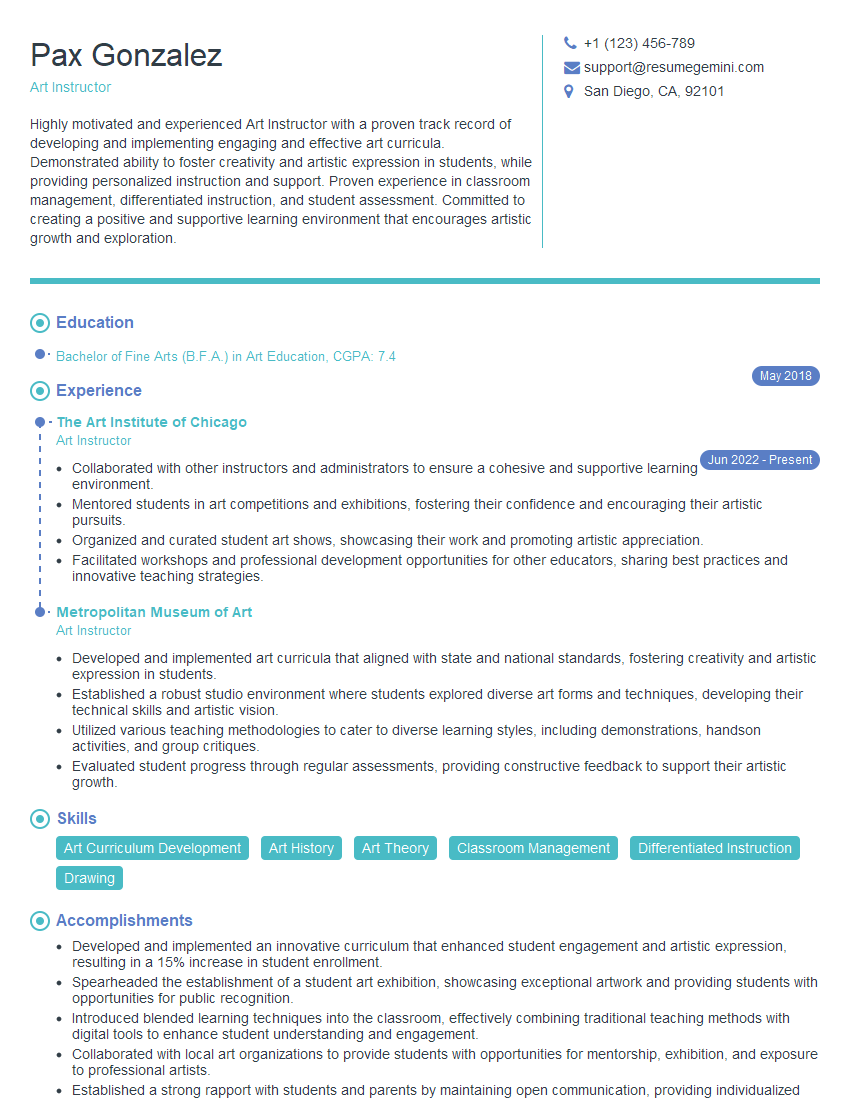
Art Instructor Resume Sample
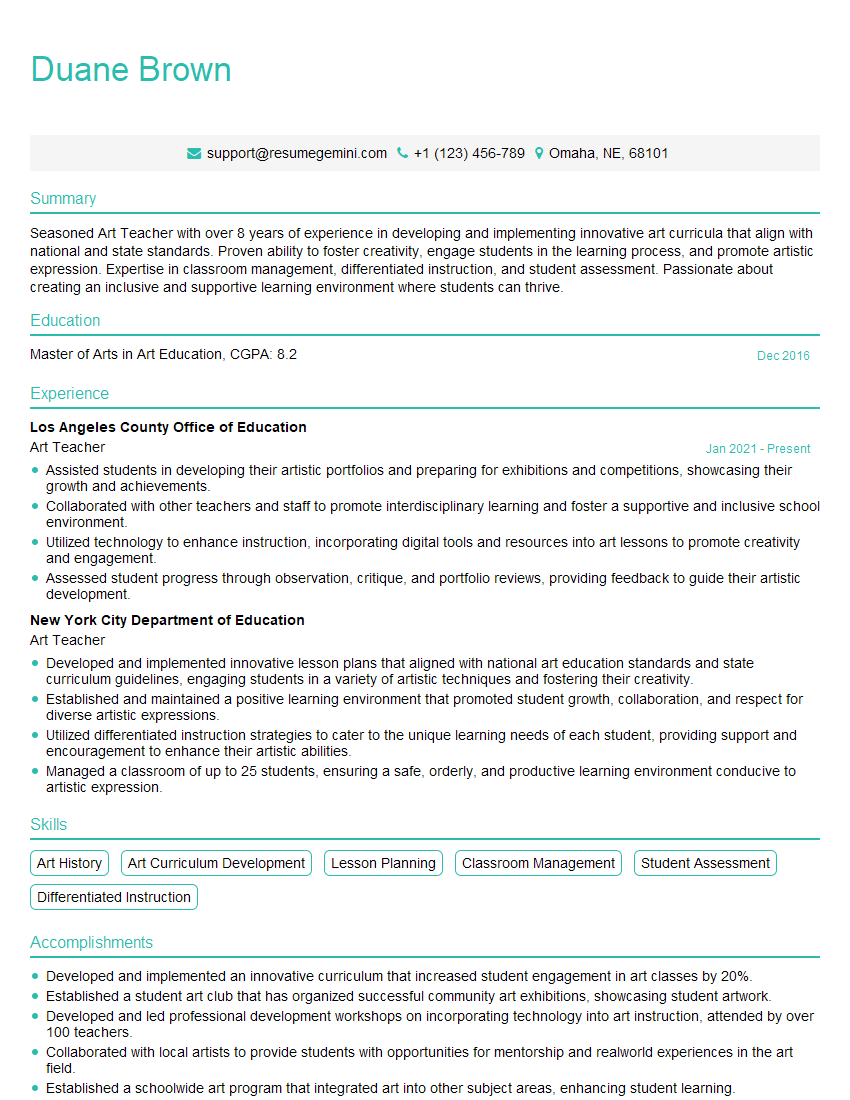
Art Teacher Resume Sample
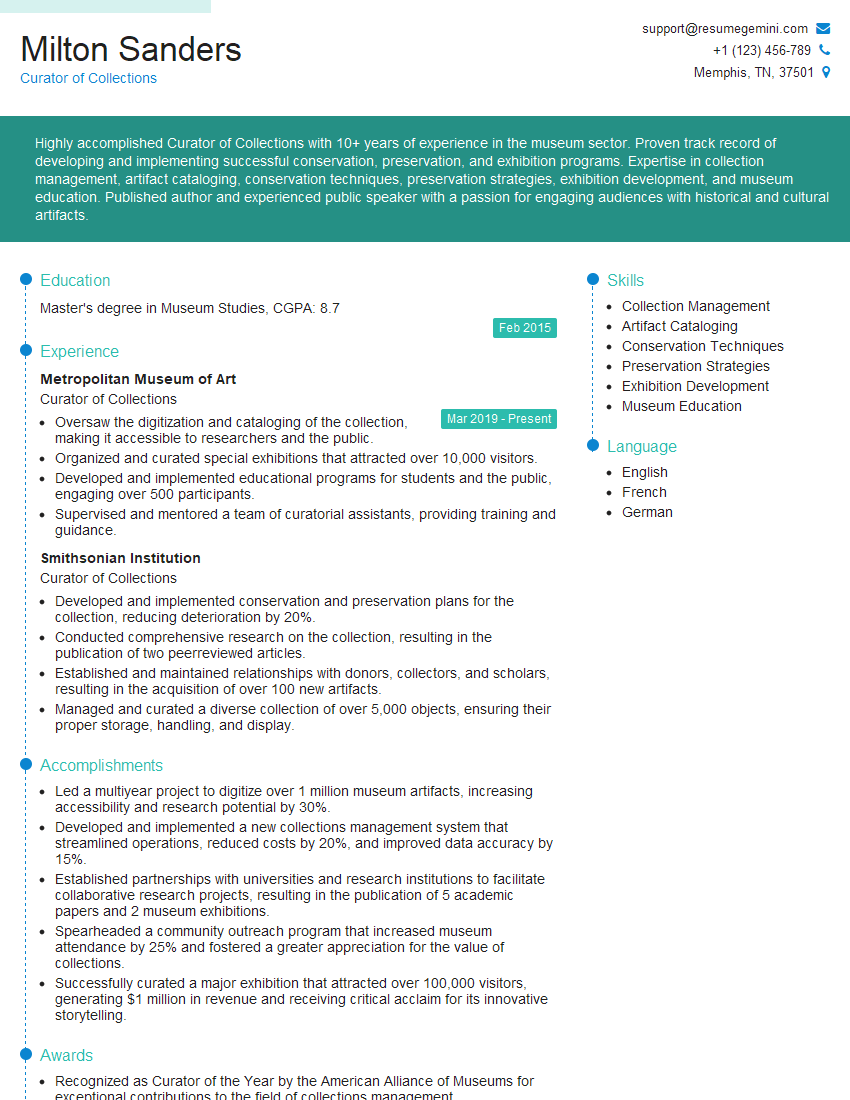
Curator of Collections Resume Sample
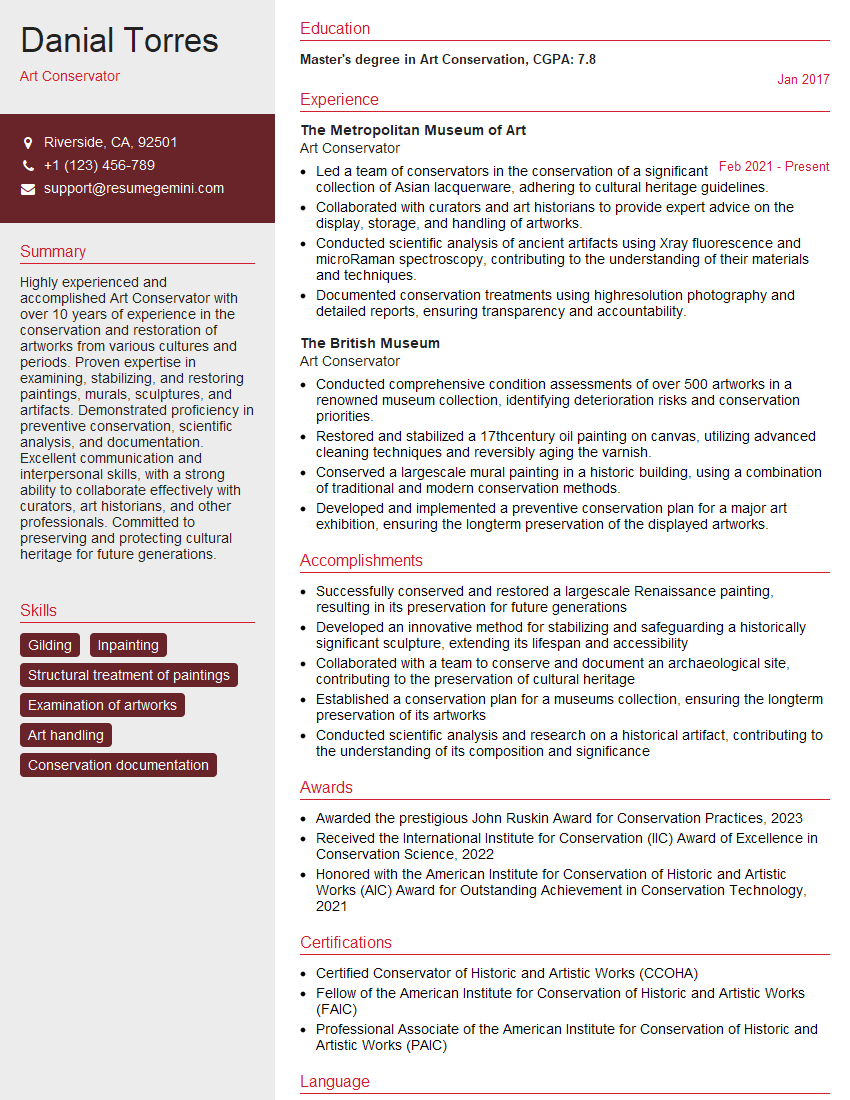
Art Conservator Resume Sample
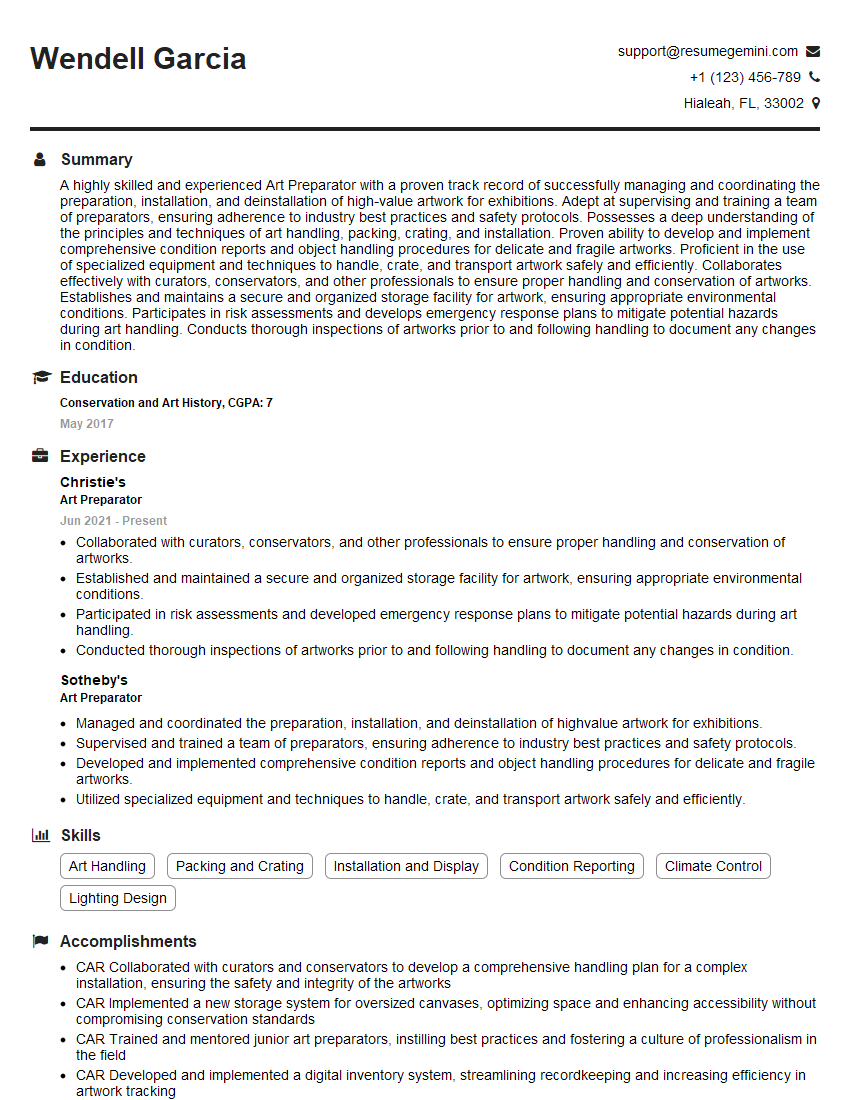
Art Preparator Resume Sample

Exhibition Designer Resume Sample
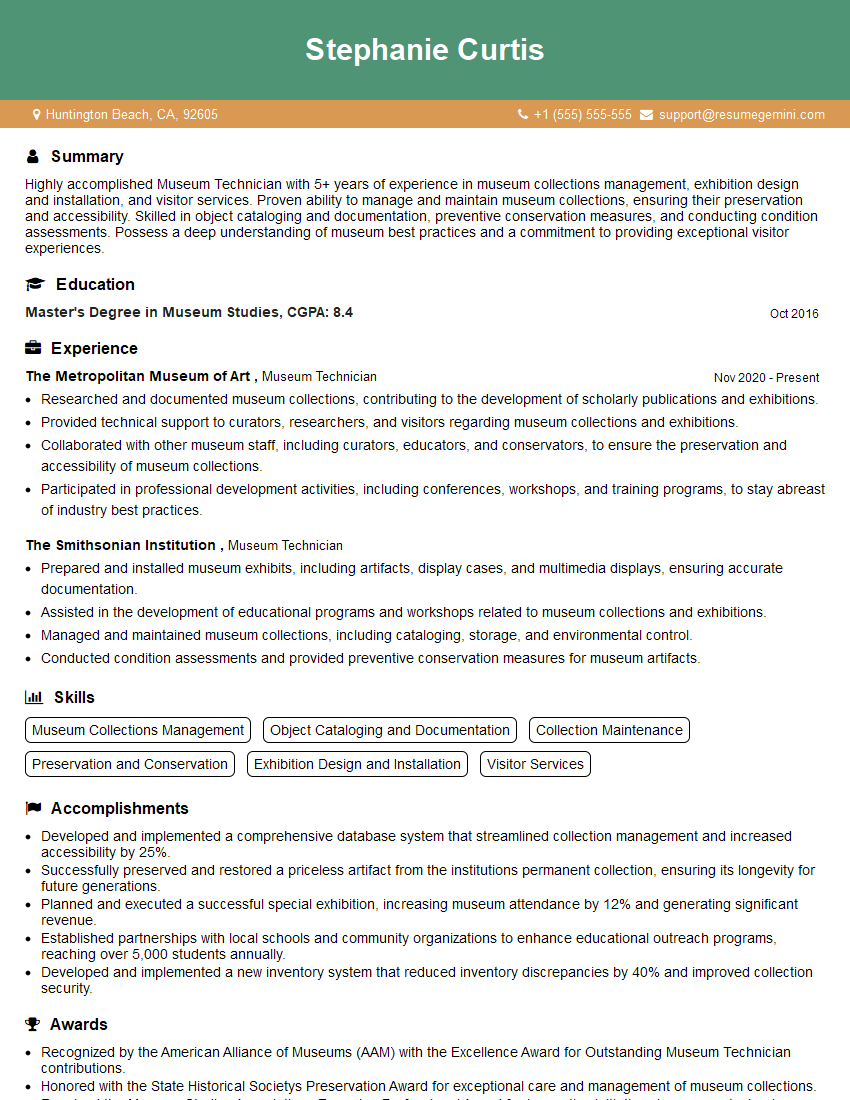
Museum Technician Resume Sample
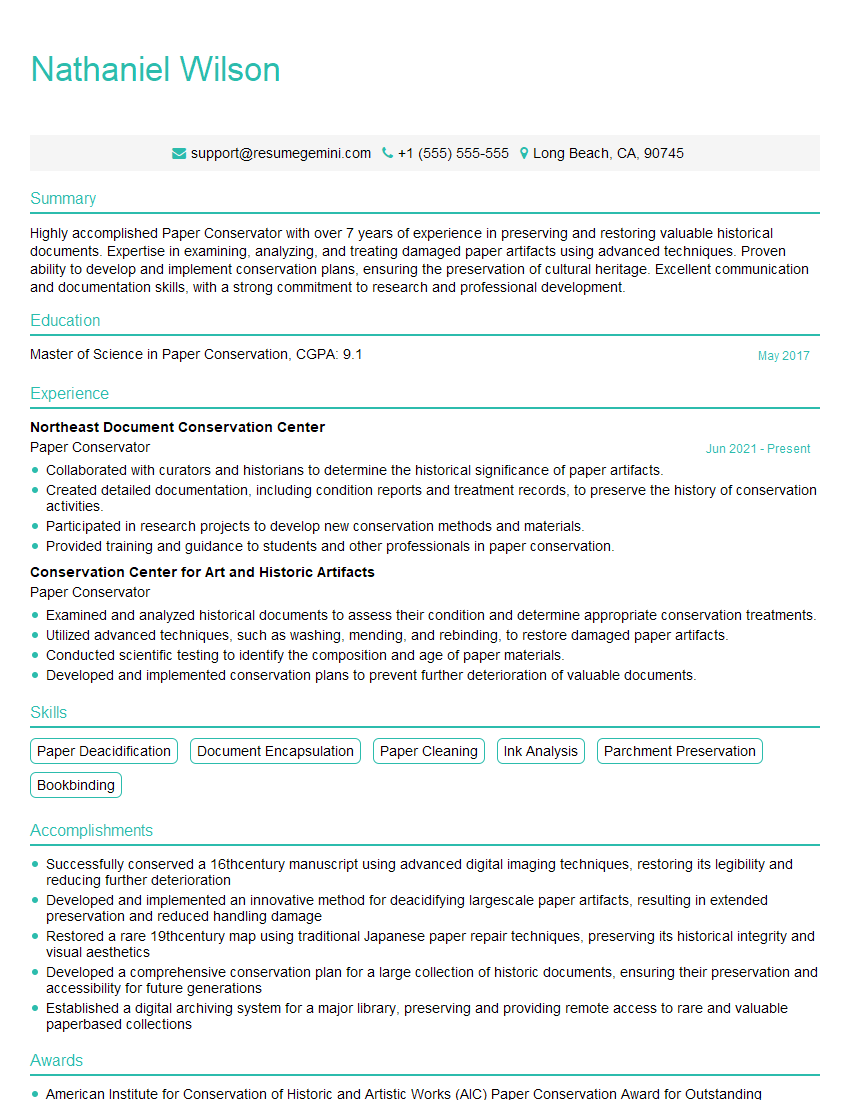
Paper Conservator Resume Sample
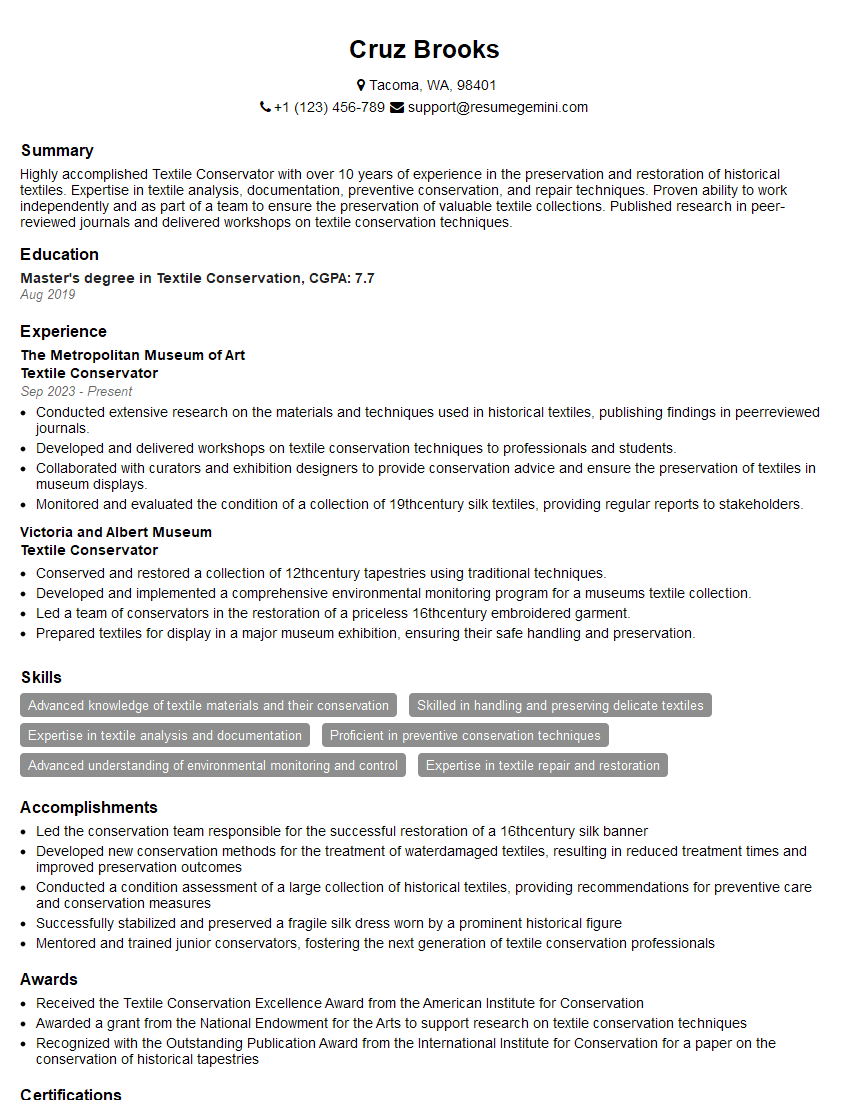
Textile Conservator Resume Sample
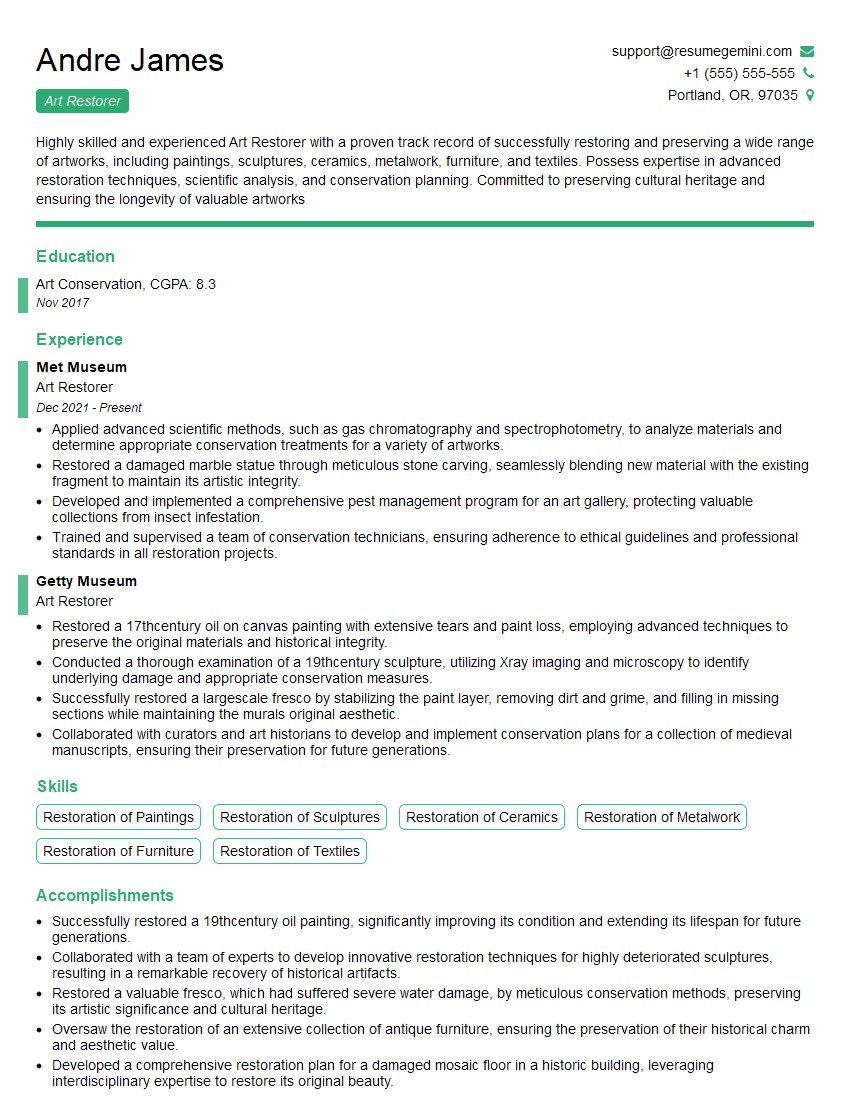
Art Restorer Resume Sample
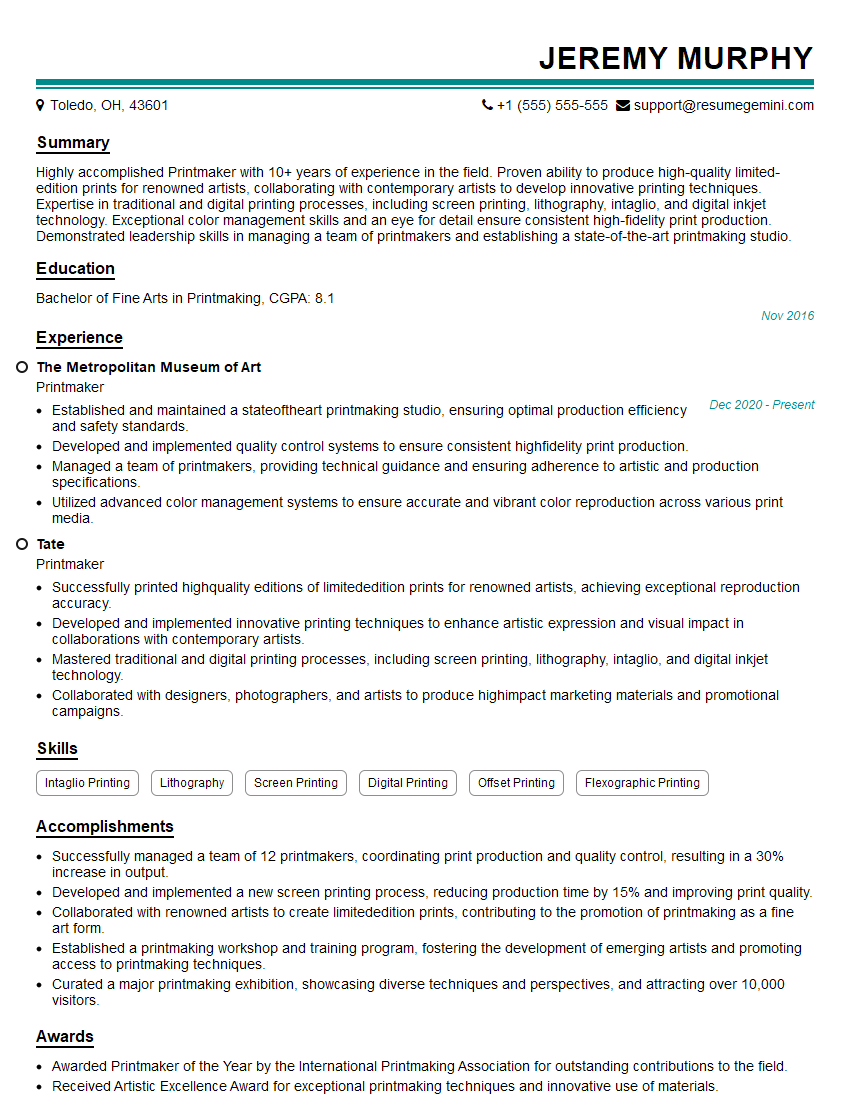
Printmaker Resume Sample

Sculptor Resume Sample
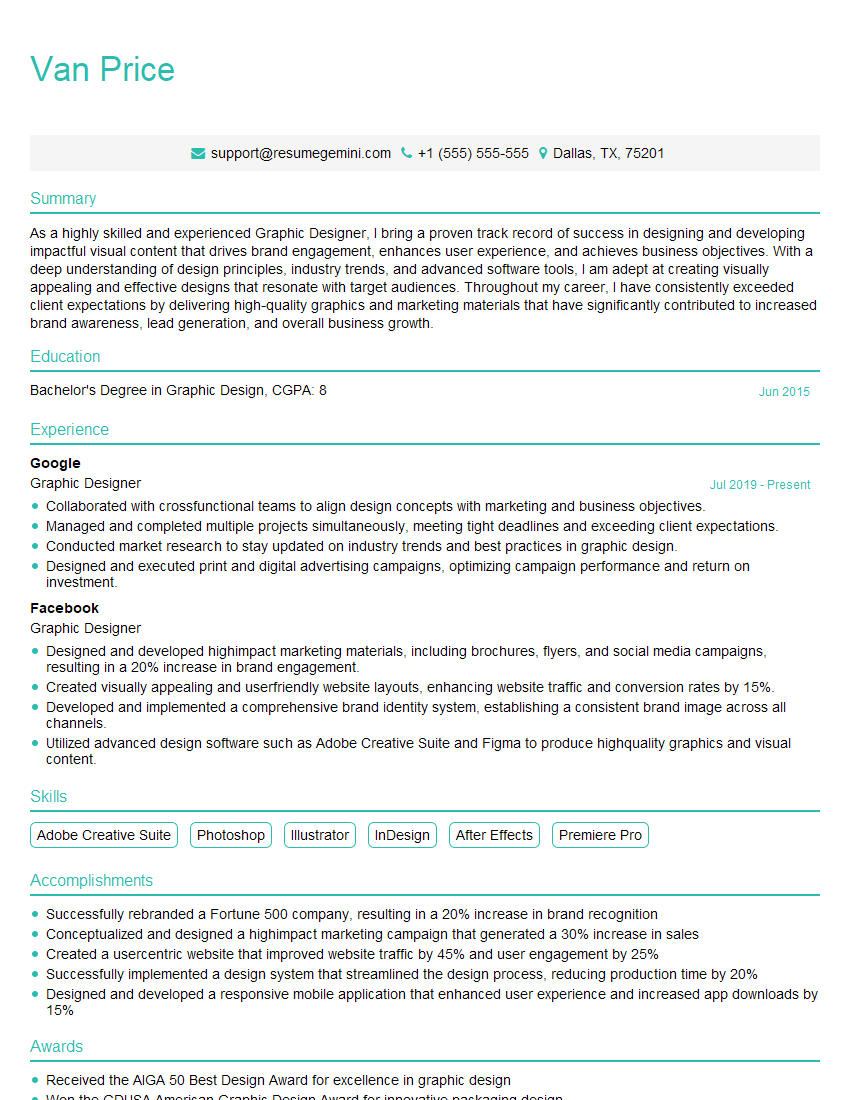
Graphic Designer Resume Sample
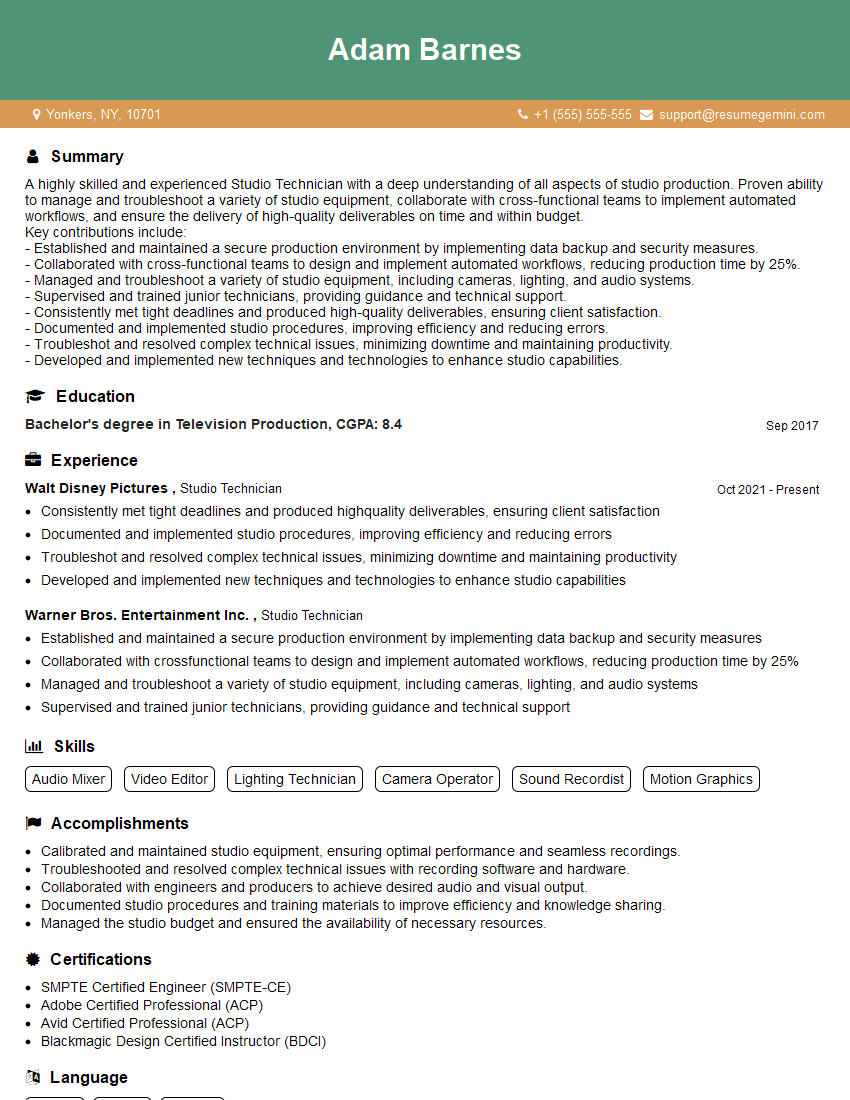
Studio Technician Resume Sample
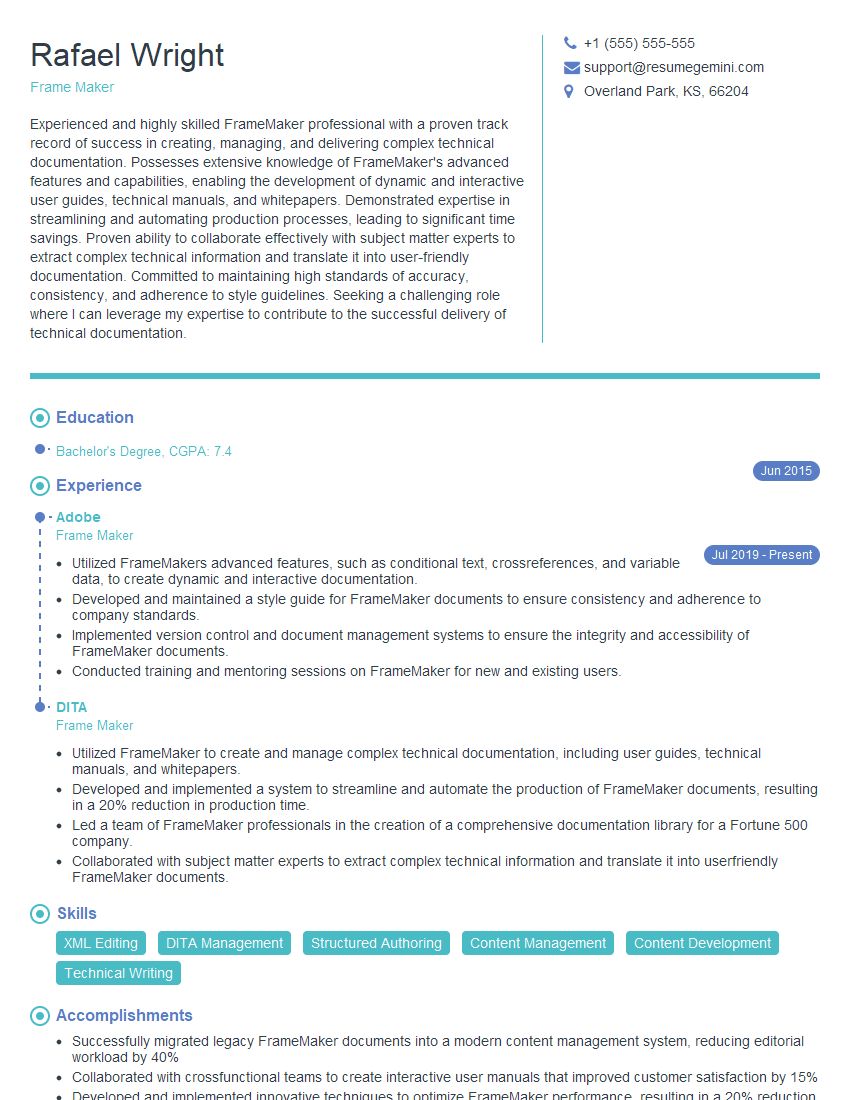
Frame Maker Resume Sample
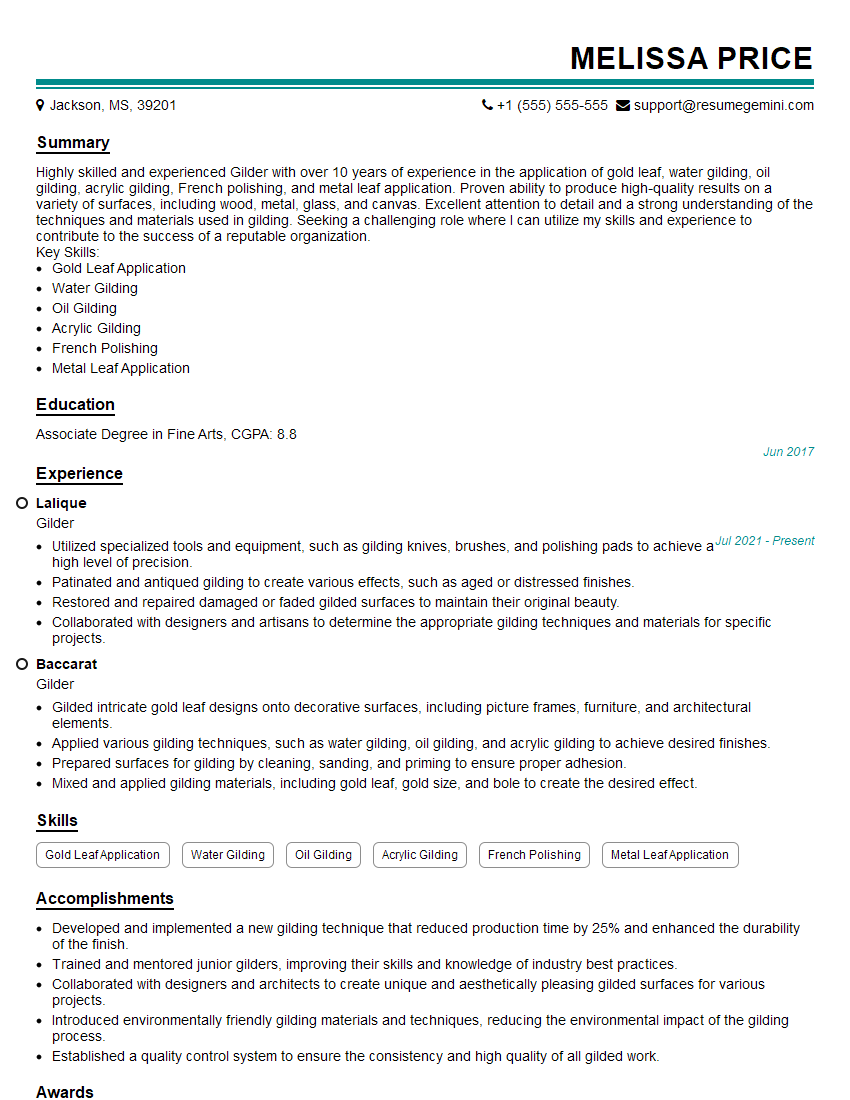
Gilder Resume Sample
Explore more articles
Users Rating of Our Blogs
Share Your Experience
We value your feedback! Please rate our content and share your thoughts (optional).
What Readers Say About Our Blog
To the interviewgemini.com Webmaster.
Very helpful and content specific questions to help prepare me for my interview!
Thank you
To the interviewgemini.com Webmaster.
This was kind of a unique content I found around the specialized skills. Very helpful questions and good detailed answers.
Very Helpful blog, thank you Interviewgemini team.