Feeling uncertain about what to expect in your upcoming interview? We’ve got you covered! This blog highlights the most important Knowledge of museum studies and exhibit design interview questions and provides actionable advice to help you stand out as the ideal candidate. Let’s pave the way for your success.
Questions Asked in Knowledge of museum studies and exhibit design Interview
Q 1. Describe your experience with different types of museum exhibits (e.g., temporary, permanent, traveling).
My experience spans a wide range of museum exhibit types. I’ve worked on large-scale permanent exhibits, requiring extensive research, collaboration, and long-term planning. For example, I was involved in developing a permanent exhibit on the history of a local region, which included artifact selection, narrative development, and the design of interactive displays. This demanded meticulous attention to detail and a deep understanding of the historical context.
I’ve also designed and executed numerous temporary exhibits, which prioritize flexibility and adaptability. A recent temporary exhibit focused on contemporary art, allowing for a more experimental approach to design and a faster turnaround time. This involved close collaboration with the artists and curators to showcase their works effectively.
Furthermore, I have significant experience with traveling exhibits, which require careful consideration of logistics and portability. A key challenge was designing a traveling exhibit on ancient civilizations that could withstand repeated assembly and disassembly without compromising its aesthetic or structural integrity. This necessitated the use of robust materials and a modular design.
Q 2. Explain your understanding of museum collection management principles.
Museum collection management is crucial for preserving cultural heritage and ensuring the long-term viability of museum assets. It encompasses several key principles:
- Acquisition: This involves the careful and ethical acquisition of objects, ensuring provenance (history of ownership) is documented and legal requirements are met.
- Registration: Each object receives a unique identifier and detailed cataloging, including its description, provenance, and condition. This allows for easy tracking and management.
- Preservation: This is critical. It involves environmental controls (temperature, humidity), appropriate storage, regular condition checks, and conservation treatments to prevent deterioration.
- Access and Use: Balancing the need for preservation with providing access for research and exhibition requires careful consideration. This involves creating detailed handling procedures and digital records.
- De-accessioning: This is the process of removing objects from the collection, usually for reasons of irrelevance to the museum’s mission, redundancy, or damage beyond repair. Ethical considerations are paramount here.
For instance, in my work, we developed a comprehensive digital database that integrated object information with environmental monitoring data, allowing for proactive preservation strategies.
Q 3. How familiar are you with different exhibit design theories and methodologies?
My understanding of exhibit design theories and methodologies is comprehensive. I am familiar with various approaches, including:
- Visitor-centered design: This focuses on understanding visitor needs and expectations to create engaging and accessible experiences.
- Universal design: This aims to create exhibits that are usable and enjoyable by people of all abilities.
- Interpretive planning: This involves developing a clear narrative and selecting appropriate objects and media to communicate information effectively. Storytelling is a central element.
- Exhibit evaluation methodologies: Post-exhibition analysis using visitor surveys, focus groups, and analytics helps improve future designs.
For example, in one project, we used visitor personas—detailed descriptions of ideal visitors—to inform design choices, such as the placement of interactive elements and the selection of appropriate font sizes.
Q 4. Describe your experience with exhibit budgeting and resource allocation.
Exhibit budgeting and resource allocation requires careful planning and prioritization. It involves:
- Defining the scope: Clearly outlining the exhibit’s goals and content before estimating costs.
- Cost estimation: Breaking down expenses into categories (design, fabrication, installation, marketing, etc.).
- Resource allocation: Determining how much funding will be dedicated to each element, ensuring value for money.
- Budget tracking: Monitoring spending throughout the project to stay on track.
For instance, in one project with a limited budget, I prioritized cost-effective materials and fabrication methods without compromising the exhibit’s quality or visual appeal. We also secured in-kind contributions from sponsors to reduce overall expenses.
Q 5. What software programs are you proficient in for exhibit design (e.g., CAD, SketchUp)?
I am proficient in several software programs crucial for exhibit design. These include:
- AutoCAD: For creating detailed 2D and 3D drawings of exhibit layouts and structures.
- SketchUp: For 3D modeling and visualization, allowing for virtual walkthroughs and client presentations.
- Adobe Creative Suite (Photoshop, Illustrator, InDesign): For creating graphics, illustrations, and layouts for signage and other exhibit elements.
- Museum-specific software (e.g., TMS): Experience with collection management systems facilitates efficient integration of digital assets with physical exhibits.
My proficiency in these tools allows me to create comprehensive and detailed designs, effectively communicate my ideas to collaborators, and ensure the successful execution of projects. For example, using SketchUp, I created a virtual tour of an exhibit design before fabrication, allowing for early identification and resolution of potential issues.
Q 6. How do you ensure accessibility and inclusivity in your exhibit design?
Accessibility and inclusivity are paramount in my design approach. I integrate these considerations throughout the process:
- Sensory considerations: Providing varied ways to experience the exhibit, catering to different learning styles and sensory preferences (visual, auditory, tactile).
- Physical accessibility: Ensuring wheelchair access, appropriate signage, and clear pathways. Compliance with ADA guidelines is essential.
- Cognitive accessibility: Using clear and concise language, avoiding jargon, and providing multiple levels of detail to accommodate diverse understanding levels.
- Multilingual support: Offering materials and audio guides in multiple languages to cater to a diverse audience.
For example, in a recent exhibit, we included tactile models alongside visual displays for visually impaired visitors, and audio descriptions for individuals with visual or cognitive impairments. We also employed a universally designed layout, ensuring comfortable navigation for all visitors.
Q 7. Explain your process for researching and developing exhibit content.
My process for researching and developing exhibit content is iterative and research-driven. It involves:
- Defining the theme and narrative: Collaborating with curators to determine the central message and story the exhibit will tell.
- Object selection: Choosing objects from the museum’s collection that best illustrate the narrative and engage visitors.
- Research: Conducting thorough research into the subject matter to ensure accuracy and completeness of information.
- Scriptwriting and content development: Crafting clear, concise, and engaging text for labels, panels, and other display elements.
- Media selection: Determining the appropriate media (images, videos, interactive displays) to enhance the visitor experience.
- Review and feedback: Seeking feedback from colleagues, subject-matter experts, and potential visitors to refine the content and ensure clarity and accuracy.
For example, in an exhibit about a specific historical event, we reviewed primary source documents, conducted oral history interviews, and consulted with experts to ensure accuracy and provide a nuanced perspective. The script was then carefully reviewed and tested with focus groups before finalization.
Q 8. How do you handle conflicts between curatorial vision and practical design constraints?
Resolving conflicts between curatorial vision and design constraints requires a collaborative, iterative process. It’s not about choosing one over the other, but finding creative solutions that honor both. I begin by establishing clear communication channels with the curatorial team early in the project. We hold regular meetings to discuss the exhibit’s narrative goals, the significance of each artifact, and the overall message. Then, I introduce practical limitations – budget, space, accessibility needs, etc. – transparently.
For instance, in a recent project featuring a large, delicate artifact, the curator initially envisioned a dramatic, open display. However, due to concerns about light sensitivity and security, a completely open display wasn’t feasible. The solution involved designing a custom, climate-controlled enclosure that minimized visual obstruction while maintaining the artifact’s safety and integrity. This involved using subtly designed, high-quality glass and incorporating interactive elements into the enclosure itself, such as a touch screen offering detailed information and high-resolution images.
Essentially, it’s about finding innovative ways to reconcile artistic vision with practical realities. This process often involves brainstorming alternative solutions, prototyping different designs, and constantly revisiting the exhibit’s narrative to ensure it remains compelling and accurate within the constraints.
Q 9. Describe your experience with working with diverse teams in a museum setting.
My experience working with diverse teams in museum settings has been incredibly enriching. I’ve collaborated with conservators, historians, educators, graphic designers, fabricators, and construction crews, each bringing unique skills and perspectives. Effective teamwork hinges on establishing a respectful and inclusive environment where everyone feels comfortable sharing their ideas and concerns.
In one project, our team included a diverse group of individuals with varying backgrounds and expertise. To ensure seamless collaboration, we established clear communication protocols, using project management software to track progress, share updates, and manage feedback. We also prioritized regular team-building activities to foster a strong sense of camaraderie and understanding among team members. This approach not only enhanced the efficiency of our work process but also led to more innovative and creative solutions.
Understanding and valuing diverse perspectives is key; it leads to a richer, more nuanced final product that better serves a wide audience. Open dialogue, active listening, and respecting different working styles are critical for success in a multidisciplinary museum environment.
Q 10. Explain your approach to project management in exhibit development.
My approach to project management in exhibit development relies on a phased methodology, combining agile principles with traditional project management techniques. It begins with thorough planning, including a detailed project scope, timeline, and budget. I use Gantt charts and project management software (like Asana or Trello) to track progress, manage tasks, and identify potential roadblocks.
The project is then divided into manageable phases: concept development, design, fabrication, installation, and evaluation. Each phase has specific deliverables and milestones, with regular progress reviews to ensure we are on track and address any challenges proactively. This iterative approach allows for flexibility and adjustments throughout the project lifecycle, crucial when dealing with unforeseen issues or changing requirements. Open and transparent communication with all stakeholders is maintained throughout the entire process.
For example, during the fabrication phase, I’ll maintain close contact with the fabricator, regularly reviewing prototypes and making necessary revisions. This prevents costly rework later in the process. Post-installation, the evaluation phase incorporates visitor feedback and data analysis to assess the exhibit’s effectiveness and inform future projects.
Q 11. How do you evaluate the success of a museum exhibit?
Evaluating the success of a museum exhibit goes beyond simply counting visitor numbers. A holistic approach involves analyzing multiple metrics to understand its impact and effectiveness. We use a multi-faceted approach, combining quantitative and qualitative data.
Quantitative data includes visitor attendance figures, dwell time (how long visitors spend in each section), and feedback surveys with rating scales. Qualitative data comes from visitor interviews, focus groups, observation studies of visitor behavior, and analysis of social media mentions. Analyzing this data helps us understand visitor engagement, learning outcomes, and overall satisfaction.
For example, if visitor dwell time in a specific section is unexpectedly low, it might suggest that the content is unclear or uninteresting. We can use visitor interviews to identify specific areas for improvement. A low satisfaction score might indicate a need for better wayfinding or more comfortable seating. By meticulously collecting and interpreting both quantitative and qualitative data, we can refine future exhibits and improve visitor experience.
Q 12. How familiar are you with different types of museum lighting and its impact on artifacts?
Museum lighting is crucial for both artifact preservation and visitor experience. I’m intimately familiar with different lighting technologies and their impact on artifacts. The primary concern is minimizing light exposure to prevent fading, degradation, and damage. We avoid UV and IR radiation as much as possible.
Different lighting technologies have varying impacts: Incandescent lighting produces heat and high UV output, making it unsuitable for sensitive artifacts. Fluorescent lighting is more energy-efficient but can still emit UV radiation. LED lighting is becoming the preferred choice due to its energy efficiency, low heat output, and the ability to control the spectral distribution, minimizing harmful wavelengths. We often use specialized LED fixtures with UV and IR filters to further protect the artifacts.
Moreover, lighting design impacts the exhibit’s mood and aesthetics. We carefully consider the color temperature and intensity of the lighting, aiming for a balance between effective illumination and artifact protection. For example, cool-toned lighting might be appropriate for a modern art exhibit, while warmer tones could better suit a historical collection. This requires careful consideration of the artifact’s material, color, and light sensitivity.
Q 13. How do you incorporate interactive elements effectively in exhibit design?
Interactive elements can significantly enhance visitor engagement and learning. However, their integration requires careful consideration to avoid overwhelming the visitor or detracting from the exhibit’s narrative. The key is thoughtful design and seamless integration.
Effective interactive elements should be relevant to the exhibit’s theme and enhance the visitor’s understanding, not just be a novelty. Examples include touch screens with high-resolution images and detailed information, augmented reality experiences, interactive timelines, and hands-on activities suitable for the target audience. We always prioritize ease of use and accessibility; intuitive design is crucial.
For instance, in a children’s exhibit on ancient Egypt, we might incorporate a sand table with virtual overlays showing how ancient structures were built. Or, in an exhibit on natural history, a touch screen might provide detailed information about a particular species and its habitat, including images and sounds.
The integration must be purposeful. Interactive elements should complement and extend the narrative, not replace it. They should also be well-maintained and technologically reliable to avoid frustration and disruption for the visitor.
Q 14. What are your strategies for engaging diverse audiences in museum exhibits?
Engaging diverse audiences requires a multi-pronged approach that considers various cultural backgrounds, age groups, and learning styles. We aim to create inclusive exhibits that are accessible and relevant to all visitors.
This involves employing diverse voices in the design process itself, ensuring that the content is reflective of the community served. We use multilingual signage, audio guides, and interactive elements that cater to various levels of understanding. We might incorporate tactile elements or large-print materials for visually impaired visitors, and offer transcripts for audio-visual content. We also include content that reflects different cultural perspectives and avoids perpetuating biases or stereotypes.
For example, if an exhibit focuses on a historical event, we might incorporate multiple viewpoints and perspectives, acknowledging various cultural narratives surrounding that event. We might offer different activities tailored to different age groups, making the exhibit more engaging for both children and adults. Community engagement is vital; seeking feedback from the community we aim to reach informs our decisions and ensures relevance and accessibility for all.
Q 15. How do you ensure the preservation and conservation of artifacts within exhibits?
Preservation and conservation of artifacts is paramount in museum studies. It’s a multifaceted process involving environmental control, preventative measures, and meticulous handling. We begin by assessing the artifact’s condition and material composition to determine its vulnerabilities. This might involve scientific analysis to identify potential threats like light damage, temperature fluctuations, or pest infestation.
Environmental controls are crucial. This includes maintaining stable temperature and humidity levels, minimizing exposure to UV and visible light (often through specialized lighting and UV filtering), and controlling air quality to prevent pollutants from damaging the artifacts. For instance, a delicate textile might require a climate-controlled display case with inert gas to prevent degradation.
Preventative measures involve careful handling procedures for staff and visitors, the use of protective barriers (like acid-free enclosures), and regular monitoring for signs of deterioration. Imagine a delicate ancient scroll: it would require careful handling protocols, archival-quality storage when not on display, and perhaps even a specialized viewing system to limit physical contact.
Restoration and conservation are undertaken by specialists when necessary, always with a focus on minimizing intervention. This might involve cleaning, repairing damage, or consolidating fragile materials. Each intervention is carefully documented, adhering to strict ethical guidelines and best practices. The goal is to extend the life of the object while maintaining its integrity and historical context.
Career Expert Tips:
- Ace those interviews! Prepare effectively by reviewing the Top 50 Most Common Interview Questions on ResumeGemini.
- Navigate your job search with confidence! Explore a wide range of Career Tips on ResumeGemini. Learn about common challenges and recommendations to overcome them.
- Craft the perfect resume! Master the Art of Resume Writing with ResumeGemini’s guide. Showcase your unique qualifications and achievements effectively.
- Don’t miss out on holiday savings! Build your dream resume with ResumeGemini’s ATS optimized templates.
Q 16. Describe your experience with interpreting historical materials for museum audiences.
Interpreting historical materials for diverse audiences is a core aspect of my work. It goes beyond simply presenting facts; it’s about creating compelling narratives that resonate with visitors from various backgrounds and levels of prior knowledge. I approach this through several key strategies:
- Accessibility: Using clear, concise language, avoiding jargon, and incorporating multiple media (images, videos, interactive elements) cater to a broader range of learning styles and abilities. For instance, using audio descriptions for visually impaired visitors is crucial.
- Storytelling: I focus on creating engaging narratives that connect objects to human experiences. Instead of just labeling a dress as ’18th-century gown,’ I might weave a story about the woman who wore it, her social status, or the cultural context surrounding it.
- Contextualization: Providing relevant background information, placing objects within their historical, social, and cultural settings allows visitors to understand their significance. For example, a simple farm tool can be interpreted in a fascinating way by linking it to the history of agriculture, social class, and technological advancements.
- Multiple perspectives: I strive to present diverse viewpoints and avoid perpetuating harmful stereotypes. This includes acknowledging complex histories and acknowledging different perspectives on the same event or object.
For instance, in a recent exhibit on immigration, I worked to incorporate first-person accounts, photographs, and artifacts from various immigrant communities to create a nuanced and empathetic narrative that avoided stereotypical representations.
Q 17. Explain your understanding of copyright and intellectual property related to museum exhibits.
Copyright and intellectual property are crucial considerations in museum exhibit design. We must always respect the rights of artists, authors, photographers, and other creators. This involves obtaining proper permissions and licenses for the use of copyrighted material, including images, text, music, and videos.
This process starts with thorough research to identify the copyright holder. We then engage in formal negotiations to secure the necessary rights, often involving fees or licensing agreements. For example, if we want to use a particular photograph in an exhibit, we need to contact the photographer or their estate to obtain permission and potentially pay a licensing fee. Failure to do so can result in copyright infringement, leading to legal repercussions and potentially damaging the museum’s reputation.
Furthermore, the museum must be mindful of the ethical implications beyond legal compliance. We often seek to collaborate with copyright holders, providing proper attribution and credit where due, and in some cases, working with them to ensure the integrity and accuracy of the interpretation of their work within the exhibit context.
Q 18. How familiar are you with ethical considerations in museum practice?
Ethical considerations are fundamental to museum practice. They guide every aspect of our work, from acquisition and preservation to exhibit design and interpretation.
- Repatriation: Museums have a responsibility to address past injustices by returning cultural objects to their rightful communities of origin. This involves engaging in dialogue with indigenous groups and other stakeholders to ensure that objects are handled with respect and cultural sensitivity.
- Representation: Avoiding harmful stereotypes and biases in exhibits is crucial. This involves careful consideration of the language used, the selection of artifacts, and the overall narrative presented. We must ensure that diverse voices and perspectives are represented accurately and respectfully.
- Transparency: Openness and honesty about the provenance (history of ownership) of objects are essential. This includes disclosing any gaps in knowledge or uncertainties about an object’s history.
- Access and Inclusivity: Museums should strive to make their collections and exhibits accessible to all members of society, regardless of background or ability. This requires considering accessibility features such as audio descriptions, tactile exhibits, and sign language interpretation.
Ignoring these ethical considerations can damage the credibility and reputation of a museum, and, more importantly, cause significant harm to communities whose cultural heritage is at stake.
Q 19. Describe your experience with fundraising or grant writing for museum exhibits.
My experience with fundraising and grant writing for museum exhibits involves developing compelling proposals that highlight the educational and cultural value of projects. I am proficient in researching potential funding sources, such as government grants, corporate sponsorships, and private foundations.
The process begins with a detailed needs assessment and budget planning. I then craft proposals that clearly articulate the project’s goals, methodologies, and anticipated impact. A strong proposal demonstrates a clear understanding of the funder’s priorities and provides a clear plan for achieving the project’s objectives.
For example, when seeking funding for an exhibit on local history, I highlighted its educational potential by demonstrating how it would integrate with school curricula. I also emphasized community engagement activities to broaden its appeal and increase public support.
Strong narratives and visual elements are essential for securing funding, so I always include high-quality images and compelling descriptions of the exhibit’s design and content. Regular communication with funders is essential to maintain a strong relationship and demonstrate accountability.
Q 20. How do you handle unexpected problems or delays during exhibit installation?
Exhibit installation is often fraught with unexpected challenges. My approach is proactive and solutions-oriented, emphasizing careful planning and contingency preparation.
Problem anticipation: Before installation, I meticulously review all aspects of the exhibit design, identifying potential risks and developing contingency plans. This might involve having backup materials, scheduling extra time for unforeseen delays, and establishing clear communication protocols with the installation team.
Flexible problem-solving: During installation, I remain adaptable and ready to adjust the plan as needed. Unexpected issues might include damaged artifacts, delayed deliveries, or technical malfunctions. I prioritize finding quick, creative solutions while ensuring the safety of the artifacts and the quality of the final product.
Teamwork: I foster a collaborative atmosphere between the installation team, curators, and other stakeholders. This ensures open communication and efficient problem-solving. For example, if a lighting fixture malfunctions, I would immediately contact the technical crew, discuss alternative solutions, and ensure the issue is resolved promptly, minimizing disruption to the installation schedule.
Documentation: Throughout the entire process, I maintain meticulous documentation of all decisions and actions taken. This record serves as a valuable resource for future projects and helps to improve the efficiency of the installation process.
Q 21. What is your approach to designing exhibits for different age groups?
Designing exhibits for diverse age groups requires a multi-faceted approach, recognizing the varying cognitive abilities, interests, and learning styles of different age demographics. My approach centers around several key principles:
- Age-Appropriate Content: Content should be tailored to the developmental stage of each target group. Young children will respond best to interactive elements, simple narratives, and hands-on activities, whereas older children and adults might be engaged by more complex themes and detailed information. For instance, a children’s area might use tactile elements and bright colors while an adult section offers in-depth historical analysis.
- Varied Presentation Styles: Using different formats, including text, images, videos, audio, interactive displays, and games, caters to different learning preferences. An exhibit might include interactive quizzes for younger children, while offering detailed timelines and research materials for older visitors.
- Engaging Storytelling: Engaging narratives can make information more accessible and memorable for all age groups. However, the way we tell stories will differ. Younger children respond well to simple narratives, while older audiences might appreciate complex characters and themes.
- Accessibility and Inclusivity: Universal design principles are crucial to ensure exhibits are accessible to all visitors, including those with disabilities. This involves careful consideration of physical access, visual and auditory aids, and alternative learning materials.
Ultimately, successful exhibit design involves creating a dynamic, engaging, and inclusive environment that caters to the diverse needs and interests of all visitors, ensuring they leave with a deeper understanding and appreciation of the materials presented.
Q 22. How do you balance educational content with visitor experience in exhibit design?
Balancing educational content with visitor experience is paramount in exhibit design. It’s not about simply presenting facts; it’s about creating an engaging narrative that resonates with visitors of diverse backgrounds and knowledge levels. Think of it like baking a cake: the educational content is the essential ingredients, but the visitor experience is the frosting and decoration – it’s what makes the cake appealing and enjoyable.
We achieve this balance through a multi-faceted approach. Firstly, we conduct thorough audience research to understand their interests, prior knowledge, and preferred learning styles. This informs the design of interactive elements, storytelling techniques, and the overall flow of the exhibit. For example, if our target audience is primarily families with young children, we might incorporate hands-on activities, playful graphics, and age-appropriate language. For a more academic audience, we might favor in-depth textual information, scholarly objects, and sophisticated visuals.
Secondly, we employ diverse methods of conveying information – not just text panels but also videos, audio recordings, interactive displays, and even theatrical elements. This multi-sensory approach caters to different learning preferences and prevents visitor fatigue. A well-designed exhibit will guide visitors on a journey, posing questions, revealing clues, and ultimately allowing them to draw their own conclusions. For example, an exhibit on ancient Rome might start with a captivating introductory video, progress through interactive maps and artifact displays, and conclude with a thought-provoking discussion panel on the legacy of Rome.
Q 23. Describe your experience with evaluating visitor feedback and making improvements to exhibits.
Evaluating visitor feedback is an iterative process crucial for exhibit improvement. We employ various methods, including observation studies (watching visitors navigate the exhibit), visitor surveys (both on-site and online), focus groups (gathering in-depth feedback from select groups), and online feedback forms. We analyze this data quantitatively and qualitatively, looking for patterns and insights into visitor engagement, comprehension, and overall satisfaction.
For example, in an exhibit about the American Civil War, we noticed low engagement with a particular section on the economic impact of the war through quantitative data showing short dwell times and qualitative feedback indicating the content was too dense and technical. Based on this, we redesigned that section, using more accessible language, infographics, and interactive elements like a simulated cotton plantation to illustrate the economic aspects more effectively. We also implemented a post-visit survey, measuring knowledge gain, which allowed us to assess the effectiveness of our revisions. This cycle of evaluation, analysis, and improvement is essential for ensuring exhibits remain relevant, engaging, and impactful.
Q 24. What are your preferred methods for documenting and archiving exhibit design processes?
Documenting and archiving exhibit design processes is vital for future reference, replicability, and institutional memory. We utilize a combination of digital and physical methods. Our digital archive includes a project management system (like Asana or Monday.com) to track tasks, deadlines, and team communications. It also incorporates digital design files (Sketch, Adobe Creative Suite), 3D models, and high-resolution images of the exhibit. Detailed project proposals, research reports, and visitor feedback analyses are also digitally stored.
Physically, we maintain comprehensive project files including blueprints, technical drawings, installation photographs, and post-installation evaluations. This hybrid approach allows us easy access and ensures the preservation of critical information. We employ a structured folder system with clear naming conventions and detailed metadata to ensure efficient retrieval of information. For example, each file is labeled with the project name, date, and content description. This meticulous approach supports future projects, allows for efficient knowledge transfer within the team, and preserves the history of each exhibition.
Q 25. How do you stay current with trends in museum studies and exhibit design?
Staying current in museum studies and exhibit design requires a multifaceted approach. I regularly attend professional conferences like the American Alliance of Museums annual meeting and specialized workshops focusing on emerging technologies and best practices. This allows me to network with colleagues, learn about cutting-edge research, and discover new approaches to exhibit design.
Beyond conferences, I actively engage with professional journals, such as the Curator, Museum Anthropology, and Museum Management & Curatorship. I also follow influential museum blogs, podcasts, and online communities to stay informed on industry trends. Continuous learning through online courses (Coursera, edX) on relevant topics such as user experience design and accessibility ensures I stay abreast of evolving techniques and technologies. I also actively seek opportunities to visit museums and other exhibition spaces to observe firsthand innovative designs and techniques used.
Q 26. Describe your experience collaborating with conservators and other specialists.
Collaboration with conservators, curators, and other specialists is essential for successful exhibit design. I approach collaborations by fostering open communication and establishing clear lines of responsibility from the outset. Regular meetings, detailed briefing documents, and shared online platforms are crucial for ensuring all parties understand the project goals, timelines, and individual roles.
For instance, when designing an exhibit featuring delicate artifacts, I work closely with conservators to determine appropriate display methods, environmental controls (lighting, temperature, humidity), and handling procedures. Discussions with curators ensure the accurate interpretation of the objects and the integration of their scholarly expertise into the design. Input from education specialists helps design effective interpretive materials tailored to different target audiences. Effective collaboration ensures the exhibit is both visually appealing and scientifically accurate, while prioritizing the preservation of valuable artifacts.
Q 27. How do you incorporate technology effectively in museum exhibits?
Technology can significantly enhance visitor engagement and educational value in museum exhibits, but it’s crucial to use it strategically and purposefully, avoiding gimmicks. Technology should serve the narrative and enhance the visitor experience, not overshadow the content.
Effective integration includes using interactive touchscreens for exploring detailed information, augmented reality (AR) apps to overlay digital content onto physical objects, and virtual reality (VR) experiences for immersive simulations. For instance, an exhibit on ancient Egypt could use AR to allow visitors to virtually “uncover” a hidden tomb or reconstruct a pyramid, enhancing the visitor’s understanding of the archaeological process. Technology also facilitates accessibility features such as audio descriptions, interactive transcripts, and sign language interpreters, enhancing inclusivity. We carefully consider user experience (UX) principles to ensure technology is intuitive and easy to navigate, avoiding frustrating and unintuitive interfaces.
Q 28. How would you approach designing an exhibit about a complex or controversial topic?
Designing exhibits about complex or controversial topics requires careful consideration of multiple perspectives and ethical implications. The primary goal is to create an environment that encourages thoughtful dialogue and critical thinking, not to present a biased or simplistic narrative.
Firstly, we engage in extensive research to understand the multifaceted nature of the topic. This includes consulting diverse scholarly sources and seeking input from individuals with varying viewpoints. The exhibit design should reflect this complexity, presenting different perspectives fairly and allowing visitors to form their own conclusions. Neutral language, multiple interpretive perspectives, and opportunities for visitor reflection are key. For example, an exhibit on climate change wouldn’t simply present facts about rising temperatures but would explore different perspectives on the causes, impacts, and potential solutions, presenting scientific data alongside the viewpoints of affected communities and various policy positions. It’s also essential to proactively anticipate potential sensitivities and develop strategies for managing them, perhaps providing context and background information, engaging with diverse stakeholders and implementing appropriate content warnings.
Key Topics to Learn for Museum Studies and Exhibit Design Interviews
- Museum Theory and Practice: Understanding different museum philosophies (e.g., didactic, interpretive, critical), audience engagement strategies, and the role of museums in society. Consider the ethical implications of museum practices.
- Exhibit Development Process: From initial concept and research to design, fabrication, installation, and evaluation. Be prepared to discuss project management, budgeting, and collaboration with diverse teams.
- Collection Management: Knowledge of acquisition, cataloging, preservation, and conservation of museum objects. Discuss different approaches to object handling and storage.
- Exhibition Design Principles: Understanding principles of visual communication, storytelling through objects, accessibility, and inclusive design practices. Be ready to discuss specific design choices and their rationale.
- Visitor Experience and Interpretation: Strategies for creating engaging and meaningful visitor experiences, including label writing, interactive elements, and educational programming. Consider different learning styles and accessibility needs.
- Museum Technology and Digital Media: Familiarity with digital technologies used in museums (e.g., virtual reality, augmented reality, interactive kiosks) and their application in exhibit design and visitor engagement.
- Research and Evaluation: Understanding the importance of research in exhibit development and the methods used to evaluate the effectiveness of exhibitions. Discuss how data informs future projects.
- Accessibility and Inclusivity: Designing exhibitions that are accessible and inclusive to diverse audiences, including individuals with disabilities. Consider universal design principles and culturally sensitive approaches.
Next Steps
Mastering museum studies and exhibit design principles is crucial for career advancement in this dynamic field. A strong understanding of these concepts will set you apart and demonstrate your commitment to creating engaging and impactful museum experiences. To enhance your job prospects, crafting an ATS-friendly resume is vital. ResumeGemini is a trusted resource to help you build a professional resume that highlights your skills and experience effectively. Examples of resumes tailored to museum studies and exhibit design are available to help guide your creation, ensuring your qualifications are presented in the best possible light.
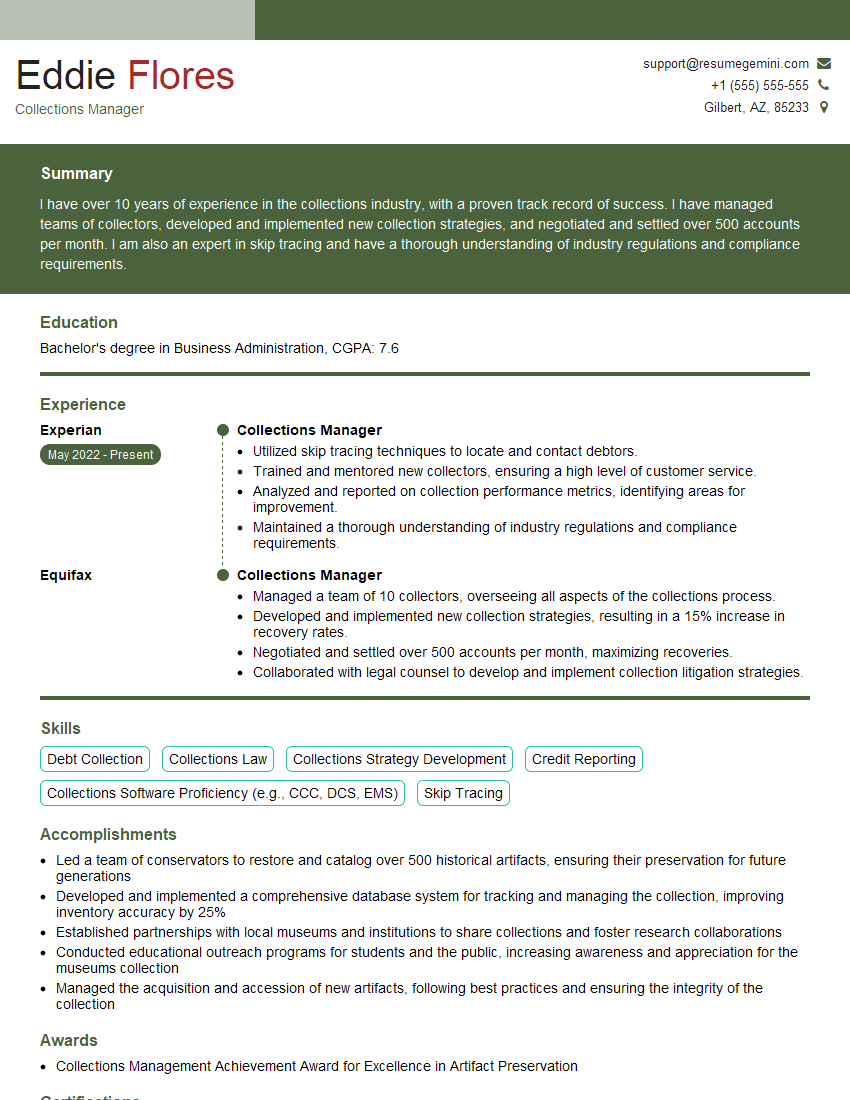
Collections Manager Resume Sample
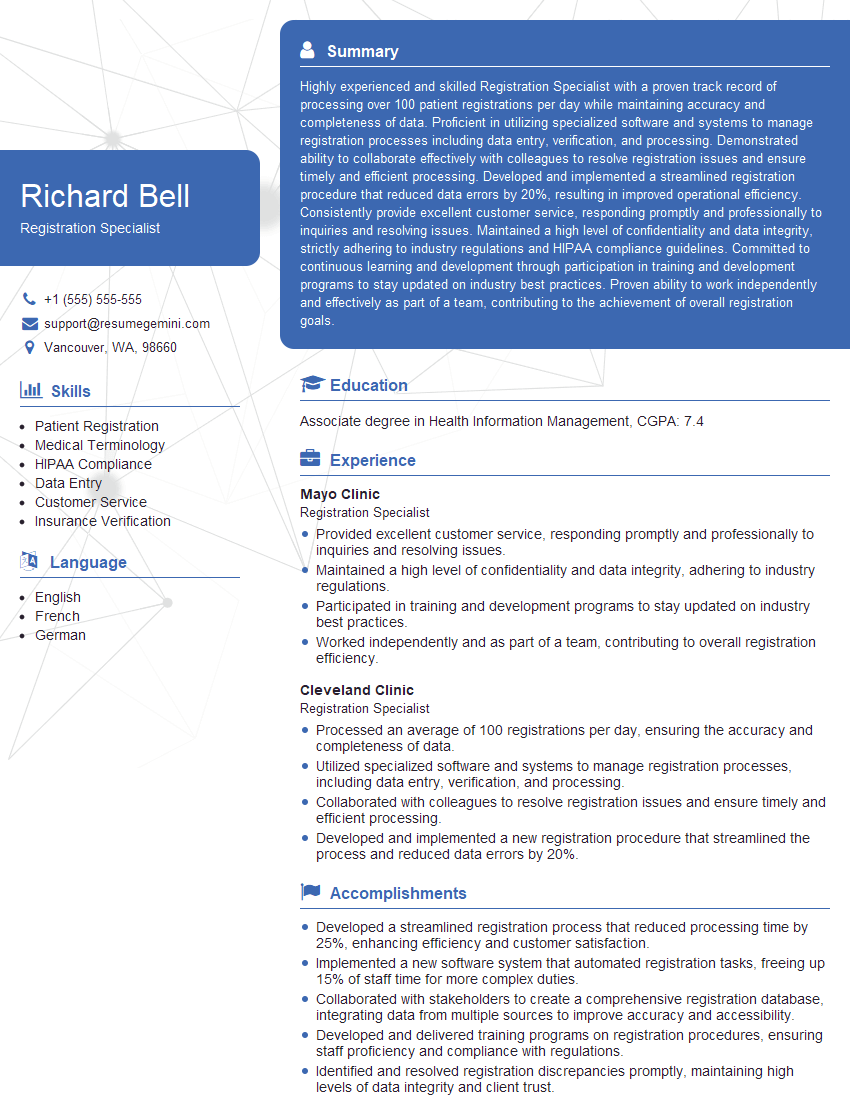
Registration Specialist Resume Sample
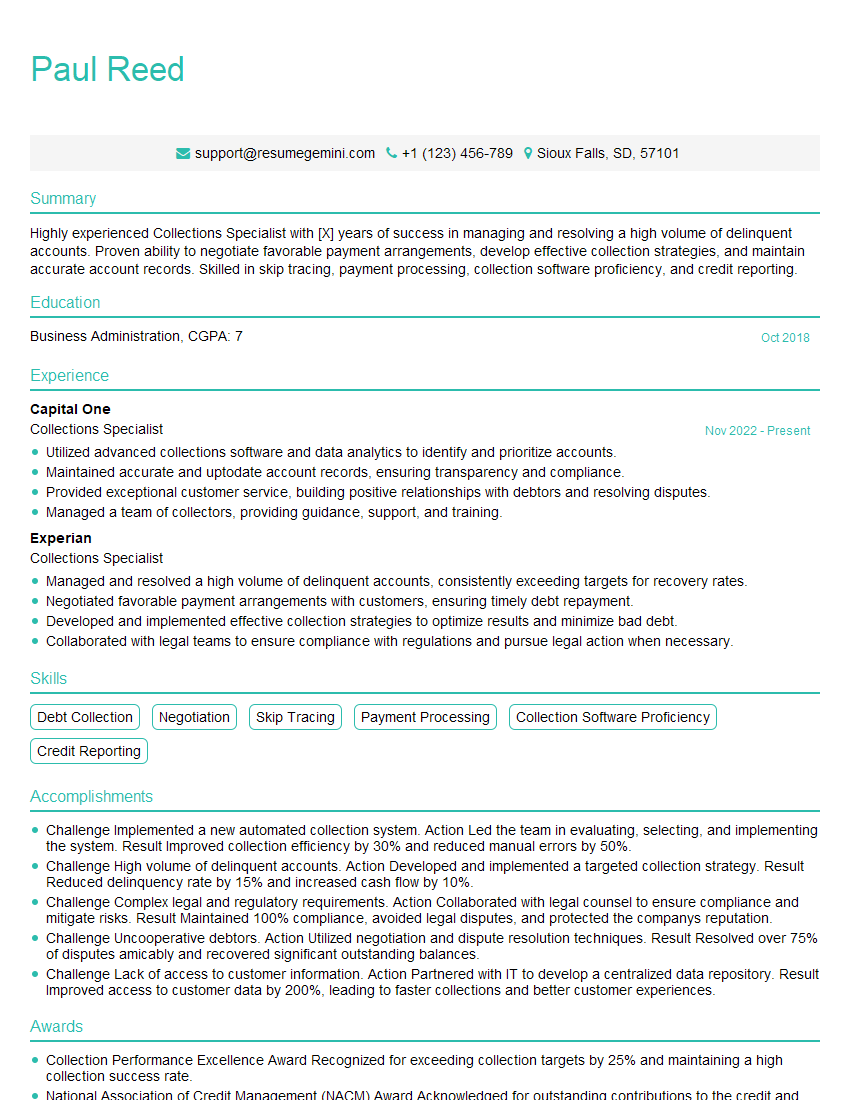
Collections Specialist Resume Sample
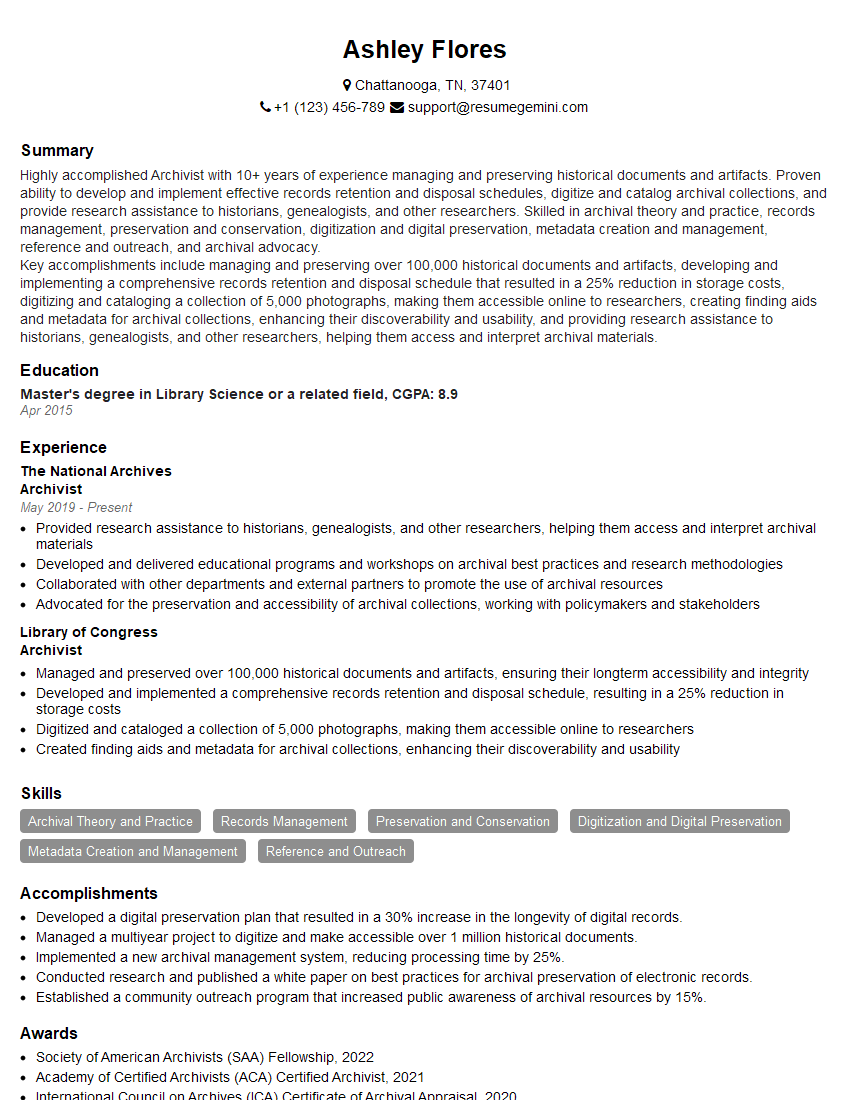
Archivist Resume Sample
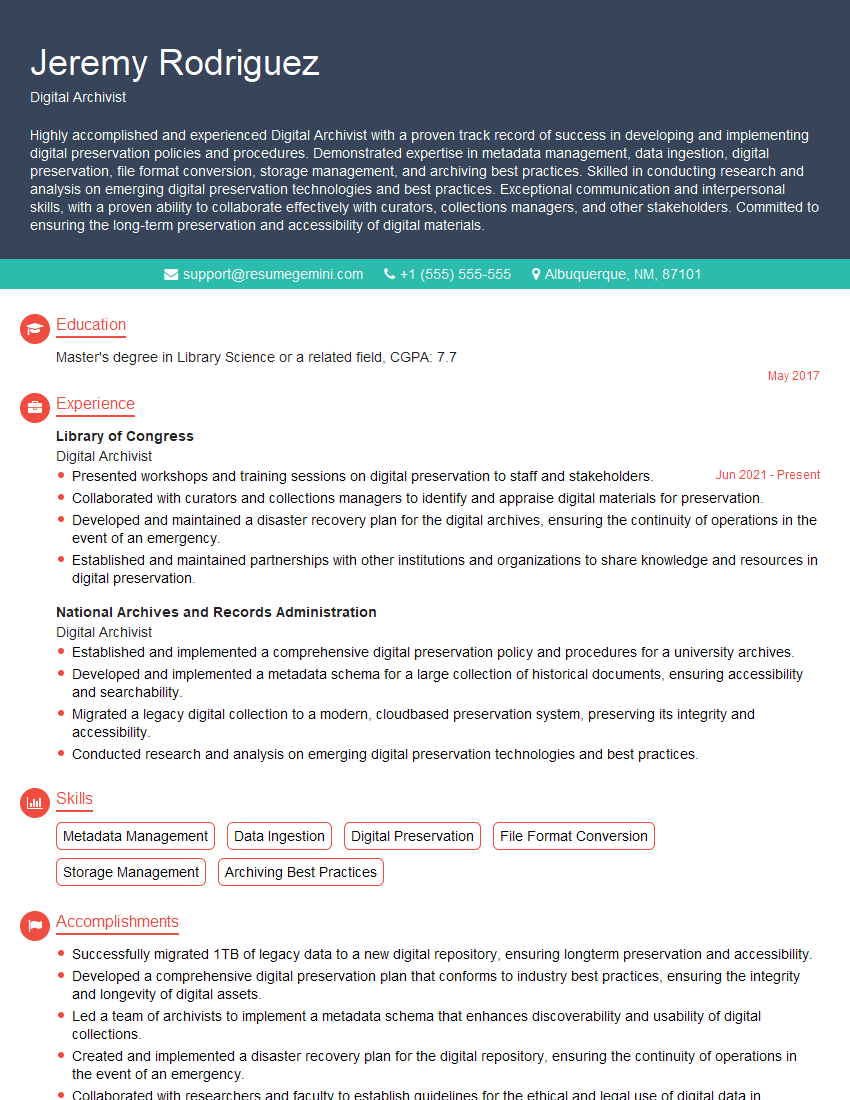
Digital Archivist Resume Sample
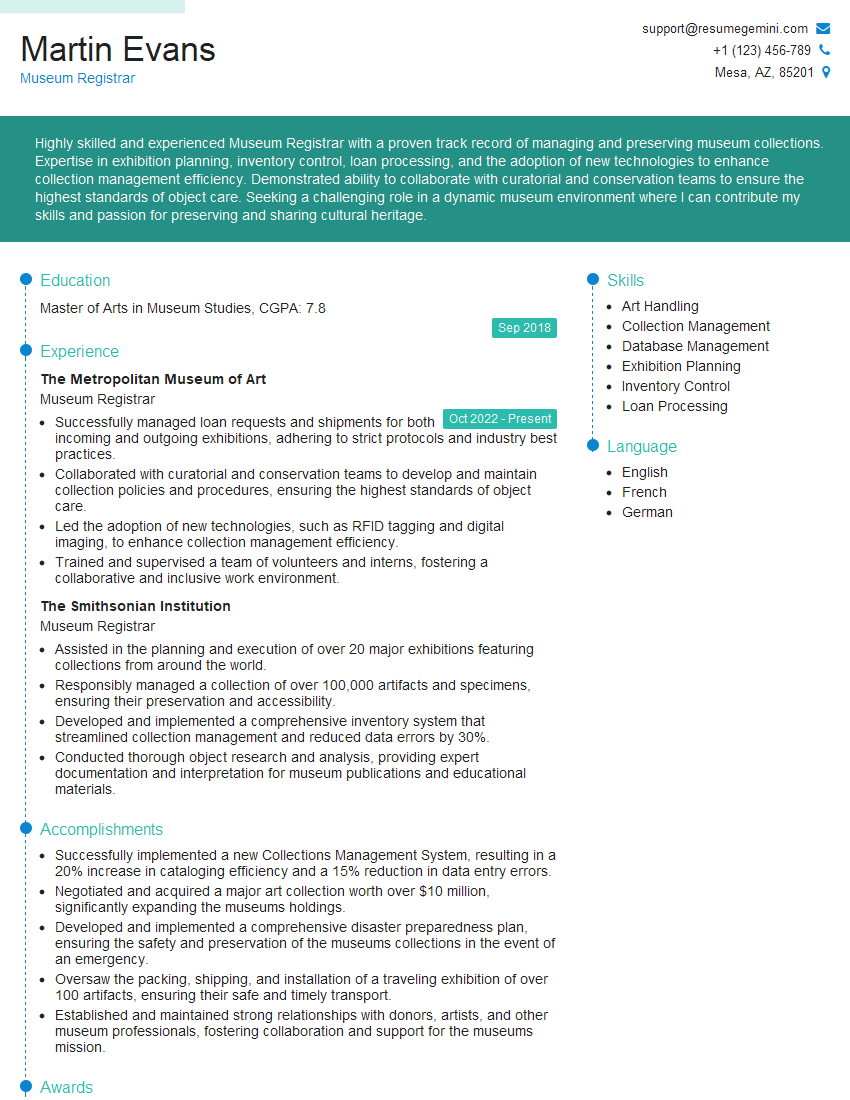
Museum Registrar Resume Sample
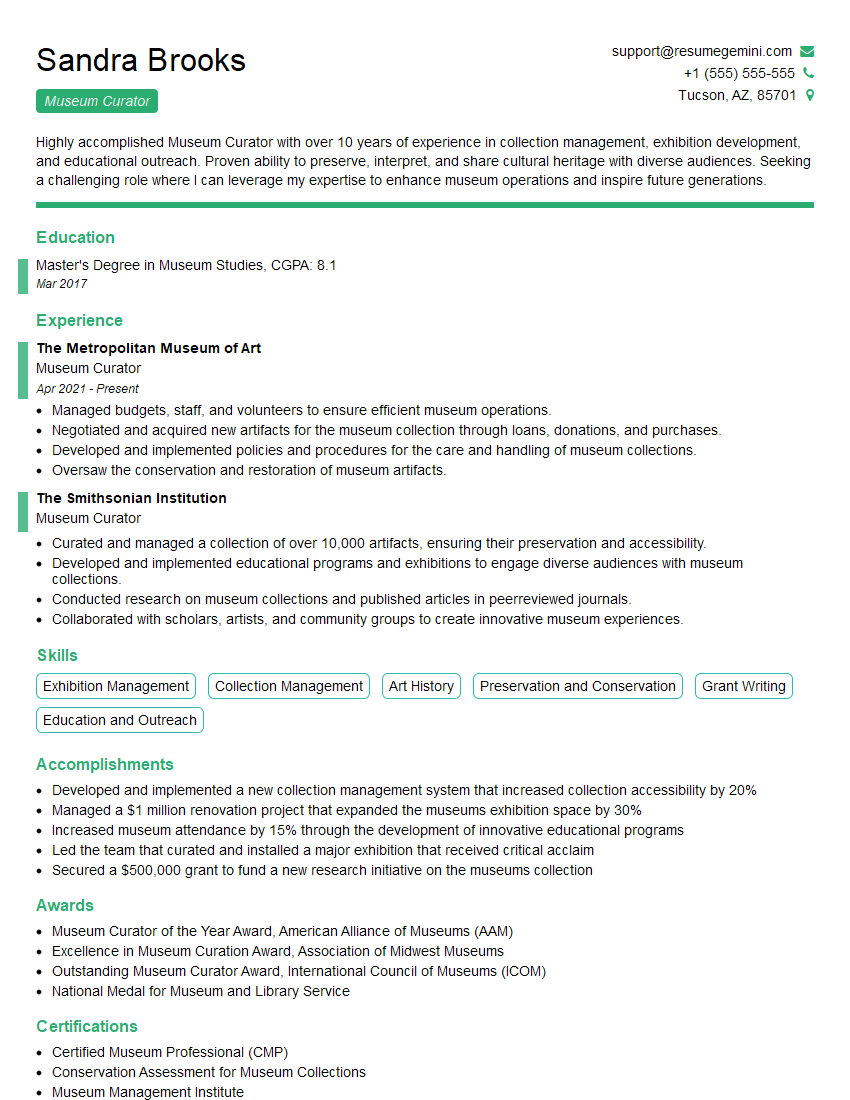
Museum Curator Resume Sample
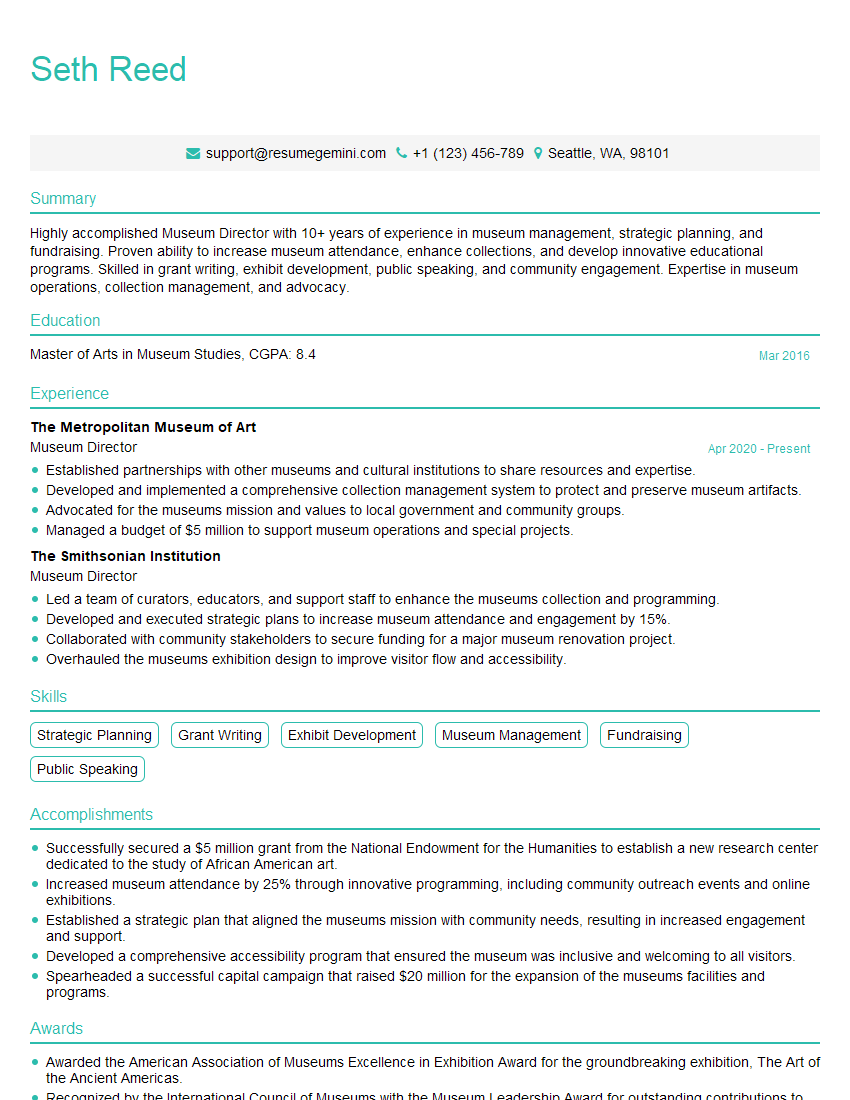
Museum Director Resume Sample
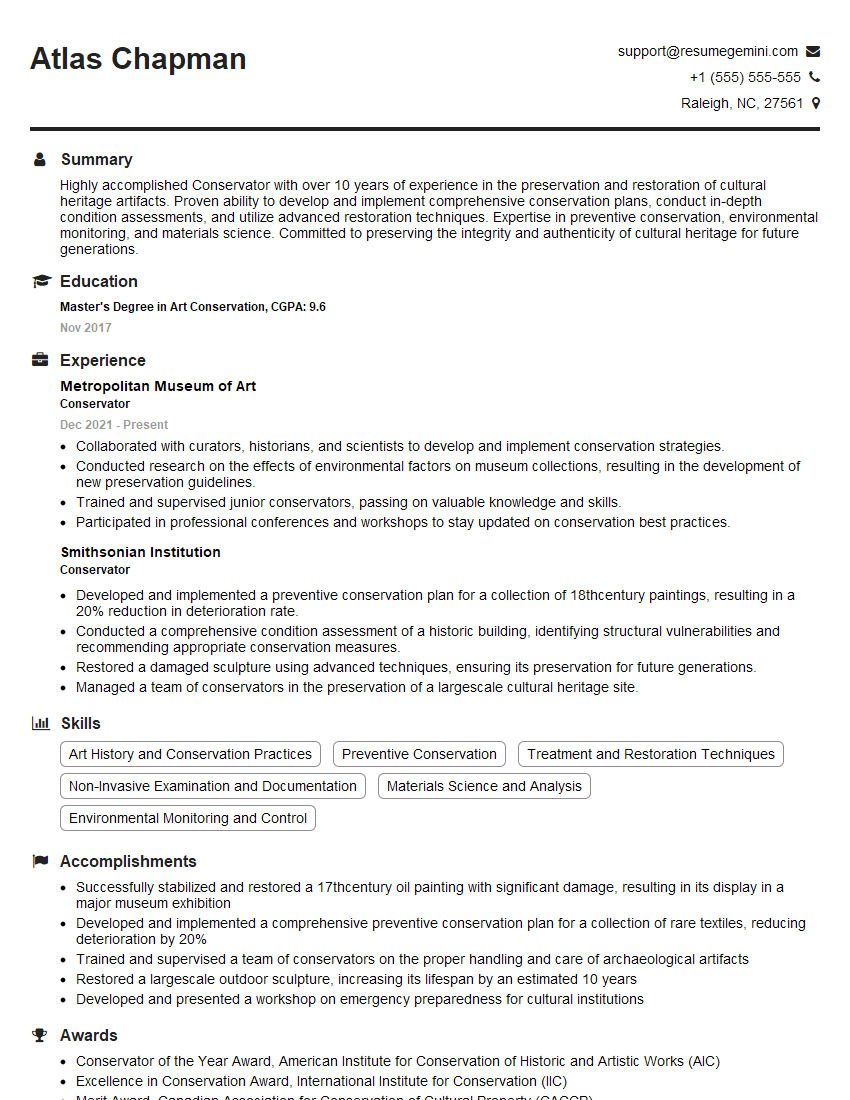
Conservator Resume Sample
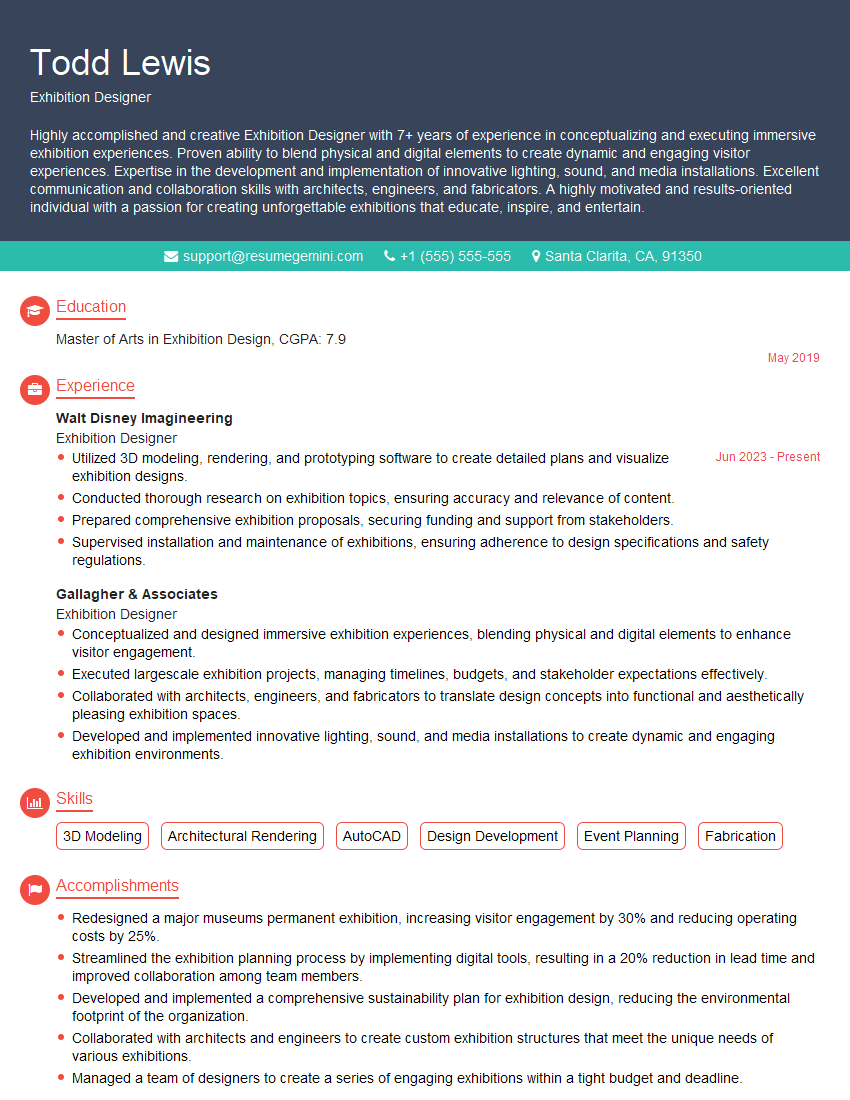
Exhibition Designer Resume Sample
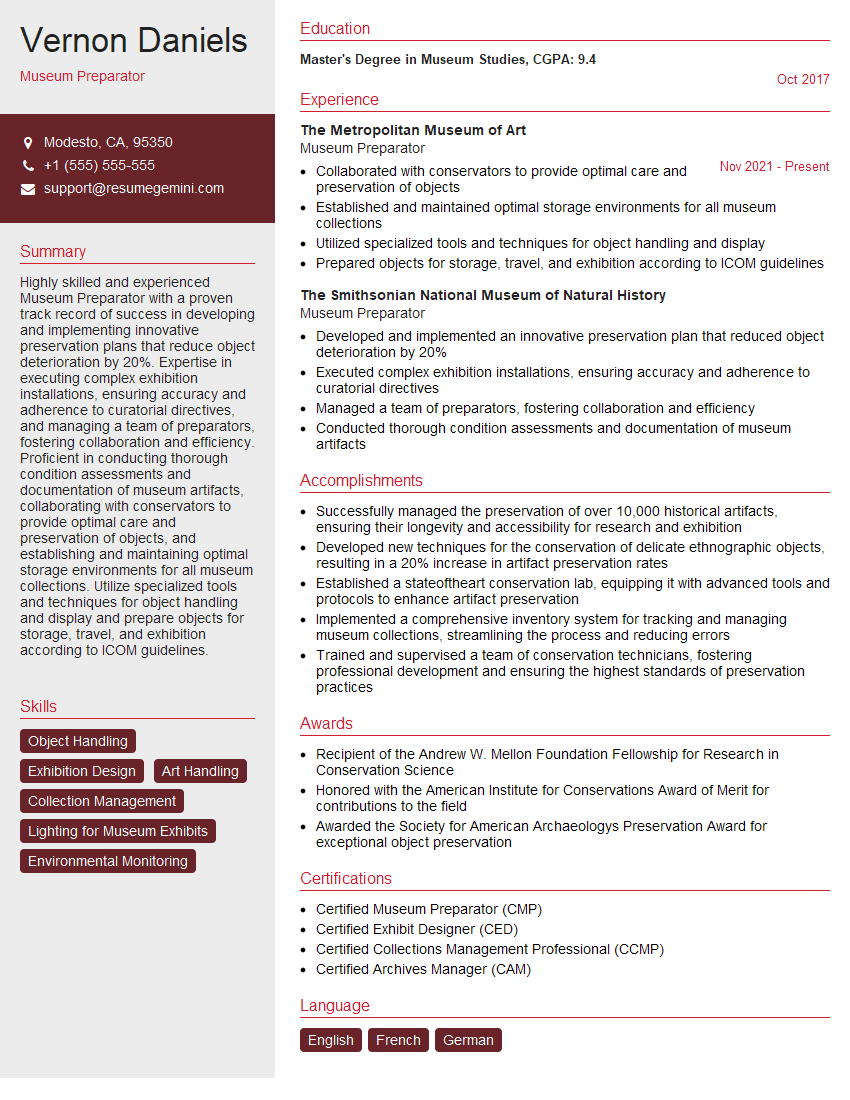
Museum Preparator Resume Sample
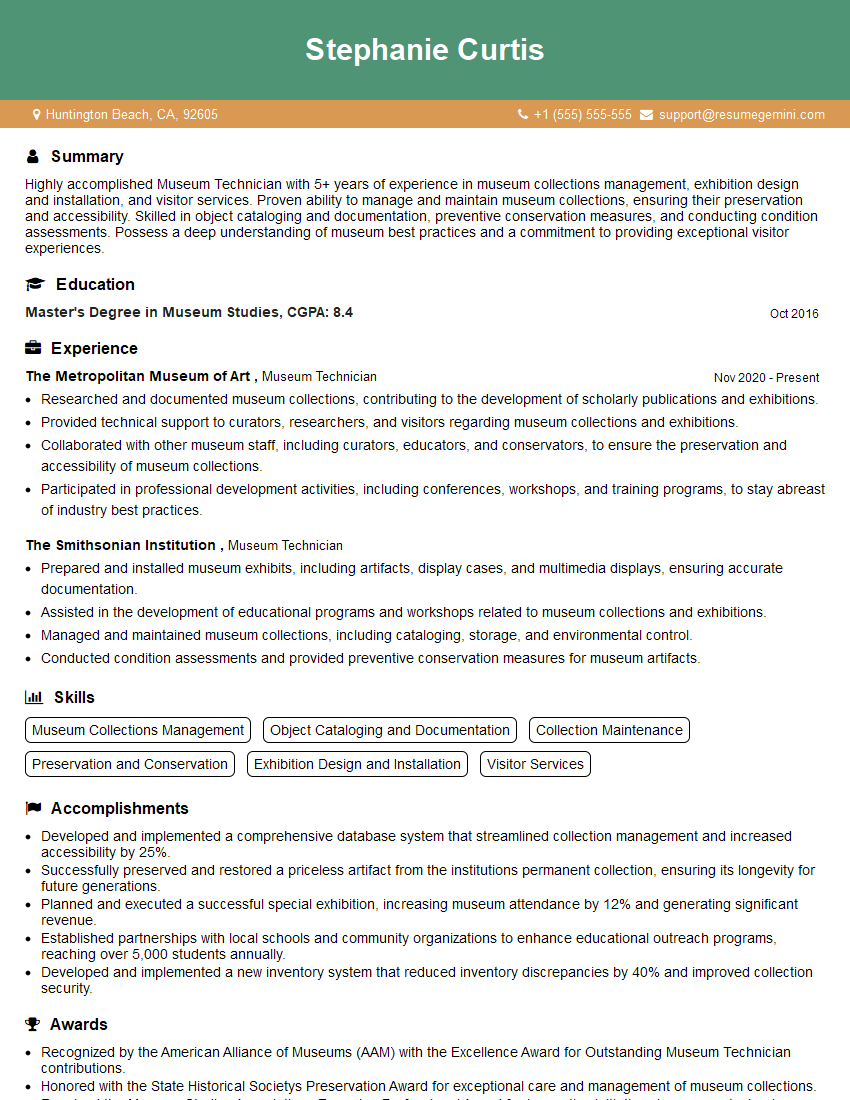
Museum Technician Resume Sample
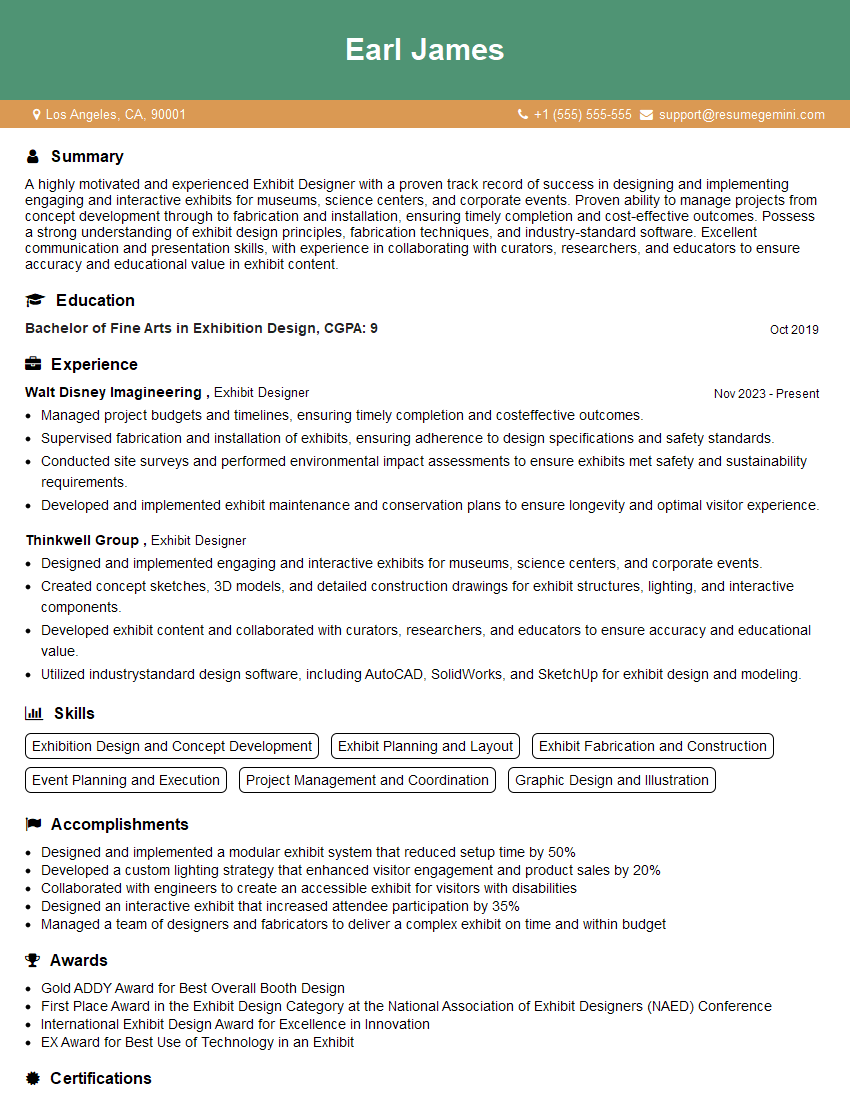
Exhibit Designer Resume Sample
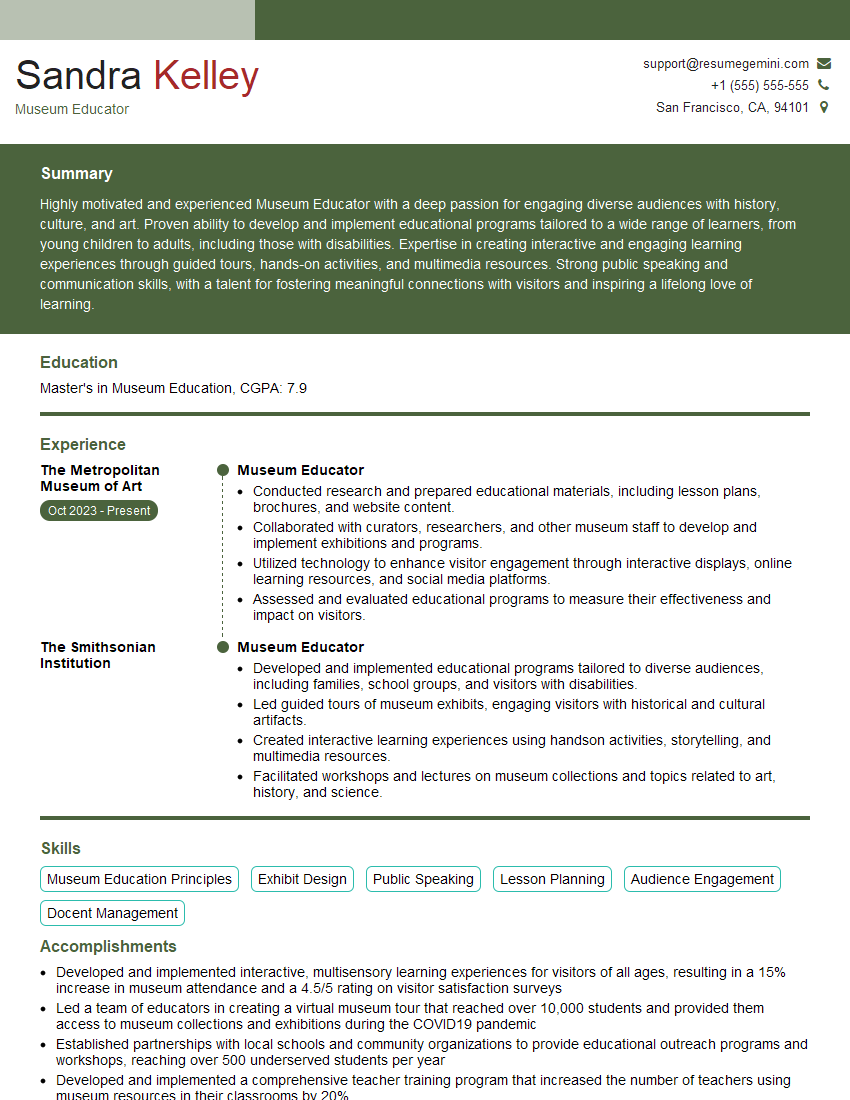
Museum Educator Resume Sample
Explore more articles
Users Rating of Our Blogs
Share Your Experience
We value your feedback! Please rate our content and share your thoughts (optional).
What Readers Say About Our Blog
To the interviewgemini.com Webmaster.
Very helpful and content specific questions to help prepare me for my interview!
Thank you
To the interviewgemini.com Webmaster.
This was kind of a unique content I found around the specialized skills. Very helpful questions and good detailed answers.
Very Helpful blog, thank you Interviewgemini team.