Interviews are more than just a Q&A session—they’re a chance to prove your worth. This blog dives into essential Knowledge of PV System Design and Engineering interview questions and expert tips to help you align your answers with what hiring managers are looking for. Start preparing to shine!
Questions Asked in Knowledge of PV System Design and Engineering Interview
Q 1. Explain the difference between monocrystalline, polycrystalline, and thin-film solar panels.
The main difference between monocrystalline, polycrystalline, and thin-film solar panels lies in their silicon structure and manufacturing process, which directly impacts their efficiency and cost.
- Monocrystalline silicon panels: These are made from a single, large silicon crystal, resulting in a uniform, dark-blue appearance. This process yields higher efficiency (typically 18-22%) because the uniform silicon structure allows for better electron flow. Think of it like a perfectly smooth highway for electricity. They are more expensive due to the energy-intensive manufacturing process.
- Polycrystalline silicon panels: These panels are made from multiple silicon crystals melted and solidified together, resulting in a speckled, bluish appearance. The less uniform structure leads to slightly lower efficiency (typically 15-17%) than monocrystalline, but they are cheaper to produce. Imagine this as a slightly bumpy road, still allowing for electricity flow, but with some minor resistance.
- Thin-film solar panels: These use a thin layer of photovoltaic material deposited onto a substrate like glass or metal. They are flexible, lightweight, and can be made in various colors. However, their efficiency is generally lower (typically 7-13%), but they are the least expensive and can be more suitable for certain applications like building-integrated photovoltaics (BIPV).
The choice depends on the project’s budget, available space, aesthetic considerations, and desired energy output. For example, a high-efficiency system requiring maximum power generation in limited space might opt for monocrystalline panels, whereas a large-scale project with a budget constraint might choose polycrystalline or thin-film.
Q 2. Describe the process of sizing a PV array for a specific load.
Sizing a PV array involves calculating the number of solar panels needed to meet a specific load demand. It’s a crucial step that ensures the system generates enough electricity.
- Determine the load: Calculate the total energy consumption (in kilowatt-hours, kWh) of the appliances or equipment you intend to power. Consider peak demand and daily/seasonal variations.
- Calculate daily energy requirement: Sum up the daily kWh consumption of all loads.
- Account for system losses: PV systems experience various losses (e.g., wiring, shading, temperature). A typical loss factor is around 10-15%, meaning you’ll need to increase your array size to compensate. This is often represented by a derating factor (e.g., 0.85 for 15% losses).
- Estimate solar irradiance: Determine the average daily solar irradiance (sunlight intensity) for your location. This data is readily available from online resources or meteorological stations.
- Calculate required panel power: Divide the daily energy requirement (adjusted for losses) by the daily solar irradiance and panel operating hours (typically 4-6 hours of peak sun). This will give you the required peak power of the PV array (in kilowatts, kW).
- Select appropriate panels: Choose solar panels with a wattage that best suits the required array power. Divide the total required kW by the individual panel wattage to determine the number of panels needed.
- Consider array configuration: Determine the optimal arrangement of panels based on the available roof space, shading, and orientation.
Example: If your daily energy consumption is 5 kWh, and you have a derating factor of 0.85, your required energy becomes 5 kWh / 0.85 ≈ 5.88 kWh. With an average daily solar irradiance of 5 kWh/m²/day and 5 hours of peak sun, you’d need an array with peak power: 5.88 kWh / (5 kWh/m²/day * 5 hours) ≈ 0.235 kW. If you’re using 300-watt panels, you would need approximately 0.235 kW / 0.3 kW/panel ≈ 0.8 panels, meaning you’d need at least one 300-watt panel.
Q 3. What are the key factors to consider when selecting an inverter for a PV system?
Inverter selection is crucial for PV system performance and safety. Key factors include:
- Inverter Size (kW): The inverter must be appropriately sized to handle the maximum power output of the PV array. An oversized inverter might not operate at peak efficiency, while an undersized one could overload.
- Efficiency: Look for inverters with high efficiency ratings, especially peak efficiency and European efficiency. This impacts the overall energy yield of the system.
- MPPT (Maximum Power Point Tracking) channels: More MPPT channels allow for better power optimization from multiple strings of panels, particularly beneficial on larger systems or those with shading issues.
- Safety features: Essential features include ground fault detection, overcurrent protection, and overvoltage protection.
- Communication capabilities: Monitoring capabilities like data logging and remote access via Wi-Fi or other communication protocols are valuable for system maintenance and performance analysis.
- Grid-tie vs. off-grid: Choose the right type of inverter based on whether you’ll be connecting to the grid or using a standalone system.
- Warranty and maintenance: A reliable inverter with a good warranty is crucial for long-term operation.
For instance, a large commercial system might benefit from a string inverter with multiple MPPT trackers to optimize power generation across different sections of the array, even if some are partially shaded. A smaller residential system might utilize a microinverter, one for each panel, for optimal performance and easier troubleshooting.
Q 4. How do you calculate the energy yield of a PV system?
Calculating energy yield involves estimating the total energy produced by the PV system over a specific period (e.g., a year). Several factors influence this calculation.
The most common formula is:
Energy Yield (kWh/year) = Panel Power (kWp) * Annual Sun Hours * Performance RatioWhere:
- Panel Power (kWp): The peak power output of the PV array (in kilowatts peak).
- Annual Sun Hours: The total number of hours of sunlight per year at your specific location. This data is typically available from solar resource maps.
- Performance Ratio (PR): Accounts for various losses (e.g., temperature, shading, wiring, etc.). It’s usually a value between 0.7 and 0.8. For example, a PR of 0.75 means that 75% of the theoretical maximum energy is actually generated.
Therefore, accurate estimation requires detailed data on solar irradiance, panel characteristics, system losses, and location-specific factors.
For example, a 5 kWp PV array in a location with 1800 annual sun hours and a performance ratio of 0.75 would produce an estimated annual energy yield of:
Energy Yield = 5 kWp * 1800 hours/year * 0.75 = 6750 kWh/yearThis is an estimation and the actual yield might vary slightly due to weather variations and other influencing factors.
Q 5. Explain the concept of maximum power point tracking (MPPT).
Maximum Power Point Tracking (MPPT) is a crucial technology in solar inverters that maximizes energy harvesting from solar panels. Solar panels don’t always produce their maximum power due to changing sunlight intensity and temperature.
Imagine a hill with a peak (maximum power). MPPT acts like a climber who is constantly searching for the highest point (the peak power point) on the hill. As conditions change (sunlight intensity or temperature), the climber adjusts their position to find and stay on the highest point. This ensures the most electricity is harnessed at any given moment.
MPPT algorithms continuously monitor the voltage and current from the panels and adjust the impedance to keep the operating point at the maximum power point, regardless of environmental changes. This leads to a significant improvement in overall system efficiency.
The improvement can be substantial, especially during conditions of partial shading or variable sunlight. A system without MPPT would lose significant energy yield under such conditions, whereas the MPPT will constantly search for this maximum efficiency point.
Q 6. What are the different types of grounding systems used in PV systems?
Several grounding systems are used in PV systems to protect against electrical shocks and potential fires.
- System Grounding: Connects the entire PV system (including the array, inverters, and other components) to earth ground. This limits the risk of electrical shock from faulty equipment and allows for fault current to flow harmlessly to the ground.
- Equipment Grounding: Grounds individual components to ensure they are safely connected to earth, reducing the risk of electrical shocks and fires. It works in parallel with system grounding to make sure no voltage builds up in any component.
- Grounding Electrode System: This consists of grounding rods or plates driven into the earth to create a low-impedance path for fault currents. The effectiveness of the system is directly correlated to soil resistivity.
The specific grounding scheme employed depends on the system size, location, and local electrical codes. Proper grounding is non-negotiable for safety in PV systems. Faulty grounding can result in hazardous situations. Regular inspection and maintenance of the grounding system are crucial to ensure continued safety.
Q 7. Describe the safety precautions necessary when working with PV systems.
Working with PV systems necessitates stringent safety precautions due to the presence of high voltages and direct current (DC) electricity.
- Lockout/Tagout Procedures: Always disconnect and lock out the PV array and inverter before performing any maintenance or repairs. This prevents accidental energization.
- Personal Protective Equipment (PPE): Wear appropriate PPE, including insulated gloves, safety glasses, and arc flash protective clothing, when working on or near PV systems.
- Voltage Testing: Before any work, verify the absence of voltage using a suitable voltage tester. Never assume a system is de-energized.
- Grounding: Ensure proper grounding of all equipment and tools before commencing any work. This is particularly crucial when working on higher voltage systems.
- Awareness of Hazards: Be aware of potential hazards like falls from roofs, electrical shocks, burns, and potential fire risks. Understand the risks associated with the specific tasks before you proceed.
- Training and Certification: Adequate training and certification in PV system safety practices are essential for personnel working on these systems. Many jurisdictions require specialized licenses and permits to carry out work on PV systems.
Ignoring safety measures can result in severe injuries or fatalities. Always prioritize safety and follow established safety protocols when working with PV systems.
Q 8. What are the common causes of PV system failures?
PV system failures can stem from various sources, broadly categorized into component malfunctions, environmental factors, and design/installation flaws. Think of it like a chain – if one link breaks, the entire system can be affected.
- Component Failures: Solar panels degrade over time, experiencing reduced efficiency and potential hot spots leading to failure. Inverters, the brains of the system, can malfunction due to overheating, power surges, or simply reaching their end-of-life. Wiring and connectors can corrode or become loose, leading to electrical issues and potential fire hazards. Batteries, if used, are subject to degradation and failure over time, depending on their chemistry and usage.
- Environmental Factors: Extreme weather events like hailstorms, strong winds, and snow loads can physically damage panels and mounting structures. Shading, even partial, significantly impacts energy production. Bird droppings, leaves, and dust can accumulate on panels, reducing their efficiency (imagine trying to sunbathe under a dirty window!).
- Design/Installation Errors: Improper grounding can lead to electrical shocks and equipment damage. Incorrect sizing of components (e.g., inverter too small for the array) can limit system performance. Poor workmanship during installation can create weak points and accelerate component degradation. A poorly designed system might even experience higher stress on components during wind loads.
Regular maintenance and preventative measures, such as cleaning panels and inspecting connections, are crucial to extending the lifespan and ensuring optimal performance of your PV system. Think of it like regular check-ups for your car – it’s preventative maintenance that will save you money and problems in the long run.
Q 9. How do you design a PV system for optimal performance in different climates?
Designing a PV system for optimal performance across diverse climates requires careful consideration of several factors. It’s like tailoring a suit – you wouldn’t use the same fabric for a summer outfit as for a winter coat.
- Solar Irradiance: Higher solar irradiance (sunlight intensity) in sunny regions requires different panel and inverter sizing compared to areas with lower irradiance. We utilize solar resource maps and specialized software to model the expected energy production in different locations.
- Temperature: High temperatures can decrease panel efficiency. We select panels with good temperature coefficients and consider incorporating cooling mechanisms in hot climates. Conversely, in cold climates, we need to consider the impact of snow and ice on panel performance and system stability.
- Wind Loads: Areas prone to high winds require robust mounting structures and appropriately rated panels to withstand strong gusts. The engineering design must account for these forces to prevent damage to the system.
- Humidity and Precipitation: High humidity and rainfall can lead to corrosion. We choose corrosion-resistant components and ensure proper sealing and waterproofing to protect against these elements. We need to consider the possibility of flooding or water ingress that could affect the system components.
- Ambient Temperature: This impacts the efficiency of the solar panels and the inverters. We adjust the system design to ensure optimal performance within the expected ambient temperature range. The design and selection of components must be appropriate for the expected temperature range.
By carefully assessing these climatic factors and using appropriate design software, we can engineer a PV system that delivers optimal performance and longevity, even in challenging conditions.
Q 10. Explain the impact of shading on PV system performance.
Shading significantly impacts PV system performance. Even a small shaded area on a single panel can drastically reduce the overall output of the entire string of panels connected in series. Imagine a group of friends walking – if one person slows down, the whole group is slowed down. This is because solar panels connected in series operate at the voltage of the lowest-performing panel within the string. This phenomenon is called the ‘current mismatch’ effect.
Partial shading can lead to:
- Reduced Power Output: The shaded cells become bottlenecks, limiting the current generated by the entire string.
- Hot Spots: Shaded cells receive less current but still receive sunlight, which leads to overheating, potential damage, and even fire hazards.
- Increased Degradation: Prolonged shading can accelerate the degradation of solar panels.
Mitigation strategies include:
- Optimizers: These devices are installed at the individual panel level and allow each panel to operate at its maximum power point, regardless of shading on other panels.
- Microinverters: These convert DC to AC power at the individual panel level, eliminating the string-level current mismatch problem.
- Careful Site Selection and Panel Placement: Avoiding shading sources is crucial; this requires careful planning and analysis of the site using solar analysis tools.
By employing these strategies, we can minimize the negative impact of shading and maximize the performance and longevity of the PV system.
Q 11. What are the different types of battery storage systems used with PV systems?
Several battery storage systems are compatible with PV systems, each with its own advantages and disadvantages. The choice depends on factors like cost, lifespan, application, and required energy capacity. Think of it like choosing the right tool for a job – a hammer won’t work for every task.
- Lead-Acid Batteries: These are mature technology, relatively inexpensive, and readily available. However, they have a shorter lifespan compared to other options and require regular maintenance.
- Lithium-ion Batteries: These offer higher energy density, longer lifespan, and faster charging times than lead-acid batteries. Different chemistries within lithium-ion (e.g., LFP, NMC) provide varying performance characteristics and safety profiles. They are more expensive upfront but can offer superior long-term value.
- Flow Batteries: These are well-suited for large-scale energy storage applications. They are typically more expensive than lithium-ion but possess a longer lifespan and are capable of handling high charge/discharge rates.
- Nickel-Cadmium (NiCd) Batteries: While durable, these are less common in residential PV systems due to environmental concerns and higher cost compared to other options.
Selecting the appropriate battery system requires a detailed analysis of the energy requirements, budget, and desired lifetime of the storage solution.
Q 12. Describe the role of a charge controller in a PV system.
The charge controller is a crucial component in a PV system that regulates the flow of electrical current from the solar panels to the batteries (if present) and the load. It acts as a traffic cop, ensuring the safety and efficiency of the system. Without it, overcharging or damage to the batteries or other components could easily occur.
Key functions include:
- Regulating Voltage and Current: Prevents overcharging of the batteries, which can lead to damage or even explosions. It also ensures that the batteries are properly charged and the load receives a stable voltage.
- Preventing Reverse Current Flow: Prevents the batteries from discharging back into the solar panels at night.
- Protecting Against Overloads and Short Circuits: Detects and protects the system from potential damages caused by these events.
- Maximizing Power Transfer: Some advanced controllers employ Maximum Power Point Tracking (MPPT) to optimize the power extracted from the solar panels, ensuring higher efficiency across diverse weather conditions.
In essence, the charge controller safeguards the batteries and ensures the optimal operation of the entire PV system, providing longevity and reliability.
Q 13. How do you design a PV system to comply with relevant building codes and regulations?
Designing a PV system that complies with building codes and regulations is paramount for safety and legal compliance. This involves understanding and adhering to local, state, and national standards. Think of it as following a recipe – you wouldn’t bake a cake without following the instructions.
Key aspects include:
- Electrical Codes (e.g., NEC in the US): These codes specify requirements for wiring, grounding, overcurrent protection, and safety devices. Compliance ensures the system’s electrical safety and prevents hazards.
- Structural Codes: These dictate the requirements for mounting structures to withstand wind loads, snow loads, and other environmental forces. They ensure the system’s structural integrity and prevent damage or collapse.
- Fire Codes: Regulations related to fire safety are important. This may include specific requirements for wiring, installation clearances, and the use of fire-resistant materials. These codes ensure the safety of the building and its occupants.
- Permitting Processes: Obtaining the necessary permits before starting the installation is a crucial step. Local authorities need to approve the design and installation plans, confirming that they comply with all relevant regulations.
- Inspections: Inspections are regularly carried out throughout and after the installation, ensuring the system meets all the required safety and performance standards. This is done to make sure the system is properly and safely installed.
By working closely with local authorities and adhering to all relevant codes, we can ensure the PV system is safe, reliable, and legally compliant.
Q 14. Explain the concept of net metering.
Net metering is a billing mechanism that allows PV system owners to send excess energy generated by their system back to the electrical grid and receive credits on their electricity bill. It’s like having a two-way meter for your electricity consumption. You can consume energy from the grid at times you’re not producing and get compensated for sending energy back.
Here’s how it works:
- Energy Generation: When your PV system generates more energy than you consume, the excess energy flows back to the grid.
- Net Metering Credit: Your utility meter spins backward, crediting you for the excess energy you exported to the grid. This credit can offset the cost of energy consumed from the grid at times when your PV system isn’t producing enough energy (e.g., at night).
- Billing Cycle: At the end of the billing cycle, your net energy consumption is calculated. If you generated more energy than you consumed, you may receive a credit or a reduced bill. If you consumed more energy than you generated, you will pay for the difference.
Net metering incentivizes the adoption of PV systems by reducing the financial burden on consumers and supporting the growth of renewable energy sources. The specifics of net metering programs vary by location and utility company.
Q 15. What are the key performance indicators (KPIs) for a PV system?
Key Performance Indicators (KPIs) for a PV system are crucial for evaluating its efficiency and effectiveness. They provide insights into energy production, system health, and financial returns. Think of them as the vital signs of your solar power plant.
- Energy Yield (kWh): The total amount of energy generated by the system over a specific period (daily, monthly, annually). This is the most fundamental KPI and directly reflects the system’s performance.
- Capacity Factor: The ratio of actual energy produced to the maximum possible energy output based on the system’s rated capacity. A higher capacity factor indicates better system utilization (e.g., a capacity factor of 20% means the system produced 20% of its maximum potential energy).
- Performance Ratio (PR): A comprehensive metric encompassing various system losses (explained later), representing the overall efficiency of the PV system. A higher PR is desirable (typically between 75% and 85%).
- Specific Yield (kWh/kWp): This KPI normalizes energy production to the installed power capacity (kWp – kilowatt-peak), allowing for comparisons between systems of different sizes. A higher specific yield implies better energy production per unit of installed capacity.
- System Availability: The percentage of time the system is operational and producing energy. Downtime due to faults significantly impacts this KPI.
- Return on Investment (ROI): A financial KPI showing the profitability of the PV system investment over time, factoring in initial costs, energy savings, and potential incentives.
For example, monitoring a system’s daily energy yield helps identify trends and potential issues. A sudden drop in energy yield might indicate shading, faulty components, or even weather conditions.
Career Expert Tips:
- Ace those interviews! Prepare effectively by reviewing the Top 50 Most Common Interview Questions on ResumeGemini.
- Navigate your job search with confidence! Explore a wide range of Career Tips on ResumeGemini. Learn about common challenges and recommendations to overcome them.
- Craft the perfect resume! Master the Art of Resume Writing with ResumeGemini’s guide. Showcase your unique qualifications and achievements effectively.
- Don’t miss out on holiday savings! Build your dream resume with ResumeGemini’s ATS optimized templates.
Q 16. How do you perform a site assessment for a PV system installation?
A thorough site assessment is paramount for successful PV system installation. It’s like planning the foundation of a house – a weak foundation leads to problems later. We need to assess several crucial factors:
- Shading Analysis: Identifying potential shading from trees, buildings, or other structures. This is done using tools like shadow diagrams and on-site observation to determine the impact on energy production throughout the year.
- Roof/Ground Assessment: Evaluating the structural integrity of the roof or ground for supporting the PV system’s weight and ensuring it can withstand wind loads. We consider factors like roof slope, material, and load-bearing capacity.
- Sun Exposure: Determining the optimal orientation and tilt angle for the PV panels to maximize sunlight exposure. This involves considering the geographical location, azimuth (direction), and altitude (angle) of the sun throughout the year.
- Electrical Infrastructure: Assessing the existing electrical system to determine if it can handle the additional power generated by the PV system. This includes checking the capacity of the service panel, wiring, and grounding.
- Accessibility: Ensuring ease of access for installation, maintenance, and future repairs. Difficult access can significantly increase costs and time.
- Microclimatic Conditions: Evaluating factors like wind speed, temperature variations, and precipitation to select appropriate components and ensure system durability.
For example, a shading analysis might reveal that a row of trees casts a shadow over the panels during peak sunlight hours, significantly reducing energy output. This assessment would inform the system design to mitigate shading.
Q 17. Explain the difference between DC and AC wiring in PV systems.
DC (Direct Current) and AC (Alternating Current) wiring play distinct roles in a PV system. Think of it as two different types of water flowing through pipes.
- DC Wiring: This carries the electricity generated by the solar panels themselves. It’s low voltage and flows from the panels to the inverter. DC wiring often uses thicker cables due to higher current requirements. Incorrectly sized DC wiring can lead to significant voltage drops and power losses.
- AC Wiring: This carries the electricity after it’s converted from DC to AC by the inverter. AC wiring is typically at the standard household voltage (120V or 240V) and distributes power throughout the building. AC wiring is usually similar to that of standard household circuits.
The inverter is the crucial link between the two systems, transforming the DC power into usable AC power. A typical PV system will have DC wiring connected to each panel and string, converging into the inverter. After the conversion, AC wiring distributes power from the inverter to the electrical panel and ultimately to household appliances.
Q 18. What are the different types of racking systems used for PV panels?
Racking systems provide the crucial support structure for PV panels, ensuring proper orientation, stability, and protection. Selecting the right racking system depends on several factors, including roof type, panel size, and environmental conditions. It’s like choosing the right foundation for a house, ensuring stability and longevity.
- Roof-Mounted Racking: These systems are designed for various roof types (pitched, flat, etc.) and are typically made from aluminum or steel. Common types include:
- Rail-based systems: Use rails along the roof to attach panel mounts.
- Tile-integrated systems: Designed to fit seamlessly with existing roofing tiles.
- Ballasted systems: Use weight to secure the system to flat roofs.
- Ground-Mounted Racking: These systems support panels directly on the ground and are usually used for large-scale PV installations or when roof mounting isn’t feasible. They often incorporate adjustable angles for optimal sun exposure.
- Pole-Mounted Racking: These systems mount panels on poles and are ideal for areas with limited space or challenging terrain.
The choice of racking system is crucial for the structural integrity of the PV array. A poorly designed or installed racking system can lead to panel damage, system failure, and safety hazards.
Q 19. Describe the process of commissioning a PV system.
Commissioning a PV system is the final step in the installation process, ensuring it operates as intended and meets safety standards. It’s like conducting a thorough inspection before handing over the keys to a new home.
- Visual Inspection: A detailed inspection of all components to ensure proper installation and absence of physical damage.
- Wiring and Connections: Verification of all wiring connections, ensuring proper polarity, grounding, and isolation.
- Operational Testing: Checking the functionality of all components, including the inverters, panels, and monitoring systems. This includes verifying the power output under various operating conditions.
- Safety Testing: Performing electrical safety tests to ensure compliance with relevant standards and regulations. This might include ground fault detection, insulation resistance checks, and overcurrent protection verification.
- Performance Monitoring: Installing and configuring monitoring systems to track system performance, energy production, and detect any anomalies.
- Documentation: Preparing a comprehensive commissioning report detailing all tests performed, results, and any necessary corrective actions.
A thorough commissioning process ensures the system’s safety, reliability, and efficient operation. It also provides valuable documentation for future maintenance and troubleshooting.
Q 20. How do you troubleshoot common problems in a PV system?
Troubleshooting PV systems requires a systematic approach, similar to diagnosing a medical issue. Start with the most likely causes and work your way through.
- Low Energy Production: This could be due to shading, faulty panels, dirty panels, inverter issues, or wiring problems. Check for shading, visually inspect panels for cracks or defects, clean panels if dirty, and check inverter output and DC voltage.
- Inverter Errors: Check the inverter’s display for error codes, consult the manufacturer’s manual for troubleshooting steps, and potentially reset or replace the faulty inverter.
- Overheating: This might indicate poor ventilation, faulty components, or shading. Check for proper airflow around the panels and inverters.
- Ground Faults: Perform a ground fault test to identify any faults in the grounding system.
- Wiring Issues: Inspect wiring connections for loose connections, corrosion, or damage. Use a multimeter to check for continuity and voltage.
Using a multimeter is essential for checking voltages, currents, and resistance in different parts of the system. A systematic approach, starting with visual inspection and progressing to detailed electrical testing, is key to efficient troubleshooting.
Q 21. Explain the concept of system losses in a PV system.
System losses in a PV system reduce its overall efficiency and energy output. Think of it like leaks in a water pipe system reducing the amount of water reaching its destination.
- Soiling Losses: Dirt, dust, pollen, and other debris accumulating on the panels reduces their ability to absorb sunlight.
- Shading Losses: Partial or total shading of panels by trees, buildings, or other structures significantly reduces their output.
- Mismatch Losses: Differences in the performance of individual panels within a string can lead to reduced overall output.
- Angle of Incidence Losses: The angle at which sunlight strikes the panels affects energy absorption. Optimal tilt angles are crucial to minimize these losses.
- Temperature Losses: Higher panel temperatures reduce their efficiency. Proper ventilation and cooling systems can mitigate this.
- Wiring Losses: Resistance in wiring causes voltage drops and energy loss, particularly in long wiring runs.
- Inverter Losses: Inverters are not 100% efficient; some energy is lost during the conversion process.
Minimizing these losses is critical for optimizing system performance and maximizing energy production. Good system design, regular maintenance, and appropriate component selection play a major role in minimizing these losses.
Q 22. What are the environmental considerations for PV system installation?
Environmental considerations in PV system installation are crucial for minimizing the project’s ecological footprint and ensuring long-term sustainability. This involves several key aspects:
- Habitat disruption: Careful site selection minimizes disturbance to local flora and fauna. For example, avoiding sensitive habitats like wetlands or nesting areas is paramount. We conduct thorough site assessments, often involving ecological surveys, to identify and mitigate potential impacts.
- Waste management: Proper disposal of construction debris, packaging materials, and potentially hazardous components like broken solar panels is essential. We implement strict waste management plans in accordance with local regulations and industry best practices, often involving recycling programs for reusable materials.
- Water usage: PV system installation can indirectly affect water resources through construction activities. Minimizing water consumption during the process, utilizing water-efficient cleaning methods, and potentially incorporating water harvesting techniques can reduce the environmental load. For instance, we prefer dry construction methods where possible to minimize water usage.
- Land use: Large-scale PV projects can significantly impact land use. Optimizing system design to maximize energy generation on available land, and exploring options such as agrivoltaics (combining agriculture and solar energy) can minimize land usage while promoting biodiversity.
- Carbon footprint: The entire lifecycle of a PV system, from manufacturing to disposal, has a carbon footprint. Choosing systems with low embodied carbon, using recycled materials where possible, and optimizing the system’s efficiency to reduce the need for future replacements are key to mitigating this. We always analyze the life cycle assessment of different PV system components during the design phase.
Q 23. What software and tools do you use for PV system design?
For PV system design, I utilize a range of software and tools tailored to the specific project needs. These include:
- PVsyst: A powerful simulation software for detailed performance modeling, considering factors like shading, temperature, and solar irradiance. I use it to predict energy yield and optimize system design.
- Helioscope: This software is excellent for visual representation and analysis of shading impacts on array layout. Its 3D modeling capabilities are essential for complex roof designs.
- SketchUp and AutoCAD: These tools are invaluable for creating accurate site models and detailed drawings of the PV system layout, mounting structures, and cabling routes. This ensures precise integration with the existing building infrastructure.
- Specialized Electrical Design Software: Software like ETAP or similar tools are used to model the electrical aspects of the PV system, ensure proper sizing of inverters and other components, and verify compliance with relevant electrical codes.
- Data Acquisition and Monitoring Systems: Software platforms from different manufacturers are used to collect and analyze real-time performance data from installed PV systems. These insights allow for performance monitoring, predictive maintenance, and ongoing optimization.
Beyond software, I also employ tools such as inclinometers, multimeters, and thermal imaging cameras for on-site assessments and troubleshooting.
Q 24. How do you design for various roof types and orientations?
Designing for various roof types and orientations is a critical aspect of PV system engineering. It requires a thorough understanding of both architectural constraints and solar geometry.
Roof Types: The structural integrity and surface area of the roof significantly influence the design. For example:
- Flat Roofs: These offer simpler mounting solutions, often using ballast or mechanically fastened systems. Careful consideration is needed to ensure proper drainage and wind resistance.
- Gabled Roofs: These require specific mounting systems to accommodate the roof’s slope, often involving rails and clamps fixed to the rafters or purlins.
- Hip Roofs: These present more complex design challenges due to their multiple sloping sides. Custom mounting solutions and careful planning are needed to maximize energy capture and ensure structural safety.
- Shingled Roofs: Integration with existing roofing requires careful planning to avoid damaging the shingles and ensure watertight seals around the mounting points.
Orientations: The optimal orientation is generally south-facing (in the Northern Hemisphere), maximizing direct sunlight exposure throughout the day. However, the available roof orientation often dictates the system’s layout.
Software Tools: I utilize software like Helioscope and PVsyst to model different orientations and assess their impact on energy production. This allows me to optimize the system’s design even with less-than-ideal orientations, perhaps by adjusting array tilt angles to compensate.
Q 25. Explain your understanding of the various types of solar trackers.
Solar trackers enhance energy yield by continuously adjusting the angle of the PV panels to optimize their exposure to sunlight. There are various types:
- Single-axis trackers: These rotate around a single axis, either east-west or north-south, following the sun’s movement across the sky. East-west trackers are more common due to their simpler design and lower cost.
- Dual-axis trackers: These rotate around two axes, allowing for more precise tracking of the sun’s position throughout the day. They provide the highest energy yield but are more complex and expensive.
- Fixed-tilt systems: While not trackers, they serve as a baseline for comparison. They are simpler and cheaper but have lower energy yields than trackers.
- Passive trackers: These systems use simple mechanical designs to adjust the panel angle based on sunlight and temperature changes. These are less common due to limited tracking accuracy.
- Active trackers: These trackers incorporate motors and electronic controls to precisely adjust the panel angle based on sun position and weather conditions. These are widely used for large solar farms.
The choice of tracker depends on factors such as budget, site conditions, and desired energy yield. For example, a large-scale utility project might justify the investment in dual-axis trackers for maximum energy production, while a residential installation might opt for a simpler, fixed-tilt system.
Q 26. Describe your experience with different PV system monitoring systems.
My experience with PV system monitoring systems encompasses various technologies and approaches. These systems are crucial for ensuring optimal performance, identifying issues early, and maximizing energy output.
- Hardware-based systems: These involve installing sensors on the panels and inverters to collect real-time data on voltage, current, power production, temperature, and other parameters. This data is often transmitted wirelessly to a central monitoring platform.
- Software-based platforms: Cloud-based platforms provide user-friendly interfaces for visualizing data, generating reports, and identifying potential problems. Many platforms offer advanced analytics to optimize system performance and predict maintenance needs.
- SCADA (Supervisory Control and Data Acquisition) systems: For larger installations, SCADA systems provide comprehensive monitoring and control capabilities, enabling remote diagnostics and adjustments.
Specific systems I’ve worked with include those offered by companies like SolarEdge, SMA, and Schneider Electric. Each has its strengths and weaknesses; for example, SolarEdge provides detailed panel-level monitoring, while SMA focuses on robust inverter monitoring and diagnostics. The choice of monitoring system always depends on project size, budget, and desired level of detail in data acquisition and analysis.
Q 27. How do you ensure the safety of workers during PV system installation and maintenance?
Worker safety is paramount during PV system installation and maintenance. My approach emphasizes strict adherence to safety protocols and best practices, including:
- Proper training: All workers are thoroughly trained in safe work practices, including lockout/tagout procedures, fall protection techniques, and handling of potentially hazardous materials. We use certified training programs that meet OSHA and relevant industry standards.
- Risk assessment: A detailed risk assessment is conducted before any work begins, identifying potential hazards and establishing appropriate control measures. This includes weather assessments, fall protection plans, and electrical safety protocols.
- Personal Protective Equipment (PPE): Appropriate PPE, including hard hats, safety glasses, gloves, and fall arrest systems, is provided and enforced at all times. This is not just a matter of compliance but a commitment to creating a safe work environment.
- Emergency response plan: A comprehensive emergency response plan is in place, outlining procedures for handling various emergencies, including electrical shocks, falls, and fires. Regular safety drills ensure workers are prepared to respond effectively.
- Regular inspections: Regular inspections of equipment, working areas, and safety procedures are carried out to proactively identify and address potential hazards.
I have direct experience managing safety protocols on various projects, ensuring compliance with all local and national regulations. A safe work environment not only protects our workers but also contributes to project efficiency and success.
Q 28. What are your strategies for optimizing the energy yield of a PV system considering factors such as shading and climate?
Optimizing the energy yield of a PV system requires a holistic approach considering shading, climate, and other factors. My strategies include:
- Shading analysis: Thorough shading analysis using tools like Helioscope is crucial. Identifying and mitigating shading from trees, buildings, or other obstructions is key to maximizing energy production. Techniques include strategically positioning panels, using bypass diodes to minimize the impact of shading on individual panels, or even implementing a custom array layout.
- Climate considerations: Climate data (solar irradiance, temperature, precipitation) significantly influences system design. Choosing appropriate components that are rated for the local climate (e.g., high-temperature inverters) and employing advanced modeling techniques to accurately predict system performance in different weather conditions is essential.
- Module selection: Choosing high-efficiency PV modules with good temperature coefficients maximizes energy yield. Different module types (monocrystalline, polycrystalline, thin-film) have varying performance characteristics, and selecting the right type for the specific climate and application is crucial.
- Inverter optimization: Properly sizing and configuring inverters is vital. Oversizing inverters can lead to reduced efficiency, while undersizing can limit the system’s capacity. Employing advanced inverter technologies such as MPPT (Maximum Power Point Tracking) can further optimize energy harvesting.
- System monitoring and maintenance: Regular monitoring of system performance, including periodic cleaning of panels and prompt maintenance of faulty components, helps to maintain optimal energy production throughout the system’s lifespan. Preventive measures like regular inspections and timely replacements of components reduce the risk of major failures that can dramatically reduce energy yield.
For example, in a project with significant shading, I might employ a combination of techniques: adjusting the array tilt, incorporating bypass diodes, and strategically positioning panels to minimize shading impact. Then, using performance monitoring data, I can fine-tune the system and proactively address any performance drops, ensuring the system delivers the maximum possible energy output.
Key Topics to Learn for Knowledge of PV System Design and Engineering Interview
- Solar Resource Assessment: Understanding solar irradiance, shading analysis, and the impact on system performance. Practical application: Utilizing software tools to model solar potential at a specific location.
- System Sizing and Design: Calculating energy requirements, selecting appropriate PV modules and inverters, and designing optimal system configurations. Practical application: Designing a system for a residential or commercial building, considering factors like roof orientation and available space.
- Electrical Design and Safety: Understanding grounding, overcurrent protection, and other safety considerations crucial for compliant and efficient systems. Practical application: Applying NEC codes and other relevant standards to system design.
- Balance of System (BOS) Components: Knowledge of racking systems, wiring, combiner boxes, and other components that make up a complete PV system. Practical application: Selecting appropriate components based on system size, environmental conditions, and budget.
- Performance Monitoring and Optimization: Understanding the use of monitoring tools and techniques to assess system performance and identify areas for improvement. Practical application: Interpreting performance data to troubleshoot issues and optimize energy production.
- Economic Analysis and Financing: Evaluating the financial viability of PV projects, including levelized cost of energy (LCOE) calculations and understanding financing options. Practical application: Preparing a comprehensive financial model for a PV project proposal.
- Grid Integration and Codes & Standards: Understanding the requirements for connecting PV systems to the grid and complying with relevant codes and standards (e.g., NEC, IEEE). Practical application: Navigating the interconnection process with utility companies.
Next Steps
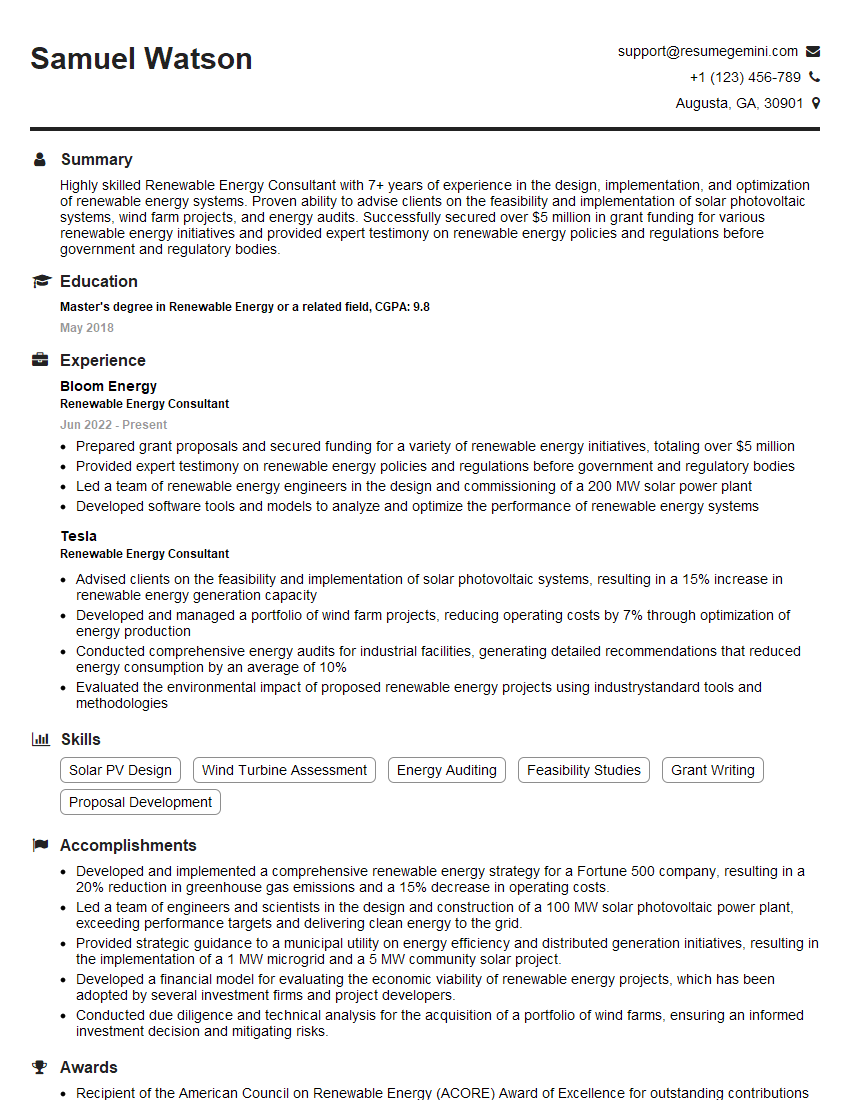
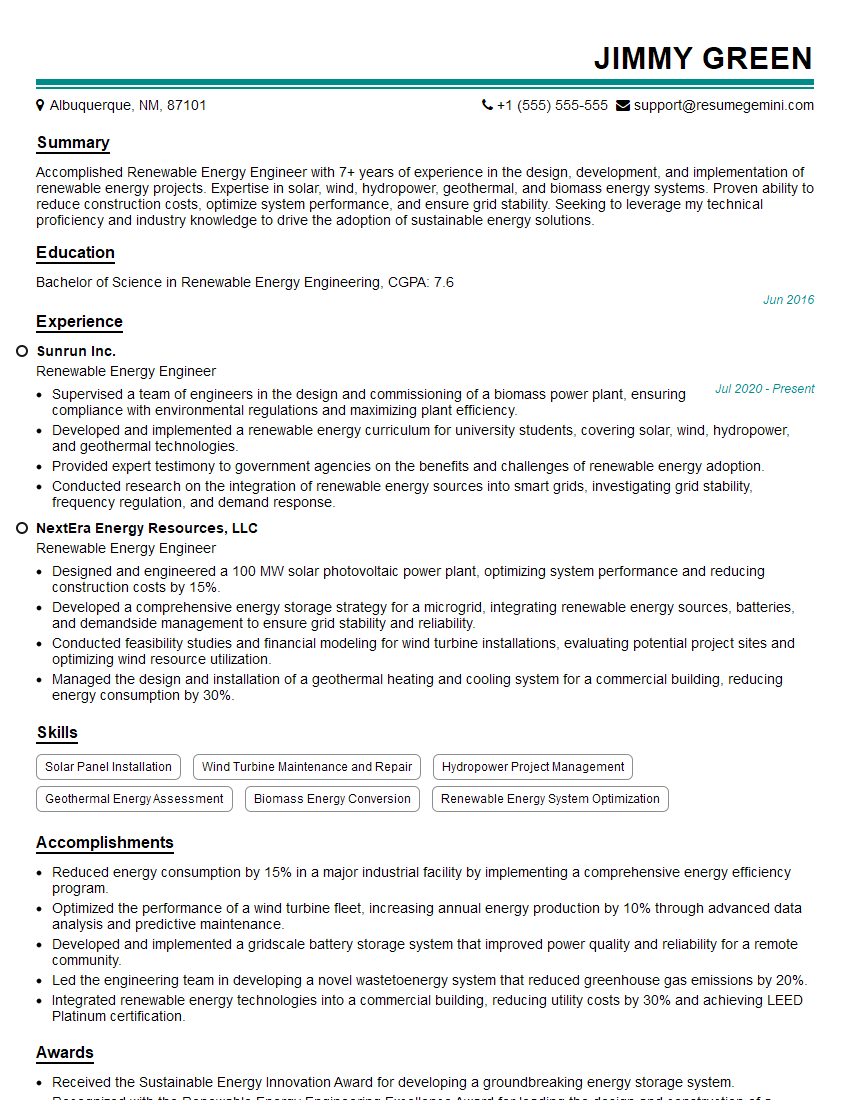
Mastering Knowledge of PV System Design and Engineering is crucial for career advancement in the rapidly growing renewable energy sector. A strong understanding of these concepts opens doors to exciting opportunities and higher earning potential. To significantly improve your job prospects, focus on creating an ATS-friendly resume that effectively showcases your skills and experience. ResumeGemini is a trusted resource that can help you build a professional and impactful resume tailored to the specific requirements of the jobs you’re targeting. Examples of resumes tailored to Knowledge of PV System Design and Engineering are available to guide you.
Explore more articles
Users Rating of Our Blogs
Share Your Experience
We value your feedback! Please rate our content and share your thoughts (optional).
What Readers Say About Our Blog
To the interviewgemini.com Webmaster.
Very helpful and content specific questions to help prepare me for my interview!
Thank you
To the interviewgemini.com Webmaster.
This was kind of a unique content I found around the specialized skills. Very helpful questions and good detailed answers.
Very Helpful blog, thank you Interviewgemini team.