The thought of an interview can be nerve-wracking, but the right preparation can make all the difference. Explore this comprehensive guide to Knowledge of scientific principles and theories interview questions and gain the confidence you need to showcase your abilities and secure the role.
Questions Asked in Knowledge of scientific principles and theories Interview
Q 1. Explain the scientific method.
The scientific method is a systematic approach to investigating and understanding the natural world. It’s not a rigid set of steps, but rather a flexible framework guiding inquiry. It generally involves these key stages:
- Observation: Carefully observing a phenomenon or event. For example, noticing that plants grow taller in sunlight.
- Question: Formulating a specific question based on the observation. For instance, “Does the amount of sunlight affect plant growth?”
- Hypothesis: Proposing a testable explanation (a tentative answer) to the question. This is often an ‘if-then’ statement. Example: “If plants receive more sunlight, then they will grow taller.”
- Prediction: Predicting the outcome of an experiment designed to test the hypothesis. Example: “Plants exposed to more sunlight will show significantly greater height increase compared to plants in shade.”
- Experiment: Designing and conducting a controlled experiment to test the prediction. This involves manipulating variables (e.g., sunlight exposure) and measuring the effects (e.g., plant height).
- Analysis: Analyzing the data collected from the experiment using statistical methods to determine if the results support or refute the hypothesis.
- Conclusion: Drawing conclusions based on the analysis. The hypothesis may be supported, rejected, or modified based on the results. The results should then be communicated to the scientific community.
The scientific method is iterative; results often lead to new questions and further investigation. It’s a process of continuous refinement and improvement of our understanding.
Q 2. Describe the difference between hypothesis and theory.
A hypothesis is a testable statement or prediction about a specific phenomenon, while a theory is a well-substantiated explanation of some aspect of the natural world that’s supported by a vast body of evidence.
Think of it like this: a hypothesis is a single guess, whereas a theory is a comprehensive explanation built upon many confirmed hypotheses. A hypothesis is a starting point for investigation; a theory is a robust conclusion reached after extensive testing and verification.
For example, a hypothesis might be: ‘Increasing carbon dioxide levels will increase the growth rate of algae’. After many experiments and observations confirming this relationship (among other related findings), the effect of CO2 on algal growth may become incorporated into a broader theory about climate change and aquatic ecosystems. A theory isn’t just a ‘better’ hypothesis; it’s a fundamentally different type of scientific statement.
Q 3. What is the significance of peer review in scientific research?
Peer review is a critical process in scientific research where experts in the field evaluate the quality, validity, and originality of a research paper before it’s published. It acts as a quality control mechanism, ensuring the rigor and integrity of scientific findings.
Peer reviewers scrutinize the methodology, data analysis, conclusions, and overall presentation of the research. They identify potential flaws, suggest improvements, and assess the significance of the research contributions. This process helps to prevent the publication of flawed or misleading research, ensuring that only high-quality, reliable science is disseminated to the wider scientific community and public. It fosters collaboration and improves the overall quality and reliability of scientific knowledge.
Q 4. Explain the concept of statistical significance.
Statistical significance refers to the probability that an observed effect or relationship is not due to random chance. It’s a measure of how likely it is that the results of a study are real and not simply the result of random variation.
Often expressed as a p-value, a statistically significant result typically has a p-value less than 0.05 (or 5%). This means there’s less than a 5% chance that the observed results occurred by random chance alone. However, it’s crucial to remember that statistical significance doesn’t necessarily imply practical significance or real-world importance.
For example, a study might find a statistically significant difference in plant growth between two groups exposed to different levels of sunlight. A p-value of 0.01 indicates a 1% probability that this difference is due to chance. But if the difference in growth is only a millimeter, this may not be practically significant despite being statistically significant.
Q 5. Define and differentiate accuracy and precision in scientific measurements.
Accuracy refers to how close a measurement is to the true or accepted value, while precision refers to how close repeated measurements are to each other. They are distinct concepts.
Imagine shooting arrows at a target:
- High accuracy, high precision: All arrows are clustered closely together near the bullseye.
- High accuracy, low precision: Arrows are scattered but the average position is close to the bullseye.
- Low accuracy, high precision: Arrows are clustered closely together but far from the bullseye.
- Low accuracy, low precision: Arrows are scattered widely across the target.
In scientific measurements, both accuracy and precision are important. High precision indicates that the measurement instrument is reliable and consistent, but it doesn’t guarantee accuracy unless the instrument is properly calibrated. Accuracy requires a combination of precise measurements and a properly calibrated instrument.
Q 6. What are the limitations of scientific models?
Scientific models are simplified representations of complex systems. While they are valuable tools for understanding and predicting phenomena, they have inherent limitations:
- Simplifications and Assumptions: Models inevitably simplify reality by focusing on key variables and ignoring others. These assumptions can lead to inaccuracies or limitations in the model’s predictive power.
- Limited Scope: Models are typically designed for specific situations or ranges of conditions. Extrapolating beyond this scope can lead to unreliable results.
- Uncertainties and Errors: Models often contain uncertainties due to incomplete knowledge, inaccurate data, or limitations in the modeling techniques themselves. These uncertainties can propagate through the model and affect its predictions.
- Lack of Complete Realism: No model perfectly replicates the complexities of the real world. Models can only approximate reality and may miss important details or interactions.
For example, climate models simplify the Earth’s climate system by using grid cells to represent large areas and making assumptions about factors such as cloud formation and ocean currents. These simplifications mean that climate models will not perfectly predict future climate conditions, though they are still extremely valuable tools.
Q 7. How do you approach solving a complex scientific problem?
Approaching a complex scientific problem requires a structured and systematic approach. Here’s a framework I would use:
- Define the Problem Clearly: Precisely articulate the research question, including the specific variables and parameters involved. Break down the larger problem into smaller, more manageable components.
- Literature Review: Thoroughly review existing literature on the topic to identify relevant research, theories, and methodologies. Understanding the current state of knowledge is crucial.
- Develop a Research Plan: Based on the literature review, design a research plan outlining the methods, data collection techniques, and analysis strategies. This might involve experiments, simulations, data analysis of existing datasets, or a combination thereof.
- Gather and Analyze Data: Rigorously collect and analyze data using appropriate statistical methods. Be mindful of potential sources of bias and error.
- Interpret Results: Interpret the findings in the context of the existing literature and the research question. Consider the implications of the results and their limitations.
- Communicate Findings: Clearly and concisely communicate the research findings through publications, presentations, or reports. This includes explaining both the strengths and limitations of the study.
- Iterate and Refine: The scientific process is iterative. The findings might lead to new questions and further research to address remaining uncertainties or refine existing models.
Throughout this process, collaboration with other experts and seeking feedback are crucial for ensuring rigor and improving the quality of the research.
Q 8. Describe your understanding of experimental design.
Experimental design is the process of planning a scientific experiment to investigate a specific hypothesis or research question. It involves carefully considering all aspects of the experiment to ensure reliable and valid results. This includes defining the variables, selecting appropriate methods for data collection and analysis, and controlling for extraneous factors that might influence the outcome.
A well-designed experiment typically follows these steps:
- Formulating a hypothesis: This is a testable statement that predicts the relationship between variables.
- Identifying variables: Independent variables are manipulated by the researcher, dependent variables are measured, and controlled variables are kept constant to minimize their impact on the results.
- Choosing a research design: This involves selecting an appropriate experimental design, such as a randomized controlled trial, a before-and-after design, or a factorial design, depending on the research question and resources.
- Developing a protocol: A detailed step-by-step procedure for conducting the experiment, ensuring consistency and reproducibility.
- Data collection and analysis: Gathering data using appropriate methods and employing statistical techniques to analyze the results and draw conclusions.
- Interpretation and reporting: Interpreting the findings in the context of the hypothesis and existing literature, and presenting the results clearly and concisely in a scientific report or publication.
For example, if testing the effectiveness of a new drug, the experimental design would involve defining the drug dosage (independent variable), measuring patient recovery rates (dependent variable), and controlling for factors like patient age and health status (controlled variables).
Q 9. Explain the concept of control groups in experimental research.
A control group is a group in an experiment that does not receive the treatment or intervention being studied. It serves as a baseline for comparison against the experimental group(s) that do receive the treatment. By comparing the results of the control group to the experimental group, researchers can determine whether the treatment had a significant effect.
For instance, in a clinical trial testing a new drug, the control group might receive a placebo (an inactive substance). Comparing the outcomes (e.g., symptom reduction) in the placebo group to the group receiving the actual drug allows researchers to assess the drug’s efficacy. The control group helps to isolate the effect of the treatment, ruling out other factors that might influence the results.
Without a control group, it’s difficult to confidently attribute observed changes solely to the treatment. The control group ensures the experiment’s internal validity by minimizing confounding variables.
Q 10. What are some common sources of error in scientific experiments?
Sources of error in scientific experiments can broadly be categorized as systematic errors and random errors. Systematic errors consistently affect measurements in one direction, leading to biased results. Random errors, on the other hand, are unpredictable fluctuations that affect measurements in both directions, increasing variability.
- Systematic errors: These can arise from faulty equipment (e.g., a miscalibrated instrument), biases in data collection (e.g., observer bias), or flaws in the experimental design (e.g., a confounding variable).
- Random errors: These can result from unpredictable fluctuations in environmental conditions (e.g., temperature variations), small variations in the experimental setup, or inherent limitations in the measurement instruments.
- Human error: Mistakes in data entry, incorrect calculations, or misinterpretations of results are common human errors.
For example, using a thermometer that consistently reads 2 degrees higher than the actual temperature introduces a systematic error. Conversely, small variations in the reaction time of a participant in a psychological experiment introduce random error. Minimizing errors requires careful calibration of instruments, standardized procedures, and robust statistical analyses.
Q 11. How do you interpret and present scientific data?
Interpreting and presenting scientific data involves a systematic process that ensures clarity, accuracy, and objectivity. It begins with organizing and analyzing the collected data using appropriate statistical methods. This helps to identify patterns, trends, and significant relationships. Then, the findings are presented in a way that is easily understood by the target audience. Visual representations such as graphs, charts, and tables play a vital role in conveying complex information effectively.
Key aspects include:
- Descriptive statistics: Summarizing the data using measures like mean, median, standard deviation, etc., to provide a concise overview.
- Inferential statistics: Using statistical tests (e.g., t-tests, ANOVA, regression analysis) to determine the significance of the findings and draw inferences about the population.
- Data visualization: Creating clear and informative graphs and charts to visually represent the data and highlight key findings. Careful choice of graph type is essential; bar charts for categorical data, scatter plots for correlations, etc.
- Written report: Presenting the findings in a structured report that includes an introduction, methods, results, discussion, and conclusion. The results should be presented objectively, without making unwarranted claims or interpretations.
For example, a researcher studying the effect of fertilizer on plant growth would use descriptive statistics to summarize plant height data and inferential statistics to determine if the difference in height between fertilized and unfertilized plants is statistically significant. The findings would then be presented in a clear report with graphs showing the plant height data.
Q 12. Explain the difference between inductive and deductive reasoning.
Inductive and deductive reasoning are two distinct approaches to logical thinking used in scientific investigation.
- Inductive reasoning moves from specific observations to general conclusions. It involves identifying patterns and making generalizations based on the available evidence. While inductive reasoning can be powerful for generating hypotheses, it doesn’t guarantee the truth of the conclusion. It’s about probability, not certainty. For example, observing that every swan you’ve ever seen is white might lead you to inductively conclude that all swans are white (a conclusion famously proven false).
- Deductive reasoning starts with general principles or premises and uses logic to reach specific conclusions. If the premises are true and the logic is sound, the conclusion is guaranteed to be true. For example, starting with the premises ‘All men are mortal’ and ‘Socrates is a man’, you can deductively conclude ‘Socrates is mortal’.
In scientific research, both types of reasoning are used. Inductive reasoning often forms the basis for hypothesis generation, while deductive reasoning is used to test those hypotheses through experimentation.
Q 13. Describe your experience with data analysis techniques.
My experience with data analysis techniques is extensive, encompassing a wide range of methods suitable for different types of data and research questions. I am proficient in descriptive statistics (calculating means, medians, standard deviations, etc.), inferential statistics (conducting t-tests, ANOVA, chi-square tests, regression analysis, etc.), and data visualization techniques. I’m also experienced in working with both large and small datasets, and I understand the importance of choosing appropriate statistical methods based on the data’s characteristics (e.g., normality, independence).
I’m comfortable using statistical software packages like R and SPSS to perform complex analyses and create visualizations. I can perform data cleaning, transformation, and manipulation to prepare data for analysis. I also have experience with more advanced techniques like Principal Component Analysis (PCA) and clustering algorithms when dealing with high-dimensional data. My experience extends to interpreting the results of statistical tests, drawing meaningful conclusions, and effectively communicating those findings.
For example, in a recent project, I used regression analysis to model the relationship between environmental factors and plant growth, and then used PCA to reduce the dimensionality of the environmental data before performing further analysis.
Q 14. What is your familiarity with specific scientific software or tools?
I am highly proficient in several scientific software packages and tools. My expertise includes:
- R: A powerful and versatile statistical programming language widely used for data analysis, statistical modeling, and creating visualizations. I’m proficient in using various packages within R, including
ggplot2for visualization anddplyrfor data manipulation. - SPSS: A widely used statistical software package, particularly in social sciences, that provides a user-friendly interface for conducting various statistical analyses.
- Python (with SciPy and Pandas): I use Python extensively, leveraging libraries like
SciPy(for scientific computing) andPandas(for data manipulation and analysis) to perform a wide range of analyses and create visualizations. - GraphPad Prism: A popular software for creating scientific graphs and performing statistical analysis, particularly useful for biomedical research.
Beyond statistical software, I am also comfortable using various data management tools and programming languages, such as Microsoft Excel for basic data management, and scripting languages like bash for automating tasks.
Q 15. Explain a scientific concept you found particularly challenging and how you overcame it.
One concept I initially found challenging was understanding the intricacies of quantum mechanics, specifically the concept of superposition. It’s difficult to reconcile the idea of a particle existing in multiple states simultaneously until a measurement is made with our classical understanding of the world. Overcoming this involved a multi-pronged approach. First, I focused on building a strong foundational understanding of linear algebra, which is crucial for understanding the mathematical formalism of quantum mechanics. I worked through numerous examples and problems, focusing on visualizing the state vectors and their evolution. Second, I sought out various learning resources, including textbooks, online courses, and even popular science explanations to approach the topic from different perspectives. Finally, discussing the concepts with colleagues and professors, explaining my understanding and having my misconceptions challenged, proved invaluable. This iterative process of learning, applying, and discussing was essential in breaking down the complexity of superposition and solidifying my grasp of the concept.
Career Expert Tips:
- Ace those interviews! Prepare effectively by reviewing the Top 50 Most Common Interview Questions on ResumeGemini.
- Navigate your job search with confidence! Explore a wide range of Career Tips on ResumeGemini. Learn about common challenges and recommendations to overcome them.
- Craft the perfect resume! Master the Art of Resume Writing with ResumeGemini’s guide. Showcase your unique qualifications and achievements effectively.
- Don’t miss out on holiday savings! Build your dream resume with ResumeGemini’s ATS optimized templates.
Q 16. Describe a time you had to interpret ambiguous scientific data.
During a research project investigating the effects of a new drug on cellular metabolism, we encountered ambiguous data. Our initial results showed a significant increase in metabolic rate in some cell lines, but not others. The differences were not easily explained by variations in experimental conditions. To interpret this ambiguity, we employed a systematic approach. First, we rigorously reviewed our experimental protocols to identify and eliminate any potential sources of error. We repeated the experiments, paying close attention to detail and carefully documenting all steps. Second, we performed statistical analysis on our data, looking for correlations between the response and other factors we hadn’t initially considered, such as cell line age or specific genetic markers. Finally, we conducted additional experiments to test our hypotheses generated from the initial data analysis. Through this multi-faceted investigation, we concluded that the drug’s effect wasn’t universal but instead appeared dependent on the expression of a particular gene. This experience highlighted the importance of meticulous experimental design, robust data analysis, and a willingness to formulate and test new hypotheses when confronting ambiguous data.
Q 17. How do you stay current with advances in your field?
Staying current in a rapidly evolving field like mine requires a multi-faceted approach. I regularly read peer-reviewed scientific journals, focusing on publications in top-tier journals relevant to my research. I also actively participate in scientific conferences and workshops, attending presentations and engaging in discussions with leading researchers. Online platforms and resources, such as preprint servers (like arXiv) and specialized databases, provide access to the latest research findings even before formal publication. Finally, I maintain a network of collaborators and colleagues, exchanging information and discussing current advancements. This combination of traditional and modern information gathering methods ensures I stay informed about the latest breakthroughs and evolving methodologies in my field.
Q 18. Explain the concept of uncertainty in scientific measurements.
Uncertainty in scientific measurements is inherent due to limitations in measuring instruments and the inherent variability of the phenomena being studied. It reflects the range of possible values within which the true value likely lies. For instance, if we measure the length of a table with a ruler marked in millimeters, we might obtain a reading of 1500 mm. However, we acknowledge there’s some uncertainty; the true length might be anywhere between 1499.5 mm and 1500.5 mm. This uncertainty is often expressed using significant figures or error bars. Significant figures indicate the precision of the measurement, while error bars in graphical representations depict the range of uncertainty associated with a data point. Understanding and reporting uncertainty are crucial for accurate scientific communication and for drawing valid conclusions from experimental data. Ignoring uncertainty can lead to misinterpretations and flawed conclusions.
Q 19. Describe your understanding of different types of scientific research (e.g., qualitative, quantitative).
Scientific research can be broadly categorized into qualitative and quantitative methods. Quantitative research focuses on numerical data and statistical analysis to test hypotheses and establish relationships between variables. A typical example would be a clinical trial measuring the effectiveness of a drug by comparing numerical data on recovery rates in a treatment group versus a control group. Qualitative research, on the other hand, explores complex social phenomena through in-depth interviews, observations, and textual analysis, focusing on understanding the underlying meanings, perspectives, and experiences. An example might be a sociological study investigating the impact of social media on adolescent self-esteem through interviews and focus groups, analyzing the themes and narratives that emerge.
Both approaches are valuable and often complementary. Mixed methods research, which combines qualitative and quantitative approaches, can provide a more comprehensive understanding of a research question. The choice of methodology depends on the specific research question and the nature of the phenomena under investigation.
Q 20. What are some ethical considerations in scientific research?
Ethical considerations in scientific research are paramount. They encompass several key areas. First, integrity is fundamental; researchers must conduct their work honestly and transparently, accurately reporting data and avoiding plagiarism or fabrication of results. Second, informed consent is essential when working with human subjects; participants must be fully informed about the nature of the research and voluntarily agree to participate. Third, confidentiality is crucial for protecting the privacy of participants and ensuring their data is handled responsibly. Fourth, animal welfare must be considered in animal-based research; ethical guidelines mandate minimizing animal suffering and ensuring humane treatment. Finally, potential biases need to be acknowledged and addressed in the research design and interpretation of findings. Ethical review boards play a vital role in overseeing research projects to ensure adherence to these principles and safeguarding the rights and well-being of all involved.
Q 21. Explain the principles of thermodynamics.
The principles of thermodynamics govern the relationships between heat, work, and energy in physical systems. They can be summarized as follows:
- First Law (Conservation of Energy): Energy cannot be created or destroyed, only transformed from one form to another. The total energy of an isolated system remains constant. For example, the chemical energy in gasoline is converted into kinetic energy to move a car, with some energy lost as heat.
- Second Law (Entropy): The total entropy of an isolated system can only increase over time or remain constant in ideal cases where the system is in a steady state or undergoing a reversible process. Entropy is a measure of disorder or randomness. This law explains why heat flows spontaneously from hotter to colder objects; it’s a natural progression towards greater disorder. Imagine a perfectly ordered deck of cards; shuffling them increases entropy (disorder).
- Third Law (Absolute Zero): The entropy of a perfect crystal at absolute zero (0 Kelvin) is zero. This implies that it’s impossible to reach absolute zero in a finite number of steps. The closer a system gets to absolute zero, the more difficult it becomes to extract further energy.
These laws have far-reaching implications in various fields, from engineering and chemistry to cosmology and materials science. They underpin the operation of engines, the design of energy-efficient systems, and our understanding of the universe’s evolution.
Q 22. Describe your understanding of Newton’s Laws of Motion.
Newton’s Laws of Motion are fundamental principles in classical mechanics that describe the relationship between a body and the forces acting upon it, and its motion in response to those forces. They are:
- Newton’s First Law (Inertia): An object at rest stays at rest and an object in motion stays in motion with the same speed and in the same direction unless acted upon by an unbalanced force. Think of a hockey puck sliding on frictionless ice – it would continue indefinitely in a straight line. This law introduces the concept of inertia, the tendency of an object to resist changes in its state of motion.
- Newton’s Second Law (F=ma): The acceleration of an object is directly proportional to the net force acting on the object, is in the same direction as the net force, and is inversely proportional to the mass of the object. Mathematically, this is represented as
F = ma, where F is force, m is mass, and a is acceleration. This means a larger force will produce a greater acceleration, while a larger mass will require a larger force to achieve the same acceleration. Pushing a shopping cart full of groceries requires more force than pushing an empty one because of its greater mass. - Newton’s Third Law (Action-Reaction): For every action, there is an equal and opposite reaction. When one object exerts a force on a second object, the second object simultaneously exerts a force equal in magnitude and opposite in direction on the first object. For example, when you jump, you push down on the Earth (action), and the Earth pushes back up on you (reaction), propelling you upwards. Rockets work on this principle – expelling hot gases downwards generates an upward thrust.
These laws are crucial in engineering, physics, and numerous other fields, providing a framework for understanding and predicting the motion of objects.
Q 23. Explain the concept of entropy.
Entropy is a measure of disorder or randomness within a system. In simpler terms, it describes the tendency of things to become more chaotic over time. The second law of thermodynamics states that the total entropy of an isolated system can only increase over time, or remain constant in ideal cases where the system is in a steady state or undergoing a reversible process. A perfectly ordered system has low entropy, while a highly disordered system has high entropy.
Imagine a neatly stacked deck of cards (low entropy). After shuffling them thoroughly, they become disorganized (high entropy). It’s far easier to go from order to disorder than vice-versa. You can’t simply unshuffle a deck of cards back to its original order without conscious effort. Similarly, heat naturally flows from hotter to colder objects; the spontaneous mixing of gases and the decay of organic matter are all examples of entropy increasing in a system. This concept is crucial in chemistry, thermodynamics, and even information theory, where it relates to the amount of information contained in a system.
Q 24. What is your understanding of quantum mechanics?
Quantum mechanics is a fundamental theory in physics that describes the physical properties of nature at the scale of atoms and subatomic particles. Unlike classical mechanics, which describes the world at larger scales, quantum mechanics introduces several counterintuitive concepts.
- Quantization: Energy, momentum, and other properties are often quantized, meaning they can only exist in discrete units or packets, rather than a continuous range. Think of a staircase instead of a ramp: you can only be on specific steps, not between them.
- Wave-particle duality: Particles like electrons can behave as both particles and waves, exhibiting properties of both. This duality is illustrated through phenomena such as wave interference and diffraction.
- Probability: Quantum mechanics deals with probabilities rather than certainties. We can only predict the probability of finding a particle in a particular state, not its exact location or momentum. This is encapsulated in the Heisenberg Uncertainty Principle.
- Superposition: A quantum system can exist in multiple states simultaneously until measured. This means a particle can be in multiple places at once until we observe it.
- Entanglement: Two or more quantum particles can become linked, even when separated by vast distances. Measuring the state of one instantly reveals the state of the others.
Quantum mechanics underpins many modern technologies, including lasers, transistors, and nuclear magnetic resonance (NMR) imaging.
Q 25. Explain the principles of genetics.
Genetics is the study of genes, heredity, and variation in living organisms. Genes are the basic units of heredity, carrying the instructions for building and maintaining an organism. These instructions are encoded in DNA (deoxyribonucleic acid), a molecule structured as a double helix.
- DNA Structure and Replication: DNA consists of four nucleotide bases (adenine, guanine, cytosine, and thymine) arranged in a specific sequence that determines the genetic code. DNA replicates itself to pass on genetic information during cell division.
- Gene Expression: Genes are transcribed into RNA (ribonucleic acid), which is then translated into proteins. Proteins carry out various functions in the cell and determine an organism’s traits.
- Mendel’s Laws of Inheritance: Gregor Mendel’s experiments established fundamental principles of inheritance, including the law of segregation (alleles separate during gamete formation) and the law of independent assortment (alleles of different genes segregate independently).
- Mutations: Changes in the DNA sequence, called mutations, can lead to variations in traits. Mutations can be caused by errors during DNA replication or by external factors like radiation.
- Genetic Variation: The diversity of life arises from genetic variation, which is generated through mutations, sexual reproduction (recombination), and gene flow.
Understanding genetics is essential for advancements in medicine, agriculture, and biotechnology.
Q 26. Describe the process of cellular respiration.
Cellular respiration is the process by which cells break down glucose and other organic molecules to produce energy in the form of ATP (adenosine triphosphate). It’s a series of chemical reactions that occur in several stages:
- Glycolysis: Glucose is broken down into pyruvate in the cytoplasm, producing a small amount of ATP.
- Pyruvate Oxidation: Pyruvate is transported into the mitochondria and converted into acetyl-CoA, releasing carbon dioxide.
- Krebs Cycle (Citric Acid Cycle): Acetyl-CoA enters the Krebs cycle, a series of reactions that release more carbon dioxide and produce ATP, NADH, and FADH2 (electron carriers).
- Electron Transport Chain (ETC): NADH and FADH2 donate electrons to the electron transport chain, a series of protein complexes embedded in the inner mitochondrial membrane. As electrons move through the chain, energy is released and used to pump protons across the membrane, creating a proton gradient.
- Chemiosmosis: Protons flow back across the membrane through ATP synthase, an enzyme that uses the energy to synthesize ATP.
The overall process generates a significant amount of ATP, providing the energy needed for cellular functions. This process is vital for all living organisms that utilize oxygen for energy production.
Q 27. Explain the concept of evolution by natural selection.
Evolution by natural selection is a cornerstone of modern biology. It explains how populations of organisms change over time, adapting to their environments. The core principles are:
- Variation: Individuals within a population exhibit variations in their traits. These variations can be physical, behavioral, or physiological.
- Inheritance: Many of these traits are heritable, meaning they are passed from parents to offspring.
- Overproduction: Organisms tend to produce more offspring than can survive in a given environment.
- Differential Survival and Reproduction: Individuals with traits better suited to their environment are more likely to survive and reproduce, passing on those advantageous traits to their offspring. This is called natural selection.
Over many generations, this process of natural selection can lead to significant changes in the population, resulting in the emergence of new species. The classic example is the evolution of Darwin’s finches in the Galapagos Islands, where different beak shapes evolved in response to the availability of different food sources.
Q 28. What is your understanding of the Big Bang Theory?
The Big Bang Theory is the prevailing cosmological model for the universe. It posits that the universe originated from an extremely hot, dense state approximately 13.8 billion years ago and has been expanding and cooling ever since.
Evidence supporting the Big Bang includes:
- Redshift of distant galaxies: The light from distant galaxies is stretched, shifting towards the red end of the spectrum, indicating that these galaxies are moving away from us. The farther away a galaxy is, the faster it’s receding, suggesting an expanding universe.
- Cosmic microwave background radiation (CMB): The CMB is a faint afterglow of the Big Bang, a uniform radiation permeating the universe. It represents the leftover heat from the early universe.
- Abundance of light elements: The observed ratios of hydrogen, helium, and other light elements in the universe match predictions based on the Big Bang nucleosynthesis, the process of element formation in the early universe.
While the Big Bang theory explains many aspects of the universe, some questions remain, such as the nature of dark matter and dark energy. It’s a constantly evolving model, refined as new observations and data become available.
Key Topics to Learn for Knowledge of Scientific Principles and Theories Interview
- Fundamental Physics: Understanding core concepts like Newtonian mechanics, thermodynamics, electromagnetism, and quantum mechanics. Consider exploring their practical applications in various fields.
- Chemistry Fundamentals: Mastering stoichiometry, chemical bonding, reaction kinetics, and acid-base chemistry. Think about how these principles are utilized in material science, biochemistry, or environmental science.
- Data Analysis & Interpretation: Developing proficiency in statistical analysis, experimental design, and data visualization. Practice interpreting scientific data and drawing meaningful conclusions.
- Scientific Method & Research: Demonstrate a strong understanding of the scientific method, including hypothesis formulation, experimental design, data collection, analysis, and conclusion drawing. Be prepared to discuss research methodologies.
- Specific Scientific Theories: Depending on the specific role, you may need in-depth knowledge of specific theories (e.g., evolutionary theory in biology, plate tectonics in geology). Review relevant theories within your field of expertise.
- Problem-Solving & Critical Thinking: Practice applying scientific principles to solve complex problems. Be prepared to articulate your thought process and justify your approach.
- Ethical Considerations in Science: Understanding the ethical implications of scientific research and its applications is crucial. Be ready to discuss responsible conduct of research.
Next Steps
Mastering scientific principles and theories is essential for career advancement in numerous scientific and technical fields. A strong foundation in these areas demonstrates critical thinking skills, problem-solving abilities, and a commitment to lifelong learning – all highly sought-after qualities by employers. To significantly boost your job prospects, creating an ATS-friendly resume is vital. This ensures your application gets noticed by recruiters and hiring managers. We highly recommend using ResumeGemini to build a professional and effective resume that showcases your expertise in scientific principles and theories. ResumeGemini offers tools and examples specifically tailored to help you create a compelling resume that highlights your skills and experience. Examples of resumes tailored to showcasing expertise in Knowledge of scientific principles and theories are available within the ResumeGemini platform.
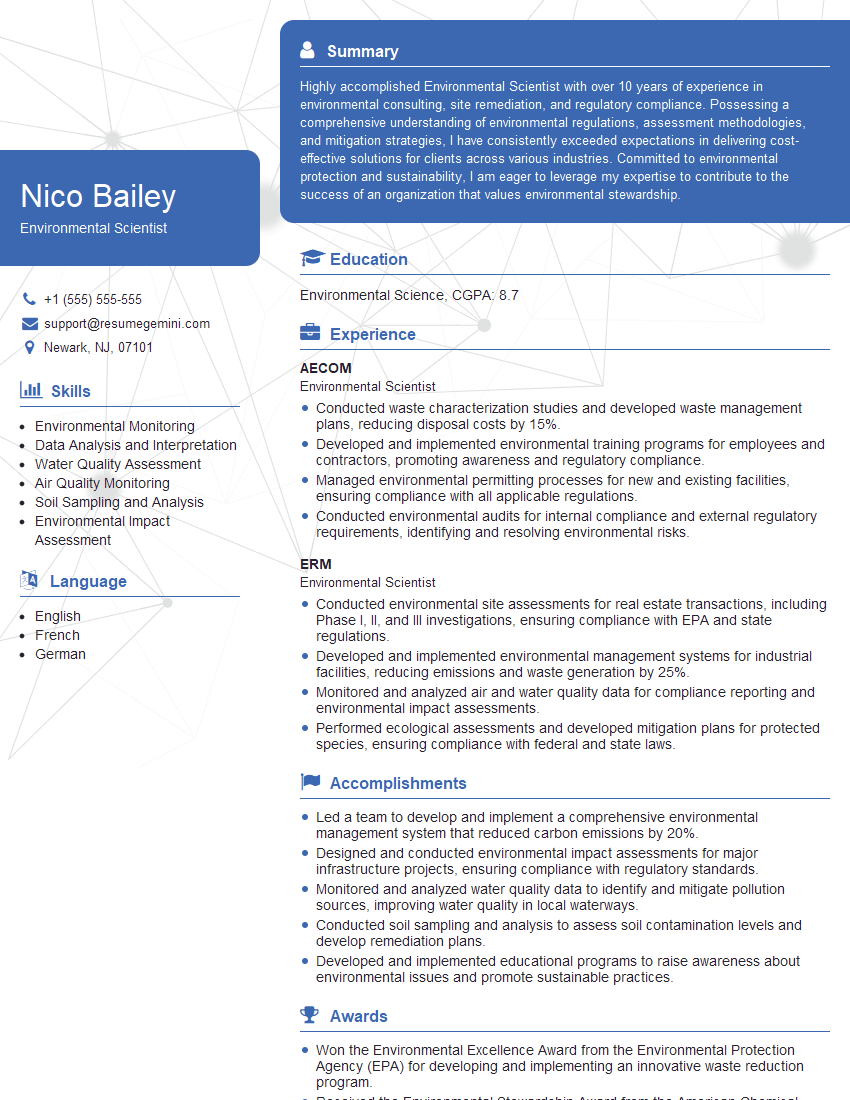
Environmental Scientist Resume Sample
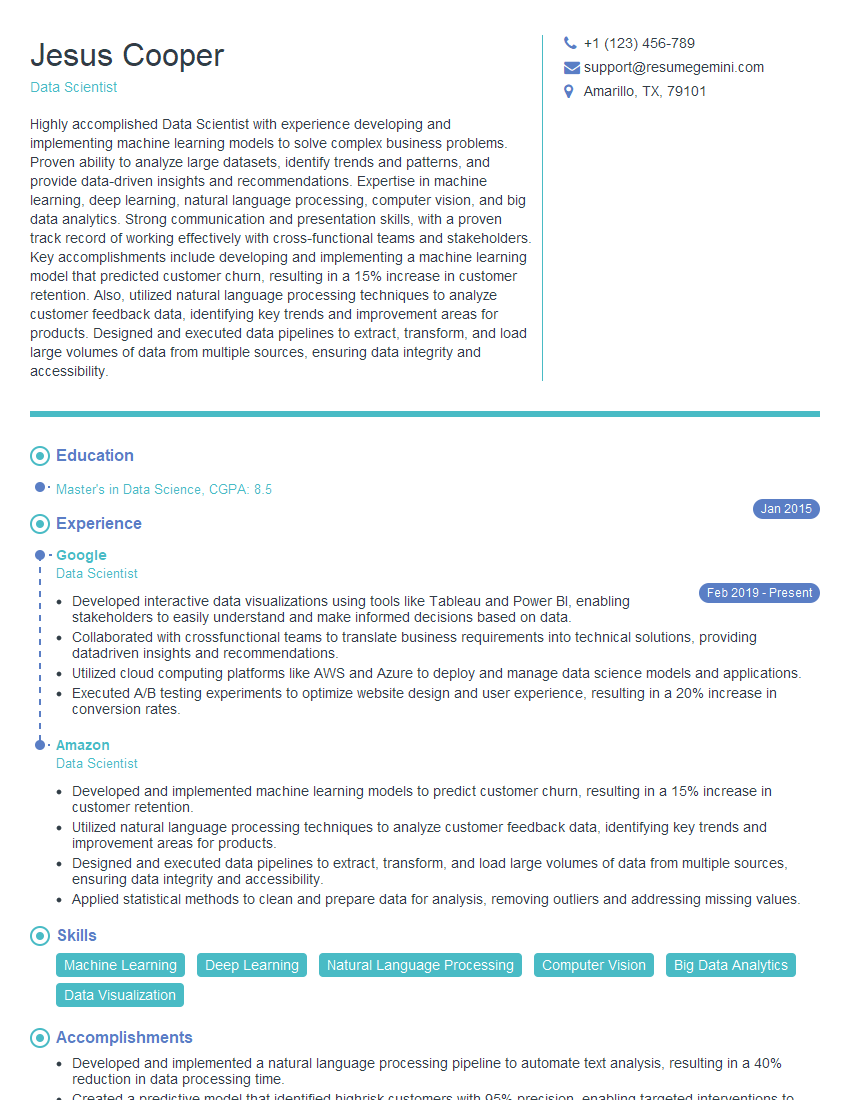
Data Scientist Resume Sample

Research Scientist Resume Sample
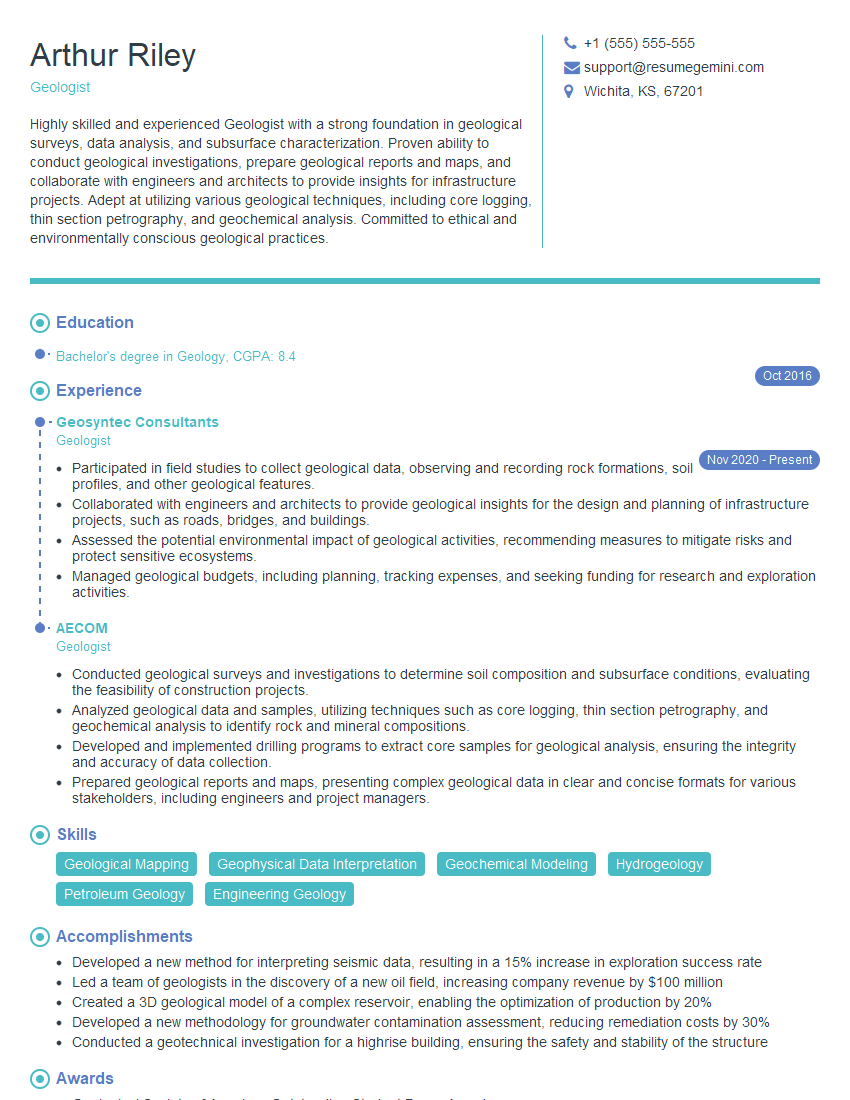
Geologist Resume Sample
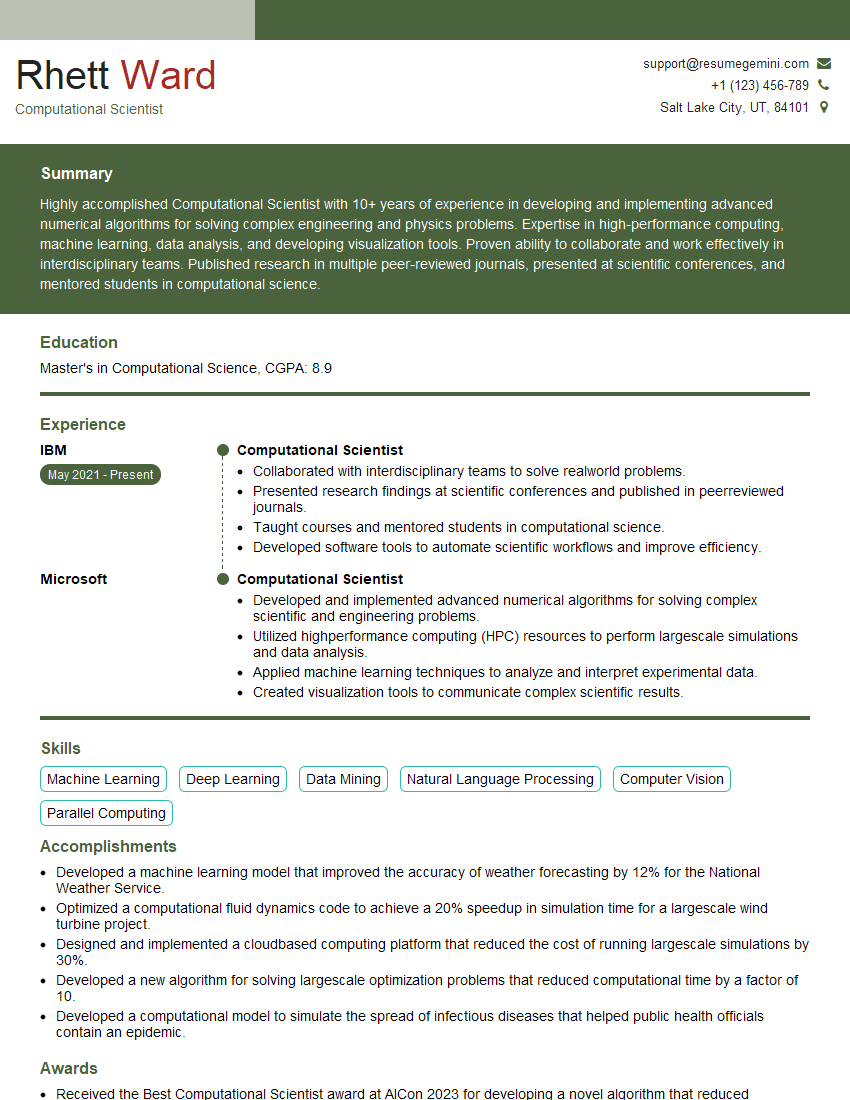
Computational Scientist Resume Sample
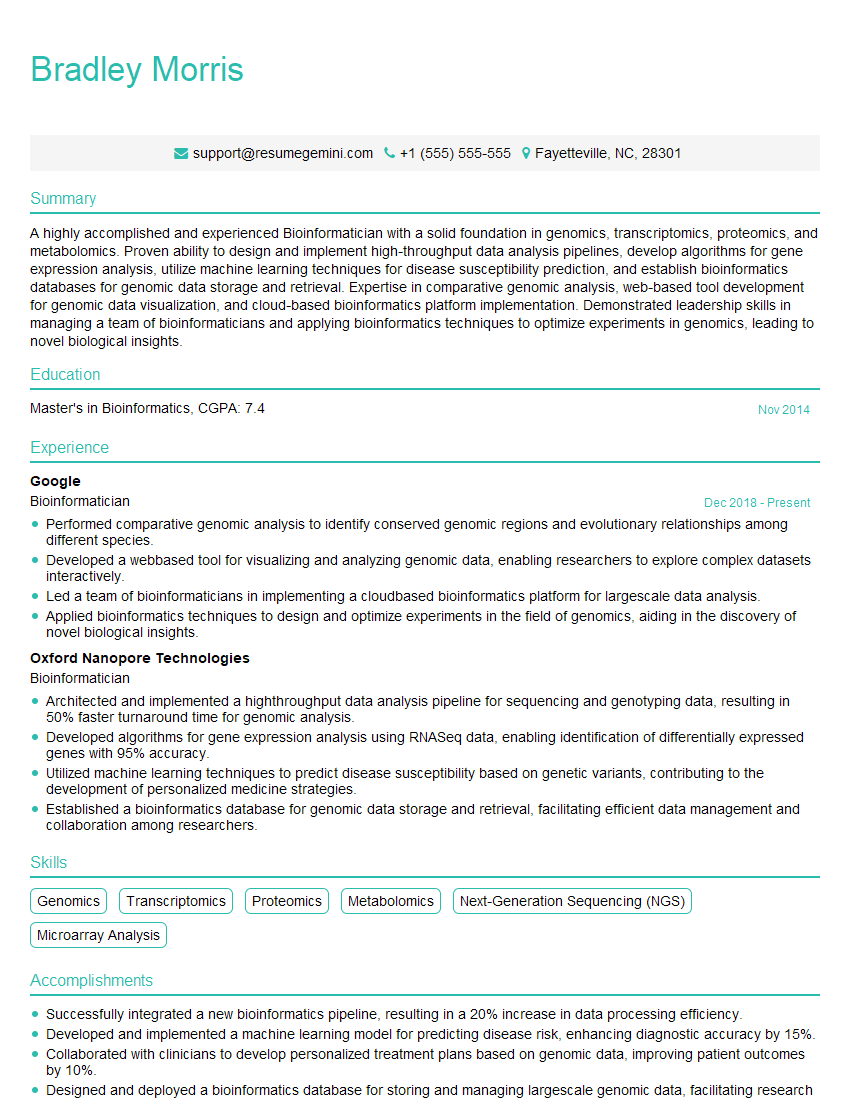
Bioinformatician Resume Sample

Aerospace Engineer Resume Sample

Chemical Engineer Resume Sample
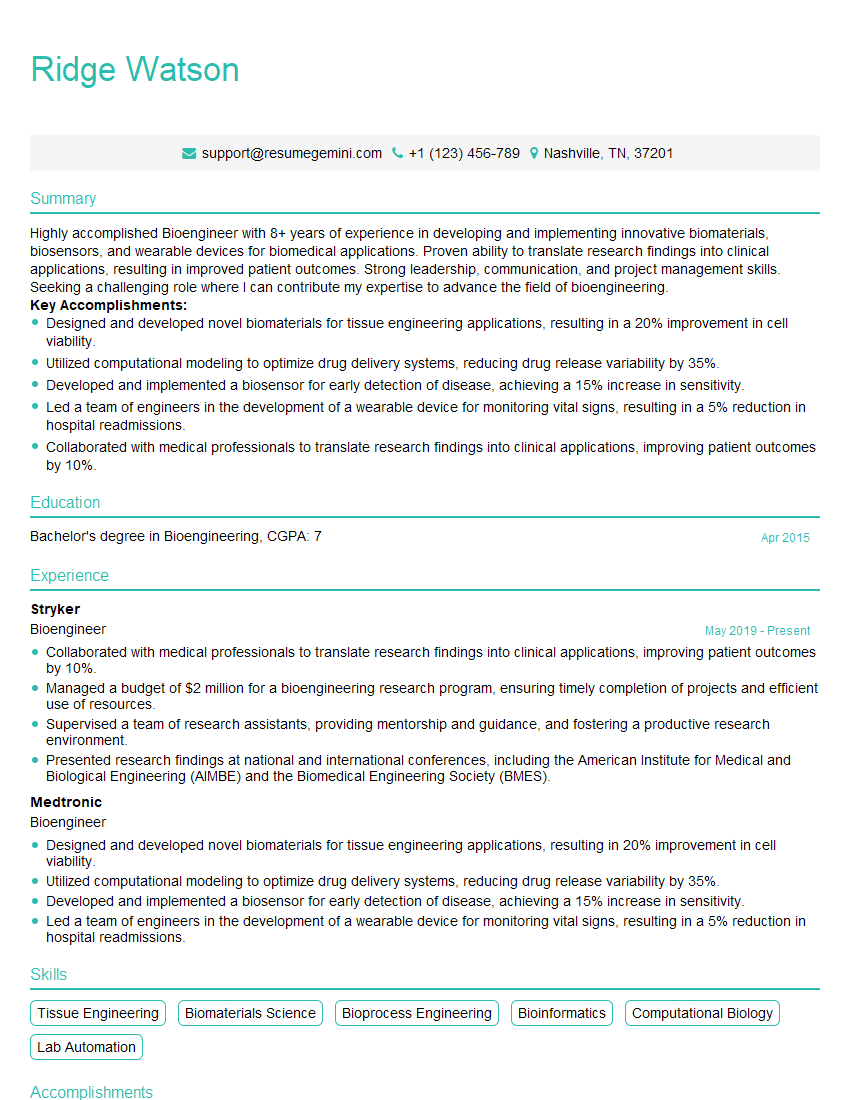
Bioengineer Resume Sample

Food Scientist Resume Sample
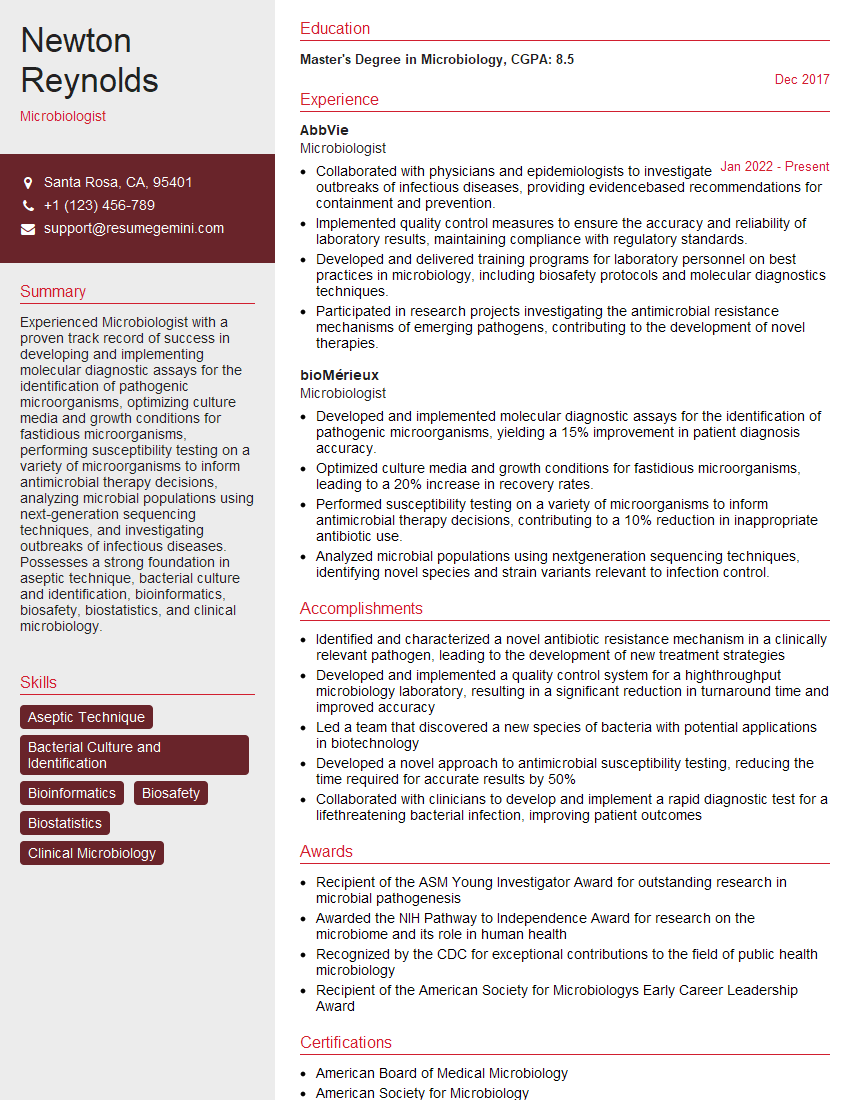
Microbiologist Resume Sample
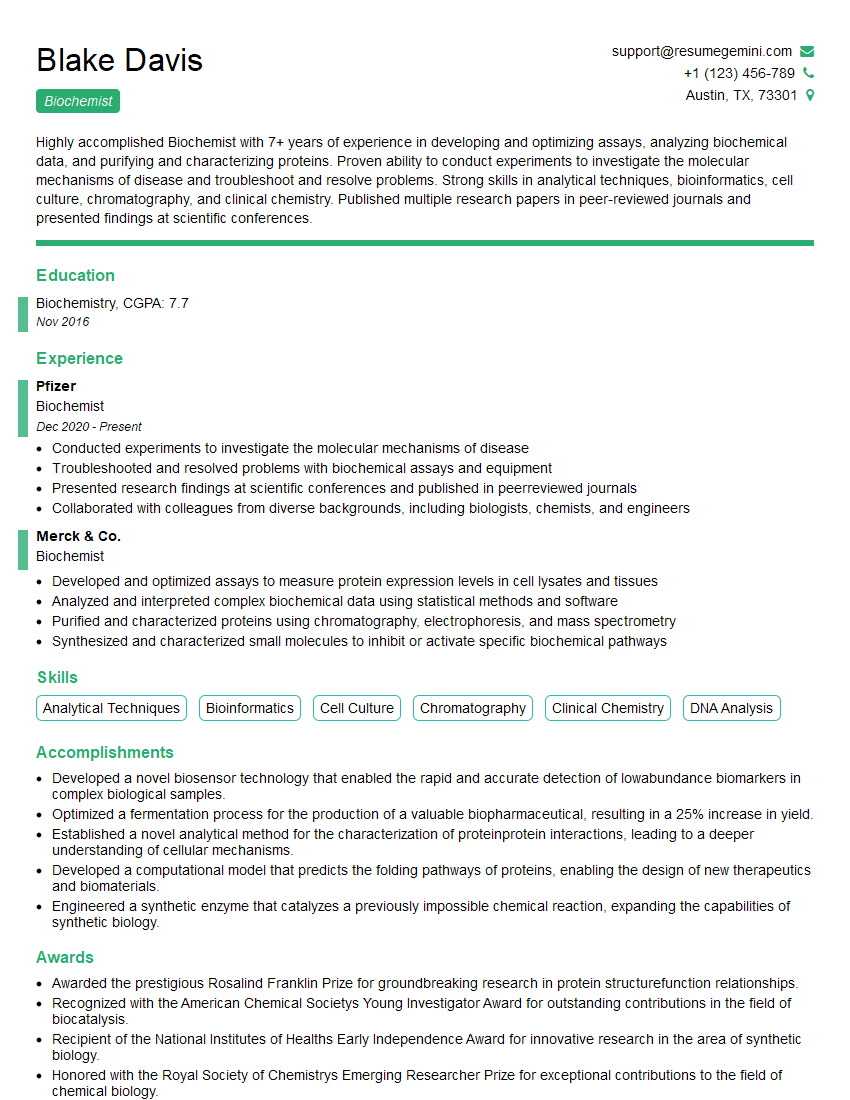
Biochemist Resume Sample

Toxicologist Resume Sample
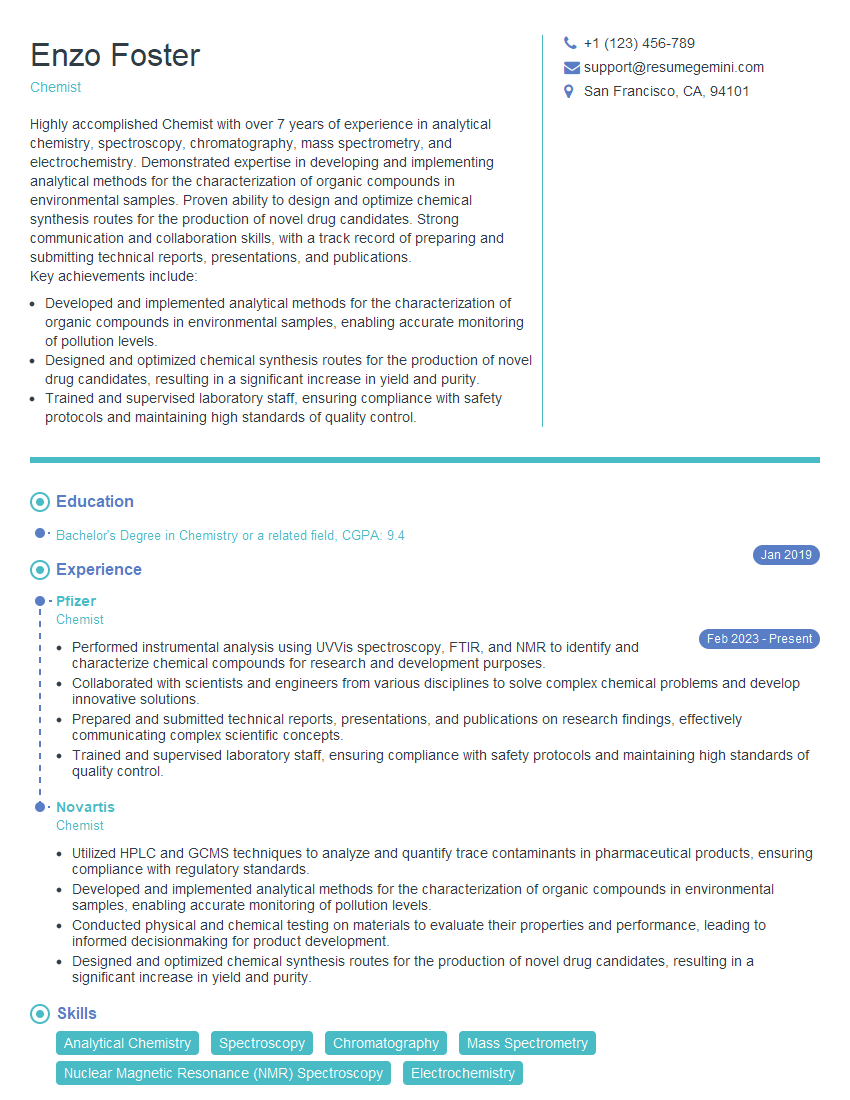
Chemist Resume Sample
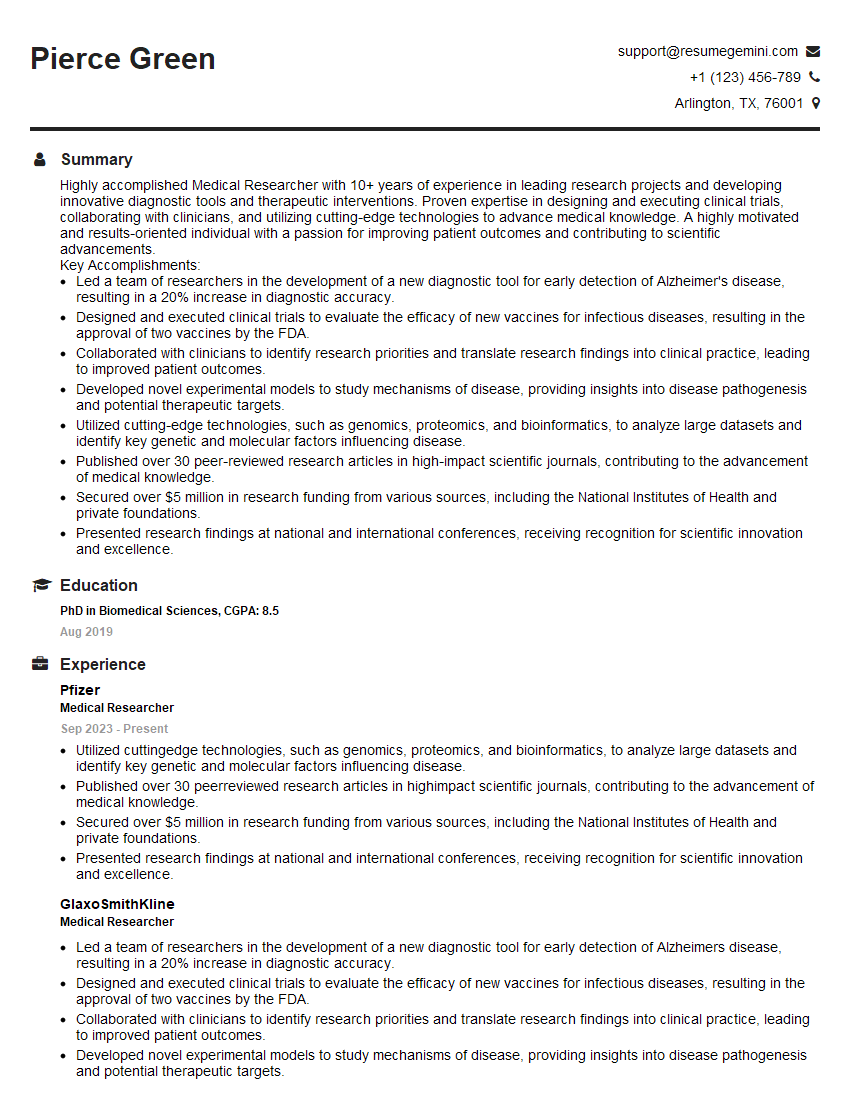
Medical Researcher Resume Sample
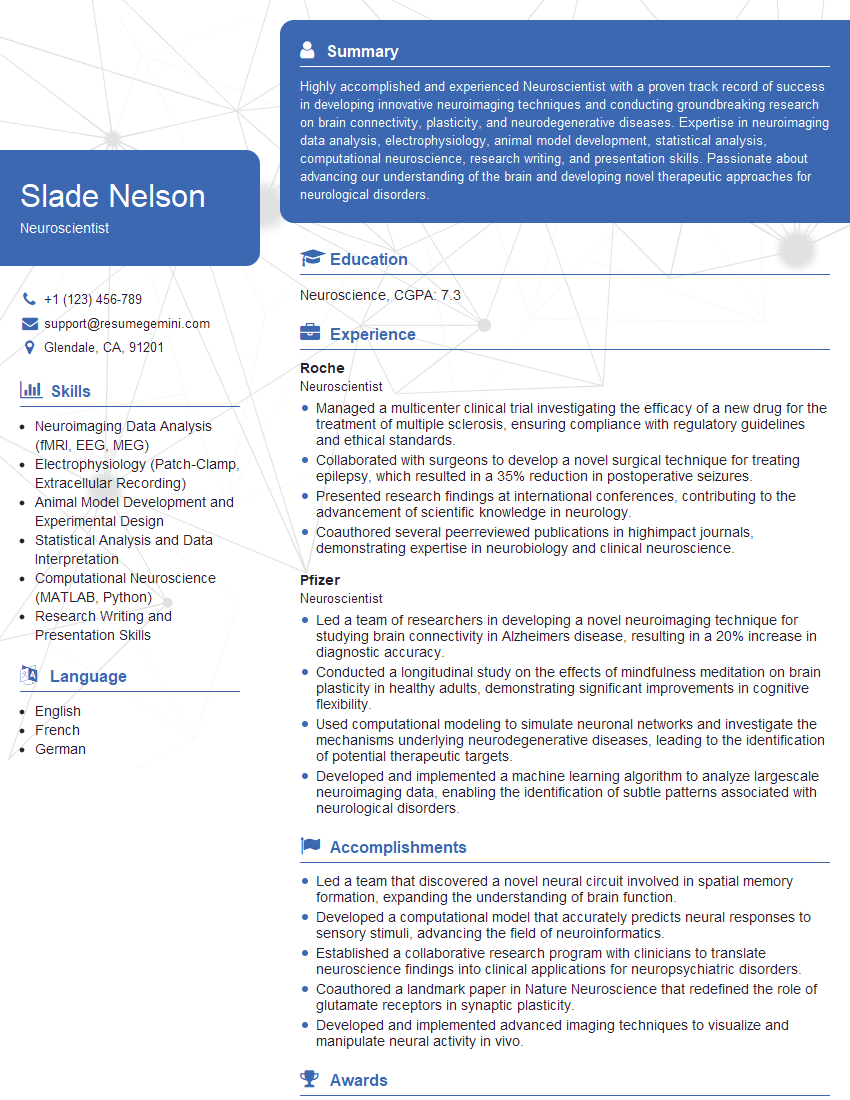
Neuroscientist Resume Sample

Pharmacologist Resume Sample
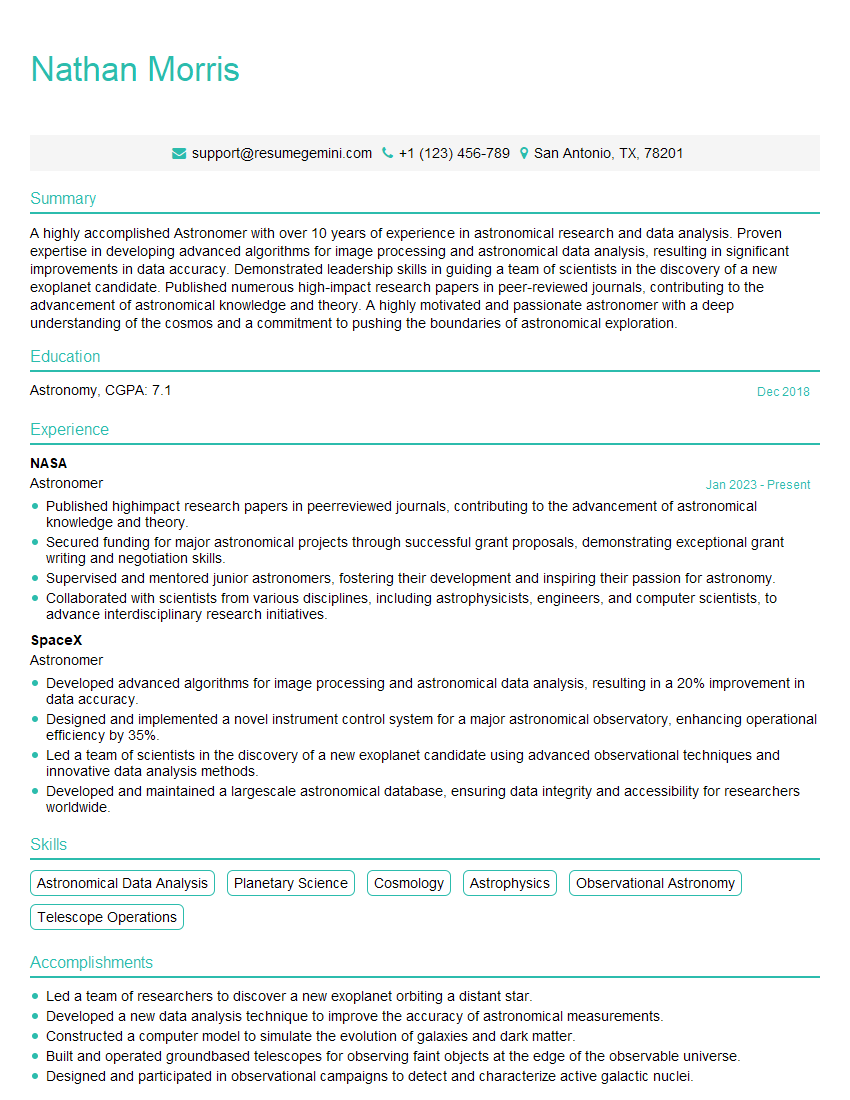
Astronomer Resume Sample
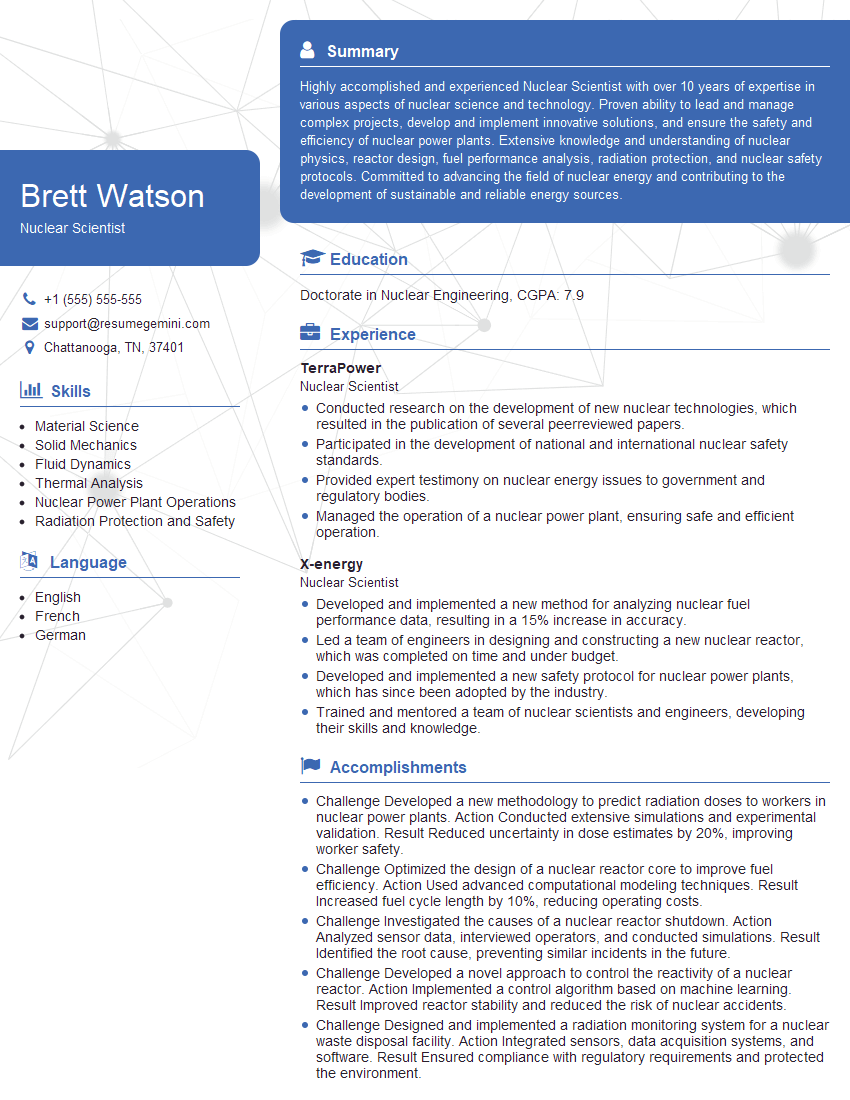
Nuclear Scientist Resume Sample
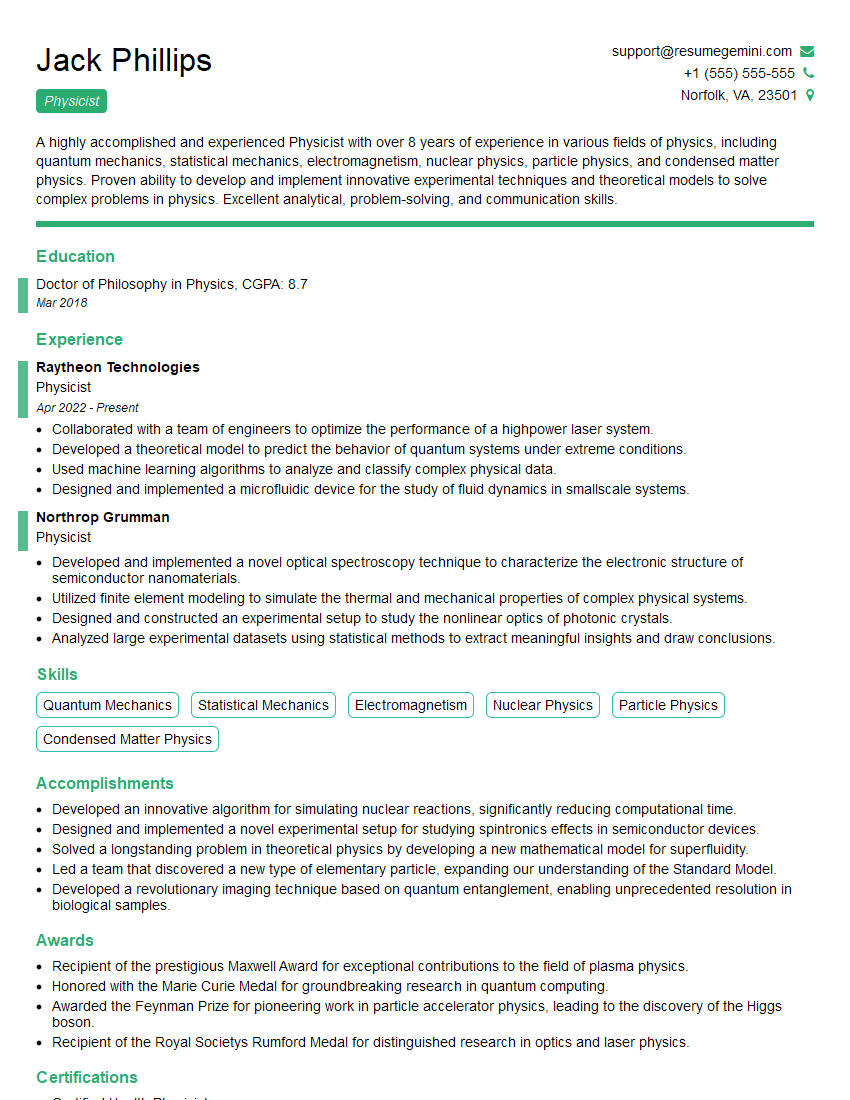
Physicist Resume Sample

Meteorologist Resume Sample
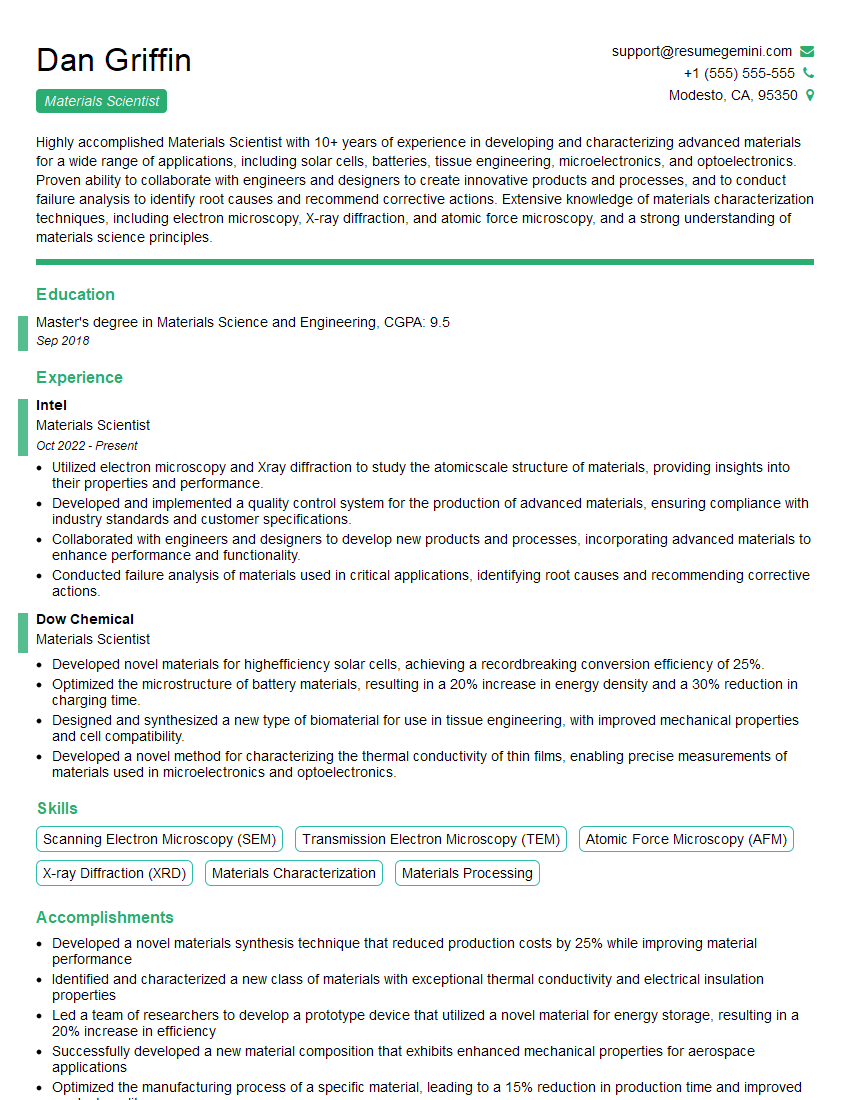
Materials Scientist Resume Sample
- Environmental Scientist
- Data Scientist
- Research Scientist
- Geologist
- Computational Scientist
- Bioinformatician
- Aerospace Engineer
- Chemical Engineer
- Bioengineer
- Food Scientist
- Microbiologist
- Biochemist
- Toxicologist
- Chemist
- Medical Researcher
- Neuroscientist
- Pharmacologist
- Astronomer
- Nuclear Scientist
- Physicist
- Meteorologist
- Materials Scientist
Explore more articles
Users Rating of Our Blogs
Share Your Experience
We value your feedback! Please rate our content and share your thoughts (optional).
What Readers Say About Our Blog
To the interviewgemini.com Webmaster.
Very helpful and content specific questions to help prepare me for my interview!
Thank you
To the interviewgemini.com Webmaster.
This was kind of a unique content I found around the specialized skills. Very helpful questions and good detailed answers.
Very Helpful blog, thank you Interviewgemini team.