The right preparation can turn an interview into an opportunity to showcase your expertise. This guide to Laboratory Radiation Safety interview questions is your ultimate resource, providing key insights and tips to help you ace your responses and stand out as a top candidate.
Questions Asked in Laboratory Radiation Safety Interview
Q 1. Describe the ALARA principle and its application in a laboratory setting.
The ALARA principle, short for “As Low As Reasonably Achievable,” is a fundamental principle in radiation safety. It emphasizes keeping radiation exposure to individuals and the environment as low as possible, while still allowing for necessary activities involving radiation. This isn’t about eliminating all radiation exposure – that’s often impossible – but about minimizing it to a level that’s justifiable considering the benefits of the work being done.
In a laboratory setting, ALARA is applied through several strategies. This might involve optimizing experimental designs to reduce the time spent near radiation sources, using appropriate shielding materials, implementing strict procedural controls like using remote handling tools, and ensuring proper ventilation to reduce airborne contamination. For example, if a researcher needs to work with a radioactive sample, ALARA dictates that they should use the lowest possible activity of the sample necessary to achieve their experimental goals. They would also limit the time spent handling the sample and maximize the distance between themselves and the source.
Consider a scenario where a researcher is using a gamma emitter. Instead of placing the source directly on the lab bench, the researcher could employ a lead shielding container, thus minimizing exposure and adhering to ALARA principles.
Q 2. Explain the different types of ionizing radiation and their potential health effects.
Ionizing radiation is radiation that carries enough energy to remove electrons from atoms or molecules, creating ions. This can damage biological molecules and lead to various health effects. There are several types:
- Alpha particles: These are relatively large and heavy particles, easily stopped by a sheet of paper or even the outer layer of skin. However, internal exposure through inhalation or ingestion is far more dangerous, causing significant damage to cells.
- Beta particles: These are lighter and more penetrating than alpha particles. They can penetrate skin, causing burns, and require thicker shielding like aluminum or plastic.
- Gamma rays and X-rays: These are high-energy electromagnetic waves, the most penetrating of the ionizing radiations. They require significantly more shielding, such as lead or concrete, and can cause damage to cells throughout the body, including DNA damage leading to cancer.
- Neutrons: These are uncharged particles that penetrate deeply into materials, requiring special shielding like water, polyethylene, or boron-containing materials. They can induce radioactivity in materials they interact with.
The health effects of ionizing radiation range from mild skin reddening to severe radiation sickness (including nausea, vomiting, and fatigue), long-term health problems like cataracts and cancer, and even death at high doses. The severity depends on the type and amount of radiation, the duration of exposure, and the portion of the body exposed.
Q 3. What are the regulatory requirements for handling radioactive materials in your jurisdiction?
Regulatory requirements for handling radioactive materials vary significantly depending on the jurisdiction. Generally, they involve licensing, registration, and adherence to strict operational protocols. For instance, in many countries, institutions using radioactive materials must obtain a license from the relevant regulatory body, which involves demonstrating competence and the existence of appropriate safety measures. These licenses specify permitted activities, quantities of materials allowed, and reporting obligations.
Furthermore, the regulations will outline specific requirements for storage, transportation, waste disposal, personnel monitoring (e.g., dosimetry badges), and emergency preparedness. There are also stringent rules governing the training and qualifications of personnel handling radioactive materials. Failure to comply with these regulations can lead to significant penalties, including fines and license revocation. Specific details on licensing, permitted activities, and other stipulations are documented in comprehensive regulations issued by agencies such as the Nuclear Regulatory Commission (NRC) in the United States, or equivalent bodies in other countries. These documents frequently require regular updates to remain current with best practices and new scientific understanding.
Q 4. How do you conduct a radiation survey and interpret the results?
A radiation survey is conducted to determine the level of radiation in a specific area or on an object. It involves using radiation detection instruments to measure radiation levels and identify areas of potential contamination. The process typically begins with a pre-survey planning stage to identify potential radiation sources and areas of concern.
During the survey, the instrument is systematically moved across the area of interest, taking readings at regular intervals. Readings are recorded and documented, along with specific location details. The results are then interpreted to assess the level of radiation present. If radiation levels exceed permissible limits, corrective actions must be implemented, such as implementing additional shielding or cleaning up contamination. Interpreting the results requires familiarity with the units of measurement (e.g., microsieverts per hour, counts per minute), understanding the instrument’s calibration, and knowledge of regulatory limits for radiation exposure.
For instance, a survey might reveal a higher-than-expected reading near a specific piece of equipment. This indicates a potential source of radiation that needs further investigation and possible remediation.
Q 5. What are the different types of radiation detectors and their limitations?
Several types of radiation detectors are used in radiation safety, each with its own strengths and limitations:
- Geiger-Müller counters: These are widely used for detecting alpha, beta, and gamma radiation. They’re relatively inexpensive and easy to use, but their accuracy is limited, particularly at low radiation levels. They also cannot differentiate between types of radiation.
- Scintillation detectors: These are more sensitive and can differentiate between various types of radiation. They’re frequently used for precise measurements but are generally more complex and expensive.
- Proportional counters: These offer better energy resolution than Geiger-Müller counters and can differentiate between radiation types, making them useful in specific applications, such as identifying the energy of gamma rays.
- Ionization chambers: These are used for measuring high radiation levels, but they are not as sensitive as other types of detectors at low levels.
- Thermoluminescent dosimeters (TLDs): These passive detectors are worn by personnel to monitor cumulative radiation exposure over a period. They provide a measure of total dose received, but don’t give real-time readings.
The choice of detector depends on the specific application and the type of radiation being measured. For example, a Geiger-Müller counter is suitable for a quick survey of an area for potential contamination, whereas a scintillation detector might be needed for precise measurements of the energy spectrum of a radioactive source.
Q 6. Explain the process of radiation shielding and how to select appropriate shielding materials.
Radiation shielding is crucial for reducing exposure to ionizing radiation. The selection of shielding materials depends on the type of radiation being shielded. The principle is to utilize materials that interact effectively with the specific type of radiation to absorb or deflect it.
- Alpha particles: Easily shielded by paper or even a few centimeters of air.
- Beta particles: Require denser materials like aluminum, plastic, or glass.
- Gamma rays and X-rays: Require high-density materials like lead, concrete, or depleted uranium. The thickness of the shielding required is proportional to the energy of the radiation.
- Neutrons: Require hydrogen-rich materials like water, polyethylene, or paraffin wax to moderate (slow down) the neutrons before they can be absorbed by other materials, such as boron or cadmium.
The thickness of the shielding is calculated based on the energy and intensity of the radiation source, the desired reduction in exposure level, and the type of shielding material. Shielding design often involves the concept of half-value layer (HVL), which is the thickness of a shielding material required to reduce radiation intensity by half. Multiple HVLs are often used to achieve the necessary reduction in radiation exposure.
For example, a lead shield is commonly used for gamma radiation because of lead’s high density. The thickness of the lead will be determined by the energy of the gamma rays and the required reduction in intensity.
Q 7. Describe the procedures for handling radiation spills and contamination incidents.
Handling radiation spills and contamination incidents requires a swift, well-coordinated response. The first step is to immediately evacuate the affected area and restrict access. Then, a thorough assessment of the extent of the spill and the type of radioactive material involved needs to be undertaken, usually using radiation survey instruments. Once the situation is assessed, decontamination procedures can begin.
Decontamination methods vary depending on the type of contamination. They may include physical removal of contaminated materials (e.g., wiping surfaces with absorbent materials), chemical decontamination (using specific cleaning agents), or a combination of both. All personnel involved in the cleanup must wear appropriate personal protective equipment (PPE), such as respirators, gloves, protective clothing, and dosimetry badges to monitor exposure. After the cleanup, another radiation survey is conducted to verify that the area is safe.
Waste generated during the cleanup is treated as radioactive waste and handled according to regulatory requirements. Throughout the process, meticulous documentation is crucial – recording the steps taken, the measurements taken, and the individuals involved. A thorough post-incident analysis should be performed to determine the cause of the incident, identify deficiencies in existing procedures, and implement improvements to prevent similar incidents in the future.
Q 8. How do you manage radioactive waste in compliance with regulations?
Managing radioactive waste is paramount for ensuring public and environmental safety. It involves a multi-step process strictly adhering to regulatory guidelines, which vary by location but generally involve classifying waste by activity level, storing it appropriately, and ultimately disposing of it in licensed facilities.
Classification: Waste is categorized based on its radioactivity level (e.g., low-level, intermediate-level, high-level). Low-level waste, like slightly contaminated tools, might be stored for decay before disposal. High-level waste, such as spent nuclear fuel, requires long-term storage in specialized facilities.
Storage: Appropriate containers and storage areas are crucial. This includes shielded containers, dedicated storage rooms with controlled access, and robust record-keeping of waste inventory. Regular monitoring of storage areas for radiation levels is essential.
Disposal: Disposal methods depend on waste type. Low-level waste may be buried in designated landfills. High-level waste typically requires geological disposal in deep underground repositories designed to isolate it from the environment for millennia.
Compliance: Regular audits and inspections by regulatory bodies are critical. Maintaining meticulous records of all waste handling processes is vital for demonstrating compliance and ensuring accountability. Failure to comply can result in severe penalties and legal ramifications.
Example: In a research lab, a small vial containing a trace amount of radioactive iodine-125 would be classified as low-level waste, placed in a lead-lined container, and eventually disposed of through a licensed waste disposal company.
Q 9. What are the personal protective equipment (PPE) requirements for working with radioactive materials?
Personal Protective Equipment (PPE) selection for working with radioactive materials depends heavily on the type and quantity of radiation, as well as the nature of the work. The overarching principle is to minimize exposure to all forms of radiation.
Common PPE includes:
- Lead aprons and gloves: These provide shielding against gamma and X-rays.
- Thyroid shields: Protect the thyroid gland from radiation.
- Protective eyewear: Shields against beta particles and splashes.
- Respirators: Reduce the inhalation of airborne radioactive particulates (alpha emitters are particularly dangerous if inhaled).
- Protective clothing: Disposable lab coats, coveralls, and shoe covers prevent contamination of skin and clothing.
Selection Criteria: The appropriate level of PPE is determined by a risk assessment considering the energy and type of radiation, the duration of exposure, and the distance from the source. A higher activity level or longer exposure will necessitate more protective equipment.
Example: When working with a sealed gamma source for a short period, a lead apron and gloves might suffice. Conversely, handling unsealed radioactive materials that emit alpha and beta particles requires a full suite of PPE, including respirators and specialized protective clothing.
Q 10. What are the different types of radiation monitoring devices and how are they used?
Radiation monitoring devices are essential tools for ensuring radiation safety. They measure the radiation levels present in the environment or on surfaces to protect workers and the public. Different types of devices are used to detect different types of radiation.
Common Devices:
- Geiger-Müller (GM) counters: These are widely used, relatively inexpensive devices that detect beta and gamma radiation. They provide a reading of the radiation count rate (counts per minute or CPM).
- Scintillation detectors: These are more sensitive than GM counters and can measure various radiation types, including alpha, beta, and gamma. They are often used for more precise measurements and spectroscopy.
- Proportional counters: Offer better energy resolution than GM counters, allowing for the identification of specific radionuclides.
- Dosimeters: These are personal monitoring devices (often worn as badges) that measure the cumulative radiation dose received by an individual over a period of time (e.g., film badges, thermoluminescent dosimeters (TLDs)).
- Survey meters: These are portable instruments used to measure radiation levels in an area. They are essential for surveying workspaces and ensuring they are safe.
Usage: These devices are used for routine area monitoring, personal dosimetry, contamination surveys (checking for radioactive spills), and environmental monitoring. Regular calibration of these instruments is crucial to ensure accuracy.
Example: Before entering a radioactive materials storage room, a survey meter would be used to check radiation levels. Individuals working with radioactive materials would wear dosimeters to monitor their personal radiation exposure.
Q 11. Explain the concept of effective dose and equivalent dose.
Both effective dose and equivalent dose are measures of the biological impact of ionizing radiation, but they consider different aspects. Understanding the difference is vital for radiation protection.
Equivalent Dose: This accounts for the different biological effectiveness of various types of radiation. Different types of radiation (alpha, beta, gamma, neutrons) have varying abilities to cause damage to biological tissue. The equivalent dose (measured in Sieverts, Sv) is calculated by multiplying the absorbed dose (in Gray, Gy) by a radiation weighting factor (WR). This factor reflects the relative biological effectiveness (RBE) of the radiation type. For example, alpha radiation has a higher WR than gamma radiation because it causes more damage per unit of absorbed dose.
Equivalent Dose (Sv) = Absorbed Dose (Gy) x Radiation Weighting Factor (WR)
Effective Dose: This takes into account both the type of radiation and the organ or tissue being irradiated. Different organs and tissues have different sensitivities to radiation. The effective dose (measured in Sieverts, Sv) considers the equivalent dose to each organ and tissue, weighted by a tissue weighting factor (WT). This factor reflects the relative contribution of each organ to the overall health risk.
Effective Dose (Sv) = Σ [Equivalent Dose (Sv) to organ i x Tissue Weighting Factor (WT) for organ i]
In simple terms: Equivalent dose quantifies the radiation’s potential to cause damage, while effective dose reflects the overall health risk considering the radiation type and the organs affected. The effective dose is the more comprehensive measure for assessing overall radiation risk to the human body.
Q 12. How do you perform a radiation safety audit?
A radiation safety audit is a systematic review of a facility’s radiation safety practices to identify areas for improvement and ensure compliance with regulations. It involves a thorough evaluation of all aspects of the radiation safety program, from documentation and training to equipment maintenance and waste management.
Key steps in performing a radiation safety audit include:
- Review of documentation: Examining radiation safety manuals, operating procedures, training records, emergency plans, and radiation safety committee minutes.
- Inspection of facilities: Checking the condition of equipment, storage areas, ventilation systems, and other infrastructure relevant to radiation safety.
- Verification of practices: Observing personnel performing tasks involving radiation sources to ensure compliance with established procedures and use of appropriate PPE.
- Measurement of radiation levels: Using radiation monitoring devices to measure background radiation and radiation levels in various areas of the facility.
- Review of radiation incidents and near misses: Analyzing past events to identify potential hazards and implement corrective actions.
- Interviewing personnel: Discussing radiation safety practices and identifying any concerns.
Audit Findings: The audit should result in a report detailing findings, including any non-compliances, recommendations for improvements, and corrective actions. A follow-up audit is often conducted to verify that corrective actions have been implemented.
Example: An audit might reveal a deficiency in the record-keeping of radioactive waste shipments, leading to a recommendation for improved documentation procedures and staff training.
Q 13. Describe the process of implementing a radiation safety program.
Implementing a comprehensive radiation safety program requires a structured approach that involves several key steps:
- Establish a Radiation Safety Committee (RSC): This committee, comprising individuals with relevant expertise, oversees the program’s development and implementation.
- Develop a radiation safety manual: This document outlines the program’s policies, procedures, and guidelines.
- Conduct a radiation safety assessment: This identifies potential radiation hazards and risks associated with the use of radioactive materials.
- Establish procedures for handling and storage of radioactive materials: This ensures safe and controlled management of all radioactive sources.
- Implement a radiation monitoring program: This involves regularly monitoring radiation levels and worker exposure.
- Develop and implement emergency response plans: This outlines procedures to be followed in case of radiation accidents or spills.
- Establish a training program: This educates personnel on radiation safety principles and procedures.
- Maintain accurate records: This includes records of radiation exposure, waste disposal, and other relevant safety information.
- Regularly review and update the program: The program should be reviewed and updated periodically to ensure that it remains effective and compliant with regulatory requirements.
Example: A hospital implementing a radiation safety program for its nuclear medicine department would need detailed procedures for handling radioactive pharmaceuticals, strict protocols for patient radiation exposure, and a comprehensive waste management plan.
Q 14. What are the key elements of a radiation safety training program?
A robust radiation safety training program is essential for ensuring the safety of personnel working with radioactive materials. The training should be tailored to the specific tasks and responsibilities of each individual.
Key elements of a comprehensive radiation safety training program include:
- Basic radiation physics and biology: This explains the nature of ionizing radiation, its biological effects, and the principles of radiation protection.
- Radiation protection principles: This covers the ALARA (As Low As Reasonably Achievable) principle, time, distance, and shielding, and the use of PPE.
- Safe handling procedures for radioactive materials: This includes specific instructions for handling, storage, and disposal of different types of radioactive materials.
- Use and maintenance of radiation monitoring equipment: Personnel should be trained on how to use radiation monitoring devices and understand their limitations.
- Emergency response procedures: This covers procedures to be followed in the event of radiation accidents or spills.
- Regulatory requirements: Personnel should be familiar with relevant regulations and standards.
- Practical exercises and demonstrations: Hands-on training reinforces theoretical knowledge.
- Regular refresher training: Reinforces knowledge and ensures personnel stay up-to-date with changes in regulations and best practices.
Example: Technicians working in a nuclear power plant would require extensive training in radiation safety, including specialized training on reactor operation and emergency procedures. A researcher handling radioactive isotopes in a laboratory would receive training focused on safe handling techniques, waste disposal, and use of appropriate radiation monitoring devices.
Q 15. How do you calculate radiation exposure and interpret dosimetry reports?
Calculating radiation exposure involves determining the amount of ionizing radiation absorbed by an individual. This is typically measured in Sieverts (Sv) or milliSieverts (mSv). Dosimetry reports, provided by personal dosimeters (e.g., thermoluminescent dosimeters or TLDs, optically stimulated luminescence dosimeters or OSLDs), provide this information. Interpreting these reports involves understanding the reported dose equivalent, which considers the type of radiation and its biological effectiveness.
For example, a TLD might report a whole-body dose of 0.5 mSv over a month. This value needs to be compared against regulatory limits set by organizations like the Nuclear Regulatory Commission (NRC) in the US or equivalent bodies in other countries. The interpretation also involves identifying any localized higher exposures, which might be indicated by separate readings from extremity dosimeters if applicable. Any significant exposure or unexpected pattern warrants investigation of potential incidents or procedures needing improvement.
The calculation itself is often complex, involving factors like the energy and type of radiation, the distance from the source, and shielding materials present. Specialized software is commonly used in larger laboratories to perform these calculations based on data gathered from various measuring instruments, ensuring accuracy.
Career Expert Tips:
- Ace those interviews! Prepare effectively by reviewing the Top 50 Most Common Interview Questions on ResumeGemini.
- Navigate your job search with confidence! Explore a wide range of Career Tips on ResumeGemini. Learn about common challenges and recommendations to overcome them.
- Craft the perfect resume! Master the Art of Resume Writing with ResumeGemini’s guide. Showcase your unique qualifications and achievements effectively.
- Don’t miss out on holiday savings! Build your dream resume with ResumeGemini’s ATS optimized templates.
Q 16. Explain the importance of maintaining accurate radiation safety records.
Maintaining accurate radiation safety records is paramount for several critical reasons. Firstly, it’s a legal requirement in most jurisdictions. These records demonstrate compliance with regulations and protect the laboratory and its personnel from potential legal liabilities related to radiation exposure.
Secondly, accurate records are crucial for effective radiation protection programs. By tracking exposures, you can identify trends, pinpoint areas needing improved safety measures, and promptly address any anomalies. For example, a consistent increase in individual or area dosimeter readings may reveal a need for improved shielding or procedural changes.
Thirdly, these records form a crucial part of any investigation in case of an accident or incident. This detailed data significantly aids investigations by allowing reconstruction of events and identification of causes to prevent recurrence. Accurate records also protect the health and safety of individuals by offering a complete history of their radiation exposure.
Q 17. What are the emergency procedures for a radiation accident?
Emergency procedures for a radiation accident are strictly defined and vary depending on the nature and severity of the incident. However, certain common steps always apply.
- Immediate Evacuation and Isolation: The primary step involves evacuating personnel from the immediate area and isolating the source of radiation, minimizing further exposure. This often necessitates pre-planned evacuation routes and assembly points.
- Emergency Response Team Activation: A trained emergency response team is activated, which is typically comprised of radiation safety officers, medical personnel, and potentially representatives from regulatory agencies.
- Radiation Monitoring and Assessment: The extent of the radiation release is assessed using radiation detection instruments to determine the affected area and the levels of contamination.
- Contamination Control: Personnel decontamination procedures are implemented, which might include showering, clothing removal, and the use of specialized decontamination agents.
- Medical Treatment and Monitoring: Individuals exposed to significant radiation doses receive medical evaluation and potential treatment.
- Regulatory Reporting: Appropriate authorities are notified, along with regulatory agencies, depending on the level of severity and potential impact.
Regular drills and training exercises are crucial in preparing personnel for such events, ensuring they react appropriately and efficiently, thereby minimizing the impact of any accident.
Q 18. Describe your experience with radiation safety software and record-keeping systems.
My experience encompasses various radiation safety software and record-keeping systems, including those used for dose tracking, inventory management, and regulatory reporting. I am proficient in using software such as RADOS and ALARA (which is a general term for programs focusing on optimizing radiation protection), and am familiar with many commercially available options.
I’m comfortable working with database systems to manage large volumes of dosimetry data and generating reports required for compliance audits. I understand the importance of data integrity and have experience in implementing robust quality control procedures to ensure the accuracy and reliability of stored information. For example, my previous role involved configuring and maintaining a system that automatically flagged any readings exceeding regulatory limits, prompting immediate investigation and corrective actions.
Q 19. How do you ensure compliance with radiation safety regulations?
Ensuring compliance with radiation safety regulations requires a multi-faceted approach. It begins with a thorough understanding of the applicable regulations themselves, which vary depending on location and the type of laboratory work. This includes familiarization with NRC regulations (or equivalent in other countries), state or local rules, and any specific guidelines provided by licensing bodies.
The implementation phase involves comprehensive safety training for all personnel, development and enforcement of standard operating procedures (SOPs) that comply with these regulations, and meticulous record-keeping. Routine radiation surveys of work areas and equipment calibration are essential for monitoring radiation levels and ensuring instrument accuracy. Regular audits and inspections, both internal and external, are crucial in identifying areas for improvement and validating the effectiveness of the safety program. It’s about building a safety culture where adherence to regulations is paramount, not simply a checklist.
Q 20. Explain the principles of time, distance, and shielding in radiation protection.
The principles of time, distance, and shielding (TDS) are fundamental to radiation protection. They provide a straightforward approach to minimizing radiation exposure. Think of them as the ‘three pillars’ of radiation safety.
- Time: Reducing the time spent near a radiation source directly reduces the exposure. The less time you’re exposed, the lower the dose.
- Distance: Radiation intensity decreases rapidly with increasing distance from the source. Doubling the distance from a point source reduces the exposure to approximately one-quarter. This inverse square law is critical. Think of the sun: closer you get, the more intense the heat.
- Shielding: Interposing shielding materials between the source and the individual blocks radiation. The effectiveness of shielding depends on the type of radiation and the material used. Lead, concrete, and various specialized materials provide effective shielding for different types of radiation.
In practice, a combination of these principles is often used to optimize radiation protection. For instance, a technician might use tongs (increasing distance) to handle a radioactive source for a short duration (time), behind a lead shield (shielding).
Q 21. Describe your experience with different types of radiation sources used in a laboratory.
My experience includes working with a wide range of radiation sources commonly used in laboratory settings. This includes:
- Sealed Radioactive Sources: These are sources where the radioactive material is enclosed in a protective container, preventing any release. Examples include sources used in analytical techniques like gamma spectroscopy and X-ray fluorescence.
- X-ray Machines: Used for various analytical techniques, such as X-ray diffraction (XRD) and X-ray computed tomography (CT).
- Laser Systems: Although not directly ionizing radiation, certain high-powered lasers can pose a significant eye and skin hazard, requiring specific safety protocols.
- Radioactive Tracers: Used in experiments involving biological processes or material characterization, requiring special handling and waste disposal procedures.
- Accelerators: Particle accelerators such as linear accelerators or cyclotrons, which produce high-energy radiation, require very stringent safety controls.
The handling and use of each source necessitates adherence to specific safety protocols and procedural requirements. For example, sealed sources have robust physical containment, whereas handling radioactive tracers demands careful attention to prevent contamination and dispersion.
Q 22. What are the safety precautions for handling sealed and unsealed radioactive sources?
Handling radioactive sources, whether sealed or unsealed, demands strict adherence to safety protocols. The key difference lies in the potential for spread of radioactive material. Sealed sources, like those used in medical equipment, are encapsulated and pose a lower risk of contamination. Unsealed sources, however, contain radioactive material that can be easily dispersed into the environment, requiring more stringent controls.
- Sealed Sources: Safety precautions primarily focus on minimizing external radiation exposure. This involves using distance, shielding (lead, concrete), and time limitations to reduce dose. For example, we’d use tongs and lead containers when handling them, ensuring we only handle them for the shortest time possible. We’d also use radiation monitoring devices to measure exposure levels.
- Unsealed Sources: Handling unsealed sources necessitates a much more controlled environment. This includes designated work areas with specific ventilation systems, the use of personal protective equipment (PPE) like gloves, lab coats, and respirators, and careful attention to waste disposal. Specialized techniques are used to minimize spills and contamination, such as using absorbent materials and working within a fume hood. Decontamination procedures are also crucial in case of accidental spills. For instance, working with liquid scintillation counters requires meticulous handling and specific disposal procedures for the radioactive waste.
In both cases, thorough training, regular monitoring, and adherence to established safety procedures are non-negotiable.
Q 23. How do you investigate and report radiation incidents?
Investigating and reporting radiation incidents follows a structured process prioritizing safety and accountability. Immediate actions focus on securing the area, preventing further exposure, and providing medical assistance if needed. A detailed investigation follows, aiming to identify the root cause, affected individuals, and extent of contamination.
- Immediate Actions: Evacuate the area, alert emergency personnel, and isolate the source of radiation if possible. We would use radiation monitoring instruments to assess the extent of contamination.
- Investigation: This involves gathering data from radiation monitors, witness statements, and reviewing procedural logs to reconstruct the incident. We carefully analyze the sequence of events to pinpoint failures in safety protocols or equipment malfunctions.
- Reporting: Formal reports are generated for regulatory agencies, like the Nuclear Regulatory Commission (NRC) or equivalent national bodies. These reports include detailed descriptions of the incident, corrective actions taken, and analyses of the root causes. We also include any resulting medical assessments and recommendations for preventing future incidents.
Thorough documentation, including radiation measurements and personnel dosimetry readings, is vital to both the investigation and the report. For instance, if a source was damaged or dropped, detailed documentation of the damage and any spilled radioactive material would be essential.
Q 24. What are the ethical considerations in radiation safety?
Ethical considerations in radiation safety revolve around the principle of ALARA – As Low As Reasonably Achievable. This means minimizing radiation exposure to both individuals and the environment. It goes beyond simply complying with regulations; it’s about a moral obligation to protect human health and the environment.
- Transparency and Informed Consent: Individuals involved in any radiation-related activities must be fully informed about potential risks and provided with opportunities to understand the nature and extent of any radiation exposure. It’s unethical to expose individuals without their informed consent or to downplay potential risks.
- Justice and Equity: Radiation safety measures should be applied fairly, without discrimination. This ensures equitable distribution of benefits and burdens associated with radiation technologies.
- Precautionary Principle: When potential risks are uncertain or incompletely understood, the precautionary principle urges actions to prevent harm. In radiation safety, this means implementing stringent measures even if the precise risk is not fully quantified.
A prime example is the ethical responsibility to ensure that radiation therapy is administered safely and effectively, while minimizing side effects on patients. We must make sure the benefits outweigh any potential risks involved in using radiation. Ethical review boards also play a significant role in approving the ethical aspects of research involving radiation.
Q 25. Describe your experience with different radiation detection techniques.
My experience encompasses a variety of radiation detection techniques, from basic survey meters to sophisticated spectrometry systems. Each technique offers unique capabilities and limitations, making the choice dependent on the specific application.
- Geiger-Müller Counters: These are widely used for general radiation surveys, providing a quick indication of radiation levels. They are relatively inexpensive and easy to use, but their accuracy is limited. I’ve used them extensively for routine area surveys.
- Scintillation Detectors: Offering higher sensitivity and energy resolution compared to Geiger-Müller counters, these detectors are used for various applications, from measuring low-level contamination to identifying specific radionuclides. I’ve used them extensively in environmental monitoring for contamination assessment.
- High-Purity Germanium (HPGe) Detectors: These are high-resolution gamma-ray spectrometers, providing detailed information on the energy and intensity of gamma radiation, allowing for the identification of individual radionuclides. This is invaluable in analyzing samples from environmental or accidental release scenarios.
- Liquid Scintillation Counting: Used for measuring low-energy beta emitters and alpha emitters in liquid samples, this technique allows for highly sensitive measurements. We regularly use this technique for measuring radioactivity in environmental samples.
The selection of the appropriate detection technique depends on factors such as the type and energy of the radiation, the required sensitivity, and the nature of the sample being measured. For instance, to measure low-energy beta emitters in liquid samples, liquid scintillation counting would be chosen, whereas for identifying radionuclides in soil samples, HPGe spectrometry would be the preferred method.
Q 26. Explain the differences between alpha, beta, and gamma radiation.
Alpha, beta, and gamma radiation are all forms of ionizing radiation, meaning they have enough energy to remove electrons from atoms, potentially causing damage to living tissue. They differ significantly in their properties and penetrating power.
- Alpha Radiation: Alpha particles are relatively large and heavy, consisting of two protons and two neutrons (a helium nucleus). They have low penetrating power, easily stopped by a sheet of paper or even the outer layer of skin. However, alpha radiation is highly ionizing and dangerous if ingested or inhaled.
- Beta Radiation: Beta particles are high-energy electrons or positrons. They are more penetrating than alpha particles, requiring thicker shielding, such as aluminum or plastic. Their ionizing power is less than alpha radiation but still significant.
- Gamma Radiation: Gamma rays are high-energy photons (electromagnetic radiation). They are the most penetrating type of ionizing radiation, requiring thick shielding such as lead or concrete to reduce exposure. Their ionizing power is lower than alpha or beta radiation.
Think of it like this: alpha is like a bowling ball (heavy and slow, but causes significant damage upon impact); beta is like a baseball (faster and travels further); and gamma is like a laser beam (very high speed and travels very far, but causes less damage in a single hit). The key is understanding the shielding needed for each type. Alpha can be stopped by a piece of paper, beta needs a few millimeters of aluminum and gamma needs several centimeters of lead or concrete.
Q 27. How do you ensure the safety of personnel and the environment when working with radioactive materials?
Ensuring the safety of personnel and the environment when working with radioactive materials is paramount, demanding a multi-layered approach.
- Engineering Controls: This includes designing laboratories with appropriate ventilation systems, using shielding materials (lead, concrete), and employing containment devices (glove boxes, fume hoods) to prevent the spread of radioactive materials. This is the first and most effective line of defense. A fume hood will be used for example when working with volatile unsealed radioactive materials.
- Administrative Controls: Strict procedures and protocols are established and followed. This includes written safety plans, detailed work instructions, training programs, and regular inspections. This includes training on spill cleanup and emergency procedures.
- Personal Protective Equipment (PPE): Appropriate PPE, such as gloves, lab coats, respirators, and eye protection, must be worn as needed to minimize direct exposure. This is in addition to appropriate radiation monitoring equipment.
- Monitoring and Surveillance: Continuous monitoring of radiation levels using survey meters, and regular monitoring of personnel exposures using dosimeters are essential. We also need regular inspections to ensure the equipment is in good condition.
- Waste Management: Radioactive waste must be handled and disposed of according to strict regulations. Proper segregation, packaging, and labeling of waste is crucial for environmental protection. This could include liquid scintillation waste, solid waste from lab experiments, and equipment that has become contaminated.
A robust safety culture, where safety is emphasized at all levels, is crucial. This requires regular training, open communication, and a commitment to continuous improvement. For example, regular drills and simulations of emergency procedures are a critical part of this culture. We also review near-miss incidents to understand potential improvements in our safety procedures.
Q 28. What are your strategies for staying up-to-date with the latest advancements in radiation safety?
Staying abreast of the latest advancements in radiation safety is an ongoing commitment, vital to ensuring that our practices remain effective and compliant.
- Professional Organizations: Active participation in professional organizations, such as the Health Physics Society, provides access to publications, conferences, and networking opportunities. These allow us to learn about new safety techniques, regulations, and best practices. This also allows us to exchange information with colleagues in the field.
- Scientific Literature: Regularly reviewing scientific literature, including peer-reviewed journals and government publications, keeps me informed on cutting-edge research and technology in radiation safety. This is crucial for staying informed on new developments in equipment and safety procedures.
- Regulatory Updates: Staying informed on updates and changes to national and international radiation safety regulations and guidelines is paramount. Regulatory agencies often publish updates and amendments that we must incorporate into our procedures.
- Continuing Education: Participation in continuing education courses and workshops allows for hands-on training and enhances expertise in various aspects of radiation safety. This may include advanced training in radiation detection, dosimetry, or radiation protection.
By engaging in a combination of these strategies, I ensure my knowledge remains current, thereby enhancing my ability to safeguard personnel and the environment in my field of expertise.
Key Topics to Learn for Laboratory Radiation Safety Interview
- Radiation Protection Principles: Understanding ALARA (As Low As Reasonably Achievable), time, distance, and shielding principles, and their practical application in a lab setting.
- Radiation Detection and Measurement: Familiarity with various radiation detection instruments (e.g., Geiger counters, survey meters), their limitations, and proper calibration techniques. Practical application includes performing radiation surveys and interpreting results.
- Radiation Safety Regulations and Compliance: Knowledge of relevant regulations (e.g., ALARA principle, local, national, and international guidelines) and their implications for laboratory procedures and waste management. This includes understanding the documentation and reporting requirements.
- Radioactive Material Handling and Storage: Safe handling procedures for various radioactive materials, including transportation, storage, and disposal. Practical application includes demonstrating safe techniques and understanding associated risks.
- Emergency Response Procedures: Knowledge of emergency protocols in case of spills, accidents, or other radiation-related incidents. This includes understanding roles and responsibilities in a response team.
- Personal Protective Equipment (PPE): Understanding the appropriate selection and use of PPE, including lead aprons, gloves, and other protective gear. Practical application includes knowing when and how to use different types of PPE.
- Waste Management: Understanding the principles of radioactive waste management, including classification, segregation, packaging, and disposal procedures. Practical application involves knowing how to correctly label and handle radioactive waste.
- Risk Assessment and Mitigation: Ability to perform risk assessments related to radiation safety in the laboratory, identify potential hazards, and implement appropriate control measures. Problem-solving includes designing safer laboratory procedures.
Next Steps
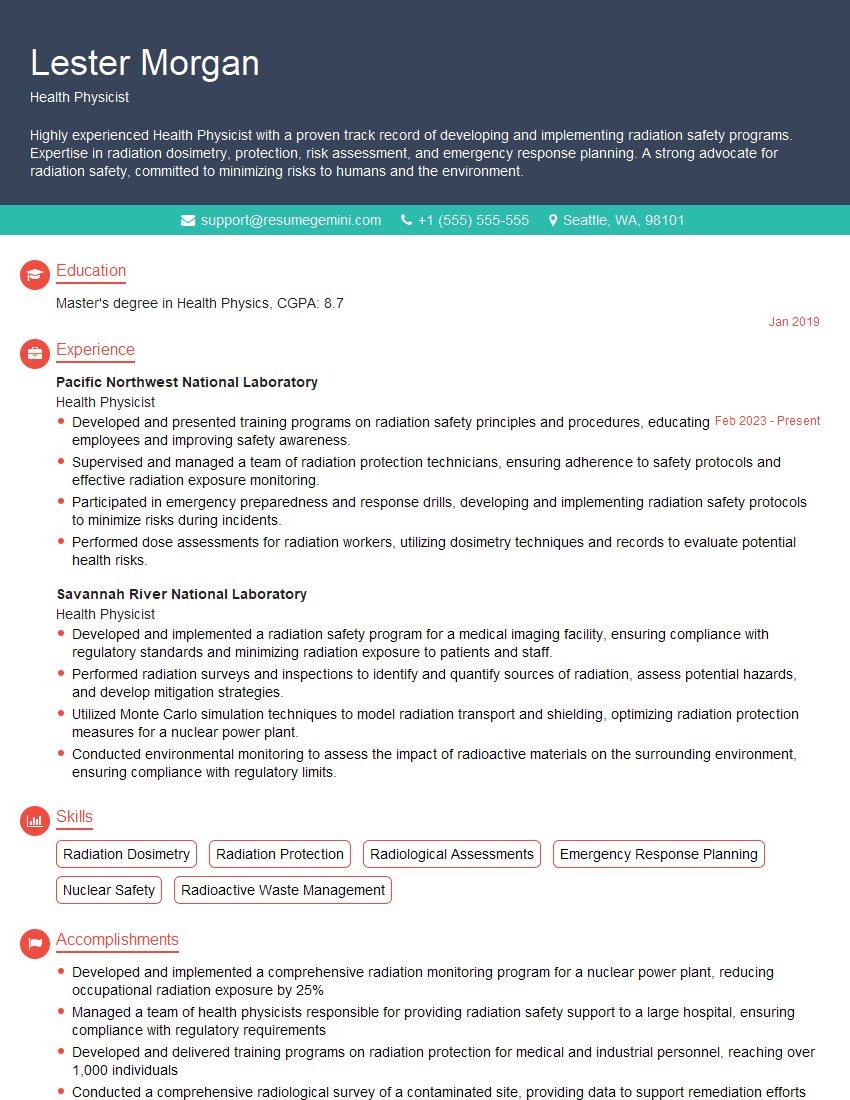
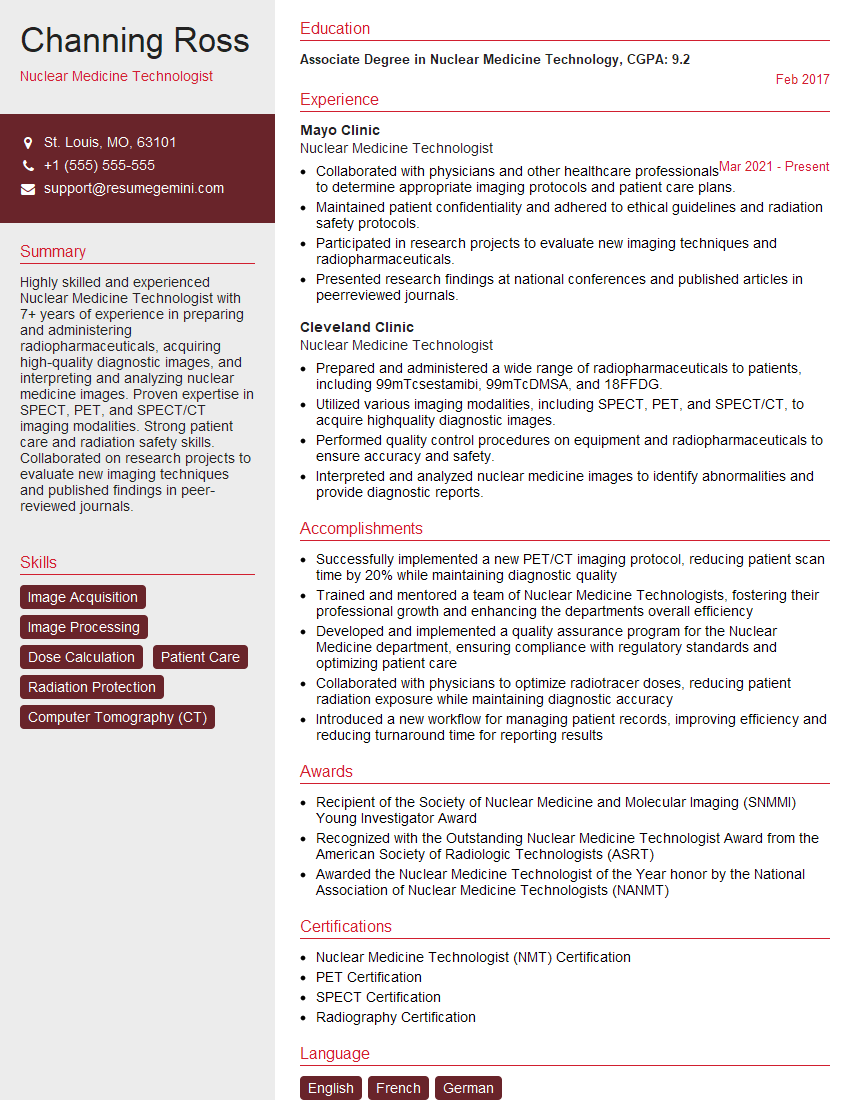
Mastering Laboratory Radiation Safety is crucial for a successful and fulfilling career. It demonstrates your commitment to safety, a highly valued skill in any scientific environment, and opens doors to diverse opportunities for advancement. To significantly increase your chances of landing your dream role, it’s vital to create a resume that stands out and is optimized for Applicant Tracking Systems (ATS). We strongly encourage you to use ResumeGemini, a trusted resource, to build a professional and impactful resume tailored to the specific requirements of Laboratory Radiation Safety positions. Examples of resumes optimized for this field are available to help you get started.

Explore more articles
Users Rating of Our Blogs
Share Your Experience
We value your feedback! Please rate our content and share your thoughts (optional).
What Readers Say About Our Blog
To the interviewgemini.com Webmaster.
Very helpful and content specific questions to help prepare me for my interview!
Thank you
To the interviewgemini.com Webmaster.
This was kind of a unique content I found around the specialized skills. Very helpful questions and good detailed answers.
Very Helpful blog, thank you Interviewgemini team.