Preparation is the key to success in any interview. In this post, we’ll explore crucial Lead Extraction interview questions and equip you with strategies to craft impactful answers. Whether you’re a beginner or a pro, these tips will elevate your preparation.
Questions Asked in Lead Extraction Interview
Q 1. Explain the difference between lead generation and lead extraction.
Lead generation and lead extraction are closely related but distinct processes. Lead generation is the broader concept, encompassing all activities designed to attract potential customers and capture their contact information. Think of it as casting a wide net. This includes marketing campaigns, content marketing, social media engagement, and more. Lead extraction, on the other hand, is a more focused, often technical process of identifying and collecting contact information from existing data sources. It’s like meticulously sorting through the catch from the net.
For example, running a Facebook ad campaign to drive traffic to a landing page is lead generation. Then, using software to scrape email addresses from a competitor’s website is lead extraction. Extraction relies on data already available, whereas generation actively creates new leads.
Q 2. What are the ethical considerations involved in lead extraction?
Ethical lead extraction is paramount. It’s crucial to respect user privacy and comply with all relevant regulations like GDPR and CCPA. Unethical practices can severely damage a company’s reputation and lead to significant legal repercussions.
- Consent: Always ensure you have explicit consent before collecting and using any personal data. Avoid scraping websites that clearly prohibit data extraction.
- Transparency: Be upfront about how you’re collecting data and what you’ll use it for. Don’t mislead users with hidden forms or deceptive practices.
- Data Security: Implement robust security measures to protect collected data from breaches and unauthorized access. This includes encryption and secure storage.
- Compliance: Stay updated on and strictly adhere to all relevant data privacy laws and regulations. Seek legal counsel if needed.
Imagine a fishing analogy: ethical extraction is like carefully selecting only the fish you’re allowed to catch, using approved methods and respecting the environment. Unethical extraction is like using dynamite, harming the ecosystem and breaking the rules.
Q 3. Describe your experience with various lead extraction tools and techniques.
My experience spans a wide range of lead extraction tools and techniques. I’ve worked extensively with web scraping tools like Octoparse and ParseHub, using them to extract contact information from websites. I’m also proficient in using CRM integrations to pull lead data from various marketing platforms. For example, I’ve integrated HubSpot with LinkedIn Sales Navigator to enrich lead profiles with additional information. I’ve also utilized APIs to access data directly from sources like ZoomInfo and Lusha (while always respecting their terms of service and privacy policies). In addition to software, I’ve developed custom scripts using Python and libraries like Beautiful Soup and Selenium for more complex extraction tasks.
Each tool and technique has its own strengths and weaknesses. Web scraping, for instance, can be powerful but requires careful configuration to avoid being blocked. APIs offer a more structured and reliable approach but might have limitations in terms of the data they provide.
Q 4. How do you ensure the accuracy and quality of extracted leads?
Ensuring accuracy and quality is critical. I use a multi-pronged approach:
- Data Validation: I implement validation rules during extraction to catch errors and inconsistencies. For example, I check for valid email formats and phone numbers.
- Duplicate Removal: I use deduplication techniques to identify and remove duplicate leads, ensuring a clean dataset.
- Data Cleansing: After extraction, I perform data cleansing to standardize formats, correct errors, and handle missing values. This often involves using scripting or spreadsheet tools.
- Manual Review: A sample of extracted leads is always manually reviewed to ensure the quality and accuracy of the data. This helps identify and address any systematic issues.
Think of it like editing a manuscript – a first draft is rarely perfect. Data cleansing and validation are the editing and proofreading stages crucial for a polished final product.
Q 5. What methods do you use to identify and prioritize high-quality leads?
Identifying high-quality leads involves a combination of techniques:
- Firmographics: I analyze company size, industry, and revenue to target companies most likely to be interested in our product or service.
- Demographics: I consider job titles, seniority, and department to focus on key decision-makers.
- Behavioral Data: I leverage website activity, content downloads, and engagement with marketing campaigns to identify leads actively researching solutions.
- Lead Scoring: I develop and apply lead scoring models to assign numerical values based on various attributes, prioritizing leads with higher scores.
For example, a lead who downloaded a pricing document, visited our case studies page multiple times, and works as a VP of Marketing in a large enterprise would likely score higher than a lead who merely filled out a contact form.
Q 6. How do you handle duplicate leads during the extraction process?
Handling duplicates is crucial for maintaining a clean and efficient lead database. I employ several methods:
- Hashing: I use hashing algorithms to generate unique identifiers for each lead based on key fields like email address and company name. Leads with identical hashes are identified as duplicates.
- Deduplication Software: I utilize specialized deduplication tools that compare lead records based on various criteria and identify duplicates using sophisticated matching algorithms.
- Data Matching Techniques: I leverage fuzzy matching to handle variations in data entry, such as typos or slightly different spellings of company names.
The best approach depends on the size and complexity of the data. For smaller datasets, manual review might suffice; for larger ones, automated solutions are more efficient.
Q 7. How do you maintain data privacy and comply with relevant regulations (GDPR, CCPA, etc.)?
Data privacy and compliance are top priorities. I adhere to the following best practices:
- Data Minimization: I only collect the minimum amount of personal data necessary for lead qualification and follow-up.
- Data Encryption: All collected data is encrypted both in transit and at rest to protect it from unauthorized access.
- Consent Management: I employ robust consent management mechanisms to ensure we have explicit consent before collecting and using any data. This includes transparent opt-in and opt-out mechanisms.
- Data Security Policies: We maintain strict data security policies and procedures to prevent data breaches and unauthorized access.
- Regular Audits: Regular audits are conducted to ensure our practices remain compliant with GDPR, CCPA, and other relevant regulations.
Protecting user privacy is not just a legal requirement; it’s essential for building trust and maintaining a positive brand image.
Q 8. Describe your experience with different data sources for lead extraction (e.g., websites, databases, social media).
My experience with lead extraction spans diverse data sources, each presenting unique challenges and opportunities. I’ve worked extensively with web scraping from company websites, extracting contact information, and identifying potential leads based on website content and structure. This often involves using tools like Python libraries such as Beautiful Soup and Scrapy to parse HTML and extract relevant data. For instance, I successfully scraped a large e-commerce site’s product pages to identify businesses purchasing specific high-value items, leading to a significant increase in qualified leads.
I’ve also worked with databases, primarily SQL databases, to identify potential leads based on criteria like demographics, purchase history, or website activity. Think of this like using a highly detailed map – I can pinpoint specific individuals or companies based on pre-defined characteristics. For example, I used SQL queries to identify businesses in a particular industry with high revenue and low customer churn from a client’s CRM database, a task that drastically improved the efficiency of their sales targeting.
Finally, social media platforms are a rich source of leads. I’ve leveraged LinkedIn, for example, to identify professionals with specific job titles and company affiliations using API access and data mining techniques. This involves careful navigation of API rate limits and adhering to platform terms of service to avoid account suspension. I once used LinkedIn data to successfully identify and target key decision-makers within a specific industry, resulting in a high conversion rate.
Q 9. What are the key performance indicators (KPIs) you use to measure the success of lead extraction efforts?
Measuring the success of lead extraction involves tracking several key performance indicators (KPIs). These metrics help to evaluate the quality and quantity of leads generated, and the efficiency of the extraction process. The primary KPIs I focus on are:
- Lead Volume: The total number of leads extracted. This gives a basic measure of the scale of the operation.
- Lead Quality: This is assessed through several sub-metrics, including conversion rate (percentage of leads that convert into customers), contact rate (percentage of leads with valid contact information), and data accuracy (percentage of leads with accurate and complete information).
- Cost per Lead (CPL): The total cost of the lead extraction process divided by the number of leads generated. This metric helps optimize resource allocation.
- Data Completeness: The percentage of leads with complete information. Incomplete data often leads to decreased efficiency in downstream processes.
- Time to Extraction: The total time taken to extract the leads. This helps evaluate the efficiency of the process and identify areas for improvement.
By tracking these KPIs, I can gain a holistic understanding of the effectiveness of the lead extraction process and make data-driven decisions for optimization.
Q 10. How do you handle incomplete or inconsistent data during the extraction process?
Handling incomplete or inconsistent data is a crucial aspect of lead extraction. It requires a combination of automated processes and manual review. The first step is typically to identify the missing or inconsistent data points. This can be achieved through data profiling, which involves analyzing the data to identify patterns and anomalies.
For example, if a lead is missing an email address, I might attempt to find it through alternative sources like their company website or LinkedIn profile. If the data is inconsistent (e.g., different phone numbers listed for the same person), I use data deduplication and standardization techniques to resolve the inconsistencies. For large datasets, this often involves writing scripts (in Python or other languages) to automate parts of the process.
Manual review is often necessary for more complex cases, involving evaluating the context of missing or inconsistent information to make informed decisions. In cases where data is irrecoverably incomplete or inaccurate, it may be necessary to remove the lead from the dataset to maintain data quality. Finally, establishing clear data quality rules before initiating the extraction process can significantly minimize the occurrences of these issues.
Q 11. Explain your experience with data cleaning and preparation techniques.
Data cleaning and preparation is a critical step before integrating leads into any system. My experience encompasses various techniques, such as:
- Data Deduplication: Identifying and removing duplicate leads. This often involves comparing various fields such as name, email, and address to find exact or near-duplicate matches.
- Data Standardization: Ensuring data consistency across different fields, such as formatting phone numbers and addresses using standard formats. For example, standardizing phone numbers to a consistent format like +1 (XXX) XXX-XXXX.
- Data Validation: Verifying the accuracy and completeness of the extracted data, often involving checking against known data sources or using data validation rules.
- Data Transformation: Converting data into a suitable format for integration. This may involve converting data types, creating new fields, or merging multiple data sources.
- Data Enrichment: Adding additional information to the leads to improve their quality. This might involve using external data sources such as company databases or demographic information.
I often use tools like Python libraries such as Pandas and specialized ETL (Extract, Transform, Load) tools to automate these processes. Imagine it as polishing a gemstone – cleaning and preparing data makes it much more valuable and usable.
Q 12. How do you integrate extracted leads into CRM or marketing automation systems?
Integrating extracted leads into CRM or marketing automation systems is essential for effective lead nurturing and sales management. The method depends on the specific system and the format of the extracted data. Common methods include:
- CSV/Excel Import: Most CRMs and marketing automation systems support importing data from CSV or Excel files. This is usually a straightforward process, but requires ensuring the data is properly formatted to match the system’s fields. It’s like fitting puzzle pieces – you need to make sure the pieces match before putting them together.
- API Integration: More advanced systems offer API access, enabling direct integration with the lead extraction process. This often involves writing custom scripts or using pre-built integrations to automate the transfer of data in real-time. Think of this as a direct pipeline, constantly feeding data to the system.
- Third-party Integration Tools: Many tools facilitate data integration between various systems. These tools offer pre-built connectors and simplify the integration process, but may involve additional costs.
Regardless of the method, it’s crucial to map the extracted data fields to the corresponding fields within the CRM or marketing automation system to ensure accurate data transfer. After the integration, I always perform data validation within the target system to confirm successful and accurate data transfer.
Q 13. What are the common challenges you face during lead extraction, and how do you overcome them?
Several challenges arise during lead extraction. One common issue is dealing with dynamic websites that frequently change their structure, rendering existing web scraping scripts ineffective. To overcome this, I use robust web scraping frameworks that can handle dynamic content and employ techniques like regular expression matching and XPath selectors for flexible data extraction. I also implement monitoring and alert systems to detect changes and update scraping logic accordingly.
Another challenge is maintaining data accuracy and avoiding duplicate data entries. I tackle this by implementing data deduplication techniques (as discussed earlier) and regular data validation checks. I also prioritize data sources with high reliability and accuracy to minimize errors from the start.
Finally, respecting website terms of service and avoiding overloading servers are essential. I always adhere to robots.txt rules and implement delays in my web scraping scripts to avoid overwhelming the target websites. Ethical considerations and compliance with data protection regulations are of paramount importance.
Q 14. Describe your proficiency in using SQL or other database query languages.
My SQL proficiency is very strong. I routinely use SQL for data extraction, cleaning, and transformation tasks. I’m comfortable with all aspects of SQL, including:
- Data Retrieval: Using
SELECTstatements with various clauses likeWHERE,ORDER BY, andGROUP BYto extract specific data from large databases. - Data Manipulation: Employing functions like
JOIN,UNION, and aggregate functions likeSUM,AVG,COUNTto manipulate and aggregate data. - Data Cleaning: Using functions like
CASEstatements and string functions to clean and standardize data within the database. - Data Loading: Using
INSERT INTOstatements and bulk loading tools to load data into tables from various sources.
For example, I might use a query like this to extract leads from a database:
SELECT FirstName, LastName, Email, Phone FROM Leads WHERE Industry = 'Technology' AND Country = 'USA';Beyond SQL, I also possess experience with other database query languages like NoSQL databases (MongoDB) and possess a strong understanding of data warehousing concepts – crucial for managing and analyzing large datasets in efficient ways.
Q 15. What is your experience with web scraping tools and techniques?
My experience with web scraping tools and techniques is extensive. I’ve worked with a variety of tools, from readily available browser extensions like Scraper and ParseHub to powerful programming languages such as Python with libraries like Beautiful Soup and Scrapy. My proficiency extends beyond simple data extraction; I’m adept at handling complex website structures, dynamic content loaded via JavaScript (using tools like Selenium or Playwright), and navigating pagination to extract data across multiple pages.
For instance, I recently used Scrapy to extract product information – including titles, descriptions, prices, and images – from an e-commerce website with thousands of products. The project required handling dynamic content and sophisticated error handling to ensure data accuracy and avoid being blocked by the website’s anti-scraping measures. I also have experience optimizing scraping scripts for speed and efficiency, minimizing the load on the target website’s servers.
Beyond specific tools, I understand the nuances of different scraping techniques, including CSS selectors, XPath, and regular expressions, allowing me to adapt my approach to various website structures and data formats.
Career Expert Tips:
- Ace those interviews! Prepare effectively by reviewing the Top 50 Most Common Interview Questions on ResumeGemini.
- Navigate your job search with confidence! Explore a wide range of Career Tips on ResumeGemini. Learn about common challenges and recommendations to overcome them.
- Craft the perfect resume! Master the Art of Resume Writing with ResumeGemini’s guide. Showcase your unique qualifications and achievements effectively.
- Don’t miss out on holiday savings! Build your dream resume with ResumeGemini’s ATS optimized templates.
Q 16. How do you identify and avoid legal and ethical pitfalls related to data scraping?
Identifying and avoiding legal and ethical pitfalls in data scraping is paramount. My approach involves a multi-step process focusing on respecting robots.txt directives, adhering to terms of service, and understanding copyright laws. I always check a website’s robots.txt file (e.g., example.com/robots.txt) to identify which parts of the site are off-limits to scraping. Ignoring these directives can lead to legal repercussions.
Furthermore, I carefully review a website’s terms of service to ensure data scraping isn’t explicitly prohibited. Violating these terms can result in account suspension or legal action. Ethical considerations are equally important; I never scrape personally identifiable information (PII) like addresses or credit card numbers without explicit consent. I also ensure that my scraping activities don’t overload the target website’s servers, causing disruptions for legitimate users. This often involves implementing delays and rate limiting in my scraping scripts. Respecting data privacy and intellectual property rights is always at the forefront of my approach.
Q 17. How do you ensure the security of extracted data?
Data security is crucial. Once I’ve extracted data, I implement several security measures. First, I store the data in secure databases, often encrypted at rest and in transit using appropriate encryption protocols (like TLS/SSL). I also follow secure coding practices to prevent vulnerabilities in my scripts. Access to the extracted data is strictly controlled, with only authorized personnel having permission. I might use access control lists and other security mechanisms to manage data access.
Regular security audits and penetration testing of the database and scraping infrastructure are essential parts of my workflow. This helps identify and address potential weaknesses before they can be exploited. In addition, I anonymize any sensitive data whenever possible to reduce the risk of breaches.
For example, I might replace names with unique identifiers or hash email addresses before storing them, making it impossible to directly identify individuals even if the database is compromised.
Q 18. Describe your experience with API integrations for lead extraction.
I have significant experience integrating with APIs for lead extraction. APIs offer a more reliable and often legally sound way to access data than web scraping. Using an API eliminates the need to navigate complex website structures and reduces the risk of being blocked. Many platforms provide APIs that allow programmatic access to their data, including customer information, contact details, and other relevant leads.
For example, I’ve integrated with various CRM APIs (like Salesforce or HubSpot) to automate lead importing and updating. I’ve also worked with marketing automation APIs to retrieve campaign performance data and identify high-potential leads. My expertise extends to understanding API documentation, authentication methods (like OAuth 2.0), rate limits, and error handling to ensure seamless data flow and efficient lead extraction.
Q 19. How do you validate the accuracy of extracted contact information?
Validating extracted contact information is a critical step. I employ a multi-pronged approach involving several techniques. Firstly, I use data validation tools and libraries that check for correct formatting of email addresses, phone numbers, and postal codes. These tools often include regular expressions and pattern matching to ensure data conforms to expected standards.
Secondly, I use email verification services to confirm that email addresses are valid and deliverable. These services send verification emails to the extracted addresses and confirm their validity. Thirdly, I perform duplicate checks to remove redundant entries and ensure data cleanliness. I might use deduplication techniques based on various attributes like email address, phone number, or company name.
Finally, I regularly review and manually inspect a sample of the extracted data to ensure the validation process has been effective and catch any errors that automated methods might have missed. This combination of automated validation and human review is essential for high data accuracy.
Q 20. What is your experience with different data formats (CSV, XML, JSON)?
I’m proficient in working with various data formats, including CSV, XML, and JSON. CSV (Comma Separated Values) is a simple, widely used format suitable for tabular data. XML (Extensible Markup Language) offers a more structured approach with tags defining data elements, useful for complex datasets. JSON (JavaScript Object Notation) is a lightweight format commonly used for data exchange on the web, often preferred for its human readability and ease of parsing.
My experience involves converting data between these formats as needed. For example, I might scrape data from a website in HTML, then convert it into JSON for easier processing and integration with other systems. I can use programming libraries and tools to efficiently handle these conversions and ensure data integrity during the process.
Q 21. How do you deal with changing data sources or formats?
Dealing with changing data sources or formats requires adaptability and robust scripting. I employ techniques that allow my scraping scripts to gracefully handle changes. This might include using flexible parsing techniques that don’t rely on the exact structure of the website. For example, instead of targeting specific CSS classes or XPath expressions that might change, I might use more general selectors or regular expressions that are less sensitive to minor HTML changes.
Furthermore, I implement error handling and logging to monitor the performance of my scripts and promptly identify issues caused by changes in the data sources. Regular monitoring and maintenance are crucial to ensure that the scripts continue to function correctly. I frequently revisit and update my scraping logic to account for changes in website layouts, data formats, or API endpoints. This proactive approach ensures the long-term effectiveness of my lead extraction processes.
Q 22. What are some strategies for optimizing the speed and efficiency of lead extraction?
Optimizing lead extraction speed and efficiency involves a multi-pronged approach focusing on data source preparation, tool selection, and process streamlining. Think of it like optimizing an assembly line – each step needs to be as smooth and fast as possible.
Data Source Preparation: Clean and well-structured data is crucial. Before extraction, ensure your data sources (e.g., websites, PDFs, spreadsheets) are as consistent as possible. This might involve using pre-processing tools to clean up formatting inconsistencies, remove irrelevant information, and standardize data fields. For instance, if you’re extracting contact information, ensuring consistent use of comma separators vs. semicolons between address components dramatically improves extraction accuracy.
Tool Selection: Choosing the right extraction tool is critical. Different tools are better suited to different data sources and formats. For structured data like spreadsheets, a scripting language like Python with libraries such as Pandas can be incredibly efficient. For semi-structured or unstructured data like web pages or PDFs, consider Optical Character Recognition (OCR) software combined with web scraping tools or specialized data extraction APIs. The key is to select tools that directly address the specific characteristics of your data source.
Process Streamlining: Automate as much of the process as possible. This can include setting up automated data pipelines, scheduling regular extractions, and using tools that integrate seamlessly with your CRM or marketing automation software. Imagine having a system where data flows automatically from the extraction process directly into your sales pipeline – this eliminates manual data entry and significantly speeds up the process.
Parallel Processing: If you have very large datasets, consider using tools or techniques that allow parallel processing, distributing the load across multiple processors or machines to drastically reduce overall processing time. This is particularly important for large-scale extraction projects.
Q 23. How do you stay updated on the latest technologies and trends in lead extraction?
Staying updated in the dynamic field of lead extraction requires a proactive and multi-faceted approach. It’s like constantly monitoring the ever-evolving landscape of technology.
Industry Publications and Blogs: I regularly read industry publications, blogs, and online forums focused on data extraction, data mining, and marketing automation. This keeps me abreast of new tools, techniques, and best practices. For example, I follow publications that highlight advancements in AI-powered extraction tools.
Conferences and Webinars: Attending industry conferences and webinars offers valuable insights into cutting-edge technologies and provides networking opportunities with experts in the field. It’s a great way to learn about the latest trends directly from the source.
Online Courses and Tutorials: Platforms like Coursera, edX, and Udemy offer courses on data mining, web scraping, and related technologies. This allows for continuous skill development and deeper understanding of the underlying principles.
Professional Networking: Engaging with professionals in the field through LinkedIn groups and online communities enables knowledge sharing and access to valuable industry insights.
Experimentation: I actively experiment with new tools and technologies to understand their capabilities and limitations firsthand. This practical experience is invaluable.
Q 24. Describe a time you had to deal with a large volume of data for lead extraction.
I once worked on a project requiring the extraction of contact information from over 500,000 business websites. The sheer volume of data posed several challenges. The solution involved a carefully orchestrated plan focusing on efficient data partitioning and parallel processing.
Data Partitioning: Instead of processing the entire dataset at once, we divided the 500,000 websites into smaller, manageable chunks. This allowed us to distribute the workload across multiple servers, significantly reducing processing time.
Parallel Processing with Python and Scrapy: We leveraged Python with the Scrapy framework to create a highly scalable web scraping solution. Scrapy’s ability to handle multiple requests concurrently, along with the power of parallel processing, allowed us to extract data from hundreds of websites simultaneously.
Error Handling and Robustness: We implemented robust error handling mechanisms to gracefully handle issues like network timeouts and website changes. This ensured the process continued even when encountering unexpected problems.
Data Cleaning and Validation: A dedicated data cleaning and validation stage followed the extraction process. This ensured data quality and consistency before delivering the results.
By employing these strategies, we managed to complete the extraction efficiently and deliver high-quality data within the stipulated timeframe. It was a great demonstration of how strategic planning and the right tools can tackle even the most challenging data extraction tasks.
Q 25. How do you prioritize lead extraction tasks when faced with multiple projects?
Prioritizing lead extraction tasks across multiple projects requires a structured approach based on factors like urgency, impact, and resource availability. I often use a prioritization matrix, similar to a MoSCoW method (Must have, Should have, Could have, Won’t have), but tailored to the context of my projects.
Urgency: Projects with immediate deadlines or time-sensitive deliverables are prioritized first. This could be a marketing campaign launch requiring immediate access to leads.
Impact: Projects with the highest potential impact on business goals are prioritized. A project generating high-value leads for a crucial sales initiative would take precedence.
Resource Allocation: Tasks requiring the same resources (personnel, software, hardware) are grouped to optimize efficiency. If two projects require the same specialist’s expertise, we’d schedule them sequentially to avoid conflicts.
Dependencies: Tasks that depend on the completion of others are prioritized based on their dependencies. For example, data validation cannot begin until the extraction is complete.
This structured approach ensures that the most critical and impactful tasks are addressed first, maximizing resource utilization and achieving overall project success.
Q 26. Describe your experience working with different data validation techniques.
My experience with data validation techniques spans various methods, depending on the data source and the specific requirements. It’s like having a toolbox with many tools, each suited for different jobs.
Data Type Validation: Ensuring that data fields adhere to their defined data types (e.g., email address, phone number, zip code). This often involves regular expressions or dedicated validation libraries to ensure data integrity.
Range Checks: Validating that numerical data falls within acceptable ranges (e.g., age, price). This prevents nonsensical values from entering the system.
Format Checks: Ensuring that data adheres to specific formats (e.g., date, time). Consistent formatting is critical for data processing and analysis.
Cross-Field Validation: Checking for consistency between related data fields (e.g., verifying that the city and state match in an address). This catches inconsistencies that individual field validation may miss.
Lookup Tables: Using reference tables to validate data against known values (e.g., validating country codes against a list of valid country codes).
Deduplication: Removing duplicate records to ensure data accuracy and efficiency. This can involve comparing various fields to identify and remove duplicates.
The choice of validation techniques depends heavily on the context. For example, extracting sensitive information like financial data requires much stricter validation than extracting basic contact information.
Q 27. How would you handle a situation where extracted data contains errors or inaccuracies?
Handling errors and inaccuracies in extracted data is a crucial aspect of the process. It’s like quality control in a manufacturing plant – we need to identify and correct any defects.
Error Identification: The first step involves identifying the nature and extent of the errors. This might involve using data profiling techniques to highlight inconsistencies or anomalies in the extracted data.
Error Source Analysis: Once errors are identified, it’s crucial to determine their root cause. Are they due to errors in the source data, issues with the extraction process, or limitations of the chosen tools?
Error Correction: This can involve manual correction, automated correction using rule-based systems, or machine learning models to identify and correct patterns of errors. The approach chosen will depend on the nature of the error and the scale of the problem. For small-scale errors, manual review and correction might be sufficient. For larger-scale errors, automated solutions are generally more efficient.
Data Reconciliation: In some cases, comparing the extracted data against a known reliable source, if one exists, can help resolve inconsistencies. This is similar to reconciling bank statements.
Prevention Strategies: Once the errors are corrected, it is critical to take steps to prevent similar errors in the future. This might involve modifying the extraction process, improving data cleaning steps, or choosing more robust tools.
A systematic approach to error handling ensures data quality and builds trust in the entire lead extraction process.
Key Topics to Learn for Lead Extraction Interview
- Identifying Ideal Customer Profiles (ICPs): Understanding the characteristics of your target audience and how to effectively segment them for efficient lead generation.
- Lead Qualification Methods: Mastering techniques like BANT (Budget, Authority, Need, Timeline) and MEDDIC (Metrics, Economic Buyer, Decision Criteria, Paper Process, Decision Champion, Identify Pain) to prioritize high-potential leads.
- Data Sources and Mining Techniques: Exploring various data sources (e.g., social media, online directories, industry databases) and applying effective data mining strategies to identify and extract relevant contact information.
- Lead Scoring and Prioritization: Developing a robust lead scoring system to rank leads based on their likelihood of conversion and allocating resources accordingly.
- Legal and Ethical Considerations: Understanding and adhering to data privacy regulations (e.g., GDPR, CCPA) and ethical guidelines when extracting and utilizing lead information.
- Automation and Tools: Familiarity with lead extraction tools and automation techniques to streamline the process and improve efficiency. Understanding the pros and cons of different software solutions.
- Lead Generation Strategies: Developing a comprehensive understanding of various lead generation strategies, including content marketing, social media marketing, and search engine optimization (SEO).
- Data Analysis and Reporting: Analyzing lead generation data to identify trends, measure success, and optimize future strategies. Proficiency in using data visualization tools to communicate findings effectively.
- Problem-solving in Lead Extraction: Developing practical strategies to overcome challenges such as incomplete data, inaccurate information, and inefficient processes.
Next Steps
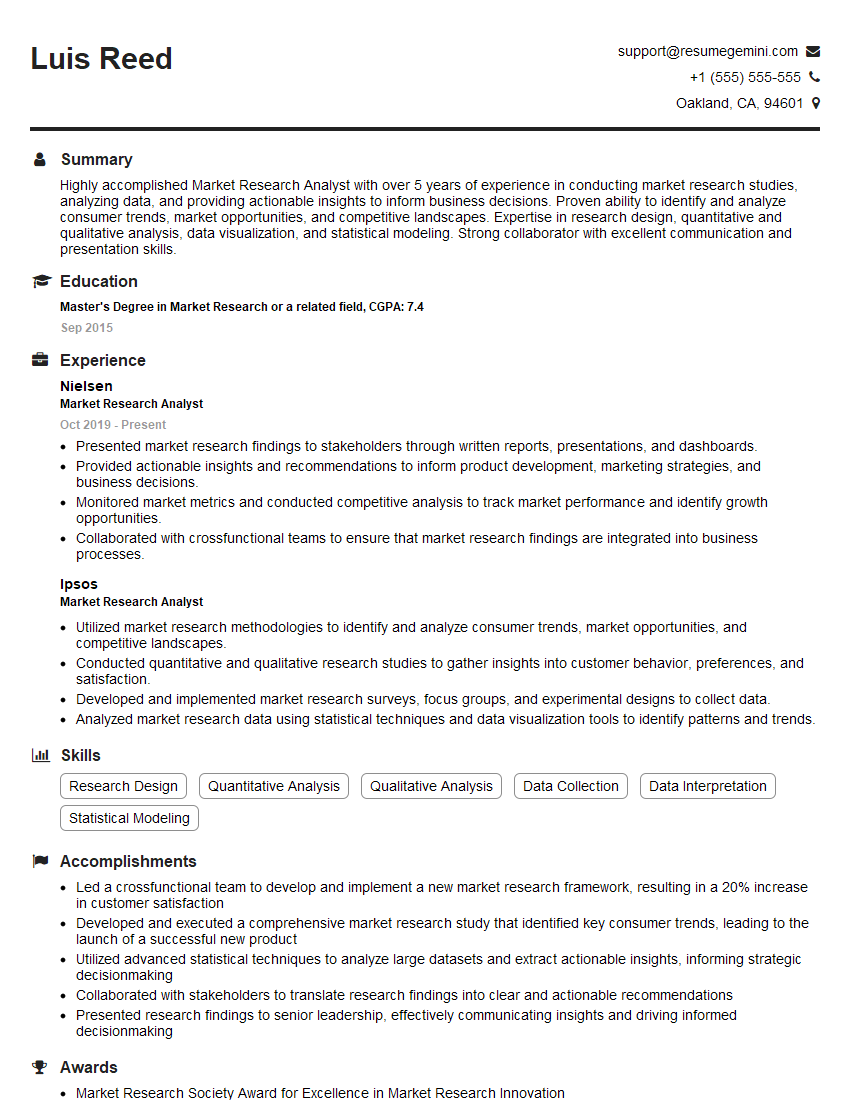
Mastering lead extraction is crucial for career advancement in sales, marketing, and business development. It allows you to build a strong pipeline of qualified prospects, ultimately driving revenue growth and contributing significantly to your organization’s success. To maximize your job prospects, creating an Applicant Tracking System (ATS)-friendly resume is paramount. ResumeGemini is a trusted resource to help you craft a professional and impactful resume that highlights your skills and experience in lead extraction. Examples of resumes tailored to this field are available to help guide you. Invest the time to present yourself effectively – your career journey starts with a strong first impression.
Explore more articles
Users Rating of Our Blogs
Share Your Experience
We value your feedback! Please rate our content and share your thoughts (optional).
What Readers Say About Our Blog
To the interviewgemini.com Webmaster.
Very helpful and content specific questions to help prepare me for my interview!
Thank you
To the interviewgemini.com Webmaster.
This was kind of a unique content I found around the specialized skills. Very helpful questions and good detailed answers.
Very Helpful blog, thank you Interviewgemini team.