The right preparation can turn an interview into an opportunity to showcase your expertise. This guide to LEED Green Associate Credential interview questions is your ultimate resource, providing key insights and tips to help you ace your responses and stand out as a top candidate.
Questions Asked in LEED Green Associate Credential Interview
Q 1. What are the main categories of LEED rating systems?
LEED, or Leadership in Energy and Environmental Design, offers various rating systems categorized by building type and intended use. The main categories include:
- Building Design and Construction (BD+C): This covers new construction, major renovations, and core & shell developments. It’s about designing and building green from the outset.
- Interior Design and Construction (ID+C): Focuses on the sustainable renovation and fit-out of existing interiors within a larger building.
- Operations & Maintenance (O+M): This applies to existing buildings and emphasizes ongoing sustainable practices, focusing on reducing their environmental impact over their operational lifespan.
- Building Operations and Maintenance (for existing buildings): Specifically addresses sustainable operations and maintenance practices for existing buildings, aiming to improve energy and water efficiency, waste management, etc.
- Neighborhood Development (ND): This rating system looks at the broader community context, assessing the sustainability of entire neighborhoods, rather than individual buildings.
- Homes: This covers new and existing homes and emphasizes sustainable design and construction practices for residential projects. This includes single-family homes, multi-family housing, and townhouses.
Each category has specific prerequisites and credits tailored to its unique challenges and opportunities.
Q 2. Explain the difference between LEED BD+C and LEED O+M.
LEED BD+C (Building Design and Construction) and LEED O+M (Operations and Maintenance) address different phases of a building’s lifecycle. Imagine building a house:
LEED BD+C is like designing and building the house itself. It focuses on sustainable choices during the design and construction phases, such as using recycled materials, optimizing energy efficiency, and minimizing site disturbance. It’s about ‘building green’ from the foundation up.
LEED O+M is like maintaining the house after it’s built. It focuses on the ongoing operation and maintenance of an existing building, aiming to reduce its environmental footprint through efficient energy and water use, waste reduction, and sustainable procurement practices. It’s about ‘living green’ in the building.
In short: BD+C is about the initial construction, while O+M is about the ongoing operation.
Q 3. Describe the process of obtaining LEED certification for a project.
Obtaining LEED certification is a multi-step process:
- Registration: The project is registered with the USGBC (United States Green Building Council) before the design phase begins. This allows for early engagement with LEED requirements.
- Design and Construction/Operations: The design and construction (or operations) phases are implemented according to the selected LEED rating system, aiming to achieve points across various credit categories.
- Documentation: Extensive documentation is compiled to substantiate claims for each LEED credit. This includes reports, invoices, and photos.
- Submission: The project team submits the complete documentation to GBCI (Green Building Certification Institute) for review.
- Review and Certification: GBCI reviews the submitted documentation and issues a certification based on earned points. The levels of certification are Certified, Silver, Gold, and Platinum, with Platinum being the highest level of achievement.
The entire process requires meticulous planning, documentation, and collaboration among the project team.
Q 4. What are the key strategies for optimizing energy performance in buildings?
Optimizing energy performance in buildings involves a holistic approach, encompassing various strategies:
- High-Performance Building Envelope: This includes using high-performance windows, superior insulation, and air sealing to minimize energy losses.
- Efficient HVAC Systems: Implementing high-efficiency HVAC equipment, optimizing system controls, and employing strategies like radiant heating and cooling.
- Renewable Energy Sources: Integrating renewable energy technologies such as solar photovoltaic (PV) panels, solar thermal collectors, or wind turbines.
- Lighting Optimization: Utilizing energy-efficient lighting fixtures, daylight harvesting, and occupancy sensors to reduce energy consumption.
- Building Automation Systems (BAS): Implementing intelligent building management systems to monitor and optimize energy consumption in real-time.
- Energy Modeling: Conducting energy simulations during the design phase to predict energy performance and identify areas for improvement. For example, using software such as EnergyPlus to analyze the impact of different design choices.
A well-integrated approach combining these strategies can significantly reduce a building’s energy consumption and operational costs.
Q 5. How does water efficiency contribute to LEED points?
Water efficiency is a crucial aspect of LEED, contributing significantly to points across various credit categories. Strategies include:
- Low-Flow Fixtures: Using water-efficient toilets, faucets, showerheads, and other plumbing fixtures.
- Water-Efficient Landscaping: Implementing drought-tolerant landscaping, rainwater harvesting, and greywater reuse systems.
- Reduced Water Consumption: Minimizing overall water usage through efficient irrigation systems and other water conservation techniques.
- Metering and Submetering: Installing water meters to monitor water consumption and identify areas for improvement.
Each strategy earns points based on the level of reduction achieved, rewarding projects that demonstrate a significant commitment to water conservation.
Q 6. Explain the importance of sustainable site development.
Sustainable site development is paramount in LEED, focusing on minimizing the environmental impact of a building’s location and construction. Key aspects include:
- Site Selection: Choosing a site that minimizes environmental disturbance, utilizes existing infrastructure, and reduces the need for new development.
- Brownfield Redevelopment: Redeveloping previously developed sites, reducing urban sprawl and mitigating environmental contamination.
- Habitat Protection: Protecting and restoring natural habitats on and around the project site. Minimizing impacts to existing ecosystems is crucial.
- Transportation Access: Providing convenient access to public transportation, encouraging alternative modes of transportation, and reducing reliance on private vehicles.
- Light and Air Pollution Reduction: Minimizing light pollution through appropriate lighting design and reducing air pollution through the use of efficient vehicles and equipment on-site.
Sustainable site development aims to create projects that are not only environmentally responsible but also contribute positively to the surrounding community.
Q 7. Describe different strategies for reducing building materials’ embodied carbon.
Reducing embodied carbon in building materials is essential for minimizing a project’s overall environmental impact. Strategies include:
- Using recycled materials: Incorporating recycled content in construction materials reduces the demand for virgin materials, thus lowering embodied carbon.
- Locally sourced materials: Sourcing materials locally reduces transportation distances and associated emissions.
- Material Selection: Choosing materials with lower embodied carbon footprints through careful material selection and lifecycle assessments (LCAs). This might involve comparing the carbon footprint of concrete vs. timber for example.
- Embodied Carbon Modeling: Utilizing software and databases to quantify the embodied carbon in materials and track reductions achieved throughout the project lifecycle.
- Material Reuse & Salvaging: Reusing or salvaging materials from demolition projects reduces the demand for new materials.
- Sustainable Wood Products: Utilizing sustainably harvested and certified wood products from responsible forestry practices.
By strategically focusing on these strategies, building projects can significantly reduce their embodied carbon footprint and contribute to a more sustainable built environment.
Q 8. What are the benefits of using recycled materials in construction?
Using recycled materials in construction offers significant environmental and economic benefits. Recycling reduces the demand for virgin materials, thereby conserving natural resources and minimizing the environmental impact associated with their extraction and processing. This translates to lower greenhouse gas emissions, reduced landfill waste, and a smaller carbon footprint for the building.
- Reduced Energy Consumption: Manufacturing recycled materials typically requires less energy than producing new materials from raw resources. For example, using recycled steel requires significantly less energy than smelting iron ore.
- Conservation of Natural Resources: Recycling conserves valuable natural resources like timber, minerals, and water. Using reclaimed wood, for instance, reduces pressure on forests.
- Cost Savings: Recycled materials often cost less than virgin materials, contributing to project cost savings. This makes sustainable building practices more economically viable.
- Improved LEED Scores: The use of recycled materials contributes significantly to earning points in the LEED (Leadership in Energy and Environmental Design) rating system, improving a building’s green credentials and potentially attracting environmentally conscious tenants or buyers.
For example, a project might use recycled steel in the structural frame or recycled content in flooring materials. The selection of recycled materials should always consider material properties and performance to ensure they meet building code requirements and project specifications.
Q 9. How does indoor environmental quality impact occupant health and well-being?
Indoor Environmental Quality (IEQ) significantly impacts occupant health and well-being. Poor IEQ can lead to a range of health problems, reduced productivity, and decreased comfort. Key elements of IEQ include:
- Indoor Air Quality (IAQ): Poor IAQ, stemming from pollutants like volatile organic compounds (VOCs) from building materials or inadequate ventilation, can trigger respiratory issues, headaches, and allergies. This can result in ‘sick building syndrome’ where occupants experience a cluster of symptoms linked to the building environment.
- Thermal Comfort: Maintaining appropriate temperatures and humidity levels is crucial. Inconsistent temperatures or excessive humidity can lead to discomfort, reduced productivity, and even health problems.
- Lighting: Inadequate lighting, including insufficient natural light and poor artificial lighting design, can negatively impact mood, productivity, and even circadian rhythms (our body’s natural sleep-wake cycle).
- Acoustic Comfort: Excessive noise levels can lead to stress, reduced concentration, and impaired communication. Good acoustic design minimizes noise pollution within the building.
Investing in strategies to enhance IEQ not only benefits occupant health but also boosts productivity, reduces absenteeism, and enhances overall satisfaction. Think of it as investing in your human capital; a healthier workforce is a more productive workforce. For example, a well-designed green building uses natural ventilation, high-performance filters, and low-VOC emitting materials to provide a healthier indoor environment.
Q 10. Explain the concept of a building life-cycle assessment.
A Building Life-Cycle Assessment (LCA) is a comprehensive analysis of the environmental impacts of a building, from its initial design and construction all the way through its operation and eventual demolition. It accounts for all stages of the building’s life, considering energy consumption, material use, waste generation, water consumption, and emissions across its entire lifespan.
The LCA process involves several steps:
- Goal and Scope Definition: Clearly defining the objectives and boundaries of the assessment.
- Inventory Analysis: Quantifying the resources used and emissions generated at each stage.
- Impact Assessment: Evaluating the environmental consequences of these resource uses and emissions.
- Interpretation: Analyzing the results to identify areas for improvement.
An LCA helps to identify the ‘hot spots’ – the stages of the building’s life that have the greatest environmental impact – so that improvements can be targeted effectively. For example, an LCA might reveal that the embodied carbon (carbon emissions associated with manufacturing and transporting building materials) is a significant contributor to the building’s overall environmental footprint, highlighting the need for sustainable material selection.
Q 11. What are some common strategies for improving indoor air quality?
Improving indoor air quality (IAQ) involves a multifaceted approach. Strategies include:
- Ventilation: Ensuring adequate fresh air intake through natural ventilation or mechanical systems, removing pollutants and diluting indoor contaminants.
- Source Control: Minimizing sources of indoor air pollution. This includes using low-VOC paints, adhesives, and furniture; properly maintaining HVAC systems; and regularly cleaning to remove dust and allergens.
- Air Filtration: Employing high-efficiency particulate air (HEPA) filters to remove airborne particles. This is particularly crucial in buildings located in areas with high air pollution.
- Moisture Control: Managing moisture levels to prevent mold growth. This requires proper ventilation in bathrooms and kitchens, and addressing any leaks promptly.
- Regular Maintenance: Regular cleaning of HVAC systems, air ducts, and other components that can harbor pollutants is essential.
For example, a green building might use a dedicated outside air system (DOAS) to provide a consistent supply of fresh, filtered air, supplementing the main HVAC system. Also, selecting building materials with low VOC emissions can significantly reduce indoor air pollution from the outset.
Q 12. What is the role of daylighting in sustainable design?
Daylighting, the strategic use of natural light, plays a vital role in sustainable design. It reduces the reliance on artificial lighting, thereby conserving energy and lowering operational costs. Furthermore, daylighting positively impacts occupant well-being by improving mood, productivity, and circadian rhythms. Natural light can enhance visual comfort and reduce eye strain.
Effective daylighting strategies include:
- Optimized window placement and size: Strategic placement of windows to maximize daylight penetration while minimizing solar heat gain.
- Light shelves and reflectors: These architectural elements reflect daylight deeper into the building, illuminating areas further from windows.
- Light tubes or sun tunnels: These systems capture natural light from the roof and direct it into interior spaces.
- Automated lighting controls: Systems that adjust artificial lighting levels based on the availability of daylight, optimizing energy efficiency.
Consider a building with a large atrium; this design element allows natural light to penetrate deep into the building, reducing the need for artificial lighting in central areas. A well-designed daylighting strategy can significantly reduce energy consumption and improve the quality of the indoor environment.
Q 13. How can you minimize waste during construction?
Minimizing waste during construction requires careful planning and execution. Strategies include:
- Detailed Design and Planning: Thorough design and planning to minimize material overages and waste generation. This might include using Building Information Modeling (BIM) to accurately estimate material quantities.
- Prefabrication: Prefabricating components off-site reduces waste on-site, as well as improving construction efficiency.
- Material Reuse and Recycling: Using recycled materials and diverting waste materials for recycling whenever possible. This includes salvaging reusable materials from demolition sites.
- Waste Management Plan: Developing and implementing a comprehensive waste management plan that designates areas for different waste streams and outlines procedures for their collection and disposal.
- Just-in-Time Delivery: Scheduling material deliveries to arrive just as they are needed, minimizing storage and potential waste from spoilage or damage.
For example, a construction project might utilize a waste management plan with separate containers for different types of waste (wood, metal, cardboard, etc.) This allows for easier sorting and recycling. Employing prefabricated wall panels can minimize on-site waste and speed up construction.
Q 14. Describe innovative technologies for enhancing energy efficiency.
Innovative technologies are continuously emerging to enhance energy efficiency in buildings. Examples include:
- Building Management Systems (BMS): Sophisticated systems that monitor and control various building systems (HVAC, lighting, etc.) optimizing energy use based on occupancy and environmental conditions.
- Smart Meters and Sub-metering: These provide detailed data on energy consumption, allowing for better identification of areas for improvement.
- High-Performance HVAC Systems: Advanced HVAC systems, such as those incorporating variable refrigerant flow (VRF) technology, provide precise temperature control and significantly improve efficiency.
- Renewable Energy Integration: Integrating renewable energy sources like solar photovoltaic (PV) panels and wind turbines into the building design to reduce reliance on the grid.
- Energy-Efficient Windows and Glazing: High-performance windows with low-E coatings reduce heat transfer, minimizing energy loss for heating and cooling.
- Green Roofs and Walls: These can help to reduce building energy consumption through improved insulation, reduced stormwater runoff, and heat island effect mitigation.
For instance, a building could use a BMS to adjust lighting based on occupancy, resulting in considerable energy savings. The integration of solar panels reduces reliance on fossil fuels and lowers the building’s carbon footprint.
Q 15. What are some strategies for reducing water consumption in landscaping?
Reducing water consumption in landscaping is crucial for achieving LEED certification and promoting sustainability. Strategies focus on efficient irrigation, selecting drought-tolerant plants, and minimizing water runoff.
Smart Irrigation Systems: Implementing smart irrigation controllers that monitor soil moisture and weather conditions ensures water is applied only when and where needed. This drastically reduces water waste compared to traditional timers.
Xeriscaping: This landscaping method emphasizes using native or drought-tolerant plants that require minimal watering. Choosing plants suited to the local climate reduces reliance on supplemental irrigation.
Water-Harvesting Techniques: Collecting rainwater through rain gardens or cisterns provides a sustainable source of irrigation water, reducing reliance on municipal water supplies. This captured water can be used for non-potable purposes like irrigation.
Permeable Paving: Using permeable paving materials like porous concrete or gravel allows rainwater to infiltrate the ground, reducing runoff and replenishing groundwater supplies. This also minimizes the need for extensive irrigation.
Mulching: Applying a thick layer of mulch helps retain soil moisture, reducing evaporation and the frequency of watering. Organic mulches also improve soil health.
For example, a project might use a combination of smart irrigation, xeriscaping with native grasses, and rainwater harvesting to achieve significant water savings, contributing to LEED points.
Career Expert Tips:
- Ace those interviews! Prepare effectively by reviewing the Top 50 Most Common Interview Questions on ResumeGemini.
- Navigate your job search with confidence! Explore a wide range of Career Tips on ResumeGemini. Learn about common challenges and recommendations to overcome them.
- Craft the perfect resume! Master the Art of Resume Writing with ResumeGemini’s guide. Showcase your unique qualifications and achievements effectively.
- Don’t miss out on holiday savings! Build your dream resume with ResumeGemini’s ATS optimized templates.
Q 16. Explain the importance of sustainable transportation planning.
Sustainable transportation planning is vital for minimizing a building’s environmental impact and promoting healthier communities. It aims to reduce reliance on private vehicles and encourage the use of more sustainable modes of transportation.
Public Transportation Access: Proximity to public transit, bike lanes, and pedestrian walkways encourages residents and employees to utilize these options instead of driving. This reduces greenhouse gas emissions and traffic congestion.
Bicycle and Pedestrian Infrastructure: Providing secure bike storage and well-maintained pedestrian paths encourages active commuting. Shaded walkways and comfortable paths increase pedestrian usage.
Electric Vehicle Charging Stations: Installing electric vehicle (EV) charging stations on-site supports the adoption of electric vehicles, reducing reliance on fossil fuel-powered cars. This helps decrease carbon emissions and air pollution.
Transportation Demand Management (TDM) Programs: Implementing programs that encourage carpooling, vanpooling, or ride-sharing reduces the number of vehicles on the road. These programs might include incentives or subsidized transportation passes.
Proximity to Amenities: Locating buildings near essential services, such as grocery stores, schools, and workplaces, reduces the need for long commutes.
Imagine a LEED-certified office building with easy access to a metro station, dedicated bike racks, and electric vehicle charging spots. This design directly contributes to a reduction in carbon emissions and promotes a healthy lifestyle for its occupants.
Q 17. What is the role of green infrastructure in mitigating urban heat island effect?
Green infrastructure plays a significant role in mitigating the urban heat island effect, which is the phenomenon where urban areas experience higher temperatures than surrounding rural areas. This is primarily due to the abundance of heat-absorbing materials like concrete and asphalt.
Trees and Green Spaces: Trees provide shade, reducing solar radiation and lowering surface temperatures. Parks and green spaces create cooler microclimates within the urban environment.
Green Roofs and Walls: Green roofs (vegetation planted on rooftops) and green walls (vegetation growing on building facades) help insulate buildings, reducing energy consumption for cooling and lowering the urban heat island effect.
Permeable Pavements: Permeable pavements allow rainwater to infiltrate the ground, reducing surface runoff and lowering temperatures. This also improves groundwater recharge.
Cool Roofs: Using cool roof materials that reflect sunlight helps reduce heat absorption, lowering roof surface temperatures and reducing energy demands for cooling.
Urban Water Bodies: Parks with water features like ponds or fountains provide evaporative cooling, lowering ambient air temperatures.
For example, a city incorporating green roofs on many buildings, along with strategically placed trees and parks, can significantly reduce the urban heat island effect, improving air quality and creating a more comfortable urban environment.
Q 18. Describe the process of commissioning in a LEED project.
Commissioning (Cx) in a LEED project is a systematic process of verifying that building systems are designed, installed, and operated to meet project requirements. It ensures that the building performs as intended and achieves its sustainability goals.
Pre-design Commissioning (PDC): This early-stage process involves reviewing design documents to identify potential problems and ensure that the design aligns with performance goals. It helps avoid costly changes later in the project.
Design Commissioning (DCx): This phase focuses on incorporating commissioning requirements into the design documents and ensuring that the selected systems and equipment will meet performance requirements. This includes developing commissioning specifications.
Construction Commissioning (Cx): This stage involves verifying that systems and equipment are installed correctly and function as designed. This often includes site visits, inspections, and testing.
Post-Commissioning (PCx): This phase focuses on monitoring building performance to ensure the systems continue to operate efficiently after occupancy. It includes training building operators and tracking energy consumption.
The commissioning process involves a commissioning authority (CxA), a qualified professional who oversees the entire process. The CxA works with the design and construction team to ensure that the building meets its performance goals. Comprehensive commissioning helps ensure that a project achieves its LEED points for building performance.
Q 19. How does innovation in design contribute to LEED certification?
Innovation in design is crucial for achieving higher LEED certifications and pushing the boundaries of sustainable building practices. LEED encourages innovative strategies that go beyond the minimum requirements.
High-Performance Building Envelopes: Innovative materials and construction techniques lead to superior insulation and airtightness, resulting in reduced energy consumption.
Renewable Energy Systems: Integrating renewable energy sources like solar photovoltaic (PV) panels or wind turbines significantly reduces reliance on fossil fuels and lowers carbon emissions.
Water Conservation Technologies: Implementing advanced water-saving technologies such as greywater recycling or waterless urinals drastically reduces water consumption.
Sustainable Materials: Using recycled content materials, rapidly renewable materials, or materials with low embodied carbon reduces the environmental impact of construction.
Smart Building Technologies: Integrating building automation systems and smart sensors optimizes energy consumption, improves indoor environmental quality, and enhances operational efficiency.
For instance, a project might incorporate a bio-based material for flooring, significantly reducing embodied carbon and achieving Innovation in Design points. Another project could implement a unique water harvesting and reuse system, illustrating a significant step beyond basic water conservation methods.
Q 20. What is the significance of the LEED rating scales?
LEED rating scales represent the level of green building performance achieved by a project. The scales, ranging from Certified to Platinum, provide a benchmark for measuring sustainability and help demonstrate a building’s commitment to environmental stewardship.
Certified: Represents a good level of sustainability performance, exceeding basic requirements.
Silver: Indicates a higher level of sustainability performance than Certified.
Gold: Demonstrates a significantly higher level of sustainability performance compared to Silver.
Platinum: Represents the highest level of sustainability performance in LEED, showcasing exceptional achievements.
The higher the rating, the more rigorous the requirements and the greater the environmental benefits. These ratings are important for showcasing a project’s environmental performance to stakeholders and the public. The rating scale serves as an objective measure to compare projects across various sectors and regions.
Q 21. Explain the role of a LEED Green Associate in a project team.
A LEED Green Associate plays a crucial role in a project team by providing essential expertise in green building principles and LEED requirements. They act as a valuable resource, contributing to sustainable design and construction processes.
Knowledge Base: LEED Green Associates possess a comprehensive understanding of LEED rating systems and sustainable building practices. They can guide the project team on meeting LEED requirements.
Documentation and Compliance: They assist in gathering and organizing documentation required for LEED certification, ensuring all necessary information is submitted correctly and on time.
Sustainability Champion: They promote environmentally responsible decisions throughout the project lifecycle, encouraging the team to adopt sustainable practices.
Collaboration and Communication: They facilitate effective communication and collaboration among various project stakeholders regarding sustainability goals.
Problem Solving: They identify and propose solutions to challenges related to achieving LEED goals, contributing to practical and cost-effective solutions.
In essence, a LEED Green Associate serves as a crucial member of the team, providing valuable knowledge and support to ensure the project achieves its sustainability targets and secures LEED certification. They are the sustainability experts within the team, ensuring that best practices are adopted and the project meets all necessary standards.
Q 22. What are the key principles of sustainable design?
Sustainable design hinges on minimizing the environmental impact of buildings throughout their lifecycle, from construction to demolition. This involves a holistic approach considering various interconnected factors. Key principles include:
- Integration of Site Design: Optimizing site selection, minimizing land disturbance, and preserving natural resources. For example, choosing a site near public transportation reduces reliance on cars.
- Energy Efficiency: Reducing energy consumption through high-performance building envelopes, efficient HVAC systems, and renewable energy sources. Imagine a building with triple-glazed windows and a solar panel array on the roof.
- Water Conservation: Minimizing water usage through efficient fixtures and rainwater harvesting. This could involve low-flow toilets and greywater recycling systems.
- Material Selection: Prioritizing sustainably sourced and recycled materials, reducing embodied carbon. Using reclaimed wood or recycled steel is an example.
- Indoor Environmental Quality: Ensuring good air quality, thermal comfort, and daylighting to promote occupant health and productivity. A building with excellent ventilation and ample natural light is a key example.
- Waste Reduction: Minimizing construction waste through careful planning and material reuse. Implementing a robust construction waste management plan is essential.
Q 23. Describe different strategies for improving thermal comfort.
Improving thermal comfort involves strategies that manage both heating and cooling loads effectively. These include:
- Passive Strategies: These harness natural forces to moderate temperatures. Examples include proper building orientation to maximize solar gain in winter and minimize it in summer, shading devices like overhangs, and thermal mass materials (like concrete) that absorb and release heat slowly.
- Active Strategies: These involve mechanical systems. Efficient HVAC (Heating, Ventilation, and Air Conditioning) systems with variable refrigerant flow (VRF) technology are crucial. Consider geothermal heating and cooling for a significant reduction in energy consumption.
- Building Envelope Optimization: This encompasses high-performance windows, insulation, and airtight construction to minimize heat transfer. Imagine a building with triple-pane windows and high R-value insulation in the walls.
- Natural Ventilation: Strategically placed windows and operable vents can promote natural airflow, reducing the need for mechanical cooling. This works best in temperate climates with favorable wind patterns.
- Smart Controls and Automation: Using sensors and automation to optimize HVAC operation based on occupancy and environmental conditions. For example, smart thermostats can learn your preferences and adjust accordingly.
Q 24. What are some challenges in implementing sustainable design strategies?
Implementing sustainable design strategies often faces several challenges:
- Upfront Costs: Sustainable materials and technologies can be more expensive initially, though long-term cost savings usually outweigh this.
- Lack of Awareness and Expertise: A lack of knowledge about sustainable design principles among some designers and builders can hinder implementation.
- Regulatory Hurdles and Codes: Building codes and regulations may not always align with the most advanced sustainable practices.
- Supply Chain Issues: Sourcing sustainable materials can be challenging due to limited availability or long lead times.
- Occupant Behavior: Building occupants’ habits can significantly impact the effectiveness of sustainable design measures (e.g., leaving lights on or windows open). Education and training can mitigate this.
- Return on Investment (ROI) Concerns: Demonstrating a clear ROI for sustainable measures can be difficult, especially for short-term projects.
Q 25. How do you measure and verify the environmental performance of a building?
Measuring and verifying a building’s environmental performance involves a multi-faceted approach. LEED certification uses a points-based system evaluating various aspects:
- Energy Modeling: Software simulates energy consumption under different operating conditions to predict efficiency.
- Water Metering: Measuring actual water usage helps track performance against targets.
- Waste Tracking: Monitoring construction waste helps quantify diversion rates and efficiency.
- Commissioning (Cx): A process ensuring systems operate as designed, maximizing performance.
- Third-Party Verification: Independent verification bodies audit and confirm the performance claims.
- Post-Occupancy Evaluation (POE): Assessing building performance after occupancy, identifying areas for improvement.
Tools like Energy Star Portfolio Manager and various LEED-specific software provide data collection and analysis capabilities.
Q 26. Explain the concept of building envelope optimization.
Building envelope optimization focuses on creating a high-performance barrier between the building’s interior and the exterior environment. The goal is to minimize heat transfer, air leakage, and moisture penetration. Key aspects include:
- High-Performance Insulation: Using materials with high R-values (resistance to heat flow) in walls, roofs, and floors.
- Airtight Construction: Minimizing air leakage through careful sealing of joints and penetrations.
- High-Performance Windows: Using windows with low U-values (rate of heat transfer) and high solar heat gain coefficients (SHGC) in appropriate climates.
- Moisture Control: Designing the envelope to prevent moisture intrusion and condensation, which can lead to mold and structural damage.
- Thermal Bridging Mitigation: Minimizing heat transfer paths through continuous insulation and careful detailing around windows and doors.
Proper building envelope optimization reduces heating and cooling loads, improving energy efficiency and occupant comfort.
Q 27. Describe the role of renewable energy sources in sustainable buildings.
Renewable energy sources play a vital role in reducing the carbon footprint of buildings. Examples include:
- Photovoltaics (PV): Solar panels convert sunlight into electricity, reducing reliance on the grid.
- Solar Thermal: Solar collectors heat water or air for space heating or domestic hot water.
- Wind Turbines: Wind turbines generate electricity from wind energy, though suitable only in locations with sufficient wind resources.
- Geothermal Energy: Using the earth’s relatively constant temperature for heating and cooling.
- Biomass Energy: Burning sustainable biomass (wood pellets, etc.) for heating.
Integrating renewable energy systems requires careful planning and consideration of site conditions, energy demands, and financial feasibility. Net-zero energy buildings aim to produce as much energy as they consume annually.
Q 28. What are some common misconceptions about LEED certification?
Some common misconceptions about LEED certification include:
- LEED is only for new construction: LEED can also be applied to existing buildings undergoing renovations or retrofits.
- LEED is too expensive: While there can be upfront costs, many LEED strategies offer long-term cost savings through increased efficiency.
- LEED is only about environmental performance: LEED also considers social and economic factors, promoting healthy and productive spaces.
- LEED certification guarantees a sustainable building: LEED provides a framework, but actual performance depends on proper design and implementation.
- LEED is a one-size-fits-all solution: Different LEED rating systems cater to various building types and project scopes.
It is crucial to understand the nuances of the LEED system and its implications for project goals before embarking on certification.
Key Topics to Learn for LEED Green Associate Credential Interview
- LEED Rating Systems: Understand the different LEED rating systems (Building Design + Construction, Interior Design + Construction, Operations + Maintenance, etc.) and their core principles. Be prepared to discuss their application in various project types.
- Sustainable Sites: Discuss strategies for minimizing the environmental impact of building location and site development. This includes understanding concepts like site selection, stormwater management, and heat island effect reduction. Be ready to explain practical applications like permeable pavements or native landscaping.
- Water Efficiency: Know the various strategies for reducing water consumption in buildings. This encompasses fixtures, fittings, irrigation systems, and water reuse techniques. Prepare to discuss case studies showcasing successful water conservation implementations.
- Energy and Atmosphere: Grasp the principles of energy-efficient design and construction. This includes understanding energy modeling, renewable energy sources, and building envelope design. Be ready to analyze energy performance and propose solutions for energy optimization.
- Materials and Resources: Understand sustainable material selection, embodied carbon, and waste management. Be prepared to discuss lifecycle assessment and the importance of sourcing materials responsibly. Consider the practical implications of recycled content and material reuse.
- Indoor Environmental Quality: Discuss the importance of creating healthy and comfortable indoor environments. This includes air quality, thermal comfort, daylighting, and acoustics. Be prepared to analyze design features that improve indoor environmental quality.
- Innovation in Design: Familiarize yourself with innovative strategies and technologies that contribute to sustainable building practices. Be prepared to discuss emerging trends and their potential impact.
- LEED Certification Process: Understand the steps involved in achieving LEED certification, including documentation requirements and the role of the LEED Green Associate.
Next Steps
Mastering the LEED Green Associate Credential significantly enhances your career prospects in the sustainable building industry, opening doors to a wide range of exciting opportunities. To maximize your job search success, it’s crucial to create an ATS-friendly resume that effectively highlights your skills and experience. We strongly recommend using ResumeGemini to build a professional and impactful resume that gets noticed. ResumeGemini provides examples of resumes tailored specifically to the LEED Green Associate Credential, ensuring your application stands out from the competition.
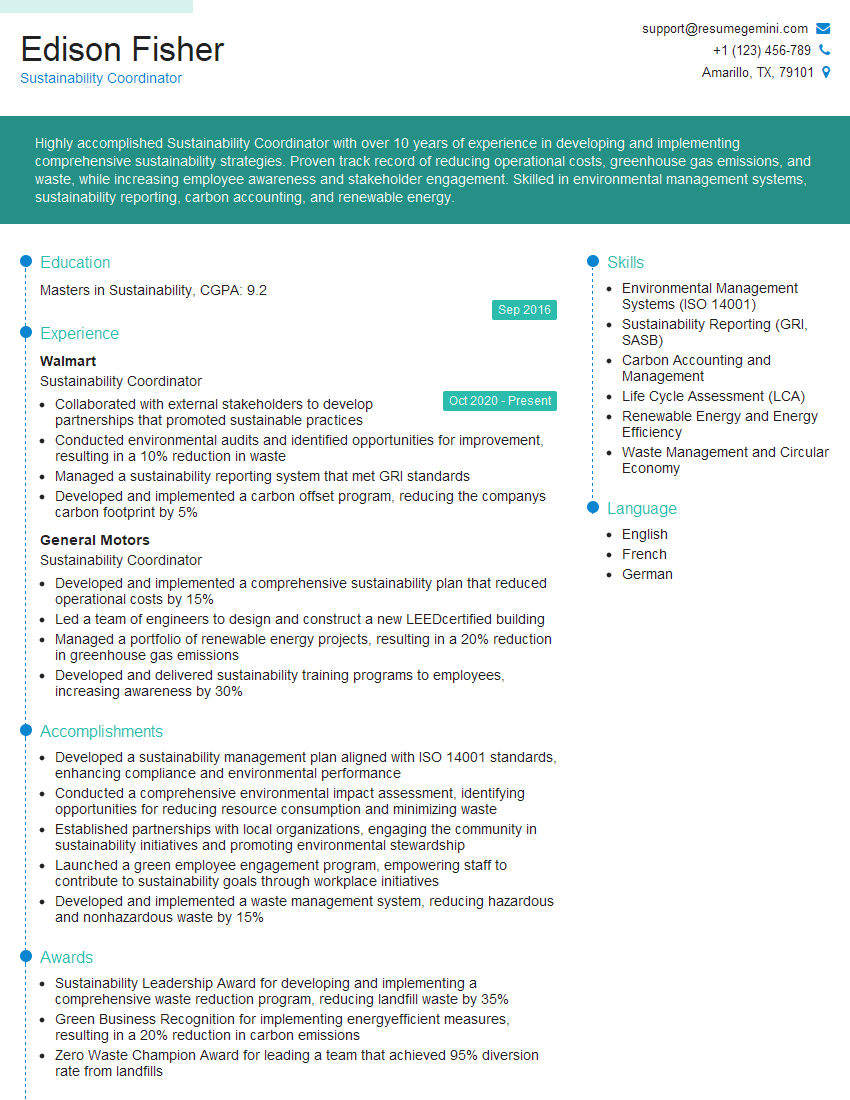
Sustainability Coordinator Resume Sample
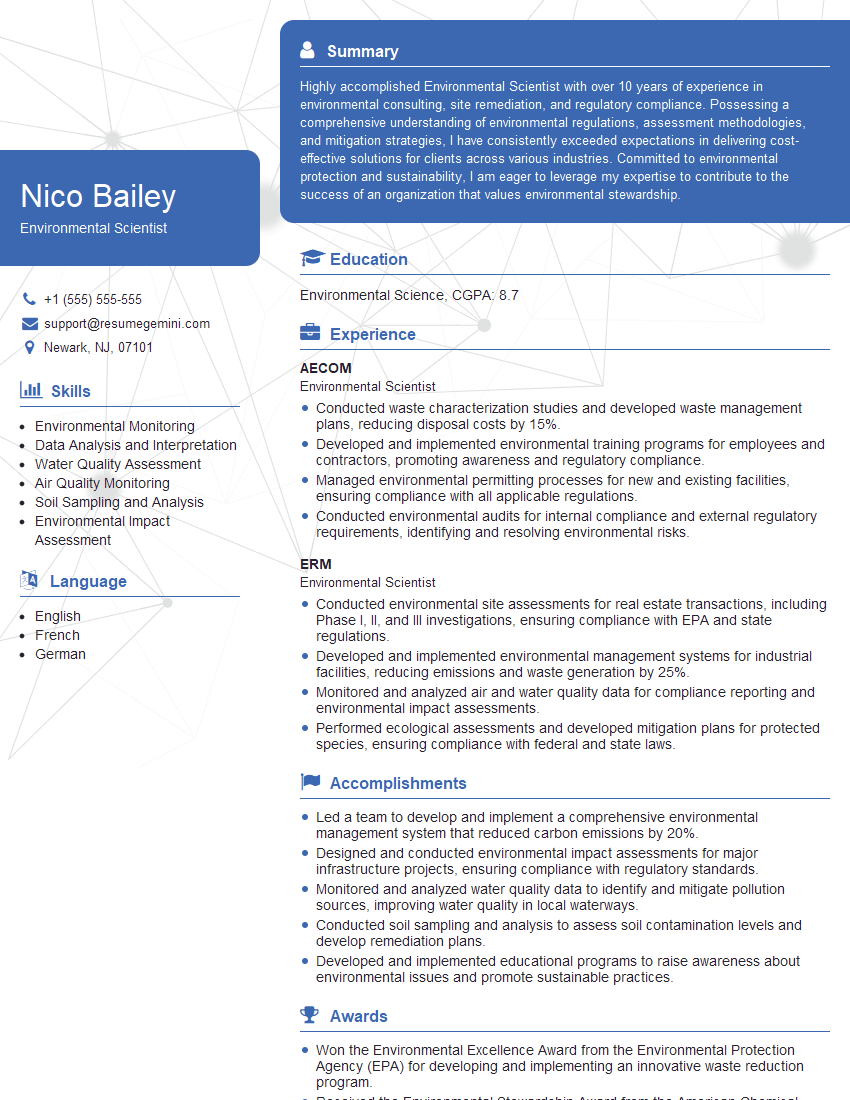
Environmental Scientist Resume Sample
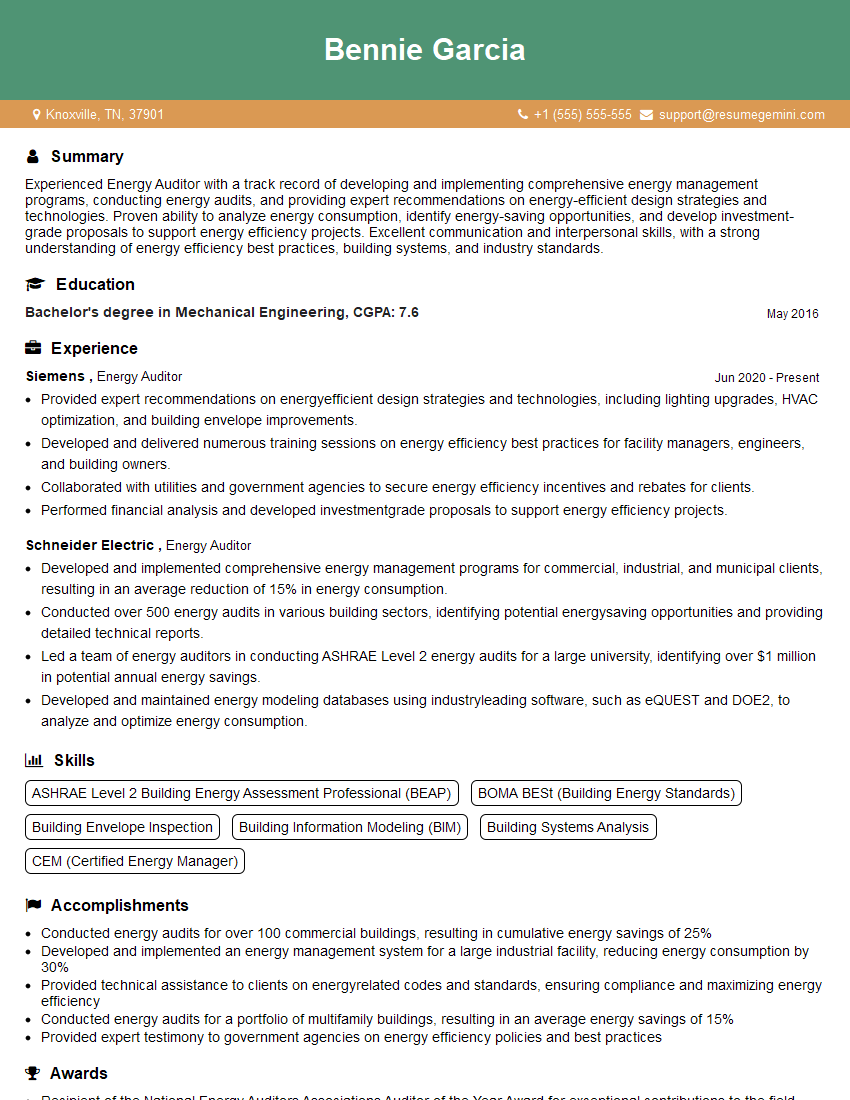
Energy Auditor Resume Sample
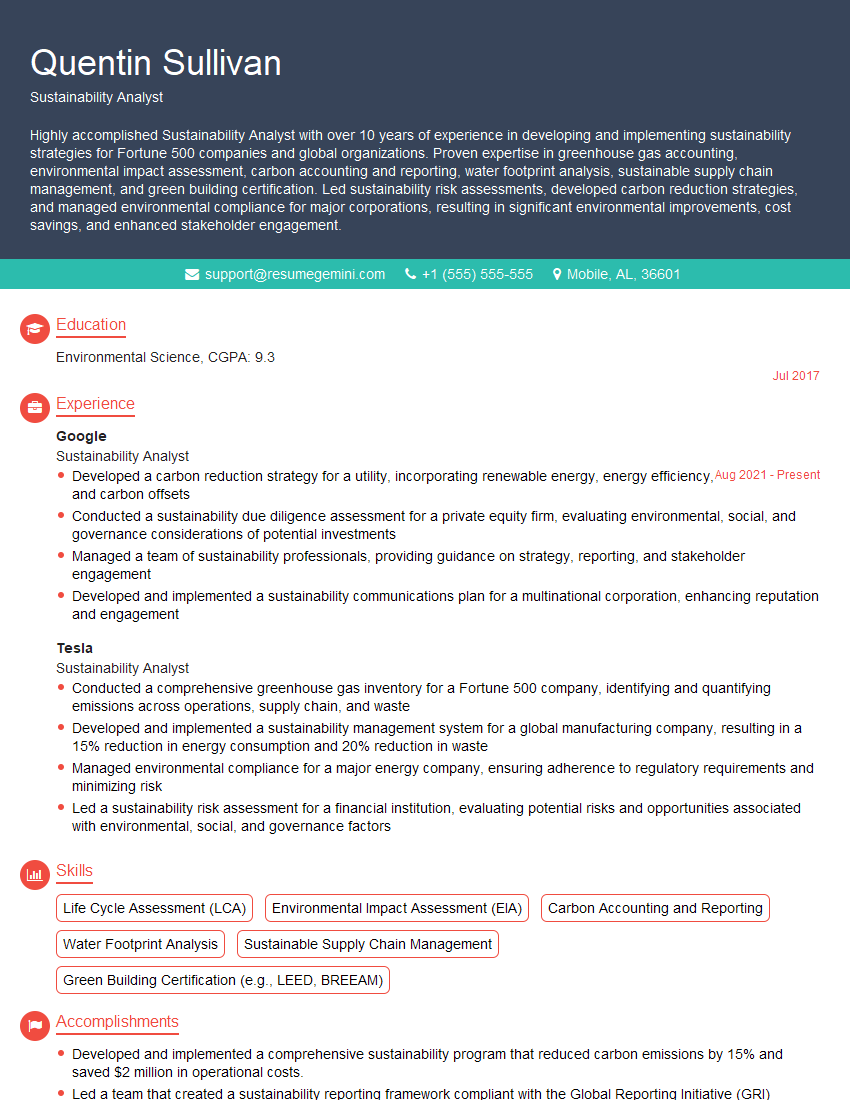
Sustainability Analyst Resume Sample

Sustainability Consultant Resume Sample
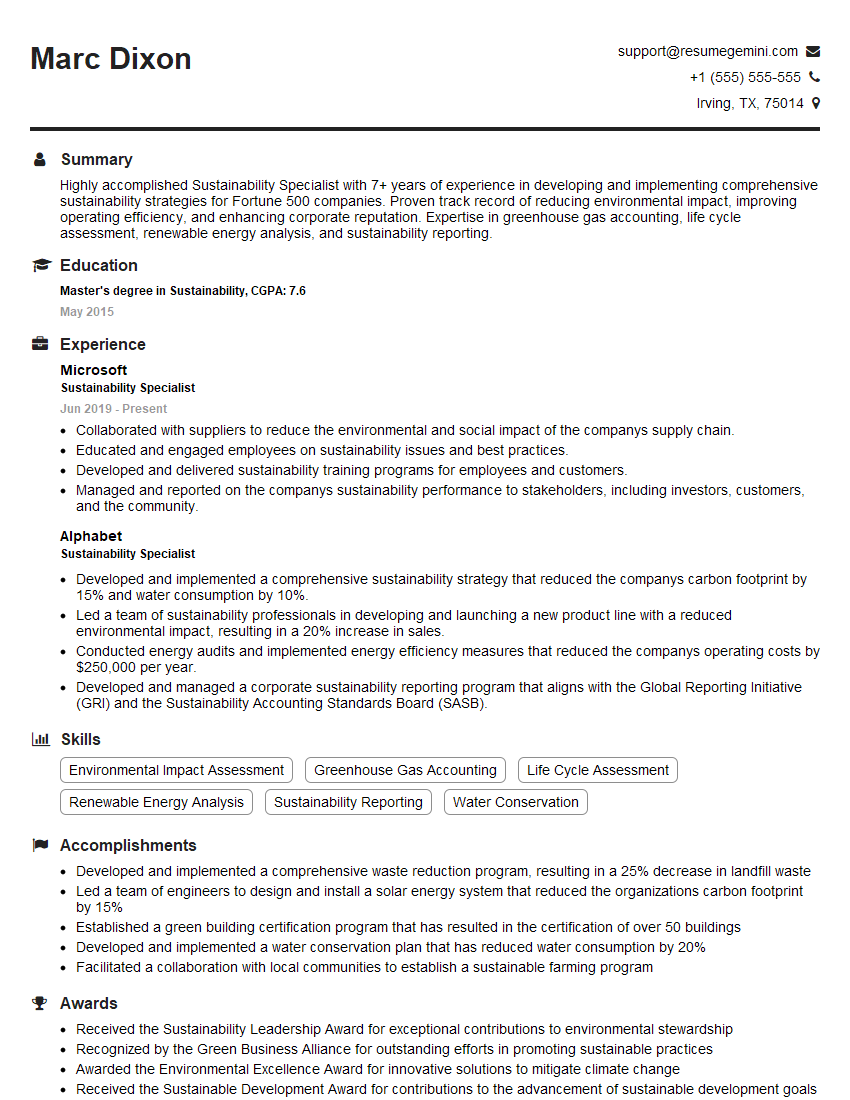
Sustainability Specialist Resume Sample
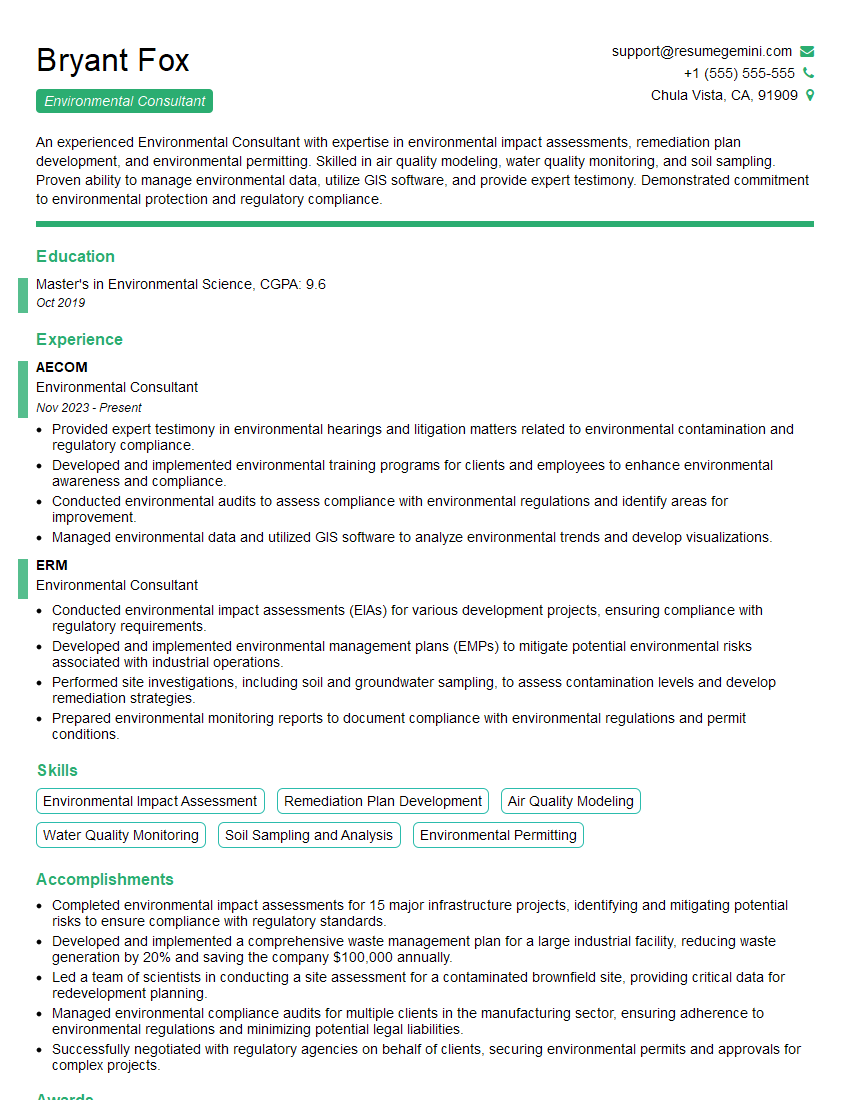
Environmental Consultant Resume Sample
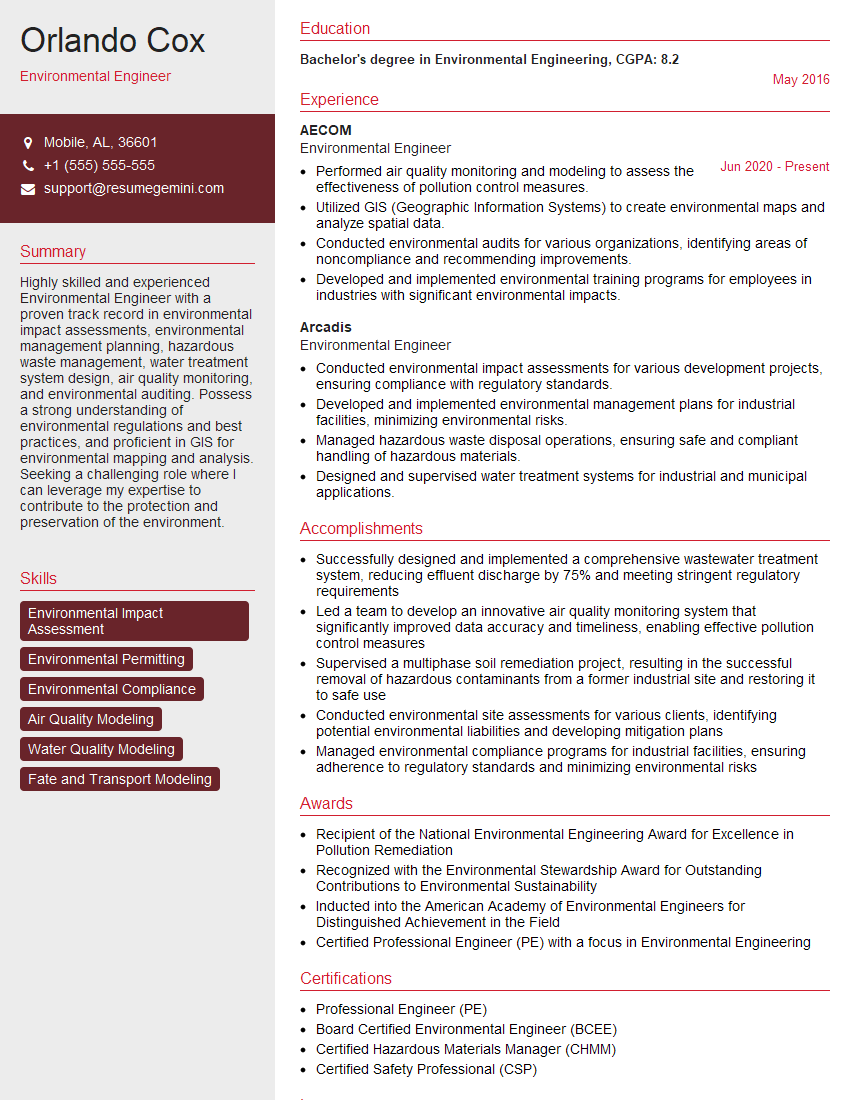
Environmental Engineer Resume Sample
Explore more articles
Users Rating of Our Blogs
Share Your Experience
We value your feedback! Please rate our content and share your thoughts (optional).
What Readers Say About Our Blog
To the interviewgemini.com Webmaster.
Very helpful and content specific questions to help prepare me for my interview!
Thank you
To the interviewgemini.com Webmaster.
This was kind of a unique content I found around the specialized skills. Very helpful questions and good detailed answers.
Very Helpful blog, thank you Interviewgemini team.