Every successful interview starts with knowing what to expect. In this blog, we’ll take you through the top Life Cycle Assessment and Sustainability Software (e.g., SimaPro, GaBi, OpenLCA) interview questions, breaking them down with expert tips to help you deliver impactful answers. Step into your next interview fully prepared and ready to succeed.
Questions Asked in Life Cycle Assessment and Sustainability Software (e.g., SimaPro, GaBi, OpenLCA) Interview
Q 1. Explain the three phases of a Life Cycle Assessment (LCA).
A Life Cycle Assessment (LCA) is a standardized method for evaluating the environmental impacts of a product or service throughout its entire life cycle. This is broken down into three key phases:
- Goal and Scope Definition: This initial phase sets the stage for the entire LCA. It defines the product’s system boundaries (what’s included and excluded from the analysis), the functional unit (the standardized unit of performance being assessed, e.g., ‘transporting 1 tonne of goods over 100km’), the intended application (what will the LCA results inform?), and the impact assessment methods to be used. Imagine planning a road trip; this phase defines your destination, mode of transport, and things you’ll pack (included) and won’t pack (excluded).
- Inventory Analysis: This stage involves meticulously collecting data on all inputs and outputs throughout the product’s life cycle. This includes raw material extraction, manufacturing, transportation, use, and end-of-life disposal. For each stage, energy consumption, water usage, emissions of various pollutants (CO2, methane, etc.) and waste generation are quantified. Think of this as meticulously documenting every aspect of your road trip – gas consumption, food purchases, toll fees, and so on.
- Impact Assessment: Here, the inventory data is translated into a set of environmental impact categories. This involves using various impact assessment methods (e.g., midpoint or endpoint methods) to assess the significance of each environmental impact. This phase helps answer the question – was that road trip truly eco-friendly? The results are typically expressed in various impact categories, such as global warming potential, acidification potential, and eutrophication potential.
Q 2. What are the key differences between SimaPro, GaBi, and OpenLCA?
SimaPro, GaBi, and OpenLCA are leading LCA software packages, each with its strengths and weaknesses:
- SimaPro: A commercially available software known for its extensive database, user-friendly interface, and broad range of impact assessment methods. It’s widely used in industry and excels in complex LCA studies. However, it comes with a significant cost.
- GaBi: Another commercial software with a strong reputation, offering similar functionality to SimaPro, including a vast database and sophisticated modeling capabilities. Its strength lies in its detailed process modeling and its focus on material flows. It also carries a price tag.
- OpenLCA: An open-source software, offering a free alternative to commercial options. While its database might be smaller than commercial counterparts, it allows for customization and community contribution to its database and functionality. It’s a great choice for those on a budget or wanting full control over the software’s capabilities and modifications but requires more technical expertise.
The choice depends on the project’s budget, technical expertise, and data requirements. For large-scale industrial projects needing extensive databases and support, SimaPro or GaBi might be preferable. For smaller projects or educational purposes, OpenLCA offers a viable alternative.
Q 3. Describe the functional unit and its importance in an LCA.
The functional unit is the heart of any LCA study. It defines the standardized unit of performance of the product or service being assessed. It ensures that different products or services can be compared fairly. For example, instead of comparing the environmental impact of two cars of different sizes and functionalities, we define a functional unit such as ‘transporting one passenger 100 km’ This allows us to compare the impacts of a small fuel-efficient car and a large SUV on an equivalent basis.
Its importance lies in providing a consistent and comparable measure of the product’s environmental performance. Without a well-defined functional unit, comparing the environmental impacts of different products would be like comparing apples and oranges. For instance, comparing the environmental impact of a small car to a large truck without considering the different functionalities (passenger carrying capacity, cargo capacity) would lead to inaccurate and misleading conclusions.
Q 4. How do you handle data uncertainty in an LCA study?
Data uncertainty is inherent in LCA studies, as data often comes from various sources with different levels of precision and reliability. We address this using several strategies:
- Sensitivity Analysis: This technique systematically varies input parameters to evaluate how changes in data affect the overall results. It helps identify the most influential data parameters requiring more accurate data collection.
- Uncertainty Propagation: Statistical methods are employed to propagate the uncertainty from individual data points to the final impact results. This provides quantitative estimates of the uncertainty associated with the overall LCA findings.
- Data Quality Assessment: A critical step involving evaluating data quality and using best available data (choosing from different data sources and prioritizing higher quality data). Proper referencing of data sources is crucial for transparency.
- Scenario Analysis: This explores the impact of different assumptions or scenarios on the results. For example, you might compare the environmental impacts using different emission factors for electricity generation.
Transparent reporting of uncertainties is crucial for responsible interpretation of LCA results. Instead of presenting single values, a range or confidence interval should be reported, reflecting the uncertainty inherent in the data.
Q 5. What are the main impact categories assessed in a typical LCA?
The specific impact categories assessed vary depending on the goal and scope of the study and the software used. However, some commonly assessed categories include:
- Climate Change (Global Warming Potential): Measures the contribution of greenhouse gas emissions to global warming.
- Acidification Potential: Assesses the contribution of emissions to acid rain.
- Eutrophication Potential: Evaluates the contribution to excessive nutrient enrichment of water bodies.
- Ozone Depletion Potential: Measures the contribution to depletion of the stratospheric ozone layer.
- Human Toxicity Potential: Assesses potential impacts on human health from various pollutants.
- Ecotoxicity Potential: Evaluates potential impacts on ecosystems from various pollutants.
- Resource Depletion: Assesses the depletion of abiotic resources like minerals and fossil fuels.
- Water Depletion: Assesses the depletion of freshwater resources.
The choice of impact categories should be guided by the study’s objective and the relevant environmental concerns associated with the product or service.
Q 6. Explain the concept of system boundaries in LCA.
System boundaries define the scope of the LCA study, specifying what processes and materials are included and excluded from the analysis. It’s like drawing a fence around the area you’ll study. Choosing appropriate system boundaries is critical for accurate and relevant results. A poorly defined system boundary can lead to misleading conclusions.
For example, in an LCA of a plastic bottle, you might include the extraction of raw materials (petroleum), manufacturing, transportation, use, and disposal. However, you might exclude the manufacturing of the machinery used in the production process, or the impacts associated with the recycling process (depending on the recycling rate assumptions). The choice of boundaries needs careful consideration and justification to ensure the analysis is relevant to the specific objectives.
Cradle-to-grave is a common approach that includes the entire life cycle, from raw material extraction to final disposal. Cradle-to-gate covers the production phase up to the factory gate. Cradle-to-customer includes the transportation to the customer. The choice of the boundaries will depend on the questions being addressed and what data is available.
Q 7. How do you interpret the results of an LCA study?
Interpreting LCA results requires careful consideration and critical thinking. It’s not simply about identifying the highest impact category; rather it requires a holistic approach:
- Comparative Analysis: Comparing results to other products or services with a similar function using the same functional unit is crucial for meaningful interpretation.
- Sensitivity Analysis: Considering the uncertainty in the data and how it might affect the results is vital.
- Impact Category Weighting: Some LCA software uses weighting to aggregate impact categories; however, it’s important to remember that weighting is context-dependent and can affect the interpretation of findings.
- Data Quality Assessment: The quality of the data significantly influences the results. Low-quality data can lead to unreliable conclusions.
- Identifying Hotspots: Pinpointing the stages of the life cycle with the greatest environmental impacts allows for focused improvement efforts. For instance, if transportation contributes significantly, exploring alternative transportation modes might be an avenue for improvement.
The results should be communicated clearly and transparently, acknowledging limitations and uncertainties. The goal is to inform decision-making, not to provide definitive answers. LCA results are a tool to guide improvements and promote more sustainable practices.
Q 8. What are some common limitations of LCA?
Life Cycle Assessment (LCA) is a powerful tool, but it’s not without limitations. One key limitation is the inherent uncertainty associated with data. LCI (Life Cycle Inventory) data, which forms the basis of an LCA, often relies on averages or estimations, especially for less-studied processes or products. This can lead to inaccuracies in the final results.
Another limitation is the complexity of modeling system boundaries. Defining the scope of an LCA – what processes to include and exclude – is crucial. A poorly defined scope can lead to biased or incomplete results. For example, deciding whether to include transportation to the retail store versus only to the factory can significantly impact results.
Furthermore, LCA struggles with the dynamic nature of production processes and technologies. The data used in an LCA represents a snapshot in time and may quickly become outdated due to technological advancements or changes in manufacturing practices. Think about the rapid evolution of solar panel technology – data from a few years ago might significantly underestimate the environmental performance of today’s panels.
Finally, the interpretation of LCA results can be challenging. While LCA provides quantitative results, it’s crucial to remember the context and limitations of the study. A single impact category might overshadow others, and it’s important to consider the overall environmental profile instead of focusing solely on the highest-scoring impact.
Q 9. Describe your experience with impact assessment methods (e.g., ReCiPe, IMPACT 2002+, TRACI).
I have extensive experience with several impact assessment methods, including ReCiPe, IMPACT 2002+, and TRACI. These methods translate the LCI data (e.g., kilograms of CO2 emissions) into indicators representing environmental impacts categorized into different areas, such as climate change, human toxicity, resource depletion, and ecotoxicity.
ReCiPe, for example, is a well-established and widely used method known for its detailed characterization factors and midpoint and endpoint impact categories. IMPACT 2002+ focuses on characterizing impacts on human health and the environment, providing a comprehensive damage-oriented assessment. TRACI (Tool for the Reduction and Assessment of Chemical and other Environmental Impacts), offers a simpler, yet still informative, approach, particularly suited for projects needing a streamlined assessment.
The choice of method depends on the specific project goals and requirements. For instance, for a study aiming to compare a wide range of products with a focus on several impact categories, ReCiPe’s comprehensive nature is preferable. If a client needs a simplified, more readily understood assessment, TRACI might be better suited. My experience allows me to select and justify the most appropriate method for each situation, while also transparently discussing the strengths and weaknesses of each.
Q 10. How do you ensure data quality and traceability in an LCA project?
Data quality and traceability are paramount in LCA. I implement a rigorous approach focusing on several key aspects. First, I meticulously document all data sources, including their origin, date, and any associated uncertainty. This is essential for transparency and reproducibility.
Second, I utilize established databases like ecoinvent, GaBi databases, or other reputable sources that have undergone rigorous quality control procedures. These databases offer a level of data validation that’s essential for reliable results.
Third, whenever possible, I directly collaborate with data providers to ensure clarity on methodologies and potential biases. When using primary data, I conduct thorough checks and validation processes, often including multiple data points where feasible, to minimize error.
Finally, all data and methodological choices are clearly documented in a comprehensive report. This ensures complete traceability, allowing anyone to review and understand how the results were obtained. This documentation includes detailed descriptions of the data sources, uncertainty analysis, and the reasoning behind the chosen LCA methodology, all contributing to the reliability and integrity of the overall assessment.
Q 11. Explain the difference between consequential and attributional LCA.
Attributional and consequential LCAs differ significantly in their approach to modeling a product’s environmental impacts. Attributional LCA focuses on allocating the environmental burdens associated with a product’s production based on the current system. It answers the question: ‘What are the environmental burdens associated with producing this product as it is currently produced?’
Consequential LCA, on the other hand, is a more dynamic approach that considers the potential changes to the supply chain caused by introducing the product. It considers the market responses and substitutions that might occur as a result of the product’s introduction. It answers the question: ‘What are the environmental burdens resulting from introducing this product into the market?’
For instance, an attributional LCA of a new type of electric car might only account for the materials and energy used directly in its manufacturing and operation. A consequential LCA, however, would also consider whether the increased demand for electricity shifts energy generation towards dirtier sources to meet this demand, or if the new market pushes changes in mineral extraction.
Consequential LCA is generally considered more robust but significantly more complex than attributional LCA because it requires modeling complex market interactions and resource substitutions, often involving assumptions and expert judgment. The choice between the two approaches depends on the project’s objective and the need for a more complete and nuanced evaluation of environmental impacts.
Q 12. How do you incorporate life cycle inventory (LCI) data into your analysis?
Incorporating LCI data into an LCA analysis involves a systematic process. First, I identify the relevant processes involved in a product’s life cycle, from raw material extraction to end-of-life management. Then, I locate appropriate LCI data for each process from reputable databases, such as ecoinvent, GaBi databases, or other reliable sources.
Next, I ensure data consistency. Units need to be standardized, and regional differences (e.g., electricity mix for a specific country) must be carefully considered. If needed, data from various sources might be combined or adjusted to maintain consistency with the established system boundaries.
Once the LCI data is collected and standardized, I organize it in a structured manner, often using a spreadsheet or LCA software. This structured data is then fed into the LCA software to perform the impact assessment. The software automatically calculates the environmental burdens, expressed as flows of materials and energy. This process involves allocation if the process produces multiple outputs; these methods require careful consideration.
Throughout this process, data quality is verified through careful review and consideration of uncertainties associated with the LCI data, which are then propagated into the LCA results to provide an accurate representation of the associated uncertainties.
Q 13. Describe your experience using LCA software for data analysis and reporting.
I possess significant experience using several LCA software packages, including SimaPro, GaBi, and OpenLCA. My proficiency extends beyond basic data entry and encompasses advanced functionalities such as data management, scenario analysis, uncertainty analysis, and reporting.
In SimaPro, for instance, I’ve utilized its powerful database management features to organize and analyze extensive LCI datasets. I am skilled in using GaBi’s advanced modeling capabilities for conducting complex consequential LCAs. OpenLCA’s open-source nature allows for customization and integration with other software and tools, which I’ve utilized in several projects for specific data handling needs.
My experience also involves utilizing the software’s reporting capabilities to generate clear and concise reports, incorporating charts, graphs, and visualizations to effectively communicate complex results. Each software offers different strengths, and I leverage this experience to select the most suitable tool for each project, ultimately optimizing the efficiency and quality of the analysis.
Q 14. What are some best practices for communicating LCA results to stakeholders?
Effective communication of LCA results to stakeholders is crucial. It requires translating technical jargon into easily understandable terms and emphasizing the relevance to the stakeholders’ specific interests.
I start by identifying the key stakeholders and understanding their level of understanding regarding environmental issues and LCA. Then, I tailor the communication accordingly. For technical audiences, a detailed report with extensive data and methodology is suitable. For non-technical audiences, I use visual aids such as charts, graphs, and infographics to present the main findings clearly.
It’s also important to highlight the key findings in a concise and accessible manner, avoiding overwhelming the audience with too much detail. Storytelling and analogies can effectively convey complex concepts. For example, instead of saying ‘the product generates 20 kg of CO2 equivalent,’ I might say ‘the carbon footprint is equivalent to driving a car for X miles.’
Finally, interactive presentations and workshops allow for engaging discussions and clarifications, facilitating deeper understanding and ensuring that stakeholders can use the findings to inform their decision-making processes. Interactive elements and feedback loops encourage questions and enable a deeper, more nuanced comprehension of the findings.
Q 15. How do you handle conflicting data sources in an LCA study?
Conflicting data sources are a common challenge in LCA. Imagine trying to bake a cake with conflicting recipes – you wouldn’t get a consistent result! Similarly, inconsistent data from different databases or studies can significantly impact the accuracy of your LCA. To handle this, I employ a multi-step approach:
Data Source Evaluation: I meticulously assess the credibility and reliability of each source. This involves examining the methodology used to collect the data, the age of the data, the geographical location it pertains to, and the level of detail provided. I prioritize peer-reviewed studies and reputable databases.
Data Reconciliation: If multiple sources offer data on the same parameter, I attempt to reconcile these discrepancies by understanding the underlying reasons for the differences. This may involve adjusting data to a common unit or identifying and excluding outliers based on justifiable reasons. For example, differing electricity mix data across regions might require location-specific data.
Sensitivity Analysis: If reconciliation isn’t feasible, I incorporate the range of values into a sensitivity analysis (discussed further in the next answer). This helps understand how the conflicting data affects the overall LCA results.
Transparency and Reporting: Regardless of the approach, I always clearly document the sources used and any data adjustments made in the LCA report. This ensures transparency and enables critical evaluation of my findings.
Career Expert Tips:
- Ace those interviews! Prepare effectively by reviewing the Top 50 Most Common Interview Questions on ResumeGemini.
- Navigate your job search with confidence! Explore a wide range of Career Tips on ResumeGemini. Learn about common challenges and recommendations to overcome them.
- Craft the perfect resume! Master the Art of Resume Writing with ResumeGemini’s guide. Showcase your unique qualifications and achievements effectively.
- Don’t miss out on holiday savings! Build your dream resume with ResumeGemini’s ATS optimized templates.
Q 16. What is the role of sensitivity analysis in an LCA?
Sensitivity analysis is crucial in LCA, akin to stress-testing a bridge before opening it to traffic. It systematically explores the impact of uncertainties in input data on the final LCA results. This helps to determine which data parameters significantly influence the overall outcome and which ones have a negligible impact.
For example, consider an LCA of a plastic bottle. The impact of the raw material extraction might be highly uncertain due to variations in energy intensity across different extraction methods. Sensitivity analysis would reveal how changes in this uncertainty affect the overall environmental impact. I typically use methods such as:
One-at-a-time analysis: Changing one parameter at a time while holding others constant.
Monte Carlo simulation: Randomly sampling input data from probability distributions, allowing for the exploration of a broader range of uncertainties.
The results from the sensitivity analysis inform the refinement of the LCA and highlight areas requiring more precise data collection. It significantly improves the robustness and reliability of the conclusions drawn.
Q 17. How do you incorporate economic considerations into your LCA analysis?
Integrating economic considerations enriches an LCA, providing a more holistic picture of sustainability. It’s like evaluating a product’s environmental footprint alongside its cost-effectiveness. This can be achieved through several approaches:
Cost-Benefit Analysis: Comparing the environmental impacts with the economic costs and benefits associated with a product or process. This helps prioritize strategies with the best environmental-economic trade-off.
Environmental Cost Accounting: Assigning monetary values to environmental impacts, such as pollution or resource depletion. This allows for integration of environmental costs into conventional economic decision-making.
Economic Input-Output Analysis: Combining LCA with economic input-output models to assess the economic and environmental implications of changes in different sectors.
For instance, an LCA of a solar panel could consider the capital costs, operational expenses, and the monetary value of avoided carbon emissions through renewable energy generation. This integrated analysis can inform policy decisions about incentivizing renewable energy technologies.
Q 18. Describe your experience with different LCA methodologies.
My experience spans various LCA methodologies, each with its strengths and limitations. I’m proficient in:
Cradle-to-Grave (or Cradle-to-Disposal): This assesses the environmental impacts throughout the entire life cycle of a product, from raw material extraction to final disposal. This is the most common approach.
Cradle-to-Gate: This focuses on the impacts up to the factory gate, excluding transportation and end-of-life impacts. This is useful for comparing different manufacturing processes.
Cradle-to-Cradle: This considers the potential for reuse and recycling, aiming for a circular economy. It’s a more forward-looking approach.
Well-to-Wheel (for fuels): This assesses the impacts from the extraction of raw materials to the use in vehicles.
The choice of methodology depends heavily on the research question and the scope of the study. For example, a comparative study of different packaging materials would benefit from a cradle-to-grave approach, while a study focusing on a specific manufacturing process might employ a cradle-to-gate approach.
Q 19. How do you address data gaps in an LCA?
Data gaps are inevitable in LCA, similar to missing pieces in a puzzle. To address them, I use a combination of strategies:
Literature Review: Thorough literature searches identify similar products or processes where data might be available, which can often be adapted.
Analogies and Extrapolation: Using data from similar products or processes as proxies when direct data is unavailable. However, this requires careful justification and acknowledgement of uncertainties.
Expert Judgment: Consulting with subject-matter experts to estimate missing data based on their knowledge and experience. This should be clearly documented.
Data Estimation Software: Using tools and models that can estimate missing data based on known parameters.
Assumptions and Sensitivity Analysis: Explicitly stating assumptions made to address data gaps and exploring the influence of these assumptions through sensitivity analysis.
It’s crucial to document any data gaps and the methods used to address them transparently in the LCA report.
Q 20. What software are you proficient in for LCA analysis?
I’m proficient in several LCA software packages, including SimaPro, GaBi, and OpenLCA. Each has unique features and strengths:
SimaPro: Known for its extensive database and user-friendly interface, ideal for various LCA applications.
GaBi: Offers advanced features for complex modeling and data management, particularly useful for process-based LCA.
OpenLCA: A free and open-source software, providing flexibility and transparency but requiring a deeper understanding of LCA principles.
My choice of software depends on the project’s specific requirements, data availability, and client needs. The key is to select the tool best suited for the task at hand.
Q 21. Explain the concept of recycling and its influence on LCA outcomes.
Recycling significantly influences LCA outcomes, turning waste into a valuable resource and reducing the environmental burden. Imagine a closed loop system where materials are continuously reused, reducing reliance on virgin materials.
Incorporating recycling into an LCA involves analyzing the environmental impacts of the recycling process itself (collection, sorting, processing) and accounting for the reduced environmental impacts from using recycled materials instead of virgin ones. This might involve:
Material Flow Analysis: Tracking the flow of materials through the recycling process to quantify the amounts of materials reused.
Allocation: Determining how the environmental impacts of recycling are allocated among the products made from recycled materials. For example, if a plastic bottle is recycled into a fleece jacket and a new bottle, the environmental impact of recycling must be divided amongst them.
A well-defined recycling scenario, including recycling rates and quality of recycled materials, is crucial. This can considerably decrease the overall environmental footprint of a product and highlight the importance of designing for recyclability.
Q 22. What is the role of the environmental footprint calculation?
The environmental footprint calculation, a core component of Life Cycle Assessment (LCA), quantifies the environmental impacts associated with a product, process, or service throughout its entire life cycle. Think of it as a comprehensive ‘environmental accounting’ system. It considers all stages, from raw material extraction and manufacturing to use, disposal, and even end-of-life recycling or waste management. This calculation isn’t just about a single impact like carbon emissions; it usually encompasses a range of environmental indicators, including greenhouse gas emissions (GHGs), water usage, energy consumption, resource depletion, and potentially impacts on human health and ecosystems.
For example, the environmental footprint of a coffee cup might include the impacts of growing and processing coffee beans, manufacturing the cup itself (considering the energy, materials, and emissions), transportation, consumer use, and finally, its disposal or recycling. The result is a holistic picture of the environmental burden. This allows for informed decision-making, highlighting hotspots where improvements are most needed. Software like SimaPro, GaBi, and OpenLCA are crucial tools that automate and standardize these calculations, using databases containing impact factors for various materials and processes.
Q 23. How do you ensure the credibility of your LCA findings?
Credibility in LCA is paramount. We ensure this through several key steps: First, we meticulously document our methodology, clearly outlining the system boundaries (defining what’s included and excluded in the assessment), the chosen impact assessment methods (e.g., ReCiPe, IMPACT World+), the data sources used, and any assumptions made. This transparency is crucial for scrutiny.
Second, we utilize reliable and up-to-date data. This often involves referencing databases like ecoinvent, which undergo rigorous quality control. Where database data is lacking, we conduct primary data collection or use reputable secondary sources, always documenting the data’s provenance. Third, a critical review of the study’s findings by independent experts (peer review) is vital. This process helps identify potential biases, errors, or areas needing further clarification. Finally, we use sensitivity analysis to assess how variations in input data or assumptions might affect the overall results. This demonstrates the robustness of the conclusions. By following these rigorous procedures, we build trust in the LCA results and their applicability to real-world decision-making.
Q 24. Discuss different scenarios to improve the environmental performance of a product.
Improving a product’s environmental performance involves exploring several scenarios. One strategy is material substitution – replacing high-impact materials with more sustainable alternatives. For instance, replacing virgin plastic with recycled plastic or bio-based plastics can significantly reduce carbon footprint and resource depletion.
Another crucial area is optimization of the production process. Improving energy efficiency in manufacturing, reducing waste generation, or implementing closed-loop systems can dramatically lower environmental impacts. Design for disassembly and recyclability is also vital. Creating products that are easily dismantled at their end-of-life allows for better material recovery and reduced landfill waste. Finally, extending the product’s lifespan through durability and repairability further minimizes environmental impact by reducing the overall demand for new products.
For example, a company producing electronics might explore using recycled metals, improving energy efficiency of their manufacturing plants, and designing their devices for easy component replacement and recycling, ultimately creating a more environmentally friendly product.
Q 25. How does LCA contribute to circular economy initiatives?
LCA plays a crucial role in advancing circular economy initiatives. By quantifying the environmental impacts of various material flows throughout a product’s life cycle, LCA helps identify opportunities for material reuse, recycling, and waste reduction. It allows us to compare the environmental performance of different end-of-life management options, such as recycling versus landfilling, and guide decisions towards more sustainable choices.
For example, LCA can help assess the environmental benefits of designing a product for closed-loop recycling, where materials are recovered and reused in subsequent production cycles. By analyzing the impacts of different recycling technologies, LCA can optimize recycling processes and maximize resource recovery, ultimately reducing the demand for virgin materials and minimizing environmental damage.
Q 26. Explain the importance of peer review in LCA studies.
Peer review in LCA studies is essential for ensuring quality, credibility, and scientific rigor. Independent experts, often with diverse backgrounds in LCA methodology, environmental science, and relevant industrial fields, examine the study’s methods, data, assumptions, and conclusions. This independent scrutiny helps identify potential biases, errors, or gaps in the analysis.
The peer review process improves the transparency and reproducibility of the LCA, strengthening confidence in its findings. It also helps identify areas needing improvement and promotes better communication of the study’s limitations. Think of it as a ‘quality control’ process, ensuring that the study meets the highest scientific standards before publication or use in decision-making.
Q 27. What are some emerging trends in LCA methodology and software?
Several emerging trends are shaping LCA methodology and software. One significant trend is the increasing integration of LCA with other sustainability assessment methods, such as Social Life Cycle Assessment (SLCA) and Life Cycle Costing (LCC). This holistic approach considers not only environmental impacts but also social and economic factors.
Another trend is the development of more sophisticated and user-friendly LCA software. We’re seeing improved data management capabilities, more streamlined workflows, and enhanced visualization tools that facilitate easier interpretation of complex LCA results. Finally, there’s a growing focus on incorporating data from the Internet of Things (IoT) and Big Data into LCA, enabling more dynamic and data-rich assessments. This allows for a more detailed and up-to-date understanding of environmental impacts in real-time, paving the way for more precise and effective environmental management.
Key Topics to Learn for Life Cycle Assessment and Sustainability Software (e.g., SimaPro, GaBi, OpenLCA) Interview
- Life Cycle Inventory (LCI) Data: Understanding data sources, quality, and limitations; interpreting and critically evaluating LCI datasets within the chosen software.
- Impact Assessment Methods: Familiarity with various impact assessment methods (e.g., ReCiPe, IMPACT 2002+, TRACI) and their application within the software; understanding the strengths and weaknesses of different methods.
- LCIA Interpretation and Reporting: Clearly communicating results through effective visualizations and reports; identifying key environmental hotspots and potential mitigation strategies.
- Scenario Modeling and Sensitivity Analysis: Building and analyzing different scenarios to assess the impact of changes in processes or materials; understanding sensitivity analysis and its role in uncertainty management.
- Software-Specific Features: Mastering the user interface and functionalities of the specific software (SimaPro, GaBi, or OpenLCA) including data import/export, model building, and analysis features.
- Data Management and Quality Control: Implementing robust data management practices to ensure accuracy and consistency; understanding data validation and quality control procedures.
- LCA Methodologies and Standards: Deep understanding of ISO 14040/44 standards and best practices in conducting LCAs. Ability to justify methodological choices.
- Case Studies and Practical Applications: Applying LCA principles to real-world examples; demonstrating problem-solving skills using the software to address specific environmental challenges.
- Advanced Techniques: Explore areas such as Uncertainty Analysis, Allocation Methods, and Consequential LCA depending on the role’s requirements.
Next Steps
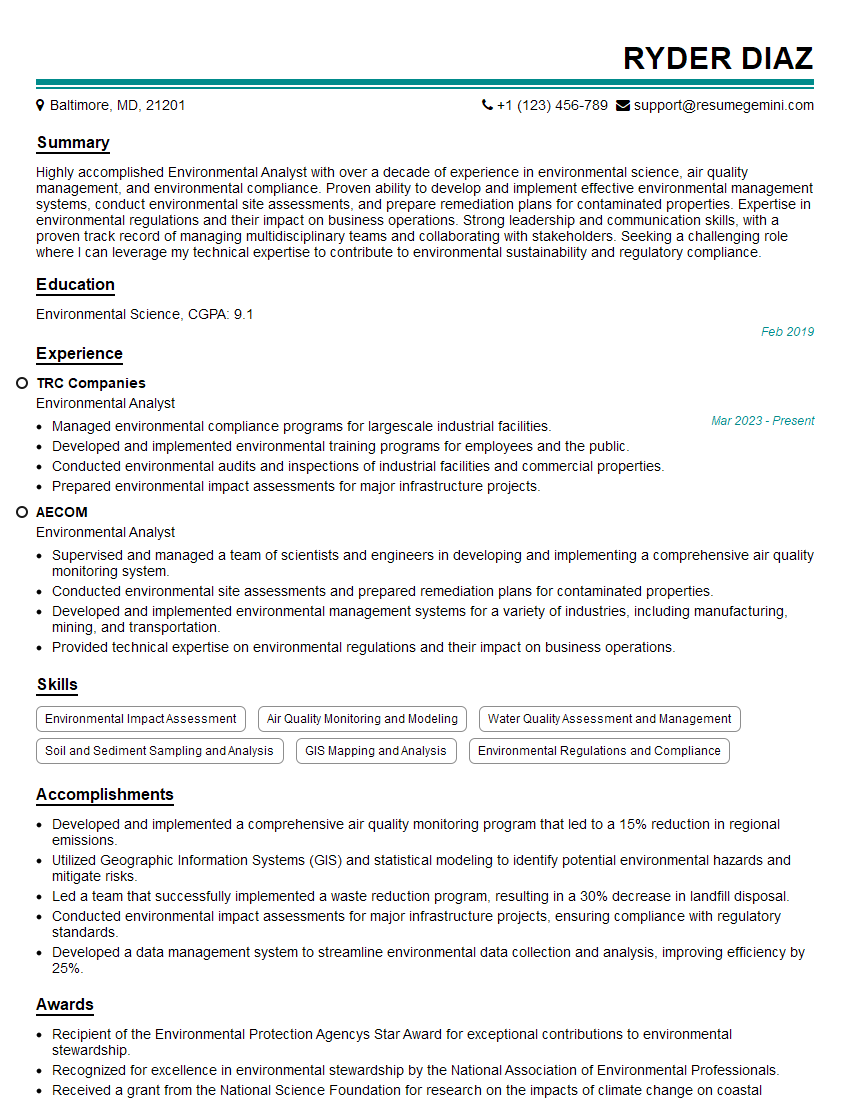
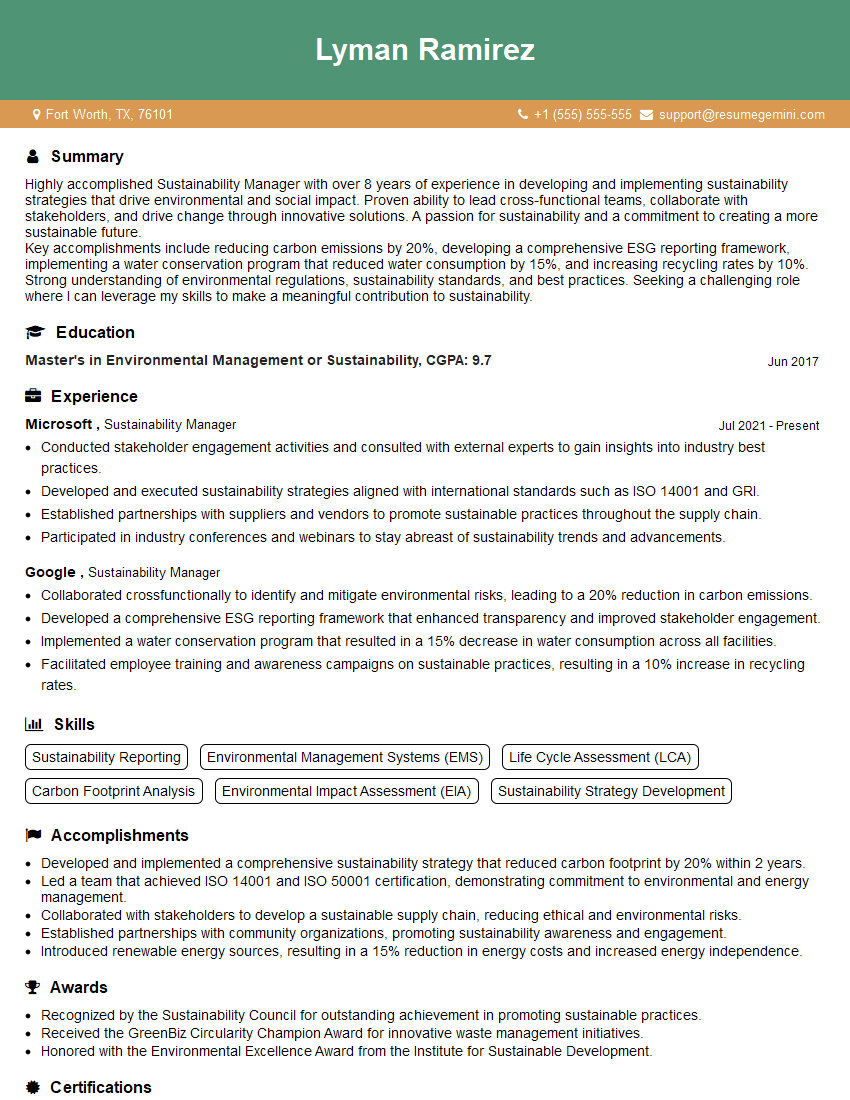
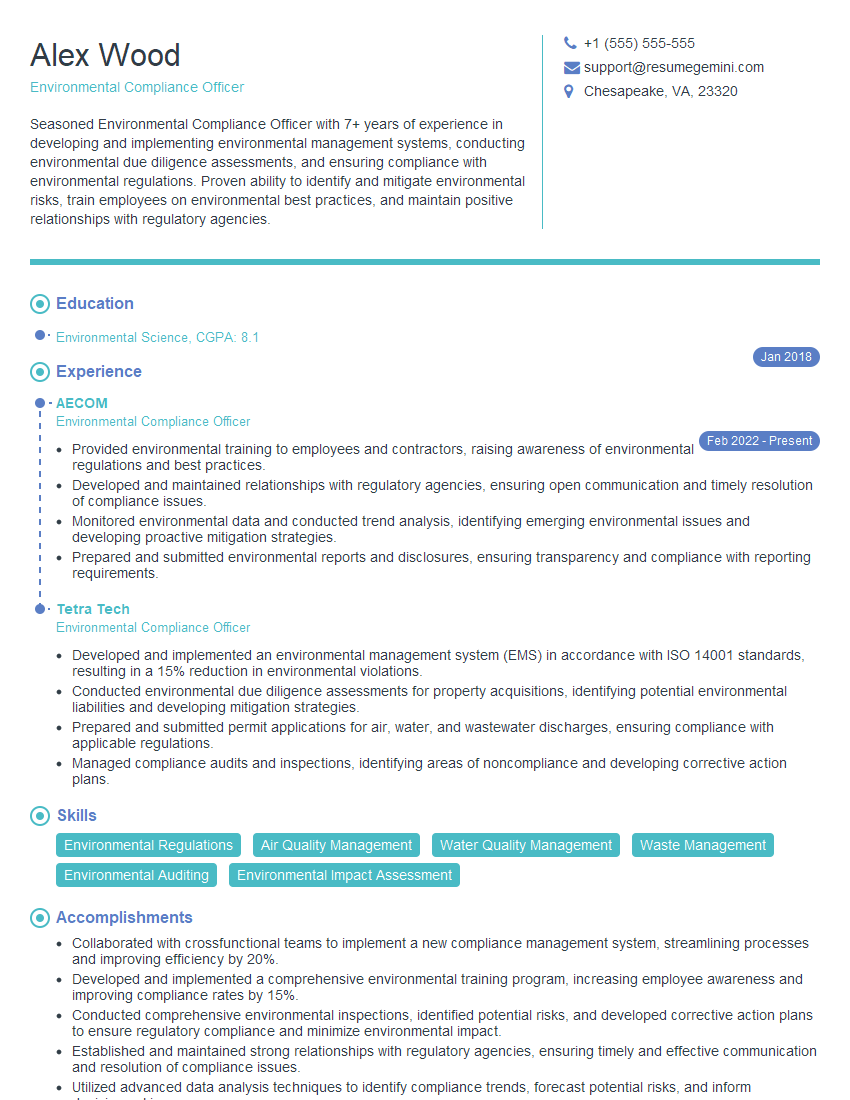
Mastering Life Cycle Assessment and Sustainability Software is crucial for a successful career in environmental sustainability. Proficiency in these tools significantly enhances your value to employers, opening doors to exciting opportunities in various sectors. To maximize your job prospects, invest time in crafting an ATS-friendly resume that clearly showcases your skills and experience. ResumeGemini is a trusted resource that can help you build a professional and impactful resume, ensuring your application stands out. Examples of resumes tailored to Life Cycle Assessment and Sustainability Software expertise (SimaPro, GaBi, OpenLCA) are available to guide you.

Explore more articles
Users Rating of Our Blogs
Share Your Experience
We value your feedback! Please rate our content and share your thoughts (optional).
What Readers Say About Our Blog
To the interviewgemini.com Webmaster.
Very helpful and content specific questions to help prepare me for my interview!
Thank you
To the interviewgemini.com Webmaster.
This was kind of a unique content I found around the specialized skills. Very helpful questions and good detailed answers.
Very Helpful blog, thank you Interviewgemini team.