Interviews are opportunities to demonstrate your expertise, and this guide is here to help you shine. Explore the essential Life Cycle Modeling and Simulation interview questions that employers frequently ask, paired with strategies for crafting responses that set you apart from the competition.
Questions Asked in Life Cycle Modeling and Simulation Interview
Q 1. Explain the three phases of Life Cycle Assessment (LCA): Inventory, Impact Assessment, and Interpretation.
Life Cycle Assessment (LCA) is a standardized methodology for evaluating the environmental impacts associated with a product, process, or service throughout its entire life cycle. It’s broken down into three interconnected phases:
Inventory Analysis:
This phase meticulously documents all inputs and outputs associated with the product’s life cycle. This involves identifying all raw materials, energy sources, emissions to air, water, and land, and waste generated during each stage – from raw material extraction and processing to manufacturing, transportation, use, and end-of-life management. Think of it like creating a detailed recipe – listing every ingredient and byproduct. For example, for a plastic bottle, this would include the extraction of oil, manufacturing of the plastic, transportation to the bottling plant, filling, distribution, consumer use, and finally, recycling or disposal. The data is often expressed in specific units, like kilograms of material or megajoules of energy.Impact Assessment:
This phase translates the inventory data into potential environmental impacts. This is where we move from a simple list of inputs and outputs to understanding the consequences. We use various models and characterization factors to assess the significance of each impact category. These categories often include global warming potential, acidification potential, eutrophication (nutrient enrichment of water bodies), ozone depletion, resource depletion, and human toxicity. For instance, the carbon dioxide emissions identified in the inventory analysis are translated into a global warming potential using specific conversion factors.Interpretation:
This is the critical phase where you synthesize and evaluate the results of the inventory and impact assessment. It’s not just about presenting the numbers; it’s about interpreting their meaning and drawing meaningful conclusions. This involves identifying the ‘hotspots’ (stages with the greatest environmental impacts), exploring uncertainties in the data, and evaluating the limitations of the study. For example, if the interpretation phase of our plastic bottle LCA shows that transportation contributes a small percentage to the overall environmental impact, we can prioritize efforts on other stages, like reducing raw material consumption or improving recycling.
Q 2. What are the key differences between attributional and consequential LCA?
Attributional and consequential LCA differ fundamentally in their approach to assigning responsibility and predicting the environmental impacts of a product.
Attributional LCA:
This approach focuses on assigning environmental burdens solely to a specific product or process. It answers the question: “What are the environmental impacts attributed to this particular product based on its current production and use patterns?” It’s a snapshot of the current situation, like a photo. For example, an attributional LCA for a car would assess the environmental impacts solely from the production and use of that specific vehicle model, without considering potential changes in the market or the availability of alternative technologies.Consequential LCA:
This method goes beyond a simple snapshot. It explores the potential environmental consequences of a product’s introduction or changes in the market. It’s about predicting the future. It answers the question: “What are the potential environmental consequences of choosing this product, considering market substitutions and other ripple effects?” A consequential LCA for the same car would consider the impacts of introducing that car model, including possible market shifts – people may choose this car instead of a more fuel-efficient model, influencing the overall environmental performance of the vehicle fleet.
In essence, attributional LCA is descriptive, while consequential LCA is predictive and considers the broader system dynamics.
Q 3. Describe the different types of life cycle impact assessment (LCIA) methods.
Life Cycle Impact Assessment (LCIA) methods vary widely depending on the chosen impact categories and modeling approaches. Broadly, they can be classified into several types:
Midpoint methods:
These methods assess impacts at a relatively early stage in the causal chain. Examples include assessing the emissions of greenhouse gases (GHGs) or the release of acidifying substances. They don’t directly quantify damages to human health or ecosystems. It’s like measuring the ingredients before baking a cake – you know what’s in there but not how it will taste.Endpoint methods:
These go further, assessing potential damage to human health or the environment, like respiratory problems from air pollution or damage to biodiversity. They translate the midpoint impacts into higher-level effects, giving a more comprehensive picture of the overall environmental damage.Damage-oriented methods:
These explicitly quantify the monetary value of the environmental damage or the impacts on human health, combining endpoint impacts into an overall damage score. This facilitates a more straightforward comparison of diverse environmental problems in monetary terms.Characterisation models:
These are mathematical models used to translate the inventory data into environmental impacts. They employ factors (characterisation factors) that quantify the contribution of each emission to a specific environmental problem. For example, a characterisation factor might define how much global warming is caused per kilogram of CO2.
The choice of method significantly influences the results and interpretation of the LCA, and it’s essential to carefully consider the appropriateness of the chosen method for the specific study objectives.
Q 4. How do you handle data uncertainty and variability in LCA studies?
Data uncertainty and variability are inherent in LCA studies due to the complexity of the systems analyzed and the often-limited data availability. We employ several strategies to address these challenges:
Sensitivity analysis:
We systematically vary the input parameters to understand how the results change. This helps identify which parameters have the most significant influence on the overall results.Uncertainty analysis:
This quantifies the uncertainty in the results, based on the uncertainty in the input data. Different statistical methods can be used, like Monte Carlo simulations, to estimate the range of possible outcomes.Data collection and validation:
High-quality data is crucial. This includes using reliable sources, checking data consistency, and employing appropriate data quality criteria. We always strive to use primary data when possible.Scenario analysis:
Different scenarios can be modeled based on alternative assumptions or technological developments. For example, the impact of implementing a new recycling technology might be assessed by comparing different scenarios.
By employing these methods, we provide a transparent and robust assessment, acknowledging the uncertainties and limitations of the data, enabling better decision-making despite the inherent uncertainties.
Q 5. What are the limitations of LCA?
Despite its value, LCA has some limitations:
Data limitations:
Obtaining comprehensive and accurate data for all life cycle stages can be challenging, particularly for complex products or processes. Data gaps and inconsistent data quality can affect the reliability of the results.Model limitations:
LCA models simplify complex environmental processes. These simplifications can lead to inaccuracies, and the assumptions and boundaries of the model should be carefully considered.Allocation issues:
When a process or material produces multiple products, allocating impacts to each product can be subjective and may influence the results. This is particularly challenging when dealing with co-products.Subjectivity in impact categories and weighting:
The selection of impact categories and their weighting can influence the overall results. This can lead to different conclusions based on the chosen methodology.Limited consideration of social and economic aspects:
While primarily focused on environmental impacts, LCA often doesn’t explicitly incorporate social and economic aspects. This can lead to an incomplete picture of the overall sustainability of a product or process.
Therefore, it’s crucial to interpret LCA results cautiously and within the context of their limitations. Combining LCA with other assessment methods can provide a more holistic view.
Q 6. Explain the concept of functional unit in LCA.
The functional unit is a crucial element in LCA studies. It’s the quantification of the function or service provided by a product system. It sets a consistent basis for comparison by standardizing the scale of the assessment. Think of it as the “unit of performance” being assessed.
Examples:
- For a light bulb, the functional unit could be “1000 lumens of light for 1000 hours.”
- For a car, it could be “transporting one passenger 1 kilometer.”
- For a food product, it could be “1 kilogram of edible food.”
The functional unit ensures that the results are comparable across different product systems. Without it, comparing the environmental impacts of a small car and a large truck wouldn’t be meaningful without accounting for the different functions they perform. The choice of functional unit significantly influences the results, and it must be carefully defined and justified.
Q 7. What software packages are you familiar with for conducting LCA studies (e.g., SimaPro, Gabi, OpenLCA)?
I’m proficient in several LCA software packages, each with its strengths and weaknesses:
SimaPro:
A widely used commercial software offering a comprehensive range of features, including extensive databases, various LCIA methods, and powerful data management capabilities. I’ve used it extensively for complex LCA studies, particularly those requiring detailed inventory analysis and advanced sensitivity analysis.Gabi:
Another leading commercial software known for its user-friendly interface and strong focus on data quality. Its integrated database and reporting features are highly useful for streamlining the LCA process, making it particularly efficient for industrial applications.OpenLCA:
An open-source software that provides a flexible platform for conducting LCAs. It’s a great choice for researchers and users who prefer customization and transparency. Its adaptability makes it suitable for various LCA applications, including academic research and specialized impact assessment.
My familiarity with these tools allows me to perform LCA studies efficiently and effectively, adapting the software choice to the specific requirements of each project. I’m also adept at interpreting the results and communicating the findings to diverse audiences.
Q 8. Describe your experience with data collection and processing for LCA studies.
Data collection and processing is the backbone of any robust LCA. It involves meticulously gathering information on all inputs and outputs of a product’s life cycle, from raw material extraction to end-of-life disposal. This process is iterative and requires careful planning.
My experience encompasses various data sources, including primary data (gathered through experiments, surveys, and company reports) and secondary data (from databases like ecoinvent, GaBi, and SimaPro). For example, in a recent LCA of a solar panel, I collected data on silicon production energy consumption from a peer-reviewed publication, while manufacturing process data came directly from the panel manufacturer. Data processing involves cleaning the data to eliminate errors and inconsistencies, and then converting it into a consistent format suitable for LCA software. This often involves unit conversions and allocating data to different life cycle stages.
Software like Excel and specialized LCA software are crucial tools here. Data quality checks are performed throughout the process to ensure accuracy and reliability. Missing data is a common challenge and is addressed through various techniques, like allocating data proportionally or using default values from established databases, always with proper documentation and justification.
Q 9. How do you ensure the quality and reliability of your LCA results?
Ensuring the quality and reliability of LCA results is paramount. It’s not just about getting an answer, but about ensuring that answer is meaningful and trustworthy. This involves a multi-pronged approach.
- Data Quality: This is foundational. We use validated databases, peer-reviewed literature, and directly sourced data from companies, always critically evaluating data sources for accuracy and bias.
- Methodological Transparency: The entire LCA methodology, including system boundaries, allocation methods, impact assessment methods, and data sources, is meticulously documented. This allows for peer review and reproducibility.
- Sensitivity and Uncertainty Analysis: These techniques help quantify the influence of data uncertainties and model choices on the final results. For example, a sensitivity analysis might reveal that the energy consumption in transportation has a significantly larger impact on the overall score than the impact of raw material extraction, informing decision-making.
- Peer Review: Sharing the LCA with colleagues for review and critique is a critical step to identify potential weaknesses and biases. This external check fosters credibility.
- Quality Assurance/Quality Control (QA/QC): Following established LCA guidelines, such as ISO 14040/44, is crucial for assuring the quality of the assessment throughout the entire process.
Think of it like building a house: you wouldn’t skip inspections or use substandard materials. Similarly, rigorous quality assurance is essential for a credible LCA.
Q 10. What are the key environmental impacts considered in a typical LCA?
A typical LCA considers a range of environmental impacts, categorized into different impact categories. The specific categories selected depend on the context of the study and the relevant environmental concerns. However, some commonly assessed impacts include:
- Climate Change (Global Warming Potential – GWP): Measures the contribution of greenhouse gas emissions to global warming.
- Ozone Depletion (Ozone Depletion Potential – ODP): Assesses the impact on the stratospheric ozone layer.
- Acidification (Acidification Potential – AP): Quantifies the contribution to acid rain.
- Eutrophication (Eutrophication Potential – EP): Measures the contribution to excessive nutrient enrichment in water bodies.
- Human Toxicity (Human Toxicity Potential – HT): Evaluates the potential for human health impacts from toxic substances.
- Ecotoxicity (Ecotoxicity Potential – ET): Assesses the potential for ecological damage from toxic substances.
- Resource Depletion (e.g., Abiotic Depletion Potential – ADP): Evaluates the rate at which non-renewable resources are being used.
- Land Use: The impact on land use during the product’s life cycle.
These impacts are often expressed as ‘impact scores’ using characterization factors that translate emissions and resource use into standardized units of environmental damage.
Q 11. Explain the concept of system boundaries in LCA.
System boundaries define the scope of an LCA. They delineate which processes are included and excluded from the analysis. Defining these boundaries is crucial because they directly affect the results. Imagine you’re analyzing the environmental impact of a coffee cup: Do you include the transportation of coffee beans from the farm? The manufacturing of the cup? The disposal of the cup? These are all decisions that determine the system boundaries.
A functional unit is crucial in defining the system boundary. The functional unit is a quantified description of the function a product or service fulfills (e.g., ‘serving one cup of coffee’). The system boundary then includes all processes that directly contribute to the fulfilling this functional unit. It is important to clearly define the reasons for inclusion or exclusion of processes. For example, you might exclude the electricity generation stage if the electricity source is already included in another study, with proper justification. Incorrect system boundary selection could lead to significantly different results, rendering your LCA flawed.
Q 12. How do you incorporate economic and social aspects into LCA?
While traditional LCA focuses primarily on environmental impacts, integrating economic and social aspects extends the analysis to a more holistic perspective, leading to a Life Cycle Sustainability Assessment (LCSA). This integration is becoming increasingly important for decision-making.
Economic aspects can include cost analysis throughout the life cycle, assessing the economic viability of different product designs or processes. This might involve evaluating manufacturing costs, transportation costs, and end-of-life management costs.
Social aspects might include considerations of labor practices, working conditions, social equity, and the impact on local communities. This could entail analyzing factors like child labor in supply chains, fair wages, and community benefits.
Integrating these aspects requires collecting data related to economic and social indicators. This may involve using datasets on labor conditions, human rights, fair trade practices, and social impact metrics. Many challenges exist in quantifying and standardizing these impacts, but methodologies such as Social Life Cycle Assessment (S-LCA) aim to overcome them. However, the quantification of social impact is often subjective and relies on qualitative data, resulting in more nuanced interpretations than with environmental impacts.
Q 13. What is the role of sensitivity analysis in LCA?
Sensitivity analysis is a crucial step in LCA that helps understand how uncertain data inputs affect the final results. It identifies the parameters that have the most significant influence on the overall impact score. It is like testing the robustness of your results to variations in the input data.
This involves systematically varying input parameters (e.g., energy consumption in a specific process, or emission factors) within a plausible range, observing the corresponding changes in the impact results. The results will then be presented in a table or graph. It helps determine which data points or model assumptions require more precise quantification or further investigation. For example, if a sensitivity analysis shows that the choice of allocation method has a minor effect on the results, then you can be confident in your choice of that method. Conversely, if the impact of a particular factor is highly sensitive, then a focused effort should be given to improving the accuracy of the input data associated with that factor.
Software tools like SimaPro and Gabi support automated sensitivity analysis using various methods such as Monte Carlo simulations and variance-based methods. The findings from a sensitivity analysis directly influence the interpretation and reliability of the LCA’s findings.
Q 14. Describe your experience with scenario analysis in LCA.
Scenario analysis is used to explore the potential impacts of different future conditions on the life cycle of a product. It’s a way of proactively assessing how changes in technology, policy, or market conditions might affect environmental performance. Imagine analyzing the future impact of an electric vehicle: you might want to consider scenarios with varying levels of renewable energy penetration in the electricity grid or changes in battery recycling technologies.
In a scenario analysis, multiple plausible scenarios are defined, representing different possible futures. Each scenario incorporates different assumptions about future changes, such as changes in material availability, technological advancements, regulatory frameworks, or consumer behavior. The LCA is then repeated for each scenario, comparing the results across the scenarios and identifying which factors have the greatest influence on the overall environmental impact. This can reveal potential vulnerabilities and opportunities, helping to guide more sustainable product design, policy decisions, and investments. This is a powerful tool for informing long-term strategic decisions and creating more robust and future-proof solutions.
Q 15. How do you communicate LCA results to stakeholders?
Communicating LCA results effectively requires tailoring the message to the audience’s understanding and needs. Stakeholders range from technical experts to the general public, and their interests vary widely. I employ a multi-faceted approach:
- Visualizations: Charts, graphs, and infographics are crucial. For instance, a simple bar chart comparing the environmental impact of two product designs is easily grasped. I use tools like SimaPro and openLCA to generate these visualizations.
- Summary Reports: A concise executive summary highlights key findings, focusing on the most relevant indicators (e.g., carbon footprint, water usage) for the specific stakeholder group. More detailed technical reports provide deeper insights for specialists.
- Storytelling: Framing the results as a narrative, focusing on the implications for the product’s sustainability and the organization’s environmental goals, often enhances understanding and engagement. For example, instead of stating ‘Product A has a lower global warming potential,’ I might say, ‘By choosing Product A, we can reduce our carbon footprint by 15%, contributing to our company’s climate goals.’
- Interactive Presentations: Using presentations and interactive dashboards allows for dynamic exploration of data and allows for questions and answers in real time.
- Workshops and Training: For complex results, interactive workshops provide a platform for deeper engagement and Q&A sessions.
In a recent project analyzing the environmental impact of a new building material, I presented a simplified infographic highlighting the reduction in embodied carbon compared to traditional alternatives to the project’s board of directors, and a more detailed report for the engineering team.
Career Expert Tips:
- Ace those interviews! Prepare effectively by reviewing the Top 50 Most Common Interview Questions on ResumeGemini.
- Navigate your job search with confidence! Explore a wide range of Career Tips on ResumeGemini. Learn about common challenges and recommendations to overcome them.
- Craft the perfect resume! Master the Art of Resume Writing with ResumeGemini’s guide. Showcase your unique qualifications and achievements effectively.
- Don’t miss out on holiday savings! Build your dream resume with ResumeGemini’s ATS optimized templates.
Q 16. What is the difference between a life cycle inventory (LCI) and an LCIA?
Life Cycle Assessment (LCA) consists of two main phases: Life Cycle Inventory (LCI) and Life Cycle Impact Assessment (LCIA). Think of it like baking a cake:
- LCI: This is the ‘ingredient list’ phase. It’s the quantitative analysis of all inputs and outputs associated with a product or service throughout its entire life cycle – from raw material extraction to disposal or recycling. This involves gathering data on energy consumption, water usage, emissions to air, water and soil, and waste generation. It’s a detailed inventory of all materials and energy flows. For example, LCI would detail the energy used to mine the aluminum for a can, the energy to manufacture the can, transport it, fill it, and finally recycle or dispose of it.
- LCIA: This is the ‘taste test’ phase. It’s the assessment of the environmental impacts of those inputs and outputs identified in the LCI. LCIA uses characterization factors to translate the LCI data into meaningful indicators, such as global warming potential, ozone depletion, acidification, and eutrophication. It helps to determine the significance of different environmental burdens. For the aluminum can example, LCIA would assess the overall climate change impact considering the various emissions from each stage of its life cycle.
In essence, LCI provides the ‘what’ and LCIA provides the ‘so what’ of a product’s environmental performance.
Q 17. Describe your experience with different types of modeling techniques used in LCA.
My experience encompasses a range of LCA modeling techniques, each suited for different complexities and data availability:
- Process-based modeling: This is the most detailed approach, building a model of each process in the product’s life cycle, with precise data on inputs and outputs. This approach is ideal for comprehensive analyses, but it requires substantial data and expertise.
- Input-output (IO) analysis: This uses macroeconomic data to estimate the environmental impacts of an industry or sector. It’s useful for higher-level assessments, especially when detailed process data is unavailable. However, it is less precise.
- Agent-based modeling (ABM): This technique simulates the interactions of multiple agents (e.g., consumers, producers) within a system to model dynamic behavior and complex environmental issues. It is useful for exploring scenarios and uncertain factors.
- Hybrid approaches: Often, a combination of these techniques is employed. For example, combining detailed process-based modeling for key stages with IO analysis for less significant processes. This allows for accuracy where needed with efficient modeling for less critical stages.
In a recent project involving the assessment of a renewable energy system, I used a hybrid approach, with detailed process modeling of the energy generation process and IO analysis for the manufacturing of the system’s components.
Q 18. How do you validate your LCA models?
Validating an LCA model is crucial for ensuring its reliability and credibility. I employ a multi-step validation process:
- Data Quality Check: Rigorous data quality checks are paramount. This includes verifying the consistency and completeness of the data, checking its sources for credibility, and assessing its uncertainty. I utilize various data quality assurance tools to achieve this.
- Sensitivity Analysis: This investigates how changes in input data affect the results. It highlights the most influential parameters and helps assess uncertainty. The results inform the areas requiring further data refinement.
- Peer Review: Independent experts review the model and data, providing valuable feedback and identifying potential biases or errors. This is a critical step for ensuring the objectivity of the study.
- Comparison with Existing Data: Comparing the results with existing studies of similar products or processes can reveal discrepancies and help identify potential errors.
- Uncertainty Analysis: Quantifying uncertainty is critical. Techniques like Monte Carlo simulation are used to assess the range of possible results.
For instance, in one study, a sensitivity analysis revealed that variation in transportation distances significantly impacted the carbon footprint of a product. This led to a more focused effort in collecting precise data on transportation logistics.
Q 19. What are the ethical considerations in conducting LCA studies?
Ethical considerations are paramount in LCA studies. Transparency and objectivity are crucial to avoid misleading conclusions.
- Transparency: Clearly documenting the methodology, data sources, and assumptions is critical to ensure reproducibility and allow others to evaluate the study’s limitations. This includes detailing any limitations in data or modeling choices.
- Objectivity: Avoiding bias in data selection and interpretation is vital. This includes being mindful of potential conflicts of interest and using scientifically robust methods to address uncertainty.
- Data Integrity: Ensuring data accuracy and reliability is crucial. This includes using reliable data sources and employing quality control procedures.
- Contextual Relevance: The scope and boundaries of the study should be clearly defined and relevant to the intended purpose. Avoid oversimplifying complex issues or presenting partial results out of context.
- Stakeholder Engagement: Engaging stakeholders throughout the study is crucial for ensuring relevance and addressing potential concerns. This includes involving stakeholders in setting the scope and boundaries of the study and interpreting the results.
For example, I once had to explain the limitations of our data concerning certain chemicals’ impact due to incomplete toxicological data, emphasizing the need for further research in that area.
Q 20. How do you address data gaps in LCA studies?
Data gaps are a common challenge in LCA studies. Effective strategies for addressing them include:
- Literature Review: Thoroughly searching the literature for relevant data from similar products or processes.
- Expert Judgment: Consulting experts to estimate missing data based on their experience and knowledge. This should be documented transparently.
- Analogous Data: Utilizing data from similar products or processes if directly comparable data is unavailable.
- Assumptions and Scenarios: Defining realistic assumptions to fill data gaps, and then evaluating the sensitivity of the results to those assumptions through sensitivity analysis.
- Data Collection: Undertaking primary data collection through experiments, surveys, or industrial process audits when feasible.
In a recent project, we used expert judgment to estimate missing data on the energy consumption of a specific manufacturing process. The uncertainty related to this estimate was then explicitly addressed in the uncertainty analysis of the overall study.
Q 21. Describe your experience working with different databases for LCA data.
My experience spans various LCA databases, each with its strengths and weaknesses:
- ecoinvent: A widely used database with a comprehensive collection of LCI data. Its strengths include the wide range of processes covered and its rigorous quality assurance procedures. However, data may not always be specific to certain geographic locations or technologies.
- GaBi: Another popular database with a focus on material flows. It provides detailed data on materials and their related processes. It integrates well with the GaBi software package.
- Brightway2: An open-source LCA software with an expanding database. Its strength lies in its flexibility and ability to integrate with other databases and software.
- Specific Industry Databases: Many industries have developed their own databases with specific data for their processes and products. These databases offer highly relevant data, but their coverage may be limited.
The choice of database depends on the specific requirements of the study, considering factors like data availability, geographic relevance, and the level of detail needed. Often, I utilize multiple databases and critically evaluate the data from each source before incorporating it into the model.
Q 22. Explain the concept of allocation in LCA and discuss its challenges.
Allocation in Life Cycle Assessment (LCA) is the process of assigning environmental burdens to different products or services that share the same input or process. Imagine a factory producing both plastic bottles and food containers from the same resin; allocation determines how much of the factory’s total environmental impact gets attributed to each product. This is crucial for comparative assessments.
The biggest challenge in allocation is its inherent subjectivity. There’s no single ‘correct’ method. Different allocation methods (e.g., mass-based, energy-based, economic-based) can lead to significantly different results, potentially influencing decision-making. Furthermore, the choice of allocation method often depends on the system boundaries and the goals of the study. A mass-based allocation might seem intuitive for simple products, but for complex products with various functions, it could be misleading. For example, if a factory uses renewable energy for production, an energy-based allocation might give a very different result than a mass-based allocation.
Another challenge arises when dealing with byproducts. If a process yields multiple outputs, some of which are unwanted byproducts, allocating the environmental burden appropriately becomes complex. The handling of co-products (outputs with economic value) also requires careful consideration. The ideal allocation method should be transparent, justifiable, and based on a clear rationale reflecting the specific context of the study.
Q 23. How do you handle multi-functionality in LCA studies?
Multi-functionality in LCA refers to situations where a product or service performs multiple functions. For example, a car provides transportation but also contributes to social interactions and potentially creates an environmental impact. Dealing with multi-functionality requires careful consideration of the functional unit. A functional unit defines the scope and purpose of the LCA and must reflect the specific function being analyzed. If we’re assessing the environmental impact of transportation, we’ll focus on the car’s transportation function and allocate the burdens accordingly. However, if we are also analyzing the social impact, we need to separate the environmental burdens related to the car’s transportation function from its other functions.
Several approaches exist: system expansion, where the life cycles of alternatives are assessed. For example, comparing car travel to train travel to highlight their differences. Allocation (as discussed previously) remains a possibility if alternatives cannot be fully expanded, and the use of different methods requires a transparent justification of your choice. Finally, substitution approaches can be employed if a product replaces another one and we want to find its net impact. In essence, the key to handling multi-functionality is to define clearly what aspects we’re analyzing and use the allocation strategy that best reflects that scope.
Q 24. Discuss your experience with different impact categories in LCIA.
My experience with LCIA (Life Cycle Impact Assessment) encompasses a wide range of impact categories. I’ve worked extensively with categories like climate change (using various global warming potentials), human toxicity (considering various pathways and exposure scenarios), eutrophication (focussing on nutrient flows), and resource depletion (evaluating the extraction and processing of various resources). Each category involves unique datasets and assessment methods.
For climate change, I’ve employed various Global Warming Potentials (GWPs) from different impact assessment methods, acknowledging the uncertainties and choosing the most appropriate GWP for the context. For human toxicity, I’ve used methods that consider various toxicity pathways and exposure routes, as well as dose-response curves. When assessing eutrophication, I’ve dealt with challenges arising from the spatial and temporal variability of nutrient impacts on ecosystems and used different characterization factors according to these factors. In resource depletion assessment, I’ve used different indicators depending on the nature of the resources and their availability.
Experience across these categories has highlighted the importance of data quality and the inherent uncertainty in impact assessment. We often need to make choices between different models and characterization factors, and justify those choices meticulously in the LCA report.
Q 25. How do you select appropriate impact assessment methods for a given study?
Selecting appropriate impact assessment methods is a critical step in LCA. The choice depends heavily on the study’s objectives, geographical context, stakeholders’ concerns, and the data availability. It’s not a one-size-fits-all approach. I usually follow a structured process:
- Define the study goals and scope: What are the key environmental issues we want to address? This determines the relevant impact categories.
- Identify relevant impact categories: Based on the study goals, select the most relevant impact categories (e.g., climate change, human toxicity, resource depletion). This often involves discussions with stakeholders to determine their priorities.
- Review available impact assessment methods: Explore different impact assessment methods (e.g., ReCiPe, IMPACT World+, EDIP) and their underlying models. Consider their data requirements, geographic applicability, and ability to capture the relevant impact mechanisms.
- Evaluate data availability and quality: Ensure that the chosen method has the required data for the studied product system. Data gaps and uncertainties need to be explicitly addressed.
- Consider stakeholder perspectives: Consult stakeholders about their preferences for impact assessment methods. Their inputs will inform the selection of a method that is both scientifically robust and acceptable to the relevant decision-makers.
- Document and justify the choice: A clear justification for the chosen method is crucial for transparency and credibility. Explain why this method is appropriate given the study’s objectives, data availability, and stakeholders’ preferences.
In summary, selecting impact assessment methods requires a careful assessment of several factors, leading to a transparent and justifiable decision.
Q 26. What are the emerging trends and challenges in life cycle modeling?
Emerging trends in life cycle modeling include an increasing focus on:
- Data integration and automation: The use of big data and artificial intelligence to automate data collection and analysis is becoming increasingly important. Tools are emerging to help streamline data processing and improve efficiency.
- Improved data quality and transparency: Efforts are underway to standardize data collection and reporting practices to improve the quality and comparability of LCA studies. There’s growing emphasis on open-source databases.
- Integration of socio-economic considerations: LCAs are increasingly incorporating social and economic indicators beyond the environmental impacts to provide a more holistic view of sustainability.
- Dynamic LCA: Traditional LCAs are static, but dynamic LCAs are being developed to better reflect the time-dependent nature of environmental impacts and technological changes. This offers a more accurate assessment of the systems’ evolution over time.
- LCA for complex systems: Methods are being improved to handle complex systems, such as circular economy models, which involve complex feedback loops and material flows.
Challenges include handling data uncertainty, addressing biases, and ensuring the accessibility and usability of LCA results. The sheer volume of data in complex systems, ensuring the accuracy and consistency of datasets, and maintaining the interpretability of results for diverse stakeholders present ongoing challenges.
Q 27. How do you integrate life cycle modeling with other sustainability assessment tools?
Life cycle modeling integrates well with other sustainability assessment tools, such as Material Flow Analysis (MFA), Strategic Environmental Assessment (SEA), and Environmental Footprint methods. Integration strengthens the robustness and comprehensiveness of sustainability assessments.
For example, MFA can provide insights into material flows within a system, which can be integrated into an LCA to refine inventory data and identify hotspots. SEA provides a broader policy context, helping to tailor the LCA to inform policy decisions. Similarly, Environmental Footprint methods, like the Product Environmental Footprint (PEF), can be used alongside LCA for standardized comparisons. Often, data from one assessment can inform another. For instance, LCA provides detailed information on environmental impacts, whereas MFA helps to visualize the material flows within a system. A combined approach offers a fuller understanding of the system.
Synergistic integration requires careful consideration of methodological approaches, functional units, and data consistency across different assessment methods. While each assessment method provides valuable insights into various aspects of sustainability, combining them allows a more complete picture, fostering better decision-making.
Q 28. Describe a challenging LCA project you worked on and how you overcame the challenges.
One challenging project involved assessing the environmental impacts of a complex supply chain for electric vehicle batteries. The challenge lay in the global nature of the supply chain, with material extraction in several countries, processing in different regions, and battery assembly in yet another location. This resulted in significant data gaps and uncertainties. Different data sources used different methodologies, creating inconsistencies.
We overcame this by adopting a structured approach. First, we mapped the entire supply chain meticulously, identifying all key processes and locations. We conducted a thorough literature review to gather data from various sources. Where data was scarce or uncertain, we conducted sensitivity analyses to understand the influence of data uncertainty on the overall results. We relied on expert judgment to fill gaps when data was unavailable. Transparency was key. We documented all assumptions and uncertainties in the report, clearly stating the limitations of the study.
Furthermore, we collaborated closely with stakeholders throughout the project, ensuring that the study’s objectives and findings were relevant and useful. This collaborative approach was instrumental in overcoming the data challenges and ensuring that the results were credible and informed decision-making within the organization.
Key Topics to Learn for Life Cycle Modeling and Simulation Interview
- System Dynamics and Modeling: Understand the principles of system dynamics, including feedback loops, stocks, and flows. Be prepared to discuss different modeling methodologies (e.g., discrete event simulation, agent-based modeling).
- Life Cycle Assessment (LCA): Master the stages of LCA (goal and scope definition, inventory analysis, impact assessment, interpretation) and its application in evaluating environmental impacts across a product’s lifecycle.
- Simulation Software and Tools: Demonstrate familiarity with commonly used simulation software (mention specific software if appropriate to your target roles, e.g., AnyLogic, Arena, MATLAB/Simulink). Be ready to discuss your experience with model building, verification, and validation.
- Data Analysis and Interpretation: Showcase your skills in data collection, cleaning, analysis, and visualization. Practice interpreting simulation results and drawing meaningful conclusions.
- Optimization Techniques: Discuss your knowledge of optimization methods used to improve the efficiency and performance of systems throughout their life cycle. This may include linear programming, genetic algorithms, or other relevant techniques.
- Uncertainty and Risk Analysis: Explain your understanding of how to incorporate uncertainty and risk into life cycle models and how to assess the impact of uncertainties on decision-making.
- Case Studies and Practical Applications: Be prepared to discuss real-world applications of life cycle modeling and simulation in your chosen field (e.g., manufacturing, supply chain management, environmental engineering). Think about specific examples you can use to illustrate your understanding.
Next Steps
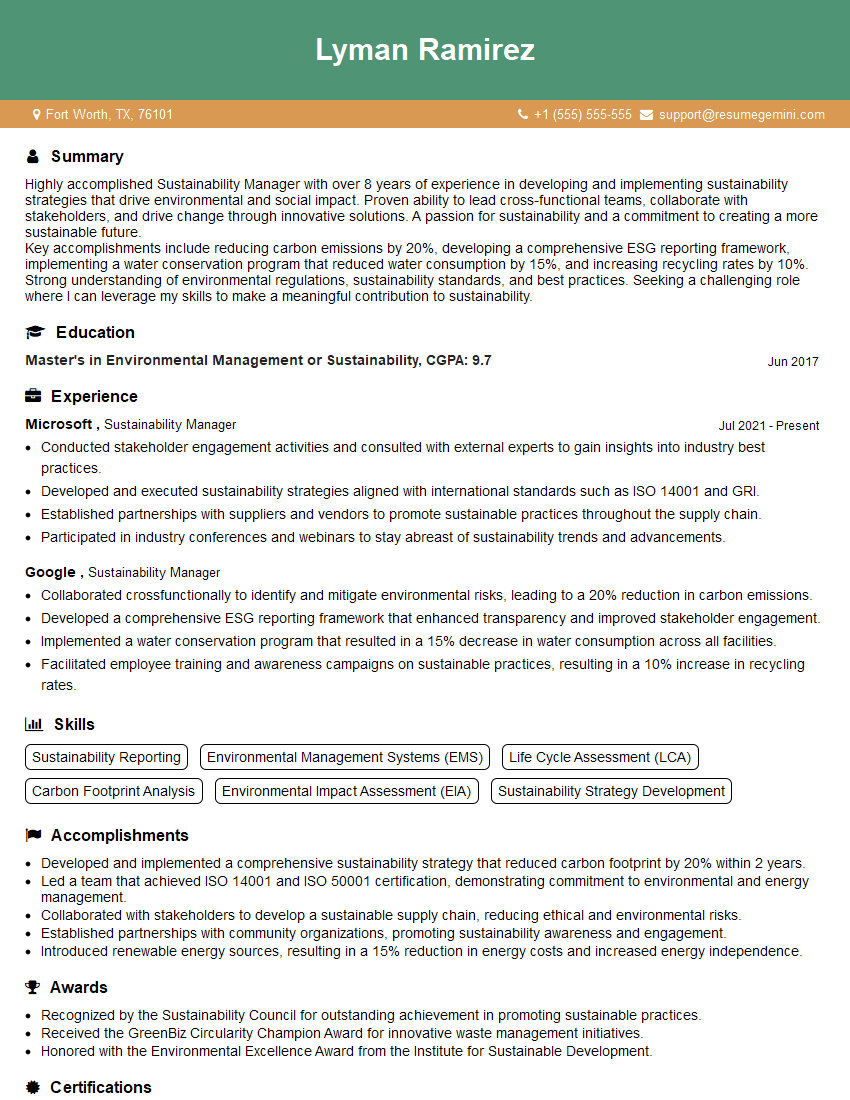
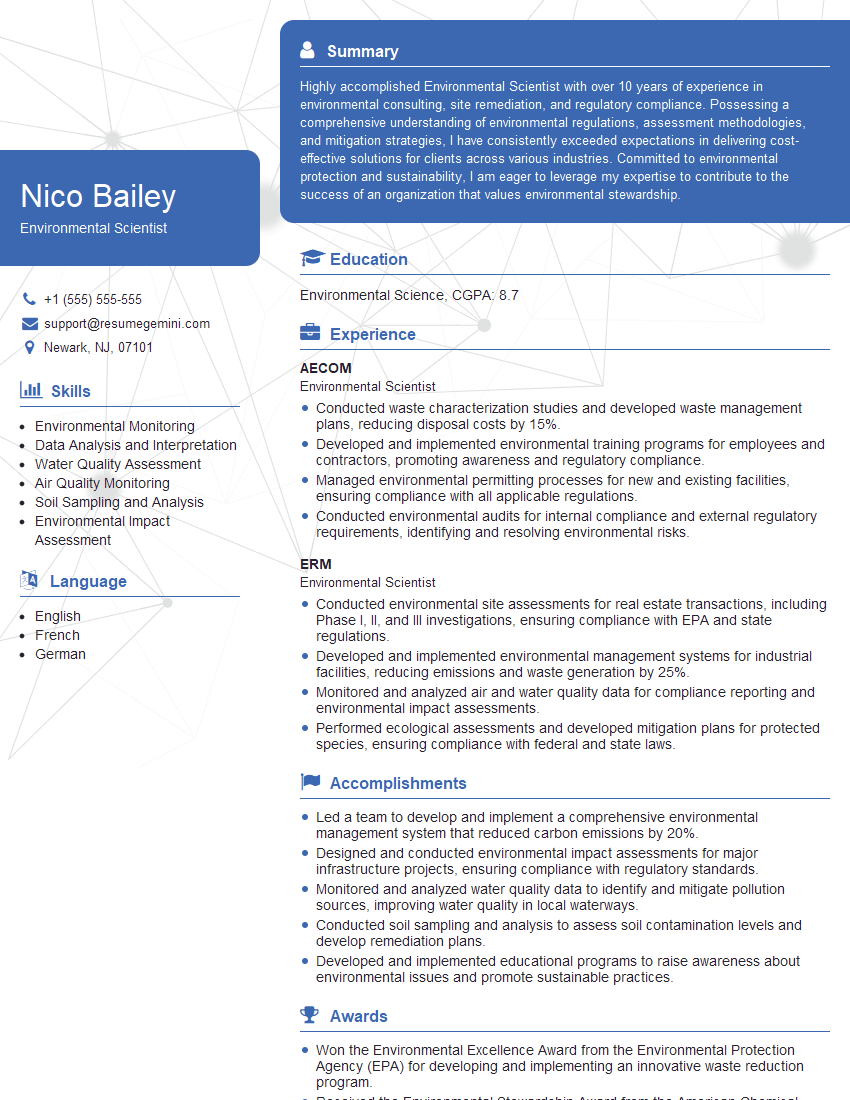
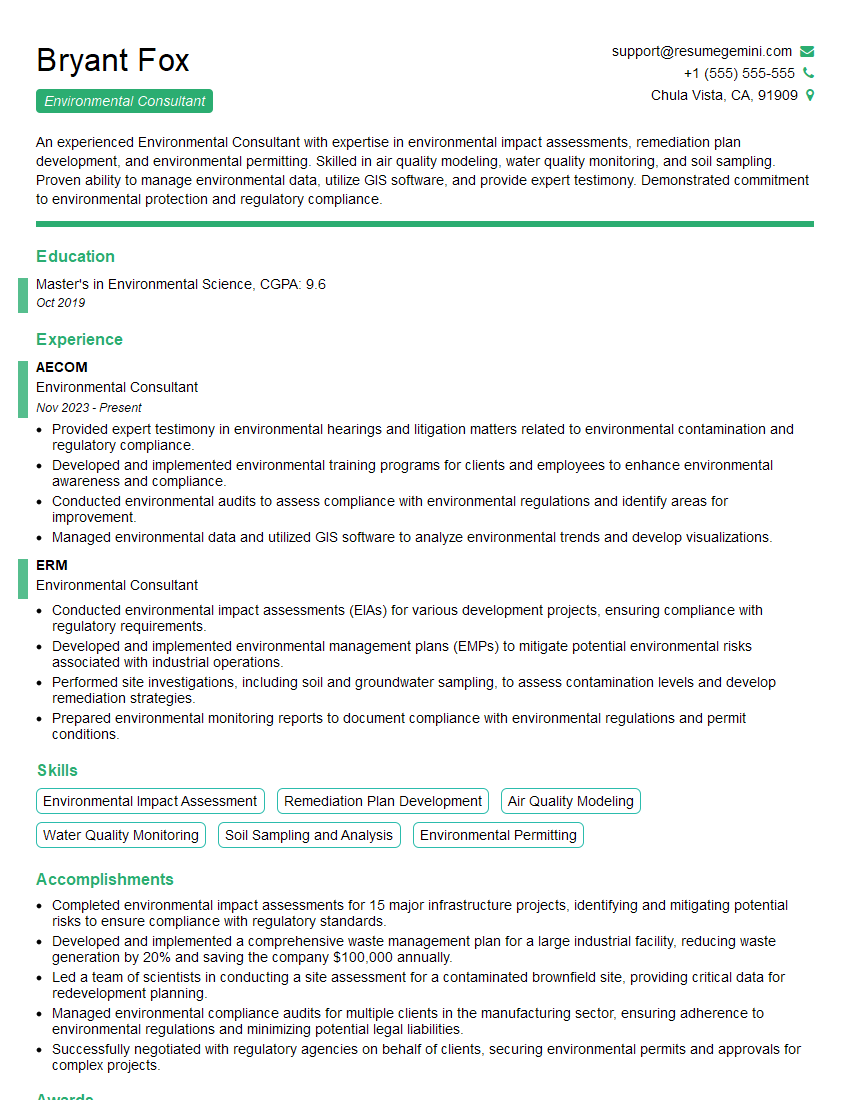
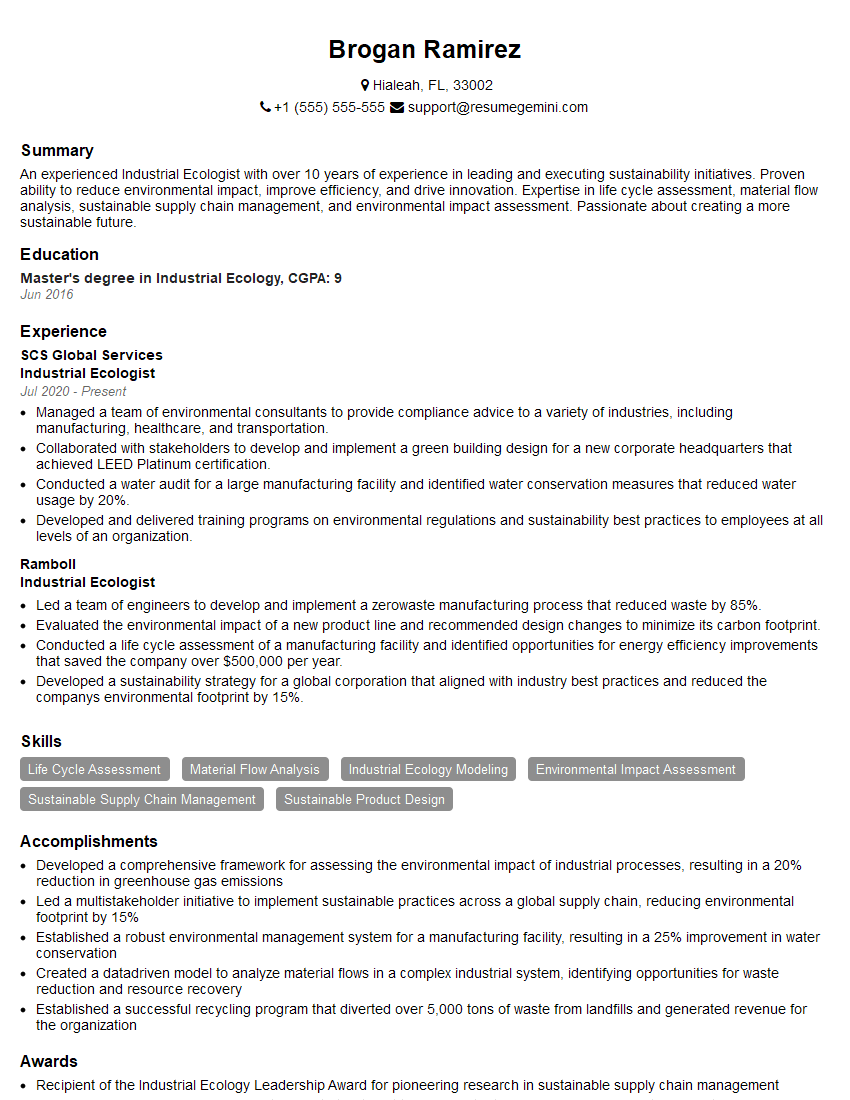
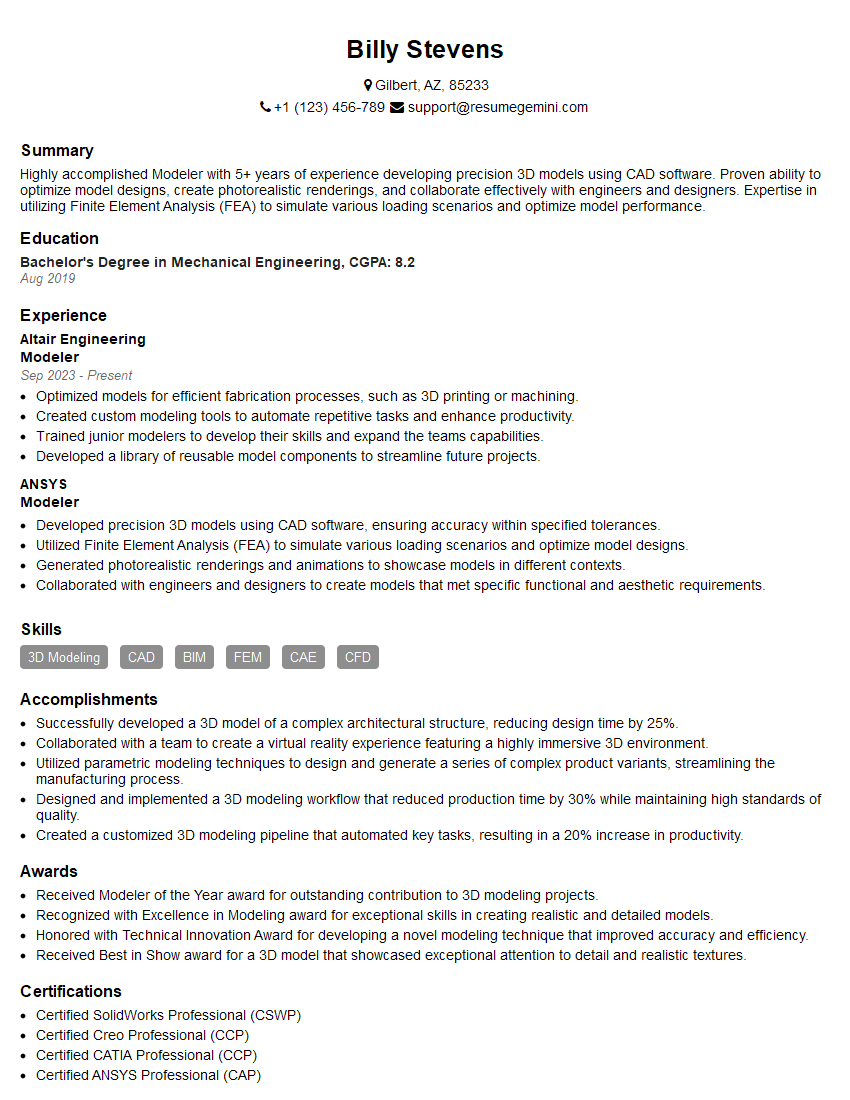
Mastering Life Cycle Modeling and Simulation opens doors to exciting and impactful careers in various industries. A strong foundation in these techniques is highly sought after, making you a valuable asset to any organization. To maximize your job prospects, create a compelling and ATS-friendly resume that effectively showcases your skills and experience. We highly recommend using ResumeGemini to build a professional and impactful resume. ResumeGemini offers a user-friendly platform and provides examples of resumes tailored to Life Cycle Modeling and Simulation to help you present yourself in the best possible light. This will significantly improve your chances of landing your dream job.

Explore more articles
Users Rating of Our Blogs
Share Your Experience
We value your feedback! Please rate our content and share your thoughts (optional).
What Readers Say About Our Blog
To the interviewgemini.com Webmaster.
Very helpful and content specific questions to help prepare me for my interview!
Thank you
To the interviewgemini.com Webmaster.
This was kind of a unique content I found around the specialized skills. Very helpful questions and good detailed answers.
Very Helpful blog, thank you Interviewgemini team.