The thought of an interview can be nerve-wracking, but the right preparation can make all the difference. Explore this comprehensive guide to Lifting and Setting of Tombstones interview questions and gain the confidence you need to showcase your abilities and secure the role.
Questions Asked in Lifting and Setting of Tombstones Interview
Q 1. Describe the process of setting a typical headstone.
Setting a headstone involves a precise and respectful process. It begins with verifying the location with the cemetery and ensuring it aligns with the plot’s dimensions. Next, we excavate the grave to the correct depth, typically around 3-4 feet, depending on the size and weight of the stone and soil conditions. We then prepare the foundation (discussed further in the next question), ensuring it’s level and provides a stable base. The headstone is carefully lowered into position using specialized lifting equipment like a tombstone crane or a combination of straps and manpower for lighter stones. Once in place, we use level and plumb tools to ensure perfect alignment before securing it with concrete or grout. Finally, we backfill the grave and neatly finish the surrounding area, leaving the site clean and tidy.
For example, recently I installed a large granite headstone. The tricky part was navigating the uneven ground – I had to carefully level the foundation to compensate for the slope, ensuring the headstone sat perfectly upright. This required extra time and attention to detail but ultimately resulted in a beautiful and enduring memorial.
Q 2. What types of foundations are used for headstone installation?
Several foundation types ensure headstone stability. The most common are concrete footings. These are poured directly into the excavated hole, creating a solid base that supports the stone’s weight. The size and depth of the footing vary depending on the stone’s weight and soil conditions. A larger, heavier stone needs a more substantial footing. Another option is a pre-cast concrete base; these are pre-fabricated units offering a quick and easy installation solution, particularly useful in challenging soil conditions. For extremely large or heavy headstones, a reinforced concrete foundation or even a combination of these methods might be necessary. Imagine trying to build a house on sand – it’s essential to create a robust foundation for long-term stability, and the same applies to headstones.
Q 3. How do you ensure a headstone is level and plumb during installation?
Precision is paramount. We use a combination of tools to guarantee levelness and plumbness. A level is used to verify the horizontal alignment of the headstone’s base, ensuring it’s perfectly flat across its surface. A plumb bob or laser level is employed to check the vertical alignment, making sure the stone stands perfectly upright without leaning. Small adjustments are made to the foundation or by using shims (thin wedges of material) under the base of the stone, before setting it in concrete or grout. It’s crucial to carefully double-check these measurements to ensure the stone’s stability and aesthetics. Think of it like building a wall; if the foundation isn’t level, the entire structure will be compromised.
Q 4. What safety precautions do you take when lifting and setting heavy tombstones?
Safety is our top priority. When handling heavy tombstones, we always utilize appropriate lifting equipment and techniques. This often includes a tombstone crane or specialized lifting straps that distribute the weight evenly. Multiple crew members are involved in the lifting process, communicating clearly and coordinating their movements to avoid accidents. We wear personal protective equipment (PPE) including safety glasses, gloves, and steel-toed boots. Proper lifting techniques are employed to minimize strain and avoid injury. The work area is secured to prevent unauthorized access during the installation. Before each lift, a thorough risk assessment is conducted to identify and mitigate potential hazards. We never compromise safety for speed.
Q 5. What tools and equipment are essential for headstone installation?
Essential tools include a measuring tape, level, plumb bob or laser level, shovel, pickaxe, tamper, concrete mixer (often a small portable one), concrete and grout, specialized lifting straps or a tombstone crane, shims, and various hand tools like hammers and chisels for minor adjustments. For larger or more complex installations, we might also employ a backhoe or excavator to assist with excavation. The choice of tools depends on the specific project and stone type. Having the right tools makes a job easier and safer. It’s like trying to build a house with just a hammer – impossible without the necessary tools for each stage.
Q 6. How do you handle different types of stone (granite, marble, etc.) during installation?
Different stones require slightly different handling techniques. Granite, for instance, is very hard and durable but can chip if struck forcefully. Marble, while beautiful, is more porous and susceptible to staining; extra care is taken to prevent scratches and damage during handling and installation. We use appropriate lifting techniques and tools, such as padded straps for more delicate stones, to minimize the risk of damage. The use of shims and the amount of force needed to level and set the stone are carefully adjusted based on the stone type. For example, a smaller, softer marble headstone might require a gentler approach compared to a huge granite monument. It’s like handling a delicate vase compared to a heavy piece of furniture; different care is needed for each.
Q 7. Explain the process of anchoring a headstone to prevent shifting.
Anchoring prevents shifting over time due to frost heave (soil expansion during freezing) or settling. This is typically achieved by using anchors—typically steel rods or rebar—embedded in the concrete footing before the headstone is set. These anchors extend below the frost line and are securely attached to the headstone’s base. For larger monuments, additional anchoring methods might be employed, like using epoxy or specialized anchoring systems. Proper anchoring ensures the longevity of the installation and keeps the headstone upright and securely in place for many years. It’s akin to reinforcing a building’s foundation; the anchors prevent any movement or instability.
Q 8. How do you assess the soil conditions before installing a headstone?
Assessing soil conditions before headstone installation is crucial for ensuring stability and longevity. We begin by carefully examining the grave site. This involves visually inspecting the ground for any obvious signs of instability, such as loose soil, excessive slope, or the presence of large rocks. Then, we use a soil probe or auger to test the soil’s consistency and drainage capabilities at various depths. We’re looking for signs of compaction, water saturation, or underlying bedrock. For example, loose sandy soil requires different foundation techniques than firm clay soil. A poorly draining site may necessitate the installation of gravel or drainage systems to prevent settling and frost heave. Documenting these findings is essential for planning the appropriate foundation.
Q 9. What are the common challenges encountered during headstone installation?
Several challenges can arise during headstone installation. One common issue is encountering unexpected underground obstacles like tree roots, utility lines, or pre-existing foundations. This necessitates careful pre-planning and often requires adjustments to the installation process. Another challenge is working with uneven ground. Significant variations in ground level require extra effort to level the foundation before setting the headstone, ensuring it remains plumb and stable. Weather conditions, particularly rain or extreme temperatures, can also impede progress and impact the quality of the installation. Finally, the sheer weight and size of some headstones present significant logistical and safety concerns, demanding careful handling and the use of specialized equipment.
Q 10. How do you address uneven ground during headstone installation?
Addressing uneven ground is a critical aspect of headstone installation. Our approach is multi-faceted. First, we carefully assess the extent of the unevenness. Minor discrepancies can be addressed by excavating and backfilling with well-compacted gravel or concrete to create a level base. For more substantial unevenness, we may utilize a concrete footing, which provides a stable and level platform for the headstone. This footing is carefully poured and leveled before the headstone is set. In extreme cases, we might need to employ specialized techniques like constructing a small retaining wall to stabilize the surrounding ground before we proceed with the installation. We always ensure the headstone is perfectly plumb using a level and plumb bob, ensuring aesthetic appeal and structural integrity.
Q 11. Describe your experience working with different sizes and weights of headstones.
Throughout my career, I’ve worked with headstones of varying sizes and weights, ranging from small, lightweight markers to large, heavy granite monuments weighing several tons. Experience with these varying sizes has provided me with expertise in handling different materials and adapting my techniques accordingly. Smaller headstones may only require a simple foundation, while heavier stones demand more robust foundations, potentially involving excavation and the use of specialized lifting equipment, such as cranes or forklifts. Safety is paramount in handling heavier stones; we always utilize appropriate lifting techniques and safety gear to avoid accidents. My experience allows me to assess each project individually and plan the installation accordingly to ensure a safe and efficient process.
Q 12. What is your experience with installing headstones in various weather conditions?
Weather is a significant factor in headstone installations. Working in extreme heat can lead to dehydration and safety concerns for the team. Conversely, rain can create muddy conditions making excavation and leveling difficult. Freezing temperatures can make the ground too hard to work with and increase the risk of damaging the headstone. We always plan our installations to avoid extreme weather whenever possible. In unavoidable circumstances, we utilize appropriate protective measures, like tarps or heaters, and adjust our schedule as needed to ensure the work is carried out safely and effectively. Thorough preparation and flexibility are essential for successful installations under various weather conditions.
Q 13. How do you inspect a headstone for damage before and after installation?
A meticulous inspection process is crucial both before and after installation. Before installation, we carefully inspect the headstone for any existing cracks, chips, or other damage. This inspection involves a thorough visual examination and, if necessary, additional checks using specialized tools or lighting. Any damage is documented photographically and reported to the client. After installation, we perform another thorough inspection to ensure the headstone is undamaged, securely set, and properly aligned. This post-installation inspection includes checking for any signs of stress or movement. This two-stage process ensures that we address any existing problems and that the installation process itself has not caused any new damage.
Q 14. What is your understanding of local regulations concerning headstone installation?
Understanding and adhering to local regulations is essential for responsible headstone installation. These regulations often cover aspects like setback distances from property lines and grave markers, permitted materials, foundation requirements, and proper permitting processes. We stay informed about any changes to local ordinances through continuous professional development and by consulting the relevant municipal authorities. For example, some areas require specific permits for larger or heavier headstones, and failure to obtain these permits could result in delays or even removal of the headstone. Our commitment is to ensure that all our installations comply fully with all applicable local rules and regulations.
Q 15. How do you maintain safety while operating heavy machinery during the installation process?
Safety is paramount when handling heavy machinery like cranes or forklifts during tombstone installation. We prioritize safety through a multi-layered approach.
- Pre-lift checks: Before any lift, we meticulously inspect the machinery, ensuring all components are functioning correctly, brakes are engaged, and load limits are clearly understood. This includes checking hydraulics, wires, and securing any moving parts.
- Site assessment: A thorough assessment of the burial site is crucial. We identify potential hazards like uneven terrain, overhead obstructions (power lines, trees), and nearby structures. We establish clear communication channels and designated safety zones to prevent accidents.
- Proper rigging techniques: We use appropriate lifting slings, chains, and straps that are rated for the weight of the headstone. The load is always properly balanced and secured to prevent swinging or slippage. The use of spreader bars helps maintain balance and protects the headstone from damage.
- Experienced operators: Only qualified and experienced operators with proper licensing and training are permitted to operate heavy machinery. They are familiar with safe operating procedures and emergency protocols.
- Personal Protective Equipment (PPE): We always wear appropriate PPE including safety glasses, hard hats, gloves, and steel-toe boots.
For example, during a recent installation, we encountered a slight incline at the burial site. We used cribbing (wooden blocks) to level the ground before positioning the forklift, thus preventing instability during the lift.
Career Expert Tips:
- Ace those interviews! Prepare effectively by reviewing the Top 50 Most Common Interview Questions on ResumeGemini.
- Navigate your job search with confidence! Explore a wide range of Career Tips on ResumeGemini. Learn about common challenges and recommendations to overcome them.
- Craft the perfect resume! Master the Art of Resume Writing with ResumeGemini’s guide. Showcase your unique qualifications and achievements effectively.
- Don’t miss out on holiday savings! Build your dream resume with ResumeGemini’s ATS optimized templates.
Q 16. Describe your experience using specialized lifting equipment for headstones.
My experience with specialized lifting equipment for headstones is extensive. I’m proficient with various types of cranes, forklifts, and specialized tombstone handling equipment.
- Vacuum lifters: These are particularly useful for delicate or unusually shaped headstones. They provide a secure and damage-free lift.
- Lever systems: For smaller, lighter headstones, a well-designed lever system, often combined with a sturdy base, can be used effectively, minimizing the risk of damage and back injury.
- Forklifts with specialized attachments: We often use forklifts equipped with custom-designed forks or cradles that provide a snug and secure fit for the base of the headstone, preventing slippage.
- Overhead cranes: In situations where the ground is unsuitable for ground-based equipment, or for particularly heavy headstones, the precision of overhead cranes is invaluable. They allow for precise placement and better control during lowering.
One instance involved a particularly large and intricately carved granite headstone. We utilized a vacuum lifter with a custom-made cradle to protect the delicate surface from any scratches during the lift and placement. This ensured the headstone arrived safely and without a single imperfection.
Q 17. How do you determine the appropriate depth for a headstone foundation?
Determining the appropriate depth for a headstone foundation depends on several factors: the size and weight of the headstone, the type of soil, and local regulations. A foundation that’s too shallow can lead to settling or tilting, while one that’s too deep is wasteful.
- Soil analysis: We often assess the soil’s composition. Stable, well-drained soil requires a shallower foundation compared to loose, sandy soil, which needs a deeper one. We can also consult with local experts and use probes to assess the quality.
- Headstone weight and dimensions: Heavier and larger headstones demand deeper and more robust foundations for stability.
- Local codes and regulations: Many municipalities have specific requirements for foundation depth and construction, and compliance is mandatory.
- Foundation type: We usually use concrete foundations which need to extend below the frost line in colder climates to prevent frost heave.
For example, in a recent project on clay soil, we dug a foundation 36 inches deep, significantly deeper than what would be required for well-drained sandy soil, to ensure the stability of a large granite headstone. This adherence to best practices prevents future settling and ensures longevity.
Q 18. How do you handle customer requests or concerns during the installation process?
Handling customer requests and concerns is a crucial part of our job. We strive to create a respectful and empathetic environment.
- Active listening: We listen carefully to the family’s concerns and preferences. This includes understanding their expectations regarding the timing of the installation and answering all questions patiently and thoroughly.
- Clear communication: We communicate clearly and professionally, offering detailed explanations in accessible language. We avoid technical jargon, ensuring they fully understand the processes involved.
- Problem-solving: If there are unexpected issues, such as finding unforeseen underground utilities, we promptly address them with appropriate solutions, keeping the family informed every step of the way.
- Professionalism: We always maintain a respectful and compassionate attitude, acknowledging the emotional sensitivity involved in the process.
For example, one family was anxious about the placement of their loved one’s headstone. We took the time to show them the exact location, explaining our methodology for ensuring precision. This simple act of transparency reduced their anxiety significantly.
Q 19. What is your experience with different types of headstone bases?
My experience encompasses a wide range of headstone bases. The choice of base impacts both the aesthetic appeal and structural integrity of the installation.
- Concrete bases: These are the most common and offer excellent stability, particularly for heavier headstones. Different mixes can be used to adjust strength and durability.
- Granite bases: Granite bases provide a refined, lasting finish that complements many headstones. They require careful handling and secure anchoring to the foundation.
- Custom bases: We sometimes work with unique, custom-designed bases that integrate seamlessly with the headstone’s design. These often require specialized handling and installation techniques.
- Metal bases: While less common, metal bases (e.g., stainless steel) provide strength and resistance to corrosion in specific environments. Careful anchoring to the foundation is crucial.
I’ve worked with everything from simple concrete bases to intricately carved granite bases, always selecting the most appropriate type to provide structural integrity and align with the client’s vision for the final memorial.
Q 20. Explain the process of repairing a damaged headstone or foundation.
Repairing a damaged headstone or foundation requires careful assessment and a methodical approach. Safety is paramount, and any heavy lifting should only be done with proper equipment and safety procedures in place.
- Assessment of the damage: We first assess the extent of the damage, identifying cracks, chips, or other structural weaknesses. This determines the best course of action, which may involve repair, replacement, or both.
- Repair techniques: For minor cracks or chips, we may use specialized stone repair epoxies or mortars. These materials are carefully matched to the headstone material to ensure durability and aesthetic integration.
- Foundation repair: If the foundation is damaged, we may need to excavate part of it, reinforce the base, and refill the excavation with fresh concrete. Depending on the nature of the damage, this may require complete foundation replacement.
- Specialized tools and materials: We use specialized tools such as diamond saws, grinders, and chisels for precise cutting and shaping during the repair process. Materials are carefully selected to match the existing headstone or foundation.
For instance, I recently repaired a headstone with a significant crack. We carefully cleaned the crack, filled it with a specialized epoxy designed for stone, and then polished the repair to blend seamlessly with the surrounding area. The repair was almost invisible, restoring the headstone to its original beauty.
Q 21. Describe your experience working independently and as part of a team.
Throughout my career, I’ve developed strong skills in both independent and collaborative work.
- Independent work: I’m comfortable working independently, efficiently managing my time and resources to complete tasks accurately and within deadlines. Site assessments and smaller repairs often require self-sufficiency and problem-solving.
- Teamwork: Larger installations necessitate strong teamwork. I collaborate seamlessly with colleagues, communicating effectively, coordinating tasks, and ensuring everyone works towards a common goal. Safety briefings, load sharing, and coordinated movements are paramount in these instances.
- Communication: Regardless of whether I’m working alone or as part of a team, clear and consistent communication is vital, ensuring that both internal processes and external interactions with clients run smoothly.
For example, a recent large-scale project involved coordinating a team of four, each with specialized skills. Effective communication, including a pre-installation briefing and precise assignments, ensured a smooth, efficient, and safe installation.
Q 22. How do you manage your time and prioritize tasks during a busy workday?
Managing time effectively in this line of work is crucial. My approach involves a three-pronged strategy: planning, prioritization, and efficient execution. Before each day, I review my schedule, noting the size and complexity of each job. This allows me to prioritize urgent tasks, like those with tight deadlines or involving sensitive situations like immediate family member requests. I then create a realistic schedule that factors in travel time, potential unforeseen delays, and buffer time. I also utilize technology; I use a digital calendar and task management app to keep track of appointments, material orders, and client communication. This ensures I’m always prepared and minimizes wasted time. For example, if I have two jobs scheduled – one a smaller, straightforward headstone setting, and another involving a more complex multi-stone installation – I’ll tackle the smaller job first to clear the way for the more time-consuming task. This keeps momentum going and prevents bottlenecks.
Q 23. What steps do you take to prevent accidents on the job site?
Safety is paramount. My accident prevention strategy is multifaceted and begins before I even arrive on-site. I meticulously inspect all equipment, including the crane, straps, and lifting tools, to ensure they’re in perfect working order. Any signs of wear and tear necessitate immediate repair or replacement. On-site, I establish clear communication protocols with my team, designating specific roles and responsibilities for each member. We conduct thorough site assessments, identifying potential hazards like uneven ground, overhead obstructions, or underground utilities. Appropriate safety measures, such as using warning cones and signage, are immediately implemented. We always use proper lifting techniques and safety harnesses. I insist on wearing all necessary personal protective equipment (PPE), including safety glasses, gloves, and steel-toed boots. Regular safety briefings are a part of our routine, reinforcing safe practices and addressing any concerns. One time, I discovered a partially buried utility line on-site just before beginning work. This immediate discovery prevented a potential accident and a significant delay, highlighting the importance of pre-job site assessments.
Q 24. How do you handle unexpected challenges or problems during an installation?
Unexpected challenges are inherent in this profession. My approach is to stay calm, assess the situation objectively, and leverage my experience to find a solution. This might involve adapting my techniques based on unforeseen ground conditions, such as encountering unexpectedly hard or soft ground. Or, it might involve communicating with the client to discuss alternative solutions, such as choosing a different location or adjusting the installation plan. For example, I once encountered a headstone that was significantly heavier than the specifications indicated. Instead of risking damage, I immediately assessed the situation, consulted with my team, and used a different lifting method to ensure a safe and successful installation. Problem-solving skills are paramount. Communication with the client is key to maintaining transparency and trust.
Q 25. How do you ensure the longevity and stability of a newly installed headstone?
Ensuring the longevity and stability of a newly installed headstone hinges on several crucial steps. First, proper base preparation is key. This involves excavating a foundation that’s appropriately sized and leveled for the specific headstone. The foundation should be deep enough to provide adequate support and be made of a material appropriate for the ground conditions. We use a concrete base, often reinforced with rebar for additional strength. The headstone itself is carefully centered and plumb (vertically aligned), and any necessary adjustments are made before the concrete sets. After the concrete has fully cured, the surrounding soil is carefully backfilled and compacted to minimize settling. Finally, a final inspection ensures the headstone is stable and level, and free of any tilt or movement. Regular inspections over time are also important to identify any potential issues early on.
Q 26. Describe your experience with cleaning and maintaining headstones after installation.
Post-installation cleaning and maintenance are important aspects of my service. I typically clean the headstone with a mild, non-abrasive cleaner and a soft-bristled brush to remove any dirt or debris left behind from the installation process. I advise clients on the best practices for long-term care, emphasizing the use of appropriate cleaning products and avoiding harsh chemicals that could damage the stone. I might also provide information about protecting the headstone from weather damage, like using a sealant or weatherproofing agent, depending on the type of stone. For example, I might suggest a specialized sealant for a porous stone like limestone to prevent water damage and staining. This after-care is crucial for preserving the headstone’s beauty and longevity.
Q 27. What are your skills in reading and interpreting blueprints or installation plans?
Blueprint and installation plan interpretation is a fundamental aspect of my work. I have extensive experience reading and understanding technical drawings, including site plans, foundation details, and headstone dimensions. I’m proficient in interpreting symbols, scales, and notations to accurately assess the scope of the installation work. I use these plans to determine the appropriate excavation depth, foundation size, and positioning of the headstone. Understanding these plans ensures the installation is executed precisely and efficiently. The accuracy in interpretation avoids potential errors that could lead to misalignment or instability of the headstone. For example, I once had to carefully decipher a complex set of plans that incorporated changes from a previous design. My understanding of the various specifications allowed for a seamless and problem-free installation.
Q 28. How do you maintain a clean and organized workspace during installation?
Maintaining a clean and organized workspace is essential for safety and efficiency. Before starting any work, I designate specific areas for materials, tools, and waste disposal. I make sure that materials are stored securely to prevent accidents and keep pathways clear for easy movement of equipment and personnel. Throughout the installation, I regularly clear away debris and organize tools to prevent tripping hazards. After completing the installation, I thoroughly clean the work area, ensuring no loose materials or tools remain. We also adhere to regulations concerning waste disposal and site clean up. Leaving a clean worksite is both a sign of professionalism and a safety precaution. A tidy site minimizes the risk of accidents and leaves a positive impression with the client and cemetery personnel.
Key Topics to Learn for Lifting and Setting of Tombstones Interview
- Safety Procedures and Regulations: Understanding and applying OSHA regulations, safe lifting techniques, and hazard identification related to tombstone installation.
- Equipment Operation and Maintenance: Familiarization with various lifting equipment (cranes, forklifts, etc.), their safe operation, and routine maintenance checks.
- Ground Preparation and Foundation: Knowledge of different soil types, appropriate foundation techniques for stable tombstone placement, and dealing with challenging ground conditions.
- Tombstone Types and Handling: Understanding the various materials (granite, marble, etc.), sizes, and weights of tombstones and their impact on lifting and setting methods.
- Measurement and Precision: Accurate measurement and precise placement of tombstones to meet customer specifications and cemetery regulations.
- Problem-Solving and Troubleshooting: Ability to identify and resolve issues during the installation process, such as unforeseen ground conditions or equipment malfunctions.
- Teamwork and Communication: Effective communication and collaboration with colleagues and clients to ensure a smooth and efficient installation process.
- Post-Installation Inspection and Cleanup: Conducting thorough inspections to ensure proper installation and performing necessary cleanup and site restoration.
Next Steps
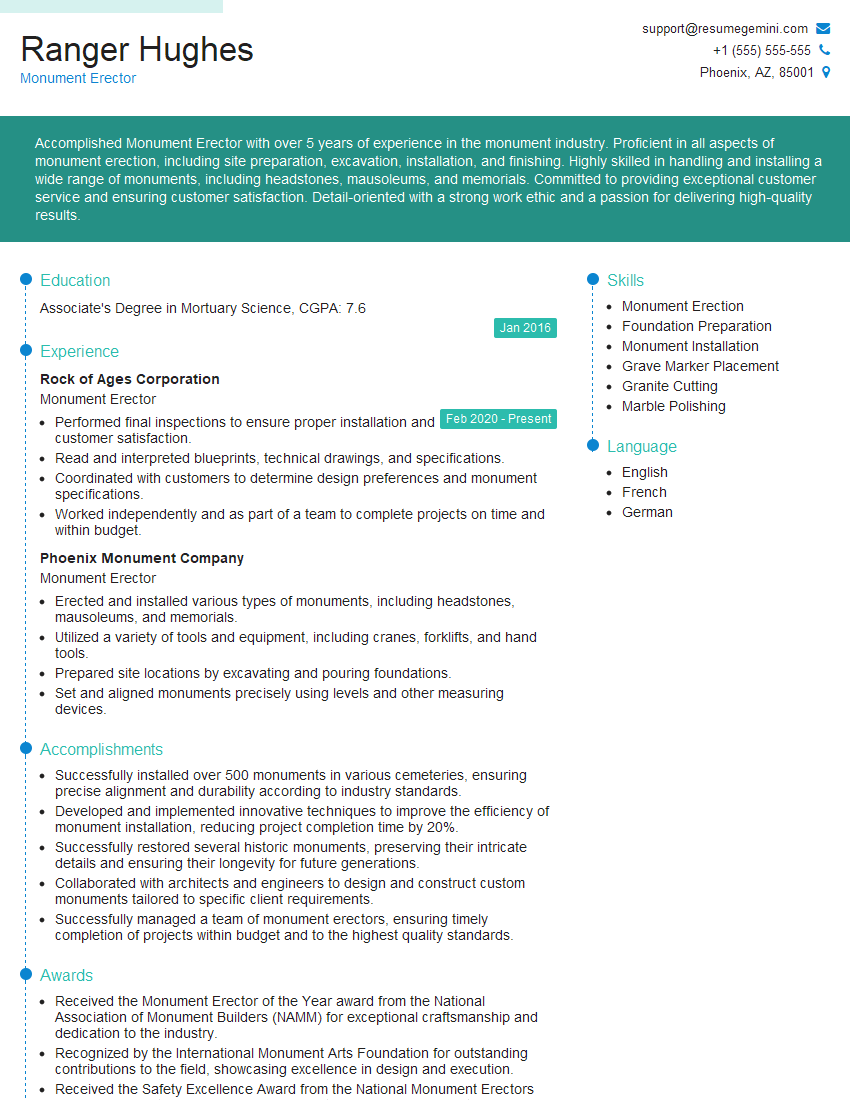
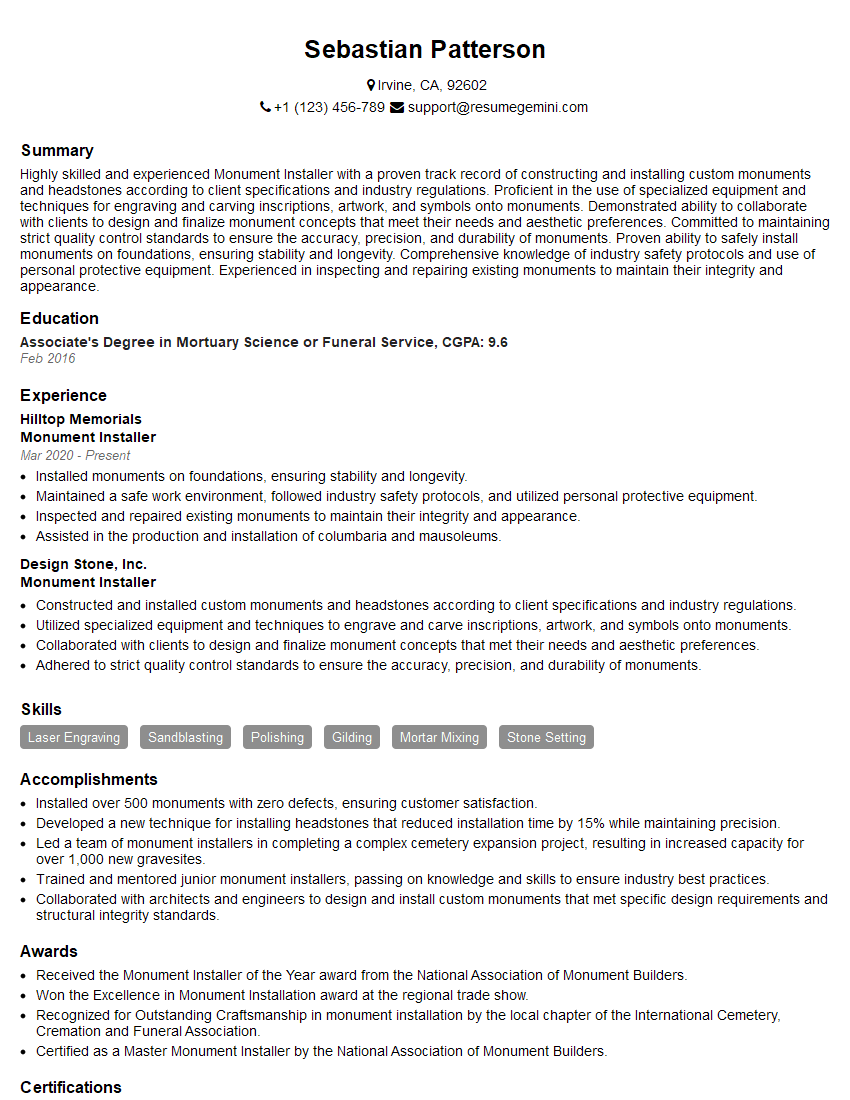
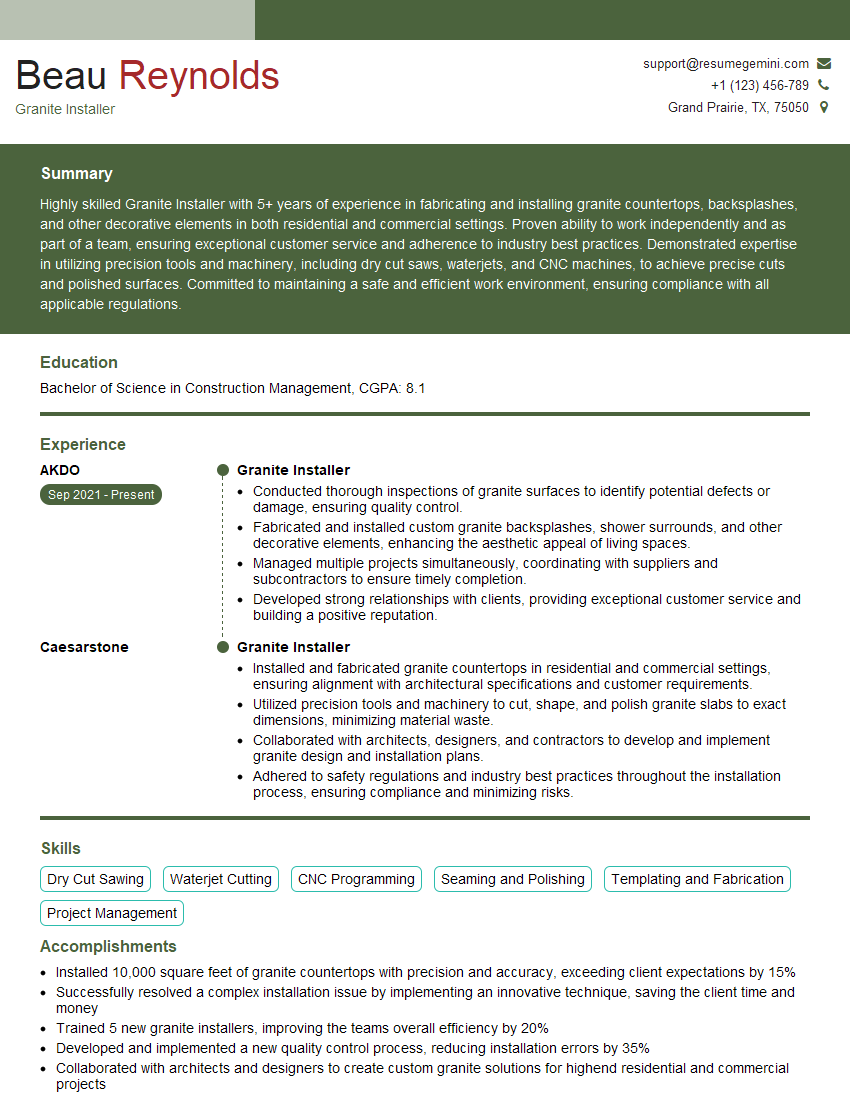
Mastering the art of Lifting and Setting of Tombstones opens doors to a rewarding career with opportunities for advancement and specialization. A strong understanding of these techniques demonstrates your commitment to safety, precision, and client satisfaction. To maximize your job prospects, creating an ATS-friendly resume is crucial. ResumeGemini is a trusted resource to help you build a professional resume that highlights your skills and experience effectively. Examples of resumes tailored to the Lifting and Setting of Tombstones field are available, showcasing how to present your qualifications in the best possible light. Invest time in crafting a compelling resume – it’s your first impression on potential employers.
Explore more articles
Users Rating of Our Blogs
Share Your Experience
We value your feedback! Please rate our content and share your thoughts (optional).
What Readers Say About Our Blog
To the interviewgemini.com Webmaster.
Very helpful and content specific questions to help prepare me for my interview!
Thank you
To the interviewgemini.com Webmaster.
This was kind of a unique content I found around the specialized skills. Very helpful questions and good detailed answers.
Very Helpful blog, thank you Interviewgemini team.