Interviews are more than just a Q&A session—they’re a chance to prove your worth. This blog dives into essential Line and Level Maintenance interview questions and expert tips to help you align your answers with what hiring managers are looking for. Start preparing to shine!
Questions Asked in Line and Level Maintenance Interview
Q 1. Explain the process of leveling a machine using a level and shims.
Leveling a machine using a level and shims is a fundamental process in ensuring proper machine operation and preventing premature wear. It involves adjusting the machine’s base to achieve a perfectly horizontal plane.
The process typically involves these steps:
- Preparation: Clean the machine’s base and the surface it rests on. Ensure the shims are the correct size and thickness for the adjustment required.
- Leveling: Place a level on the machine’s base in multiple directions (typically at least two perpendicular directions, such as front-to-back and side-to-side). Adjust the shims under the machine’s feet until the bubble in the level is centered. This indicates a level plane.
- Iteration: This is an iterative process. After adjusting one direction, recheck the other. Often, adjusting one foot will affect the level in another direction. Continue this process until the machine is level in all directions.
- Securing: Once the machine is level, securely fasten the machine feet to the base to prevent any movement or shifting.
Example: Imagine leveling a large milling machine. You might start by placing a level on the front-to-back plane. If the bubble is off-center, you’ll add or remove shims under the appropriate feet to bring it to center. You would repeat this process for the side-to-side plane, continually checking both directions until perfectly level.
Q 2. Describe different methods for aligning machinery.
Machinery alignment refers to the precise positioning of rotating equipment such as shafts, couplings, and pulleys to minimize vibration and ensure efficient operation. Several methods exist:
- Laser Alignment: This highly accurate method uses laser beams to measure shaft misalignment. It’s commonly used for critical applications because of its precision and ease of use. Laser alignment systems can detect both angular and parallel misalignment.
- Dial Indicator Alignment (Reverse Dial Method): A more traditional method involving dial indicators mounted on the machine shafts. Measurements are taken at various points around the shafts to determine misalignment. This method requires significant experience and precision to accurately interpret the readings.
- Straight Edge and Feeler Gauge Alignment: A simpler method, but less precise. This method involves using a straight edge and feeler gauges to assess coupling alignment. It’s often suitable for less critical equipment.
- Optical Alignment: Uses optical targets and a telescope to measure angular and parallel misalignment. This method is particularly useful for longer distances and can be less invasive than some methods.
The best method depends on factors like machine size, precision requirements, and available resources. For example, laser alignment is preferred for high-speed, precision equipment, while dial indicator alignment may suffice for smaller, less critical machines.
Q 3. How do you troubleshoot misalignment issues in rotating equipment?
Troubleshooting misalignment in rotating equipment starts with identifying the symptoms, which typically include excessive vibration, unusual noises (such as grinding or squealing), heating, and premature bearing wear. A systematic approach is crucial:
- Visual Inspection: Examine the couplings, shafts, and bearings for any obvious damage or wear. Look for signs of rubbing, loose bolts, or uneven wear patterns.
- Vibration Analysis: Use vibration analysis tools to measure vibration levels and frequencies. This helps pinpoint the source and severity of the misalignment.
- Alignment Measurement: Employ appropriate alignment tools (laser, dial indicator, or straight edge) to precisely measure the misalignment.
- Corrective Action: Based on the findings, implement corrective actions such as shimming, adjusting baseplates, or replacing worn components.
- Re-alignment and Verification: Once corrective actions are taken, realign the equipment and verify using the same measurement tools. This ensures the issue is resolved.
Example: If vibration analysis shows high levels of vibration at a specific frequency, and visual inspection reveals uneven wear on a coupling, the likely cause is misalignment. Precise measurement will then determine the type and magnitude of the misalignment, guiding the appropriate correction.
Q 4. What are the common causes of machine vibration and how can they be addressed?
Machine vibration is a common problem stemming from various sources, leading to reduced efficiency, increased wear, and potential damage. Some common causes include:
- Misalignment: As discussed earlier, misaligned shafts and couplings are a primary cause of vibration.
- Imbalance: Unbalanced rotating components like rotors or impellers create centrifugal forces, resulting in vibration. This is often felt as a shaking or humming.
- Looseness: Loose bolts, bearings, or foundations can introduce vibration. Check all fasteners for proper tightness.
- Resonance: Operating frequencies coinciding with the natural frequencies of the machine structure can amplify vibration, causing significant issues.
- Worn Bearings: Damaged or worn bearings contribute significantly to vibration. Check for noise, play, and excessive temperature.
- Foundation Issues: Problems with the machine’s foundation, such as uneven settling or cracks, can transfer vibrations to the machine.
Addressing these issues requires a thorough investigation using vibration analysis, visual inspection, and other diagnostic tools. Solutions may involve realignment, balancing, tightening fasteners, replacing worn components, modifying operating speeds, or improving the foundation.
Q 5. What safety precautions are essential when performing line and level maintenance?
Safety is paramount during line and level maintenance. Failure to adhere to safety protocols can result in serious injuries. Essential precautions include:
- Lockout/Tagout (LOTO): Always follow LOTO procedures before starting any maintenance work on machinery. This prevents unexpected startup and accidental injuries.
- Personal Protective Equipment (PPE): Wear appropriate PPE, including safety glasses, gloves, steel-toed shoes, and hearing protection.
- Proper Lifting Techniques: Use appropriate lifting equipment and techniques to avoid back injuries when handling heavy components or machinery.
- Confined Space Entry Procedures: If working in confined spaces, follow appropriate entry and safety procedures to prevent asphyxiation or other hazards.
- Awareness of Rotating Parts: Exercise extreme caution around moving parts of machinery. Never reach into moving equipment.
- Emergency Procedures: Understand and be prepared to use emergency shut-off procedures. Make sure you know where all the emergency switches and safety equipment are.
A thorough risk assessment should be conducted before any work begins to identify and mitigate potential hazards.
Q 6. Explain the importance of proper lubrication in preventing misalignment.
Proper lubrication plays a vital role in preventing misalignment and extending the lifespan of machinery. Lubricant acts as a film between moving parts, reducing friction and wear. Without adequate lubrication:
- Increased Friction: Higher friction leads to increased heat generation, which can cause thermal expansion and distortion of machine components, potentially leading to misalignment.
- Premature Wear: Lack of lubrication accelerates wear on bearings, shafts, and other moving parts. This wear can lead to changes in dimensions and geometry, causing misalignment.
- Seizures: Severe lack of lubrication can result in seizing of moving parts, potentially causing catastrophic damage and misalignment.
Regular lubrication according to the manufacturer’s recommendations is crucial to maintain proper alignment and prevent premature failure. Using the correct type and grade of lubricant is equally important.
Q 7. Describe your experience with different types of alignment tools and instruments.
Throughout my career, I’ve gained extensive experience using various alignment tools and instruments. My proficiency includes:
- Laser Alignment Systems: I’m proficient in using various laser alignment systems from different manufacturers, including those with both single- and dual-laser technology. I’m familiar with their functionalities, software, and data interpretation techniques.
- Dial Indicators and Magnetic Bases: I have extensive experience using dial indicators with various ranges and accuracies. I’m adept at selecting the appropriate indicator and mounting it securely using magnetic bases.
- Straight Edges and Feeler Gauges: I’m skilled in using straight edges and feeler gauges for basic alignment checks, particularly in applications where higher precision isn’t critical.
- Optical Alignment Tools: I have experience using optical alignment tools for precise alignment measurements, particularly on larger equipment where laser systems might be impractical.
- Vibration Analyzers: I’m proficient in using vibration analyzers to identify the root cause of misalignment through frequency analysis and other diagnostic techniques.
My experience spans a wide range of equipment, from small pumps and motors to large industrial machinery. I can select the most appropriate tool for any specific alignment task based on factors such as equipment size, criticality, and desired precision.
Q 8. How do you document line and level maintenance procedures and findings?
Documenting line and level maintenance is crucial for ensuring repeatability, traceability, and continuous improvement. My approach involves a multi-faceted system combining digital and physical records.
Pre-Maintenance Checklist: A detailed checklist outlining the steps before starting the maintenance, including machine isolation, safety checks, and necessary equipment verification. This is digitally recorded using a tablet or mobile device linked to our CMMS (Computerized Maintenance Management System).
Measurement Recordings: All alignment measurements (e.g., shaft misalignment, level discrepancies) are recorded digitally with the precise location and timestamps using the laser alignment system’s software. The raw data is backed up and stored for future reference. Pictures or videos showing the before and after states are also included.
Corrective Actions: A detailed log of all adjustments made, including the type of adjustment, the amount of adjustment, and the tools or equipment used. This is recorded in the CMMS, linking directly to the measurement data.
Post-Maintenance Verification: After completing the alignment, a final set of measurements is taken and compared to the tolerance levels to confirm successful alignment. This is crucial for confirming that the corrective action was effective.
Findings and Recommendations: Any unexpected issues, root cause analysis findings, or recommendations for future preventative maintenance are clearly documented and communicated to relevant personnel, typically through the CMMS and/or formal reports.
Physical Records: Though digital records are preferred, key information (like a summary of findings) is also entered into physical logs kept close to the machinery for quick reference, especially in case of digital system failure.
This systematic approach ensures comprehensive documentation, facilitating troubleshooting, identifying trends, and improving maintenance strategies over time.
Q 9. What is the difference between static and dynamic alignment?
The difference between static and dynamic alignment lies in the machine’s operational state during the alignment process.
Static Alignment: This involves measuring and correcting misalignment while the machinery is completely stationary and not under power. It’s a simpler, quicker approach, typically suitable for initial alignment or where dynamic effects are negligible. However, it may not account for all the forces that the machine experiences during operation.
Dynamic Alignment: This involves measuring and correcting misalignment while the machinery is running at its operational speed. It directly accounts for the dynamic forces and thermal effects caused by operating conditions, leading to a more precise and stable alignment. While more complex and requiring specialized equipment, it’s crucial for high-speed or high-precision machinery where operational forces significantly impact alignment.
Think of it like this: static alignment is like checking the alignment of your car wheels while it’s parked; dynamic alignment is like checking it while it’s driving at speed, accounting for road forces and tire flex.
Q 10. How do you determine the acceptable tolerance levels for alignment?
Acceptable tolerance levels for alignment are determined by several factors, including the machinery’s type, operating speed, precision requirements, and manufacturer specifications.
Manufacturer’s Recommendations: The most important source. Manufacturer’s manuals often specify precise tolerance levels for shaft alignment, parallelism, and levelness.
Industry Standards: Organizations like ISO (International Organization for Standardization) provide general guidelines on acceptable tolerance levels for different types of machinery.
Vibration Analysis: Analyzing the machinery’s vibration patterns provides insights into the alignment quality. Excessive vibration levels indicate misalignment, and acceptable levels help establish a tolerance range.
Operational Experience: Historical data and operational experience show how specific tolerance levels impact machine performance and lifespan. Slight variations in tolerances might be acceptable, as long as they don’t negatively affect operation.
Cost-Benefit Analysis: Achieving extremely tight tolerances might be costly and time-consuming. Therefore, a cost-benefit analysis is often conducted to determine the most economically efficient tolerance range that still ensures satisfactory machine operation and minimizes downtime.
For example, a high-precision machine might require tolerances in the range of 0.01 mm for shaft misalignment, while a less critical machine might tolerate 0.1 mm. The tolerances are usually expressed in angular measurements (degrees) and linear measurements (millimeters or inches).
Q 11. Explain your experience with laser alignment systems.
I have extensive experience using laser alignment systems, specifically those utilizing the optical shaft alignment method and employing both single- and dual-laser technologies. My experience covers various brands and models, including [mention specific brands if comfortable, otherwise omit].
System Operation: I’m proficient in setting up, operating, and interpreting data from these systems. This includes understanding the laser beam path, optimizing sensor placement for accurate readings, and properly compensating for thermal growth.
Data Interpretation: I’m adept at analyzing alignment data displayed on the system’s software, including identifying misalignment types (parallel, angular, and total misalignment), and understanding how different parameters interact. I can then develop appropriate correction strategies.
Troubleshooting: I have experience identifying and resolving system-related issues, including laser beam misalignment, sensor malfunctions, and software glitches.
Software Proficiency: I’m familiar with various laser alignment system software packages and their reporting capabilities, which greatly aids in documenting the maintenance procedure and findings.
The use of laser alignment systems has significantly improved our alignment accuracy and efficiency, reducing downtime and improving machine performance. I’ve been involved in multiple projects where these systems proved instrumental in resolving complex alignment issues that were previously difficult to diagnose and correct.
Q 12. How do you handle unexpected alignment issues during maintenance?
Unexpected alignment issues require a systematic and methodical approach. My strategy focuses on a combination of immediate action, root cause analysis, and preventative measures.
Safe Shutdown: First priority is ensuring machine safety by following established shutdown procedures. I will carefully inspect for any immediate risks before proceeding.
Initial Assessment: A thorough assessment of the problem involves visually inspecting the machinery for signs of damage, unusual wear, or other abnormalities. Additional measurements using both the laser alignment system and other relevant tools (e.g., dial indicators) are taken to quantify the misalignment.
Root Cause Analysis: This is critical. Why did the misalignment occur? Possibilities include foundation settling, wear and tear, component failure, or external forces. I use a structured approach like the 5 Whys to systematically investigate and identify the root cause.
Corrective Actions: Based on the root cause analysis, appropriate corrective actions are implemented. This could involve simple adjustments, component replacement, or more extensive repairs. All actions are documented meticulously.
Preventative Measures: Implementing measures to prevent future recurrences is key. This might involve more frequent inspections, upgraded components, foundation reinforcement, improved operational practices, or a combination of these measures.
For instance, if unexpected misalignment is due to foundation settling, we might need to consult structural engineers to reinforce the foundation or implement vibration dampening measures.
Q 13. Describe your experience with different types of machinery alignment (e.g., belt drives, shaft alignment).
My experience encompasses various machinery alignment types, including belt drives and shaft alignment, employing different methods and tools as required.
Belt Drives: Aligning belt drives involves ensuring proper pulley alignment to maintain belt tension and prevent premature wear. I use alignment tools like straight edges and laser alignment devices to ensure proper alignment both horizontally and vertically.
Shaft Alignment: This is usually more complex, especially for coupled machines. I have hands-on experience with various techniques including:
- Reverse Dial Indicator Method: A more traditional, economical method involving dial indicators to measure shaft misalignment.
- Laser Alignment System: My preferred method due to its high accuracy, speed, and detailed reporting capabilities.
I’ve worked on machines ranging from small industrial pumps to large rotating equipment like turbines and gearboxes, adapting my alignment techniques based on the machine type, coupling configuration, and criticality of the application. Each alignment requires consideration of factors such as thermal growth, coupling types (rigid, flexible), and the machine’s operating characteristics.
Q 14. How do you prioritize maintenance tasks when multiple machines require attention?
Prioritizing maintenance tasks when multiple machines require attention requires a structured approach. My strategy combines urgency, criticality, and potential impact.
Urgency: Immediate threats to safety or production are addressed first. A machine nearing catastrophic failure is prioritized over others with minor issues.
Criticality: Machines critical to the overall production process are prioritized over those that have a minor impact on output. For example, a critical component of the main production line is prioritized over a secondary support system.
Impact Analysis: Considering potential consequences of machine failure is important. This requires assessing factors like downtime costs, potential safety hazards, and product quality impact. A potential for significant financial or safety loss leads to higher prioritization.
Preventive vs. Corrective: Balancing preventative and corrective maintenance is key. While addressing urgent issues is imperative, neglecting preventive maintenance can lead to more serious problems later on. A proper maintenance schedule balances both types of maintenance to maximize efficiency and minimize risks.
In practice, I use a prioritized task list, often managed through the CMMS, that visually represents the urgency and criticality of each task. This allows for dynamic adjustment as new issues arise or priorities shift.
Q 15. Describe your experience with preventative maintenance schedules for line and level systems.
Preventative maintenance schedules for line and level systems are crucial for ensuring optimal equipment performance and preventing costly breakdowns. These schedules are tailored to the specific equipment, operating conditions, and industry standards. They typically involve regular inspections, lubrication, and adjustments based on manufacturer recommendations and historical data.
For example, a conveyor system might have a schedule that includes daily visual inspections for belt tracking and component wear, weekly lubrication of bearings and chains, and monthly checks of alignment using precision instruments. Another example could be a pump system where vibration analysis is conducted quarterly and laser alignment is performed annually. The frequency of tasks depends on factors such as the equipment’s criticality, the operating environment (dust, vibration, temperature), and the wear rate of components. Effective schedules incorporate data-driven insights such as historical failure rates to prioritize critical tasks and optimize maintenance efforts. A well-maintained CMMS (Computerized Maintenance Management System) is essential for managing and tracking these schedules.
Career Expert Tips:
- Ace those interviews! Prepare effectively by reviewing the Top 50 Most Common Interview Questions on ResumeGemini.
- Navigate your job search with confidence! Explore a wide range of Career Tips on ResumeGemini. Learn about common challenges and recommendations to overcome them.
- Craft the perfect resume! Master the Art of Resume Writing with ResumeGemini’s guide. Showcase your unique qualifications and achievements effectively.
- Don’t miss out on holiday savings! Build your dream resume with ResumeGemini’s ATS optimized templates.
Q 16. What are the potential consequences of improper line and level maintenance?
Improper line and level maintenance can lead to a cascade of negative consequences, impacting both operational efficiency and safety. Misalignment, for example, can induce excessive vibration, leading to premature wear of bearings, seals, and couplings. This can result in reduced equipment lifespan, increased downtime for repairs, and potentially catastrophic failures. Imagine a misaligned pump shaft causing catastrophic bearing failure leading to a complete system shutdown and costly repairs and production loss.
- Increased Downtime: Frequent repairs and unexpected breakdowns.
- Reduced Efficiency: Misalignment reduces power transmission efficiency and can lead to increased energy consumption.
- Safety Hazards: Excessive vibration can create unsafe working conditions and potential for component failure, causing injury or damage.
- Product Quality Issues: In manufacturing, misalignment can affect product consistency and quality.
- Higher Maintenance Costs: Reactive maintenance is far more expensive than preventative maintenance.
Q 17. How do you interpret alignment data to diagnose problems?
Interpreting alignment data requires a systematic approach and a deep understanding of the equipment’s operational characteristics. I typically use precision instruments like laser alignment tools to collect data on shaft misalignment (angular and parallel), which is then analyzed in relation to manufacturer specifications and acceptable tolerances.
For instance, if laser alignment reveals significant angular misalignment in a pump system, it might indicate a problem with the coupling, baseplate, or the pump’s foundation. Similarly, parallel misalignment might point towards issues with the motor or driven equipment mounting. By comparing the measured data against acceptable limits, I can quickly identify the specific problem areas. It’s important to remember that alignment data needs to be interpreted within the context of other relevant parameters like vibration analysis and operational history. A combination of data helps pinpoint the root cause more accurately.
Q 18. What is your experience with different types of couplings and their impact on alignment?
Different types of couplings play a significant role in shaft alignment and overall system performance. The choice of coupling impacts how well misalignments are accommodated and how effectively torque is transferred. For instance:
- Rigid Couplings: These couplings demand precise alignment. Any misalignment will directly stress the shafts and components.
- Flexible Couplings: These accommodate minor misalignments, reducing stress on shafts, but excessive misalignment can still cause premature wear and failure. Examples include Jaw couplings, Elastomeric couplings, and Gear couplings, each with different levels of flexibility and tolerance to misalignment.
- Hydraulic Couplings: Used in high-torque applications, hydraulic couplings have unique alignment considerations.
Understanding the capabilities and limitations of each coupling type is crucial in designing and maintaining alignment. In my experience, selecting an appropriate coupling based on the application and anticipated level of misalignment is essential for optimal system operation and preventing premature component failures.
Q 19. Explain the process of correcting misalignment in a conveyor system.
Correcting misalignment in a conveyor system usually involves a methodical approach. The process begins with a thorough alignment check, typically using laser alignment tools. Once the type and magnitude of the misalignment are identified (parallel, angular, or offset), corrective actions are taken.
For instance, parallel misalignment might be addressed by adjusting the motor or driven equipment’s mounting base using shims or adjusting the foundation. Angular misalignment usually requires adjusting the mounting feet of the machines. If the problem lies with the conveyor framework itself, structural adjustments might be necessary. After any corrective actions, a re-alignment check is essential to ensure the misalignment has been successfully corrected within acceptable tolerances. This iterative process continues until the desired alignment is achieved. It’s also important to document all adjustments and measurements for future reference.
Q 20. How do you ensure the accuracy of your alignment measurements?
Ensuring the accuracy of alignment measurements is paramount. This involves several key steps:
- Using calibrated instruments: Regular calibration of laser alignment tools and other measuring devices is essential to maintain accuracy.
- Proper instrument setup: Following the manufacturer’s instructions for setting up and using alignment tools is crucial to avoid errors.
- Environmental considerations: Factors like temperature fluctuations and vibrations can affect measurement accuracy, hence environmental control during measurements is necessary.
- Multiple measurements: Taking multiple measurements and averaging them helps minimize random errors.
- Experienced personnel: Having technicians with thorough training and practical experience in alignment procedures reduces errors.
By meticulously following these steps and using quality instruments, I can ensure the reliability and accuracy of my alignment measurements.
Q 21. How do you deal with difficult-to-access components during alignment?
Dealing with difficult-to-access components during alignment requires creativity and the use of specialized tools. For example, if a component is located in a confined space, I might use miniature alignment tools or optical alignment systems. Sometimes, we need to temporarily dismantle some parts of the system to gain better access, ensuring that any disassembly is done carefully and documented. This could involve using specialized mirrors or cameras to relay images to an external monitor for remote visual inspection and alignment adjustments. In some cases, advanced techniques such as remote alignment systems can be employed, where sensors and actuators provide feedback for alignment adjustments from a distance.
Safety is paramount in such situations. Before starting any work, I’d ensure that all necessary safety measures are in place. Proper lockout/tagout procedures would be followed to prevent accidental equipment startup and potential injuries.
Q 22. Describe your experience with using software for alignment data analysis.
My experience with alignment data analysis software is extensive. I’m proficient in using several industry-standard packages, including AlignAlyzer, LaserTrack, and SHIMPACK. These software packages allow me to import data from various laser alignment tools, perform sophisticated analysis, and generate comprehensive reports. For example, using AlignAlyzer, I can quickly identify angular and parallel misalignments, calculate the necessary corrections, and even simulate the effects of different shim configurations before implementing them. This prevents costly trial and error on the machine itself. Beyond basic analysis, these programs also enable the creation of detailed reports including before-and-after comparisons, which are crucial for documenting maintenance activities and tracking performance improvements over time. I find that visualizing the data in these programs is a game-changer; often, a picture is worth a thousand words, particularly when explaining complex alignment issues to both technical and non-technical stakeholders.
Q 23. What are some common causes of machine misalignment?
Machine misalignment is a common problem with several root causes. Think of it like trying to fit two puzzle pieces together that are slightly off. It won’t work smoothly! Common causes include:
- Footprint Issues: Uneven foundation, settling of the base, or inadequate grouting can lead to distortions in the machine’s structure, throwing off alignment.
- Wear and Tear: Over time, bearings, couplings, and other components wear out, leading to increased play and misalignment. This is especially true in high-vibration environments.
- Improper Installation: Incorrect initial installation, whether it’s during the original setup or after major repairs, is a significant contributor. This includes the improper use of shims, bolts, and other fastening components.
- Thermal Growth: Differences in temperature between machine components cause expansion and contraction, leading to misalignment. This is especially prevalent in large machines or those operating at high temperatures.
- External Forces: External forces like pipe strain, collisions, or vibrations from nearby equipment can stress the machine and cause misalignment.
- Improper Torqueing: Incorrect tightening of bolts can create uneven stress and introduce misalignment.
Identifying the specific cause is critical for effective remediation, as treating the symptoms without addressing the root cause will only lead to recurring issues.
Q 24. How do you identify and resolve alignment issues related to thermal expansion?
Thermal expansion is a significant source of misalignment, especially in large rotating equipment. Imagine a metal rod heating up – it gets longer. The same applies to machines. To identify and resolve thermal expansion-related alignment issues:
- Temperature Monitoring: Install temperature sensors at strategic locations on the machine to monitor the temperature changes throughout the operating cycle.
- Data Analysis: Analyze the alignment data collected at different temperatures to identify patterns and establish a correlation between temperature and misalignment.
- Expansion Compensation: Design the alignment process considering the thermal expansion of different components. This could involve using expansion joints or creating allowances in the alignment specifications.
- Thermal Modeling: In complex cases, perform thermal modeling to predict the extent of thermal growth and optimize the machine design or alignment strategy. This helps proactively avoid issues.
- Operational Optimization: Optimize operational parameters to minimize temperature fluctuations. For instance, adjusting the coolant flow rate could limit temperature changes.
For instance, on a large pump, we might find greater misalignment during startup as the components heat up. By incorporating thermal expansion compensation into the alignment process – using calculations and shims that account for the temperature increase – we prevent premature wear and tear.
Q 25. Explain your experience with working in a team environment during maintenance projects.
I thrive in collaborative team environments. Effective line and level maintenance requires a multidisciplinary approach. I’ve been part of numerous projects where effective teamwork was key to success. For example, during a recent overhaul of a large compressor, our team included mechanical technicians, electricians, instrumentation specialists, and engineering supervisors. My role involved leading the alignment process, but success depended on everyone’s contribution. Effective communication, clear roles, and a shared understanding of project goals were vital. I’m proficient in using project management software and facilitating team meetings to ensure smooth collaboration, track progress, and resolve any arising challenges. I also believe in fostering a positive and supportive team atmosphere where everyone feels comfortable contributing their expertise.
Q 26. How do you communicate technical information to non-technical personnel?
Communicating technical information to non-technical personnel is crucial. I use analogies and simple language to explain complex concepts. For instance, instead of saying ‘axial misalignment,’ I might explain it as ‘the shafts aren’t perfectly lined up along their length, like trying to connect two pipes that are slightly off-center.’ I avoid jargon and use visuals such as diagrams and charts to make information more accessible. In addition to verbal communication, I make sure technical reports include clear and concise summaries written in layman’s terms. This approach ensures everyone involved understands the issues, proposed solutions, and the overall plan, leading to better teamwork and project outcomes.
Q 27. Describe a time you had to troubleshoot a complex alignment problem.
During a recent turbine alignment, we encountered a persistent vibration issue after initial alignment. The initial alignment readings looked fine, but the machine was still vibrating excessively. We systematically checked every potential cause: foundation integrity, bearing condition, coupling alignment, and even the piping system. It turned out that a seemingly insignificant looseness in a coupling bolt, undetectable with standard tools, was causing a resonance that was amplifying the vibration. We discovered this after using advanced vibration analysis techniques and a precise torque wrench to identify the loose bolt. This experience highlighted the importance of meticulous troubleshooting, and the utilization of advanced diagnostic tools beyond the initial alignment procedure. The resolution was simple once the root cause was identified, but finding it required persistence and a systematic approach.
Q 28. How do you stay updated on the latest advancements in line and level maintenance techniques?
Staying current in line and level maintenance requires ongoing learning. I regularly attend industry conferences and workshops to learn about new technologies and best practices. I also subscribe to relevant trade journals and online publications. Participating in professional organizations like the Society for Maintenance & Reliability Professionals (SMRP) provides access to valuable resources and networking opportunities. Online courses and training programs offer focused learning in specific areas such as advanced alignment techniques or software updates. Continuously updating my skills ensures I remain at the forefront of the field and apply the most effective methods in my work.
Key Topics to Learn for Line and Level Maintenance Interview
- Safety Procedures and Regulations: Understanding and applying relevant safety protocols, including lockout/tagout procedures, hazard identification, and personal protective equipment (PPE) usage. This is paramount in any maintenance role.
- Preventive Maintenance Schedules and Techniques: Knowing how to interpret and follow preventative maintenance schedules, performing routine inspections, and identifying potential issues before they become major problems. Practical experience with lubrication, cleaning, and minor repairs will be valuable.
- Troubleshooting and Diagnostics: Developing strong troubleshooting skills to identify the root cause of equipment malfunctions. This includes understanding diagnostic tools and techniques for various line and level maintenance equipment.
- Hydraulic and Pneumatic Systems: A solid understanding of hydraulic and pneumatic systems, including pressure, flow, and component functionality. Being able to diagnose problems within these systems is crucial.
- Electrical Systems (Basic): Familiarity with basic electrical principles, including voltage, current, and safety procedures related to electrical components. This knowledge is vital for many line and level maintenance tasks.
- Record Keeping and Reporting: Accurate and timely documentation of maintenance activities, including repairs, inspections, and parts used. Effective reporting ensures accountability and improves overall maintenance efficiency.
- Problem-Solving and Critical Thinking: Demonstrating the ability to analyze problems, identify solutions, and implement effective repairs under pressure. This involves logical thinking and a methodical approach to maintenance tasks.
- Teamwork and Communication: Highlighting your ability to work effectively as part of a team, communicate clearly with colleagues and supervisors, and contribute to a positive work environment.
Next Steps
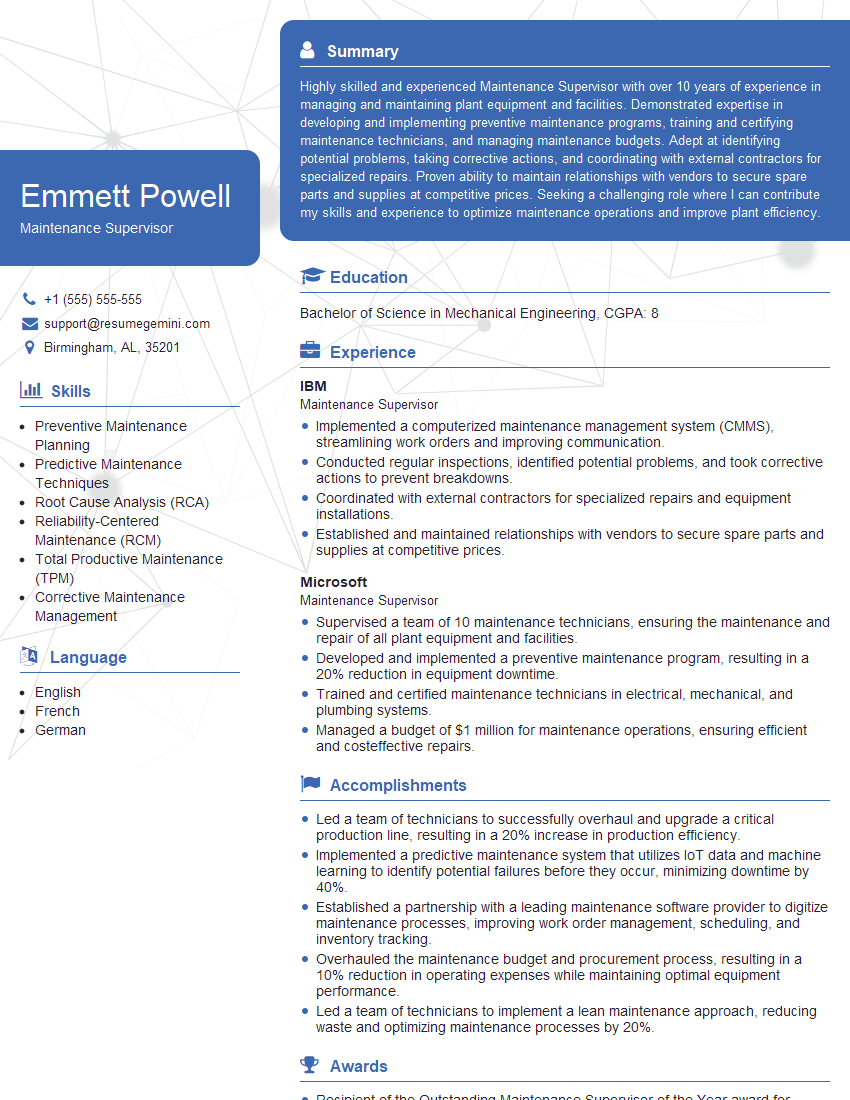
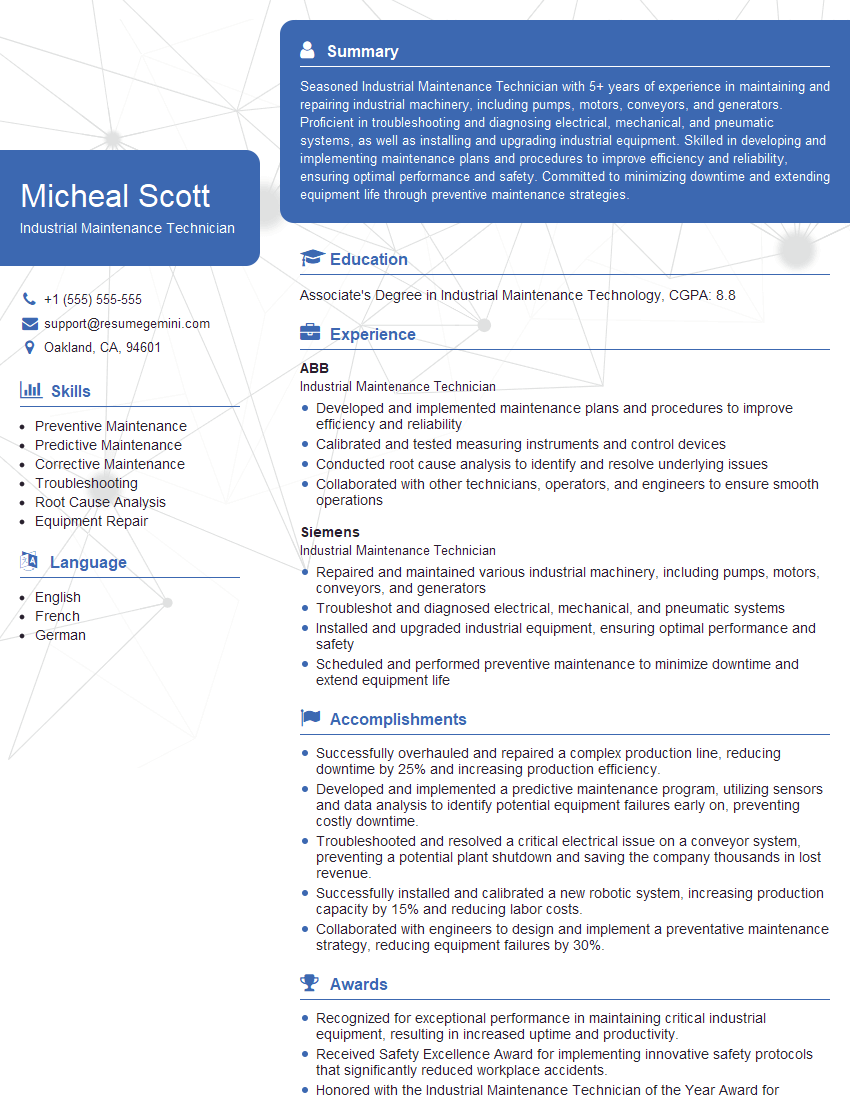
Mastering Line and Level Maintenance opens doors to a rewarding career with excellent growth potential. Demonstrating your skills effectively is key, and a strong, ATS-friendly resume is your first step. To make sure your skills and experience shine, consider using ResumeGemini to build a professional resume that highlights your qualifications. ResumeGemini offers examples of resumes tailored to Line and Level Maintenance to help you present yourself in the best possible light. Invest time in creating a compelling resume—it’s your gateway to securing your dream role.

Explore more articles
Users Rating of Our Blogs
Share Your Experience
We value your feedback! Please rate our content and share your thoughts (optional).
What Readers Say About Our Blog
To the interviewgemini.com Webmaster.
Very helpful and content specific questions to help prepare me for my interview!
Thank you
To the interviewgemini.com Webmaster.
This was kind of a unique content I found around the specialized skills. Very helpful questions and good detailed answers.
Very Helpful blog, thank you Interviewgemini team.