Every successful interview starts with knowing what to expect. In this blog, we’ll take you through the top Load Dispatching interview questions, breaking them down with expert tips to help you deliver impactful answers. Step into your next interview fully prepared and ready to succeed.
Questions Asked in Load Dispatching Interview
Q 1. Explain the process of assigning loads to drivers, considering factors like distance, time constraints, and driver availability.
Assigning loads to drivers is a complex optimization problem. We aim to maximize efficiency and minimize costs while ensuring timely deliveries. It’s like solving a sophisticated puzzle with many interconnected pieces.
The process begins with understanding the parameters: delivery deadlines, driver availability (including location, current load, and hours of service remaining), and delivery locations (considering distance and potential traffic). We use a combination of algorithms and manual judgment to achieve the best results.
- Distance optimization: We utilize route optimization software that considers distances, traffic patterns, and potential road closures to create the most efficient routes. For instance, we might avoid congested highways during peak hours and opt for less-traveled routes.
- Time constraint management: Deadlines are paramount. The software prioritizes deliveries based on urgency, factoring in loading and unloading times. This might mean assigning a faster driver to a time-sensitive delivery or prioritizing shorter routes.
- Driver availability: We carefully consider each driver’s location, remaining hours of service (HOS), and load capacity. The system checks for conflicts and ensures compliance with all relevant regulations. For example, a driver nearing the end of their HOS might be excluded from receiving new, long-distance loads.
This process isn’t fully automated. Experienced dispatchers review the software’s suggestions and make adjustments based on their expertise and knowledge of real-world conditions. They might manually adjust routes to account for unexpected road closures or driver preferences.
Q 2. How do you prioritize delivery routes in a high-volume environment?
Prioritizing delivery routes in a high-volume environment requires a systematic approach that leverages technology and efficient communication. Think of it as managing a complex orchestra, where each instrument (delivery) needs to play its part at the right time.
We use a multi-pronged strategy:
- Urgency: Time-sensitive deliveries are always prioritized. This could involve deliveries of perishable goods, emergency supplies, or those with strict deadlines.
- Distance/Route Optimization: Prioritizing routes based on distance and traffic conditions helps maximize efficiency. This involves using algorithms to cluster deliveries geographically, minimizing wasted mileage.
- Load Consolidation: Combining multiple deliveries destined for similar locations reduces the number of trips and improves efficiency. This is particularly effective for less time-sensitive deliveries.
- Customer Importance: VIP or high-value customers might receive preferential treatment, with their deliveries prioritized.
- Delivery Window: Deliveries with flexible delivery windows can be strategically placed to fill gaps in schedules and improve overall efficiency.
Real-time monitoring is crucial. We use dashboards to track deliveries and proactively address any potential delays or disruptions, dynamically adjusting the priorities as needed.
Q 3. Describe your experience with load planning software and transportation management systems (TMS).
My experience with load planning software and Transportation Management Systems (TMS) is extensive. I’ve worked with several industry-leading platforms, including [mention specific software, e.g., McLeod Software, TMWSuite, SAP Transportation Management].
These systems are invaluable for streamlining operations. They provide features such as:
- Route optimization: Calculating the most efficient routes considering various parameters.
- Load planning and assignment: Automating the process of assigning loads to drivers based on various criteria.
- Real-time tracking and monitoring: Providing up-to-the-minute visibility of delivery progress.
- Document management: Storing and managing all delivery-related documents electronically.
- Reporting and analytics: Generating reports on key performance indicators (KPIs) to identify areas for improvement.
I’m proficient in using these systems to manage large volumes of deliveries, optimize routes, and ensure timely and efficient delivery services. I’m also comfortable training others on the use of these systems and adapting my approach to different software solutions.
Q 4. How do you handle unexpected delays or disruptions to the delivery schedule?
Unexpected delays are inevitable. Think of it as navigating a stormy sea; you need a plan B, and maybe even a C! My approach is proactive and multi-faceted.
When a delay occurs, the first step is immediate identification using real-time tracking. Then, we need to understand the cause – traffic accident, weather, mechanical failure, etc. This allows us to assess the impact on the entire schedule. Next comes communication – we notify the affected clients and drivers immediately, keeping them informed of the situation and the revised ETA (Estimated Time of Arrival).
To mitigate the impact, we explore several options:
- Replanning the route: This might involve rerouting the affected delivery or adjusting other deliveries to accommodate the delay.
- Dispatching a replacement driver: If a driver is facing a significant delay due to mechanical issues, we might dispatch a replacement to ensure timely delivery.
- Negotiating with clients: We might need to adjust delivery windows or reschedule deliveries, depending on the severity of the delay and client expectations.
Throughout the process, meticulous record-keeping is crucial. We document the delay, its cause, and the actions taken to resolve it. This allows us to learn from past incidents and improve our preparedness for future disruptions.
Q 5. What methods do you use to track and monitor delivery progress in real-time?
Real-time tracking and monitoring are essential for efficient load dispatching. We leverage GPS tracking devices installed in vehicles, integrated with our TMS. Think of it as having a live map showing the location and status of every delivery in progress.
The system provides real-time data on:
- Vehicle location: Precise GPS coordinates of each vehicle.
- Speed: Monitoring speed to identify potential delays or violations.
- ETA: Dynamically updated ETA based on real-time traffic and vehicle speed.
- Driver status: Information on driver breaks, HOS compliance, and any reported issues.
- Load status: Information on whether the load has been picked up, is en route, or has been delivered.
This data is presented on user-friendly dashboards, providing a clear overview of the delivery network. We use this information to proactively identify potential problems, communicate with drivers, and adjust the schedule as needed. Automated alerts are configured for critical events, such as a vehicle exceeding the speed limit or a significant deviation from the planned route.
Q 6. How do you communicate effectively with drivers, clients, and other stakeholders?
Effective communication is the backbone of successful load dispatching. It’s about building trust and collaboration among all stakeholders. Consider it like being the conductor of a well-oiled machine, ensuring all parts work in harmony.
My approach involves using a multi-channel communication strategy:
- Real-time communication with drivers: We use mobile communication apps and two-way radios to communicate instantly with drivers, provide updates, and address any issues.
- Automated notifications to clients: We use email and SMS to send automated notifications regarding delivery updates, ETAs, and potential delays.
- Regular updates to stakeholders: We hold regular meetings or use collaborative platforms to keep clients and other stakeholders informed of the overall status of deliveries.
- Proactive communication: We don’t wait for problems to arise; we proactively communicate potential issues and offer solutions.
- Clear and concise communication: We prioritize clarity in our communication, ensuring that everyone understands the information clearly.
Building strong relationships with drivers and clients is key. Open communication and prompt responses to queries are vital for ensuring satisfaction and fostering trust.
Q 7. Explain your experience with different types of transportation modes (truck, rail, air, sea).
My experience encompasses various transportation modes, each with its own strengths and limitations. It’s like having a toolbox filled with different tools, each suitable for a specific task.
Here’s a brief overview:
- Truck transportation: This is the most common mode for our operations, offering flexibility and wide reach. I’m experienced in managing both LTL (Less-than-truckload) and FTL (Full-truckload) shipments, optimizing routes and selecting appropriate truck types based on load size and requirements.
- Rail transportation: Rail is a cost-effective option for long-distance, high-volume shipments of non-perishable goods. I’ve coordinated rail shipments, ensuring efficient loading and unloading processes and managing intermodal transport.
- Air transportation: Air freight is ideal for time-sensitive and high-value goods that require rapid delivery. I’ve worked on coordinating air shipments, handling customs documentation and ensuring compliance with air cargo regulations.
- Sea transportation: Ocean freight is best suited for large-scale, low-cost transport of goods over long distances. I have experience in managing ocean shipments, including container loading, customs clearance, and coordinating with various shipping lines.
Choosing the right transportation mode involves considering factors such as cost, speed, capacity, and the nature of the goods. I’m adept at assessing these factors and selecting the optimal mode for each shipment.
Q 8. Describe your proficiency in route optimization techniques.
Route optimization is the cornerstone of efficient load dispatching. It involves strategically planning delivery routes to minimize distance, travel time, and fuel consumption. My proficiency encompasses various techniques, including:
- Shortest Path Algorithms: I’m adept at using algorithms like Dijkstra’s algorithm and A* search to find the quickest routes between multiple delivery points, considering factors like traffic patterns and road closures. For instance, if I’m dispatching deliveries across a city known for rush hour congestion, I’ll leverage real-time traffic data to dynamically adjust routes and avoid bottlenecks.
- Vehicle Routing Problem (VRP) Solutions: VRP is a complex optimization problem that considers multiple vehicles, delivery constraints (time windows, capacity limits), and the need to optimize overall fleet efficiency. I utilize specialized software and algorithms to solve VRPs, ensuring that each vehicle is optimally loaded and its route is efficient.
- Cluster Analysis: This technique helps group deliveries geographically to reduce travel time. Imagine deliveries concentrated in a specific region; cluster analysis allows me to assign them to a single driver, minimizing wasted mileage between widely dispersed locations.
- Data-Driven Decision Making: I heavily rely on historical data, real-time GPS tracking, and predictive analytics to fine-tune routes and anticipate potential delays. This proactive approach ensures timely deliveries even during unforeseen circumstances.
For example, I once optimized a route for a large furniture delivery company, reducing their overall mileage by 15% and saving them thousands of dollars in fuel costs annually. This was achieved through a combination of route clustering, integrating real-time traffic information, and leveraging a sophisticated VRP solver.
Q 9. How do you ensure compliance with all relevant regulations and safety standards?
Compliance with regulations and safety standards is paramount. My approach involves a multi-layered system:
- Thorough Knowledge of Regulations: I possess a comprehensive understanding of FMCSA regulations (in the US), including HOS rules, hazardous materials transportation regulations, and vehicle maintenance requirements. This knowledge extends to international regulations if necessary.
- Regular Audits and Compliance Checks: I regularly review driver logs, vehicle maintenance records, and other documentation to ensure full compliance. This proactive approach helps prevent violations and potential penalties.
- Driver Training and Education: I play a crucial role in educating drivers about safety procedures, regulations, and best practices. Regular training sessions ensure everyone understands and adheres to the rules.
- Technology Integration: We use Electronic Logging Devices (ELDs) to automatically track driver hours of service, ensuring compliance and providing accurate data for analysis. This helps in avoiding costly fines and ensures driver safety.
- Incident Reporting and Investigation: In case of incidents or accidents, I meticulously document the event, conduct investigations, and cooperate with regulatory authorities. This ensures transparency and helps identify areas for improvement.
For example, I recently implemented a new ELD system that not only improved HOS compliance but also provided valuable data on driver behavior, allowing us to identify areas for enhanced training and improve overall safety.
Q 10. How do you manage driver hours of service (HOS) regulations?
Managing driver hours of service (HOS) regulations requires meticulous planning and monitoring. My approach involves:
- ELD Integration: As mentioned earlier, ELDs are crucial for accurate tracking of driver hours. I leverage the data from ELDs to schedule routes and ensure drivers don’t exceed their allowed driving time.
- Proactive Scheduling: I carefully plan routes and schedules to anticipate potential delays and ensure drivers have adequate rest periods. This often involves creating flexible schedules that account for traffic congestion or unforeseen circumstances.
- Real-time Monitoring: I continuously monitor driver locations and hours using the ELD data, alerting drivers when they approach their limits and offering support to avoid violations.
- Driver Communication: Open communication with drivers is vital. I proactively inform them about their remaining hours and help them plan their breaks accordingly.
- Reporting and Analysis: I generate regular reports on driver HOS data to identify trends and areas for improvement in scheduling or driver training.
By combining technology with proactive scheduling and communication, I ensure that we always remain compliant with HOS regulations while maintaining efficient operations. For example, during peak season, we use predictive modeling to anticipate higher than normal traffic and adjust driver schedules accordingly, avoiding HOS violations.
Q 11. What strategies do you employ to minimize fuel consumption and operational costs?
Minimizing fuel consumption and operational costs is a key priority. My strategies include:
- Route Optimization: As discussed earlier, optimized routes directly reduce fuel consumption by minimizing mileage.
- Vehicle Maintenance: Properly maintained vehicles consume less fuel and reduce the risk of breakdowns. I work closely with the maintenance team to schedule regular vehicle inspections and repairs.
- Driver Training: Educating drivers on fuel-efficient driving techniques, such as smooth acceleration and braking, can significantly impact fuel consumption.
- Speed Management: Encouraging drivers to maintain optimal speeds reduces fuel usage and improves safety.
- Load Consolidation: Combining multiple smaller shipments into larger loads reduces the number of trips required, lowering fuel consumption and overall operational costs.
- Technology Utilization: Using telematics systems provides real-time data on fuel consumption, allowing for quick identification of potential problems and areas for improvement.
For instance, by implementing a comprehensive fuel-efficient driving program, we reduced our company’s fuel costs by 8% within a year. This involved a combination of driver training, route optimization, and regular vehicle maintenance.
Q 12. How do you resolve conflicts between driver availability and customer demands?
Balancing driver availability and customer demands requires a strategic approach:
- Real-time Tracking and Communication: Using real-time tracking data, I can quickly assess driver availability and re-allocate tasks if needed.
- Flexible Scheduling: Creating flexible schedules allows for adjustments based on unexpected events or changes in driver availability.
- Prioritization: Prioritizing urgent deliveries or those with tight time windows helps ensure customer satisfaction while keeping driver schedules manageable.
- Communication with Drivers and Customers: Open communication with both drivers and customers is essential. I proactively inform customers about potential delays and work with drivers to find solutions.
- On-call Drivers: In some cases, having a pool of on-call drivers can help cover unexpected absences or surges in demand.
For example, I once managed a situation where a driver unexpectedly fell ill. By using real-time tracking and communication, I quickly re-allocated their deliveries to other available drivers, minimizing disruption to customer deliveries.
Q 13. Explain your experience with load consolidation and freight optimization.
Load consolidation and freight optimization are critical for maximizing efficiency and reducing costs. My experience includes:
- Consolidation Strategies: I employ various consolidation strategies, such as grouping shipments based on destination, size, and weight to maximize truck capacity and minimize the number of trips.
- Freight Optimization Software: I utilize software that optimizes load placement within a vehicle to ensure optimal weight distribution and maximize space utilization.
- Network Analysis: I analyze the entire transportation network to identify opportunities for consolidation and optimize shipment flows.
- Collaboration with Shippers and Carriers: Close collaboration with shippers and carriers is crucial for efficient load consolidation, ensuring everyone is informed and works together towards a common goal.
In a recent project, I implemented a new load consolidation strategy that resulted in a 12% reduction in transportation costs for a major retailer. This involved careful planning, optimized load placement, and a focus on improving collaboration with their suppliers.
Q 14. How do you handle customer complaints or delivery issues?
Handling customer complaints or delivery issues requires a calm, efficient, and empathetic approach:
- Prompt Response: I address customer complaints promptly and acknowledge their concerns. This shows that we value their business and take their issues seriously.
- Thorough Investigation: I thoroughly investigate the issue using GPS tracking data, driver logs, and other relevant information to determine the root cause.
- Problem Resolution: Once the root cause is identified, I work to resolve the issue promptly, whether it involves rescheduling a delivery, offering a refund, or providing an explanation.
- Communication and Follow-up: I maintain open communication with the customer throughout the process, keeping them informed about the progress and resolution. A follow-up after the issue is resolved demonstrates our commitment to customer satisfaction.
For example, I once handled a situation where a customer’s delivery was delayed due to an unexpected traffic accident. I promptly contacted the customer, explained the situation, provided an accurate ETA, and offered a discount for the inconvenience. The proactive communication and resolution helped maintain a positive relationship with the customer.
Q 15. What metrics do you use to track and measure the performance of your dispatch operations?
Tracking dispatch performance relies on a suite of key metrics, categorized for better understanding. We monitor operational efficiency using metrics like On-Time Delivery Rate (OTDR), which measures the percentage of shipments delivered as scheduled; Average Delivery Time (ADT), showcasing the average time taken for delivery; and Vehicle Utilization Rate, indicating how effectively our fleet is used. For financial performance, we track metrics such as Cost per Delivery, which helps analyze operational expenses; Revenue per Delivery, reflecting profitability; and Fuel Consumption per Mile, critical for cost management and environmental responsibility. Finally, customer satisfaction is assessed through metrics like Customer Complaint Rate and Net Promoter Score (NPS), allowing us to gauge the effectiveness of our service and identify areas for improvement.
For instance, a consistently low OTDR might signal issues with route planning or driver training, while high fuel consumption per mile could indicate a need for vehicle maintenance or driver training focused on fuel-efficient driving techniques. Regularly analyzing these metrics provides a comprehensive view of our dispatch operations, allowing for data-driven improvements.
Career Expert Tips:
- Ace those interviews! Prepare effectively by reviewing the Top 50 Most Common Interview Questions on ResumeGemini.
- Navigate your job search with confidence! Explore a wide range of Career Tips on ResumeGemini. Learn about common challenges and recommendations to overcome them.
- Craft the perfect resume! Master the Art of Resume Writing with ResumeGemini’s guide. Showcase your unique qualifications and achievements effectively.
- Don’t miss out on holiday savings! Build your dream resume with ResumeGemini’s ATS optimized templates.
Q 16. Describe a situation where you had to make a critical decision under pressure. What was the outcome?
During a major winter storm, a critical shipment of medical supplies was delayed due to road closures. Several alternate routes were considered, each with varying risks and delays. The pressure was immense, as hospitals were running low on essential supplies. After a rapid assessment involving weather forecasts, route analysis using real-time traffic data, and communication with the receiving hospital, I decided to reroute the shipment via a less-traveled, albeit longer, route that had been cleared of snow. This involved coordinating with the driver to ensure he had the necessary equipment and updated route information. Despite the increased travel time, the shipment arrived safely, albeit slightly later than scheduled. The hospital expressed immense relief and appreciation, avoiding a potentially critical shortage. This situation taught me the importance of decisive action under pressure, leveraging real-time data, and the value of clear, consistent communication across all stakeholders.
Q 17. How do you handle multiple, concurrent tasks and deadlines efficiently?
Efficiently managing multiple concurrent tasks and deadlines hinges on effective prioritization and time management techniques. I utilize a combination of strategies including:
- Prioritization Matrix: Categorizing tasks based on urgency and importance (Eisenhower Matrix), focusing on high-impact, urgent tasks first.
- Time Blocking: Allocating specific time slots for dedicated tasks, minimizing distractions.
- Task Delegation: Identifying tasks that can be effectively delegated to other team members, optimizing workload distribution.
- Regular Check-ins: Scheduling brief daily or weekly check-ins to review progress, adjust priorities, and address any roadblocks.
- Technology: Employing project management software (e.g., Asana, Trello) to track tasks, deadlines, and team progress.
For example, I might block off two hours in the morning for high-priority tasks like addressing urgent customer requests, then allocate an hour for less urgent but important tasks like reviewing upcoming schedules, and then schedule time to respond to emails later in the day.
Q 18. How do you stay updated on changes in regulations, technologies, and industry best practices?
Staying abreast of changes in the transportation industry is crucial for success. I leverage several strategies for continuous learning:
- Industry Publications and Websites: Subscribing to relevant industry journals, blogs, and websites (e.g., JOC, FreightWaves) to stay informed about regulatory updates and technological advancements.
- Professional Organizations: Active participation in professional organizations (e.g., Council of Supply Chain Management Professionals) provides access to networking opportunities, conferences, and educational resources.
- Webinars and Online Courses: Regularly attending industry webinars and online courses to deepen knowledge on specific areas like new transportation technologies or regulatory compliance.
- Networking: Connecting with industry peers and experts through conferences and online forums to learn from best practices and emerging trends.
This multi-pronged approach ensures I’m constantly learning and adapting to the evolving landscape of the transportation industry.
Q 19. What is your experience with various types of cargo and their handling requirements?
My experience encompasses a wide range of cargo types, each with unique handling requirements. I have extensive experience with:
- General Cargo: This includes everyday goods like consumer products, requiring careful handling to prevent damage.
- Hazardous Materials (Hazmat): Handling Hazmat necessitates adherence to strict safety regulations and specialized training, using appropriate containers and documentation.
- Temperature-Sensitive Cargo (Pharmaceuticals, Perishables): This requires meticulous temperature monitoring and control throughout the transport chain, using refrigerated trucks and specialized containers.
- Oversized and Heavy Cargo: Transporting oversized or heavy cargo involves careful route planning, specialized permits, and escort vehicles.
- Liquid Bulk Cargo: This requires specialized tankers and handling procedures to prevent spills and maintain product quality.
Understanding these diverse cargo types and their handling requirements is crucial for ensuring safe and efficient transportation.
Q 20. Explain your knowledge of different types of transportation documents and their importance.
Various transportation documents are critical for efficient and compliant shipping operations. Key examples include:
- Bill of Lading (B/L): A contract of carriage between the shipper and the carrier, serving as proof of ownership and receipt of goods.
- Commercial Invoice: A document detailing the sale of goods between the buyer and seller, including quantity, price, and payment terms.
- Packing List: A detailed list of the contents of each package, including descriptions, quantities, and weights.
- Certificate of Origin (COO): A document certifying the origin of the goods, often required for customs clearance.
- Air Waybill (AWB) or Sea Waybill (SWB): Similar to the B/L, these documents are specific to air and sea freight, respectively.
Accurate and complete documentation is paramount for smooth customs clearance, insurance claims, and resolving discrepancies.
Q 21. How do you ensure the accurate and timely processing of shipping documentation?
Accurate and timely processing of shipping documentation is achieved through a structured process involving:
- Data Entry Accuracy: Implementing robust data entry procedures with checks and balances to minimize errors.
- Document Verification: Careful review of all documents to ensure accuracy and completeness before submission.
- Digitalization: Employing electronic document management systems to streamline document flow and improve accessibility.
- Automated Processes: Utilizing software to automate repetitive tasks like data entry and document generation.
- Clear Communication: Maintaining open communication with shippers, carriers, and customs brokers to address any discrepancies or issues promptly.
For example, using a transportation management system (TMS) can significantly reduce manual data entry and ensure data consistency across all documents. Regular audits of shipping documentation are also essential to identify potential weaknesses and improve accuracy.
Q 22. Describe your experience with different freight payment methods (e.g., prepaid, collect).
Freight payment methods are crucial for establishing clear financial responsibility between shippers and carriers. The most common methods are prepaid and collect.
- Prepaid: The shipper pays the carrier in advance for the transportation services. This is preferred by shippers who want to ensure the freight is moved and eliminates potential disputes with the carrier over payment. Think of it like buying a plane ticket – you pay before you board. This often results in smoother operations as payment is already secured.
- Collect: The consignee (receiver) pays the carrier upon delivery. This method shifts the financial burden to the recipient. It’s useful when the shipper wants to manage cash flow better, but risks payment delays or disputes if the consignee refuses to pay. Imagine ordering something online; the delivery company gets paid by you after delivery.
- Other Methods: While less common, there are other methods such as third-party billing, where a third party manages payment, and account current, where payment is settled periodically based on invoices.
In my experience, effectively managing both prepaid and collect shipments requires meticulous record-keeping and proactive communication with both shippers and consignees to avoid payment issues. I’ve developed systems that ensure timely payment regardless of the chosen method, minimizing delays and disputes.
Q 23. How familiar are you with GPS tracking and other telematics systems?
GPS tracking and telematics systems are indispensable tools in modern load dispatching. My experience encompasses using various systems to monitor vehicle location, speed, engine diagnostics, driver behavior, and even cargo temperature (for temperature-sensitive goods).
I’m proficient in interpreting data from these systems to optimize routes, improve fuel efficiency, enhance driver safety, and proactively address potential issues like breakdowns or delays. For example, if a driver is significantly off-route, the system alerts me, allowing me to intervene and potentially prevent a late delivery. Similarly, if a vehicle’s engine temperature spikes, we can prevent a breakdown by instructing the driver to pull over and contact maintenance.
Beyond simple location tracking, I can analyze historical data to identify patterns and trends in driver performance, helping me to coach drivers and improve overall operational efficiency. This data-driven approach allows for continuous improvement in our dispatching strategy.
Q 24. Describe your experience with managing driver performance and providing feedback.
Managing driver performance is a crucial aspect of successful dispatching. It’s not just about delivering loads on time, but also about fostering a safe and productive work environment.
My approach involves regular performance reviews, both formal and informal. Formal reviews use metrics like on-time delivery rates, fuel efficiency, and adherence to safety regulations. Informal feedback includes regular check-ins via phone or communication platforms to address immediate concerns or offer encouragement. I always ensure feedback is constructive, focusing on both strengths and areas for improvement.
For example, if a driver consistently misses deadlines, I investigate the reasons behind the delays – traffic, mechanical issues, or perhaps even inadequate route planning. Once the root cause is identified, we can implement solutions, like rerouting or additional driver training. Building strong relationships with drivers is key; open communication fosters a collaborative environment.
Q 25. How do you handle emergencies such as accidents or breakdowns?
Handling emergencies like accidents or breakdowns requires a swift and decisive response. My experience has taught me the importance of having well-defined emergency procedures.
The first step involves immediate contact with the driver to assess the situation. If it’s an accident, I immediately notify emergency services and our legal department. For breakdowns, we assess the severity. If it’s minor and can be fixed quickly, we might arrange roadside assistance. If it’s a significant breakdown requiring extensive repairs, we’ll dispatch a replacement vehicle and/or arrange for the cargo to be transferred.
Throughout the process, I maintain open communication with the shipper and consignee, providing regular updates and managing expectations. Transparency is essential in building trust and ensuring a smooth resolution. The goal is to minimize disruption and ensure the safety of the driver and the cargo.
Q 26. What is your understanding of load balancing and its importance in efficient dispatching?
Load balancing is the strategic allocation of shipments to drivers and vehicles to maximize efficiency and minimize idle time. It’s about ensuring fair distribution of workload among available resources.
Its importance in efficient dispatching cannot be overstated. Improper load balancing leads to overworked drivers, delayed deliveries, increased fuel consumption, and reduced overall productivity. Effective load balancing optimizes route planning, minimizes empty miles, and ensures timely delivery across all shipments.
I use various techniques, including considering factors such as driver location, vehicle capacity, delivery deadlines, and traffic patterns to achieve optimal load distribution. This frequently involves sophisticated software solutions that aid in route optimization and resource allocation. The result is a more productive and profitable operation.
Q 27. Explain your experience working with different types of delivery systems (e.g., LTL, FTL).
My experience includes working with various delivery systems, most notably Less-than-Truckload (LTL) and Full-Truckload (FTL) shipments.
- LTL (Less-than-Truckload): Involves consolidating smaller shipments from multiple shippers onto a single truck to share transportation costs. This is cost-effective for shippers with smaller volumes but requires careful coordination and tracking to ensure timely delivery to multiple destinations. It demands a good understanding of LTL carrier networks and their specific handling processes.
- FTL (Full-Truckload): Involves using a whole truck for a single shipment. This is ideal for large or time-sensitive shipments where efficiency and control are paramount. It offers better control over delivery timing, but is generally more expensive per unit than LTL.
Understanding the nuances of both LTL and FTL shipments, and knowing which is best suited for specific situations, is critical for efficient dispatching. My decision-making is influenced by factors like shipment size, urgency, budget, and distance to choose the most suitable and cost-effective transportation mode.
Q 28. How do you maintain accurate records and reports related to dispatch activities?
Maintaining accurate records and reports is fundamental to effective dispatching. It allows for performance monitoring, identifying trends, and demonstrating accountability.
We utilize a comprehensive transportation management system (TMS) to track all dispatch activities. This system records shipment details, driver information, delivery times, costs, and any relevant incidents. The TMS automatically generates various reports, including daily delivery summaries, driver performance metrics, and cost analysis. These reports are crucial for identifying areas for improvement, such as delays, fuel inefficiencies, or potential issues with specific carriers.
Additionally, we maintain a robust filing system for all supporting documents, such as bills of lading, proof of delivery, and other relevant documentation. Accuracy in record-keeping is not just a matter of compliance; it is essential for making informed decisions and continuously optimizing our operations.
Key Topics to Learn for Load Dispatching Interview
- Understanding Power System Operation: Grasp the fundamentals of power generation, transmission, and distribution. This includes understanding different types of generators and their characteristics.
- Economic Dispatch and Optimal Power Flow (OPF): Learn the principles behind minimizing generation costs while meeting demand. Practice applying OPF algorithms and understanding their limitations.
- Real-Time Load Forecasting: Explore methods for predicting future power demand based on historical data and current conditions. Understand the impact of accurate forecasting on system stability and cost optimization.
- Unit Commitment and Scheduling: Understand the process of selecting and scheduling generating units to meet anticipated demand while considering constraints like minimum up/down times and ramp rates.
- Voltage and Reactive Power Control: Learn how to maintain voltage levels within acceptable limits and manage reactive power flow to ensure system stability. Understand the role of reactive power compensation devices.
- System Protection and Security: Familiarize yourself with different protection schemes and their application in preventing cascading failures. Understand the concept of N-1 security criteria.
- Emergency Control and Restoration: Learn about procedures for responding to system disturbances and restoring power after outages. Understand the role of load shedding and system restoration strategies.
- SCADA and Energy Management Systems (EMS): Gain familiarity with the software and hardware used in load dispatching centers. Understand how data is acquired, processed, and displayed.
- Power System Stability and Dynamics: Understand the factors that contribute to system stability and the potential for oscillations and instability. Explore methods for improving system stability.
- Communication Systems in Load Dispatching: Understand the importance of reliable communication networks for efficient control and coordination of the power system.
Next Steps
Mastering Load Dispatching opens doors to a rewarding career with significant growth potential in the energy sector. Your expertise in power system operation and optimization will be highly valuable. To maximize your job prospects, creating a strong, ATS-friendly resume is crucial. ResumeGemini is a trusted resource that can help you build a professional and impactful resume. We provide examples of resumes tailored to Load Dispatching to guide you through the process. Take the next step towards your dream career today!
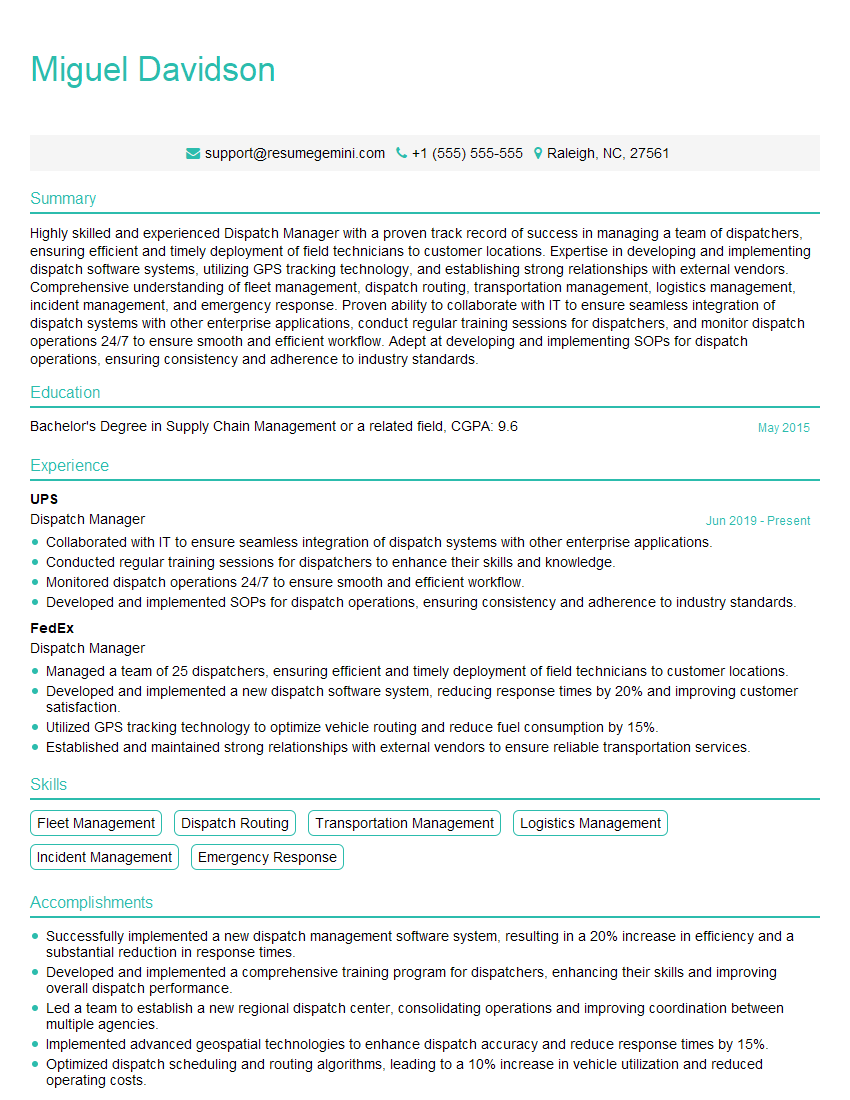
Dispatch Manager Resume Sample
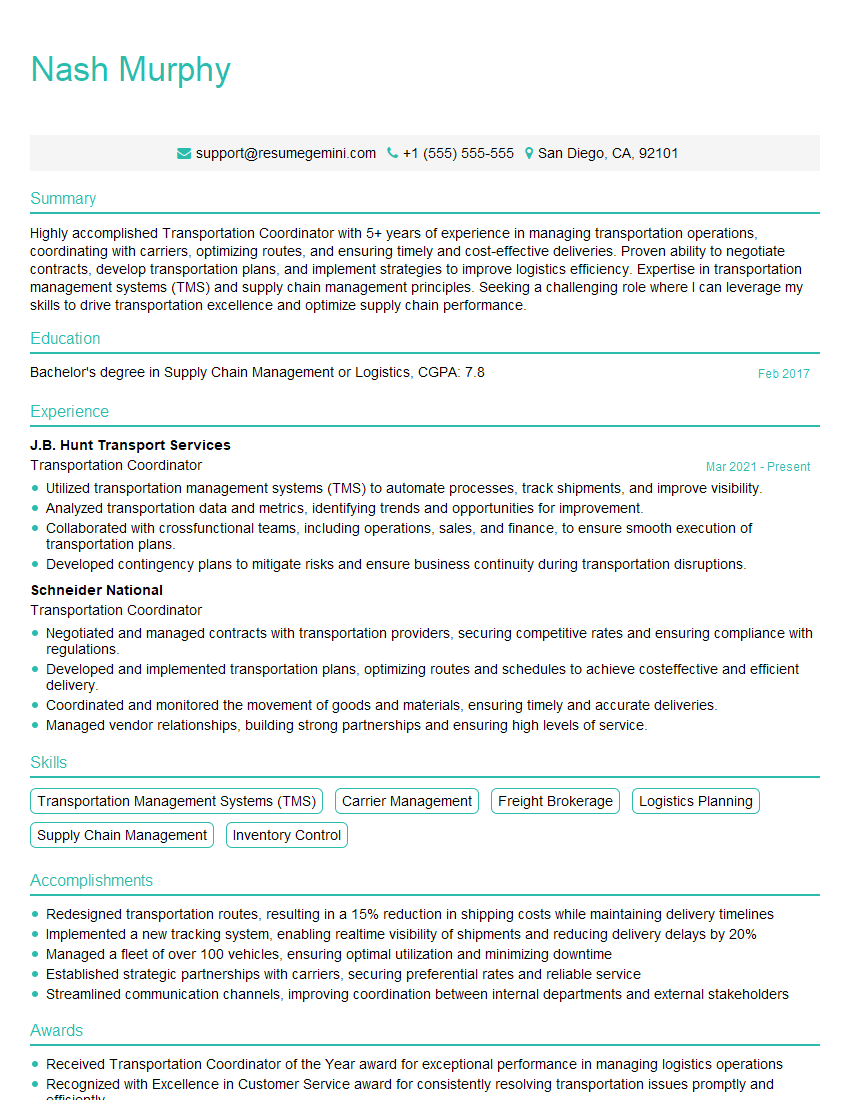
Transportation Coordinator Resume Sample
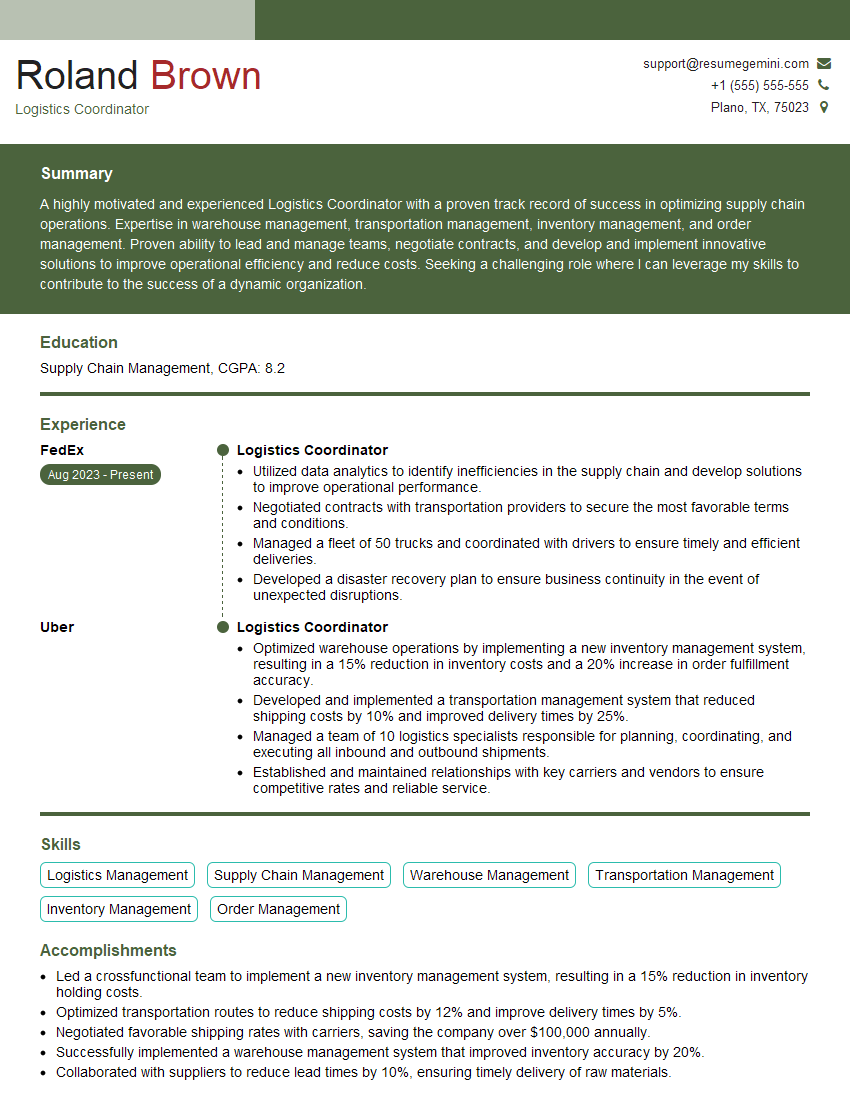
Logistics Coordinator Resume Sample
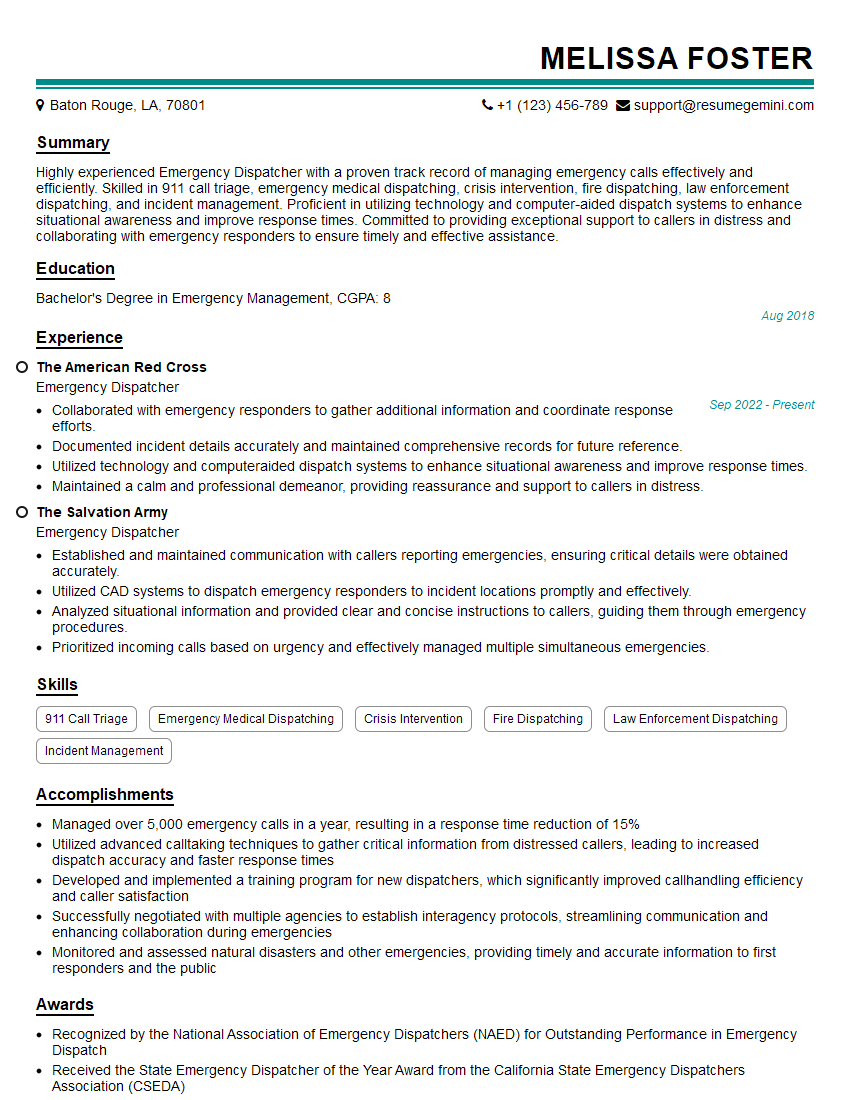
Emergency Dispatcher Resume Sample
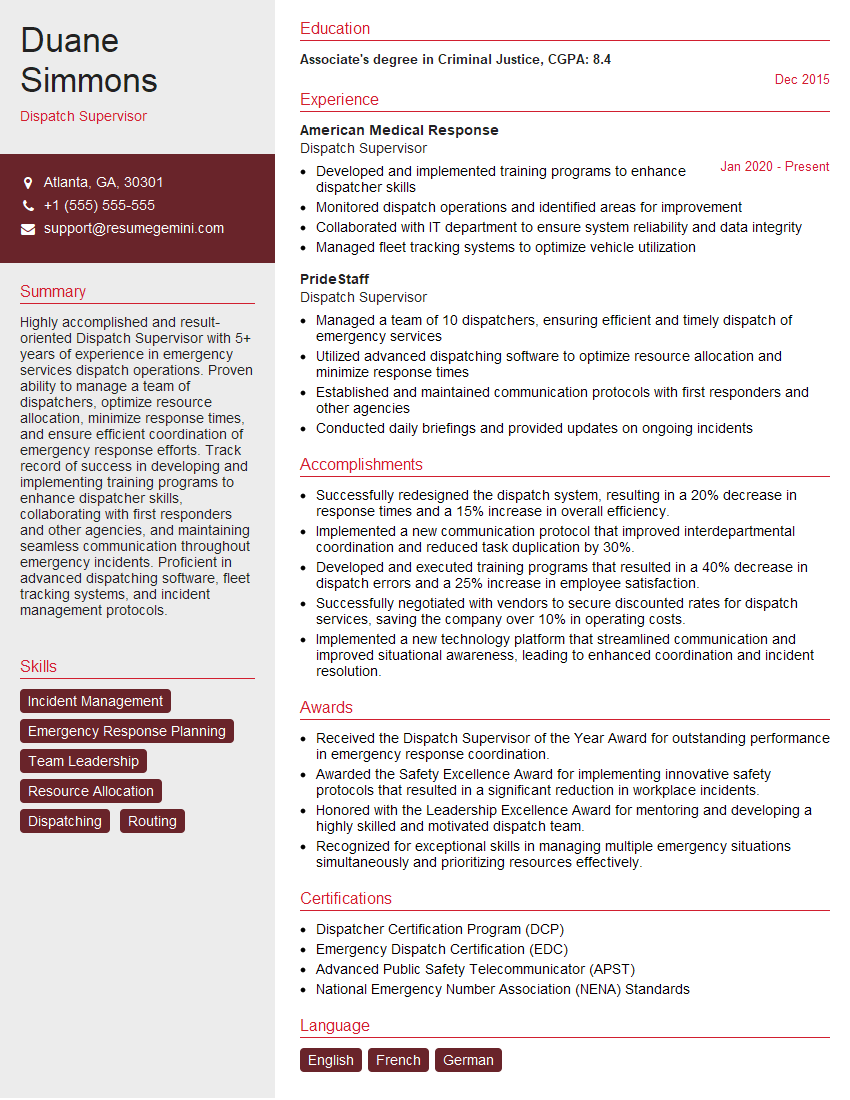
Dispatch Supervisor Resume Sample
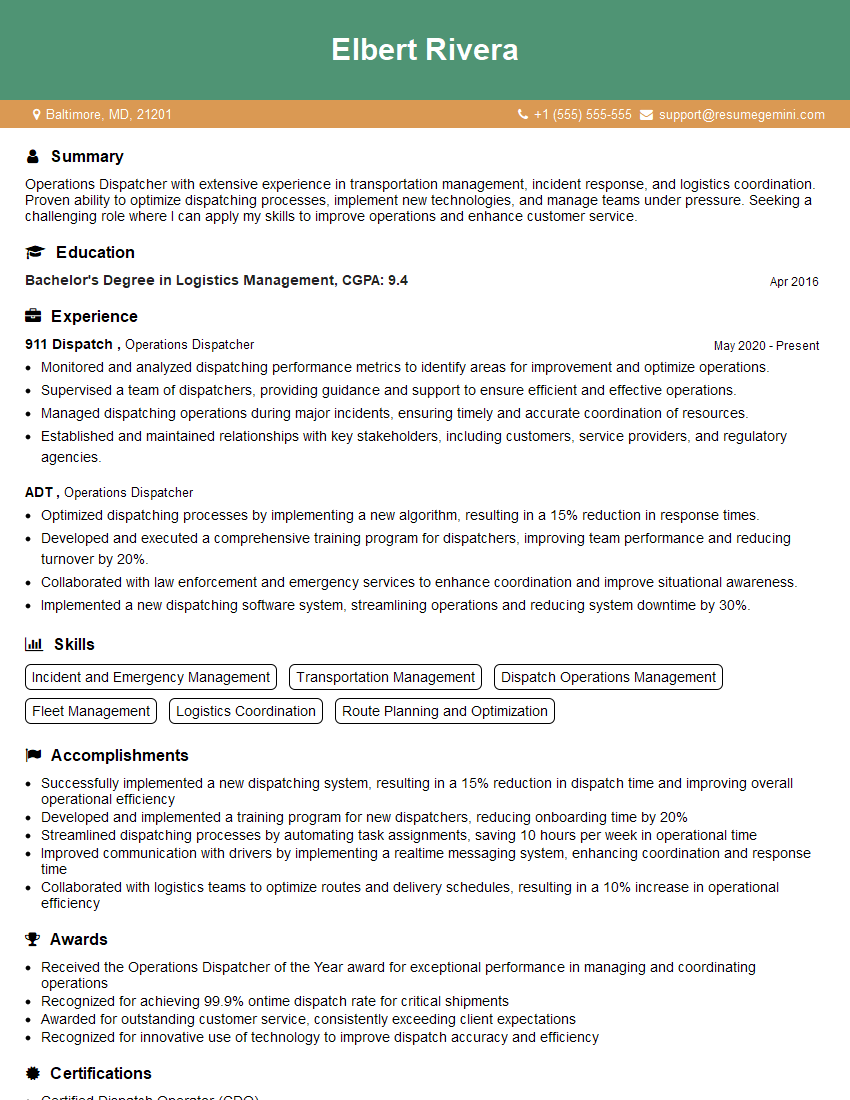
Operations Dispatcher Resume Sample
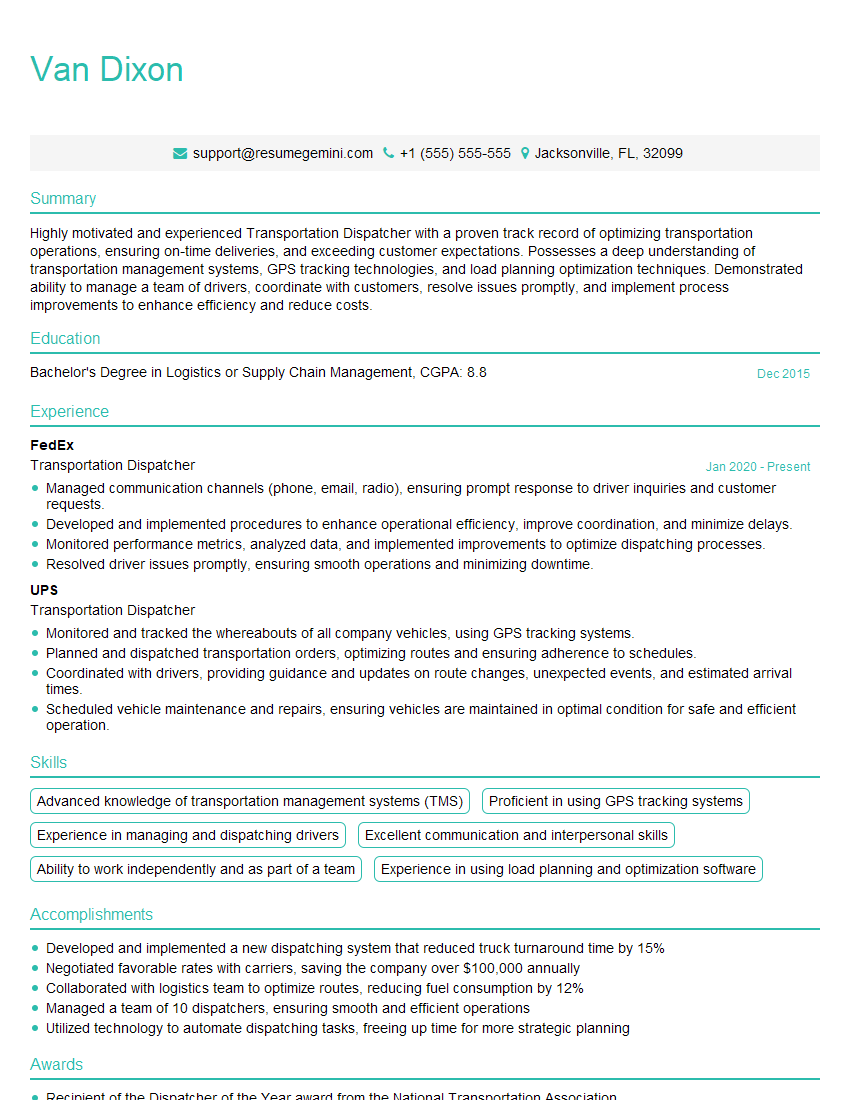
Transportation Dispatcher Resume Sample
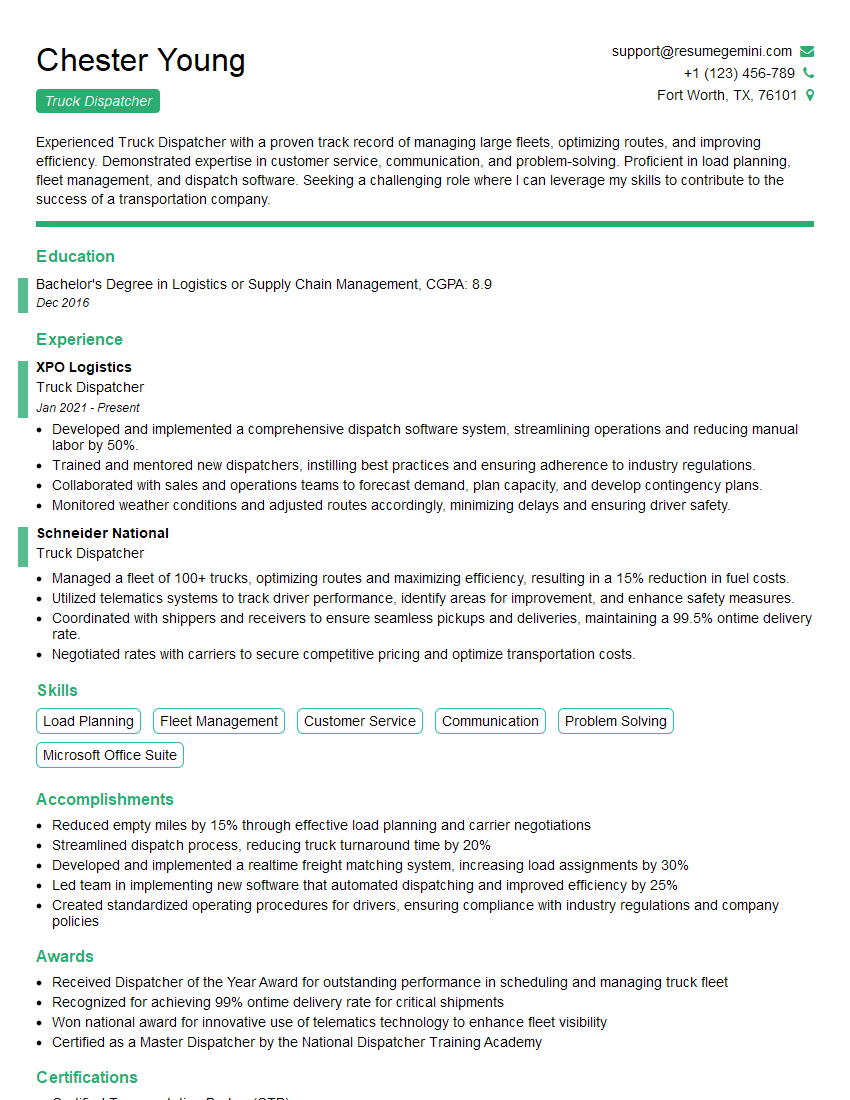
Truck Dispatcher Resume Sample
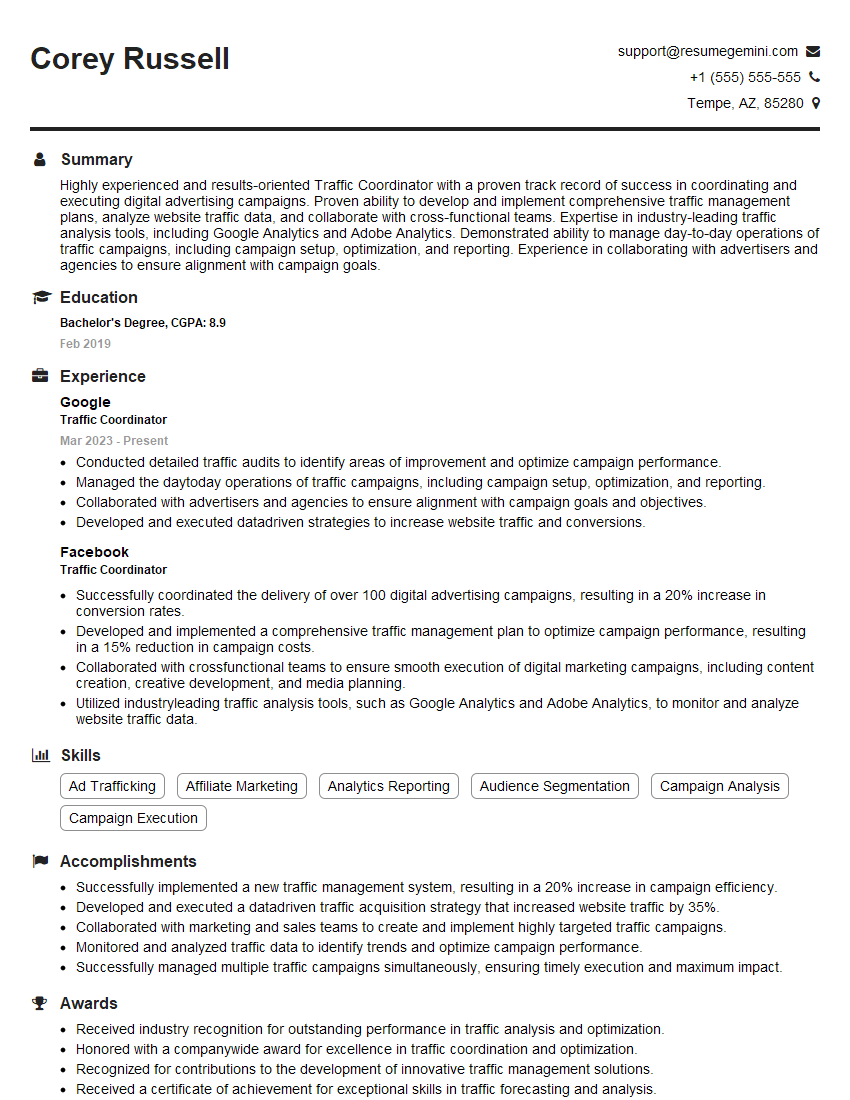
Traffic Coordinator Resume Sample
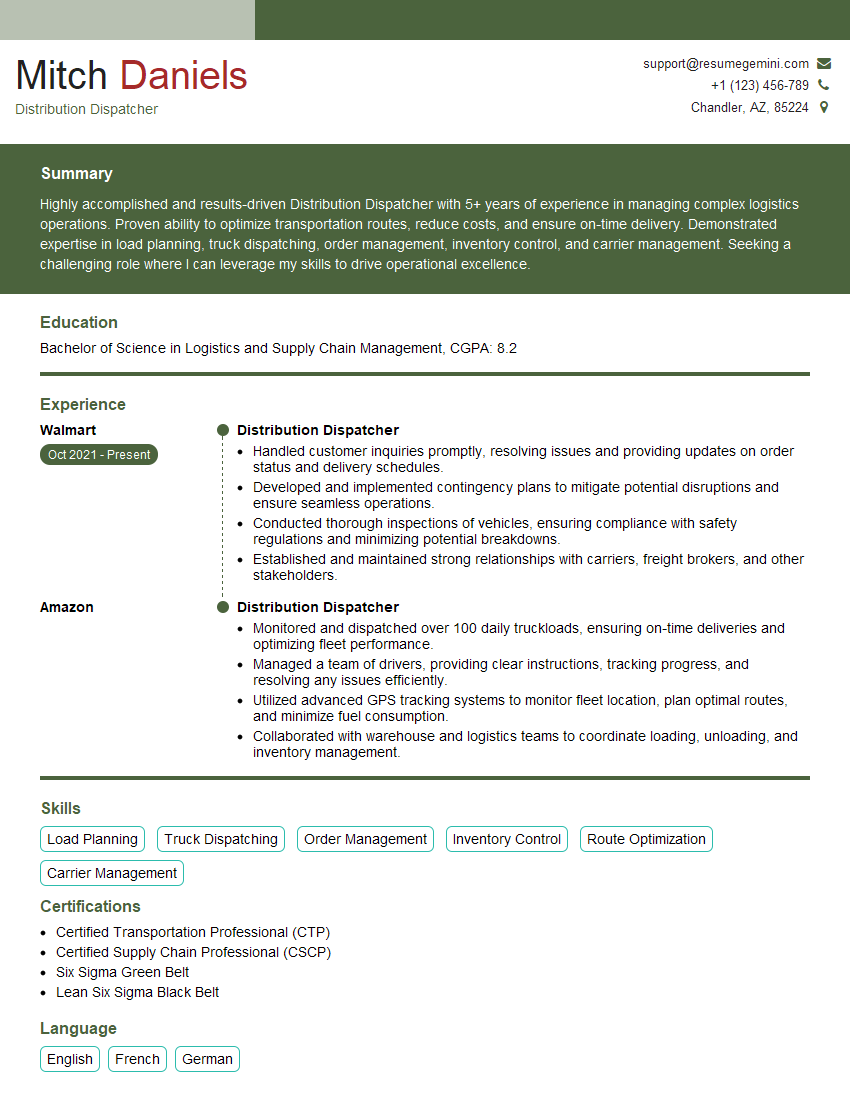
Distribution Dispatcher Resume Sample
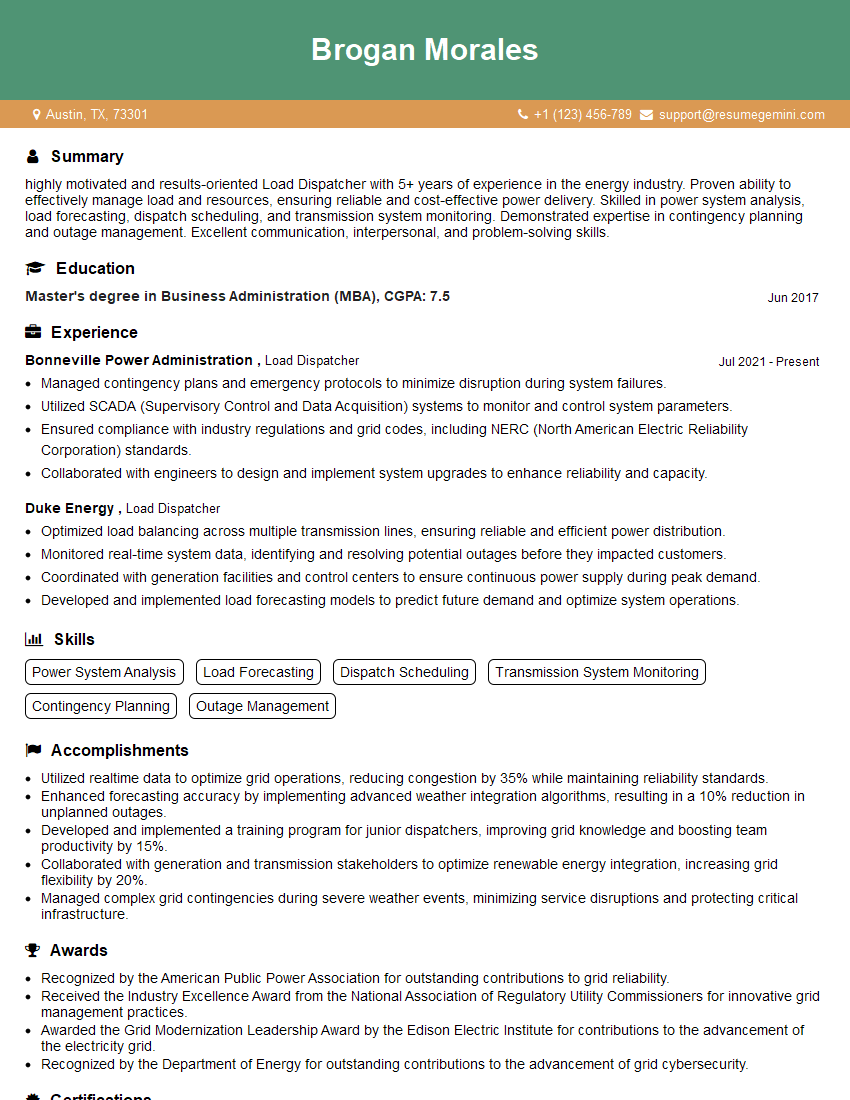
Load Dispatcher Resume Sample
Explore more articles
Users Rating of Our Blogs
Share Your Experience
We value your feedback! Please rate our content and share your thoughts (optional).
What Readers Say About Our Blog
To the interviewgemini.com Webmaster.
Very helpful and content specific questions to help prepare me for my interview!
Thank you
To the interviewgemini.com Webmaster.
This was kind of a unique content I found around the specialized skills. Very helpful questions and good detailed answers.
Very Helpful blog, thank you Interviewgemini team.