The right preparation can turn an interview into an opportunity to showcase your expertise. This guide to Maintaining accurate and detailed client records interview questions is your ultimate resource, providing key insights and tips to help you ace your responses and stand out as a top candidate.
Questions Asked in Maintaining accurate and detailed client records Interview
Q 1. What software have you used for managing client records?
Throughout my career, I’ve utilized a variety of software for managing client records, adapting to the specific needs of each organization. This includes industry-standard Customer Relationship Management (CRM) systems like Salesforce and HubSpot, as well as specialized database applications such as Microsoft Access and FileMaker Pro. I’m also proficient with spreadsheet software like Microsoft Excel and Google Sheets for smaller-scale record-keeping, where I often build custom templates to ensure data consistency and efficient retrieval. In one role, I even helped migrate client records from a legacy system to a cloud-based CRM, significantly improving accessibility and collaboration. My experience spans both individual and team usage of these platforms, giving me a holistic understanding of data management best practices in diverse environments.
Q 2. Describe your experience with data entry and accuracy standards.
Data entry accuracy is paramount in my work. I approach it methodically, employing techniques like double-checking entries and using validation tools within the software to prevent errors like incorrect formats or duplicate entries. I always aim for 100% accuracy, and my track record reflects that. For example, in my previous role managing a database of over 5,000 clients, my error rate consistently remained below 0.1%. My experience includes working with various data entry standards, including specific formatting requirements for addresses, phone numbers, and other identifying information. Maintaining meticulous attention to detail is ingrained in my work ethic. I’m also adept at identifying and correcting discrepancies, and I’m comfortable with standardized procedures to ensure consistency. I’m not just fast; I’m accurate.
Q 3. How do you ensure data integrity and consistency in client records?
Ensuring data integrity and consistency is a multi-faceted process. It starts with standardized data entry procedures, using templates and predefined fields to minimize variations. Regular data cleansing is crucial—this involves identifying and correcting inconsistencies, such as duplicate entries or outdated information. Data validation rules within the software further enhance integrity by preventing illogical entries. For example, if a field requires a numerical value, the system will reject non-numerical inputs. Finally, periodic audits and reviews of the database help identify and rectify any potential issues before they escalate. Think of it like maintaining a well-organized library – you need a clear system for shelving, regular checks for damaged books, and a consistent approach to cataloging new arrivals.
Q 4. Explain your process for identifying and resolving data discrepancies.
My process for identifying and resolving data discrepancies involves several steps. First, I employ data comparison tools to pinpoint inconsistencies. This could involve comparing data from multiple sources or using built-in functionality within the CRM or database to flag conflicting information. Once discrepancies are identified, I investigate the root cause. This might involve cross-referencing with other documents or contacting the client for clarification if necessary. For instance, if two different addresses are recorded for a client, I’ll review previous interactions, invoices, or other documentation to determine which one is correct. The resolution involves updating the records accurately and documenting the changes made, including the date, the nature of the discrepancy, and the steps taken to resolve it. This detailed record-keeping is vital for maintaining auditability and accountability.
Q 5. What methods do you use to maintain confidentiality of client data?
Maintaining client data confidentiality is a top priority. This begins with secure access controls to the database or CRM system, using strong passwords and limiting access based on the role and need-to-know principle. Sensitive data is encrypted both in transit and at rest. Furthermore, I adhere strictly to company policies regarding data sharing and disclosure. I never discuss client information with unauthorized individuals, and I always ensure that any electronic communication involving sensitive data is appropriately secured. Physical security also plays a part; ensuring that physical files (if any) are stored securely and are only accessible by authorized personnel. Think of it like safeguarding a vault – multiple layers of protection are essential.
Q 6. How familiar are you with data privacy regulations (e.g., GDPR, HIPAA)?
I have a good understanding of data privacy regulations like GDPR and HIPAA. I know that GDPR focuses on the protection of personal data within the European Union, emphasizing consent, data minimization, and individuals’ rights to access and correct their data. HIPAA, on the other hand, applies to protected health information in the United States. I understand the specific requirements for data security, breach notification, and individual rights under both regulations. In my previous role, we implemented procedures specifically designed to meet HIPAA compliance requirements. Staying updated on these evolving regulations is an ongoing process, and I actively seek out training and resources to maintain my knowledge.
Q 7. How do you prioritize tasks when managing multiple client records simultaneously?
Prioritizing tasks when managing multiple client records involves a combination of strategies. I often use a task management system, either built-in to the CRM or a separate application like Asana or Trello, to organize and prioritize tasks based on urgency and importance. I might prioritize tasks based on deadlines, client needs (e.g., addressing urgent requests first), or the potential impact of delay. For instance, processing a payment for a client who’s overdue on their bill would take precedence over updating a less time-sensitive client profile. Using a system to visualize tasks and progress helps me stay focused and efficient, ensuring that all clients receive timely and appropriate attention.
Q 8. Describe your experience with data backup and recovery procedures.
Data backup and recovery are crucial for maintaining data integrity and business continuity. My experience encompasses implementing and managing robust backup strategies using a variety of methods, including cloud-based solutions (like AWS S3 or Azure Blob Storage), local network backups, and offsite tape storage. I’m proficient in developing and executing recovery procedures, ensuring minimal data loss in case of system failures, hardware malfunctions, or even cyberattacks.
For instance, in my previous role, we implemented a 3-2-1 backup strategy: three copies of data, on two different media types, with one copy stored offsite. This provided redundancy and protected against various failure scenarios. Regular testing of our recovery plans ensured that we could restore data quickly and efficiently, minimizing downtime. This involved simulating disasters and verifying the integrity of restored data.
I also have experience with various backup software, including Veeam and Acronis, and understand the importance of versioning and retention policies to comply with regulatory requirements and allow for data restoration to specific points in time.
Q 9. How do you handle requests for client data from authorized personnel?
Handling requests for client data from authorized personnel requires a strict adherence to security protocols and data privacy regulations, such as HIPAA or GDPR. My approach involves a multi-step verification process. First, I verify the identity of the requester through secure authentication methods. Secondly, I confirm their authorization level to access the specific data requested. This often involves checking access control lists and role-based permissions within our systems. Finally, I carefully log the request, the data accessed, and the date and time of access for auditing purposes.
For example, if a doctor needs access to a patient’s medical records, I verify their identity using a secure login system, then check their access rights in our electronic health record (EHR) system. Once verified, I grant them access through the secure interface, ensuring that only the necessary information is provided. All actions are meticulously logged and monitored for any unusual activity.
I always prioritize data security and maintain a strict policy on data minimization—providing only the information absolutely necessary to fulfill the request.
Q 10. What are your strategies for improving data accuracy and efficiency?
Improving data accuracy and efficiency involves a multi-pronged approach. This includes implementing data validation rules, using standardized data entry forms, and providing regular training to staff on accurate data entry procedures. Data quality checks and audits are essential to identify and correct errors early. Regular data cleansing is necessary to eliminate duplicate records or outdated information.
For efficiency, we can leverage automation tools, such as data integration platforms, to streamline data entry processes and reduce manual effort. This might include automatically importing data from external sources or using workflow automation to update records based on pre-defined triggers.
For instance, implementing a data validation rule that prevents incorrect data entry (e.g., ensuring a date field only accepts valid dates) can greatly reduce errors. Regular data quality checks through automated scripts can proactively identify anomalies or potential inconsistencies before they become major issues.
Q 11. Explain your experience with different record-keeping systems (paper, electronic, etc.).
My experience spans various record-keeping systems, from traditional paper-based filing systems to sophisticated electronic databases and cloud-based solutions. I’m comfortable working with both, understanding the advantages and disadvantages of each. Paper-based systems, while requiring more physical space and manual effort, can be beneficial in specific circumstances where security and compliance require hard copies. Electronic systems, however, offer greater scalability, ease of access, and search capabilities. Cloud-based solutions offer even more flexibility and redundancy.
In the past, I’ve managed both paper archives and electronic databases, often needing to integrate the two. This involved digitizing paper records using optical character recognition (OCR) software to maintain a comprehensive and accessible record system. This also often included implementing a robust system for managing document versions and metadata to ensure data integrity and traceability.
My experience allows me to adapt to diverse systems and choose the most appropriate approach based on the specific needs and context.
Q 12. How do you ensure the timely and accurate updating of client records?
Ensuring timely and accurate updating of client records relies on establishing clear procedures and utilizing appropriate tools. This starts with assigning responsibilities for data entry and maintenance to specific individuals. We use workflow automation where applicable, triggering updates based on specific events (e.g., automatically updating a client’s address when they submit a change of address form). Regular data audits help identify inconsistencies or missing information. Providing regular training to staff on data entry procedures and data governance policies is crucial.
In a previous role, we implemented a system of daily data entry checks and weekly audits to flag inconsistencies or missing data. This proactive approach minimized the time it took to correct errors and significantly improved the accuracy of our client records. We also used a system of automated reminders to ensure that staff promptly updated records whenever there was a change.
The key is proactive monitoring and a systematic approach to managing data changes.
Q 13. What is your experience with data cleansing and deduplication?
Data cleansing and deduplication are vital for maintaining the accuracy and efficiency of client records. Data cleansing involves identifying and correcting or removing inaccurate, incomplete, irrelevant, duplicated, or improperly formatted data. Deduplication focuses specifically on identifying and removing duplicate records. These processes can be manual or automated, leveraging scripting languages (like Python) and database tools.
For example, I’ve used SQL queries to identify duplicate records based on key fields like client ID or email address. This allowed us to consolidate information and resolve inconsistencies. I have also used data cleansing tools to standardize data formats and address inconsistencies in spelling or capitalization, improving data quality and the efficiency of reporting and analysis.
A robust data cleansing and deduplication strategy enhances data quality, leading to more accurate reporting, better decision-making, and reduced operational costs.
Q 14. Describe a time you had to resolve a critical issue with client data.
In one instance, a critical issue arose when a system upgrade caused a temporary loss of access to a significant portion of our client database. This resulted in immediate concerns regarding our ability to serve clients and comply with regulatory reporting requirements. My immediate response involved activating our disaster recovery plan. This included restoring data from our offsite backups and implementing temporary workarounds to ensure continued operations. We prioritized the restoration of critical data sets and worked to minimize the disruption to our clients.
While the data was eventually restored, we learned a valuable lesson regarding the importance of more frequent backups and a thorough testing of our disaster recovery plan. This experience led to significant improvements in our backup and recovery procedures, including more frequent backups and more rigorous testing.
The situation highlighted the critical role of preparedness and the need for a robust, regularly tested disaster recovery plan. The incident also reinforced the importance of effective communication with stakeholders during a crisis.
Q 15. How do you track and report on key metrics related to client records?
Tracking and reporting on key metrics related to client records is crucial for ensuring data quality and informing business decisions. It involves identifying the most important metrics, establishing a system for collecting data, and then using that data to generate reports.
For example, I might track metrics such as the completeness of client records (percentage of fields filled), accuracy (number of errors identified), timeliness of updates (average time to update records after an event), and data accessibility (average time to retrieve specific client information). These metrics would be regularly monitored using dashboards and reports generated from our client record management system. I’d use a combination of automated reporting features and manual spot checks to ensure data integrity. A drop in completeness, for example, would trigger investigation into potential process issues or staff training needs.
Imagine a scenario where we notice a significant increase in incomplete records. By analyzing the data further – perhaps breaking it down by department or employee – we could pinpoint the cause: Perhaps a new staff member requires more training, or a specific process is inefficient. This data-driven approach allows for proactive problem-solving and continuous improvement.
Career Expert Tips:
- Ace those interviews! Prepare effectively by reviewing the Top 50 Most Common Interview Questions on ResumeGemini.
- Navigate your job search with confidence! Explore a wide range of Career Tips on ResumeGemini. Learn about common challenges and recommendations to overcome them.
- Craft the perfect resume! Master the Art of Resume Writing with ResumeGemini’s guide. Showcase your unique qualifications and achievements effectively.
- Don’t miss out on holiday savings! Build your dream resume with ResumeGemini’s ATS optimized templates.
Q 16. What is your experience with data migration and transition processes?
Data migration and transition processes require meticulous planning and execution to ensure data integrity and minimize disruption. My experience encompasses various migration strategies, from simple data transfers to complex transformations involving multiple systems.
In a previous role, we migrated client data from a legacy system to a cloud-based CRM. This involved several steps: data cleansing and validation, data transformation to fit the new system’s structure, testing the migration process in a sandbox environment, and finally, implementing the migration to the live system. We used robust change management processes, ensuring clear communication and stakeholder involvement throughout the process. We also established a rollback plan in case of unforeseen issues.
For instance, we developed custom scripts to handle data inconsistencies and ensure data transformations were accurate. Regular data checks and validation during the process enabled us to identify and fix issues before they impacted the final migrated data. Successful completion resulted in a more efficient and secure client record management system with enhanced reporting capabilities.
Q 17. How do you handle confidential client information securely?
Handling confidential client information securely is paramount. This involves adhering to strict protocols and utilizing appropriate technologies. It’s not just about following regulations, it’s about building trust and maintaining ethical responsibility.
- Access Control: Implementing strict access control measures, including role-based access, ensures only authorized personnel can access sensitive data. This could involve using different user roles with varying levels of permission within the system.
- Data Encryption: Encrypting data both in transit and at rest protects it from unauthorized access. This is critical, especially when dealing with personally identifiable information (PII).
- Regular Security Audits: Performing regular security audits and penetration testing helps identify vulnerabilities and ensures our systems remain protected against threats. This is a proactive approach to safeguarding information.
- Employee Training: Thoroughly training employees on data security best practices is also vital. This includes topics like password security, phishing awareness, and data handling procedures.
- Compliance: Adherence to relevant data protection regulations, such as GDPR or HIPAA, is essential. We must ensure our practices comply with all applicable laws.
For example, in my last role, we implemented multi-factor authentication for all users accessing the client database, ensuring an extra layer of security beyond just passwords.
Q 18. How would you approach improving the efficiency of a client record-keeping system?
Improving the efficiency of a client record-keeping system requires a holistic approach, starting with a thorough assessment of the current system’s strengths and weaknesses.
First, I’d analyze current processes, identifying bottlenecks and areas for improvement. This might involve surveying users to understand their challenges and pain points. Then, I would explore process automation opportunities. For instance, automating data entry, using data validation tools to reduce errors, and implementing workflows to streamline record updates.
Next, I’d consider technology upgrades, such as implementing a more robust CRM system with better reporting features or integrating with other relevant systems to reduce data silos. Finally, comprehensive staff training on the improved system and updated processes is crucial. A phased rollout, with pilot testing of new features, minimizes disruption and allows for continuous feedback and refinement.
For example, in one project, we significantly reduced processing time by automating data import from external sources and implementing a workflow system that automatically routed records to the relevant personnel based on client type and the nature of the update.
Q 19. What is your understanding of data validation and verification?
Data validation and verification are critical processes for ensuring the accuracy and reliability of client records. Validation refers to checking if data conforms to predefined rules and formats, while verification confirms that data is accurate and consistent with its source.
Validation might involve checking if a phone number is in the correct format, if a date is valid, or if a value falls within an acceptable range. Verification often requires cross-referencing data from multiple sources. For example, verifying a client’s address by checking against external databases or contacting the client directly.
Think of it like this: validation is like checking if the ingredients for a recipe are present and correctly measured, while verification is confirming that the ingredients are actually what they claim to be and are of suitable quality. Both are essential for a successful outcome.
I typically use data validation rules within our database systems and utilize automated checks to identify potential errors early in the data entry process. For complex verification tasks, I might employ techniques such as fuzzy matching (identifying similar entries) or manual reconciliation against source documents.
Q 20. Explain your experience with client record audits and compliance checks.
Client record audits and compliance checks are crucial for ensuring data integrity, regulatory compliance, and maintaining trust with clients. My experience involves both internal and external audits, focusing on both data accuracy and adherence to relevant regulations (GDPR, HIPAA, etc.).
An audit involves a systematic review of client records to identify inconsistencies, inaccuracies, or non-compliance issues. This process might involve sampling records, checking for data completeness and accuracy, and ensuring compliance with relevant policies and regulations. External audits are often more rigorous and involve an independent third party verifying our processes.
In a recent audit, we implemented a process for identifying and resolving discrepancies promptly. Following the audit, we implemented new procedures to prevent recurrence of the issues identified and strengthened our data governance policies. We produced a detailed report outlining our findings, any non-compliance issues and our corrective action plan.
Q 21. How do you use technology to optimize client record management?
Technology plays a significant role in optimizing client record management. I utilize a range of tools and techniques to streamline processes, enhance accuracy, and improve data security.
- CRM Systems: Cloud-based CRM systems are central to our operations, providing a centralized repository for client information, allowing for efficient data access and retrieval.
- Data Validation Tools: Automated data validation tools significantly reduce manual effort and minimize errors during data entry.
- Workflow Automation: Automating workflows can streamline processes, such as client onboarding, record updates, and communication.
- Data Analytics Tools: Using data analytics tools, we can gain valuable insights into client behavior and preferences, enabling more effective targeting and personalized services.
- Document Management Systems: Secure document management systems ensure that client documents are stored safely and accessible only to authorized personnel.
For example, the implementation of a new CRM system in my previous role enabled us to reduce manual data entry by 60% and improve data accuracy significantly. It also provided advanced reporting capabilities, which offered more valuable insights into our client base.
Q 22. How do you communicate effectively regarding changes or updates to client data?
Communicating changes to client data requires a multi-faceted approach prioritizing clarity, accuracy, and efficiency. I always start by identifying the specific change and its potential impact on the client. Then, I tailor my communication method to the client’s preference and the urgency of the update.
- For minor updates: A concise email or a brief note within the client’s record system, depending on company policy, is usually sufficient. For example, updating a client’s phone number might only require a quick email confirmation: “Dear [Client Name], this email confirms your phone number has been updated to [New Phone Number]. Please contact us if you have any questions.”
- For significant updates: I prefer a formal letter or a phone call, depending on the sensitivity of the information and the client’s preference. For example, changes to billing information would warrant a formal letter with confirmation details. If there was a data breach affecting a client, I would communicate with a dedicated phone call immediately, following organizational protocols.
- Record of Communication: Regardless of the method, I always document the communication, including the date, time, method, and a summary of the conversation. This ensures traceability and accountability.
This structured approach ensures transparency and prevents misunderstandings, fostering trust with our clients.
Q 23. Describe your experience with data analysis related to client records.
My experience with data analysis related to client records spans several areas. I regularly use data analysis to identify trends, improve service, and streamline our processes. For example:
- Identifying high-risk clients: Analyzing client data such as payment history, contract terms, and interaction logs allows me to identify clients who might be at risk of churning or defaulting. This allows proactive intervention and retention efforts.
- Optimizing service delivery: By analyzing client demographics and service usage patterns, we can identify areas for improvement in our service delivery. For instance, if many clients are having difficulty navigating a specific section of our online portal, this analysis allows for targeted improvements.
- Compliance and auditing: I analyze client data to ensure we are meeting regulatory requirements and maintaining accurate records for audits. This involves checking for data integrity and consistency across various records.
I’m proficient in using tools like Excel, SQL, and business intelligence software to perform these analyses and present findings clearly and concisely to stakeholders using visualizations like charts and graphs.
Q 24. What are some of the common challenges in maintaining accurate client records?
Maintaining accurate client records presents several challenges, some of the most common are:
- Data entry errors: Human error during data entry is inevitable. Implementing robust data validation checks and double-checking procedures are crucial to minimize these errors.
- Inconsistent data formats: Receiving data from various sources in different formats (e.g., PDFs, spreadsheets, handwritten forms) makes it difficult to maintain consistency and accuracy. Standardizing data entry processes and using data transformation tools can mitigate this.
- Data duplication: Having multiple entries for the same client can lead to confusion and inaccurate reporting. Implementing unique identifiers and data de-duplication techniques are crucial here. Think of it like trying to maintain a perfect library catalog—one book, one entry!
- Data security breaches: Protecting client data from unauthorized access and breaches is paramount. Implementing strict access control measures, encryption, and regular security audits is essential.
- Keeping data up-to-date: Client information changes regularly—addresses, contact details, etc. Implementing processes for regularly updating client information is essential.
Addressing these challenges requires a combination of technological solutions, standardized processes, and diligent staff training.
Q 25. How do you prioritize client data security?
Prioritizing client data security is paramount. My approach is multi-layered and includes:
- Access control: Strict access control measures are implemented, meaning only authorized personnel with a legitimate business need can access client data. This is often handled through role-based access controls within our database systems.
- Data encryption: Both data at rest and data in transit are encrypted to prevent unauthorized access, even if a breach occurs. We utilize strong encryption protocols and regularly update encryption keys.
- Regular security audits and vulnerability assessments: Regular security audits and penetration testing help identify vulnerabilities and ensure that our security measures remain effective. We perform these in accordance with industry best practices and regulatory requirements.
- Data loss prevention (DLP) measures: We implement measures to prevent sensitive data from leaving our secure environment. This can include restrictions on transferring files externally and regular checks for data exfiltration attempts.
- Employee training: Regular training programs educate employees on data security best practices, emphasizing the importance of strong passwords, phishing awareness, and reporting suspicious activities.
Data security is not a one-time task but an ongoing process requiring constant vigilance and adaptation to evolving threats.
Q 26. What strategies do you use to ensure the long-term accessibility of client records?
Ensuring the long-term accessibility of client records requires a proactive and strategic approach. Key strategies include:
- Data backup and recovery: Implementing a robust data backup and recovery system is essential. This includes regular backups to offsite locations, ensuring data redundancy and the ability to restore data in case of a disaster.
- Data migration planning: As technology evolves, it’s crucial to plan for migrating data to new systems and platforms. This involves careful data mapping and validation to avoid data loss or corruption during the transition.
- Data archiving: Establishing a structured data archiving process ensures that older records are preserved securely and remain accessible while freeing up space on active systems. This also helps with compliance purposes.
- Using compatible data formats: Choosing data formats that are unlikely to become obsolete (e.g., structured formats like XML or JSON rather than proprietary formats) ensures long-term compatibility.
- Regular data cleansing: Periodically cleaning and validating the data removes inconsistencies and ensures data accuracy, improving long-term data usability.
Think of it like preserving historical documents—using durable materials and proper storage methods ensures they remain accessible for future generations. The same principle applies to client records.
Q 27. Describe your experience working with different data formats and structures.
My experience encompasses working with a wide variety of data formats and structures, including:
- Relational databases (SQL): I’m proficient in working with relational databases like MySQL and PostgreSQL, utilizing SQL queries for data retrieval, manipulation, and analysis. This is the backbone of many client record systems.
- Spreadsheets (Excel, Google Sheets): I frequently use spreadsheets for data entry, validation, and basic analysis, particularly when dealing with smaller datasets or performing quick analyses.
- CSV and other delimited files: I’m comfortable working with CSV and other delimited files for data import and export, often used for data exchange between different systems.
- XML and JSON: I’m experienced with structured data formats like XML and JSON, particularly useful when integrating with web services and APIs, which are increasingly common in modern systems.
- PDFs and scanned documents: I’ve worked with optical character recognition (OCR) software to extract data from scanned documents and PDFs, which can be crucial for digitizing legacy records.
My ability to adapt to different data formats is crucial for effective client record management in diverse and evolving environments.
Q 28. How do you stay up-to-date with best practices in client record management?
Staying up-to-date with best practices in client record management is an ongoing commitment. My approach includes:
- Professional development: I regularly attend industry conferences and webinars to learn about the latest technologies, regulations, and best practices. This ensures I’m aware of evolving trends and can implement improvements in our systems.
- Industry publications and journals: I subscribe to industry publications and journals to stay informed about changes in data privacy regulations, data security threats, and new technological advancements.
- Professional certifications: Pursuing relevant certifications (e.g., in data privacy or information management) demonstrates a commitment to excellence and keeps me updated on industry standards.
- Networking with peers: I actively network with other professionals in the field, exchanging ideas and best practices. This collaborative approach allows for continuous learning and improvement.
- Internal training and knowledge sharing: I actively participate in internal training programs and knowledge sharing sessions, ensuring that our team remains aligned with the latest best practices.
Continuous learning in this field is crucial to ensure we maintain the highest standards of accuracy, security, and compliance.
Key Topics to Learn for Maintaining Accurate and Detailed Client Records Interview
- Data Entry & Accuracy: Understanding best practices for accurate and efficient data input, including minimizing errors and utilizing validation tools. Practical application: Demonstrate your proficiency with different data entry systems and your strategies for ensuring data integrity.
- Data Organization & Retrieval: Mastering methods for organizing client information for easy retrieval and reporting. This includes choosing appropriate filing systems (physical or digital) and understanding database structures. Practical application: Describe your experience with different record-keeping systems and how you’ve optimized them for efficient data access.
- Data Security & Confidentiality: Knowing and adhering to data privacy regulations (e.g., GDPR, HIPAA) and implementing secure data handling procedures. Practical application: Explain how you’ve ensured client data confidentiality in past roles and your understanding of relevant legal frameworks.
- Client Communication & Record Updates: Understanding how effective communication with clients impacts record accuracy and the importance of regular updates. Practical application: Describe how you’ve handled situations where client information needed updating or correction and how you ensured transparency and accuracy.
- Record Keeping Systems & Software: Familiarity with various CRM systems, databases, and other record-keeping software (e.g., Salesforce, Microsoft Dynamics). Practical application: Discuss your experience with different software and your ability to adapt to new systems quickly.
- Problem-Solving & Troubleshooting: Identifying and resolving inconsistencies or errors in client records, including using analytical skills to pinpoint the source of discrepancies. Practical application: Describe a situation where you had to troubleshoot a data issue and how you successfully resolved it.
Next Steps
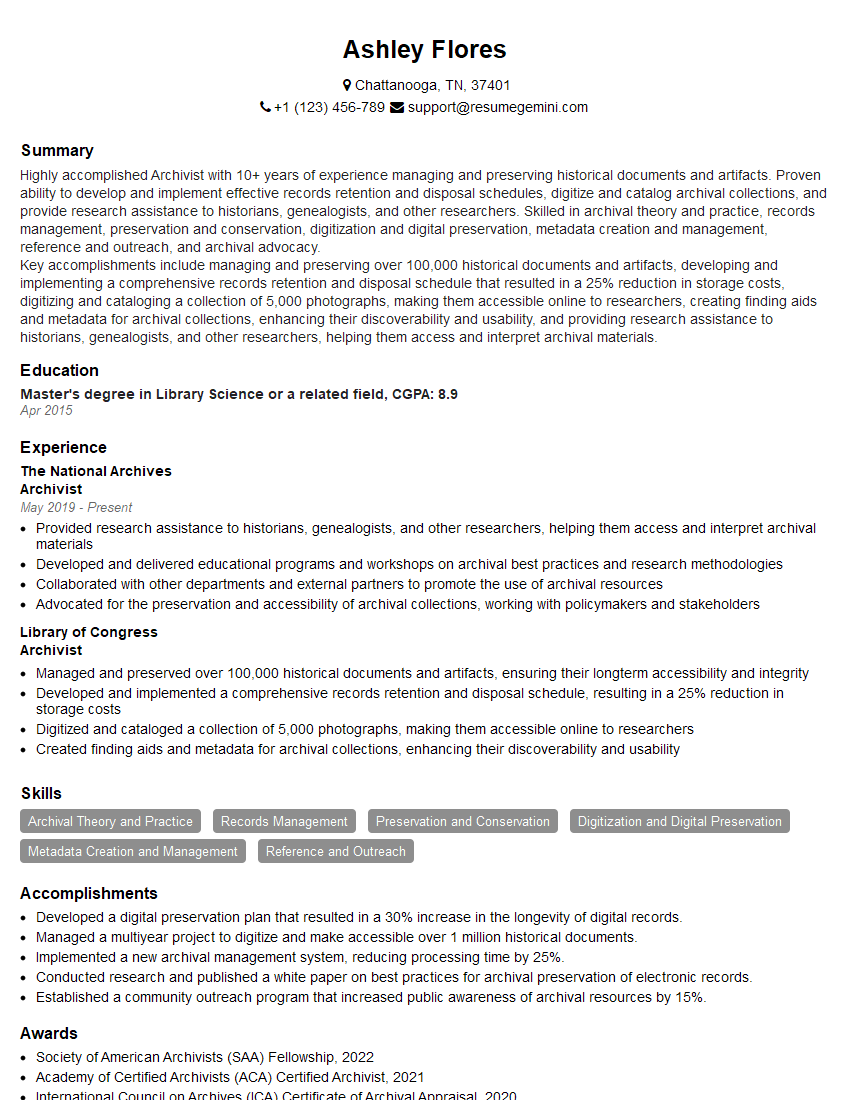
Mastering the art of maintaining accurate and detailed client records is crucial for career advancement in many fields. It demonstrates your attention to detail, organizational skills, and commitment to data integrity – highly valued attributes in today’s professional landscape. To boost your job prospects, creating an ATS-friendly resume is essential. ResumeGemini is a trusted resource that can help you build a professional resume that highlights your relevant skills and experience. Examples of resumes tailored to maintaining accurate and detailed client records are available to help you create a compelling application. Invest in your future – build a strong resume today!
Explore more articles
Users Rating of Our Blogs
Share Your Experience
We value your feedback! Please rate our content and share your thoughts (optional).
What Readers Say About Our Blog
To the interviewgemini.com Webmaster.
Very helpful and content specific questions to help prepare me for my interview!
Thank you
To the interviewgemini.com Webmaster.
This was kind of a unique content I found around the specialized skills. Very helpful questions and good detailed answers.
Very Helpful blog, thank you Interviewgemini team.