The right preparation can turn an interview into an opportunity to showcase your expertise. This guide to Maintenance of Cellular Antennas interview questions is your ultimate resource, providing key insights and tips to help you ace your responses and stand out as a top candidate.
Questions Asked in Maintenance of Cellular Antennas Interview
Q 1. Describe your experience with cellular antenna maintenance procedures.
My experience with cellular antenna maintenance encompasses a wide range of tasks, from routine inspections and cleaning to complex repairs and replacements. I’ve worked on various antenna types, including panels, omni-directional antennas, and sector antennas, across different technologies like 2G, 3G, 4G, and 5G. A typical maintenance procedure starts with a visual inspection, checking for physical damage, corrosion, loose connections, and bird nests. This is followed by RF signal testing to assess performance. If issues are detected, I troubleshoot the problem, which might involve tightening connectors, replacing damaged components, or even replacing the entire antenna. I meticulously document all maintenance activities, including dates, findings, and actions taken, ensuring compliance with safety regulations and company protocols. For example, I once discovered a loose cable connector on a remote tower during a routine inspection that was causing significant signal degradation. A simple tightening resolved the issue, preventing a major service disruption.
Another significant aspect of my maintenance experience involves preventative measures. This includes scheduling regular inspections, implementing proactive cleaning routines to remove dust and debris that can affect signal quality, and proactively addressing potential issues before they escalate into major problems. This preventative approach has been key to minimizing downtime and maximizing network efficiency.
Q 2. Explain the different types of cellular antennas and their applications.
Cellular antennas come in various types, each suited to specific applications. Think of them like different tools in a toolbox – each designed for a particular job.
- Panel Antennas: These are highly directional antennas, focusing signal in a specific sector. They are ideal for densely populated areas or when targeting specific geographic locations, maximizing coverage in a specific direction. Imagine a city street; panel antennas are great for covering a street while minimizing interference to adjacent streets.
- Omni-directional Antennas: These radiate signals in all directions equally, providing 360-degree coverage. They are frequently used in areas needing broad coverage, such as rural settings or large open spaces. Think of a rural tower covering a wide expanse.
- Sector Antennas: A hybrid approach, these antennas provide coverage across a specific sector (e.g., 60, 90, or 120 degrees). They offer a balance between the focused coverage of panel antennas and the broader coverage of omni-directional antennas. They are commonly used to efficiently cover a section of a city or a suburban area.
The choice of antenna depends heavily on factors like the terrain, population density, and desired coverage area. A careful analysis of these factors is crucial for optimal network performance.
Q 3. How do you troubleshoot a cellular antenna with a weak signal?
Troubleshooting a weak cellular antenna signal requires a systematic approach. It’s like detective work, systematically eliminating possibilities.
- Visual Inspection: Begin with a thorough visual inspection of the antenna and its connections. Check for physical damage, corrosion, loose connectors, and any signs of environmental impact (e.g., bird nests, ice buildup).
- RF Signal Measurement: Utilize RF testing equipment (e.g., spectrum analyzer, signal generator) to measure signal strength and quality at the antenna and at various points in the signal path. This helps pinpoint the source of the problem. Comparing these measurements with historical data or baseline values is crucial.
- Cable and Connector Testing: Check for any breaks, kinks, or water damage in the coaxial cables connecting the antenna to the radio equipment. Inspect connectors for corrosion or poor contact. A faulty connector is a common culprit.
- Radio Equipment Check: If the problem isn’t in the antenna or cabling, it might be within the radio equipment itself. Coordinate with the radio equipment technician to rule out problems at the base station.
- Environmental Factors: Consider external factors that may impact signal propagation, such as interference from other radio sources, weather conditions (rain, snow, fog), or even tree growth near the antenna.
By carefully following this process, we can usually identify and resolve the cause of the weak signal. For instance, I once tracked a weak signal to a damaged cable hidden within a junction box, which was easily repaired.
Q 4. What safety precautions do you take when working at heights on a cell tower?
Safety is paramount when working at heights on a cell tower. It’s not just about following regulations; it’s about protecting lives.
- Fall Protection: Always use a full-body harness, anchored securely to the tower with a lifeline and appropriate safety equipment. This prevents falls, the most significant hazard.
- Proper Training and Certification: I possess all necessary certifications and training for working at heights and have a thorough understanding of tower safety procedures and equipment.
- Weather Conditions: Work at heights should only be performed under safe weather conditions. High winds, heavy rain, ice, and lightning are major hazards and require work to be postponed.
- Communication: Clear and constant communication with ground personnel is vital. A designated spotter is essential to monitor my safety and assist in any event.
- Equipment Inspection: All safety equipment (harness, ropes, connectors) must be inspected before each use to ensure it’s in good working order.
- Lockout/Tagout Procedures: When working on energized equipment, strict lockout/tagout procedures are followed to prevent accidental energization.
Adherence to these procedures is not just a best practice; it’s a matter of safety, ensuring both the worker’s wellbeing and the smooth operation of the network infrastructure.
Q 5. Describe your experience with RF testing equipment.
I have extensive experience with a wide range of RF testing equipment, including spectrum analyzers, signal generators, power meters, and network analyzers. Spectrum analyzers allow for precise measurement of signal frequencies, strength, and quality. Signal generators are used to test the antenna’s response under various signal conditions. Power meters measure the power output of the transmitter, ensuring it’s within safe operating limits. Network analyzers provide a comprehensive view of the entire RF network, revealing areas of weakness or interference. I am proficient in using these tools to perform accurate measurements, analyze data, and troubleshoot complex RF issues.
For example, I recently utilized a network analyzer to pinpoint a source of interference causing signal degradation. By identifying the interfering frequency, I was able to suggest measures to mitigate the issue and restore optimal performance. The ability to effectively use this technology is crucial in my role and ensures efficient troubleshooting.
Q 6. How do you interpret RF signal strength measurements?
Interpreting RF signal strength measurements requires an understanding of the units involved (typically dBm) and the context of the measurement. A higher dBm value indicates a stronger signal. For example, -60 dBm is stronger than -80 dBm.
However, simply looking at a single signal strength number isn’t sufficient. It’s crucial to consider the following:
- Signal Quality: Signal strength alone doesn’t tell the whole story. Look at parameters like signal-to-noise ratio (SNR) and error vector magnitude (EVM) to assess the quality of the signal. A high SNR and low EVM are desirable.
- Reference Point: The signal strength must be interpreted relative to a benchmark or expected value. Comparing measurements to historical data or manufacturer specifications gives context.
- Environmental Factors: Weather conditions, terrain, and obstacles can significantly impact signal strength. These must be considered when evaluating the data.
- Frequency Band: The signal strength can vary significantly across different frequency bands due to atmospheric absorption, reflection, and diffraction.
By considering these factors, I can accurately interpret RF signal measurements and identify problems that might otherwise be overlooked. This ensures we maintain optimal network performance.
Q 7. What are the common causes of cellular antenna malfunctions?
Cellular antenna malfunctions can stem from various causes, ranging from simple to complex issues.
- Physical Damage: This includes damage from weather (lightning strikes, high winds, ice), vandalism, or accidental damage during maintenance or construction activities. A bent or cracked antenna element can drastically reduce performance.
- Connector Issues: Loose, corroded, or damaged connectors are a frequent source of problems. Poor contact between connectors results in signal attenuation or complete signal loss.
- Cable Damage: Breaks, kinks, or water ingress in coaxial cables can degrade or completely block the signal. This often requires cable replacement.
- Environmental Factors: Bird nests, ice buildup, and vegetation growth can obstruct the antenna’s signal path, leading to signal loss.
- RF Interference: Interference from other radio sources can disrupt signal transmission, leading to decreased performance or dropouts.
- Component Failure: Internal components of the antenna, such as filters or matching networks, can fail due to age, overheating, or manufacturing defects.
Understanding these common causes allows for proactive preventative maintenance and swift troubleshooting when issues do arise, ensuring minimal disruption to cellular service. This often requires a blend of preventative measures and reactive problem-solving.
Q 8. How do you identify and resolve issues with antenna grounding?
Identifying and resolving grounding issues in cellular antennas is crucial for signal integrity and safety. Poor grounding can lead to signal degradation, lightning strikes damaging equipment, and even safety hazards for technicians.
I typically start by visually inspecting the grounding system. This includes checking the grounding wire’s physical condition for any breaks, corrosion, or loose connections. I look for signs of overheating near the ground connection point. I then use a multimeter to measure the ground resistance. A low resistance value (ideally below 1 ohm) indicates a good ground. Higher resistance points to problems.
- Problem: High ground resistance.
- Solution: I’d investigate the entire path, from the antenna’s grounding rod to the main grounding system. This might involve cleaning corroded connections, replacing damaged wire segments, ensuring proper contact with the ground rod, or even installing a new grounding rod if necessary. Sometimes, the problem is not in the direct path, but rather a poor connection at a junction box further down the line.
- Problem: Missing or inadequate grounding rod.
- Solution: Installation of a new grounding rod according to local codes and regulations. This often involves digging to a sufficient depth and ensuring proper soil contact using appropriate grounding compounds.
Documenting all findings and corrective actions is essential for future reference and troubleshooting.
Q 9. Describe your experience with antenna alignment and optimization.
Antenna alignment and optimization are critical for maximizing signal strength and coverage. My experience involves using professional-grade signal analyzers and test equipment to accurately determine the optimal antenna orientation and tilt angles. This is influenced by factors like terrain, building obstructions, and the desired coverage area.
I’ve worked with various antenna types, including panel antennas, sector antennas, and omni-directional antennas, each requiring a unique approach to optimization. For example, with sector antennas, precise azimuth (horizontal) and elevation (vertical) adjustments are essential to focus the signal within a specific sector. This is particularly crucial in urban environments where careful planning minimizes interference from adjacent cells.
I typically start with initial alignment based on survey data or manufacturer’s recommendations. Then, I utilize signal measurement tools to fine-tune the alignment, observing real-time signal strength and quality indicators. This iterative process ensures optimal performance and often involves coordination with network engineers for performance verification.
I also have experience optimizing antenna performance by addressing issues such as multipath interference. This might involve adjusting antenna height, deploying beamforming technologies, or implementing strategies to mitigate signal reflections.
Q 10. Explain the importance of proper antenna installation techniques.
Proper antenna installation is paramount for reliable network performance and longevity of the equipment. Incorrect installation can lead to signal degradation, premature equipment failure, and safety hazards.
- Structural Integrity: The antenna must be securely mounted on a sturdy structure capable of withstanding wind loads and other environmental stresses. Improper mounting can result in antenna failure and potential damage to surrounding infrastructure. This involves using appropriate mounting hardware and techniques specific to the antenna type and environmental conditions.
- Coaxial Cable Routing: Proper cable routing minimizes signal loss, prevents water ingress, and protects cables from damage. This involves using properly sized conduit, employing strain relief, and avoiding sharp bends. This is very important as signal degradation can seriously impact the quality of service.
- Grounding: A robust grounding system is essential for lightning protection and minimizing interference. This includes using appropriate grounding wire size and ensuring low impedance connections.
- RF Safety: Proper installation techniques minimize RF exposure to personnel. This includes understanding radiation patterns and maintaining appropriate distances during installation and operation.
Following manufacturer’s specifications and industry best practices is key to ensuring a successful and safe installation. I always prioritize safety and meticulously document every step of the installation process.
Q 11. How do you handle unexpected problems during antenna maintenance?
Unexpected problems during antenna maintenance are inevitable. My approach involves a structured problem-solving methodology. I begin by assessing the situation, focusing on safety first, then systematically identifying the problem’s root cause. This typically involves:
- Safety First: Securing the area, assessing any immediate hazards (e.g., high voltage, loose parts).
- Data Collection: Gathering information – error logs, signal strength readings, visual inspections, etc. – to narrow down the possible causes.
- Troubleshooting: Employing systematic troubleshooting techniques. This might include checking connections, examining cable integrity, and testing equipment functionality.
- Escalation: If I’m unable to resolve the issue, I promptly escalate it to relevant parties (e.g., network engineers, supervisors) to coordinate a solution. Good communication is key during these events.
I once encountered a complete signal outage at a remote site due to a seemingly minor cable connector issue. My experience enabled me to quickly troubleshoot the problem, identifying a faulty connector that we weren’t expecting. Replacing it immediately resolved the issue and prevented significant downtime.
Q 12. What is your experience with different types of connectors used in antenna systems?
My experience encompasses a wide range of connectors used in antenna systems. Understanding connector types and their applications is crucial for reliable performance and signal integrity. Common types include:
- N-Type: A robust, weatherproof connector frequently used for high-power applications and outdoor deployments. It provides excellent impedance matching.
- TNC (Threaded Neill-Concelman): Similar to N-Type, offering weatherproof characteristics but with a threaded coupling for enhanced security.
- SMA (Subminiature A): A smaller, coaxial connector often used for indoor or less demanding applications. It’s smaller size makes it suitable for compact systems.
- F-Type: Primarily used in cable TV and broadband applications. Less robust than N-type but readily available.
I’m proficient in identifying, inspecting, and replacing these connectors, ensuring proper impedance matching and secure connections to avoid signal loss or degradation. I also understand the importance of using the correct tools and techniques to prevent damage during connection and disconnection.
Q 13. Describe your experience with preventative maintenance on cellular antennas.
Preventative maintenance is essential for ensuring optimal performance and extending the lifespan of cellular antennas. My approach involves a structured schedule that includes:
- Regular Inspections: Visual inspection of antennas, cables, and connectors for signs of physical damage, corrosion, or loose connections.
- Connection Testing: Using a multimeter to verify proper impedance matching and check for continuity.
- Signal Strength Monitoring: Regular monitoring of signal strength and quality to identify any potential performance degradation.
- Environmental Checks: Assessing the impact of environmental factors such as weather and temperature on the antenna system.
- Cleaning: Regular cleaning of the antennas to remove dirt, debris, and moisture that might affect performance.
A well-defined preventative maintenance schedule helps to detect potential issues early, preventing major failures and ensuring consistent network performance. Proactive maintenance is significantly more cost-effective than reactive repairs.
Q 14. How do you ensure the safety of yourself and others during antenna maintenance?
Safety is my utmost priority. Working at heights or with electrical equipment presents significant risks. I always adhere to strict safety protocols, including:
- Lockout/Tagout Procedures: Before commencing work on any electrical equipment, I follow lockout/tagout procedures to prevent accidental energization.
- Fall Protection: When working at heights, I utilize appropriate fall protection equipment such as harnesses, safety lines, and fall arrest systems.
- Personal Protective Equipment (PPE): I always wear appropriate PPE, including safety glasses, gloves, and hard hats. Depending on the situation, this might also include arc flash suits or other specialized protective gear.
- Site Surveys: I always conduct a thorough site survey before beginning work, identifying potential hazards such as overhead power lines or unstable structures.
- Teamwork and Communication: When working with a team, clear communication is critical. I make sure everyone is aware of potential hazards and safety procedures.
Regular safety training and adherence to company safety policies are indispensable to maintaining a safe working environment. Safety isn’t just a set of rules, it’s a mindset.
Q 15. What is your experience with working with different frequency bands?
My experience spans a wide range of frequency bands, from the lower frequencies used in older cellular technologies like GSM (900 MHz and 1800 MHz) all the way to the higher frequencies employed in 4G LTE (700 MHz to 2600 MHz) and 5G (sub-6 GHz and mmWave). I’ve worked extensively with different frequency bands in various antenna configurations and site environments. For example, I’ve been involved in the maintenance of antennas operating in the 3.5 GHz band for 5G deployments, which require a more precise alignment and careful handling due to the shorter wavelengths involved. Understanding the specific characteristics of each band—such as signal propagation, interference potential, and required cabling—is crucial for effective maintenance and troubleshooting.
Working with higher frequency bands like mmWave (e.g., 28 GHz and 39 GHz) presents unique challenges. These frequencies are extremely susceptible to atmospheric conditions and signal blockage, requiring careful site selection, advanced antenna designs (often requiring beamforming), and precise alignment. I have practical experience in managing and resolving issues in these environments, ensuring optimal performance and minimizing signal degradation.
Career Expert Tips:
- Ace those interviews! Prepare effectively by reviewing the Top 50 Most Common Interview Questions on ResumeGemini.
- Navigate your job search with confidence! Explore a wide range of Career Tips on ResumeGemini. Learn about common challenges and recommendations to overcome them.
- Craft the perfect resume! Master the Art of Resume Writing with ResumeGemini’s guide. Showcase your unique qualifications and achievements effectively.
- Don’t miss out on holiday savings! Build your dream resume with ResumeGemini’s ATS optimized templates.
Q 16. How do you document your maintenance activities?
Thorough documentation is fundamental to effective antenna maintenance. My process involves using a combination of digital and physical records. I use a computerized maintenance management system (CMMS) to log all activities, including preventative maintenance schedules, repair details, parts replaced, and any observed anomalies. This system allows for efficient tracking of tasks, history reviews, and performance analysis.
In addition to the CMMS, I maintain detailed site-specific documentation, including antenna diagrams, cable layouts, and equipment specifications. This information is crucial for future maintenance and troubleshooting. Photography and videography are also key components; they provide visual records of antenna placement, cable connections, and any damage identified. All documentation is securely stored and backed up regularly to prevent data loss.
Q 17. Explain the process of replacing a damaged cellular antenna.
Replacing a damaged cellular antenna is a multi-step process requiring safety precautions and technical expertise. The process begins with a thorough safety assessment and proper lockout/tagout procedures to prevent electrical hazards. The steps are as follows:
- Safety First: De-energize the antenna and associated equipment. Verify the power is off using a voltage tester. This step is absolutely critical for personal safety.
- Assessment: Determine the extent of the damage to the antenna. Document the problem with photos and notes.
- Antenna Removal: Carefully disconnect all cables from the damaged antenna, labeling them clearly for reconnection. Use appropriate tools to safely remove the antenna from its mounting structure.
- Installation of New Antenna: Install the new antenna, ensuring it is properly aligned and securely mounted. Refer to the antenna’s specifications and manufacturer’s instructions.
- Cable Reconnection: Reconnect the cables, ensuring proper impedance matching and secure connections. Use appropriate connectors and tools.
- Testing and Verification: Energize the antenna and use testing equipment (e.g., spectrum analyzers, signal meters) to verify proper functionality and signal strength. Document the results.
- Documentation: Update the CMMS and site-specific documentation with details of the replacement, including date, parts used, and test results.
Throughout this process, adherence to safety regulations and best practices is paramount.
Q 18. What is your familiarity with different antenna types (e.g., panel, omni-directional)?
My familiarity with antenna types is extensive, including panel antennas, omni-directional antennas, and directional antennas (such as Yagi-Uda antennas).
- Panel Antennas: These antennas provide high gain and directional coverage in a compact form factor, often used in areas with limited space or specific coverage requirements. I understand how to properly align these antennas for optimal performance. For example, in a dense urban environment, carefully adjusting the panel antenna’s tilt angle can significantly improve the downlink signal to users on lower floors.
- Omni-directional Antennas: These antennas radiate signals in all directions, providing broad coverage but with less gain compared to panel antennas. They’re commonly used for providing wide area coverage, like in rural or suburban environments. Maintenance often focuses on ensuring the physical integrity of the antenna structure and cable connections.
- Directional Antennas (e.g., Yagi-Uda): These antennas provide high gain and focused coverage in a specific direction. They are often used for point-to-point links or in areas where minimizing interference is critical. Accurate alignment is extremely important for these antennas.
Understanding the characteristics and applications of each antenna type is essential for effective maintenance and troubleshooting.
Q 19. Describe your understanding of the principles of radio wave propagation.
Radio wave propagation is governed by various factors influencing signal strength and quality. Understanding these principles is critical for diagnosing and resolving antenna issues. Key factors include:
- Frequency: Higher frequencies experience greater attenuation (signal loss) and are more susceptible to atmospheric conditions and obstacles. Lower frequencies can travel farther and penetrate obstacles more effectively.
- Path Loss: Signal strength decreases with distance from the transmitter. This loss is influenced by the frequency and the environment (e.g., urban, rural).
- Reflection, Refraction, and Diffraction: Signals can be reflected by surfaces (buildings, ground), refracted by changes in the atmosphere, and diffracted around obstacles. These phenomena impact signal strength and coverage patterns.
- Multipath Propagation: Signals can travel multiple paths to reach the receiver, causing interference and signal fading. This is particularly challenging in urban environments.
- Atmospheric Conditions: Weather conditions like rain, snow, and fog can significantly affect signal propagation, especially at higher frequencies.
A practical example: If a cellular site experiences consistent signal dropouts in a certain area, understanding multipath propagation might point to the need for antenna adjustments or the use of diversity techniques to mitigate the effects of signal interference from different paths.
Q 20. How do you diagnose and fix problems with coaxial cables?
Diagnosing and fixing problems with coaxial cables involves a systematic approach. The most common issues include cable damage, connector problems, and impedance mismatches. My approach involves:
- Visual Inspection: Carefully examine the cable for physical damage (cuts, kinks, water ingress). Check the connectors for corrosion, loose connections, or damage.
- Signal Measurement: Use a signal level meter or spectrum analyzer to measure signal strength and quality at different points along the cable. A significant drop in signal strength indicates a problem along the cable path.
- Time Domain Reflectometry (TDR): This advanced technique uses a TDR device to locate faults (e.g., breaks, water ingress) within the cable. It provides precise location information for efficient repair.
- Impedance Matching: Ensure proper impedance matching between the antenna, cable, and equipment (typically 50 ohms). Impedance mismatches can cause significant signal loss and reflections.
- Repair or Replacement: Based on the diagnosis, either repair the cable (if feasible) or replace the damaged section or the entire cable. Use appropriate tools and connectors to ensure high-quality connections.
For instance, if signal strength is consistently low at a specific antenna, a TDR might reveal a break or water ingress within the coaxial cable, requiring a targeted section replacement.
Q 21. What software or tools do you use for antenna maintenance and troubleshooting?
I utilize a range of software and tools for antenna maintenance and troubleshooting. This includes:
- CMMS (Computerized Maintenance Management System): For scheduling preventative maintenance, tracking repairs, managing inventory, and generating reports.
- Signal Analyzers and Spectrum Analyzers: To measure signal strength, quality, and frequency characteristics.
- Power Meters: To measure power levels at various points in the system.
- Time Domain Reflectometers (TDR): To locate faults in coaxial cables.
- Antenna Alignment Tools: For precise antenna positioning and alignment.
- Network Mapping Software: For visualizing the network topology and identifying potential bottlenecks.
- RF Cable Testers: To test cable continuity and impedance.
The choice of tools depends on the specific task and the complexity of the problem. For example, when dealing with complex multi-antenna systems or 5G deployments, specialized software and advanced tools are necessary for efficient troubleshooting and optimization.
Q 22. Describe your experience working with various types of tower structures.
My experience encompasses a wide range of tower structures, from the ubiquitous self-supporting lattice towers and guyed towers to the more specialized monopoles and rooftop mounts. I’ve worked on towers varying in height from relatively small, 30-foot structures supporting small cell deployments to massive 200+ foot towers carrying multiple carriers’ antennas. Each structure presents unique challenges; for example, working on a guyed tower requires a meticulous understanding of fall protection procedures and the potential for sway during windy conditions, whereas rooftop mounts present access challenges and require careful consideration of building codes and structural integrity. I’m proficient in assessing the structural soundness of each type of tower, identifying potential hazards, and adhering to strict safety protocols for each climb and maintenance task.
For instance, I once worked on a project where we had to replace several damaged antenna panels on a guyed tower during a particularly harsh storm. The high winds increased the risk considerably, and we had to implement additional safety measures including employing specialized climbing equipment and frequently checking the stability of the tower before proceeding.
Q 23. How familiar are you with industry standards and regulations related to antenna maintenance?
I’m intimately familiar with a broad spectrum of industry standards and regulations governing antenna maintenance. This includes, but isn’t limited to, OSHA (Occupational Safety and Health Administration) regulations for fall protection, confined space entry, and working at heights; FCC (Federal Communications Commission) regulations concerning radio frequency exposure limits and antenna performance; and TIA (Telecommunications Industry Association) standards for tower construction and maintenance. I also understand the importance of compliance with local building codes and environmental regulations. I regularly review these standards and regulations to ensure my practices remain current and compliant.
Specifically, I ensure all work is documented meticulously, including pre- and post-maintenance inspections and any necessary permits. This detailed documentation serves as a crucial element in both maintaining compliance and assisting in future troubleshooting or maintenance activities.
Q 24. Explain your understanding of PIM (Passive Intermodulation) and its impact on antenna systems.
Passive Intermodulation (PIM) is a significant concern in cellular antenna systems. It’s essentially the generation of unwanted spurious signals caused by the interaction of two or more high-power signals within non-linear components within the antenna system. These spurious signals can interfere with legitimate signals, leading to reduced signal quality, dropped calls, and data transmission errors. Sources of PIM can include loose connections, corroded components, and even certain types of construction materials used in antenna mounts or supporting structures.
The impact on antenna systems can be substantial. High levels of PIM can severely degrade the performance of a cell site, requiring expensive and time-consuming troubleshooting and repairs. Therefore, PIM reduction is a critical aspect of antenna maintenance, necessitating regular inspections and proactive preventative measures such as the use of PIM-resistant connectors and the elimination of potential sources of nonlinearity.
I’ve personally addressed PIM issues using PIM sweeps to pinpoint the source of interference and then rectifying the problems, often involving replacing faulty connectors or cleaning corroded parts.
Q 25. How do you handle situations where you need to escalate an issue?
My approach to escalating an issue is systematic and prioritizes clear communication. First, I thoroughly assess the problem, documenting observations and attempting to identify the root cause. If the issue is beyond my immediate capabilities or requires specialized tools or expertise, I’ll escalate it through the established chain of command, providing detailed information about the problem, my attempts to resolve it, and potential solutions. This information includes photographic and video documentation whenever applicable.
For example, if I encountered a complex PIM issue that I couldn’t resolve with standard troubleshooting techniques, I would escalate the issue to my supervisor, providing a comprehensive report including PIM sweep data, photos of the affected components, and my detailed assessment of the potential causes. This ensures that the appropriate resources and expertise are brought to bear promptly and efficiently.
Q 26. Describe your experience with working on both indoor and outdoor antenna systems.
My experience covers both indoor and outdoor antenna systems. Outdoor work frequently involves climbing towers and working at heights, necessitating specialized training and equipment, and a heightened awareness of safety protocols. In contrast, indoor antenna systems, often found in buildings or smaller deployments, require a different set of skills, including familiarity with building codes and potential interference from other building systems. Both environments present their unique set of challenges, from weather conditions (outdoor) to access restrictions and interference (indoor).
A recent example involved installing a small cell antenna system within a large office building. This demanded a precise understanding of building layout, structural considerations, and the need to minimize disruption to building operations. We had to carefully plan the cable routing to avoid interference with existing infrastructure.
Q 27. What is your experience with fiber optic cable connections related to antenna systems?
Fiber optic cable connections are increasingly common in antenna systems, providing high-bandwidth capacity for backhaul and fronthaul traffic. I have extensive experience working with various types of fiber optic connectors, splicing techniques, and testing equipment, ensuring reliable signal transmission. This includes proper handling and storage of fiber optic cables to prevent damage, as well as the use of appropriate testing equipment to verify signal quality and identify any breaks or attenuation.
I’ve personally handled several instances where fiber optic cable damage resulted in signal loss. Using OTDR (Optical Time-Domain Reflectometer) testing, I was able to pinpoint the location of the break and then successfully repaired or replaced the damaged section, restoring network connectivity. Maintaining a thorough understanding of fusion splicing and the use of various connectors, such as SC, LC, and MPO, is vital for this part of the work.
Q 28. How do you stay updated with the latest technologies and trends in cellular antenna maintenance?
Staying updated on the latest technologies and trends in cellular antenna maintenance is crucial. I achieve this through several methods. I regularly attend industry conferences and workshops, which provide excellent opportunities to network with peers and learn about new techniques and equipment. I also actively participate in professional organizations, subscribe to industry publications, and follow relevant online forums and communities.
Furthermore, I actively seek out training opportunities on new technologies and maintenance procedures. This includes manufacturer-specific training courses on new antenna models and equipment, ensuring my knowledge is always up-to-date and aligned with industry best practices. The rapid pace of advancements in the cellular industry necessitates a proactive approach to continuous learning.
Key Topics to Learn for Maintenance of Cellular Antennas Interview
- Antenna System Fundamentals: Understanding different antenna types (e.g., panel, sector, omni-directional), their characteristics (gain, beamwidth, polarization), and basic RF principles.
- Practical Application: Troubleshooting common antenna issues like signal degradation, poor connectivity, and identifying faulty components through practical field experience and using testing equipment.
- Safety Procedures and Regulations: Understanding and adhering to safety protocols related to working at heights, handling RF equipment, and complying with industry regulations (e.g., OSHA, FCC).
- Preventive Maintenance: Developing a proactive approach to maintenance, including regular inspections, cleaning, and minor repairs to prevent major issues and prolong antenna lifespan.
- Troubleshooting and Repair: Diagnosing and resolving problems with antenna systems, including connector issues, cable faults, and RF component failures. This includes understanding the use of spectrum analyzers and other diagnostic tools.
- Documentation and Reporting: Maintaining accurate records of maintenance activities, including repairs, replacements, and preventative measures. Understanding the importance of clear and concise reporting.
- Tower Climbing and Access Techniques: Safe and efficient techniques for accessing and working on antenna towers, including the use of appropriate safety equipment and procedures.
- Remote Monitoring and Diagnostics: Familiarity with remote monitoring systems and diagnostic tools used to assess antenna performance and identify potential problems remotely.
Next Steps
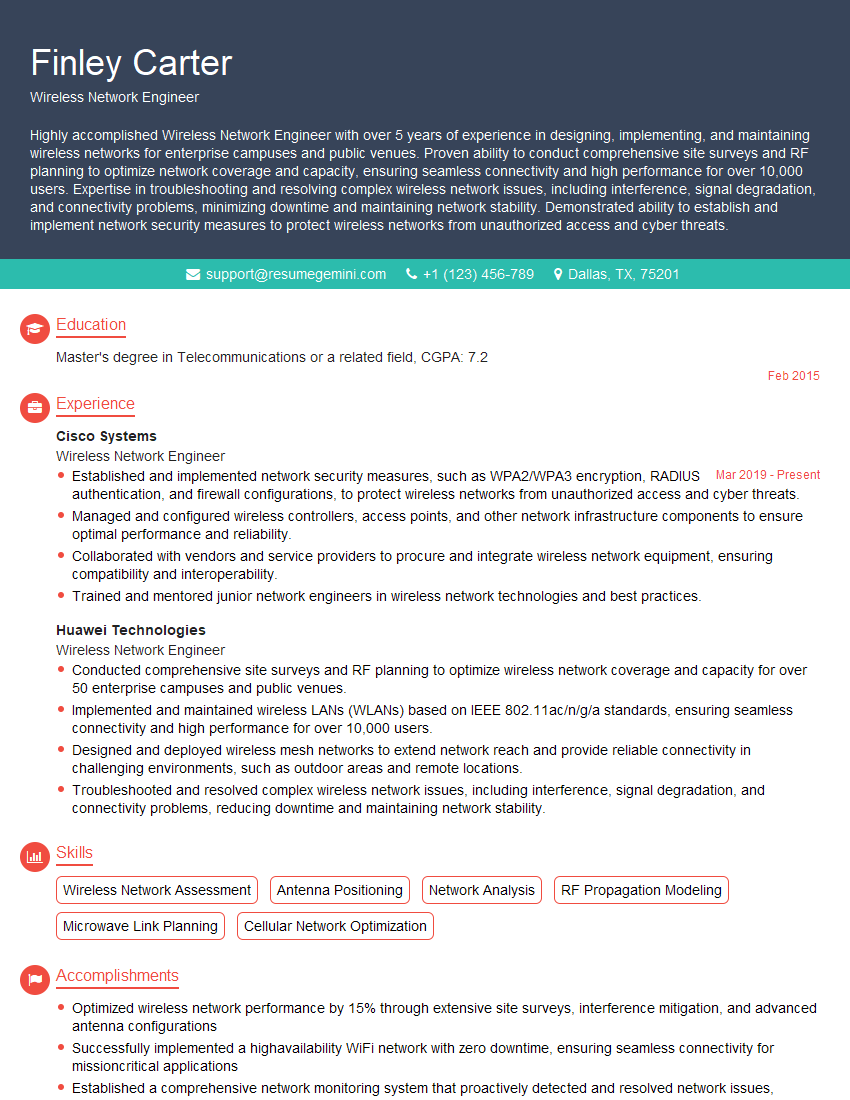
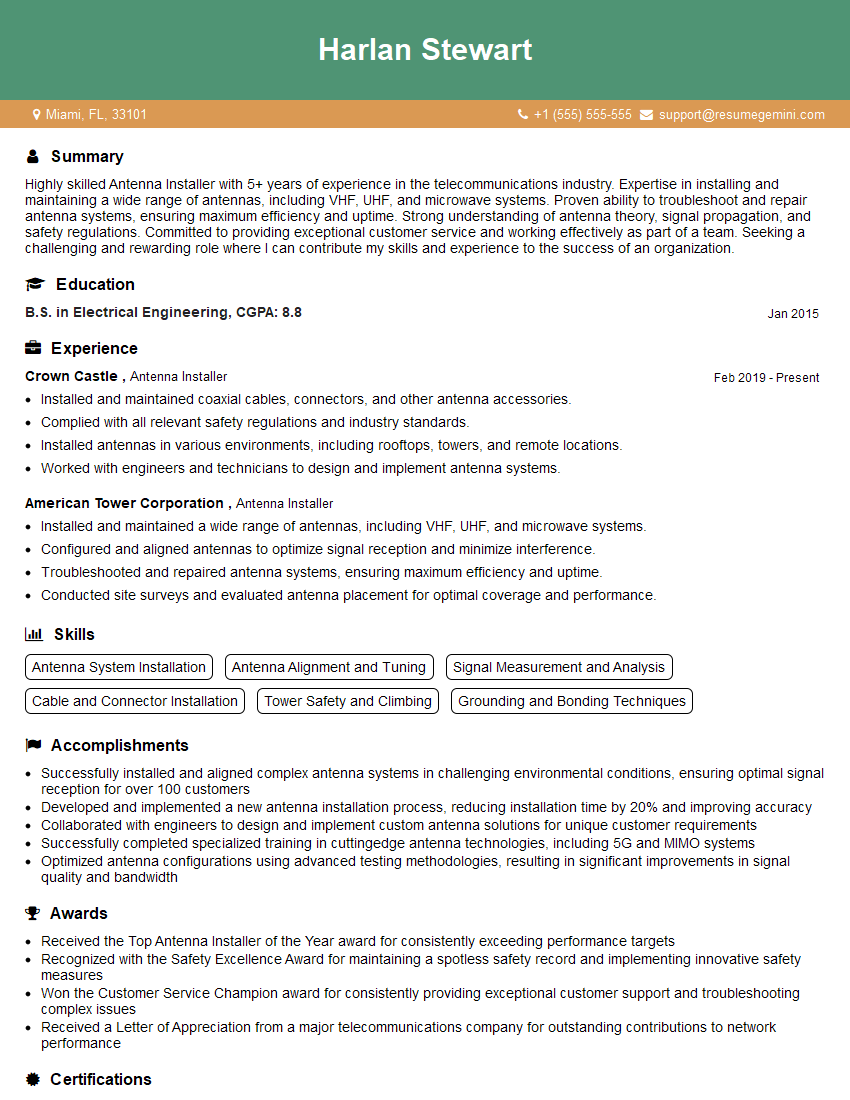
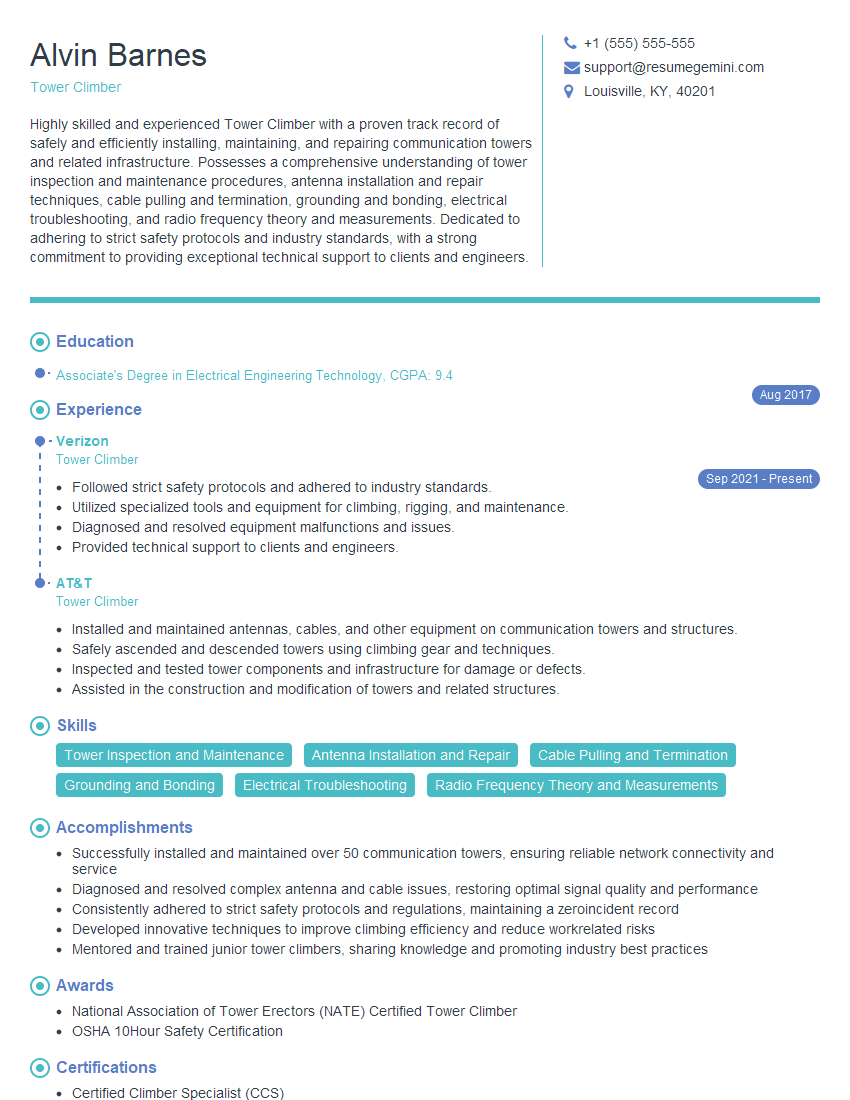
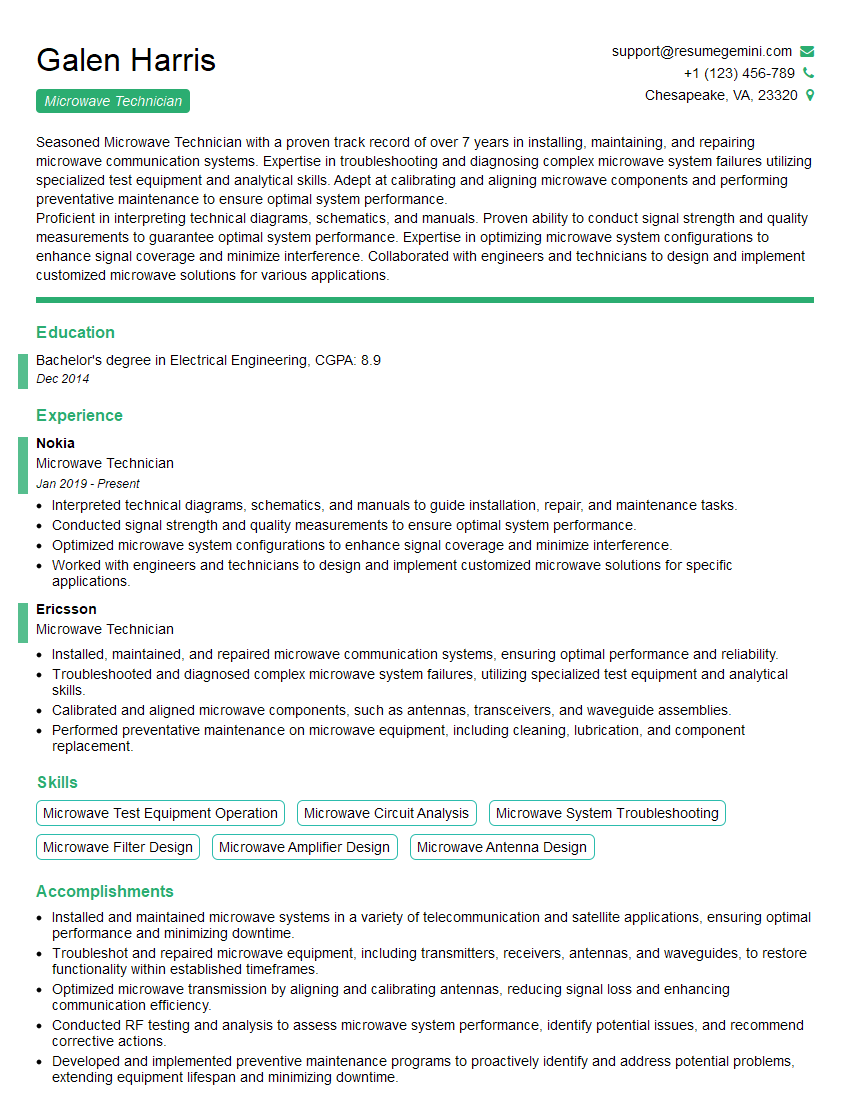
Mastering the maintenance of cellular antennas opens doors to a rewarding career with excellent growth potential in the ever-expanding telecommunications industry. To significantly increase your job prospects, crafting a compelling and ATS-friendly resume is crucial. ResumeGemini is a trusted resource to help you build a professional resume that highlights your skills and experience effectively. We offer examples of resumes tailored to Maintenance of Cellular Antennas to guide you in creating a standout application. Take the next step towards your dream job today!
Explore more articles
Users Rating of Our Blogs
Share Your Experience
We value your feedback! Please rate our content and share your thoughts (optional).
What Readers Say About Our Blog
To the interviewgemini.com Webmaster.
Very helpful and content specific questions to help prepare me for my interview!
Thank you
To the interviewgemini.com Webmaster.
This was kind of a unique content I found around the specialized skills. Very helpful questions and good detailed answers.
Very Helpful blog, thank you Interviewgemini team.