Interviews are more than just a Q&A session—they’re a chance to prove your worth. This blog dives into essential Manufacturing and Logistics interview questions and expert tips to help you align your answers with what hiring managers are looking for. Start preparing to shine!
Questions Asked in Manufacturing and Logistics Interview
Q 1. Explain your understanding of Lean Manufacturing principles.
Lean Manufacturing is a philosophy focused on eliminating waste and maximizing value for the customer. It’s about streamlining processes to achieve the highest possible efficiency with minimal resources. Think of it like a well-oiled machine – every part contributes, and nothing is unnecessary.
- Waste Reduction (Muda): Lean identifies seven types of waste: Transportation, Inventory, Motion, Waiting, Overproduction, Over-processing, and Defects. Eliminating these wastes is key. For example, reducing transportation involves optimizing material flow within a factory.
- Just-in-Time (JIT) Inventory: This minimizes inventory holding costs by receiving materials only when needed for production. Imagine a sushi restaurant – they only prepare ingredients as orders come in, avoiding spoilage and unnecessary storage.
- Kaizen (Continuous Improvement): This involves ongoing, incremental improvements in all aspects of the manufacturing process. It’s a culture of constant refinement, where workers are empowered to identify and resolve inefficiencies.
- Value Stream Mapping: A visual tool to understand and analyze the entire flow of materials and information, from raw materials to finished goods, identifying bottlenecks and areas for improvement.
In a previous role, I implemented Lean principles in a packaging plant, resulting in a 15% reduction in production time and a 10% decrease in inventory holding costs by optimizing the workflow and reducing unnecessary movement of materials.
Q 2. Describe your experience with Six Sigma methodologies.
Six Sigma is a data-driven methodology aimed at improving process quality by reducing variation and defects. It uses statistical tools to identify and eliminate the root causes of problems, aiming for near-perfection (3.4 defects per million opportunities). It’s like a precision instrument, ensuring consistent results.
- DMAIC (Define, Measure, Analyze, Improve, Control): This is the core methodology of Six Sigma, a structured approach to problem-solving.
- Statistical Process Control (SPC): Tools like control charts are used to monitor process performance and identify potential issues before they escalate.
- Design of Experiments (DOE): Used to identify the optimal settings for process parameters, leading to improved quality and efficiency.
In my experience, I led a Six Sigma project to reduce defects in a manufacturing process. Using DMAIC, we identified the root cause of the defects (a faulty machine component) and implemented corrective actions, resulting in a 70% reduction in defect rates.
Q 3. How would you optimize warehouse layout for maximum efficiency?
Optimizing warehouse layout for maximum efficiency involves strategic placement of inventory, equipment, and personnel to minimize travel time and maximize throughput. Think of it like a well-organized kitchen – everything is within easy reach.
- Frequency of Access: Frequently accessed items should be located closest to shipping and receiving docks. Less frequently accessed items can be further away.
- Item Size and Weight: Heavy or bulky items should be placed in areas with appropriate equipment and floor load capacity.
- Cross-Docking: Where possible, streamline the process by moving goods directly from receiving to shipping, bypassing storage.
- Slotting Optimization Software: Using software can significantly improve efficiency by optimizing the placement of each item based on various factors.
- Aisles and Traffic Flow: Ensure sufficient space for efficient movement of forklifts and other equipment. Minimize congestion.
In a previous project, I redesigned a warehouse layout, implementing a zone-based picking system that reduced order fulfillment time by 25% and improved worker productivity.
Q 4. What are the key performance indicators (KPIs) you track in logistics?
Key Performance Indicators (KPIs) in logistics are critical for monitoring efficiency and identifying areas for improvement. They provide a snapshot of overall performance and help in decision-making.
- On-Time Delivery Rate: Percentage of orders delivered on or before the promised delivery date.
- Order Fulfillment Cycle Time: Time taken to process an order from receipt to shipment.
- Inventory Turnover Rate: How many times inventory is sold and replaced within a specific period.
- Freight Costs per Unit: Cost of transportation per unit of goods.
- Perfect Order Rate: Percentage of orders delivered on time, in full, and without errors.
- Warehouse Space Utilization: How efficiently warehouse space is being used.
I regularly track these KPIs and use data analysis to identify trends and implement improvements. For example, identifying a drop in on-time delivery rate might prompt an investigation into transportation bottlenecks.
Q 5. Explain the differences between FIFO and LIFO inventory methods.
FIFO (First-In, First-Out) and LIFO (Last-In, First-Out) are inventory accounting methods that determine the order in which inventory is sold. They affect the cost of goods sold and the value of ending inventory.
- FIFO: Items are sold in the order they are received. Think of a grocery store – older products are sold before newer ones to avoid spoilage. This method results in a higher net income during inflation, as the cost of goods sold is lower.
- LIFO: Items are sold in the reverse order they are received. The most recently purchased items are sold first. This is less common but can result in lower tax liability during inflation, as the cost of goods sold is higher.
The choice between FIFO and LIFO depends on various factors, including industry regulations, tax implications, and the nature of the inventory. Perishable goods are almost always managed using FIFO.
Q 6. How do you manage inventory levels to avoid stockouts and overstocking?
Managing inventory levels effectively is crucial to avoid both stockouts (running out of stock) and overstocking (holding excessive inventory). It requires a balance between meeting customer demand and minimizing holding costs.
- Demand Forecasting: Accurate forecasting is essential. This involves analyzing historical data, considering seasonal variations, and incorporating market trends.
- Safety Stock: Maintaining a buffer stock to account for unexpected demand fluctuations or delays in replenishment.
- Inventory Management Software: Software systems can automate inventory tracking, provide real-time visibility, and generate alerts when stock levels reach critical thresholds.
- ABC Analysis: Classifying inventory items based on their value and demand, allowing prioritization of inventory control efforts.
- Regular Inventory Audits: Conducting periodic physical counts to reconcile with inventory records and identify discrepancies.
I’ve successfully implemented inventory management systems that have reduced stockout rates by 10% and decreased excess inventory by 15% by optimizing reorder points and safety stock levels, resulting in significant cost savings.
Q 7. Describe your experience with different transportation modes (e.g., truck, rail, air).
Experience with various transportation modes is crucial for optimizing logistics and finding cost-effective solutions. The best mode depends on factors like distance, speed, cost, and the nature of the goods.
- Truck Transportation: Highly versatile, suitable for most goods and distances. Offers door-to-door delivery, but can be slower and more expensive for long distances.
- Rail Transportation: Cost-effective for large volumes over long distances. Less flexible than trucking, requiring terminal handling.
- Air Transportation: Fastest mode, ideal for time-sensitive goods and valuable items. Most expensive option, suitable for smaller volumes.
- Sea Transportation: Most economical for extremely large volumes over long distances. Slowest mode and susceptible to weather delays.
In my career, I’ve managed logistics using all these modes, optimizing transportation strategies based on specific project needs. For example, I once coordinated the shipment of time-sensitive medical supplies using air freight, ensuring rapid delivery to remote locations.
Q 8. How do you handle supply chain disruptions?
Supply chain disruptions are inevitable, but their impact can be mitigated with proactive planning and robust response strategies. My approach is multifaceted and involves several key steps:
- Risk Assessment and Mitigation: I begin by identifying potential vulnerabilities in the supply chain. This involves analyzing factors like geopolitical instability, natural disasters, supplier dependencies, and transportation bottlenecks. Once identified, I develop mitigation strategies such as diversifying suppliers, building safety stock for critical components, and establishing alternative transportation routes.
- Real-time Monitoring and Early Warning Systems: Continuous monitoring of key performance indicators (KPIs) like inventory levels, supplier lead times, and transportation delays is crucial. I utilize data analytics and forecasting tools to identify potential disruptions early on. This allows for proactive intervention before significant impact occurs.
- Collaboration and Communication: Open communication with suppliers, customers, and internal teams is essential during a disruption. This ensures everyone is informed and working towards a common goal. This often involves establishing clear communication channels and protocols.
- Agile Response and Contingency Planning: Having pre-defined contingency plans is vital. These plans outline alternative sourcing options, production adjustments, and customer communication strategies. The ability to adapt quickly and make informed decisions under pressure is crucial to minimize disruption impact. For example, in one instance where a major port was shut down due to a storm, we quickly rerouted shipments via an inland waterway, minimizing the delay.
- Post-Incident Analysis: After a disruption, I conduct a thorough analysis to identify root causes and areas for improvement. This helps refine existing mitigation strategies and develop more resilient supply chain processes.
Q 9. What is your experience with Warehouse Management Systems (WMS)?
I have extensive experience implementing and managing Warehouse Management Systems (WMS). My experience encompasses the full lifecycle, from selection and implementation to ongoing optimization and maintenance. I’ve worked with various WMS platforms, including SAP EWM, Oracle Warehouse Management, and Blue Yonder. My expertise includes:
- System Selection and Implementation: This involves assessing business requirements, evaluating different WMS solutions, and overseeing the implementation process, including configuration, testing, and user training. For example, I successfully led the implementation of SAP EWM in a large distribution center, resulting in a 20% increase in order fulfillment efficiency.
- Process Optimization: I leverage data analytics to identify areas for improvement within the warehouse operations. This might include optimizing picking routes, improving inventory accuracy, and streamlining receiving and shipping processes. For example, by implementing a zone picking strategy guided by the WMS, we reduced picking time by 15%.
- Integration with Other Systems: A critical aspect of WMS is its seamless integration with other enterprise systems, such as ERP and transportation management systems (TMS). This ensures data consistency and efficient information flow throughout the supply chain.
- Data Analysis and Reporting: WMS provides rich data that can be leveraged for performance monitoring and decision-making. I utilize this data to track KPIs, identify trends, and make data-driven improvements.
Q 10. Explain your understanding of demand forecasting.
Demand forecasting is the process of predicting future customer demand for products or services. Accurate forecasting is crucial for effective inventory management, production planning, and resource allocation. My approach incorporates several techniques:
- Qualitative Methods: These methods rely on expert judgment and market research, useful when historical data is limited or unreliable. This can include surveys, focus groups, or sales force opinions.
- Quantitative Methods: These utilize historical sales data and statistical models to project future demand. Techniques include time series analysis (moving averages, exponential smoothing), regression analysis, and causal forecasting models. For example, I’ve used ARIMA models to forecast seasonal demand fluctuations effectively.
- Combining Methods: Often, the most accurate forecasts are obtained by combining qualitative and quantitative methods. This leverages the strengths of both approaches to create a more robust prediction.
- Data Analysis and Visualization: I rely heavily on data visualization tools to identify trends, seasonality, and outliers in historical demand data. This improves the accuracy and reliability of forecasting models.
- Continuous Monitoring and Adjustment: Demand forecasts are not static. I continuously monitor actual sales data and adjust forecasts as needed to ensure accuracy and responsiveness to market changes.
Accurate demand forecasting prevents stockouts, minimizes excess inventory, and optimizes production scheduling leading to significant cost savings and improved customer satisfaction.
Q 11. How do you ensure quality control throughout the manufacturing process?
Quality control is integrated throughout the entire manufacturing process, not just at the end. My approach involves a multi-layered system:
- Incoming Material Inspection: All incoming materials are inspected to ensure they meet the required quality standards. This prevents defective materials from entering the production process.
- In-Process Quality Control: Regular inspections are conducted at various stages of the production process to identify and correct defects early on. Statistical Process Control (SPC) techniques are often used to monitor key process parameters and detect any deviations from targets.
- Final Product Inspection: Finished products undergo rigorous testing to ensure they meet quality standards and specifications. This may involve visual inspections, functional tests, and destructive testing.
- Corrective and Preventive Actions (CAPA): A robust CAPA system is in place to identify the root causes of quality issues, implement corrective actions, and prevent future occurrences. This involves documenting issues, investigating root causes using tools such as 5 Whys and fishbone diagrams, and implementing preventative measures.
- Continuous Improvement: Quality control is a continuous improvement process. Regular reviews of quality data and feedback from customers help identify areas for improvement and enhance quality control processes. For example, implementing a Six Sigma project reduced defects by 75% in a critical manufacturing step.
Q 12. Describe your experience with different manufacturing processes (e.g., JIT, Kanban).
I have hands-on experience with various manufacturing processes, including Just-in-Time (JIT) and Kanban.
- Just-in-Time (JIT): JIT manufacturing aims to minimize inventory by producing goods only when needed. This requires close coordination with suppliers and efficient production scheduling. I’ve implemented JIT successfully in several manufacturing environments, leading to reduced inventory holding costs and improved responsiveness to customer demand. Key elements include streamlined processes, close supplier relationships, and highly efficient material handling.
- Kanban: Kanban is a visual system for managing workflow. It utilizes cards or signals to indicate when materials or parts are needed. This helps optimize production flow and reduce waste. I’ve used Kanban to manage production lines, improving throughput and reducing lead times. The visual nature of Kanban enhances transparency and allows for real-time adjustment to production schedules.
- Lean Manufacturing: Beyond JIT and Kanban, I am familiar with broader Lean principles focused on eliminating waste (muda) in all aspects of manufacturing. This includes techniques like value stream mapping and 5S to streamline processes and improve efficiency.
The selection of the appropriate manufacturing process depends on various factors such as product complexity, demand variability, and supplier capabilities. A well-chosen manufacturing process significantly enhances efficiency and cost-effectiveness.
Q 13. How do you manage supplier relationships?
Managing supplier relationships is critical for a successful supply chain. My approach focuses on building strong, collaborative partnerships:
- Supplier Selection and Evaluation: Rigorous supplier selection processes ensure that we partner with reliable and high-performing suppliers. This involves evaluating factors such as quality, capacity, financial stability, and ethical practices.
- Communication and Collaboration: Open and transparent communication is key. I foster strong working relationships with suppliers through regular meetings, performance reviews, and joint problem-solving sessions.
- Performance Monitoring and Improvement: Supplier performance is continuously monitored using key performance indicators (KPIs) such as on-time delivery, quality, and cost. Performance feedback is provided regularly to encourage continuous improvement.
- Collaboration and Innovation: I encourage collaboration and innovation with our suppliers, working together to identify opportunities for cost reduction, quality improvement, and process optimization. For instance, we jointly developed a new packaging solution with a supplier that reduced shipping costs by 10%.
- Conflict Resolution: Inevitably, challenges arise in supplier relationships. I employ proactive conflict resolution strategies to address issues quickly and effectively, maintaining positive working relationships.
Q 14. What is your experience with MRP (Material Requirements Planning)?
Material Requirements Planning (MRP) is a production planning and inventory control system used to determine the materials and components needed to meet production schedules. My experience with MRP includes:
- Data Management: Accurate and up-to-date data is crucial for effective MRP. This includes Bill of Materials (BOM), inventory levels, and production schedules. I’ve used ERP systems to manage this data effectively.
- Master Production Schedule (MPS): The MPS is the foundation of MRP. It outlines the planned production quantities and delivery dates for finished goods. I have experience developing and maintaining MPS based on demand forecasts and customer orders.
- Material Requirements Calculation: MRP systems automatically calculate the required quantities and timing of materials and components based on the MPS and BOM. I am proficient in interpreting and analyzing the MRP output to identify potential issues and optimize production plans.
- Capacity Planning: MRP can be integrated with capacity planning to ensure that sufficient resources are available to meet production schedules. This includes equipment, labor, and materials.
- Inventory Control: MRP helps manage inventory levels to avoid stockouts and excess inventory. This leads to reduced holding costs and improved responsiveness to customer demand.
Effective MRP implementation requires a well-defined process, accurate data, and continuous monitoring and adjustment. I’ve successfully used MRP to improve on-time delivery, reduce inventory levels, and optimize production planning.
Q 15. How do you prioritize tasks in a fast-paced manufacturing environment?
Prioritizing tasks in a fast-paced manufacturing environment requires a structured approach that balances urgency and importance. I typically utilize a combination of methods, including:
- Prioritization Matrices: I use tools like the Eisenhower Matrix (Urgent/Important) to categorize tasks. This helps visually separate tasks needing immediate attention from those that are important but can be scheduled.
- Kanban Boards: Visual management systems like Kanban boards provide a clear overview of all tasks, their status, and dependencies. This allows for easy re-prioritization as circumstances change. For example, a sudden machine malfunction might necessitate shifting priorities to repair and minimize downtime.
- Production Scheduling Software: Sophisticated software integrates production plans, resource allocation, and order fulfillment, automatically prioritizing tasks based on deadlines, material availability, and production capacity. This ensures optimal workflow and minimizes bottlenecks.
- Regular Team Meetings: Daily stand-up meetings help maintain transparency and facilitate quick adjustments to priorities based on real-time challenges and changing demands. For instance, if a critical component is delayed, we can collectively re-prioritize tasks to mitigate its impact.
Ultimately, effective prioritization is a dynamic process. It requires continuous monitoring, communication, and flexibility to adapt to the ever-changing demands of a manufacturing floor.
Career Expert Tips:
- Ace those interviews! Prepare effectively by reviewing the Top 50 Most Common Interview Questions on ResumeGemini.
- Navigate your job search with confidence! Explore a wide range of Career Tips on ResumeGemini. Learn about common challenges and recommendations to overcome them.
- Craft the perfect resume! Master the Art of Resume Writing with ResumeGemini’s guide. Showcase your unique qualifications and achievements effectively.
- Don’t miss out on holiday savings! Build your dream resume with ResumeGemini’s ATS optimized templates.
Q 16. How do you measure the effectiveness of your logistics strategies?
Measuring the effectiveness of logistics strategies involves a multifaceted approach that combines quantitative and qualitative data. Key metrics include:
- On-Time Delivery Rate: This measures the percentage of orders delivered on or before the scheduled delivery date, reflecting the efficiency and reliability of the logistics chain.
- Inventory Turnover Rate: This indicates how efficiently inventory is managed. A higher turnover rate suggests effective inventory control and minimized storage costs.
- Order Fulfillment Cycle Time: This tracks the time elapsed between order placement and delivery, highlighting areas for improvement in the entire logistics process.
- Transportation Costs: Monitoring transportation expenses helps evaluate the efficiency of routing, carrier selection, and freight management.
- Customer Satisfaction: Gathering feedback from customers regarding their experience with order delivery and logistics services provides valuable insights into areas requiring improvement.
- Logistics Costs as a Percentage of Revenue: This metric provides a holistic perspective on the cost-effectiveness of the logistics operations.
By analyzing these metrics and comparing them against industry benchmarks and past performance, I can identify areas of strength and weakness, and implement data-driven improvements in the logistics strategy. For instance, if on-time delivery rates are consistently low, this may indicate issues with transportation or warehousing that require focused attention.
Q 17. Describe your experience with safety regulations in a manufacturing setting.
My experience with safety regulations in manufacturing settings is extensive. I have a thorough understanding of OSHA (Occupational Safety and Health Administration) standards and other relevant regulations, and I have consistently implemented and enforced robust safety programs. This includes:
- Regular Safety Training: Providing comprehensive training to all employees on relevant safety procedures, hazard identification, and emergency response protocols. This includes hands-on training and regular refresher courses.
- Implementing Safety Protocols: Establishing and enforcing strict adherence to safety protocols, including the proper use of personal protective equipment (PPE), lockout/tagout procedures for machinery maintenance, and safe handling of hazardous materials.
- Conducting Regular Safety Inspections: Implementing a routine inspection program to identify and address potential hazards before they lead to incidents. This includes regular inspections of machinery, workspaces, and emergency equipment.
- Maintaining Detailed Safety Records: Accurately documenting all safety incidents, investigations, and corrective actions. This is critical for continuous improvement and compliance auditing.
- Promoting a Safety-First Culture: Creating a work environment where safety is the paramount concern, encouraging employees to report hazards, and rewarding safe work practices.
In one instance, by implementing a new safety protocol for handling heavy machinery, we saw a significant reduction in workplace injuries and improved overall productivity.
Q 18. How do you handle conflicts between different departments?
Resolving inter-departmental conflicts requires a collaborative and diplomatic approach. My strategy typically involves:
- Facilitating Open Communication: Creating a platform for all involved parties to express their concerns and perspectives in a respectful manner. This often involves structured meetings with a clear agenda.
- Identifying the Root Cause: Focusing on understanding the underlying cause of the conflict, rather than just addressing surface-level symptoms. This often involves asking clarifying questions and seeking to understand the different viewpoints.
- Finding Common Ground: Seeking areas of agreement and shared goals to build a foundation for compromise and collaboration. This emphasizes mutual benefit and shared success.
- Developing a Collaborative Solution: Working with all departments to develop a solution that addresses the concerns of all parties involved. This might involve compromise, adjustments in processes, or improved communication channels.
- Documenting Agreements: Ensuring that any agreements reached are clearly documented and communicated to all stakeholders. This helps to prevent future conflicts arising from the same issues.
For example, I once resolved a conflict between production and logistics by implementing a new inventory management system that provided real-time visibility to both departments, eliminating misunderstandings about material availability.
Q 19. Explain your experience with budget management in a manufacturing/logistics context.
My experience in budget management within manufacturing and logistics encompasses all aspects from planning and forecasting to monitoring and control. I have a proven track record of developing and managing budgets that align with strategic goals while maintaining fiscal responsibility. My approach typically involves:
- Strategic Planning: Developing detailed budgets aligned with the company’s overall strategic objectives, factoring in anticipated production volumes, material costs, labor expenses, and logistics expenditures.
- Detailed Forecasting: Utilizing historical data, market analysis, and sales projections to create accurate financial forecasts and anticipate potential budget variances.
- Regular Monitoring: Continuously monitoring actual expenditures against the budgeted amounts to identify any potential overruns or underspends.
- Variance Analysis: Investigating any significant variances between actual and budgeted figures to determine the root cause and implement corrective actions. This could involve adjustments to production schedules, material sourcing strategies, or logistics plans.
- Cost Control Measures: Implementing cost-saving measures where appropriate, without compromising quality or efficiency. This might involve exploring alternative suppliers, optimizing production processes, or negotiating better rates with logistics providers.
In a previous role, I successfully reduced logistics costs by 15% by implementing a more efficient routing system and negotiating favorable contracts with our transportation providers.
Q 20. Describe your experience with root cause analysis.
Root cause analysis (RCA) is a critical problem-solving methodology that I use frequently to identify the underlying causes of issues, preventing their recurrence. My approach often incorporates techniques like the '5 Whys' and Fishbone diagrams. The process typically follows these steps:
- Define the Problem: Clearly and concisely define the problem that needs to be addressed. This involves gathering sufficient information and data to ensure a complete understanding of the situation.
- Gather Data: Collect relevant data through interviews, observations, and review of records to get a comprehensive picture of the problem.
- Identify Potential Causes: Brainstorm potential root causes of the problem using techniques like the '5 Whys' (repeatedly asking 'Why?' to drill down to the root cause) or a Fishbone diagram to visually map out potential causes and their relationships.
- Verify the Root Cause: Verify the identified root cause through data analysis and further investigation. This ensures the selected root cause accurately represents the situation.
- Develop Corrective Actions: Develop and implement corrective actions to address the root cause and prevent the problem from recurring. This may involve process improvements, training programs, or technological upgrades.
- Monitor and Evaluate: Monitor the effectiveness of the corrective actions and make adjustments as needed to ensure the problem is permanently resolved.
For example, using root cause analysis, we identified that frequent machine breakdowns were due to inadequate maintenance procedures. Implementing a new, standardized maintenance program dramatically reduced downtime and improved production efficiency.
Q 21. How do you improve employee productivity in a manufacturing setting?
Improving employee productivity in a manufacturing setting involves a holistic approach that considers both individual and organizational factors. My strategies typically include:
- Providing Proper Training: Ensuring employees receive comprehensive training on all aspects of their job, including safety procedures, equipment operation, and quality control measures.
- Optimizing Work Processes: Streamlining workflows to eliminate unnecessary steps, reduce bottlenecks, and improve efficiency. This might involve implementing lean manufacturing principles or using process mapping techniques.
- Investing in Modern Equipment: Providing employees with modern, efficient equipment that reduces the physical strain of work and enhances productivity.
- Ergonomic Workplace Design: Creating a comfortable and ergonomic work environment to reduce the risk of injuries and increase productivity. This includes proper lighting, seating arrangements, and workspace layouts.
- Employee Empowerment: Empowering employees by providing them with greater autonomy, decision-making authority, and opportunities for skill development. This fosters a sense of ownership and increases motivation.
- Incentive Programs: Implementing incentive programs to reward employees for exceeding performance targets and demonstrating a commitment to quality and safety.
- Regular Feedback and Performance Reviews: Providing regular feedback, coaching, and performance reviews to identify areas for improvement and address any issues that may be affecting productivity.
In one case, by implementing a new training program focusing on lean manufacturing principles, we achieved a 20% increase in overall productivity.
Q 22. What is your experience with data analysis in logistics and manufacturing?
Data analysis is the backbone of efficient logistics and manufacturing. I’ve extensively used data analysis techniques to optimize various aspects, from inventory management to supply chain forecasting. For example, in my previous role at Acme Manufacturing, we leveraged historical production data, incorporating factors like machine downtime, material availability, and worker productivity, to predict potential bottlenecks. This involved using statistical modeling, specifically time series analysis, to forecast demand and proactively adjust production schedules. We also employed regression analysis to identify key drivers of production costs, allowing us to pinpoint areas for improvement and cost reduction. Furthermore, I’ve utilized data visualization tools like Tableau and Power BI to create dashboards that provide real-time insights into key performance indicators (KPIs), such as on-time delivery rates, inventory turnover, and production efficiency. This allows for quick identification of issues and facilitates data-driven decision-making.
Another example involves analyzing logistics data to optimize delivery routes. Using geographic information systems (GIS) and algorithms, we identified more efficient routes, reducing transportation costs and delivery times. This involved analyzing factors such as traffic patterns, distances, and delivery windows to determine the most optimal routes for our fleet.
Q 23. How do you utilize technology to improve efficiency in your operations?
Technology is crucial for enhancing efficiency. My approach involves a multi-pronged strategy encompassing several technologies. First, Enterprise Resource Planning (ERP) systems like SAP or Oracle integrate various aspects of the business, from production planning and inventory management to customer relationship management (CRM), streamlining communication and improving data visibility. This reduces manual data entry and minimizes errors, leading to significantly improved accuracy and efficiency. Second, implementing Manufacturing Execution Systems (MES) provides real-time visibility into the production process. MES allows us to monitor production parameters, identify inefficiencies, and track product quality in real time, enabling proactive adjustments to maintain optimal output.
Third, we utilize Warehouse Management Systems (WMS) to optimize warehouse operations. WMS streamlines processes like receiving, storing, picking, and shipping, reducing errors and speeding up order fulfillment. Think of it like a sophisticated air traffic control system for your warehouse. Finally, advanced analytics and machine learning algorithms are critical in predictive maintenance. By analyzing sensor data from machines, we can predict potential failures and schedule preventative maintenance, thereby minimizing costly downtime.
Q 24. Describe your experience with implementing new technologies or processes.
During my time at Beta Industries, we implemented a new automated guided vehicle (AGV) system in our warehouse. This involved a phased rollout, starting with a pilot project in one section of the warehouse to test the system’s capabilities and identify potential challenges. We carefully planned the transition, providing thorough training to warehouse staff, and worked closely with the AGV vendor to ensure seamless integration. We monitored key metrics, such as order fulfillment time and picking accuracy, throughout the implementation process, and made adjustments as needed. The results were impressive: a 20% reduction in order fulfillment time and a 15% improvement in picking accuracy. This project demonstrates my ability to manage complex technological implementations, ensuring minimal disruption to ongoing operations.
Another example involves introducing a new lean manufacturing methodology. This required significant changes in workflow and employee training. The process included Kaizen events, where employees collaborated to identify and eliminate waste in the production process. We tracked key metrics and used data analysis to show improvement and success to leadership and the teams involved.
Q 25. How do you ensure compliance with relevant regulations (e.g., environmental, safety)?
Compliance is paramount. My approach involves establishing a robust compliance program that encompasses all relevant regulations. This starts with a thorough understanding of applicable environmental, health, and safety (EHS) standards. We conduct regular audits to ensure adherence to these standards. For example, we conduct regular safety inspections of our facilities, ensuring that all machinery is properly maintained and employees are using appropriate safety equipment. We also maintain detailed records of all EHS-related incidents, conducting thorough investigations and implementing corrective actions to prevent recurrence. Employee training is crucial, with regular refresher courses on safe work practices and emergency procedures. We also ensure proper disposal of hazardous materials in accordance with all relevant regulations. I’ve worked directly with regulatory bodies to ensure our compliance programs meet the highest standards.
Q 26. Explain your experience with project management in a manufacturing environment.
In my experience, successful project management in manufacturing demands a structured approach. I typically employ the Project Management Institute’s (PMI) framework, utilizing tools like Gantt charts for scheduling and critical path analysis to identify potential delays. For example, while leading the implementation of a new production line at Gamma Corporation, I utilized agile methodologies, breaking down the project into smaller, manageable sprints. This allowed for flexibility and enabled us to adapt to unforeseen challenges. Regular progress meetings and thorough documentation were vital to keep stakeholders informed and ensure project alignment. Risk assessment and mitigation planning were critical components, enabling us to proactively address potential problems. The project was completed on time and within budget, exceeding expectations.
Q 27. Describe a time you had to solve a complex logistics problem.
One significant challenge involved a major port strike that unexpectedly disrupted our supply chain. Our initial shipment of raw materials was delayed indefinitely. To address this, I immediately convened a crisis management team, leveraging our existing supplier relationships to identify alternative sources of raw materials. This involved expediting shipments from secondary suppliers, which required negotiating favorable terms and adjusting production schedules to accommodate the different delivery times. We also employed real-time tracking of shipments to monitor their progress and proactively address any potential issues. Effective communication with all stakeholders—customers, suppliers, and internal teams—was crucial to minimize disruption and maintain transparency. By implementing this multi-pronged strategy, we successfully mitigated the impact of the port strike, minimizing production delays and ensuring customer satisfaction.
Key Topics to Learn for Manufacturing and Logistics Interview
- Supply Chain Management: Understand the flow of goods from raw materials to finished products, including procurement, inventory management, and distribution. Consider the impact of different supply chain strategies on efficiency and cost.
- Production Planning & Control: Learn about forecasting demand, scheduling production runs, managing resources (equipment, labor), and ensuring on-time delivery. Practice applying lean manufacturing principles to optimize processes.
- Inventory Management Techniques: Explore different inventory control methods (e.g., FIFO, LIFO, Just-in-Time), their applications, and the trade-offs between inventory holding costs and stockouts. Consider how technology (e.g., barcode scanning, RFID) impacts inventory accuracy.
- Warehouse Management & Logistics: Familiarize yourself with warehouse layout optimization, order fulfillment processes, material handling equipment, and transportation logistics (e.g., routing, fleet management). Think about how to improve efficiency and reduce costs in these areas.
- Quality Control & Assurance: Understand quality management systems (e.g., ISO 9001), statistical process control (SPC), and root cause analysis techniques. Be prepared to discuss how to identify and resolve quality issues in a manufacturing or logistics setting.
- Safety & Compliance: Understand relevant safety regulations and compliance requirements within the manufacturing and logistics industries. Be able to discuss best practices for workplace safety and environmental responsibility.
- Data Analysis & Reporting: Develop your skills in analyzing key performance indicators (KPIs) relevant to manufacturing and logistics, such as production output, delivery times, and inventory turnover. Practice interpreting data and using it to identify areas for improvement.
- Technology in Manufacturing & Logistics: Explore the role of automation, robotics, AI, and other technologies in modern manufacturing and logistics operations. Consider how these technologies can enhance efficiency and productivity.
Next Steps
Mastering Manufacturing and Logistics opens doors to diverse and rewarding career paths with excellent growth potential. A strong understanding of these concepts positions you for success in a competitive job market. To significantly improve your job prospects, creating a compelling and ATS-friendly resume is crucial. ResumeGemini is a trusted resource to help you build a professional resume that highlights your skills and experience effectively. Examples of resumes tailored to Manufacturing and Logistics are available, allowing you to showcase your qualifications in the best possible light. Invest time in crafting a powerful resume – it’s your first impression and a key step towards your dream career.

Operations Manager Resume Sample
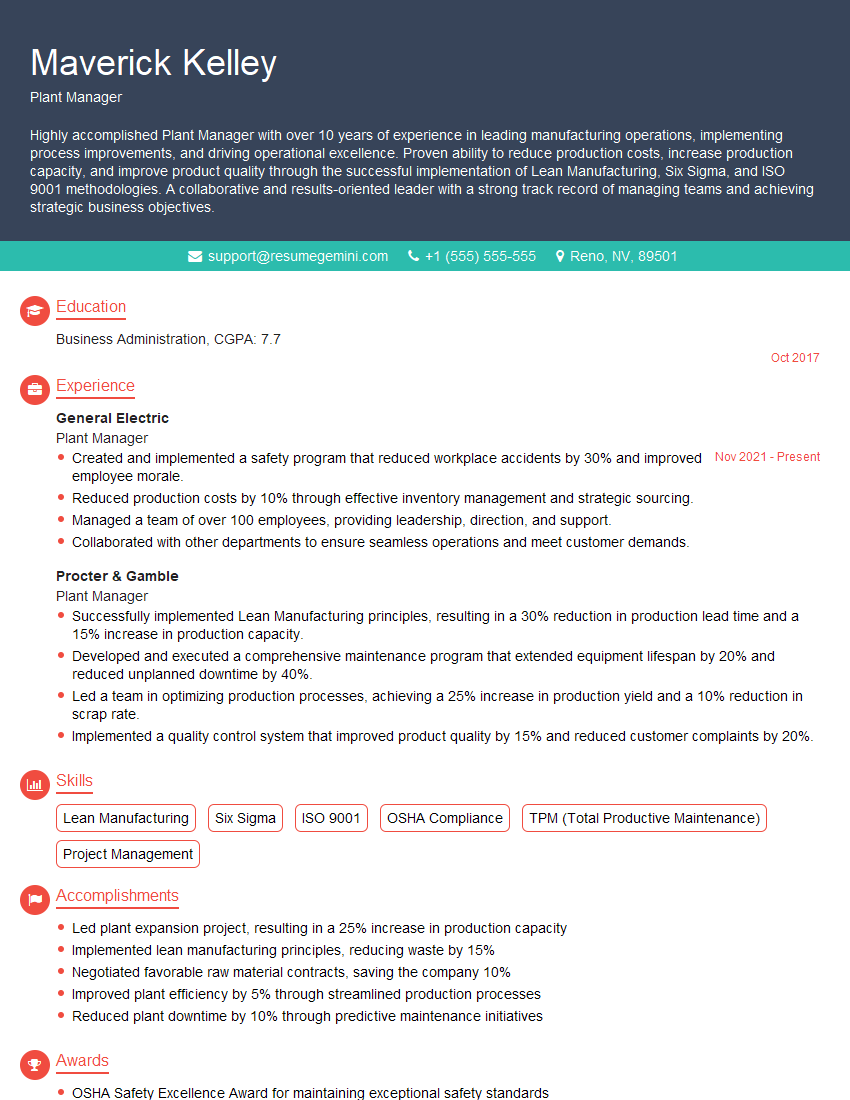
Plant Manager Resume Sample
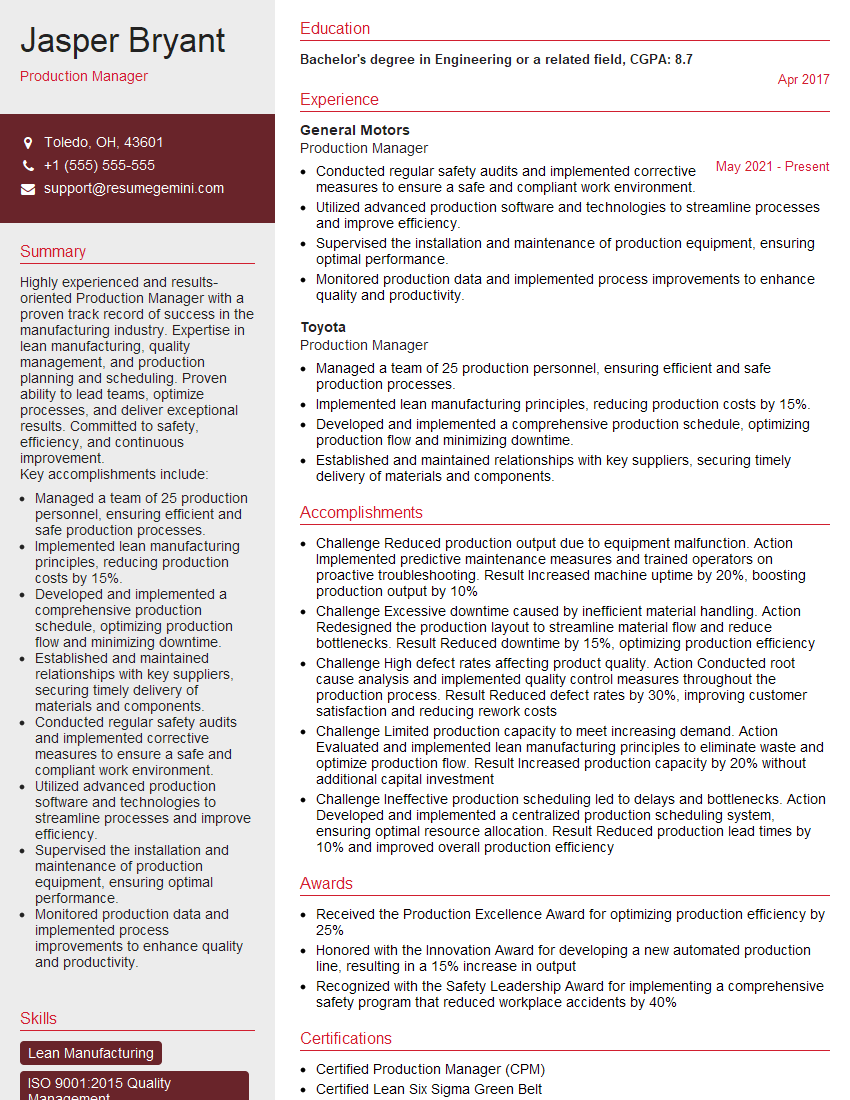
Production Manager Resume Sample
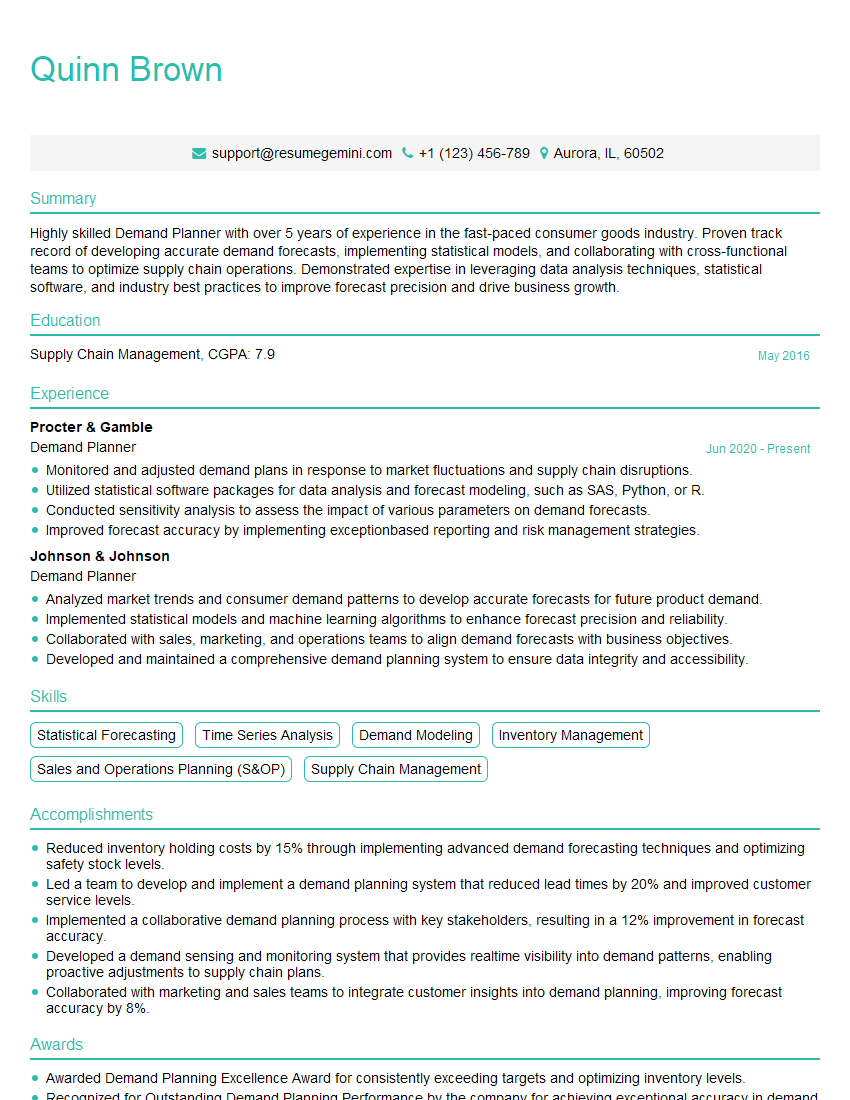
Demand Planner Resume Sample
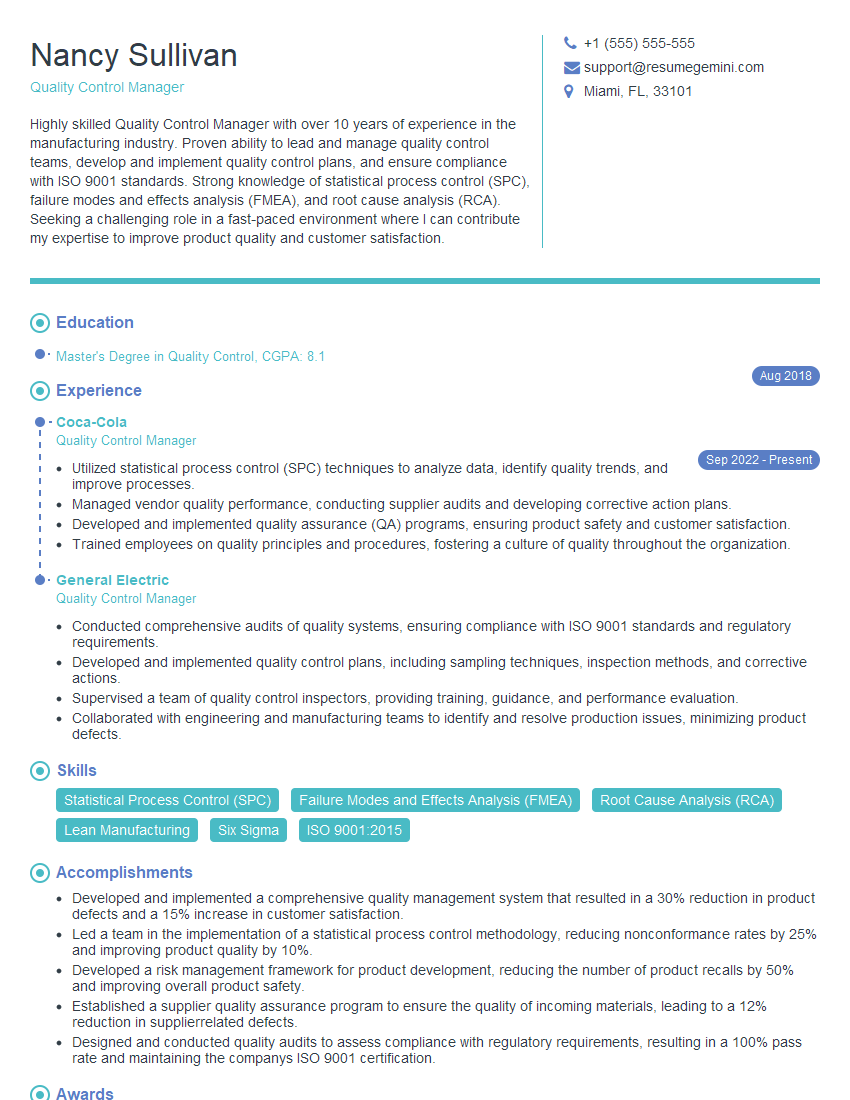
Quality Control Manager Resume Sample
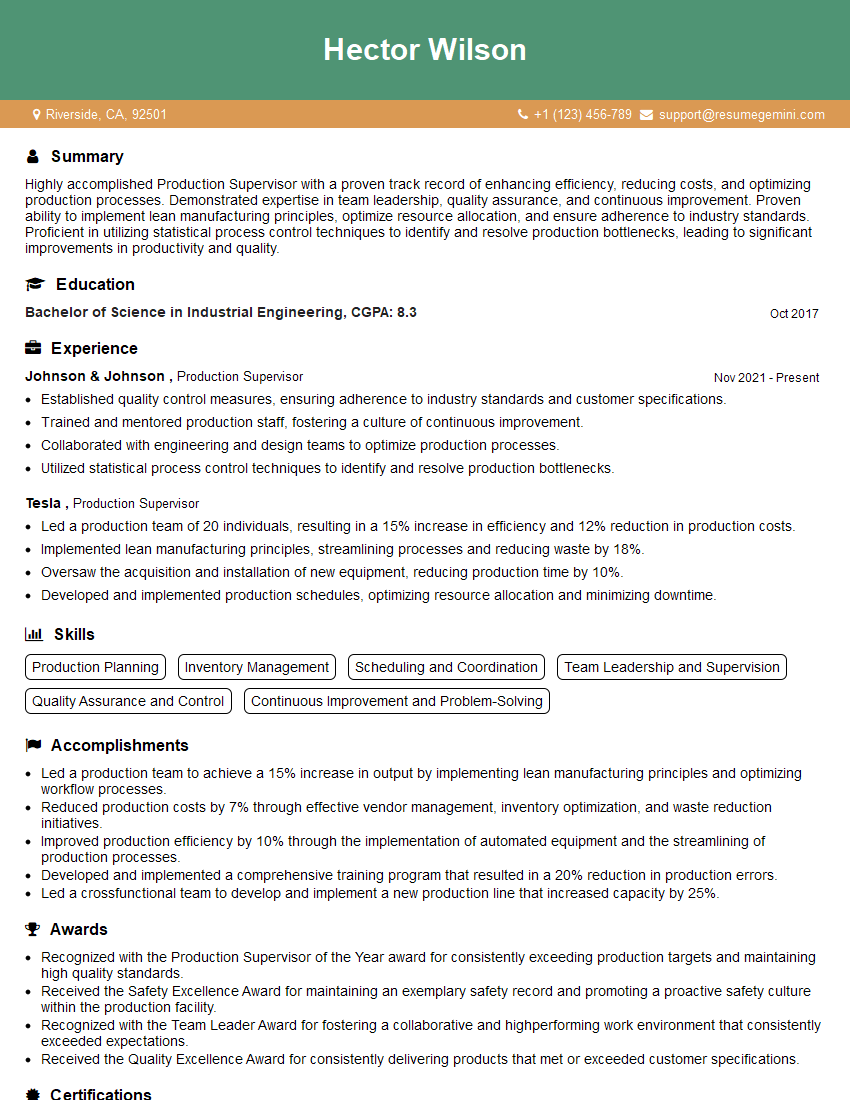
Production Supervisor Resume Sample
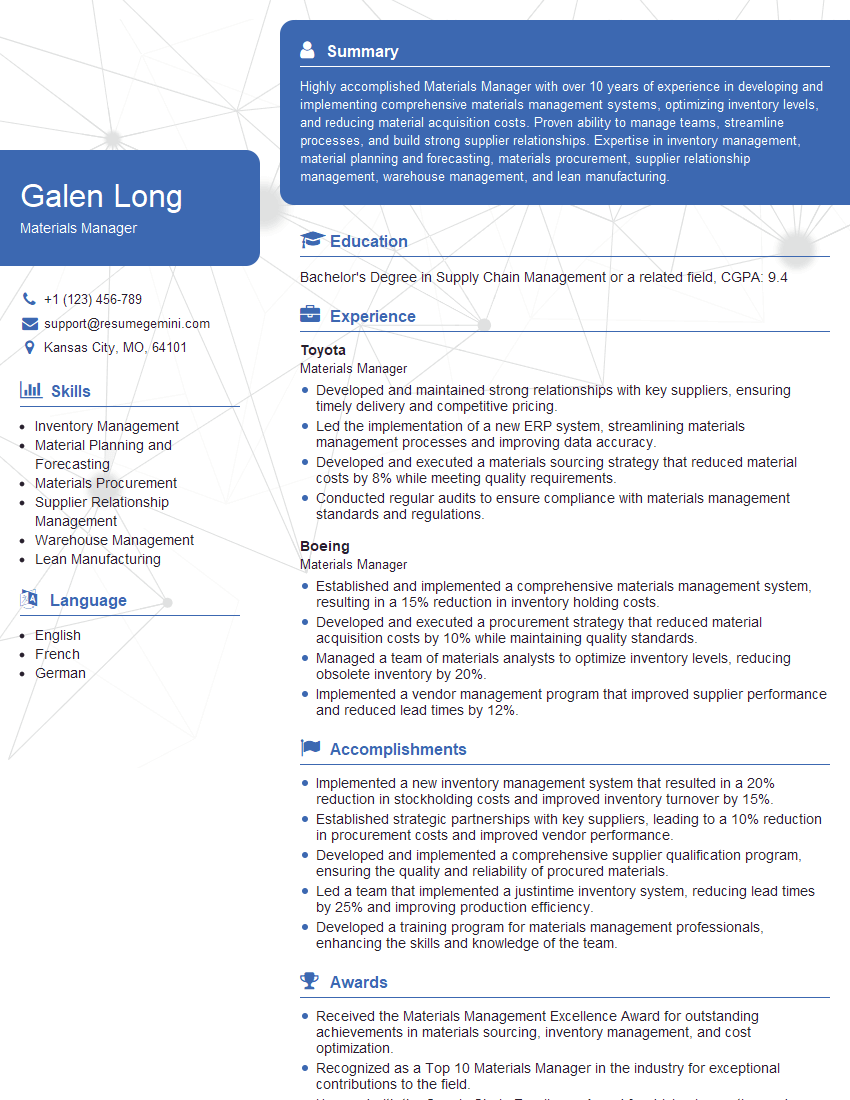
Materials Manager Resume Sample

Procurement Manager Resume Sample
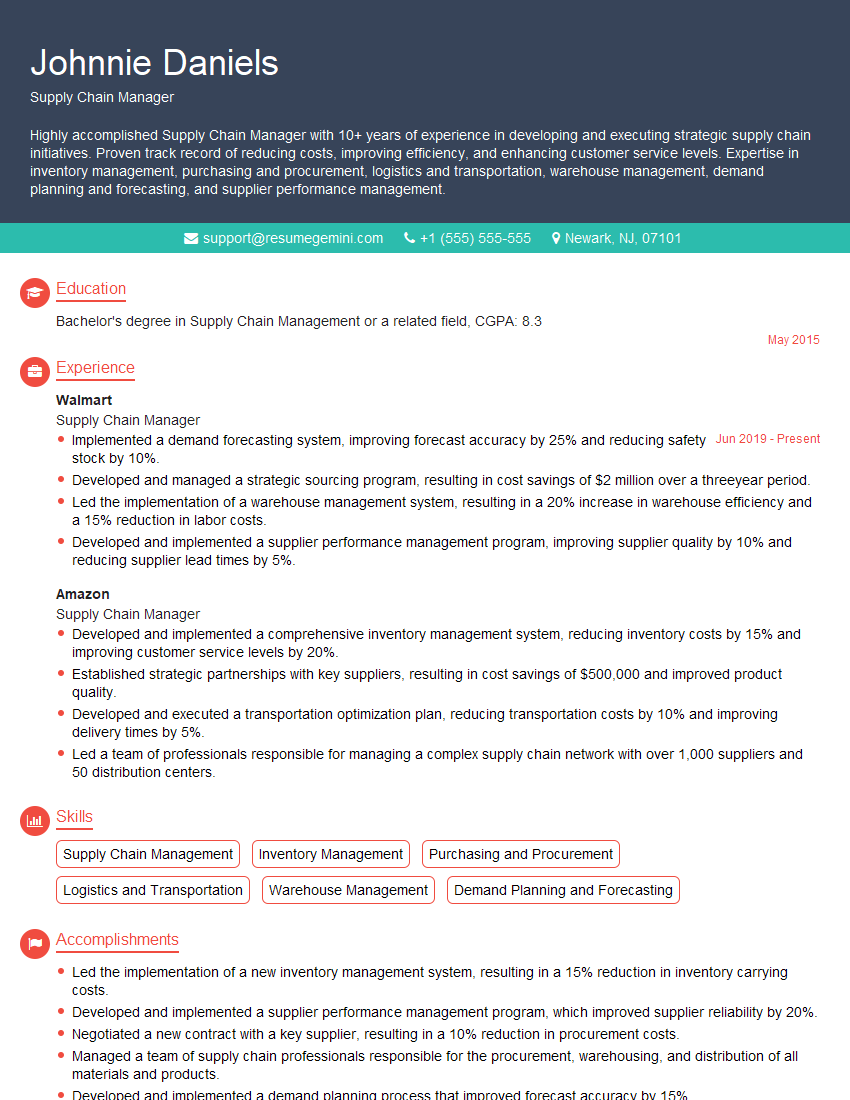
Supply Chain Manager Resume Sample
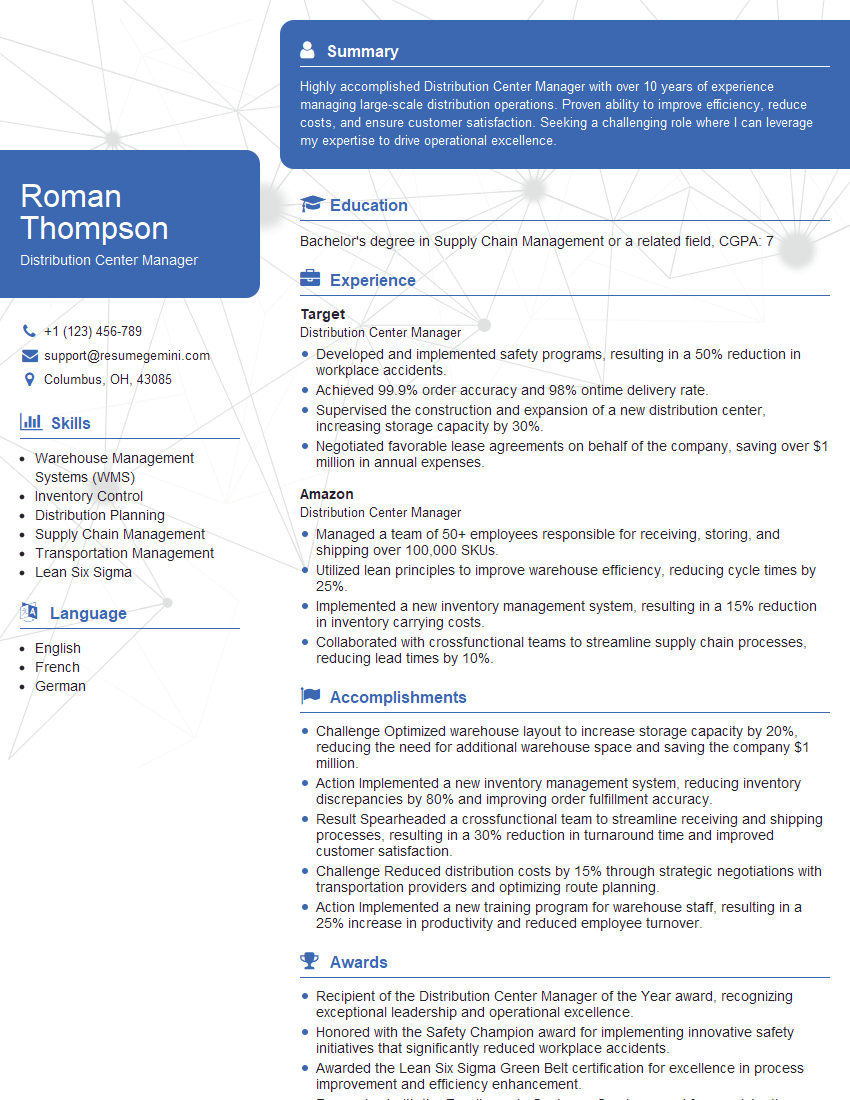
Distribution Center Manager Resume Sample
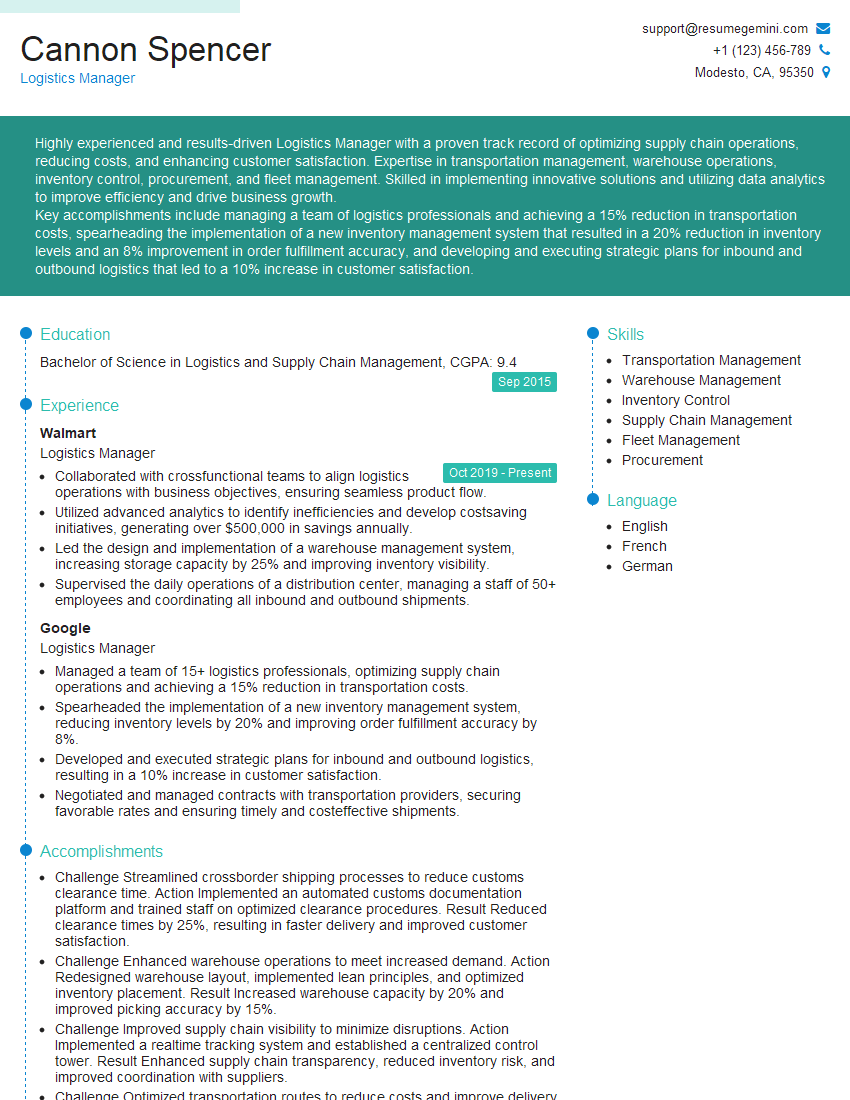
Logistics Manager Resume Sample
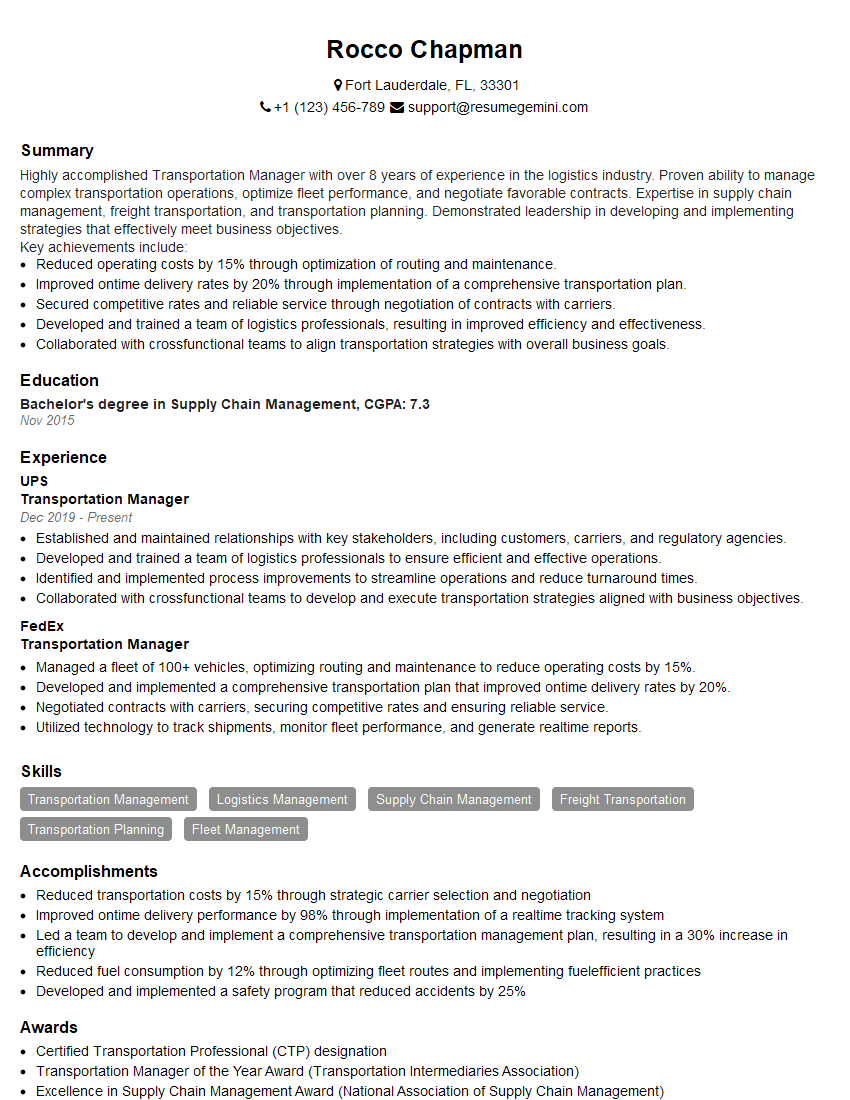
Transportation Manager Resume Sample
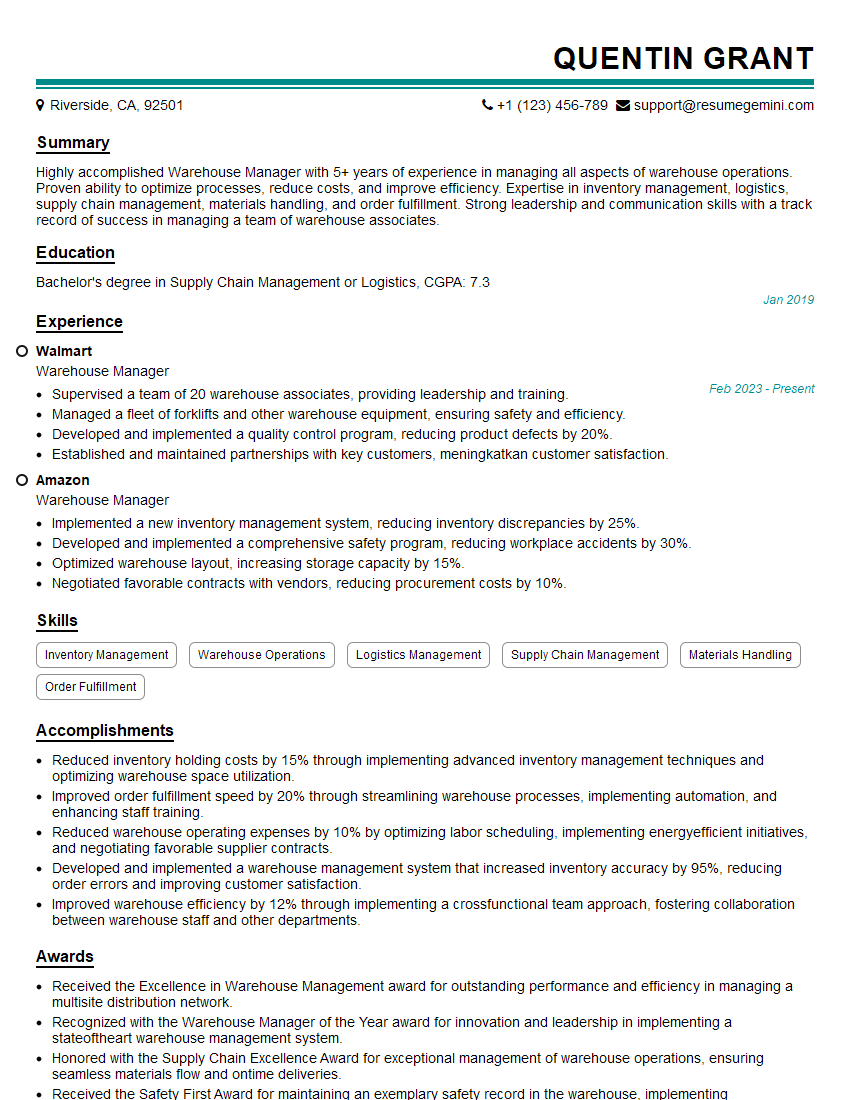
Warehouse Manager Resume Sample
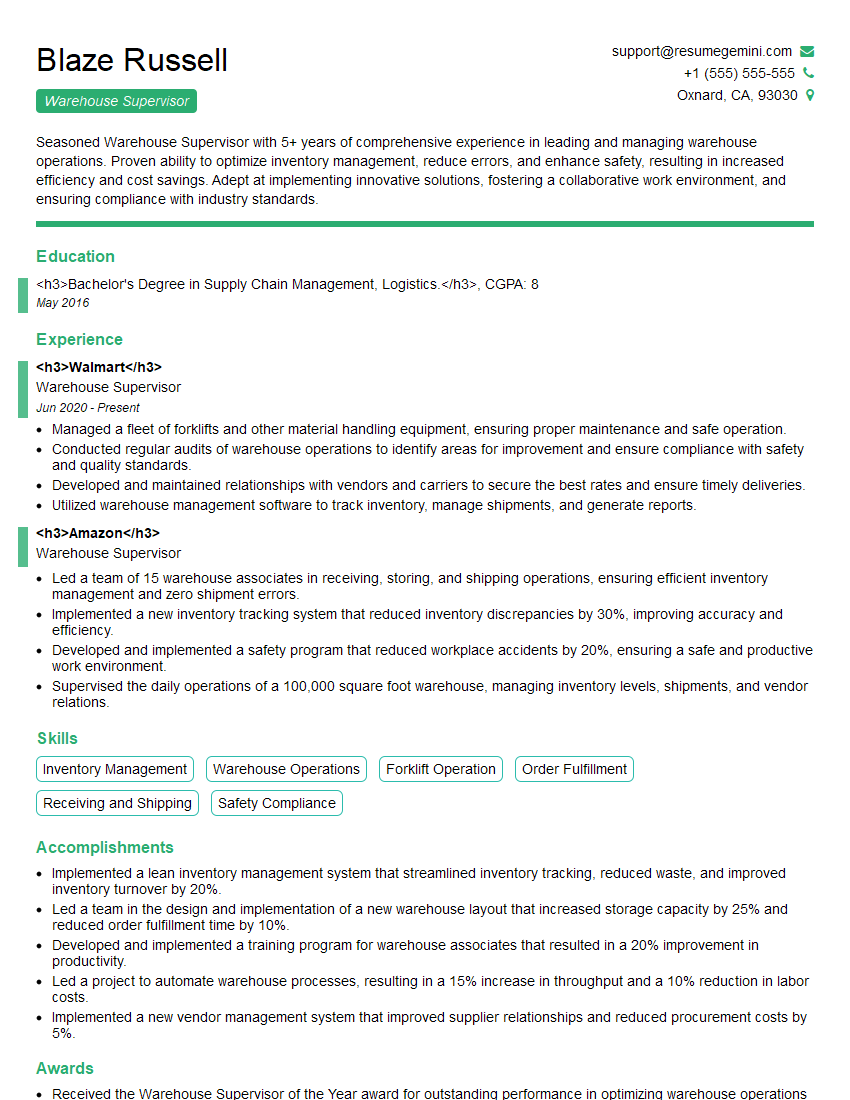
Warehouse Supervisor Resume Sample
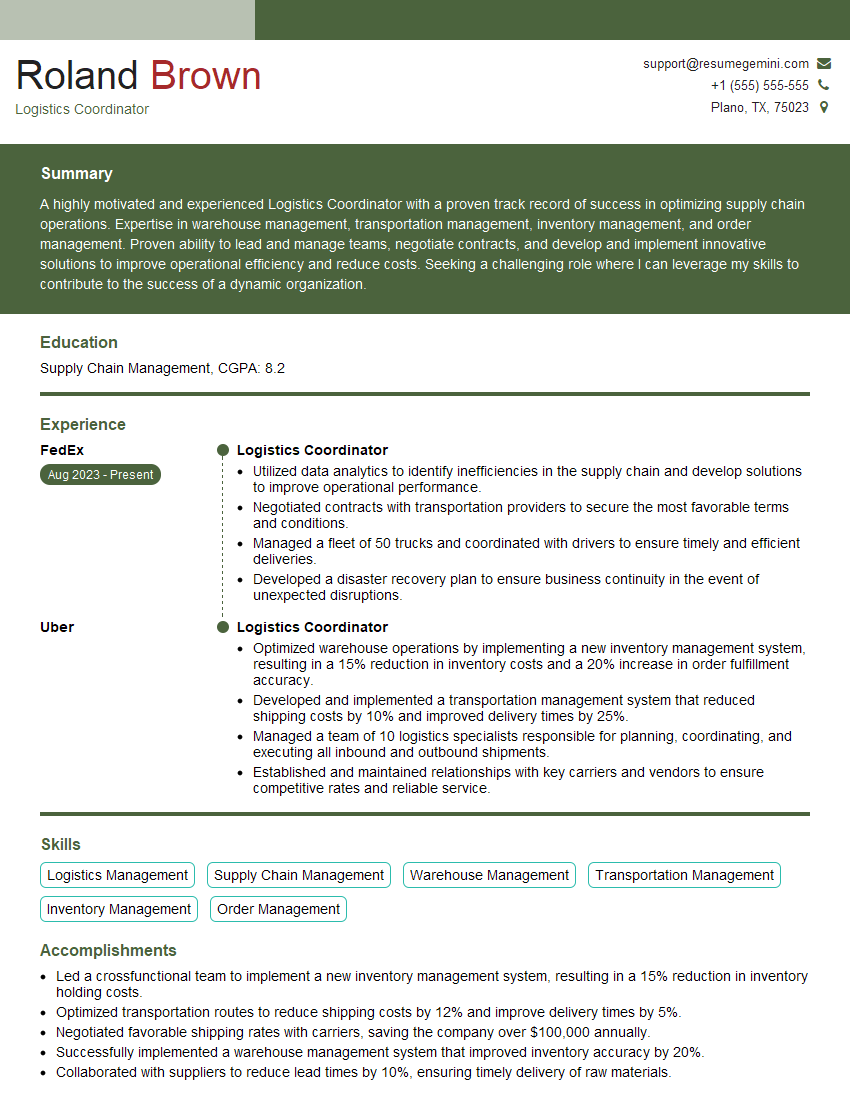
Logistics Coordinator Resume Sample
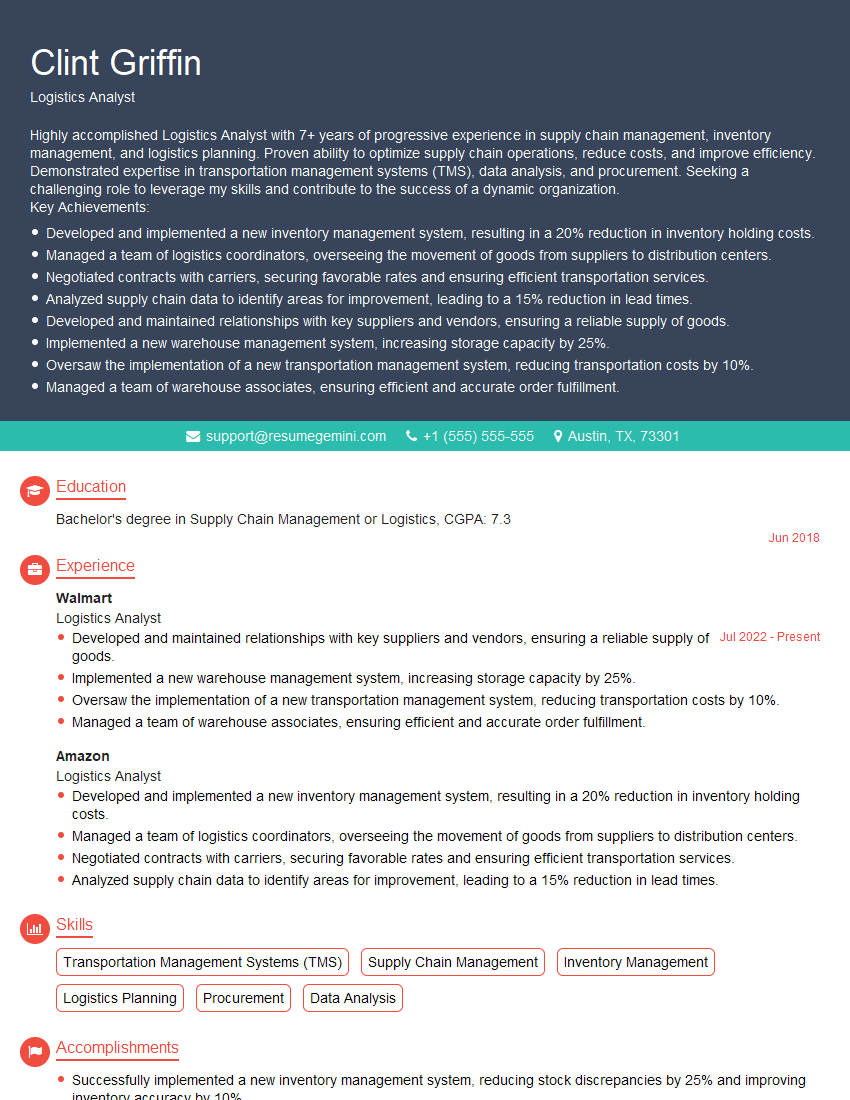
Logistics Analyst Resume Sample
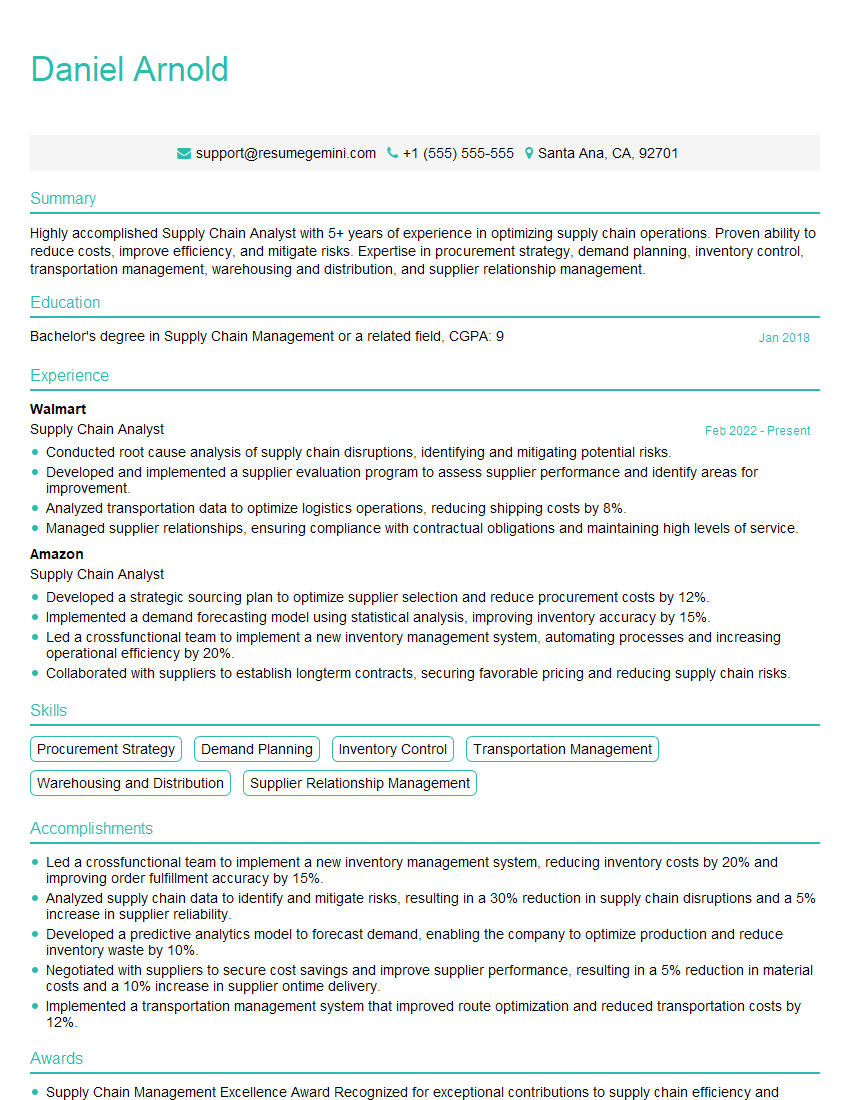
Supply Chain Analyst Resume Sample
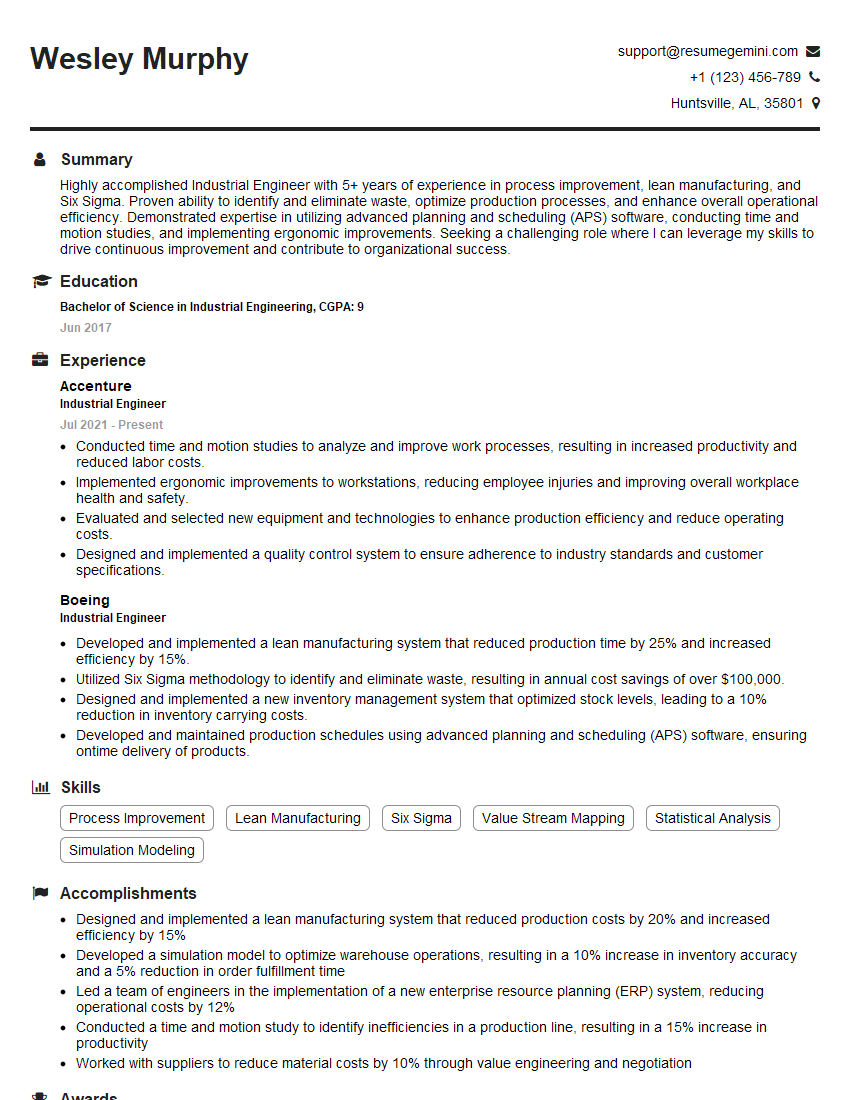
Industrial Engineer Resume Sample
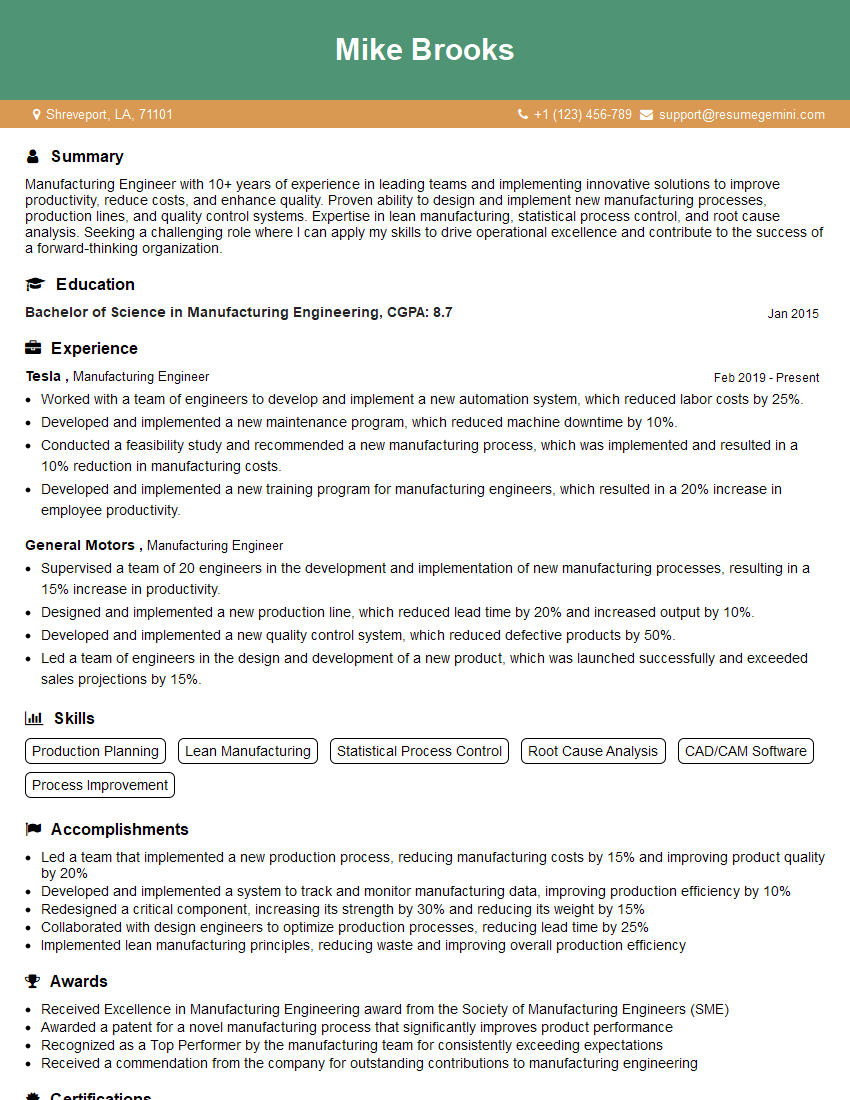
Manufacturing Engineer Resume Sample
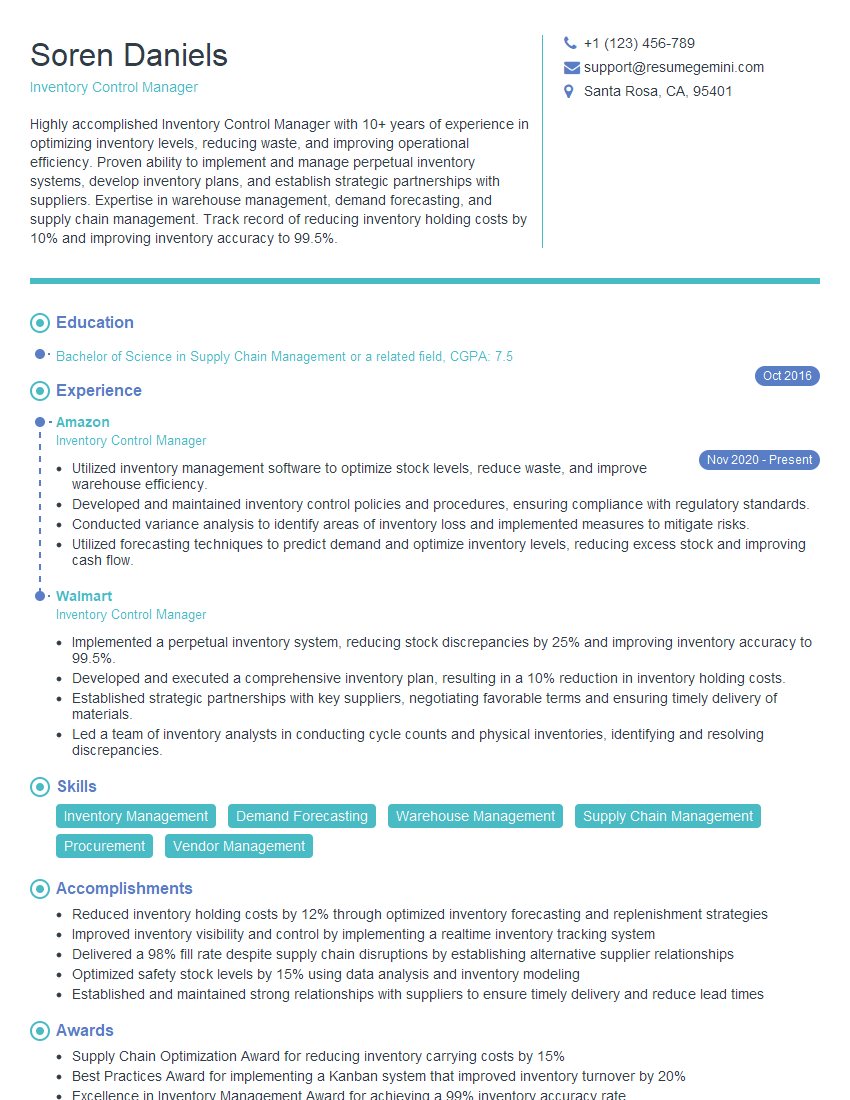
Inventory Control Manager Resume Sample
- Operations Manager
- Plant Manager
- Production Manager
- Demand Planner
- Quality Control Manager
- Production Supervisor
- Materials Manager
- Procurement Manager
- Supply Chain Manager
- Distribution Center Manager
- Logistics Manager
- Transportation Manager
- Warehouse Manager
- Warehouse Supervisor
- Logistics Coordinator
- Logistics Analyst
- Supply Chain Analyst
- Industrial Engineer
- Manufacturing Engineer
- Inventory Control Manager
Explore more articles
Users Rating of Our Blogs
Share Your Experience
We value your feedback! Please rate our content and share your thoughts (optional).
What Readers Say About Our Blog
To the interviewgemini.com Webmaster.
Very helpful and content specific questions to help prepare me for my interview!
Thank you
To the interviewgemini.com Webmaster.
This was kind of a unique content I found around the specialized skills. Very helpful questions and good detailed answers.
Very Helpful blog, thank you Interviewgemini team.