Unlock your full potential by mastering the most common Medical Command interview questions. This blog offers a deep dive into the critical topics, ensuring you’re not only prepared to answer but to excel. With these insights, you’ll approach your interview with clarity and confidence.
Questions Asked in Medical Command Interview
Q 1. Describe your experience in managing medical resources in a field environment.
Managing medical resources in a field environment requires a meticulous approach blending strategic planning with adaptability. It’s akin to being a conductor of an orchestra, ensuring each instrument (resource) plays its part harmoniously. My experience involves everything from initial needs assessment – determining the number of personnel, equipment, and consumables required based on the mission – to the continuous monitoring and real-time adjustments in response to evolving needs and casualties. This includes inventory management, prioritizing resource allocation based on urgency and severity of injuries, and establishing effective supply chains, often under unpredictable and challenging conditions.
For instance, during a deployment to a disaster-stricken area, we faced a shortage of IV fluids. By creatively repurposing existing saline solutions and implementing strict rationing protocols, we successfully managed to treat all patients without compromising care. Furthermore, regular inventory checks and predictive modeling based on past consumption data allowed us to anticipate future needs and proactively request additional supplies, minimizing disruptions to patient care.
Efficient resource management also involves personnel management; ensuring appropriate staffing levels for various medical capabilities and maintaining a high level of team coordination are critical.
Q 2. Explain your understanding of medical evacuation procedures and protocols.
Medical evacuation (MEDEVAC) procedures are critical life-saving protocols. Think of them as a carefully choreographed dance, where timing and precision are paramount. They involve the systematic process of transporting injured or ill personnel from a point of injury to a higher echelon of medical care. This encompasses everything from initial assessment of the patient’s condition to determine the urgency of evacuation (using tools like the START triage system), to coordinating transport via ground, air, or sea, and finally ensuring seamless handover to receiving medical facilities.
Protocols vary depending on the environment and the resources available. However, common elements include establishing communication with receiving facilities, documenting patient information thoroughly, and ensuring patient safety throughout the process. In remote areas, resource constraints necessitate innovative solutions – we might utilize local resources or improvise equipment when necessary, always maintaining patient safety and adhering to ethical standards.
For example, during a high-altitude evacuation, we had to account for the physiological effects of altitude on both the patient and the medical team. This required meticulous planning regarding oxygen supplementation, altitude adjustments in medication dosages, and selection of appropriate transportation methods to minimize risks to the patient’s health.
Q 3. How would you prioritize medical needs during a mass casualty incident?
Prioritizing medical needs during a mass casualty incident (MCI) is a high-stakes challenge requiring swift, decisive action. Imagine a battlefield or a major earthquake – the scene is chaotic, and resources are limited. My approach is grounded in the START triage system (Simple Triage And Rapid Treatment), a widely accepted method that categorizes patients into four priority groups based on their immediate needs: immediate (red), delayed (yellow), minimal (green), and expectant (black).
The system uses easily identifiable indicators like respiration, perfusion, and mental status to quickly assess patients and allocate resources effectively. Patients with immediate life threats get priority, followed by those with less critical injuries. Resources are then distributed accordingly, ensuring the greatest number of lives are saved.
Beyond triage, effective communication and coordination among the medical team is crucial. Clear roles and responsibilities need to be defined, and continuous communication with command and control ensures efficient resource allocation and effective evacuation planning.
Q 4. Describe your experience with medical supply chain management.
Medical supply chain management is the backbone of effective medical care, especially in field environments. It’s about ensuring the right supplies reach the right place at the right time, no matter the challenges. This involves forecasting demand, procuring supplies, storing them appropriately, and managing their distribution across various locations. My experience encompasses developing robust inventory management systems, implementing effective tracking mechanisms (both manual and digital), and establishing secure and efficient supply lines.
Understanding the unique needs of different settings is crucial. In a remote location, for instance, we may need to prioritize durable and easily transportable supplies. In a conflict zone, security of the supply chain becomes paramount. Regular auditing and quality control checks are also essential to ensure supplies are in good condition and meet required standards. I’ve utilized various software solutions for inventory management and supply chain optimization, improving transparency and efficiency.
One example involved utilizing a customized software application to manage our medical supplies during a prolonged humanitarian mission. This allowed for real-time tracking of inventory levels, automated reordering processes, and improved accountability, ultimately leading to fewer stockouts and improved patient care.
Q 5. How would you handle a disagreement with a subordinate regarding a medical treatment plan?
Disagreements are inevitable in any professional setting, particularly when dealing with complex medical decisions. Handling a disagreement with a subordinate regarding a medical treatment plan requires a calm and professional approach, prioritizing the patient’s best interest. My strategy revolves around respectful dialogue and a collaborative problem-solving approach. The key is to create a safe space for open communication.
I would first listen attentively to the subordinate’s concerns, understanding their rationale. Then, I would present my perspective, supported by evidence-based medical guidelines. If the disagreement persists, I’d encourage a discussion involving other senior medical personnel or specialists. The goal is not to win the argument, but to reach a consensus that ensures the best possible outcome for the patient, while simultaneously promoting learning and professional development within the team.
In the end, the decision rests with the most senior physician, but that doesn’t preclude valuing the input of other team members. Transparency and a commitment to continuous learning are essential aspects of fostering a culture of collaboration and trust within the medical team.
Q 6. Explain your knowledge of medical readiness standards and assessments.
Medical readiness standards and assessments are critical for ensuring a medical unit is prepared to handle any contingency. Think of it as a comprehensive fitness test for the medical team and its resources. These standards define the minimum acceptable levels of personnel training, equipment functionality, and logistical capabilities required for specific operational scenarios. Assessments involve regular inspections, drills, and evaluations designed to identify gaps and ensure compliance.
Examples of assessments include equipment serviceability checks, personnel proficiency evaluations (e.g., ACLS certifications), and logistical readiness exercises that simulate real-world scenarios. These assessments provide a clear picture of the unit’s strengths and weaknesses, guiding improvement efforts. The results are used to develop targeted training programs, address equipment deficiencies, and improve operational procedures.
Compliance with these standards is non-negotiable, as it directly impacts the quality of medical care delivered in the field. Regular and thorough assessments are vital in maintaining a high level of medical readiness and ensuring patient safety.
Q 7. What are your strategies for maintaining morale and efficiency within a medical team under stress?
Maintaining morale and efficiency within a medical team under stress requires a multifaceted approach, focusing on both individual and team well-being. It’s like tending to a garden – each plant (team member) needs nurturing to thrive. Stress is inevitable, but proactively managing it is crucial. My approach emphasizes open communication, mutual support, and a focus on the positive aspects of teamwork. I believe in leading by example, displaying resilience and positivity even under pressure.
Strategies include regularly debriefing after critical incidents to process emotions and identify areas for improvement; fostering a culture of mutual respect and support among team members; providing opportunities for rest and recuperation; promoting a healthy work-life balance as much as feasible; and celebrating successes, no matter how small. I also utilize constructive feedback and recognition to reinforce positive behaviors and improve performance. Effective leadership is also vital – creating a clear chain of command and ensuring transparent communication throughout the team helps build trust and confidence.
For example, during a particularly challenging deployment, we implemented a daily mindfulness session for the team, which helped manage stress and improve overall well-being. We also instituted a peer support system, pairing more experienced members with newer ones to provide mentorship and emotional support.
Q 8. How do you ensure compliance with medical regulations and policies?
Ensuring compliance with medical regulations and policies in a military medical command setting is paramount. It’s not just about following rules; it’s about safeguarding patient care and maintaining operational readiness. We achieve this through a multi-layered approach.
- Proactive Training: Regular training sessions for all medical personnel cover relevant regulations, including the Uniform Code of Military Justice (UCMJ) as it pertains to medical practice, HIPAA regulations (where applicable), and specific command policies. We use interactive scenarios and case studies to reinforce learning.
- Audits and Inspections: We conduct regular internal audits to identify potential compliance gaps. These audits examine everything from proper documentation procedures to the safe handling and disposal of medical waste. External inspections by higher authorities are also welcomed as opportunities for improvement and validation of our practices.
- Policy Dissemination and Updates: We utilize a robust system to disseminate updated policies and regulations. This includes digital distribution through secure channels, mandatory briefings, and readily accessible online repositories. We ensure all personnel acknowledge receipt and understanding of these changes.
- Reporting and Corrective Actions: A transparent system for reporting non-compliance is crucial. This encourages early identification of problems and allows for timely corrective actions. We maintain detailed records, analyze trends, and implement preventive measures to address recurring issues. For example, if we see a pattern of medication errors, we might implement a new double-checking protocol.
Think of it like maintaining a highly sophisticated aircraft – regular maintenance checks, adherence to strict protocols, and continuous improvement are vital to prevent accidents and ensure safe, effective operations.
Q 9. Describe your experience with medical data analysis and reporting.
My experience with medical data analysis and reporting involves leveraging data to improve the quality and efficiency of care. I’ve used data analytics to track key performance indicators (KPIs) such as infection rates, treatment effectiveness, and resource utilization. For example, in one deployment, we analyzed data on battlefield injuries to identify trends and improve our triage protocols, leading to a significant reduction in mortality rates.
Specific examples include:
- Epidemiological Surveillance: Analyzing disease patterns to predict outbreaks and implement preventative measures.
- Resource Allocation: Using data to optimize the distribution of medical supplies and personnel based on predicted needs.
- Outcome Measurement: Tracking patient outcomes to evaluate the effectiveness of different treatments and identify areas for improvement. This involves statistical analysis and the use of tools like R or SPSS to produce meaningful reports.
- Generating Reports: I’m proficient in producing clear, concise, and visually appealing reports, which are effectively communicated to both medical and non-medical personnel, using a combination of charts, graphs, and narrative summaries.
My expertise extends to data visualization tools like Tableau and Power BI to effectively communicate complex data to a wider audience.
Q 10. How would you develop and implement a medical training program for your unit?
Developing and implementing a medical training program requires a systematic approach. It begins with a needs assessment to identify the knowledge and skills gaps within the unit. This involves surveying personnel, reviewing past performance data, and considering anticipated operational requirements.
The program design would incorporate:
- Learning Objectives: Clearly defined learning objectives ensure the training is focused and measurable.
- Training Methods: A mix of methods – lectures, hands-on simulations, practical exercises, and online modules – would cater to different learning styles and provide varied exposure to realistic scenarios. For example, we would utilize high-fidelity simulators for practicing advanced trauma life support.
- Assessment and Evaluation: Regular assessments throughout the training, including written exams, practical demonstrations, and performance-based evaluations, are critical. This helps to identify areas needing further instruction.
- Feedback Mechanisms: A robust feedback system allows for continuous improvement. Trainees’ feedback, coupled with instructor observations and performance data, helps to refine the training program over time.
- Continuing Education: Maintaining competency requires ongoing professional development through conferences, workshops, and online courses.
The program would also consider the unique demands of the unit’s operational environment, incorporating specific training related to environmental hazards or expected types of injuries.
Q 11. Explain your understanding of medical intelligence and its role in military operations.
Medical intelligence (MEDINT) is the collection, processing, and dissemination of information concerning the enemy’s capabilities and intentions related to healthcare and medical infrastructure. It plays a vital role in military operations by providing critical insights that influence operational planning and execution.
MEDINT supports several key areas:
- Force Health Protection: Identifying potential health threats, such as infectious diseases, environmental hazards, or the enemy’s use of biological or chemical weapons.
- Operational Planning: Informing decisions about force deployment, logistics, and resource allocation by predicting the potential medical needs of the operation.
- Combat Casualty Care: Providing information on enemy medical capabilities and treatment practices, which helps our medical teams prepare for potential encounters.
- Civil Affairs: Understanding the health status of the civilian population helps with planning humanitarian assistance and improving civil-military relations.
For instance, MEDINT might reveal the presence of a specific infectious disease in an area, prompting the implementation of preventative measures within our forces. Or, knowledge of an enemy’s limited medical capabilities might influence the tactics used in an engagement.
Q 12. How would you communicate effectively with civilian healthcare providers during a joint operation?
Effective communication with civilian healthcare providers during a joint operation is crucial for seamless patient care and operational success. It hinges on clear, concise, and respectful communication, recognizing the different organizational structures and protocols.
My approach includes:
- Pre-operational Planning: Establishing clear lines of communication and protocols before the operation begins. This includes identifying key contacts, understanding their reporting structures, and agreeing on information-sharing mechanisms. We’d potentially conduct joint training exercises to practice collaboration.
- Consistent Communication Channels: Using secure and reliable communication channels, such as dedicated radio frequencies or encrypted messaging systems, to ensure the timely exchange of information. Understanding the technology and capabilities of all parties is key.
- Common Terminology and Standards: Employing standardized medical terminology and protocols to avoid misunderstandings. This might involve using common medical record formats or establishing a joint lexicon of terms.
- Cultural Sensitivity: Acknowledging and respecting the cultural differences between military and civilian healthcare providers. This involves building rapport and demonstrating a collaborative spirit.
- Regular Briefings: Conducting regular briefings to share updates on the operational situation and medical requirements.
An example would be establishing a shared database for patient information, ensuring both military and civilian providers have access to the same crucial data – streamlining treatment and reducing redundancies.
Q 13. Describe your experience in planning and executing medical support for a large-scale operation.
Planning and executing medical support for a large-scale operation is a complex undertaking requiring meticulous attention to detail and proactive planning. My experience includes developing comprehensive medical plans that encompass all aspects of care, from evacuation protocols to resource management.
My approach involves:
- Needs Assessment: Thoroughly assessing the anticipated medical needs of the operation, considering the operational environment, expected types of injuries, and the size and composition of the force.
- Resource Allocation: Determining the necessary medical personnel, equipment, and supplies, and ensuring their timely delivery to the appropriate locations. This might involve coordinating with logistical support units.
- Evacuation Planning: Developing comprehensive evacuation plans, including routes, transportation methods, and receiving facilities. This requires collaboration with air and ground transport units.
- Contingency Planning: Addressing potential challenges and developing contingency plans to ensure medical support continues even under adverse conditions. This involves creating robust backup systems and anticipating potential disruptions.
- Post-Operational Assessment: Conducting a post-operational assessment to identify lessons learned and areas for improvement. This ensures future operations benefit from the experiences gained.
In one particular operation, I was responsible for coordinating the medical support for a large-scale humanitarian relief effort. The process involved anticipating diverse medical needs, coordinating with international aid organizations, and establishing a robust system for tracking patient care and resource allocation. The success of this operation demonstrated the importance of proactive planning and seamless collaboration.
Q 14. What are your strategies for managing medical equipment maintenance and repair?
Managing medical equipment maintenance and repair is critical for maintaining operational readiness. It requires a proactive, multi-faceted approach that balances preventative maintenance with responsive repairs.
My strategies include:
- Preventative Maintenance Schedules: Establishing and adhering to strict preventative maintenance schedules for all medical equipment. This includes regular inspections, cleaning, and calibration to prevent malfunctions and extend the lifespan of equipment.
- Inventory Management: Maintaining a detailed inventory of all medical equipment, tracking its location, condition, and maintenance history. This allows for efficient tracking of equipment and ensures timely repairs.
- Repair and Maintenance Contracts: Utilizing contracts with qualified maintenance providers for specialized equipment, ensuring timely repairs and reducing downtime.
- Training: Providing comprehensive training to medical personnel on the proper operation and basic maintenance of equipment. This empowers personnel to perform basic maintenance tasks and recognize potential problems early.
- Parts Inventory: Maintaining a sufficient stock of essential repair parts to minimize downtime caused by waiting for replacement parts.
- Equipment Replacement: Implementing a system for planned equipment replacement based on age, usage, and anticipated technological advancements. This prevents costly repairs on outdated equipment.
Think of it like managing a fleet of vehicles – regular maintenance, preventative measures, and a robust repair system are essential to ensure vehicles are always ready for deployment.
Q 15. How would you ensure the safety and security of medical supplies and equipment?
Ensuring the safety and security of medical supplies and equipment in a military medical command context requires a multi-layered approach. Think of it like securing a high-value asset – you need robust physical security, stringent inventory control, and proactive risk management.
- Physical Security: This involves secure storage facilities with controlled access, utilizing measures like locks, alarms, and surveillance systems. We’d also consider climate control for temperature-sensitive medications and equipment. For deployment, secure transport methods like armored vehicles or specialized containers are essential.
- Inventory Management: A robust inventory system, perhaps using a digital database or specialized software, is critical. This allows for real-time tracking of supplies, predicting shortages, and managing expiration dates. Regular audits and reconciliation are crucial to detect discrepancies early.
- Risk Management: This involves identifying potential threats (theft, damage, spoilage) and implementing mitigation strategies. This could include training personnel on proper handling and storage, implementing emergency power backup for refrigeration, and establishing clear chain-of-custody procedures. Disaster preparedness plans covering natural disasters or conflict are also necessary.
For example, during a deployment to a remote area, we would utilize specialized, hardened containers for medical equipment, ensuring that they are resistant to both the elements and potential attacks. We’d also establish a secure communication system for real-time inventory updates to the main supply chain.
Career Expert Tips:
- Ace those interviews! Prepare effectively by reviewing the Top 50 Most Common Interview Questions on ResumeGemini.
- Navigate your job search with confidence! Explore a wide range of Career Tips on ResumeGemini. Learn about common challenges and recommendations to overcome them.
- Craft the perfect resume! Master the Art of Resume Writing with ResumeGemini’s guide. Showcase your unique qualifications and achievements effectively.
- Don’t miss out on holiday savings! Build your dream resume with ResumeGemini’s ATS optimized templates.
Q 16. Explain your understanding of medical ethics and their application in military settings.
Medical ethics in a military setting are based on the same fundamental principles as civilian medicine: beneficence (acting in the best interest of the patient), non-maleficence (avoiding harm), respect for autonomy (respecting patient choices), and justice (fair distribution of resources). However, the military context adds unique challenges. The needs of the mission often intersect with the well-being of individual soldiers.
Think of the tension between the need for battlefield triage, where limited resources may necessitate prioritization of care based on survivability, and the ethical imperative to provide equal care to all. Another aspect is maintaining patient confidentiality while balancing the needs of operational security. For instance, certain medical information might need to be shared with command to ensure appropriate deployment strategies.
The application involves strict adherence to established codes of conduct, regular ethical training for medical personnel, and the establishment of clear protocols for addressing ethical dilemmas. Transparency and accountability are key.
Q 17. How would you address a situation involving a medical ethical dilemma?
Addressing a medical ethical dilemma requires a systematic approach. It’s not unlike troubleshooting a complex technical issue – you need a structured methodology.
- Identify the Dilemma: Clearly define the ethical conflict. For instance, a soldier may refuse treatment that is deemed medically necessary.
- Gather Information: Collect all relevant facts, including medical information, legal considerations, and the soldier’s perspective.
- Consult and Discuss: Seek counsel from experienced colleagues, ethics committees, and legal advisors. This provides multiple perspectives and ensures compliance with regulations.
- Develop Potential Solutions: Explore various options, considering the ethical principles and potential consequences of each.
- Select Best Option: Choose the solution that best aligns with ethical principles while considering the context and potential impact on the mission and the individual.
- Implement and Evaluate: Put the chosen solution into practice and monitor its effectiveness. Document the process and outcomes.
For example, if a soldier refuses a blood transfusion due to religious beliefs, we must carefully balance the soldier’s autonomy with the need to preserve their life. This could involve exploring alternative treatments or engaging a chaplain to facilitate communication and understanding. Careful documentation of the process is essential for legal and ethical accountability.
Q 18. Describe your experience with coordinating medical care with allied forces.
Coordinating medical care with allied forces requires clear communication, standardized procedures, and mutual respect for each other’s capabilities and protocols. Imagine a symphony orchestra – each section has its own expertise, but they must play in harmony to produce a beautiful performance.
My experience involves establishing interoperability between different medical information systems, agreeing on shared treatment protocols, and establishing clear communication channels. This frequently involves participating in joint training exercises and developing standardized operating procedures to ensure seamless collaboration during emergencies or large-scale deployments.
For example, I’ve worked with NATO allies on a joint exercise where we established a unified patient tracking system, allowing for seamless transfer of patient information between different national medical units. This involved agreeing upon a common data format and establishing secure communication channels to exchange sensitive medical information.
Q 19. How would you assess the medical needs of a deployed unit?
Assessing the medical needs of a deployed unit requires a comprehensive approach that considers several factors. Think of it as a preventative health assessment, but on a larger scale.
- Mission Profile: Understanding the operational environment and the anticipated health risks is crucial. A unit deploying to a desert environment has different needs than one operating in a jungle.
- Troop Composition: The age, gender, and pre-existing medical conditions of the personnel should be considered. Special needs might exist for pregnant soldiers or those with chronic illnesses.
- Environmental Risks: Factors like heat stress, infectious diseases, or exposure to hazardous materials must be assessed. This would require incorporating climate data, local health information, and intelligence reports.
- Resource Availability: The availability of medical supplies, personnel, and evacuation capabilities significantly impacts the planning. Realistic limitations need to be incorporated into the plan.
Based on this assessment, a tailored medical plan can be developed, including preventative measures (e.g., vaccinations), appropriate medical supplies, and contingency plans for emergencies. Regular health monitoring and surveillance are crucial.
Q 20. What are your strategies for mitigating risks to medical personnel in a hazardous environment?
Mitigating risks to medical personnel in hazardous environments requires a layered approach that focuses on both proactive measures and reactive protocols.
- Personal Protective Equipment (PPE): Providing appropriate PPE based on the specific threats, such as ballistic protection, chemical protection suits, or specialized clothing to protect against extreme temperatures is fundamental.
- Training and Drills: Regular training on emergency response procedures, including handling casualties, providing self-aid and buddy-aid, and utilizing communication systems, are crucial. Simulations of hazardous situations should be incorporated.
- Security Measures: This might involve armed escorts, secure transportation, and establishing fortified medical facilities in conflict zones.
- Evacuation Protocols: Establishing clear and efficient evacuation plans in case of emergencies is paramount, including utilizing medical evacuation helicopters or other methods.
- Mental Health Support: Providing access to mental health professionals and establishing robust support systems is crucial to address stress and trauma.
For example, in a conflict zone, medical teams might be equipped with ballistic vests and helmets, along with armored vehicles for transportation. Regular drills would simulate attacks and emergency evacuations.
Q 21. Explain your experience in utilizing medical information systems.
My experience with medical information systems spans multiple platforms and contexts. It’s not simply about using software; it’s about leveraging technology to improve patient care, enhance operational efficiency, and ensure data security.
This includes experience with electronic health record (EHR) systems for tracking patient data, utilizing telehealth platforms for remote consultations, managing medical supply inventory using specialized database systems, and employing Geographic Information Systems (GIS) to optimize resource allocation and track the location of medical assets. Data analytics and reporting tools are used to improve decision-making and to identify trends in illness or injury.
Specifically, I’ve worked with systems like AHLTA (Armed Forces Health Longitudinal Technology Application), familiarizing myself with its functionalities, data security protocols, and reporting capabilities. Experience with data migration and system integration is also crucial for ensuring interoperability with allied forces’ systems.
Q 22. How would you develop a plan for emergency medical response in a remote location?
Developing an emergency medical response plan for a remote location requires meticulous planning and anticipation of potential challenges. It’s akin to building a robust safety net in a challenging environment. The plan must account for limited resources, communication difficulties, and potentially harsh conditions.
- Assessment of the Environment: A thorough environmental risk assessment is crucial. This includes identifying potential hazards (e.g., terrain, weather, wildlife, disease vectors) and assessing the availability of resources like potable water, shelter, and communication infrastructure.
- Resource Allocation: Given resource limitations, prioritizing essential medical supplies and equipment is paramount. This often involves a tiered system, prioritizing life-saving interventions first. For example, a basic first-aid kit may be carried by every team member, while more advanced equipment resides at a central location.
- Communication Strategy: Establishing reliable communication channels is critical. This might involve satellite phones, two-way radios, or pre-arranged communication points. A clear chain of command and communication protocols need to be established.
- Personnel Training: Training for personnel should include wilderness first aid and advanced medical techniques relevant to the anticipated risks. Regular drills and simulations are vital to ensure team proficiency.
- Evacuation Plan: A detailed evacuation plan should be developed, outlining transport methods (helicopter, ground transport) and designated evacuation points. This requires coordination with external agencies or organizations.
- Pre-emptive Measures: Preventive measures, such as vaccinations and prophylactic medications, are vital, especially in areas with endemic diseases.
For instance, during a humanitarian mission in a remote mountain region, we developed a plan that included using satellite phones for communication, training personnel in altitude sickness management, and establishing a designated helicopter landing zone for rapid evacuation.
Q 23. Describe your experience with medical research and its application to military practice.
My experience with medical research focuses on the application of telemedicine and point-of-care diagnostics in austere environments. I’ve been involved in several studies evaluating the effectiveness of portable ultrasound devices for battlefield triage and the use of remote monitoring systems for tracking the health of deployed personnel. This research directly translates to military practice by improving the timeliness and accuracy of diagnosis and treatment, particularly in scenarios where access to conventional healthcare is limited.
One specific project involved testing a new rapid diagnostic test for malaria in a simulated field environment. The results showed significantly faster diagnosis compared to traditional methods, potentially saving lives by enabling earlier treatment. This research has directly influenced our unit’s deployment protocols, leading to the adoption of the new diagnostic test.
Q 24. Explain your understanding of the legal aspects of medical care in a military context.
Understanding the legal aspects of medical care in a military context is critical. It encompasses a complex interplay of international humanitarian law, the Uniform Code of Military Justice (UCMJ), and national laws. Key aspects include the ethical treatment of prisoners of war, the legality of battlefield medical interventions, and the responsibilities of medical personnel in providing care while adhering to the highest ethical standards.
- Geneva Conventions: These conventions dictate the ethical treatment of wounded and sick combatants and prisoners of war, emphasizing impartiality and neutrality in medical care.
- UCMJ: This code governs the conduct of military personnel, including medical professionals. It sets legal standards for the provision of medical care and outlines disciplinary procedures for misconduct.
- Informed Consent: Even in a military setting, informed consent is crucial. While urgency often necessitates rapid decision-making, medical personnel must take all reasonable steps to ensure patients understand the procedures being performed.
- Documentation: Meticulous documentation of medical interventions, treatments, and patient outcomes is essential for both legal and operational purposes. It protects both the patient and the provider.
For example, we had a case where a soldier required a potentially risky procedure. Ensuring appropriate documentation, obtaining informed consent (to the extent possible given the circumstances), and strictly adhering to UCMJ guidelines were paramount.
Q 25. How would you manage the psychological impact of combat on medical personnel?
Managing the psychological impact of combat on medical personnel is a crucial yet often overlooked aspect of military medicine. The stresses of battlefield conditions, coupled with exposure to traumatic events, can lead to post-traumatic stress disorder (PTSD), depression, and other mental health challenges. A proactive approach is vital.
- Pre-Deployment Screening and Training: Comprehensive psychological evaluations and resilience training are crucial before deployment to identify potential vulnerabilities and build coping mechanisms.
- Peer Support Networks: Establishing strong peer support networks and providing access to mental health professionals within the unit can foster a sense of community and encourage help-seeking behaviors.
- Readily Available Mental Health Resources: Ensuring easily accessible mental health services, including individual and group therapy, is paramount. Reducing stigma and normalizing help-seeking are essential aspects.
- Post-Deployment Assessment and Support: Comprehensive psychological assessments and support should be provided upon return from deployment, along with access to ongoing care as needed.
In one instance, we implemented a peer support program where senior medical personnel trained to recognize and address signs of psychological distress. This intervention was shown to be quite effective in promoting early identification and treatment.
Q 26. Describe your experience in developing and implementing a medical contingency plan.
Developing and implementing a medical contingency plan involves a structured approach that considers various scenarios and challenges. It’s a proactive measure, similar to preparing for a natural disaster. The plan should be flexible and adaptable to unforeseen circumstances.
- Risk Assessment: Identifying potential threats such as outbreaks of infectious disease, mass casualty events, or natural disasters is the initial step. We use historical data and expert opinions to create a detailed risk profile.
- Resource Planning: Determining the resources required for various scenarios—medical personnel, equipment, supplies, and communication systems—is critical. This often involves a tiered approach, with prioritized resource allocation.
- Scenario Planning: Developing detailed plans for various scenarios allows us to anticipate the specific challenges of each event and develop tailored response strategies. Tabletop exercises are often employed to refine the plan.
- Communication Protocols: Establishing clear communication channels among medical personnel, command, and external agencies is critical for effective coordination.
- Training and Drills: Regular training exercises allow our medical team to practice the contingency plan in realistic scenarios, which builds confidence and competence.
- Post-Incident Review: Following any incident, we conduct a thorough review to identify areas for improvement and refine the plan based on lessons learned.
For example, a recent exercise involved simulating a mass casualty incident due to a chemical spill. This allowed us to test our evacuation procedures, resource allocation strategies, and inter-agency coordination. We found areas of improvement in our communication systems and revised the plan accordingly.
Q 27. How would you evaluate the effectiveness of your medical team?
Evaluating the effectiveness of a medical team requires a multifaceted approach that goes beyond simply measuring individual performance. It’s crucial to assess the team’s performance as a cohesive unit.
- Performance Metrics: Key performance indicators (KPIs) such as patient survival rates, time to treatment, and infection rates provide quantitative data on the effectiveness of medical care. We track these metrics continuously.
- Patient Satisfaction Surveys: Gathering feedback from patients (or their families) regarding their experience with the medical team can provide valuable insights. This helps us assess quality of care and identify areas for improvement.
- Peer Review: Internal peer reviews provide an opportunity for team members to observe, provide feedback, and improve their skill set and teamwork.
- After-Action Reports: Detailed reports conducted after operations or drills can pinpoint strengths and weaknesses in the team’s response to medical crises.
- Skills Assessment: Regular skills assessments and certifications help maintain and improve individual skillsets. This also helps identify areas of training needed for the team.
For example, we continuously track patient survival rates for specific injuries, using the data to identify areas where training or protocols could be refined to optimize outcomes.
Q 28. What are your strategies for improving the overall quality of medical care provided by your unit?
Improving the overall quality of medical care within a unit requires a continuous quality improvement (CQI) approach focusing on people, processes, and resources.
- Continuing Medical Education (CME): Providing access to ongoing CME opportunities is crucial in keeping medical personnel up-to-date with the latest medical advancements and best practices. We regularly schedule CME workshops and training sessions.
- Technological Advancements: Integrating new technologies, such as telemedicine and point-of-care diagnostics, can improve the timeliness and accuracy of diagnosis and treatment, particularly in austere environments.
- Process Improvement: Regularly reviewing and improving clinical processes, including triage, treatment protocols, and documentation procedures, is vital to optimizing efficiency and effectiveness. We use Lean methodologies to identify areas for process improvement.
- Resource Optimization: Efficient management and utilization of medical resources is essential. This includes appropriate inventory management, equipment maintenance, and cost-effective procurement strategies.
- Feedback Mechanisms: Establishing robust feedback mechanisms, including both upward and downward communication channels, is crucial for fostering a culture of continuous improvement.
For example, we recently implemented a new electronic health record system, which improved the efficiency of documentation and enabled better data analysis for process improvement.
Key Topics to Learn for Medical Command Interview
- Healthcare Logistics & Supply Chain Management: Understanding the complexities of medical supply procurement, distribution, and inventory management within a command structure.
- Medical Evacuation & Transportation: Knowledge of patient transport protocols, triage procedures, and the coordination of resources for effective casualty evacuation.
- Combat Casualty Care: Familiarity with tactical combat casualty care (TCCC) guidelines, including initial assessment, wound management, and stabilization techniques.
- Medical Readiness & Planning: Experience or understanding of developing and implementing medical readiness plans, including resource allocation and contingency planning for various scenarios.
- Personnel Management & Training: Knowledge of managing medical personnel, conducting training exercises, and ensuring the overall competency of a medical team.
- Data Analysis & Reporting: Ability to analyze medical data, track key performance indicators (KPIs), and prepare comprehensive reports for command decision-making.
- Medical Regulations & Compliance: Understanding of relevant medical regulations, ethical considerations, and compliance procedures within a military or government context.
- Technological Applications in Medical Command: Familiarity with medical information systems, telehealth technologies, and other technological advancements impacting medical command operations.
- Problem-Solving & Decision-Making under Pressure: Demonstrating the ability to analyze complex situations, make timely decisions, and effectively manage resources under stressful conditions.
Next Steps
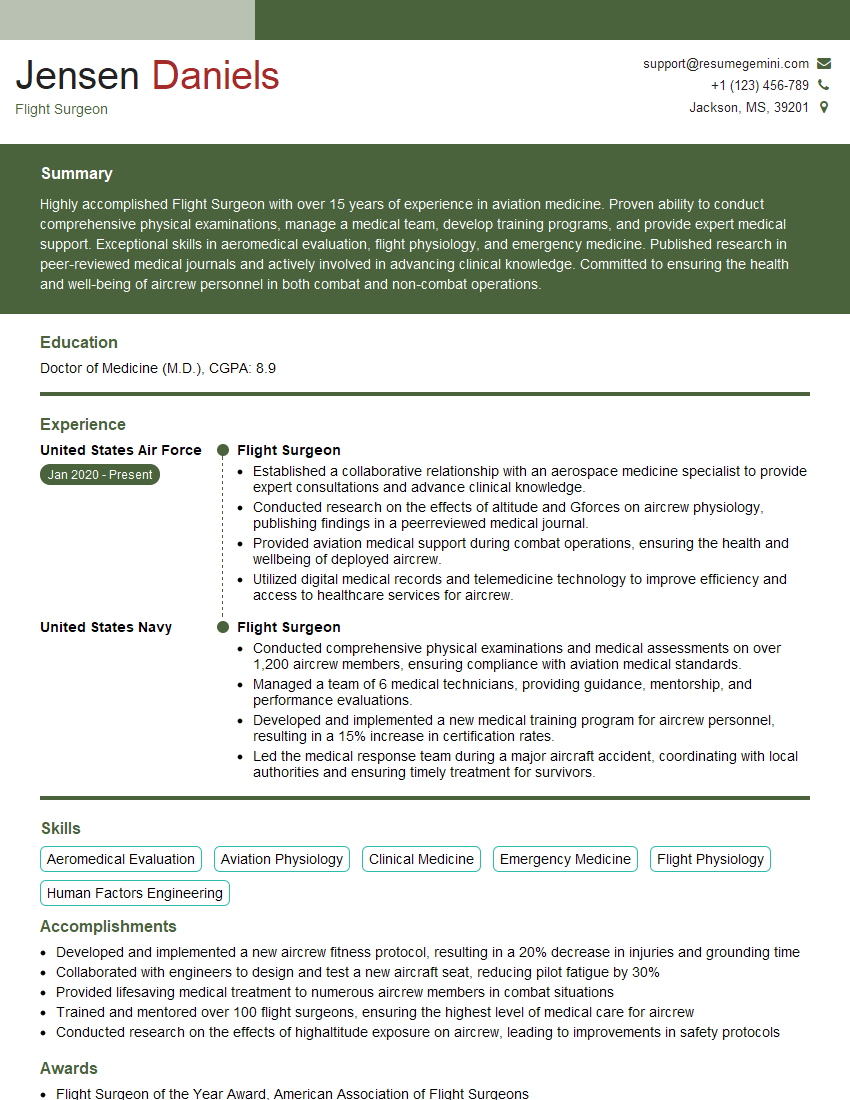
Mastering Medical Command principles significantly enhances your career prospects, opening doors to leadership roles and specialized opportunities within the healthcare and military sectors. To stand out, crafting an ATS-friendly resume is crucial for maximizing your job application visibility. We highly recommend using ResumeGemini to build a compelling and effective resume that showcases your skills and experience. ResumeGemini provides a user-friendly platform and offers examples of resumes tailored specifically to Medical Command positions, helping you present your qualifications in the best possible light. Invest the time to build a strong resume – it’s your first impression to potential employers.
Explore more articles
Users Rating of Our Blogs
Share Your Experience
We value your feedback! Please rate our content and share your thoughts (optional).
What Readers Say About Our Blog
To the interviewgemini.com Webmaster.
Very helpful and content specific questions to help prepare me for my interview!
Thank you
To the interviewgemini.com Webmaster.
This was kind of a unique content I found around the specialized skills. Very helpful questions and good detailed answers.
Very Helpful blog, thank you Interviewgemini team.