Interviews are opportunities to demonstrate your expertise, and this guide is here to help you shine. Explore the essential Medical Speech-Language Therapy interview questions that employers frequently ask, paired with strategies for crafting responses that set you apart from the competition.
Questions Asked in Medical Speech-Language Therapy Interview
Q 1. Explain the difference between articulation and phonological disorders.
Articulation and phonological disorders both affect speech sound production, but they differ significantly in their underlying causes. Articulation disorders involve difficulties producing specific speech sounds due to problems with the motor skills needed for speech—the precise movements of the tongue, lips, and jaw. Think of it like a musician struggling to play a particular note on their instrument because of a physical limitation. These difficulties are often with individual sounds, like pronouncing /r/ or /s/ incorrectly. Phonological disorders, on the other hand, are characterized by problems with the sound system of a language itself. Children with phonological disorders may have difficulty understanding and applying the rules governing how sounds are combined and sequenced to form words. For example, they might simplify complex sound patterns, consistently omitting final consonants or substituting sounds across word positions. The difference lies in the root cause: motor skill issues versus linguistic rule issues.
Example: A child with an articulation disorder might struggle to produce the /l/ sound, consistently substituting it with /w/, producing ‘wab’ instead of ‘lab’. A child with a phonological disorder might simplify word structures, consistently omitting final consonants, saying ‘ca’ instead of ‘cat’ and ‘do’ instead of ‘dog’. Both impact speech intelligibility, but understanding the underlying cause guides treatment.
Q 2. Describe your experience with assessment and treatment of dysphagia.
My experience with dysphagia assessment and treatment is extensive. I’ve worked with patients across the lifespan, from infants with feeding difficulties to adults recovering from stroke or neurological conditions. Assessment typically involves a detailed history, including medical history and current medications. Then, I conduct a clinical bedside swallow evaluation, observing oral, pharyngeal, and esophageal phases of swallowing. This involves a careful assessment of oral motor skills, the ability to manipulate food in the mouth, the coordination of swallowing muscles, and overall efficiency. Instrumental assessments such as a videofluoroscopic swallow study (VFSS) or a fiberoptic endoscopic evaluation of swallowing (FEES) may also be employed to obtain a more detailed view of the swallow mechanism.
Treatment is highly individualized and depends on the specific type and severity of dysphagia. It might involve strategies such as postural adjustments (e.g., chin tuck), diet modifications (e.g., thickened liquids, pureed foods), oral motor exercises to improve strength and coordination, and swallowing maneuvers (e.g., Mendelsohn maneuver). I collaborate closely with other professionals like gastroenterologists, radiologists, and dieticians to provide the most comprehensive and effective care. Seeing a patient successfully regain safe and efficient swallowing is incredibly rewarding.
Q 3. What are the common causes of aphasia and how would you approach therapy?
Aphasia is an acquired language disorder affecting the ability to communicate following brain damage, most commonly caused by stroke. Other causes include brain tumors, traumatic brain injuries, and infections. The type of aphasia depends on the location and extent of brain damage. For instance, Broca’s aphasia typically involves difficulty producing fluent speech, while Wernicke’s aphasia is associated with impaired comprehension and fluent but nonsensical speech.
My approach to aphasia therapy is individualized, focusing on functional communication. I assess the patient’s strengths and weaknesses in all areas of language: comprehension, expression, reading, and writing. Therapy techniques might involve:
- Restorative therapy: Targeting specific language skills, like improving naming abilities or sentence structure.
- Compensatory therapy: Teaching strategies to work around language deficits, such as using visual aids or alternative communication methods.
- Social communication therapy: Focusing on improving communication in everyday contexts.
Therapy uses various approaches, from individual sessions to group therapy. I use a combination of evidence-based methods, adapting them to the patient’s unique needs and cognitive abilities. Ongoing monitoring and assessment are crucial to tracking progress and adjusting the treatment plan accordingly.
Q 4. How do you adapt your therapy approach for patients with cognitive-communication deficits?
Patients with cognitive-communication deficits, such as those with traumatic brain injury or dementia, present unique challenges. Their communication difficulties often stem from problems with memory, attention, executive function, and processing speed, in addition to potential language impairments. Adapting my therapy approach requires a multi-faceted strategy.
I use techniques to improve attention and memory through strategies like breaking down tasks into smaller steps, providing frequent reminders, and using visual supports. I also incorporate strategies to manage cognitive fatigue, ensuring sessions are structured to avoid overwhelming the patient. Therapy focuses on functional communication skills within the context of their daily lives, emphasizing the practical application of language skills. I might use errorless learning techniques, repetitive practice, and visual aids to maximize learning and retention. Collaborating closely with the patient’s family and caregivers is vital to generalize therapy gains to real-world settings.
Q 5. Describe your experience using augmentative and alternative communication (AAC) strategies.
I have extensive experience utilizing augmentative and alternative communication (AAC) strategies with various populations. AAC encompasses any method that supplements or replaces spoken language, ranging from low-tech options like picture exchange systems (PECS) to high-tech devices like speech-generating devices (SGDs). My experience includes assessing patient needs, selecting appropriate AAC systems, and training both the patient and their caregivers on effective use.
For example, I’ve worked with children with autism spectrum disorder who benefit from using PECS to improve their communication skills. I’ve also worked with adults who have acquired aphasia and use SGDs to express themselves effectively, facilitating participation in daily social interactions. The selection of an AAC system is highly individualized and requires careful consideration of the patient’s cognitive abilities, physical limitations, and communication needs. I always strive to make AAC a seamless and empowering part of the patient’s communication strategy, fostering increased independence and participation in daily life. It’s incredibly rewarding to see the positive impact on both patients and their families.
Q 6. What assessment tools do you utilize for evaluating speech sound disorders in children?
Evaluating speech sound disorders in children requires a comprehensive approach. I use a combination of standardized tests and informal assessments. Standardized tests provide a quantitative measure of speech sound production compared to age-matched peers. Examples include the Goldman-Fristoe Test of Articulation (GFTA) and the Khan-Lewis Phonological Analysis (KLPA). The GFTA assesses articulation skills by analyzing the child’s production of individual sounds in different phonetic contexts. The KLPA analyzes phonological processes (patterns of sound errors) to identify underlying phonological difficulties.
Beyond standardized tests, I also conduct informal assessments, including spontaneous speech samples, which provide valuable insights into a child’s phonological system in natural communication contexts. I also use play-based activities to elicit speech sounds, enhancing the child’s comfort and engagement. By combining standardized and informal assessments, I obtain a comprehensive picture of the child’s speech sound abilities, guiding the development of individualized treatment plans.
Q 7. How do you collaborate with other healthcare professionals in a medical setting?
Collaboration is crucial in a medical setting. As a speech-language pathologist, I regularly collaborate with a wide range of professionals, including neurologists, physiatrists, occupational therapists, physical therapists, dieticians, and nurses. Effective teamwork ensures holistic patient care and successful rehabilitation outcomes.
For example, in a patient with stroke-related dysphagia, I would collaborate with the dietician to design an appropriate diet plan, and with the occupational therapist to address potential upper-extremity limitations that impact feeding. Collaboration occurs through formal case conferences, informal conversations, and shared documentation. I believe in proactive communication and ensure clear communication of treatment plans, progress updates, and potential challenges. This collaborative approach enhances the effectiveness of therapy and improves patient outcomes, providing the best possible care.
Q 8. Explain your understanding of evidence-based practice in speech-language pathology.
Evidence-based practice (EBP) in speech-language pathology is the conscientious, explicit, and judicious use of current best evidence in making decisions about the care of individual patients. It’s not just about following the latest trends, but integrating the best available research with clinical expertise and patient values to provide the most effective and ethical treatment.
This involves a three-legged stool: Research evidence (peer-reviewed studies, systematic reviews, meta-analyses); Clinical expertise (your own skills, knowledge, and experience); and Client values and preferences (the patient’s goals, cultural background, and personal preferences). For example, if a child with articulation difficulties shows good response to a specific approach supported by research, I’d integrate that into their plan. But if that approach doesn’t align with the family’s preferences or the child’s learning style, I adapt it accordingly. EBP isn’t about rigid adherence; it’s about flexible application.
- Example: When treating a child with phonological disorders, I would consult research articles on the effectiveness of various approaches (e.g., cycles approach, minimal pairs), consider the child’s specific error patterns and cognitive abilities (clinical expertise), and collaborate with parents to select a method that fits the child’s personality and learning style.
Q 9. Describe a situation where you had to modify your treatment plan due to patient progress or challenges.
I once worked with a young adult with apraxia of speech who initially struggled with the intensive articulation drills we started with. While research supported this approach, his frustration levels were high, impacting his engagement and progress. He also expressed a desire to focus more on conversational speech. Therefore, I modified the treatment plan. We reduced the intensity of the drills, focusing on smaller, more manageable goals and incorporated more naturalistic communication activities like role-playing and storytelling. This modification, guided by his progress and emotional response, led to significant improvements in his speech fluency and overall participation. This emphasized the importance of being flexible and responsive to the individual needs of the patient rather than rigidly adhering to a predetermined plan.
Q 10. How do you manage challenging behaviors in patients with communication disorders?
Managing challenging behaviors requires a multifaceted approach that prioritizes understanding the root cause. It’s crucial to remember that challenging behaviors are often communication attempts. I use a combination of strategies, including:
- Functional Behavior Assessment (FBA): This involves observing the behavior, identifying its triggers and consequences, and developing a hypothesis about why the behavior occurs. This helps us shift focus from punishing the behavior to addressing the underlying need or function.
- Positive Behavior Support (PBS): This proactive strategy focuses on teaching replacement behaviors and reinforcing positive communication. For instance, if a patient is exhibiting frustration during therapy, I might teach them to use a visual schedule or a communication board to express their needs instead of acting out.
- Environmental Modifications: Adjusting the therapy environment—reducing distractions, providing breaks, or using visual cues—can significantly reduce challenging behaviors. For example, reducing the amount of verbal instructions for a patient with auditory processing difficulties might improve compliance and reduce frustration.
- Collaboration with caregivers/family: Consistent strategies at home are crucial. Collaboration ensures the implementation of techniques across different environments.
Essentially, it’s about creating a supportive and understanding environment where the patient feels safe and empowered to communicate effectively.
Q 11. What is your experience with fluency disorders, such as stuttering?
I have extensive experience with fluency disorders, particularly stuttering. My approach involves a thorough assessment to understand the nature and severity of the stuttering, including its frequency, type, and impact on the individual’s life. I utilize a variety of evidence-based techniques depending on the patient’s age, needs, and preferences. These include:
- Stuttering modification techniques: These focus on modifying the moments of stuttering, helping the individual to reduce tension and improve fluency. This might involve techniques such as easy onset, prolonged speech, and gentle phonation.
- Fluency shaping techniques: These aim to establish smoother speech patterns by using techniques like slower rate of speech, pausing, and controlled airflow.
- Cognitive-behavioral therapy (CBT): Addressing the emotional and cognitive aspects of stuttering, helping clients manage their anxieties and negative thoughts surrounding their speech. This is crucial for improving self-esteem and confidence.
- Support groups and counseling referrals: Connecting individuals with support systems and further resources can be invaluable in managing the impact of stuttering.
Therapy is highly individualized, focusing on enhancing overall communication skills and helping clients feel more comfortable and confident in their communication.
Q 12. How do you assess and treat voice disorders?
Assessing and treating voice disorders requires a comprehensive approach. Assessment typically includes a detailed case history, perceptual evaluation of voice quality (e.g., breathiness, hoarseness), acoustic analysis using tools like a spectrograph, and potentially a laryngeal examination (often performed by an otolaryngologist). Treatment strategies depend on the underlying cause of the voice disorder. They might include:
- Vocal hygiene education: Teaching proper hydration, avoiding vocal strain, and managing vocal habits.
- Voice therapy techniques: Such as relaxation exercises, breath support training, and resonant voice therapy, tailored to address specific vocal issues.
- Medical management: In cases of organic pathology, close collaboration with an otolaryngologist is essential. This might involve medication, surgery, or other medical interventions.
For example, a patient with vocal nodules (calluses on the vocal folds) would receive vocal rest, instruction in vocal hygiene, and potentially voice therapy to address vocal misuse or abuse. If the nodules are severe, surgical removal may be necessary.
Q 13. What are the ethical considerations in providing speech-language therapy services?
Ethical considerations in speech-language pathology are paramount. They guide our practice to ensure we provide the best possible care for our clients. Key ethical considerations include:
- Confidentiality: Protecting the privacy of client information is crucial. This involves adhering to HIPAA regulations and maintaining strict confidentiality in all interactions.
- Competence: Only providing services within the scope of my professional expertise and continuing education to maintain up-to-date knowledge and skills.
- Informed Consent: Ensuring that clients understand the nature of therapy, its potential benefits and risks, and their rights before commencing treatment.
- Cultural Competence: Recognizing and respecting cultural differences and tailoring treatment to meet the specific needs and beliefs of diverse populations.
- Objectivity and fairness: Maintaining impartiality in professional judgments and decisions.
- Professional boundaries: Maintaining appropriate professional relationships with clients and avoiding conflicts of interest.
Ethical dilemmas can arise, and adhering to professional codes of ethics (e.g., ASHA’s Code of Ethics) is vital in navigating such situations.
Q 14. Describe your experience with electronic health records (EHR) and telehealth.
I have extensive experience with both electronic health records (EHR) and telehealth. EHR systems allow for efficient documentation, streamlined scheduling, and improved communication among healthcare professionals. I am proficient in using EHRs for managing patient information, charting progress notes, and generating reports. This includes secure electronic communication with other healthcare providers and patients.
Telehealth has become increasingly important, particularly in recent years. I’m comfortable using various telehealth platforms to deliver speech-language therapy services remotely. This includes conducting assessments, providing interventions, and monitoring progress through video conferencing and other digital tools. The key is ensuring the technological setup is adequate for both the clinician and the client to guarantee effective and ethical service delivery, considering issues like internet connectivity, privacy concerns, and the potential for technical glitches.
Q 15. How do you measure the effectiveness of your interventions?
Measuring the effectiveness of speech-language therapy interventions requires a multifaceted approach. We don’t rely on a single metric, but rather a combination of assessments to track progress across various communication domains.
Formal Assessments: Standardized tests, like the Goldman-Fristoe Test of Articulation or the Clinical Assessment of Articulation and Phonology, provide objective data on areas such as articulation, phonology, fluency, and language comprehension. We administer these at regular intervals to monitor changes over time. For example, tracking a child’s articulation scores on a standardized test can demonstrate improvement in the production of specific sounds.
Informal Assessments: These include observations of spontaneous speech in natural settings, language sampling analyses, and functional communication assessments. These assessments allow us to evaluate how effectively the patient utilizes communication skills in daily life. Observing a patient’s ability to successfully order food at a restaurant assesses real-world functional communication skills.
Qualitative Data: This encompasses subjective feedback from the patient, family members, and caregivers. We often use questionnaires or interview methods to gauge perceived improvements in communication and quality of life. For example, a parent reporting increased participation in school activities indicates the effectiveness of the therapy.
Goal Attainment Scaling (GAS): This allows for individualized goal setting and provides a quantitative measure of the degree to which goals have been achieved. We collaboratively set realistic, measurable goals with the patient and then track progress towards those goals. A patient aiming to increase conversational turn-taking might show significant progress using GAS.
By combining these methods, we obtain a comprehensive picture of treatment effectiveness, ensuring interventions are tailored to the individual’s needs and demonstrating demonstrable progress.
Career Expert Tips:
- Ace those interviews! Prepare effectively by reviewing the Top 50 Most Common Interview Questions on ResumeGemini.
- Navigate your job search with confidence! Explore a wide range of Career Tips on ResumeGemini. Learn about common challenges and recommendations to overcome them.
- Craft the perfect resume! Master the Art of Resume Writing with ResumeGemini’s guide. Showcase your unique qualifications and achievements effectively.
- Don’t miss out on holiday savings! Build your dream resume with ResumeGemini’s ATS optimized templates.
Q 16. Explain your understanding of different types of apraxia.
Apraxia of speech is a neurological disorder affecting the planning and programming of speech movements, not the muscles themselves. Different types exist, primarily categorized by the area of the brain affected and the resulting speech characteristics:
Verbal Apraxia: This is often seen in children and affects the ability to produce both spontaneous and imitated speech sounds. It can manifest as difficulty sequencing sounds within words or initiating speech.
Apraxia of Speech (AOS) in Adults: This usually follows a stroke or other neurological injury. It’s characterized by inconsistent errors in articulation, difficulty sequencing sounds, groping movements of the articulators (tongue, lips, jaw), and increased difficulty with longer or more complex words. Patients might often say ‘tan’ for ‘cat’, showing a sound substitution error that is inconsistent.
Oral Apraxia: This impacts the ability to voluntarily perform non-speech movements with the oral muscles. A patient may struggle to stick out their tongue on command, even though they can do so reflexively.
Apraxia of Limb: Although not directly related to speech, it’s often co-occurring with AOS and involves difficulty with skilled, voluntary movements of the limbs. This may impact activities like buttoning a shirt, requiring us to work collaboratively with occupational therapists.
The key is that apraxia isn’t caused by muscle weakness or paralysis; it’s a problem of motor planning and programming of speech movements. Therefore, treatment focuses on improving motor planning and sequencing through repetitive practice, cueing, and targeting specific speech sounds.
Q 17. How do you counsel patients and families about communication disorders?
Counseling patients and their families is an integral part of speech-language therapy. It’s crucial to create a supportive and understanding environment where they feel comfortable expressing their concerns and fears.
Active Listening: I begin by carefully listening to their perspectives, validating their feelings, and asking open-ended questions to understand their unique experiences and challenges.
Education: Providing clear and concise information about the communication disorder, its potential impact, and available treatment options is paramount. I use plain language, avoiding jargon, and utilize visual aids when necessary.
Realistic Expectations: I help set realistic goals and expectations for therapy. This involves openly discussing the challenges ahead, while emphasizing the potential for progress and improvement. This collaborative approach fosters hope and empowerment.
Coping Mechanisms: I assist patients and families in developing effective coping strategies for dealing with communication challenges. This might include strategies for adapting communication in daily settings, using augmentative and alternative communication (AAC) devices, and utilizing resources such as support groups.
Emotional Support: Addressing the emotional impact of the disorder is critical. I offer empathy and support, creating a safe space for them to share their feelings and concerns. Sometimes, referring them to other healthcare professionals, like psychologists or social workers, may be necessary.
For example, I might explain to a family whose child has a fluency disorder (stuttering) the importance of patience, positive reinforcement, and creating a supportive communication environment at home. I emphasize the long-term outlook, focusing on building self-esteem and successful communication strategies.
Q 18. What is your approach to working with patients who have traumatic brain injuries?
Working with patients who have traumatic brain injuries (TBIs) requires a holistic and individualized approach. The severity and location of the injury significantly impact the communication deficits experienced. These deficits can vary greatly depending on the individual case, including aphasia, dysarthria, apraxia, cognitive communication disorders and swallowing difficulties.
Comprehensive Assessment: A thorough evaluation is crucial to identify the specific communication and cognitive impairments. This includes assessing speech production, language comprehension, reading and writing abilities, memory, attention, and executive function. I might use tools like the Boston Diagnostic Aphasia Examination or the Cognitive Linguistic Quick Test.
Goal Setting: Treatment goals are established collaboratively with the patient, family, and other members of the rehabilitation team, focusing on functional communication skills relevant to the individual’s daily life. For example, improving the ability to participate in family conversations, follow instructions, or read medications labels.
Treatment Modalities: A wide range of therapy techniques may be employed, including restorative therapies aimed at improving impaired skills and compensatory therapies that focus on developing strategies to overcome persistent deficits. This could involve speech production drills, cognitive rehabilitation exercises, and training in the use of AAC devices.
Collaboration: Close collaboration with other healthcare professionals, such as neurologists, physiatrists, occupational therapists, and psychologists, is essential for comprehensive and effective rehabilitation. A multidisciplinary team approach ensures a holistic recovery process.
For example, a patient with TBI and aphasia might benefit from a combination of Melodic Intonation Therapy, constraint-induced language therapy, and compensatory strategies like using visual cues or written communication.
Q 19. Describe your experience with patients who have Parkinson’s disease or other neurological conditions.
Parkinson’s disease and other neurological conditions often present unique communication challenges. I’ve worked extensively with patients experiencing these conditions, adapting my approach to address their specific needs.
Parkinson’s Disease: Patients with Parkinson’s often exhibit hypokinetic dysarthria, characterized by reduced speech volume, monotony of pitch and loudness, and imprecise articulation. Treatment focuses on improving respiratory support, increasing vocal loudness, and enhancing articulatory precision. Techniques like Lee Silverman Voice Treatment (LSVT) are frequently employed.
Other Neurological Conditions: Conditions like multiple sclerosis (MS), amyotrophic lateral sclerosis (ALS), and stroke can result in various communication disorders, including dysarthria, apraxia, and aphasia. My approach is always individualized, incorporating strategies relevant to the specific neurological presentation.
Augmentative and Alternative Communication (AAC): For patients with progressive neurological conditions where speech becomes increasingly difficult, AAC devices or strategies may be introduced to facilitate communication. This can include picture boards, communication apps, or speech-generating devices.
Cognitive Impairments: Many neurological conditions are accompanied by cognitive impairments, like memory loss or attention deficits. Therapy must address these cognitive aspects alongside the communication difficulties.
For instance, I’ve worked with a patient with ALS who progressively lost their ability to speak. We implemented a combination of AAC strategies and worked to optimize their remaining vocal function, extending their communication abilities as long as possible.
Q 20. How do you differentiate between dysarthria and apraxia of speech?
Dysarthria and apraxia of speech are both motor speech disorders, but they stem from different underlying causes and present with distinct characteristics:
Dysarthria: This results from weakness, incoordination, or paralysis of the muscles involved in speech production. It is a weakness of the muscles whereas apraxia is a problem of planning. The speech sounds ‘slurred’ or ‘mushy’. Different types of dysarthria exist, depending on the neurological cause (e.g., spastic, flaccid, ataxic).
Apraxia of Speech (AOS): This arises from difficulties in planning and programming the motor commands necessary for speech. Muscle strength and coordination are usually intact, but the brain struggles to organize the complex sequence of movements required for speech production. Errors are inconsistent and often involve sound substitutions or sequencing problems.
Here’s a simple analogy: imagine trying to build a Lego castle. In dysarthria, you might have weak hands and struggle to manipulate the bricks (muscle weakness). In apraxia, you might have strong hands but you can’t figure out the order to put the bricks in to make the castle. You might know what it should look like, but the sequencing is off. The result is a flawed structure, but the problem is different in each case.
Differentiating between them requires a thorough clinical examination, including assessing muscle strength, coordination, and the nature of speech errors. Detailed speech samples and observation are crucial in making the diagnosis.
Q 21. What are the key components of a comprehensive swallowing evaluation?
A comprehensive swallowing evaluation, also known as a videofluoroscopic swallowing study (VFSS) or modified barium swallow study (MBSS), is a crucial assessment for identifying and managing swallowing disorders (dysphagia).
Case History: This involves gathering information about the patient’s medical history, current medications, diet, and any symptoms related to swallowing. Information on weight loss, coughing during meals, and changes in voice quality are especially important.
Oral-Motor Examination: A detailed assessment of the oral structures and functions, including the lips, tongue, jaw, and palate, is conducted to identify any abnormalities affecting their movement or strength.
Clinical Swallowing Examination (CSE): This involves observing the patient’s swallowing behavior with different consistencies of food and liquids. Aspects such as oral preparation, oral transit, pharyngeal transit, and esophageal transit are evaluated. The therapist looks for any signs of aspiration (food or liquid entering the airway) or penetration (food or liquid entering the larynx but not the airway). The timing and efficiency of the swallow are also assessed.
Instrumental Assessment: This is the most detailed part of the evaluation. The VFSS or MBSS uses X-ray technology to visualize the swallowing process, providing dynamic images of the oral, pharyngeal, and upper esophageal phases. This allows for precise identification of the anatomical and physiological causes of dysphagia.
Fiberoptic Endoscopic Evaluation of Swallowing (FEES): FEES is a nasally inserted fiber optic scope that shows structures and secretions. This test can assess vocal cord function and swallowing coordination.
The results of this comprehensive evaluation guide the development of an individualized treatment plan to improve swallowing safety and efficiency. This might involve dietary modifications, specific exercises, or postural adjustments to mitigate swallowing difficulties.
Q 22. How do you manage patients with severe dysphagia?
Managing patients with severe dysphagia requires a multi-faceted approach focusing on safety, nutritional needs, and quality of life. It’s crucial to first conduct a thorough assessment to determine the cause and severity of the dysphagia, utilizing tools like a clinical bedside swallow examination (BSE), videofluoroscopic swallow study (VFSS), or fiberoptic endoscopic evaluation of swallowing (FEES).
Based on the assessment, interventions might include:
- Dietary modifications: This could range from pureed diets to thickened liquids, depending on the patient’s individual needs and swallowing abilities. For example, a patient with significant oral phase difficulties might benefit from a pureed diet, while someone with pharyngeal issues may need thickened liquids to prevent aspiration.
- Swallowing exercises: Specific exercises targeting different phases of swallowing (oral, pharyngeal, esophageal) can improve muscle strength and coordination. Examples include the Mendelsohn maneuver (prolonging laryngeal elevation), tongue exercises to improve bolus control, and exercises to improve hyoid bone movement.
- Postural adjustments: Changes in head and body posture can significantly influence swallowing efficiency. For instance, head-back posture can aid in bolus transit for patients with reduced tongue base retraction. Chin-down posture can help prevent aspiration by narrowing the airway entrance.
- Compensatory strategies: These strategies help manage swallowing difficulties in the short term, while more permanent changes are implemented. Examples include using a different utensil or swallowing techniques (e.g., supraglottic swallow).
- Non-oral feeding: If oral intake is unsafe or insufficient, non-oral feeding methods, such as nasogastric (NG) tubes or gastrostomy tubes (G-tubes), may be necessary.
Regular monitoring and adjustments to the treatment plan are essential, as a patient’s condition can change over time. Collaboration with other healthcare professionals, such as nurses, dieticians, and physicians, is vital to ensure comprehensive care.
Q 23. Describe your knowledge of different types of feeding tubes and their use.
Feeding tubes are essential for patients unable to safely or adequately consume nutrients orally. There are several types, each suited to different situations:
- Nasogastric (NG) tubes: These are inserted through the nose and into the stomach. They are short-term solutions, typically used for a few weeks or months, and are useful for patients recovering from surgery or experiencing temporary swallowing difficulties. They are relatively inexpensive but can be uncomfortable and prone to dislodgement.
- Nasoduodenal (ND) tubes and Nasojejunal (NJ) tubes: Similar to NG tubes but positioned in the duodenum or jejunum (parts of the small intestine), respectively. These are used when there is a risk of aspiration or gastric reflux. They are also less comfortable and prone to blockage than NG tubes.
- Gastrostomy (G) tubes: These tubes are surgically placed directly into the stomach. They provide a long-term feeding solution and are often preferred for patients requiring prolonged enteral nutrition. They are more comfortable and less prone to dislodgement than nasal tubes, but require a surgical procedure.
- Jejunostomy (J) tubes: These tubes bypass the stomach and enter the jejunum. They are indicated for patients with gastroparesis (delayed gastric emptying) or high risk of aspiration.
The choice of feeding tube depends on the individual patient’s medical condition, the anticipated duration of feeding support, and the presence of any complicating factors. Careful assessment and collaboration between the speech-language pathologist, physician, and dietitian is crucial to select the most appropriate option.
Q 24. What is your experience with non-oral feeding techniques?
My experience with non-oral feeding techniques is extensive. I’ve worked with patients requiring various types of feeding tubes, from short-term NG tubes to long-term G-tubes. My role extends beyond the initial placement of the tube. I provide crucial education to both patients and caregivers on:
- Tube care: Proper cleaning and maintenance techniques are vital to prevent infection and complications.
- Feeding administration: I teach patients and caregivers how to safely and effectively administer nutrition through the tube, including calculating appropriate feeding volumes and rates.
- Troubleshooting common problems: I address issues like tube blockage, dislodgement, and potential complications.
- Monitoring patient status: I educate on how to recognize signs of complications and when to contact medical professionals.
I work closely with the dietician to ensure the patient receives adequate nutrition tailored to their specific medical and dietary needs. I also help bridge the gap between the medical and psychosocial aspects of non-oral feeding, assisting in the emotional adjustment of living with a feeding tube.
For example, I’ve supported a patient with a new G-tube and their family by teaching them about tube care and addressing their anxieties about feeding the patient independently. This helped them to transition smoothly from hospital to home care, improving their quality of life.
Q 25. How do you work with interdisciplinary teams to ensure holistic patient care?
Holistic patient care necessitates a strong interdisciplinary team. In my practice, I collaborate extensively with:
- Physicians: To discuss diagnosis, prognosis, and potential medical implications affecting communication and swallowing.
- Occupational Therapists (OTs): To address fine motor skills, and coordination impacting feeding and self-care.
- Physical Therapists (PTs): To manage postural issues, strength, and endurance that might affect swallowing or communication.
- Registered Dietitians (RDs): To design appropriate diets and ensure sufficient nutritional intake, especially important for dysphagia patients.
- Nurses: To monitor patient progress, administer medications, and address any immediate concerns regarding feeding or swallowing.
- Social Workers: To provide psychosocial support and address the emotional and psychological impact of communication and swallowing disorders on patients and their families.
We regularly hold team meetings to discuss individual patient cases, review progress, and make adjustments to the treatment plan. This collaborative approach ensures comprehensive care and optimized patient outcomes. We share information through electronic health records and regular communication to maintain a seamless and effective approach.
Q 26. Describe your familiarity with different cultural backgrounds and communication styles.
Cultural sensitivity is paramount in speech-language therapy. I am familiar with diverse cultural backgrounds and communication styles and adapt my approach accordingly. This includes:
- Understanding nonverbal communication: Different cultures interpret nonverbal cues differently. For example, direct eye contact may be considered respectful in some cultures but rude in others. I tailor my interactions to be respectful of a patient’s cultural norms.
- Language barriers: I utilize interpreters or bilingual materials when necessary to ensure clear and effective communication with patients who do not speak English fluently. I also make use of visual aids and other assistive technologies to facilitate communication.
- Family dynamics: Family involvement varies significantly across cultures. I always strive to understand the family’s roles and expectations to better tailor my therapeutic approach.
- Health beliefs and practices: Different cultures have diverse perspectives on health, illness, and treatment. I’m mindful of these differences and strive to provide culturally competent care.
For example, when working with a patient from a collectivist culture, I ensure the family is actively involved in the treatment process. In another instance, I utilize picture cards with a patient who is reluctant to engage in verbal communication, respecting their comfort zone and still facilitating progress.
Q 27. Explain your understanding of the impact of communication disorders on quality of life.
Communication disorders significantly impact quality of life, affecting various aspects of a person’s daily life. The consequences can be profound and far-reaching:
- Social isolation: Difficulty communicating can lead to social withdrawal and decreased social interaction, resulting in loneliness and depression.
- Reduced employment opportunities: Communication disorders can hinder educational and professional success, causing financial strain and decreased self-esteem.
- Impaired relationships: Frustration and misunderstanding can strain relationships with family, friends, and romantic partners.
- Decreased independence: Difficulties with communication and swallowing can limit a person’s ability to perform daily tasks independently, potentially requiring increased assistance and impacting their overall sense of autonomy.
- Increased healthcare utilization: Individuals with communication disorders may experience higher rates of hospitalization and healthcare utilization due to the complexity of their needs.
The severity of the impact varies greatly depending on the nature and severity of the disorder, as well as the individual’s coping mechanisms and support systems. Early intervention and appropriate therapy are crucial in mitigating the negative consequences and improving quality of life.
Q 28. How would you adapt your therapy to meet the needs of a diverse patient population?
Adapting therapy to meet diverse patient needs is essential. My approach involves:
- Culturally sensitive assessment: Utilizing assessment tools and techniques that are appropriate for the patient’s cultural background and communication style.
- Individualized treatment plans: Designing treatment plans that are tailored to each patient’s specific needs, goals, and learning styles. This includes considering factors such as age, cognitive abilities, and physical limitations.
- Accessibility: Ensuring that therapy materials and techniques are accessible to patients with different levels of literacy, cognitive abilities, and physical limitations. This could involve using visual aids, simple language, and assistive technology.
- Collaboration: Working closely with interpreters, family members, and other healthcare professionals to ensure effective communication and culturally competent care.
- Flexibility and creativity: Adapting my approach to incorporate different therapeutic techniques and strategies, as needed, to meet the unique needs of each patient. Sometimes, creative solutions are required to keep the patient motivated and engaged.
For example, I might use storytelling with younger patients or incorporate technology such as apps or digital games for older patients who are less responsive to traditional methods. This ensures the therapy remains engaging, relevant, and effective for all my patients.
Key Topics to Learn for Medical Speech-Language Therapy Interview
- Neurological Basis of Communication Disorders: Understanding the connection between brain function and speech/language impairments (aphasia, dysarthria, apraxia).
- Assessment and Diagnosis: Mastering standardized and informal assessment tools to accurately diagnose communication disorders in various medical settings (e.g., hospitals, rehabilitation centers).
- Treatment Modalities: Developing proficiency in evidence-based therapeutic techniques for diverse populations (e.g., stroke patients, individuals with traumatic brain injury, neurodegenerative diseases).
- Medical Terminology and Chart Review: Understanding medical jargon and efficiently reviewing patient charts to inform treatment planning and collaboration with interdisciplinary teams.
- Swallowing Disorders (Dysphagia): Knowledge of the anatomy and physiology of swallowing, assessment techniques (e.g., videofluoroscopic swallow study interpretation), and management strategies.
- Collaboration and Case Management: Understanding the importance of working effectively with other healthcare professionals (e.g., physicians, nurses, occupational therapists) to provide holistic patient care.
- Ethical Considerations and Professional Practice: Familiarity with professional ethics, legal issues, and documentation requirements within the medical setting.
- Data-Driven Practice and Outcomes Measurement: Demonstrating an understanding of how to collect, analyze, and interpret data to track patient progress and demonstrate treatment effectiveness.
- Cultural Competence and Diversity: Addressing the diverse needs of patients from various cultural backgrounds and demonstrating sensitivity to their individual circumstances.
Next Steps
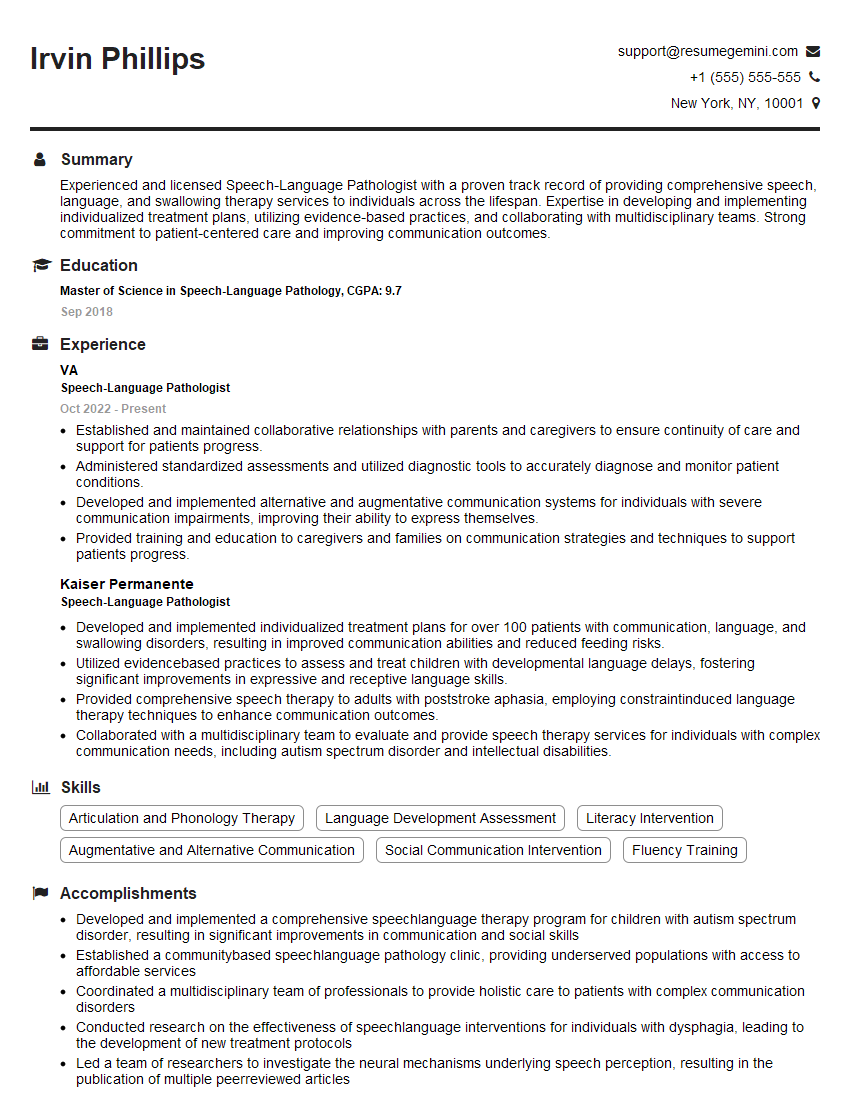
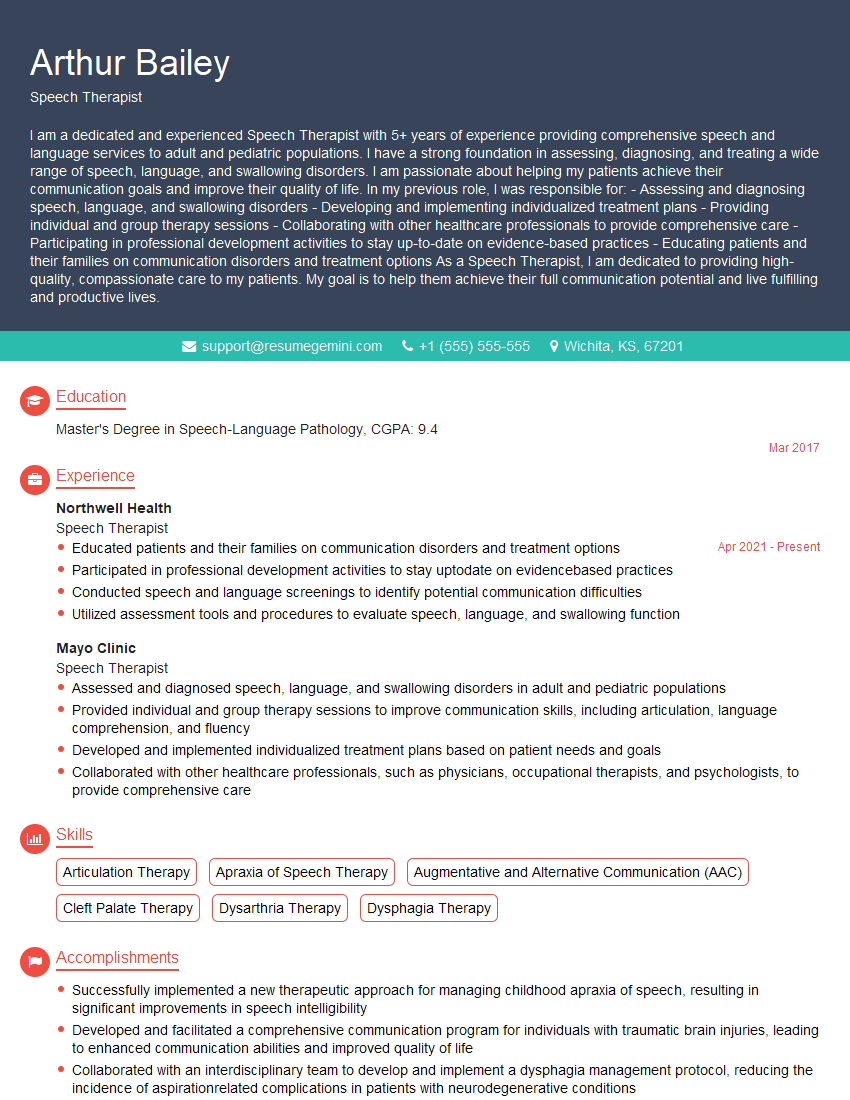
Mastering Medical Speech-Language Therapy opens doors to a rewarding career with diverse opportunities for growth and specialization. To significantly enhance your job prospects, it’s crucial to create a compelling and ATS-friendly resume that highlights your skills and experience effectively. ResumeGemini is a trusted resource to help you build a professional resume that stands out. They provide examples of resumes tailored to Medical Speech-Language Therapy to help you showcase your qualifications in the best possible light. Invest time in crafting a strong resume – it’s your first impression on potential employers.
Explore more articles
Users Rating of Our Blogs
Share Your Experience
We value your feedback! Please rate our content and share your thoughts (optional).
What Readers Say About Our Blog
To the interviewgemini.com Webmaster.
Very helpful and content specific questions to help prepare me for my interview!
Thank you
To the interviewgemini.com Webmaster.
This was kind of a unique content I found around the specialized skills. Very helpful questions and good detailed answers.
Very Helpful blog, thank you Interviewgemini team.