The thought of an interview can be nerve-wracking, but the right preparation can make all the difference. Explore this comprehensive guide to Methodology Development interview questions and gain the confidence you need to showcase your abilities and secure the role.
Questions Asked in Methodology Development Interview
Q 1. Explain the difference between qualitative and quantitative methodologies.
Qualitative and quantitative methodologies represent two distinct approaches to research, differing primarily in the type of data they collect and analyze. Qualitative research focuses on in-depth understanding of experiences, perspectives, and meanings. It employs methods like interviews, focus groups, and observations to gather rich, descriptive data. The analysis is interpretive, seeking patterns and themes within the data. Think of it like painting a detailed picture of a phenomenon. Quantitative research, conversely, prioritizes numerical data and statistical analysis. It uses surveys, experiments, and structured observations to collect measurable data, aiming to identify relationships, correlations, and causal effects. Imagine this as measuring the precise dimensions of an object. A key difference lies in the generalizability of findings; quantitative studies often strive for broader generalizability while qualitative studies offer deeper insights into specific contexts.
Example: Imagine researching customer satisfaction with a new product. A qualitative approach might involve conducting in-depth interviews with a smaller group of customers to understand their experiences and feelings. A quantitative approach would involve a large-scale survey using rating scales to measure overall satisfaction levels and identify statistically significant correlations between satisfaction and other factors.
Q 2. Describe your experience with Agile methodologies (Scrum, Kanban, etc.).
I have extensive experience working with Agile methodologies, primarily Scrum and Kanban. In several projects, I’ve played a crucial role in implementing and optimizing these frameworks. My experience with Scrum includes facilitating sprint planning, daily stand-ups, sprint reviews, and retrospectives. I’ve successfully guided teams in creating and managing product backlogs, ensuring alignment with project goals. In Kanban implementations, I’ve focused on visualizing workflows, limiting work in progress (WIP), and continuously improving process flow. I’ve successfully used Kanban to manage projects with evolving requirements and prioritize tasks based on urgency and value.
For example, in one project involving software development, we initially faced challenges with scope creep and inconsistent delivery. By transitioning to Scrum, we implemented a more iterative and incremental approach. This involved breaking down the project into smaller, manageable sprints, allowing for frequent feedback and adjustments. This resulted in improved team collaboration, increased transparency, and ultimately, a more successful project delivery.
Q 3. What are the key steps in developing a new research methodology?
Developing a new research methodology is a rigorous process. It typically involves these key steps:
- Identifying the Research Problem: Clearly define the research question and the gap in existing methodologies that necessitates a new approach.
- Literature Review: Thoroughly examine existing methodologies to understand their strengths, weaknesses, and applicability to the research problem.
- Conceptualization: Develop a theoretical framework that underpins the new methodology, outlining its principles, assumptions, and rationale.
- Methodological Design: Specify the data collection techniques, sampling strategies, and data analysis procedures. This includes defining the types of data to be collected (qualitative, quantitative, or mixed), the instruments to be used, and the methods for ensuring data quality and validity.
- Pilot Testing and Refinement: Conduct a pilot study to test the feasibility and effectiveness of the methodology, identifying potential flaws and making necessary revisions.
- Validation and Documentation: Rigorously validate the methodology through multiple studies, demonstrating its reliability and validity. Document the methodology clearly and comprehensively for future use.
Successful methodology development necessitates a thorough understanding of research design principles, statistical analysis (if applicable), and ethical considerations.
Q 4. How do you evaluate the effectiveness of a methodology?
Evaluating the effectiveness of a methodology involves assessing its validity, reliability, and practicality.
- Validity: Does the methodology accurately measure what it intends to measure? This involves examining construct validity (does it measure the intended concept?), content validity (does it cover all aspects of the concept?), and criterion validity (does it correlate with other measures of the same concept?).
- Reliability: Does the methodology produce consistent results over time and across different researchers and settings? This can be assessed through test-retest reliability, inter-rater reliability, and internal consistency.
- Practicality: Is the methodology feasible, efficient, and cost-effective to implement? This considers factors such as time constraints, resource availability, and the ease of use.
Furthermore, evaluating a methodology might involve comparing its results with those obtained using established methodologies or examining its impact on decision-making or practice. Qualitative evaluations might also involve feedback from participants and researchers on the method’s clarity, comprehensiveness, and usefulness.
Q 5. Explain the concept of a mixed-methods approach.
A mixed-methods approach combines both qualitative and quantitative research methods within a single study. This synergistic approach leverages the strengths of each approach to provide a more comprehensive understanding of the research problem than either approach could achieve alone. For instance, quantitative data can provide a broad overview, while qualitative data can offer rich insights into the “why” behind the quantitative findings. There are different designs for mixed methods, including sequential explanatory, sequential exploratory, and concurrent designs, each with its own unique timeline and approach to integrating qualitative and quantitative data.
Example: A study examining the impact of a new educational program might use quantitative data (e.g., test scores) to measure student performance and qualitative data (e.g., interviews with students and teachers) to explore the reasons behind observed performance changes. The integration of both types of data can lead to a more nuanced and robust understanding of the program’s effectiveness.
Q 6. Describe a time you had to adapt a methodology to a specific project.
In a project focused on evaluating employee engagement, we initially planned to use a standard quantitative survey. However, during the pilot study, we discovered that the survey questions were not capturing the nuances of employee experiences. Many employees provided generic answers, revealing a lack of depth. We realized that the quantitative data alone wouldn’t provide a holistic understanding of employee sentiment. To address this, we adapted the methodology by incorporating qualitative data collection methods. We conducted focus group discussions with employees to explore their experiences in more detail. This allowed us to gain valuable insights into the underlying reasons for their engagement levels, supplementing the quantitative data and leading to a more comprehensive and insightful report.
Q 7. What are some common challenges in implementing new methodologies?
Implementing new methodologies often presents several challenges:
- Resistance to Change: People are often resistant to adopting new approaches, particularly if they are accustomed to existing methods. Overcoming this involves effective communication, training, and demonstrating the benefits of the new methodology.
- Lack of Resources: Implementing new methodologies may require additional resources such as time, funding, training, and software. Careful planning and resource allocation are essential for successful implementation.
- Data Management: New methodologies may involve different data collection and analysis techniques, requiring new skills and potentially specialized software. Robust data management strategies are crucial to avoid data loss and ensure data quality.
- Integration with Existing Systems: Adapting the new methodology to integrate with existing systems and workflows can be a major challenge. Planning for this integration from the outset is necessary to ensure a smooth transition.
- Lack of Expertise: Successfully implementing a new methodology requires the necessary skills and knowledge. This may involve recruiting new team members or providing comprehensive training to existing staff.
Effective change management strategies, clear communication, and adequate training are crucial to address these challenges and ensure the successful implementation of new methodologies.
Q 8. How do you ensure stakeholder buy-in for a new methodology?
Securing stakeholder buy-in for a new methodology is crucial for successful implementation. It’s not just about presenting the methodology; it’s about demonstrating its value and addressing concerns proactively. I approach this in a phased manner:
- Phase 1: Understanding Needs and Concerns: I begin by conducting thorough stakeholder analysis, identifying key players and their perspectives. This often involves interviews, surveys, and workshops to understand their current pain points and expectations. For example, if implementing a new Agile methodology, I’d want to understand if their biggest concern is speed of delivery, improved quality, or better collaboration.
- Phase 2: Demonstrating Value: I then tailor my presentation of the methodology to address these specific needs. This might involve creating a compelling business case highlighting potential ROI, reduced costs, or improved efficiency. Concrete examples of how similar organizations have benefited are highly persuasive. Perhaps a case study showcasing a 20% reduction in project timelines after implementing the methodology.
- Phase 3: Collaboration and Feedback: I actively involve stakeholders in the design and refinement process. This fosters a sense of ownership and allows for early feedback. Pilot programs or proof-of-concept projects are excellent for demonstrating tangible results and gaining confidence. This could involve a small team initially adopting the methodology to test its effectiveness before a wider rollout.
- Phase 4: Communication and Transparency: Ongoing communication is key. Regular updates, progress reports, and open forums for addressing concerns maintain transparency and build trust. This proactive approach reduces the chances of resistance during implementation.
Q 9. What are your preferred methods for documenting methodologies?
My preferred methods for documenting methodologies prioritize clarity, accessibility, and maintainability. I typically use a multi-faceted approach:
- Process Maps: Visual representations like flowcharts and swim lane diagrams clearly illustrate the steps involved, making it easy for individuals to understand the overall workflow. For example, using a flowchart to depict the stages of a project lifecycle within the methodology.
- Detailed Procedures: Written documents outlining specific tasks, responsibilities, and decision-making processes provide granular detail. I use clear, concise language and avoid jargon whenever possible. Templates and checklists are employed to ensure consistency.
- Templates and Checklists: To aid consistency and adherence to the methodology, templates for various documents (e.g., project plans, meeting agendas) and checklists for key tasks are essential. This guides users and helps standardise processes.
- Wiki or Knowledge Base: A central repository like a wiki provides a platform for collaborative documentation, allowing for easy updates and knowledge sharing. This enables continuous improvement of the methodology as it is used and refined.
- Training Materials: Comprehensive training materials, including presentations, tutorials, and online courses, are developed to support effective adoption. This ensures that stakeholders understand how to apply the methodology effectively.
Q 10. Explain the importance of iterative development in methodology design.
Iterative development is crucial in methodology design because it allows for continuous refinement based on feedback and experience. Think of it like sculpting: you don’t carve a perfect statue on the first try; you shape and reshape iteratively.
- Early Feedback: Each iteration provides opportunities to gather feedback from users and stakeholders, helping identify flaws and areas for improvement early on.
- Reduced Risk: By breaking down the development process into smaller, manageable cycles, the risk of significant failures is reduced. Changes are less disruptive and easier to manage.
- Increased Adaptability: Iterative development promotes adaptability. If unforeseen challenges or changes in requirements arise, they can be addressed flexibly within the current iteration or the subsequent one.
- Improved Quality: Through continuous testing and refinement, the quality of the methodology improves gradually over time. This leads to a more robust and effective end-product.
For example, in designing a new project management methodology, I might start with a minimal viable product (MVP) in the first iteration, focusing on core features. The subsequent iterations would add more features, refine existing ones, and address any identified issues based on user feedback from the previous iteration.
Q 11. How do you handle resistance to change when implementing a new methodology?
Resistance to change is a common challenge when implementing new methodologies. Addressing this requires a strategic and empathetic approach:
- Acknowledge and Understand Concerns: Begin by actively listening to and acknowledging the concerns of those resistant to change. Often, resistance stems from fear of the unknown, loss of control, or perceived increased workload. Open dialogue is crucial.
- Demonstrate Value and Address Concerns: Clearly articulate the benefits of the new methodology, using data and evidence to support claims. Directly address specific concerns, providing practical solutions and reassurances. For instance, address fears of increased workload by offering adequate training and support.
- Involve and Empower: Engage resistant individuals in the implementation process. Involving them in pilot programs or providing opportunities for feedback can foster a sense of ownership and reduce resistance.
- Provide Training and Support: Comprehensive training and ongoing support are essential for successful adoption. This helps individuals gain confidence in using the new methodology and minimizes disruption.
- Celebrate Successes: Recognize and celebrate early successes to build momentum and demonstrate the tangible benefits of the new methodology. This positive reinforcement helps overcome initial hesitations.
Q 12. Describe your experience with Lean methodologies.
My experience with Lean methodologies is extensive. I’ve successfully applied Lean principles to streamline processes in diverse projects, from software development to manufacturing. I appreciate its focus on eliminating waste, maximizing value, and continuous improvement.
- Value Stream Mapping: I’ve used value stream mapping extensively to identify and eliminate bottlenecks and non-value-added activities in processes. This has led to significant improvements in efficiency and reduced lead times.
- Kaizen Events: I’ve facilitated numerous Kaizen events (continuous improvement workshops) to engage teams in identifying and implementing process improvements. The collaborative nature of these events fosters a culture of continuous improvement.
- 5S Methodology: I’ve implemented the 5S methodology (Sort, Set in Order, Shine, Standardize, Sustain) to improve workplace organization and efficiency. This contributes to a safer and more productive work environment.
- Kanban Systems: I’ve utilized Kanban systems to visualize workflow, limit work in progress, and improve the flow of work. This enhances team collaboration and transparency.
For instance, in a recent software development project, we used value stream mapping to identify a significant bottleneck in the testing phase. By streamlining the testing process and implementing automated testing, we reduced the testing time by 40%.
Q 13. What are some common metrics used to measure the success of a methodology?
The metrics used to measure the success of a methodology depend heavily on its context and objectives. However, some common metrics include:
- Efficiency: Metrics like cycle time, lead time, and throughput measure how efficiently the methodology enables work completion. For example, reduction in project completion time.
- Quality: Defect rates, customer satisfaction scores, and error rates assess the quality of deliverables produced using the methodology. Improved customer satisfaction ratings would be a good indicator.
- Productivity: Measures such as velocity (in Agile), resource utilization, and output per unit of time reflect the productivity gains achieved. Increased output with the same resources suggests improved productivity.
- Cost: Cost savings, return on investment (ROI), and budget adherence assess the financial impact of the methodology. Reduction in project costs is a strong metric for success.
- Stakeholder Satisfaction: Feedback surveys and interviews with stakeholders gauge their satisfaction with the methodology’s implementation and results. High levels of stakeholder satisfaction indicate successful adoption.
It’s important to select metrics that are relevant to the specific goals of the methodology and track them consistently over time.
Q 14. How do you ensure the ethical considerations are addressed in your methodologies?
Ethical considerations are paramount in methodology development. I ensure these are addressed through a multi-pronged approach:
- Privacy and Data Security: Methodologies handling sensitive data must incorporate robust privacy and security measures, complying with all relevant regulations (like GDPR or HIPAA). This includes secure data storage, access controls, and data anonymization where appropriate.
- Bias Mitigation: I actively look for potential biases in data collection, analysis, and decision-making processes. Algorithmic bias, for example, needs to be considered and mitigated during the design phase of the methodology.
- Transparency and Accountability: Methodologies should be transparent and accountable, enabling stakeholders to understand how decisions are made and to challenge them when necessary. Clear documentation of the decision-making process and rationale is essential.
- Fairness and Inclusivity: The methodology should be designed to be fair and inclusive, avoiding any discrimination or unfair treatment of individuals or groups. This includes considering diverse perspectives and needs throughout the design and implementation phases.
- Environmental Impact: Where relevant, I assess the environmental impact of the methodology and look for ways to minimize it. This might involve considering energy consumption, waste generation, and the use of sustainable resources.
Ethical considerations aren’t an afterthought; they are integrated throughout the entire methodology development lifecycle.
Q 15. Describe your experience with Six Sigma methodologies.
Six Sigma is a data-driven methodology aimed at minimizing defects and maximizing efficiency. My experience spans several projects across diverse industries, including manufacturing and software development. I’ve been involved in all phases of Six Sigma projects, from defining the problem and measuring key metrics (DMAIC – Define, Measure, Analyze, Improve, Control) to implementing process improvements and sustaining gains. For example, in a manufacturing setting, I helped a team reduce the defect rate in a particular assembly line by 70% through the application of DMAIC. This involved identifying the root causes of defects through statistical analysis, implementing changes to the assembly process, and establishing a control system to prevent future defects. Another project involved streamlining a software development workflow, resulting in a 25% reduction in development time. This demonstrates my practical experience across various contexts and the ability to adapt Six Sigma principles to different industries and operational environments.
Career Expert Tips:
- Ace those interviews! Prepare effectively by reviewing the Top 50 Most Common Interview Questions on ResumeGemini.
- Navigate your job search with confidence! Explore a wide range of Career Tips on ResumeGemini. Learn about common challenges and recommendations to overcome them.
- Craft the perfect resume! Master the Art of Resume Writing with ResumeGemini’s guide. Showcase your unique qualifications and achievements effectively.
- Don’t miss out on holiday savings! Build your dream resume with ResumeGemini’s ATS optimized templates.
Q 16. How do you prioritize features when developing a new methodology?
Prioritizing features in methodology development requires a balanced approach. I typically use a combination of techniques like MoSCoW analysis (Must have, Should have, Could have, Won’t have), prioritization matrices (e.g., value vs. effort), and stakeholder input. The MoSCoW method allows us to categorize features based on their criticality. A prioritization matrix provides a visual representation of the value each feature brings against the effort required to implement it, enabling a data-driven decision. Importantly, stakeholder feedback through workshops or surveys ensures alignment with the overall business objectives and user needs. For example, in developing a new project management methodology, we used a MoSCoW analysis to determine which features were essential for the initial release versus those that could be added in subsequent iterations. The prioritization matrix then helped us sequence the ‘should have’ features based on their relative value and effort.
Q 17. What are some common pitfalls to avoid when designing a methodology?
Several pitfalls can derail a methodology development process. One common issue is a lack of user involvement. A methodology designed in a vacuum, without considering the needs and workflows of the intended users, is destined for failure. Another pitfall is neglecting to define clear objectives and metrics for success. Without a clear understanding of what constitutes success, it’s impossible to measure the effectiveness of the methodology. Over-complication is another frequent mistake; methodologies should be simple and intuitive to use. Finally, inadequate testing and feedback loops can lead to poorly designed methodologies. Think of building a house without a blueprint: It’s highly unlikely to turn out well. Similarly, methodologies must be thoroughly tested and refined based on user feedback. A robust testing plan with iterative feedback loops is vital to avoid these pitfalls.
Q 18. How do you ensure the scalability of a methodology?
Ensuring scalability means the methodology can be effectively applied across different teams, projects, and organizational scales. This requires careful consideration of factors like modularity, flexibility, and documentation. A modular design allows components of the methodology to be adapted or reused independently. Flexibility allows adaptation to different contexts and organizational structures. Comprehensive documentation provides clear guidelines and support materials. For example, a well-designed Agile methodology should be easily adaptable to small teams working on a single product or large teams working on multiple interrelated products. Clear roles, responsibilities, and processes defined within the methodology contribute to its scalability. Another crucial aspect is training; proper training ensures consistent application and understanding across the organization.
Q 19. How do you facilitate communication and collaboration in methodology development?
Effective communication and collaboration are paramount in methodology development. I typically utilize a variety of techniques to facilitate this. Regular meetings, including brainstorming sessions, workshops, and review meetings, ensure all stakeholders are involved and informed. Collaborative tools, such as shared documents and project management software, enable seamless information sharing and knowledge management. Transparency and open communication channels foster a sense of shared ownership and responsibility. I also actively encourage feedback from all participants at every stage, ensuring all perspectives are considered. For instance, in a recent project, we used a collaborative online platform to share drafts of the methodology, allowing team members to contribute comments and suggestions directly within the document. This fosters a sense of shared ownership and significantly improved the final outcome.
Q 20. What software or tools are you familiar with for managing methodologies?
I’m proficient in several software tools for managing methodologies. These include project management software like Jira and Asana for tracking tasks, managing sprints, and monitoring progress. Confluence and SharePoint are commonly used for collaborative documentation and knowledge management. Mind mapping tools, such as XMind, help visualize the methodology’s structure and relationships between its components. Additionally, I’m familiar with dedicated process modeling tools that allow for the visual representation and simulation of workflows. The choice of tool depends heavily on the specific methodology, the size of the team, and the organization’s existing infrastructure. For example, for a large-scale methodology development project, a robust project management software like Jira might be most suitable, complemented by Confluence for documentation and knowledge sharing.
Q 21. Describe your experience with waterfall methodologies.
Waterfall methodologies are sequential and linear in nature. My experience with waterfall methodologies mainly focuses on understanding their strengths and limitations. I’ve observed its effectiveness in projects with well-defined requirements and minimal expected changes. However, I’ve also witnessed its challenges when dealing with evolving requirements or when significant unforeseen issues arise. The rigid nature of the waterfall approach can make it difficult to adapt to changing circumstances. In contrast to Agile methodologies, Waterfall emphasizes thorough upfront planning and documentation, making it suitable for projects where predictability is paramount. Understanding the limitations of the waterfall model is as important as understanding its strengths. Recognizing when it’s appropriate and when it isn’t is key to effective project management.
Q 22. How do you handle conflicting requirements when developing a methodology?
Conflicting requirements are inevitable in methodology development. Think of it like building a house – the homeowner wants a pool, the architect envisions a minimalist design, and the budget is tight. My approach involves a structured process to resolve these conflicts. First, I clearly document all requirements, prioritizing them using techniques like MoSCoW (Must have, Should have, Could have, Won’t have). This allows for a visual representation of the relative importance. Next, I facilitate collaborative workshops involving all stakeholders. This is where open communication and active listening are key to understanding the underlying needs behind each requirement. We explore trade-offs, compromises, and potential alternatives. For example, instead of a full-sized pool, we might consider a smaller plunge pool or a different water feature altogether. Finally, I document all decisions and their rationale, ensuring everyone is on the same page. A well-documented decision trail is crucial for transparency and accountability. Using a prioritization matrix and a clear decision-making process ensures everyone understands the ‘why’ behind the choices, minimizing future disputes.
Q 23. Explain your approach to risk management in methodology development.
Risk management in methodology development is about identifying, assessing, and mitigating potential problems before they derail the entire project. My approach is proactive and systematic, employing a risk register. This register lists potential risks, their likelihood, their impact, and proposed mitigation strategies. For example, a risk could be ‘lack of stakeholder buy-in,’ with a high likelihood and significant impact. The mitigation strategy could be to conduct regular stakeholder engagement sessions and incorporate their feedback into the methodology’s iterative development. Regular review and updates to the risk register throughout the project lifecycle are crucial. This allows for dynamic adjustment based on emerging issues and changing circumstances. It’s like navigating a ship – constantly monitoring the weather and adjusting the course to avoid storms.
Q 24. How do you ensure the sustainability of a methodology over time?
Sustainability of a methodology hinges on its adaptability and relevance. It’s not enough to create a static document; it needs to evolve with the changing environment. To ensure sustainability, I incorporate several key features: modular design, allowing for easy updates and customization; clear and concise documentation, easily understood by users; a robust feedback mechanism, enabling continuous improvement; and regular reviews and updates, ensuring alignment with best practices and organizational changes. Think of it like a living document, constantly adapting to new circumstances. Regular training sessions for users and a dedicated maintenance team are crucial for long-term success. Without ongoing support and refinement, even the best methodologies can become obsolete.
Q 25. Describe a time you had to troubleshoot a problem with a methodology.
In a previous project, we developed a new agile methodology for software development. Initial user feedback indicated significant difficulties in tracking progress and managing dependencies across different teams. Our initial solution was overly complex. The troubleshooting process involved analyzing user feedback, reviewing existing documentation, and observing teams using the methodology. This revealed a misunderstanding about how to use the reporting tools. We simplified the reporting process, created detailed training materials, and provided dedicated support channels. The solution wasn’t just technical; it also involved improving the communication and clarity around the methodology’s intended use. After these adjustments, user satisfaction significantly increased, demonstrating the importance of user-centric problem-solving.
Q 26. How do you measure the return on investment (ROI) of a methodology?
Measuring the ROI of a methodology isn’t straightforward, but it’s crucial for justifying the investment. It’s not just about cost savings; it’s also about the increase in efficiency and effectiveness. We use a multi-faceted approach. Key performance indicators (KPIs) are defined upfront and tracked consistently. These KPIs could include project completion rates, defect rates, time to market, and customer satisfaction scores. By comparing the performance metrics before and after implementing the new methodology, we can quantify the improvements. For example, a reduction in defect rates translates to lower rework costs. A faster time to market means quicker access to revenue streams. We also consider intangible benefits such as improved employee morale and enhanced collaboration, which contribute to the overall ROI.
Q 27. What are your thoughts on the future of methodology development?
The future of methodology development lies in increasing integration of AI and machine learning. Imagine methodologies that automatically adapt to project needs, learn from past performance, and provide real-time guidance to project teams. I anticipate a move toward more personalized and adaptive methodologies, tailoring processes to the specific context of each project. The emphasis will shift towards greater automation and the use of data-driven insights to optimize performance and improve decision-making. Ethical considerations and human-centric design will be paramount to avoid bias and ensure the benefits of these technological advancements are widely shared.
Q 28. How do you stay current with the latest trends and best practices in methodology development?
Staying current in methodology development requires a multi-pronged approach. I actively participate in professional organizations and attend conferences to learn from leading experts and network with peers. I regularly review academic literature and industry publications to stay abreast of the latest research and best practices. Engaging with online communities and forums provides access to practical insights and solutions to common challenges. Furthermore, I seek out opportunities to mentor junior colleagues and participate in knowledge-sharing sessions within my organization. This reciprocal learning environment is incredibly valuable for ongoing professional development.
Key Topics to Learn for Methodology Development Interview
- Research Design & Methodology Selection: Understanding various research methodologies (qualitative, quantitative, mixed methods), their strengths and weaknesses, and choosing the most appropriate approach for different research questions. Practical application: Justifying your choice of methodology for a specific research problem.
- Data Collection & Analysis Techniques: Mastering data collection methods (surveys, interviews, experiments, observations) and appropriate analytical techniques (statistical analysis, thematic analysis, content analysis). Practical application: Describing how you would analyze data gathered through a specific method.
- Experimental Design & Validity: Comprehending concepts like internal and external validity, reliability, and bias. Practical application: Designing a robust experiment to minimize bias and maximize the validity of results.
- Sampling Strategies & Generalizability: Understanding different sampling methods (probability vs. non-probability) and their impact on the generalizability of findings. Practical application: Explaining how sample selection influences the conclusions drawn from research.
- Ethical Considerations in Research: Understanding and applying ethical principles (informed consent, confidentiality, anonymity) in the research process. Practical application: Identifying and mitigating potential ethical concerns in a research project.
- Report Writing & Presentation: Effectively communicating research findings through clear, concise, and well-structured reports and presentations. Practical application: Structuring a research report to highlight key findings and implications.
- Problem-Solving & Critical Thinking: Applying critical thinking skills to identify research problems, formulate research questions, and interpret results. Practical application: Analyzing existing methodologies and suggesting improvements or alternative approaches.
Next Steps
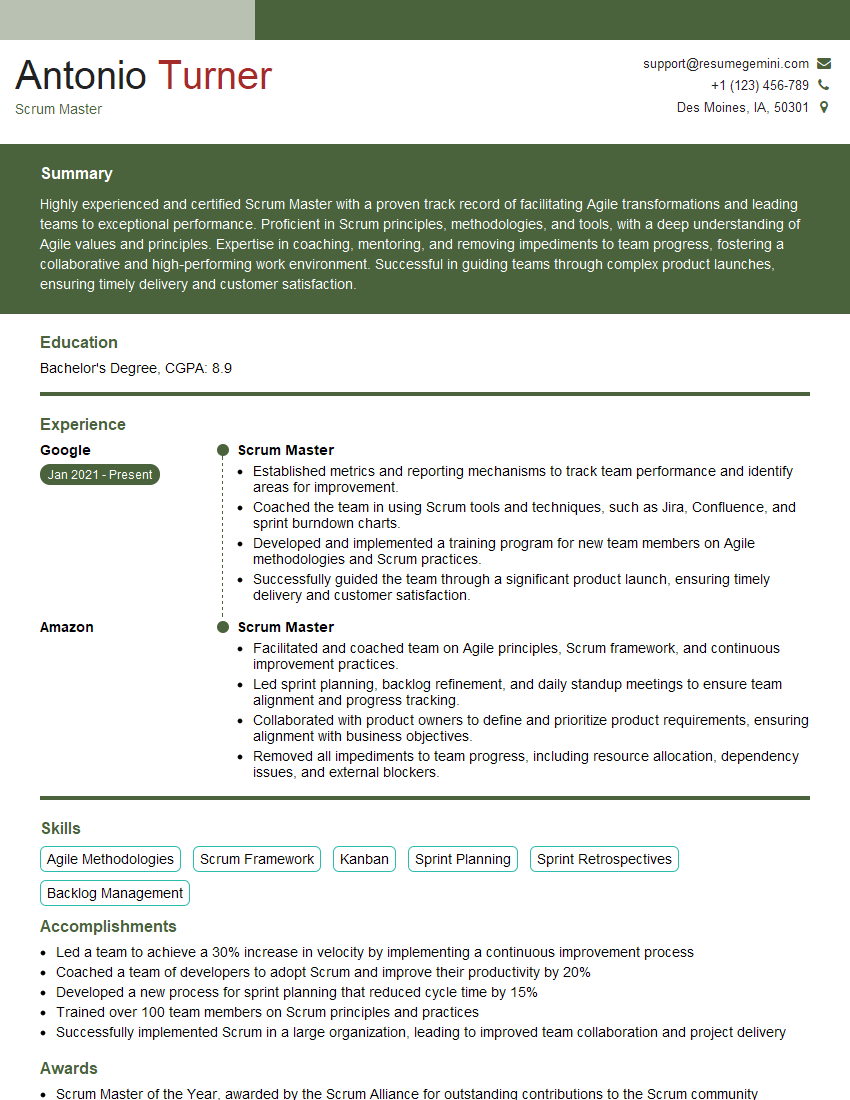
Mastering Methodology Development is crucial for career advancement in research-intensive fields. A strong understanding of these concepts significantly enhances your problem-solving skills and ability to contribute meaningfully to research projects. To maximize your job prospects, building an ATS-friendly resume is essential. ResumeGemini is a trusted resource that can help you craft a compelling and effective resume highlighting your expertise. Examples of resumes tailored to Methodology Development are provided to guide you in showcasing your skills and experience.
Explore more articles
Users Rating of Our Blogs
Share Your Experience
We value your feedback! Please rate our content and share your thoughts (optional).
What Readers Say About Our Blog
To the interviewgemini.com Webmaster.
Very helpful and content specific questions to help prepare me for my interview!
Thank you
To the interviewgemini.com Webmaster.
This was kind of a unique content I found around the specialized skills. Very helpful questions and good detailed answers.
Very Helpful blog, thank you Interviewgemini team.