Feeling uncertain about what to expect in your upcoming interview? We’ve got you covered! This blog highlights the most important Motor Control and Repair interview questions and provides actionable advice to help you stand out as the ideal candidate. Let’s pave the way for your success.
Questions Asked in Motor Control and Repair Interview
Q 1. Explain the difference between AC and DC motors.
The core difference between AC and DC motors lies in the type of current they use to generate motion. AC (Alternating Current) motors run on electricity that periodically reverses direction, while DC (Direct Current) motors use electricity flowing in one consistent direction. This fundamental difference leads to variations in their construction, control methods, and applications.
AC Motors: Typically simpler and more robust, often requiring less maintenance. They are commonly used in industrial settings due to their ability to operate directly from the readily available AC power supply. Examples include induction motors (most common type) and synchronous motors. Induction motors are self-starting and require no additional components for operation.
DC Motors: Often offer greater control over speed and torque, making them suitable for applications demanding precise movements. However, they usually require more complex control circuitry and often involve brushes and commutators, which need periodic maintenance. They find applications in robotics, electric vehicles, and precision machinery.
Think of it like this: an AC motor is like a simple piston engine, back-and-forth movement, whereas a DC motor is like a smoothly turning wheel.
Q 2. Describe the operation of a three-phase induction motor.
A three-phase induction motor operates on the principle of electromagnetic induction. It consists of a stationary stator (outer part) and a rotating rotor (inner part). The stator houses three windings, each supplied with AC voltage from a three-phase power source. These windings generate a rotating magnetic field within the stator.
This rotating magnetic field induces currents in the rotor bars (typically made of copper or aluminum), creating a magnetic field in the rotor. The interaction between the rotating stator field and the induced rotor field creates a torque, causing the rotor to turn. The speed of the motor is determined by the frequency of the AC power supply and the number of poles in the motor.
Slip: It’s important to note that the rotor never quite reaches the speed of the rotating magnetic field. This difference in speed is called ‘slip’ and is necessary to maintain the induced currents and the torque. A higher slip indicates a higher load on the motor.
Example: Imagine trying to chase a rotating spotlight with a magnet. The spotlight’s rotation is the rotating magnetic field, the magnet represents the rotor, and the chase is the torque generation.
Q 3. What are the common causes of motor overheating?
Motor overheating is a serious issue that can lead to motor failure. Several factors can contribute:
- High Ambient Temperature: Operating in excessively hot environments reduces the motor’s ability to dissipate heat.
- Overloading: Demanding more power from the motor than its rated capacity causes excessive current and heat generation. This is the most common cause.
- Winding Insulation Degradation: Age and exposure to moisture or excessive temperatures can weaken the insulation, leading to short circuits and heat buildup.
- Bearing Failure: Friction from worn or damaged bearings can produce significant heat.
- Blocked Ventilation: Restricting airflow around the motor prevents heat dissipation.
- Mechanical Problems: Internal mechanical issues such as rotor imbalances can create excessive vibrations and heat.
- Electrical Problems: Issues like single-phasing in three-phase motors, causing excessive current in the remaining phases.
It’s crucial to regularly inspect motors for signs of overheating, such as discoloration, unusual noise, or excessive vibrations. Infrared thermography can help identify hot spots before they cause catastrophic damage.
Q 4. How do you troubleshoot a motor that won’t start?
Troubleshooting a motor that won’t start is a systematic process. Here’s a step-by-step approach:
- Check the Power Supply: Verify the power source (voltage and frequency) is correct and available. Check fuses, circuit breakers, and disconnect switches.
- Inspect the Motor Leads and Connections: Look for loose, damaged, or corroded wiring, and ensure connections are secure.
- Test the Motor Windings: Use a multimeter to check for continuity and insulation resistance in the motor windings. This helps identify shorts or open circuits.
- Examine the Motor for Mechanical Obstructions: Check for jammed bearings, seized components, or anything preventing rotor rotation. Try manually turning the rotor (taking safety precautions).
- Check the Starter: Ensure the motor starter is correctly wired and functioning. For starters with thermal overload protection, check if it’s tripped.
- Verify Control Circuitry: If the motor is part of a larger system, check the control signals and circuitry to ensure the start command is being sent correctly.
- Inspect the Motor Shaft and Coupling: Check for misalignment between the motor shaft and the driven machine, which can put extra stress on the motor bearings and windings.
- Seek Professional Help if Needed: If the problem isn’t easily identified, it is prudent to contact a qualified motor repair technician.
Q 5. Explain the purpose of a motor starter.
A motor starter’s primary purpose is to regulate the starting current of a motor. When a motor starts, it draws a high inrush current several times its rated current. This high current can cause voltage dips, damage the motor windings, and stress the power supply. Motor starters limit this inrush current, providing a controlled start-up.
Besides controlling the starting current, starters also offer vital safety features such as overload protection, preventing damage to the motor if overloaded, and short-circuit protection, protecting the equipment and personnel from electrical hazards.
Example: Imagine starting a large truck on a steep incline. You wouldn’t just slam the accelerator; you’d gradually increase the power to avoid stalling or damaging the engine. A motor starter does the same for an electric motor.
Q 6. What are the different types of motor starters?
Several types of motor starters exist, each suited to different motor sizes and applications:
- Across-the-Line Starters: The simplest type, directly connecting the motor to the power supply. Suitable for smaller motors with lower inrush current requirements.
- Reduced-Voltage Starters: These limit the starting current by reducing the voltage applied to the motor. Types include autotransformer starters, wye-delta starters, and resistance starters.
- Solid-State Soft Starters: Utilize electronic components to smoothly increase the voltage to the motor, limiting the inrush current. They offer precise control and other features like current limiting.
- Magnetic Starters: Electromechanical devices typically used for larger motors. These use electromagnetic coils to close and open motor contacts.
The choice of motor starter depends on factors like motor size, inrush current, required starting characteristics, and budget.
Q 7. Describe the function of a Variable Frequency Drive (VFD).
A Variable Frequency Drive (VFD), also known as an inverter, is an electronic device that controls the speed of AC motors by varying the frequency and voltage of the power supply. This offers precise speed control and several other advantages.
Function: The VFD rectifies the incoming AC power to DC, then uses a switching inverter to generate a variable frequency AC output. By changing the frequency, the speed of the motor can be adjusted. Changing the voltage allows for control of the motor’s torque.
Benefits: VFDs offer precise speed control, energy savings (reducing energy consumption at lower speeds), soft starts (reducing mechanical stress and inrush current), improved motor protection, and precise torque control.
Applications: VFDs are widely used in various applications, from HVAC systems and industrial pumps to conveyor belts and robotics, where precise and energy-efficient motor control is essential.
Q 8. How do you select the appropriate VFD for a specific motor?
Selecting the right Variable Frequency Drive (VFD) for a specific motor is crucial for optimal performance and longevity. It’s like choosing the right transmission for a car – you wouldn’t use a sports car transmission in a truck. You need to consider several factors:
- Motor Power Rating (HP or kW): The VFD’s horsepower rating must equal or exceed the motor’s rating. Underpowering leads to overheating and failure.
- Motor Voltage: Match the VFD’s output voltage to the motor’s rated voltage. Mismatched voltages can damage both the motor and the VFD.
- Motor Current: The VFD should handle the motor’s full-load current and inrush current (the surge of current when the motor starts). This ensures proper operation and prevents tripping.
- Frequency Range: The VFD’s frequency output range should accommodate the motor’s operating speed range. For example, a motor designed for 50Hz operation will require a VFD capable of producing 50Hz.
- Motor Type: Different VFDs are designed for different motor types (induction, synchronous, servo). Selecting the wrong type can lead to poor performance or damage.
- Environmental Considerations: Factors such as ambient temperature, humidity, and potential for dust or corrosive elements need to be considered when selecting a VFD, especially regarding its enclosure type (IP rating).
- Application Requirements: Specific application needs, such as precise speed control, regenerative braking, or specific communication protocols, must be taken into account.
For instance, a 10 HP, 460V, 3-phase induction motor requires a VFD with at least a 10 HP rating, 460V output, and the capability to handle the motor’s full-load and inrush currents. Always consult the motor’s nameplate and the VFD’s specifications to ensure compatibility.
Q 9. Explain the concept of motor protection relays.
Motor protection relays are essentially the guardians of electric motors. They continuously monitor the motor’s electrical parameters and swiftly disconnect the motor from the power supply if any abnormalities are detected, preventing damage or even catastrophic failure. Think of them as a sophisticated circuit breaker with advanced diagnostic capabilities. They protect the motor from various faults, increasing its lifespan and operational reliability.
Q 10. What are the different types of motor protection relays?
Several types of motor protection relays cater to different needs:
- Overcurrent Relays: These are the most basic, detecting excessive current draw, often due to overloads or short circuits. They trip the circuit to prevent overheating and damage.
- Thermal Relays: These monitor the motor’s temperature, either directly through a sensor or indirectly by calculating it from current draw. They prevent overheating, even if the current doesn’t exceed the rated value, which can happen during stalled conditions.
- Ground Fault Relays: These detect insulation failures in the motor windings that could lead to a ground fault, a dangerous situation that can cause shocks or fires. They quickly isolate the faulty motor from the power supply.
- Phase Loss Relays: These detect the absence of one or more phases in the power supply, which can cause significant damage to the motor if not promptly detected and rectified.
- Under Voltage/Over Voltage Relays: These monitor the supply voltage to ensure it remains within the acceptable range for safe motor operation. Fluctuations can impact efficiency and potentially damage the motor.
- Motor Protection Relays (Combined): Many modern relays combine multiple protection functions (overcurrent, ground fault, thermal, etc.) into a single unit for comprehensive motor safeguarding.
The choice of relay depends on the specific application and the level of protection required. A simple application might only need overcurrent protection, while a critical application might require a more sophisticated combined relay with multiple protection features.
Q 11. How do you test the insulation resistance of a motor winding?
Measuring insulation resistance is a critical step in motor maintenance, helping detect deterioration of the insulation between motor windings and the motor frame or between different windings. We use a Megohmmeter (or insulation resistance tester), which applies a high DC voltage to measure the resistance between windings and ground or between windings themselves.
Here’s the process:
- Disconnect the motor from the power supply: This is paramount to ensure safety. Lockout/Tagout procedures should always be followed.
- Ensure windings are completely discharged: Use a suitable method to discharge any residual voltage and capacitance.
- Connect the megohmmeter: Connect the leads of the megohmmeter to the appropriate terminals of the motor windings, according to the manufacturer’s recommendations and safety procedures. Be careful not to short circuit anything.
- Apply the test voltage: Set the megohmmeter to the appropriate test voltage (typically 500V or 1000V DC) for the motor’s voltage rating.
- Measure the resistance: Read the insulation resistance value displayed on the megohmmeter. This value is typically expressed in megaohms (MΩ).
- Compare to the manufacturer’s specifications: Refer to the motor’s nameplate or manual for the minimum acceptable insulation resistance values. Values below the minimum indicate possible insulation degradation that requires attention.
Low insulation resistance suggests potential problems and may indicate the need for rewinding or other repairs to prevent electrical failure or fire hazards.
Q 12. Describe the process of motor rewinding.
Motor rewinding is a complex process requiring specialized skills and equipment. It involves dismantling the motor, removing the damaged windings, and installing new ones. It’s like rebuilding a car engine – a precise and labor-intensive task.
The process involves several steps:
- Dismantling: Carefully disassemble the motor, documenting each step. Proper tooling is essential to avoid damage to motor components.
- Removing the old windings: The old windings are meticulously removed, ensuring that no damage occurs to the stator core or other internal components. This often requires specialized tools and techniques to avoid damaging the core laminations.
- Preparing the stator core: Any remaining insulation or varnish is removed, ensuring a clean and properly prepared surface for the new windings.
- Winding installation: New windings, made to precise specifications based on the motor’s original design, are carefully installed using specialized winding machines.
- Insulation testing: After winding installation, rigorous insulation tests are performed to ensure proper insulation resistance and continuity.
- Impregnation: The windings are treated with insulating varnish or resin, typically using a vacuum impregnation process to fill all gaps and provide superior insulation.
- Baking/Curing: The varnished windings are baked or cured to harden the varnish and ensure its proper adhesion.
- Reassembly: The motor is reassembled, ensuring all components are correctly positioned and secured. Each stage requires careful attention to detail.
- Testing: Following reassembly, thorough testing (including insulation resistance, winding resistance, and load testing) is performed to ensure the motor is operating correctly.
Only skilled and experienced technicians should undertake motor rewinding, as improper procedures can result in further damage or unsafe operation.
Q 13. What safety precautions should be taken when working with motors?
Safety is paramount when working with motors. High voltages, rotating machinery, and potential for arc flash pose significant risks. Always follow these precautions:
- Lockout/Tagout (LOTO): Always follow LOTO procedures to de-energize the motor and prevent accidental re-energization. This is the single most important safety procedure.
- Personal Protective Equipment (PPE): Use appropriate PPE, including safety glasses, gloves, hearing protection, and possibly arc flash suits depending on the voltage level.
- Grounding: Ensure the motor is properly grounded to prevent electrical shock.
- Awareness of moving parts: Never work on a motor while it is rotating or energized. Understand the motor’s operating mechanisms to avoid contact with moving parts. Use appropriate guards and barriers.
- Proper lifting techniques: Motors can be heavy. Use appropriate lifting equipment and follow proper lifting techniques to avoid injuries.
- Working at heights: If working on motors at heights, use appropriate fall protection equipment.
- Ventilation: Adequate ventilation should be provided when working with motor windings, especially during the rewinding process, as the varnishes can emit harmful fumes.
Never compromise safety. If you are unsure about any procedure, seek guidance from experienced personnel or consult relevant safety manuals.
Q 14. How do you interpret a motor nameplate?
A motor nameplate is like an ID card for the motor, providing essential information about its specifications and operating characteristics. Understanding its information is vital for proper selection, installation, and maintenance.
Key information found on a motor nameplate typically includes:
- Manufacturer’s name and model number: This allows for easy identification of the motor and access to relevant documentation.
- Horsepower (HP) or Kilowatts (kW): The motor’s power output rating.
- Voltage (V): The rated voltage of the motor, indicating the required supply voltage.
- Current (A): The full-load current drawn by the motor under normal operating conditions.
- Frequency (Hz): The rated frequency of the power supply (typically 50Hz or 60Hz).
- Speed (RPM): The rotational speed of the motor at rated conditions.
- Phase: The number of phases in the power supply (typically single-phase or three-phase).
- Frame size: This helps in selecting appropriate mounting hardware and enclosures.
- Insulation class: Indicates the thermal class of insulation used (e.g., Class F, Class H).
- Service factor: A multiplier indicating the motor’s overload capacity.
By carefully interpreting the information on the nameplate, one can accurately determine the motor’s suitability for a specific application, ensure proper installation and operating conditions, and select appropriate protection devices.
Q 15. Explain the concept of motor efficiency.
Motor efficiency represents how effectively a motor converts electrical energy into mechanical work. It’s expressed as a percentage, indicating the ratio of output power (mechanical) to input power (electrical). A higher percentage signifies a more efficient motor, meaning less energy is wasted as heat.
For example, a motor with 90% efficiency means that for every 100 watts of electrical power consumed, 90 watts are converted into useful mechanical power, while the remaining 10 watts are lost as heat.
Factors influencing motor efficiency include design (e.g., the type of motor and its materials), operating conditions (load, speed), and maintenance (e.g., proper lubrication and alignment). Improving motor efficiency is crucial for reducing energy costs and minimizing environmental impact. In industrial settings, even small efficiency gains across numerous motors can result in significant savings.
Career Expert Tips:
- Ace those interviews! Prepare effectively by reviewing the Top 50 Most Common Interview Questions on ResumeGemini.
- Navigate your job search with confidence! Explore a wide range of Career Tips on ResumeGemini. Learn about common challenges and recommendations to overcome them.
- Craft the perfect resume! Master the Art of Resume Writing with ResumeGemini’s guide. Showcase your unique qualifications and achievements effectively.
- Don’t miss out on holiday savings! Build your dream resume with ResumeGemini’s ATS optimized templates.
Q 16. What are the different types of motor bearings?
Motor bearings are crucial components that support the rotating shaft and minimize friction. Several types exist, each with its own advantages and disadvantages:
- Ball bearings: These are commonly used for their high speed capabilities and relatively low friction. They’re ideal for applications requiring high rotational speeds but might be less suitable for heavy radial loads.
- Roller bearings: These are better suited for heavy radial loads and slower speeds compared to ball bearings. They excel in applications where significant weight is placed on the shaft, such as large industrial motors.
- Sleeve bearings (or journal bearings): These bearings utilize a lubricated sleeve to reduce friction between the shaft and housing. They’re simpler in design and quieter than rolling element bearings but generally handle less load and have lower speed limits. Suitable for low-speed, low-load applications.
- Magnetic bearings: These use magnetic fields to support the shaft, eliminating friction altogether. This leads to very high efficiency and extended lifespan but are more complex and expensive, typically found in high-precision applications.
The choice of bearing depends entirely on the motor’s application and performance requirements. Incorrect bearing selection can lead to premature failure, vibration, and reduced efficiency.
Q 17. How do you troubleshoot a motor with excessive vibration?
Excessive motor vibration is a serious issue that can lead to premature failure. Troubleshooting involves a systematic approach:
- Visual Inspection: Check for obvious signs of damage, such as loose bolts, misalignment of pulleys or couplings, or damaged bearings. Look for any imbalance in the rotor.
- Vibration Measurement: Use a vibration meter to quantify the vibration levels and identify the frequency of the vibration. This helps pinpoint the source of the problem (e.g., imbalance, misalignment, bearing wear).
- Check for Misalignment: Verify the alignment of the motor shaft with connected equipment (pumps, fans, etc.). Misalignment is a common cause of vibration.
- Bearing Inspection: Inspect the bearings for wear, damage, or improper lubrication. Listen for unusual sounds such as grinding or rumbling.
- Rotor Balance: Assess the rotor for imbalance. An unbalanced rotor is a primary cause of vibration. This might require specialized balancing equipment.
- Foundation Issues: Ensure the motor’s mounting base is secure and stable. A weak or uneven foundation can amplify vibrations.
For instance, if the vibration measurement reveals a high frequency vibration, it likely points to bearing problems. If the vibration is primarily at the rotational speed, it might indicate rotor imbalance or misalignment. Addressing the root cause rather than just the symptoms is crucial for a lasting solution.
Q 18. How do you diagnose a motor with high current draw?
High current draw in a motor indicates a problem that needs immediate attention, as it can lead to overheating and motor failure. Here’s how to diagnose this:
- Check the Load: The most common cause is an overload. Is the motor trying to drive a load exceeding its rated capacity? Reduce the load or replace with a more powerful motor.
- Measure the Voltage: A low voltage supply will cause the motor to draw more current to achieve the same output. Check the voltage at the motor terminals with a multimeter.
- Inspect the Wiring: Look for loose connections, corroded wires, or shorts in the motor windings or control circuit. These can lead to increased current draw.
- Test the Motor Windings: Use a multimeter to check the motor windings for shorts, opens, or high resistance. High resistance in the windings is a sign of damage.
- Bearing Condition: Worn or damaged bearings significantly increase the motor’s current draw due to increased friction. Check and replace if necessary.
- Rotor Issues: Damage to the rotor, such as a bent shaft or rubbing against the stator, can increase the load and consequently the current draw.
For example, if the motor is running smoothly but drawing significantly more current than expected under normal load, suspect a problem with the motor windings or bearings.
Q 19. Describe your experience with PLC programming related to motor control.
I have extensive experience in PLC programming for motor control, having worked on numerous projects involving various PLC brands (such as Siemens, Allen-Bradley, and Schneider Electric). I’m proficient in ladder logic programming and using function blocks for advanced motor control strategies. My experience includes:
- Motor Starting and Stopping: Implementing various starting methods (direct-on-line, star-delta, soft start) using PLC logic.
- Speed Control: Programming PLCs to control motor speed using VFDs (Variable Frequency Drives) via communication protocols like Modbus or Profibus. This includes implementing closed-loop control strategies to maintain precise speed despite load variations.
- Safety Interlocks and Emergency Stops: Implementing safety features and emergency stop routines to ensure operator safety.
- Data Acquisition and Monitoring: Programming PLCs to monitor motor parameters such as current, voltage, speed, and temperature. This data is then used for real-time monitoring and fault detection.
- Sequential Control: Controlling multiple motors in a coordinated manner for automated processes.
For example, I recently worked on a project where I programmed a PLC to control a series of conveyor motors, synchronizing their speed and stopping them safely during emergencies. This required precise coordination of several motors and safety interlocks, which was efficiently handled using structured PLC programming techniques.
Q 20. Explain your experience with troubleshooting motor control circuits.
My experience in troubleshooting motor control circuits spans various industrial settings. I employ a systematic approach that combines theoretical knowledge with hands-on practical skills:
- Safety First: Always disconnect the power supply before working on any electrical circuits.
- Visual Inspection: Examine the control circuit for loose connections, damaged wires, burnt components, or other signs of damage.
- Schematic Review: Understanding the circuit’s schematic is crucial. Trace the circuit path to isolate the problem area.
- Systematic Testing: Use a multimeter to check voltage levels, current draw, and continuity at different points in the circuit. This will help pinpoint the faulty component.
- Component Testing: Test individual components (relays, contactors, switches, etc.) to identify the failed component. Replace faulty components.
- PLC Programming and Diagnostics: Use PLC diagnostic tools to monitor the status of the motor and identify any errors in the PLC program.
For instance, I once diagnosed a motor control circuit failure where a seemingly simple issue turned out to be a loose connection within a contactor coil, causing intermittent operation. The systematic approach allowed me to quickly identify and fix the problem.
Q 21. What types of motor control schematics are you familiar with?
My familiarity with motor control schematics encompasses a wide range of configurations, including:
- Direct-On-Line (DOL) Starters: Simple and cost-effective, suitable for smaller motors.
- Star-Delta Starters: Reduced starting current, suitable for medium-sized motors.
- Autotransformer Starters: Smooth starting, suitable for larger motors.
- Soft Starters: Provide smooth starting and reduced mechanical stress on the motor.
- Variable Frequency Drives (VFD) Control: Enable precise control of motor speed and torque, often used with more complex control systems and PLCs.
- Reversing Circuits: Enable the motor to rotate in either direction.
- Three-Phase Motor Circuits: Circuits for controlling three-phase induction motors.
- Single-Phase Motor Circuits: Circuits for controlling single-phase motors (capacitor-start, etc.).
I can easily interpret and understand schematics for all these motor control methods, making troubleshooting and modifications straightforward. My experience extends beyond just reading schematics—I can also create and design new motor control schematics based on specific application needs.
Q 22. How familiar are you with different types of motor enclosures?
Motor enclosures are crucial for protecting motors from environmental hazards and ensuring safe operation. Different types offer varying degrees of protection. They’re classified according to NEMA (National Electrical Manufacturers Association) standards in North America and IP (Ingress Protection) ratings internationally.
- Open Motors (NEMA I, IP00): These offer minimal protection, suitable only for clean, dry indoor environments. Think of a small fan motor in a desk lamp.
- Totally Enclosed Non-Ventilated (TENV, NEMA XII): These are sealed to prevent the entry of dust and moisture, ideal for harsh conditions but can overheat if not properly sized. Imagine a motor driving a pump in a chemical processing plant.
- Totally Enclosed Fan-Cooled (TEFC, NEMA XIV): This common type has internal fans to dissipate heat, providing better cooling than TENV motors, making them suitable for a wider range of applications. Many industrial AC motors fall into this category.
- Washdown (NEMA 6, IP66): Designed to withstand high-pressure water jets, perfect for food processing or outdoor environments exposed to rain and cleaning operations.
- Explosion-Proof (NEMA VII, IX, IP66 or higher): These are rigorously tested to prevent ignition of explosive atmospheres, critical in mining or oil refinery applications.
Choosing the right enclosure is vital for motor longevity and safety. A poorly chosen enclosure can lead to premature motor failure due to overheating, corrosion, or even explosions.
Q 23. Describe your experience working with different motor braking systems.
My experience encompasses a wide array of motor braking systems, each suited to different applications and requirements. I’ve worked extensively with:
- Regenerative Braking: This method uses the motor as a generator, converting kinetic energy into electrical energy which can be fed back into the power system. It’s highly efficient but requires a suitable power supply and control system. I used this on a large conveyor system to minimize wear on the brakes and save energy.
- Dynamic Braking: This involves connecting a resistor across the motor terminals to dissipate kinetic energy as heat. Simple and cost-effective, but less efficient than regenerative braking due to energy loss. I’ve implemented this in numerous smaller applications where cost was a priority.
- Mechanical Braking: This utilizes friction brakes (disc, drum, etc.) to slow down and stop the motor. This is a common solution for high-inertia loads or emergency stops and requires regular maintenance. I’ve frequently inspected and adjusted mechanical brakes in industrial machinery.
- Plugging Braking: This reverses the motor’s voltage to quickly decelerate it. It’s effective but can be harsh on the motor and requires careful control to avoid damage. I’ve troubleshoot many instances where improper plugging braking caused motor winding damage.
Selecting the appropriate braking system depends heavily on factors such as motor size, load inertia, required stopping time, and energy efficiency considerations.
Q 24. What software or tools do you use for motor control diagnostics?
Motor control diagnostics rely on a combination of software and hardware tools. My experience includes using:
- Motor Control Software: I’m proficient with various PLCs (Programmable Logic Controllers) programming software like Rockwell Automation’s RSLogix 5000 and Siemens TIA Portal. These allow for monitoring motor parameters (current, voltage, speed, temperature), troubleshooting control logic, and analyzing historical data.
- Motor Testing Equipment: This includes multimeters for measuring voltage, current, and resistance; insulation testers for checking winding insulation; motor analyzers for comprehensive diagnostics (vibration analysis, thermal imaging); and oscilloscope for observing waveform characteristics.
- Specialized Software: I have experience with software designed for specific motor drives and control systems, providing detailed information on motor performance and fault codes. For instance, I used ABB’s Drive Manager software for analysis of their drives.
- Vibration Analysis Software: This allows me to identify mechanical issues in motors by analyzing vibration patterns, helping prevent catastrophic failures.
The choice of tools depends on the specific problem, available resources, and the motor’s control system.
Q 25. Describe a time you successfully diagnosed and repaired a complex motor control issue.
I once encountered a complex issue with a large industrial fan motor that exhibited intermittent stalling. Initial diagnostics showed seemingly normal voltage and current readings. However, using a motor analyzer, I discovered unusually high vibration levels at specific frequencies. Further investigation using thermal imaging revealed localized overheating in one of the motor bearings.
Following a step-by-step approach:
- Detailed Inspection: I performed a thorough visual inspection of the motor and its mounting, checking for any loose components or misalignment.
- Vibration Analysis: Using the motor analyzer, I confirmed the high-frequency vibration indicative of bearing failure. The specific frequency pointed towards a faulty inner bearing.
- Thermal Imaging: Thermal imaging revealed the precise location of the overheating. This confirmed the bearing fault was causing friction and heat.
- Bearing Replacement: After disconnecting the motor and taking necessary safety precautions, I replaced the damaged bearing.
- Testing and Re-installation: I performed thorough testing after reassembly and re-installation to ensure smooth operation and low vibration levels.
This successful diagnosis and repair prevented a major production shutdown and underscored the importance of comprehensive diagnostic tools and methodical problem-solving.
Q 26. What is your experience with motor maintenance and preventative maintenance schedules?
Motor maintenance is critical for ensuring reliability and extending lifespan. Preventive maintenance schedules vary depending on the motor type, operating conditions, and load demands. A typical schedule involves:
- Visual Inspection: Regular checks for loose connections, signs of overheating, unusual noises, leaks, or damage to the enclosure.
- Lubrication: Periodic lubrication of bearings, according to manufacturer’s recommendations. Over-lubrication can be as detrimental as under-lubrication.
- Vibration Analysis: Regular vibration monitoring helps detect early signs of bearing wear or other mechanical problems.
- Insulation Testing: Periodic checks of insulation resistance to prevent electrical failures. Degradation of insulation is a significant cause of motor failure.
- Thermal Imaging: Used to identify hot spots which indicate potential problems such as winding faults, bearing issues, or excessive load.
Implementing a CMMS (Computerized Maintenance Management System) can significantly streamline the scheduling and tracking of preventive maintenance, ensuring that all tasks are completed on time and recorded accurately.
Q 27. How do you ensure the safety of yourself and others while repairing motors?
Safety is paramount during motor repair. My approach involves adhering to strict safety procedures, including:
- Lockout/Tagout (LOTO): Always de-energize the motor and apply LOTO procedures before starting any repair work to prevent accidental energization. This is fundamental to preventing injuries.
- Personal Protective Equipment (PPE): Consistent use of safety glasses, gloves, and appropriate clothing to protect against electrical shock, sharp edges, and other hazards.
- Safe Handling Procedures: Proper lifting techniques to avoid injury when handling heavy motors.
- Understanding Electrical Hazards: Being fully aware of the dangers associated with high voltage and ensuring proper grounding.
- Environmental Awareness: Considering potential hazards like dust, chemicals, or confined spaces, and using appropriate safety measures.
Safety is not just a checklist; it’s an ingrained mindset. I always conduct thorough risk assessments before beginning any repair and prioritize safety above all else.
Q 28. What are your strengths and weaknesses related to motor control and repair?
Strengths: My strengths lie in my comprehensive understanding of motor control systems, my ability to troubleshoot complex problems, and my proficiency in using various diagnostic tools. I’m adept at identifying root causes, implementing effective repairs, and collaborating effectively with teams. My experience with various motor types and applications gives me a broad perspective.
Weaknesses: While my knowledge base is extensive, staying abreast of the latest advancements in motor control technology (especially concerning advanced control algorithms) requires continuous learning. I’m actively addressing this through professional development courses and staying engaged with industry publications. I also find that delegating tasks effectively to junior technicians is an area I can continue to improve, fostering their skills while ensuring project efficiency.
Key Topics to Learn for Motor Control and Repair Interview
- AC/DC Motor Principles: Understanding the fundamental differences between AC and DC motors, their operating principles, and their respective applications in various industrial settings.
- Motor Control Circuits: Practical knowledge of various motor control circuits, including starters, relays, contactors, and programmable logic controllers (PLCs). Be prepared to discuss troubleshooting common circuit malfunctions.
- Three-Phase Power Systems: A solid grasp of three-phase power systems is crucial. This includes understanding voltage, current, and power calculations, as well as the implications of unbalanced loads.
- Troubleshooting and Diagnostics: Interviewers will assess your ability to diagnose motor malfunctions. Prepare to discuss common motor problems, diagnostic techniques (e.g., multimeter usage, motor testing), and effective repair strategies.
- Safety Procedures: Demonstrate a thorough understanding of safety regulations and practices related to working with high-voltage equipment and industrial machinery. This is paramount in the field.
- Motor Maintenance and Preventative Maintenance: Discuss your experience with routine maintenance tasks, including lubrication, inspection, and preventative measures to extend motor lifespan and avoid costly repairs.
- Variable Frequency Drives (VFDs): Explain your understanding of VFDs, their operation, and their role in optimizing motor performance and energy efficiency. Be ready to discuss troubleshooting VFD related issues.
- Electrical Codes and Standards: Familiarity with relevant electrical codes and standards (e.g., NEC) is essential to demonstrate your commitment to safe and compliant practices.
Next Steps
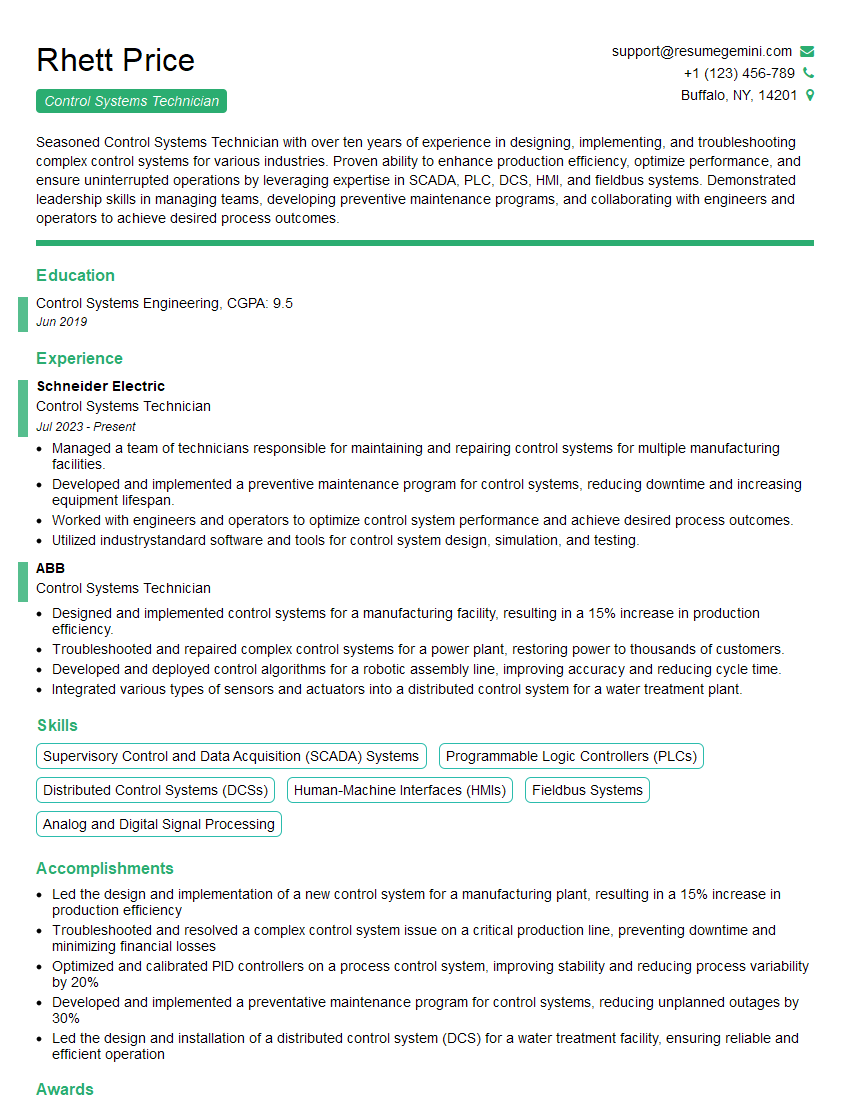
Mastering Motor Control and Repair opens doors to exciting career opportunities with excellent growth potential. A strong understanding of these core principles is highly valued by employers in various industries. To maximize your job prospects, it’s vital to present your skills effectively through a well-crafted, ATS-friendly resume. ResumeGemini is a trusted resource that can help you build a professional resume that highlights your qualifications and catches the eye of recruiters. Examples of resumes tailored to Motor Control and Repair are available to guide you through the process.
Explore more articles
Users Rating of Our Blogs
Share Your Experience
We value your feedback! Please rate our content and share your thoughts (optional).
What Readers Say About Our Blog
To the interviewgemini.com Webmaster.
Very helpful and content specific questions to help prepare me for my interview!
Thank you
To the interviewgemini.com Webmaster.
This was kind of a unique content I found around the specialized skills. Very helpful questions and good detailed answers.
Very Helpful blog, thank you Interviewgemini team.