Unlock your full potential by mastering the most common Music in Mental Health interview questions. This blog offers a deep dive into the critical topics, ensuring you’re not only prepared to answer but to excel. With these insights, you’ll approach your interview with clarity and confidence.
Questions Asked in Music in Mental Health Interview
Q 1. Describe your experience utilizing different musical approaches in therapeutic settings.
My experience spans various musical approaches in therapeutic settings, tailoring my methods to individual client needs. I’ve used active music-making techniques like songwriting and improvisation, particularly effective in helping clients express emotions they might struggle to articulate verbally. For example, a young client dealing with anxiety found release and self-expression through composing calming melodies on the keyboard. I also employ receptive techniques like guided imagery with music, where calming soundscapes are paired with guided visualizations to promote relaxation and reduce stress. With clients struggling with trauma, I use music to create a safe and controlled environment, fostering emotional processing through carefully selected musical pieces that resonate with their experiences, always respecting their pace and comfort levels. Finally, I integrate music into other therapeutic activities like movement and dance therapy to enhance expression and bodily awareness.
Another example involved a group session focusing on grief and loss where singing familiar songs provided a communal space for processing shared experiences and finding solace together.
Q 2. Explain the theoretical framework guiding your music therapy practice.
My practice is grounded in several theoretical frameworks. Neurological Music Therapy (NMT) informs my understanding of music’s impact on brain function, particularly its influence on emotional regulation and cognitive abilities. I incorporate elements of psychodynamic theory, understanding how unconscious processes manifest in musical expression and how music can facilitate accessing and processing these emotions. Person-centered therapy is central to my approach, prioritizing the client’s autonomy and self-determination within the therapeutic process. I meet them where they are musically and emotionally, adapting sessions to best suit their unique needs and preferences. Finally, I utilize cognitive behavioral therapy (CBT) principles to integrate musical experiences into cognitive restructuring techniques, helping clients challenge negative thought patterns and develop more adaptive coping mechanisms. For instance, a client struggling with depressive thoughts might learn to associate a specific upbeat piece of music with positive self-affirmations.
Q 3. How do you assess a client’s musical abilities and preferences for effective treatment?
Assessing musical abilities and preferences is crucial. I begin with informal observations, noting their responses to different musical styles and instruments. I ask about their musical background, including any formal training or casual listening habits. Simple tasks like rhythm matching or melodic imitation can provide insight into their musical aptitude. More importantly, I focus on their musical preferences, which offer valuable clues about their emotional landscape. A preference for melancholic music might indicate a current emotional state, while a preference for upbeat music could signal a desire for change or a striving for positive emotional regulation. I use questionnaires and informal conversations to gain a more comprehensive understanding. The goal is not to judge their musical skill, but rather to identify musical avenues that can effectively engage them in the therapeutic process. I build on their existing strengths and interests, making the process enjoyable and accessible.
Q 4. What are the ethical considerations in using music therapy with vulnerable populations?
Ethical considerations are paramount when working with vulnerable populations. Confidentiality is crucial, ensuring clients feel safe sharing their experiences without fear of judgment. Informed consent is essential, ensuring clients understand the process and their right to withdraw at any time. Maintaining appropriate boundaries is crucial, always prioritizing the client’s well-being above all else. Cultural sensitivity is also key, particularly when working with individuals from diverse backgrounds. I avoid imposing my own musical preferences, ensuring the choice of music and activities respects their cultural context and personal values. In cases where a client exhibits signs of harm to self or others, mandated reporting procedures need to be followed, balancing client autonomy with the need for safety. Regular supervision and consultation with colleagues are invaluable in navigating these complexities.
Q 5. Describe your experience with documenting client progress and treatment plans in music therapy.
Documentation is essential for effective music therapy practice. I maintain detailed session notes, documenting the client’s emotional state, musical choices, and therapeutic interventions. These notes include observations about their nonverbal cues, verbalizations, and emotional responses to specific musical activities. I develop comprehensive treatment plans outlining goals, objectives, and intervention strategies, incorporating regular reviews and adjustments based on client progress. This involves setting measurable goals and tracking client responses over time. For instance, I might track the client’s ability to regulate their emotions during improvisational sessions or their increased participation in group activities. This documentation not only provides a record of progress but also aids in evaluating the effectiveness of the therapeutic process and informing future sessions.
Q 6. How do you adapt your music therapy techniques to meet the diverse needs of clients with varying diagnoses?
Adaptability is crucial in meeting diverse needs. For clients with anxiety, I might use calming music and relaxation techniques. For clients with depression, I might employ creative music-making to foster self-expression and emotional release. With clients with trauma, I focus on creating a safe and supportive space, using music to facilitate emotional processing at their own pace. For individuals with cognitive impairments, I simplify musical tasks and utilize repetitive patterns to enhance engagement and improve cognitive skills. I frequently adjust session structures, musical styles, and therapeutic techniques, prioritizing the client’s individual needs and preferences throughout the process.
Q 7. Explain your understanding of the neurobiological effects of music on mental health.
Music’s neurobiological effects on mental health are significant. Music engages multiple brain regions, impacting emotional processing, cognitive function, and physiological responses. For example, listening to calming music activates the parasympathetic nervous system, reducing stress hormones like cortisol. Music-making engages motor areas and enhances neuroplasticity, leading to improved cognitive function in some cases. The emotional impact of music is deeply rooted in its ability to evoke memories and tap into our emotional centers in the brain. This can be used therapeutically to process emotions, foster self-awareness, and promote emotional regulation. Research consistently shows music therapy’s effectiveness in treating various mental health conditions, from anxiety and depression to trauma and dementia, highlighting the powerful interplay between music, the brain, and mental well-being.
Q 8. How do you integrate music therapy with other treatment modalities in a multidisciplinary team?
Integrating music therapy within a multidisciplinary team requires seamless collaboration and a shared understanding of each professional’s role. It’s not about music therapy in isolation, but rather how music’s therapeutic properties can enhance and complement other interventions.
For instance, in treating a patient with anxiety and depression, I might collaborate with a psychiatrist to understand their medication regimen and the patient’s response. This informs my music therapy approach – perhaps selecting calming instrumental pieces for relaxation exercises, or using songwriting to help the patient process their emotions. Simultaneously, I might work alongside an occupational therapist to develop coping mechanisms using music, such as listening to specific music during stressful tasks to maintain focus and emotional regulation.
- Shared Goal Setting: Regular meetings with the team are crucial to establish common goals and monitor the patient’s progress across all modalities.
- Information Sharing: Maintaining open communication channels, through shared electronic health records or regular case conferences, ensures everyone is informed about the patient’s responses to treatment.
- Respect for Boundaries: Each professional maintains their scope of practice while valuing and respecting the contributions of others. I wouldn’t prescribe medication, for example, that’s the psychiatrist’s role.
The key is to create a holistic, patient-centered approach where music therapy is a valuable component of a broader treatment plan, working in synergy with other therapies.
Q 9. Describe a challenging case and how you successfully adapted your approach.
One challenging case involved a young adult with severe trauma-related PTSD and significant communication difficulties. Verbal expression was nearly impossible. Traditional talk therapy was proving ineffective. Initially, I tried using structured improvisational music, but the patient’s anxiety remained high, and sessions were unproductive.
My approach needed adaptation. I shifted to a receptive music therapy approach. Instead of forcing musical interaction, I started by playing calming instrumental music, observing their non-verbal cues – body language, facial expressions, and subtle physical reactions. Over time, I gradually introduced more active elements, like gently tapping rhythms alongside the music, introducing simple percussion instruments that allowed for nonverbal expression. The focus was not on ‘perfection’ or musical skill, but on providing a safe space for emotional release. We later incorporated guided imagery techniques synced with the music, which led to breakthroughs in emotional processing.
Success wasn’t immediate, but patience, flexibility, and a deep understanding of trauma-informed care were key. The patient gradually began to engage more actively, showing improvement in emotional regulation and non-verbal communication skills. This experience highlighted the importance of adapting techniques based on individual needs and recognizing that sometimes, the most powerful intervention is simply creating a supportive and accepting environment through music.
Q 10. How do you manage client confidentiality and ethical dilemmas in music therapy practice?
Client confidentiality is paramount. All information shared during therapy sessions, including musical compositions, recordings, and observations, is treated with the strictest confidence, adhering to professional ethical guidelines and legal regulations such as HIPAA.
Ethical dilemmas can arise. For example, if a client discloses a plan to harm themselves or others, I have a legal and ethical obligation to breach confidentiality and inform relevant authorities. This action requires careful consideration and typically involves consultation with supervisors or other members of the treatment team. We often work through these situations with a detailed risk assessment, ensuring all actions are taken to protect the client and others while upholding ethical principles. Transparency and open communication with the client, when appropriate, are also important aspects of navigating these sensitive situations.
Documentation is essential. Detailed session notes, kept securely, are crucial for ethical practice and ensure continuity of care. They are not just records of what happened, but careful considerations about the client’s progress and the therapist’s reasoning behind approaches. This meticulous record-keeping is vital for demonstrating responsible and ethical practice.
Q 11. What are your strengths and weaknesses as a music therapist?
My strengths lie in my ability to build rapport with clients, create a safe and trusting therapeutic relationship, and adapt my approach to meet diverse needs. I’m comfortable working with a range of ages and presenting problems, and I possess strong improvisational skills, which are valuable for adapting to the client’s spontaneous emotional expressions in music therapy sessions. I’m also a good listener, and I believe this quality is crucial for forming meaningful connections with my clients.
One area I’m working on is further developing my expertise in specific populations, such as individuals with severe neurological conditions. While I have experience, I recognize the value of continuing education and specialized training in this area to provide the most effective care. I am also always striving to improve my skills in documenting and evaluating treatment outcomes using more sophisticated quantitative metrics.
Q 12. How do you maintain your own professional development and stay current in the field?
Maintaining professional development is an ongoing commitment. I participate regularly in continuing education workshops and conferences, focusing on new research and developments in the field of music therapy. This includes attending webinars, reading peer-reviewed journals and professional publications, and engaging with online communities of practice.
I actively seek supervision from experienced colleagues to review my clinical work, discuss challenging cases, and enhance my therapeutic skills. Supervisory sessions offer valuable opportunities for reflection, learning, and ensuring ethical practice. Continuing my education ensures that I’m up-to-date on best practices, evidence-based interventions, and ethical considerations, allowing me to provide the most effective and informed care to my clients. Membership in professional organizations such as the American Music Therapy Association (AMTA) also provides access to valuable resources and continuing education opportunities.
Q 13. Describe your experience with group music therapy sessions and their therapeutic benefits.
Group music therapy offers unique benefits. It allows clients to experience a sense of community and shared experience, reducing feelings of isolation and shame, particularly common in mental health challenges. The group setting fosters peer support and learning from others’ experiences, creating a powerful therapeutic dynamic.
In group sessions, I use a variety of techniques including collaborative songwriting, instrumental improvisation, and rhythm-based activities. These activities encourage communication, emotional expression, and the development of social skills. For example, a group project where each member contributes a musical phrase to create a collaborative song can facilitate trust and teamwork. The focus isn’t on creating a ‘perfect’ musical piece, but on the therapeutic process of creating and sharing music together. The structure of the group, however, is crucial. A clear group structure and therapeutic guidelines facilitate this process and enhance client safety and participation. I carefully screen potential group participants, considering their needs, strengths, and limitations to ensure compatibility within the group environment.
Q 14. How do you address potential contraindications or limitations of music therapy?
Music therapy, while generally safe and effective, has contraindications. It’s essential to be aware of limitations. For example, individuals with acute psychosis or severe cognitive impairments may not be suitable for certain types of music therapy interventions, requiring significant modifications to ensure safety and engagement.
Before starting therapy, I conduct a thorough assessment to identify potential limitations. If a client has auditory processing difficulties or specific sensitivities to certain sounds or musical styles, I adapt my approach accordingly, using alternative instruments or musical styles. If the client’s condition significantly impacts their ability to participate meaningfully in music therapy, I may recommend alternative interventions or collaborate with other healthcare professionals to develop a more comprehensive treatment plan. Ethical considerations always guide my decisions and adaptation of techniques. The ultimate goal is to provide safe, effective, and appropriate therapy, respecting the client’s limitations and needs.
Q 15. Explain your understanding of evidence-based practices in music therapy.
Evidence-based practice in music therapy means using interventions supported by rigorous research to achieve specific therapeutic goals. It’s not just about ‘feeling good’ through music; it’s about applying scientific understanding to improve client outcomes. This involves carefully selecting techniques based on the client’s needs and diagnosis, measuring the impact of those techniques, and continually refining our approaches based on the evidence we gather.
For example, if a client is struggling with anxiety, we might use research-supported techniques like guided imagery set to calming music, rather than relying solely on improvisation. We then track the client’s anxiety levels through standardized scales before, during, and after the intervention to measure the effectiveness of the approach. This allows for a data-driven approach to music therapy, making it more accountable and efficient.
Career Expert Tips:
- Ace those interviews! Prepare effectively by reviewing the Top 50 Most Common Interview Questions on ResumeGemini.
- Navigate your job search with confidence! Explore a wide range of Career Tips on ResumeGemini. Learn about common challenges and recommendations to overcome them.
- Craft the perfect resume! Master the Art of Resume Writing with ResumeGemini’s guide. Showcase your unique qualifications and achievements effectively.
- Don’t miss out on holiday savings! Build your dream resume with ResumeGemini’s ATS optimized templates.
Q 16. How do you assess the effectiveness of your music therapy interventions?
Assessing the effectiveness of music therapy interventions requires a multifaceted approach. We use a combination of quantitative and qualitative data. Quantitative data might involve standardized questionnaires measuring anxiety, depression, or mood, administered before and after a series of sessions. For example, I might use the Beck Anxiety Inventory (BAI) or the Profile of Mood States (POMS). These provide measurable, numerical changes that indicate the intervention’s impact.
Qualitative data, on the other hand, comes from observations of client behavior during sessions, client self-reports, and discussions about their experiences. This gives a richer, more nuanced understanding of the changes they’re experiencing. I might keep detailed session notes documenting observed changes in emotional regulation, communication skills, or engagement. Combining both quantitative and qualitative data gives a comprehensive picture of the intervention’s success.
Q 17. Describe your experience using specific music therapy techniques (e.g., improvisation, songwriting, receptive music listening).
My experience spans a range of music therapy techniques. Improvisation, for instance, allows clients to express themselves non-verbally, providing a safe space to explore emotions without the pressure of words. I’ve used it with children struggling with trauma, allowing them to express their feelings through sound and rhythm. With adults experiencing depression, improvisation can help unlock creativity and self-expression that may be otherwise suppressed.
Songwriting is another powerful technique, particularly effective in fostering self-discovery and personal narrative. Clients can create songs to process difficult experiences, build self-esteem, or celebrate achievements. Receptive music listening, often involving carefully chosen music tailored to the client’s preferences and therapeutic needs, can facilitate relaxation, improve focus, or stimulate emotional processing.
For example, with a client experiencing grief, I might use receptive music listening with songs that acknowledge the pain of loss, creating a space for emotional validation and healing. Each technique is carefully selected based on the client’s individual needs and goals.
Q 18. How do you handle difficult client behaviors or emotional responses during sessions?
Handling difficult client behaviors or emotional responses requires a calm, empathetic, and professional approach. Safety is paramount. If a client’s behavior escalates, my first priority is to ensure the safety of myself and the client. This might involve pausing the session, creating physical space, or seeking consultation with other members of the treatment team.
I rely heavily on establishing a strong therapeutic relationship built on trust and respect. Understanding the root of the behavior is crucial. Often, challenging behaviors are expressions of underlying emotional distress. By validating the client’s feelings and exploring the context of their behavior, we can collaboratively address the issue and find ways to regulate their emotions. Techniques like grounding exercises, deep breathing, or a shift in musical activity can help manage immediate distress.
Documentation is essential. I meticulously document all such instances, including the client’s behavior, my response, and any relevant observations. This helps inform future sessions and allows for collaborative decision-making with the treatment team.
Q 19. How do you communicate effectively with clients, families, and other healthcare professionals?
Effective communication is the cornerstone of successful music therapy. With clients, I use clear, concise language, avoiding jargon and adapting my communication style to their individual needs and preferences. Active listening is crucial, showing empathy and understanding. I actively seek feedback to ensure they feel heard and understood.
With families, I provide regular updates on progress, explaining the therapeutic goals and methods in a way that is easily accessible. I also encourage family involvement where appropriate, recognizing their crucial role in the client’s well-being. Collaboration with other healthcare professionals, such as psychiatrists, psychologists, and social workers, involves regular communication regarding client progress, challenges, and treatment plans. This integrated approach ensures holistic care.
I often use progress reports, treatment summaries, and informal conversations to maintain open and transparent communication with all stakeholders involved in the client’s care.
Q 20. What are your goals and aspirations as a music therapist?
My goals as a music therapist are centered on providing high-quality, evidence-based care that improves the lives of my clients. I strive to create a safe, supportive environment where individuals can explore their emotions, develop coping skills, and achieve their therapeutic goals. I’m deeply committed to ongoing professional development, keeping abreast of the latest research and best practices in the field.
My aspirations include expanding my knowledge and expertise in specific areas like trauma-informed care and working with diverse populations. I also hope to contribute to the advancement of the field through research and collaboration with other music therapists. Ultimately, I aim to make a significant positive impact on the mental health of my clients and the wider community.
Q 21. Describe your experience with different music therapy assessment tools.
I have experience with a variety of music therapy assessment tools, both formal and informal. Formal assessments include standardized measures like the Musical Aptitude Profile (MAP) for assessing musical abilities, or the Rating Scale for Music Therapy (RSM) for evaluating client progress. These provide quantitative data to track specific aspects of the therapeutic process.
Informal assessments are equally important and often involve observing client behaviors, interactions, and responses to music during sessions. These observations, combined with qualitative data gathered through interviews and client self-reports, offer valuable insights into the client’s emotional state, musical preferences, and overall progress. Combining these methods provides a holistic understanding of the client’s needs and how music therapy can best address them.
Q 22. How do you create a safe and supportive therapeutic environment?
Creating a safe and supportive therapeutic environment in music therapy is paramount. It’s about fostering a space where clients feel comfortable expressing themselves, both musically and verbally, without judgment. This involves several key elements.
- Building Rapport: I begin by establishing trust through active listening and empathetic communication. I make sure to clearly explain the process and purpose of our sessions and ensure the client feels heard and understood.
- Confidentiality: Confidentiality is strictly maintained, and the boundaries of our therapeutic relationship are clearly established from the outset. This creates a sense of security.
- Non-judgmental Acceptance: I create a space where clients feel free to explore their emotions and experiences through music, without fear of criticism. Their musical expression, regardless of skill level, is valued.
- Physical Environment: The physical space itself plays a role. I ensure a calm, comfortable, and organized environment with appropriate lighting and temperature. Having instruments readily accessible, and appropriately chosen for the client’s abilities and preferences, is important.
- Flexibility: I tailor the environment and session structure to the individual client’s needs and preferences, recognizing that everyone responds differently.
For example, with a client experiencing anxiety, I might start with calming, repetitive rhythms and gradually introduce more complex musical elements as they feel more comfortable and secure.
Q 23. How do you manage your time effectively when working with multiple clients?
Managing time effectively with multiple clients requires meticulous planning and organization. I use a combination of strategies.
- Detailed Scheduling: I utilize a digital calendar system to meticulously schedule appointments, allowing buffer time between sessions for preparation and transitions.
- Session Planning: Before each session, I review the client’s progress and plan specific goals and activities. This ensures that the session time is used efficiently and purposefully.
- Prioritization: I prioritize tasks based on urgency and importance, ensuring that critical client needs are addressed promptly. This often involves prioritizing clients with urgent needs or crises.
- Time Blocking: I allocate specific time blocks for various tasks, such as administrative duties, client communication, and session preparation, to prevent tasks from overlapping.
- Regular Review: I periodically review my schedule and adjust it as needed to optimize efficiency and client care. This helps to prevent over-scheduling and burnout.
For example, I might allocate 15 minutes before each session to review the client’s file and prepare materials, and 15 minutes after to document the session and plan for the next.
Q 24. Explain your understanding of the role of music in different therapeutic approaches (e.g., CBT, psychodynamic).
Music plays a multifaceted role across various therapeutic approaches.
- Cognitive Behavioral Therapy (CBT): In CBT, music can be used to help clients identify and challenge negative thought patterns and behaviors. For example, a client struggling with anxiety might compose a song expressing their fears, then collaboratively rewrite the lyrics to reflect more positive coping mechanisms. This helps shift their perspective.
- Psychodynamic Therapy: Within a psychodynamic framework, music can provide a non-verbal avenue to access unconscious material. Improvisational music, for example, can allow clients to express emotions and experiences that might be difficult to articulate verbally, providing insight into underlying conflicts or dynamics. This nonverbal expression can be incredibly powerful.
- Other Approaches: Music can also be integrated with other therapeutic approaches such as trauma-informed care, where music can be a powerful tool for emotional regulation and processing. It can provide a sense of control and mastery in situations where clients feel powerless.
The key is adapting the musical approach to fit the therapeutic goals and the individual client’s needs and preferences. Each approach benefits from music’s ability to bypass linguistic barriers and tap into emotional expression, allowing clients to access difficult experiences in a safe and creative way.
Q 25. Describe your familiarity with relevant music therapy professional organizations and guidelines.
I am familiar with several prominent music therapy professional organizations and adhere to their ethical guidelines. These include [mention specific organizations like the American Music Therapy Association (AMTA) or equivalent organizations relevant to your location]. These organizations provide ethical guidelines, continuing education opportunities, and standards of practice for music therapists. Their guidelines ensure professional conduct and client safety, encompassing areas such as confidentiality, client autonomy, informed consent, and cultural sensitivity. I regularly review these guidelines to ensure my practice aligns with the highest professional standards.
Q 26. How do you incorporate cultural sensitivity and awareness into your practice?
Cultural sensitivity and awareness are crucial in music therapy. I acknowledge that music has diverse meanings across cultures and that musical preferences and experiences vary widely. This is integrated into my practice through several approaches.
- Cultural Exploration: I begin by exploring the client’s cultural background, musical preferences, and experiences. This involves asking open-ended questions and demonstrating genuine interest in their unique perspective.
- Music Selection: I avoid imposing my own musical preferences and instead tailor music selection to the client’s cultural background, ensuring that the music used is relevant and resonates with them.
- Adaptability: I am flexible and adaptable in my therapeutic approach, recognizing that what might work for one client may not work for another. For example, my approach will vary with a client from a culture where direct eye contact is not common.
- Respectful Engagement: I maintain respectful and non-judgmental interactions, valuing the client’s perspectives and acknowledging the influence of their cultural background on their experience.
For example, if I’m working with a client from a culture where certain instruments hold special significance, I’ll incorporate those instruments into the therapy sessions, reflecting the importance of their cultural identity.
Q 27. Explain your proficiency in using technology and software for music therapy purposes.
I am proficient in using various technologies and software for music therapy purposes. This includes:
- Digital Audio Workstations (DAWs): I use DAWs such as GarageBand or Ableton Live to create and manipulate music, enabling customized compositions and improvisational work tailored to the client’s needs. This allows for flexible and dynamic therapy sessions.
- Music Therapy Software: Specific music therapy software programs, such as [mention specific examples relevant to your practice], offer tools for creating personalized music experiences and tracking client progress.
- Telehealth Platforms: I am comfortable utilizing telehealth platforms such as Zoom or Skype for virtual music therapy sessions, ensuring accessibility for clients regardless of location. I understand the considerations and adaptations needed for effective virtual music therapy.
- Recording and Playback Equipment: I am proficient in using recording equipment to document client progress, allowing for self-reflection and monitoring of responses to different musical interventions.
This technological proficiency ensures that I can adapt my approaches to different client preferences and offer innovative and effective music-based interventions, even in virtual settings.
Q 28. What is your experience working with individuals diagnosed with [specific diagnosis, e.g., PTSD, depression, anxiety]?
I have significant experience working with individuals diagnosed with [specific diagnosis, e.g., PTSD, depression, anxiety]. My approach varies depending on the specific diagnosis and the individual client’s needs, but some common strategies include:
- PTSD: For clients with PTSD, music therapy can be a powerful tool for processing traumatic memories and regulating emotions. I often use guided imagery with music, songwriting as a form of narrative therapy, and improvisational music to promote emotional release and self-expression in a safe and controlled environment.
- Depression: For individuals experiencing depression, I use music to promote self-esteem and motivation. This can involve collaborative songwriting, exploring self-identified themes, and selecting music that evokes positive emotions and memories. The focus is on building self-efficacy and fostering a sense of agency.
- Anxiety: For clients with anxiety, I often use relaxation techniques incorporated with music, such as guided imagery, calming rhythms, and breathing exercises synchronized with music. The goal is to help the client develop coping strategies for managing their anxiety symptoms.
In all cases, I prioritize building a strong therapeutic relationship, ensuring that the client feels safe and empowered in the therapeutic process. The musical interventions are carefully chosen and adapted to meet the individual’s specific needs and preferences.
Key Topics to Learn for Music in Mental Health Interview
- Neurological Effects of Music: Understand the impact of music on brain function, including mood regulation, stress reduction, and cognitive enhancement. Explore the scientific basis behind these effects.
- Therapeutic Music Interventions: Learn about various music therapy techniques, such as active music making, receptive music listening, and songwriting, and their applications in different mental health settings (e.g., individual therapy, group sessions).
- Music and Emotional Expression: Explore how music facilitates emotional processing and self-expression, and its role in building therapeutic relationships with clients.
- Ethical Considerations in Music Therapy: Familiarize yourself with ethical guidelines, professional boundaries, and the importance of client confidentiality within the context of music and mental health.
- Assessment and Treatment Planning: Understand the process of assessing a client’s musical preferences, emotional state, and therapeutic needs to create personalized music-based interventions.
- Case Study Analysis: Prepare to discuss relevant case studies demonstrating the successful application of music therapy in various mental health conditions (e.g., anxiety, depression, trauma).
- Collaboration and Interdisciplinary Approaches: Discuss the importance of collaboration with other healthcare professionals (e.g., psychiatrists, psychologists, social workers) and the integration of music therapy into a holistic treatment plan.
- Research and Evidence-Based Practice: Familiarize yourself with current research and evidence supporting the efficacy of music therapy in mental health treatment. Be prepared to discuss limitations and areas for future research.
Next Steps
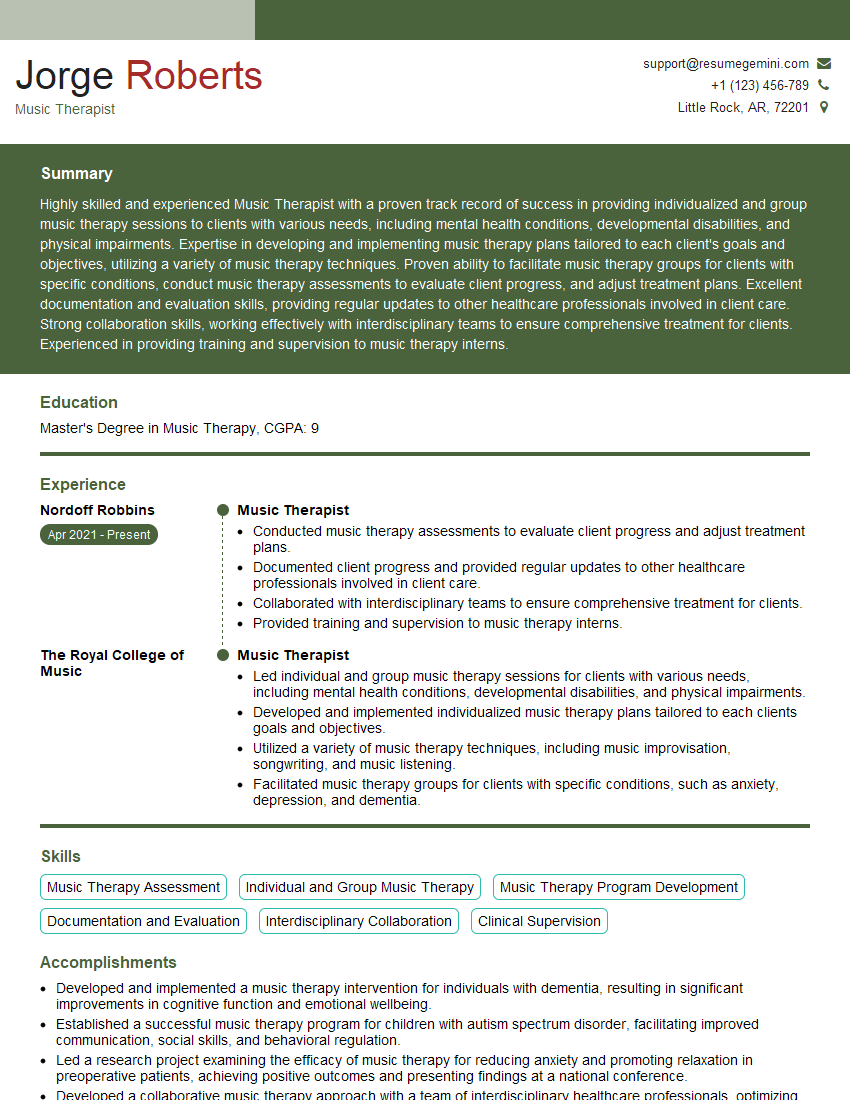
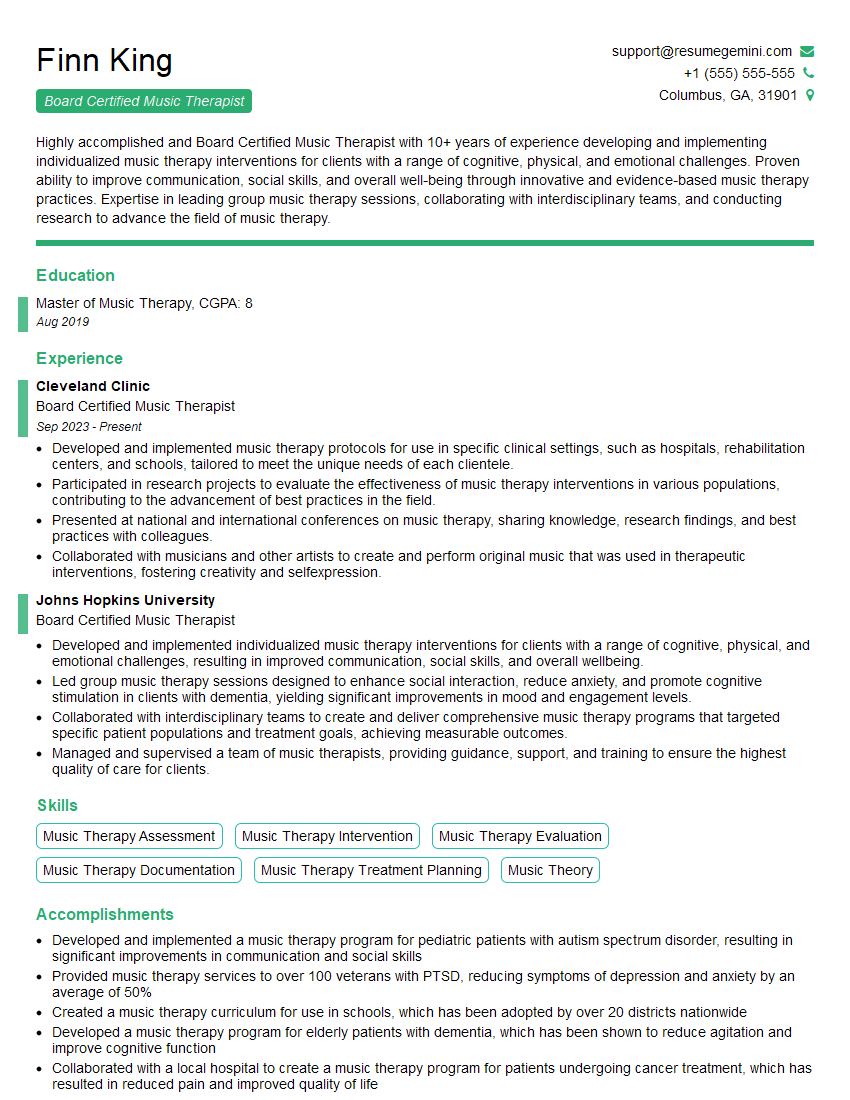
Mastering Music in Mental Health is crucial for career advancement in this rapidly growing field. A strong understanding of the theoretical underpinnings and practical applications of music therapy will set you apart from other candidates. To maximize your job prospects, invest time in creating an ATS-friendly resume that effectively showcases your skills and experience. ResumeGemini is a trusted resource for building professional resumes, offering valuable tools and templates to help you present yourself in the best possible light. Examples of resumes tailored to Music in Mental Health are provided to guide you in creating a compelling application.
Explore more articles
Users Rating of Our Blogs
Share Your Experience
We value your feedback! Please rate our content and share your thoughts (optional).
What Readers Say About Our Blog
To the interviewgemini.com Webmaster.
Very helpful and content specific questions to help prepare me for my interview!
Thank you
To the interviewgemini.com Webmaster.
This was kind of a unique content I found around the specialized skills. Very helpful questions and good detailed answers.
Very Helpful blog, thank you Interviewgemini team.