Are you ready to stand out in your next interview? Understanding and preparing for Music Therapy Software interview questions is a game-changer. In this blog, we’ve compiled key questions and expert advice to help you showcase your skills with confidence and precision. Let’s get started on your journey to acing the interview.
Questions Asked in Music Therapy Software Interview
Q 1. What experience do you have with different Music Therapy Software platforms?
My experience with music therapy software platforms is extensive and spans various categories. I’ve worked extensively with platforms designed for creating and delivering music-based interventions, ranging from simple session-tracking tools to sophisticated systems incorporating neurofeedback and other biofeedback modalities. For instance, I’ve used programs like Music Therapist’s Assistant for basic session documentation and progress tracking, while also having experience with more advanced platforms integrating MIDI technology for real-time music composition and improvisation during therapy sessions. I’m also familiar with software that allows for the creation and management of personalized playlists and sound libraries tailored to specific therapeutic goals. This diverse experience allows me to effectively select and utilize the most appropriate software for diverse client needs and therapeutic approaches.
- Music Therapist’s Assistant: Excellent for basic session documentation and progress tracking.
- (Name of a hypothetical advanced platform): Offers advanced capabilities such as neurofeedback integration and real-time music composition tools.
- (Name of a hypothetical playlist management software): Allows for the creation and management of personalized music playlists for clients.
Q 2. Describe your proficiency in using digital audio workstations (DAWs) for music therapy.
My proficiency in using Digital Audio Workstations (DAWs) for music therapy is high. DAWs are essential tools for creating, manipulating, and delivering music in therapeutic settings. My experience encompasses various DAWs, including Ableton Live, GarageBand, and Logic Pro X. I’m adept at using these programs to create customized soundscapes, compose original music for specific therapeutic needs, and record and edit client-created music. Beyond basic recording and editing, I’m skilled in using MIDI controllers to improvise and co-create music with clients in real-time, fostering a collaborative and engaging therapeutic experience. For instance, I’ve used Ableton Live’s session view to quickly switch between different soundscapes tailored to a client’s emotional state during a session. This level of flexibility and control is vital in adapting to the dynamic nature of music therapy.
Beyond technical skills, I understand the therapeutic implications of sound design and music composition. The choice of instruments, tempo, and harmony are carefully considered to align with the client’s needs and therapeutic goals. I leverage my DAW skills to achieve effective therapeutic outcomes.
Q 3. How familiar are you with data security and privacy regulations related to music therapy software?
Data security and privacy are paramount in music therapy, particularly when using software to store and manage client information. My familiarity with relevant regulations includes HIPAA (Health Insurance Portability and Accountability Act) in the US, and GDPR (General Data Protection Regulation) in the EU. I understand the importance of adhering to these standards to protect client confidentiality and sensitive data. This includes understanding data encryption methods, access control protocols, and secure data storage practices. I’m aware of the implications of data breaches and the steps needed to prevent them, including regular software updates and the implementation of strong passwords and multi-factor authentication.
I also understand the specific challenges related to storing audio recordings, which can contain identifying information. I’m knowledgeable about anonymization techniques and secure storage solutions for this sensitive data type. My understanding extends beyond just theoretical knowledge; I’ve actively implemented these security measures in my own practice.
Q 4. Explain your understanding of the HIPAA compliance requirements within music therapy software.
HIPAA compliance is crucial in music therapy software usage, particularly when dealing with Protected Health Information (PHI). My understanding of HIPAA encompasses its various rules and regulations regarding the privacy, security, and breach notification of PHI. This includes knowing the definition of PHI and how it applies to the data stored within music therapy software, such as client names, dates of birth, diagnoses, and session notes. I am familiar with the requirements for implementing appropriate safeguards, such as access controls, encryption, and audit trails. I am also aware of the importance of staff training and compliance procedures to ensure adherence to HIPAA regulations.
In practice, this means carefully selecting HIPAA-compliant software, implementing robust password policies, and regularly backing up data to secure locations. It also includes understanding the consequences of non-compliance and taking proactive steps to prevent breaches and maintain client confidentiality. I have firsthand experience in implementing these practices within my professional settings.
Q 5. How would you troubleshoot common technical issues encountered while using music therapy software?
Troubleshooting technical issues in music therapy software often requires a systematic approach. My approach involves a series of steps, beginning with identifying the problem and gathering information. This might include checking for error messages, reviewing recent software updates, and checking the internet connection. If the issue is specific to a particular function, I’ll try to isolate the problem by testing other features to rule out a more widespread issue.
- Restart the software and computer: A simple but often effective first step.
- Check internet connection: Many software platforms rely on an internet connection.
- Review recent software updates: Updates can sometimes introduce bugs.
- Check for conflicting software: Other programs might interfere.
- Contact technical support: The software provider can offer specific guidance.
For example, if a client’s audio recording is not saving, I’d first check the storage space on the computer, then verify the audio settings within the software, and finally, consider contacting the software’s technical support team.
Q 6. Can you explain the importance of data backup and recovery in music therapy software?
Data backup and recovery are critical for any music therapy practice using software. Losing client data can have significant legal, ethical, and practical consequences. Regular data backups safeguard against data loss due to hardware failure, software glitches, or accidental deletion. My understanding encompasses the importance of employing a robust backup strategy that includes both local and offsite backups. This ensures redundancy and minimizes the risk of complete data loss, even in the event of a disaster such as a fire or theft.
For instance, I would use a combination of local hard drive backups and cloud-based storage solutions. The local backup provides quick access to data, while the cloud-based backup provides redundancy and protection against local disasters. A well-defined recovery plan is crucial, detailing the steps to restore data in the event of a loss, including testing the recovery process regularly to ensure its efficacy.
Q 7. Describe your experience with integrating music therapy software into existing clinical workflows.
Integrating music therapy software into existing clinical workflows requires careful planning and consideration of the practice’s specific needs. My experience includes assessing existing workflows to determine where software can best enhance efficiency and effectiveness. This involves identifying areas where automation can streamline tasks, such as scheduling appointments, managing client records, and generating reports. I’m skilled in training staff on the use of new software and providing ongoing technical support. This integration process requires a phased approach, starting with a pilot test to identify potential challenges and make necessary adjustments before a full implementation. This process might involve customizing the software to match the existing clinical documentation format or integrating the software with existing electronic health records (EHR) systems.
For example, I integrated a new music therapy software platform into a large rehabilitation center by initially implementing it in one therapy unit as a pilot. This allowed us to identify and resolve any technical issues or workflow conflicts before deploying it across the entire facility. This staged approach helped ensure a smooth transition and avoided disruptions to patient care.
Q 8. How would you train clinicians on the use of a new music therapy software system?
Clinician training on new music therapy software requires a multi-faceted approach, balancing technical proficiency with understanding its therapeutic applications. I’d begin with a needs assessment, understanding their existing technological comfort levels and their specific needs within their therapeutic practice.
The training would then consist of several phases:
- Introductory Workshop: An interactive session covering the software’s basic functions, navigating the interface, and creating a basic session plan. Hands-on exercises would be crucial here.
- Specialized Modules: Tailored training on specific features relevant to their clinical focus – e.g., detailed sessions on assessment tools integration for clinicians specializing in autism, or music composition tools for those working with trauma.
- Mentorship and Ongoing Support: Pairing new users with experienced colleagues or providing access to dedicated technical support staff. This ensures continued assistance and addresses any emerging challenges.
- Case Studies and Best Practices: Sharing successful case studies demonstrating the software’s impact on client outcomes, highlighting specific features and efficient workflow. This promotes confident adoption.
- Regular Feedback and Refinement: Gathering feedback through surveys and individual discussions to identify areas for improvement in the training program and the software itself.
Throughout the process, the focus would be on integrating the software seamlessly into their existing therapeutic approaches, rather than replacing them. For example, we might demonstrate how the software streamlines their current documentation process, not just how to use the software in isolation.
Q 9. What are the key features you look for when evaluating music therapy software?
When evaluating music therapy software, I prioritize features that enhance both clinical efficacy and workflow efficiency. Key features include:
- Intuitive Interface: Ease of navigation and user-friendliness are paramount. Complex software can hinder rather than help the therapeutic process. I’d look for a clean design and straightforward functionality.
- Comprehensive Assessment Tools: Integration of standardized assessments (e.g., the Profile of Mood States, various scales for measuring social engagement) simplifies data collection and interpretation. I’d want to see versatility in the types of assessment tools supported.
- Secure Data Management: Robust security features, including data encryption and access controls, are crucial for protecting client confidentiality. HIPAA compliance is a must.
- Flexible Music Library and Composition Tools: The software should offer a wide selection of musical stimuli, allowing for customization based on client needs. In-built composition tools enhance personalized therapeutic interventions.
- Reporting and Analytics: Comprehensive reporting capabilities are essential for tracking progress, generating treatment reports, and supporting evidence-based practice. I would want the ability to export data in various formats (e.g., CSV, PDF).
- Integration with Other Systems: Compatibility with electronic health records (EHRs) streamlines administrative tasks and improves interoperability with other healthcare systems.
Ultimately, the best software is one that seamlessly integrates into the clinician’s workflow, enhancing their therapeutic capabilities without adding undue complexity.
Q 10. Explain your understanding of different assessment tools and their integration with music therapy software.
Different assessment tools offer unique perspectives on a client’s musical and therapeutic progress. These tools can be broadly categorized into:
- Quantitative Assessments: These tools use numerical data, such as standardized scales measuring mood, anxiety, or social interaction. Examples include the Profile of Mood States (POMS) and the Autism Diagnostic Observation Schedule (ADOS). Integration with music therapy software involves automated scoring, data visualization, and trend analysis.
- Qualitative Assessments: These focus on observational data, including clinician notes, client self-reports, and audio/video recordings of therapy sessions. Software integration here might involve secure storage, transcription tools, and the ability to link qualitative observations to quantitative data points.
- Music-Specific Assessments: These tools focus directly on the client’s musical abilities and responses, such as melodic intonation therapy assessments or rhythmic assessments. Software can help by providing structured frameworks for these assessments, facilitating recording and analysis of musical performance, and providing feedback to the therapist.
Effective integration requires the software to support various data types, allowing clinicians to seamlessly combine quantitative and qualitative data for a comprehensive understanding of client progress. For example, the software might allow a clinician to record a client’s musical improvisation, alongside notes on their emotional expression during the performance, and then link these observations to changes in their mood scores from a standardized assessment.
Q 11. How do you ensure data integrity and accuracy within music therapy software applications?
Data integrity and accuracy are paramount in music therapy software. My approach involves a multi-layered strategy:
- Data Validation: Implementing input validation rules to prevent errors, such as incorrect data types or impossible values (e.g., age below 0). This would involve checking the data at the point of entry.
- Regular Backups: Implementing automated, regular data backups to a secure offsite location to prevent data loss in case of hardware failure or cyberattacks. This ensures data redundancy.
- Access Controls: Restricting data access based on user roles and responsibilities, ensuring only authorized personnel can view and modify client information. This adheres to HIPAA regulations.
- Auditing Trails: Maintaining a detailed record of all data modifications, including who made the changes, when, and what changes were made. This allows for identifying and correcting any potential errors.
- Data Encryption: Encrypting all data both in transit and at rest to prevent unauthorized access. This protects client confidentiality.
- Regular System Updates: Staying current with software updates to patch security vulnerabilities and improve data integrity. This ensures the software’s continued security.
By combining these methods, we create a robust system ensuring the accuracy and security of client data, vital for ethical and legal compliance.
Q 12. Describe your experience with reporting and analyzing data generated by music therapy software.
My experience with reporting and analyzing data from music therapy software involves utilizing the software’s built-in reporting tools alongside external data analysis techniques. The software typically provides pre-designed reports summarizing client progress on various metrics.
However, for deeper analysis, I often export the data to statistical software packages (e.g., SPSS, R) to perform more complex analyses, such as correlational analyses between musical variables and clinical outcomes or statistical comparisons between different treatment groups. I also use visualization tools (e.g., Tableau) to create compelling charts and graphs illustrating client progress over time.
For example, I might use the software to generate a report showing a client’s improvement in mood scores over several sessions and then use statistical software to determine the statistical significance of this change. I might then present this data visually using a graph to easily convey the findings to the client and their family, or other relevant healthcare professionals. This comprehensive approach ensures that data is not only collected but effectively used to inform clinical decision-making and enhance treatment efficacy.
Q 13. What are some ethical considerations when using technology in music therapy?
Ethical considerations in using technology in music therapy are crucial, focusing primarily on client privacy, data security, and responsible use of technology. Key concerns include:
- Confidentiality: Ensuring client data is protected according to HIPAA regulations and other relevant privacy laws. This includes secure storage, access control, and informed consent.
- Data Security: Implementing robust security measures to prevent data breaches and unauthorized access. This includes encryption, regular software updates, and strong passwords.
- Informed Consent: Obtaining informed consent from clients regarding the use of technology in their therapy, including the collection and storage of their data. Clients must understand how their data will be used and protected.
- Algorithmic Bias: Being aware of potential biases in algorithms or assessment tools used within the software and avoiding the misuse of technology to make discriminatory decisions about clients. This involves rigorous testing and evaluation of the software.
- Technological Dependence: Avoiding over-reliance on technology and ensuring it complements, rather than replaces, the human element of therapeutic relationships. The therapist remains central to the process.
- Accessibility: Ensuring that the technology used is accessible to all clients, regardless of their physical or cognitive abilities. This may necessitate using assistive technologies or modifying the software to fit client needs.
Ethical considerations should guide every aspect of technology integration in music therapy, prioritizing the well-being and rights of clients above all else.
Q 14. How would you address resistance from clinicians to adopting new music therapy software?
Addressing clinician resistance to new music therapy software requires a collaborative and empathetic approach, acknowledging their concerns and addressing them directly. My strategy involves:
- Understanding the Resistance: Initiating discussions to identify the reasons behind the resistance. This could involve fear of technology, concerns about workload, or doubts about the software’s efficacy.
- Demonstrating Value: Showcasing how the software can simplify their workflows and enhance their clinical practice. This might involve case studies, demonstrations, and testimonials from other clinicians.
- Phased Implementation: Instead of a sudden, complete transition, implementing the software gradually, starting with pilot programs and allowing clinicians to adjust at their own pace.
- Training and Support: Providing comprehensive training and ongoing support to address technical challenges and answer questions. This includes individual assistance and group training sessions.
- Addressing Concerns: Actively addressing concerns about data security, privacy, and the software’s impact on the therapeutic relationship. Open communication is crucial.
- Feedback Mechanisms: Establishing clear channels for feedback, allowing clinicians to share suggestions and concerns, ensuring their input shapes the software’s development and implementation.
Building trust and demonstrating the software’s benefits through a supportive and collaborative approach is key to overcoming resistance and fostering successful adoption. Remember, clinicians are the experts in their field; the software should be a tool to enhance their expertise, not replace it.
Q 15. Describe your experience with customizing or modifying existing music therapy software.
Customizing music therapy software often involves adapting existing features or integrating new functionalities to better suit specific therapeutic needs or client profiles. My experience encompasses modifying existing session templates to include specific assessment tools or adding custom visualizations for clients with cognitive impairments. For instance, I once modified a software to incorporate a visual timer displaying the remaining session duration, significantly aiding clients with ADHD to improve focus and reduce anxiety. This involved working with the software’s scripting capabilities, usually Javascript or Python depending on the platform, to modify the user interface and integrate the timer functionality. In other cases, I’ve integrated custom-designed sound libraries focusing on specific musical styles or instruments crucial for a particular therapeutic approach, like using specific binaural beats for relaxation techniques.
Another example involved creating custom reports to track specific behavioral changes in clients post-session, tailoring the reporting formats to suit the preferences of collaborating healthcare professionals. This required leveraging the software’s reporting functionalities, often by designing custom SQL queries to extract relevant data points and visualize them appropriately.
Career Expert Tips:
- Ace those interviews! Prepare effectively by reviewing the Top 50 Most Common Interview Questions on ResumeGemini.
- Navigate your job search with confidence! Explore a wide range of Career Tips on ResumeGemini. Learn about common challenges and recommendations to overcome them.
- Craft the perfect resume! Master the Art of Resume Writing with ResumeGemini’s guide. Showcase your unique qualifications and achievements effectively.
- Don’t miss out on holiday savings! Build your dream resume with ResumeGemini’s ATS optimized templates.
Q 16. How do you stay updated with the latest advancements in music therapy software and technology?
Staying current in this rapidly evolving field requires a multi-faceted approach. I regularly attend workshops and conferences organized by professional bodies like the American Music Therapy Association (AMTA) and participate in webinars offered by software developers. This provides insights into the latest features and technological advancements. Moreover, I actively engage with online communities and forums dedicated to music therapy and related technologies, engaging in discussions and exchanging experiences with other professionals. I subscribe to relevant journals and publications, keeping abreast of peer-reviewed research articles on the efficacy of different software tools and methodologies. Finally, I maintain a network of contacts within the industry, including software developers and researchers, to access early insights into new developments.
Q 17. What is your understanding of the role of telehealth in music therapy and the associated software?
Telehealth has revolutionized music therapy, extending its reach to clients geographically isolated or with mobility challenges. Software specifically designed for telehealth music therapy facilitates remote sessions via video conferencing, integrating features such as real-time audio/video sharing, secure messaging, and electronic health record (EHR) integration. For example, platforms like Zoom or dedicated music therapy telehealth software often have specialized features for screen sharing musical scores or conducting virtual instrument play-alongs. A crucial aspect is ensuring HIPAA compliance (Health Insurance Portability and Accountability Act) for data security and client privacy in telehealth platforms. This involves understanding and applying robust security protocols to protect sensitive client information shared during remote sessions. Furthermore, effective telehealth music therapy requires thoughtful consideration of the technical capabilities of clients and addressing potential issues related to internet connectivity or digital literacy.
Q 18. Describe your experience with using music therapy software for different populations (e.g., children, adults, elderly).
My experience spans diverse populations. With children, the software needs to be engaging and interactive, often incorporating visual elements and game-like mechanics to maintain focus and motivation. For instance, I’ve used software that allows for interactive musical games, creating tailored experiences to address specific therapeutic goals. With adults, the software’s focus shifts to more complex functionalities, such as precise rhythm training or analysis of vocal patterns. Software facilitating guided imagery and meditation techniques has been valuable in working with adults struggling with anxiety or stress. With the elderly, usability and accessibility are paramount. Software with large fonts, intuitive navigation, and adaptive audio features is preferred to cater to age-related limitations.
Adapting software to these diverse needs may include using assistive technologies like screen readers or modifying the user interface for ease of navigation. For example, I’ve used software that allows customization of colors, fonts, and sound levels to maximize accessibility for individuals with visual or auditory impairments.
Q 19. How familiar are you with different data formats and their import/export capabilities in music therapy software?
Familiarity with various data formats is essential for effective data management in music therapy. I’m proficient in handling common formats like MIDI (Musical Instrument Digital Interface) for musical data, WAV or MP3 for audio recordings, and CSV or Excel for session notes and assessment results. Understanding the import/export capabilities of different software is vital for seamless data transfer between various platforms, allowing for interoperability with other health systems or data analytics tools. For instance, I might export session data from one software in CSV format to integrate it with a separate clinical database for generating comprehensive reports. This process often involves understanding different data encoding standards to prevent data loss or corruption during the transfer.
Q 20. Explain your experience with creating and managing client records within music therapy software.
Creating and managing client records within music therapy software involves using the software’s built-in features to meticulously document every session, including assessment data, treatment plans, progress notes, and any significant observations. This typically includes features such as secure data storage, customized templates for session notes, and functionalities for tracking client progress over time through visualizations like graphs or charts. Maintaining organized and accurate client records is critical for continuity of care, insurance billing, and ensuring compliance with regulatory requirements. I always adhere to stringent privacy protocols, ensuring that all client data is securely stored and accessed according to ethical guidelines and relevant legal frameworks.
Q 21. How would you handle a situation where a software malfunction disrupts a therapy session?
A software malfunction during a therapy session can be disruptive, but having a contingency plan minimizes its impact. My first response would be to immediately switch to a backup system, whether it’s a different software or transitioning to non-technology based methods. This might involve switching to a pre-prepared set of musical activities or using traditional instruments. The key is to maintain a calm and reassuring demeanor to avoid unsettling the client. Following the session, I would report the malfunction to the software provider, providing detailed information about the incident for debugging and future prevention. If the disruption significantly impacted the session’s goals, I would document this in the client’s records and adjust future sessions accordingly to ensure continuity of care.
Q 22. What are the benefits and limitations of using music therapy software compared to traditional methods?
Music therapy software offers several advantages over traditional methods, primarily in terms of efficiency and organization. Think of it like comparing a well-organized digital filing system to a messy paper archive. Software allows for streamlined documentation, easier progress tracking, and often incorporates built-in assessment tools. This frees up therapists to focus more on the therapeutic relationship rather than administrative tasks.
- Benefits: Improved organization of client data, automated reporting, access to a wider range of musical resources, objective progress tracking, potential for remote sessions.
- Limitations: The initial cost of software and ongoing maintenance can be a barrier. The software may not perfectly replicate the nuances of human interaction inherent in traditional music therapy. Over-reliance on technology might detract from the therapeutic relationship if not used thoughtfully. Also, technological glitches or lack of access to technology can disrupt sessions.
For instance, a software’s progress tracking feature allows for a quick review of a client’s improvement over several sessions, offering a data-driven perspective to inform treatment decisions. However, it cannot replace the subjective observation and clinical judgment of the therapist.
Q 23. Describe your experience with different types of music therapy software (e.g., assessment, progress tracking, session recording).
My experience encompasses a variety of music therapy software, each designed to meet different needs. I’ve used assessment tools like those that generate standardized reports based on client responses to musical stimuli. These tools objectively measure areas like mood, attention, and emotional regulation. I’m also proficient in software designed for progress tracking, enabling me to meticulously record client responses, goals achieved, and areas needing further attention. This allows me to build a clear picture of the client’s journey and demonstrate treatment efficacy.
Furthermore, I’ve extensively utilized session recording software, which captures audio and sometimes video of the therapeutic sessions. This not only acts as a valuable record for future reference but also facilitates supervision and peer consultation, allowing for collaborative learning and improvement in my therapeutic approach. One example is MusicTherapyPro which offers comprehensive features covering assessment, progress tracking and session recording all within one platform. However, careful consideration of HIPAA compliance is crucial when employing such technology.
Q 24. How do you ensure the confidentiality and security of client data within a music therapy software system?
Confidentiality and security of client data are paramount. My approach is multi-faceted and aligns with HIPAA regulations and best practices. Firstly, I select software that utilizes robust encryption protocols (e.g., AES-256) to protect data both in transit and at rest. Secondly, I always ensure that the software provider has a strong track record in data security, preferably with certifications like ISO 27001. Access to client data is restricted to authorized personnel only, using strong password policies and multi-factor authentication where available.
Beyond software features, I also maintain strict internal protocols. Data is never stored on unencrypted personal devices. Regular backups are performed to prevent data loss. I meticulously document all access to client data and promptly report any security breaches. This rigorous approach ensures that client information remains confidential and secure, safeguarding the therapeutic relationship built on trust.
Q 25. Explain your understanding of the importance of user-friendly interfaces in music therapy software.
User-friendly interfaces are crucial. Music therapy software should be intuitive and easy to navigate, minimizing the learning curve for therapists. A cumbersome interface can disrupt the flow of the session and distract the therapist from fully engaging with the client. Ideally, the software should blend seamlessly into the therapeutic process, rather than becoming a barrier.
An intuitive interface typically involves features like clear visual organization, logical workflow, easily accessible help resources, and customizable settings. Think of it like the difference between using a well-designed smartphone app versus a complicated computer program. A simple, intuitive design empowers therapists to focus on the client, not the software.
Q 26. How would you adapt your use of music therapy software to meet the needs of individual clients?
Adapting software use to individual client needs is essential. It’s not a ‘one-size-fits-all’ approach. For example, a client with visual impairments might benefit from software with audio-only features or large, clearly labeled buttons. A client with cognitive impairments might require simpler interfaces and reduced complexity. I would customize the software to accommodate their needs or even explore alternative tools that better meet their unique circumstances.
For a client with limited mobility, I might adapt the software to be controlled via voice commands or assistive devices. The key is flexibility and personalization. The software is a tool, and its use should always be guided by the client’s individual needs and the overall therapeutic goals.
Q 27. What are your thoughts on the future of technology in music therapy?
The future of technology in music therapy is incredibly exciting. I envision advancements in areas like AI-powered assessment tools that provide more precise and objective measures of client progress. Virtual reality (VR) and augmented reality (AR) could offer immersive therapeutic experiences, creating new opportunities for engagement and therapeutic intervention.
Furthermore, personalized music generation algorithms could tailor musical interventions to individual client needs in real time. Wearable sensors might offer continuous monitoring of physiological responses during sessions, providing valuable feedback for the therapist. However, ethical considerations and responsible implementation must guide this technological advancement.
Q 28. Describe your experience with integrating music therapy software with other electronic health record (EHR) systems.
Integrating music therapy software with EHR systems is increasingly important for efficient clinical practice and streamlined data sharing. Successful integration allows seamless transfer of client information between the music therapy software and the larger EHR system, reducing data entry redundancy and ensuring a comprehensive view of the client’s overall health. This is particularly crucial for collaborating with other healthcare professionals involved in the client’s care.
I’ve had experience with several platforms that offer varying levels of EHR integration, from simple data export capabilities to more advanced APIs that enable real-time data synchronization. The key challenges typically lie in ensuring data privacy and maintaining data integrity during the transfer. However, when implemented effectively, EHR integration enhances the overall efficiency and quality of care delivery.
Key Topics to Learn for Music Therapy Software Interview
- Software Functionality: Understand the core features and functionalities of various Music Therapy software platforms. Explore data input methods, session recording capabilities, and report generation tools.
- Clinical Applications: Learn how different software tools support specific therapeutic approaches. Consider case studies illustrating the practical application of software in areas like assessment, intervention planning, and progress monitoring.
- Data Management & Analysis: Familiarize yourself with data organization, analysis techniques, and the ethical considerations related to handling sensitive client data within a software environment.
- Technological Proficiency: Demonstrate your understanding of relevant technologies like digital audio workstations (DAWs), music notation software, and any specialized hardware interfaces commonly used with Music Therapy software.
- Integration with other Systems: Explore how Music Therapy software integrates with Electronic Health Records (EHRs) or other clinical systems. Understanding data exchange and interoperability is crucial.
- Troubleshooting & Problem-solving: Practice identifying and resolving common technical issues that might arise during software use. Highlight your ability to adapt to new software and learn quickly.
- Ethical & Legal Considerations: Understand the ethical implications of using technology in music therapy, including data privacy, security, and informed consent procedures.
Next Steps
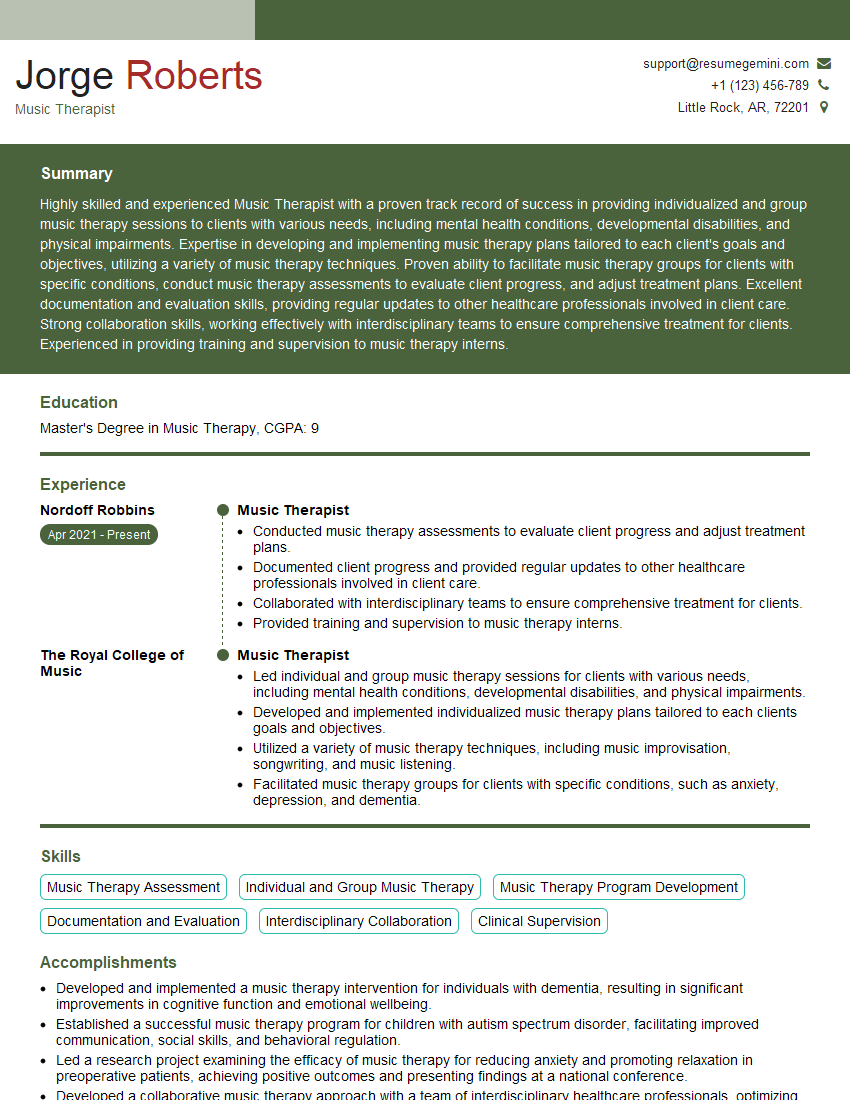
Mastering Music Therapy software is essential for advancing your career in this dynamic field. Proficiency in these tools demonstrates your commitment to providing evidence-based and efficient therapeutic services. To enhance your job prospects, creating an ATS-friendly resume is crucial. ResumeGemini is a trusted resource that can help you build a professional and impactful resume tailored to highlight your skills and experience. Examples of resumes tailored to Music Therapy Software are available to guide you.
Explore more articles
Users Rating of Our Blogs
Share Your Experience
We value your feedback! Please rate our content and share your thoughts (optional).
What Readers Say About Our Blog
To the interviewgemini.com Webmaster.
Very helpful and content specific questions to help prepare me for my interview!
Thank you
To the interviewgemini.com Webmaster.
This was kind of a unique content I found around the specialized skills. Very helpful questions and good detailed answers.
Very Helpful blog, thank you Interviewgemini team.