Preparation is the key to success in any interview. In this post, we’ll explore crucial Nuclear Radiation Safety interview questions and equip you with strategies to craft impactful answers. Whether you’re a beginner or a pro, these tips will elevate your preparation.
Questions Asked in Nuclear Radiation Safety Interview
Q 1. Explain the ALARA principle and its practical application.
The ALARA principle, short for As Low As Reasonably Achievable, is a fundamental tenet of radiation protection. It dictates that all radiation exposures should be kept as low as reasonably achievable, taking into account economic and social factors. It’s not about eliminating all radiation exposure, which is practically impossible, but about minimizing unnecessary exposure.
Practical Application: Imagine a nuclear power plant. ALARA is implemented through various measures: optimizing shielding design to reduce worker exposure during maintenance, using remote-controlled robots for handling highly radioactive materials, and implementing strict procedural controls to minimize time spent in radiation areas. A hospital using radioactive materials for medical procedures would similarly follow ALARA, using the smallest effective dose of radioactive material for diagnosis and treatment, employing shielding, and using appropriate personal protective equipment (PPE).
For instance, if a worker needs to handle radioactive waste, ALARA would suggest using tools to minimize handling time and distance, wearing appropriate protective gear and having the operation monitored by radiation safety officers. This minimizes the dose without making the operation impractical or excessively expensive.
Q 2. Describe different types of radiation and their relative biological effects.
Radiation comes in several forms, primarily categorized by their energy and ionizing potential:
- Alpha particles: These are relatively heavy, positively charged particles. They have low penetrating power; a sheet of paper can stop them. However, they are highly ionizing, meaning they cause significant damage if ingested or inhaled.
- Beta particles: These are fast-moving electrons (or positrons). They have greater penetrating power than alpha particles; a thin sheet of metal can typically stop them. They are less ionizing than alpha particles.
- Gamma rays and X-rays: These are electromagnetic waves with high energy. They have high penetrating power and require thick shielding (e.g., lead, concrete) for protection. They are less ionizing than alpha particles but can still cause significant damage.
- Neutrons: These are uncharged particles and are highly penetrating. They require specialized shielding materials like water, polyethylene, or boron-containing materials. Their interactions with matter can create secondary radiation.
Relative Biological Effects: The biological effect of radiation depends on several factors including the type of radiation, energy, dose, and the part of the body exposed. Alpha particles, despite their limited range, cause the most biological damage per unit of energy deposited because of their high ionization density. Beta particles and gamma/X-rays cause less damage per unit of energy deposited but can penetrate deeper into the body, affecting larger volumes of tissue.
Think of it like this: an alpha particle is like a wrecking ball – it does immense localized damage, while a gamma ray is like a highly penetrating laser beam causing widespread, but potentially less severe, damage depending on the dose.
Q 3. What are the regulatory requirements for handling radioactive materials in your country/region?
Regulatory requirements for handling radioactive materials vary by country/region, but generally involve strict licensing, safety protocols, and ongoing oversight. In many places, this would include:
- Licensing: Organizations and individuals handling radioactive materials must obtain licenses demonstrating competency and adherence to safety standards. The licensing process includes detailed safety assessments and demonstrations.
- Safety Protocols: Detailed procedures must be in place for handling, storage, transport, and disposal of radioactive materials. These protocols are designed to minimize radiation exposure to workers and the public.
- Training and Monitoring: Personnel working with radioactive materials must undergo comprehensive training on radiation safety, handling procedures, and emergency response. Ongoing monitoring of radiation levels and personnel doses is mandatory.
- Record Keeping: Meticulous records of all activities related to radioactive materials must be maintained, including inventory, radiation levels, and personnel exposure data.
- Emergency Preparedness: Organizations must have well-defined emergency plans for addressing accidental spills or releases of radioactive materials.
Specific regulations are often defined by national nuclear safety agencies (e.g., the NRC in the US, the UKAEA in the UK). These agencies enforce compliance through regular inspections and investigations of potential violations.
Q 4. Explain the concept of radiation shielding and its design considerations.
Radiation shielding protects individuals and equipment from harmful radiation. The design considerations depend on the type and energy of the radiation source:
- Material Selection: Dense materials are generally effective at attenuating radiation. Lead is commonly used for gamma and X-ray shielding, while concrete is a more cost-effective alternative for lower-energy sources. Water, polyethylene, or boron-containing materials are used for neutron shielding.
- Thickness: The required thickness of the shielding material is directly related to the intensity and energy of the radiation source. Thicker shielding is needed for higher energy and more intense sources.
- Geometry: The geometry of the shielding plays a role in its effectiveness. Shielding is most effective when the radiation source is directly behind the shield. Complex geometries may require computational methods to calculate the effectiveness.
- Distance: Increasing the distance from the radiation source significantly reduces the exposure. This principle is often combined with shielding to achieve optimal radiation protection.
Example: A medical X-ray machine would use a lead apron and collimator (a device to restrict the X-ray beam) to protect the patient and staff from unnecessary radiation exposure. A nuclear reactor would incorporate several layers of thick concrete, steel, and specialized shielding materials for protection.
Q 5. How do you measure radiation levels and interpret the results?
Radiation levels are measured using various radiation detectors, which provide readings in units such as Sieverts (Sv) for dose equivalent and Becquerels (Bq) for activity. The interpretation depends on the context:
- Dose Rate Measurements: These measurements indicate the rate at which radiation is being received. A higher dose rate indicates a more hazardous environment.
- Cumulative Dose Measurements: These measurements show the total radiation exposure accumulated over time. The results are compared to regulatory limits to assess any potential health risks.
- Contamination Measurements: These measurements determine the presence of radioactive materials on surfaces or in the environment. They are important in identifying and cleaning up contaminated areas.
Interpretation: The results are interpreted in relation to established regulatory limits and safety standards. Readings exceeding these limits would prompt an immediate investigation to identify the source and take corrective action. Results are also used to optimize shielding and implement ALARA.
For instance, if a survey meter shows significantly higher readings in a specific area of a lab compared to other locations, it highlights a potential contamination or a need for improved shielding. The response might involve a thorough search to identify the source, decontamination and implementation of additional safety measures.
Q 6. What are the different types of radiation detectors and their applications?
Numerous radiation detectors exist, each with specific applications:
- Geiger-Müller (GM) counters: These are widely used for detecting beta and gamma radiation. They are relatively inexpensive, portable, and easy to operate. They are commonly used for radiation surveys.
- Scintillation detectors: These detectors convert radiation energy into light pulses, which are then measured. They offer higher sensitivity and energy resolution than GM counters and are used for a wider range of applications, including spectrometry.
- Ionization chambers: These detectors measure the ionization produced by radiation. They are used for measuring high radiation levels and are often used in radiation monitoring systems.
- Proportional counters: These detectors offer better energy resolution than GM counters but are less robust. They are used in specialized applications such as radiation spectrometry.
- Neutron detectors: These detectors are specifically designed to detect neutrons. Different types exist, depending on the neutron energy, such as BF3 proportional counters or helium-3 detectors.
The choice of detector depends on the type and energy of radiation being measured, the required sensitivity and accuracy, and the application.
Q 7. Describe the process of personnel dosimetry and its importance.
Personnel dosimetry is the process of measuring the radiation dose received by individuals working in radiation environments. This is crucial for monitoring worker safety and ensuring compliance with radiation protection regulations.
Process: Personnel dosimeters, such as film badges, thermoluminescent dosimeters (TLDs), or electronic personal dosimeters (EPDs), are worn by individuals to record their radiation exposure. After a specific period, the dosimeters are collected and analyzed to determine the accumulated dose. The results are then reviewed to ensure that exposure levels remain below regulatory limits.
Importance: Personnel dosimetry is essential for:
- Monitoring worker safety: It allows for the tracking of individual radiation exposures to ensure they do not exceed regulatory limits. This helps prevent potential health issues related to radiation exposure.
- Compliance with regulations: It demonstrates compliance with legal requirements and helps identify and address any potential safety deficiencies.
- Risk assessment: Data from dosimetry allows for a better understanding of radiation exposure patterns and for optimizing radiation protection measures.
- Health surveillance: Long-term dosimetry data contributes to the assessment of potential long-term health effects in workers occupationally exposed to radiation.
If a worker’s dosimeter shows a dose exceeding pre-determined limits, a thorough investigation would be undertaken to understand the cause. This may involve a review of work procedures and implementation of corrective actions to prevent recurrence.
Q 8. What are the emergency procedures in case of a radiation incident?
Emergency procedures following a radiation incident prioritize the safety of personnel and the environment. The immediate actions depend on the nature and extent of the incident, but generally involve:
- Evacuation and Shelter-in-Place: Individuals in the affected area will be evacuated to a safe distance or instructed to shelter in place, depending on the type and spread of radiation. This is crucial to minimizing exposure.
- Containment: Steps are taken to contain the source of radiation to prevent further spread. This might involve isolating contaminated areas, sealing leaks, or controlling the movement of radioactive materials.
- Monitoring and Assessment: Radiation levels are carefully monitored using various instruments (discussed in question 6) to assess the extent of contamination and guide subsequent actions.
- Decontamination: Individuals and equipment may require decontamination to remove radioactive materials. Methods vary depending on the type of contaminant (covered in question 5).
- Medical Treatment: If individuals have received significant radiation exposure, appropriate medical treatment will be administered. This may include supportive care, medications to reduce radiation effects, and blood transfusions.
- Reporting and Investigation: Regulatory authorities and emergency response teams must be notified promptly. A thorough investigation will be conducted to determine the cause of the incident and prevent future occurrences.
For example, in a scenario involving a spill of radioactive material in a laboratory, evacuation of the building, immediate containment of the spill using absorbent materials, and the use of radiation monitoring instruments to assess the extent of contamination would be prioritized before undertaking decontamination procedures.
Q 9. How do you calculate radiation exposure and dose?
Calculating radiation exposure and dose involves understanding several key concepts. Radiation dose is the amount of energy absorbed by the body from ionizing radiation, while exposure refers to the amount of ionizing radiation in the air. The most common unit for dose is the Sievert (Sv), while exposure is often measured in Roentgens (R). However, Gray (Gy) is the SI unit for absorbed dose.
The calculation depends on several factors including:
- Type of radiation: Different types of radiation (alpha, beta, gamma, neutron) have different biological effects and penetrative power, leading to different weighting factors.
- Energy of radiation: Higher energy radiation generally leads to a higher dose.
- Duration of exposure: Longer exposure times result in higher doses.
- Distance from the source: The intensity of radiation decreases with distance from the source (inverse square law).
- Shielding: Shielding material like lead or concrete reduces radiation exposure.
For a simple illustration, consider the formula for dose calculation using the absorbed dose:
Dose (Sv) = Absorbed Dose (Gy) x Radiation Weighting Factor (wR) x Tissue Weighting Factor (wT)Here, wR accounts for the biological effectiveness of different types of radiation and wT accounts for the varying sensitivity of different organs to radiation. The actual calculation can be complex, often requiring specialized software and dosimetry measurements.
Q 10. What are the safety precautions for working with sealed and unsealed radioactive sources?
Safety precautions for handling radioactive sources differ significantly based on whether the source is sealed or unsealed. Sealed sources have the radioactive material encapsulated, minimizing the risk of contamination, while unsealed sources pose a higher risk due to the potential for material dispersal.
- Sealed Sources:
- Distance: Maintain a maximum distance from the source as practical.
- Time: Minimize the time spent near the source.
- Shielding: Use appropriate shielding materials (e.g., lead containers) to reduce exposure.
- Handling: Utilize tongs or other remote handling tools whenever possible.
- Regular Monitoring: Employ radiation monitoring equipment (discussed in question 6) to assess exposure.
- Unsealed Sources:
- Containment: Work in designated areas with appropriate containment systems (e.g., fume hoods, glove boxes).
- Personal Protective Equipment (PPE): Utilize gloves, lab coats, and respirators to prevent skin and inhalation contamination.
- Careful Procedures: Follow strict procedures to minimize spills and contamination, including using absorbent materials and proper waste disposal.
- Regular Monitoring: Frequent use of radiation monitoring equipment and personal dosimeters is essential.
- Surveillance: Implement environmental monitoring to detect any potential spills or leaks.
For instance, a researcher using a sealed gamma source for an experiment would use lead shielding, a remote handling tool, and a timer to limit exposure, while a scientist handling unsealed radioactive isotopes would work in a fume hood with proper PPE and rigorous containment procedures.
Q 11. Explain the concept of radioactive decay and half-life.
Radioactive decay is the process by which an unstable atomic nucleus loses energy by emitting radiation. This process transforms the unstable (parent) nucleus into a more stable (daughter) nucleus. Half-life is the time it takes for half of the atoms in a radioactive sample to decay. It’s a characteristic property of each radioactive isotope, ranging from fractions of a second to billions of years.
Imagine you have 100 radioactive atoms. After one half-life, 50 atoms will have decayed, leaving 50. After another half-life, 25 atoms remain, and so on. This decay follows an exponential pattern. The formula is:
N(t) = N₀ * (1/2)^(t/T)where:
N(t)is the number of atoms remaining after timetN₀is the initial number of atomsTis the half-life
Understanding half-life is crucial in various applications, from predicting the remaining radioactivity of a sample to calculating safe handling times for radioactive materials. For example, Carbon-14 dating uses the known half-life of Carbon-14 to determine the age of ancient artifacts.
Q 12. What are the different methods for decontamination of radioactive materials?
Decontamination methods for radioactive materials depend on the type of contaminant, the surface to be decontaminated, and the level of contamination. The goal is to remove or reduce the radioactive material to safe levels.
- Physical methods: These include washing with water or detergents, vacuuming, scraping, and removing contaminated materials.
- Chemical methods: Specific chemical solutions may be used to dissolve or remove radioactive contaminants. The choice of chemical depends on the specific radioactive material and the surface.
- Electrochemical methods: Techniques like electropolishing can remove surface layers containing contaminants.
- Biological methods: Microorganisms can be used to absorb or break down certain radioactive materials.
For example, a spill of a water-soluble radioactive solution on a laboratory bench might be decontaminated by washing with soapy water and then rinsing with clean water. More resistant contaminants may necessitate the use of specialized chemical cleaning agents.
It’s vital to remember that proper disposal of contaminated materials is crucial after decontamination, often requiring special handling and transport arrangements.
Q 13. Describe the various types of radiation monitoring equipment.
Various instruments are used to monitor radiation levels, each with its strengths and applications:
- Geiger-Müller counters: These are commonly used for detecting beta and gamma radiation. They are relatively simple, portable, and inexpensive.
- Scintillation detectors: These are more sensitive and can detect a wider range of radiation, including alpha particles. They are often used in laboratories and nuclear facilities.
- Ionization chambers: These are useful for measuring higher radiation levels and are often used in radiation therapy and industrial settings.
- Neutron detectors: Specialized detectors are required to measure neutron radiation, which is emitted by certain radioactive sources and nuclear reactors.
- Personal Dosimeters: These devices, such as thermoluminescent dosimeters (TLDs) or electronic personal dosimeters (EPDs), are worn by individuals working with radiation to monitor their cumulative exposure.
In a nuclear power plant, for example, a combination of ionization chambers for high-level monitoring, and scintillation detectors for more sensitive measurements of different radiation types would be used, in addition to personnel dosimeters for worker safety.
Q 14. What are the potential health effects of radiation exposure?
The health effects of radiation exposure depend on several factors including the type and amount of radiation, the duration of exposure, and the individual’s sensitivity. Effects can range from mild to severe, including:
- Acute Radiation Sickness (ARS): High doses of radiation can cause ARS, characterized by nausea, vomiting, fatigue, and potentially death. The severity depends on the dose.
- Cancer: Radiation can damage DNA, increasing the risk of developing various cancers. The risk increases with higher doses and exposure.
- Genetic Effects: Radiation can cause mutations in genes, leading to genetic defects in future generations.
- Cataracts: High doses of radiation can increase the risk of cataracts.
- Birth defects: Exposure to radiation during pregnancy can cause birth defects.
The effects are not always immediate. Some, like cancer, might not manifest for years or decades after exposure. Organizations like the International Commission on Radiological Protection (ICRP) establish guidelines for safe radiation exposure limits to minimize these risks.
Q 15. How do you ensure the safety of workers and the public in a nuclear facility?
Ensuring the safety of workers and the public in a nuclear facility is paramount and relies on a multi-layered approach, encompassing robust engineering controls, stringent operational procedures, and comprehensive monitoring programs. Think of it like a Swiss cheese model – multiple layers of protection, so even if one fails, others are in place.
- Engineering Controls: These are physical barriers and design features that minimize radiation exposure. Examples include shielding (lead, concrete, water) around radiation sources, containment buildings to prevent the release of radioactive materials, and remote handling systems to minimize human interaction with radioactive materials.
- Administrative Controls: These are procedures, regulations, and training programs that dictate how work is done. This includes limiting time spent in radiation areas (ALARA principle – As Low As Reasonably Achievable), maintaining distances from sources, and using proper personal protective equipment (PPE) like dosimeters and protective clothing.
- Monitoring and Surveillance: Continuous monitoring of radiation levels is crucial. This involves using various radiation detection instruments to ensure that exposure remains within acceptable limits. Regular environmental monitoring around the facility is also vital to detect any potential releases.
For example, during a maintenance procedure involving a radioactive component, a detailed work permit system might be employed, specifying the required PPE, radiation levels, duration of work, and designated safety observers. Failure to adhere to these protocols triggers immediate action.
Career Expert Tips:
- Ace those interviews! Prepare effectively by reviewing the Top 50 Most Common Interview Questions on ResumeGemini.
- Navigate your job search with confidence! Explore a wide range of Career Tips on ResumeGemini. Learn about common challenges and recommendations to overcome them.
- Craft the perfect resume! Master the Art of Resume Writing with ResumeGemini’s guide. Showcase your unique qualifications and achievements effectively.
- Don’t miss out on holiday savings! Build your dream resume with ResumeGemini’s ATS optimized templates.
Q 16. Explain the importance of radiation safety training and education.
Radiation safety training and education are absolutely critical. It’s not enough to just have safety measures in place; personnel must understand the risks and how to mitigate them. Think of it as providing the tools, but also teaching people how to use them safely and effectively.
- Initial Training: New employees undergo comprehensive training on radiation physics, biological effects of radiation, safety regulations, and emergency procedures. This includes hands-on training with radiation detection equipment.
- Refresher Training: Regular refresher courses reinforce learned concepts and keep employees updated on any changes to regulations or procedures. This is particularly important in a field where new technologies and techniques are constantly evolving.
- Specialized Training: Personnel working with specific isotopes or in high-radiation areas receive specialized training on handling those particular materials and mitigating the associated risks.
- Competency Assessment: Regular assessments ensure that employees retain the knowledge and skills necessary to perform their tasks safely.
I once witnessed a situation where an employee, despite having the correct PPE, failed to properly use a radiation survey meter, leading to a higher than necessary exposure. This highlighted the need for continuous reinforcement of practical skills during training.
Q 17. What are the regulatory bodies responsible for overseeing nuclear radiation safety?
The regulatory bodies responsible for overseeing nuclear radiation safety vary by country but generally include national agencies dedicated to nuclear safety and environmental protection. In the US, the Nuclear Regulatory Commission (NRC) is the primary authority, while the Environmental Protection Agency (EPA) plays a significant role in setting environmental standards. Internationally, the International Atomic Energy Agency (IAEA) sets standards and provides guidance to member states.
These organizations establish regulations, conduct inspections, enforce safety standards, and investigate accidents. They are key in ensuring accountability and adherence to best practices throughout the nuclear industry.
Q 18. How do you manage radioactive waste?
Radioactive waste management is a complex process, encompassing collection, processing, storage, and disposal. It’s crucial because improperly managed waste poses significant environmental and health risks.
- Classification: Waste is categorized based on its radioactivity level (e.g., low-level, intermediate-level, high-level). This determines the appropriate management strategy.
- Treatment: Treatment methods include volume reduction (e.g., incineration, compaction), immobilization (e.g., cementation, vitrification), and chemical separation.
- Storage: Short-term storage typically occurs on-site in specially designed facilities. Long-term storage of high-level waste often requires deep geological repositories.
- Disposal: Disposal methods vary by waste type. Low-level waste might be disposed of in near-surface repositories, while high-level waste necessitates deep geological disposal to isolate it from the biosphere for thousands of years.
The management of spent nuclear fuel, for example, involves interim storage in spent fuel pools or dry storage casks, before a long-term solution, such as a geological repository, is implemented.
Q 19. Describe the process of conducting a radiation survey.
A radiation survey involves systematically measuring radiation levels in a specific area using appropriate instrumentation. The goal is to identify areas with elevated radiation levels and assess potential risks.
- Planning: Determine the scope of the survey, including the area to be surveyed, the types of radiation to be measured (alpha, beta, gamma, neutron), and the required accuracy.
- Instrumentation: Select suitable radiation detection instruments based on the type of radiation and the expected dose rates. Examples include Geiger-Müller counters, scintillation detectors, and survey meters.
- Measurements: Systematic measurements are taken at various locations, following a pre-determined grid or pattern. Measurements should be recorded, along with date, time, and instrument calibration information.
- Analysis: The measured data are analyzed to identify areas with elevated radiation levels, compare them to regulatory limits, and assess potential risks.
- Reporting: A report is compiled summarizing the survey results, identifying any areas of concern, and recommending appropriate actions.
For instance, before decommissioning a nuclear facility, a comprehensive radiation survey is conducted to map radiation levels and plan for safe dismantling and removal of radioactive materials.
Q 20. What is your experience with different types of radiation monitoring instruments?
My experience encompasses a wide range of radiation monitoring instruments, including:
- Geiger-Müller (GM) counters: Simple, portable instruments suitable for detecting beta and gamma radiation; useful for general area monitoring.
- Scintillation detectors: More sensitive and capable of measuring different types of radiation; commonly used for precise measurements and spectroscopy.
- Ionization chambers: Used for measuring high radiation levels; often found in area monitoring systems.
- Neutron detectors: Specialized instruments for detecting neutrons, crucial in nuclear reactors and certain research applications.
- Dosimeters (personal and area): These measure cumulative radiation exposure and are essential for worker safety.
Each instrument has its strengths and limitations; selecting the right instrument for a specific task is critical for obtaining accurate and reliable results. For instance, while a GM counter is good for general screening, a scintillation detector is necessary for precise energy measurements of gamma radiation.
Q 21. Explain the concept of criticality safety.
Criticality safety focuses on preventing accidental nuclear chain reactions, often referred to as criticality accidents. These accidents occur when a sufficient amount of fissile material (like uranium or plutonium) reaches a critical state, leading to a rapid release of energy and potentially harmful radiation. It’s essentially about ensuring that fissile material is always kept below the critical mass.
- Geometry Control: Maintaining a specific geometric arrangement of fissile material to prevent it from reaching criticality. This might involve separating materials or using specific container shapes.
- Mass Control: Keeping the amount of fissile material below a critical mass. This is achieved through strict inventory control, and limiting the amount of material in a given location.
- Moderation Control: Controlling the presence of materials that can slow down neutrons (moderators), which can affect the likelihood of a chain reaction. Neutron absorbers can be employed to reduce neutron population.
- Administrative Controls: Strict procedures, work permits, and training programs are essential. Thorough review of processes before undertaking handling fissile materials is crucial.
Imagine a scenario involving uranium enrichment. Careful control of uranium concentration, geometry, and moderation is needed throughout the process to prevent an accidental chain reaction. Criticality safety calculations and analyses play a vital role in ensuring the safety of such operations.
Q 22. What are the procedures for handling and transporting radioactive materials?
Handling and transporting radioactive materials requires meticulous adherence to stringent regulations and safety protocols. The process involves several key steps, starting with proper packaging. Materials are packaged in containers designed to withstand the rigors of transport and prevent leakage, often involving multiple layers of containment and shielding. The type of packaging depends entirely on the material’s specific characteristics, including its activity, form (solid, liquid, gas), and half-life. For example, highly radioactive materials used in medical procedures would be shipped in heavily shielded containers with GPS tracking and tamper-evident seals.
Next comes documentation. Detailed manifests must accompany the shipment, specifying the type and quantity of radioactive material, the shipper and receiver information, and the planned route. This documentation allows regulatory agencies to track shipments and respond to incidents. Transportation itself is governed by strict regulations – specific routes, speed limits, and emergency response plans must be followed. Drivers must undergo specialized training in handling radioactive materials. Finally, delivery and receipt procedures ensure that the material is handled safely and accounted for at its destination, often involving verification against the accompanying documentation.
- Packaging: Multiple layers, specialized containers depending on material properties.
- Documentation: Detailed manifests with material specifics and tracking information.
- Transportation: Predefined routes, speed limits, emergency response plans, trained personnel.
- Delivery and Receipt: Verification processes ensure safe transfer and accountability.
Q 23. Describe your experience with radiation protection program development and implementation.
I’ve been involved in the development and implementation of radiation protection programs in various settings, from nuclear power plants to medical research facilities. My approach always begins with a thorough risk assessment, identifying potential sources of radiation exposure and the individuals at risk. This involves detailed surveys of radiation levels and modeling potential exposure scenarios. Based on the assessment, I develop a comprehensive program that includes:
- Administrative Controls: Establishing clear procedures and protocols for handling radioactive materials, including work permits and training programs.
- Engineering Controls: Implementing physical barriers such as shielding and containment systems to minimize radiation exposure.
- Personal Protective Equipment (PPE): Providing and ensuring proper use of equipment like lead aprons, gloves, and dosimeters.
- Monitoring: Implementing a robust radiation monitoring program to track exposure levels and identify potential problems proactively.
- Training: Regularly scheduled training for staff on radiation safety practices and emergency response procedures. For instance, I developed a scenario-based training program that greatly improved the response time of staff in a simulated radiation spill at a medical imaging facility.
The implementation phase involves collaboration with stakeholders, staff training, regular inspections, and continuous improvement based on performance data. I always emphasize a culture of safety, where radiation safety is integrated into daily operations and not treated as an afterthought.
Q 24. How do you ensure compliance with radiation safety regulations?
Ensuring compliance with radiation safety regulations is paramount. My approach involves a multi-faceted strategy. First, a deep understanding of all relevant regulations – both national and international – is crucial. This includes regulations from bodies like the NRC (Nuclear Regulatory Commission in the US) and IAEA (International Atomic Energy Agency). Regular reviews of these regulations are essential to adapt to any changes.
Secondly, a robust radiation safety program, as outlined in my previous answer, serves as a framework for compliance. This program includes regular inspections, audits, and record-keeping. All records pertaining to radiation sources, exposures, and safety procedures are meticulously maintained and readily accessible. This meticulous record-keeping is essential during audits and investigations. For instance, we maintain a comprehensive database that allows for quick retrieval of data on individual exposures, making it easy to demonstrate compliance.
Thirdly, effective communication and training are vital. All personnel working with radioactive materials receive adequate training on safety procedures and regulations. Regular refresher courses and updates on new guidelines ensure that everyone is well-informed and compliant. Finally, corrective actions are promptly implemented when non-compliances are identified, ensuring continuous improvement and prevention of future violations.
Q 25. What are the ethical considerations in nuclear radiation safety?
Ethical considerations in nuclear radiation safety are paramount. The fundamental principle is the ALARA principle – As Low As Reasonably Achievable. This means minimizing radiation exposure to both workers and the public to the extent feasible, balancing the benefits of using radiation technologies with the potential risks. This principle necessitates a transparent and open approach to managing radiation risks, involving all stakeholders and providing them with accurate information about potential hazards.
Another key ethical consideration is the equitable distribution of risks and benefits. Decisions about nuclear facilities, medical procedures, or research involving radiation should not disproportionately impact vulnerable populations. There should be a focus on ensuring that the benefits of using radiation outweigh the risks for all, and that those who bear risks also benefit from using the technology.
Furthermore, responsible stewardship of radioactive waste is crucial. Safe disposal and long-term management of radioactive waste are ethical obligations to future generations. It’s essential to maintain transparency and to take responsibility for the long-term consequences of our actions involving radiation sources.
Q 26. Explain the role of quality assurance in radiation safety programs.
Quality assurance (QA) is integral to radiation safety programs. It provides a systematic framework for ensuring that all aspects of the program meet established standards and regulations. QA encompasses a range of activities, including:
- Calibration and Maintenance: Regular calibration of radiation monitoring equipment is essential for accurate measurements and reliable data. Similarly, regular maintenance of equipment and facilities prevents malfunctions that could compromise safety. For example, we use a multi-point calibration system for our radiation detectors to guarantee accuracy.
- Internal Audits: Regular internal audits assess the effectiveness of the radiation safety program, identifying areas for improvement. These audits include reviewing operational procedures, reviewing training records, inspecting facilities, and evaluating monitoring data.
- Record Keeping: Accurate and complete record-keeping is vital. Maintaining meticulous records of radiation levels, exposure assessments, incidents, and corrective actions is essential for demonstrating compliance.
- Training Programs: QA ensures that staff receive appropriate training, including theoretical knowledge and practical skills in handling radioactive materials.
QA helps build trust and confidence in the safety program, demonstrating a commitment to protecting workers, the public, and the environment. A robust QA program is essential for maintaining a strong safety culture.
Q 27. Describe your experience with accident investigation and root cause analysis in radiation incidents.
I have extensive experience in accident investigation and root cause analysis following radiation incidents. My approach follows a systematic methodology, incorporating elements of both qualitative and quantitative analysis. The process typically begins with securing the scene, ensuring the safety of personnel, and preventing further exposure. This is followed by a detailed investigation that focuses on:
- Gathering Evidence: Collecting data from various sources, including radiation monitoring records, witness statements, equipment logs, and operational procedures.
- Reconstruction: Reconstructing the sequence of events that led to the incident, using available data and expert analysis.
- Root Cause Analysis: Identifying the underlying causes of the incident, often using techniques like the ‘five whys’ method or fault tree analysis. For example, in one incident involving an overexposure, root cause analysis revealed inadequate training and a lapse in safety protocol, leading to significant procedural changes.
- Corrective Actions: Developing and implementing corrective actions to prevent similar incidents in the future. This might involve changes to procedures, improved training, new safety devices, or modifications to equipment.
- Reporting: A comprehensive report detailing the incident, root causes, corrective actions, and lessons learned. This report is essential for improving safety protocols and preventing similar events.
The goal of these investigations is not only to determine what happened, but to understand *why* it happened and prevent future occurrences. A thorough root cause analysis is crucial for long-term safety improvement.
Q 28. How do you stay up-to-date with the latest advancements in radiation safety technology and regulations?
Staying abreast of the latest advancements in radiation safety technology and regulations requires a multi-pronged approach. I actively participate in professional organizations such as the Health Physics Society and the American Nuclear Society, attending conferences and workshops, and engaging with colleagues to learn about new technologies and best practices. Furthermore, regular review of peer-reviewed publications, technical reports, and regulatory updates from organizations like the NRC and IAEA is critical.
I also utilize online resources, including databases of scientific literature and regulatory announcements, to stay informed about the latest developments. In addition, maintaining strong professional networks within the radiation safety community allows for the exchange of knowledge and experience, often leading to learning about innovative technologies and techniques before they’re widely published. For example, I recently learned about a new type of radiation detection system through a colleague, and promptly integrated its benefits into our operational protocols.
Continuous professional development, involving formal training and self-study, is essential to maintain competence and proficiency in this ever-evolving field.
Key Topics to Learn for Nuclear Radiation Safety Interview
- Radiation Physics Fundamentals: Understanding the nature of ionizing radiation (alpha, beta, gamma, neutron), its interactions with matter, and the resulting biological effects. This includes concepts like half-life, decay chains, and radiation shielding.
- Radiation Detection and Measurement: Familiarize yourself with various radiation detection instruments (Geiger counters, scintillation detectors, etc.), their operational principles, calibration techniques, and limitations. Practical application includes understanding how to interpret radiation readings and assess potential hazards.
- Radiation Protection Principles: Master the ALARA principle (As Low As Reasonably Achievable), time, distance, and shielding as fundamental methods for radiation protection. Explore the concepts of dose limits, permissible exposure levels, and risk assessment methodologies.
- Regulatory Compliance and Standards: Become proficient with relevant national and international regulations and safety standards related to nuclear radiation safety. Understand how these standards translate into practical procedures and protocols.
- Emergency Response and Preparedness: Review procedures for responding to radiation incidents, including emergency planning, contamination control, and decontamination techniques. Understanding the role of various stakeholders in emergency management is crucial.
- Dosimetry and Bioassay: Understand the principles of personnel dosimetry, including the interpretation of dosimeter readings and the importance of bioassay techniques for assessing internal contamination.
- Waste Management: Familiarize yourself with the principles and practices of radioactive waste management, including classification, storage, transportation, and disposal of radioactive materials.
- Health Physics Problem Solving: Practice applying your knowledge to solve practical problems related to radiation safety. This includes scenarios involving radiation exposure calculations, shielding design, and risk assessment.
Next Steps
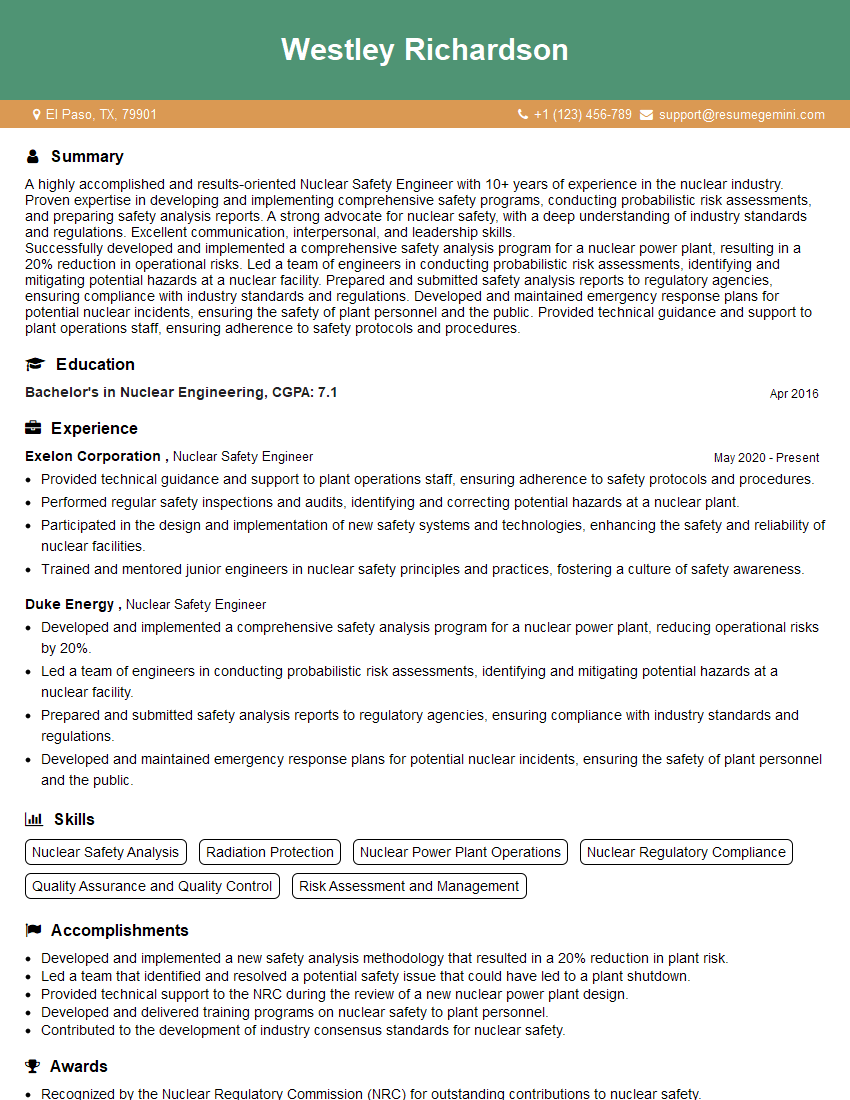
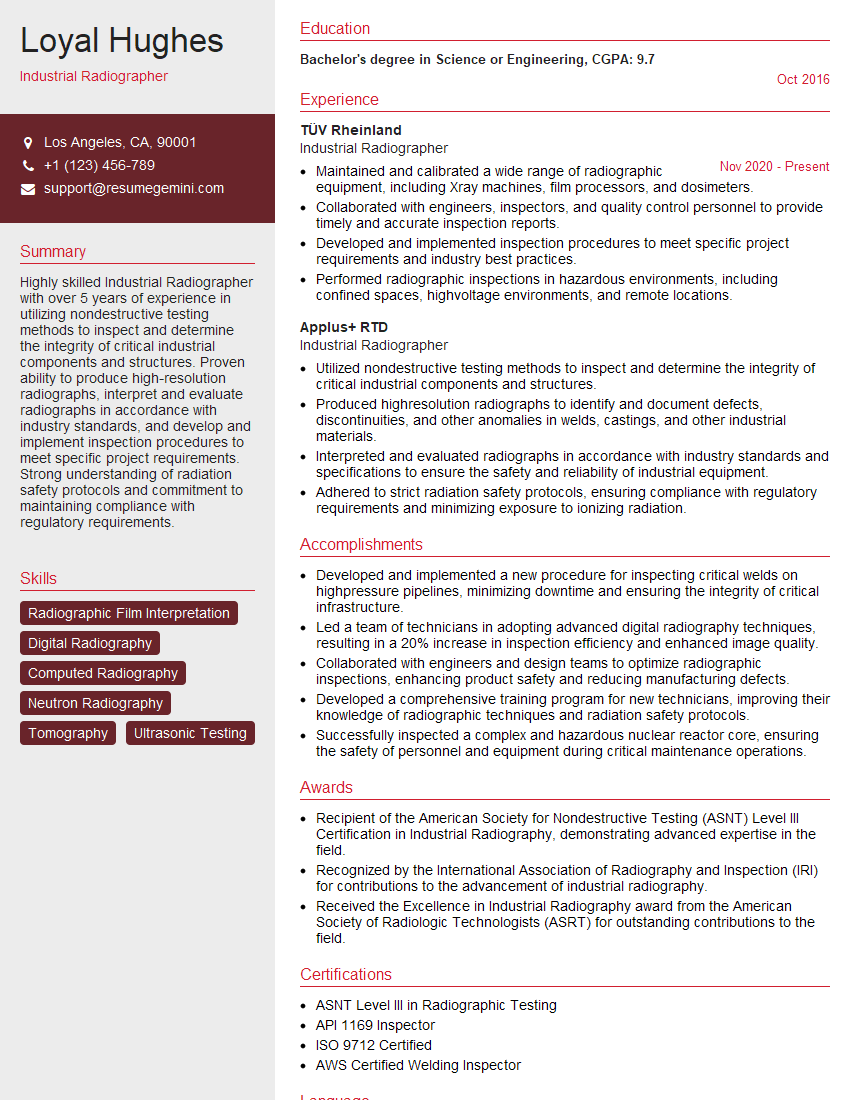
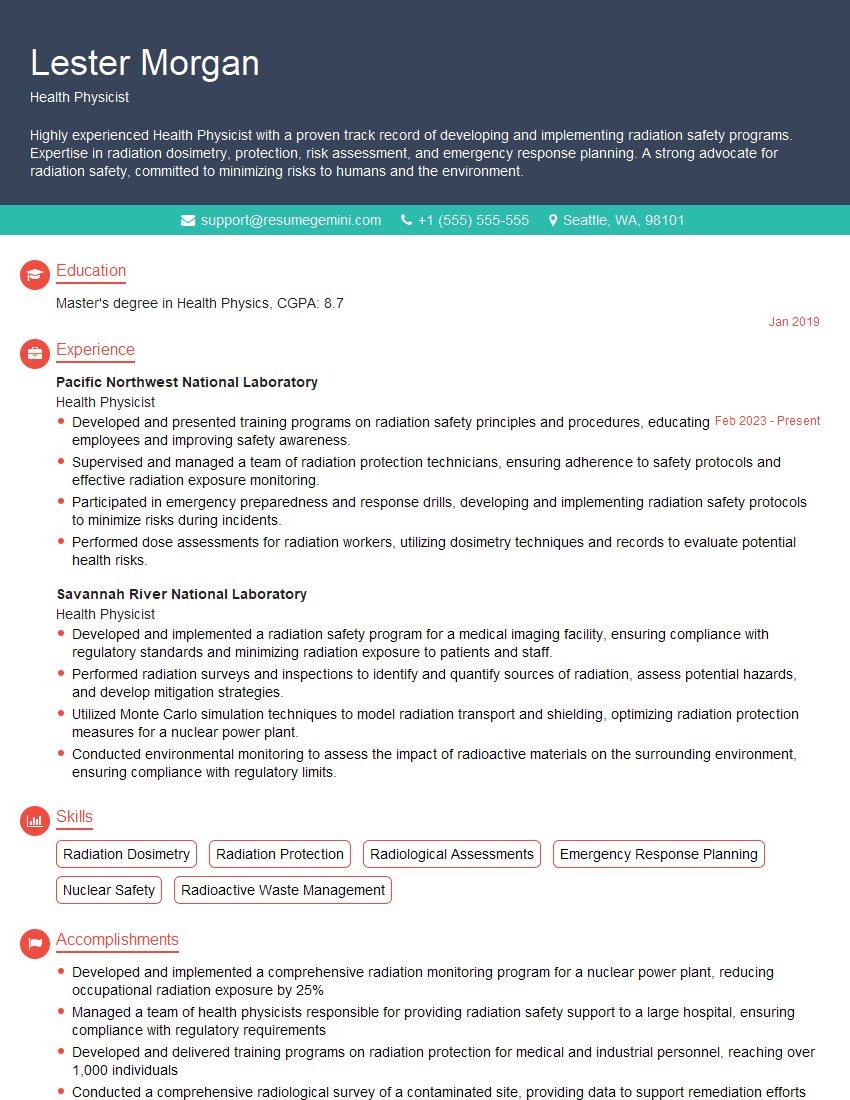
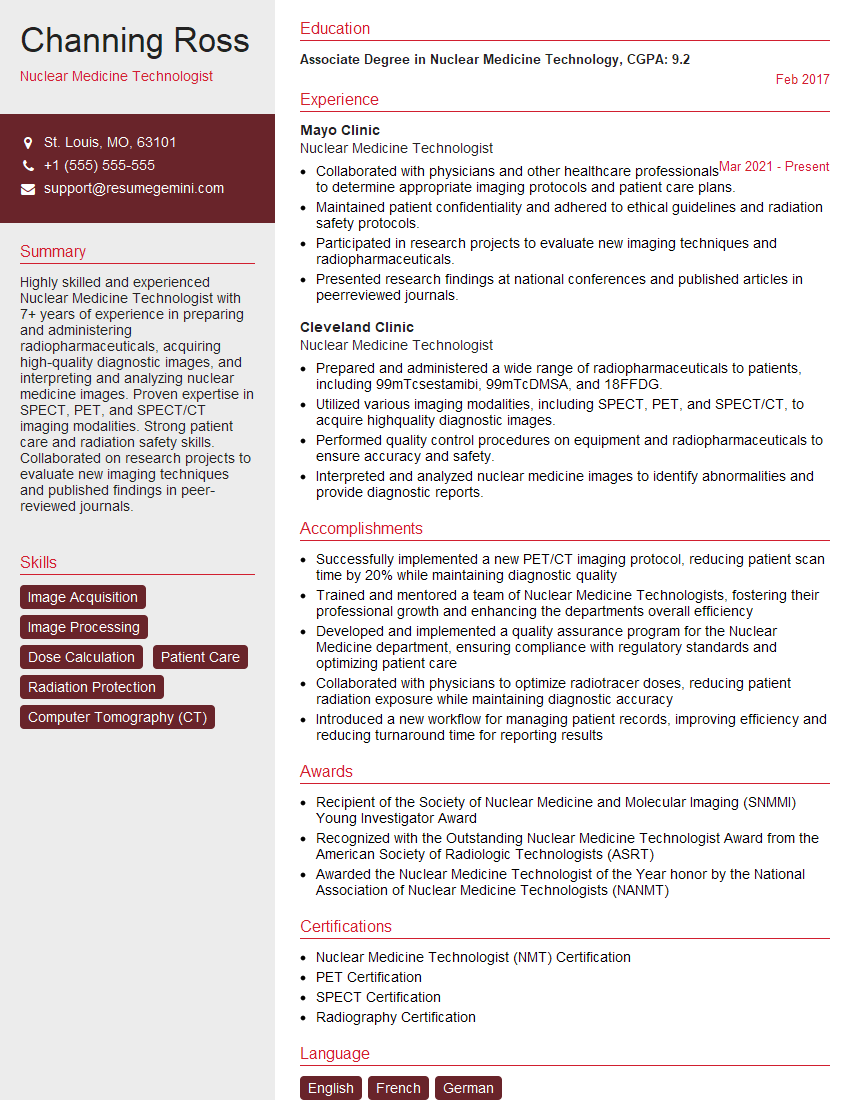
Mastering Nuclear Radiation Safety is paramount for a successful and fulfilling career in this critical field. It opens doors to diverse opportunities and showcases your commitment to safety and responsible practice. To significantly enhance your job prospects, it’s essential to present your qualifications effectively. Creating an ATS-friendly resume is crucial for getting your application noticed by recruiters. We highly recommend using ResumeGemini to build a professional and impactful resume. ResumeGemini provides a user-friendly platform and offers examples of resumes tailored to Nuclear Radiation Safety, helping you showcase your skills and experience in the best possible light.

Explore more articles
Users Rating of Our Blogs
Share Your Experience
We value your feedback! Please rate our content and share your thoughts (optional).
What Readers Say About Our Blog
To the interviewgemini.com Webmaster.
Very helpful and content specific questions to help prepare me for my interview!
Thank you
To the interviewgemini.com Webmaster.
This was kind of a unique content I found around the specialized skills. Very helpful questions and good detailed answers.
Very Helpful blog, thank you Interviewgemini team.