Are you ready to stand out in your next interview? Understanding and preparing for Oil Market Reports interview questions is a game-changer. In this blog, we’ve compiled key questions and expert advice to help you showcase your skills with confidence and precision. Let’s get started on your journey to acing the interview.
Questions Asked in Oil Market Reports Interview
Q 1. Explain the impact of OPEC+ decisions on global oil prices.
OPEC+, the Organization of the Petroleum Exporting Countries plus its allies, significantly influences global oil prices through coordinated production adjustments. Their decisions, often announced at ministerial meetings, involve setting production quotas for member countries.
For example, if OPEC+ decides to cut production, this reduces the global oil supply, leading to higher prices due to increased scarcity. Conversely, increasing production can flood the market, driving prices down. These decisions are based on various factors, including anticipated global demand, economic forecasts, and geopolitical considerations. Think of it like a cartel controlling a significant portion of a crucial global commodity – their collective action directly impacts the market’s equilibrium.
The impact isn’t always immediate or predictable. Unforeseen events, such as unexpected supply disruptions from non-OPEC+ members, or changes in global economic growth, can moderate or even counteract the effects of OPEC+’s decisions. However, the organization’s influence remains substantial, making its announcements closely watched events in the oil market.
Q 2. Describe the current supply and demand dynamics in the oil market.
Currently, the oil market is characterized by a relatively balanced supply and demand dynamic, though this can shift rapidly. Demand fluctuates with global economic growth; strong growth typically translates to higher oil consumption, while economic slowdowns lead to decreased demand. Supply factors are complex, influenced by OPEC+ production decisions, geopolitical stability in major oil-producing regions, and the capacity of non-OPEC+ producers to increase output.
Recent years have shown increased investment in renewable energy, which exerts some downward pressure on oil demand in the long term. However, the transition to cleaner energy sources is gradual, and oil remains crucial for transportation, manufacturing, and petrochemicals. Thus, while a shift toward alternative energies is underway, the immediate demand for oil remains substantial, influenced by factors like seasonal changes and industrial activity. Any significant disruptions to production, such as sanctions, conflict, or natural disasters, can quickly tighten the market and drive up prices. The interplay between these variables makes it a constantly evolving landscape.
Q 3. Analyze the influence of geopolitical events on crude oil prices.
Geopolitical events exert a profound and often immediate impact on crude oil prices. Political instability in major oil-producing regions, such as the Middle East or Russia, can disrupt supply chains, leading to price spikes. Sanctions imposed on oil-exporting nations, conflicts, or even the mere threat of conflict can create uncertainty and trigger price increases due to fears of supply disruptions.
For example, the Russian invasion of Ukraine significantly impacted oil markets, partly due to sanctions imposed on Russia, a major oil exporter, and partly due to uncertainty about the global supply chain and transportation routes. Similarly, political tensions in the Middle East, a historically volatile region with significant oil reserves, can rapidly influence prices. The market reacts to perceived risk; any event that threatens the stability of oil production or transportation routes can lead to higher prices even if supply isn’t immediately impacted.
Q 4. What are the key factors affecting oil price volatility?
Oil price volatility stems from a confluence of factors.
- Supply disruptions: Unexpected outages due to geopolitical instability, natural disasters, or refinery issues are major drivers.
- Demand fluctuations: Economic growth, seasonal changes, and global events directly impact the demand for oil.
- OPEC+ decisions: Production adjustments by OPEC+ significantly influence supply and prices.
- Currency fluctuations: Oil is priced in US dollars, so changes in the dollar’s value affect prices for buyers using other currencies.
- Speculation and trading activity: Futures markets and investor sentiment can contribute to price volatility.
- Government policies: Regulations related to oil production, taxation, and environmental concerns can have an effect.
The interplay of these factors makes oil prices inherently volatile. It’s a complex system where seemingly small events can have amplified effects due to the global interconnectedness of energy markets.
Q 5. Explain the difference between Brent and WTI crude oil.
Brent and West Texas Intermediate (WTI) are two benchmark crude oil grades, each with distinct characteristics and trading locations. Brent crude is a global benchmark, primarily sourced from the North Sea and traded on the Intercontinental Exchange (ICE) in London. WTI, on the other hand, is a North American benchmark, primarily from the US and traded on the New York Mercantile Exchange (NYMEX).
The key differences lie in their physical properties, transportation costs, and trading locations. Brent is typically slightly heavier and contains more sulfur than WTI, affecting its refining process and value. Transportation costs also play a role, influencing the price differential between the two grades. Although often correlated, their prices can diverge based on regional supply and demand dynamics, geopolitical factors affecting specific regions, and refinery capacity. For example, a hurricane affecting Gulf Coast refineries could significantly impact WTI pricing while having a smaller effect on Brent.
Q 6. How do you interpret oil futures contracts?
Oil futures contracts are agreements to buy or sell a specific quantity of crude oil at a predetermined price on a future date. They allow producers, consumers, and speculators to hedge against price fluctuations and manage risk. The contract price reflects the market’s expectation of the future price of oil.
Interpreting these contracts involves analyzing several factors: the contract’s expiry date (the date of delivery), the contract price (the agreed price for the future delivery), and the market’s overall sentiment (bullish or bearish). A rising price indicates a bullish market (expectation of higher prices), while a falling price indicates a bearish market (expectation of lower prices). Analyzing historical data, supply and demand forecasts, and geopolitical events are crucial for interpreting the information implied by the future contract price. For example, a sharp rise in the price of a near-term contract might suggest an anticipated short-term supply disruption.
Q 7. Describe the role of oil storage in market dynamics.
Oil storage plays a crucial role in market dynamics by acting as a buffer against supply and demand imbalances. When oil production exceeds demand, excess crude is stored in tanks, preventing a sharp price drop. Conversely, during periods of high demand or supply disruptions, stored oil can be released to meet market needs, preventing severe price spikes.
The amount of oil in storage, often referred to as ‘inventory levels,’ is a closely watched indicator by market participants. High inventory levels generally suggest a well-supplied market and downward pressure on prices, while low inventory levels indicate potential supply constraints and upward pressure. Storage capacity is geographically dispersed, and strategic locations near major refining centers or transportation hubs are particularly influential. Furthermore, the cost of storage, including lease rates for tanks and insurance, influences the decisions of producers and traders regarding storage and market supply.
Q 8. What are the major oil producing countries and their market share?
The global oil market is dominated by a handful of major producing countries. Their market share fluctuates based on production levels, geopolitical events, and OPEC+ agreements. While precise figures change daily, here’s a general overview of some key players:
- Saudi Arabia: Consistently ranks among the top producers, holding a significant share of global production and wielding considerable influence over prices.
- Russia: Another major player, with substantial oil and gas reserves. Its production and exports significantly impact global supply.
- United States: The U.S. has experienced a shale oil boom, becoming a major producer and exporter. Its production capacity impacts the global supply-demand balance considerably.
- Iraq: Possesses vast oil reserves and is a key player in OPEC+
- Iran: Significant oil reserves, but production levels are often impacted by international sanctions and geopolitical instability.
- United Arab Emirates (UAE), Kuwait, Nigeria, Libya, and Canada: These countries also contribute significantly to global oil production, collectively forming a substantial portion of the market.
It’s crucial to remember that these market shares are dynamic and constantly shifting. Tracking real-time data from sources like the EIA (Energy Information Administration) and OPEC is necessary for accurate up-to-date information.
Q 9. Explain the concept of oil market backwardation and contango.
Backwardation and contango describe the relationship between the spot price (current market price) and futures prices of oil. Think of it like this: you’re buying a ticket to a concert. If the ticket price is higher closer to the concert date (more demand), it’s like backwardation. If the price is lower closer to the date (less demand), it’s contango.
Backwardation: Occurs when the spot price is higher than the futures price. This indicates a market expectation of lower future prices, often driven by immediate supply shortages or high demand. Producers are incentivized to sell immediately rather than store oil for future delivery.
Contango: Happens when the futures price is higher than the spot price. This suggests a market belief that future prices will be higher than current ones, often due to expected future shortages or storage costs. It’s more advantageous to store oil and sell at a higher price later.
Example: Imagine a barrel of oil currently costs $80. In backwardation, a futures contract for delivery in three months might trade at $75. In contango, that same contract might trade at $85.
Q 10. How do you assess the impact of shale oil production on oil prices?
Shale oil production, particularly in the United States, has had a profound impact on oil prices. The ability to extract oil from shale formations using hydraulic fracturing (fracking) significantly increased global oil supply. This increased supply has generally exerted downward pressure on oil prices, acting as a price cap and increasing global competition.
Impact Assessment: The impact is not static. Initially, the surge in shale oil led to a period of lower prices. However, the price sensitivity of shale production plays a key role; when prices are high, production increases, and vice-versa. This responsiveness to price fluctuations has created volatility and made the market more dynamic. Geopolitical factors and OPEC+ policies also influence how the oil market reacts to changes in shale oil production.
Example: A period of strong global demand coupled with geopolitical instability can lead to higher oil prices, even with significant shale oil production. However, a downturn in the global economy may lead to lower prices, potentially impacting the profitability of shale oil operations and reducing production.
Q 11. Describe the role of speculators in the oil market.
Speculators play a significant role in the oil market by influencing prices through their trading activities. They don’t typically consume or produce oil; instead, they buy and sell futures contracts and other derivatives to profit from price movements.
Role and Impact: Speculators provide liquidity to the market, enabling other participants like producers and consumers to hedge their price risk. However, their activities can also amplify price volatility. A large speculative bet on rising prices can drive prices up, even if the fundamentals don’t fully support the increase. Conversely, massive selling by speculators can trigger price declines.
Example: If speculators anticipate a major geopolitical event disrupting oil supply, they might buy futures contracts, pushing prices upward. This anticipatory behavior reflects market sentiment and can influence actual supply and demand dynamics, even before the event occurs. Regulators often monitor speculative activity to identify potentially destabilizing behavior.
Q 12. Analyze the impact of renewable energy sources on the oil market.
The rise of renewable energy sources like solar and wind power presents a long-term challenge to the oil market. As renewable energy technologies become more efficient and cost-competitive, their adoption will likely reduce the overall demand for oil, particularly in the transportation and electricity sectors.
Impact Analysis: The impact is gradual but significant. The shift towards electric vehicles (EVs), for example, is slowly decreasing the demand for gasoline and diesel. Similarly, renewable electricity generation reduces the need for oil-fired power plants. However, the transition isn’t immediate; oil’s dominance in various sectors remains strong, and its role as a feedstock for petrochemicals will persist for the foreseeable future.
Example: While the overall demand for oil is still high, the increasing penetration of renewable energy sources means that the rate of growth in oil demand is slowing. This slowing growth presents long-term challenges to oil producers and requires them to adapt to a changing energy landscape.
Q 13. What are the key indicators you monitor to analyze the oil market?
Analyzing the oil market requires monitoring a range of key indicators. These indicators provide a comprehensive view of supply, demand, and market sentiment.
- OPEC+ Production Levels: OPEC+’s production quotas and actual output significantly influence global supply.
- Global Oil Inventories: Levels of crude oil and refined products held in storage are crucial indicators of supply-demand balance.
- Demand Forecasts: Estimates of future oil consumption from organizations like the IEA (International Energy Agency) and EIA are essential for predicting price trends.
- Geopolitical Events: Conflicts, sanctions, and political instability in major oil-producing regions can dramatically impact supply and prices.
- US Dollar Exchange Rate: Oil is priced in USD, so the dollar’s strength relative to other currencies influences the affordability of oil for importers.
- Economic Growth Rates: Strong economic growth usually translates to higher energy demand, pushing oil prices up.
- Refining Margins: Profits earned by refineries indicate the profitability of refining crude oil into various products.
- Futures Market Prices: Oil futures contracts provide insights into market expectations regarding future prices.
Analyzing these indicators together provides a much clearer understanding of the current state and future prospects of the oil market.
Q 14. How do you forecast future oil prices?
Forecasting future oil prices is a complex process involving a combination of quantitative and qualitative analysis. No single model can perfectly predict prices, but a robust approach combines several methodologies:
- Fundamental Analysis: This focuses on factors impacting supply and demand, such as OPEC+ policies, geopolitical risks, economic growth projections, and renewable energy adoption rates. This involves using the key indicators described in the previous answer.
- Technical Analysis: This examines historical price trends, patterns, and indicators to identify potential future price movements. This is often used in conjunction with fundamental analysis to understand the market sentiment.
- Econometric Modeling: Sophisticated statistical models can incorporate various macroeconomic and market-specific factors to produce price forecasts. These models may use time series data analysis and regression techniques.
- Scenario Planning: This involves creating different potential scenarios based on various assumptions about future events (e.g., a major geopolitical disruption or rapid renewable energy adoption). This approach helps assess the sensitivity of price forecasts to different outcomes.
It’s important to remember that oil price forecasting is inherently uncertain, and forecasts should be treated as probability distributions rather than precise predictions. Continuous monitoring and adjustment of forecasts are necessary based on new information and market developments.
Q 15. Explain the impact of sanctions on the oil market.
Sanctions on oil-producing nations or companies significantly impact the global oil market, primarily by restricting supply. This reduction in supply often leads to higher prices, as demand remains relatively constant or increases. The impact varies depending on the scale and scope of the sanctions, the targeted country or entity’s role in the global oil market, and the availability of alternative supply sources.
For example, sanctions against Iran have historically led to a temporary tightening of the oil market and a surge in crude oil prices. Similarly, sanctions against Russia following its invasion of Ukraine dramatically altered global supply chains and caused significant price volatility. The effectiveness of sanctions also depends on the degree of international cooperation in enforcing them. If some countries continue to trade with sanctioned entities, the impact can be muted.
Moreover, sanctions can create uncertainty in the market, leading to increased risk premiums and making it more challenging for companies to plan and invest. This uncertainty can cascade through the entire energy sector, impacting downstream industries such as refining and petrochemicals.
Career Expert Tips:
- Ace those interviews! Prepare effectively by reviewing the Top 50 Most Common Interview Questions on ResumeGemini.
- Navigate your job search with confidence! Explore a wide range of Career Tips on ResumeGemini. Learn about common challenges and recommendations to overcome them.
- Craft the perfect resume! Master the Art of Resume Writing with ResumeGemini’s guide. Showcase your unique qualifications and achievements effectively.
- Don’t miss out on holiday savings! Build your dream resume with ResumeGemini’s ATS optimized templates.
Q 16. Describe the different types of oil derivatives.
Oil derivatives are financial contracts whose value is derived from the price of crude oil. They allow market participants to hedge against price risks or speculate on future price movements. Several types exist:
- Futures Contracts: Agreements to buy or sell a specific quantity of oil at a predetermined price on a future date. These are standardized and traded on exchanges.
- Options Contracts: Give the buyer the right, but not the obligation, to buy (call option) or sell (put option) oil at a specific price on or before a certain date. They offer flexibility compared to futures.
- Swaps: Agreements to exchange cash flows based on the price of oil over a specific period. Often used to manage price risk.
- Crack Spreads: Reflect the difference between the price of crude oil and the prices of refined products (e.g., gasoline, diesel). Traders use them to assess the profitability of refining operations.
Understanding these different derivatives is crucial for navigating the complexities of the oil market and managing associated financial risks. The choice of derivative depends heavily on the specific risk profile and investment strategy of the user.
Q 17. How do you evaluate the credibility of oil market data sources?
Evaluating the credibility of oil market data sources requires a critical and multifaceted approach. I consider several factors:
- Source Reputation: Is the source a reputable organization with a history of providing accurate and unbiased information? Government agencies, established research firms, and reputable news outlets generally carry more weight.
- Methodology Transparency: Does the source clearly explain its data collection methods and any potential biases? Transparency is key to building trust.
- Data Validation: Does the source cross-reference its data with other reliable sources to ensure accuracy and consistency? Comparing data from multiple independent sources helps identify potential discrepancies.
- Track Record: Has the source demonstrated a consistent track record of accurate forecasting and data reporting? Past performance is not a guarantee of future success, but it can provide insights into reliability.
- Potential Conflicts of Interest: Does the source have any financial or political incentives to manipulate the data? Identifying potential conflicts is vital to assess objectivity.
By meticulously examining these aspects, I can make more informed decisions about which data sources to trust in my analysis.
Q 18. Explain your understanding of oil market risk management.
Oil market risk management involves identifying, assessing, and mitigating potential risks that could adversely affect an organization’s operations or financial performance. These risks can stem from various sources, including:
- Price Volatility: Fluctuations in oil prices can significantly impact profitability. Hedging strategies, such as using derivatives, are crucial.
- Geopolitical Risks: Political instability, sanctions, and conflicts in oil-producing regions can disrupt supply and create price shocks.
- Supply Disruptions: Natural disasters, production outages, and transportation bottlenecks can impact oil availability.
- Regulatory Changes: New environmental regulations or tax policies can significantly alter the operating landscape.
- Operational Risks: Accidents, equipment failures, and security breaches can impact production and distribution.
Effective risk management involves developing a comprehensive strategy that incorporates various tools and techniques, such as scenario planning, stress testing, and diversification to minimize exposure to these risks. For example, a refinery might hedge against price fluctuations by purchasing futures contracts to lock in a price for future crude oil purchases.
Q 19. How do you use statistical methods to analyze oil market data?
Statistical methods are fundamental to analyzing oil market data. I commonly use techniques such as:
- Time Series Analysis: To identify trends, seasonality, and volatility in oil prices using methods like ARIMA modeling or exponential smoothing. This helps forecast future prices and understand price behavior patterns.
- Regression Analysis: To model the relationship between oil prices and various macroeconomic factors, such as economic growth, inflation, and exchange rates. This allows for identifying factors driving price movements and building predictive models.
- Econometrics: To develop sophisticated models incorporating both economic theory and statistical methods to analyze complex relationships in the oil market.
- Monte Carlo Simulations: To model uncertainty and risk in the oil market. By generating thousands of possible scenarios, it allows assessing the probability of different outcomes and evaluating potential financial impacts.
Example: A simple linear regression model could be used to estimate the relationship between crude oil prices and gasoline prices: GasolinePrice = β0 + β1*CrudeOilPrice + ε, where β0 and β1 are regression coefficients and ε is the error term.
The choice of statistical method depends on the research question, the type of data available, and the desired level of detail.
Q 20. Describe a time you identified a critical trend in the oil market.
During the initial stages of the COVID-19 pandemic, I identified a critical trend: the unprecedented collapse in oil demand due to global lockdowns. While many initially focused on supply disruptions, my analysis highlighted the dramatic impact on consumption. I used time series data on global oil consumption and correlated it with mobility data and economic indicators. This showed a far more rapid and severe decline in demand than previously anticipated by many market analysts.
This early identification allowed me to accurately predict the significant price decline and volatility that followed. This insight was particularly valuable in advising clients on risk management strategies and investment decisions in the volatile market conditions that ensued. It emphasized the importance of considering all aspects of supply and demand when analyzing oil market dynamics.
Q 21. How do you communicate complex oil market information to non-technical audiences?
Communicating complex oil market information to non-technical audiences requires simplifying the language and using clear analogies. I avoid jargon whenever possible and focus on explaining the broader implications of the information. For instance, instead of talking about “backwardation in the futures curve,” I might explain that it indicates market participants expect prices to fall in the near future.
I often use visual aids such as charts and graphs to illustrate key points, focusing on the story the data tells rather than overwhelming the audience with technical details. I also utilize real-world examples and relatable scenarios to make the information more accessible and memorable. For example, I might explain the impact of a geopolitical event on gas prices by connecting it to the everyday experience of filling up a car’s tank. By focusing on clarity, relevance, and visual communication, I ensure that the audience understands the key takeaways, even without a deep understanding of oil market intricacies.
Q 22. Explain the role of hedging in managing oil price risk.
Hedging in the oil market is a risk management strategy employed by oil producers, refiners, and consumers to mitigate the impact of volatile oil prices. Essentially, it involves using financial instruments to offset potential losses from price fluctuations. Think of it like buying insurance – you pay a small premium (the cost of the hedge) to protect yourself against a potentially large loss.
A common hedging strategy involves using futures contracts. For example, an airline anticipating a significant increase in jet fuel consumption might buy futures contracts to lock in a price for a certain quantity of fuel in the future. If the market price rises above the contract price, the airline benefits from the locked-in price. Conversely, if the price falls, they might lose out on the potential savings, but their risk is capped. Other hedging instruments include options and swaps.
The effectiveness of hedging depends on several factors, including the accuracy of price forecasts, the choice of hedging instrument, and the length of the hedging period. It’s not a foolproof method, but a carefully planned hedging strategy can significantly reduce exposure to price volatility and enhance financial stability.
Q 23. How do you assess the financial health of oil companies?
Assessing the financial health of oil companies requires a multi-faceted approach. We look beyond simple profitability; a holistic view is crucial. I typically analyze several key financial indicators:
- Debt-to-Equity Ratio: This measures the proportion of a company’s financing from debt compared to equity. A high ratio indicates higher financial risk.
- Liquidity Ratios (Current Ratio and Quick Ratio): These ratios assess a company’s ability to meet its short-term obligations. Low ratios can suggest potential cash flow problems.
- Profitability Ratios (Gross Margin, Operating Margin, Net Margin): These indicate how efficiently a company generates profit from its operations. Declining margins could signal operational inefficiencies or falling oil prices.
- Cash Flow from Operations: This shows the cash generated from the core business activities. Strong and consistent positive cash flow is a crucial sign of health.
- Capital Expenditure (CAPEX): This reflects investments in exploration, production, and infrastructure. A company’s CAPEX strategy offers insight into its long-term growth plans and financial commitment.
Furthermore, I consider factors beyond these ratios, such as the company’s reserve base, production costs, and the geopolitical risks associated with its operations. A thorough analysis combines quantitative data with qualitative factors to provide a comprehensive assessment.
Q 24. What are the environmental and social factors affecting the oil industry?
Environmental and social factors are increasingly shaping the oil industry landscape. Environmental concerns, primarily climate change and its relation to greenhouse gas emissions from fossil fuel combustion, are driving significant changes. This includes pressure to reduce emissions, invest in carbon capture and storage technologies, and explore renewable energy alternatives.
Socially, the industry faces scrutiny regarding its impact on local communities. Issues such as water usage, land degradation, and potential risks to human health stemming from operations, alongside concerns about fair compensation for land usage and job creation in host communities are major considerations. Growing investor and consumer preference for environmental, social, and governance (ESG) factors are creating pressure on oil companies to improve their ESG performance, resulting in increased transparency and investment in sustainable practices.
Companies are responding in various ways, including investing in renewable energy sources, improving operational efficiency to reduce their environmental footprint, and enhancing their community relations initiatives. These factors represent both significant challenges and opportunities for the industry.
Q 25. Explain your experience using oil market analysis software/platforms.
My experience with oil market analysis software and platforms is extensive. I’m proficient in using various platforms, including Bloomberg Terminal, Refinitiv Eikon, and Argus Media. These platforms provide real-time market data, historical price information, and advanced analytical tools that are crucial for my work.
For example, I routinely use Bloomberg Terminal to access detailed information on crude oil and refined product prices, futures contracts, and company financials. I leverage Refinitiv Eikon’s analytical tools to build models for forecasting oil prices and assessing the risk associated with various investment strategies. Argus Media provides in-depth reports and analysis that are vital in understanding regional market dynamics. My expertise includes utilizing these platforms to conduct comprehensive market research, build financial models, and generate insightful reports.
Q 26. Describe the challenges and opportunities in the oil market today.
The oil market today faces a multitude of challenges and opportunities. The transition towards cleaner energy sources presents a significant challenge, as it necessitates a shift in investment strategies and potentially a decline in demand for oil in the long term. However, this also creates opportunities for companies that can successfully adapt and invest in sustainable technologies or decarbonization strategies.
Geopolitical instability continues to be a major factor affecting oil prices and supply chain stability. Unexpected events in oil-producing regions can cause significant price volatility, creating both risks and opportunities for market participants. Furthermore, the growth of electric vehicles is likely to impact the demand for gasoline and diesel, creating an opportunity for companies focused on petrochemical production or alternative fuels.
On the other hand, the world still heavily relies on oil and gas, ensuring continued demand in the foreseeable future. This provides opportunities for companies that can efficiently produce and deliver oil and gas while adhering to increasingly stringent environmental regulations.
Q 27. How do you stay current with developments in the oil and gas sector?
Staying current in the dynamic oil and gas sector is critical. My approach involves a multi-pronged strategy:
- Subscription to Industry Publications: I regularly read publications like the Wall Street Journal, Platts, and Oil & Gas Journal to stay abreast of market trends and news.
- Attendance at Industry Conferences and Webinars: Networking with industry professionals and hearing directly from experts at conferences expands my knowledge.
- Following Key Industry Analysts: I closely follow the reports and analysis of leading energy analysts and consultancies for their insights.
- Monitoring Government Regulations: I track changes in government regulations and policies impacting the oil and gas sector, as these greatly influence market conditions.
- Utilizing Online Databases and News Aggregators: I leverage online resources like Google News and specialized energy news websites to receive daily updates.
This combination of information sources ensures that my understanding of the oil and gas industry remains both comprehensive and current.
Q 28. What are your salary expectations for this role?
My salary expectations are commensurate with my experience and expertise in the oil market, aligning with industry standards for a professional with my qualifications and proven track record. I am open to discussing a competitive compensation package that reflects the value I bring to your organization.
Key Topics to Learn for Oil Market Reports Interview
- Crude Oil Price Dynamics: Understanding the factors influencing crude oil prices (supply, demand, geopolitical events, OPEC decisions) and their impact on market trends. Practical application: Analyzing historical price data to predict future price movements.
- Supply and Demand Fundamentals: Analyzing global oil production, consumption, and inventory levels. Practical application: Interpreting data from sources like the EIA and OPEC to assess market balance and forecast future trends.
- Refining and Petrochemical Markets: Understanding the refining process, product slate optimization, and the dynamics of the petrochemical market. Practical application: Analyzing refining margins and their impact on profitability.
- Geopolitical Risk Assessment: Evaluating the impact of geopolitical events (wars, sanctions, political instability) on oil supply and prices. Practical application: Assessing the risk associated with investing in specific oil-producing regions.
- Market Forecasting and Analytics: Utilizing quantitative and qualitative methods to forecast future oil prices and market conditions. Practical application: Applying statistical models and scenario planning to generate insightful market forecasts.
- Data Analysis and Interpretation: Proficiency in using relevant software and techniques to analyze large datasets related to oil markets. Practical application: Utilizing spreadsheet software (Excel) and data visualization tools to present findings clearly.
- Derivative Markets and Hedging Strategies: Understanding oil futures, options, and swaps, and their use in hedging price risk. Practical application: Developing and implementing hedging strategies to mitigate price volatility.
Next Steps
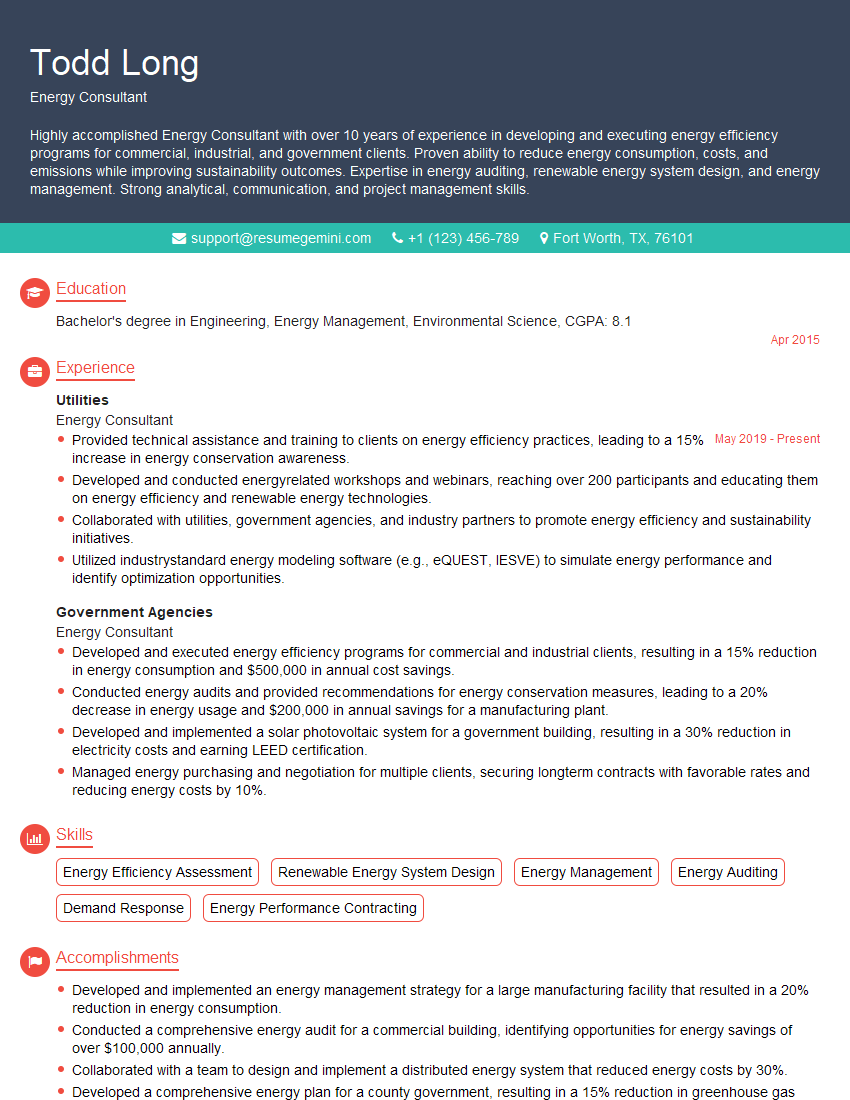
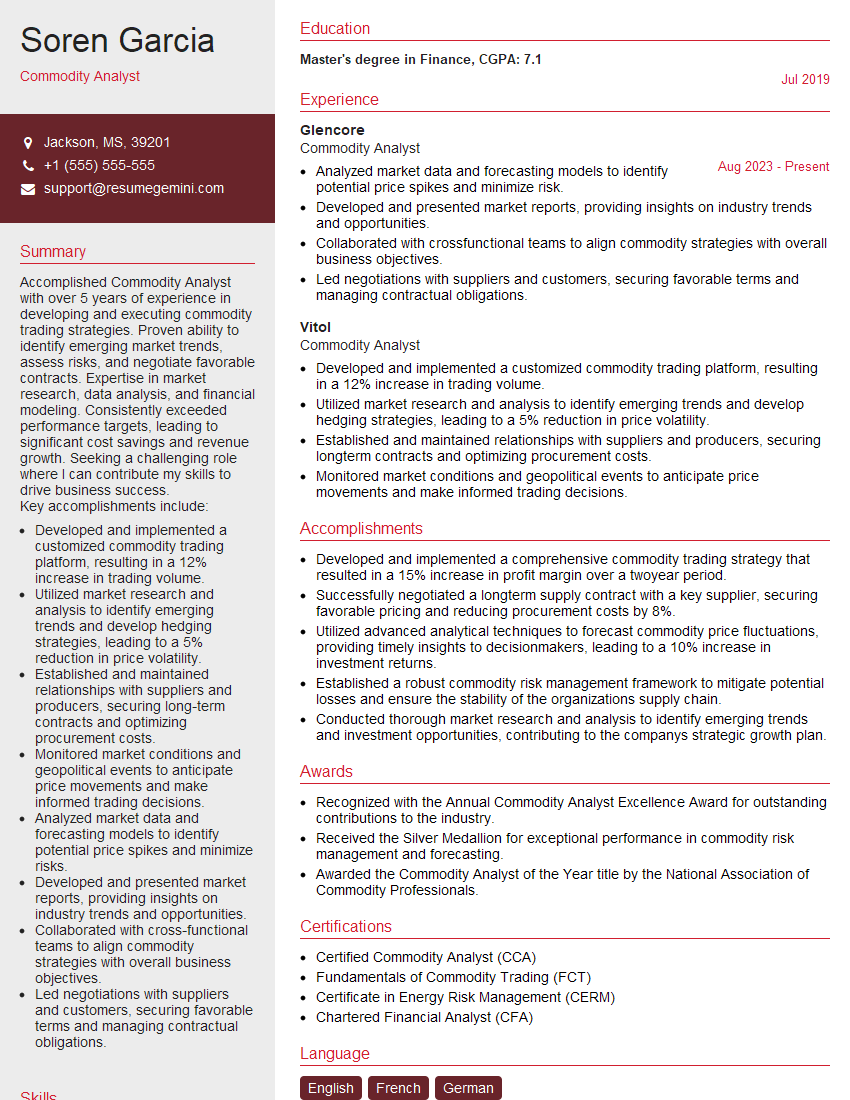
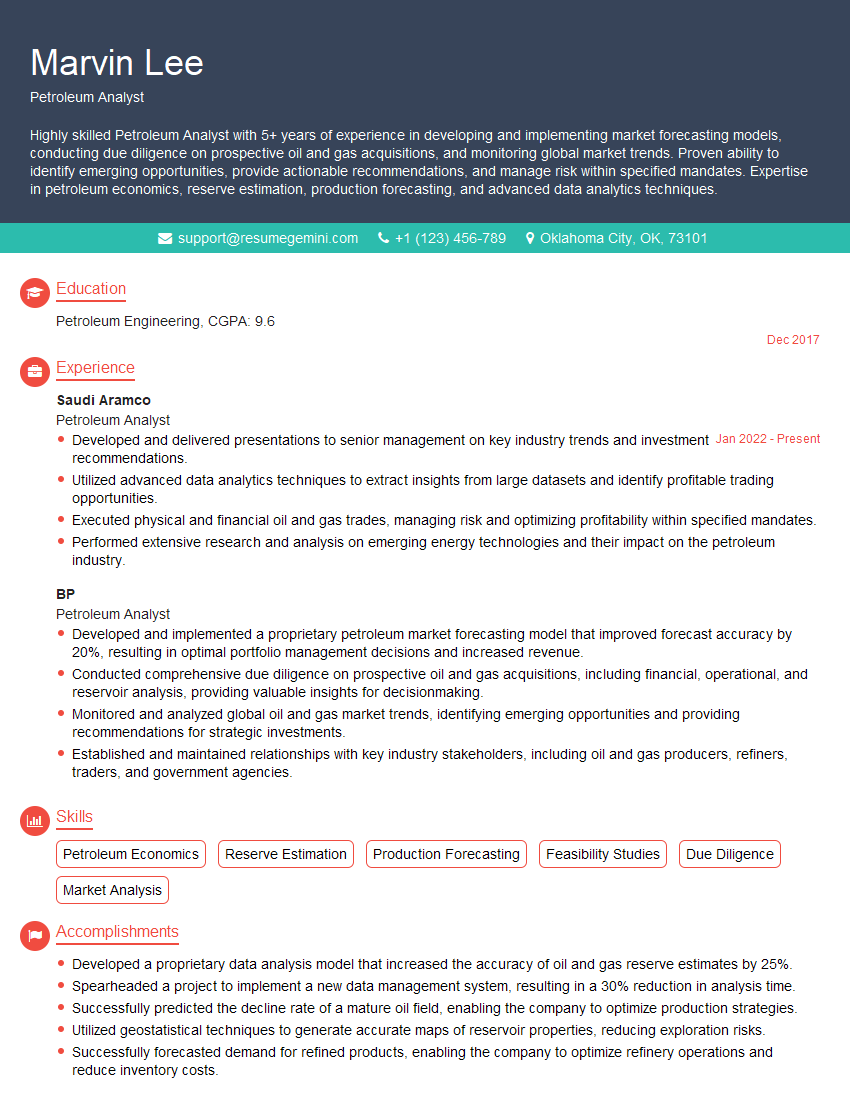
Mastering Oil Market Reports is crucial for career advancement in the energy sector, opening doors to exciting opportunities in analysis, trading, and investment. A strong understanding of these markets is highly valued by employers. To maximize your job prospects, crafting a compelling and ATS-friendly resume is essential. ResumeGemini can help you create a professional, impactful resume that highlights your skills and experience effectively. ResumeGemini provides examples of resumes tailored to Oil Market Reports roles, giving you a head start in showcasing your qualifications. Take advantage of these resources to build a resume that truly captures your potential and gets you noticed.
Explore more articles
Users Rating of Our Blogs
Share Your Experience
We value your feedback! Please rate our content and share your thoughts (optional).
What Readers Say About Our Blog
To the interviewgemini.com Webmaster.
Very helpful and content specific questions to help prepare me for my interview!
Thank you
To the interviewgemini.com Webmaster.
This was kind of a unique content I found around the specialized skills. Very helpful questions and good detailed answers.
Very Helpful blog, thank you Interviewgemini team.