Interviews are opportunities to demonstrate your expertise, and this guide is here to help you shine. Explore the essential Ornamental Masonry interview questions that employers frequently ask, paired with strategies for crafting responses that set you apart from the competition.
Questions Asked in Ornamental Masonry Interview
Q 1. Describe your experience with different types of stone used in ornamental masonry.
My experience spans a wide range of stones used in ornamental masonry. The choice of stone heavily influences the final aesthetic and structural integrity of the project. I’ve worked extensively with:
- Limestone: A classic choice, known for its versatility in carving and its warm tones. I’ve used it in everything from intricate window surrounds to large-scale architectural features. Its relative softness makes it easier to carve, but careful consideration must be given to its susceptibility to weathering.
- Granite: A much harder and more durable stone, granite offers exceptional strength and longevity. Its crystalline structure lends itself to striking polished finishes, but it requires specialized tools and expertise to carve intricate details. I remember a particularly challenging project involving a granite fountain, where precision cutting was paramount.
- Marble: Renowned for its elegant veining and luxurious feel, marble is a favorite for interior applications. However, its relative softness necessitates careful handling and protection against staining and etching. I’ve worked on several fireplace mantels and decorative columns using various marble types.
- Sandstone: Often chosen for its earthy tones and relatively easy carving, sandstone is versatile and suitable for both interior and exterior projects. The varying hardness within different sandstone types requires a nuanced approach to cutting and shaping.
Understanding the unique properties of each stone – its hardness, porosity, grain structure, and susceptibility to weathering – is critical for selecting the right material for a specific project and ensuring its long-term durability.
Q 2. Explain the process of creating a detailed drawing for a complex ornamental masonry project.
Creating detailed drawings for complex ornamental masonry projects is a multi-stage process demanding meticulous attention to detail. It begins with a thorough understanding of the client’s vision and the architectural context.
- Initial Sketches and Concepts: We start with freehand sketches to explore various design options and refine the client’s ideas.
- Detailed Measurements and Surveys: Accurate measurements of the existing structure (if applicable) and the proposed location are essential. This often involves using laser scanners and surveying equipment.
- 2D Drawings: We then create detailed 2D drawings using CAD software. These drawings meticulously illustrate all elements – individual stones, their dimensions, placement, and joinery details. This stage might involve creating multiple views (plan, elevation, section) for clarity.
- 3D Modeling (Optional but Recommended): For particularly complex projects, 3D modeling allows for a thorough visualization of the finished product, assisting in identifying potential issues early on. Software like Revit or SketchUp are invaluable tools.
- Material Specifications: The drawings must clearly specify the type of stone, its finish, and any special treatments required.
- Shop Drawings: These provide detailed instructions for the fabrication process – including cutting dimensions, tolerances, and assembly methods for the stone masons.
The entire process is iterative, with continuous review and feedback from the client and the fabrication team to ensure accuracy and feasibility.
Q 3. How do you ensure the accuracy of your measurements and cuts when working on intricate designs?
Ensuring accuracy is paramount in ornamental masonry. We employ a combination of methods to achieve this:
- Precise Measuring Tools: We use high-precision laser measuring devices, steel tapes, and digital calipers to obtain accurate dimensions.
- Template Creation: For intricate designs, we create full-scale templates from robust materials like plywood or MDF. These templates serve as guides during cutting and shaping, minimizing errors.
- Computer-Numerical Control (CNC) Machining: For repetitive elements or highly complex carvings, we often utilize CNC machines. These machines offer exceptional precision, ensuring consistency throughout the project.
- Regular Checks and Inspections: Throughout the entire process, rigorous quality control checks are implemented to verify that each stone conforms to the design specifications. This involves regular comparisons against the template and the original drawings.
- Experienced Craftsmanship: Even with advanced technology, experienced stone masons play a crucial role in ensuring accuracy. Their eye for detail and ability to interpret the drawings and templates are invaluable.
Imagine building a jigsaw puzzle – each piece needs to fit perfectly. The same principle applies to ornamental masonry. Accuracy in measurements and cuts ensures a seamless and aesthetically pleasing final product.
Q 4. What are the common challenges in working with intricate stone carvings, and how do you overcome them?
Intricate stone carvings present unique challenges. Some common difficulties include:
- Fragility of the Material: Especially with softer stones like limestone or marble, there’s a risk of fracturing or chipping during the carving process. This requires careful tool selection and a gentle hand.
- Complexity of the Design: Highly detailed designs necessitate patience, precision, and a deep understanding of sculpting techniques. Overcoming this involves breaking down the design into manageable sections.
- Accessibility: Reaching and carving intricate details in awkward positions can be physically demanding and challenging. This often requires specialized tools and ergonomic practices.
- Tool Maintenance: The tools used for carving need to be kept in perfect condition; dull tools can lead to inaccurate cuts and potential damage to the stone.
We overcome these challenges by:
- Using appropriate tools and techniques for each stone type.
- Employing experienced and skilled carvers.
- Creating detailed work plans and templates to guide the carving process.
- Regularly checking the progress and making adjustments as necessary.
Problem-solving is key – we often need to adapt our methods to overcome unexpected issues, like variations in the stone’s density or unforeseen structural weaknesses.
Q 5. What safety precautions do you take when working at heights or with heavy materials?
Safety is our utmost priority. When working at heights or with heavy materials, we adhere to strict safety protocols:
- Fall Protection: When working at heights, we use harnesses, anchor points, and safety nets to prevent falls. All personnel receive thorough training in fall protection procedures.
- Scaffolding and Access Equipment: Properly erected and inspected scaffolding is used for all elevated work. We ensure all access equipment is in good condition and used according to manufacturer’s instructions.
- Lifting Equipment: Heavy stones are lifted and moved using appropriate lifting equipment, such as cranes, hoists, and forklifts. Personnel are trained in safe lifting techniques and the use of these machines.
- Personal Protective Equipment (PPE): PPE, including safety helmets, eye protection, gloves, and steel-toed boots, is mandatory for all workers on site.
- Regular Safety Inspections: Regular inspections of the worksite and equipment are conducted to identify and address any potential hazards.
- Emergency Procedures: Emergency procedures and communication protocols are established and regularly reviewed to ensure everyone knows how to respond in case of an accident.
Safety isn’t just a set of rules; it’s a culture. We foster a safe work environment through continuous training, communication, and a commitment to best practices.
Q 6. How do you maintain the precision and consistency of your work throughout a large-scale project?
Maintaining precision and consistency across a large-scale project requires a systematic approach:
- Detailed Project Management: A clear project plan, with well-defined milestones and responsibilities, is crucial. Regular progress meetings ensure everyone is on track.
- Quality Control Checks at Each Stage: Regular inspections and quality control checks are implemented at each stage of the process – from material selection and cutting to installation and finishing. This allows us to identify and correct any deviations early on.
- Standardized Procedures: We establish and adhere to standardized procedures for cutting, shaping, and installation to ensure consistency across all elements.
- Digital Fabrication Tools: The use of CNC machining and digital modeling facilitates precision and repeatability, especially for complex, repetitive elements.
- Skilled Workforce: A skilled and experienced team is essential to maintain high standards throughout the project. Regular training and mentorship ensures consistent quality of workmanship.
- Regular Communication: Open communication between the project manager, the fabrication team, and the installation crew is vital for identifying and resolving potential issues promptly.
Consistency is achieved through planning, rigorous quality control, and a dedicated team that understands the importance of detail.
Q 7. Explain your understanding of different mortar mixes and their applications in ornamental masonry.
Mortar plays a crucial role in ornamental masonry, providing both structural support and aesthetic appeal. The choice of mortar mix depends on the type of stone, the application, and the desired aesthetic outcome. I’m familiar with a variety of mortar mixes:
- Type N Mortar: A general-purpose mortar suitable for many applications. It offers a good balance of strength and workability.
- Type S Mortar: A higher-strength mortar, often used for exterior applications or where greater compressive strength is required.
- Type M Mortar: The strongest type of mortar, typically used for high-load bearing applications or in harsh environmental conditions.
- Speciality Mortars: These are designed for specific applications, such as those with high sulfate resistance or enhanced color matching capabilities. We often use these in heritage restoration projects to match the existing mortar color and characteristics.
The application of mortar is just as important as the mix itself. Proper jointing techniques are crucial for both the structural integrity and the aesthetic appeal of the finished product. We pay close attention to joint width, tooling, and color consistency to ensure a seamless and professional finish. For example, a concave joint might be chosen for its aesthetic appeal on a limestone facade, while a flush joint might be more appropriate for a granite feature.
Q 8. Describe your experience with different types of brick bonding patterns used in ornamental work.
Brick bonding patterns are crucial in ornamental masonry, impacting both aesthetics and structural integrity. My experience encompasses a wide range, from basic patterns like running bond and common bond to more complex and decorative ones.
- Running Bond: The simplest, with bricks laid in a continuous horizontal pattern. It’s efficient but less visually interesting for ornamental work.
- Common Bond: Alternates courses of headers (bricks laid with their ends showing) and stretchers (bricks laid with their sides showing). Offers a bit more visual texture.
- English Bond: Uses alternating headers and stretchers in each course, creating a strong and visually appealing pattern. Often seen in historic buildings.
- Flemish Bond: Alternates headers and stretchers in each course, but the headers and stretchers are arranged in a more intricate pattern – often a staggered, visually rich look.
- Herringbone Bond: Bricks are laid at angles to create a V-shaped or zigzag pattern. This is very effective in decorative features and walkways.
I’ve personally used these patterns on projects ranging from fireplace surrounds (where Flemish bond added elegance) to retaining walls (where the strength of English bond was prioritized) and decorative garden features (where herringbone added a unique touch). The choice of pattern depends heavily on the project’s design goals, the type of brick, and the desired structural performance.
Q 9. How do you address inconsistencies in stone texture or color during installation?
Inconsistencies in stone texture and color are inherent challenges in natural stone work. My approach is multifaceted and prioritizes both aesthetic harmony and structural integrity.
- Careful Selection: Before installation, I meticulously select and sort stones, grouping them by color and texture to minimize discrepancies. This pre-planning saves significant time and effort during the installation phase.
- Strategic Placement: During installation, I carefully place stones to create a balanced visual effect. For instance, stones with more pronounced color variations might be positioned in areas where they are less noticeable, or used as accents.
- Blending and Grouting: The grout color plays a crucial role in unifying the overall appearance. Choosing a grout shade that complements but doesn’t clash with the stone colors helps to visually minimize discrepancies.
- Dry Laying: Before applying mortar, I always dry lay the stones to visualize the final effect and make adjustments as needed. This allows me to fine-tune the placement and achieve a more balanced aesthetic outcome.
For example, on a recent project featuring reclaimed granite, I pre-sorted the stones by color intensity, placing the most vibrant pieces strategically within the overall design, rather than trying to force uniformity. The result was a visually interesting and cohesive wall that celebrated the stone’s natural variations.
Q 10. What software or CAD programs are you proficient in for designing or planning ornamental masonry projects?
Proficiency in CAD software is essential for modern ornamental masonry. I’m highly skilled in Autodesk AutoCAD and Revit, which allow me to create detailed 2D and 3D models, ensuring accurate planning and execution.
- Autodesk AutoCAD: I use AutoCAD for precise drawings, detailing brick and stone layouts, and creating construction documents. This helps in accurate material estimation and avoiding on-site issues.
- Autodesk Revit: Revit is particularly useful for complex projects, allowing for building information modeling (BIM). I leverage its capabilities for creating 3D models, simulating construction sequences, and generating detailed schedules for materials and labor.
Beyond CAD, I also use specialized software for stone cutting and fabrication planning, enhancing efficiency and reducing waste. For instance, I use software that allows for optimized cutting patterns, minimizing material wastage on projects where the stone is expensive or rare.
Q 11. Describe your experience with restoration and repair of historic ornamental masonry structures.
Restoration of historic ornamental masonry demands specialized skills and a deep understanding of the original construction techniques. My experience involves careful assessment of the existing structure, identifying causes of deterioration, and employing appropriate repair methods.
- Documentation: Before any work begins, comprehensive documentation – including photography, detailed drawings, and material analysis – is crucial. This helps to understand the history of the structure and inform repair decisions.
- Material Matching: When replacing damaged stones or bricks, I prioritize using materials that closely match the originals in terms of color, texture, and size. Sourcing appropriate materials can sometimes be a challenge, requiring extensive research and collaboration with specialized suppliers.
- Traditional Techniques: I utilize traditional repair techniques whenever possible, ensuring the integrity and authenticity of the historic structure. This might involve lime mortar, rather than cement, to ensure compatibility with existing materials.
- Modern Technology: While traditional techniques are key, I also integrate appropriate modern technologies where necessary, such as using specialized mortars with improved durability and water resistance.
For example, I worked on a project restoring an elaborate Victorian-era fireplace mantel. This involved meticulously matching the intricate brickwork, carefully repairing cracks using lime mortar, and stabilizing the structure to prevent further deterioration. The result was a stunning restoration that preserved the historical character while ensuring long-term durability.
Q 12. How do you ensure the longevity and durability of your masonry work?
Ensuring the longevity and durability of masonry work is paramount. My strategies focus on several key aspects:
- High-Quality Materials: Using premium-grade bricks, stones, and mortar is foundational. I specify materials that meet or exceed industry standards for durability and resistance to weathering.
- Proper Construction Techniques: Following established best practices for laying bricks and stones, ensuring proper curing times for mortar, and using appropriate expansion joints are crucial in preventing cracking and deterioration.
- Water Management: Protecting the masonry from water damage is vital. This involves appropriate flashing, weep holes, and proper drainage to prevent water penetration, which is a major cause of damage.
- Regular Maintenance: A regular inspection schedule and prompt repairs of minor damage will prevent larger, more costly issues down the line. This can be as simple as cleaning and sealing the masonry.
For example, on a recent retaining wall project, we incorporated a sophisticated drainage system beneath the wall to ensure effective water management. The project also used a specialized waterproofing mortar to protect the structure from the elements. These measures contribute significantly to the long-term durability of the project.
Q 13. What is your approach to managing time and resources effectively on an ornamental masonry project?
Effective time and resource management is critical for successful ornamental masonry projects. My approach combines meticulous planning with flexible execution:
- Detailed Scheduling: I create a detailed project schedule that breaks down the work into manageable tasks, with specific timelines and resource allocations. This involves close collaboration with the client and the construction team.
- Material Procurement: I plan material procurement well in advance to avoid delays. This includes accurate material estimations based on detailed designs and efficient sourcing strategies to ensure timely delivery.
- Teamwork and Communication: Clear communication and efficient teamwork are essential. I maintain open communication with clients, subcontractors, and the construction team to address any issues promptly and keep the project on track.
- Contingency Planning: I always include contingency plans in the schedule to account for potential delays or unforeseen circumstances. This proactive approach helps to mitigate risks and keep the project on track.
For instance, on a recent large-scale project, I implemented a lean construction methodology, reducing waste and improving efficiency. This approach led to significant time and cost savings.
Q 14. Explain your knowledge of different types of stone cleaning and preservation techniques.
Stone cleaning and preservation techniques are critical for maintaining the aesthetic appeal and structural integrity of ornamental masonry. The chosen method depends on the type of stone, the nature of the soiling, and the desired outcome.
- Low-Pressure Water Cleaning: This is a gentle method suitable for removing loose dirt and debris. High-pressure water can damage delicate stones, so caution and proper technique are essential.
- Chemical Cleaning: Specific cleaning agents are used to remove stubborn stains like algae, lichen, or efflorescence (salt deposits). The choice of cleaning agent is crucial and depends on the stone’s properties; improper chemicals can damage the stone.
- Abrasive Cleaning: This involves using abrasive materials such as soft brushes or specialized cleaning pads to remove ingrained dirt. This method should be used sparingly as it can damage the stone’s surface.
- Protective Coatings: Applying protective sealants or coatings helps to prevent future staining and deterioration, protecting the stone from water damage and environmental factors. The choice of sealant depends on the stone type and the specific environment.
For example, when cleaning a limestone building facade, I would carefully assess the existing staining to determine the appropriate cleaning method. I would avoid harsh chemicals that could etch the delicate limestone surface, possibly opting for low-pressure washing and a biodegradable cleaning solution, followed by the application of a breathable stone sealant.
Q 15. How do you handle unexpected issues or challenges that arise during a project?
Unexpected issues are inevitable in construction. My approach is proactive and systematic. First, I assess the situation thoroughly, identifying the root cause and its potential impact on the project timeline and budget. This often involves consulting with the project team, including engineers, architects, and subcontractors. Then, we brainstorm potential solutions, weighing the pros and cons of each. For instance, if we encounter unforeseen subsurface conditions that affect foundation work for a decorative stone wall, we might need to adjust the design slightly or employ specialized techniques like micropiling. Once a solution is selected, we implement it carefully, documenting every step. Finally, we review the entire process to learn from the experience and improve our future project planning and risk mitigation strategies. A recent project involved discovering a previously undocumented utility line. Instead of panic, we immediately contacted the utility company, halted work in the affected area, and redesigned the layout to avoid disruption. This involved close communication and collaboration with all stakeholders, resulting in a minor schedule delay but no compromise in safety or quality.
Career Expert Tips:
- Ace those interviews! Prepare effectively by reviewing the Top 50 Most Common Interview Questions on ResumeGemini.
- Navigate your job search with confidence! Explore a wide range of Career Tips on ResumeGemini. Learn about common challenges and recommendations to overcome them.
- Craft the perfect resume! Master the Art of Resume Writing with ResumeGemini’s guide. Showcase your unique qualifications and achievements effectively.
- Don’t miss out on holiday savings! Build your dream resume with ResumeGemini’s ATS optimized templates.
Q 16. What is your process for quality control and inspection of ornamental masonry work?
Quality control is paramount in ornamental masonry. My process starts with meticulous material selection – ensuring stones meet the specified quality, dimensions, and color consistency. We perform rigorous inspections at each stage: from the initial cutting and shaping to the final installation. This includes regular checks for cracks, chips, inconsistencies in mortar application, and adherence to the design specifications. I utilize precision instruments like levels, plumb bobs, and calipers for accurate measurements and alignment. Detailed photographic documentation throughout the process provides a visual record for future reference and helps track progress. For instance, we use digital cameras and drones to capture the project’s overall progress and to highlight any possible issues in hard-to-reach places. Finally, a comprehensive final inspection ensures everything aligns with the approved drawings and meets the highest standards before project completion. Any discrepancies are immediately addressed and documented, preserving project integrity.
Q 17. Describe your experience with working collaboratively within a team on large-scale projects.
Collaboration is fundamental to successful large-scale projects. I believe in fostering a team environment where open communication and mutual respect are key. I actively participate in regular project meetings, contributing my expertise and ensuring clear communication between different trades. I proactively address potential conflicts and ensure all team members understand their roles and responsibilities. For instance, on a recent museum renovation, we had masons, stone carvers, structural engineers, and historical preservation specialists. Effective communication, especially through digital project management tools and regular in-person meetings, was crucial for coordinating their work seamlessly and preventing delays. We established clear communication channels, a shared project plan, and regular progress reviews to make sure everyone was informed, involved and on the same page.
Q 18. How do you communicate effectively with clients, architects, and other construction professionals?
Effective communication is the cornerstone of a successful project. With clients, I prioritize clear, concise, and regular updates. This involves providing detailed reports, progress photos, and addressing their concerns promptly. I use plain language, avoiding technical jargon unless necessary and defining terms when they are used. With architects, I maintain open dialogue, clarifying design details, offering suggestions based on my expertise, and addressing any construction challenges. Similar communication strategies are used with other professionals, emphasizing collaboration and mutual respect. For example, using BIM (Building Information Modeling) software, I can share design information and updates with all stakeholders in real-time, ensuring transparency and proactive problem-solving.
Q 19. Describe your understanding of building codes and regulations related to ornamental masonry.
Understanding building codes and regulations is crucial for responsible ornamental masonry work. My knowledge encompasses local, state, and national codes related to structural integrity, material specifications, safety requirements, and accessibility standards. This includes regulations pertaining to load-bearing capacities, wind resistance, seismic considerations (especially important for tall structures), and fire safety measures. I stay updated on any changes or amendments to these codes through continuous professional development and engagement with relevant regulatory bodies. For example, I’m familiar with codes specifying the required compressive strength of mortar and the allowable tolerances in stone dimensions for structural stability, which helps me make sure that the finished product meets the relevant local and national standards.
Q 20. How do you ensure compliance with safety standards throughout the construction process?
Safety is my top priority. I enforce a strict safety protocol on every project, beginning with thorough risk assessments and providing all team members with appropriate safety training and Personal Protective Equipment (PPE). This includes training on proper lifting techniques, fall protection measures, use of power tools, and awareness of potential hazards such as working at heights, handling heavy materials, and using chemicals. Regular site inspections ensure adherence to safety standards and prompt identification and resolution of potential safety concerns. For example, we utilize harnesses and safety nets when working at heights and ensure proper scaffolding is set up. A safety officer oversees these measures, and weekly safety meetings keep safety at the forefront of all operations.
Q 21. What are your preferred methods for handling and transporting heavy stone materials?
Handling and transporting heavy stone materials requires specialized equipment and procedures. We utilize forklifts, cranes, and specialized stone handling equipment to move materials safely and efficiently. Stones are carefully secured and padded to prevent damage during transport. We plan the transportation routes meticulously, considering weight limitations of roads and bridges and ensuring that the journey is well-planned and monitored for safety. For example, we often employ vacuum lifters for delicate or unusually shaped stones, minimizing the risk of damage or accidents. Furthermore, all transport operations must adhere to strict guidelines to prevent accidents or damage to the stonework. Proper planning and communication between the transport team and the construction team minimizes disruption and ensures safety throughout.
Q 22. Explain your experience with different types of masonry tools and equipment.
My experience with masonry tools and equipment spans decades, encompassing both traditional and modern techniques. I’m proficient with a wide range of hand tools, from basic brick hammers and chisels to specialized tools like pneumatic drills and stone saws. For example, I regularly use a variety of chisels – bull points for breaking and shaping, and tooth chisels for more delicate work on intricate carvings.
Understanding the nuances of each tool is crucial for achieving precise results. A well-maintained bolster chisel, for instance, can create cleaner cuts on softer stones like limestone, while a more robust mason’s hammer might be needed for harder granite.
Beyond hand tools, I’m adept at operating power tools such as angle grinders with diamond blades for precise cuts and shaping, and electric or pneumatic drills for creating holes for anchoring or installing fasteners. My experience also includes using scaffolding, lifting equipment, and safety gear, ensuring the safe and efficient execution of every project.
- Hand Tools: Brick hammers, chisels (bull points, tooth chisels, bolster chisels), trowels, levels, plumb bobs, pointing tools.
- Power Tools: Angle grinders with diamond blades, pneumatic drills, electric saws, concrete saws.
- Equipment: Scaffolding, lifting equipment (cranes, forklifts), safety harnesses and equipment.
Q 23. Describe your understanding of the properties and characteristics of various masonry materials.
Different masonry materials possess unique properties that directly influence their suitability for ornamental projects. For example, the strength and durability of granite, its resistance to weathering, and its stunning visual appeal make it ideal for high-profile projects, like building facades or monumental sculptures. However, its hardness requires specialized tools and expertise for shaping.
Limestone, on the other hand, is comparatively softer and easier to carve, allowing for intricate detailing. However, it’s more susceptible to weathering and requires appropriate treatments. Sandstone offers a range of colours and textures, and its relative ease of carving makes it popular for decorative elements. Brick, while not strictly a ‘stone’, is a fundamental material in ornamental masonry, offering versatility in colour, size, and bonding patterns.
Understanding these material properties is crucial for selecting the appropriate material for a specific project, considering factors such as durability, aesthetic requirements, and budget constraints. I always consider the material’s compressive strength, water absorption rate, and freeze-thaw resistance to ensure the longevity and structural integrity of the finished work.
Q 24. How do you assess the structural integrity of existing ornamental masonry structures?
Assessing the structural integrity of existing ornamental masonry structures requires a systematic approach. I begin with a visual inspection, identifying any signs of distress such as cracks, spalling, or settlement. I look for evidence of water damage, efflorescence (salt deposits), or deterioration caused by freeze-thaw cycles.
Beyond visual inspection, I utilize various non-destructive testing methods. This might include tapping the masonry to assess soundness, using a hammer to detect loose or hollow sections. In some cases, I employ more advanced techniques like ground-penetrating radar to investigate the condition of foundations or mortar joints hidden from view.
Based on these assessments, I can determine the extent of any damage and recommend appropriate repair or restoration strategies. This might involve cleaning, pointing (repairing mortar joints), or more extensive structural repairs, potentially including the use of strengthening materials or techniques such as anchoring or stitching.
Q 25. What methods do you use for creating curved or arched features in ornamental masonry?
Creating curved or arched features requires meticulous planning and execution. For smaller arches, I often employ techniques like cutting individual stones to fit a pre-determined template or using pre-fabricated arch stones. For larger or more complex curves, I might use temporary formwork or centering—a wooden framework that supports the stones during construction until the mortar has set.
The process involves careful selection and shaping of stones, ensuring proper bonding and support to maintain the structural integrity of the arch. Accurate measurements and precise cutting are essential to achieving a smooth, aesthetically pleasing curve. I often use radial cuts for stones forming an arch, ensuring that each stone fits snugly against its neighbors, creating a stable and strong structure. The type of arch (e.g., segmental, semicircular, pointed) dictates the shape and size of the voussoirs (wedge-shaped stones).
For very large-scale curved features, I’ve utilized specialized cutting equipment and techniques, and collaborated with engineering teams to ensure structural safety and stability throughout the construction process.
Q 26. Describe your experience with the installation of different types of stone veneers.
My experience with stone veneer installation covers a variety of materials, including natural stone (limestone, granite, sandstone), manufactured stone, and brick veneer. The installation process varies slightly depending on the material but generally involves preparing the substrate (ensuring it is clean, level, and properly anchored), applying a bonding agent, and meticulously placing each piece of veneer.
Proper installation is crucial for ensuring both aesthetic appeal and structural integrity. This means using the correct mortar type and ensuring proper spacing and alignment between stones. Particular attention needs to be paid to managing moisture to avoid issues such as efflorescence and potential structural damage. I also consider factors like thermal expansion and contraction when selecting and installing veneers, especially in regions with significant temperature fluctuations.
I’ve worked on projects with thin-veneer systems, which demand precision and expertise to ensure the veneer is properly supported and doesn’t crack or break during installation. With larger, heavier stones, I utilize appropriate lifting and handling techniques to avoid damage and ensure worker safety.
Q 27. How do you incorporate sustainable practices into your ornamental masonry work?
Sustainability is a core value in my work. I prioritize the use of locally sourced materials to reduce transportation costs and environmental impact. This reduces carbon emissions associated with material transportation and supports local economies. I also specify reclaimed or recycled materials whenever feasible, giving new life to existing materials and reducing the demand for newly extracted resources.
I am always conscious of waste management, minimizing material waste through careful planning and precise cutting techniques. Excess materials are recycled or responsibly disposed of. I often opt for durable, weather-resistant materials that will minimize the need for future repairs and replacements. This extends the lifespan of the structure and reduces long-term maintenance requirements.
Furthermore, I’m actively exploring and implementing new sustainable practices, such as using eco-friendly mortars and sealants with low VOC (volatile organic compounds) content. This minimizes the release of harmful substances into the environment, particularly during construction and throughout the structure’s lifespan.
Q 28. Explain your experience with working on projects involving different architectural styles.
My experience encompasses a broad range of architectural styles, from classic Georgian and Victorian to contemporary modern designs. I’ve worked on projects that demand meticulous reproduction of historic details, requiring a deep understanding of traditional techniques and materials. For example, I was involved in the restoration of a Victorian townhouse, meticulously matching existing brickwork and stone detailing to preserve its historical character.
On the other hand, I’ve also been involved in modern projects that demanded innovative solutions and the use of new materials. For example, I worked on a contemporary museum extension, incorporating large expanses of glass and steel along with custom-designed stonework.
The key to success in working with different architectural styles lies in adaptability and a commitment to understanding the aesthetic principles and structural requirements of each style. This includes mastering different masonry techniques and material selection to ensure the finished project seamlessly integrates with its surroundings and reflects the design intent.
Key Topics to Learn for Your Ornamental Masonry Interview
- Materials & Properties: Understanding the characteristics of various stones, bricks, and other materials used in ornamental masonry, including their strengths, weaknesses, and suitability for different projects. This includes knowledge of sourcing, quality assessment, and preservation techniques.
- Design & Construction Techniques: Familiarity with different architectural styles and their corresponding masonry techniques. This encompasses practical knowledge of laying patterns, bonding methods, and the use of specialized tools and equipment for creating intricate designs.
- Historical Context & Preservation: Appreciation for the historical significance of ornamental masonry and its role in different architectural periods. Understanding restoration methods and the ethical considerations involved in preserving historic structures.
- Blueprint Reading & Interpretation: Ability to accurately interpret architectural drawings and specifications, understanding scale, dimensions, and detailed design elements for successful project execution.
- Health & Safety Regulations: Thorough understanding of relevant health and safety regulations, including the use of personal protective equipment (PPE) and safe handling of materials and equipment. This also includes knowledge of risk assessment and mitigation.
- Problem-Solving & Troubleshooting: Ability to identify and resolve common challenges encountered during the construction process, such as material defects, structural issues, and deviations from plans. This includes experience in adapting solutions to unexpected problems on site.
- Estimating & Budgeting: Experience in calculating material quantities, labor costs, and overall project budgets. Understanding different pricing models and the ability to create accurate cost estimates.
Next Steps
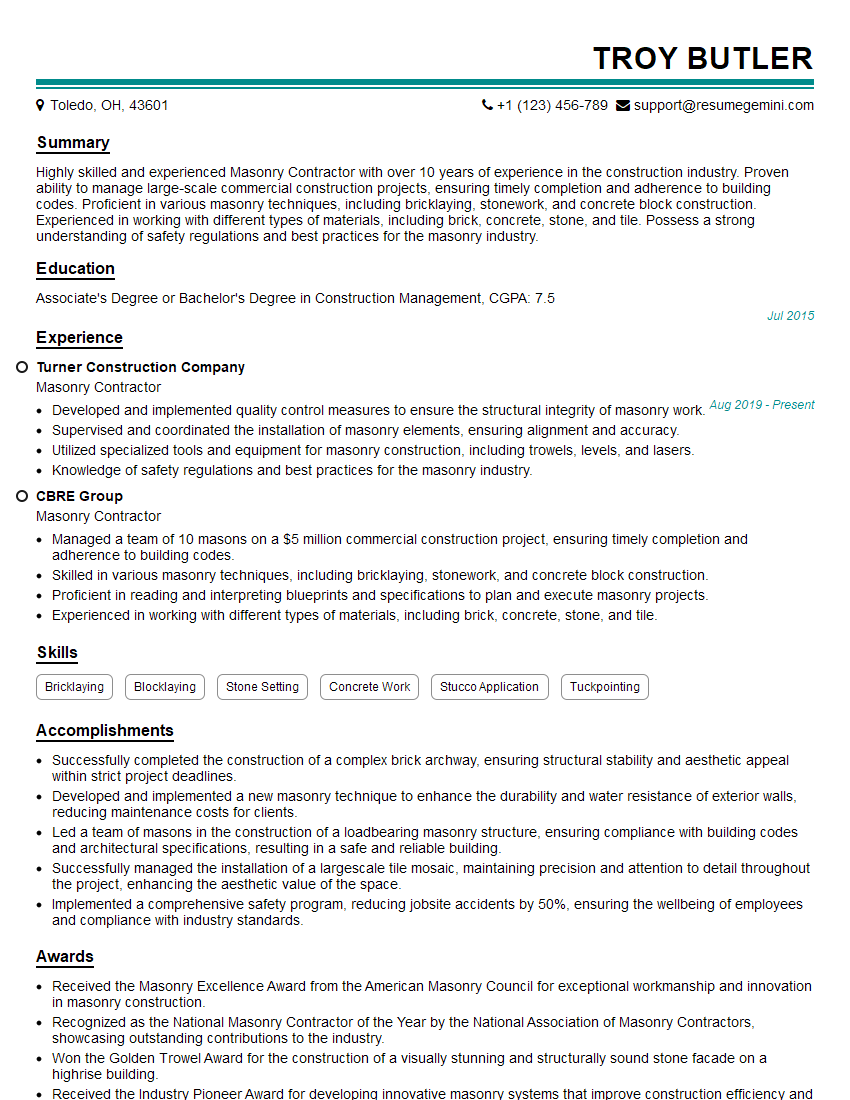
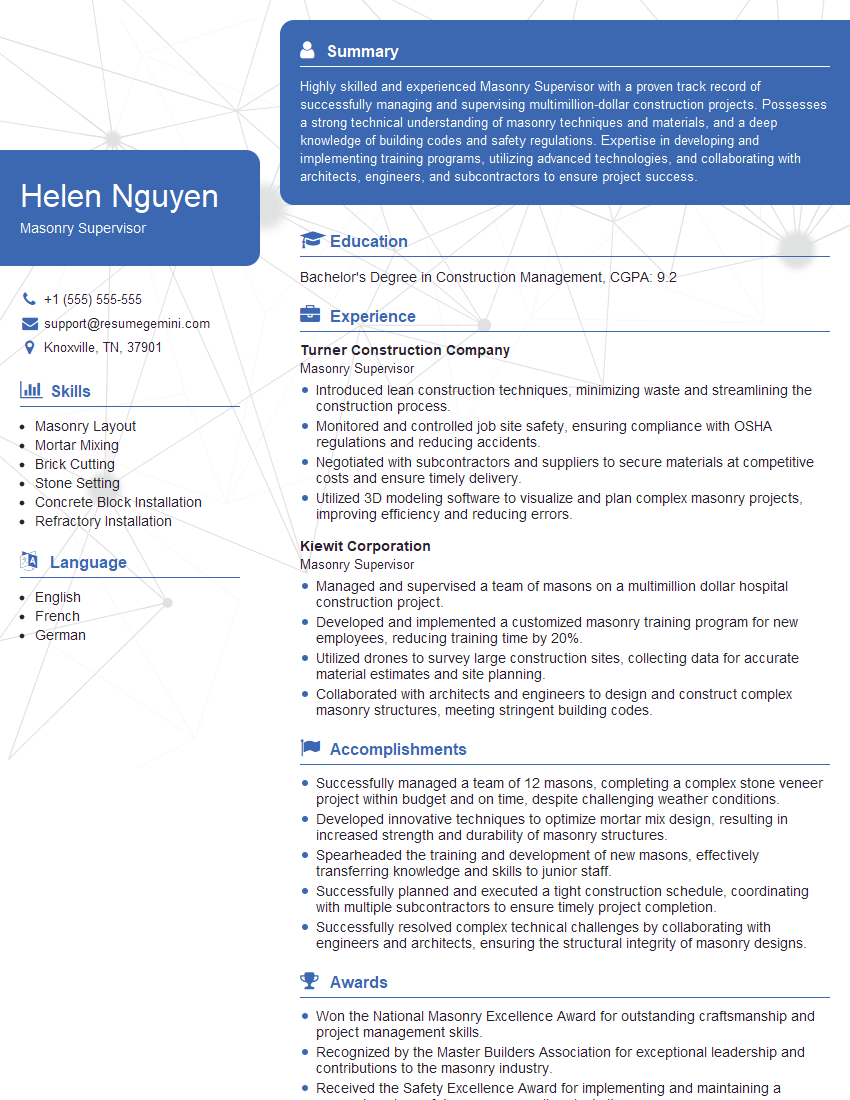
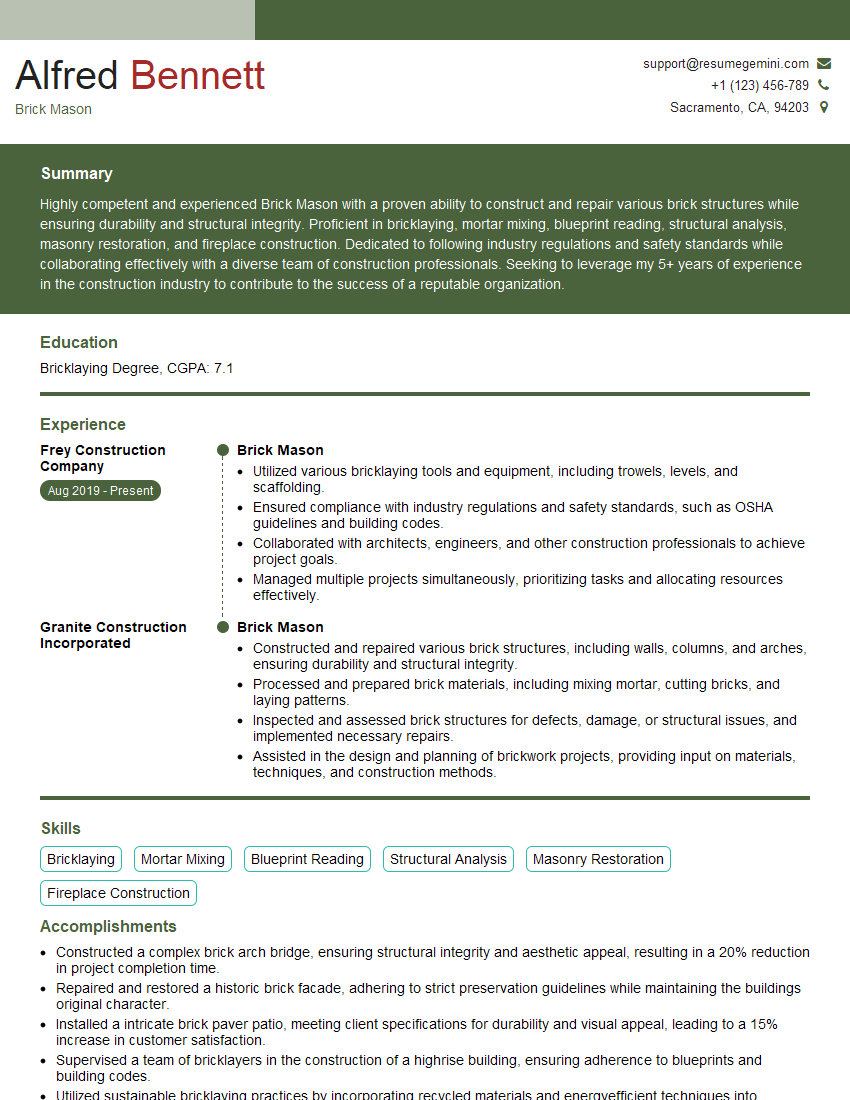
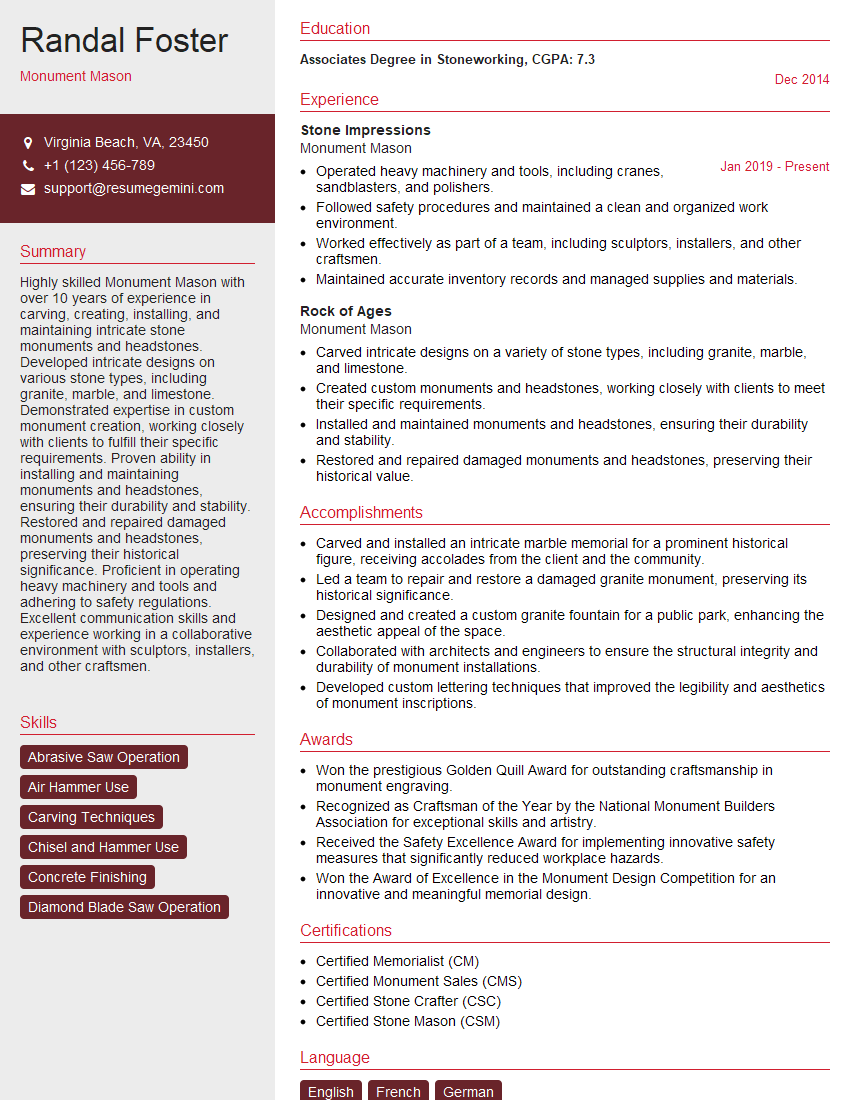
Mastering ornamental masonry opens doors to a rewarding career with diverse opportunities in restoration, new construction, and specialized projects. To maximize your chances of securing your dream role, a strong, ATS-friendly resume is crucial. This is where ResumeGemini can help. ResumeGemini provides a powerful platform for building professional, impactful resumes that highlight your skills and experience effectively. They even offer examples of resumes tailored specifically to the Ornamental Masonry field to provide you with a head start. Take the next step towards your ideal career – invest time in crafting a compelling resume with ResumeGemini.
Explore more articles
Users Rating of Our Blogs
Share Your Experience
We value your feedback! Please rate our content and share your thoughts (optional).
What Readers Say About Our Blog
To the interviewgemini.com Webmaster.
Very helpful and content specific questions to help prepare me for my interview!
Thank you
To the interviewgemini.com Webmaster.
This was kind of a unique content I found around the specialized skills. Very helpful questions and good detailed answers.
Very Helpful blog, thank you Interviewgemini team.