The right preparation can turn an interview into an opportunity to showcase your expertise. This guide to Pelvic Exam interview questions is your ultimate resource, providing key insights and tips to help you ace your responses and stand out as a top candidate.
Questions Asked in Pelvic Exam Interview
Q 1. Describe the proper technique for performing a bimanual pelvic exam.
The bimanual pelvic exam involves a systematic assessment of the external genitalia, vagina, cervix, uterus, and adnexa (ovaries and fallopian tubes). It’s crucial to maintain patient comfort and privacy throughout the procedure.
Technique:
- Preparation: Ensure proper lighting, equipment (gloves, lubricant), and a comfortable, draped examination table. Explain each step to the patient.
- External Examination: Inspect the mons pubis, labia majora and minora, clitoris, and perineum for any abnormalities like lesions, discharge, or inflammation.
- Speculum Exam: Gently insert a lubricated speculum, choosing the appropriate size to avoid discomfort. Visualize the vaginal walls and cervix, noting any discharge, lesions, or bleeding. Obtain a Pap smear if indicated.
- Bimanual Exam: Insert a lubricated, gloved index and middle fingers into the vagina. Simultaneously, place the other hand on the patient’s abdomen to palpate the uterus and adnexa. Assess the size, shape, consistency, mobility, and tenderness of these structures.
- Rectovaginal Exam (if indicated): Insert a lubricated finger into the rectum and simultaneously palpate the posterior aspect of the uterus, cul-de-sac, and adnexa. This is helpful for detecting rectal masses or assessing for endometriosis.
- Documentation: Meticulously document all findings, including any abnormalities.
Example: During the bimanual exam, a palpable adnexal mass may suggest an ovarian cyst or tumor, requiring further investigation.
Q 2. Explain the indications for a pelvic exam.
Pelvic exams are indicated for a variety of reasons, ranging from routine preventative care to investigating specific symptoms or concerns.
- Routine Preventative Care: Pap smears for cervical cancer screening, STI testing.
- Abnormal Uterine Bleeding: Investigating the cause of heavy, irregular, or prolonged menstrual bleeding.
- Pelvic Pain: Evaluating pain originating from the pelvic organs, such as endometriosis or ovarian cysts.
- Infertility: Assessing the reproductive organs for any abnormalities that might affect fertility.
- Postmenopausal Bleeding: Determining the cause of any bleeding after menopause.
- Pre-operative assessment: Prior to surgery of the pelvic organs.
- Suspected STI: Evaluating for sexually transmitted infections.
- Follow up care: Assessing response to treatment for previous conditions.
Example: A young woman experiencing chronic pelvic pain may undergo a pelvic exam to rule out conditions like endometriosis or an ovarian cyst.
Q 3. How do you obtain informed consent for a pelvic exam?
Obtaining informed consent is paramount before any pelvic exam. It involves ensuring the patient understands the procedure, its purpose, benefits, risks, and alternatives.
Process:
- Explanation: Clearly and concisely explain the procedure, including the steps involved and its purpose. Use non-medical terminology where possible.
- Benefits: Discuss the potential benefits, such as early detection of disease or diagnosis of a specific condition.
- Risks: Thoroughly explain the potential risks, including discomfort, bleeding, and infection.
- Alternatives: Discuss alternative methods of diagnosis or treatment, if any exist.
- Questions: Encourage the patient to ask questions and address any concerns they may have.
- Consent: Obtain written or verbal consent after the patient has fully understood the information. Documentation of the consent process is essential.
Example: Before a routine Pap smear, I would explain that it’s a quick procedure to check for cervical abnormalities, and while it may cause some mild discomfort, it’s important for early cancer detection. I’d then answer any questions and obtain their consent before proceeding.
Q 4. What are the potential risks and complications associated with a pelvic exam?
While generally safe, pelvic exams carry potential risks and complications, although these are relatively rare with proper technique and sterile procedures.
- Discomfort or Pain: This is the most common complication. Proper technique and adequate lubrication can minimize this.
- Vaginal Bleeding: Minor bleeding may occur, especially if there’s a cervical or vaginal abnormality.
- Infection: Although rare with sterile technique, infection is a possibility. This risk is increased in patients with existing conditions.
- Vaginal or Cervical Trauma: Rare but possible with improper technique.
- Psychological Trauma: Some patients may experience anxiety or distress associated with the procedure. A sensitive and empathetic approach is crucial.
Example: A patient with a history of previous pelvic trauma might experience more significant anxiety during the exam, requiring a more gentle and reassuring approach.
Q 5. How would you manage a patient who experiences discomfort or pain during a pelvic exam?
Managing patient discomfort or pain during a pelvic exam is crucial for patient well-being and ensuring the completion of the examination. A supportive and empathetic approach is essential.
Strategies:
- Reassurance and Communication: Maintain open communication, explain each step, and provide reassurance. Use a calm and gentle tone.
- Adjusting Technique: Slow down the pace, use more lubricant, change speculum size if needed.
- Positioning: Try different positions to maximize comfort.
- Pain Management: If pain is severe, consider providing analgesics or topical anesthetic prior to the exam.
- Breaks: Take breaks as needed to allow the patient to rest and regain composure.
- Postponement: If the pain is unmanageable, the exam can be postponed to allow better management of the patient’s condition.
Example: If a patient reports significant pain during speculum insertion, I would stop, re-lubricate, and potentially choose a smaller speculum before attempting again.
Q 6. Describe the normal findings of a pelvic exam in a nulliparous woman.
Normal findings in a nulliparous (never given birth vaginally) woman during a pelvic exam generally indicate a healthy reproductive system.
- External Genitalia: Normal appearance, no lesions or inflammation.
- Vagina: Smooth, pink, moist mucosa.
- Cervix: Smooth, firm, pink, with a small os (opening) located centrally.
- Uterus: Anteverted (tilted forward), approximately 6-8 cm in length, smooth, firm, and non-tender.
- Adnexa: Ovaries are typically small and smooth, and not usually palpable. Fallopian tubes are usually not palpable.
Example: During the exam, the cervix is noted to be smooth and pink, the uterus is anteverted and firm, and there are no palpable adnexal masses.
Q 7. Describe the normal findings of a pelvic exam in a multiparous woman.
Normal findings in a multiparous (given birth vaginally) woman may differ slightly from a nulliparous woman due to the changes associated with childbirth.
- External Genitalia: May show slight changes in skin pigmentation or laxity of the perineum.
- Vagina: May be slightly wider and less elastic than in a nulliparous woman.
- Cervix: May be slightly wider, softer, and less firm, with a possibly slightly irregular os.
- Uterus: Size and shape generally similar to a nulliparous woman, but may be slightly larger depending on previous pregnancies or previous surgeries.
- Adnexa: Findings are generally the same as in a nulliparous woman.
Example: The cervix may exhibit a slightly irregular os and the vaginal walls may demonstrate increased laxity, but the uterus is non-tender and of normal size.
Q 8. How would you document your findings from a pelvic exam?
Documenting a pelvic exam requires meticulous detail to ensure clarity and continuity of care. I would begin by noting the date and time of the exam. Then, I would systematically document my findings, organized by the components of the exam: external genitalia, speculum exam, and bimanual exam. For each section, I would record both objective and subjective observations.
- External Genitalia: I would describe the appearance of the labia, clitoris, perineum, and any lesions or abnormalities. For instance, I might note “labia majora and minora without erythema or lesions,” or “mild vulvar erythema present.”
- Speculum Exam: This includes documenting the appearance of the vaginal walls (e.g., color, discharge), the cervix (e.g., position, size, color, presence of lesions or discharge), and any collected specimens, such as a Pap smear. I’d record the type of speculum used and the patient’s comfort level. For example, “Cervix pink, smooth, and closed, without lesions. Pap smear collected.”
- Bimanual Exam: I would note the size, shape, consistency, and mobility of the uterus and ovaries. Any tenderness or abnormalities, like masses, would be documented, including location and size estimates. For example: “Uterus anteverted, normal size and consistency, non-tender. Ovaries palpable bilaterally, smooth and non-tender.”
- Other Relevant Findings: Any other significant findings, such as the presence of vaginal discharge (characterized by color, odor, and consistency), should be detailed. Likewise, I would document the patient’s pain level during the procedure.
Finally, I would ensure all findings are clearly and concisely presented, using standardized medical terminology to ensure accurate communication amongst healthcare professionals.
Q 9. What are the key differences between a speculum and bimanual exam?
The speculum and bimanual exams are both crucial components of a complete pelvic exam, but they assess different aspects of the female reproductive system. Think of them as two complementary pieces of a puzzle.
- Speculum Exam: This exam uses a speculum, a medical instrument that gently opens the vaginal walls to allow visualization of the cervix and vagina. Its primary purpose is to assess the vagina and cervix for abnormalities, collect specimens (like Pap smears), and assess vaginal discharge. It’s a visual examination providing direct observation.
- Bimanual Exam: This exam uses two hands: one hand is used to externally support the lower abdomen while the other hand, lubricated and gloved, is inserted into the vagina to palpate the cervix, uterus, and ovaries. It helps assess the size, shape, consistency, mobility, and tenderness of these organs. It’s an internal palpation providing tactile feedback.
In essence, the speculum exam focuses on visual assessment of the vagina and cervix, while the bimanual exam focuses on internal palpation of the pelvic organs. Both are necessary for a comprehensive evaluation.
Q 10. How do you assess for cervical motion tenderness?
Cervical motion tenderness (CMT) is assessed during the bimanual exam. It’s a sign that can indicate pelvic inflammatory disease (PID) or other conditions involving the cervix and surrounding tissues.
To assess for CMT, I gently move the cervix from side to side using my fingers inside the vagina. If the patient experiences pain during this movement, it’s considered a positive sign for CMT. The degree of pain experienced is also important; it can range from mild discomfort to severe pain.
It’s crucial to approach this part of the exam gently and to explain to the patient what I’m doing, which will help them relax and allow for more accurate assessment.
Q 11. Explain how to detect uterine fibroids during a pelvic exam.
Uterine fibroids are benign tumors that grow in the uterus. During a pelvic exam, detecting them relies heavily on the bimanual examination.
If present, fibroids may cause the uterus to feel enlarged, irregular in shape, or nodular. Instead of feeling smooth and firm, the uterus might feel lumpy or have distinct, palpable masses within its structure. The size of the fibroids influences the degree of enlargement. Larger fibroids might significantly alter the uterus’s size and shape, making it easily noticeable. Smaller ones might be harder to discern, requiring a more careful palpation.
It’s important to note that a pelvic exam alone cannot definitively diagnose fibroids; imaging studies such as ultrasound are needed for confirmation.
Q 12. How would you identify an ovarian cyst during a pelvic exam?
Detecting ovarian cysts during a pelvic exam is challenging, as many are too small to be palpated. However, a large ovarian cyst might be palpable during a bimanual exam.
During the bimanual exam, I’ll be carefully feeling for the ovaries. A cyst might present as a palpable mass on one or both sides of the uterus. The mass may be smooth or irregular, and it may be tender or non-tender. Size, consistency, and mobility would be noted. A large, tense cyst might have a fluid-filled feeling.
Similar to fibroids, a pelvic exam provides suggestive findings, but imaging studies (ultrasound) are necessary for definitive diagnosis and characterization of any ovarian masses.
Q 13. Explain the process of collecting a Pap smear.
The Pap smear is a crucial screening test for cervical cancer and precancerous lesions. The process begins with the speculum exam to adequately visualize the cervix.
After proper visualization, I would use a specialized brush or spatula to gently collect cells from the transformation zone of the cervix – the area where the squamous and columnar epithelium meet. This is the area where most cervical abnormalities occur. The collected cells are then placed onto a special slide and sent to a laboratory for cytological examination.
Patient comfort and proper technique are essential to ensure an accurate and comfortable procedure. The patient should be informed about the process, and proper positioning is important to facilitate optimal access to the cervix. After the sample is collected, the speculum is removed, and the examination continues with the bimanual part.
Q 14. What are the limitations of a pelvic exam in diagnosing certain conditions?
While a pelvic exam is a valuable tool, it has limitations in diagnosing certain conditions. Its primary limitations stem from its reliance on physical examination rather than direct visualization or advanced testing.
- Early-stage cancers: Pelvic exams can sometimes detect advanced cancers due to palpable masses or abnormal findings, but they might not detect early-stage cancers that may not cause palpable changes. Imaging studies are required in such situations.
- Ovarian cysts and fibroids: Small cysts or fibroids may not be palpable. Ultrasound is a much more sensitive technique for their detection.
- Endometriosis: While some cases of advanced endometriosis can be suggested by findings of tenderness or nodularity during the exam, the diagnosis is often challenging using a pelvic exam alone and requires imaging or laparoscopy.
- Infections: A pelvic exam can show signs suggestive of infection (like CMT or vaginal discharge), but lab tests (cultures and sensitivities) are needed for definitive diagnosis and targeted treatment.
In summary, the pelvic exam provides valuable clinical information and serves as a crucial screening tool, but its results should be interpreted in conjunction with other clinical findings and, in many instances, advanced diagnostic techniques for accurate diagnosis and optimal patient care.
Q 15. How do you handle abnormal findings during a pelvic exam?
Handling abnormal findings during a pelvic exam involves a systematic approach prioritizing patient safety and well-being. First, I carefully document all observations, noting any deviations from normal findings such as unusual discharge, lesions, masses, or tenderness. This detailed documentation is crucial for accurate record-keeping and facilitates effective communication with other healthcare professionals if consultation or further investigation is necessary.
Next, I determine the urgency of the findings. Some abnormalities require immediate attention (e.g., signs of infection, significant bleeding), while others can be managed with follow-up appointments and further testing. For urgent findings, I will immediately initiate appropriate interventions, such as initiating treatment for an infection or arranging for emergency consultation with a specialist. For less urgent findings, I discuss the potential causes with the patient, and explain the need for further investigations, including lab tests (e.g., Pap smear, STI testing), imaging studies (e.g., ultrasound), or referral to a specialist (e.g., gynecologist, urologist).
For example, if I detect an unusually large or irregular uterine fibroid, I’d thoroughly document its size, location, and any associated symptoms. I’d explain the finding to the patient, discuss potential treatment options (such as observation, medication, or surgery), and refer her to a gynecologist for further assessment and management.
Career Expert Tips:
- Ace those interviews! Prepare effectively by reviewing the Top 50 Most Common Interview Questions on ResumeGemini.
- Navigate your job search with confidence! Explore a wide range of Career Tips on ResumeGemini. Learn about common challenges and recommendations to overcome them.
- Craft the perfect resume! Master the Art of Resume Writing with ResumeGemini’s guide. Showcase your unique qualifications and achievements effectively.
- Don’t miss out on holiday savings! Build your dream resume with ResumeGemini’s ATS optimized templates.
Q 16. Discuss your approach to patient communication during a pelvic exam.
Patient communication during a pelvic exam is paramount. I begin by establishing a rapport with the patient in a calm and respectful manner. Creating a safe and comfortable environment is essential. This involves explaining the procedure step-by-step in clear, simple language, avoiding jargon. I actively encourage questions and answer them honestly and patiently. I use anatomical diagrams or models to enhance understanding and address any anxieties the patient may have.
Throughout the exam, I maintain open and non-judgmental communication. I explain each step before performing it, ensuring the patient’s comfort and consent. I also provide positive reinforcement and reassurance. For instance, I might say things like, “This part might feel a little uncomfortable, but it will only take a moment,” or, “You’re doing great.” After the exam, I summarize my findings in a clear and concise manner, answering any remaining questions and scheduling follow-up appointments as needed.
For example, if a patient expresses discomfort during speculum insertion, I’d pause, reassess the situation, and offer strategies to help improve comfort, such as using lubrication or adjusting the speculum angle. Open communication about discomfort ensures a more positive experience for the patient.
Q 17. Explain the importance of maintaining patient privacy and confidentiality during a pelvic exam.
Maintaining patient privacy and confidentiality during a pelvic exam is ethically and legally crucial. This encompasses several key aspects: First, ensuring the physical privacy of the patient by conducting the exam in a private room with the door closed and only necessary personnel present. Secondly, all conversations related to the exam and its findings must be kept confidential and only shared with other healthcare professionals involved in the patient’s care with their consent.
All medical records, including the pelvic exam notes, must be protected using appropriate security measures, whether electronic or paper-based. HIPAA regulations (in the US) or equivalent laws in other countries strictly dictate how patient information is handled. It’s my responsibility to follow these regulations carefully to prevent unauthorized access or disclosure of private health information. The patient’s name and other identifying details should never be discussed in public areas or shared with unauthorized individuals. This also includes proper disposal of any waste generated during the examination.
For instance, discussing a patient’s pelvic exam results with colleagues in a public space, even if not explicitly mentioning their name, is a breach of confidentiality. All discussions regarding patient health should take place in a private and secure setting.
Q 18. How do you address patient anxieties or concerns related to the pelvic exam?
Addressing patient anxieties and concerns is a critical part of providing compassionate and effective care. I actively listen to the patient’s concerns and validate their feelings. I create a space where they feel comfortable expressing their worries without judgment. This begins even before the exam, during the initial consultation.
I thoroughly explain the procedure, emphasizing the importance of the exam and answering any questions with patience and clarity. I may use analogies or visual aids to help demystify the process. For example, I might compare the speculum to a gently opening door. I also provide choices where possible, such as offering different positions for the exam to enhance comfort.
If a patient expresses significant anxiety, I may offer relaxation techniques such as deep breathing exercises or suggest a support person to be present during the exam. In cases of severe anxiety, referring the patient to a therapist or counselor may be beneficial before proceeding with the exam. The goal is to make the patient feel empowered and in control of the situation.
Q 19. Describe the equipment needed for a standard pelvic exam.
The equipment needed for a standard pelvic exam is relatively straightforward but crucial for maintaining hygiene and accuracy. The essential items include:
- Gloves (sterile): To maintain a sterile field and protect both the patient and the examiner.
- Lubricant (water-soluble): To facilitate smooth insertion of instruments and minimize patient discomfort.
- Speculum (usually metal or plastic): Used to visualize the vagina and cervix.
- Pap smear collection brush and vial: For collecting cervical cells for cytology testing (Pap smear).
- Cotton-tipped applicators: For collecting samples for other tests, such as cultures.
- Light source: A bright light source, usually a penlight or examination lamp, is essential for adequate visualization.
- Examination table and drape: To provide patient privacy and comfort.
- Waste disposal containers: For safe disposal of used materials.
Depending on the reason for the exam and the patient’s individual needs, additional instruments such as a bimanual examination kit (to assess the uterus and ovaries) may be necessary.
Q 20. What are the steps for preparing the examination room for a pelvic exam?
Preparing the examination room for a pelvic exam involves creating a clean, private, and comfortable environment. This includes:
- Ensuring the room is clean and well-lit. The examination table should be clean and properly draped.
- Having all necessary equipment readily available and organized to minimize interruptions during the exam. This includes checking the functionality of the light source and the sterility of the gloves and speculum.
- Ensuring patient privacy by closing the door and drawing the curtains or blinds if necessary.
- Setting the room temperature to a comfortable level, considering the patient’s preferences. A slightly warmer temperature is often appreciated.
- Providing tissues, a hand sanitizer, and a trash receptacle within easy reach.
- Cleaning and disinfecting the examination table and instruments, adhering to infection control guidelines between each patient.
A well-prepared examination room contributes significantly to the patient’s comfort and to the overall professionalism of the exam.
Q 21. How do you maintain sterility and infection control during a pelvic exam?
Maintaining sterility and infection control during a pelvic exam is critical to prevent the transmission of infectious agents. This involves strict adherence to established guidelines. First, hand hygiene is paramount – I perform thorough handwashing or use an alcohol-based hand rub before and after the exam.
Sterile gloves are worn throughout the entire procedure. All instruments used during the exam, such as the speculum and Pap smear collection devices, should be either sterile or appropriately disinfected between uses. I use only sterile, single-use items whenever possible. The examination table is cleaned and disinfected with an appropriate disinfectant between patients. Proper disposal of all used materials, including gloves and other waste products, is essential. Sharps must be disposed of in appropriate containers.
For example, if using a reusable speculum, it must be thoroughly cleaned and sterilized according to the manufacturer’s instructions after each use. Failure to follow these infection control measures can have serious consequences, including the transmission of sexually transmitted infections or other pathogens.
Q 22. Describe the appropriate positioning of the patient for a pelvic exam.
The optimal patient positioning for a pelvic exam is the lithotomy position. This involves the patient lying supine (on their back) with their feet elevated in stirrups. The knees should be bent and slightly apart, allowing for comfortable access to the pelvic area. It’s crucial to ensure the patient feels as comfortable and supported as possible. A pillow under the head and knees can greatly increase comfort. Proper draping is essential, exposing only the necessary area while maintaining patient dignity and privacy. We also ensure that the patient’s buttocks are close to the edge of the examination table to ensure easier access.
Variations may be necessary depending on the patient’s physical limitations or preferences, for example, a patient with severe arthritis may benefit from a modified lithotomy position. The key is to find a position that allows for a thorough examination while respecting the patient’s comfort and modesty.
Q 23. How would you explain the procedure to a patient who has never had a pelvic exam?
Explaining the procedure to a patient undergoing their first pelvic exam is critical for building trust and alleviating anxiety. I would begin by explaining the purpose of the exam, emphasizing that it’s a routine part of women’s healthcare for detecting and preventing various conditions, such as infections, cervical cancer, or abnormalities in the reproductive organs. I would describe the exam step-by-step in simple terms, avoiding medical jargon. For example, I would say something like, “First, I’ll visually inspect your external genitalia. Then, using a speculum, a device that gently opens the vagina, I’ll examine your cervix. Finally, I’ll perform a bimanual exam by inserting my fingers into your vagina and placing my other hand on your abdomen to feel your uterus and ovaries.” I’d emphasize that the patient can stop the exam at any time if they feel uncomfortable and that it’s okay to ask questions throughout the process. I would also reassure them that the exam should only cause mild discomfort, and that we’ll use lubrication to minimize any friction. Maintaining a calm, empathetic demeanor is crucial.
Q 24. How do you assess for adnexal tenderness?
Adnexal tenderness refers to pain in the adnexa, which are the structures adjacent to the uterus, including the ovaries and fallopian tubes. I assess for this during the bimanual exam. With one hand inside the vagina and the other on the abdomen, I gently palpate the areas lateral to the uterus. Tenderness suggests potential inflammation or pathology. The assessment involves noting the location, intensity, and character of any pain the patient reports. I also observe for guarding (muscular tension to protect the affected area) or other signs of discomfort. For example, if a patient reports sharp pain in the right lower quadrant during palpation of the right adnexa, this could indicate an ovarian cyst or ectopic pregnancy, requiring further investigation. The degree of tenderness is subjective, therefore detailed notes and clear communication with the patient are vital.
Q 25. What are the common variations in pelvic anatomy that you might encounter?
Pelvic anatomy exhibits considerable variation. Common variations include uterine size and shape (anteverted, retroverted, or mid-positioned uterus), cervical position and consistency, presence of uterine fibroids or polyps, ovarian size and shape, and the presence of congenital anomalies like bicornuate uterus. The degree of vaginal laxity also varies significantly with age and parity (number of pregnancies). Anatomical variations influence the technique and interpretation of the exam; for instance, a retroverted uterus might require a slightly adjusted approach during the bimanual exam. It is essential to consider these individual variations to avoid misinterpreting findings and to tailor the exam to the specific patient’s anatomy. For example, a large uterine fibroid may be felt during the bimanual exam and would be documented accordingly.
Q 26. How would you differentiate between a normal and abnormal cervix?
Differentiating a normal from an abnormal cervix involves a visual inspection and palpation during the pelvic exam. A normal cervix is typically firm, pink, and smooth, with a small, round opening (the os). Its position varies; it can be centrally located or slightly offset. Abnormalities can include inflammation (cervicitis), causing redness, swelling, and possibly discharge; erosion, appearing as a reddened area; ectropion, where the endocervical tissue extends outward onto the ectocervix; or lesions suggestive of infection or precancerous changes (detected via visual inspection or colposcopy). The cervix may also feel irregular in texture, suggestive of pathology, while a normal cervix is smooth. The size and shape of the os may also provide clues; for example, a dilated os could indicate pregnancy or recent cervical dilation.
Q 27. Explain your approach to managing a patient with a history of sexual assault during a pelvic exam.
Managing a patient with a history of sexual assault during a pelvic exam requires a particularly sensitive and trauma-informed approach. Prioritizing the patient’s safety, comfort, and autonomy is paramount. I would begin by establishing rapport and clearly explaining each step of the procedure in detail, ensuring the patient feels empowered and in control. I’d offer the patient choices whenever possible, allowing them to decline any part of the exam if they feel uncomfortable. I would avoid any unnecessary or overly invasive maneuvers. Collaboration with a sexual assault counselor or advocate would be highly beneficial, both to provide support to the patient and to ensure a comprehensive and respectful assessment. Documentation should be clear, concise, and avoid any judgmental language. The patient’s emotional well-being should always be prioritized above all else.
Q 28. Describe a situation where you had to modify your pelvic exam technique due to a patient’s specific circumstances.
I once had a patient with severe vaginismus (involuntary spasm of the vaginal muscles). A standard pelvic exam was not possible without causing significant distress. In this case, I modified my technique to prioritize the patient’s comfort and well-being. Instead of attempting a full speculum exam, we focused on a careful external exam and a limited bimanual exam. The patient was also given time to relax and we used gradual desensitization techniques to allow for a more comfortable experience. I also involved a female chaperone for emotional support. We discussed the possibilities of future exams with appropriate preparation such as pelvic floor therapy to facilitate the next exam. The goal was not to force a complete examination but to accomplish the most important aspects within the constraints of the patient’s condition while maintaining their safety and comfort. It is crucial to document all modifications made and the patient’s response to the modified exam.
Key Topics to Learn for Pelvic Exam Interview
- Patient History & Communication: Mastering effective communication techniques to build rapport and gather comprehensive patient history relevant to pelvic health.
- Anatomy & Physiology of the Pelvic Region: Demonstrate a thorough understanding of the female reproductive system, including relevant anatomy and physiological processes.
- Procedure Techniques: Explain the steps involved in a pelvic exam, including proper preparation, positioning, and instrumentation. Discuss variations based on patient needs and clinical situations.
- Normal Findings & Variations: Describe what constitutes a normal pelvic exam and be prepared to discuss common variations and their significance.
- Abnormal Findings & Differential Diagnosis: Detail how to identify and interpret abnormal findings during a pelvic exam, including developing a differential diagnosis based on observed signs and symptoms.
- Risk Management & Patient Safety: Articulate your understanding of infection control, appropriate safety precautions, and ethical considerations related to pelvic exams.
- Legal & Ethical Considerations: Discuss informed consent, patient confidentiality, and professional boundaries within the context of performing a pelvic examination.
- Documentation & Reporting: Explain the importance of accurate and thorough documentation of the pelvic exam findings and the process of communicating these findings to the healthcare team.
- Patient Education & Counseling: Describe your approach to educating patients about the pelvic exam process, addressing their concerns, and providing appropriate post-exam advice.
- Integration with Other Procedures: Discuss how the pelvic exam integrates with other diagnostic and therapeutic procedures within the context of women’s health.
Next Steps
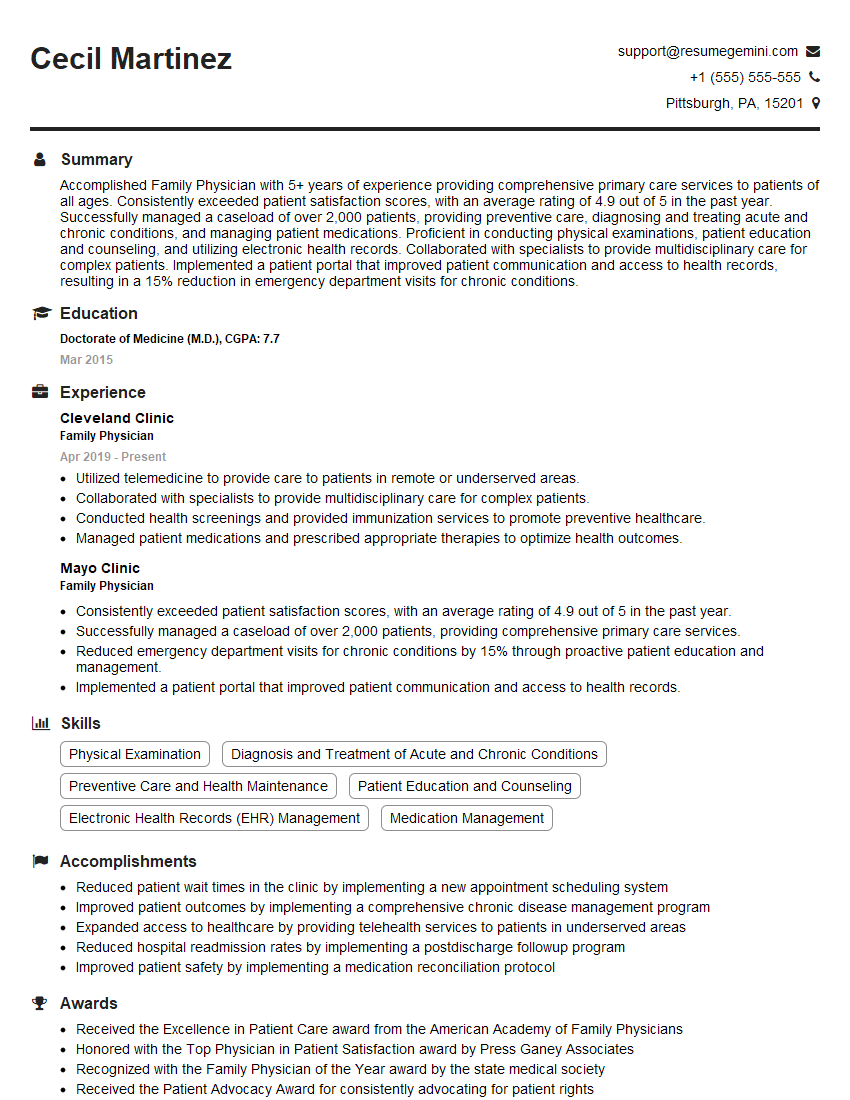
Mastering the Pelvic Exam is crucial for advancing your career in women’s health. A strong understanding of this core procedure will significantly enhance your clinical skills and open doors to various career opportunities. To maximize your job prospects, focus on creating an ATS-friendly resume that highlights your skills and experience effectively. ResumeGemini is a trusted resource for building professional resumes that get noticed. Take advantage of their expertise and explore examples of resumes tailored specifically to Pelvic Exam roles to further strengthen your application materials.
Explore more articles
Users Rating of Our Blogs
Share Your Experience
We value your feedback! Please rate our content and share your thoughts (optional).
What Readers Say About Our Blog
To the interviewgemini.com Webmaster.
Very helpful and content specific questions to help prepare me for my interview!
Thank you
To the interviewgemini.com Webmaster.
This was kind of a unique content I found around the specialized skills. Very helpful questions and good detailed answers.
Very Helpful blog, thank you Interviewgemini team.