Feeling uncertain about what to expect in your upcoming interview? We’ve got you covered! This blog highlights the most important Remediation Design and Implementation interview questions and provides actionable advice to help you stand out as the ideal candidate. Let’s pave the way for your success.
Questions Asked in Remediation Design and Implementation Interview
Q 1. Explain the difference between in-situ and ex-situ remediation techniques.
The core difference between in-situ and ex-situ remediation lies in the location of the treatment process. In-situ remediation treats contaminated soil or groundwater at the site itself, minimizing excavation and transportation. Think of it like treating a patient in their home—less disruptive. Ex-situ remediation, on the other hand, involves excavating the contaminated material and transporting it to a treatment facility for processing. This is more like bringing a patient to a hospital for specialized care.
- In-situ examples include bioremediation (using microorganisms to break down contaminants), soil vapor extraction (removing volatile contaminants from soil using vacuum), and chemical oxidation (injecting chemicals to break down contaminants).
- Ex-situ examples include soil washing (separating contaminants from soil using water), thermal desorption (heating soil to vaporize contaminants), and solidification/stabilization (binding contaminants within a stable matrix).
The choice between these depends heavily on the nature and extent of contamination, site conditions, regulatory requirements, and cost considerations.
Q 2. Describe your experience with risk assessment in remediation projects.
Risk assessment is fundamental to any remediation project. My experience involves a multi-step process: First, we characterize the contamination, identifying the types and concentrations of contaminants present. This often includes soil and groundwater sampling and laboratory analysis. Second, we assess potential exposure pathways, considering how people and the environment might be affected (e.g., drinking water, inhalation, dermal contact). Third, we evaluate potential human health and ecological risks, often using risk assessment models. Finally, we develop a risk management plan that outlines remediation goals and strategies to mitigate identified risks. I’ve been involved in projects where we had to account for potential risks to nearby residential areas, sensitive ecosystems, and worker safety.
For example, in a project involving a former industrial site with soil contaminated by heavy metals, we used a deterministic risk assessment model to estimate potential human exposure via ingestion of contaminated soil by children playing on the site. This informed our selection of a suitable remediation technology and helped justify the proposed remediation goals to the regulatory agency.
Q 3. What are the key factors to consider when selecting a remediation technology?
Selecting the right remediation technology is a crucial decision. Key factors to consider include:
- Contaminant type and concentration: Different technologies are effective for different contaminants. For example, bioremediation works well for biodegradable organic compounds, whereas chemical oxidation is more suitable for certain inorganic contaminants.
- Site conditions: Soil type, groundwater hydrology, and site accessibility significantly impact technology selection. A highly permeable soil might be ideal for soil vapor extraction, while a low-permeability soil might require in-situ chemical oxidation.
- Regulatory requirements: Compliance with local, state, and federal regulations is paramount. The selected technology must meet the required cleanup levels and adhere to permit conditions.
- Cost-effectiveness: Remediation technologies vary significantly in cost, both in terms of initial investment and long-term operation and maintenance. A cost-benefit analysis is essential to identify the most efficient solution.
- Treatment effectiveness: The selected technology should be capable of achieving the desired level of contaminant reduction within a reasonable timeframe.
- Public acceptance: Engaging with the community and addressing their concerns is crucial for successful project implementation. Some technologies, like those involving excavation, might have greater community impact than others.
A thorough evaluation of these factors is necessary to make an informed decision.
Q 4. How do you ensure compliance with environmental regulations during remediation?
Ensuring regulatory compliance is paramount. My approach involves:
- Thorough understanding of applicable regulations: This includes federal and state environmental laws, specific permit conditions, and local ordinances.
- Regular communication with regulatory agencies: This proactive approach prevents misunderstandings and ensures timely approvals.
- Detailed documentation: Maintaining comprehensive records of all activities, including sampling data, analytical results, and remediation progress reports, is essential for demonstrating compliance.
- Quality assurance/quality control (QA/QC) program: Implementing a robust QA/QC program ensures the accuracy and reliability of data used to assess compliance.
- Independent verification and validation: Employing independent third-party verification of the remediation process to ensure objective assessment of compliance.
- Contingency planning: Developing contingency plans to address unexpected events that might impact compliance, such as equipment failure or unforeseen contamination.
Non-compliance can lead to severe penalties, so rigorous adherence to regulations is not just a best practice but a necessity.
Q 5. Explain your experience with developing remediation plans and work scopes.
Developing remediation plans and work scopes requires a systematic approach. I start with a site investigation report, which provides a detailed understanding of the contamination. Then, I define project objectives, including cleanup goals and regulatory requirements. Next, I select appropriate remediation technologies based on the factors discussed earlier. The work scope outlines all tasks, including site preparation, contaminant removal, disposal of waste materials, and site restoration. The plan includes a detailed schedule, cost estimates, and health and safety protocols. I’ve managed projects involving the remediation of contaminated soil and groundwater at industrial sites, former gas stations, and landfills. One particularly challenging project involved coordinating the remediation of a site with multiple layers of contamination and requiring a phased approach.
In each instance, clear communication with stakeholders—clients, regulatory agencies, and the community—was integral to ensure buy-in and successful project execution.
Q 6. Describe your familiarity with different soil and groundwater remediation methods (e.g., pump and treat, bioremediation).
I’m very familiar with a wide range of soil and groundwater remediation methods.
- Pump and treat: This method involves extracting groundwater from wells, treating it above ground, and reinjecting the treated water back into the aquifer. It is effective for volatile organic compounds (VOCs) and some dissolved contaminants, but can be time-consuming and expensive, especially for less permeable aquifers.
- Bioremediation: This uses microorganisms to break down contaminants, often in-situ. It’s environmentally friendly and cost-effective for biodegradable organic contaminants. However, it’s heavily reliant on environmental factors like temperature, moisture, and nutrient availability. I’ve overseen projects utilizing enhanced bioremediation, which includes adding nutrients or oxygen to accelerate the microbial activity.
- Soil vapor extraction (SVE): This technique extracts volatile contaminants from the soil using vacuum pressure. It is suitable for VOCs and other volatile substances and works efficiently in permeable soils. I have experience in selecting appropriate vacuum levels and managing the disposal of extracted vapors.
- In-situ chemical oxidation (ISCO): This involves injecting oxidants into the soil or groundwater to break down contaminants chemically. It’s effective for a wide range of contaminants, but it requires careful monitoring and control to prevent unwanted reactions or impacts on surrounding environments.
- Phytoremediation: This is a sustainable technique using plants to remove or stabilize contaminants in soil. While slow, it’s effective and aesthetically pleasing for certain contaminants and situations.
The choice of technology will always depend on the specific site conditions and contaminant profile.
Q 7. How do you manage remediation project budgets and timelines?
Managing remediation project budgets and timelines effectively is crucial. My approach includes:
- Detailed budgeting: Creating a comprehensive budget that includes all aspects of the project, from site investigation to final site restoration, including contingency funds for unexpected issues.
- Regular monitoring of expenses: Tracking actual costs against the budget throughout the project lifecycle to detect any deviations early.
- Realistic scheduling: Developing a detailed project schedule that accounts for all tasks and potential delays. This includes incorporating appropriate time buffers for unforeseen circumstances.
- Regular progress meetings: Holding regular meetings with the project team and stakeholders to review progress, identify potential issues, and adjust the schedule or budget as needed.
- Value engineering: Evaluating options to optimize project costs without compromising quality or environmental protection. This might involve exploring alternative technologies or modifying the scope of work.
- Change management: Implementing a system for managing changes to the project scope, schedule, or budget in a controlled manner.
Proactive management is key to delivering projects on time and within budget. I’ve successfully managed multiple projects with varying degrees of complexity and budgets, always prioritizing cost-effective solutions while maintaining high standards of environmental compliance.
Q 8. Explain your experience with data analysis and interpretation in remediation projects.
Data analysis is the backbone of effective remediation. In my experience, it starts with gathering data from various sources – site investigation reports, laboratory results, monitoring well data, and historical records. I then use statistical software and visualization tools to identify trends, patterns, and anomalies in contaminant concentrations, migration pathways, and remediation effectiveness. For example, in a project involving chlorinated solvents, I used geostatistical software to create 3D models of plume extent, allowing us to target remediation efforts more efficiently. Interpretation involves understanding the implications of these analyses, informing decisions on remediation technology selection, design parameters, and performance assessment. A key aspect is uncertainty analysis – understanding and quantifying the inherent uncertainty in the data and its impact on decision-making. This helps to avoid over-confidence in predictions and to develop robust remediation strategies.
For instance, in one project, initial data suggested a relatively small plume of contamination. However, after applying kriging and considering the uncertainty, we found there was a greater chance of a significantly larger plume, leading us to adjust our remediation approach to incorporate a wider treatment area.
Q 9. How do you communicate technical information to non-technical stakeholders?
Communicating complex technical information to non-technical stakeholders is crucial. I employ a multi-faceted approach. First, I simplify the jargon. Instead of using terms like ‘bioaugmentation,’ I might say ‘we’re adding beneficial microbes to help break down the contaminants.’ I use clear and concise language, avoiding technical terminology whenever possible. Visual aids like maps, charts, and infographics are incredibly effective. A well-designed diagram can illustrate the contaminant plume or remediation progress far better than a lengthy technical report. I also prioritize storytelling – connecting the technical details to the broader context of project goals, risks, and benefits. For example, explaining how successful remediation will protect local drinking water sources creates a compelling narrative for community members.
Finally, I encourage open dialogue and answer questions patiently. I make sure to check for understanding and adjust my communication style based on the audience’s feedback. The goal isn’t just to convey information but also to foster trust and ensure everyone is on the same page.
Q 10. Describe your experience with site investigation and characterization.
Site investigation and characterization is the foundational step in any remediation project. My experience includes overseeing and participating in various phases, from initial site reconnaissance to detailed subsurface investigation. This involves planning and executing field activities like soil and groundwater sampling, drilling boreholes, installing monitoring wells, and conducting geophysical surveys. The data collected provides a comprehensive understanding of the site’s geology, hydrogeology, and the extent and nature of contamination. I’m proficient in interpreting data from various analytical methods, including laboratory analyses of soil and water samples, and geophysical techniques such as ground-penetrating radar (GPR) and electromagnetic induction (EMI).
For example, in a recent project involving a former manufacturing facility, we used a combination of direct push technology for soil sampling and geophysical methods to delineate the extent of subsurface contamination and inform the placement of remediation wells. This targeted approach ensured efficient use of resources and minimized environmental disruption.
Q 11. What are the key performance indicators (KPIs) you monitor in a remediation project?
Key Performance Indicators (KPIs) are critical for tracking progress and ensuring remediation success. These vary depending on the remediation technology and site-specific goals, but common KPIs include:
- Contaminant concentration reductions: Measuring the decrease in contaminant levels in soil and groundwater over time.
- Remediation system efficiency: Evaluating the effectiveness of the chosen remediation technology, such as the removal rate of contaminants per unit of energy or cost.
- Groundwater flow patterns: Monitoring changes in groundwater flow direction and velocity, particularly in relation to contaminant migration.
- Treatment system performance: For ex-situ treatment systems, this includes measuring treatment efficiency and waste generation.
- Project cost and schedule adherence: Tracking budget expenditures and comparing actual progress against the project timeline.
Regular reporting and analysis of these KPIs allow for proactive adjustments to the remediation strategy, optimization of resource allocation, and demonstration of project success to regulatory agencies and stakeholders.
Q 12. How do you address unexpected challenges or setbacks during remediation?
Unexpected challenges are inevitable in remediation projects. My approach is to embrace a proactive, problem-solving mindset. This begins with thorough planning and risk assessment. Identifying potential challenges beforehand helps develop contingency plans. When encountering unexpected issues, the first step is to thoroughly investigate the cause. This might involve additional sampling, laboratory analyses, or consulting with subject matter experts. Then, I develop and evaluate a range of solutions, considering their technical feasibility, cost-effectiveness, and environmental impact. This often involves collaboration with the project team, regulatory agencies, and stakeholders.
For example, if unexpected high levels of a specific contaminant are found, we may need to adapt the remediation strategy, possibly involving a combination of technologies or a revised treatment design. Transparency and clear communication with all stakeholders are crucial throughout the problem-solving process.
Q 13. Describe your experience with remediation project closure and reporting.
Remediation project closure and reporting is a critical stage that requires meticulous attention to detail. It involves verifying that remediation goals have been met, preparing a comprehensive closure report that summarizes the project’s findings, and obtaining regulatory approval for closure. The closure report includes a detailed description of the site’s history, investigation findings, remediation activities, performance monitoring data, and an assessment of long-term risks. It’s essential to demonstrate that the site meets all applicable regulatory requirements for closure, including any post-closure monitoring obligations.
The process also involves decommissioning of remediation systems, site restoration, and the preparation of final site management plans. Involving stakeholders throughout the closure process ensures transparency and promotes a smooth transition to the post-remediation phase.
Q 14. What software and tools are you proficient in for remediation design and implementation?
My proficiency includes a wide range of software and tools relevant to remediation design and implementation. This includes:
- Geostatistical software: Such as ArcGIS, Surfer, and GMS, for creating spatial models of contaminant distribution.
- Data management and analysis software: Including Excel, R, and Python, for organizing, analyzing, and visualizing data from site investigations and monitoring.
- Remediation modeling software: For simulating the effectiveness of different remediation technologies and optimizing design parameters.
- CAD software: AutoCAD or similar programs for preparing site plans and remediation system designs.
- Specialized software for specific remediation technologies: For example, software packages for simulating the performance of pump-and-treat systems or bioremediation processes.
I’m also proficient in using various field instruments and equipment for site investigations, including drilling rigs, geophysical instruments, and sampling equipment.
Q 15. Explain your understanding of different remediation technologies’ limitations and applicability.
Remediation technology selection hinges on understanding the limitations and applicability of each method to the specific contaminant, site conditions, and regulatory requirements. No single technology is a silver bullet.
Pump and Treat: Highly effective for dissolved contaminants in groundwater, but it can be slow, expensive, and may not be suitable for low-permeability soils or non-aqueous phase liquids (NAPLs).
Bioremediation: Cost-effective and environmentally friendly, but relies on the presence of appropriate microbial populations and favorable environmental conditions (temperature, pH, oxygen availability). It can be slow and may not be effective for all contaminants.
Soil Vapor Extraction (SVE): Excellent for volatile organic compounds (VOCs) in the vadose zone (unsaturated soil), but less effective for non-volatile contaminants or areas with low permeability.
In-situ Chemical Oxidation (ISCO): Rapidly destroys contaminants in place, but requires careful selection of oxidants and precise injection techniques to avoid unintended consequences. It can be expensive and may not be suitable for all soil types.
Phytoremediation: Uses plants to remove or stabilize contaminants, but is a slower process and limited to certain contaminants and climate conditions. It’s often used as a long-term, cost-effective option.
For example, I worked on a site contaminated with TCE (trichloroethylene), a VOC. SVE was highly effective in removing the TCE from the vadose zone, but we needed to supplement it with pump and treat to address the dissolved plume in the groundwater.
Career Expert Tips:
- Ace those interviews! Prepare effectively by reviewing the Top 50 Most Common Interview Questions on ResumeGemini.
- Navigate your job search with confidence! Explore a wide range of Career Tips on ResumeGemini. Learn about common challenges and recommendations to overcome them.
- Craft the perfect resume! Master the Art of Resume Writing with ResumeGemini’s guide. Showcase your unique qualifications and achievements effectively.
- Don’t miss out on holiday savings! Build your dream resume with ResumeGemini’s ATS optimized templates.
Q 16. How do you ensure the health and safety of your team and the public during remediation?
Health and safety are paramount. My approach involves a multi-layered strategy, beginning with a thorough site-specific health and safety plan (HSSP) developed before any fieldwork begins. This plan outlines potential hazards, engineering controls (like ventilation systems and personal protective equipment (PPE)), work practices (like confined space entry procedures), emergency response procedures, and training requirements.
We conduct regular safety meetings to reinforce procedures and address concerns. Workers are required to wear appropriate PPE, including respirators, safety glasses, gloves, and protective clothing, depending on the tasks and potential exposures. Air monitoring is routinely performed to ensure worker safety and compliance with OSHA standards. Regular medical monitoring may also be implemented for workers potentially exposed to hazardous substances. We engage environmental health and safety (EHS) specialists for oversight and ensure compliance with all relevant regulations.
Communicating with the public is equally important. We establish clear communication channels, potentially through community meetings or informational websites, to keep the public informed of the remediation activities and their impact on their health and safety. This transparency builds trust and reduces anxiety.
Q 17. Describe your experience with managing subcontractors and vendors in remediation projects.
Managing subcontractors and vendors requires meticulous planning and clear communication. I begin by developing a comprehensive Request for Proposal (RFP) that outlines project requirements, deliverables, timelines, and safety expectations. The selection process is rigorous, prioritizing experience, qualifications, and insurance coverage.
Once a subcontractor is selected, a formal contract is established, detailing scope of work, payment terms, insurance requirements, and performance metrics. Regular meetings are conducted to monitor progress, address challenges, and ensure compliance with the contract and safety protocols. We employ a robust quality control (QC) and quality assurance (QA) program to verify the work meets the required standards.
For example, on a large-scale remediation project, we utilized different subcontractors for excavation, waste disposal, and analytical testing. Effective communication and coordination between these subcontractors were crucial to ensure the project’s success and adherence to the timeline.
Q 18. Explain your understanding of liability and insurance considerations in remediation.
Liability and insurance are critical considerations throughout the remediation process. Understanding the potential liabilities associated with the site contamination, including environmental and health impacts, is paramount. This involves thorough site investigations to identify the extent and nature of the contamination and any potential responsible parties. We must comply with all relevant environmental regulations.
Comprehensive insurance coverage is essential, including general liability, pollution liability, and professional liability insurance. These policies protect against potential claims from property damage, bodily injury, or professional negligence. The level of insurance coverage should reflect the project’s size, complexity, and associated risks. Regular review of insurance policies is needed to confirm adequate coverage.
Establishing clear contractual agreements with subcontractors and vendors that define liabilities and insurance requirements is vital to protect the project and the responsible parties.
Q 19. How do you integrate sustainability considerations into remediation projects?
Integrating sustainability is no longer optional; it’s a necessity. This involves minimizing environmental impact throughout the project lifecycle. We prioritize the use of sustainable remediation technologies, such as bioremediation or phytoremediation, whenever feasible. This reduces reliance on energy-intensive technologies and minimizes waste generation.
We strive to minimize energy consumption during the remediation process by optimizing equipment selection and operation. Waste generation is minimized through careful planning and efficient material management, including recycling and reuse of materials whenever possible. We prioritize the use of locally sourced materials and services to reduce carbon footprint from transportation.
Furthermore, we carefully consider the long-term environmental impact of our remediation decisions, aiming for solutions that promote ecological restoration and improve the overall environmental quality of the site.
Q 20. Describe your experience with using modeling software (e.g., MODFLOW, MT3DMS) in remediation design.
Modeling software like MODFLOW and MT3DMS are indispensable tools for designing and optimizing remediation systems. MODFLOW simulates groundwater flow, while MT3DMS simulates solute transport. These models help us understand the contaminant plume’s behavior and predict the effectiveness of different remediation strategies.
We use these models to design effective well networks for pump and treat systems, optimize injection strategies for ISCO, and evaluate the long-term performance of various remediation approaches. Calibration of the models using site-specific data is crucial to ensure accuracy. Sensitivity analyses are performed to identify the key parameters that influence the model predictions and reduce uncertainties.
For instance, in one project, we used MODFLOW and MT3DMS to simulate the transport of a dense non-aqueous phase liquid (DNAPL) plume. The model helped us design a more effective pump-and-treat system, leading to cost savings and improved remediation efficiency.
Q 21. How do you handle regulatory agency interactions during a remediation project?
Effective communication and collaboration with regulatory agencies are crucial for successful remediation projects. We maintain open and proactive communication with the relevant agencies, such as the Environmental Protection Agency (EPA) or state environmental departments, throughout the project lifecycle.
This includes submitting regular reports on progress, addressing any agency concerns or requests promptly, and obtaining necessary permits and approvals. We ensure compliance with all applicable regulations, including reporting requirements and cleanup standards. We often hold regular meetings with the regulatory agency to discuss project progress and address any issues or concerns they may have. This proactive engagement allows for early resolution of potential problems and prevents delays.
Establishing a strong working relationship with the regulatory agencies builds trust and fosters collaboration, leading to a more efficient and effective remediation process.
Q 22. Explain your experience with developing and implementing a quality assurance/quality control (QA/QC) plan.
Developing and implementing a robust QA/QC plan is crucial for ensuring the success of any remediation project. It’s essentially a roadmap that guarantees we’re meeting regulatory requirements, achieving project goals, and producing reliable data. My approach involves several key steps. First, I define clear objectives and acceptance criteria, specifying the acceptable levels of contaminants and the methods for verification. This often includes referencing regulatory guidelines like those provided by the EPA. Second, I design the QA/QC plan itself, outlining procedures for sampling, analysis, data validation, and reporting. This plan outlines the frequency of quality control samples (blanks, duplicates, spikes) to ensure data accuracy and identify potential biases. Third, I implement rigorous field procedures; this means meticulous documentation, chain-of-custody tracking, and adherence to strict sampling protocols. Finally, I conduct regular audits and reviews to assess the effectiveness of the plan and make necessary adjustments. For instance, on a recent brownfield remediation project involving VOCs, our QA/QC plan ensured that all sample collection and analysis adhered to EPA Method 8260B. By meticulously following this plan, we were able to confidently demonstrate compliance and the effectiveness of our remediation strategies.
A critical aspect of my QA/QC plans is proactive risk assessment. I identify potential sources of error early on, and I build in procedures to mitigate those risks. This could involve selecting specialized analytical labs known for their accuracy or utilizing advanced analytical techniques like GC-MS/MS for enhanced sensitivity and specificity. This proactive approach minimises the risk of project delays and ensures regulatory compliance.
Q 23. Describe a time you had to make a difficult decision regarding a remediation project.
During a large-scale remediation project involving heavy metal contamination in a former industrial site, we faced a significant challenge. Initial investigations indicated that the extent of contamination was far greater than originally anticipated, potentially exceeding our budget and timeline. The difficult decision was whether to: (a) scale back the remediation scope to fit the existing budget, potentially leaving some residual contamination, or (b) seek additional funding and potentially delay project completion. We thoroughly assessed both options. Scaling back would pose long-term environmental and health risks, while seeking additional funding risked project delays and potential cost overruns. Ultimately, we opted for the second approach after providing a comprehensive justification to stakeholders, highlighting the long-term benefits of a complete remediation. We secured additional funding by presenting a revised project scope with detailed cost justification and emphasizing the potential consequences of incomplete remediation, such as future liabilities and potential ecological damage. This involved close collaboration with stakeholders, regulators, and the community. In the end, although the project took a bit longer, a complete remediation was achieved, minimising risks and ensuring long-term environmental protection.
Q 24. How do you stay current with advancements in remediation technologies and regulations?
Staying updated in the dynamic field of remediation requires a multi-pronged approach. I actively participate in professional organizations like the American Academy of Environmental Engineers and Scientists (AAEES) and attend conferences and workshops to learn about new technologies and regulations. I subscribe to relevant journals and newsletters, such as those published by the EPA and industry-leading publications. Furthermore, I actively engage in professional development courses and training, particularly those focusing on emerging remediation technologies, and I maintain close relationships with experts and researchers in the field. Finally, I carefully monitor regulatory updates, especially from the EPA, which informs the development and implementation of remediation strategies. For example, the EPA’s recent emphasis on green and sustainable remediation has significantly influenced my approach to project design.
Q 25. What is your experience with the remediation of specific contaminants (e.g., VOCs, heavy metals)?
I have extensive experience remediating various contaminants, including volatile organic compounds (VOCs) and heavy metals. For VOCs, I’ve utilized techniques such as soil vapor extraction (SVE), air sparging, and bioremediation, tailoring the approach to the specific site conditions and contaminant characteristics. For example, in a site with high concentrations of trichloroethylene (TCE), we successfully implemented a combined SVE and bioventing strategy, leading to a significant reduction in TCE levels. With heavy metals, the remediation strategy is often more complex, as they are less mobile and persistent. I’ve employed techniques like soil excavation and off-site disposal, soil washing, phytoremediation (using plants to extract metals), and stabilization/solidification, choosing the best approach based on factors such as cost-effectiveness, regulatory requirements, and site-specific conditions. For instance, at a site contaminated with lead and arsenic, we opted for soil washing followed by stabilization/solidification to permanently immobilize the metals and reduce long-term risks.
Q 26. Explain your understanding of different types of soil and their impact on remediation strategies.
Understanding soil properties is fundamental to effective remediation design. Different soil types exhibit varying permeability, porosity, and organic matter content, which significantly influences contaminant transport and the effectiveness of remediation technologies. For instance, sandy soils, with their high permeability, are more easily remediated using techniques like SVE, as contaminants can be readily removed through vapor extraction. Conversely, clay soils, with their low permeability, require different approaches. Techniques such as bioremediation might be more effective, or more intensive physical methods like excavation may be needed. The presence of high organic matter can also affect remediation strategies; for instance, it can enhance biodegradation but might also bind contaminants, making them less mobile and requiring tailored strategies. A thorough geotechnical investigation, including soil classification and characterization, is therefore a critical first step in any remediation project. I typically incorporate this data into a site-specific conceptual site model which guides the selection of optimal remediation techniques.
Q 27. How do you evaluate the effectiveness of a remediation strategy?
Evaluating the effectiveness of a remediation strategy involves a multi-faceted approach. Firstly, I use regular monitoring data, such as groundwater and soil sampling results, to assess the reduction in contaminant concentrations over time. This data is compared against predefined remediation goals and regulatory requirements. Secondly, I employ statistical analysis to verify the significance of the observed reductions, ensuring that the observed changes are not due to natural attenuation or random fluctuations. Thirdly, I consider the overall project performance against the planned schedule and budget. Finally, I document the entire process, providing a comprehensive report outlining the chosen remediation methods, the obtained results, and an assessment of the overall success in achieving the project goals. This report often includes a detailed cost-benefit analysis and a discussion of long-term sustainability considerations. For instance, in a project involving DNAPL remediation, I continuously monitored the groundwater plume and evaluated the effectiveness of the pump-and-treat system. The data showed a significant reduction in the plume extent, allowing me to confidently conclude that the selected remediation strategy was successful.
Q 28. Describe your experience with using innovative remediation techniques.
I have experience with several innovative remediation techniques, including phytoremediation, bioaugmentation, and in-situ chemical oxidation (ISCO). Phytoremediation leverages the natural ability of plants to extract or degrade contaminants from soil and groundwater. This is a cost-effective and environmentally friendly approach suitable for certain contaminants and site conditions. Bioaugmentation involves enhancing the activity of naturally occurring microorganisms or introducing specific microbial strains to accelerate the biodegradation of contaminants. This technique is particularly effective for degrading organic pollutants. ISCO involves injecting oxidizing agents into the subsurface to break down contaminants chemically. This technique is efficient for treating a wide range of contaminants and has been shown to effectively remediate dense non-aqueous phase liquids (DNAPLs). Selecting the most appropriate innovative technique depends on a detailed site assessment, considering factors like the type and concentration of contaminants, site hydrology, and regulatory requirements. For example, we successfully implemented ISCO for the remediation of a site contaminated with chlorinated solvents, achieving significant reductions in contaminant levels within a relatively short timeframe, while minimizing disturbance to the surrounding environment.
Key Topics to Learn for Remediation Design and Implementation Interview
- Site Characterization and Assessment: Understanding the scope of contamination, identifying sources, and selecting appropriate sampling methods. Practical application: Developing a site investigation work plan.
- Remediation Technology Selection: Evaluating the suitability of various remediation technologies (e.g., pump and treat, bioremediation, soil vapor extraction) based on site-specific conditions and regulatory requirements. Practical application: Comparing the effectiveness and cost-benefit of different technologies for a specific contaminant.
- Remediation Design and Engineering: Developing detailed engineering designs for remediation systems, including hydraulic calculations, mass balance estimations, and system optimization. Practical application: Designing a remediation system considering factors like contaminant transport, groundwater flow, and treatment efficiency.
- Risk Assessment and Management: Conducting risk assessments to evaluate potential human health and environmental risks associated with contamination and remediation activities. Practical application: Developing a risk management plan to mitigate identified risks.
- Regulatory Compliance: Understanding and adhering to all relevant environmental regulations and permitting requirements. Practical application: Preparing and submitting permit applications to regulatory agencies.
- Project Management and Implementation: Managing all aspects of the remediation project, including budgeting, scheduling, and contractor oversight. Practical application: Developing and monitoring a project schedule and budget.
- Data Analysis and Reporting: Analyzing data collected during remediation activities and preparing comprehensive reports for regulatory agencies and stakeholders. Practical application: Interpreting monitoring data to evaluate the effectiveness of the remediation system.
- Sustainability and Life Cycle Assessment: Considering the long-term environmental impacts of remediation technologies and selecting sustainable approaches. Practical application: Evaluating the environmental footprint of different remediation options.
Next Steps
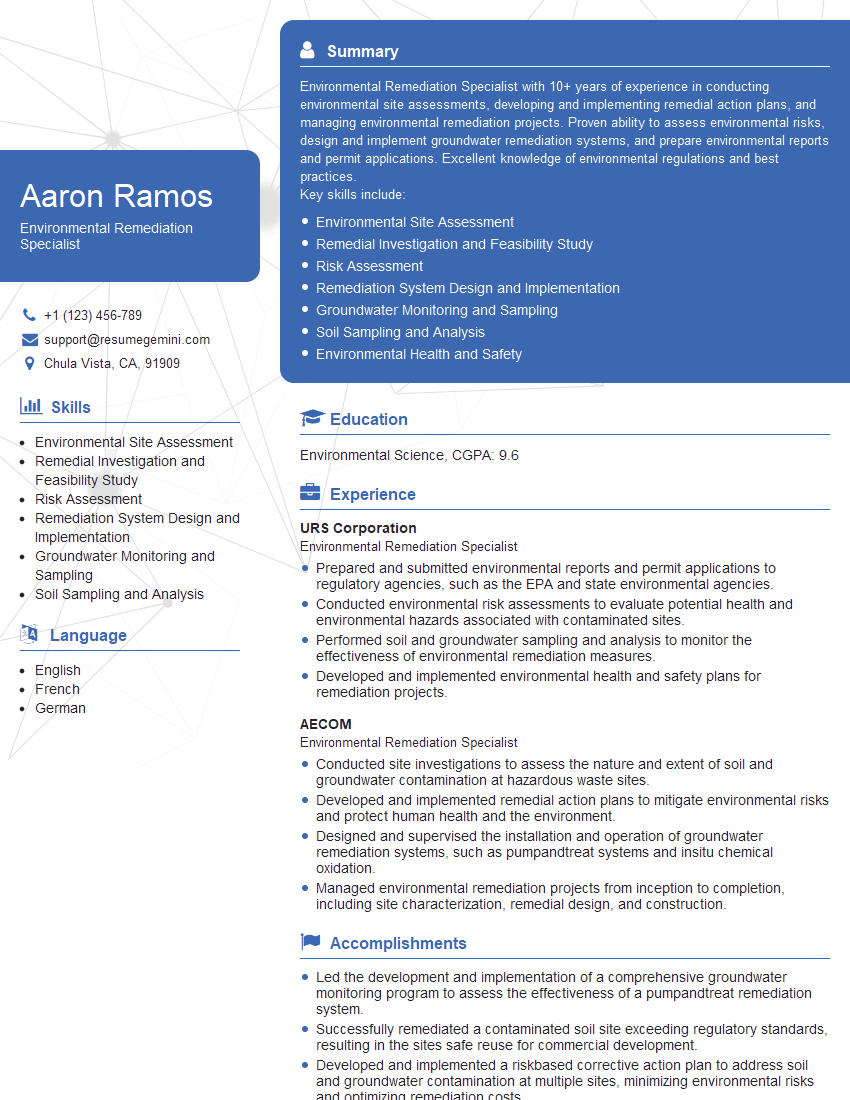
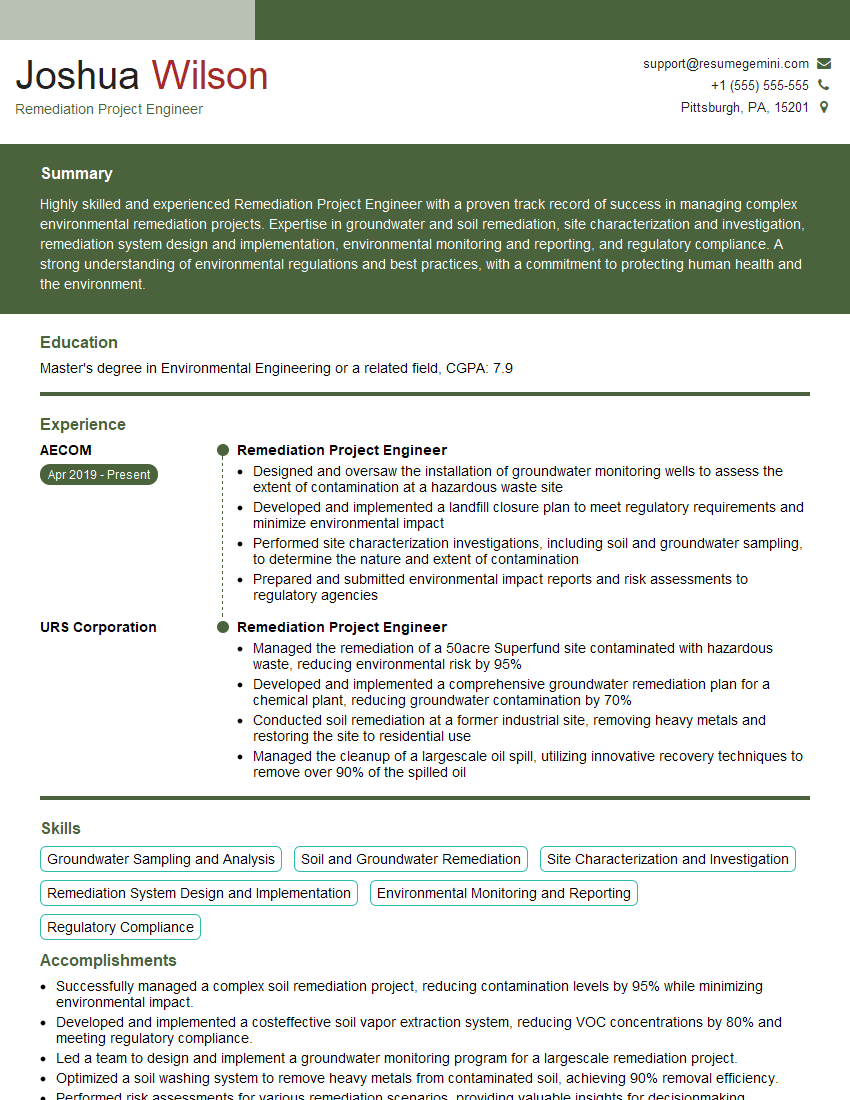
Mastering Remediation Design and Implementation opens doors to exciting career opportunities in environmental consulting, engineering, and remediation contracting. Demonstrating your expertise is crucial, and a well-crafted resume is your first step. An ATS-friendly resume significantly increases your chances of getting your application noticed by recruiters. To build a truly impactful resume that showcases your skills and experience in this competitive field, we strongly encourage you to utilize ResumeGemini. ResumeGemini provides tools and resources to create a professional and effective resume, and examples of resumes tailored to Remediation Design and Implementation are available to help guide you. Invest the time in crafting a strong application – it’s an investment in your future career success.
Explore more articles
Users Rating of Our Blogs
Share Your Experience
We value your feedback! Please rate our content and share your thoughts (optional).
What Readers Say About Our Blog
To the interviewgemini.com Webmaster.
Very helpful and content specific questions to help prepare me for my interview!
Thank you
To the interviewgemini.com Webmaster.
This was kind of a unique content I found around the specialized skills. Very helpful questions and good detailed answers.
Very Helpful blog, thank you Interviewgemini team.