Cracking a skill-specific interview, like one for Permitting and Code Enforcement, requires understanding the nuances of the role. In this blog, we present the questions you’re most likely to encounter, along with insights into how to answer them effectively. Let’s ensure you’re ready to make a strong impression.
Questions Asked in Permitting and Code Enforcement Interview
Q 1. Explain the difference between a building permit and a zoning permit.
Building permits and zoning permits are both crucial for construction projects, but they address different aspects. Think of it like this: a building permit is the permission slip to *build* something, while a zoning permit is the permission slip to *build that specific thing in that specific location*.
A building permit allows you to construct, alter, or repair a structure. It ensures the project adheres to building codes related to structural integrity, fire safety, electrical systems, plumbing, and more. The application requires detailed plans and specifications. Obtaining a building permit often involves plan review by building officials to ensure compliance. Failure to obtain a building permit can result in stop-work orders, fines, and even demolition.
A zoning permit, on the other hand, verifies the project’s compatibility with local zoning ordinances. Zoning regulations dictate land use, building height, setbacks (distance from property lines), density, and permitted uses. For example, you can’t build a gas station in a residential zone. A zoning permit ensures the project aligns with these regulations before a building permit is even considered.
Often, both permits are needed for a project. You must first secure the zoning permit, demonstrating your project’s alignment with land-use plans, and then you can apply for a building permit, demonstrating compliance with building codes.
Q 2. Describe your experience with plan review and identifying code violations.
My experience in plan review involves meticulously examining blueprints and specifications for compliance with relevant building codes. I’ve reviewed hundreds of plans, ranging from small residential additions to large commercial developments. I utilize both traditional plan review methods and increasingly, incorporate digital tools to enhance efficiency and accuracy. This involves checking for proper calculations, material specifications, compliance with accessibility standards (ADA), fire safety measures, and structural integrity.
Identifying code violations often requires a sharp eye and a deep understanding of the codes. For instance, I once identified a violation in a residential plan where the proposed electrical panel was undersized for the total load of the house. This could lead to overheating and fire hazards. Similarly, I’ve spotted violations relating to improper roof slope causing water drainage issues and insufficient structural support in foundation designs. When a violation is found, a detailed report is generated explaining the issue, citing the specific code section violated, and outlining the necessary corrections.
Q 3. How do you handle a situation where a contractor is not complying with building codes?
Non-compliance with building codes is addressed through a progressive enforcement approach. My first step is always communication and education. I contact the contractor, explain the violation, and provide clear instructions on how to rectify the situation. I offer guidance and technical assistance where possible.
If the contractor remains non-compliant, a formal written notice detailing the violations and required corrective actions is issued. A timeframe is given for compliance. Depending on the severity of the violation, penalties such as daily fines may be levied. In severe cases, especially if public safety is compromised, I initiate a stop-work order to halt construction until the issues are resolved. For repeated or egregious violations, legal action, including referral to the licensing board or legal prosecution, may be necessary.
Throughout this process, maintaining thorough documentation of communication, inspections, and enforcement actions is crucial to ensure accountability and transparency.
Q 4. What are the common building codes used in your area (e.g., IBC, IRC)?
In my area, we primarily utilize the International Building Code (IBC) and the International Residential Code (IRC). The IBC is a comprehensive code governing the design and construction of most building types, while the IRC focuses specifically on residential structures. We also incorporate other relevant model codes and local amendments that address specific regional concerns like seismic activity or hurricane-resistant design.
It’s important to note that these codes are regularly updated, and it is crucial to be familiar with the latest editions to ensure compliance. These codes are living documents and they are continuously being adapted to address new materials, technologies, and safety concerns. We also consider other related codes such as the International Plumbing Code (IPC), International Mechanical Code (IMC), and the International Fire Code (IFC) depending on the project’s nature.
Q 5. Explain your understanding of ADA accessibility requirements.
The Americans with Disabilities Act (ADA) Standards for Accessible Design mandates accessibility for people with disabilities in all aspects of building design and construction. My understanding encompasses a wide range of requirements, including:
- Accessible entrances and pathways: Ramps with appropriate slopes, curb cuts, and wide doorways.
- Accessible restrooms: Grab bars, appropriate clearances, and accessible toilet heights.
- Accessible parking: Designated parking spaces with appropriate widths and signage.
- Accessible signage: Clear, legible signage that is easily visible and understandable.
- Accessible routes of travel: Clear and unobstructed paths through the building, including elevators and ramps.
Enforcement of ADA requirements involves reviewing plans for compliance, conducting on-site inspections, and ensuring that any necessary accommodations are made to meet the standards. Failure to comply can lead to fines, lawsuits, and significant project delays.
Q 6. How do you prioritize competing demands and deadlines in a fast-paced environment?
Prioritizing competing demands in a fast-paced environment requires a structured approach. I employ a combination of techniques, including:
- Prioritization matrix: I use a matrix that weighs urgency and importance to rank tasks. High-urgency, high-importance tasks are addressed first.
- Time management tools: I leverage project management software to track deadlines, assign resources, and monitor progress.
- Effective delegation: Where possible, I delegate tasks appropriately to maximize efficiency.
- Communication: Open and transparent communication with all stakeholders helps manage expectations and proactively address potential delays.
- Flexibility: I am flexible and prepared to adjust priorities as needed, responding effectively to unexpected situations.
For instance, if a critical inspection is due, I might temporarily postpone a less urgent project to ensure timely compliance. Proactive planning and effective communication are vital to navigating these challenges smoothly.
Q 7. Describe your experience using permitting software or databases.
I have extensive experience using various permitting software and databases, including [Mention specific software used, e.g., Accela Civic Platform, Plan Review software]. These systems allow for online plan submission, tracking permit applications, scheduling inspections, and managing enforcement actions. The software streamlines the process, reducing paperwork, improving efficiency, and enhancing communication with applicants.
My proficiency in these systems involves not only data entry and management, but also using the reporting features to track key performance indicators (KPIs), identify trends, and improve the overall efficiency of the permitting process. I am also skilled in using databases to search for historical permit data, which is critical for understanding past projects, identifying potential issues, and making informed decisions.
Q 8. How familiar are you with the appeals process for code violations?
The appeals process for code violations is crucial for ensuring fairness and due process. It typically involves a multi-step procedure, beginning with an initial written appeal submitted within a specified timeframe after the violation notice is issued. This appeal outlines the reasons why the property owner disagrees with the violation. The appeal is then reviewed by a designated appeals board or hearing officer, who may review documentation, conduct an on-site inspection, and hear testimony from all involved parties.
The decision of the appeals board is usually final, although in some jurisdictions, further appeals to higher courts might be possible, depending on the specific circumstances and the nature of the violation. For example, if a homeowner believes the code interpretation was incorrect, or that the evidence presented was insufficient, they might appeal. The process aims to provide a neutral and objective review of the initial enforcement action to ensure that violations are accurately identified and appropriately addressed while protecting the rights of property owners.
- Step 1: Written Appeal Submission
- Step 2: Review by Appeals Board/Hearing Officer
- Step 3: Hearing (if necessary)
- Step 4: Final Decision
- Step 5: Potential Further Appeal (in some jurisdictions)
Q 9. What is your experience with inspections, from initial to final?
My experience with inspections spans the entire lifecycle, from initial plan review to the final occupancy permit. During the initial phase, I meticulously examine submitted plans, ensuring they comply with all applicable building codes and zoning regulations. This involves checking for structural integrity, fire safety measures, accessibility compliance, and adherence to environmental standards. I often use software to help with plan review and identifying potential issues.
On-site inspections are conducted at various stages of construction. These range from foundation inspections to framing, plumbing, electrical, and final inspections. I document everything with photographs, detailed notes, and checklists. If I identify any discrepancies or violations, I issue a notice to the contractor, specifying the necessary corrections and a timeframe for completion. This process continues until the project meets all code requirements. The final inspection confirms the project’s satisfactory completion and triggers the issuance of the Certificate of Occupancy, signifying that the building is ready for use.
Q 10. How do you ensure effective communication with contractors, developers, and the public?
Effective communication is paramount in code enforcement. I utilize a multi-pronged approach. With contractors and developers, I prioritize clear and concise written communication, using detailed reports and email correspondence to document all findings, requirements, and deadlines. Regular on-site meetings allow for face-to-face discussions, addressing concerns promptly and maintaining a professional working relationship.
Communicating with the public often involves translating complex technical information into easily understandable terms. I use plain language in all correspondence, ensuring that all information is readily accessible. I also leverage public forums, community meetings, and informational websites to proactively disseminate important information. For example, I might create a simplified FAQ sheet about common code violations to make information more accessible.
Q 11. How do you handle conflict resolution between contractors and homeowners?
Conflict resolution between contractors and homeowners often requires a diplomatic approach. I begin by facilitating open communication, encouraging both parties to express their concerns in a controlled environment. I then work to identify the root cause of the conflict, whether it’s a misunderstanding of the contract, a disagreement on the quality of work, or a dispute about payment.
I often act as a mediator, guiding them towards a mutually agreeable solution. This might involve reviewing the original contract, consulting relevant building codes, or suggesting alternative solutions. If mediation fails, and the dispute escalates, I might escalate the issue to higher authorities or recommend arbitration or legal action as a last resort. For example, I’ve successfully mediated disputes by suggesting a third-party inspection to assess the quality of the work objectively.
Q 12. Describe a time you had to make a difficult decision involving code enforcement.
One challenging decision involved a historic building with significant code violations. The owner wanted to preserve its historical character, but several structural elements didn’t meet current safety standards. Demolition was an option, but it would have been a significant loss to the community. I had to weigh the need for public safety with the desire to maintain the building’s historical integrity.
Ultimately, I worked collaboratively with the owner, engineers, and historical preservationists to develop a remediation plan that addressed safety concerns while minimizing alterations to the building’s historical features. This involved detailed engineering studies, creative solutions, and significant investment on the owner’s part. It was a lengthy and complex process, but the successful outcome – a safe and historically preserved building – demonstrated the value of finding mutually acceptable solutions.
Q 13. What are some strategies for preventing code violations before they occur?
Preventing code violations requires a proactive approach. One crucial strategy is comprehensive education and outreach to contractors, developers, and homeowners. This includes workshops, seminars, and readily available informational materials on code requirements. Regular inspections of construction projects at different phases are also critical.
Another effective method is pre-construction plan reviews where potential violations are identified and rectified before construction begins, significantly reducing the need for corrective measures during and after construction. Clear and accessible code documentation, coupled with a user-friendly online portal where permit applications and code information are easily accessible, greatly simplifies the process and reduces errors.
Q 14. How do you stay current with changes in building codes and regulations?
Staying updated on building codes and regulations is a continuous process. I subscribe to professional journals and attend industry conferences and workshops to remain abreast of changes in legislation and best practices. Furthermore, I actively monitor the websites of relevant regulatory bodies and participate in professional development training courses offered by these organizations.
I also maintain a network of colleagues in the field, exchanging information and experiences to stay informed about emerging trends and challenges. By actively engaging in these activities, I ensure my knowledge remains current and relevant, allowing me to enforce codes effectively and fairly.
Q 15. How do you document inspections and findings thoroughly?
Thorough documentation of inspections and findings is crucial for ensuring accountability, maintaining a clear audit trail, and providing a solid basis for enforcement actions. My approach involves a multi-step process:
- Pre-Inspection Preparation: Before each inspection, I review the relevant permit applications, plans, and any previous inspection reports to understand the scope of work and potential issues.
- On-Site Inspection: During the inspection, I meticulously document all observations using a standardized checklist and taking clear photographs or videos of any violations or discrepancies. I record the date, time, location, and specific details of each finding, including measurements and any relevant supporting evidence. For example, if a building code violation involves incorrect electrical wiring, I’d note the specific location within the building, provide photos of the issue, and detail the code section violated (e.g., NEC 314.16(A)).
- Post-Inspection Report: After the inspection, I compile a detailed report that summarizes my findings, including a clear description of any violations, their severity, and the necessary corrective actions. This report is digitally stored and easily accessible, ensuring accurate records and efficient follow-up. The report includes references to specific code sections and often incorporates the photographs or videos taken on-site.
- Follow-up and Communication: The report is then shared with the relevant parties involved, including the contractor, property owner, and any other stakeholders. I clearly communicate the findings and expectations, providing ample opportunity to address the violations. I maintain a log documenting all communications and follow-up actions.
This systematic approach ensures comprehensive, accurate, and readily-available documentation, facilitating efficient resolution of any issues and minimizing potential disputes.
Career Expert Tips:
- Ace those interviews! Prepare effectively by reviewing the Top 50 Most Common Interview Questions on ResumeGemini.
- Navigate your job search with confidence! Explore a wide range of Career Tips on ResumeGemini. Learn about common challenges and recommendations to overcome them.
- Craft the perfect resume! Master the Art of Resume Writing with ResumeGemini’s guide. Showcase your unique qualifications and achievements effectively.
- Don’t miss out on holiday savings! Build your dream resume with ResumeGemini’s ATS optimized templates.
Q 16. Explain your knowledge of fire safety codes.
My understanding of fire safety codes is extensive, encompassing both the International Fire Code (IFC) and the National Fire Protection Association (NFPA) standards. I’m familiar with various aspects including:
- Means of Egress: This includes requirements for exit doors, stairwells, fire escapes, and their appropriate sizing and accessibility in accordance with occupancy load calculations. I understand the importance of ensuring unobstructed pathways to safety and compliance with regulations regarding signage and lighting.
- Fire Suppression Systems: I am knowledgeable about different types of fire suppression systems like sprinklers, fire alarms, and smoke detectors, their installation requirements, inspection procedures, and maintenance schedules. For example, I’m familiar with NFPA 13 (Standard for the Installation of Sprinkler Systems) and its requirements concerning pipe sizing, water pressure, and sprinkler head spacing.
- Fire-Resistant Materials: I understand the specifications and testing procedures for various fire-resistant materials used in construction, such as fire-rated walls, floors, and doors. I can assess compliance with required fire ratings and understand the implications of using non-compliant materials.
- Fire Safety Inspections: I am experienced in conducting comprehensive fire safety inspections, identifying potential hazards, and issuing orders for remediation when necessary. I’m proficient in using specialized tools and equipment to perform necessary testing, such as pressure testing of fire suppression systems.
I’ve handled numerous situations requiring a deep understanding of fire safety codes, often working with contractors and building owners to ensure their projects meet the necessary standards and create safe environments. One example involved identifying a critical deficiency in a newly constructed apartment building where improperly installed fire dampers posed a serious fire risk; immediate corrective action prevented potential tragedy.
Q 17. Describe your experience with different types of construction materials and methods.
My experience with diverse construction materials and methods is broad, encompassing both traditional and modern techniques. I’m familiar with the properties and limitations of various materials, including:
- Structural Materials: Steel, concrete, wood framing, masonry, and engineered lumber. I understand the structural calculations and design principles associated with each and can identify potential issues related to material selection, load-bearing capacity, and structural integrity. For instance, I understand the differences in load-bearing capacity between different grades of lumber and the importance of proper bracing techniques.
- Exterior Finishes: Brick, stucco, siding (wood, vinyl, metal), roofing materials (asphalt, tile, metal). My expertise extends to identifying potential issues related to water penetration, durability, and code compliance concerning materials such as fire-retardant treatments on wood.
- Interior Finishes: Drywall, plaster, flooring (wood, tile, carpet), paint, and other interior finishes. I understand building codes related to fire-resistance, sound insulation, and moisture control, and can recognize non-compliance. For example, I can identify improper installation of fire-rated drywall that could compromise fire safety.
- Construction Methods: Traditional stick-framing, prefabricated construction, modular construction, concrete tilt-up. I understand the strengths and limitations of each method and can assess their compliance with building codes and regulations.
This knowledge allows me to effectively assess construction projects, identify potential code violations, and ensure compliance with safety and structural requirements. I frequently apply my knowledge of material properties to resolve disputes between contractors and property owners when material failures occur.
Q 18. How do you handle complaints about noise violations?
Handling noise complaints requires a systematic approach that balances the rights of residents with the needs of businesses and construction activities. My process involves:
- Initial Assessment: Upon receiving a complaint, I gather information about the nature of the noise, its source, the frequency, and the time of day. I then verify the complaint with objective data, such as decibel readings using a calibrated sound level meter.
- On-Site Investigation: I visit the site to identify the noise source and assess its compliance with local noise ordinances. This includes checking the equipment in use, construction practices, and operating hours.
- Communication and Mediation: I attempt to mediate between the complainant and the noise source, striving to find a mutually agreeable solution, such as adjusting work schedules or implementing noise mitigation measures. For example, the construction of a sound barrier could resolve excessive noise coming from a nearby construction site.
- Enforcement Action: If mediation fails and violations are confirmed, I issue warnings or citations, outlining the specific violations and the required corrective actions. In persistent cases, this may involve escalating to stop-work orders or legal proceedings.
- Documentation: All aspects of the complaint, investigation, communication, and enforcement actions are meticulously documented, including the date, time, location, individuals involved, and the outcome. This ensures a clear audit trail and supports any subsequent actions.
A crucial element is establishing clear communication and providing educational resources, helping to prevent future complaints through better understanding and compliance with noise regulations.
Q 19. What is your familiarity with environmental regulations related to construction?
My familiarity with environmental regulations related to construction is comprehensive. I understand regulations concerning:
- Stormwater Management: I’m versed in the requirements for erosion and sediment control, stormwater runoff management, and compliance with the Clean Water Act (CWA). This includes understanding construction site erosion control plans and the implementation of best management practices (BMPs).
- Hazardous Waste Disposal: I’m knowledgeable about the proper handling, storage, and disposal of hazardous waste materials generated during construction, such as asbestos, lead paint, and other toxic substances. I ensure compliance with relevant regulations to protect human health and the environment.
- Air Quality: I understand regulations related to air emissions from construction equipment and activities, particularly regarding dust control and mitigation of air pollutants. This might involve assessing the need for dust suppression systems or requiring the use of low-emission equipment.
- Environmental Permits: I’m experienced in reviewing and approving environmental permits and ensuring compliance with their conditions. This often involves coordinating with other agencies and specialists to ensure a holistic approach to environmental protection during construction.
I frequently work with contractors and developers to integrate environmental considerations into their projects from the initial planning stages, preventing costly delays and environmental damage later. For instance, I helped a construction team implement a sustainable stormwater management system that minimized environmental impact and reduced runoff pollution.
Q 20. How do you prioritize workload and manage multiple projects simultaneously?
Prioritizing workload and managing multiple projects simultaneously requires a structured and organized approach. My strategy involves:
- Project Prioritization: I use a prioritization matrix to rank projects based on urgency, importance, and potential impact. This may involve considering factors like deadlines, potential risks, and public safety implications.
- Task Management: I break down each project into smaller, manageable tasks with assigned deadlines. I utilize project management software to track progress, assign responsibilities, and manage deadlines effectively.
- Time Management: I allocate specific time blocks for each project, ensuring sufficient time for each task while maintaining flexibility to address unexpected issues. I use time-blocking techniques to ensure focused work periods.
- Communication and Collaboration: Clear communication is key. I maintain regular communication with contractors, property owners, and other stakeholders to address any issues proactively and keep projects on track.
- Regular Review and Adjustment: I regularly review progress against planned timelines and make adjustments as needed. This proactive approach helps to stay on top of issues and avoid delays. This might involve re-allocating resources to address critical delays.
This systematic approach enables me to manage multiple projects efficiently, ensuring timely completion and adherence to standards while minimizing stress and maximizing productivity.
Q 21. Explain your experience with issuing stop-work orders.
Issuing stop-work orders is a serious action taken only when necessary to address significant safety violations or code infractions that pose an imminent threat to public safety or the environment. My approach is:
- Assessment of the Violation: A thorough assessment of the violation is essential before issuing a stop-work order. This involves identifying the specific code violations, assessing the level of risk, and determining the necessary corrective actions.
- Documentation: Clear and detailed documentation of the violation and the reasons for issuing the stop-work order is crucial. This includes photographs, videos, measurements, and detailed descriptions.
- Communication: Prior to issuing a stop-work order, I attempt to communicate with the responsible parties, explaining the violation and the potential consequences. This provides an opportunity for voluntary compliance and avoids the need for a formal order if possible. However, when safety risks are significant, immediate action is necessary.
- Formal Order: The stop-work order is issued in writing, clearly stating the specific violations, the areas affected, and the required corrective actions. This order typically outlines the steps needed to resume work, including the need for inspections and re-inspections.
- Follow-up: Following the issuance of the stop-work order, I regularly monitor the site to ensure compliance and conduct follow-up inspections to verify the necessary corrections have been made before allowing work to resume. This includes documenting all interactions, inspections, and any modifications to the stop-work order.
Issuing a stop-work order is a last resort. My priority is always to work collaboratively with the involved parties to address violations, but the safety and well-being of the public is paramount and demands decisive action when necessary.
Q 22. Describe your understanding of lien laws.
Lien laws are legal mechanisms that allow contractors, subcontractors, or material suppliers to place a claim on a property’s title as security for payment of services rendered or materials provided. Think of it like a financial hold on the property until the debt is settled. If the property owner fails to pay, the lienholder can foreclose on the property to recover the owed funds.
There are different types of liens, such as mechanics’ liens (common in construction) and materialmen’s liens. The specifics of filing and enforcing a lien vary by state and local jurisdiction, but they generally involve filing a formal notice with the relevant authorities (usually the county recorder’s office) within a specific timeframe after the work is completed or materials are supplied. Failure to comply with these deadlines can render the lien invalid.
Example: A contractor completes a renovation project but the homeowner refuses to pay the final invoice. The contractor can file a mechanics’ lien against the homeowner’s property, preventing the sale or refinancing of the property until the debt is resolved. This is a powerful tool to ensure payment in the construction industry.
Q 23. What are some common mistakes contractors make regarding permits?
Contractors often make several mistakes related to permits. One of the most common is starting work before obtaining the necessary permits. This can lead to costly stop-work orders, fines, and potential legal issues. Another frequent error is failing to obtain the correct permits for the scope of work. A minor change might not seem important, but if it’s not reflected in the permit, it can cause problems down the line. It’s also crucial to ensure permits are properly posted at the job site to show compliance.
Finally, contractors sometimes fail to keep accurate records of all permit applications, approvals, inspections, and changes. This can be problematic if disputes arise or issues need to be resolved later. Maintaining meticulous documentation is vital for protecting the contractor and their clients.
Example: A contractor begins a kitchen remodel without a permit. A neighbor complains to the city. The city inspects the site, issues a stop-work order, and potentially levies fines. The contractor must then apply for the permit, correct any violations, and pay the fines before resuming work, causing significant delays and additional expenses.
Q 24. How do you interpret and apply building codes to specific situations?
Interpreting and applying building codes requires a detailed understanding of the code itself, as well as relevant case law and local ordinances. It’s not simply reading the text; it’s about understanding the intent and applying it to specific circumstances. I approach this by first identifying the specific code sections that apply to the situation. Then, I carefully read and analyze those sections, considering any exceptions, amendments, or clarifications. I also consider the context, including the building’s intended use, its location, and any unique features.
This often involves researching similar situations, consulting with other experts if necessary, and making informed judgments based on the available information. It’s a meticulous process that requires attention to detail and a thorough understanding of construction techniques and safety standards.
Example: A homeowner wants to add a deck to their house. I’d consult the building codes for deck construction, paying attention to requirements for spacing, railing height, load-bearing capacity, and connection to the house. The exact requirements might vary based on factors like the deck’s size, location, and materials used. My interpretation of the codes would guide the project design and construction to ensure it complies with all applicable regulations.
Q 25. Explain your experience with site inspections and safety regulations.
My experience with site inspections encompasses a wide range of construction projects, from residential renovations to large-scale commercial developments. During inspections, I assess compliance with building codes, safety regulations, and permit requirements. This includes checking for proper installation of structural elements, electrical wiring, plumbing systems, and fire protection systems. I also verify that work is performed according to approved plans and specifications and that the site is maintained in a safe condition for workers and the public.
Safety regulations are paramount. I ensure compliance with OSHA standards and any other relevant local, state, or federal safety guidelines. This includes verifying the use of appropriate personal protective equipment (PPE), proper handling of hazardous materials, and safe work practices. Identifying potential hazards and addressing them promptly is crucial for preventing accidents and injuries.
Example: During an inspection of a commercial building under construction, I noticed inadequate scaffolding and a lack of safety harnesses for workers at heights. I immediately issued a stop-work order until these safety violations were corrected. The contractor was required to implement a comprehensive safety plan before work could resume.
Q 26. How do you handle situations where there’s a discrepancy between plans and actual construction?
Discrepancies between plans and actual construction are a common challenge. My approach involves a thorough investigation to determine the nature and extent of the differences. This often begins with a site visit, comparing the as-built conditions to the approved plans. I then document the discrepancies, taking photographs and measurements.
The next step is to identify the cause of the discrepancy. Was it an oversight, a change order that wasn’t properly documented, or a deliberate deviation from the plans? Depending on the severity and the cause, different solutions are possible. Minor discrepancies may be acceptable with a minor revision to the plans. More significant deviations might require a formal variance request or even a complete stop-work order until the issue is resolved.
Example: During an inspection, I noticed that the foundation was significantly wider than what was shown in the approved plans. This could impact the structural integrity of the building. I’d initiate a formal process to review the structural calculations, and potentially require engineering revisions and inspections to ensure the foundation meets current code requirements.
Q 27. How would you handle a situation involving a dangerous or hazardous condition?
Encountering a dangerous or hazardous condition requires immediate action. My priority is public safety. I’d first assess the severity and nature of the hazard—is it an immediate threat to life or property, or is it a potential future hazard?
For immediate dangers, I’d immediately issue a stop-work order to prevent further risk. I’d then contact the relevant authorities, such as emergency services or the building department’s safety division, to address the situation. Depending on the nature of the hazard, I may also need to evacuate the area. For potential future hazards, I’d issue a notice to the responsible party to correct the condition within a specified timeframe. Failure to comply would result in further enforcement action, including fines or legal action.
Example: If I discovered exposed electrical wiring during an inspection, posing a risk of electrocution, I’d immediately issue a stop-work order and notify the fire department or a qualified electrician to assess and rectify the situation before work could resume.
Q 28. What is your approach to ensuring fairness and impartiality in code enforcement?
Fairness and impartiality are fundamental to effective code enforcement. I achieve this by applying the codes consistently and without bias. Each case is judged on its own merits, based on the facts presented and the applicable regulations. This means treating all parties involved – homeowners, contractors, and developers – equally, regardless of their background or influence. Transparency is also key. I ensure that all decisions are well-documented, and my reasoning is clear and easily understood.
Moreover, I provide opportunities for individuals to appeal my decisions if they believe an error has been made. I’m always willing to listen to concerns and provide explanations of my findings. I believe that a fair and transparent enforcement process helps foster compliance and build trust with the community.
Example: If a contractor argues that a specific code requirement is impractical or overly burdensome for their project, I’d carefully review the code in question and consider the contractor’s arguments. If valid reasons are given, I might explore possible alternative solutions while still ensuring that safety and code compliance are upheld. If the argument is unfounded, I’d explain my decision clearly and document the rationale.
Key Topics to Learn for Permitting and Code Enforcement Interview
- Building Codes and Regulations: Understanding the nuances of local, state, and national building codes, zoning ordinances, and their practical application in various construction projects.
- Permitting Processes: Familiarize yourself with the complete permit application process, including plan review, inspections, approvals, and potential appeals. Understand different permit types and their requirements.
- Code Enforcement Procedures: Learn the steps involved in identifying code violations, issuing notices, conducting inspections, and enforcing compliance. This includes understanding legal frameworks and due process.
- Plan Review and Interpretation: Develop your ability to effectively review construction plans, identify potential code violations, and ensure compliance with regulations.
- Inspection Techniques and Reporting: Master the skills of conducting thorough and accurate inspections, documenting findings clearly and concisely, and preparing comprehensive reports.
- Conflict Resolution and Communication: Practice effective communication strategies for interacting with contractors, developers, property owners, and the public, especially in resolving disputes and addressing concerns.
- Data Management and Technology: Understand how permitting and code enforcement systems utilize technology for tracking permits, managing inspections, and generating reports. Familiarity with relevant software is beneficial.
- Safety Regulations and Compliance: Demonstrate a thorough understanding of safety regulations and their role in ensuring compliance throughout the construction process.
- Accessibility Compliance (ADA): Knowledge of the Americans with Disabilities Act (ADA) and its implications for building design and construction is crucial.
- Environmental Regulations: Understanding relevant environmental regulations and their integration into the permitting process will highlight your comprehensive understanding.
Next Steps
Mastering Permitting and Code Enforcement opens doors to a rewarding career with significant growth potential. Your expertise in ensuring safe and compliant construction projects is highly valued. To maximize your job prospects, creating a strong, ATS-friendly resume is essential. ResumeGemini is a trusted resource that can help you build a professional resume that showcases your skills and experience effectively. Examples of resumes tailored to the Permitting and Code Enforcement field are available to guide you.
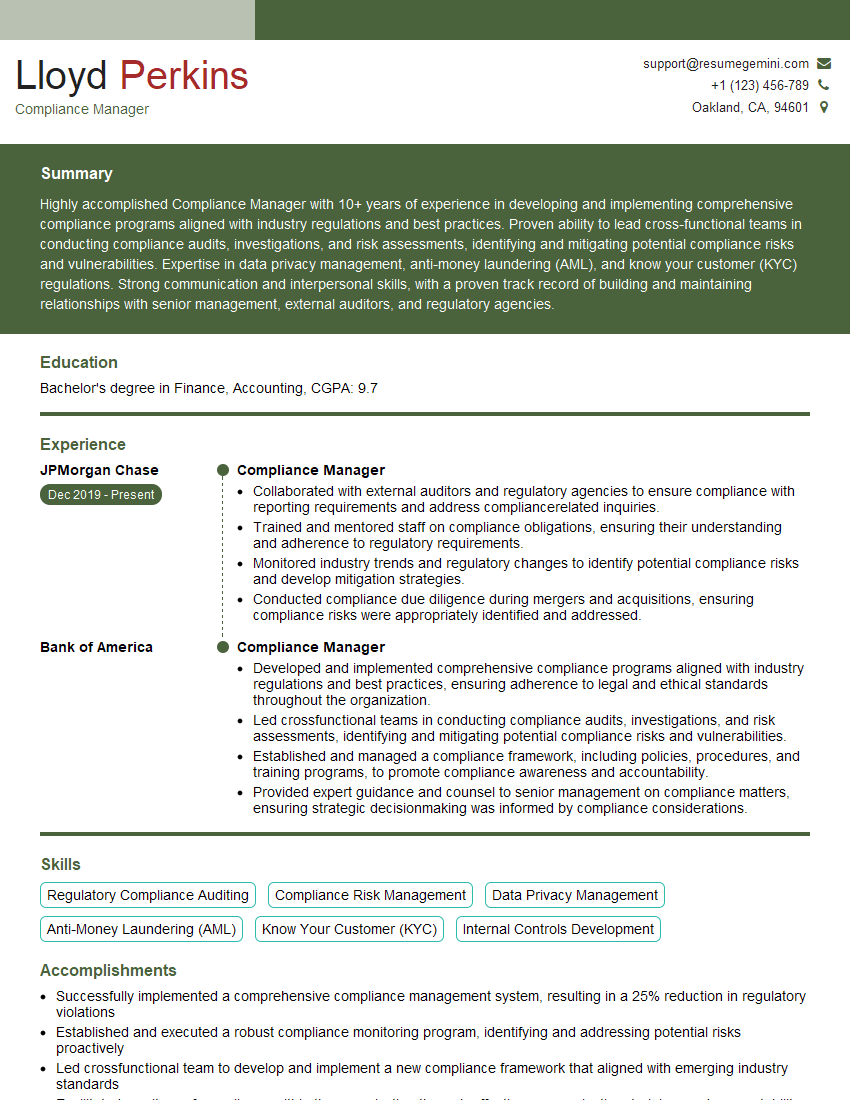
Compliance Manager Resume Sample
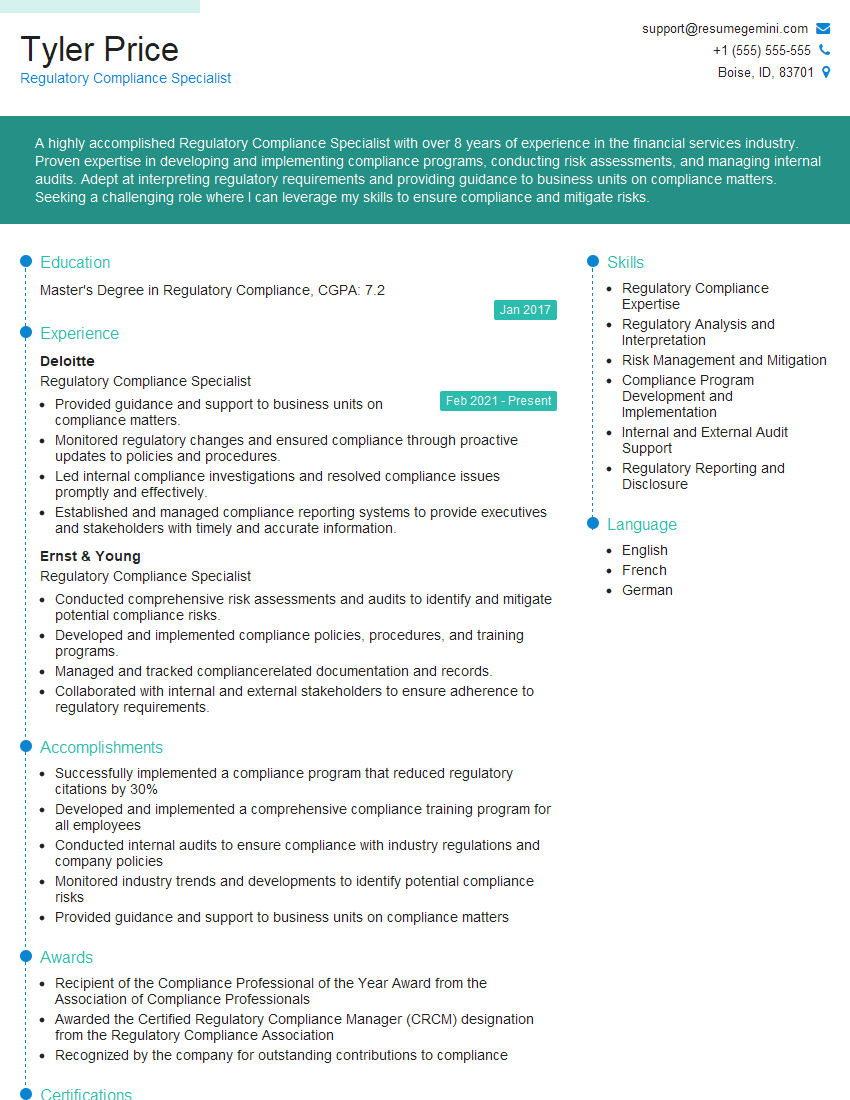
Regulatory Compliance Specialist Resume Sample
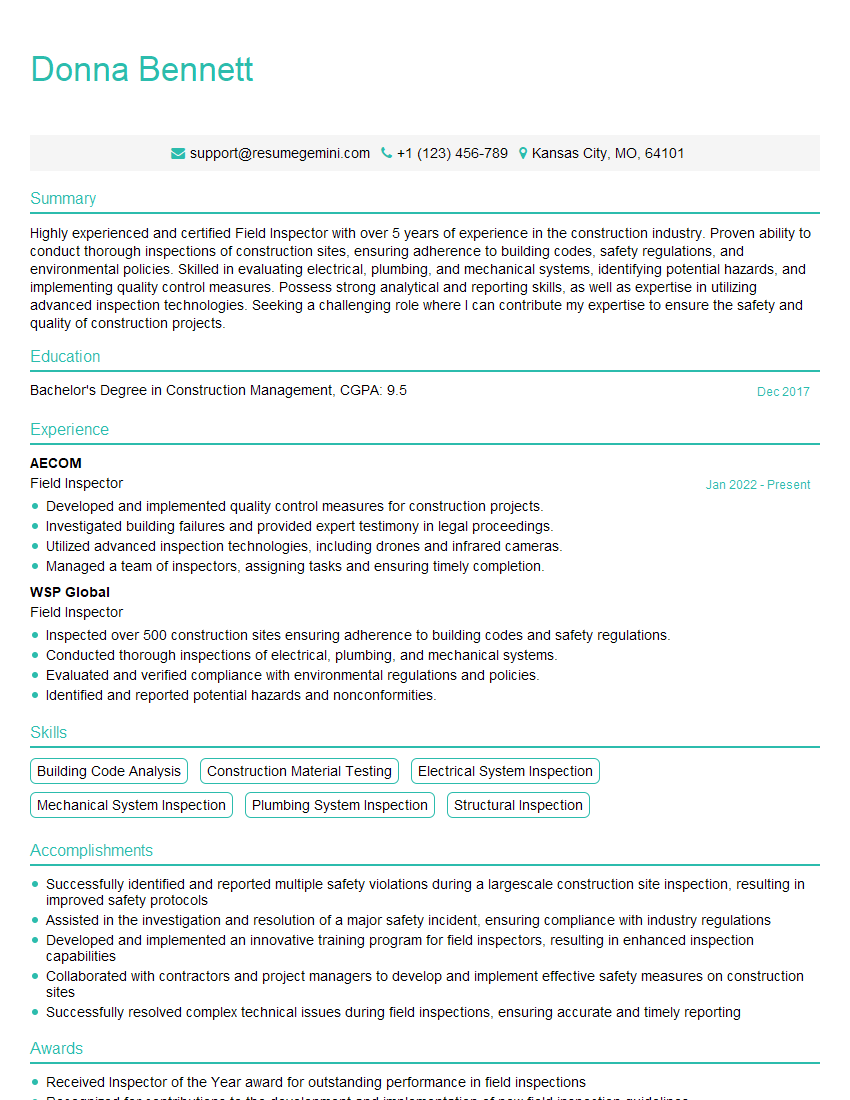
Field Inspector Resume Sample
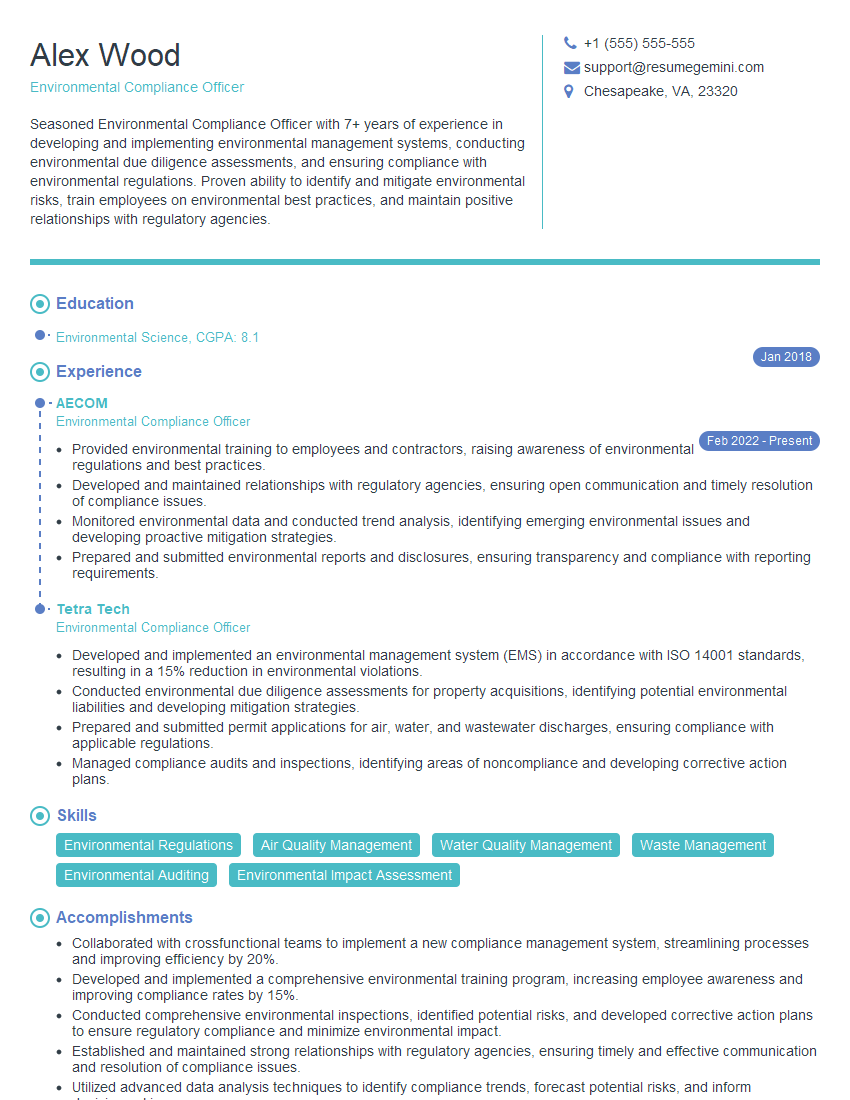
Environmental Compliance Officer Resume Sample
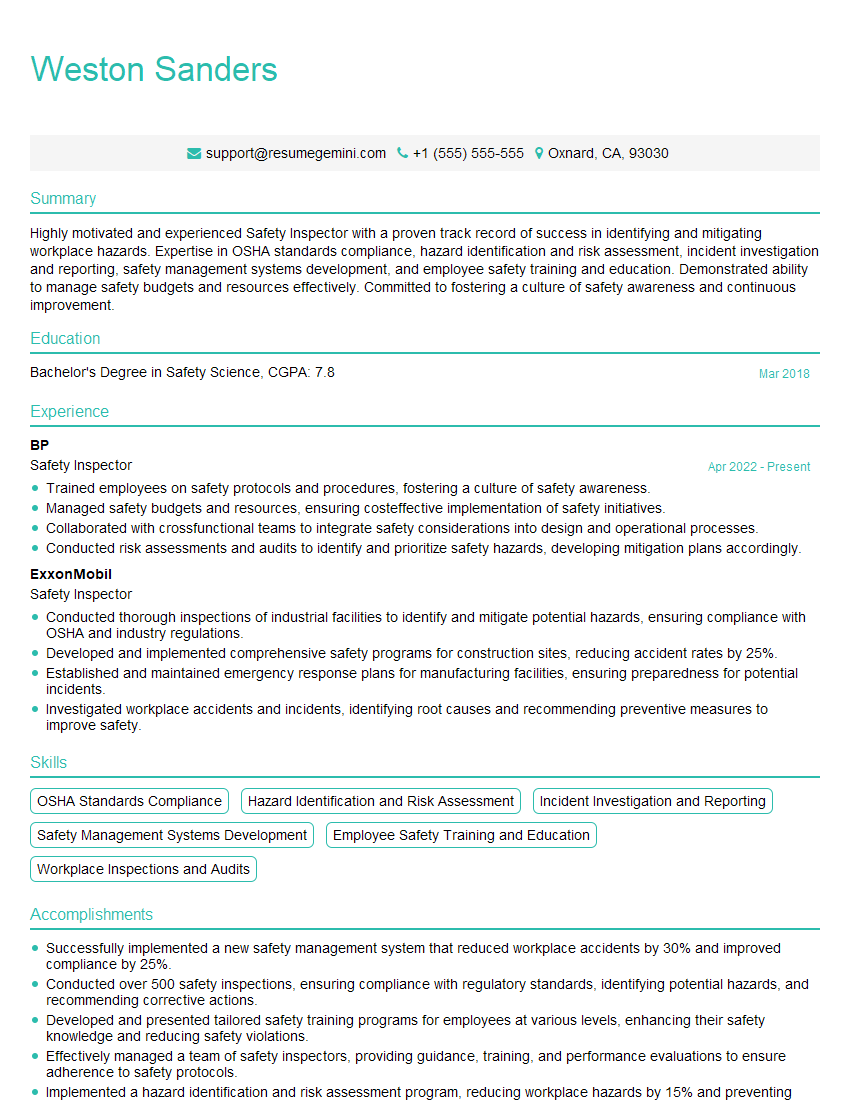
Safety Inspector Resume Sample
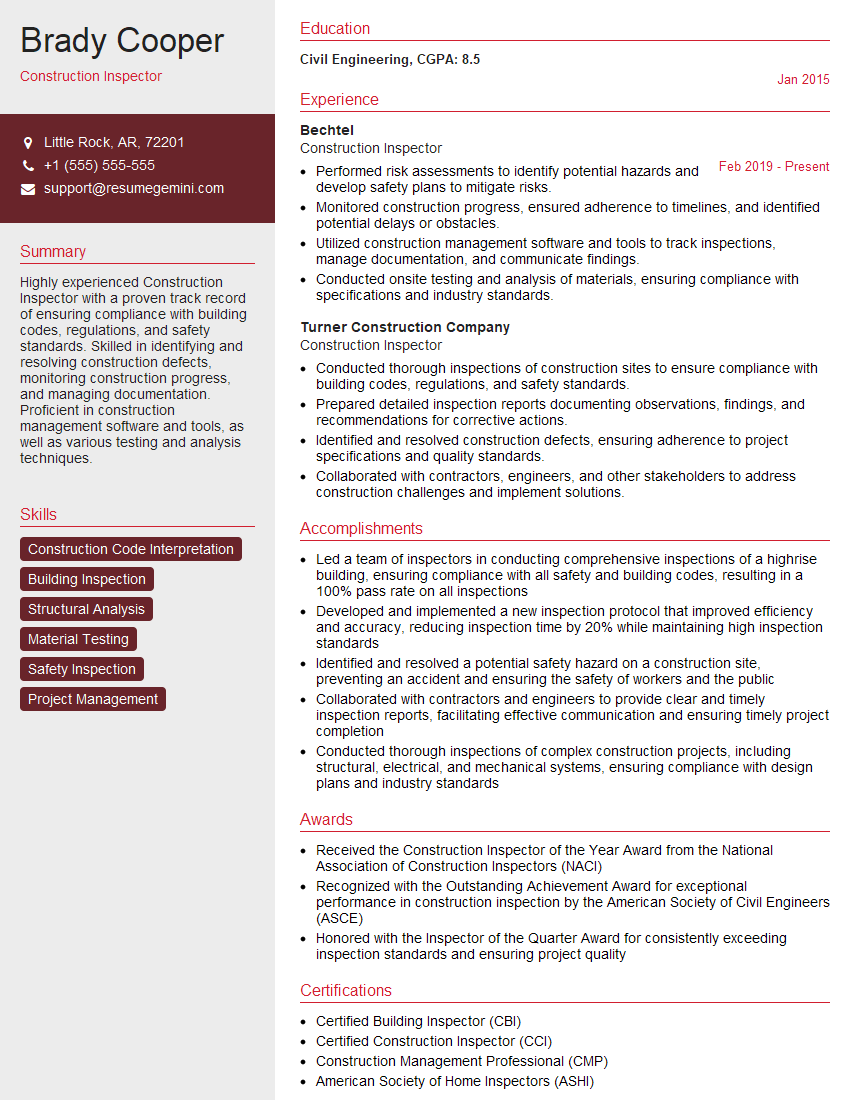
Construction Inspector Resume Sample
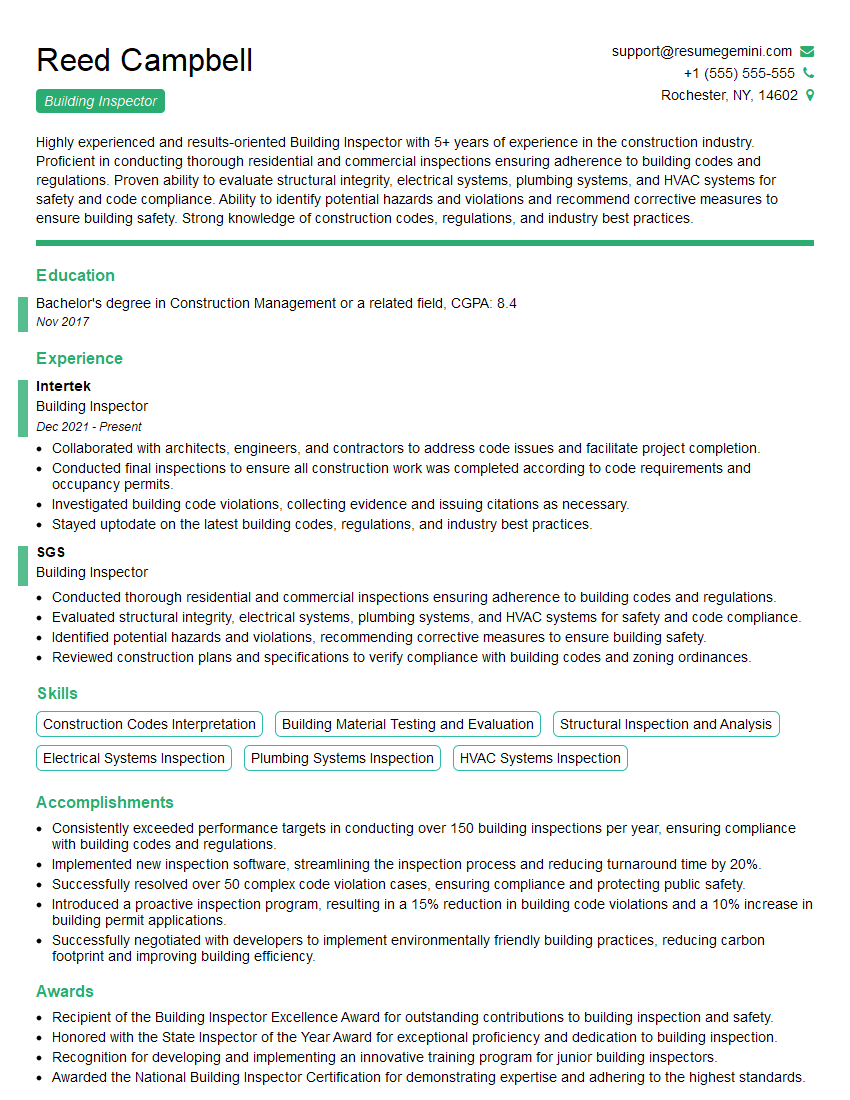
Building Inspector Resume Sample
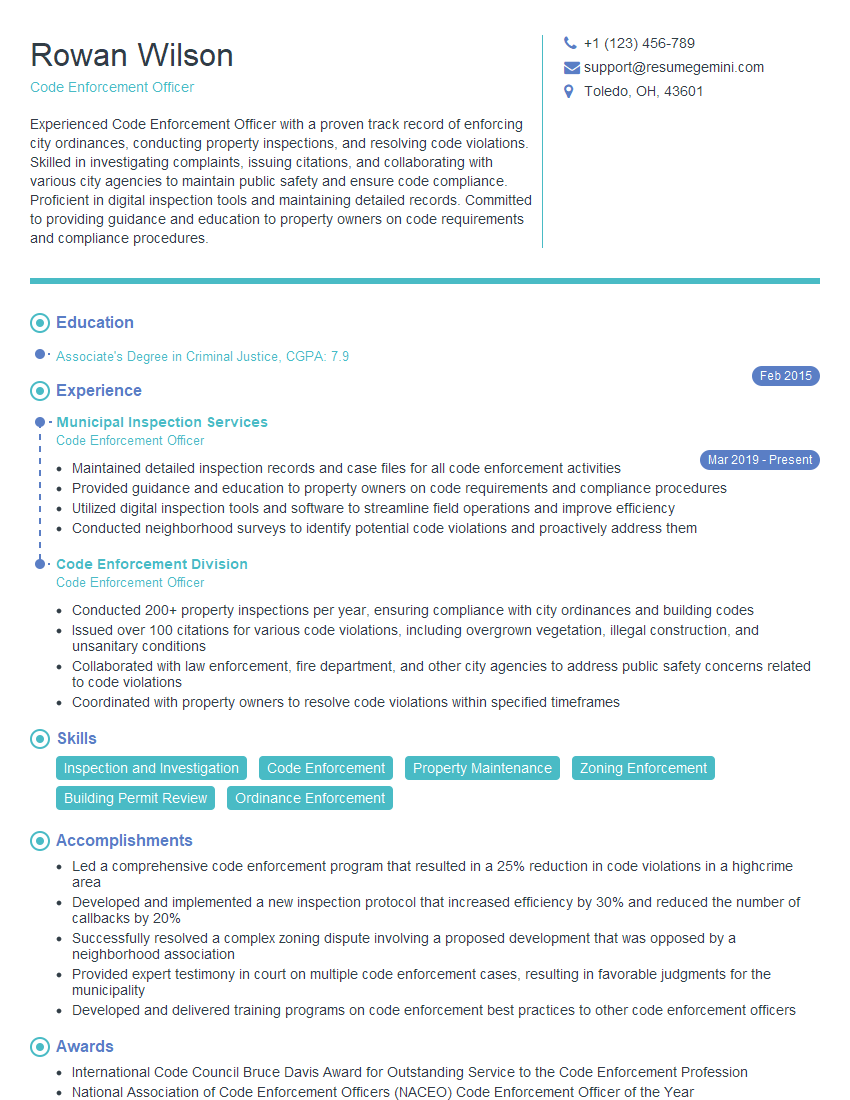
Code Enforcement Officer Resume Sample
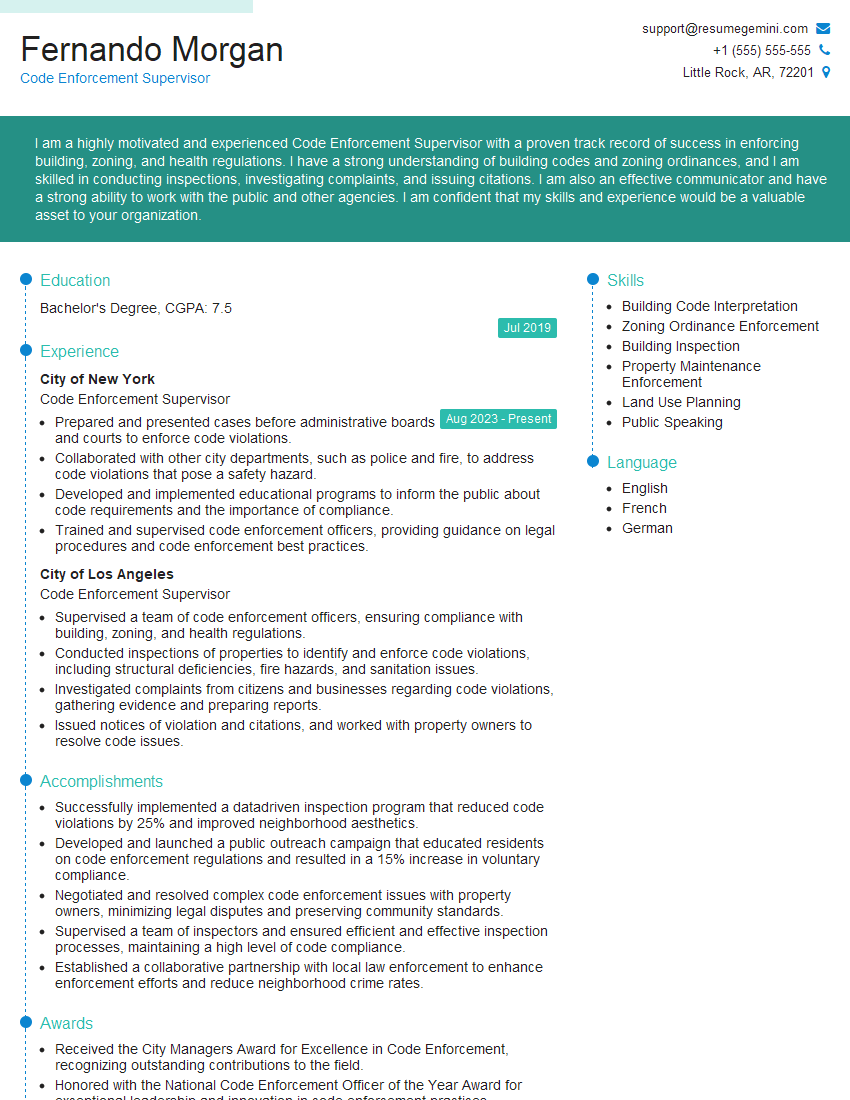
Code Enforcement Supervisor Resume Sample
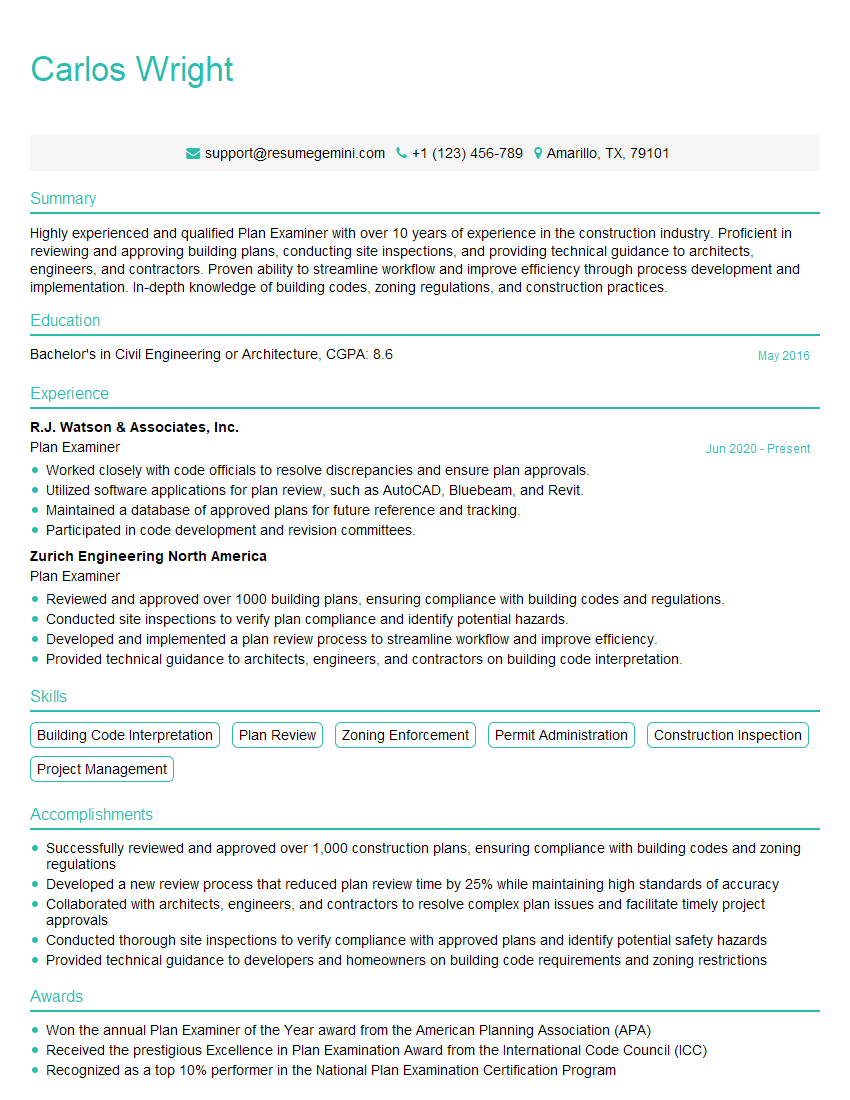
Plan Examiner Resume Sample
Explore more articles
Users Rating of Our Blogs
Share Your Experience
We value your feedback! Please rate our content and share your thoughts (optional).
What Readers Say About Our Blog
To the interviewgemini.com Webmaster.
Very helpful and content specific questions to help prepare me for my interview!
Thank you
To the interviewgemini.com Webmaster.
This was kind of a unique content I found around the specialized skills. Very helpful questions and good detailed answers.
Very Helpful blog, thank you Interviewgemini team.