Cracking a skill-specific interview, like one for Piping and Equipment Design, requires understanding the nuances of the role. In this blog, we present the questions you’re most likely to encounter, along with insights into how to answer them effectively. Let’s ensure you’re ready to make a strong impression.
Questions Asked in Piping and Equipment Design Interview
Q 1. Explain the difference between rigid and flexible piping.
The core difference between rigid and flexible piping lies in their ability to absorb movement and stress. Rigid piping, typically made of materials like steel or cast iron, offers high strength and rigidity but minimal flexibility. They are best suited for applications where minimal movement is expected. Think of the main pipelines in a refinery – these need to withstand significant pressure but experience minimal changes in position. Flexible piping, conversely, incorporates components like expansion joints or flexible hoses to accommodate thermal expansion, vibration, or ground movement. Examples include the connections to pumps and other equipment that might vibrate, or in situations with significant temperature fluctuations, where rigid pipes might crack or break. Choosing between them depends on the specific application and its susceptibility to movement and stress.
Q 2. Describe your experience with various piping materials (e.g., carbon steel, stainless steel, PVC).
My experience encompasses a wide range of piping materials. I’ve worked extensively with carbon steel, a cost-effective and widely used material suitable for general-purpose applications, provided the environment isn’t corrosive. For instance, in a chemical plant handling non-corrosive hydrocarbons, carbon steel would be a viable option. Stainless steel, particularly 304 and 316 grades, provides superior corrosion resistance, making it ideal for applications involving acids, salts, or other aggressive chemicals. I’ve designed systems for pharmaceutical plants utilizing stainless steel to maintain product purity. Finally, I’ve worked with PVC piping in less demanding applications such as low-pressure water distribution systems or drainage lines, mainly due to its affordability and ease of installation, although it’s important to note its limitations with temperature and pressure.
Q 3. What are the key considerations for designing a piping system for high-pressure applications?
Designing for high-pressure applications requires meticulous attention to detail. Key considerations include:
- Material Selection: High-strength materials like higher grade stainless steel or alloy steels are crucial to withstand the pressure. The yield strength and design pressure rating must exceed the maximum operating pressure.
- Wall Thickness: Thicker pipe walls are necessary to handle the increased stress. Calculations using appropriate design codes (like ASME B31.1 or B31.3) are paramount.
- Weld Quality: For high-pressure systems, welds must be flawless and subject to rigorous non-destructive testing (NDT) to ensure structural integrity.
- Supports and Restraints: Adequate support and restraint systems are essential to mitigate stress concentrations and prevent pipe movement, especially during thermal expansion or pressure surges.
- Pressure Relief Devices: Safety relief valves are critical to protect the system from over-pressurization.
- Flange Selection: Higher pressure ratings demand appropriate flange types and bolting designs.
Q 4. How do you determine the appropriate pipe size for a given flow rate?
Determining the appropriate pipe size involves considering the flow rate, fluid properties (viscosity, density), and allowable pressure drop. This is typically done using fluid mechanics principles and industry standards. We generally use established equations and software tools that can solve the Darcy-Weisbach equation, accounting for factors like friction losses. The process often involves iterative calculations to find a balance between minimizing pressure drop (which impacts pumping costs and energy efficiency) and keeping the pipe diameter practical (avoiding excessively large and costly pipes). Specialized software packages greatly streamline this calculation, allowing for multiple scenarios to be analyzed and the most cost-effective option to be chosen.
Q 5. Explain your understanding of piping stress analysis and its importance.
Piping stress analysis is a critical aspect of piping design to ensure structural integrity and prevent failures. It involves analyzing the stresses and strains within the piping system under various operating conditions, including pressure, temperature, weight, and other external loads. We use specialized software that employs finite element analysis (FEA) to model the piping system and simulate its response to these conditions. This analysis helps determine if the system can withstand these stresses without exceeding its allowable limits, thus ensuring safety and longevity. The importance lies in preventing failures that could cause leaks, damage to equipment, environmental hazards, or even catastrophic events. Ignoring this could lead to costly repairs, downtime, or even serious accidents.
Q 6. What software are you proficient in for piping design (e.g., AutoCAD, PDMS, Navisworks)?
I am proficient in several software packages commonly used in piping design. My experience includes extensive use of AutoCAD for creating 2D drawings and generating detailed layouts. I’ve also worked with PDMS (Plant Design Management System) for 3D modeling, which allows for better visualization and clash detection within complex plant layouts. For review and coordination purposes, I utilize Navisworks, particularly its clash detection features, to identify conflicts between various disciplines before construction begins. Proficiency in these tools allows for efficient and accurate piping designs.
Q 7. Describe your experience with piping isometric drawings and their use.
Piping isometric drawings are 2D orthographic projections of the piping system, providing a detailed representation of pipe runs, equipment connections, supports, and specifications. They are essential for fabrication and installation. They show the precise length, orientation, and connection details of each pipe segment, eliminating ambiguity during construction. Isometrics are critical for fabricators to accurately manufacture the piping spools, and for field crews to install the pipes efficiently and correctly. Without precise isometric drawings, construction would be far slower and prone to errors, potentially resulting in costly rework and delays. I have extensive experience creating and reviewing isometrics, ensuring accuracy and clarity for smooth construction.
Q 8. Explain your experience with piping specifications and standards (e.g., ASME B31.1, ASME B31.3).
My experience with piping specifications and standards is extensive, encompassing projects adhering to ASME B31.1 (Power Piping) and ASME B31.3 (Process Piping). ASME B31.1 focuses on power generation facilities, emphasizing high-pressure steam and water systems, while ASME B31.3 governs process plants handling various fluids. I’m proficient in interpreting these codes, ensuring compliance with material selection requirements, pressure rating calculations, and stress analysis based on the specific fluid and operating conditions. For instance, in a recent project involving the design of a high-pressure steam distribution system for a power plant, we utilized ASME B31.1 to determine the appropriate pipe wall thickness, considering factors such as temperature, pressure, and allowable stress values for the specified material (e.g., carbon steel). Similarly, in a chemical processing plant, adhering to ASME B31.3, I selected corrosion-resistant materials (e.g., stainless steel) based on the corrosive nature of the process fluids. Beyond these standards, I’m familiar with other relevant codes such as API standards for piping in the oil and gas industry and relevant national and international codes as required by the project location.
My expertise also extends to the application of software for piping design and analysis, such as AutoPIPE, which is crucial for stress analysis, support design, and ensuring the structural integrity of the piping system. I’m well-versed in creating detailed piping isometric drawings, specifications, and bill of materials (BOMs), facilitating seamless coordination between design, procurement, construction, and commissioning phases. I am experienced in handling different types of pipe materials like carbon steel, stainless steel, alloy steel, and plastics, considering their respective properties and applications.
Q 9. How do you handle changes in piping design during a project?
Handling piping design changes during a project requires a structured and collaborative approach. Changes inevitably arise, whether due to revised process requirements, site constraints, or improved design optimization. My process typically involves these steps:
- Formal Change Request: All changes are documented through a formal change request, detailing the proposed modification, its rationale, and its potential impact on cost, schedule, and safety. This ensures traceability and accountability.
- Impact Assessment: A thorough impact assessment evaluates the implications of the change across various disciplines (process engineering, instrumentation, electrical, structural), considering factors like pressure drop, stress, support adequacy, and constructability.
- Redesign and Analysis: If approved, the design is modified accordingly, with necessary calculations and analysis (e.g., stress analysis using AutoPIPE) to verify the integrity of the revised design. The change must be validated to maintain the required standards and safety factors.
- Drawing Updates: All relevant drawings (isometrics, P&IDs) are updated to reflect the approved changes, ensuring consistency across all documentation.
- Communication: Effective communication is crucial. All stakeholders must be informed about the changes and their impact, minimizing surprises and potential conflicts.
For example, in a project involving the relocation of a critical piece of equipment, I had to re-route several pipe lines to ensure they could effectively connect to their required systems. This involved updating P&IDs, isometrics, stress analyses, and even revisiting aspects of the structural support design to account for the new routing.
Q 10. What are the common types of valves used in piping systems, and when would you choose each one?
Piping systems employ various valve types, each suited for specific applications. The choice depends on factors such as fluid properties, pressure, temperature, flow rate, and maintenance requirements.
- Gate Valves: Used for on/off service; simple design, relatively inexpensive but not ideal for throttling. Think of them as simple on/off switches.
- Globe Valves: Suitable for throttling (regulating flow rate), offering good flow control but higher pressure drop compared to gate valves. Imagine a faucet in your house – this is analogous to the functionality of a globe valve.
- Ball Valves: Primarily on/off service, but can be used for throttling in smaller sizes; compact and quick opening/closing. Think of a simple ball and socket joint – the ball acts as the control mechanism.
- Butterfly Valves: Used for on/off service and throttling in larger sizes; relatively low pressure drop but may exhibit some leakage at low pressures.
- Check Valves: Prevent reverse flow; automatic operation, used to prevent backflow in pump suction lines or other critical locations. They act as a one-way gate for the fluid.
- Control Valves: Precise flow regulation, often used in automatic control systems; more complex and require instrumentation for operation.
For instance, in a high-pressure steam line, a gate valve would be suitable for isolation, while a globe valve might be used for throttling steam flow to a turbine. In a water treatment plant, butterfly valves are frequently employed due to their ease of operation and ability to handle large flow rates, whereas check valves prevent backflow and protect pumps.
Q 11. Describe your experience with equipment selection and specification.
My experience with equipment selection and specification involves a detailed understanding of process requirements, operating parameters, and industry best practices. I’m adept at using vendor documentation, performance curves, and engineering calculations to select appropriate equipment that meets project specifications. This includes developing detailed equipment specifications, evaluating vendor proposals, conducting technical bid analyses, and providing recommendations for procurement. I ensure that all selected equipment adheres to the project’s safety standards and regulatory requirements.
For example, during a recent project involving a chemical reactor, I meticulously analyzed the process parameters, including reaction kinetics, temperature, pressure, and corrosive nature of the reactants. This allowed me to specify a reactor material (stainless steel) with a suitable pressure rating and surface area to ensure efficient reaction without compromising safety. The specification further detailed requirements for agitators, instrumentation, and safety features like pressure relief valves. The technical specification document provided the needed detail for vendors to prepare detailed proposals for our review and comparison.
Q 12. What are your key considerations when selecting pumps for a process?
Selecting pumps requires careful consideration of various factors to ensure optimal performance and longevity. Key considerations include:
- Fluid Properties: Viscosity, density, temperature, corrosiveness, and abrasiveness of the fluid dictate pump type and material selection.
- Flow Rate and Pressure: The required flow rate and discharge pressure determine the pump’s capacity and head.
- Operating Conditions: Ambient temperature, suction pressure, and NPSH (Net Positive Suction Head) are critical for pump efficiency and cavitation prevention.
- Pump Type: Centrifugal, positive displacement (e.g., piston, gear), or other specialized pump types depending on fluid properties and flow requirements.
- Efficiency and Energy Consumption: Selecting an energy-efficient pump minimizes operating costs and environmental impact.
- Maintenance and Reliability: Ease of maintenance and expected lifespan are important factors for long-term operational efficiency.
For example, when selecting a pump for a slurry application, a positive displacement pump might be chosen due to its ability to handle high viscosity and abrasive slurries. In contrast, a centrifugal pump is commonly used for clean liquids due to its high flow rate and efficiency.
Q 13. Explain your understanding of heat exchangers and their different types.
Heat exchangers are crucial for transferring heat between two fluids, with various types suited to different applications. The key factors in selecting a heat exchanger are the heat transfer rate, temperature differences, fluid properties, pressure, and fouling tendency.
- Shell and Tube Heat Exchangers: The most common type, consisting of a shell containing a bundle of tubes through which one fluid flows; the other fluid flows through the shell, allowing for heat exchange between the two. These are highly versatile and suitable for a wide range of applications.
- Plate Heat Exchangers: Use thin, corrugated plates to maximize heat transfer area; compact and efficient, ideal for applications with relatively clean fluids.
- Air-Cooled Heat Exchangers: Utilize air as the cooling medium; cost-effective but often require a larger footprint.
- Double Pipe Heat Exchangers: Simple design with one pipe inside another; typically used for smaller applications.
In a chemical process, a shell and tube heat exchanger might be used for cooling a reaction mixture, while a plate heat exchanger could be more appropriate for a process with clean fluids and a need for efficient compact design. Air-cooled heat exchangers are often used in refineries or power plants to cool lubricating oils or other process fluids.
Q 14. Describe your experience with pressure vessels and their design considerations.
Pressure vessels are closed containers designed to withstand internal pressure. Their design considerations are crucial for safety and reliability, requiring thorough engineering analysis and adherence to relevant codes (e.g., ASME Section VIII).
- Pressure Rating: The vessel must be designed to withstand the maximum operating pressure and temperature safely.
- Material Selection: Material selection depends on the internal pressure, temperature, and corrosiveness of the contained fluid. Considerations include corrosion resistance, yield strength, and weldability.
- Stress Analysis: Detailed stress analysis is performed to ensure the vessel’s structural integrity under various operating conditions, including cyclic loading.
- Fabrication and Inspection: Strict fabrication and inspection procedures are followed to ensure quality and conformance to design specifications. Non-destructive testing is frequently used.
- Safety Features: Pressure relief devices (e.g., pressure relief valves, rupture disks) are incorporated to prevent overpressure incidents.
For example, in designing a high-pressure storage tank for a chemical, I would select a suitable material (e.g., stainless steel) capable of withstanding the required pressure and temperature, perform Finite Element Analysis (FEA) to verify stress levels under both normal and exceptional operating conditions, and incorporate pressure relief valves to protect against potential overpressure scenarios. Strict adherence to ASME Section VIII Division 1 or 2 is mandatory for such projects, depending on the vessel’s design complexity and application.
Q 15. How do you ensure the proper installation and commissioning of piping and equipment?
Ensuring proper installation and commissioning of piping and equipment is paramount for safety and operational efficiency. It involves a multi-stage process, beginning even before construction. First, detailed design drawings (including P&IDs and isometrics) must be meticulously reviewed and approved. These documents are the bible of the project, specifying every pipe size, material, valve type, and equipment location.
Next, during installation, strict adherence to these drawings, along with relevant codes and standards (like ASME B31.1, B31.3 etc.), is crucial. This includes careful pipe alignment, proper support placement (to avoid sagging and stress), and the use of correct welding techniques or other joining methods. Regular quality checks and inspections are performed throughout the installation process to catch any deviations early.
Commissioning involves a systematic approach to verifying the correct functioning of the entire system. This includes pre-commissioning activities like flushing and cleaning the pipes to remove debris, followed by testing individual components like valves and pumps, and finally, testing the entire system under operational conditions. Documentation is key; every step, from inspection results to test data, is meticulously recorded and archived.
For example, I once oversaw the commissioning of a large chemical plant’s process piping system. A small oversight in the alignment of a critical valve during installation was detected during commissioning, preventing a potential costly leak and system failure. This highlights the importance of thorough checks and quality control throughout the entire process.
Career Expert Tips:
- Ace those interviews! Prepare effectively by reviewing the Top 50 Most Common Interview Questions on ResumeGemini.
- Navigate your job search with confidence! Explore a wide range of Career Tips on ResumeGemini. Learn about common challenges and recommendations to overcome them.
- Craft the perfect resume! Master the Art of Resume Writing with ResumeGemini’s guide. Showcase your unique qualifications and achievements effectively.
- Don’t miss out on holiday savings! Build your dream resume with ResumeGemini’s ATS optimized templates.
Q 16. What are the common causes of piping failures, and how can they be prevented?
Piping failures are a serious concern, often resulting in costly downtime, environmental damage, and even safety hazards. Common causes include:
- Corrosion: This is a major culprit, especially in aggressive environments. Proper material selection (stainless steel, special alloys) and corrosion prevention techniques (coatings, inhibitors) are essential.
- Fatigue: Cyclic loading and vibrations can lead to fatigue cracks. Proper support design, stress analysis, and vibration dampening are crucial.
- Erosion: High-velocity fluids can erode pipe walls. Careful selection of pipe materials and the use of erosion-resistant liners are necessary.
- Stress Corrosion Cracking (SCC): A combination of tensile stress and a corrosive environment can cause cracking. Selecting materials resistant to SCC is vital.
- Improper Installation: This covers a range of issues, from poor welds to inadequate support. Adhering to standards and best practices is paramount.
Prevention involves a combination of proactive measures. This includes thorough material selection based on fluid properties and operating conditions, robust design considering anticipated stresses and loads, proper installation techniques, regular inspection and maintenance programs (including non-destructive testing like ultrasonic testing), and implementation of a comprehensive risk management plan.
Q 17. Explain your approach to troubleshooting piping and equipment problems.
My approach to troubleshooting piping and equipment problems is systematic and data-driven. I follow a structured methodology:
- Gather Information: Begin by collecting all relevant information, including process data, historical records, operating parameters, and any witness accounts. What are the symptoms of the problem? When did it start? What conditions preceded the failure?
- Identify the Problem: Analyze the collected data to pinpoint the root cause of the issue. Is it a mechanical failure, a process issue, or something else?
- Develop Hypotheses: Based on the initial analysis, develop several plausible hypotheses about the cause of the failure.
- Test Hypotheses: Conduct appropriate tests and inspections to verify or refute each hypothesis. This may involve visual inspections, non-destructive testing, or even chemical analysis.
- Implement Corrective Action: Once the root cause is identified, implement the necessary corrective actions. This could involve repairing or replacing components, modifying operating procedures, or improving the design.
- Verify Correction: Monitor the system after implementing the corrective actions to verify that the problem is solved and that there are no unintended consequences.
For example, I once investigated a recurring leak in a heat exchanger. Through a systematic investigation involving visual inspection, pressure testing, and chemical analysis of the leaked fluid, we identified corrosion as the root cause. By switching to a more corrosion-resistant material, we successfully resolved the issue permanently.
Q 18. Describe your experience with piping support design and analysis.
Piping support design is critical to ensure the structural integrity and longevity of piping systems. My experience encompasses the full lifecycle, from initial conceptual design to detailed engineering and analysis. I’m proficient in using various software packages (like Caesar II, AutoPIPE) to perform stress analysis, ensuring that the piping system can withstand anticipated loads (dead weight, thermal expansion, seismic forces, wind loads etc.).
This involves considering the effects of pipe bends, elbows, and other fittings, as well as the type and placement of supports. The goal is to design a support system that minimizes stress and prevents excessive deflection or vibration. Proper support design not only increases the lifespan of the piping system but also enhances safety by preventing catastrophic failures. I’ve successfully designed support systems for a variety of industries, including oil and gas, power generation, and chemical processing.
A recent project involved designing a support system for a high-temperature, high-pressure steam line. Using advanced finite element analysis (FEA) techniques in Caesar II, we optimized the support system to minimize stress concentrations, ensuring the pipe’s structural integrity and preventing potential failures during operation.
Q 19. How do you manage risks associated with piping and equipment design?
Managing risks associated with piping and equipment design is a proactive process that begins in the initial design phase and continues throughout the project’s lifecycle. I employ a multi-layered approach that includes:
- Hazard Identification: This involves identifying potential hazards associated with the piping and equipment. This could range from leaks and fires to equipment failures and human error.
- Risk Assessment: Once hazards are identified, we assess their likelihood and potential consequences. This typically involves using quantitative methods such as Failure Modes and Effects Analysis (FMEA) or Fault Tree Analysis (FTA).
- Risk Mitigation: Based on the risk assessment, we implement appropriate risk mitigation strategies. These may include using redundant systems, incorporating safety devices (relief valves, pressure sensors), employing robust materials, implementing stringent quality control measures, and developing detailed operating procedures.
- Monitoring and Review: Continuously monitoring the system’s performance and regularly reviewing the risk assessment process to identify and address any emerging risks.
For instance, in a project involving the design of a cryogenic pipeline, we conducted a thorough risk assessment and identified the potential for brittle fracture due to low temperatures. This led to the selection of a special low-temperature steel and implementation of strict welding procedures, significantly mitigating the risk.
Q 20. Explain your experience with HAZOP studies or similar risk assessments.
I have extensive experience in conducting HAZOP (Hazard and Operability) studies and other similar risk assessments. HAZOP is a systematic technique for identifying potential hazards and operability problems in process systems. It involves a structured team review of the process using a guide word approach (e.g., ‘no,’ ‘more,’ ‘less,’ ‘part of’). The team systematically reviews each section of the P&ID to identify deviations from the intended design and their potential consequences.
My role in HAZOP studies typically includes leading the sessions, facilitating discussions among the team members, documenting identified hazards, and recommending appropriate risk mitigation measures. I’m proficient in using HAZOP software to manage and track identified hazards and their associated mitigation actions. I have successfully led HAZOP studies on various projects, helping to identify and mitigate potential hazards before they become incidents. A recent example includes a HAZOP review for a new refinery unit, where we successfully identified and mitigated potential risks related to overpressure and fire.
Q 21. Describe your experience with the development of P&IDs (Piping and Instrumentation Diagrams).
P&IDs (Piping and Instrumentation Diagrams) are fundamental documents in process engineering, providing a comprehensive overview of the process system. My experience includes developing P&IDs from scratch, modifying existing ones, and reviewing P&IDs for accuracy and completeness. This involves not only representing the piping layout but also incorporating instrumentation, control valves, and other equipment that are crucial for the proper operation of the process.
I use industry-standard software (like SmartPlant P&ID or AutoCAD P&ID) for P&ID development. Beyond the technical aspects of drawing creation, a significant portion of P&ID development involves ensuring clarity, consistency, and adherence to company standards. A well-developed P&ID is not merely a drawing; it’s a critical communication tool used by engineers, operators, and technicians throughout the project lifecycle and beyond.
I’ve been involved in the development of P&IDs for numerous projects, ranging from small-scale modifications to large, complex process plants. In one project, I led the development of a new P&ID for an upgraded chemical reactor, ensuring accurate representation of the new control systems and safety features, thereby facilitating better process understanding and ensuring safety.
Q 22. What are your skills in using calculation software (e.g., Caesar II, AutoPIPE)?
My expertise in calculation software extends to both Caesar II and AutoPIPE, two industry-standard tools for piping system analysis. In Caesar II, I’m proficient in model building, including the creation of complex 3D models incorporating various pipe components, supports, and equipment. I’m adept at defining material properties, operating conditions, and loading scenarios, and I thoroughly understand how to interpret the resulting stress analysis reports to ensure compliance with relevant codes like ASME B31.1 and B31.3. This includes evaluating stresses, displacements, and support reactions to identify potential issues and optimize the piping system design for safety and efficiency. Similarly, with AutoPIPE, I’m skilled in performing detailed stress analysis, dynamic analysis for seismic events, and flexibility analysis, utilising its powerful features for complex piping configurations and diverse fluid properties. I’ve utilized both programs extensively throughout various projects, from small-scale modifications to large-scale plant designs, consistently ensuring accurate and reliable results. For example, on a recent project involving a high-pressure steam line, I used Caesar II to identify a critical stress concentration area, leading to a design modification that prevented potential failures.
Q 23. Explain your familiarity with different types of piping insulation and its purpose.
Piping insulation plays a vital role in maintaining process temperatures, preventing energy loss, and ensuring personnel safety. Different types of insulation serve varying purposes. For instance, calcium silicate is commonly used for high-temperature applications due to its excellent thermal performance and fire resistance. Fiberglass insulation, while cost-effective, is often preferred for lower temperature applications and is chosen for its ease of installation. Polyurethane foam, another popular choice, offers exceptional insulating properties and is frequently applied as spray foam or pre-fabricated panels for both hot and cold piping. Mineral wool insulation, known for its superior fire resistance, finds use in situations demanding high safety standards. The selection of insulation type depends on factors like operating temperature, ambient conditions, fire safety requirements, and cost. For example, in a cryogenic piping system, we would prioritize insulation that minimizes heat transfer to keep the product at its required low temperature, potentially using vacuum jacketed piping or highly efficient materials. In a fire-hazardous area, we would prioritize materials with high fire resistance ratings.
Q 24. How do you incorporate safety considerations into your piping and equipment designs?
Safety is paramount in piping and equipment design. My approach incorporates safety considerations at every stage, from initial concept to final commissioning. This includes adherence to relevant codes and standards (ASME B31.1, B31.3, API, etc.), performing thorough hazard identification using techniques like HAZOP (Hazard and Operability Study), and implementing appropriate safety devices such as pressure relief valves, rupture discs, and emergency shutdown systems. I also ensure proper material selection to handle specific pressures and temperatures, design for accessibility for inspection and maintenance, and incorporate features to prevent leaks and spills. For instance, I would specify double block and bleed valves in hazardous fluid lines to ensure complete isolation during maintenance. Furthermore, I always consider ergonomic design aspects to ensure safe and efficient operation and maintenance for personnel.
Q 25. Describe your experience working with different types of pumps (e.g., centrifugal, positive displacement).
I have extensive experience working with various pump types, primarily centrifugal and positive displacement pumps. Centrifugal pumps, which are commonly used for low to medium viscosity fluids, are selected based on flow rate, head requirements, and fluid properties. I’ve worked on projects involving various centrifugal pump types, including single-stage and multi-stage pumps, selecting the most appropriate design based on the specific application. Positive displacement pumps, on the other hand, are better suited for high-viscosity fluids or applications requiring precise flow control. I’ve successfully integrated both gear pumps and piston pumps into different processes, each chosen according to the specific needs of the application. For example, on a recent project, we needed a pump to handle a highly viscous polymer. After careful consideration, a positive displacement pump was selected to ensure consistent and reliable flow. Understanding the strengths and limitations of each type is essential to effective pump selection and system design.
Q 26. What is your experience with pipe stress analysis software?
My experience with pipe stress analysis software is extensive. I’m highly proficient in using industry-standard software like Caesar II and AutoPIPE, as previously mentioned, for both static and dynamic analysis. This includes building detailed 3D models, defining loads and boundary conditions, and interpreting the results to ensure the piping system’s structural integrity. I understand the importance of considering various load cases, including thermal expansion, pressure, weight, wind, seismic, and operational loads. I’m adept at using the software to optimize support locations, minimize stress concentrations, and ensure compliance with relevant design codes. A recent project involved a complex offshore piping system subjected to significant seismic loading. Through rigorous pipe stress analysis using AutoPIPE, we were able to design a robust and safe system that met all regulatory requirements.
Q 27. How familiar are you with different types of flanges and their applications?
Familiarity with different flange types and their applications is crucial for proper piping design. I’m well-versed in various flange standards, including ASME B16.5, ANSI B16.47, and others. I understand the characteristics and applications of different types, such as weld neck flanges (providing high strength and resistance to high pressure), slip-on flanges (used for simpler installations), blind flanges (used for sealing and blank-offs), and socket weld flanges (used for smaller diameter piping). The selection of the appropriate flange type depends on factors such as pressure, temperature, pipe material, and installation requirements. For example, in a high-pressure, high-temperature steam line, a weld neck flange would be preferred for its superior strength and leak resistance. For a less critical application, a slip-on flange might suffice, offering a simpler and potentially more cost-effective solution.
Q 28. Describe your experience with developing piping specifications and data sheets.
Developing piping specifications and data sheets is a significant part of my work. I’m experienced in creating comprehensive documents that clearly define the requirements for materials, dimensions, pressure ratings, and other critical parameters. This includes specifying pipe size, wall thickness, material grade, flange type, insulation, and other relevant details. I’m familiar with various industry standards and best practices, ensuring that the specifications comply with relevant codes and regulations. I also understand the importance of clear and concise documentation to facilitate procurement, construction, and commissioning. My approach ensures that the specifications are unambiguous and easily understood by all stakeholders. A well-defined data sheet, for instance, prevents costly mistakes during construction and minimizes potential delays. I’ve consistently ensured that specifications include all necessary information, incorporating design requirements, material traceability, and quality control procedures, leading to efficient and safe project execution.
Key Topics to Learn for Piping and Equipment Design Interview
- Fluid Mechanics Fundamentals: Understanding pressure drop calculations, flow regimes, and pump selection is crucial for efficient piping system design. Consider practical applications like sizing pipelines for different fluids and optimizing flow rates.
- Process Piping Design: Master the principles of piping design codes (e.g., ASME B31.3), including material selection, stress analysis, and support design. Think about real-world scenarios involving pressure vessel design and the implications of different piping materials.
- Equipment Selection and Sizing: Learn to choose appropriate equipment based on process requirements, including heat exchangers, reactors, and separators. Focus on practical sizing methodologies and understanding the limitations of different equipment types.
- Instrumentation and Control: Familiarize yourself with the principles of process instrumentation and control systems, including flow, pressure, and temperature measurement and control. Consider the role of instrumentation in maintaining safe and efficient operation.
- Process Safety and Hazard Analysis: Understand hazard identification and risk assessment techniques, such as HAZOP and What-If analysis, and their application in piping and equipment design. This demonstrates your commitment to safety and regulatory compliance.
- 3D Modeling and CAD Software: Proficiency in software like AutoCAD, PDMS, or Revit is essential. Practice creating detailed piping and equipment layouts and understanding the practical application of these skills in a collaborative environment.
- Project Management Fundamentals: Discuss your understanding of project scheduling, cost estimation, and risk management within the context of piping and equipment design projects. This showcases your ability to contribute to a project’s success from start to finish.
Next Steps
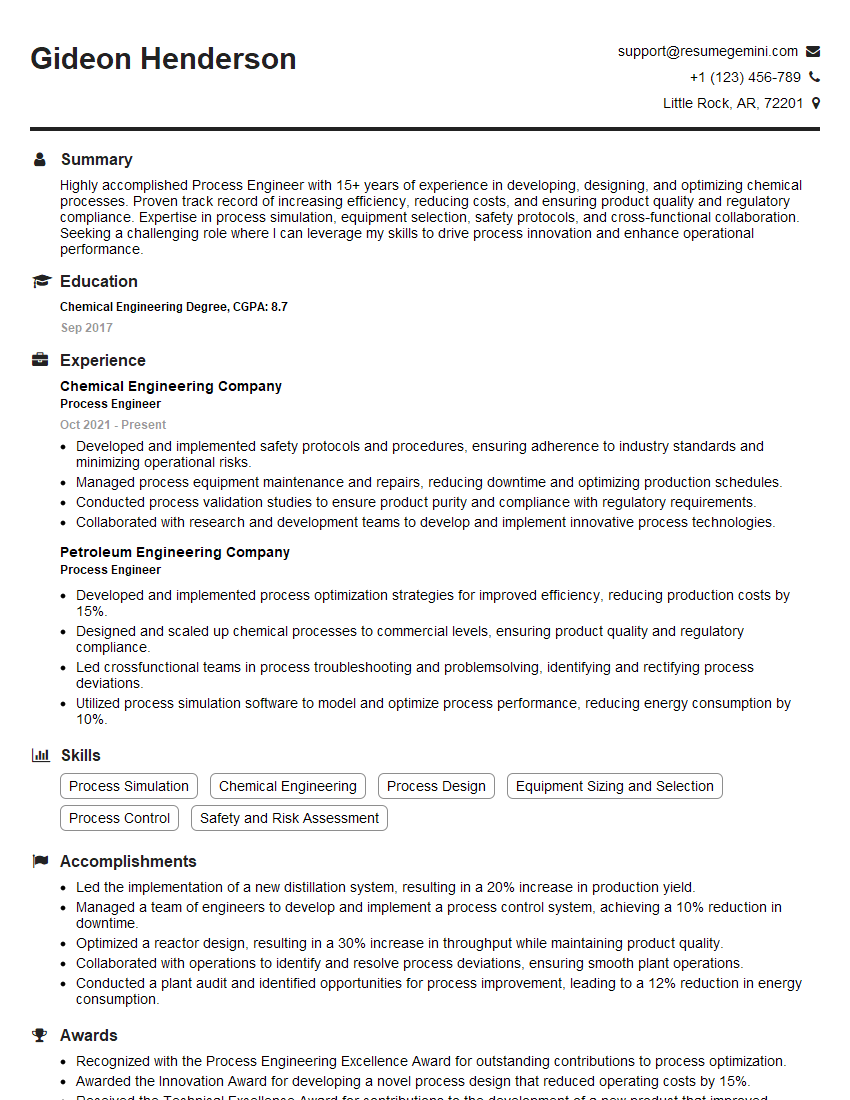
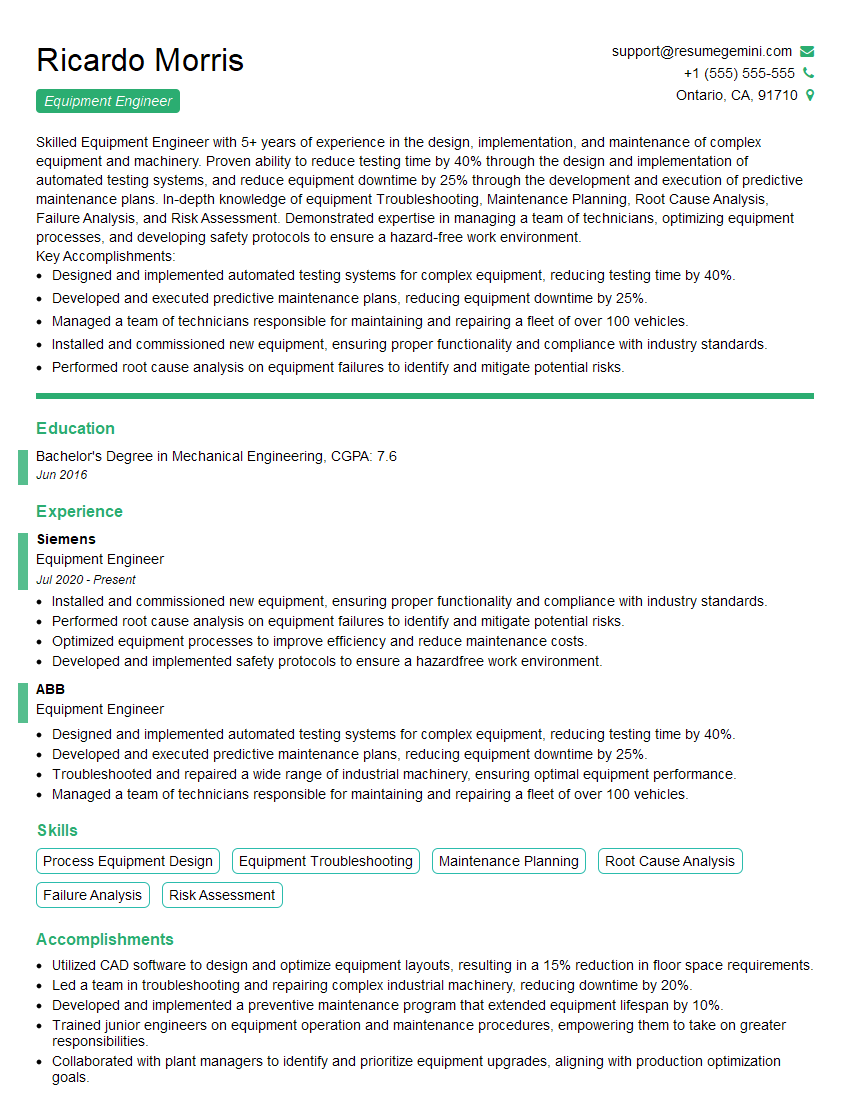
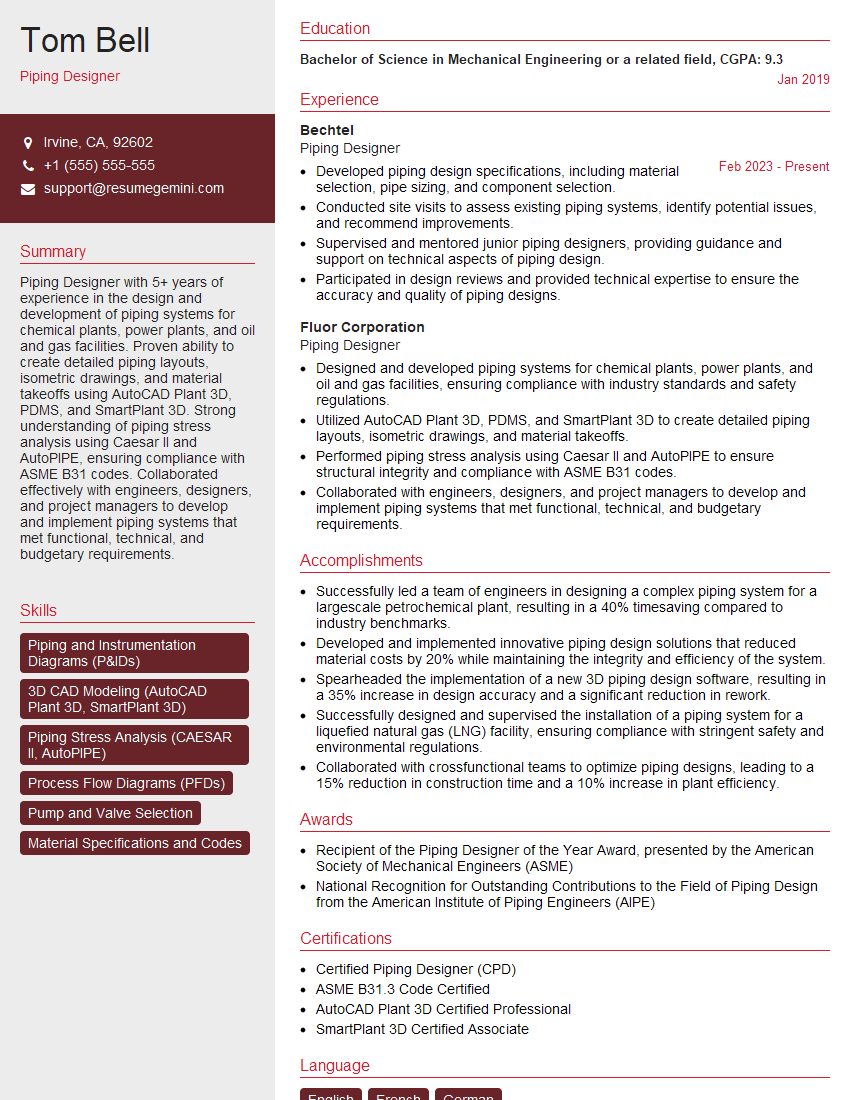
Mastering Piping and Equipment Design opens doors to exciting and rewarding careers in various industries. A strong foundation in these principles positions you for advancement and higher earning potential. To increase your chances of landing your dream role, it’s vital to present your skills effectively. Crafting an ATS-friendly resume is key to getting your application noticed by recruiters. ResumeGemini is a trusted resource to help you build a professional and impactful resume. They offer examples of resumes tailored to Piping and Equipment Design to provide you with a clear roadmap for success. Invest the time to create a resume that reflects your unique skills and experience; it’s an investment in your future.
Explore more articles
Users Rating of Our Blogs
Share Your Experience
We value your feedback! Please rate our content and share your thoughts (optional).
What Readers Say About Our Blog
To the interviewgemini.com Webmaster.
Very helpful and content specific questions to help prepare me for my interview!
Thank you
To the interviewgemini.com Webmaster.
This was kind of a unique content I found around the specialized skills. Very helpful questions and good detailed answers.
Very Helpful blog, thank you Interviewgemini team.