Preparation is the key to success in any interview. In this post, we’ll explore crucial Piping and Valve Inspection interview questions and equip you with strategies to craft impactful answers. Whether you’re a beginner or a pro, these tips will elevate your preparation.
Questions Asked in Piping and Valve Inspection Interview
Q 1. Explain the different types of piping materials and their applications.
Piping materials are selected based on factors like the fluid being transported, operating temperature and pressure, and environmental conditions. The choice of material directly impacts safety, longevity, and cost-effectiveness of the system.
- Carbon Steel: The most common material due to its strength, weldability, and relatively low cost. Excellent for many industrial applications but susceptible to corrosion in certain environments. Example: High-pressure steam lines in power plants.
- Stainless Steel: Offers superior corrosion resistance compared to carbon steel. Different grades (like 304, 316) offer varying levels of corrosion resistance, making them suitable for handling aggressive chemicals or applications requiring high hygiene standards. Example: Food processing plants, pharmaceutical manufacturing.
- Cast Iron: Used for lower-pressure applications where its strength and corrosion resistance are sufficient. Its brittle nature limits its use in high-stress environments. Example: Water distribution systems in older buildings.
- Ductile Iron: A superior alternative to cast iron, offering enhanced strength and ductility. It’s more resistant to impact and vibrations. Example: Underground pipelines.
- Plastics (PVC, CPVC, HDPE): Used for low-pressure applications, particularly where corrosion resistance is paramount. They are lightweight and easy to install, but their temperature and pressure limitations restrict their use. Example: Chemical drainage lines.
- Copper: Offers excellent corrosion resistance and is often used in plumbing systems due to its ease of joining and antimicrobial properties. Example: Domestic water supply lines.
The selection process involves considering factors such as material compatibility with the transported fluid, required pressure rating, temperature limits, and the overall cost-benefit analysis.
Q 2. Describe the various types of valves and their functions.
Valves are critical components that control the flow of fluids in piping systems. Different valve types offer varying levels of control, pressure resistance and suitability for different fluids and applications.
- Gate Valves: Used for on/off service, offering minimal pressure drop when fully open. Not ideal for throttling applications.
- Globe Valves: Suitable for throttling (regulating flow) and on/off service. They offer good flow control but have a higher pressure drop than gate valves.
- Ball Valves: Quick-acting on/off valves offering minimal pressure drop when fully open. Their simple design makes them reliable and easy to maintain. Not ideal for precise flow control.
- Butterfly Valves: Used for on/off and throttling service. They are compact and offer a good balance of cost-effectiveness and performance. They might experience significant wear with high-cycle operation.
- Check Valves: Prevent backflow in a pipeline. They automatically open in the direction of flow and close to prevent reverse flow. Various types exist: swing check, lift check, ball check.
- Control Valves: Used for precise regulation of flow rate or pressure. They typically incorporate actuators (pneumatic, electric, hydraulic) for automated control. They are complex and require specialized maintenance.
The selection of the appropriate valve type depends heavily on the application, required flow control, pressure rating, and fluid characteristics.
Q 3. What are the common inspection methods for piping and valves?
Piping and valve inspection involves a combination of visual inspection and non-destructive testing (NDT) methods. Visual inspection, often the first step, identifies readily apparent defects.
- Visual Inspection: A thorough examination of the piping and valves for visible signs of damage, such as corrosion, dents, cracks, leaks, and misalignment.
- Dimensional Inspection: Verifying that the piping and valves conform to design specifications using tools like calipers, rulers, and levels.
- Leak Testing: Detecting leaks using pressure testing or specialized leak detection equipment.
- Ultrasonic Testing (UT): Uses high-frequency sound waves to detect internal flaws in materials. Ideal for detecting cracks, corrosion, and other subsurface defects in welds and pipe walls.
- Radiographic Testing (RT): Uses X-rays or gamma rays to create images of the internal structure, revealing internal flaws such as cracks, porosity, and inclusions.
- Magnetic Particle Testing (MT): Detects surface and near-surface cracks in ferromagnetic materials by magnetizing the component and applying magnetic particles. Any crack will disrupt the magnetic field, causing particles to accumulate, making the crack visible.
- Liquid Penetrant Testing (PT): Detects surface-breaking flaws in non-porous materials by applying a penetrating liquid that enters the flaw and is then revealed using a developer.
The specific inspection methods are selected based on the materials used, the operating conditions, and the risk associated with failure.
Q 4. How do you identify and classify piping and valve defects?
Defect identification and classification are crucial for prioritizing repairs and preventing catastrophic failures. Defects are categorized based on severity and location. A thorough inspection report clearly documents findings.
- Corrosion: Degradation of the material due to chemical reactions. Types include uniform corrosion, pitting, crevice corrosion, and stress corrosion cracking. Severity is assessed based on depth and extent.
- Erosion: Material loss due to fluid flow. Often localized to areas of high velocity or turbulence.
- Cracking: Formation of cracks in the material, often due to stress, fatigue, or corrosion. Types include fatigue cracks, stress corrosion cracks, and weld cracks. Severity depends on crack length, depth, and orientation.
- Dents and Deformation: Physical damage to the pipe or valve, often from external impacts. Severity is assessed based on the extent of the damage and its potential impact on structural integrity.
- Leaks: Unintentional fluid escape from the system. Severity is based on the rate of leakage and potential consequences.
A standardized classification system (e.g., API standards) is used to categorize defects based on their severity and impact on system integrity. This allows for consistent and effective assessment of the piping and valves’ condition.
Q 5. Explain the importance of non-destructive testing (NDT) in piping and valve inspection.
Non-destructive testing (NDT) is essential in piping and valve inspection because it allows for the evaluation of the internal structure and integrity of components without causing damage. This prevents premature component failures and catastrophic incidents.
NDT methods provide crucial data on the presence, size, and location of defects which helps in making informed decisions on repairs or replacements. Regular NDT ensures the ongoing safe and reliable operation of piping and valve systems, minimizing downtime and preventing potential environmental hazards and safety risks.
For instance, detecting a critical crack in a high-pressure pipeline before it leads to a rupture is paramount for both safety and financial reasons. NDT makes this early detection possible.
Q 6. What are the common NDT methods used in piping and valve inspection?
Several NDT methods are commonly employed in piping and valve inspection, each with its strengths and limitations. The selection depends on factors such as material, defect type, accessibility, and cost.
- Ultrasonic Testing (UT): Widely used for detecting internal flaws like cracks, corrosion, and laminations in various materials. It’s particularly useful for thick-walled components.
- Radiographic Testing (RT): Provides detailed images of internal defects. This method is effective in detecting volumetric flaws such as porosity and inclusions in welds. However, it requires special safety precautions due to the use of ionizing radiation.
- Magnetic Particle Testing (MT): Detects surface and near-surface cracks in ferromagnetic materials. It’s a relatively fast and portable method, suitable for on-site inspection.
- Liquid Penetrant Testing (PT): Ideal for detecting surface-breaking flaws in various materials. It is simple, relatively inexpensive, and easy to perform. However, it’s limited to surface defects.
- Eddy Current Testing (ECT): Used for detecting surface and near-surface flaws in conductive materials. It’s particularly useful for inspecting tubes and other components with complex geometries.
Often, a combination of NDT methods is used to obtain a comprehensive assessment of the piping and valve integrity. For example, UT might be used to detect internal flaws, while MT or PT might be used to assess surface cracks.
Q 7. Describe the process of creating a piping and valve inspection plan.
Creating a comprehensive piping and valve inspection plan is critical for ensuring the safety and reliability of a system. The plan should be tailored to the specific characteristics of the system and the potential risks involved.
- Define Scope: Identify the specific piping and valves to be inspected, including their location, materials, and operating conditions.
- Identify Potential Hazards: Evaluate the risks associated with piping and valve failure, considering the consequences of leaks, ruptures, or other malfunctions.
- Select Inspection Methods: Based on the identified hazards and materials, select appropriate inspection methods (visual, dimensional, NDT).
- Develop Inspection Procedures: Detailed written procedures that describe the steps involved in each inspection method, including the equipment to be used and the criteria for acceptance or rejection.
- Establish Inspection Frequency: Determine how often the inspection will be carried out, based on the operating conditions, the criticality of the system, and the potential for degradation.
- Assign Responsibilities: Clearly define who is responsible for conducting the inspection, reviewing the results, and taking corrective action.
- Document Findings: Create a system for documenting the inspection findings, including photographs, measurements, and NDT results. All findings should be documented in a detailed report with clear recommendations for repairs or replacements.
- Implement Corrective Actions: Outline procedures for addressing any defects identified during the inspection, including repairs, replacements, or operational changes.
A well-defined inspection plan ensures thorough inspections, reduces risks, improves safety and extends the lifespan of piping and valve systems. Regular review and updates to the plan are essential to maintain its effectiveness.
Q 8. How do you interpret piping and instrumentation diagrams (P&IDs)?
Piping and Instrumentation Diagrams (P&IDs) are the blueprints of a process plant’s piping and instrumentation systems. They show the flow of fluids, the location of equipment (including valves, pumps, and vessels), and the instrumentation used to control and monitor the process. Interpreting a P&ID requires a systematic approach.
- Understand the Symbols: Familiarize yourself with the standard symbols used for various components (valves, pipes, instruments). There are industry standards that define these symbols, ensuring consistency. For example, a circle with a ‘T’ inside usually represents a temperature transmitter.
- Trace the Flow Paths: Follow the lines representing pipelines to understand how fluids move through the system. Note the direction of flow indicated by arrows.
- Identify Equipment and Instrumentation: Locate and identify key equipment like pumps, heat exchangers, and control valves. Understand the purpose and function of each instrument, such as pressure gauges or flow meters.
- Analyze the Control Loops: P&IDs often depict control loops showing how instruments and valves work together to maintain process parameters within specified ranges. For example, a temperature control loop might show a temperature transmitter, a controller, and a control valve working in concert.
- Cross-Reference with Other Documents: P&IDs rarely stand alone. You may need to consult other documents, such as equipment datasheets, to get more detailed information about the components shown on the diagram.
Think of a P&ID as a map of the process plant’s circulatory system; understanding it is crucial for effective inspection and maintenance.
Q 9. Explain the role of ASME codes and standards in piping and valve inspection.
ASME (American Society of Mechanical Engineers) codes and standards provide the technical framework for the design, fabrication, installation, inspection, testing, and operation of piping systems and valves in various industries. They ensure safety, reliability, and consistent quality.
- ASME B31.1: This code covers power piping, outlining requirements for materials, design, fabrication, erection, testing, and inspection.
- ASME B31.3: This code covers process piping, dealing with the same aspects as B31.1 but specifically for chemical, petrochemical, and other process plants.
- ASME Section VIII: This code covers pressure vessels, many of which are connected to piping systems, and are therefore relevant for inspection.
These codes specify acceptable materials, design pressures and temperatures, welding procedures, inspection techniques, and documentation requirements. During an inspection, adherence to these codes is verified. For example, we would check the material certificates for pipes to ensure they conform to the code’s requirements for the designated service. Non-compliance can lead to significant safety hazards and operational issues.
Q 10. What are the key safety considerations during piping and valve inspection?
Safety is paramount during piping and valve inspections. Several key considerations must be addressed:
- Permit-to-Work System: A formal permit-to-work system must be in place, ensuring that the area is properly isolated and de-energized before any inspection work begins. This minimizes the risk of unexpected releases, explosions, or electrical hazards.
- Lockout/Tagout Procedures: Energies must be isolated and locked out using proper lockout/tagout (LOTO) procedures. This prevents accidental activation of equipment during inspection.
- Personal Protective Equipment (PPE): Inspectors must wear appropriate PPE, including safety glasses, hard hats, safety shoes, gloves, and possibly respirators, depending on the substances handled in the pipes.
- Confined Space Entry Procedures: If inspection requires entry into confined spaces (e.g., inside a large pipe), strict confined space entry procedures must be followed to prevent asphyxiation or exposure to hazardous substances.
- Gas Detection: In areas where flammable or toxic gases may be present, gas detection equipment should be used to monitor the atmosphere.
- Awareness of Operating Conditions: The inspector should be aware of the operating conditions of the piping system before commencing the inspection. For example, pressure, temperature and flow rate must be checked and verified against operational limits.
A detailed risk assessment should be conducted before any inspection work to identify all potential hazards and to implement appropriate control measures. Ignoring these safety aspects can lead to serious accidents or injuries.
Q 11. How do you document your inspection findings?
Inspection findings must be meticulously documented to provide a clear and auditable record. This typically involves:
- Inspection Checklist: A pre-defined checklist ensures that all relevant aspects are inspected consistently. Each item on the checklist should be marked as either compliant or non-compliant.
- Photographs and Videos: Visual evidence, such as photographs and videos, helps to document the condition of the piping and valves. These images should be clearly labeled with date, time, location, and description.
- Detailed Written Report: A detailed report should summarize the inspection findings, including any non-conformances identified. This report should reference the relevant ASME codes and standards. It may include recommendations for corrective actions, such as repairs or replacements.
- Data Logging: Where applicable, relevant data like pressure, temperature, or flow readings should be recorded.
- Digital Inspection Reporting Software: Modern inspection reporting frequently utilizes digital tools that combine checklists, photo/video uploading, and report generation. This allows for more efficient and streamlined reporting.
Thorough documentation is essential for tracking the condition of piping and valves over time, ensuring regulatory compliance and facilitating effective maintenance planning.
Q 12. How do you handle non-conformances identified during inspection?
Non-conformances, or deviations from acceptable standards, are addressed using a systematic process:
- Immediate Actions: For critical non-conformances that pose an immediate safety risk (e.g., a leaking valve), immediate actions are taken to mitigate the risk, such as isolation of the affected section of the piping.
- Documentation: All non-conformances are documented in the inspection report, including a clear description of the problem, location, and severity.
- Root Cause Analysis (RCA): An RCA is performed to determine the underlying cause of the non-conformance. This might involve interviews, material testing, or review of operating records.
- Corrective Actions: Based on the RCA, appropriate corrective actions are identified and implemented. This may include repairs, replacements, or procedural changes.
- Verification: After corrective actions are taken, verification is done to ensure that the problem has been resolved and the system is back in compliance.
- Follow-up: A follow-up inspection may be scheduled to monitor the effectiveness of the corrective actions.
For instance, if significant corrosion is found on a pipe, the RCA might reveal a design flaw that led to stagnant flow and moisture buildup. The corrective action might involve modifying the piping design or implementing a better flushing procedure.
Q 13. Explain the concept of root cause analysis in relation to piping and valve failures.
Root Cause Analysis (RCA) is a critical process used to understand why piping and valve failures occur. It goes beyond simply identifying the symptom (e.g., a leak) to uncover the underlying cause. The goal is to prevent similar failures in the future.
Several techniques can be used for RCA:
- 5 Whys: Repeatedly asking “why” to drill down to the root cause. For example, a valve fails (Why? Because it was corroded. Why? Because the system wasn’t properly drained. Why? Because the drainage procedure wasn’t followed. Why? Because training was inadequate).
- Fishbone Diagram (Ishikawa Diagram): A visual tool that identifies potential causes categorized by factors like materials, design, operation, and maintenance.
- Fault Tree Analysis (FTA): A top-down approach that starts with a failure and works backward to identify contributing causes.
Effective RCA requires a systematic approach and collaboration among different teams, including operations, maintenance, and engineering. Without a thorough RCA, corrective actions may only address the symptoms, leading to recurring failures. This systematic approach prevents a ‘band-aid’ fix and ensures long-term reliability of the system.
Q 14. What is the importance of preventive maintenance for piping and valves?
Preventive maintenance (PM) is crucial for ensuring the safety, reliability, and longevity of piping and valve systems. It involves regularly inspecting, cleaning, and repairing components before they fail.
- Reduced Downtime: By catching potential problems early, PM prevents unexpected failures and minimizes downtime. This translates directly into cost savings.
- Improved Safety: Regular inspections identify potential hazards, such as corrosion or leaks, before they escalate into serious safety incidents.
- Extended Equipment Life: PM extends the useful life of piping and valves by preventing premature wear and tear. This reduces replacement costs and extends the life cycle of the entire process plant.
- Compliance with Regulations: Many regulations require a regular PM program for piping and valve systems.
- Optimized Operational Efficiency: Well-maintained systems operate more efficiently, resulting in energy savings and optimized process performance.
A well-structured PM program includes scheduled inspections, lubrication, cleaning, and necessary repairs based on the equipment’s operating conditions and industry best practices. For example, a valve’s packing might be replaced regularly to prevent leaks or a regular internal visual inspection of a pipe might help detect early signs of corrosion. This proactive approach significantly reduces the likelihood of catastrophic failures and the associated costs.
Q 15. Describe your experience with different types of valve actuators.
Valve actuators are the ‘muscles’ that move valves, allowing for remote or automated control. I’ve worked extensively with several types, each with its strengths and weaknesses.
- Pneumatic Actuators: These use compressed air to generate force. They’re simple, reliable, and relatively inexpensive, making them common in many industrial settings. For instance, I’ve used them extensively in oil and gas pipelines where a readily available compressed air supply is standard. However, they can be susceptible to freezing in cold climates.
- Electric Actuators: These use electric motors for operation. They offer precise control and are ideal for applications needing precise positioning or modulating flow. I’ve worked on projects using these in chemical plants requiring very specific flow rates and on-off control. Their reliance on electricity, however, makes them vulnerable to power outages.
- Hydraulic Actuators: These employ hydraulic fluid under pressure to deliver significant force. They are suitable for large valves and high-pressure applications where substantial torque is required. I recall a project involving large diameter gate valves in a hydroelectric dam; hydraulic actuators were the only practical solution. Their complexity and maintenance requirements are higher, though.
- Smart Actuators: These integrate sensors and controllers, allowing for feedback, diagnostics, and remote monitoring. They represent the cutting edge, offering improved efficiency and reduced maintenance, but come with a higher initial investment. I’ve recently incorporated these in a water treatment facility, allowing for predictive maintenance and real-time performance data.
Choosing the right actuator depends heavily on the specific application, considering factors such as pressure, temperature, required torque, and environmental conditions.
Career Expert Tips:
- Ace those interviews! Prepare effectively by reviewing the Top 50 Most Common Interview Questions on ResumeGemini.
- Navigate your job search with confidence! Explore a wide range of Career Tips on ResumeGemini. Learn about common challenges and recommendations to overcome them.
- Craft the perfect resume! Master the Art of Resume Writing with ResumeGemini’s guide. Showcase your unique qualifications and achievements effectively.
- Don’t miss out on holiday savings! Build your dream resume with ResumeGemini’s ATS optimized templates.
Q 16. How do you assess the integrity of a piping system?
Assessing piping system integrity is a multi-faceted process. It goes beyond simple visual checks and requires a systematic approach incorporating several methods. I generally follow a structured procedure:
- Visual Inspection: This is the first step, checking for obvious signs of damage like corrosion, cracks, dents, or leaks. I use checklists and detailed photographic documentation for thoroughness. A missing bolt or significant rust could point to deeper problems.
- Non-Destructive Testing (NDT): Visual inspection alone is insufficient. NDT techniques help detect hidden defects. These could include:
- Ultrasonic Testing (UT): Detects internal flaws like cracks or corrosion using sound waves. I’ve used UT to assess wall thickness in high-pressure steam lines.
- Radiographic Testing (RT): Uses X-rays or gamma rays to identify internal defects. This is crucial for welded joints where hidden flaws could be catastrophic.
- Magnetic Particle Testing (MT): Detects surface and near-surface cracks in ferromagnetic materials. This is particularly useful for detecting fatigue cracks in valve bodies.
- Pressure Testing: Hydrostatic or pneumatic testing involves pressurizing the system to check for leaks or weaknesses. This is often a crucial step for new installations or after major repairs. This involves careful calculation of the test pressure and close monitoring of the system during the test.
- Documentation Review: Reviewing previous inspection reports, maintenance logs, and design specifications is vital to understand the system’s history and identify potential problem areas.
The final assessment of integrity involves combining data from all these methods to make an informed judgment on the system’s fitness for service.
Q 17. What are the common causes of piping and valve corrosion?
Piping and valve corrosion is a major concern, significantly impacting system lifespan and safety. Common causes can be grouped into:
- Environmental Factors:
- Moisture: The presence of water, especially in the presence of dissolved oxygen, accelerates corrosion. Think of rust on an old pipe – that’s oxygen reacting with iron in the presence of water.
- Temperature: High temperatures can increase corrosion rates, while low temperatures can lead to stress corrosion cracking.
- Soil Conditions: The chemical composition of the soil surrounding underground piping significantly influences corrosion. Acidic or highly saline soils are particularly aggressive.
- Chemical Factors:
- Fluid Composition: The chemicals transported within the pipes play a crucial role. For instance, acidic fluids can corrode many metal types, demanding specialized materials.
- Electrochemical Processes: Dissimilar metals in contact can lead to galvanic corrosion, where one metal corrodes faster due to the formation of an electrochemical cell. A common example is steel pipe connected to a copper fitting.
- Design and Fabrication Issues:
- Poor Welding: Improper welding techniques can lead to stress concentration and accelerated corrosion at the weld joints.
- Material Selection: Choosing unsuitable materials for the fluid and environment contributes to faster corrosion.
Understanding these causes is crucial for effective corrosion prevention and mitigation strategies, such as proper material selection, coatings, cathodic protection, and regular inspection.
Q 18. Explain different types of pipe supports and their purpose.
Pipe supports are essential for maintaining the structural integrity of piping systems, preventing excessive stress, and ensuring safe operation. The type of support depends on factors like pipe size, material, operating pressure, temperature, and the environment. Some common types include:
- Rigid Supports: These firmly restrain the pipe in all directions, preventing movement. They are often used at points of high stress, such as changes in pipe direction or near equipment connections.
- Variable Spring Supports: These allow for some axial movement, accommodating thermal expansion and contraction. These are important in large piping systems to prevent stress from temperature changes.
- Constant Support Hangers: These maintain a constant vertical distance between the pipe and its support structure, compensating for pipe weight and thermal expansion. This is critical for preventing sagging and ensuring consistent pipe alignment.
- Snubbers: These limit the movement of the pipe during seismic events or other dynamic loads, protecting it from damage.
- Guides: These restrict lateral movement, preventing the pipe from swaying. They are commonly used to control pipe movements caused by vibration or wind.
Proper design and installation of pipe supports are critical to prevent stress-related failures, leaks, and vibration-induced damage. Calculations involving stress, thermal expansion, and pipe weight are always part of the design process.
Q 19. How do you determine the appropriate inspection frequency for piping and valves?
Determining the appropriate inspection frequency is crucial for maintaining safety and preventing failures. It’s not a one-size-fits-all answer; it depends heavily on several factors:
- Material: Certain materials are more susceptible to degradation than others. Carbon steel, for example, may need more frequent inspections in corrosive environments compared to stainless steel.
- Operating Conditions: High pressure, temperature, and corrosive fluids increase the risk of damage, requiring more frequent inspections.
- Service History: A piping system with a history of leaks or repairs will need more frequent monitoring than one with a clean service record.
- Regulatory Requirements: Industry standards and regulatory bodies often mandate minimum inspection frequencies for specific applications. Compliance is paramount.
- Risk Assessment: A thorough risk assessment should identify critical components requiring more frequent inspection. A leak in a high-pressure ammonia line carries a much higher risk than one in a low-pressure water line.
Risk-based inspection planning, incorporating historical data, operational parameters, and industry best practices, is a sound approach to establish an appropriate inspection schedule.
Q 20. What are the key differences between visual inspection and other NDT methods?
Visual inspection is the simplest NDT method, relying on direct observation to identify visible defects. While it’s quick and cost-effective, it’s limited to surface flaws. Other NDT methods provide a more comprehensive assessment of internal conditions.
- Visual Inspection: Detects surface cracks, corrosion, leaks, dents, and misalignment. It’s the first line of defense but only reveals what’s directly visible.
- Other NDT Methods (e.g., UT, RT, MT): These advanced methods allow for detection of internal flaws, providing a much deeper understanding of the piping system’s integrity. They’re more expensive and require specialized equipment and training.
Think of it like a medical checkup: a visual inspection is like looking at your skin for rashes, while X-rays or ultrasounds are like looking inside your body for hidden problems. Both are important, but they serve different purposes and provide different levels of detail.
Q 21. How do you manage inspection data and generate reports?
Effective management of inspection data is crucial for informed decision-making and maintaining a comprehensive history of the piping system. I typically use a combination of methods:
- Digital Inspection Reporting Software: Software specifically designed for inspection management is crucial. This helps record findings, generate reports, and track inspection schedules efficiently. Such software typically includes features for uploading images, creating detailed reports, and managing inspection schedules.
- Database Management: A well-structured database is essential for storing all inspection data, allowing for easy retrieval and analysis of historical trends. This allows for easy tracking of repairs, replacements and identification of patterns.
- Document Control System: A robust system for managing documents like inspection reports, calibration certificates, and maintenance records is needed. This ensures all relevant information is readily available and updated.
- Report Generation: Reports should be clear, concise, and easy to understand. They should include details of the inspection methods used, findings, recommendations, and action items. I often use standardized templates to ensure consistency and completeness.
The goal is to create a readily accessible and easily searchable archive of all inspection data, providing valuable insights into the system’s health and guiding future maintenance and repair decisions.
Q 22. Explain your experience with pressure testing of piping systems.
Pressure testing piping systems is crucial for ensuring structural integrity and leak prevention. It involves pressurizing the system to a predetermined level above its operating pressure and holding it for a specified duration to detect any weaknesses. The process involves several steps:
- Planning & Preparation: This includes reviewing piping and instrumentation diagrams (P&IDs), identifying test points, isolating sections of the system, and selecting appropriate testing equipment.
- System Isolation: Before pressurization, the system is isolated from other operating systems to prevent accidental damage or release of hazardous materials. Blind flanges or isolation valves are used.
- Pressurization: A pressure pump, typically a hydraulic pump, gradually increases the system pressure to the designated test pressure. This is usually 1.5 times the maximum allowable working pressure (MAWP), but specific regulations and industry standards must be followed.
- Pressure Holding: Once the test pressure is reached, the system is held at that pressure for a specific time (often several hours), allowing for any leaks to manifest. A pressure gauge continuously monitors the pressure.
- Leak Detection: Throughout the pressure holding period, the system is visually inspected for any leaks (e.g., visible drips, bubbling in water). Leak detection equipment such as soap solution may be used to pinpoint smaller leaks.
- Pressure Release: After the holding period, the pressure is gradually released in a controlled manner, and the system is inspected for any signs of damage or stress.
- Documentation: A comprehensive report detailing the test procedure, results, and any findings is essential for compliance and future reference.
For example, during a recent project involving a high-pressure steam line, we employed a sophisticated pressure testing system with automated data logging to ensure accuracy and traceability. We identified a minor leak in a welded joint which was promptly repaired before commissioning, preventing a potentially hazardous incident.
Q 23. Describe your experience using inspection software or databases.
I have extensive experience using various inspection software and databases, including asset management systems like Maximo and SAP PM. These systems allow for efficient tracking of inspections, repairs, and maintenance activities for piping and valves. They provide a centralized repository for critical data, improving decision-making and ensuring compliance.
For example, in a previous role, I used Maximo to schedule routine inspections of critical piping systems, creating automated alerts for overdue inspections. The software’s reporting functionality helped generate comprehensive compliance reports for regulatory audits. The database allowed us to track the history of each component, from installation to maintenance, greatly simplifying root cause analysis during failure investigations.
Furthermore, I’m proficient in using specialized software for 3D modeling and analysis (like AutoPIPE) to assess piping stress and potential failure points. This helps proactively identify and mitigate risks before they result in leaks or failures.
Q 24. How do you ensure compliance with relevant safety regulations?
Ensuring compliance with safety regulations is paramount in piping and valve inspection. This involves meticulous adherence to industry standards (like ASME B31.1, B31.3, API 653) and local regulations. My approach involves a multi-layered strategy:
- Thorough Knowledge of Codes and Standards: I maintain an up-to-date understanding of all relevant codes and standards, ensuring all inspections and repairs are performed according to the applicable regulations.
- Documentation and Traceability: Every inspection activity is meticulously documented, ensuring complete traceability of actions taken. This includes inspection reports, repair records, and certificates of compliance.
- Risk-Based Inspection (RBI): I utilize RBI methodologies to prioritize inspections based on the potential consequences of failure. Critical components receive more frequent and detailed inspection than less critical ones. This optimizes resources while maintaining high safety levels.
- Regular Audits and Training: Regular internal audits ensure that procedures and standards are consistently followed. Moreover, continuous professional development through training courses and industry updates ensures my knowledge and skills remain current.
- Incident Investigation: When incidents occur, a thorough root cause analysis is performed to identify underlying issues and prevent future occurrences. Lessons learned are documented and disseminated to the team.
For instance, during a recent project involving the handling of hazardous chemicals, we implemented a rigorous inspection program adhering strictly to OSHA regulations. This included implementing a lock-out/tag-out procedure before any inspection or repair work, greatly reducing the risk of accidents.
Q 25. Explain your experience with different types of piping joints.
I have experience with a wide variety of piping joints, including:
- Welding: This is a common method for joining pipes, offering high strength and durability. Different welding techniques (e.g., butt welding, fillet welding) are used based on pipe material and application. Regular inspection for weld integrity is crucial.
- Flanged Joints: These joints use flanges bolted together with gaskets to create a seal. Flanged joints are relatively easy to disassemble for maintenance and inspection. Regular inspection of bolts and gaskets is necessary.
- Threaded Joints: Used for smaller diameter pipes, threaded joints are relatively simple and quick to assemble. They are suitable for lower pressure applications. Proper threading and sealants are critical for leak prevention.
- Compression Fittings: These fittings create a seal through compression, making them easy to assemble and disassemble without specialized tools. They are typically used for smaller pipes and lower pressure applications.
- Socket Weld Joints: This type of joint involves inserting the pipe into a socket, then welding. They offer a strong, leak-tight seal but require careful inspection for proper penetration.
My experience allows me to select the appropriate joint type based on factors such as pipe material, pressure, temperature, and accessibility for maintenance. I also ensure that appropriate inspection techniques are applied to each joint type to ensure safety and reliability.
Q 26. What are the common signs of valve leakage?
Common signs of valve leakage include:
- Visible Leaks: This is the most obvious sign, including dripping or spraying fluid from the valve stem or body.
- Wetness around the valve: Even if no active leak is visible, wetness around the valve may indicate a slow leak or seepage.
- Pressure Drop: A significant or unexpected drop in pressure in the system could suggest internal valve leakage.
- Unusual Noises: Hissing or whistling sounds from the valve often signal a leak.
- Increased Energy Consumption: Valve leakage can lead to increased energy consumption as the system works harder to maintain pressure.
- Valve Stem Movement: Excessive or unusual movement of the valve stem can also indicate a problem with the internal seals.
The method of detecting leaks depends on the fluid being handled and the pressure of the system. For example, detecting a leak in a high-pressure steam line would require different techniques and safety precautions than detecting a leak in a low-pressure water line. Thermal imaging cameras can detect leaks by identifying temperature differences, even in cases where visible leaks aren’t present.
Q 27. How do you identify and address potential risks associated with piping and valve systems?
Identifying and addressing potential risks associated with piping and valve systems requires a proactive and multi-faceted approach. This begins with a thorough risk assessment, including:
- Hazard Identification: Identifying potential hazards such as leaks, corrosion, failure, and release of hazardous materials.
- Risk Analysis: Evaluating the likelihood and severity of each hazard. This includes considering factors such as pressure, temperature, material properties, and environmental conditions.
- Consequence Analysis: Determining the potential impact of a failure, including environmental damage, property damage, personal injury, and production downtime.
- Risk Mitigation: Implementing control measures to reduce the likelihood or severity of identified hazards. This can include regular inspections, maintenance programs, and the installation of safety devices.
For instance, in a chemical processing plant, a leak in a high-pressure vessel containing toxic chemicals could have devastating consequences. Therefore, a thorough risk assessment should consider the properties of the chemical, the pressure and temperature in the vessel, and the proximity to personnel and the environment. Mitigation measures would include implementing a robust inspection program, installing pressure relief valves, and implementing emergency response plans.
Additionally, using software for Finite Element Analysis (FEA) can help simulate potential failure scenarios and identify areas needing extra attention or reinforcement.
Q 28. Describe your experience with the repair and replacement of piping and valves.
My experience in repair and replacement of piping and valves includes a wide range of activities, from minor repairs to major replacements. This involves:
- Diagnosis and Assessment: Identifying the root cause of the failure and assessing the extent of the damage. This may involve visual inspections, non-destructive testing (NDT) methods (such as ultrasonic testing or radiographic testing), and pressure testing.
- Repair Procedures: Implementing appropriate repair procedures, ranging from simple weld repairs to more complex procedures such as pipe replacement or valve refurbishment.
- Component Selection: Selecting appropriate replacement components that meet the required specifications and standards.
- Installation and Commissioning: Following appropriate installation procedures and commissioning the repaired or replaced section of the system. This includes pressure testing and functional verification.
- Documentation: Maintaining detailed records of the repair or replacement work, including material specifications, procedures followed, and test results.
For example, I once oversaw the replacement of a corroded section of a pipeline in a refinery. This involved isolating the section, carefully removing the damaged pipe, installing a new section using appropriate welding techniques, and conducting thorough pressure testing to ensure the integrity of the repair before returning the system to service. The entire process was meticulously documented to ensure compliance and provide a record for future reference.
Key Topics to Learn for Piping and Valve Inspection Interview
- Piping Systems and Materials: Understanding different pipe materials (steel, PVC, etc.), their properties, and applications in various industries. Consider the implications of material selection on inspection procedures.
- Valve Types and Functionality: Familiarize yourself with common valve types (gate, globe, ball, check, etc.), their operating principles, and typical failure modes. Be prepared to discuss practical applications and maintenance requirements.
- Inspection Techniques and Methods: Master various inspection methods, including visual inspection, non-destructive testing (NDT) techniques (e.g., ultrasonic testing, radiographic testing), and pressure testing. Understand the limitations and advantages of each method.
- Industry Codes and Standards: Demonstrate familiarity with relevant industry codes and standards (e.g., ASME, API) that govern piping and valve inspection practices. Understand how these standards ensure safety and compliance.
- Documentation and Reporting: Learn how to effectively document inspection findings, generate comprehensive reports, and communicate technical information clearly and concisely to both technical and non-technical audiences. This includes understanding the importance of accurate record-keeping.
- Corrosion and Degradation Mechanisms: Develop a strong understanding of various corrosion mechanisms affecting piping and valves, and the methods used to mitigate these issues. Be ready to discuss preventative maintenance strategies.
- Risk Assessment and Mitigation: Understand how to conduct risk assessments related to piping and valve systems, identifying potential hazards and implementing appropriate mitigation strategies to ensure operational safety and prevent failures.
- Troubleshooting and Problem-Solving: Practice your problem-solving skills by considering scenarios involving piping and valve failures. Be prepared to discuss potential causes, diagnostic approaches, and corrective actions.
Next Steps
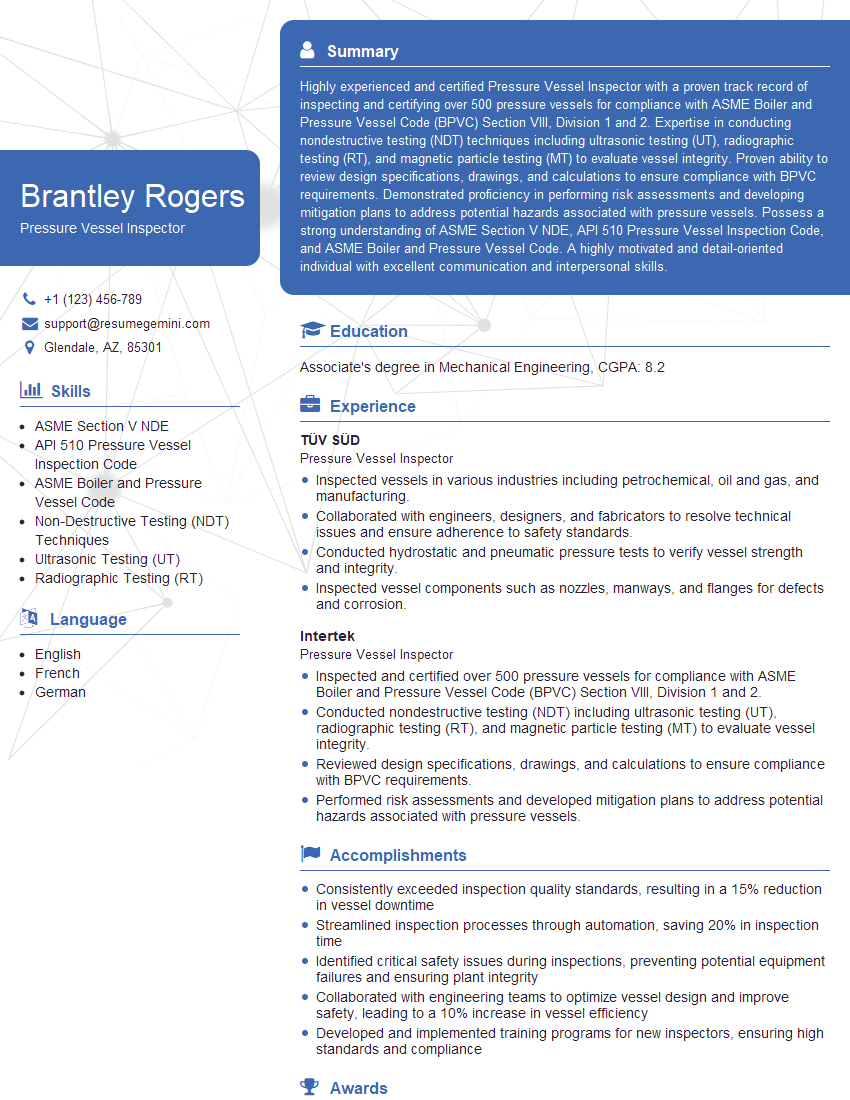
Mastering Piping and Valve Inspection opens doors to exciting career opportunities in various industries, offering excellent growth potential and specialized expertise. To enhance your job prospects, creating a strong, ATS-friendly resume is crucial. ResumeGemini is a trusted resource that can help you build a professional and impactful resume, significantly increasing your chances of landing your dream job. Examples of resumes tailored specifically to Piping and Valve Inspection are available to help guide you.
Explore more articles
Users Rating of Our Blogs
Share Your Experience
We value your feedback! Please rate our content and share your thoughts (optional).
What Readers Say About Our Blog
To the interviewgemini.com Webmaster.
Very helpful and content specific questions to help prepare me for my interview!
Thank you
To the interviewgemini.com Webmaster.
This was kind of a unique content I found around the specialized skills. Very helpful questions and good detailed answers.
Very Helpful blog, thank you Interviewgemini team.