Feeling uncertain about what to expect in your upcoming interview? We’ve got you covered! This blog highlights the most important Plant Electrical Maintenance interview questions and provides actionable advice to help you stand out as the ideal candidate. Let’s pave the way for your success.
Questions Asked in Plant Electrical Maintenance Interview
Q 1. Explain the difference between AC and DC power.
The key difference between AC (Alternating Current) and DC (Direct Current) power lies in the direction of electron flow. In DC power, electrons flow consistently in one direction, like a river flowing downstream. This is the type of power produced by batteries. In AC power, the electrons constantly change direction, oscillating back and forth, like a wave in the ocean. This is the type of power supplied to our homes and industries.
Think of it like this: DC is like pushing a cart in a straight line, while AC is like pushing it back and forth repeatedly. This oscillation in AC power allows for efficient long-distance transmission due to transformers which can step up and step down voltage easily. DC power, on the other hand, is more efficient at lower voltages over shorter distances.
In plant electrical maintenance, understanding this difference is crucial. Different equipment operates on either AC or DC power, and mismatching them can lead to serious damage. For example, a motor designed for AC power will likely be damaged if connected to a DC power source, and vice versa.
Q 2. Describe your experience with troubleshooting electrical control circuits.
I have extensive experience troubleshooting electrical control circuits, primarily within agricultural processing plants. My approach is systematic and involves a combination of visual inspection, instrumentation, and logical deduction. I typically start by reviewing the circuit diagrams to understand the intended functionality. Then, I use multimeters and oscilloscopes to measure voltage, current, and signal integrity at various points in the circuit.
For instance, I once worked on a faulty irrigation system where the pumps wouldn’t start. After carefully examining the wiring and control panel, I discovered a loose connection in a relay. A simple tightening resolved the issue. Another time, I used a logic analyzer to track down an intermittent fault in a PLC-controlled conveyor system, which turned out to be a failing input sensor causing erratic signals. Documenting each step and finding the root cause are critical aspects of effective troubleshooting; a superficial fix can lead to recurring problems.
I’m proficient in interpreting ladder diagrams and using diagnostic software to isolate faults within PLCs. I prioritize safety throughout the process, always following lockout/tagout procedures and employing appropriate personal protective equipment (PPE).
Q 3. What are the common causes of motor failures?
Motor failures in industrial settings are common and often stem from several factors. They can be broadly categorized into electrical and mechanical causes.
- Electrical Issues: These include problems with the motor windings (short circuits, insulation breakdown, open windings), faulty bearings (causing excessive current draw), problems with the motor starter (inconsistent starting torque), and power supply issues (voltage fluctuations or surges).
- Mechanical Issues: Mechanical problems can include bearing wear, shaft misalignment, imbalance, overloading, and excessive vibration. These can lead to premature wear and eventually catastrophic failure.
- Environmental Factors: Excessive heat, humidity, and dust can also contribute to motor failure. Corrosion of components can also be a major contributing factor.
Identifying the root cause often involves a combination of visual inspection, motor testing (measuring insulation resistance, winding resistance, and current draw), and vibration analysis. Preventive maintenance, such as regular lubrication and thermal imaging, can significantly reduce the likelihood of motor failures.
Q 4. How do you perform a lockout/tagout procedure?
Lockout/Tagout (LOTO) is a critical safety procedure designed to prevent accidental energization of equipment during maintenance or repair. It’s a crucial aspect of my daily work.
- Identify the energy sources: This includes electrical, hydraulic, pneumatic, and other energy sources connected to the equipment.
- Isolate the energy sources: Shut off breakers, valves, or other controls to disconnect the energy sources.
- Lock out the energy sources: Use a lockout device (lock) to physically prevent the re-energization of the equipment. Each worker involved in the maintenance should use their own lock.
- Tag out the energy sources: Attach a tag clearly indicating that the equipment is locked out, who locked it out, and the date and time.
- Verify the lockout: Before starting work, ensure the equipment is completely de-energized by verifying the lack of energy at the point of service. This could involve checking with a non-contact voltage tester or other appropriate tools.
- Release the lockout: Once the work is complete, only the person who initially locked out the equipment is allowed to remove the lock and tag after verifying that it’s safe to do so.
Strict adherence to LOTO procedures is paramount to preventing accidents and injuries. I always ensure everyone on the team understands and follows these procedures meticulously.
Q 5. What safety precautions do you take when working with high-voltage equipment?
Safety is my top priority when working with high-voltage equipment. I strictly follow all relevant safety regulations and guidelines. This includes:
- Using appropriate Personal Protective Equipment (PPE): This includes insulated gloves, safety glasses, arc flash suits, and safety footwear.
- Employing proper lockout/tagout procedures: This is vital to ensure the equipment is completely de-energized before working on it.
- Using insulated tools: Using tools specifically designed for high-voltage work prevents electrical shock.
- Following safe work practices: This includes never working alone, maintaining a safe distance from energized equipment, and having a clear understanding of the equipment before beginning work.
- Regular safety training and certification: I keep my certifications updated to ensure my competence in safely handling high-voltage equipment.
Working with high-voltage equipment can be extremely dangerous. Even seemingly minor errors can have life-threatening consequences. Strict adherence to safety procedures is non-negotiable.
Q 6. Explain your experience with Programmable Logic Controllers (PLCs).
I have extensive experience programming and troubleshooting Programmable Logic Controllers (PLCs). My expertise encompasses various PLC brands such as Allen-Bradley, Siemens, and Schneider Electric. I’m proficient in ladder logic, function block diagrams, and structured text programming languages. My experience includes designing and implementing PLC programs for controlling automated processes in various agricultural and industrial settings.
For example, I developed a PLC program to control a complex harvesting system that involved multiple conveyors, sensors, and robotic arms. The system required precise coordination of various components, and I successfully designed and implemented the control logic to ensure efficient and safe operation. I’ve also been involved in troubleshooting faulty PLC programs, often involving systematic analysis of program logic and hardware diagnostics. I utilize simulation software to test my programs before deploying them in the field, minimizing potential disruptions.
Q 7. Describe your experience with SCADA systems.
My experience with Supervisory Control and Data Acquisition (SCADA) systems involves their implementation and maintenance in industrial environments. I’ve worked with various SCADA platforms, including Wonderware, Ignition, and Rockwell Automation’s FactoryTalk. I understand the architecture of these systems, encompassing data acquisition, communication protocols (like Modbus and Profibus), and data visualization.
In a previous role, I was responsible for maintaining a SCADA system that monitored and controlled a large-scale irrigation network across several fields. My responsibilities involved configuring alarm thresholds, troubleshooting network communication issues, and ensuring the accurate display of real-time data. I’ve also been involved in projects involving integrating different types of equipment and devices into the SCADA system for centralized monitoring and control. This included setting up the communication channels between different field devices and the central SCADA server.
SCADA systems are integral to monitoring and controlling large-scale plant operations, giving crucial insights into plant performance and assisting in preventing critical errors.
Q 8. How do you diagnose and repair faulty electrical wiring?
Diagnosing and repairing faulty electrical wiring begins with safety. Always de-energize the circuit before working on it! I use a multi-meter to check for continuity, voltage, and resistance. A lack of continuity indicates a break in the wire, while unexpected voltage suggests a short circuit. High resistance could point to a loose connection or corroded wire.
For example, if a light fixture isn’t working, I’d first check the breaker. If it’s tripped, I’d reset it. If the problem persists, I’d test the voltage at the fixture using the multi-meter. No voltage indicates a problem with the wiring upstream. I’d then systematically trace the circuit, checking connections and looking for visible damage like fraying or burn marks. If a break is found, I’d carefully splice in new wire, ensuring proper insulation and connection. If a short is detected, I’d isolate the section of wire causing the short and replace it.
Troubleshooting involves a systematic approach: visual inspection, multimeter tests, and tracing the circuit from the power source to the load. I always document my findings and repairs thoroughly.
Q 9. What are your experiences with preventative maintenance on electrical equipment?
Preventative maintenance is crucial for maximizing equipment lifespan and preventing costly downtime. My experience includes developing and implementing preventative maintenance schedules for various electrical equipment such as motors, transformers, and control systems. This involves regular inspections, cleaning, lubrication, and testing based on manufacturer recommendations and industry best practices.
For instance, I’ve developed a schedule for motor inspection that includes visual checks for signs of overheating, loose connections, and mechanical wear. I also perform insulation resistance tests to identify potential degradation. For transformers, preventative maintenance includes checking oil levels, temperature monitoring, and performing insulation testing. Regular cleaning of electrical panels and enclosures removes dust and debris, preventing overheating and potential fire hazards. This proactive approach ensures equipment operates reliably and safely, extending its lifespan and reducing maintenance costs in the long run.
Q 10. How do you interpret electrical schematics and blueprints?
Interpreting electrical schematics and blueprints is fundamental to my work. These diagrams provide a visual representation of the electrical system, showing the arrangement of components, wiring pathways, and control logic. I’m proficient in reading various types of diagrams, including single-line diagrams, ladder diagrams, and wiring diagrams.
A single-line diagram shows the overall power flow, while a ladder diagram details the control circuitry. Wiring diagrams show detailed connections between components. Understanding symbols and conventions is essential. For instance, I understand the various symbols used to represent motors, switches, relays, and other electrical components. I use these diagrams to troubleshoot, design modifications, and plan installations, ensuring efficient and safe execution of electrical tasks.
Q 11. Explain your experience with motor control centers (MCCs).
Motor Control Centers (MCCs) are the heart of many industrial electrical systems. My experience encompasses the installation, maintenance, and troubleshooting of MCCs. This includes working with various types of motor starters, such as magnetic starters, solid-state starters, and variable frequency drives (VFDs).
I’m familiar with safety procedures when working on MCCs, including lockout/tagout procedures to prevent accidental energization. Troubleshooting in MCCs involves systematically checking components like fuses, contactors, overload relays, and interlocks. I’ve experience diagnosing and repairing problems such as faulty contactors, blown fuses, and malfunctioning overload relays. I also understand the importance of proper grounding and bonding within the MCC to ensure safety and prevent electrical hazards.
Q 12. Describe your experience with various types of electrical motors.
I have extensive experience with various types of electrical motors, including AC induction motors, DC motors, and servo motors. AC induction motors are the most common type, and I’m proficient in diagnosing and repairing issues such as bearing failure, winding problems, and starting difficulties. DC motors offer precise speed control and are commonly used in applications requiring accurate positioning. Servo motors provide precise and responsive control for applications needing high accuracy.
For instance, I’ve worked on repairing a three-phase AC induction motor that experienced overheating due to a faulty bearing. Diagnosing the issue involved using a multi-meter and thermal imaging camera. Repairing the motor included replacing the bearing and performing a thorough inspection of the windings and insulation. Understanding motor specifications, such as horsepower, voltage, and operating characteristics, is crucial for effective troubleshooting and repair.
Q 13. What is your experience with electrical power distribution systems?
Electrical power distribution systems deliver power from the source to various loads throughout a facility. My experience involves working with low-voltage and medium-voltage distribution systems. This includes understanding the components such as switchboards, transformers, circuit breakers, and protective relays.
I understand the importance of safety regulations and best practices when working on these systems. For instance, I’m familiar with arc flash hazard analysis and utilizing appropriate personal protective equipment (PPE). I’ve been involved in projects that included designing and implementing new distribution systems and upgrading existing ones to meet increasing power demands. This often involves coordinating with other trades, such as mechanical and civil engineering, to ensure seamless integration within the overall facility design.
Q 14. How do you maintain and troubleshoot electrical transformers?
Maintaining and troubleshooting electrical transformers involves a combination of preventative maintenance and diagnostic testing. Preventative maintenance includes regularly checking oil levels, inspecting for leaks, and monitoring temperature. I use specialized equipment such as oil testers to analyze the condition of the transformer oil, checking for moisture content and dielectric strength. Diagnostic testing includes performing insulation resistance tests to identify potential insulation breakdown.
Troubleshooting transformer issues involves identifying the nature of the problem. This could range from a simple oil leak to more serious issues such as winding failures or core damage. I use various diagnostic tools, including multi-meters, insulation resistance testers, and partial discharge detectors, to pinpoint the source of the problem. My experience includes working with both oil-filled and dry-type transformers of various sizes and voltage ratings.
Q 15. What is your experience with grounding and bonding systems?
Grounding and bonding are crucial for electrical safety in plant environments. Grounding provides a low-resistance path for fault currents to flow back to the source, preventing dangerous voltage buildup. Bonding connects metallic parts of the system to ensure they are at the same electrical potential, preventing voltage differences that could lead to shocks or fires.
In my experience, I’ve worked extensively with both grounding grids and individual grounding electrodes, ensuring proper resistance measurements using earth testers. For example, I once identified a high-resistance ground connection in a newly installed pump motor, traced it to a poorly driven grounding rod, and corrected it, preventing potential equipment damage and worker hazards. I’m also proficient in interpreting grounding system designs and ensuring compliance with relevant safety codes like the NEC (National Electrical Code). Bonding is equally critical; I’ve worked on systems ranging from simple equipment bonding to complex grounding schemes for sensitive electronic control systems. A key aspect involves ensuring proper bonding of metallic conduit, enclosures and equipment frames to prevent stray voltages and potential hazards.
Career Expert Tips:
- Ace those interviews! Prepare effectively by reviewing the Top 50 Most Common Interview Questions on ResumeGemini.
- Navigate your job search with confidence! Explore a wide range of Career Tips on ResumeGemini. Learn about common challenges and recommendations to overcome them.
- Craft the perfect resume! Master the Art of Resume Writing with ResumeGemini’s guide. Showcase your unique qualifications and achievements effectively.
- Don’t miss out on holiday savings! Build your dream resume with ResumeGemini’s ATS optimized templates.
Q 16. Describe your experience with arc flash safety procedures.
Arc flash hazards are a significant concern in electrical maintenance. An arc flash is a sudden, explosive release of energy that can cause severe burns, blindness, and even death. My experience involves rigorous adherence to arc flash safety procedures, starting with conducting arc flash risk assessments to determine the potential incident energy levels at different equipment locations.
This involves using specialized software and taking measurements to calculate the available fault current and the arc flash boundary. Based on these calculations, we select appropriate personal protective equipment (PPE), such as arc flash suits, face shields, and insulated gloves. We also employ lockout/tagout (LOTO) procedures to de-energize equipment before working on it, and use tools such as short-circuit testing to ensure proper system protection. I’ve overseen the implementation of arc flash reduction strategies, including the installation of arc flash relays and the use of appropriate personal protective equipment, in several large-scale plant renovations, significantly lowering the risk of incidents.
Q 17. What experience do you have with variable frequency drives (VFDs)?
Variable Frequency Drives (VFDs) are essential for controlling motor speed and efficiency. I have extensive experience in the installation, troubleshooting, and maintenance of VFDs across various plant applications, from controlling pumps and fans to conveyor systems. My experience covers a wide range of VFD types, including single-phase and three-phase, and I’m proficient in understanding their control schemes, including vector control and scalar control.
I’ve addressed issues such as VFD parameter adjustments for optimal motor performance, resolved common faults like overcurrent and overvoltage protection tripping, diagnosed issues related to communication problems between the VFD and the PLC (Programmable Logic Controller), and performed preventative maintenance tasks like cleaning heat sinks and checking for loose connections. A particularly challenging instance involved troubleshooting a faulty VFD in a critical process pump – by systematically analyzing the motor current waveforms using an oscilloscope, I pinpointed the failure to a failing IGBT (Insulated Gate Bipolar Transistor) module within the VFD, saving substantial downtime.
Q 18. How do you identify and resolve electrical shorts and open circuits?
Identifying and resolving electrical shorts and open circuits requires a systematic approach. Shorts, where two conductors touch, cause excessive current flow, potentially damaging equipment or causing fires. Open circuits, where a break in the conductor exists, prevent current flow, causing equipment malfunctions.
My approach begins with visual inspection to locate obvious signs of damage, such as burnt wires or loose connections. Then I use a multimeter to measure voltage, current, and resistance. For shorts, I systematically check wiring, connectors and components, often utilizing a clamp meter to isolate the circuit with high current draw. For open circuits, I use continuity testing to trace the path, checking components like switches, fuses and relays that might be faulty. For example, I recently resolved a short circuit in a motor control circuit by carefully tracing the wiring and locating a point of abrasion against the metal chassis where the insulation had been worn through. Similarly, I used continuity testing to locate a failed fuse in a control circuit, solving a production line stoppage swiftly.
Q 19. What are your experiences with different types of sensors and transducers?
My experience encompasses a broad range of sensors and transducers used in plant automation. These devices convert physical quantities like temperature, pressure, flow, and level into electrical signals that can be processed by control systems. I’ve worked with various types, including:
- Temperature sensors: Thermocouples, RTDs (Resistance Temperature Detectors), thermistors.
- Pressure sensors: Strain gauge pressure transducers, piezoelectric pressure sensors.
- Flow sensors: Ultrasonic flow meters, magnetic flow meters.
- Level sensors: Capacitive level sensors, ultrasonic level sensors.
Understanding the operating principles of each sensor type, their calibration requirements, and common failure modes is crucial. For instance, I once diagnosed a malfunctioning process control loop by recognizing the drift in readings from a faulty RTD and quickly replaced it, preventing production disruptions. I also have experience in integrating new sensor technology into existing systems, ensuring compatibility and reliability.
Q 20. How do you handle emergency electrical situations?
Handling emergency electrical situations demands quick thinking and a strong understanding of safety procedures. My first priority is always safety – ensuring the scene is secure and others are clear of danger. I then assess the situation, identifying the source of the problem and determining the level of risk.
This often involves implementing immediate corrective actions, such as de-energizing the affected circuit using circuit breakers or emergency shutdowns. I will then call for assistance from emergency services if needed and proceed with careful troubleshooting once the area is declared safe, following proper lockout/tagout procedures. In a previous incident, a sudden power outage during a thunderstorm resulted in a sparking electrical panel. I promptly de-energized the main breaker, called emergency personnel, and ensured the affected area was safely cordoned off until the electrical crew arrived to determine the cause of the fault and repair the panel.
Q 21. Explain your experience with electrical testing equipment (e.g., multimeters, oscilloscopes).
Proficiency with electrical testing equipment is fundamental to my role. I’m highly skilled in using various types of equipment:
- Multimeters: For measuring voltage, current, resistance, and continuity. I use these regularly for troubleshooting circuits and diagnosing faulty components.
- Oscilloscopes: For analyzing waveforms and identifying problems in AC circuits. This is especially important when diagnosing motor problems or issues in complex control systems. For example, I once used an oscilloscope to detect a subtle harmonic distortion in the motor current waveform that indicated a bearing issue before it caused major damage.
- Clamp meters: To measure current without disconnecting circuits, useful in diagnosing motor overload situations or identifying excessive current draw in a faulty line.
- Meggers (Megohmmeters): To measure insulation resistance and detect faulty insulation that might cause shorts or shocks.
Understanding the limitations and proper use of these tools is vital for accurate diagnostics and preventing misinterpretations. Regular calibration and maintenance of the equipment are also essential to ensure accurate measurements.
Q 22. Describe your experience with root cause analysis in electrical maintenance.
Root cause analysis (RCA) is crucial in preventing recurring electrical issues. It’s a systematic process of identifying the underlying cause of a problem, not just its symptoms. My approach involves a multi-step process. First, I gather data: This includes reviewing maintenance logs, interviewing operators, examining the faulty equipment, and analyzing any available sensor data. Then, I use a structured methodology like the ‘5 Whys’ to drill down to the root cause. For instance, if a motor frequently overheats, the initial ‘why’ might be ‘excessive current draw’. The next ‘why’ might be ‘worn bearings’. The ‘5 Whys’ continues until we pinpoint the true root, maybe a lack of scheduled preventative maintenance leading to the bearing wear. Finally, I document the findings thoroughly, including the root cause, contributing factors, and recommended corrective actions. This documentation becomes valuable for future preventative maintenance planning and training.
For example, I once investigated a series of unexpected shutdowns in a processing line. Initial observations pointed towards tripped circuit breakers. By systematically applying the 5 Whys, combined with analyzing power quality recordings, we discovered the root cause was harmonic distortion from a newly installed piece of equipment that wasn’t properly grounded. Addressing the grounding issue resolved the problem completely, preventing future shutdowns.
Q 23. How do you prioritize maintenance tasks in a busy plant environment?
Prioritizing maintenance tasks in a busy plant is all about balancing urgency and importance. I use a combination of techniques. First, I employ a computerized maintenance management system (CMMS) to schedule preventative maintenance based on manufacturer recommendations and historical data. This allows for proactive maintenance to prevent failures. Then, I prioritize reactive maintenance tasks based on the severity of the impact on production. A critical piece of equipment that’s down will always take precedence over a minor issue. I use a risk matrix, evaluating the likelihood of failure and its potential consequences. This helps me quickly identify and prioritize the most pressing tasks. Finally, I consider the availability of skilled personnel and necessary spare parts when scheduling.
Think of it like triage in a hospital: life-threatening issues get immediate attention, followed by urgent issues, then non-urgent ones. Effective scheduling software and a clear risk assessment are key to efficiently managing this.
Q 24. What is your experience with managing electrical spare parts inventory?
Managing electrical spare parts inventory effectively is key to minimizing downtime. My experience includes implementing and optimizing inventory control strategies using both a CMMS and a dedicated inventory management system. This involves:
- ABC analysis: Categorizing parts based on their criticality and consumption rate to prioritize inventory levels.
- Just-in-time (JIT) inventory: Strategically managing high-volume, low-cost items to minimize storage space and reduce obsolescence.
- Regular stock audits: Physically verifying inventory against the system to detect discrepancies and ensure accuracy.
- Vendor management: Developing strong relationships with suppliers to ensure timely delivery and competitive pricing.
One crucial aspect is setting appropriate safety stock levels to account for unexpected surges in demand or supplier delays. A well-managed inventory minimizes downtime due to parts shortages and reduces unnecessary storage costs. It’s a delicate balance between having enough on hand and avoiding excess.
Q 25. Describe a time you had to troubleshoot a complex electrical problem.
I once faced a situation where a large industrial oven unexpectedly failed during a crucial production run. Initial diagnostics pointed to a problem in the control system, but the fault wasn’t immediately apparent. My troubleshooting involved:
- Systematic approach: I started by visually inspecting all components, checking wiring, and testing fuses and relays.
- Instrumentation: Using a multimeter, I meticulously checked voltage, current, and resistance levels throughout the system.
- Logic analysis: I examined the control logic using schematics and ladder diagrams to trace the signal path and identify potential points of failure.
- Component substitution: I replaced suspected faulty components one at a time, closely monitoring the system’s response.
Eventually, I identified a faulty programmable logic controller (PLC) module responsible for controlling the oven’s temperature. Replacing that module resolved the issue, restoring production. This experience highlighted the importance of systematic troubleshooting, the use of appropriate test equipment, and a thorough understanding of the system’s electrical schematics.
Q 26. How do you ensure compliance with relevant electrical codes and standards?
Compliance with electrical codes and standards is paramount for safety and legal reasons. My approach is proactive and multi-faceted. I stay updated on the latest revisions of relevant codes such as NEC (National Electrical Code), and any industry-specific standards applicable to the plant. I ensure that all electrical work is performed by qualified personnel with the proper certifications and training. I regularly conduct inspections to verify compliance, documenting findings and addressing any deficiencies promptly. We also maintain detailed electrical drawings and schematics which are updated after any modifications are made to the plant electrical systems.
Our safety program includes regular training sessions on lockout/tagout procedures, arc flash safety, and other relevant safety measures. Maintaining a strong safety culture within the team is as important as adherence to the letter of the code.
Q 27. What are your strengths and weaknesses in plant electrical maintenance?
My strengths lie in my systematic approach to troubleshooting, my strong understanding of electrical systems, and my ability to prioritize tasks effectively in a high-pressure environment. I also possess excellent communication skills, allowing me to clearly explain complex technical issues to both technical and non-technical audiences. I’m a strong team player and enjoy collaborating with others to solve problems. My experience with CMMS and preventative maintenance programs has improved operational efficiency significantly.
My weakness, if I had to identify one, is that I sometimes get so focused on details that I can overlook the bigger picture. To mitigate this, I actively seek feedback from my colleagues and utilize project management tools to ensure I maintain a broader perspective and meet deadlines effectively. I’m constantly working on refining my time management skills to ensure I allocate sufficient time to both detailed technical work and strategic planning.
Q 28. Where do you see yourself in 5 years in the field of plant electrical maintenance?
In five years, I see myself as a highly skilled and experienced senior electrical maintenance technician, potentially leading a team. I aim to deepen my expertise in advanced control systems and predictive maintenance technologies. I’d like to be involved in plant upgrades and modernization projects, leveraging my knowledge to improve efficiency and safety. I also plan to continue pursuing relevant certifications to stay abreast of the latest technologies and best practices in the industry. Ultimately, I want to contribute significantly to the overall operational excellence of the plant through my technical skills and leadership abilities.
Key Topics to Learn for Plant Electrical Maintenance Interview
- Electrical Safety Regulations and Procedures: Understanding and applying OSHA standards, lockout/tagout procedures, and arc flash hazard mitigation techniques are crucial for safe and efficient maintenance.
- Motor Control Systems: Practical knowledge of various motor control circuits (e.g., starters, VFDs, PLCs), troubleshooting techniques, and the ability to diagnose malfunctions in industrial motor applications.
- Power Distribution Systems: Familiarity with different voltage levels, transformers, switchgear, and protection devices. Understanding power flow and distribution within a plant setting is essential.
- Instrumentation and Control Systems: Experience with various sensors, transducers, and control loops used in plant automation. Ability to interpret readings, identify anomalies, and troubleshoot control system issues.
- Preventive and Predictive Maintenance: Understanding the principles of preventative maintenance schedules, predictive maintenance techniques (e.g., vibration analysis, infrared thermography), and their role in optimizing equipment lifespan and reducing downtime.
- Troubleshooting and Diagnostics: Developing effective troubleshooting methodologies using electrical schematics, diagnostic tools (e.g., multimeters, oscilloscopes), and logical problem-solving skills to quickly identify and resolve electrical faults.
- PLC Programming and HMI Operation (if applicable): For roles involving programmable logic controllers, demonstrating proficiency in programming, troubleshooting PLC code, and interacting with human-machine interfaces (HMIs).
- Electrical Drawings and Schematics: Ability to interpret and understand electrical schematics, single-line diagrams, and wiring diagrams to effectively plan and execute maintenance tasks.
- Electrical Codes and Standards (NEC, IEC): Understanding relevant electrical codes and standards to ensure compliance and safe operation of electrical systems.
Next Steps
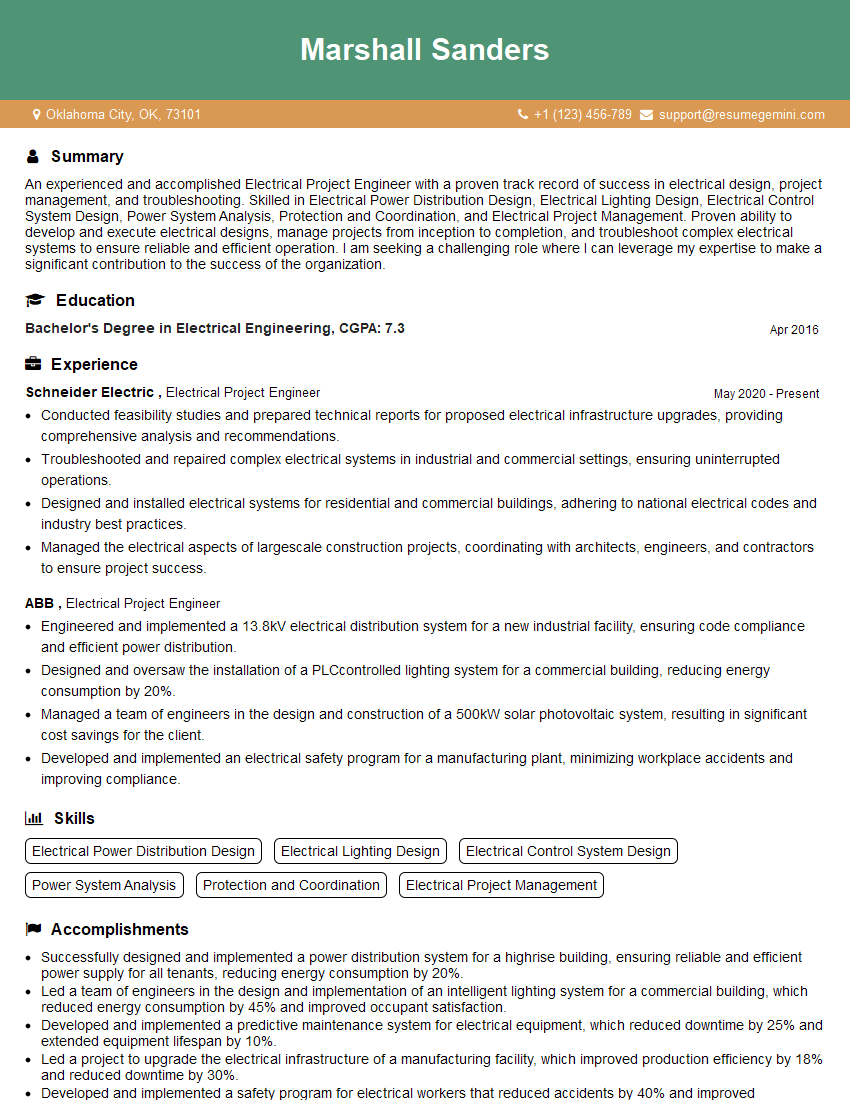
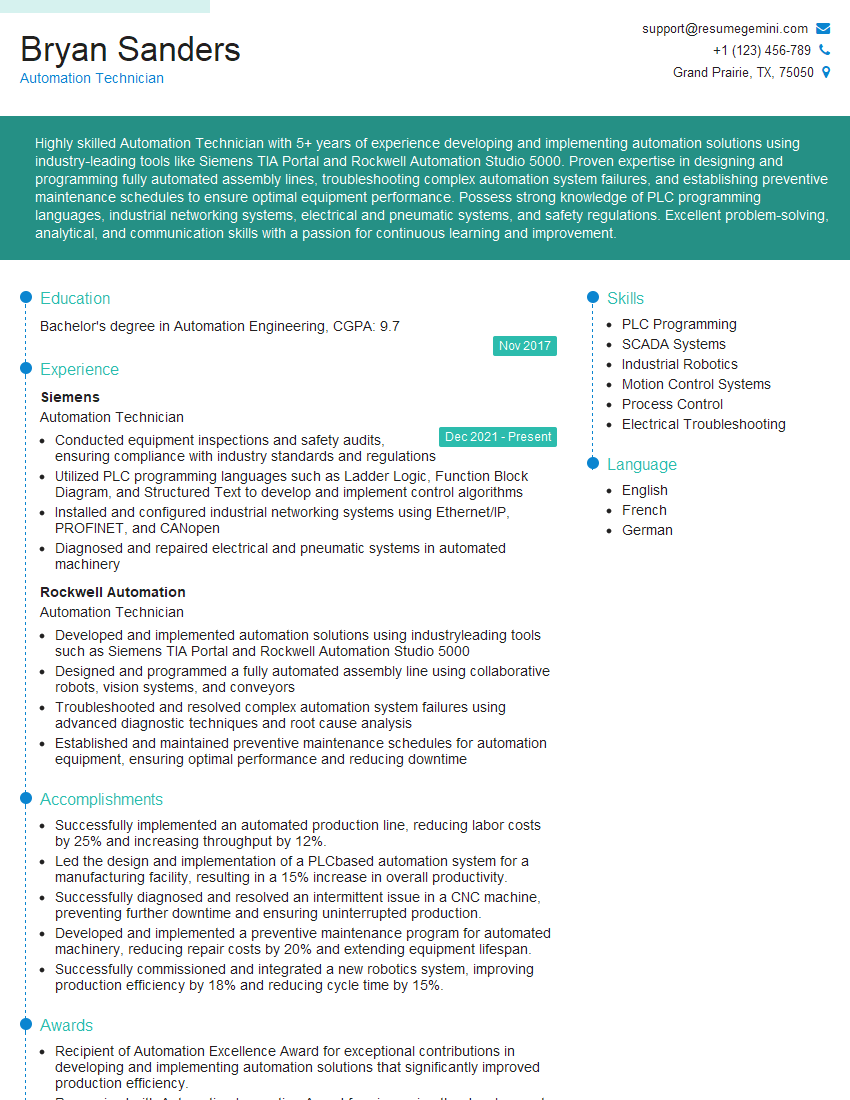
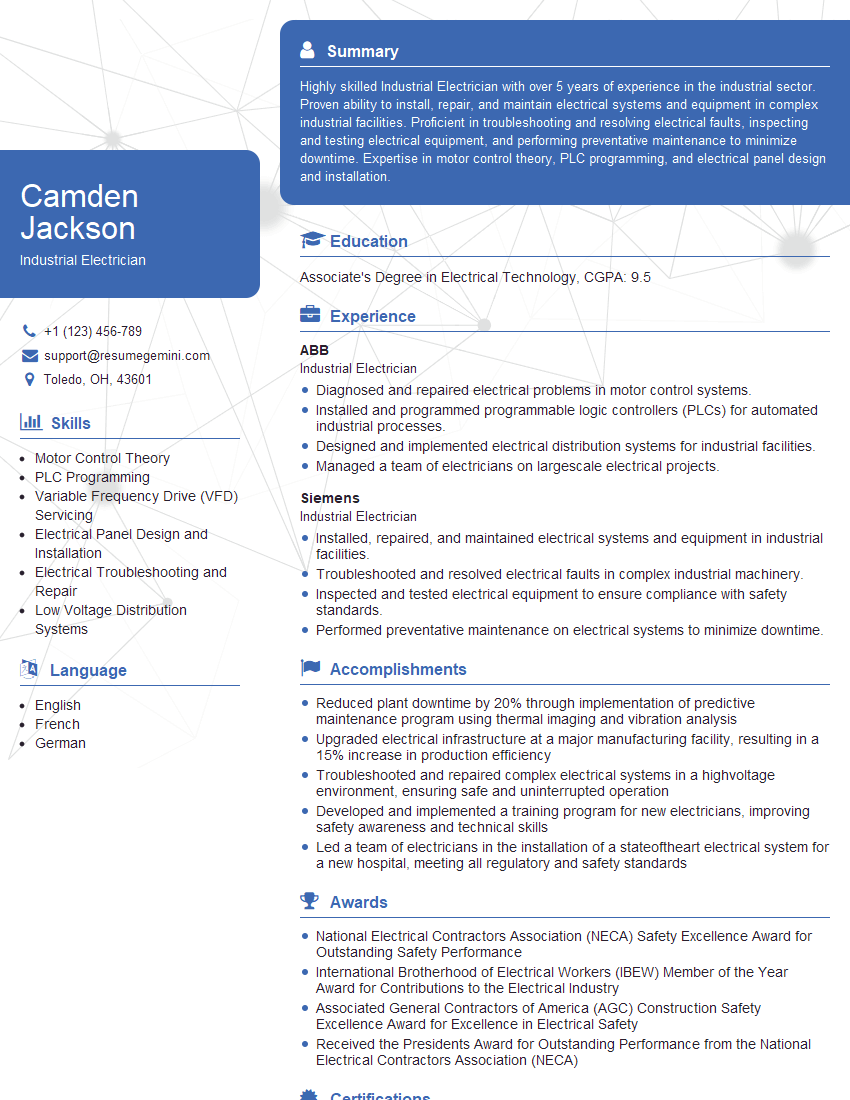
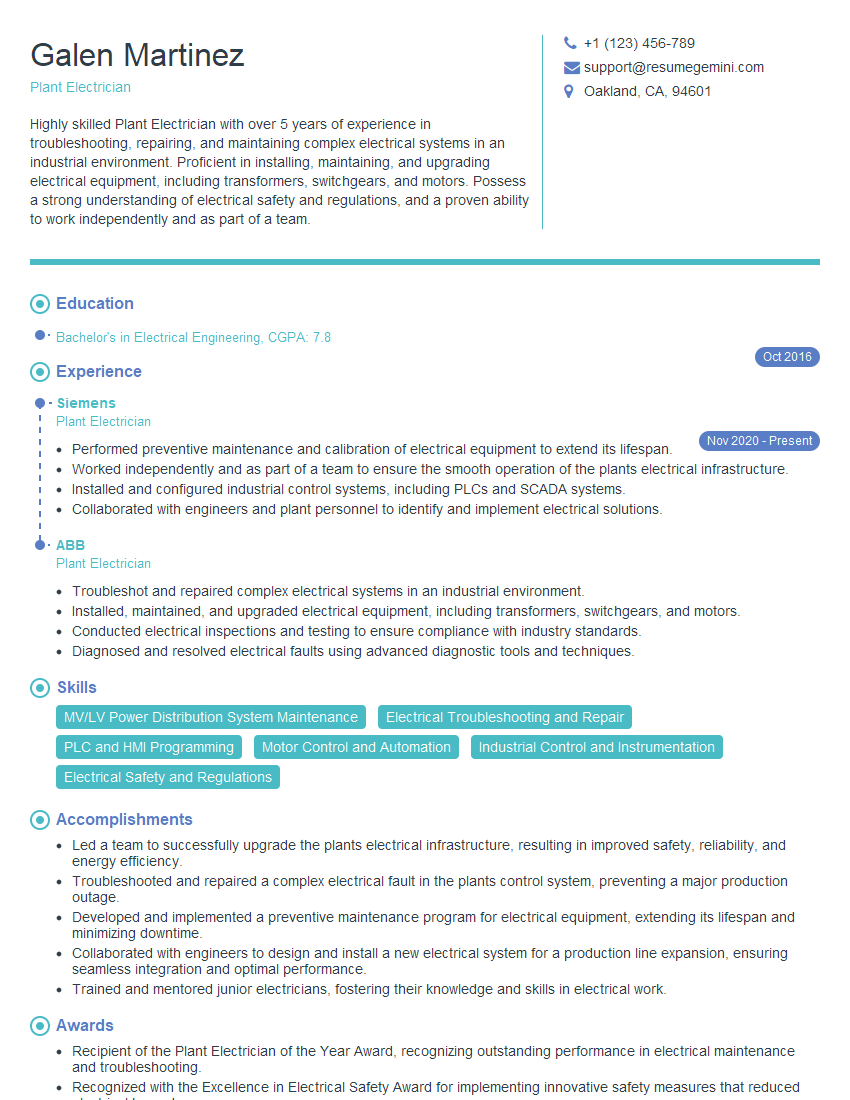
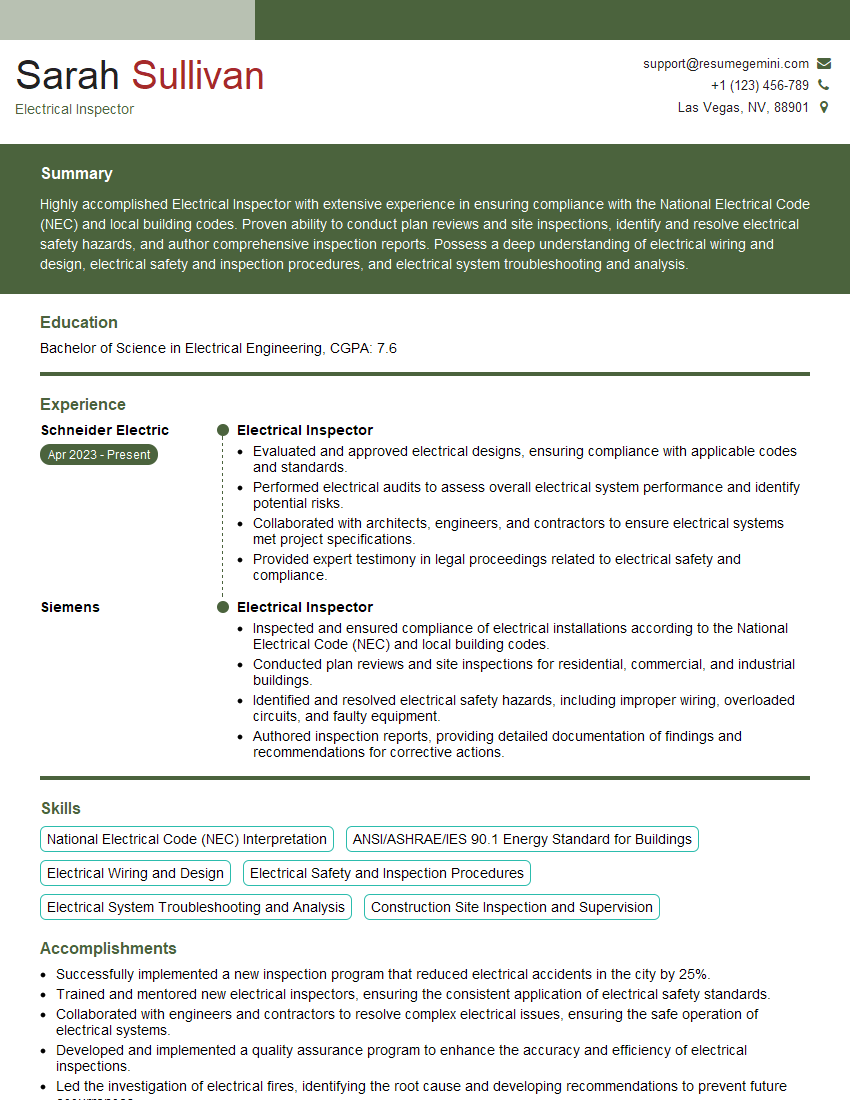
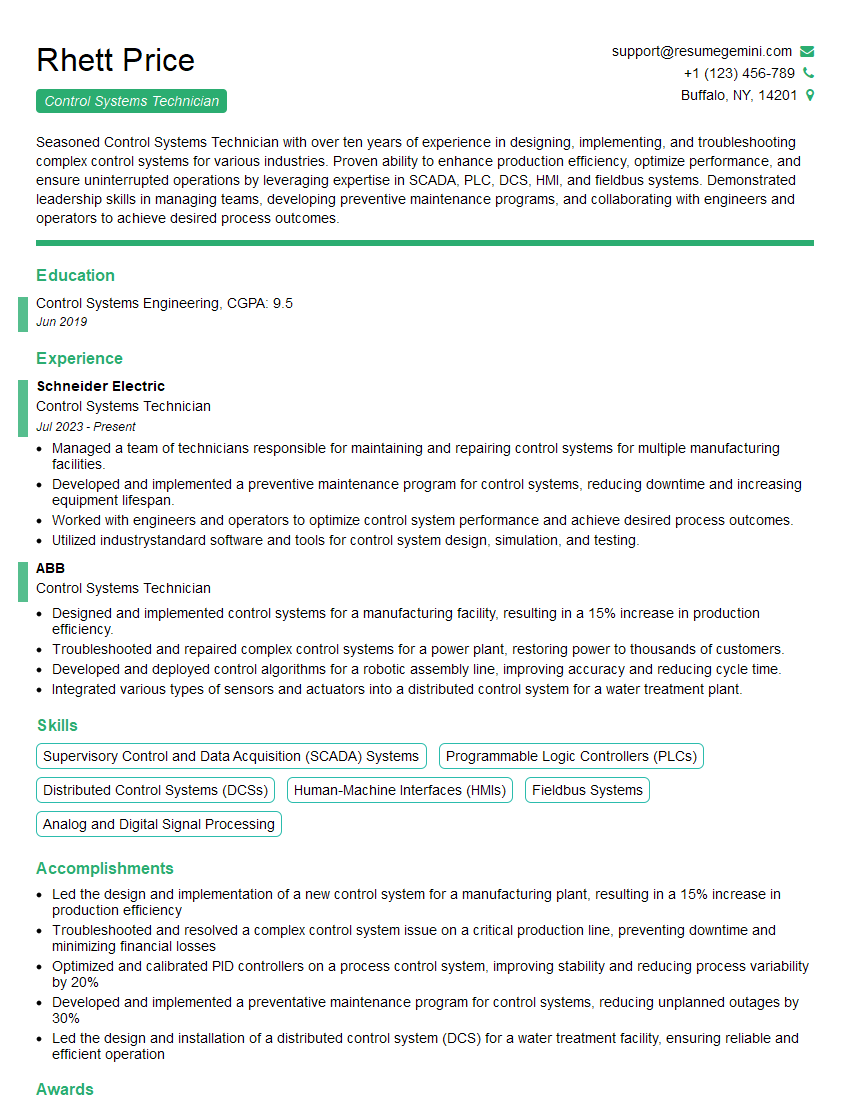
Mastering Plant Electrical Maintenance opens doors to a rewarding career with excellent growth potential. Advancement opportunities often involve specialization in areas like automation, robotics, or supervisory roles. To maximize your job prospects, it’s crucial to present your skills effectively. Create an ATS-friendly resume that highlights your technical expertise and experience using keywords relevant to the industry. ResumeGemini is a trusted resource to help you build a professional and impactful resume. We offer examples of resumes tailored to Plant Electrical Maintenance positions to guide you in crafting yours.

Explore more articles
Users Rating of Our Blogs
Share Your Experience
We value your feedback! Please rate our content and share your thoughts (optional).
What Readers Say About Our Blog
To the interviewgemini.com Webmaster.
Very helpful and content specific questions to help prepare me for my interview!
Thank you
To the interviewgemini.com Webmaster.
This was kind of a unique content I found around the specialized skills. Very helpful questions and good detailed answers.
Very Helpful blog, thank you Interviewgemini team.