Interviews are more than just a Q&A session—they’re a chance to prove your worth. This blog dives into essential PLC System Troubleshooting interview questions and expert tips to help you align your answers with what hiring managers are looking for. Start preparing to shine!
Questions Asked in PLC System Troubleshooting Interview
Q 1. Explain the different types of PLC programming languages you are familiar with.
PLCs utilize several programming languages, each with its strengths and weaknesses. My experience encompasses the most common ones:
- Ladder Logic (LD): This is the most prevalent language, resembling electrical relay logic diagrams. It’s visually intuitive, making it easy to understand and debug, even for those without extensive programming backgrounds. I frequently use it for straightforward control systems and machine automation. For example, a simple ladder logic program might use normally open contacts representing sensor inputs to activate a coil representing a motor output.
- Structured Text (ST): This is a high-level language similar to Pascal or C. It’s ideal for complex algorithms and mathematical calculations that would be cumbersome in Ladder Logic. I often use ST when implementing advanced control strategies, such as PID loops or complex sequencing routines.
- Function Block Diagram (FBD): This graphical language uses function blocks interconnected by data flows. It’s well-suited for modular programming and visualizing the data flow within a system. I’ve utilized FBD in projects requiring multiple interconnected control modules, providing a clear overview of the system’s architecture.
- Instruction List (IL): This is a low-level, assembly-like language, offering maximum control over the PLC’s internal operations. While powerful, it’s less readable than other languages and generally used only for very specific, low-level tasks or when optimizing performance critically.
- Sequential Function Chart (SFC): This language is excellent for representing sequential processes. It’s particularly useful in applications requiring step-by-step control, such as automated manufacturing processes. Imagine a bottling plant; SFC would efficiently represent the sequence of filling, capping, and labeling bottles.
I’m proficient in all these languages and choose the most appropriate one based on the project’s complexity and specific requirements.
Q 2. Describe your experience troubleshooting PLC communication issues (e.g., network problems).
Troubleshooting PLC communication issues often involves a systematic approach. I start by verifying the physical connections – cables, network jacks, and terminations. A loose cable or a faulty connector is surprisingly common. Then, I move on to checking network settings. This includes confirming correct IP addresses, subnet masks, and gateway settings on both the PLC and the communication device (e.g., HMI, SCADA system, or another PLC). I utilize network diagnostic tools like ping and traceroute to identify network bottlenecks or connectivity problems. If the problem persists, I examine the PLC’s communication settings, ensuring the correct communication protocol (Ethernet/IP, Profinet, Modbus TCP, etc.) is selected and configured properly. In more complex network architectures, examining the network switches, routers, and firewalls is necessary. I also check the PLC’s communication logs for error messages, providing crucial clues about the nature and source of the problem. For example, if I see multiple timeouts, I’d focus on network latency or cable quality. Finally, if the problem involves a specific module, I check the communication settings within the module itself to ensure it is correctly addressed and configured.
Q 3. How do you diagnose and resolve hardware failures in a PLC system?
Diagnosing hardware failures requires a careful process. I begin with visual inspection, checking for obvious issues like loose connections, damaged cables, or burnt components. Then, I use the PLC’s diagnostic tools to identify faulty modules. Most PLCs provide internal diagnostics showing module status and error codes. I use a multimeter to check voltage levels and continuity of power supplies and I/O circuits. If a module is suspected, I’ll try swapping it with a known good module to isolate the problem. Documentation is crucial here; knowing the PLC’s I/O configuration and wiring diagram helps significantly. Finally, if the problem seems more internal (e.g., processor failure), the PLC may need to be sent to a service center for advanced diagnostics and repair. For example, if a motor fails to start, I’d first verify power supply to the motor, then check the output module driving the motor, and then check the ladder logic for incorrect commands.
Q 4. What methods do you use to troubleshoot PLC ladder logic programs?
Debugging ladder logic involves a combination of techniques. I start by carefully reviewing the program’s logic, looking for obvious errors like incorrect connections, misplaced rungs, or improperly configured timers and counters. I use the PLC’s online monitoring capabilities to observe the status of inputs, outputs, and internal variables during program execution. This helps pinpoint where the logic is deviating from the expected behavior. I also employ breakpoints to pause the program at specific points and examine variable values and status bits. Step-by-step execution allows me to trace the program’s flow. Simulation is valuable when dealing with complex programs; I might simulate the PLC’s environment to test different scenarios and verify the logic’s behavior without affecting the physical system. Finally, creating test cases and documenting the results is crucial for verifying corrections and preventing future problems. For instance, a simple mistake like using a normally open contact instead of a normally closed contact can lead to faulty operation. By carefully examining the ladder logic and observing the I/O behavior during runtime, these kinds of issues are easily identified and corrected.
Q 5. Explain your experience with PLC I/O modules and troubleshooting related issues.
My experience with PLC I/O modules includes a wide range of types – analog, digital, communication, and specialty modules. Troubleshooting these modules involves similar steps as troubleshooting the PLC itself. I begin with visual inspections, checking for loose connections, damage, or incorrect wiring. Then, I use the PLC’s diagnostic capabilities to check the module’s status and look for error codes. I use a multimeter to verify voltage levels and signal integrity at the module’s terminals. I also check the PLC’s configuration to ensure the module is correctly addressed and configured. Analog modules require additional checks, such as calibrating the signal and ensuring the input/output ranges are appropriate. For communication modules, I verify network connectivity and configuration as described previously. If a module fails, I may replace it; if multiple modules of the same type fail, I may suspect a problem with the power supply or other common issue. For example, if an analog temperature sensor reading is consistently wrong, I would check the sensor’s wiring, its calibration, and the analog input module’s configuration and settings.
Q 6. Describe your process for identifying and resolving PLC program bugs.
Identifying and resolving PLC program bugs is an iterative process. I begin by meticulously reviewing the program for logical errors, using the techniques mentioned previously in ladder logic troubleshooting. Then, I’ll use the PLC’s diagnostic tools, including online monitoring and breakpoints, to track down the source of the issue. I might create test cases to isolate the problem. If the problem involves timing or sequencing, I carefully analyze the timing diagrams and ensure proper synchronization between different parts of the program. I’ll also check for potential race conditions or other concurrent programming issues. Version control is a great tool to revert to earlier versions of the code if necessary. Finally, thorough testing is essential to verify the fix. I would simulate various scenarios and edge cases to ensure the problem doesn’t reappear. Often, a simple typo or a misinterpretation of specifications can create complex bugs, so attention to detail is key.
Q 7. How do you use diagnostic tools to troubleshoot PLC systems?
Diagnostic tools are invaluable for PLC troubleshooting. PLCs themselves provide built-in diagnostic features, including online monitoring, status displays, and error logs. These tools allow me to view the real-time status of inputs, outputs, and internal variables. Error logs contain crucial clues about the nature and timing of problems. I use specialized software provided by the PLC vendor, which often includes sophisticated debugging tools and capabilities. These tools allow detailed examination of program execution, memory contents, and hardware status. Third-party diagnostic software is available for network troubleshooting, allowing detailed examination of network traffic and identifying communication bottlenecks. A multimeter is a fundamental tool, checking voltage, current, and signal continuity. Finally, documenting all steps and results during troubleshooting is essential for efficient problem-solving and maintenance of the system. Think of diagnostic tools like a detective’s toolkit; each tool helps to find the clues needed to solve the mystery of the malfunctioning PLC.
Q 8. What are common causes of PLC program crashes, and how would you address them?
PLC program crashes can stem from various sources, often categorized as programming errors, hardware malfunctions, or environmental factors. Think of a program crash like a car accident – you need to understand what caused it to happen to prevent future incidents.
Programming Errors: These are the most common culprits. Logic errors (e.g., infinite loops, improper data handling), incorrect addressing, or exceeding memory limits can lead to crashes. For example, a runaway loop that continuously consumes processor time can freeze the entire system. Addressing this involves meticulous code review, using debugging tools (like breakpoints and watch variables), and employing structured programming techniques.
Hardware Malfunctions: Faulty memory chips, processor issues, or communication problems with I/O modules can also trigger crashes. Imagine a car’s engine seizing – it stops the whole vehicle. Similarly, a failing component in the PLC can bring down the entire operation. Troubleshooting this involves checking hardware diagnostics, replacing suspected faulty components, and verifying proper wiring and connections.
Environmental Factors: Extreme temperatures, power surges, or electromagnetic interference (EMI) can negatively affect the PLC’s stability and potentially cause crashes. It’s like driving a car through a storm – harsh conditions can cause problems. Mitigating this requires proper environmental controls, surge protection devices, and shielding to minimize EMI.
My approach to resolving program crashes involves a systematic process: I start by examining the PLC’s error logs and status bits, then move to code debugging if the error is software-related. Hardware issues require detailed diagnostics, often using specialized tools to pinpoint the faulty component. Environmental factors require investigation into the PLC’s operating conditions and implementation of appropriate safeguards.
Q 9. Explain your experience with safety-related PLC programming and troubleshooting.
Safety-related PLC programming requires a higher level of rigor and adherence to strict standards. I have extensive experience in this area, working on systems that control machinery with potential hazards to personnel or the environment. Think of it like designing a safety system for a rollercoaster – every detail matters.
My work has involved implementing safety functions like emergency stops, interlocks, and light curtains, all programmed to meet relevant safety standards (e.g., IEC 61131-3, IEC 61508). I’m proficient in using safety-rated PLCs and components, understanding the importance of redundancy and fail-safe mechanisms. I regularly conduct safety audits and risk assessments to ensure the PLC system remains compliant and safe. For example, I’ve worked on projects where a single bit failure could trigger a catastrophic event, so building in multiple layers of safety was critical. This involved using dual-channel safety relays and implementing sophisticated safety algorithms within the PLC code to guarantee system integrity.
Troubleshooting in safety-critical systems demands a particularly thorough approach. It involves systematic testing, rigorous validation, and meticulous documentation of every step. Any modification or repair requires careful verification to ensure it doesn’t compromise the safety functions.
Q 10. How do you handle unexpected PLC system behavior?
Unexpected PLC behavior is a common challenge. My approach resembles a detective investigation: I gather clues systematically to identify the root cause.
Data Acquisition: The first step is to collect data from the PLC – this might include error logs, program variables, and I/O status. It’s like taking notes at a crime scene.
Diagnostic Tools: I use various diagnostic tools, such as oscilloscopes, multimeters, and PLC programming software’s debugging features. These tools are my detective’s tools.
Process Elimination: I then systematically eliminate potential causes, starting with the most likely culprits based on my experience and the available data. It’s like systematically going through potential suspects.
Simulation & Testing: Sometimes, I’ll use simulation techniques or create small test programs to isolate the problem. This is like recreating the crime scene in a controlled environment.
For example, I once encountered a situation where a conveyor belt was malfunctioning intermittently. By analyzing PLC data, I discovered that a specific sensor was producing erratic readings. Further investigation revealed a loose connection causing intermittent signal interference. Fixing the loose connection resolved the issue.
Q 11. Describe your experience with PLC data logging and analysis.
PLC data logging and analysis are essential for understanding system performance, identifying trends, and troubleshooting issues. Imagine it like keeping a detailed record of a car’s performance – you can use that data to spot problems before they become major issues.
My experience includes configuring PLC data logging systems, often using built-in features of the PLC or specialized historian software. I’ve worked with various data formats and communication protocols (e.g., OPC UA, Modbus). This involves selecting appropriate logging parameters, ensuring sufficient storage capacity, and setting up data archiving strategies. The logged data is then analyzed using various tools and techniques – trend charts, statistical analysis, and data mining – to identify patterns, anomalies, and potential problems. I’ve used this data to optimize process efficiency, predict equipment failures, and improve overall system reliability. For instance, I once used logged data to identify a gradual decline in the performance of a pump, allowing for preemptive maintenance to avoid a costly production downtime.
Q 12. How do you document your troubleshooting process and findings?
Thorough documentation is critical for effective troubleshooting and maintenance. It’s like a detailed case file for every troubleshooting session.
My documentation process typically includes:
Detailed descriptions of the problem: Including symptoms, timestamps, and affected components.
Steps taken during troubleshooting: This ensures reproducibility and facilitates knowledge sharing.
Data logs and screenshots: Providing concrete evidence for analysis and future reference.
Root cause analysis: Clearly stating the identified cause of the problem.
Corrective actions implemented: Describing the solutions applied and their effectiveness.
Preventive measures: Suggesting steps to prevent similar issues in the future.
I maintain a structured system for storing this information, often using a combination of electronic and physical documentation. This is crucial for efficiency, allowing for easy retrieval of past troubleshooting efforts.
Q 13. Explain your experience with different types of PLC hardware (e.g., different manufacturers).
My experience spans various PLC manufacturers, including Allen-Bradley, Siemens, and Schneider Electric. Each manufacturer has its own programming language, hardware architecture, and communication protocols. Think of it like driving different types of cars – each has its own quirks and features.
While the fundamental programming concepts remain similar across different brands, the specifics vary. For example, Allen-Bradley uses ladder logic, while Siemens employs structured text and function block diagrams. Understanding these variations is key to effectively working with different systems. This includes familiarity with their respective programming software, hardware interfaces, and troubleshooting tools. I’ve worked on projects involving multiple PLC brands, requiring me to seamlessly integrate different systems and troubleshoot issues arising from interoperability challenges.
Q 14. What are the common causes of PLC power supply failures?
PLC power supply failures can stem from several factors, impacting the entire system. It’s like a car’s battery failing – nothing works without power.
Overload: Exceeding the power supply’s rated capacity can lead to overheating and failure. It’s like overloading a circuit breaker – it trips to prevent damage.
Short circuits: Faulty wiring or components can create short circuits, causing immediate failure. Imagine a wire shorting out in a car’s electrical system – it’s dangerous and can cause immediate power loss.
Component failure: The power supply itself can fail due to aging components, overheating, or manufacturing defects. Like a battery gradually losing capacity over time.
Environmental factors: Extreme temperatures, humidity, or dust can shorten the lifespan of the power supply. It’s like leaving a battery in extreme conditions – it’ll lose its charge quicker.
Power surges: Unprotected power supplies are vulnerable to surges that can damage internal components. Similar to a lightning strike damaging a car’s electrical system.
Troubleshooting power supply failures involves systematic checks: Inspecting wiring for shorts, checking the power supply’s output voltage and current, and testing components for functionality. It often requires replacing the faulty power supply or addressing the underlying cause of the failure, like excessive load or inadequate surge protection.
Q 15. How do you perform a backup and restore of a PLC program?
Backing up and restoring a PLC program is crucial for maintaining system integrity and facilitating recovery from unexpected issues. The process generally involves using the PLC programming software provided by the manufacturer. Different PLCs and software packages might have slightly different interfaces, but the core steps remain similar.
Backup: First, establish a connection between your programming software and the PLC. Then, navigate to the appropriate menu, usually labeled something like ‘Online,’ ‘Go Online,’ or ‘Download.’ Most systems offer a dedicated ‘Backup’ or ‘Save’ function. Choose a location to save the program file, usually a network drive or local directory. It’s best practice to include the date and PLC unit identification in the filename for easy reference (e.g., `PLC_Unit123_Backup_20241027.zip`).
Restore: To restore a program, open the programming software and select the ‘Open’ or ‘Load’ function. Navigate to your saved backup file. The software will prompt you to check the connection with the PLC and then upload the program. Always ensure you have a secure backup before making significant changes to the PLC program. Consider storing backups in multiple locations as a safeguard against data loss.
Example: In Rockwell Automation’s RSLogix 5000, you’d typically go to the ‘File’ menu, then ‘Save As,’ specifying a file location and name. Restoring is done similarly, using the ‘Open’ option in the ‘File’ menu.
Career Expert Tips:
- Ace those interviews! Prepare effectively by reviewing the Top 50 Most Common Interview Questions on ResumeGemini.
- Navigate your job search with confidence! Explore a wide range of Career Tips on ResumeGemini. Learn about common challenges and recommendations to overcome them.
- Craft the perfect resume! Master the Art of Resume Writing with ResumeGemini’s guide. Showcase your unique qualifications and achievements effectively.
- Don’t miss out on holiday savings! Build your dream resume with ResumeGemini’s ATS optimized templates.
Q 16. What is your experience with HMI (Human Machine Interface) troubleshooting?
HMI troubleshooting involves systematically identifying and resolving issues affecting the user interface and its communication with the PLC. My experience encompasses a range of HMIs, from simple panel-mounted displays to sophisticated SCADA systems. Troubleshooting often begins with visual inspection to ensure the HMI is receiving power and communicating correctly.
Communication Checks: I first verify network connectivity between the HMI and PLC, checking for cable faults, IP address conflicts, or network switch issues. I’ll use network tools like ping and tracert to diagnose network problems.
Screen and Input Verification: Next, I evaluate the HMI screen for display errors (blank screen, distorted images). I also check input devices, such as buttons, touch screens, and sensors, to confirm they are functioning correctly and sending the correct signals.
Software and Tag Mapping: HMI software issues can cause problems such as incorrect display values or unresponsive screens. I’ll review the tag mapping between the HMI and PLC to ensure the HMI is accessing the correct PLC variables and that the data types match.
Log Files and Error Messages: Both the HMI and PLC usually log events and errors. Reviewing these logs can give invaluable insights into the problem’s cause. Error codes often provide a clear indication of the root cause.
For instance, a situation where an HMI displays incorrect data might be resolved by checking the PLC tag assigned to that specific field on the HMI screen, confirming if the tag exists and if it’s updating correctly within the PLC.
Q 17. Explain your experience with PLC networking protocols (e.g., Ethernet/IP, Profinet).
My experience with PLC networking protocols is extensive, covering common industrial protocols like Ethernet/IP, Profinet, and Modbus TCP. Each protocol has its strengths and weaknesses regarding speed, reliability, and ease of implementation.
Ethernet/IP: Common in North American industrial settings, Ethernet/IP offers high speed and deterministic communication, ideal for real-time control applications. Troubleshooting often involves verifying the IP addressing, subnet masks, and gateway settings of both the PLC and other network devices. Tools like network scanners and packet analyzers can be crucial for pinpointing communication breakdowns.
Profinet: A widely-used protocol in Europe, Profinet also provides fast and deterministic communication, often using a star topology. Troubleshooting might involve examining the Profinet network configuration, checking for device failures within the network, and using specialized Profinet diagnostic tools.
Modbus TCP: A simpler, more universal protocol, Modbus TCP is easily implemented and widely supported. Troubleshooting can be simpler, focusing on confirming correct IP addresses, ports, and data registers.
For example, a network failure using Ethernet/IP might be identified by using a network analyzer to trace packets and discover a faulty switch or a misconfigured IP address assignment. A systematic approach focusing on individual network segments is important for effective troubleshooting.
Q 18. Describe your approach to troubleshooting a PLC system that is intermittently failing.
Troubleshooting intermittent PLC failures requires a methodical and patient approach. The key is to systematically eliminate potential causes. Because the problem isn’t consistent, gathering data becomes crucial.
Data Logging: Implement PLC data logging to capture relevant process variables and system status during both normal and faulty operation. This helps to pinpoint the conditions under which the failure occurs.
Environmental Factors: Consider environmental factors such as temperature, humidity, or power fluctuations. Intermittent issues can often be linked to environmental stresses on the PLC or related components.
Hardware Inspection: Thoroughly inspect all hardware, including the PLC itself, I/O modules, wiring connections, and sensors. Look for loose connections, damaged components, or overheating.
Software Analysis: Review the PLC program for potential software glitches that may trigger intermittent faults. This could involve analyzing code for timing issues, race conditions, or potential errors.
Systematic Testing: Conduct controlled tests to isolate the cause. Try to reproduce the fault by manipulating variables or simulating conditions under which the failure has previously occurred.
For example, if an intermittent issue occurs during peak production times, the PLC’s power supply may not be adequate to handle the increased load. Thorough data logging would reveal such correlations.
Q 19. How do you use schematics and wiring diagrams to troubleshoot PLC systems?
Schematics and wiring diagrams are indispensable tools for troubleshooting PLC systems. They provide a visual representation of the system’s architecture, allowing for efficient tracing of signals and identification of potential problem areas.
Signal Tracing: Using the schematic, I can trace the path of signals from sensors and actuators to the PLC input/output modules. This allows me to identify broken wires, faulty connections, or incorrect wiring configurations.
Component Identification: Wiring diagrams show the exact location and type of each component in the system. This is invaluable when troubleshooting issues involving specific hardware components such as sensors, actuators, or I/O modules.
Understanding System Architecture: Schematics reveal the overall system architecture, showing how different parts interact with each other. This is crucial for understanding the flow of information and identifying potential bottlenecks or areas of vulnerability.
Imagine a situation where a motor fails to start. By reviewing the schematic, I can trace the signal path from the motor’s start button, through the PLC inputs, the PLC program logic, to the motor’s output module, systematically checking each component and connection for faults.
Q 20. What safety precautions do you take when working with PLC systems?
Safety is paramount when working with PLC systems. My approach always prioritizes safe practices to prevent accidents and injuries.
Lockout/Tagout (LOTO): Before working on any PLC system components, I always perform LOTO procedures to isolate the power supply and prevent accidental activation. This is essential for preventing electrical shocks or equipment damage.
Personal Protective Equipment (PPE): I consistently use appropriate PPE, such as safety glasses, gloves, and possibly hearing protection, depending on the work being done.
Risk Assessment: Before beginning any troubleshooting task, I conduct a risk assessment to identify potential hazards and determine appropriate safety precautions. This includes considering risks from high voltages, moving parts, and hazardous materials.
Following Safety Procedures: I strictly adhere to all company safety procedures and regulations regarding PLC system maintenance and troubleshooting.
For example, before opening a control panel containing the PLC, I would always lock out and tag out the power supply, ensuring the system is completely de-energized before any work begins.
Q 21. Explain your experience with PLC timers and counters and troubleshooting their malfunctions.
PLC timers and counters are essential for controlling the timing and sequencing of operations in industrial automation. Troubleshooting their malfunctions typically involves checking their configuration and associated hardware.
Timer Malfunctions: Timer issues may involve incorrect timing values, failure to start, or failure to reset. Troubleshooting involves checking the timer’s configuration in the PLC program (e.g., preset time, timer type), verifying that the triggering conditions are met, and checking the associated hardware, such as input sensors or output modules.
Counter Malfunctions: Counter problems might include incorrect counting, failure to increment or decrement, or inaccurate reset. I’d verify the counter’s configuration within the PLC program, checking the input signal (e.g., pulse frequency, signal type), and also examine any related hardware for potential problems.
Program Logic Errors: Sometimes, the problem isn’t the timer or counter itself, but rather errors in the PLC program logic that affect their operation. Carefully reviewing the ladder logic or structured text is crucial.
A practical example would be a conveyor system where items are timed using a timer. If the items aren’t moving at the expected rate, I would check the timer’s preset value in the PLC program, ensure the sensor triggering the timer is functioning correctly, and inspect the motor and drive systems for any mechanical issues.
Q 22. Describe your experience with analog input/output modules and troubleshooting.
Analog I/O modules are crucial for PLCs to interact with the real world, handling continuous signals like temperature, pressure, or flow rate. Troubleshooting these modules involves a systematic approach.
- Signal Verification: I first check the sensor itself, ensuring it’s properly calibrated and functioning correctly. A faulty sensor is the most common culprit. I often use a multimeter to verify the sensor’s output signal aligns with expected values under different conditions.
- Wiring Inspection: Loose connections, damaged wires, or incorrect wiring are frequent problems. A visual inspection is paramount, followed by continuity testing with a multimeter to identify breaks or shorts in the wiring between the sensor and the PLC I/O module.
- Module Diagnostics: Most analog I/O modules have built-in diagnostic features accessible through the PLC programming software. These features often provide information about input voltage levels, scaling parameters, and potential errors. I check these diagnostics thoroughly to pinpoint any module-specific issues.
- Scaling and Conversion: Analog signals need to be scaled and converted within the PLC program to meaningful engineering units. Errors in scaling or conversion can lead to inaccurate readings or control actions. I review the scaling parameters in the PLC program and compare them to the expected ranges of the analog signals.
- Example: In a recent project involving a temperature control system, the PLC was reading an abnormally low temperature. By meticulously checking the thermocouple sensor, I discovered a broken wire near the connection point. Replacing the wire immediately resolved the issue.
Q 23. How do you troubleshoot PLC programs that involve complex control algorithms?
Troubleshooting complex control algorithms requires a methodical approach, combining software debugging with a solid understanding of control theory. It’s like solving a complex puzzle.
- Step-by-step execution: I utilize the PLC’s debugging tools to step through the code line by line, observing the values of variables and the execution flow. This allows me to pinpoint where the algorithm deviates from its expected behavior.
- Data Logging: I often implement data logging to capture the historical behavior of the system. Analyzing this data can reveal patterns and identify the root cause of unexpected results. This is particularly helpful for intermittent problems.
- Simulation: Using PLC simulation software, I recreate the system’s environment and test the algorithm under various conditions before deploying it to the actual hardware. This can catch errors early on and prevent downtime.
- Modular Approach: Breaking down the complex algorithm into smaller, more manageable modules facilitates easier debugging. If one module is causing the problem, the others can still be functional, enabling quicker identification of the faulty part.
- Control Theory Knowledge: A deep understanding of control theory principles like PID control, state machines, and other control algorithms is critical. Understanding these principles is vital to effectively diagnose and resolve issues related to algorithm performance. For instance, I may need to adjust parameters like gain, integral, and derivative terms in a PID controller to optimize its response.
- Example: During the commissioning of a robotic arm control system, the arm exhibited unexpected oscillations. By stepping through the control algorithm and analyzing the logged data, I identified a poorly tuned PID controller. Adjusting its parameters stabilized the arm’s movement.
Q 24. Explain your experience with using simulation software for PLC troubleshooting.
Simulation software is an invaluable tool for PLC troubleshooting, allowing me to test and debug PLC programs in a safe, controlled environment before deploying them to the actual hardware. Think of it as a virtual test bench.
- Reduced Downtime: Identifying and correcting errors in the simulation environment prevents costly downtime on production lines.
- Hardware Independence: Simulation allows testing and debugging even without physical hardware, which can be especially helpful during design and development phases, or when hardware is unavailable.
- Safe Experimentation: Testing extreme conditions or unusual scenarios is safer in a simulated environment, preventing potential damage to the actual equipment.
- Improved Code Quality: Through thorough testing in the simulated environment, higher quality and more reliable code can be achieved, leading to a more stable system.
- Example: While developing a system for controlling a complex packaging machine, I used simulation software to test various scenarios including sensor failures and unexpected stoppages. This enabled me to write more robust code capable of handling these situations without crashing the system.
Q 25. How do you prioritize troubleshooting tasks in a critical production environment?
Prioritizing troubleshooting tasks in a critical production environment demands a systematic approach, balancing the impact of the failure with its urgency.
- Safety First: Issues that pose safety risks are always the top priority. This includes addressing any hazards that could cause injury or damage to equipment.
- Production Impact: Failures impacting production output and causing significant financial losses should be addressed next. This often involves a quick assessment of which problems will cause the largest disruption.
- Urgency: Urgent issues that might lead to complete production halts or immediate damage need immediate attention. This may require a rapid response from the team.
- Root Cause Analysis: While addressing immediate issues, I simultaneously work towards identifying the root causes of repeated or persistent problems to implement preventative measures.
- Example: During a production run, an alarm indicated a critical motor failure, leading to an immediate production halt. While addressing this critical issue, I initiated an investigation into the cause of the motor failure, which revealed a problem with the lubrication system, thus preventing future failures.
Q 26. Describe a situation where you had to troubleshoot a PLC system under pressure.
I once faced a critical situation where the main PLC controlling a large manufacturing plant unexpectedly crashed during peak production hours. The pressure was immense – production was completely halted, and substantial financial losses were accumulating by the minute.
- Immediate Actions: My team and I immediately initiated a backup system, which minimized the downtime. This minimized losses significantly.
- Systematic Troubleshooting: We quickly assessed the situation, checking power supply, network connectivity, and the PLC’s internal logs. We also used our PLC programming software to connect to the PLC and inspect its internal memory and status.
- Root Cause Identification: The log files indicated a memory corruption issue. We had to restore the PLC program from a backup and implement measures to prevent future memory corruption errors.
- Lesson Learned: The incident highlighted the importance of robust backup systems, regular maintenance, and comprehensive log analysis to enable rapid troubleshooting.
Q 27. What are your strategies for preventing PLC system failures?
Preventing PLC system failures is proactive, involving a combination of strategies.
- Regular Maintenance: A schedule of preventative maintenance is crucial, including inspections of wiring, connections, and cleaning of components to prevent malfunctions and extend the life of the equipment.
- Redundancy: Implementing redundant systems, such as backup PLCs and power supplies, ensures continued operation even if one component fails. This protects against catastrophic failure.
- Robust Programming: Well-written, structured, and thoroughly tested programs are less prone to errors and unexpected behavior. This includes error handling and safety mechanisms within the code.
- Environmental Protection: Protecting PLCs from harsh environments through proper enclosure and climate control helps prevent damage and extends equipment life. This can include shielding against electromagnetic interference.
- Training and Procedures: Well-trained personnel and established procedures for operation and maintenance minimize human error, which is a leading cause of PLC system failures.
Q 28. How do you stay updated with the latest technologies and advancements in PLC systems?
Staying updated in the rapidly evolving field of PLC systems is essential. I use several strategies to keep my skills sharp.
- Industry Publications and Websites: I regularly read industry publications, journals, and websites dedicated to PLC technology and automation. This provides me with insights into the latest trends and advancements.
- Vendor Training: Manufacturers of PLC systems offer training courses, webinars, and documentation on their latest products and features. These resources provide hands-on experience with new technologies.
- Professional Organizations: Membership in professional organizations like ISA (International Society of Automation) provides access to networking opportunities, conferences, and training materials, fostering collaboration and knowledge exchange.
- Online Courses and Tutorials: Online platforms offer numerous courses and tutorials on various PLC platforms and programming techniques, which I use to supplement my knowledge and explore new technologies.
- Hands-on Experience: I actively seek opportunities to work on projects involving new PLCs, software versions, and technologies. Practical experience is vital for mastering new skills.
Key Topics to Learn for PLC System Troubleshooting Interview
- Understanding PLC Architecture: Familiarize yourself with the internal components of a PLC, including the CPU, input/output modules, and communication interfaces. This foundational knowledge is crucial for effective troubleshooting.
- Ladder Logic Programming: Demonstrate a solid grasp of ladder logic diagrams, including understanding of common instructions, timers, counters, and data manipulation. Be prepared to interpret and debug existing programs.
- Troubleshooting Methodologies: Master systematic troubleshooting techniques, such as using diagnostic tools, analyzing fault codes, and applying logical deduction to identify the root cause of system malfunctions. Practice isolating problems within complex systems.
- Sensor and Actuator Interfacing: Understand how various sensors and actuators communicate with the PLC. Be able to diagnose issues related to signal integrity, wiring, and device malfunction.
- Network Communication: Familiarize yourself with common industrial communication protocols (e.g., Ethernet/IP, Profibus, Modbus) and their role in PLC systems. Be prepared to discuss troubleshooting network connectivity issues.
- Safety and Security Considerations: Understand safety protocols and security measures implemented in PLC systems. Discuss best practices for preventing unauthorized access and maintaining system safety.
- PLC Hardware Troubleshooting: Gain practical experience identifying and resolving hardware problems such as faulty modules, power supply issues, and wiring errors.
- Software Troubleshooting: Develop your ability to debug PLC programs, identify logic errors, and correct faulty code. Practice using simulation software for testing and verification.
Next Steps
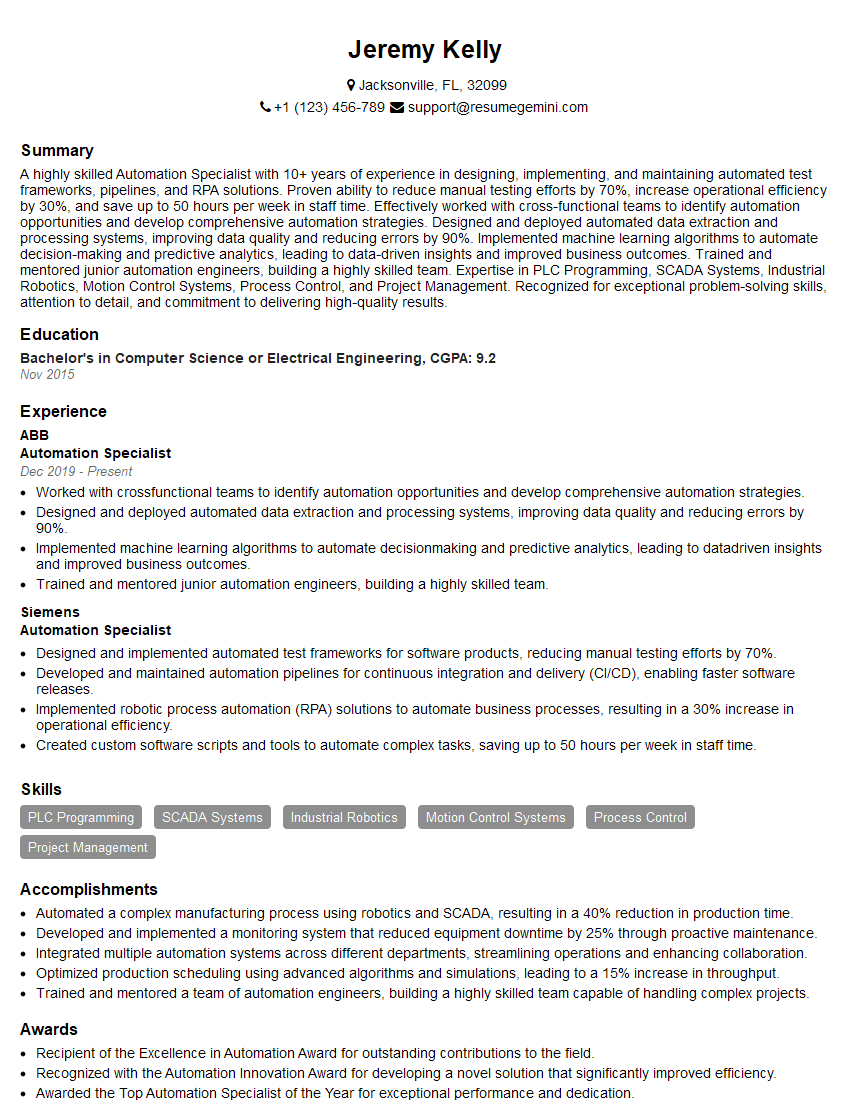
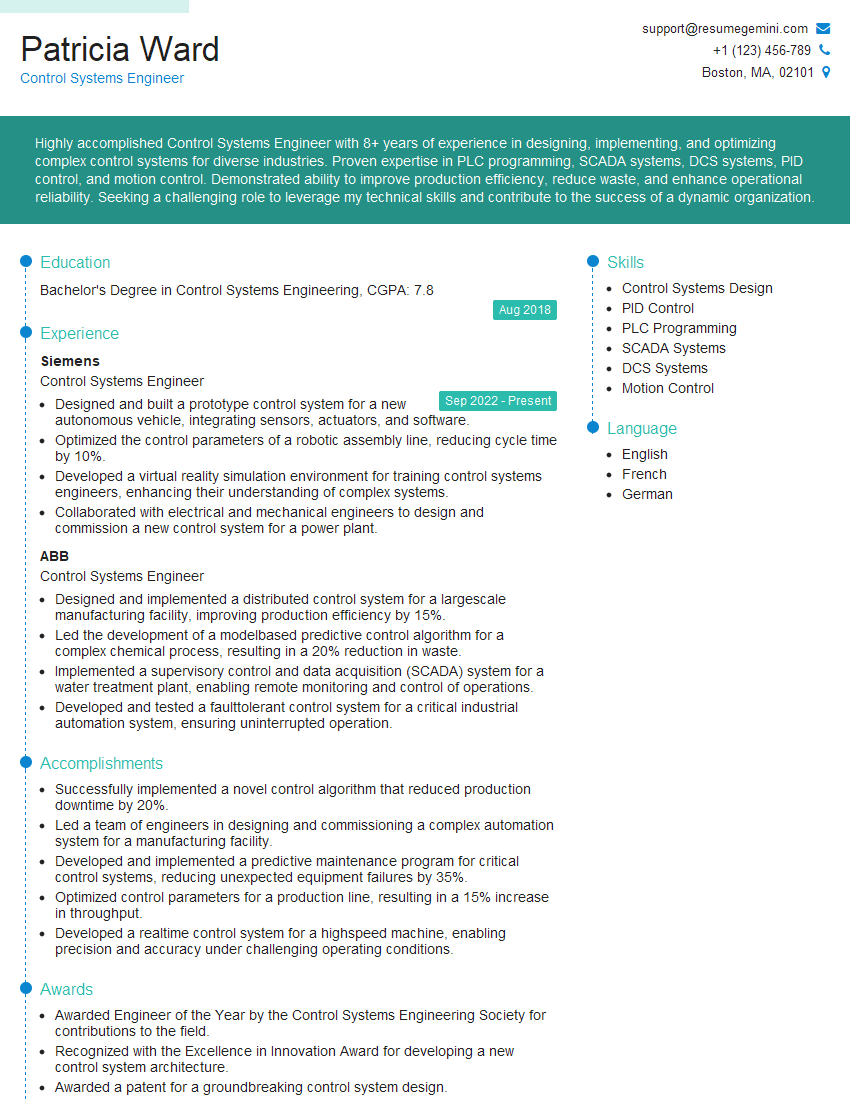
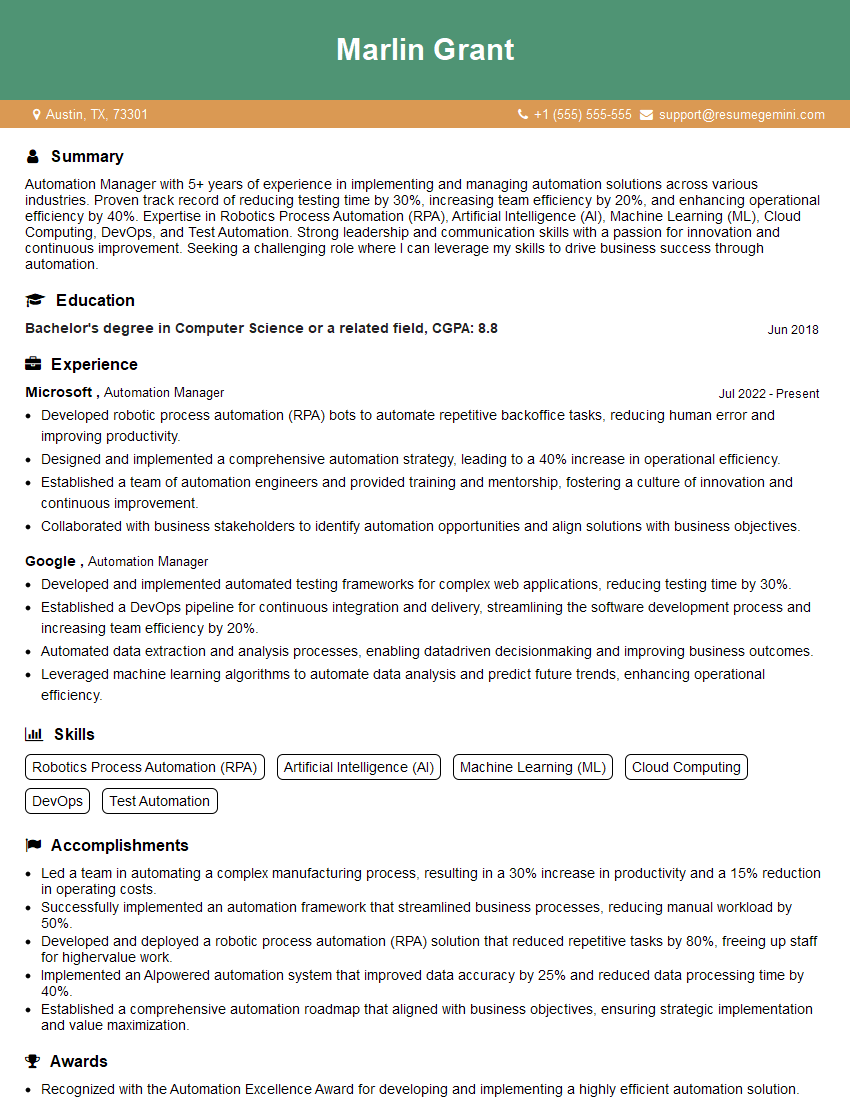
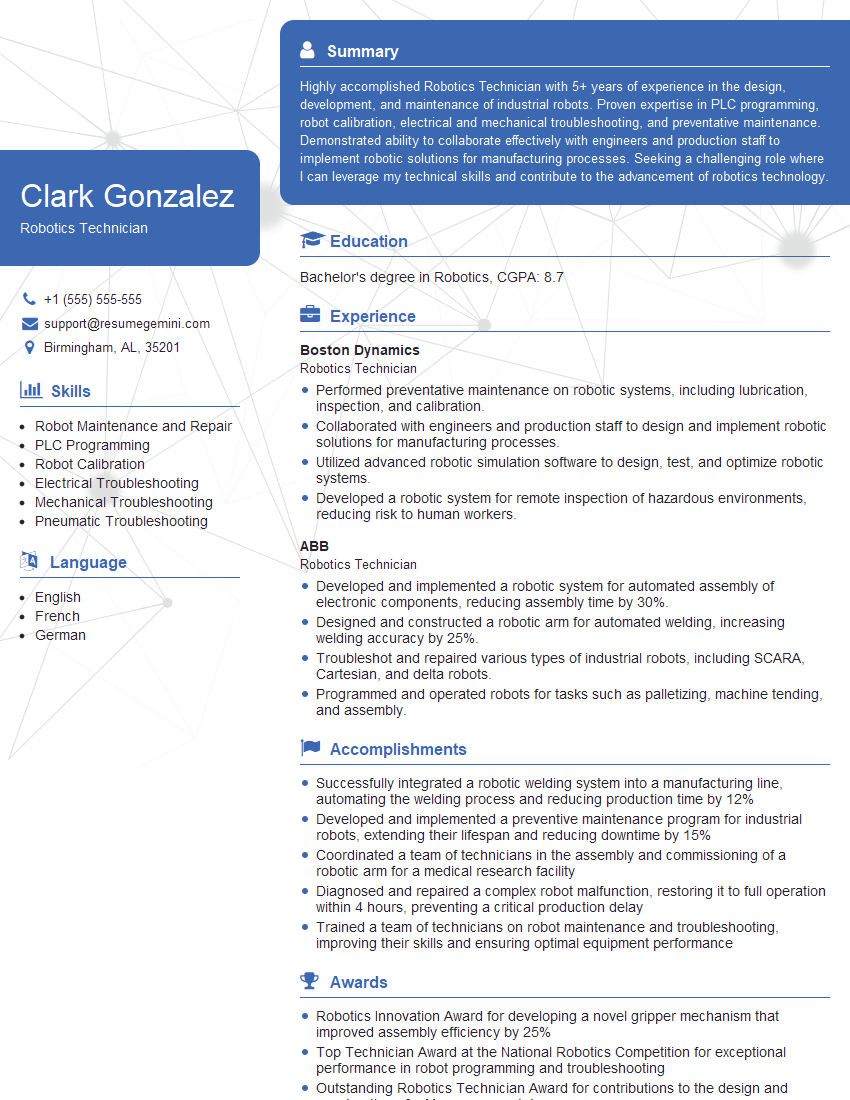
Mastering PLC system troubleshooting significantly enhances your career prospects, opening doors to advanced roles and higher earning potential within the automation and industrial control sectors. To stand out from the competition, create a compelling and ATS-friendly resume that highlights your skills and experience effectively. ResumeGemini is a trusted resource that can help you build a professional resume tailored to your specific needs. They offer examples of resumes specifically designed for candidates specializing in PLC system troubleshooting, providing you with valuable templates and guidance to present your qualifications in the best possible light. Take advantage of these resources to elevate your job search and secure your dream role.

Explore more articles
Users Rating of Our Blogs
Share Your Experience
We value your feedback! Please rate our content and share your thoughts (optional).
What Readers Say About Our Blog
To the interviewgemini.com Webmaster.
Very helpful and content specific questions to help prepare me for my interview!
Thank you
To the interviewgemini.com Webmaster.
This was kind of a unique content I found around the specialized skills. Very helpful questions and good detailed answers.
Very Helpful blog, thank you Interviewgemini team.