Interviews are more than just a Q&A session—they’re a chance to prove your worth. This blog dives into essential Poultry Production and Husbandry interview questions and expert tips to help you align your answers with what hiring managers are looking for. Start preparing to shine!
Questions Asked in Poultry Production and Husbandry Interview
Q 1. Describe the different poultry breeds and their suitability for various production systems.
Poultry breeds are incredibly diverse, each suited to specific production systems. Broiler breeds, like Cornish Cross, are selected for rapid growth and meat production, thriving in intensive indoor systems with controlled environments. They prioritize feed conversion efficiency and reach market weight quickly. Conversely, layer breeds, such as White Leghorns or Rhode Island Reds, are chosen for their high egg-laying capacity. They require slightly different management, focusing on consistent egg production and minimizing stress. Dual-purpose breeds, like Orpingtons or Australorps, offer a balance of meat and egg production, making them suitable for smaller-scale, more diversified operations. Selecting the appropriate breed is crucial for maximizing profitability and efficiency within a specific production system.
- Broilers (Meat Production): Cornish Cross, Ross 308, Cobb 500 – Intensive indoor systems.
- Layers (Egg Production): White Leghorn, Rhode Island Red, Isa Brown – Intensive indoor or free-range systems.
- Dual-Purpose: Orpington, Australorp, Wyandotte – Smaller-scale farms, backyard flocks, or free-range systems.
For example, a large-scale commercial operation focused solely on meat production would prioritize fast-growing broiler breeds like Cornish Cross, while a small farm aiming for both eggs and meat might choose a dual-purpose breed like Orpingtons. The choice reflects the farm’s goals and resources.
Q 2. Explain the principles of poultry nutrition and the formulation of balanced rations.
Poultry nutrition is fundamental to achieving optimal growth, egg production, and overall bird health. A balanced ration must provide the correct proportions of energy, protein, amino acids, vitamins, and minerals. The specific requirements vary depending on the bird’s age, breed, and production stage (e.g., broiler vs. layer, growing vs. laying). Formulation involves calculating the precise amount of each ingredient – grains (corn, sorghum, wheat), protein sources (soybean meal, fishmeal), and supplements (vitamins, minerals, amino acids) – to meet the bird’s nutritional needs while considering cost-effectiveness.
For example, a broiler ration needs a higher energy density to support rapid growth, whereas a layer ration emphasizes calcium and phosphorus for eggshell formation. Formulating rations involves using sophisticated software or consulting with nutritionists to ensure the diet is precisely balanced and meets all the bird’s requirements. Nutritional deficiencies can lead to decreased productivity, poor health, and increased mortality.
Think of it like building a house – you need the right amount of bricks (energy), wood (protein), nails (vitamins & minerals), etc., to construct a strong and stable structure. In poultry nutrition, the ‘house’ is the bird, and the ingredients are the building blocks for its health and productivity.
Q 3. What are the key biosecurity measures to prevent disease outbreaks in poultry farms?
Biosecurity is paramount in preventing disease outbreaks and maintaining a healthy poultry flock. It involves implementing strict measures to control the introduction and spread of pathogens. This begins with strong perimeter security, restricting access to unauthorized personnel and vehicles. Regular cleaning and disinfection of poultry houses and equipment are critical, using appropriate disinfectants. Good hygiene practices among workers, including proper handwashing and changing of clothing, are essential. Rodent and pest control, along with quarantine procedures for new birds, are crucial. Effective biosecurity minimizes the risk of disease introduction and reduces economic losses associated with outbreaks.
- Perimeter Security: Limiting access, vehicle disinfection points.
- Hygiene: Handwashing, changing clothes, footbaths.
- Disinfection: Regular cleaning and disinfection of houses and equipment.
- Pest Control: Rodents, insects, birds.
- Quarantine: Isolating new birds for a period of time.
Imagine a fortress protecting the birds. Every aspect – from the outer walls to the internal routines – contributes to safeguarding the flock’s health.
Q 4. How do you monitor and control the environmental conditions (temperature, humidity, ventilation) in a poultry house?
Precise environmental control in a poultry house is critical for bird health and productivity. Temperature, humidity, and ventilation must be carefully monitored and adjusted to maintain optimal conditions. This often involves using sophisticated climate control systems, including automated ventilation systems, heating, and cooling units. Sensors monitor temperature and humidity levels, triggering adjustments to maintain set points. Effective ventilation is crucial for removing harmful gases like ammonia and maintaining good air quality. Monitoring systems provide real-time data, allowing for proactive adjustments and preventing environmental stress on the birds.
For example, high temperatures can lead to heat stress, impacting growth and egg production. Excessive humidity can contribute to respiratory problems. Poor ventilation can result in ammonia buildup, damaging the birds’ respiratory systems. Regularly checking and calibrating sensors and ensuring the proper functioning of equipment are essential for effective environmental control.
Think of it as regulating the climate in a greenhouse – you must maintain the perfect balance of temperature, humidity and airflow for optimal plant growth. The same principle applies to poultry houses – creating the optimal environment for the birds to thrive.
Q 5. Explain the process of poultry vaccination and disease control programs.
Poultry vaccination programs are crucial for preventing and controlling infectious diseases. Vaccinations are administered to birds at specific ages, depending on the target disease and the strain of the vaccine. The choice of vaccine depends on the prevalent diseases in the region and the farm’s specific circumstances. Effective disease control also involves meticulous record-keeping, monitoring bird health for any signs of disease, and implementing rapid response protocols in case of an outbreak. This might include isolating affected birds, administering appropriate treatments, and implementing enhanced biosecurity measures to prevent further spread.
For example, a common vaccination program for layers would include vaccines against Newcastle disease, infectious bronchitis, and avian influenza. Broilers often receive vaccinations for Marek’s disease and Gumboro disease. A comprehensive vaccination strategy, combined with excellent biosecurity, greatly improves flock health and productivity.
Vaccination is similar to having a ‘shield’ against disease. The stronger the shield, the better the protection against threats. Regular check-ups and monitoring of the birds are important to ensure that the ‘shield’ remains effective.
Q 6. Describe your experience with poultry housing design and management.
My experience in poultry housing design and management encompasses various systems, from simple open-sided sheds to sophisticated, climate-controlled barns. I’ve worked on projects involving the design and construction of new facilities and the renovation of existing ones. Key aspects I consider include the size and type of housing appropriate for the breed and production system, optimizing ventilation systems for optimal air quality, implementing effective lighting programs to regulate bird behavior and production, and incorporating features to ensure easy cleaning and disinfection. Efficient manure management systems are also crucial. I’ve found that careful planning, incorporating best practices, and selecting appropriate materials are essential for creating efficient and sustainable poultry housing.
For example, a free-range system requires vastly different considerations compared to a high-density broiler house. Free-range systems focus on providing ample outdoor space and shelter while maintaining biosecurity. In contrast, intensive indoor systems require precise environmental control and automated systems for feeding, watering, and manure management. The design and management of the poultry house directly impact bird welfare, productivity, and profitability.
Think of it as designing a home for your birds. The design needs to meet their specific requirements and provide them with a comfortable and healthy environment.
Q 7. How do you manage poultry manure and waste effectively?
Effective poultry manure management is essential for environmental protection and resource recovery. Manure contains valuable nutrients that can be utilized as fertilizer. Different methods exist, including composting, anaerobic digestion, and direct land application. Composting involves decomposing manure to reduce its volume and create a nutrient-rich soil amendment. Anaerobic digestion generates biogas, a renewable energy source, and a digestate that can be used as fertilizer. Direct land application requires careful consideration to avoid environmental pollution. Proper storage and handling are crucial to prevent odor issues and minimize environmental contamination. The choice of manure management method depends on factors such as farm size, local regulations, and available resources.
For example, a large-scale operation might invest in an anaerobic digestion system to generate biogas and create a valuable byproduct. Smaller farms might opt for composting, which is a more low-tech, cost-effective solution. Regardless of the method, proper management is crucial to minimize environmental impact and maximize the utilization of valuable nutrients.
Think of it as recycling – instead of discarding waste, we transform it into valuable resources. Responsible manure management not only protects the environment but can also generate economic benefits.
Q 8. What are the common poultry diseases and their treatment strategies?
Poultry diseases are a significant concern for farmers, impacting productivity and profitability. Common diseases vary depending on the bird species (chicken, turkey, duck, etc.) and their age, but some frequently encountered illnesses include:
- Newcastle Disease (ND): A highly contagious viral disease affecting the respiratory, nervous, and digestive systems. Symptoms range from respiratory distress to paralysis. Treatment involves supportive care, like maintaining hydration and providing warmth, and vaccination is crucial for prevention.
- Avian Influenza (AI): Another highly contagious viral disease, AI can cause significant mortality, especially in high-density flocks. Biosecurity measures, such as strict hygiene protocols and quarantine of new birds, are crucial. Vaccination strategies are also employed, but their efficacy varies depending on the strain.
- Infectious Bronchitis (IB): A viral respiratory disease characterized by coughing, sneezing, and reduced egg production. Vaccination is the primary preventative measure. Treatment focuses on supportive care, such as providing good ventilation and ensuring proper hydration.
- Coccidiosis: A parasitic disease affecting the intestinal tract. Symptoms include bloody diarrhea and weight loss. Treatment involves anticoccidial drugs, while preventative measures include good hygiene and management practices.
- Fowl Cholera: A bacterial disease causing high mortality. Early diagnosis and treatment with antibiotics are vital. Prevention includes vaccination and proper sanitation.
It’s crucial to remember that accurate diagnosis is essential for effective treatment. A veterinarian should always be consulted for diagnosis and treatment planning. Self-medication can be detrimental and might lead to antibiotic resistance.
Q 9. Explain the process of egg grading and packaging.
Egg grading and packaging are essential steps in ensuring food safety and consumer satisfaction. The process generally involves these steps:
- Collection and Cleaning: Eggs are carefully collected, avoiding cracks or damage. They are then cleaned, usually with automated systems, to remove any dirt or debris.
- Candling: This involves examining each egg using a light to detect internal defects such as blood spots or cracks. Eggs with defects are rejected.
- Weighing and Grading: Eggs are weighed and categorized based on their weight, which determines their size (e.g., large, medium, small). Grade also considers shell quality and cleanliness.
- Packing: Graded eggs are packed into cartons, typically twelve eggs per carton. Cartons are then labeled with the grade, size, and date.
- Storage and Distribution: Packed eggs are stored under optimal temperature and humidity conditions to maintain freshness. They are then distributed to retailers.
Different countries have their own standards for egg grading and packaging, but the general principles remain the same: to ensure food safety, maintain quality, and provide information to the consumer.
Q 10. Describe your experience with poultry processing and handling.
My experience in poultry processing and handling spans over [Number] years, encompassing various aspects from slaughtering to packaging. I’ve worked in both small-scale and large-scale processing plants, and I’m familiar with both manual and automated systems. My responsibilities have included:
- Slaughtering and Bleeding: Ensuring humane and efficient slaughtering methods, adhering to all relevant regulations and welfare standards.
- Scalding and Defeathering: Optimizing these processes to achieve efficient feather removal while maintaining skin integrity.
- Evisceration: Careful removal of internal organs, ensuring hygiene and preventing cross-contamination.
- Inspection and Grading: Assessing the quality of the processed poultry, identifying any defects, and grading the carcasses accordingly.
- Chilling and Packaging: Proper chilling methods to maintain freshness and food safety, followed by packaging for distribution.
I’ve always prioritized food safety and worker safety throughout the process. I’m adept at troubleshooting common issues in poultry processing and ensuring that the entire operation runs smoothly and efficiently. For example, I once identified a bottleneck in the defeathering process, which I resolved by adjusting the water temperature and machine speed, resulting in a significant increase in throughput.
Q 11. How do you ensure the welfare of your poultry flock?
Poultry welfare is paramount. My approach centers around the ‘Five Freedoms’ framework:
- Freedom from hunger and thirst: Providing access to fresh, clean water and nutritious feed at all times.
- Freedom from discomfort: Ensuring comfortable housing with adequate ventilation, temperature control, and appropriate bedding.
- Freedom from pain, injury, or disease: Implementing preventative health measures, prompt veterinary attention, and appropriate biosecurity protocols.
- Freedom to express normal behavior: Providing opportunities for birds to exhibit natural behaviors such as dust-bathing, perching, and foraging, depending on the farming system.
- Freedom from fear and distress: Minimizing stressors such as overcrowding, sudden noises, and rough handling.
I regularly monitor my flock for signs of illness or distress, and I maintain detailed records of health and mortality rates. This allows for early identification of problems and prompt intervention. I believe a healthy and happy flock leads to higher productivity and better quality produce.
Q 12. What are the different poultry farming systems (e.g., free-range, cage, barn)?
Poultry farming systems vary widely, each with its own advantages and disadvantages:
- Free-range: Birds have access to outdoor areas, allowing for natural foraging and exercise. This system generally results in higher welfare standards but can be susceptible to predation and disease outbreaks.
- Cage Systems: Birds are kept in individual or group cages, offering ease of management and biosecurity. However, concerns exist about animal welfare due to restricted movement and potential for stress.
- Barn Systems: Birds are housed in large barns, often with access to litter or outdoor runs. This system balances welfare and efficiency but can be more labor-intensive.
- Free-range Organic: Combines the benefits of free-range with organic feed standards, resulting in higher cost but improved welfare and reduced environmental impact.
The choice of farming system depends on various factors, including cost, market demands, environmental considerations, and personal ethical preferences. There’s increasing consumer demand for systems that prioritize animal welfare, hence the growth of free-range and organic poultry farming.
Q 13. Explain the importance of record keeping in poultry farming.
Record keeping is the backbone of successful poultry farming. Accurate records provide essential data for:
- Production Monitoring: Tracking egg production, feed consumption, mortality rates, and growth rates helps identify trends and areas for improvement.
- Financial Management: Keeping track of expenses (feed, medication, labor) and income allows for effective financial planning and profitability analysis.
- Disease Management: Detailed records of disease outbreaks, treatments, and vaccination schedules assist in disease prevention and control.
- Compliance and Traceability: Accurate records are crucial for meeting regulatory requirements and ensuring product traceability, essential for food safety and consumer confidence.
- Decision Making: Data-driven decisions about feeding strategies, flock management, and biosecurity measures lead to better outcomes.
Records can be maintained manually or using software, but the important thing is consistency and accuracy. For example, a simple spreadsheet or a dedicated farm management software can efficiently track daily egg production, feed usage, and mortality rates, providing valuable insights for informed decision-making.
Q 14. How do you handle poultry mortality and culling?
Poultry mortality is an inevitable part of farming, but proper management is crucial. Handling mortality and culling involves:
- Prompt Removal: Dead birds should be removed immediately from the flock to prevent disease spread.
- Disposal: Disposal methods should comply with local regulations, often involving composting, incineration, or rendering.
- Disease Investigation: When increased mortality occurs, a veterinarian should be consulted to identify the cause and implement appropriate measures to prevent further losses.
- Culling: Culling, the removal of birds from the flock, is sometimes necessary for reasons such as disease control, poor production, or injury. It should be carried out humanely and ethically.
- Record Keeping: Detailed records of mortality causes, culling events, and disposal methods are essential for managing the flock and complying with regulations.
For instance, if a significant number of birds die from a suspected disease outbreak, prompt veterinary attention is crucial for identifying the causative agent, implementing effective treatment or preventative measures, and preventing further spread. Careful disposal of carcasses prevents environmental contamination and protects the health of the remaining flock.
Q 15. Describe your experience with poultry breeding programs.
My experience in poultry breeding programs spans over 15 years, encompassing various roles from research assistant to lead geneticist. I’ve been involved in everything from selecting parent stock based on performance data to implementing advanced genomic selection techniques. For example, in one project, we successfully increased egg production by 10% in a specific breed through a rigorous selection program focused on improving feed conversion ratio and egg quality traits. We used a combination of pedigree analysis, progeny testing, and genomic prediction, enabling us to identify superior breeding candidates with higher accuracy than traditional methods. Another key experience involved developing a closed-flock breeding program to enhance disease resistance in broiler chickens. This involved carefully selecting breeding stock to maintain genetic diversity and avoid inbreeding depression, ultimately reducing our reliance on antibiotics. This work highlights my understanding of both the theoretical and practical aspects of poultry genetics and breeding program implementation and management.
Career Expert Tips:
- Ace those interviews! Prepare effectively by reviewing the Top 50 Most Common Interview Questions on ResumeGemini.
- Navigate your job search with confidence! Explore a wide range of Career Tips on ResumeGemini. Learn about common challenges and recommendations to overcome them.
- Craft the perfect resume! Master the Art of Resume Writing with ResumeGemini’s guide. Showcase your unique qualifications and achievements effectively.
- Don’t miss out on holiday savings! Build your dream resume with ResumeGemini’s ATS optimized templates.
Q 16. What are the key indicators of poultry health and productivity?
Key indicators of poultry health and productivity are multifaceted and interconnected. They can be broadly categorized into:
- Production Parameters: These include measures like feed conversion ratio (FCR), egg production rate (for layers), daily weight gain (for broilers), mortality rate, and egg quality (shell strength, albumen height). For instance, a high FCR indicates inefficiency in feed utilization, suggesting potential nutritional deficiencies or health problems. Similarly, a drop in egg production rate may indicate stress, disease, or suboptimal management practices.
- Health Indicators: These involve monitoring parameters such as morbidity (disease incidence), mortality, clinical signs of illness (e.g., respiratory distress, diarrhea), and the presence of pathogens through routine laboratory testing. Regular monitoring of these indicators helps detect issues early, enabling prompt intervention and preventing widespread outbreaks.
- Behavioral Observations: Observing flock behavior is crucial. Changes in activity levels, feed intake, water consumption, or feather condition can signal underlying health problems. For example, reduced activity and huddled postures could suggest respiratory disease.
By carefully tracking these parameters, we can gain a holistic understanding of the flock’s health and productivity and implement corrective measures as needed.
Q 17. How do you implement and maintain a poultry farm’s biosecurity plan?
Implementing and maintaining a robust biosecurity plan is paramount to preventing disease outbreaks. This involves a multi-layered approach encompassing:
- Perimeter Security: Establishing clear boundaries, restricting unauthorized access, and having well-defined entry and exit points. This might include fences, gates with access controls, and designated footwear and clothing change areas.
- Hygiene and Sanitation: Regular cleaning and disinfection of poultry houses, equipment, and vehicles using appropriate disinfectants. This needs to be rigorously followed between flocks to prevent the spread of diseases between batches.
- Pest Control: Implementing strategies to control rodents, insects, and other pests, as these can act as vectors for disease. This might involve setting traps, employing pest control chemicals, and using pest-resistant housing designs.
- Vehicle and Personnel Hygiene: Implementing strict protocols for disinfecting vehicles and personnel entering and exiting the farm. This includes footwear disinfection, hand washing, and changing of clothing.
- Waste Management: Proper disposal and management of poultry waste to prevent environmental contamination and the spread of pathogens. This might involve composting, anaerobic digestion, or appropriate landfill disposal.
- Quarantine Procedures: Establishing quarantine protocols for new birds introduced to the farm or those exhibiting signs of illness. Newly introduced birds should be quarantined to minimize the risk of disease transmission.
Regular review and updates to the biosecurity plan based on emerging threats and best practices are essential to its effectiveness. Biosecurity isn’t just a document; it’s a culture that needs to be ingrained in the team.
Q 18. Explain the principles of poultry genetics and selection.
Poultry genetics and selection involve understanding the inheritance of traits and using that knowledge to improve economically important characteristics. The principles are based on:
- Heritability: The proportion of a trait’s variation that’s due to genetic factors. Highly heritable traits (e.g., egg size) respond well to selection, while lowly heritable traits (e.g., disease resistance) require more sophisticated selection strategies.
- Genetic Variation: The presence of different gene variants (alleles) within a population. Greater genetic variation provides a wider selection base for improving traits.
- Selection Methods: These can range from simple mass selection (choosing the best individuals) to more sophisticated approaches such as progeny testing (evaluating offspring performance) and genomic selection (using DNA markers to predict genetic merit). Genomic selection, for example, allows us to identify superior birds earlier in their lives than traditional methods, accelerating the breeding cycle.
- Breeding Schemes: Different breeding schemes are employed depending on the goals (e.g., pure line breeding, crossbreeding, and synthetic lines). Crossbreeding combines the strengths of different lines to exploit heterosis (hybrid vigor) and increase overall productivity.
In practice, modern poultry breeding utilizes advanced statistical methods and molecular genetics to improve selection accuracy and efficiency, leading to continuous genetic progress and improved poultry production.
Q 19. Describe your experience with poultry feed storage and handling.
Efficient poultry feed storage and handling are crucial to maintaining feed quality and preventing losses. My experience highlights the importance of:
- Proper Storage Facilities: Using well-ventilated, rodent-proof, and dry storage structures to protect feed from moisture, insects, and rodents. Elevated storage structures help prevent moisture absorption from the ground.
- FIFO (First-In, First-Out) System: Implementing a system to ensure that older feed is used before newer feed, minimizing the risk of spoilage. This involves clear labeling and organized stacking of feed bags or bins.
- Regular Inspection: Conducting regular inspections of feed storage areas to detect any signs of spoilage, infestation, or contamination. Prompt action should be taken if any issues are detected.
- Feed Handling Equipment: Using clean and well-maintained equipment for transporting and dispensing feed to minimize contamination and waste. This might include conveyor systems, automated feeders, or appropriately cleaned trucks.
- Feed Protection: Employing appropriate measures to protect feed from external factors such as direct sunlight and rain. Covering feed storage areas and bags can help to maintain feed quality.
In a previous role, I implemented a new feed storage system that reduced feed spoilage by 15% and improved feed efficiency by 2%, resulting in significant cost savings and improved bird performance.
Q 20. What are the common challenges faced in poultry production, and how do you address them?
Poultry production faces numerous challenges. Some of the most common include:
- Disease Outbreaks: Highly contagious diseases like avian influenza or Newcastle disease can devastate flocks. Biosecurity measures and vaccination programs are essential for prevention and control.
- Feed Costs: Fluctuating feed prices can significantly impact profitability. Strategies like optimizing feed formulations, improving feed efficiency, and exploring alternative feed sources are crucial.
- Climate Change: Extreme weather events can impact poultry production by affecting bird health and productivity. Adapting housing systems and management practices to mitigate the effects of climate change is important.
- Biosecurity Breaches: Compromised biosecurity can lead to disease outbreaks and significant economic losses. Maintaining a strict biosecurity protocol is vital.
- Market Fluctuations: Price fluctuations in poultry products can impact profitability. Diversification and market analysis help mitigate these risks.
Addressing these challenges requires a proactive and multi-faceted approach involving rigorous biosecurity, efficient management practices, and careful monitoring of both internal operations and external market conditions. Investing in research and development for improved disease resistance and feed efficiency helps bolster the long-term resilience of poultry production systems.
Q 21. How do you ensure efficient egg production in laying hens?
Efficient egg production in laying hens relies on optimizing several factors:
- Genetics: Selecting high-performing laying breeds with superior egg production traits is a cornerstone.
- Nutrition: Providing a balanced diet with adequate protein, calcium, and other essential nutrients is vital. Calcium is particularly important for shell formation.
- Lighting Program: Implementing a well-designed lighting program that mimics natural daylight patterns can stimulate egg production. This usually involves a gradual increase in light intensity to stimulate egg laying.
- Environmental Conditions: Maintaining optimal temperature, humidity, and ventilation within the poultry house is crucial. Extreme temperatures can negatively affect egg production.
- Health Management: Effective disease prevention and control programs are essential to maintain flock health and egg production. Regular health checks and appropriate veterinary care are important to address potential problems early.
- Stress Reduction: Minimizing stress through appropriate stocking density, providing enough space, and handling birds gently are important aspects. Overcrowding, for example, is a major stressor that can reduce egg production.
By carefully managing these factors, it’s possible to achieve high egg production rates and maintain egg quality. For example, in one farm where I was managing the layers, we implemented a new feeding and lighting regime to improve the feed conversion rate by 3% and increased egg production by 5% within six months.
Q 22. Explain the process of chick sexing and brooding.
Chick sexing, determining the sex of a chick, and brooding, providing optimal environmental conditions for young chicks, are crucial initial steps in poultry farming. Accurate sexing allows for efficient management and resource allocation, while proper brooding ensures high chick survival rates and healthy growth.
Chick Sexing: Several methods exist. Visual sexing, relying on subtle physical differences, is common but requires experienced personnel. Vent sexing, examining the chick’s cloaca, is more accurate but demands skill and care to avoid injury. Automated sexing technologies, using image analysis, are increasingly adopted for larger farms, improving accuracy and speed. The choice of method often depends on farm size and available resources.
Brooding: This involves maintaining a controlled environment characterized by optimal temperature, humidity, ventilation, and lighting. For example, newly hatched chicks need temperatures around 95°F (35°C), gradually decreasing as they grow. Brooders, either heated structures or artificial heat sources like heat lamps, are utilized. Proper brooding minimizes stress, prevents disease outbreaks, and encourages uniform chick growth. The specific brooding needs vary depending on the breed, age of chicks, and external environmental factors. For instance, chicks in colder climates require more heat and longer brooding periods compared to those in warmer climates.
Q 23. Describe your experience with poultry automation and technology.
My experience with poultry automation and technology spans several areas. I’ve worked extensively with automated feeding systems, which optimize feed delivery, reducing waste and labor costs. We use sophisticated systems that precisely regulate feed amount according to the birds’ age and growth stage. This helps prevent overfeeding or underfeeding which impacts production efficiency. I’ve also implemented automated environmental controls, including climate control systems (temperature and humidity) and lighting systems that automate light cycles to boost production.
Furthermore, I’ve been involved in the implementation of egg collection and grading systems. These automated systems improve egg quality, reduce handling damage, and increase efficiency. Data management and analytics using specialized software and sensor technologies have also played a key role in improving my farm management decisions, by collecting real-time data about feed consumption, bird weight, and environmental conditions. This allows for proactive adjustments and timely intervention, improving productivity and overall flock health.
Q 24. How do you manage labor and workforce in a poultry farm?
Effective labor management in poultry farming relies on a structured approach incorporating training, clear communication, and efficient scheduling. I emphasize the importance of well-defined roles and responsibilities, providing clear instructions and regularly scheduled training sessions for all personnel. We utilize a combination of skilled laborers and less skilled workers, creating opportunities for career growth and advancement within the farm.
Our scheduling considers peak workload periods, integrating flexibility to handle unforeseen issues, such as disease outbreaks or equipment malfunctions. We also implement safety protocols and provide regular safety training, reducing workplace accidents and creating a safer work environment. A key aspect of managing our workforce is recognizing individual strengths and matching them to specific tasks. This optimizes efficiency and productivity while promoting employee satisfaction. Open communication channels allow for prompt feedback and address any concerns promptly.
Q 25. What are the current trends and challenges in the poultry industry?
The poultry industry faces several significant trends and challenges. One major trend is the increasing consumer demand for sustainably produced poultry. This necessitates implementing environmentally friendly farming practices, minimizing our environmental footprint, and focusing on improving the welfare of our birds. Another important trend is the growing integration of technology, as discussed earlier, driving increased efficiency and precision in various aspects of poultry farming.
Challenges include the ever-fluctuating prices of feed, which significantly impacts profitability. Disease outbreaks remain a considerable threat, requiring rigorous biosecurity measures and proactive health management strategies. Furthermore, concerns over antibiotic resistance push the industry toward exploring alternative methods of disease control, such as vaccinations and improved hygiene practices. Finally, regulatory compliance, ensuring adherence to various food safety regulations and animal welfare standards, presents both a challenge and an opportunity to improve the overall sustainability and ethics of poultry farming.
Q 26. Describe your understanding of poultry regulations and compliance.
Understanding and adhering to poultry regulations is paramount. My approach focuses on a proactive understanding of all applicable federal, state, and local regulations pertaining to animal welfare, biosecurity, and food safety. This includes staying informed about updates and changes to these regulations through continuous professional development and engagement with relevant regulatory bodies.
We maintain meticulous records, documenting all aspects of our operations, from feed sourcing and vaccination records to processing and transportation. This comprehensive record-keeping allows us to readily demonstrate compliance during inspections. We work closely with regulatory agencies, proactively addressing any concerns and ensuring that our practices align with the highest standards of ethical poultry production and food safety. Our biosecurity protocols are rigorously followed to minimize disease risks and prevent the spread of pathogens, ensuring both animal and public health.
Q 27. How do you maintain the quality and safety of poultry products?
Maintaining the quality and safety of poultry products necessitates a holistic approach starting from bird health and extending through to processing and distribution. We implement rigorous biosecurity measures to prevent disease outbreaks, focusing on strict hygiene protocols and proactive health monitoring. We provide high-quality feed and housing to ensure optimal bird health and welfare. Our processing facilities adhere to strict food safety standards, ensuring proper sanitation, temperature control, and hygiene practices at every stage, minimizing the risk of contamination.
We employ rigorous quality control measures throughout the entire process, from egg production and hatching to slaughtering, processing, and packaging. Regular testing and monitoring ensure that our products meet or exceed all required safety standards. Traceability is crucial; we maintain detailed records throughout the supply chain, allowing us to identify the source of any potential issues. We also utilize advanced processing and packaging technologies to prolong shelf life and maintain product freshness.
Q 28. Explain your approach to problem-solving in poultry production.
My problem-solving approach in poultry production is systematic and data-driven. When faced with a challenge, I start by clearly defining the problem, gathering all relevant data, including historical records, current production data, and environmental factors. This data-driven approach is essential to develop an evidence-based solution. Next, I brainstorm potential solutions, carefully considering their feasibility and potential impact. I often employ root cause analysis to identify the underlying cause of the problem, rather than just treating the symptoms.
Once a solution is chosen, I implement it systematically, monitoring its effectiveness closely. We utilize a system of continuous improvement, analyzing the results, adjusting the solution as needed, and documenting the entire process for future reference. In cases of major issues, I often consult with industry experts or veterinary professionals, obtaining external input to ensure we apply best practices. Collaboration and a team-based approach are key to our success. For example, a sudden drop in egg production might trigger an investigation involving feed analysis, environmental checks, and flock health evaluation to identify the underlying reason, whether it be disease, nutrition deficiency or environmental stress.
Key Topics to Learn for Poultry Production and Husbandry Interview
- Poultry Breeds and Genetics: Understanding breed characteristics, genetic selection for optimal traits (growth rate, egg production, disease resistance), and the implications for production strategies.
- Nutrition and Feed Management: Formulating balanced rations, adapting diets to different life stages and production goals, and recognizing the impact of feed quality on bird health and performance. Practical application: Analyzing feed costs and optimizing nutrient utilization to maximize profitability.
- Housing and Environment: Designing and managing poultry houses for optimal climate control, biosecurity, and bird welfare. Understanding the influence of environmental factors on bird health, productivity, and behavior.
- Disease Prevention and Biosecurity: Implementing effective biosecurity protocols, recognizing common poultry diseases, and applying vaccination strategies to minimize disease outbreaks. Practical application: Developing and implementing a comprehensive disease prevention plan for a poultry farm.
- Poultry Health and Welfare: Identifying and managing common poultry health issues, understanding animal welfare standards and best practices, and applying humane handling techniques.
- Production Systems: Comparing and contrasting different poultry production systems (e.g., free-range, cage-free, intensive systems), analyzing their economic and environmental impacts, and understanding their suitability for different market demands.
- Record Keeping and Data Analysis: Maintaining accurate production records, analyzing data to identify trends and areas for improvement, and utilizing data-driven decision-making to optimize farm performance. Practical application: Interpreting production data to assess flock health, productivity, and economic efficiency.
- Waste Management and Sustainability: Implementing sustainable waste management practices, minimizing environmental impact, and adhering to environmental regulations related to poultry production.
- Economics of Poultry Production: Understanding cost analysis, budgeting, pricing strategies, and market trends affecting poultry farming profitability.
- Biosecurity and Hazard Analysis Critical Control Points (HACCP): Implementing stringent biosecurity measures and understanding HACCP principles for food safety.
Next Steps
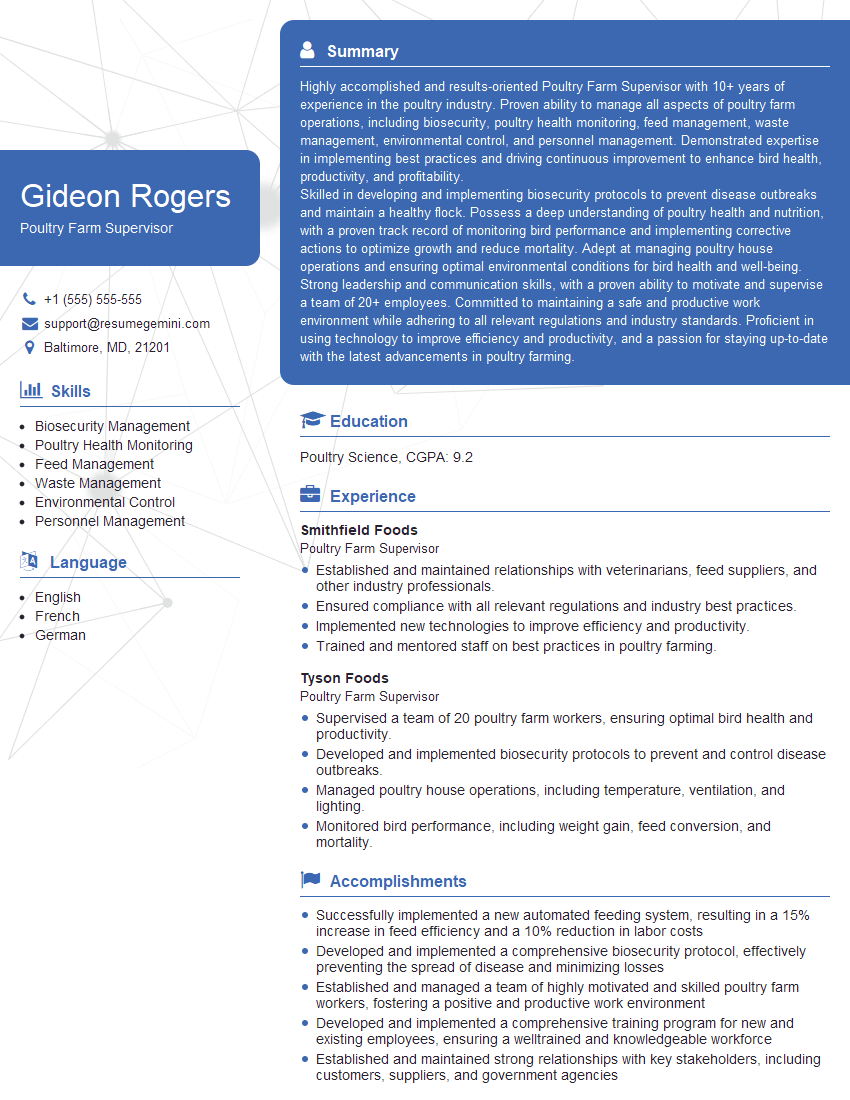
Mastering Poultry Production and Husbandry opens doors to exciting career opportunities in a growing industry. A strong understanding of these principles will significantly enhance your interview performance and career prospects. To increase your chances of securing your dream role, focus on building an ATS-friendly resume that effectively showcases your skills and experience. ResumeGemini is a trusted resource that can help you create a professional and impactful resume. They provide examples of resumes tailored to Poultry Production and Husbandry to guide you through the process. Take the next step towards your career goals today!

Explore more articles
Users Rating of Our Blogs
Share Your Experience
We value your feedback! Please rate our content and share your thoughts (optional).
What Readers Say About Our Blog
To the interviewgemini.com Webmaster.
Very helpful and content specific questions to help prepare me for my interview!
Thank you
To the interviewgemini.com Webmaster.
This was kind of a unique content I found around the specialized skills. Very helpful questions and good detailed answers.
Very Helpful blog, thank you Interviewgemini team.