Preparation is the key to success in any interview. In this post, we’ll explore crucial Power Distribution System Installation interview questions and equip you with strategies to craft impactful answers. Whether you’re a beginner or a pro, these tips will elevate your preparation.
Questions Asked in Power Distribution System Installation Interview
Q 1. Explain the different types of power distribution systems.
Power distribution systems deliver electricity from the source (e.g., a substation) to various end-users. They’re categorized primarily by voltage level and configuration. Common types include:
- Radial System: The simplest type, where power flows from a single source along a single path to multiple loads. Think of it like branches of a tree, with the trunk representing the main feeder. This is cost-effective for smaller areas but lacks redundancy – a fault anywhere on the line affects everything downstream.
- Ring Main System: Power flows in a closed loop, creating redundancy. If one section fails, power can still be supplied from the opposite direction. This improves reliability but is more complex and expensive.
- Interconnected System: The most complex type, connecting multiple substations and distribution networks to enhance reliability and allow for power sharing between different areas. It’s typically used in large cities or interconnected grids, offering the highest level of resilience.
- Tree System: A variation of the radial system, utilizing multiple feeders branching out from a single point. Offers better load management compared to a simple radial system.
The choice of system depends on factors such as area size, load demands, reliability requirements, and cost considerations. For example, a large industrial complex might use a ring main system for critical equipment, whereas a residential neighborhood might suffice with a radial system.
Q 2. Describe the process of grounding a power distribution system.
Grounding a power distribution system is crucial for safety and preventing damage. It creates a low-impedance path for fault currents to flow to the earth, protecting people and equipment. The process involves:
- Establishing a Grounding Electrode: This is typically a driven rod, ground grid, or a combination of both, depending on soil conditions and the system’s size. The electrode must be buried deep enough to ensure a reliable connection to the earth.
- Connecting Grounding Conductor: A low-resistance conductor connects the grounding electrode to various points in the system, including equipment enclosures, transformers, and service equipment.
- Connecting System Grounding: The grounding conductor is connected to the neutral point of the transformer (in most cases) and to the grounding electrode system. This creates a path for fault currents to flow directly to the earth.
- Testing and Inspection: Regular testing with a ground resistance tester is vital to ensure the grounding system’s effectiveness. This helps to identify and address any issues that might compromise the safety of the system.
Proper grounding helps prevent electrical shocks, protects against voltage surges, and reduces the risk of fire hazards. Imagine a lightning strike – without proper grounding, that immense surge could damage equipment and endanger lives. The grounding system acts as a safe escape route for the current.
Q 3. What are the safety regulations and precautions for working with high-voltage systems?
Working with high-voltage systems demands strict adherence to safety regulations and precautions. These include:
- Lockout/Tagout Procedures: Before any work, the power must be completely isolated and locked out, with tags indicating who is working on the system and when the power is to be restored. This prevents accidental energization.
- Personal Protective Equipment (PPE): This includes insulated gloves, safety glasses, arc flash suits (depending on the voltage), and safety footwear. The appropriate PPE must be chosen based on the voltage level and potential hazards.
- Training and Competency: Only qualified and trained personnel should work on high-voltage systems. Training covers safety procedures, equipment operation, and emergency response protocols.
- Permit-to-Work System: A formal permit system authorizes work on the high-voltage system, ensuring all necessary safety measures are in place. This includes risk assessments and safety briefings.
- Regular Inspections and Maintenance: Regular checks help identify and address potential hazards before they cause incidents.
- Emergency Response Plan: Having a well-defined emergency response plan helps ensure effective response in case of accidents, injuries, or equipment failures.
Neglecting these safety measures can lead to severe injuries, fatalities, or costly equipment damage. High-voltage systems are incredibly dangerous; thorough preparation and careful adherence to safety protocols are non-negotiable.
Q 4. How do you calculate voltage drop in a power distribution system?
Voltage drop is the reduction in voltage as electricity flows through a conductor. It’s calculated using Ohm’s Law and the formula:
Voltage Drop = I * RWhere:
I= Current (Amperes)R= Resistance (Ohms)
Resistance itself is calculated using:
R = (ρ * L) / AWhere:
ρ= Resistivity of the conductor material (ohm-meters)L= Length of the conductor (meters)A= Cross-sectional area of the conductor (square meters)
In practice, we often use tables and calculators that consider the conductor material, size, and length to directly find the voltage drop. Excessive voltage drop can lead to inefficient operation, equipment malfunction, and overheating. For instance, a long run of thin wire to a remote building might result in significant voltage drop, causing insufficient voltage at the load (e.g., lights dimming or motors running poorly). Addressing voltage drop involves using larger conductors, reducing conductor length, or adjusting the voltage of the source.
Q 5. Explain the concept of load balancing in a power distribution system.
Load balancing in a power distribution system involves distributing the electrical load evenly across all phases. This prevents overloading individual phases, which can lead to overheating, blown fuses, and potential safety hazards. Think of it like dividing weight evenly between multiple legs of a table; an uneven load on one leg will destabilize the entire structure.
Uneven loads cause:
- Overheating of Conductors: The overloaded phase carries more current than its capacity, leading to overheating, potential fires, and premature conductor failure.
- Reduced System Efficiency: Uneven loads impact overall power distribution efficiency, wasting energy.
- Premature Equipment Failure: Overloaded components can fail prematurely due to excess stress.
Achieving load balancing involves:
- Careful Load Placement: Distributing loads evenly across the phases when designing a system.
- Monitoring and Adjustment: Regular monitoring of the load on each phase to identify and correct imbalances.
- Using Load Balancing Devices: Employing automatic load balancing devices which sense the imbalance and redistribute loads automatically.
By carefully balancing the load, we can ensure efficient and safe operation of the power distribution system, extending its lifespan and reducing the risk of faults.
Q 6. What are the different types of protective devices used in power distribution systems?
Various protective devices safeguard power distribution systems. These include:
- Fuses: These are simple and inexpensive devices that melt and break the circuit when excessive current flows. They offer basic protection but are one-time use.
- Circuit Breakers: These are more sophisticated devices that can automatically interrupt the flow of current when an overload or short circuit occurs. They are reusable and offer better protection than fuses.
- Relays: These are electromechanical or electronic devices that detect faults and signal circuit breakers or other protective devices to trip.
- Surge Arresters: These devices protect equipment from voltage surges caused by lightning strikes or switching operations. They divert excess current to the ground.
- Transformers: While not strictly a protective device, transformers play a role in reducing voltage to safer levels and help isolate faults in parts of the distribution network.
- Ground Fault Circuit Interrupters (GFCIs): Detect ground faults and quickly shut off power to protect against electrical shocks. Essential in damp areas.
The choice of protective device depends on the specific application and the level of protection required. A high-voltage transmission line will require different protection schemes than a small residential circuit.
Q 7. Describe the function of a circuit breaker and its role in protecting equipment.
A circuit breaker is an automatically operated electrical switch designed to protect an electrical circuit from damage caused by overload or short circuit. When excessive current flows, it trips, interrupting the circuit and preventing damage to equipment or fire hazards. Unlike a fuse, it is reusable; once the fault is cleared, the circuit breaker can be reset and restored to service.
Its role in protecting equipment is critical:
- Overload Protection: Prevents damage to equipment due to excessive current caused by an overloaded circuit. For instance, if too many appliances are plugged into a single circuit, the circuit breaker will trip, preventing overheating and potential fires.
- Short Circuit Protection: Prevents damage from short circuits, which create a low-resistance path for high currents. A short circuit could quickly generate intense heat, damaging wiring and equipment.
- Fault Detection: Modern circuit breakers incorporate sophisticated monitoring that can identify more subtle faults and initiate a trip to prevent more significant issues.
Circuit breakers are essential for ensuring the safety and reliability of any electrical system. They are fundamental components of the electrical protection infrastructure, preventing catastrophic failures and potential damage.
Q 8. Explain the importance of proper cable sizing in power distribution systems.
Proper cable sizing is paramount in power distribution systems because it directly impacts the system’s efficiency, safety, and lifespan. Undersized cables lead to excessive heat generation, increasing the risk of fire and premature cable failure. Oversized cables are wasteful, increasing material costs and potentially causing voltage drop issues.
The correct cable size is determined by considering the load current, voltage drop, ambient temperature, cable type, and installation method. We use industry standards and calculation methods, often employing software tools, to ensure accurate sizing. For example, a longer cable run will require a larger gauge cable to compensate for voltage drop, while a cable carrying a high current will need a thicker conductor to prevent overheating. Imagine trying to run a marathon with a tiny straw for water – you’d overheat and fail. Similarly, an undersized cable can’t handle the electrical load.
Failing to properly size cables can lead to significant problems ranging from minor performance degradation to catastrophic failures and potentially dangerous situations. A well-designed system ensures safe and reliable power delivery.
Q 9. How do you troubleshoot a fault in a power distribution system?
Troubleshooting a fault in a power distribution system requires a systematic approach. Safety is the top priority – always de-energize the affected section before starting any work. My typical approach begins with visual inspection, looking for obvious signs of damage, such as burnt cables, loose connections, or tripped breakers.
Next, I’ll use specialized testing equipment like multimeters, clamp meters, and insulation testers to pinpoint the fault. A multimeter helps check voltage, current, and continuity. A clamp meter measures current without interrupting the circuit, while insulation testers check for insulation breakdown. The process often involves isolating sections of the system to narrow down the location of the fault.
For example, if a circuit breaker trips repeatedly, I might investigate the connected loads for overcurrent conditions. If there’s a consistent voltage drop at a specific point, it might indicate a problem with the wiring or connections in that section. Documentation and circuit diagrams are crucial during this process.
Once the fault is identified, the repair is carried out following safety procedures and relevant codes. After the repair, thorough testing is conducted to ensure the system’s integrity and functionality before re-energizing it.
Q 10. What are the common causes of power outages?
Power outages can stem from a variety of causes, broadly categorized into weather-related events, equipment failures, and human errors.
- Weather-Related: Severe storms, high winds, heavy snow, ice, and lightning strikes are common culprits, damaging power lines, transformers, and other equipment.
- Equipment Failures: Aging infrastructure, faulty transformers, damaged insulators, and overloaded circuits can all lead to outages. Regular maintenance and timely replacements are vital to prevent these.
- Human Errors: Accidental damage during construction or excavation, improper operation of equipment, and inadequate maintenance practices can also contribute to power outages.
- Demand Surges: Unexpected spikes in electricity demand, often during extreme weather events or peak usage times, can overwhelm the system and cause outages.
For example, a lightning strike could directly damage a transformer, causing a localized outage. Or, a tree falling on a power line during a storm would disrupt service to a wider area. Understanding these causes helps in developing preventative measures and efficient restoration strategies.
Q 11. Explain the difference between single-phase and three-phase power distribution.
The primary difference between single-phase and three-phase power distribution lies in the number of alternating current (AC) waveforms used. Single-phase power uses one waveform, while three-phase utilizes three waveforms, each offset by 120 degrees.
Single-phase is commonly used for residential applications because it’s simpler and requires less expensive equipment. However, it’s less efficient for high-power applications. Think of a single-cylinder engine versus a multi-cylinder one: the latter is more powerful and smoother.
Three-phase power is predominantly used for industrial and commercial applications due to its higher efficiency, capacity, and smoother power delivery. It allows for higher power transmission with smaller conductors, reducing material costs and improving efficiency. For example, large motors and industrial machinery typically operate on three-phase power.
In essence, three-phase systems deliver more power more efficiently than single-phase systems, making them better suited for high-power demands.
Q 12. What are the advantages and disadvantages of overhead and underground power distribution?
Both overhead and underground power distribution have their advantages and disadvantages:
- Overhead Distribution:
- Advantages: Less expensive to install initially, easier to access and repair, and quicker restoration after outages.
- Disadvantages: More susceptible to damage from weather events, aesthetically less pleasing, and poses a safety risk.
- Underground Distribution:
- Advantages: More reliable and less prone to weather damage, improved aesthetics, and enhanced safety.
- Disadvantages: More expensive to install, repairs are more difficult and time-consuming, locating faults can be challenging, and restoration after outages can be slower.
The choice between overhead and underground distribution depends on factors like cost, reliability requirements, aesthetic considerations, and the specific environment. Densely populated urban areas often favor underground distribution for safety and aesthetics, while rural areas may opt for overhead due to lower installation costs.
Q 13. Describe the process of installing a new power transformer.
Installing a new power transformer involves several critical steps, beginning with careful planning and site preparation. This includes obtaining necessary permits, ensuring the site can support the transformer’s weight and size, and planning access for heavy equipment.
The transformer is transported to the site using specialized heavy-lifting equipment. It’s then carefully positioned on its foundation, ensuring level alignment. The connections are made to the high-voltage and low-voltage sides, meticulously following safety protocols and using appropriate tools and equipment. Each connection is thoroughly checked for tightness and correctness.
After the connections are made, thorough testing is carried out to confirm proper operation and insulation integrity. This often involves measuring voltage, current, and insulation resistance. Finally, the transformer is commissioned and integrated into the existing power distribution system. Throughout the entire process, safety is paramount, and work is performed according to relevant safety standards and regulations.
Q 14. How do you ensure the safety of workers during power distribution system installation?
Ensuring worker safety during power distribution system installation is of utmost importance. We follow a rigorous safety program that includes the following:
- Lockout/Tagout Procedures: Before any work begins, the system must be de-energized, and lockout/tagout procedures must be strictly followed to prevent accidental energization.
- Personal Protective Equipment (PPE): Workers must wear appropriate PPE, including insulated gloves, safety glasses, hard hats, and safety shoes. PPE selection depends on the specific task and hazards involved.
- Training and Competencies: All personnel involved in the installation must receive adequate training on safe working practices, including recognizing and mitigating hazards.
- Safety Briefings: Pre-task briefings are conducted to discuss potential hazards, safety procedures, and emergency response plans. This ensures that everyone is on the same page and aware of potential risks.
- Permit-to-Work Systems: A formal permit-to-work system is often used to control hazardous work activities, ensuring that all necessary safety precautions are in place before work commences.
- Regular Inspections: Regular inspections are carried out to ensure that safety standards are being met and to identify any potential hazards.
Safety is not just a policy; it’s a culture we strive to cultivate, making it an integral part of every aspect of the installation process.
Q 15. What are the different types of conductors used in power distribution systems?
Power distribution systems utilize various conductors, each chosen based on factors like current carrying capacity, cost, and environmental conditions. The most common types include:
- Copper Conductors: These are widely used due to their excellent conductivity and relatively low resistance. They are often used in overhead lines and underground cables. The specific type of copper (e.g., annealed copper, hard-drawn copper) affects its tensile strength and flexibility, influencing its suitability for different applications.
- Aluminum Conductors: Lighter than copper, aluminum conductors are cost-effective and commonly employed in overhead transmission lines, especially for long spans. However, they have a higher resistance than copper, requiring larger conductor sizes for the same current carrying capacity. Aluminum conductors are often reinforced with steel (ACSR – Aluminum Conductor Steel Reinforced) to enhance tensile strength.
- Aluminum Conductor Steel Reinforced (ACSR): This is a composite conductor consisting of a steel core surrounded by aluminum strands. This combination offers high tensile strength for long spans and good conductivity from the aluminum. ACSR is particularly suitable for overhead transmission lines in areas with high winds or heavy ice loading.
- Copper-Clad Steel Conductors: A cost-effective option, these conductors have a steel core coated with copper. They balance the strength of steel with the conductivity of copper, but the copper layer can be prone to wear and tear.
The choice depends heavily on the specific application. For example, underground distribution networks might favor copper due to its corrosion resistance, while long-distance transmission lines might opt for ACSR for its strength and cost-effectiveness.
Career Expert Tips:
- Ace those interviews! Prepare effectively by reviewing the Top 50 Most Common Interview Questions on ResumeGemini.
- Navigate your job search with confidence! Explore a wide range of Career Tips on ResumeGemini. Learn about common challenges and recommendations to overcome them.
- Craft the perfect resume! Master the Art of Resume Writing with ResumeGemini’s guide. Showcase your unique qualifications and achievements effectively.
- Don’t miss out on holiday savings! Build your dream resume with ResumeGemini’s ATS optimized templates.
Q 16. Explain the importance of proper insulation in power distribution systems.
Proper insulation is crucial for safety and reliable operation of power distribution systems. It prevents electrical shock, protects against short circuits, and ensures efficient power transfer. Imagine a power line without insulation – the risk of electrocution would be extremely high, and any contact with another conductor would lead to a short circuit and potentially a fire.
Insulation materials must have high dielectric strength (resistance to electrical breakdown) and be resistant to environmental factors such as moisture, heat, and ultraviolet (UV) radiation. Common insulation materials include:
- Cross-linked polyethylene (XLPE): A popular choice for underground cables, offering excellent dielectric strength and resistance to moisture and heat.
- Ethylene propylene rubber (EPR): Used in various applications, EPR insulation is known for its flexibility and good resistance to aging and environmental factors.
- Thermoplastic materials (PVC): Often used for lower voltage applications, PVC insulation is cost-effective but has limitations in high-temperature environments.
Failure of insulation can lead to equipment damage, fires, and serious safety hazards. Regular inspection and maintenance are vital to ensure the integrity of insulation and the safety of the power distribution system.
Q 17. What is the role of a power factor correction capacitor in a power distribution system?
A power factor correction capacitor improves the power factor of a power distribution system. The power factor represents the ratio of real power (used to do work) to apparent power (total power supplied). A low power factor means a significant portion of the supplied power is reactive power, which doesn’t contribute to useful work but still stresses the system. This leads to increased energy losses, higher electricity bills, and potential overloading of equipment.
Power factor correction capacitors provide the reactive power needed to compensate for the inductive loads (like motors) that cause low power factors. By adding capacitors in parallel with the inductive loads, they counteract the inductive reactance, bringing the power factor closer to unity (1.0). This reduces reactive power flow, improves system efficiency, reduces energy losses, and lowers electricity costs. Imagine it like balancing a seesaw: the inductive load is one heavy side, and the capacitor is the counterweight that brings the seesaw to a level position.
The size of the capacitor needed depends on the amount of reactive power to be compensated, which is determined by load analysis. Incorrect sizing can lead to over-correction or under-correction, reducing the effectiveness of the correction.
Q 18. Explain the principles of parallel operation of transformers.
Parallel operation of transformers is a common practice in power distribution systems to increase capacity and provide redundancy. It involves connecting two or more transformers to the same busbar, allowing them to share the load. However, certain conditions must be met to ensure stable and safe operation.
Essential Conditions for Parallel Operation:
- Same Voltage Rating: The transformers must have the same voltage ratings (primary and secondary) to avoid circulating currents and potential damage.
- Same Percentage Impedance: Similar percentage impedances ensure that the transformers share the load proportionally, preventing one transformer from being overloaded.
- Same Transformer Phase Shift: Transformers should have the same phase shift, or at least a phase shift that is a multiple of 360 degrees, to avoid circulating currents and instability.
- Same X/R Ratio: Similar X/R ratios (ratio of reactance to resistance) help maintain stable load sharing during fault conditions.
If these conditions are not met, circulating currents can flow between the transformers, leading to overheating, reduced efficiency, and potential damage. Careful planning and coordination are essential for successful parallel operation.
Q 19. How do you select the appropriate type of cable for a specific application?
Selecting the appropriate cable involves considering several factors based on the specific application. This process involves a careful evaluation of:
- Current Carrying Capacity: The cable must be able to handle the expected current without overheating. This is influenced by the cable’s cross-sectional area, insulation material, and ambient temperature.
- Voltage Rating: The cable’s insulation must withstand the operating voltage without breakdown. Higher voltages require thicker insulation.
- Installation Method: Underground cables require different insulation and sheathing compared to overhead cables. Underground cables need protection against moisture and mechanical damage. Overhead cables must withstand environmental stresses like wind and ice.
- Environmental Conditions: Factors like temperature, humidity, and exposure to chemicals influence cable material selection. For example, cables in direct sunlight require UV-resistant insulation.
- Mechanical Strength: Cables in high-stress environments (e.g., areas prone to vibrations or mechanical stress) need robust construction and higher tensile strength.
- Cost: While performance is vital, the cost of the cable should also be considered, and the best balance between cost and performance needs to be chosen.
Cable manufacturers provide detailed specifications and installation guidelines that should be consulted. Using an inappropriate cable can lead to safety hazards, equipment failure, and economic losses.
Q 20. Describe the process of testing and commissioning a power distribution system.
Testing and commissioning a power distribution system is a crucial step to ensure its safe and reliable operation. This involves a series of tests and inspections to verify compliance with standards and specifications.
The process typically includes:
- Insulation Resistance Testing: Measures the insulation resistance of cables and equipment to identify any insulation degradation.
- Continuity Testing: Checks the continuity of conductors to ensure there are no breaks in the circuit.
- Earth Grounding Resistance Testing: Verifies the effectiveness of the grounding system, ensuring safe dissipation of fault currents.
- High-Voltage Testing: Applies a high voltage to the insulation to assess its dielectric strength. This test verifies whether the cable can safely withstand the operating voltage without breakdown.
- Protection Relay Testing: Tests the protective relays to ensure they operate correctly under fault conditions.
- Transformer Testing: This includes tests to check the transformer’s winding resistance, insulation, and ratio.
- Functional Testing: This tests the ability of the system to operate under various conditions including load, frequency and voltage variations.
- Documentation: All testing results are meticulously documented and archived for future reference and maintenance.
Failure to properly test and commission a power distribution system can lead to safety hazards, equipment damage, and service disruptions.
Q 21. What are the common types of power system protection schemes?
Power system protection schemes are designed to safeguard equipment and personnel from damage caused by faults or abnormal operating conditions. These schemes use various devices and techniques to detect faults, isolate the faulted section, and limit the impact of the fault.
Common types of power system protection schemes include:
- Overcurrent Protection: Uses overcurrent relays to detect excessive current flow due to short circuits or overloads. These relays trip circuit breakers to isolate the faulted section.
- Differential Protection: Compares the currents entering and leaving a protected zone (e.g., a transformer). Any imbalance indicates an internal fault, triggering a trip signal.
- Distance Protection: Measures the impedance to a fault along a transmission line. It is particularly suitable for long transmission lines where overcurrent protection may be slow to operate.
- Busbar Protection: Protects the main busbar of a substation from faults. Various schemes are used, often including differential protection or current-based protection.
- Transformer Protection: Specific protection schemes protect transformers from internal faults and external faults, utilizing methods such as differential protection, Buchholz relay (detects gas generation inside the transformer), and overcurrent protection.
- Generator Protection: Protects generators from various faults, including overspeed, loss of excitation, and stator faults. Generators are critical and thus require advanced protection schemes.
The specific protection scheme used depends on the type of equipment and the system’s characteristics. A well-designed protection system is essential for ensuring the reliability and safety of the power distribution system.
Q 22. Explain the role of SCADA in monitoring and controlling power distribution systems.
SCADA, or Supervisory Control and Data Acquisition, is a vital system for monitoring and controlling power distribution networks. Think of it as the central nervous system of the grid, allowing operators to remotely oversee and manage various aspects of the system in real-time. It achieves this through a network of sensors, RTUs (Remote Terminal Units), and communication protocols.
SCADA systems collect data from numerous points throughout the distribution network – voltage levels, current flows, transformer tap positions, breaker statuses, and more. This data is then transmitted to a central control center, where it’s processed and displayed visually through graphical user interfaces (GUIs). These GUIs provide operators with a comprehensive overview of the system’s health and performance.
Beyond monitoring, SCADA enables remote control functions. Operators can remotely open or close circuit breakers, adjust transformer tap settings, and initiate other control actions to maintain system stability, respond to faults, and optimize power flow. For example, during a fault, SCADA can automatically isolate the affected section of the grid, minimizing disruption to the rest of the network. This automated response is significantly faster than manual intervention, preventing widespread outages and improving overall system reliability.
In my experience, I’ve worked with several SCADA systems, including GE’s PowerOn and Schneider Electric’s EcoStruxure, each offering slightly different functionalities but sharing the common goal of enhanced monitoring and control. A crucial aspect of working with SCADA is ensuring data accuracy and security, which requires regular calibration, testing, and security updates to safeguard the system from cyber threats.
Q 23. What are the different types of grounding electrodes and their applications?
Grounding electrodes are essential for protecting equipment and personnel from electrical hazards by providing a safe path for fault currents to earth. Several types exist, each suited for specific applications:
- Rod Grounding Electrodes: These are vertical rods driven into the earth. They’re simple and cost-effective, ideal for smaller installations or supplementing other grounding systems. Think of them as the basic, reliable foundation.
- Plate Grounding Electrodes: Large, flat plates buried horizontally in the earth. They offer a larger contact area than rods, improving conductivity, especially in soils with high resistivity. They’re commonly used in situations where a low ground impedance is critical, such as substations.
- Pipe Grounding Electrodes: Horizontal pipes buried in the earth. They provide a large surface area for effective grounding, offering a good balance between cost and effectiveness. They are a popular choice for larger installations.
- Ground Grids: These are networks of interconnected electrodes forming a grid, typically used for extensive installations like substations and large industrial facilities. They provide the most comprehensive protection by distributing fault currents across a wider area. Imagine them as a robust, interconnected safety net.
The choice of grounding electrode depends on factors such as soil resistivity, required grounding impedance, and the size and type of installation. Soil resistivity testing is crucial to determine the most suitable type and design of the grounding system. We always follow relevant safety standards and codes to ensure the grounding system effectively protects against electrical hazards.
Q 24. Describe your experience with different types of electrical drawings and schematics.
Throughout my career, I’ve extensively worked with various electrical drawings and schematics, each serving a specific purpose. These include:
- One-line diagrams: Simplified representations of a power system showing major components and their connections. Essential for quick system overview and fault analysis.
- Three-line diagrams: More detailed than one-line diagrams, showing three phases of a power system, suitable for understanding phase relationships and power flows.
- Wiring diagrams: Detailed representations showing individual wires, connections, and components. Used for installation and maintenance purposes.
- Schematic diagrams: Representations of the functional operation of an electrical system rather than its physical layout. Crucial for understanding and troubleshooting the system’s logic and control circuitry.
- Panel schedules: Detailed listings of components and wiring within electrical panels. Essential for panel fabrication and installation.
My experience encompasses interpreting and creating these drawings using various software packages, ensuring accuracy and adherence to industry standards. I’m proficient in reading and interpreting electrical drawings, understanding the symbology, and translating the information into practical installation procedures.
Q 25. How do you interpret power distribution system one-line diagrams?
One-line diagrams are simplified representations of a power distribution system. They’re essential tools for understanding the system’s overall structure and connectivity. Interpreting them involves understanding the symbols representing various components and tracing the flow of power.
I approach interpreting a one-line diagram systematically. First, I identify the major components – generators, transformers, transmission lines, substations, and loads. Then, I trace the power flow from the source to the load, paying attention to the protective devices like circuit breakers and relays. The diagram helps to quickly identify critical elements, understand protection schemes, and determine the potential impact of faults on different parts of the system. For instance, the locations of circuit breakers and their ratings indicate the protective zones and the fault-current interrupting capacity needed for the equipment.
The ability to quickly understand a one-line diagram is paramount for effective troubleshooting and planning maintenance and upgrades. It allows for faster identification of potential weak points in the system and facilitates informed decisions regarding system expansion and optimization.
Q 26. Explain your experience with working on projects involving renewable energy sources.
I have significant experience in projects integrating renewable energy sources into power distribution systems. This includes working on projects involving both grid-connected and off-grid systems using solar PV, wind turbines, and small-scale hydro power. My involvement has ranged from initial system design and feasibility studies to installation, commissioning, and maintenance.
In one notable project, we integrated a 5MW solar PV farm into an existing rural distribution network. This required careful consideration of several factors, including grid stability analysis, power quality assessments, and the design of suitable protection schemes to prevent backfeeding and ensure safe operation. We used specialized software to model the system and predict its behavior under various conditions. The successful completion of this project showcased the importance of careful planning and collaboration between electrical engineers and renewable energy specialists.
My experience also includes working with energy storage systems (ESS) to enhance grid stability and manage intermittent renewable energy generation. The integration of renewable energy sources into power distribution networks is crucial for a sustainable energy future, and I am passionate about contributing to this transition.
Q 27. Describe your experience with different types of power system software.
I’m proficient in several power system software packages, including ETAP, SKM PowerTools, and EasyPower. These software packages offer a wide range of functionalities, including power flow analysis, short circuit calculations, motor starting studies, and protection coordination studies. They are indispensable for designing, analyzing, and optimizing power distribution systems.
ETAP, for instance, is particularly useful for comprehensive system modeling and simulation. I’ve used it extensively for analyzing fault scenarios and designing protective relay settings. SKM PowerTools excels in short-circuit calculations, enabling precise determination of fault currents and equipment ratings. EasyPower provides a user-friendly interface for various power system studies, including load flow and arc flash hazard analysis.
Proficiency in these tools allows me to perform detailed analysis, ensuring the safety and reliability of the power distribution systems I design and manage. The ability to accurately model the system and predict its behavior under various operating conditions is critical for effective planning, operation, and maintenance.
Q 28. What are your strategies for staying current with the latest technologies in the power distribution industry?
Staying current in the rapidly evolving power distribution industry requires a multi-pronged approach. Firstly, I actively participate in professional organizations like IEEE and attend industry conferences and workshops to learn about the latest technologies and best practices. This exposure to new ideas and innovative solutions keeps me at the forefront of the industry.
Secondly, I regularly read industry publications, journals, and online resources to stay informed about advancements in areas such as smart grids, renewable energy integration, and grid automation. These resources provide valuable insights into emerging trends and technologies.
Thirdly, I actively engage in online learning platforms and pursue relevant certifications to enhance my skills in areas like power system analysis using advanced software tools and the latest grid modernization techniques. Continuous learning is essential to stay ahead of the curve in this dynamic field. Ultimately, my goal is to ensure that my expertise remains up-to-date, allowing me to contribute effectively to the development and maintenance of robust and efficient power distribution systems.
Key Topics to Learn for Power Distribution System Installation Interview
- Safety Regulations and Procedures: Understanding and adhering to relevant safety standards (OSHA, NEC, etc.) is paramount. This includes lockout/tagout procedures, proper use of PPE, and hazard identification.
- System Design and Planning: Learn to interpret schematics and blueprints, calculate load requirements, and select appropriate equipment (transformers, breakers, conductors, etc.) based on project specifications.
- Installation Techniques: Master the practical skills involved in installing various components, including cable pulling, termination, grounding, and testing procedures. Understand different installation methods for overhead and underground systems.
- Troubleshooting and Diagnostics: Develop your ability to identify and resolve common issues within power distribution systems, such as voltage drops, short circuits, and grounding faults. Familiarize yourself with diagnostic tools and techniques.
- Testing and Commissioning: Understand the importance of thorough testing and commissioning procedures to ensure system functionality and safety before energizing. Learn about different types of tests, including insulation resistance testing and continuity testing.
- Power System Protection Devices: Gain a strong understanding of the function and operation of protective devices such as circuit breakers, fuses, and relays. Know how they protect the system from overloads, short circuits, and ground faults.
- Types of Distribution Systems: Become familiar with different power distribution system configurations (radial, loop, ring, etc.) and their respective advantages and disadvantages.
- Renewable Energy Integration: Understand the principles and practices involved in integrating renewable energy sources (solar, wind) into existing power distribution systems.
Next Steps
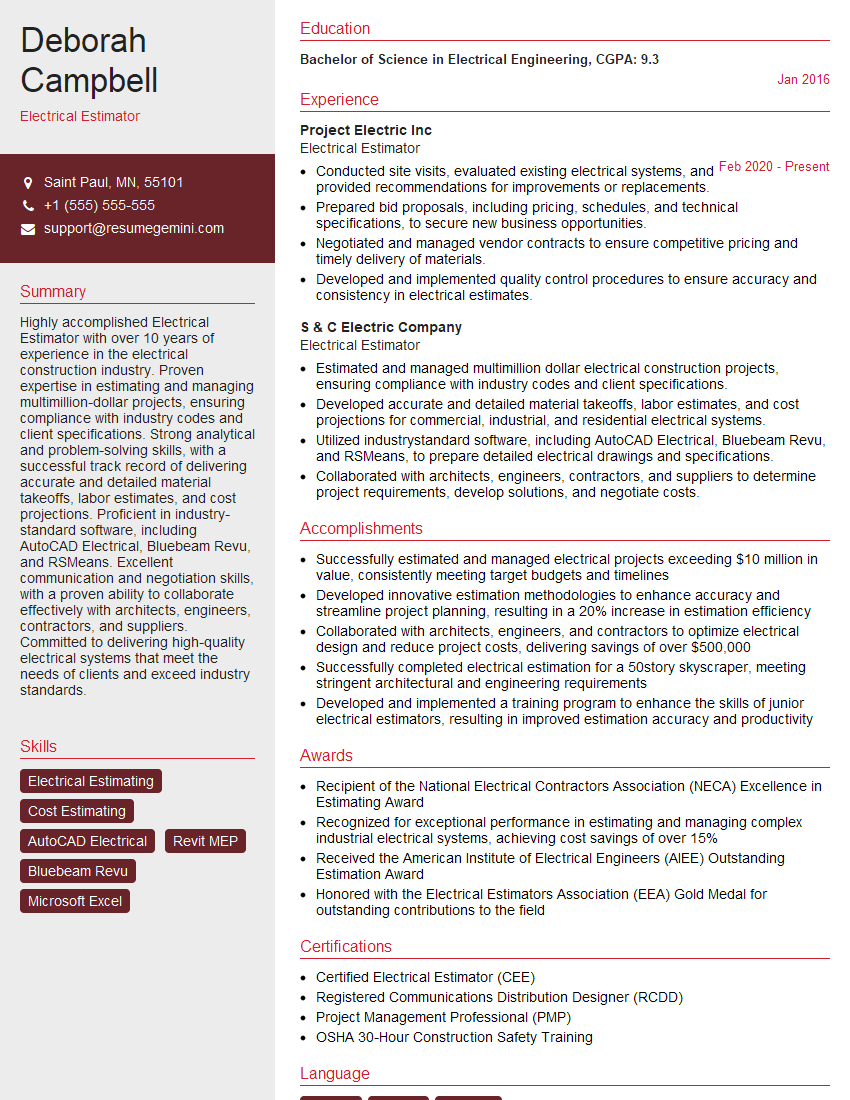
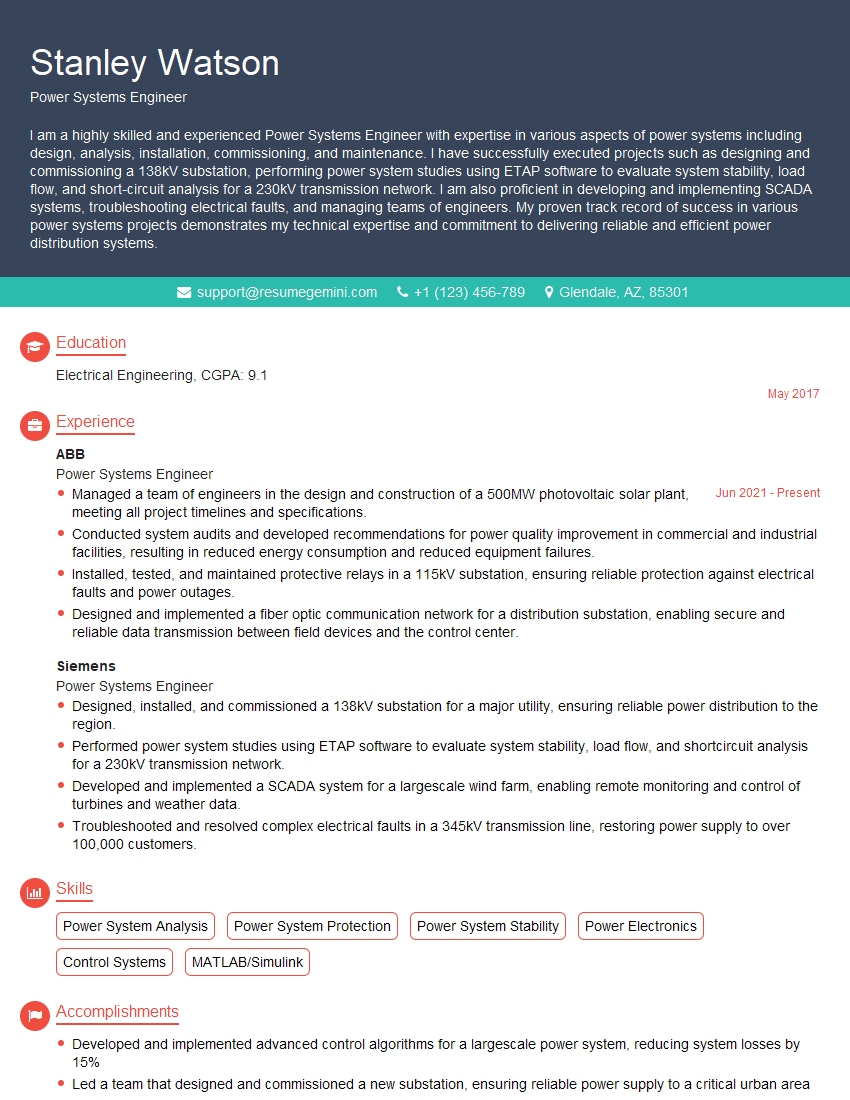
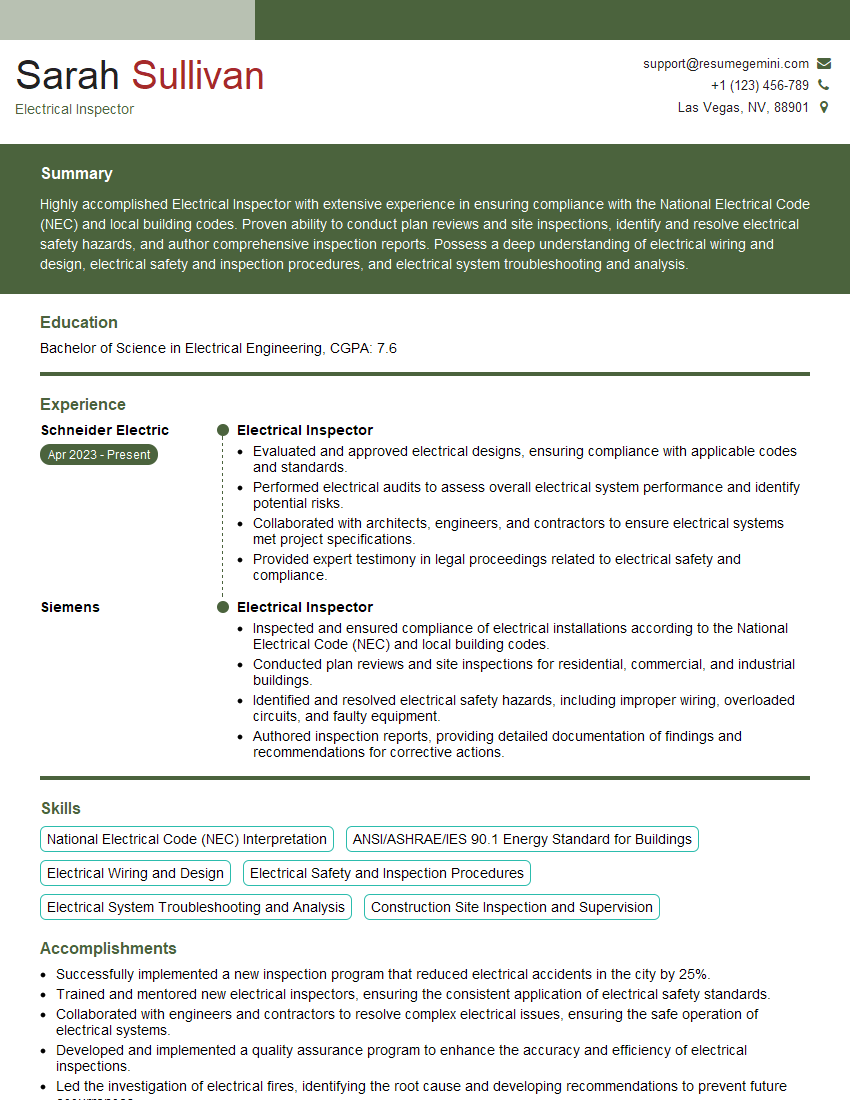
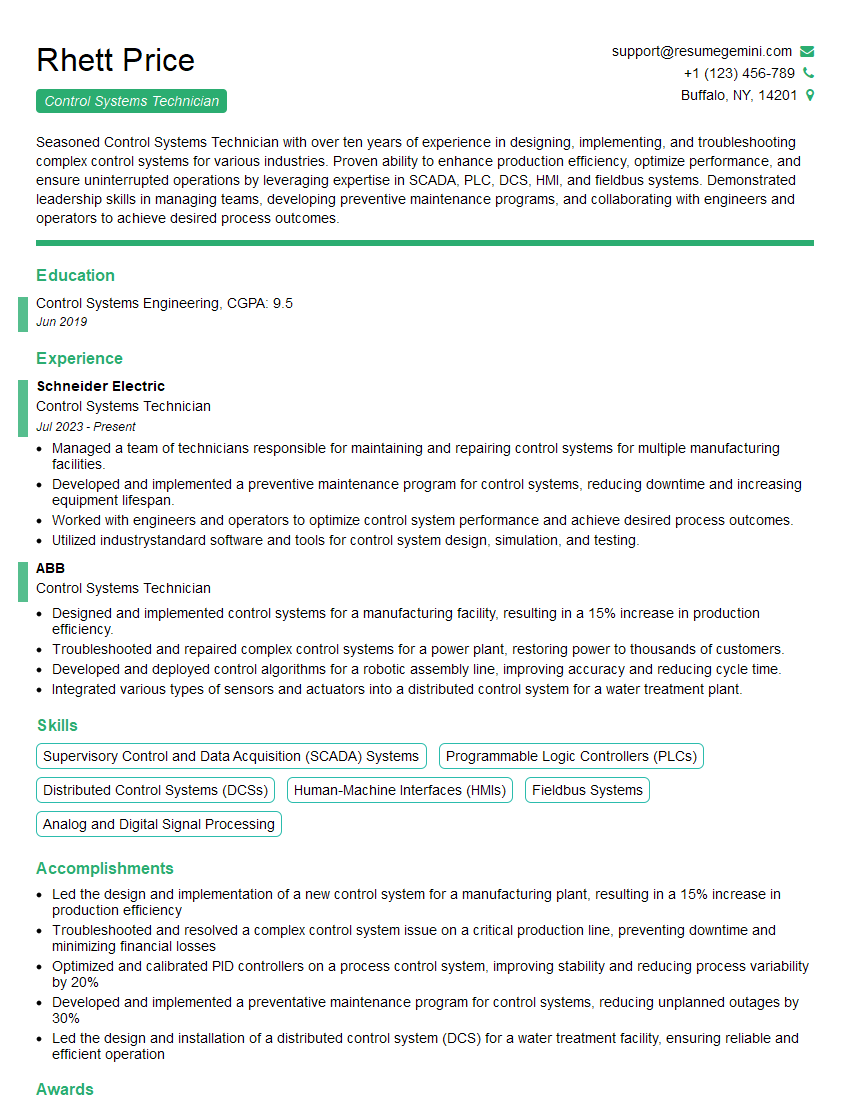
Mastering Power Distribution System Installation opens doors to exciting career opportunities with excellent growth potential. A strong understanding of these systems is highly sought after in the energy sector, offering diverse roles and continuous learning opportunities. To significantly increase your chances of landing your dream job, crafting an ATS-friendly resume is crucial. ResumeGemini is a trusted resource that can help you build a professional and effective resume, ensuring your qualifications shine through. We provide examples of resumes tailored specifically to Power Distribution System Installation to help you get started.

Explore more articles
Users Rating of Our Blogs
Share Your Experience
We value your feedback! Please rate our content and share your thoughts (optional).
What Readers Say About Our Blog
To the interviewgemini.com Webmaster.
Very helpful and content specific questions to help prepare me for my interview!
Thank you
To the interviewgemini.com Webmaster.
This was kind of a unique content I found around the specialized skills. Very helpful questions and good detailed answers.
Very Helpful blog, thank you Interviewgemini team.